
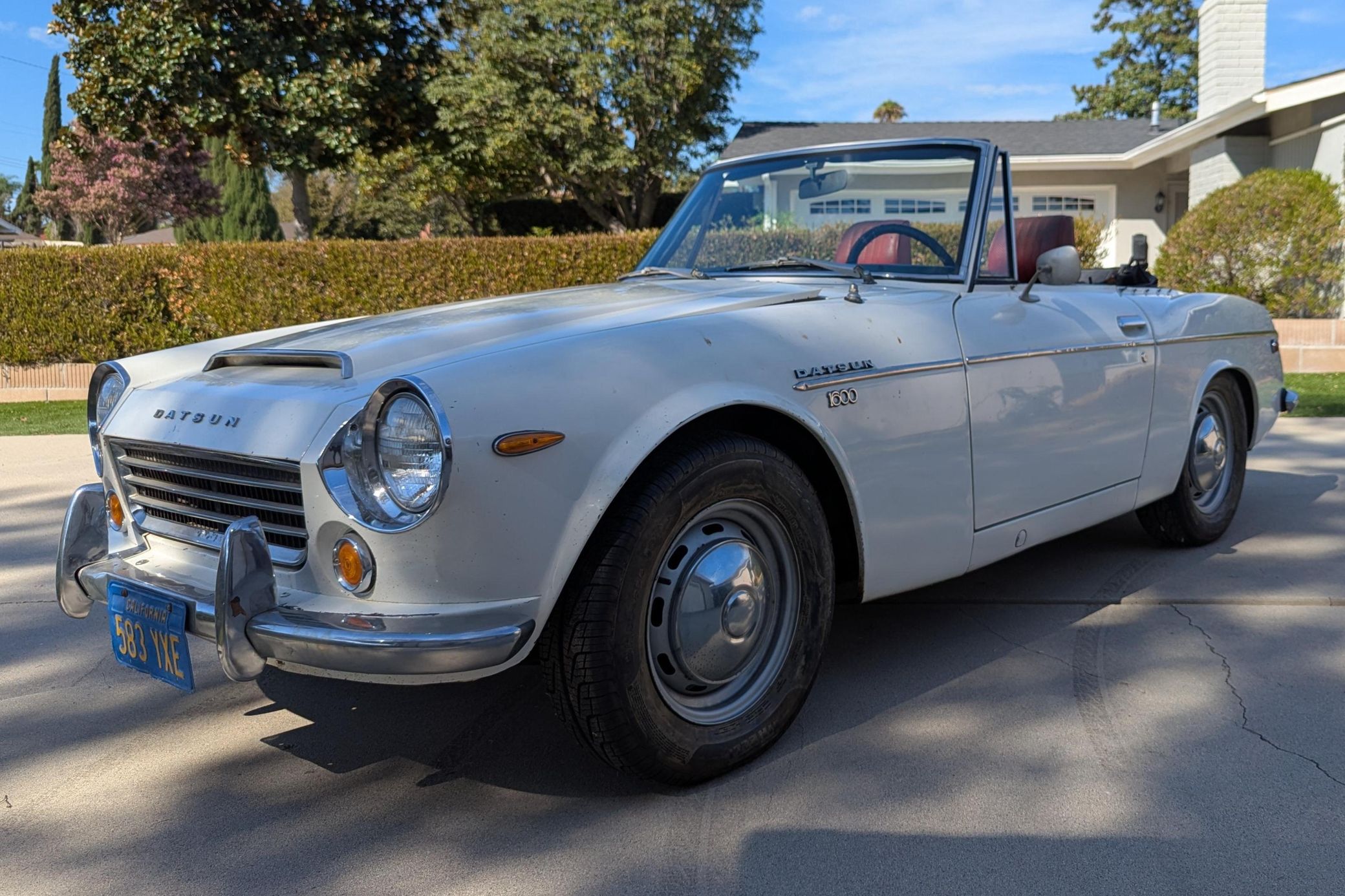
I’m on the fence when it comes to having a winter project. Sure, it’s good to ride out the storm by cozying up in the house and reading a book, watching TV, or sipping on a glass of bourbon, but there’s truly nothing like shaking off the winter blahs by resurrecting an old car that’s been lying dormant for 12 years, such as this 1969 Datsun 1600 Roadster (aka 1600 Sports), which recently sold for $7,000 on Cars & Bids in Tustin, California.
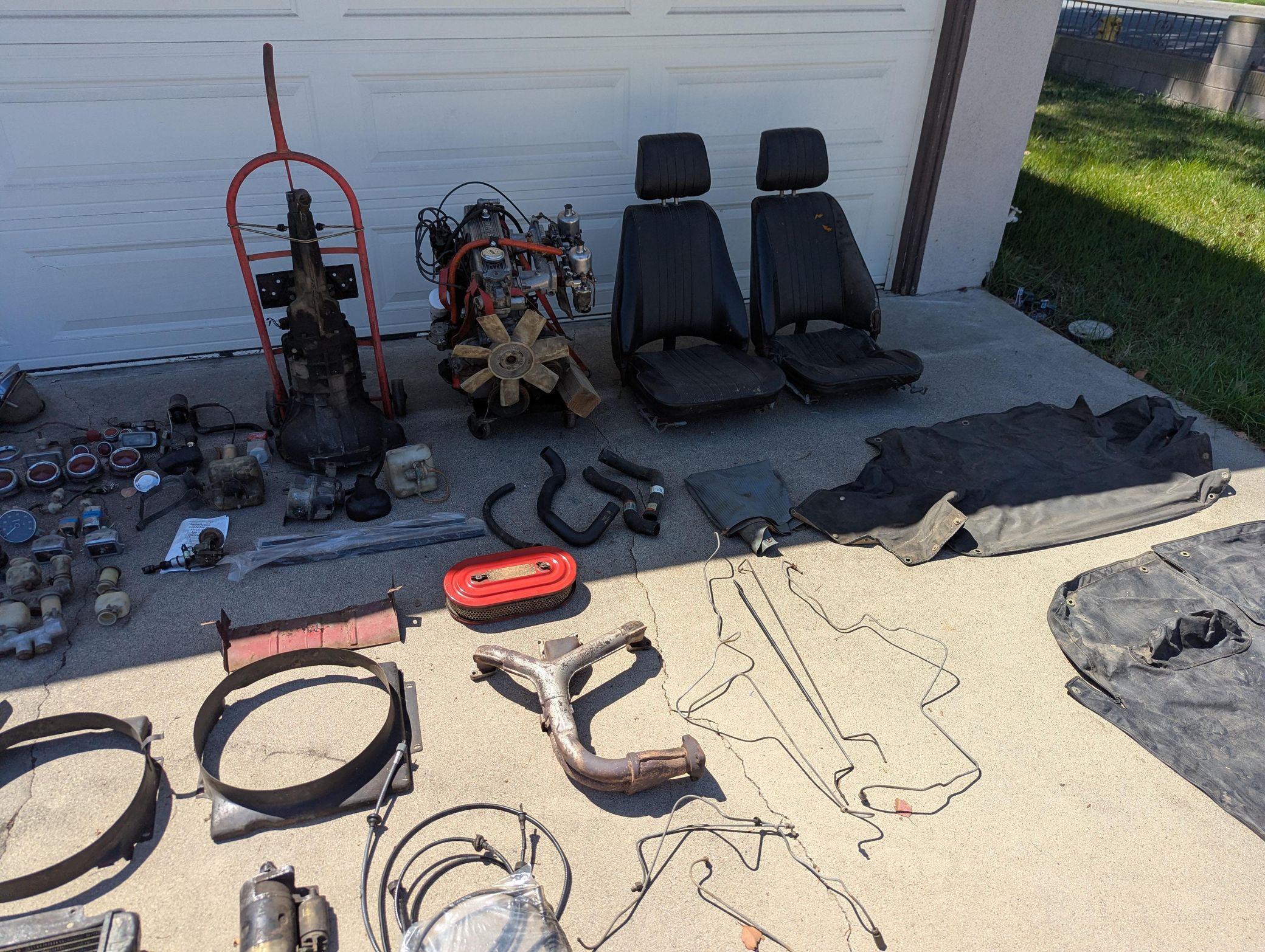
A winter project becomes easier if your new project car comes with a pile of spare parts, including an engine and transmission, two fan shrouds, prebent lines, and a whole lot more. It’s hard to say how much of this you’ll need, but if you have the space, nothing beats having spares.
The seller bought the car from a family member who had owned it since 2013, and although there’s a short video of the engine starting, it runs rough and will need some work before the new owner can even think of taking a spin.
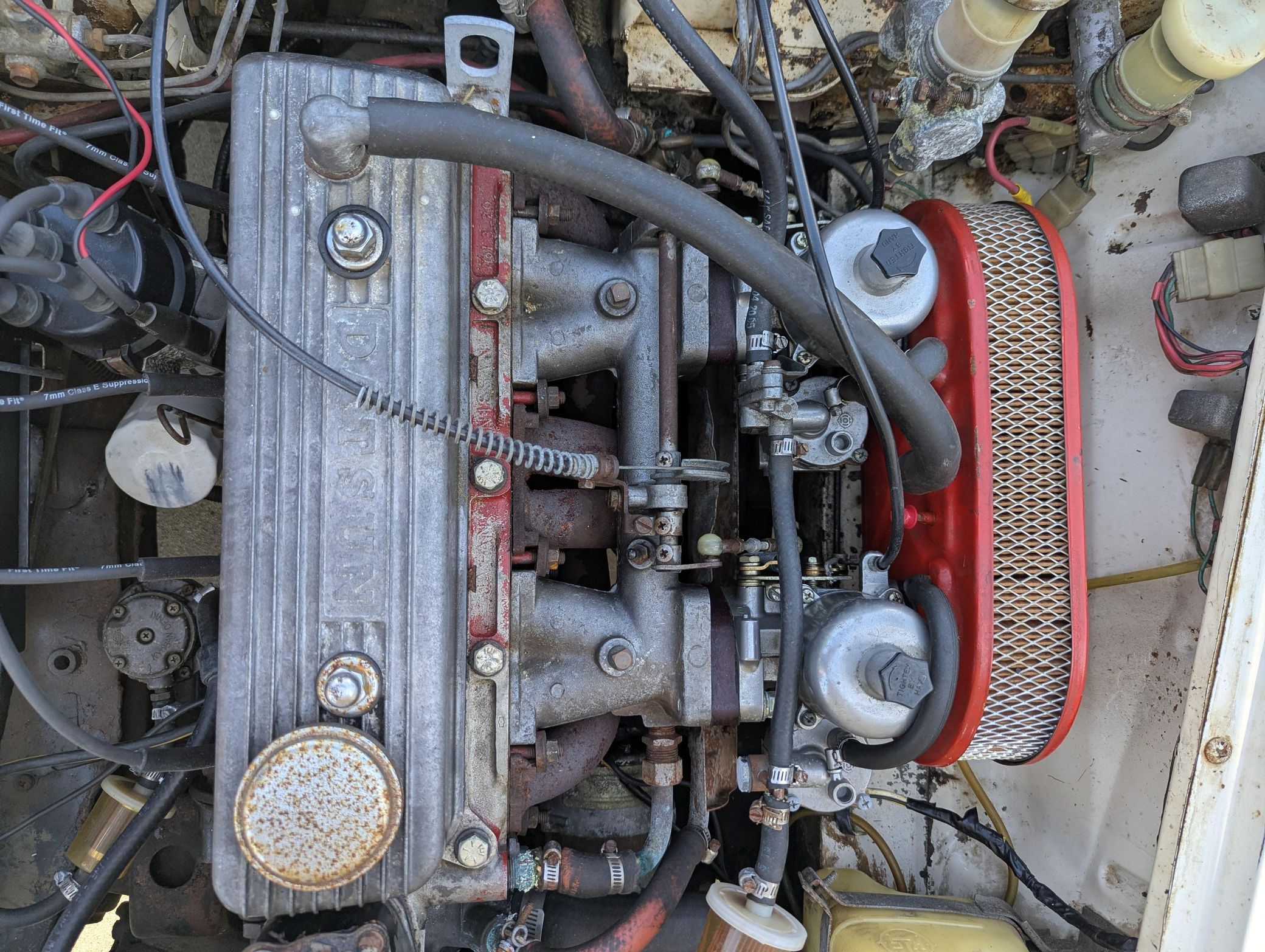
The engine is a Datsun 1595cc overhead-valve four, which produced 96 horsepower and 103 lb-ft of torque. Road & Track tested a 1600 in their May 1967 issue and said that it offered “more for the money than any other sports car in the low-priced field,” a prescient comment when it came to the future of the ubiquitous British sports car. R&T found that the 1600 accelerated a lot like the Triumphs and MGs that the Datsun was aiming for: zero-to-sixty in 13.3 seconds, the quarter mile in 19.9 at 70 miles per hour, and a top speed of 101 miles per hour.
The carburetors were even similar to those found on the British competition, a pair of SUs built by Hitachi under license.
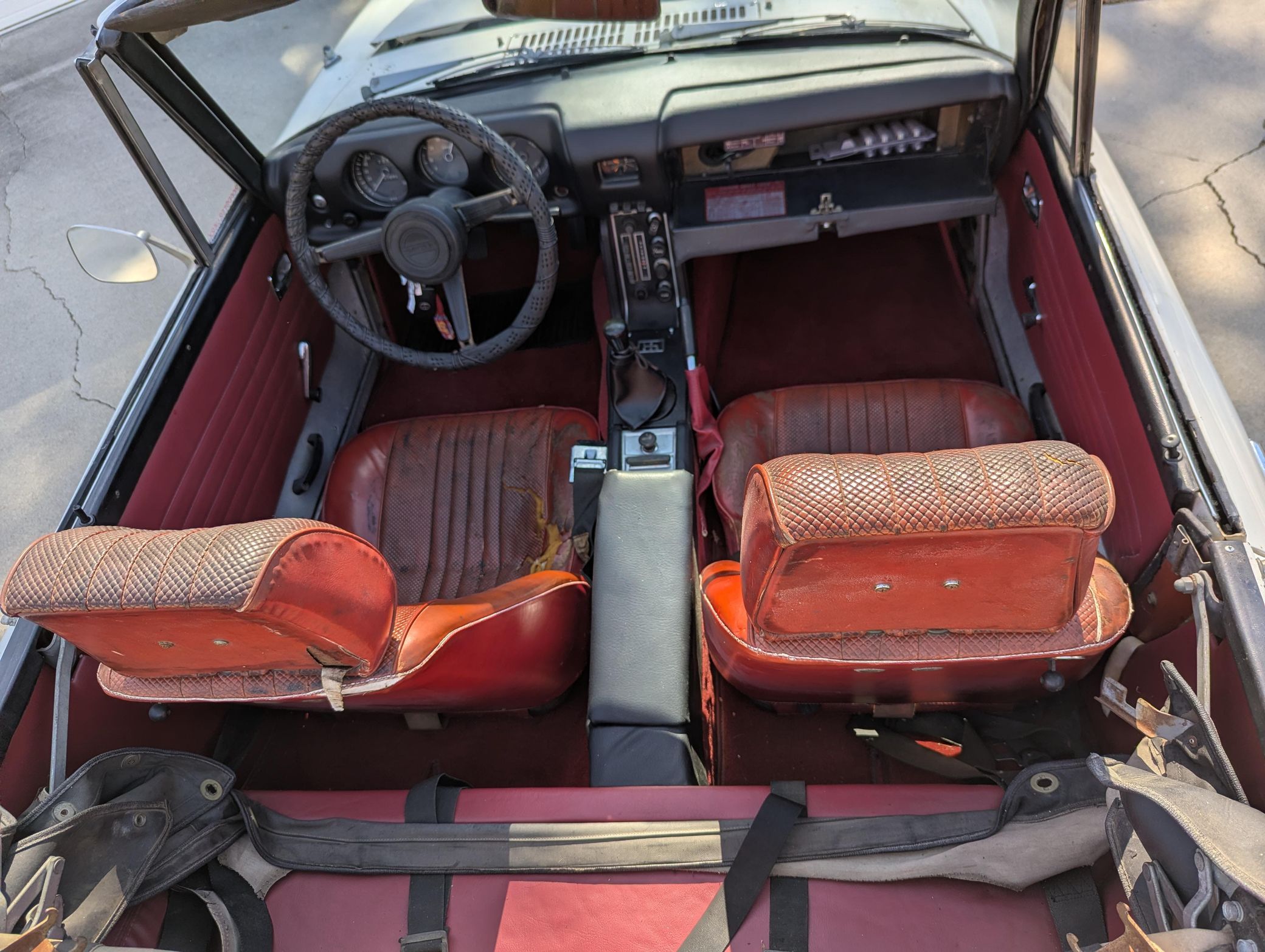
There’s almost nothing that won’t need the helping hand of the hobbyist, but the new owner can decide how far he wants to take the Datsun, from a tidying up to a full restoration. The interior is complete but worn, but there’s a spare set of seats in the parts pile at the very least. The transmission, as you might expect, is a four-speed manual, which is durable but apparently prone to eating itself up if the bearings and mainshaft are worn.
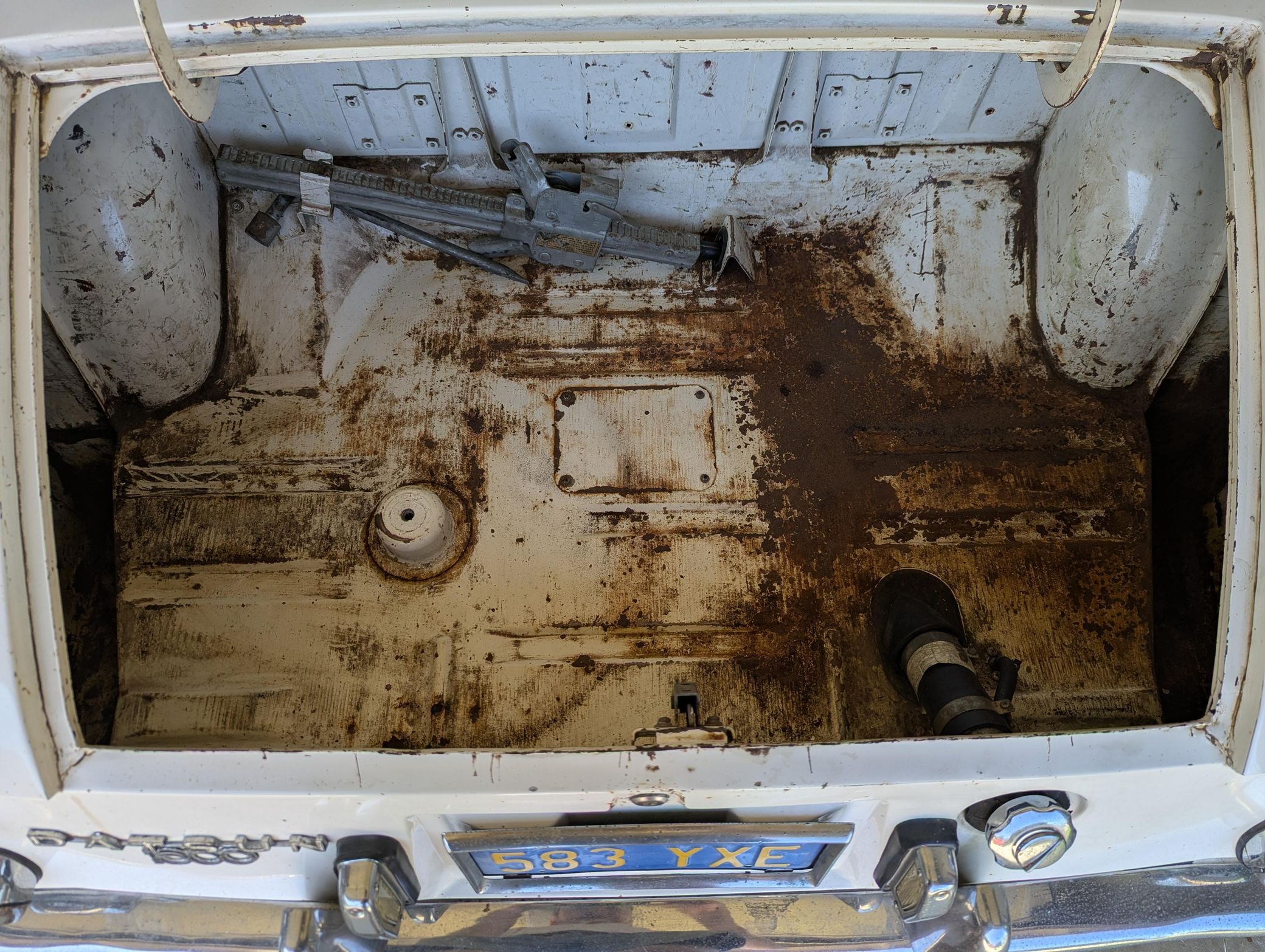
One nice thing about buying a California car is that they’re usually solid, which is good, because Datsuns will rust with the best of them.
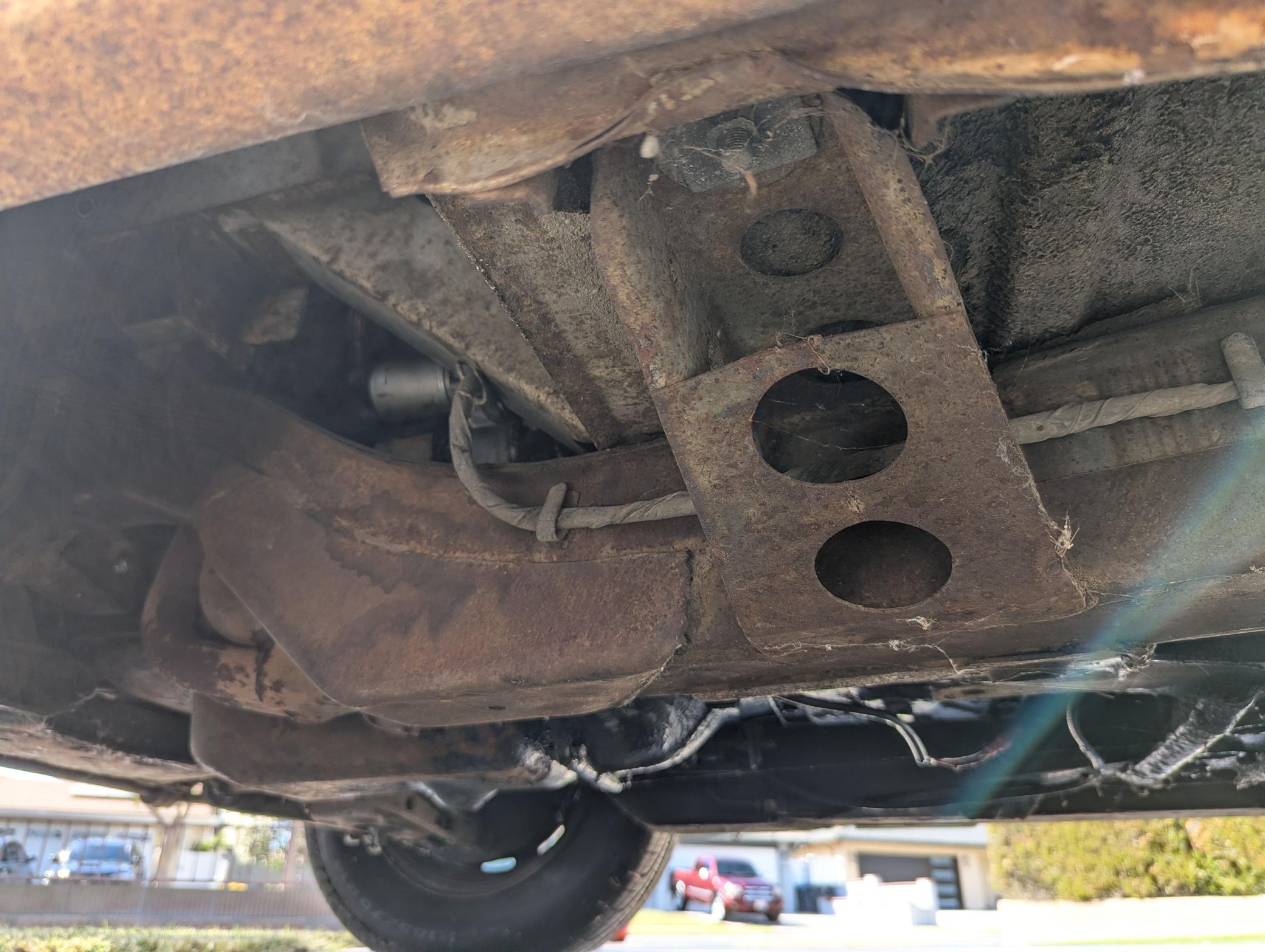
The Cars & Bids ad says that there is “corrosion on the rocker panels, passenger-side quarter panel, trunk floor, firewall, and underbody components,” but unless I’m missing something, it’s extremely superficial. While we’re under here looking around, however, it’s a good time to mention that the car needs a complete brake overhaul and new tires. Brake parts are not, for the most part, something you’ll find on Rock Auto, but they are available from vendors such as Datsun Restoration Products or DatsunParts.com. Unfortunately, the Datsun’s relative rarity means that they’ll probably be priced more dearly than they would for something more common, such as an MGB.
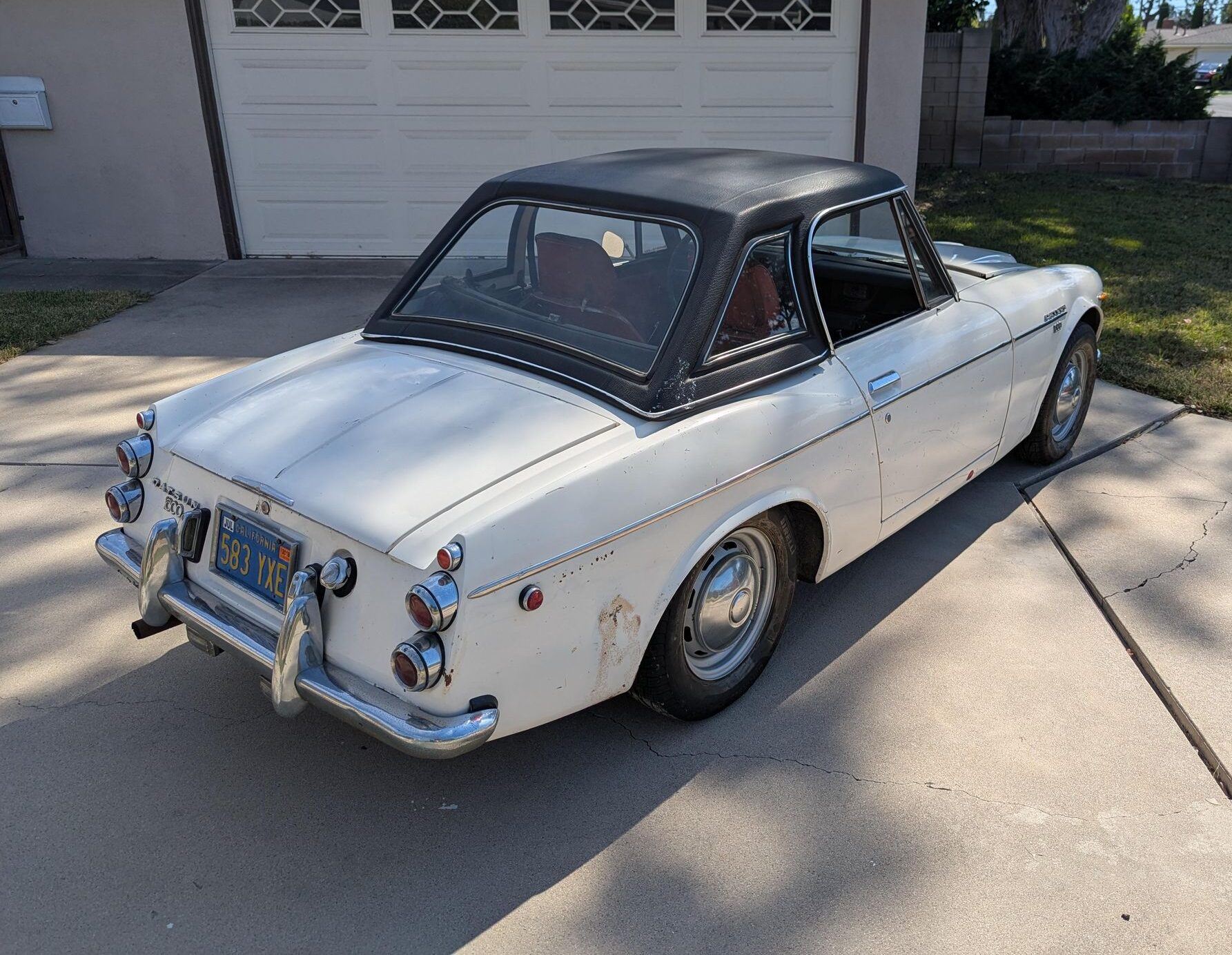
Although the 1600 has a more than vague resemblance to an MGB, it is much more rare. Datsun made a total of just over 27,000 of them from 1965 to 1970, compared to something like a half-million MGBs over its long run. But you’ll get rugged Datsun mechanical bits and even a bolt-on hardtop, so even if there’s no making money on a project like this, you can’t put a price on getting out in the garage in the depths of January and wrestling with an old car in the hopes of eventually getting behind the wheel. Spring has to come sooner or later, right?
Related Reading
In Motion Classic: 1970 Datsun Sports 1600 – Datsun’s Miata (by Eric703)
CC Capsule: 1969 Datsun 1600 Roadster- Walking Small (by Pioneer_Fox)
CC Outtake: Datsun Fairlady(Sports) 2000 – Winter Is Coming. (by Gerardo Solis)























For a minute there I thought it was you that bought this Datsun Aaron. After the Volvo, does this man’s suffering know no bounds?
Anyway it looks like a good starting point. The hours spent would surely be reduced by the minimal rust repair.
I like winter projects, but since I have a single unheated garage containing a VW, two motorcycles and two canoes my winter projects are usually the indoor variety like fixing some broken guitar.
Luckily, I abstained from pulling the trigger on this one. I have seen a couple Volvo 1800s for sale recently that had less questionable bodywork than mine in the $15,000 range. Of course, that’s still almost twice what I paid for mine, so…
I think the next car will be a ’66 Toronado or a Studebaker GT Hawk, but I’ll need to find a mediocre one I can complain about for the rest of my life. 🙂
In the early to mid 1970’s these could be picked up cheaply with one caveat : the clutch was bad (slipping) and the engine needs to come out to replace the clutch .
There are pretty sturdy little cars, the engine is the BMC ‘B’ series engine under license so parts are dirt cheap and easy .
I wonder if a hose typ vapor blaster and good quality air mask would help with the rust, it’s not bad looking but pervasive though out underneath and we all know : RUST _NEVER_ SLEEPS =8-^ .
I have always wanted one of these .
-Nate
This is not a license built BMC B engine. Nissan did license the B engine back in the 1950s, but then developed its own engines from that. This 1600 has a 3.43″ bore and 2.63″ stroke. The BMC 1600 was very different, with a 2.97″ bore and 3.5″bore. No parts interchange.
I believe that the engineers of the Datsun 1600 motor were heavily influenced by Mercedes-Benz. The fact that the prior owner accumulated all of these parts but didn’t accomplish restoring the car tells you all that you need to know about most project cars.
Those are the SOHC engines. They were originally Prince engines, which paid a lot of tribute to the MB SOHC engines. Prince was acquired by Nissan. And the same basic design was later incorporated into the smaller L series SOHC four, as used in the 510 and its successors.
This engine is a pushrod four designed by Nissan. It clearly is an evolution of the license-built BMC B series engine but is several generations removed.
Much to our chagrin – it proves that the BMC A & B-series could have been developed into something competitive and reliable that could have been federalised without losing most of the power.
No wonder the 100A Cherry was so popular over here – it really was a 2nd generation Mini with all the foibles (and fun, TBH) engineered-out.
I know the Nissan/Prince engine history can be confusing, but engines are supposed to evolve over time. There’s precious little interchange between an SBC and an LS, but it’s the same engine allegedly.
And that Nissan unit does look like an MGB lump.
But the best BMC could do with the B-Series was the O-series and it really was too little, too late; Nissan had won by then.
I have to say, the Fairlady is an interesting little thing. But the MGB is prettier. Wonder which is the least archaic to drive..?
A further obvious difference, the engine in the picture clearly has an 8 port cylinder head. With the BMC B series, no production version ever had more than 5 ports, the inlets and centre exhausts being siamesed. ( There was one aftermarket, crossflow 8 port head, Derrington, v rare. )
What if you don’t have winter?
You can work on it without putting on your coveralls and turning on your insufficient garage heater!
My issue is my summer vs your winter. I can work with my cars on Wed, Sat, and Sun. Only I have to deal with heat in the driveway. I don’t tolerate much above 85 in direct sun on the driveway. So all work is cancelled this weekend as I have 101 and 98 forecast for Sat and Sun. Even my Saturday trip to an outdoor bus museum is postponed due to a heat advisory. So over to San Francisco to shoot photos in 80 degree weather.
I get it. It feels like this summer here in Michigan was 90 degrees every day, and that’s miserable when you’re working on something, especially if you’re out in the sun.
Ouch 🇨🇦☃️❄️🥶
Interesting car! Not terminally rusty and loads of spares. Waking up a slumbering vehicle can be a lot of fun. I’m cursed with having to do rolling restorations, but finding my friend’s “non-runner” bus ran with a battery and fuel was definitely satisfying. It became mine after I had brought it far enough to have a good chance of passing a safety inspection and be legally roadworthy.
If I had a place to permanently store and work on it this intriguing little roadster would make a great project. I hope the next owner gets it on the road and enjoys it!