
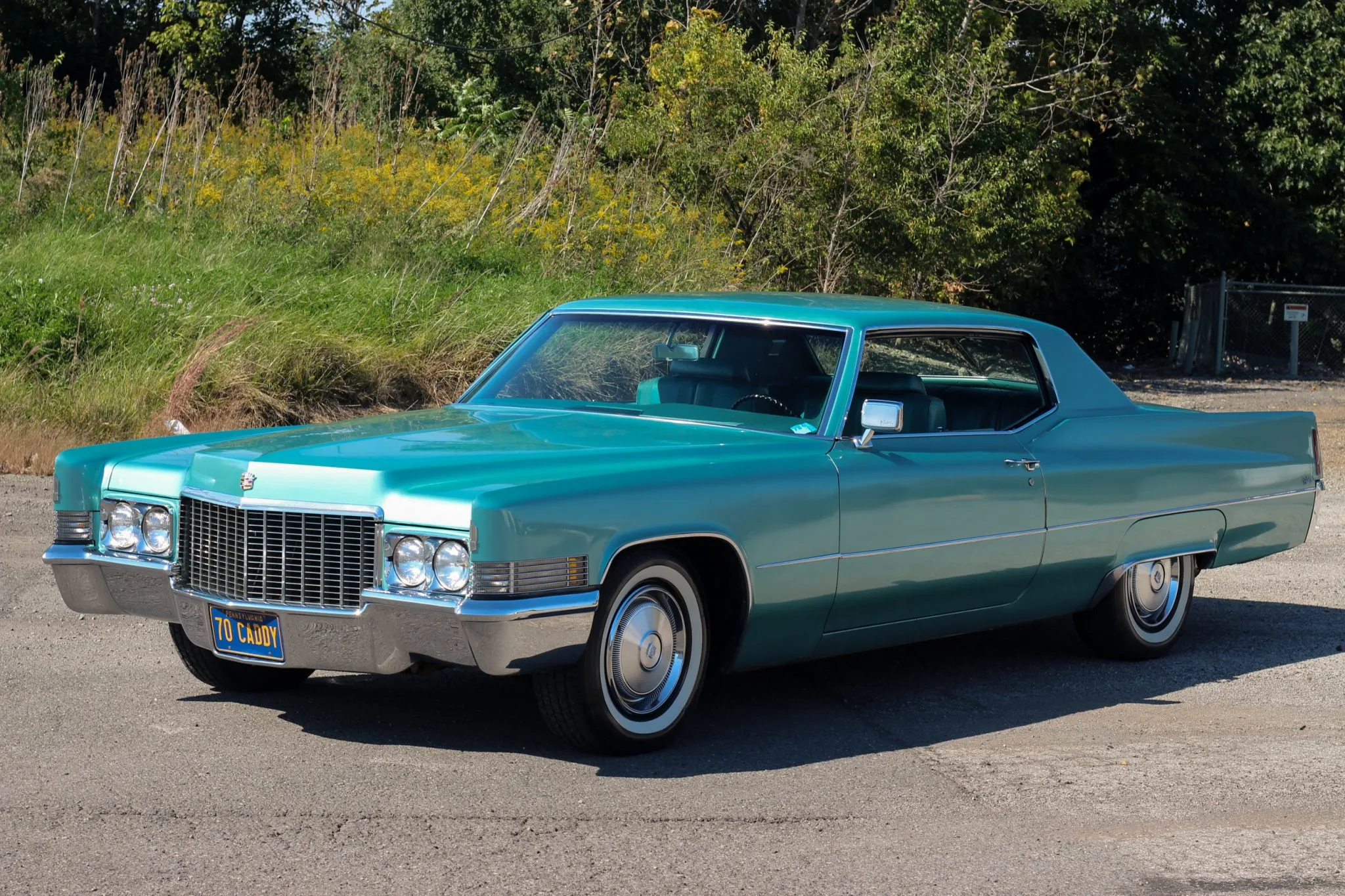
Classic Era locomotives notwithstanding, Cadillac’s peak probably landed somewhere in the 1955-1970 range, when their cars were so good that enthusiast publications almost had to apologize for the fact that they were mass produced rather than built in a shed somewhere by old-world craftsmen with nothing more sophisticated than a chisel and an awl. As with most things, Cadillac didn’t fall from grace immediately after this period, but rather started a slow decline probably around the time this gorgeous 1970 Calais was built. But you wouldn’t know it by looking at this one, which is for sale on Bring a Trailer in Glenshaw, Pennsylvania.
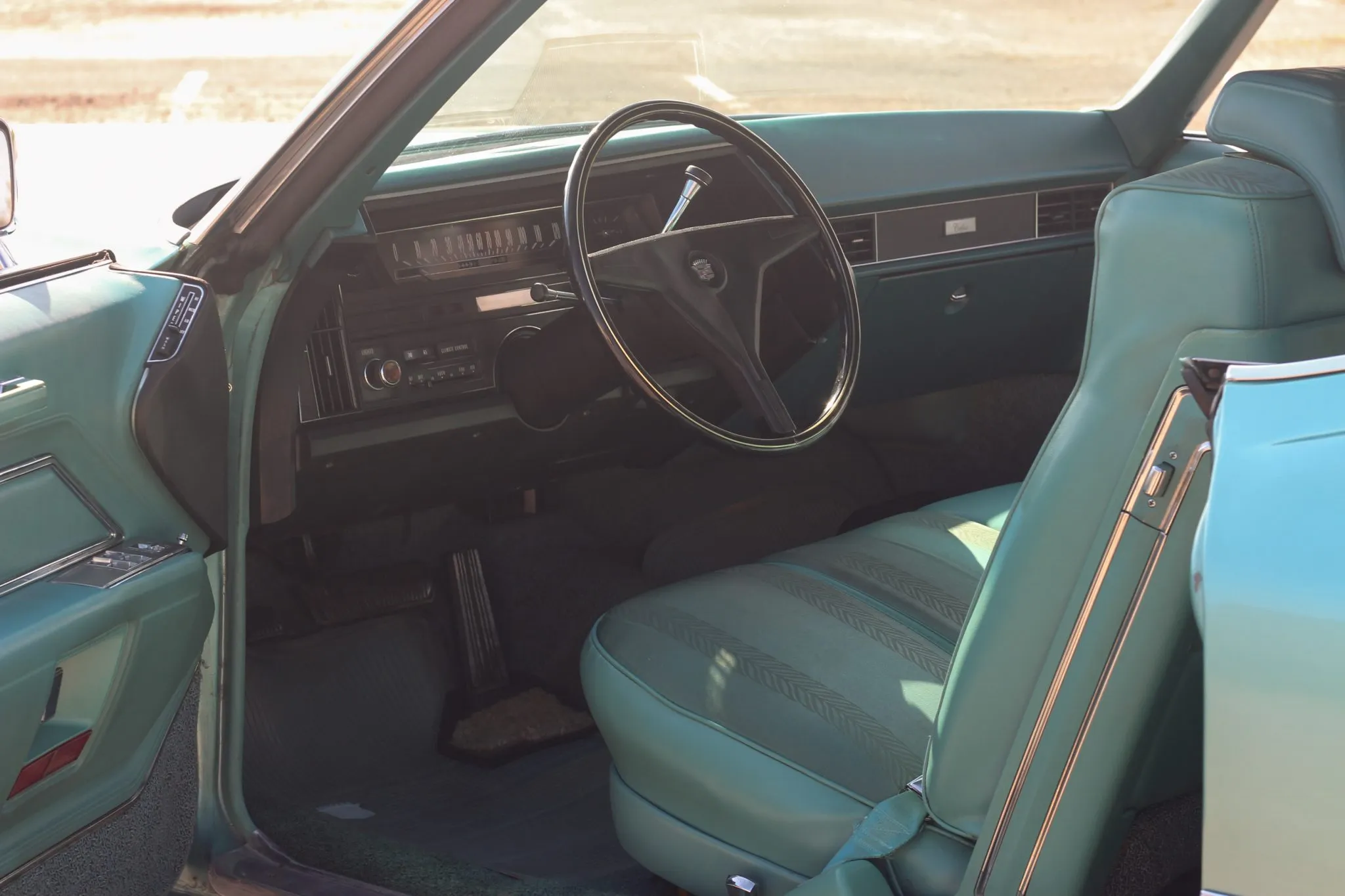
This one-family-owned Calais is an example of what Cadillac offered for those who didn’t quite have a Cadillac budget but still had to have America’s finest car. We’ve discussed it before on CC; a high-end Oldsmobile 98 or Buick Electra 225 was more luxurious than a Calais, but they didn’t have the name, didn’t have the crest.
Calais buyers, however, didn’t get the leather upholstery of the Coupe and Sedan deVilles, and the dashboard was missing the warm (yet fake) wood tones of more expensive models. What wasn’t missing was the windshield wiper control bezel on the driver door panel; when the door was closed, it fundamentally became a part of the dashboard. Neat.
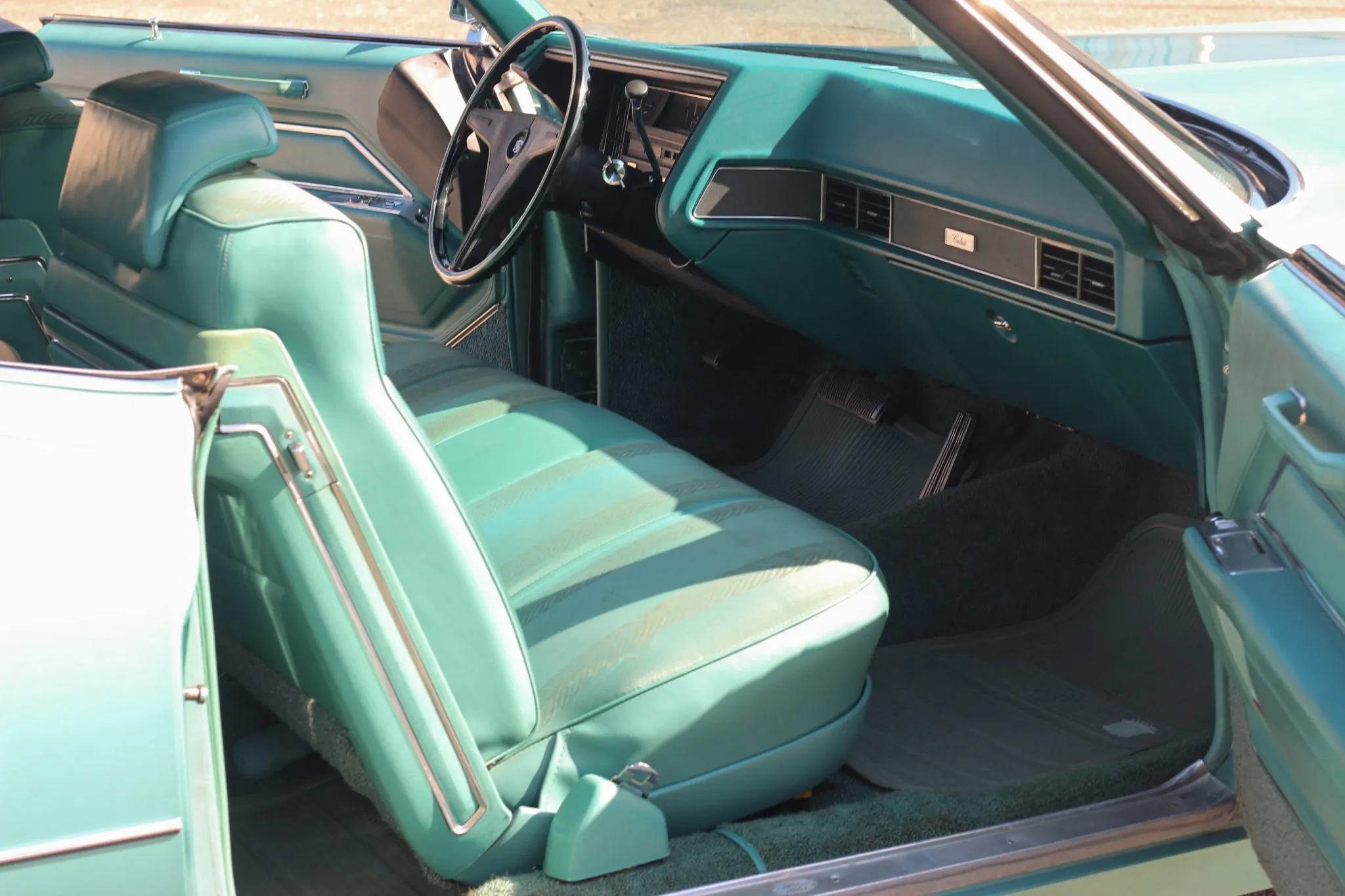
Truly, some fancier Chevrolets and Pontiacs had richer trim than the Calais, which might be one reason that out of 238,744 Cadillacs built in 1970, only 9,911 wore the Calais badge on the dashboard. And of those 9,911, only 4,724 were coupes. Another reason for their rarity could also be that the Coupe deVille wasn’t that much more expensive: $5,884 vs. $5,637 for the Calais. This is one of those cases where rarity doesn’t make a car more desirable. Given the roughly $250 price difference, it’s kind of amazing that any examples of the Calais made it out the door at Clark Street.
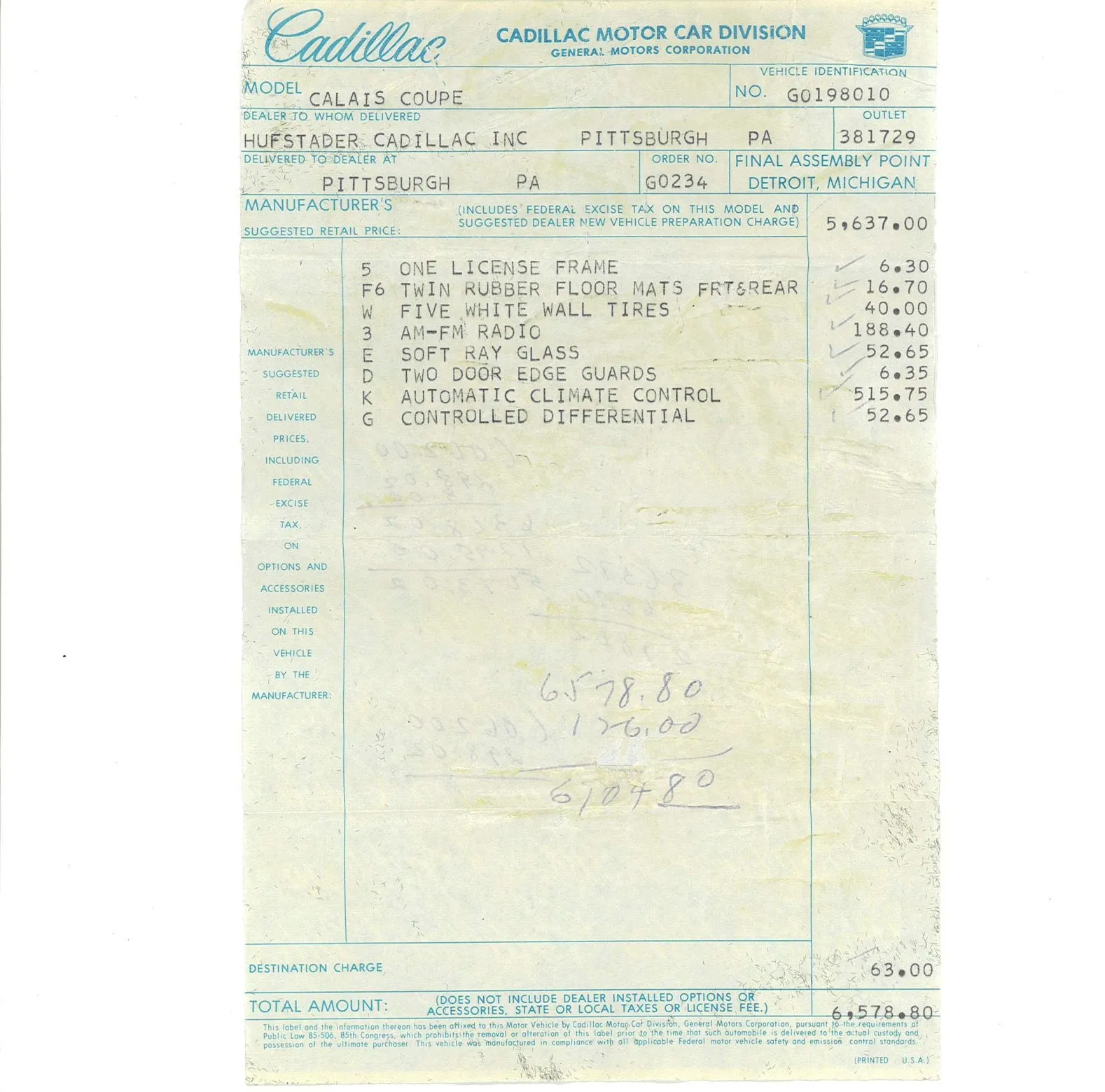
That this specific Calais found its way to its original owner is also a mystery, as it has nearly a thousand dollars worth of options, including the expensive “Automatic Climate Control.” Once again, if you’re spending this much, why not spend a little more for the fancier car if you’re already stepping up to Cadillac money?
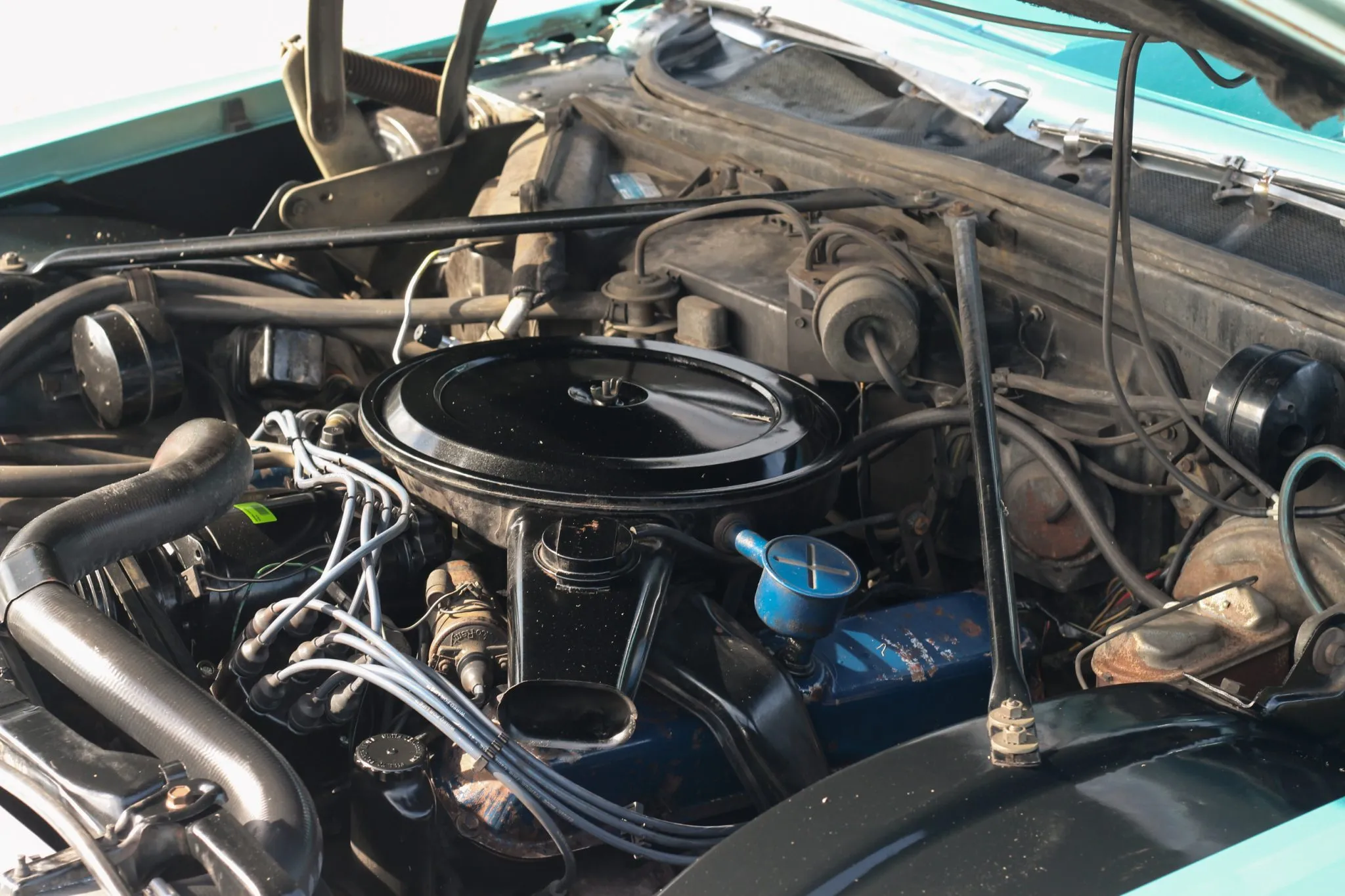
Where the Calais didn’t differ from the deVille was under the hood, where it got the same 375-horsepower 472 that was also rated at a massive 525 lb-ft of torque. Of course, net horsepower ratings neutered those numbers substantially in 1972, which leads me to wonder if the big gross horsepower and torque ratings numbers were at the behest of the marketing department.
Notice how clean the engine compartment is. The implication in the Bring a Trailer ad is that this Calais, which was inherited by the current owner, has only been driven 35,000 miles since it was new. Given the factory Delco-Remy coil and nice but not “restored nice” appearance, there might be a chance. The air-conditioning compressor is nearly new, which implies that the air conditioning works, a rarity in the world of collector car buying.
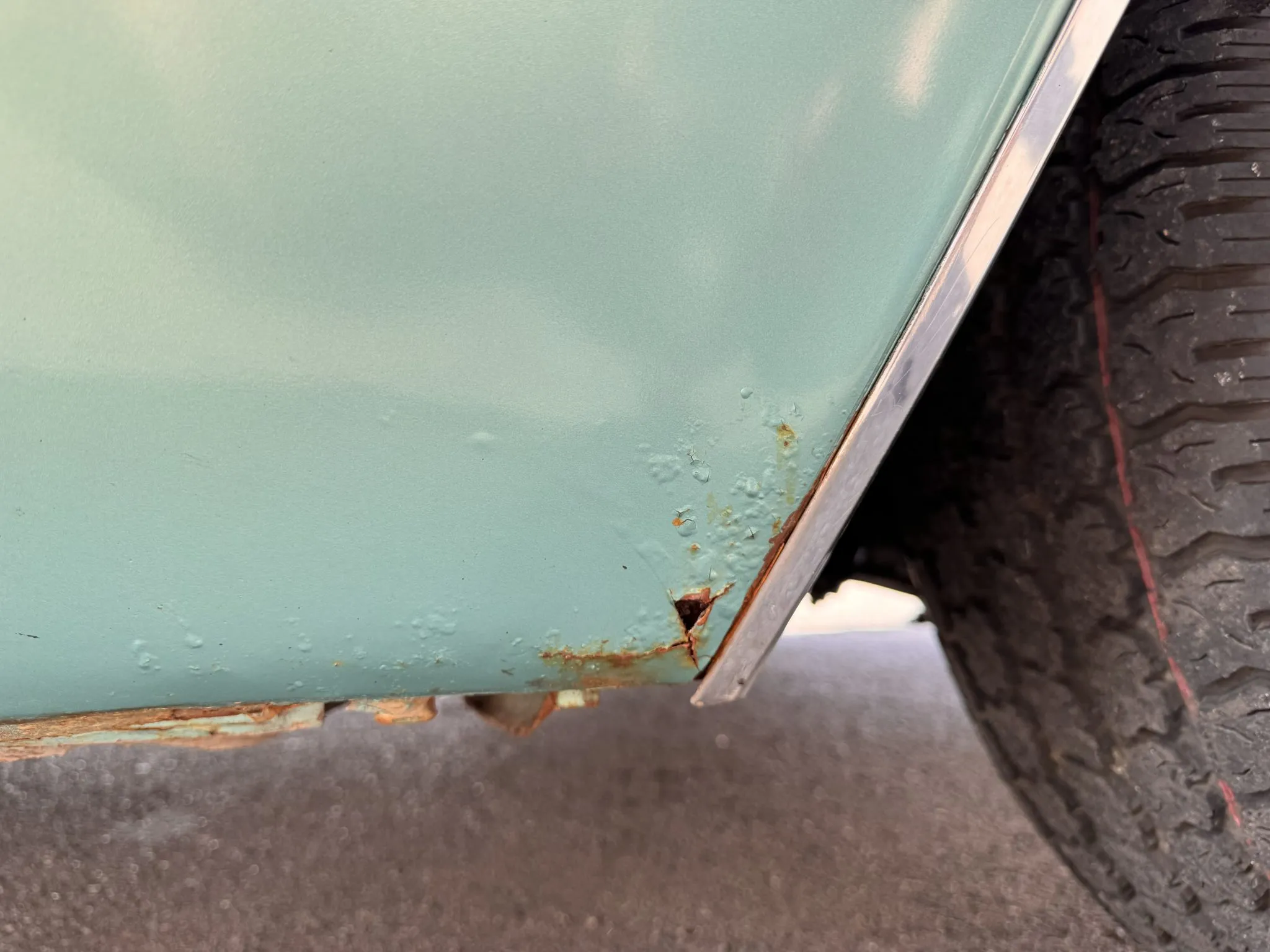
Being a Pennsylvania car also means that there’s a chance of rust, but in this case it’s relatively minor. This is the only perforation shown in the 194 pictures posted.
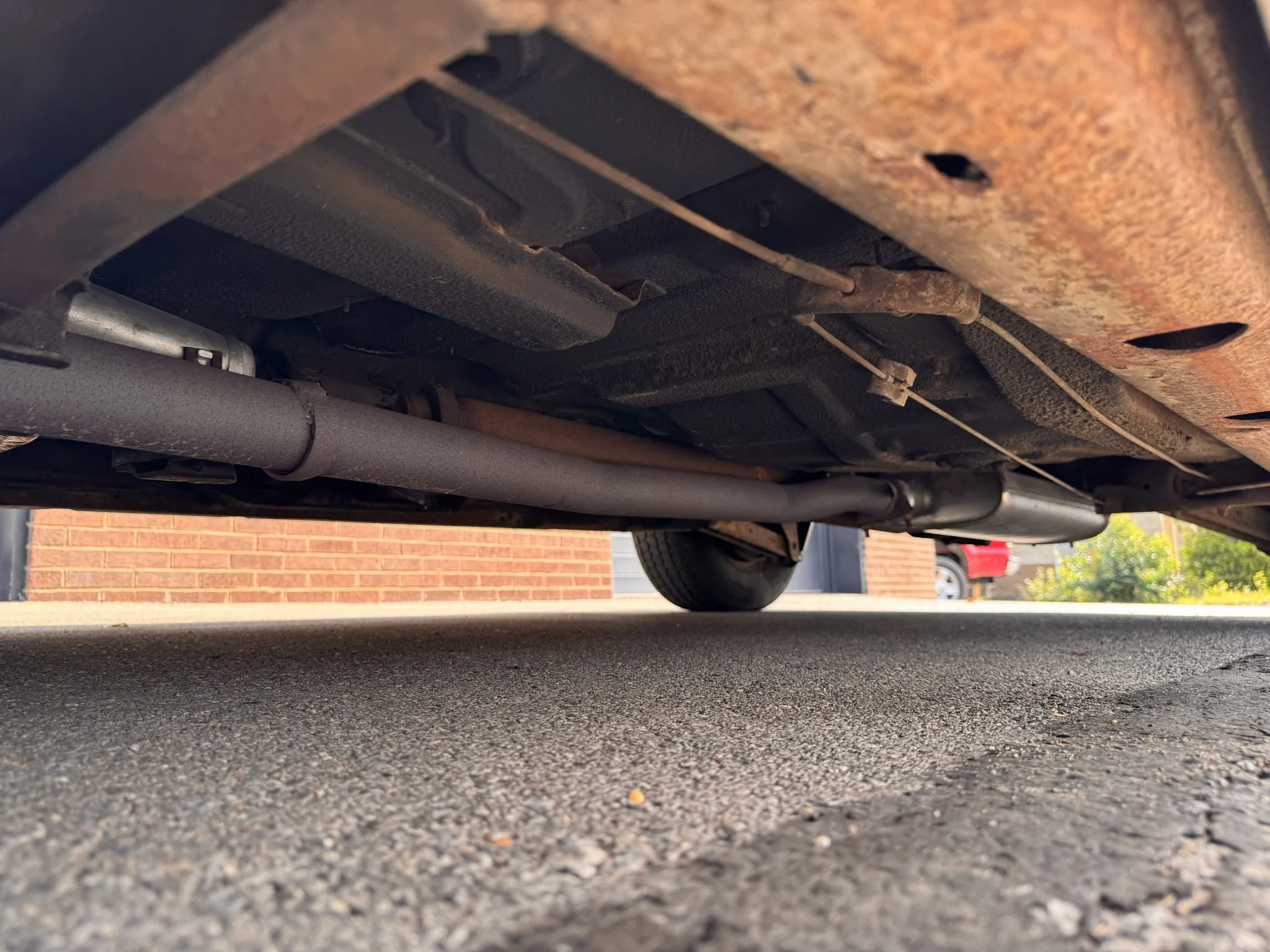
The undercarriage has surface rust, but there are no major holes, at least from the low angles at which the photographs were taken.
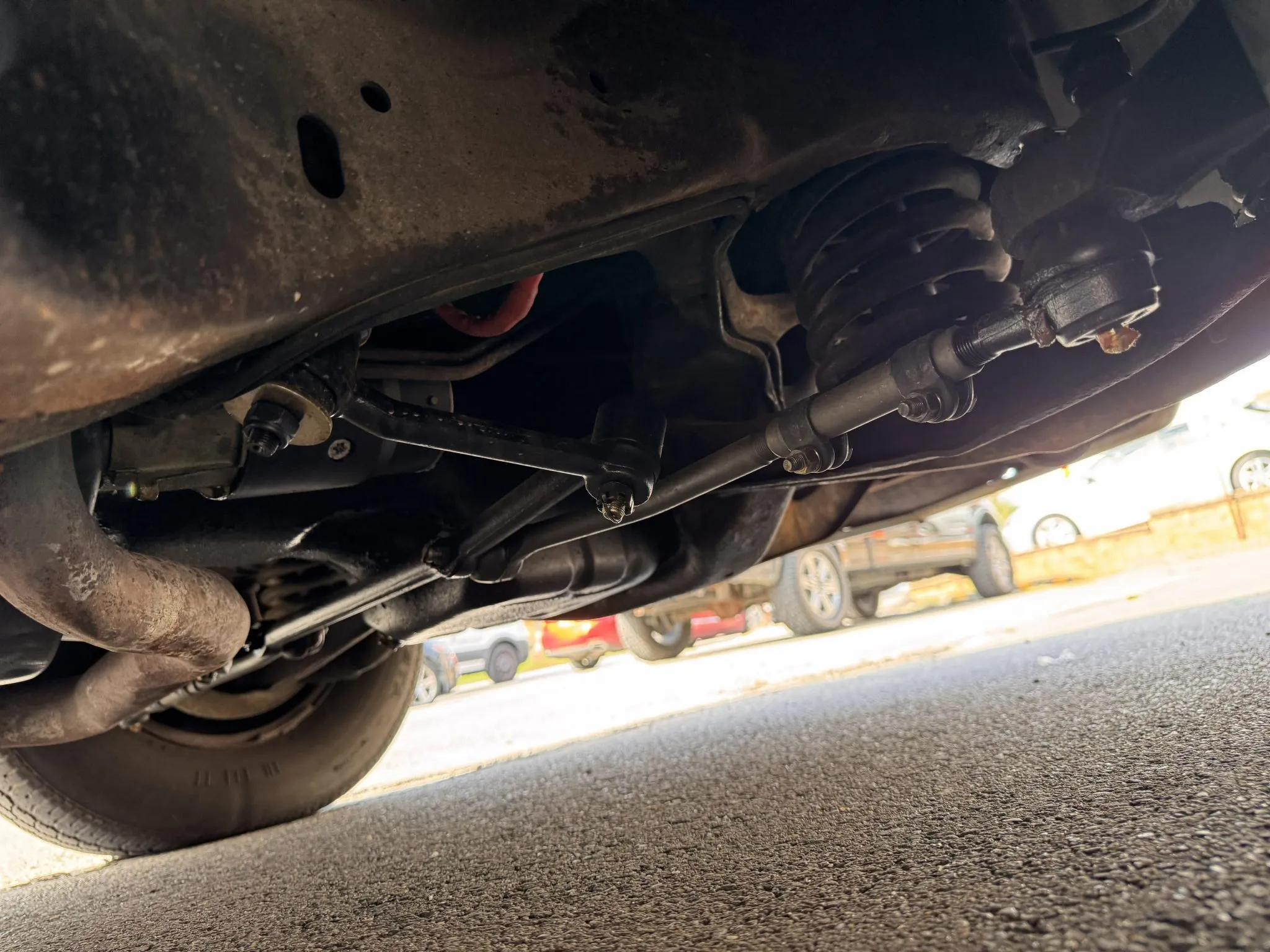
I’d say that the front end has had some attention; the tie rod ends and idler arm look new.
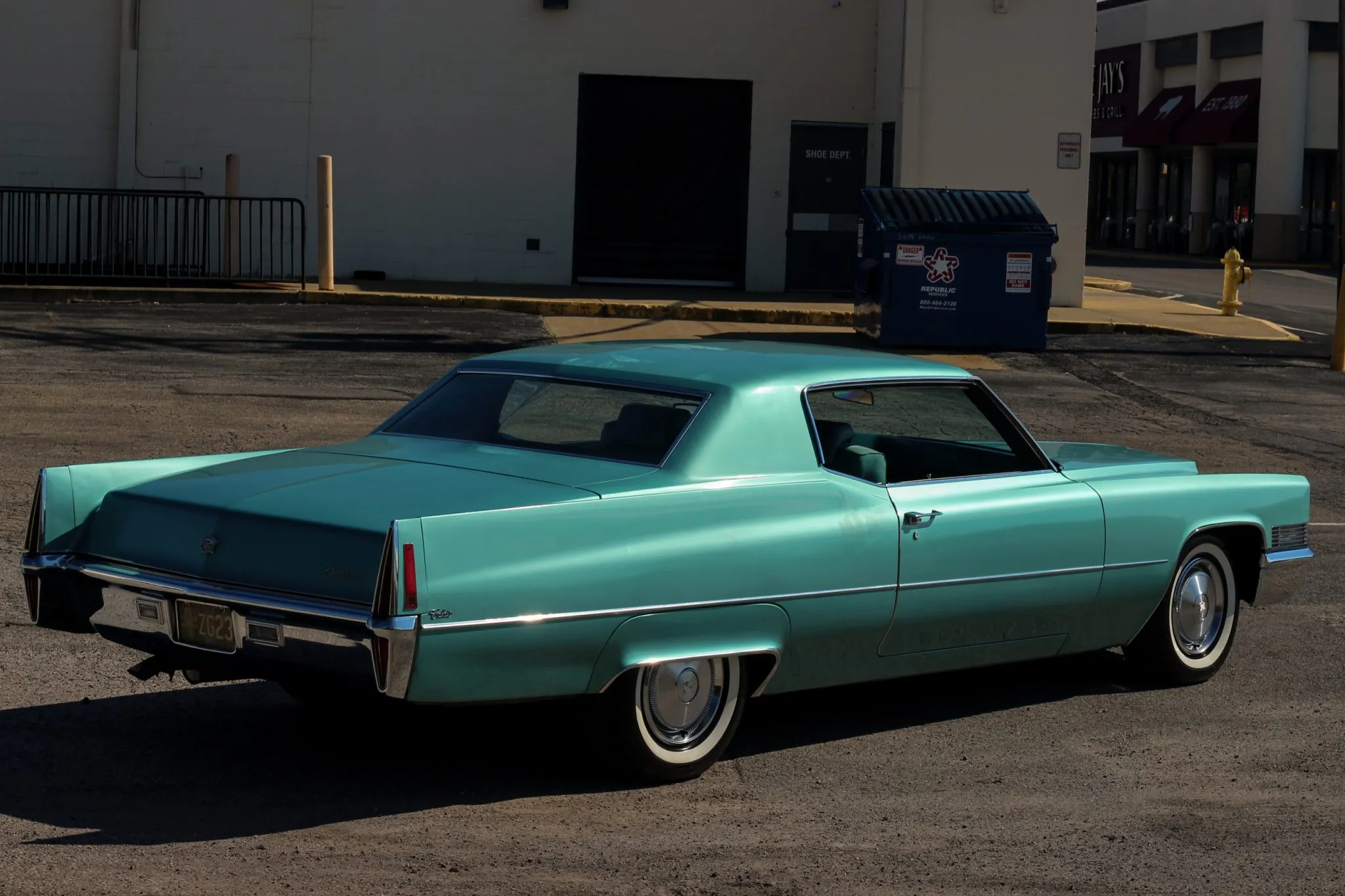
We may have to assume that the original owner simply liked the clean, uncluttered lines of this particular Calais, which does look fetching in Adriatic Turquoise Metallic with a smooth top. Sure, I’d love a Cadillac from the “golden age,” but I have to admit that this “cheap” Caddy doesn’t look “over the hill.”
Related Reading
CC TV: 1970 Imperial Vs. 1970 Cadillac Dealer Filmstrip – A Tough Sell (by me)
Our 1970 Cadillac Calais – The Standard Of The World? (by Chip Downs)
COAL #4: 1970 Cadillac Coupe de Ville (by Jose Delgadillo)
1970 Cadillac De Ville Convertible: The Very Last Full-Size Cadillac Convertible Ever Built (by Aaron Severson)























My dad leased one of these when he was the IBM branch manager in Dayton, OH. The next year he upgraded to a Sedan DeVille that he owned for another three years or so, until we moved to Alaska and he went to a front-wheel-drive Toronado in the mistaken belief that it would work better during an Anchorage winter. The Caddies were huge rolling sensory deprivation chambers, but fit us in with our Midwestern neighbors. I noticed my Mom would swap cars when she took my brothers and I to the pool at the country club, and let Dad drive the old Catalina wagon that day.
My dad was a professor at a small Jesuit university in the 60s, and the school was having money trouble, so he studiously drove the old VW Beetle to work in an effort to look humble and low-key, lest someone think the professors were over-paid. The Olds Ninety Eight stayed with my mom, and nowhere near campus.
The one business model where a Calais may make sense would be a big funeral home operator buying multiple 4 door sedans to lead processions. Have to be Cadillac to match the funeral coach and limousines but nobody but the pastor and funeral director will ever ride in them, so spend as little as you can. Even at that, I wonder how a Calais did at trade-in time vs a proper DeVille.
I’d rather have a Ninety Eight with nice seats. It’s the modern equivalent of a BMW or Mercedes with vinyl seats and no sunroof…you would have been better off with a nice Camry.
A late-model Calais was worth $200 to $300 less than a De Ville in the same body style, depending on how old it was.
I had some elderly relatives who bought a 1967 Calais sedan. They were small-town people who had come into some money and wanted a Cadillac, but didn’t want to be showy about it. That Calais, though air conditioned, had few other options and even had manual crank windows. I remember thinking that the interior trim (cloth with vinyl bolsters) was pretty basic, but from the outside (and underneath) it was every inch a Cadillac. After the original owners aged out of driving, other family members drove that car for years and years afterwards. It was an excellent car for many, many years.
I love the turquoise inside and out on this car – a combination that had become a little unusual by 1970.
That dash could be from a ’71-’76 Impala.
Have you seen the 1971-’73 Cadillac dash? My Mom had it in 2 of her Cadillacs, a Sedan deVille and an Eldorado. Some had woodgrain, some didn’t but even the plastic wood used then looked very fake and bad. The speedo section with all that grainy black plastic everywhere looked so cheap. That dash really does look like it was pulled right out of a ’71 Impala. There wasn’t much anything overall really Cadillac about the 1971-’73 interiors (a bit better on the Fleetwood) other than offering real leather and in many colors.1974 on was a big improvement, but a far cry from the 1960’s.
It looks SO much better sans vinyl top, in my opinion.
I always enjoyed seeing the occasional Calais coupe because it would be a slick top. Really emphasized the lines of the car.
Looks great in that color
I wrote about my dad’s experience with his 1970 Cadillac Calais and it wasn’t great!
His car was equipped with the climate control and cruise, but his was red over black “expanded vinyl” which was extra nice during the summer!!
I like the production total as it matches the engine specs!
Beautiful example
It’s been said before: models like the ‘budget’ Calais go along with Cadillac’s steady decline in the seventies, especially with the new 1971 Chevrolet Caprice that netted the buyer a lot of the same list of optional creature comforts, style, and ride, without the Caddy’s big jump in price.
I know I’d certainly go with the way cheaper, loaded Chevy than the more basic Calais, prestige be damned.
It wasn’t just Cadillac that offered a trim so cheap almost no one would want it. In the early 70s Chrysler brochures, the bottom trim Newport interior looked horribly cheap. I’m pretty sure it was marketing department driven. I remember Cadillac advertising on price, in the early 70s. It wasn’t just GM. I have read about the BMW Bavaria introducing “mandatory options”, that were not included in the advertised price, but you could not buy the car without.
The thing about Pennsylvania cars: my uncle lived in King of Prussia in the 70s. He found out about the rust law in PA. Apparently, you had to have your car inspected every year. If the inspector found a rust hole the size of a half dollar, you got a ticket to either patch it and bring it back for reinspection, or park it. Cars from the 60s and 70s were fast rusters anyway, but PA apparently used a *lot* of road salt. I wonder how many patches are hiding under the paint on that car?
I suppose you could have an import like the BMW (VW had them too) without the “mandatory options” if you were willing to wait. Months, for your car to be built and shipped from Germany. But that’s how they’d get away with it.
The two most notorious ones on Beetles were whitewalls and the basket-weave vinyl upholstery in place of the theoretically standard (and colors even called out in the brochure) cloth.
The bottom Newport was consequence of the collapse of the Chrysler product ladder. At the end of the Fifties, Chrysler Corp had multiple brands with multiple trim levels between Plymouth and Chrysler. At the end of the Sixties, there was the big Dodge, which was a Fury with standard V8 power.
I remember the Calais coupes, more-or-less identifiable by their lack of a vinyl roof. The Calais took the place of the Series 62 around 1965. Despite the Series 62, Cadillac advertising up to that point seemed to emphasize late model used Cadillacs for their budget-minded customers, often featuring 2 or 3 year old models alongside current Cadillacs in their print ads. The 1970 featured is a very nice example. I would be willing to wager the minor rust on the bottom of the front fender was the result of the cowl vent drains being plugged up with leaves and debris rather than caused by road salt. The bottom of the car is too clean and the quarter panels look fine.
You had to pay $40 extra for whitewalls!
A real iconoclast would say, nah, who needs ’em. 😉
After seeing this Calais and a similar vintage Eldorado last week I think these cars look better without the vinyl roof, although my preferred Cadillac, If I ever bought one would be a mid 60s car since I prefer the looks.
I’m probably not the target market, in 1970 my father was an associate in a New York City law firm and drove a second hand Mercedes W108 250S, which I suppose was the German equivalent of a Calais as the lowest spec S class.
I’ve mentioned before that my great uncle, who was a small business owner in Wheeling, West Virginia, bought his first Cadillac around 1960. It was a used low-mileage 1958 Fleetwood Sixty Special from an estate sale. It was the first car that I rode in with air conditioning and power windows.
This was replaced with a new 1967 Calais coupe without air conditioning. My great aunt, like her sister my grandmother, had an aversion to drafts (also like Paul’s father), so that was the reason, not cost. I don’t recall if it had crank windows or not.
1970 compression ratios were a hell of lot higher than they were in 71 and 72. That and SAE net ratings made for the huge difference in HP ratings.
Beat me to it. Net rating in ’70 would have still been significantly higher than ’72 mostly because of compression ratio, and ever stricter emission tuning, including EGR.
This is all true, but the 1971 cars only lost 30 horsepower gross (345) compared to 1970, and that car had to closely coincide in power with the 220 (net) horsepower 1972 Cadillac. (Lincoln was just as guilty; their power ratings fell precipitously in 1972 as well.) Cadillac performance figures of the late 1960s and early 1970s never seemed to live up to their gross ratings, and the fall between gross and net was huge. As a comparison, the LT1 Camaro had 330 gross/275 net horsepower in 1971 and 255 net horsepower in 1972.
So it lost 75 horsepower between 1971/2, while the Cadillac lost 125. Some of that is due to Cadillac’s restrictive exhaust system compared to the Camaro’s duals, which would show up in the net ratings, but I have to assume that there’s a little more to it than that. I’ve just always suspected that Cadillac and Lincoln overrated their gross horsepower ratings in the late 1960s and early 1970s.
It sold for $10,000, not a terrible deal.
I wonder if some dealers might have been willing to offer larger discounts on the Calais in order to make a sale while offering small or no discounts on the rest of the line.
What dealer would have ordered a Calais for inventory?
Dealers wouldn’t even special order a 3 speed stick Corvette. It would be unsalable if the dealer got stuck with it.
It would have been cool to be able to order it with a column-shifted manual “three-on-the-tree” coupled with that massive 525 lb-ft torque monster ,even though the last manual one before was in 1953. $40 extra for whitewall tires? No thanks. Black sidewalls along with dog dish hubcaps featuring the Caddy logo would have been just right but certainly not for the owner of a Cadillac dealership at the time.
When I was college student back in 1978, there was a this one student in my dorm who had a ’69 or ’70 Calais coupe like this. His was a green metallic. He was a big tall red-headed kid, probably 6′ 7″ at least, from some midwest state on a basketball scholarship. Real nice kid, but being a big guy he needed a big car and the Calais fit the bill. He wasn’t there very long. Lost his scholarship, suppsedly some incident involving alcohol. I wonder what ever became of him and his big green Cadillac Calais.
A nice car indeed .
Clean lines, uncluttered .
-Nate
What’s crazy is that cheap looking black dash and steering wheel, looks like a Biscayne!
Had a lot of experience in neighbors ’59, 64, 66 and ’68 DeVilles, and a friend’s ’70. Quality took a huge nose dive after ’68, the ’69/70s were not great and the ’71 was a disaster. An overgrown Chevy at best.