
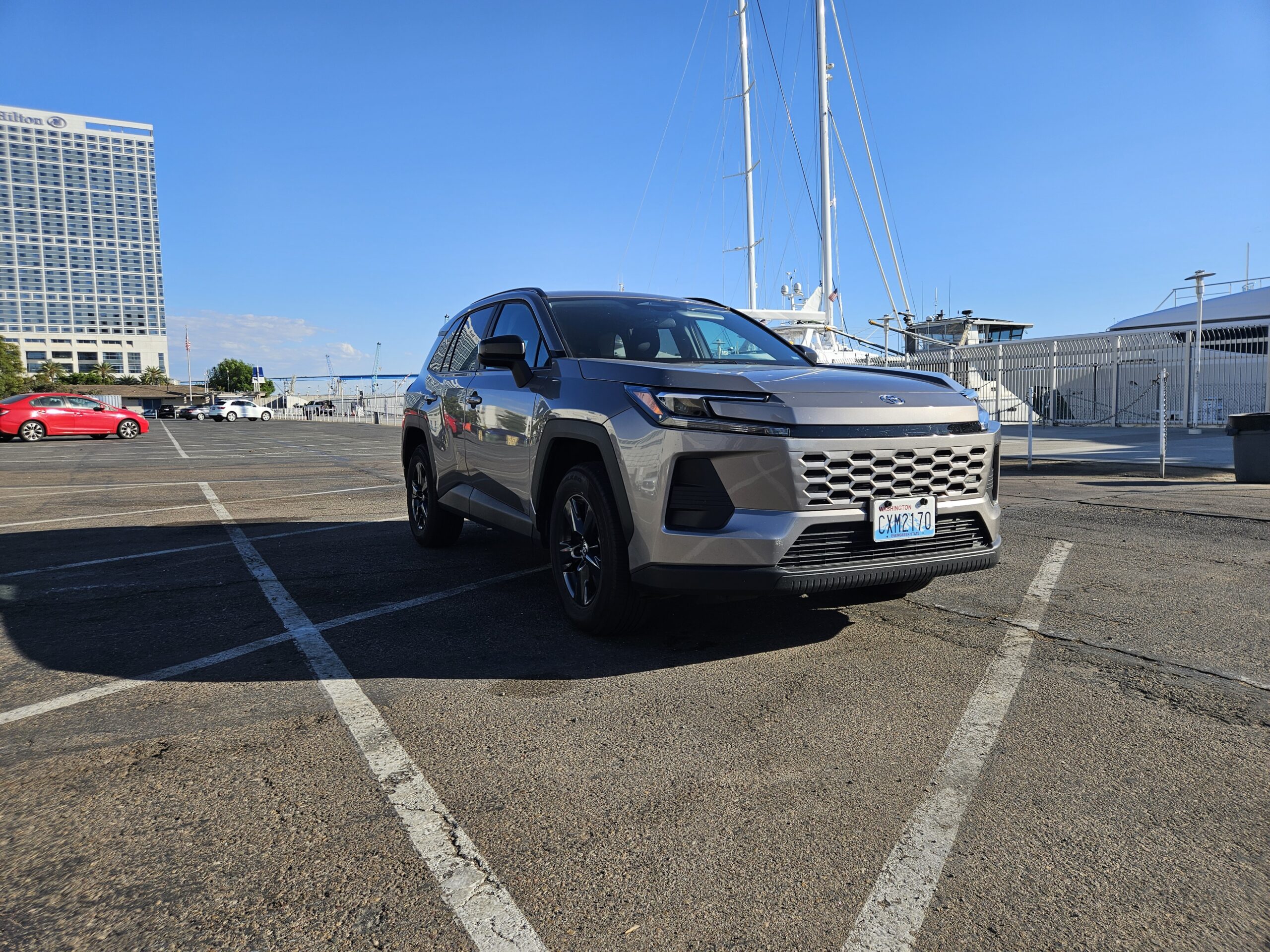
When the RAV4 kicked off the modern crossover era in the U.S. with the 1996 RAV4, it’s likely nobody predicted that crossovers would make up the majority of vehicles sold in the U.S. 30 years later, or that the Detroit Three plus a few foreign automakers would nearly or fully abandon the traditional sedan body style in favor of them. For 2026, the ur-crossover enters its sixth generation as America’s most popular not-an-F-Series (though, under statistics heavily disputed by Ford, the RAV4 outsold just the F-150 in 2024 by over 15k units). Does the new RAV4 have what it takes to keep up the momentum?
My wife had a conference in San Diego, and I again employed National Car Rental not only because my company gives me a discount, but I like that they let you choose your own car. Since the discount at this location didn’t apply to the compact SUV category, I reserved a full-size car (Nissan Altima or similar, according to the site). However, when we arrived at the garage, we were told we could take any car in aisle she pointed us toward, but also any SUV in the aisle across from it. “Huh?” She explained my Emerald Club membership entitles me to a free upgrade. Cool.
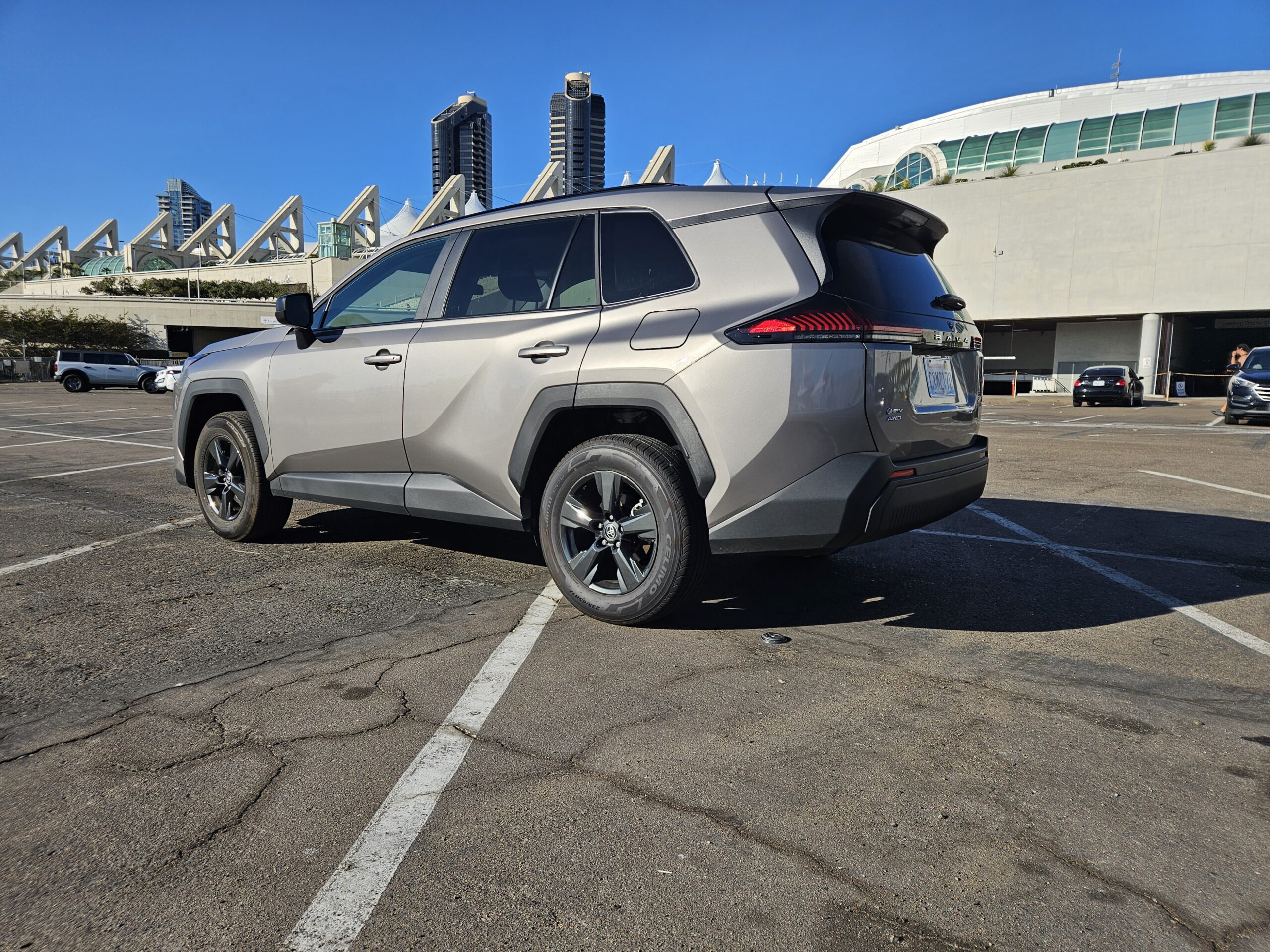
After passing the expected Mitsubishis (just no) and the Hyundais and Kias (been there, done that), and wondering what a Honda Civic Hatchback was doing in this group as it’s neither a full-size car or compact SUV, I saw this RAV4 in less-than-dazzling “Meteor Shower” grey-beige, parked across from a new Camry. Had my wife not been with me, I would have gone for the Camry, but my wife likes to sit up high, so the RAV4 it was.
Besides a miniscule RAV4 2-door convertible, the only other wheel time I’ve had in a RAV4 is a brief drive in my mother-in-law’s third-generation Limited model with the 269-horsepower, 3.5-liter V-6, which was a hoot compared to my Grand Caravan. We did take an Uber ride a few years ago in a fifth-generation hybrid and were less than impressed with the interior, ride and noise.
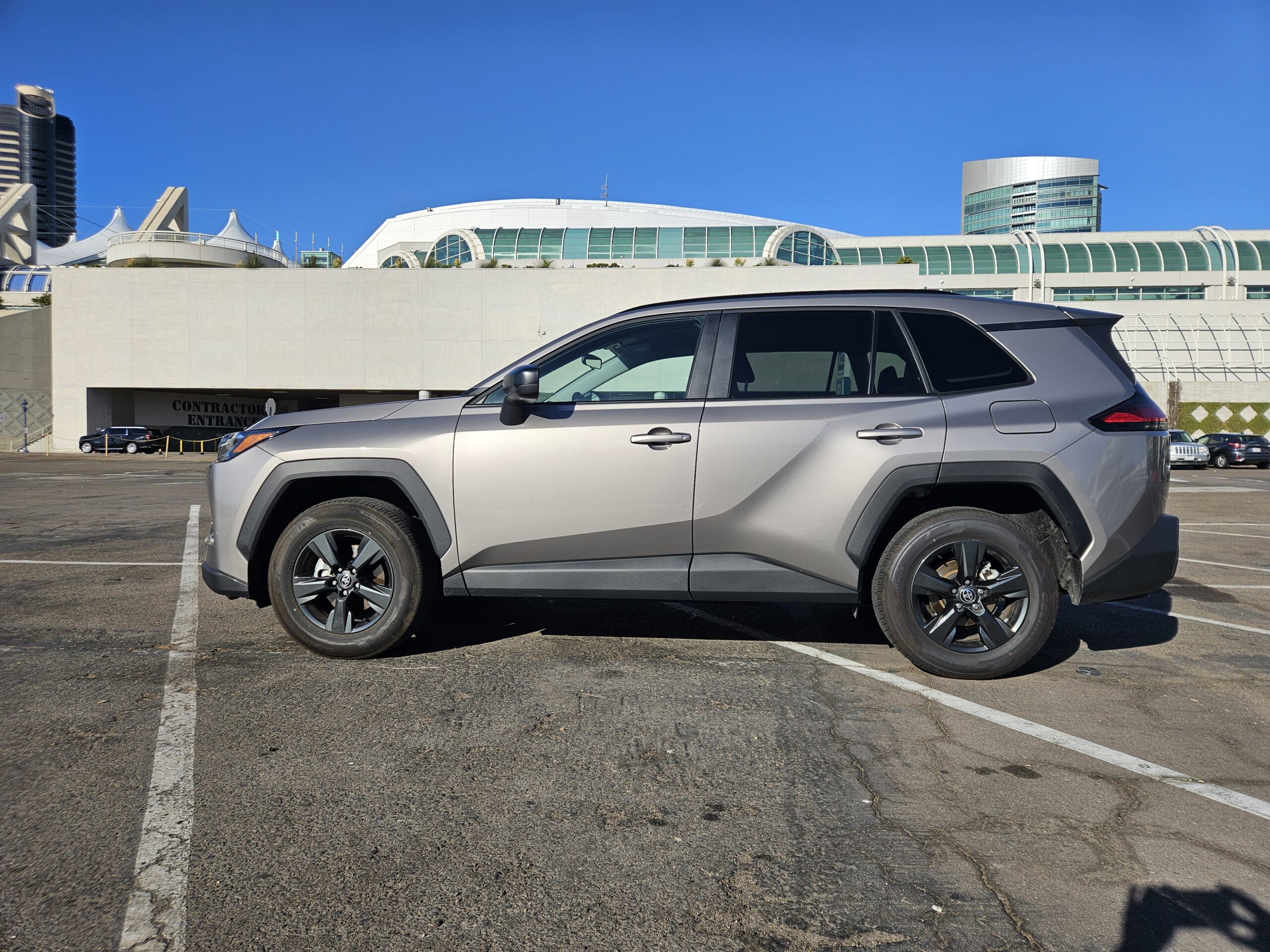
RAV4s have always been one of the most car-like crossovers, appealing primarily to the Camry crowd who would rather sit up high. Not surprisingly, my mother-in-law alternated between RAV4s and Camrys/Avalons during her later years. Now that the Corolla Cross and Crown Insignia are there to cover those looking for tall cars, Toyota gave the new RAV4 a more “butch” appearance than previous generations. The squarish two-box profile, big “in your face” honeycomb grille (with C-shaped headlights that, oddly, look like they came right off a Camry), and large wheel openings with black plastic trim give the RAV4 mini 4Runner and Land Cruiser vibes.
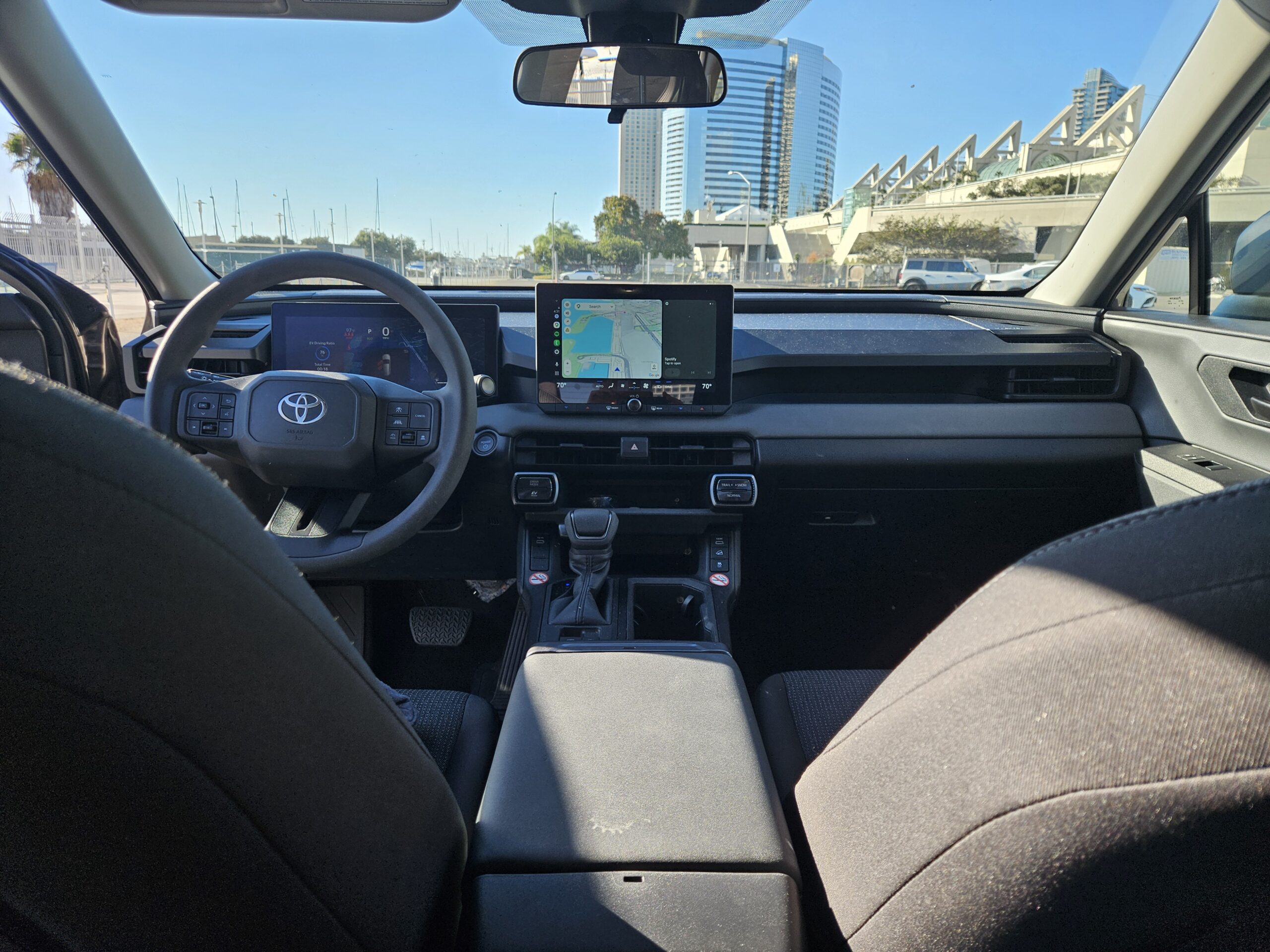
The interior is not too dissimilar to what you’d find in its off-roading brothers, either. Lots of hard, durable plastic abound with an extra-wide console between the seats that hold both the thick shifter and dual cupholders side by side. Just above the console and under the dashboard center vents are big truck-like Drive Mode/EV Mode/Trail-Snow/Normal buttons that bracket a deep well to hold a phone and other detritus. Overall, the ambiance struck me as a little silly in a Bronco Sport sort of way.
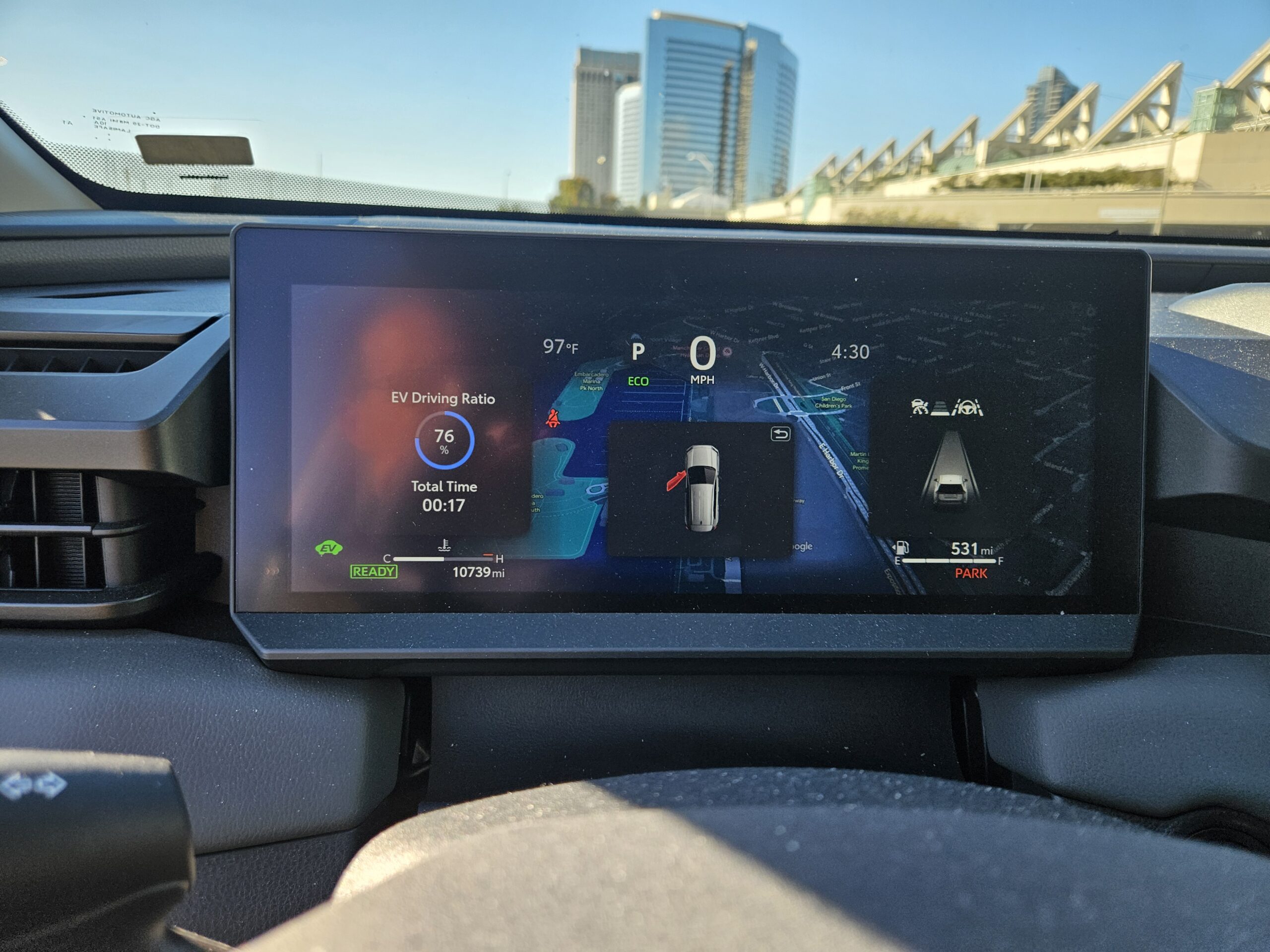
The RAV4 now has a fully digital instrument cluster plus a 10.5-inch center display (12.9-inch in XSE and Limited trims). I flipped through the different instrument cluster options and settled on the one that displays the navigation in the center display. As I was using Google Maps in Android Auto and not Toyota’s subscription-based navigation, this was an unexpected perk. There is also a choice for what you can view to the left of the center display, and I tried to find the graphic like in my mother’s 2017 Prius, which shows the hybrid system and where the power is going, but it wasn’t one of the options. I settled for the “EV Driving Ratio”, which shows what percentage of your drive has been in EV Mode. Apparently, what I was looking for can be activated somewhere in the Settings menu.
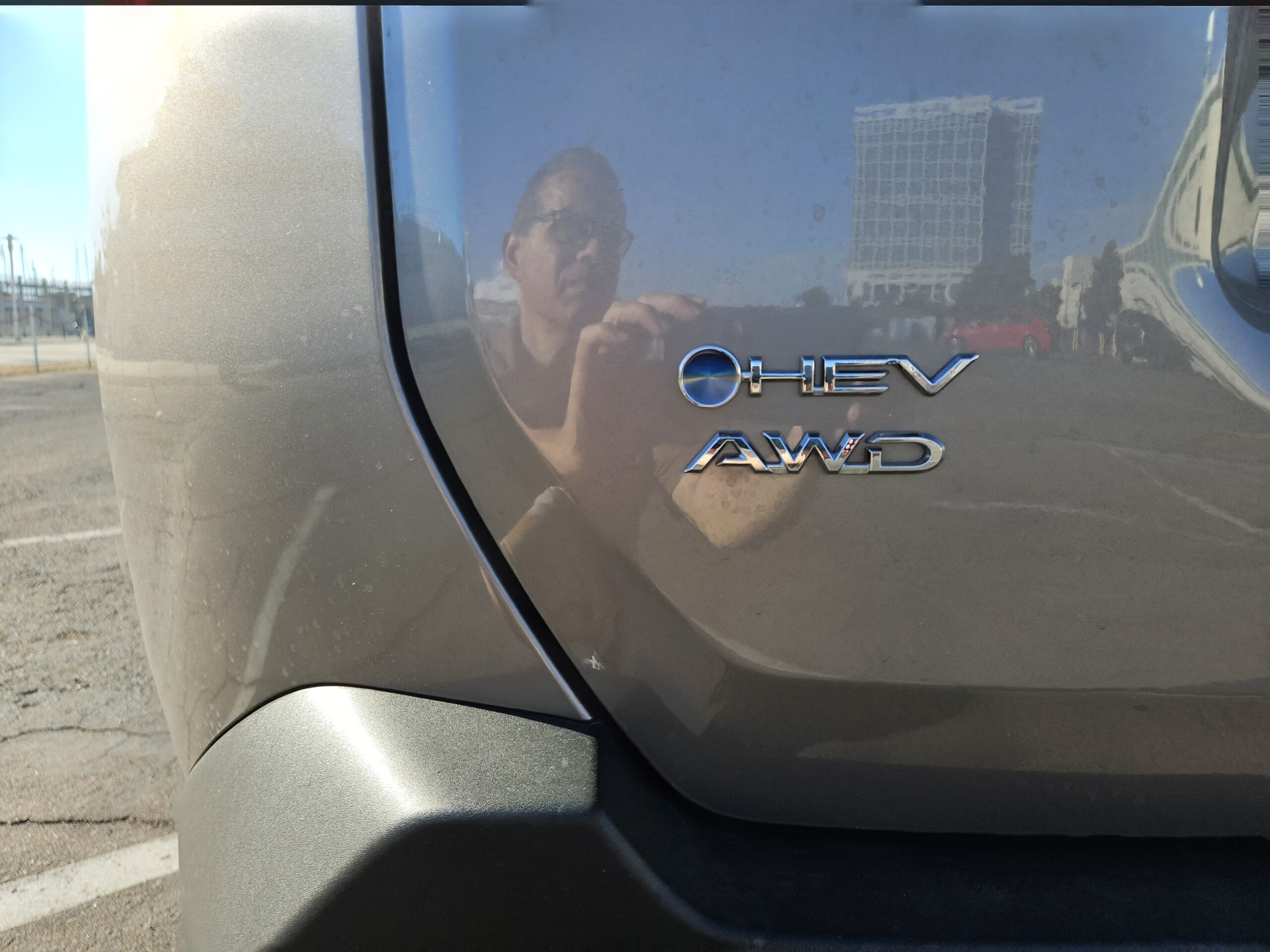
One of the main reasons I chose the RAV4 is that, like with many Toyotas, there is no longer a gas-only version. A hybrid powertrain is standard, and a plug-in hybrid is the step-up version, which is perfect for California’s $6- to $7-per-gallon gasoline. Our plan was to fly into San Diego, then drive up to Los Angeles for a few days to visit friends and take in a few tours, then drive back to San Diego for the conference. With a 46 city/39 highway EPA rating, taking the hybrid would allow us to save some money on an already expensive trip. I noted that the trip computer showed a lifetime average of 50 mpg, and the half-a-tank of gas I used during the trip would jibe with that. We were also happy to discover that the RAV4 comes with a retractable cargo cover for its generous 37.8 cubic feet of cargo space since our luggage would be in the back for a good part of the trip.
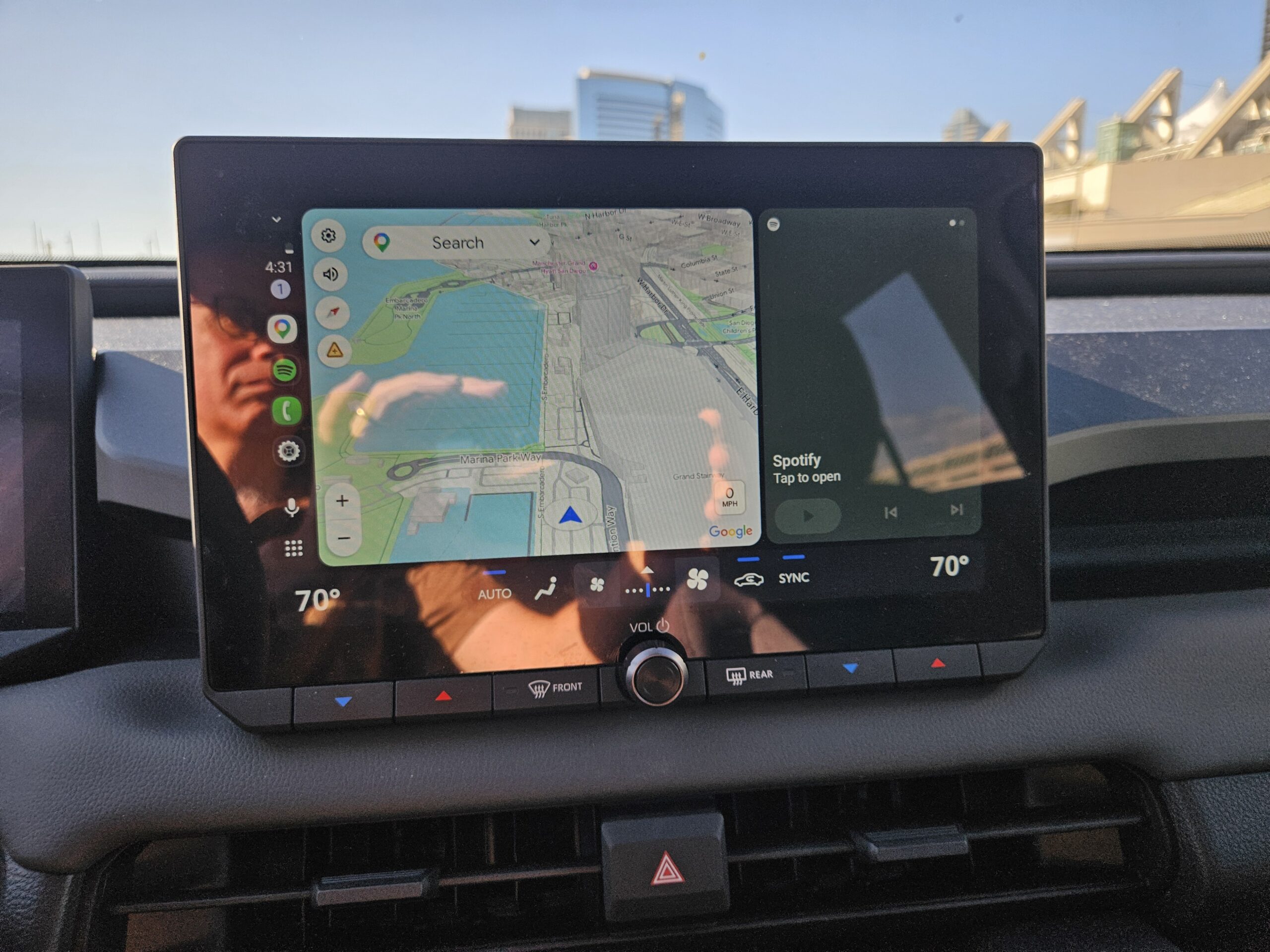
Toyota’s infotainment system has improved to the point where it’s competitive with some of the better systems out there. I had no trouble pairing my phone or finding a radio station. The only trouble I had was trying to do more than basic adjustments to the climate control, which is part of the infotainment system and not very intuitively marked. You access it by pressing the up arrow just above the fan speed. Some of the climate functions are fixed at the bottom of the screen and temperature control and the defrosters/defoggers are controlled by physical buttons under the screen. I also noted that the air conditioner had trouble keeping the car cool in San Diego’s 100+ temperatures, which we experienced literally every day we were there (“It never gets this hot in San Diego” people told us over and over again when explaining why their house or business is not air conditioned).
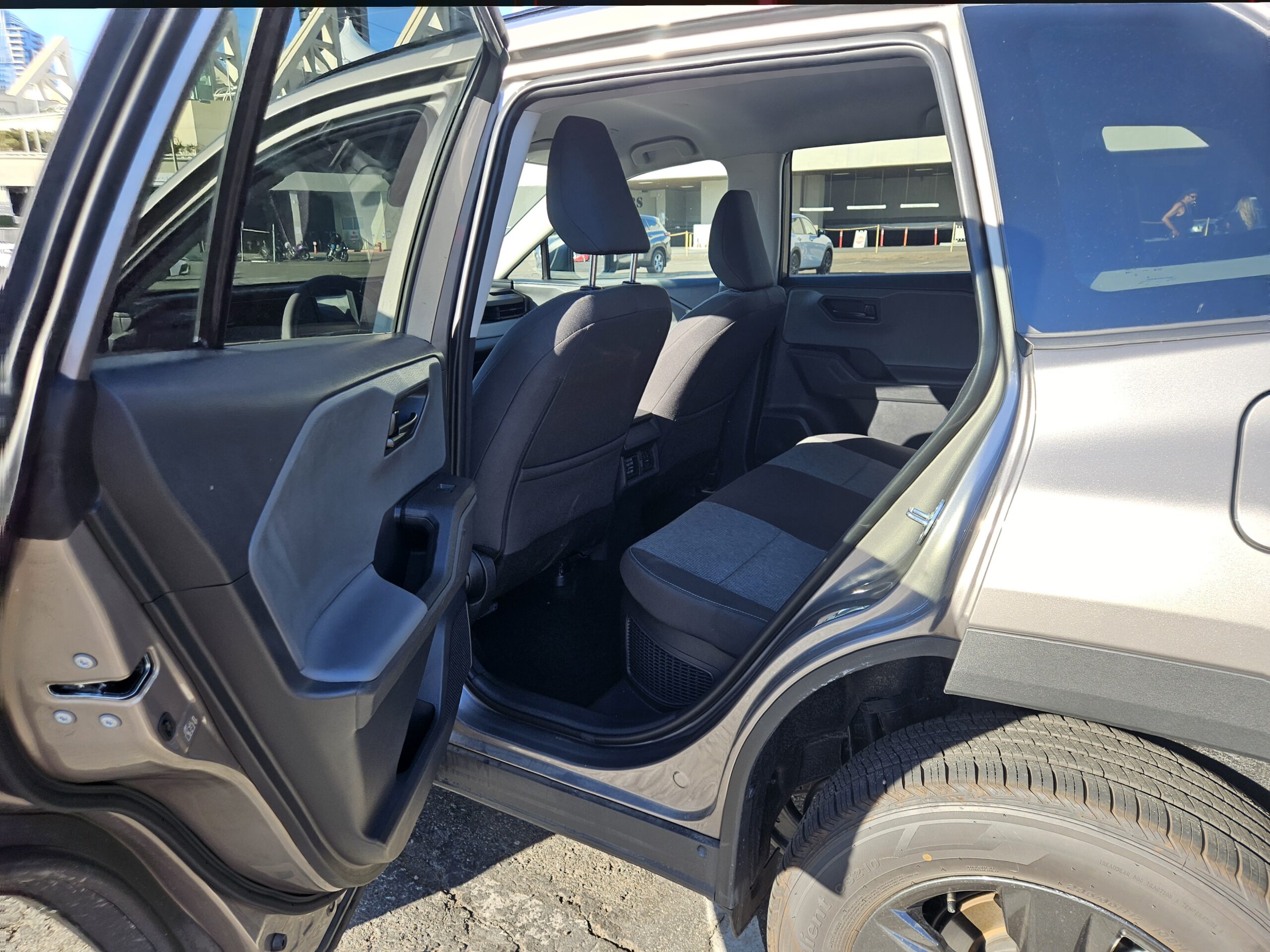
The nice thing about flying in late in the evening is that there was very little traffic on I-5 northbound from the airport. The RAV4’s ride was pleasant enough, but the steering was way too light for my taste. The front seats are comfortable, and the back has plenty of legroom and can easily accommodate all shapes and sizes.
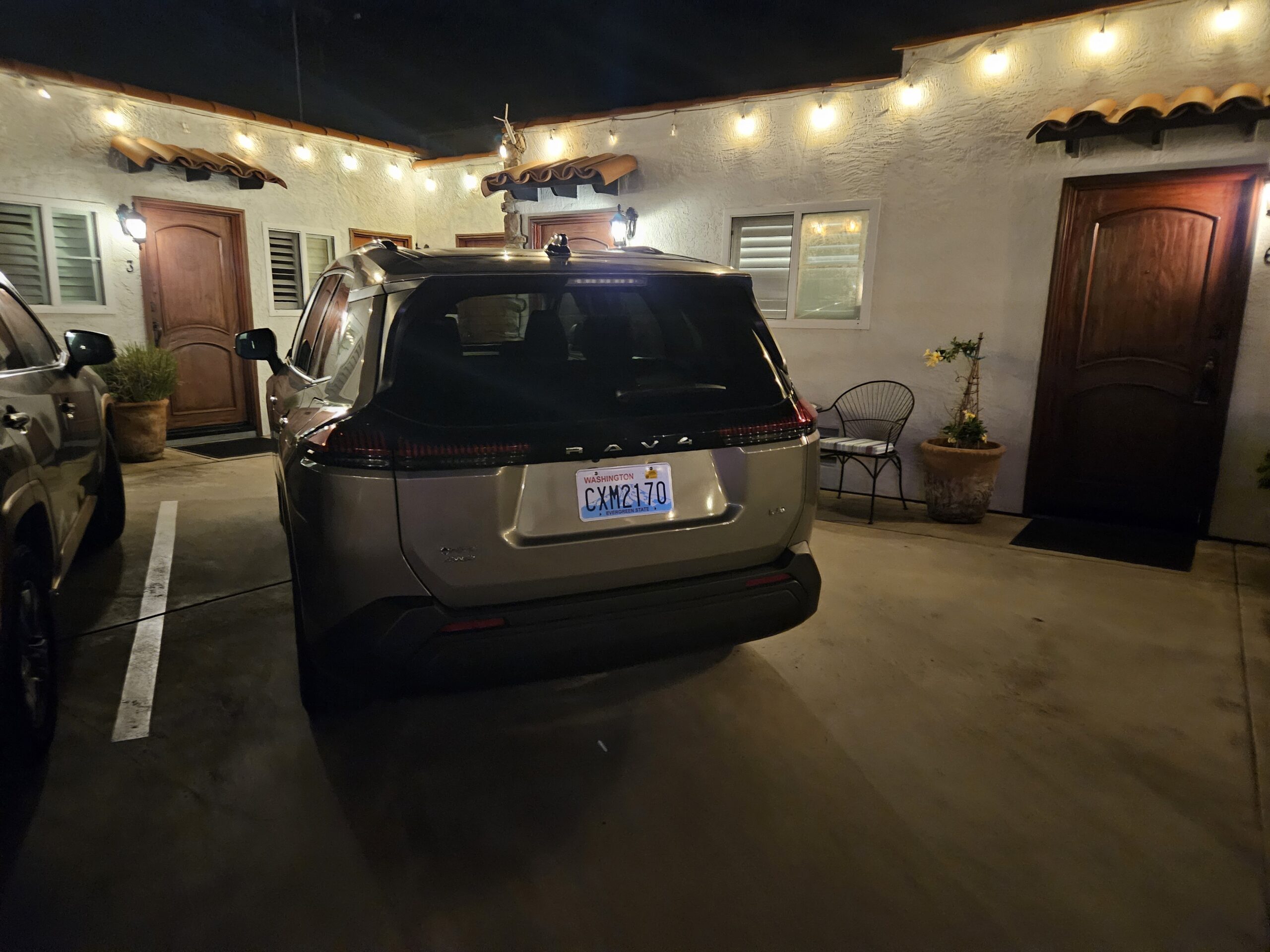
We stopped for the night about 30 minutes north of San Diego and stayed at a charming little classic California mission-style motel named Leucadia Beach Inn. It was my goal for this part of the trip to stay in the kinds of motels you frequently see in movies set in Southern California.
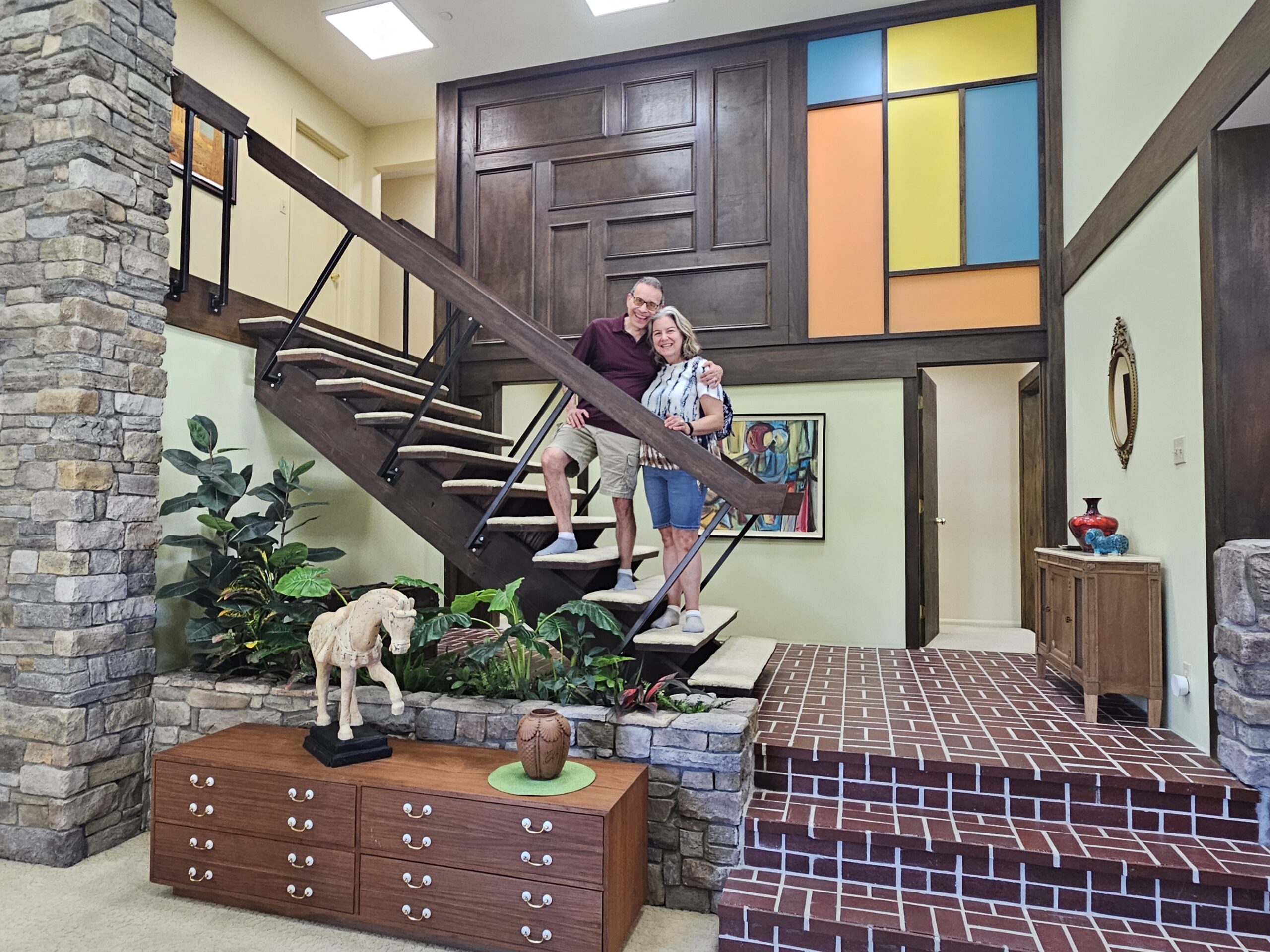
When we got to Los Angeles the next morning, we had a couple of hours before we could check in to the Tangerine Motel in Burbank (where a scene from the movie Heat with Al Pacino and Robert DeNiro was filmed), so we decided to tour a famous North Hollywood house after a nice California-style lunch at the Urbane Café. This being Southern California, we were lucky to be able to park the RAV4 in the same plaza where the café is located. It took a couple of tries to get it into the small parking space, as the big square front end made the RAV4 feel like it was much bigger than it actually was. A plus for some, but not for this guy. After checking into the Tangerine, we went to visit our friends in La Crescenta and were thankful for choosing a crossover as getting to their house involved a dirt road and a very long uphill driveway.

After breakfast at one of the original Bob’s Big Boy restaurants, we checked out of the Tangerine and drove over to Warner Brothers Studios where we took the Studio Plus Tour, which included a guided tour, a visit to the prop department, and lunch at Central Perk. As much fun as the tour was, it put us on the road to San Diego at rush hour on a Friday. Google Maps took us off I-5 through beautiful East L.A. before putting us back on I-5. Since it was apparently giving most people the same “short cut”, I’m not sure how much time it saved. We arrived at the Hilton San Diego Bayfront after about 3.5 hours, which is only an hour longer than the trip should have taken. When I learned that the Hilton charged $50 per night for parking, I started questioning my decision to rent a car.
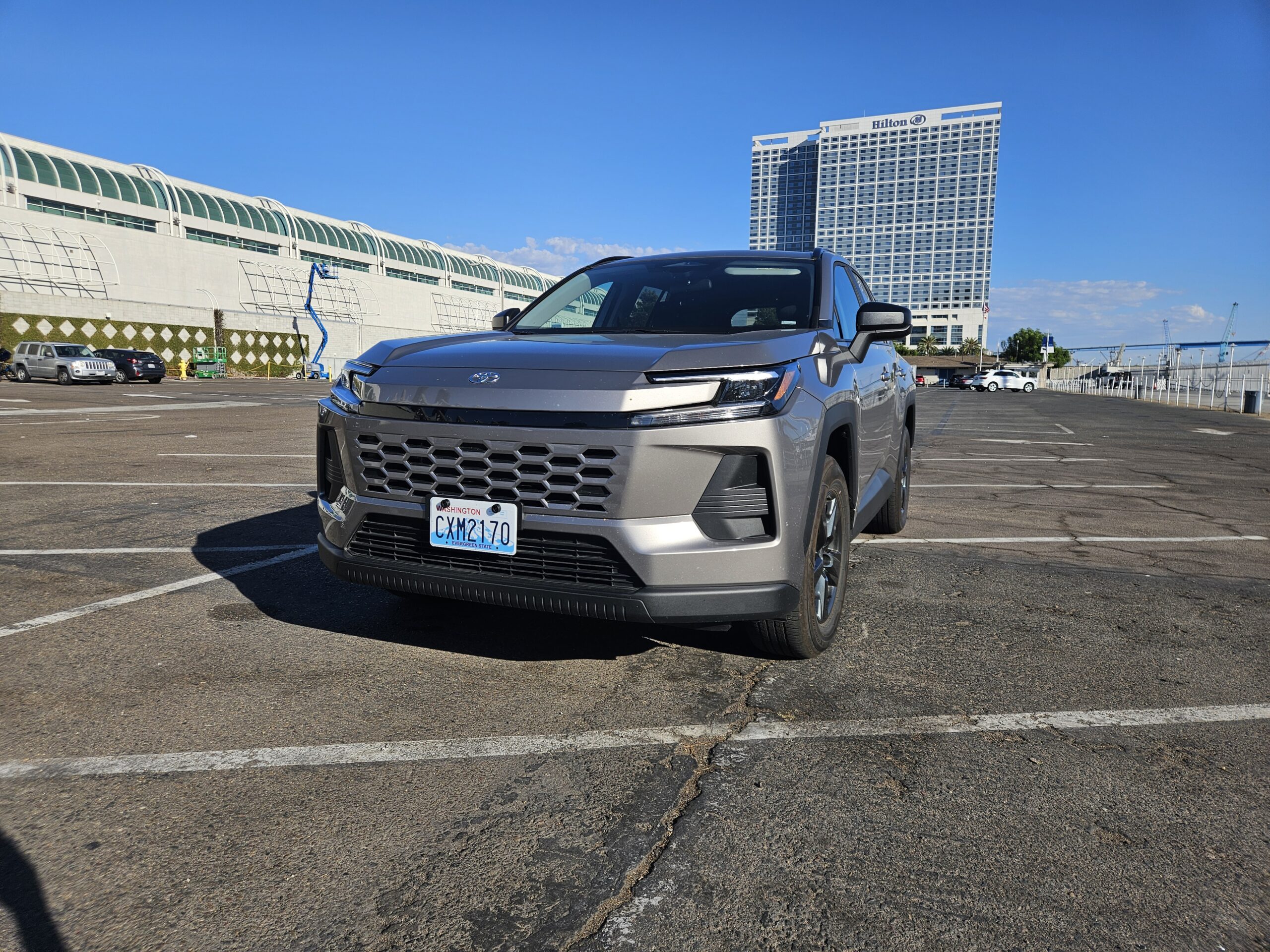
However, we learned after the first night that if you want food not served in an over-priced high-end bar, over-priced sports bar, or over-priced high-end sports bar, one needs to leave the Gas Lamp Quarter. Having the RAV4 made that much easier. Although we still ended up in a sports bar, at least it was one with good food and reasonable prices. That’s when we learned that parking ANYWHERE in San Diego is a bit of a challenge.
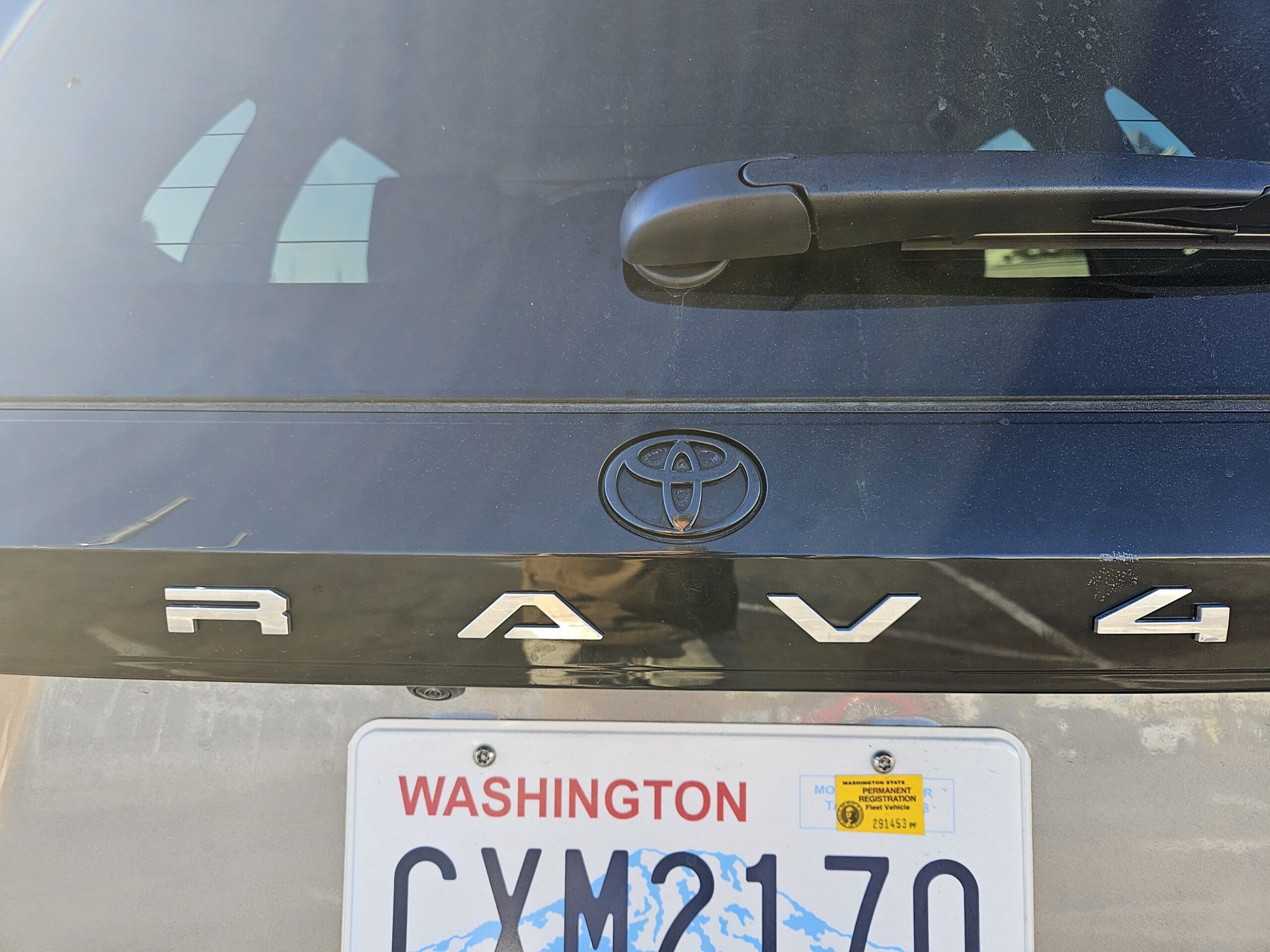
Speaking of prices, Toyota’s not cutting you a deal by making the hybrid standard. The 2026 LE AWD, at $33,300, is $450 more than the 2025 LE AWD hybrid, and a dear $2,100 more than the 2025 gas-only LE AWD. Toyota is doing its part to help push up the average transaction price of new cars.
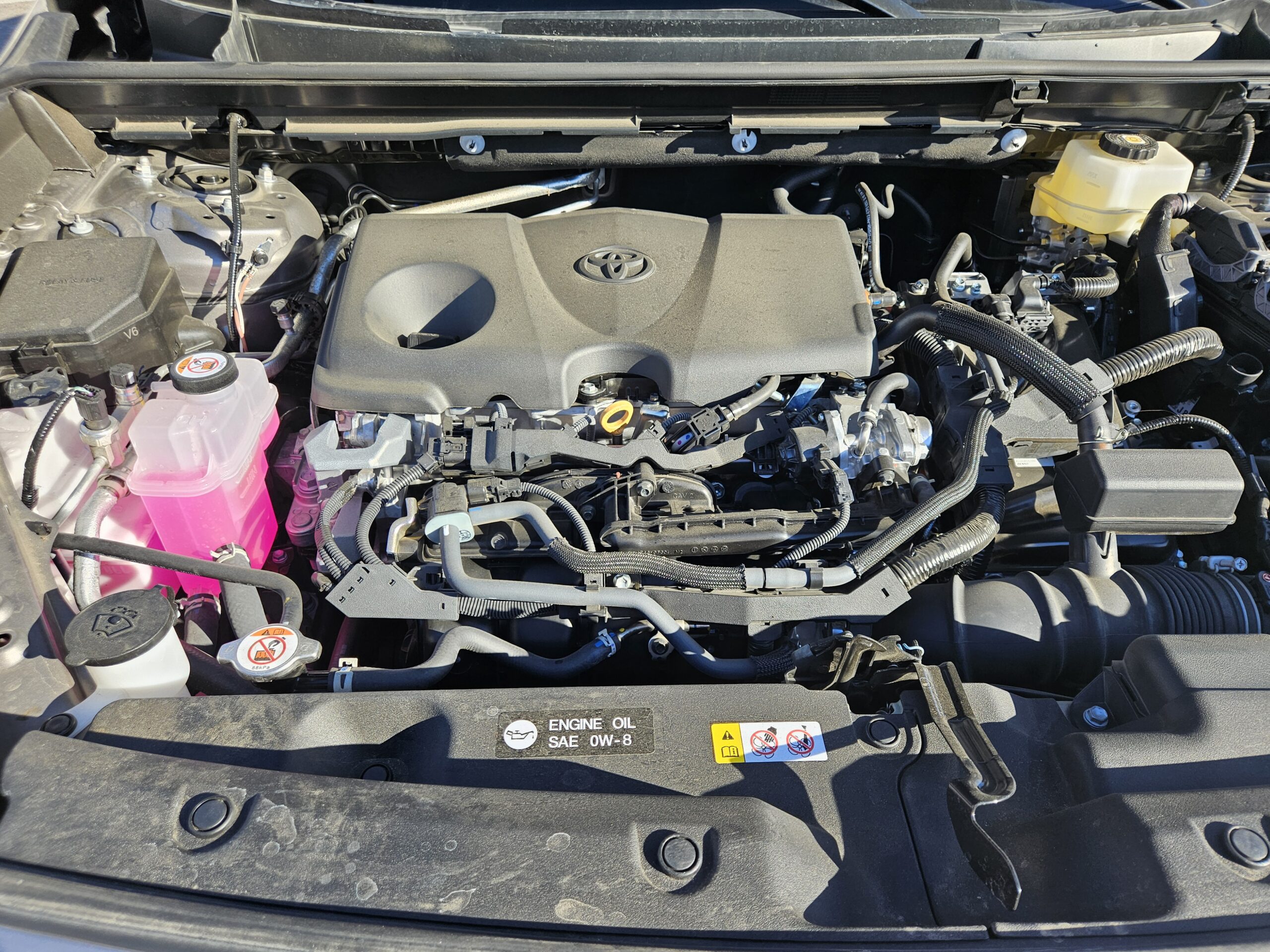
If I appear to be talking more about my trip than the RAV4, that’s because it just didn’t leave much of an impression. Don’t get me wrong, it’s a very nice and extremely reliable crossover. I have no doubt that even with the discontinuation of the lower priced gas-only model, the RAV4 will continue to be one of the top two best-selling vehicles in the country.
I know we joke a lot on this site about Toyotas being mere appliances, and maybe I went into this rental a little biased, but the RAV4 just did absolutely nothing for me on an emotional level. For people that don’t expect an emotional connection to a vehicle, there’s none better than the RAV4.
Related Reading
Curbside Classic: 1994-2000 Toyota RAV4 – Light Trail Blazer
CC Outtake: RAV4 Shorty – My, How We’ve Grown
Rental Review: 2024 Toyota RAV4 – Responsible Adult Vehicle, 4 Wheels























These RAV hybrids cant be too bad just did a 600km roadie today and they are everywhere gas and diesel are around $15 per old fashioned gallon were pay over $3 perlitre x4.5 you do the math my car goes 12km per litre I’m told a Camry hybrid goes 20kms there are plenty of Toyota and other hybrids in NZ and EVs from China, even saw the bright yellow supermarket EV semi today no idea what brand it is definitely ugly but I wouldnt mind a drive of it.
I spend over two hours every day in my car, and this car would be ideal. What I need is a comfortable seat, a decent stereo, total reliability, decent fuel consumption and a totally undemanding driving experience.
However, while that’s what I need, it isn’t really what I want. I’ve driven Toyotas before where I’m bored of the experience before I’ve driven a whole kilometer. I appreciate that the RAV4 is a great car on its own terms, but it’s not the car for me.
Toyotas are reknowned for their sterile driving experience, like driving a Maytag washer on wheels, and this review does nothing to change that sentiment, despite what appears to be styling that harkens back to BMW’s Chris Bangle’s ‘flame’ styling pioneered in the 2000s. To me, like those massive grilles, it just looks goofy, like they’re trying too hard.
So, yeah, if all you want is solid, reliable transportation with a reputation for longevity, Toyota is your car company, and strong sales behind only full-size domestic pickups from Ford and GM reflects that.
I call this automotive origami. Uninspired styling with lots of seemingly random creases, super sized wheels and -indeed- massive grilles.
But then again, what other options do you have to doll up an uttterly boring, thirteen to the dozen SUV derivate..?
I’ve seen the ‘automotive orgami’ term used before, and it’s appropriate. But, as I said, current modern styling trends remind me, a lot, of Bangle’s efforts that started at BMW with the 1st gen Z4 when it was called ‘flame’ styling. It’s to the extent that the sheetmetal of some vehicles actually look like they were in an accident. I don’t get that, at all.
Things got toned down quite a bit with the second generation Z4 which makes a bit of sense since it was the first car designed entirely by two women who, presumably, had better taste.
Of course, now BMWs have those gigantic, cartoonish ‘twin kidney’ grilles. I have no idea where that came from.
It’s because the Chinese like big grilles.
You forgot the square wheel arches, in the style of the 1978 Lamborghini Countach.
Every now and then I wonder if now is the time for me to experience Toyota. Though I have never gotten any kind of emotional support from one, I wonder if either the cars or I have changed enough to make a relationship with a Toyota something to consider. Then comes an article like this and I am reaffirmed in my life choices.
For better or worse, I like vehicles with some kind of personality. Even if that personality is kind of goofy or offbeat. (or maybe especially). Maybe someday I will be ready for a Toyota experience. But not yet.
And I loved the picture on the stairs of the Brady house!
Thank you Jim for correcting Adam’s omission of why that house is “famous”. I’m pretty sure that I’ve never ridden in a RAV4 nor actually seen even one episode of the Brady Bunch.
I remember when the buyers got that house and made the decision to maintain not only the exterior, but modify the interior to match the show as a tourist destination. Typically, such ventures end up being money pits that fall on their face but it looks like, at least in The Brady House’s case, they’re making something of a go of it. An example of one that doesn’t really look like it’s panning out is the Albuquerque home of Breaking Bad’s Walter White.
In fact, what would be really groovy is if they went the extra mile and had a selection of rotating the Brady Cars (like the E-body convertbile that also seemed to double in Mannix) parked in the driveway. CCers would swoon.
Like this one?
They didn’t have Carol’s 1971 Satellite, did they??
I was wondering if there was some particular reason why you didn’t come clean on the fact that that was the Brady Bunch house. I had read somewhere about the restoration and re-opening…but actually heard that it wasn’t exactly fully open to the public. So, I figure that maybe you have some kind of special insider privileges. (I’m expecting upcoming articles about a tour of the SS Minnow and Andy Taylor’s police station 😉 )
As for the RAV4, I personally feel that it’s terribly ugly, but your reported driving experience seems entirely in-line for what one would expect of a common rental fleet vehicle. Easy to see why it’s popular as such.
I wasn’t sure it was open, either. We watched the HGTV miniseries where they bought the house and worked with all six kids to make the house look like the sets, then they sold it to a private buyer. Therefore, we were shocked to find out she did open the house for tours and there was an opening that afternoon at a time that was perfect for us. It was likely easy to get tickets at our preferred time because it was a Thursday and tickets aren’t cheap.
I specifically didn’t say what house it was because I was looking to see who would recognize it first. For late Boomers and Generation X, it’s iconic.
Long-term Toyota owner here — with rare exceptions there has been a Toyota of some sort or another in our garage since 1989. Had a 4th generation RAV4, first SUV in the family, which was very much fun to drive when I put performance tires on it but my bride much prefers the Mazda CX-5 to the RAV4. But the RAV4 had more cargo space.
I could feel a wee bit emotional about that lifetime average of 50 mpg. That’s pretty amazing for a tall and none too light or aerodynamic CUV.
Thanks for this interesting review of an undramatic car. It’s tough to not be drawn, at least somewhat, to vehicles like this when considering a new car. After all, I can certainly use some serenity in life right now, and a car that simply does what’s asked of it would seemingly provide just that. But the other part of me just yawns. I guess whenever we buy another car, those two sides will fight it out.
Looks like a great trip too!
This review is very timely as we have been looking at consolidating to 1 vehicle, and our current 2 are now 10 and 9 years old. And the ’16 Forester XT is about due for another complete set of wheel bearings which last time was over $1,200.
We had a ’12 RAV4 that we gave to our daughter when she went to university, and it was OK but not exciting. I have found the looks of these to have gotten worse as each generation has come out, and this latest version seems to be rocking some Subaru styling cues, in particular the wheel openings (or maybe Subaru is copying Toyota). I also dislike the reliance on touch screens for basics like HVAC. Funny the latest Outback has gone to more buttons than in the past, and I think looks better. But boy, 4.7 l/100 kms sure speaks to me compared to the 12+ for our QX50 and even the 8.6 of the XT.
That is one ugly vehicle. And that interior and dash? Horrible. I also have a huge issue with Toyota and others claiming “HEV” or hybrid “electric” vehicle. If it has a gas engine, a filler tube and an exhaust, then it’s clearly NOT an EV of any sort. This is a huge lie that needs to be stopped.
I truly don’t understand how these things sell so well. It would never make my list.
HUH? Hybrids do indeed have a battery and can run for short periods on battery alone. Perhaps check one out before making such a silly comment. Do you know what the word “hybrid” means?
Hybrid:
“Something having two kinds of components that produce the same or similar results, such as a vehicle powered by both an electric motor and an internal combustion engine as sources of power for the drivetrain. “
Lord Almighty they somehow made this new generation uglier than the previous! To me, a laudable feat. The herd will buy them at MSRP and will not try anything the least more interesting because “Toyota.” My GOD…
Ugly, ugly, and ugly.
A prime example of what cars from this era are, and will continue to be, like.
Fortunately, many of us are over 50 and have seen what real cars look like, unlike these household appliances.
Great review. That is surprising about the AC. One of the benefits of a Hybrid that usually isn’t talked about much is that they use an electric AC compressor. That means its RPM and thus output is determined by actual demand, not engine RPM. I’ve found that especially in extremely hot weather our Hybrids have always cooled down quicker and never struggled to keep up with 100+ degree temps.
From the mfg side not being tied to engine rpm means that a lower displacement (smaller, lighter) compressor can be used, I guess Toyota took that a bit too far.
From what I’ve read the RAV-4 has dropped in the sales charts and the CR-V is the best selling non-pickup YTD. I’ve read that it is due to problems getting the assembly lines up to full capacity, for one reason or another. Some say Toyota is doing it to jack up the price and certainly there are dealers that are taking advantage of the limited supply. I do think that Toyota is doing everything it can to get those lines up to full speed as soon as they can.
Personally I don’t like the HVAC controls being mixed between real buttons and being on the touch screen. I also don’t like that the instrument screen is sticking out like an ipad glued to the dash.
The indicated MPG shows how far Hybrid efficiency has come. Of course the displays are usually optimistic, but even 47-48 is incredible compared to what came before, it is also highly dependent on speed so I’d say this one hasn’t done a lot of long 75 mph stretches.
The Prius doing 50 mpg was seen as ground breaking and that was in a small vehicle that used a lot of light weight components and a focus on aero over style, not a brick with AWD. The first hybrid CUV the Escape did around 30 mpg just two decades ago and it too was considered a big leap for the class and era.
Since we purchased our first hybrid, I haven’t purchased a non-hybrid and now non-PHEV vehicle for daily driver use. The immediate family also has HEV/PHEV daily drivers, except for my son who went EV.
Very enjoyable and interesting piece, Adam. The weather you experienced was extreme but becoming more common in SoCal year after year. I live in Santa Monica without A/C so can identify with your commenters in San Diego. However, I find it unacceptable that a 2026 Toyota’s A/C had difficulty keeping up with the hot weather. I drive a sixteen year old Infiniti and its A/C can still freeze you in those same days of extreme heat. Indeed, it can go from being parked in the blazing sun for several hours at the historic house where I am a docent to very cold in just a few minutes. Sad to read that Toyota is going backward in this regard.
I had a look at a new RAV4 hybrid this summer as a friend just purchased one. This was a bit of future shock since at age 60 this was her first ever new car and first car with a screen and so on. We were disappointed to discover built in navigation was extra cost but Car Play worked with her iPhone. Fortunately I had some idea what was going on after renting a Corolla.
To me Toyotas are cars I recommend to other people as thoroughly reliable appliances but I like more interesting cars. I do make an exception for my son’s HiAce van which is entertaining to drive and full of oddities
I’m somewhat surprised about some of the features of the new 2026 RAV4, including the tacked-on looking center screen and that some of the climate controls can only be accessed through the screen. I agree that the styling is ungainly.
I have a 2025 Camry XLE hybrid (like the RAV4, all Camrys are hybrids now), and the center screen is much better integrated into the dash, plus all climate controls are accessed through buttons. (A few like fan speed can also be controlled using the screen.) The Camry is far better looking IMO.
In nearly 17,000 miles of driving, the lifetime fuel economy is 47 mpg, calculated old-school by dividing miles driven by gallons consumed. The onboard computer tends to indicate about 2 mpg more. Highway driving on flat terrain yields mpg in the low 50s — impressive for a 3500-pound car.
Glad to see you writing new-new car reviews, Adam.
Not a fan of the styling. Its like they took styling cues from other car makers and slapped it together. The door off a a Hyundai, the wheel arches from a 80’s Chevrolet Lumina, the rear hatch from a Nissan Rogue, and the front end from a Carrier HVAC unit.
Butt ugly boring CUV.
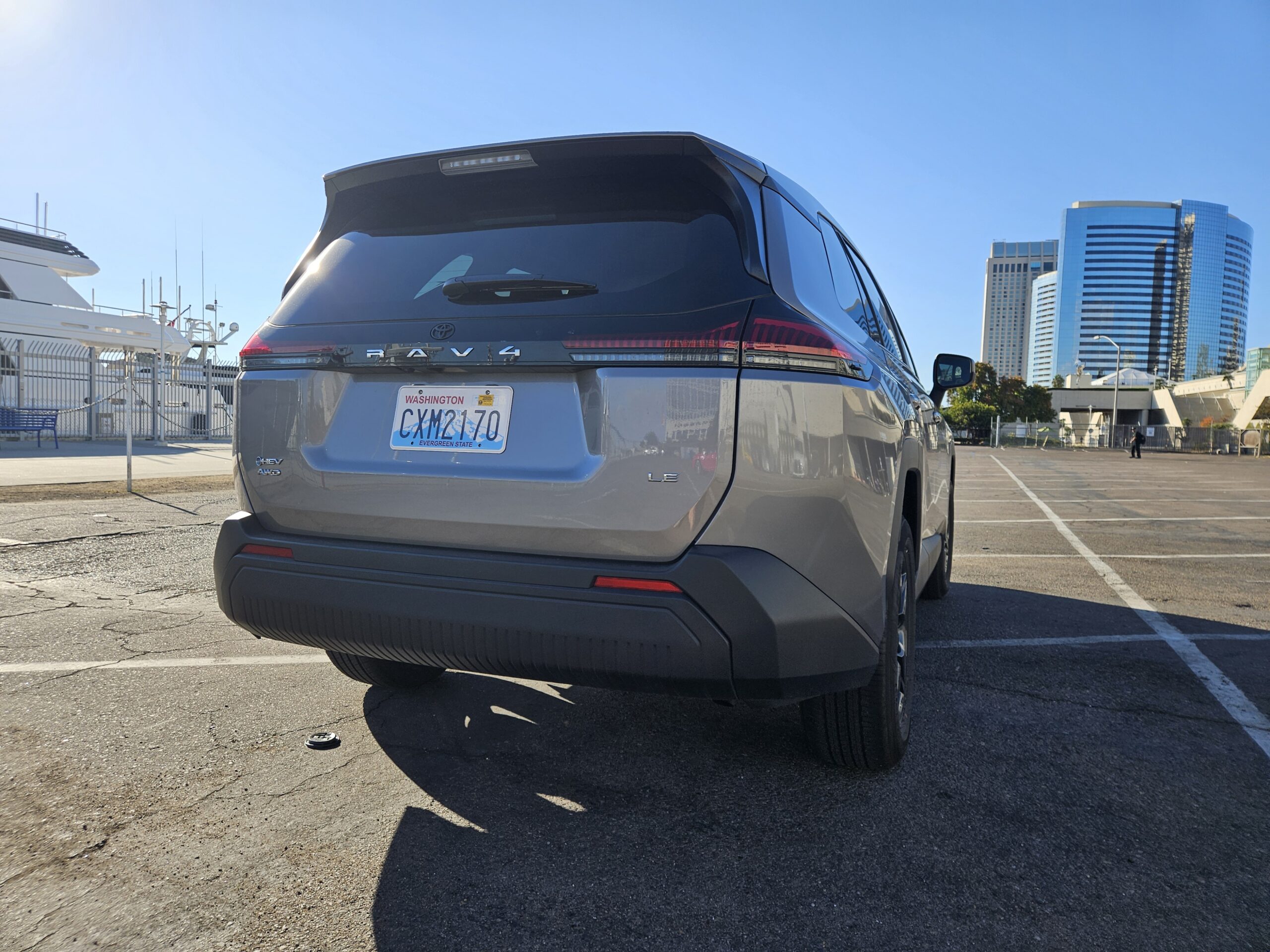
Judging by the CXM prefix on the Washington state license plate, that particular car must be very new. I seriously launched a search for a new car around the beginning of this past June. I noticed a lot of license plates around Seattle beginning with CX or CY, and I wondered what my license plate number would be. I got a 2013 Honda Civic in mid-July, and the license plate begins with CXG.