
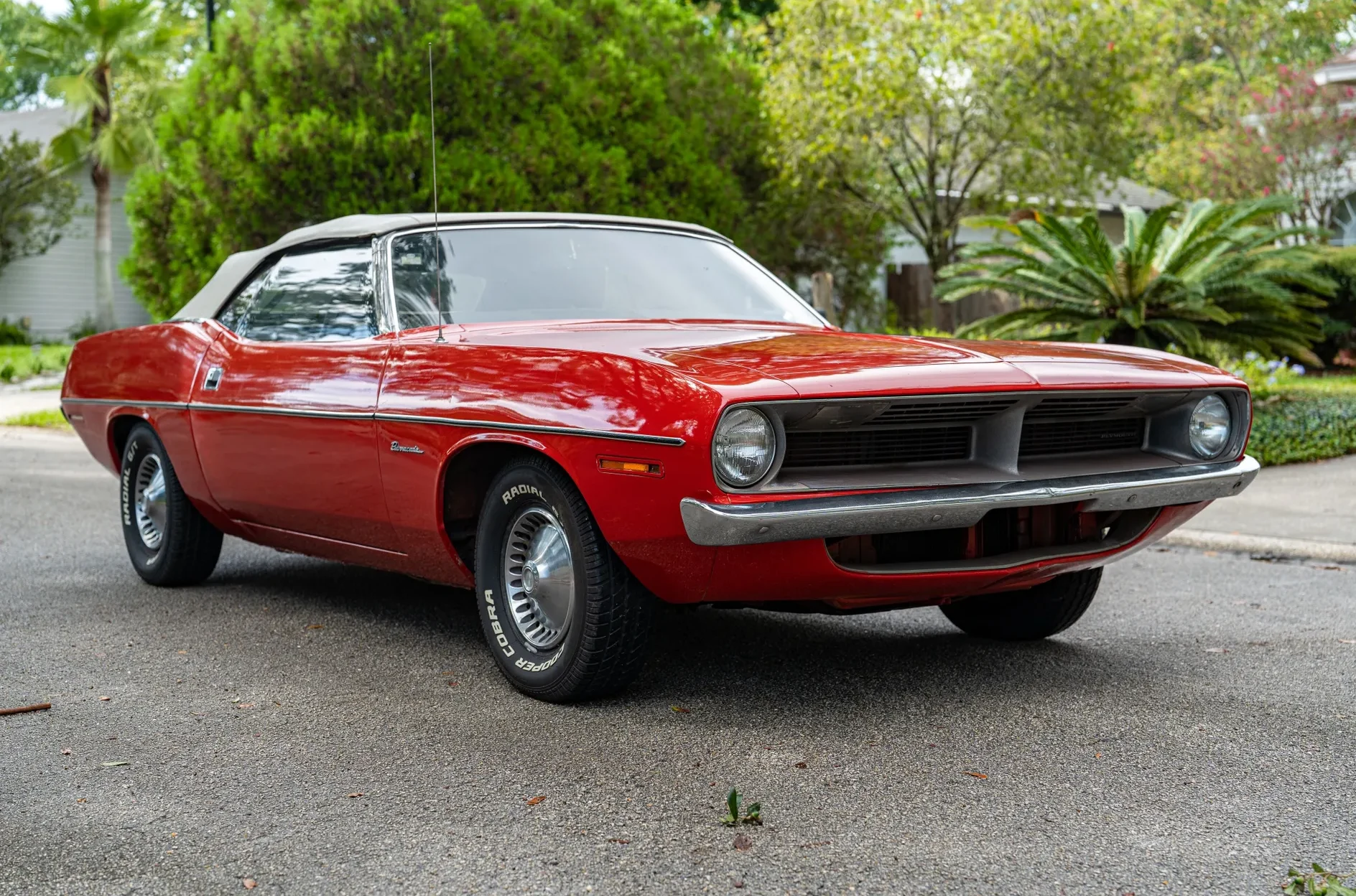
The 1970 Plymouth Barracuda is one of Mopar’s most cherished pony/muscle cars, and also one of its greatest mistakes; just when the pony car market began to deflate, here came a full-bore redesign from the Pentastar that was several years too late. But even though the Barracuda didn’t sell well when new, people are more than willing to pay for them now, even when they’re powered by the base Slant Six as this example is. It’s a one-owner car with an interesting option or two that’s for sale on Hemmings Auctions in Jacksonville, Florida.
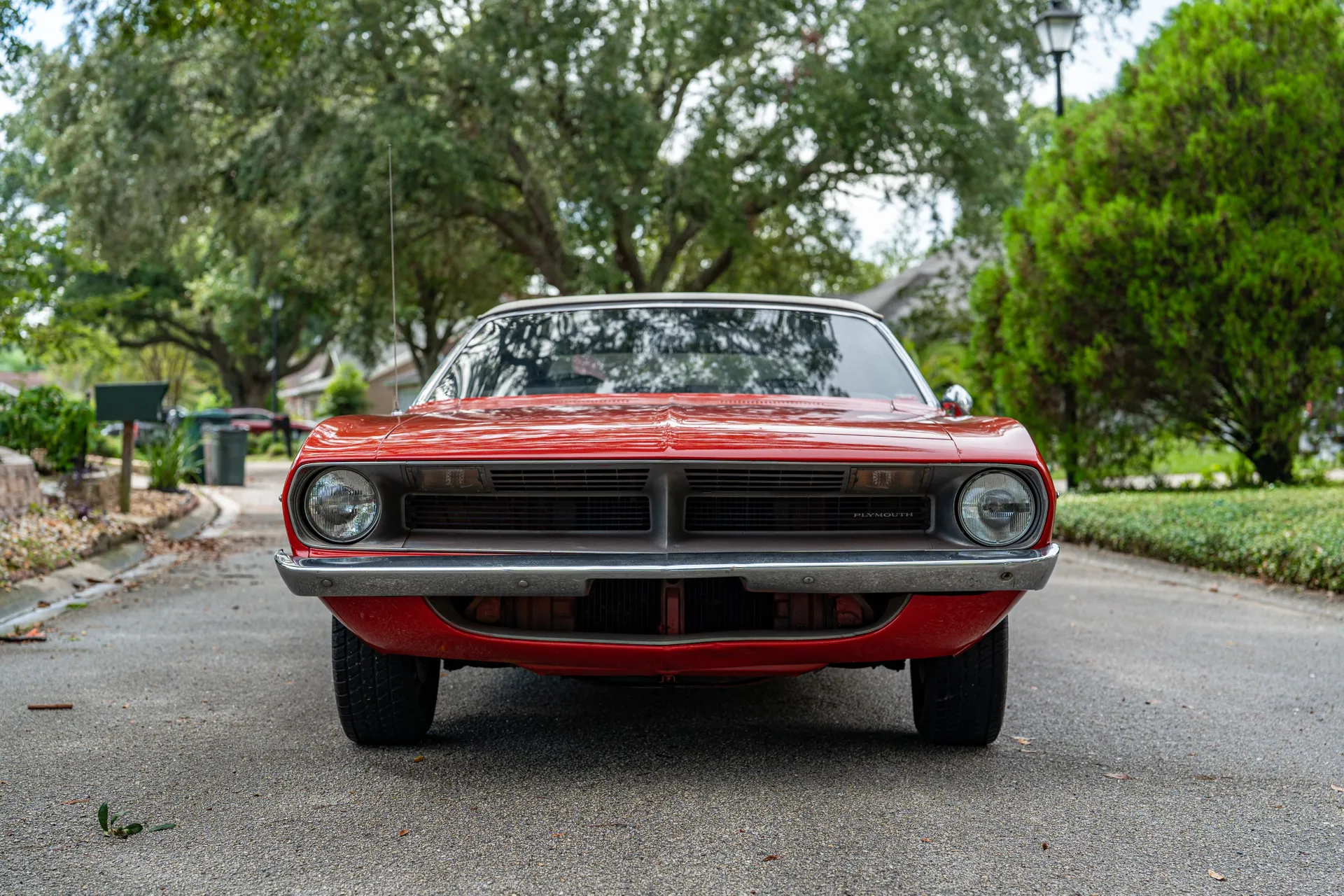
The overall condition of this Barracuda is that of an older cosmetic restoration combined with a reasonably well-preserved original. It was repainted in its original Rallye Red back in 1980, but there’s plenty of orange peel and some rust bubbles in the lower quarters. As you can see, the bumper and lower valance panel took a shot from something over the past 56 years, but with any luck, the bumper could be leveled by replacing or bending a bumper bracket.
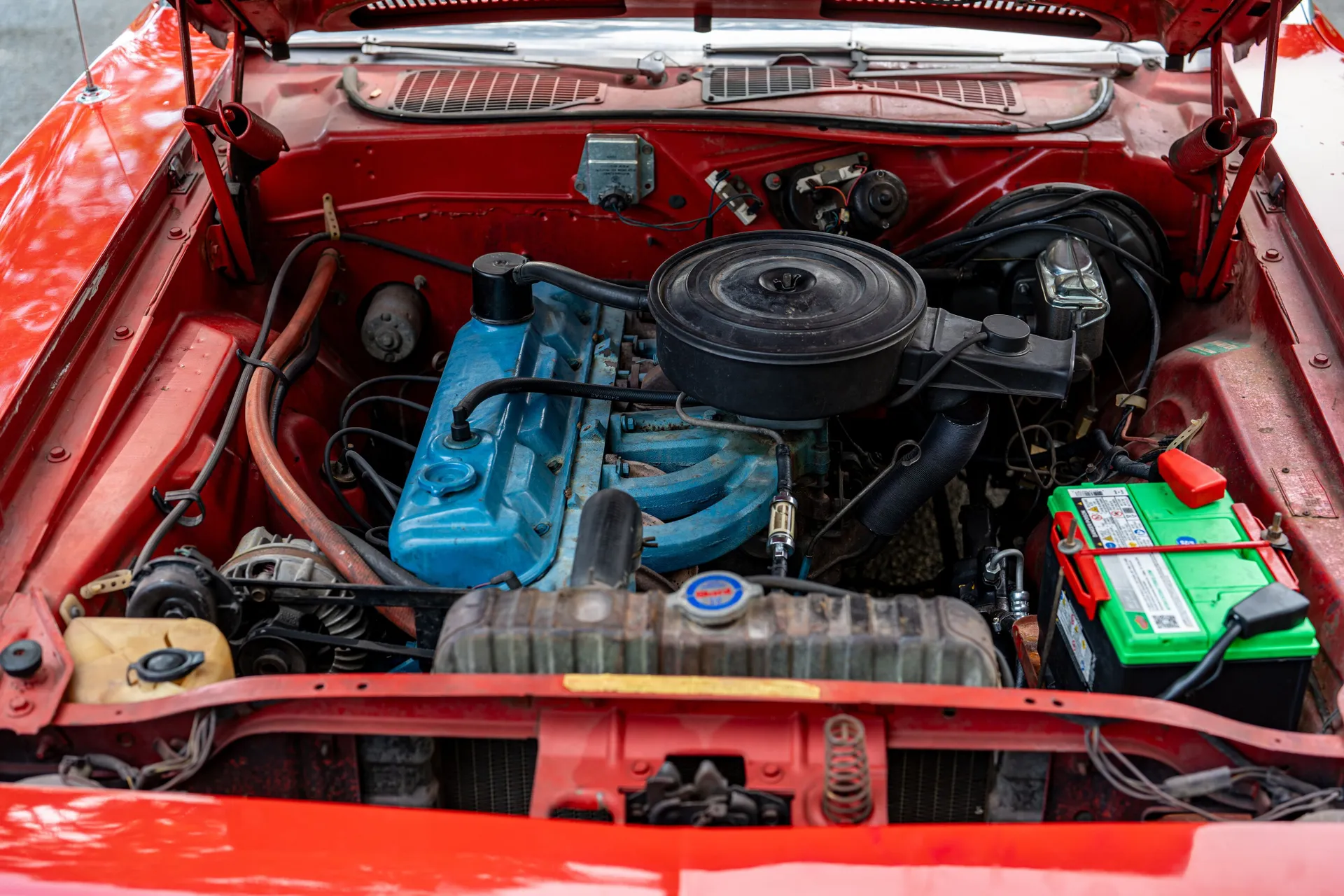
The engine, the 145-horsepower, 225-cubic-inch Slant Six, belies the Barracuda’s muscular looks, but it’s one of Chrysler’s most heralded engines for its durability and simplicity. It’s combined with Chrysler’s equally durable TorqueFlite automatic, which has recently been rebuilt. Beneath the air cleaner is Holley’s notoriously leaky 1920 one-barrel carburetor, which has also been gone through, and other “work included replacement of belts, hoses, and gaskets, as well as a tune-up.”
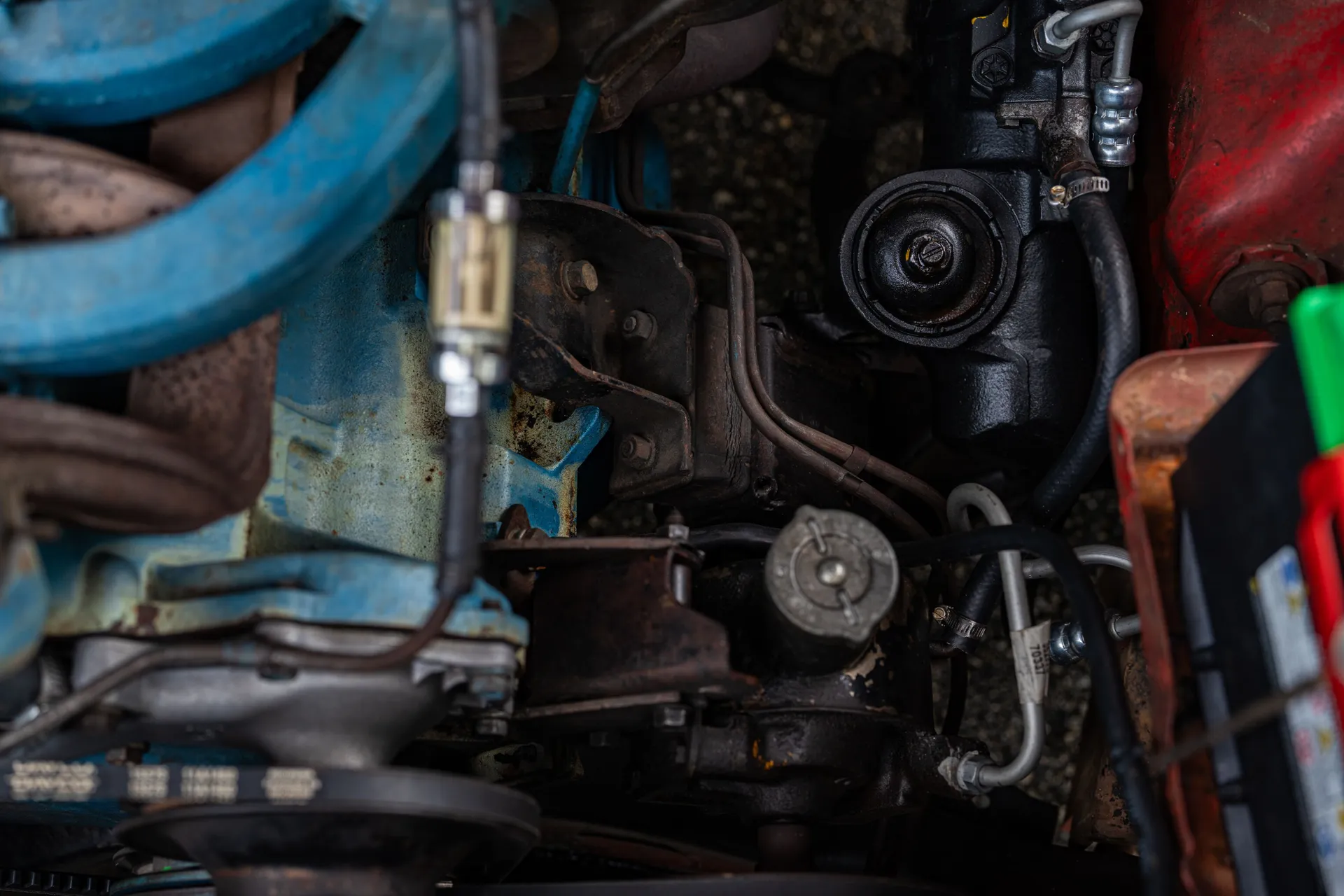
I mentioned that this convertible has an interesting option or two. Power steering is probably unnecessary on a Slant Six car, but it’s not really a surprise; however, ordering front power disc brakes on a Slant Six car definitely is, and this car has them. They’ve been refurbished in preparation for the car’s sale, as has the suspension and steering (but no specific details have been shared on that front).
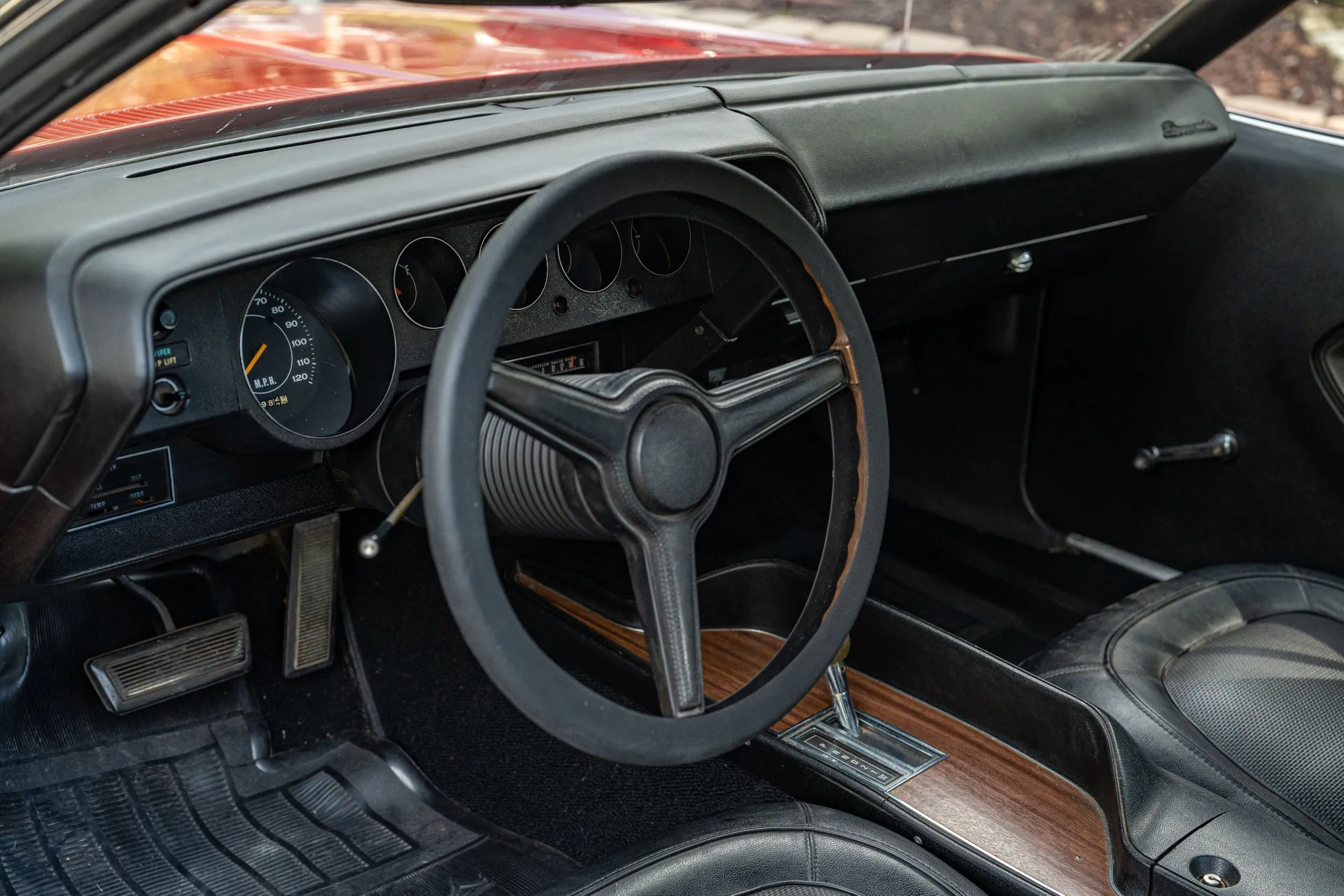
The interior is standard Barracuda, with a very monochromatic look aside from the woodgrain console with sporty floor shifter. You can see that there’s a crack in the dash pad and most likely a few on the steering wheel, judging by the aftermarket cover.
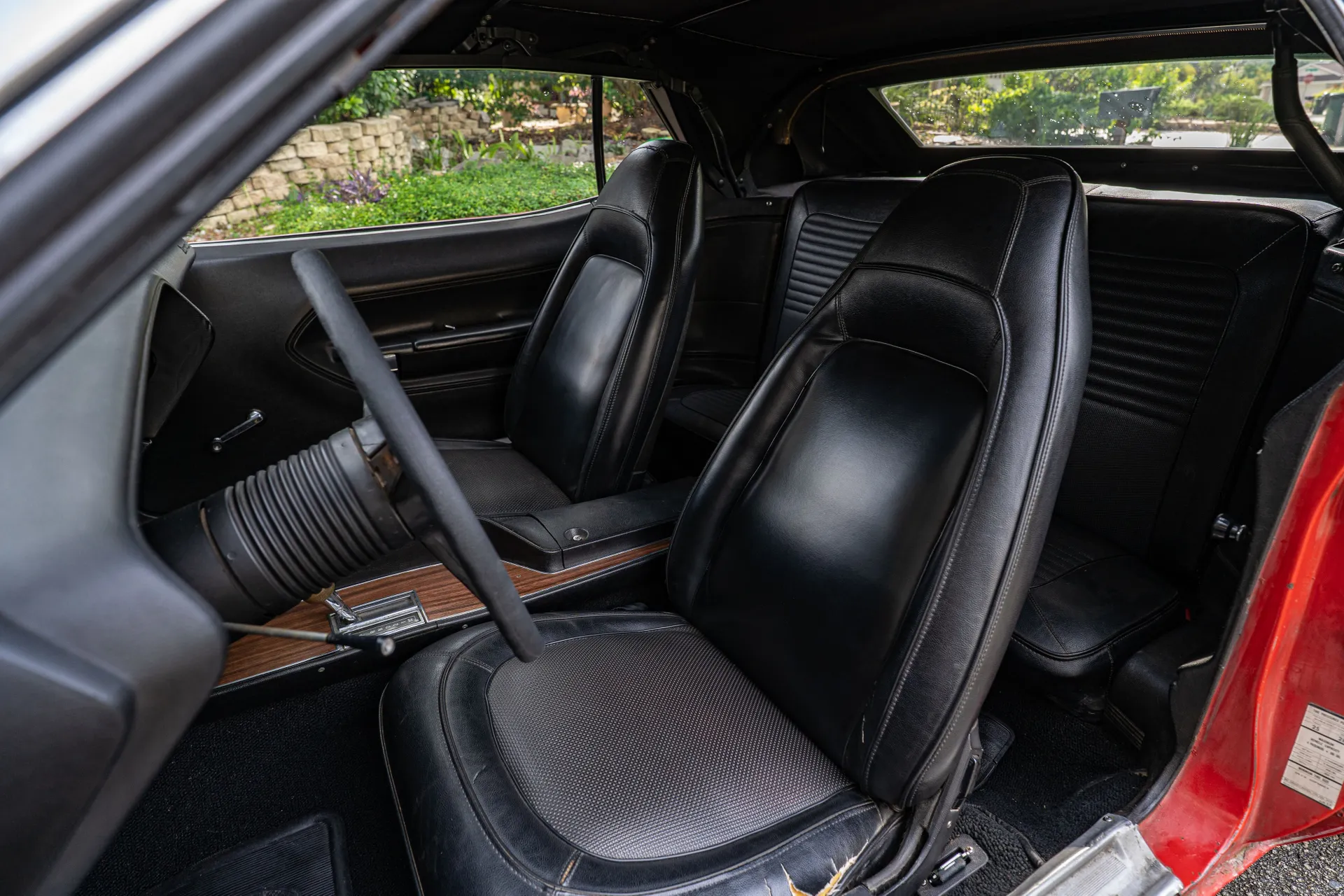
The driver seat is showing some wear, but upholstery kits are available from Legendary Auto Interiors, albeit with a potential 112-day lead time.
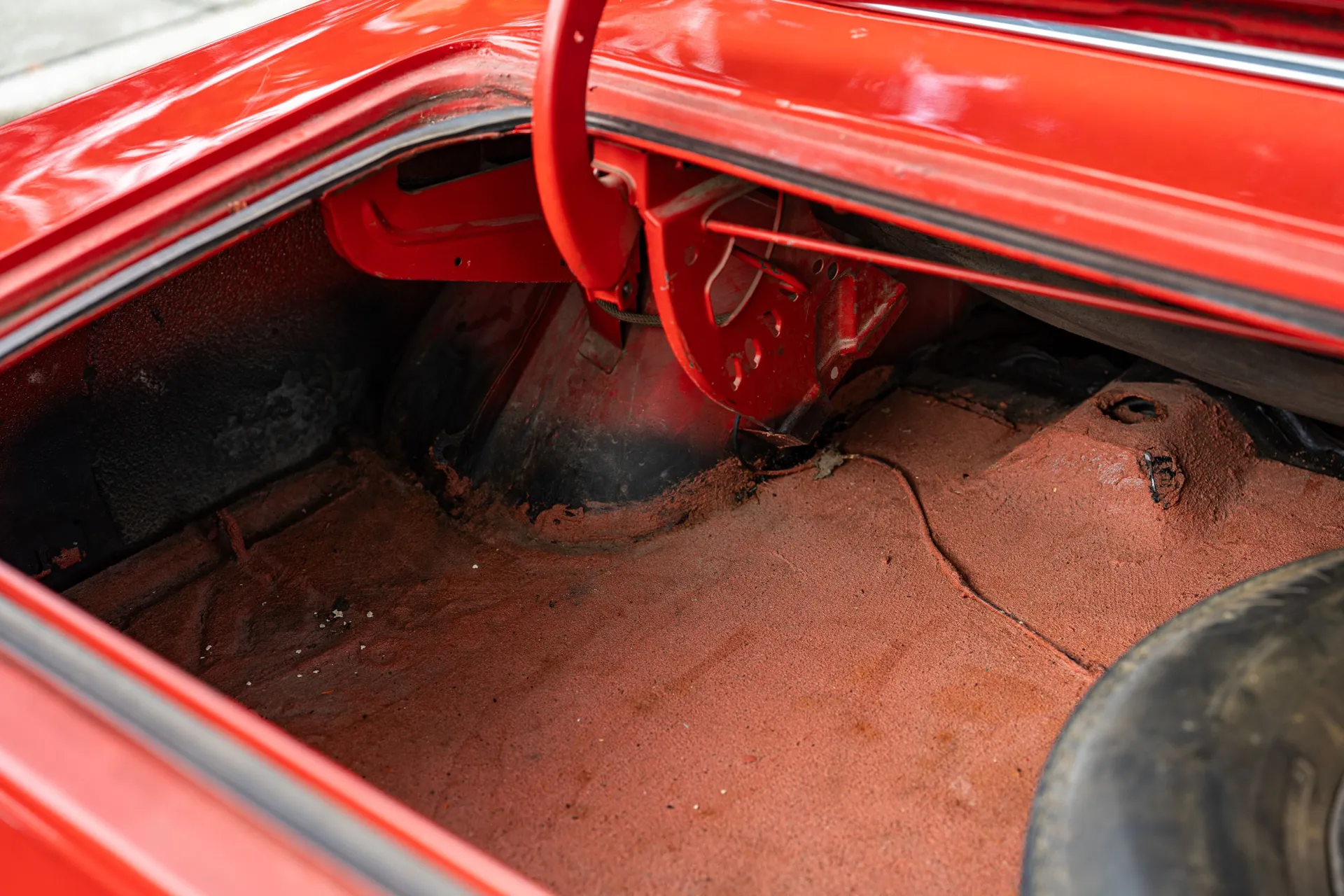
I have no idea what’s going on in the trunk, but it appears to have been coated in bedliner or something similar.
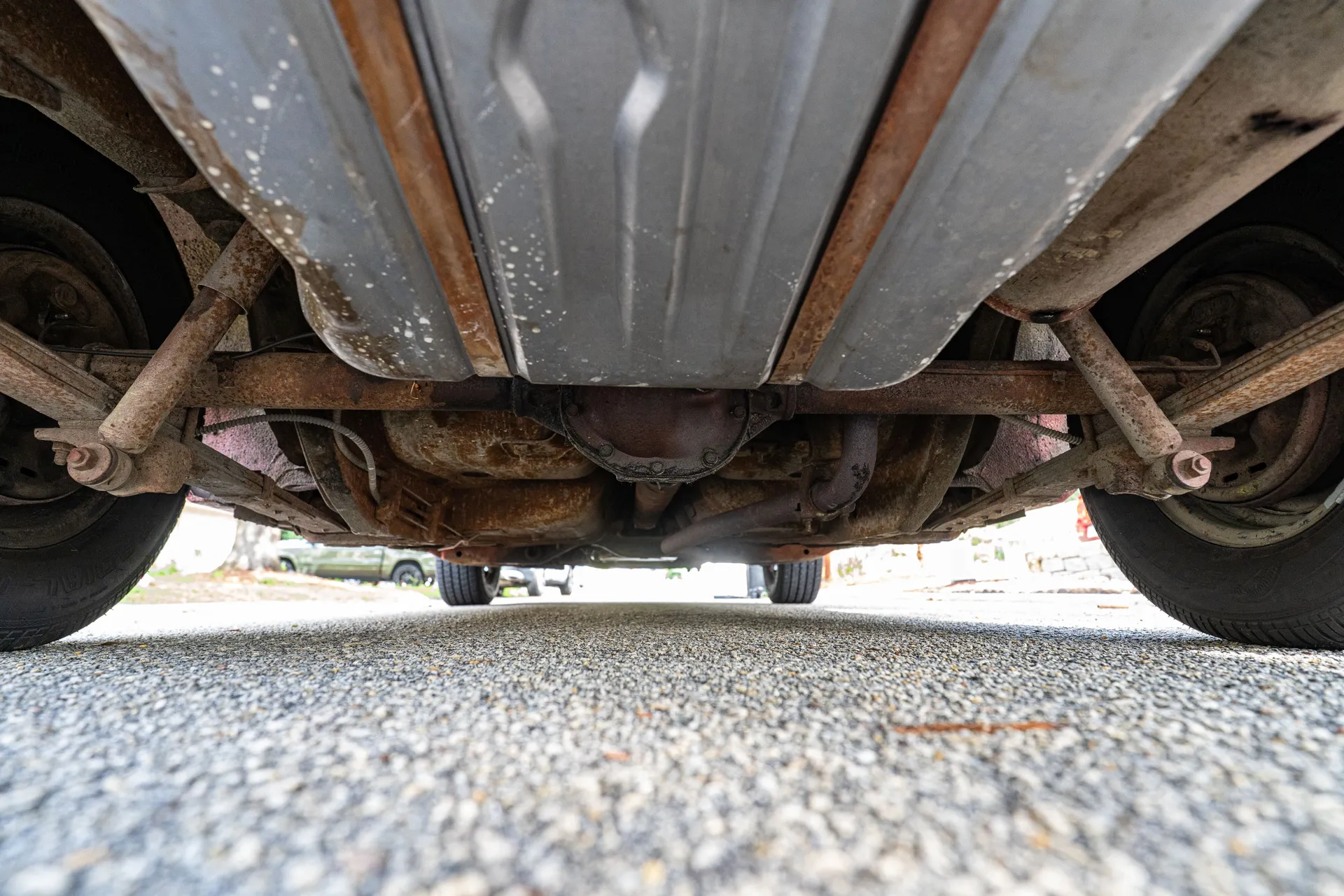
The undercarriage is crusty looking, but none of the pictures (which are all unfortunately shot at this low angle) show any cause for structural concern. I believe the rear end is Chrysler’s light-duty 7 1/4-inch unit, which carried standard 2.76:1 gears with a 225/TorqueFlite combination. Given current gas prices, this might be one of the better buys in terms of economy, as the new owner could theoretically enjoy 20-plus miles per gallon in steady-state driving, not bad for an old American car.
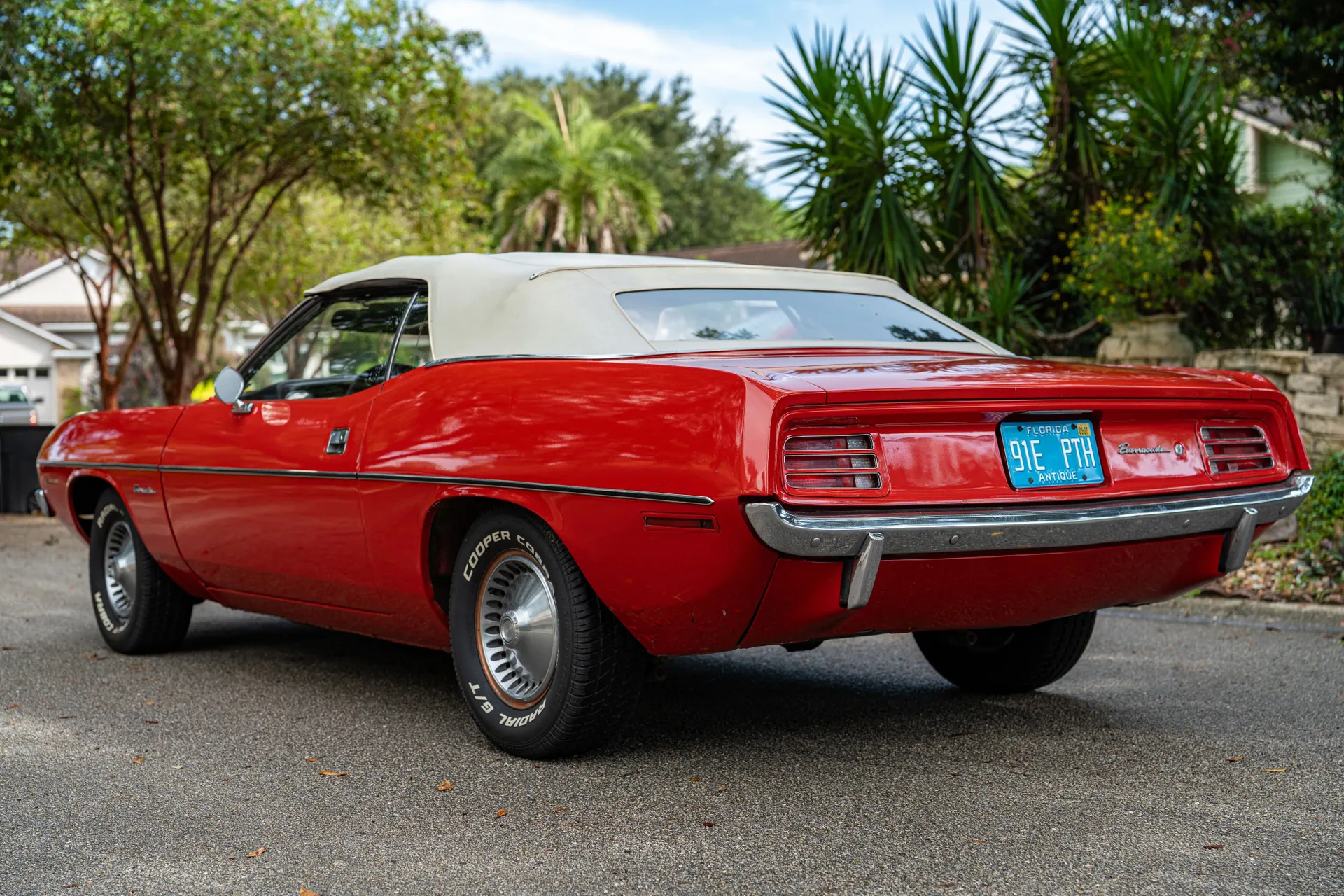
And a good, solid driver it seems to be. It has new tires and seems to be road ready as it sits, but my greatest fear for the car is that it becomes fodder for another ‘Cuda tribute. Your car, your choice, but considering that only 158 225/TorqueFlite convertibles were built in 1970 (according to Hemmings), it’s probably rarer as it sits. As for me, I’d be content to lower the top and hit the slow lane in style.
Related Reading
Cohort Pic(k) of the Day: 1970 Plymouth Barracuda – Having The Last Laugh (by Paul N)
1970 Plymouth Barracuda ‘Cuda 340 In FM3 Moulin Rouge – Loud, Proud, And Only $14.05 (by Aaron Severson)























I had multiple occasions to drive a 74 Charger with a/6 and manual steering back when it was still relatively new, and that thing was absolutely miserable to park. Whoever ordered the power steering on this car gets a handshake from me.
A red convertible with a/6. I love it!! And would not change a thing.
I had a 73 Duster /6 with Armstrong steering. I agree with everything in your post.
When I rebuilt the front end in my ’65 Dart, I stupidly added offset upper control arm bushings for a little more positive caster. Now it steers like a one-ton truck (it does not have power steering). Live and learn, but I’m not tearing it apart and realigning it just for that.
Lord! I want this one!!
This is a gem. Clean up and restore. I would hate to see this turned into a “tribute”.
I wonder if a four speed manual was available for this particular edition. That would be icing on the cake.
Unfortunately not (the 4-speed). But yes, it is a gem as is. Don’t mess with it.
The older brother of a high school classmate bought a new yellow ’71 Barracuda hardtop. As 15 year olds we thought it was great! We were shocked when we discovered it was a slant 6. He explained that as an 19 year old single male, the insurance premiums were already high enough, he couldn’t afford a high performance car.
Ha. I had a friend who bought a new Monte Carlo in 1987. I was put off that it was not a SS. I was like “Hey if you’re going to buy new, spend a little more and get the V8”. Nope – insurance cost did him in after he spent every last dime on that car.
What a great car, and it’s easy to see where Chrysler’s mindset was: the 1967-69 Dart convertible (Mannix drove a mildly customized ’68 before the E-body came out).
Like others are saying, personally, I think the 225 engine (the short-lived 1970-74 198 replacement for the 170 was standard; that would be an even rarer bird) Torqueflite combo should be left as is. Slow, but this is still a pleasant, stylish day (or evening) top down cruiser. Not everyone wants the high-maintenance of the high-performance E-bodies, particulary in a convertible.
Yeah, maybe a 318 would be better but simply on rarity, alone, a decent six survivor is a keeper.
I’m not sure, but 1972 might have been the final year for the slant-six E-body. I know for sure that the only engines from 1973-74 were the 318 and 340/360.
A nice clean car. I wonder what the reserve is set at although I have a guess where I might put it given this is pretty much a unicorn.
1970 was the last chance to experience anything approaching the pre-smog regulation performance of any engine. The E-body was a derivative of the B-body. That made the ’70 version a bit over 200# heavier that the ’69 version with the same engine. Who’d have thought that in subsequent years, the 225 would never again approach the power level it had in 1970. Not fast, but as good as it gets.
That thing is just begging to be turned into a Hemi or 440 ‘Cuda Convertible ‘Tribute’ car, which is what will probably happen to it eventually. Too bad, it’s kind of cool just as it is. Way back in my immediate post-high school years I was working at a supermarket and we had a regular old lady customer that had a very original ’69 Charger. I thought the Charger was kind on unusual in that it had bench seats, cheap hubcaps, and no vinyl roof. Once I was out in the parking lot when the owner was leaving, and I heard the unmistakable sound of a 225 starting up…
I saw this Barracuda’s slightly brawnier sibling at a local cruise night, a beastly 318 powered one with factory air and elastomeric bumpers, but oddly column shift!
I really don’t hold it against people doing conversions into ‘Cuda clones, but these sorts of odd combo base models are what actually carry the odd option combos that make old cars interesting. Genuine ‘Cudas are cool but it’s basically which high impact color it is and which 340-426 Hemi and everything between engine it has. This regular ol Barracuda looks kind of similar to the one I’d seen, yet it’s entirely different, which is far far more interesting to me
Let’s try that pic again(I think it was too big)
Often, those odd option cars are the result of the ‘Sales Bank’ program where Chrysler would keep the assembly lines running to keep from paying workers to stay home and, in the process, they would just use whatever parts they had left. This resulted in big inventories of strangely optioned cars that sat in Chrysler lots. Dealers quickly got wise to the program and would wait until the end of the year when Chrysler was desperate to unload them and buy them at firesale prices. Iacocca quickly put an end to the practice.
Regardless, the shifter in the feature car is one of the more amusing things about it. When a console was specified, all E-bodies (and 1971-74 B-bodies) got the ratcheting ‘Slap-Stick’ shifter. I can’t imagine anyone driving a car with a six-cylinder getting a lot of use out of that.
Even more fascinating is that, for one-year-only, the 1970 Slap-Stick had a much more stout metal shaft. From 1971-1974, Chrysler used a T-handle type. While more stylish, it was way more fragile by using cheap, thin, brittle plastic. It would be okay until someone ‘slapped’ it hard a few times, then the horizontal top part would crack and, ultimately, break off. I suspect change in weather conditions also played a big part. Often, you would see the handles held together with something like fiilament tape.
I didn’t realize that the car I jump-started almost weekly and drove around to charge the battery for my employers was one of only 158. The biggest impression that it made all these years later was how flexible the body was. When driving with the top up, it seemed like the windshield was at risk of separating violently from the leading edge of the top as the cowl twisted one way and the rear deck twisted the other over bumps. I can’t imagine what a Barracuda convertible with three or more times the power would have been like.
The best way to deal with the power is mild boost. It can be done in a way that does not alter the originality of the car and could be easily removed in the future.
You’re right, Bill. A lot of Slant Six guys use a TorqStorm supercharger or a turbo with a two- or four-barrel carburetor (or even EFI). It’s pretty cool what’s been done with them.
In the early 80’s, my cousin had a slant 6 Duster with the 4 speed OD. One night, the output shaft of the transmission had a bearing seize at 60 mph. It cooked the trans, twisted the drive shaft, and broke the ring gear.
We went junk yard shopping and found an older Dart with a non OD 4 speed. We had an older Maverick with a 3.00 geared 8 inch rear and it was correct distance between spring perches.
So…with the new running gear, we went for a test drive. It truly brought that car to life. Then, my cousin went shopping at Clifford Performance. We installed a new cam, headers (split), and a 4V intake with a small Holley (500 cfm, IIRC).
There were several 5.0L Foxbodys and early 80’s Z/28 Camaros got butt hurt by a black ’76 Duster with an odd exhaust note.
I also saw this listing on Hemmings as I LOVE this body style, especially a convertible. It has just enough options I like while keeping it simple to maintain. From my experience some paint & body work might be covered with $7,000 (would not need a full repaint & includes paint correction for a smooth finish). Just about everything for this car can be bought aftermarket. Replace interior as necessary (again aftermarket available), I would replace the conv. top to black, and consider replacing wheels with optional period correct wheels just for some extra bling (again, available). My guess, without looking at the build sheet or window sticker, my guess this car came from the factory with whitewall tires based on the other factory options. WHY, do I see so many cars of this period now wearing white-letter tires? I bought a new 1970 Nova 396 SS off the dealers lot & it was loaded with options, all the chrome bits, & whitewall tires from the factory.
You could buy this car, kick in perhaps another $15,000 bringing it to a show stopper looking factory original, still a driver and not a garage queen. After your purchase price, plus an addition $15,000, with the Six, you could insure the car with someone like Hagerty for your full replacement value for about $450 per year.
A nice car made better by careful optioning .
-Nate
I’ll take the Slant 6 over a 318 any day.