
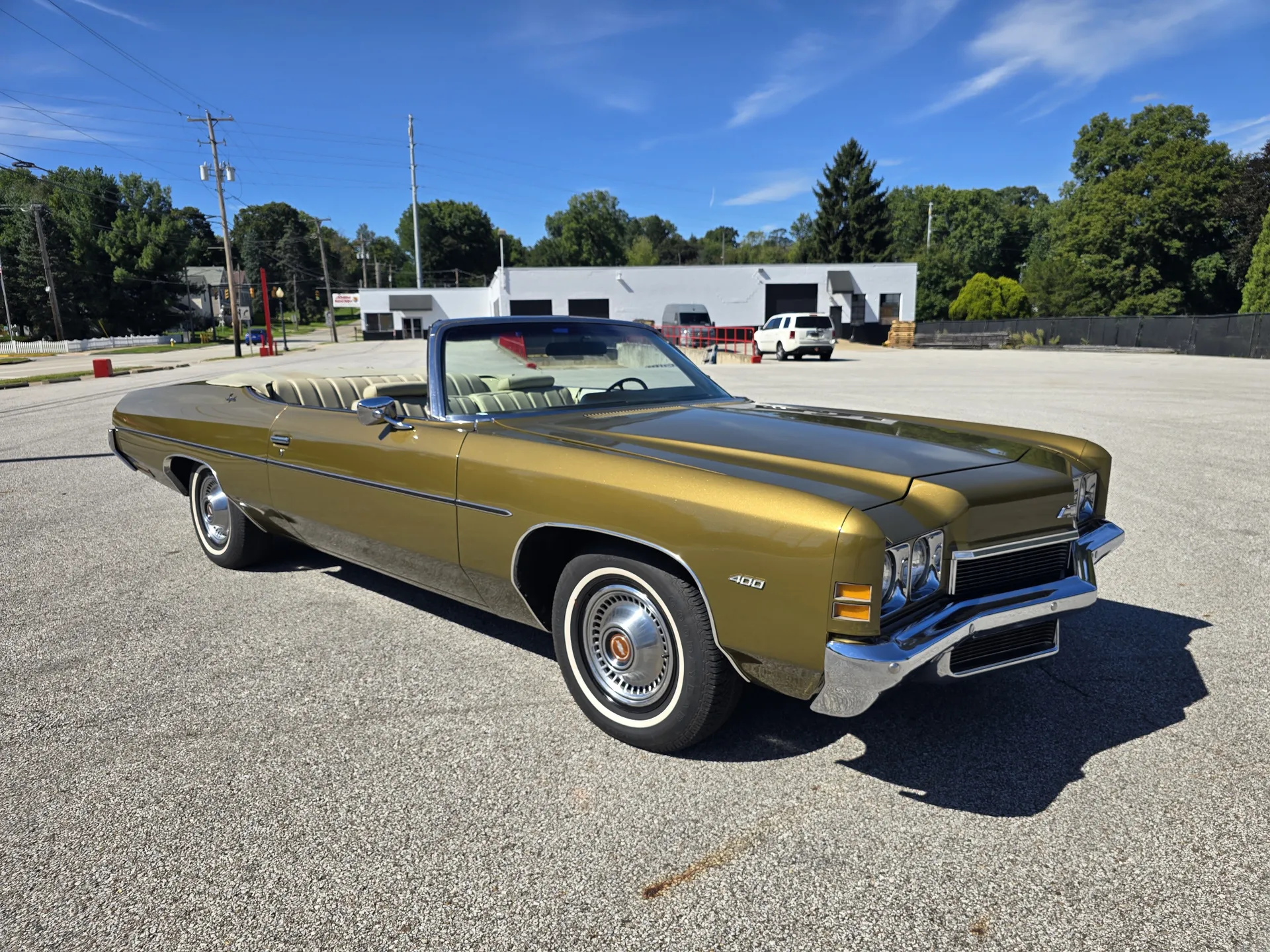
Demolition derby enthusiasts aside, you won’t find much pushback in saying that perhaps full-size General Motors cars took bigness a bit too far from 1971 to 1976, but a lot of people still like them. I’m one who prefers the 1972 model to all the rest, and an Impala Convertible such as this one, offered on Hemmings Auctions in Mogadore, Ohio, is just right. It looks like a nice driver with a fairly new repaint in its original “Golden Brown” color.
Before talking about this Impala, I want to mention my neighbor Kyle from up the street, who lost his long battle with cancer over this past year. Kyle was a great neighbor who was a “shirt off his back” type of guy, but he was also a car person and a knowledgeable wrench with a Camaro drag car that ran faster than you’d expect given its combination. One day, he pulled into our driveway with a blue 1972 Impala Convertible that he’d bought from the widow of one of his neighbors up the block, and although it had a lot of sitting-around-forever blues, he was able to put some miles on it with the top down for a few years before he passed. My wife and I would see him regularly on our walks, and I’d always ask if I could say “Hi” to the Impala; it was a great car, but Kyle was an even better person. Another good one gone too soon.
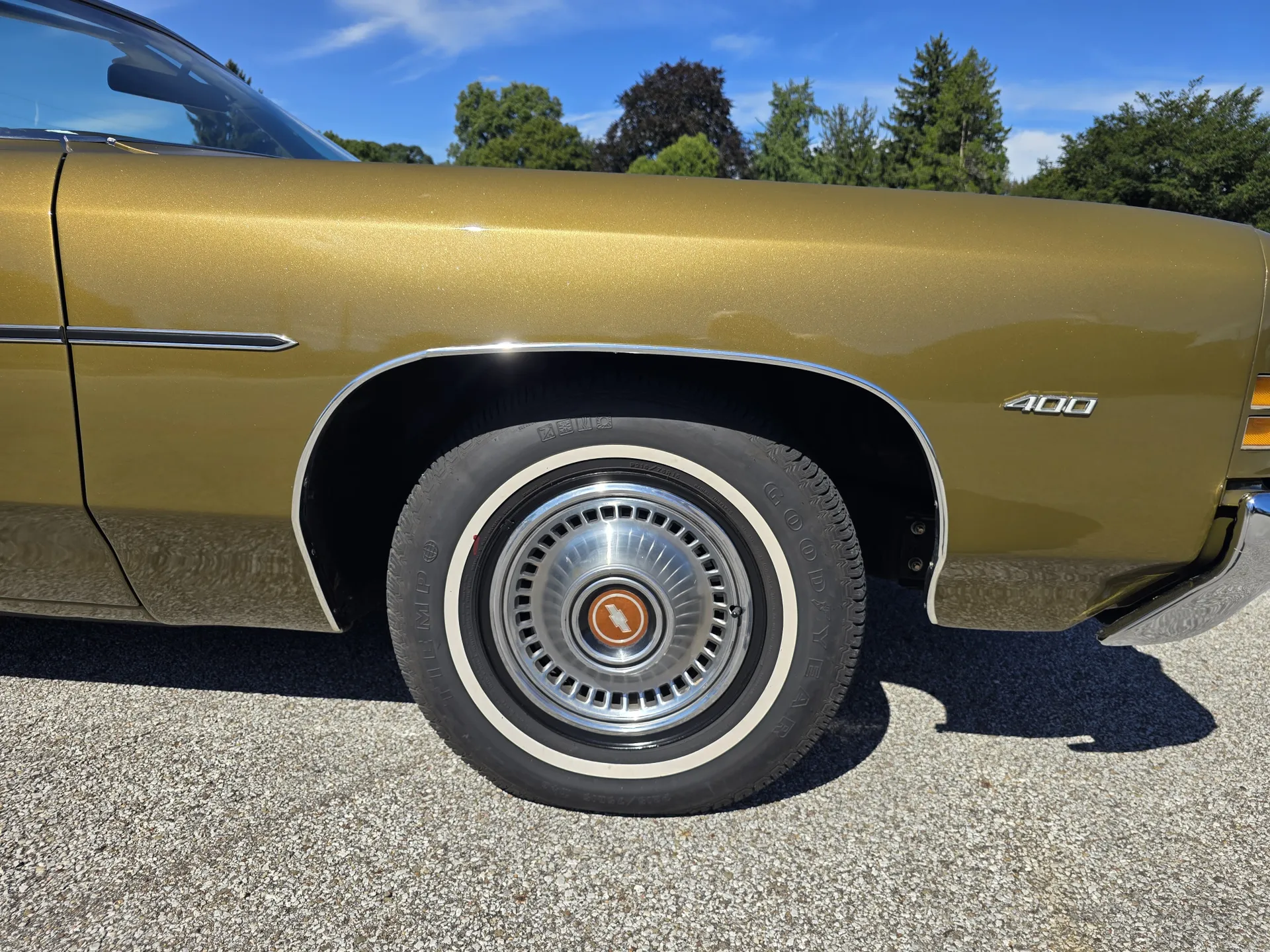
His Impala had the same “400” badges as this Golden Brown convertible, but Chevrolet was a little cryptic with its engine lineup in 1972.
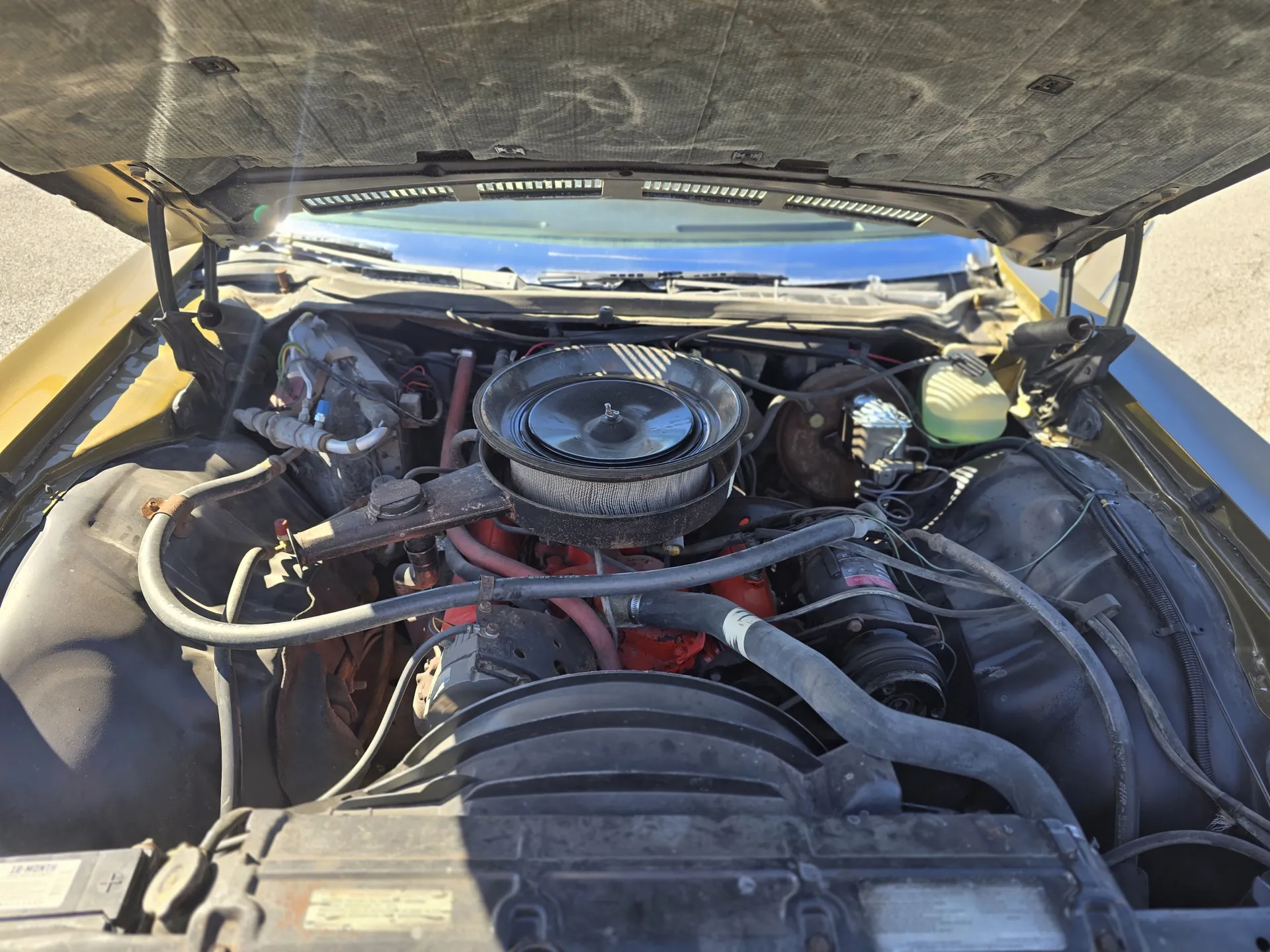
You would have found those “400” badges on the fenders of cars with the “Turbo-Fire” 400, which was this 170-horsepower small-block with a Rochester two-barrel on top (air cleaner lid flipped for maximum induction moaning, of course). You would have also found the badges on cars with the “Turbo-Jet” 400, which was actually the 210-horsepower 402-cubic-inch big-block with a Rochester Quadrajet. Whether Chevy was trying to save money on fender badges or something else, I don’t know, but it was a little misleading. The selling dealer says that the car is in good working order, including the Turbo-Hydramatic 350 transmission.
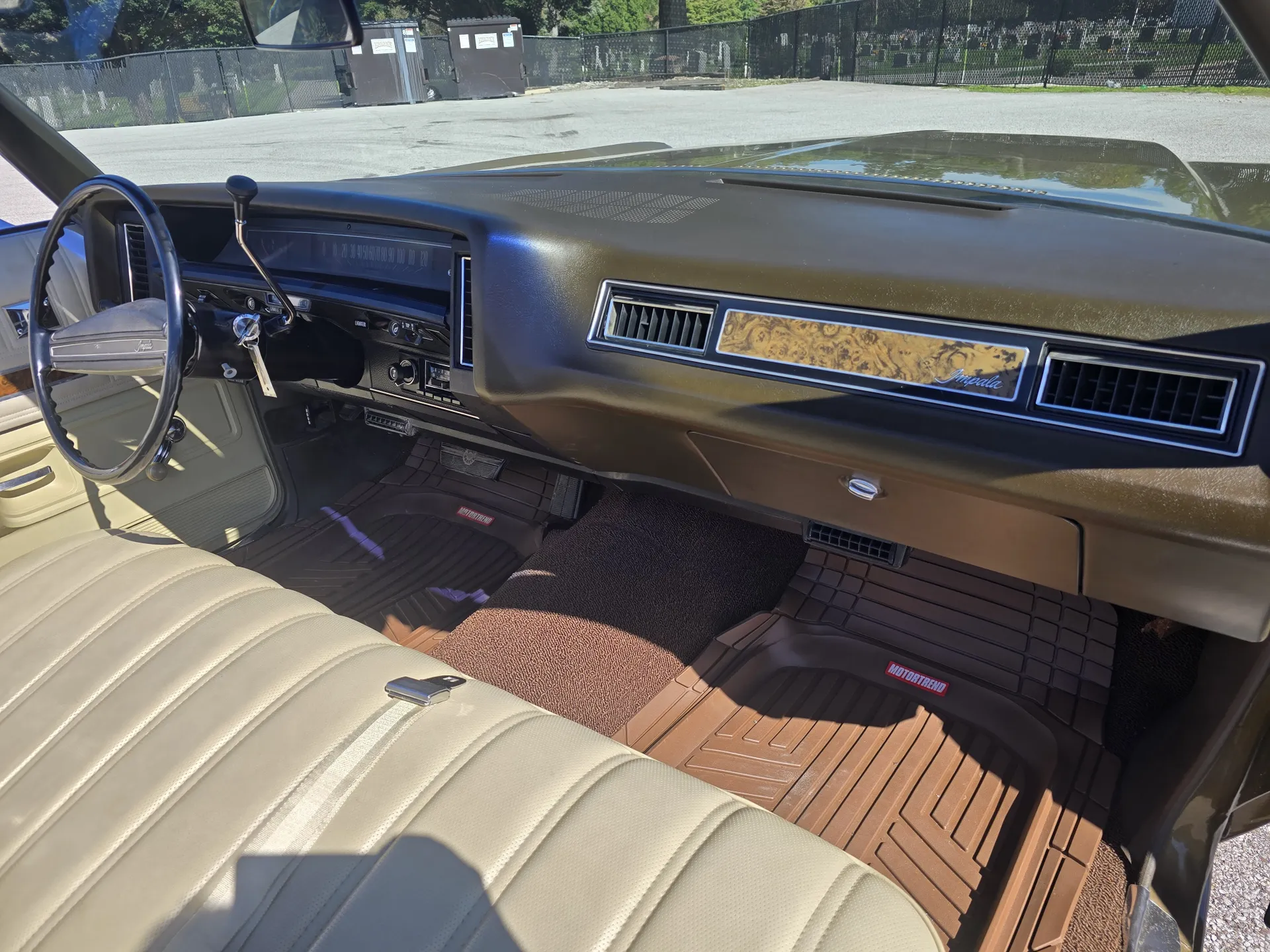
For some reason, I’ve always liked 1970s Chevrolet interiors. They’re clean and relatively uncluttered, with just enough fake wood trim to break up the monotony for passengers. The dash pad looks excellent, and the wide expanse of tan vinyl on the bench seat is virtually unblemished.
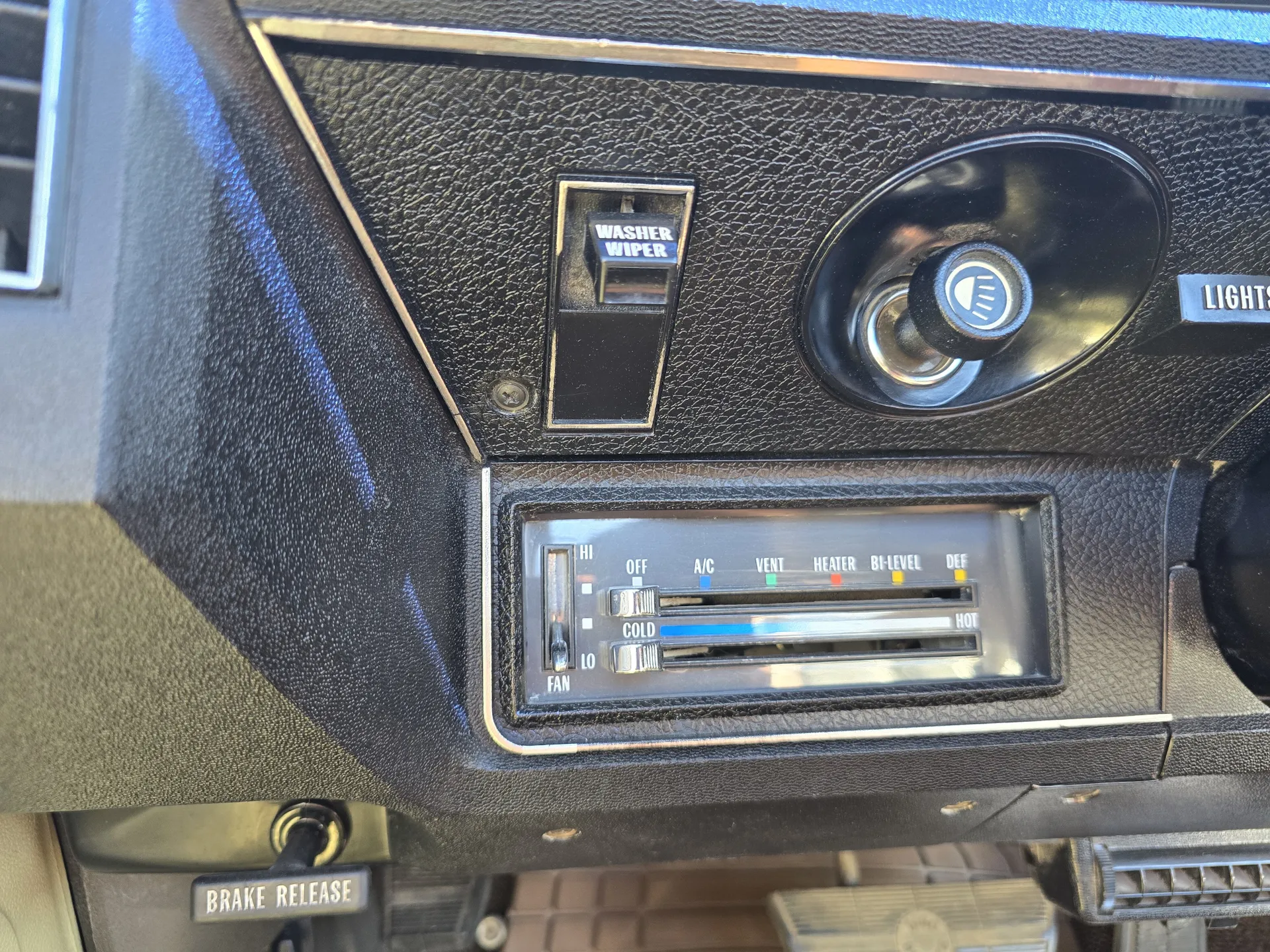
The car does have air conditioning, something that certainly became more common in convertibles in the 1970s, but since its condition goes unmentioned, it’s safe to assume as a potential buyer that you’ll have some work to do on that front. If the air works, the seller generally says so.
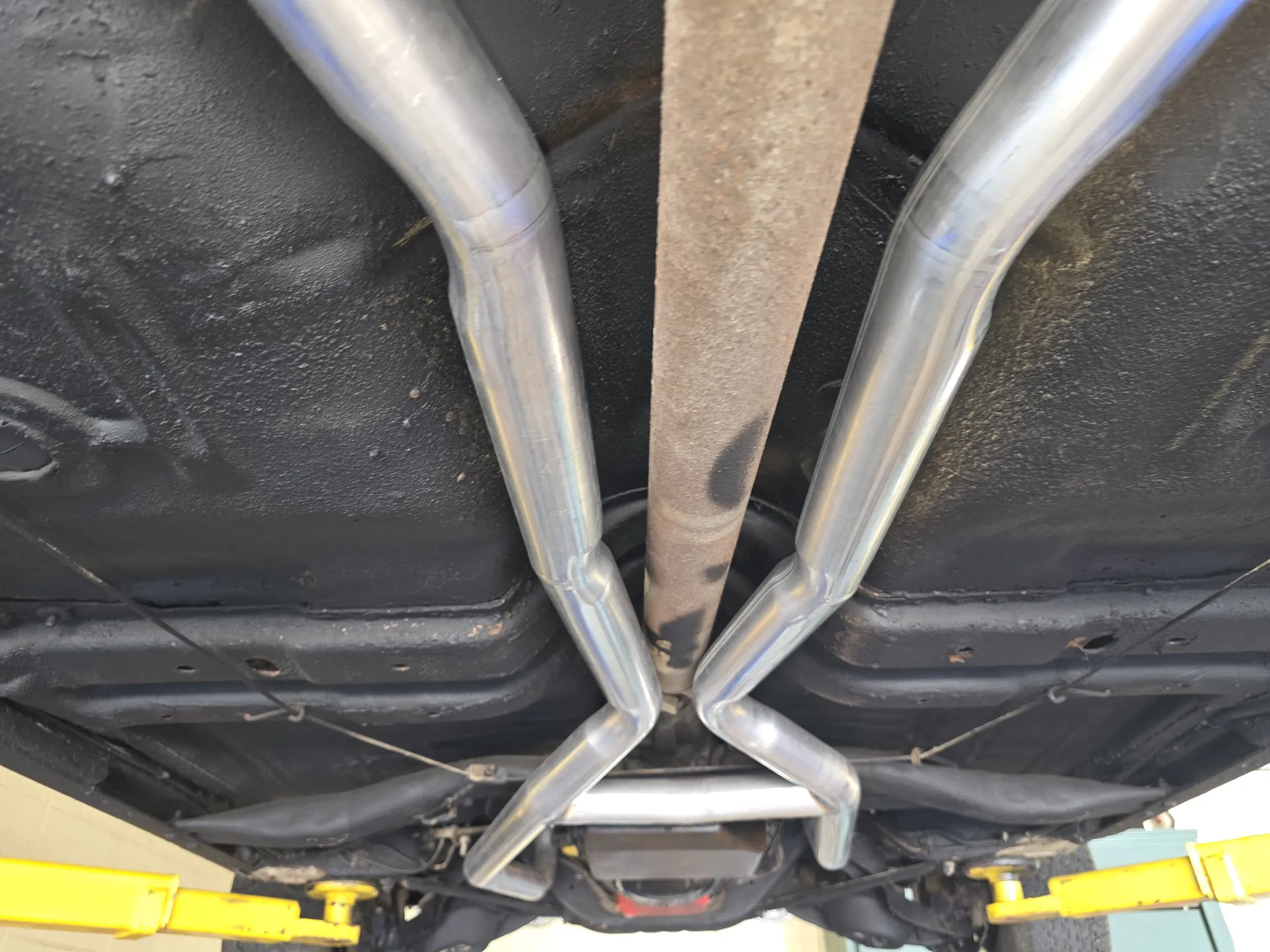
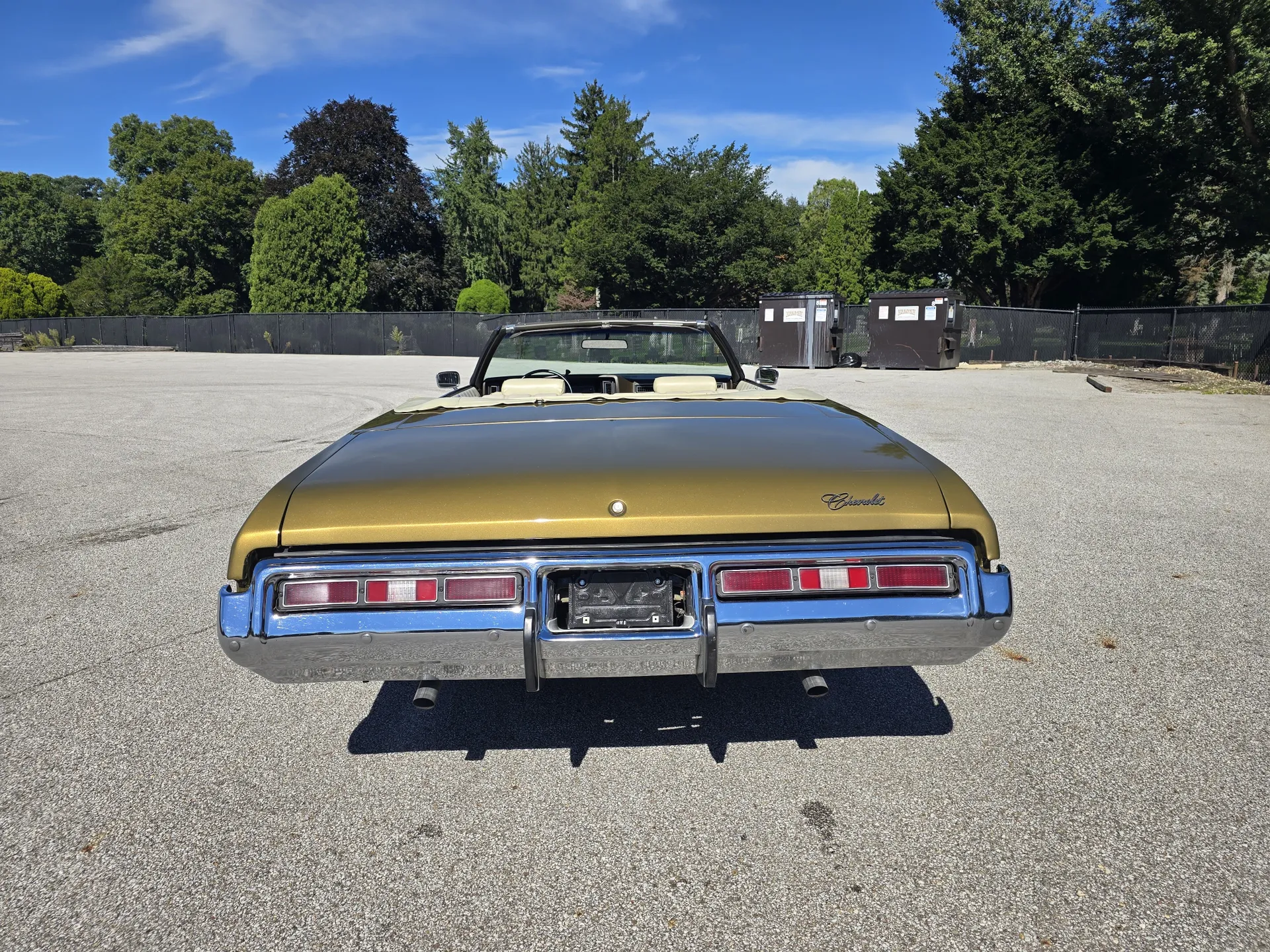
The car does have a new dual-exhaust system with an H-pipe, so the 400 up front will assuredly sound nice and mellow (not too loud, I hope). Someone has definitely added some fresh undercoating, so an up-close inspection is probably for the best, even though nothing about the car in pictures looks too concerning. Given that it was built in Wilmington, Delaware, and is being sold in Ohio, however, you can never be too careful.
The Impala does have new brake lines up front, but it needs new tires and perhaps some front suspension bushings. On a side note, I will generally only replace bushings if they’re noticeably loose or completely shot, as modern rubber compounds that you’ll find in replacement bushings don’t seem to hold up like the old stuff. Just an observation.
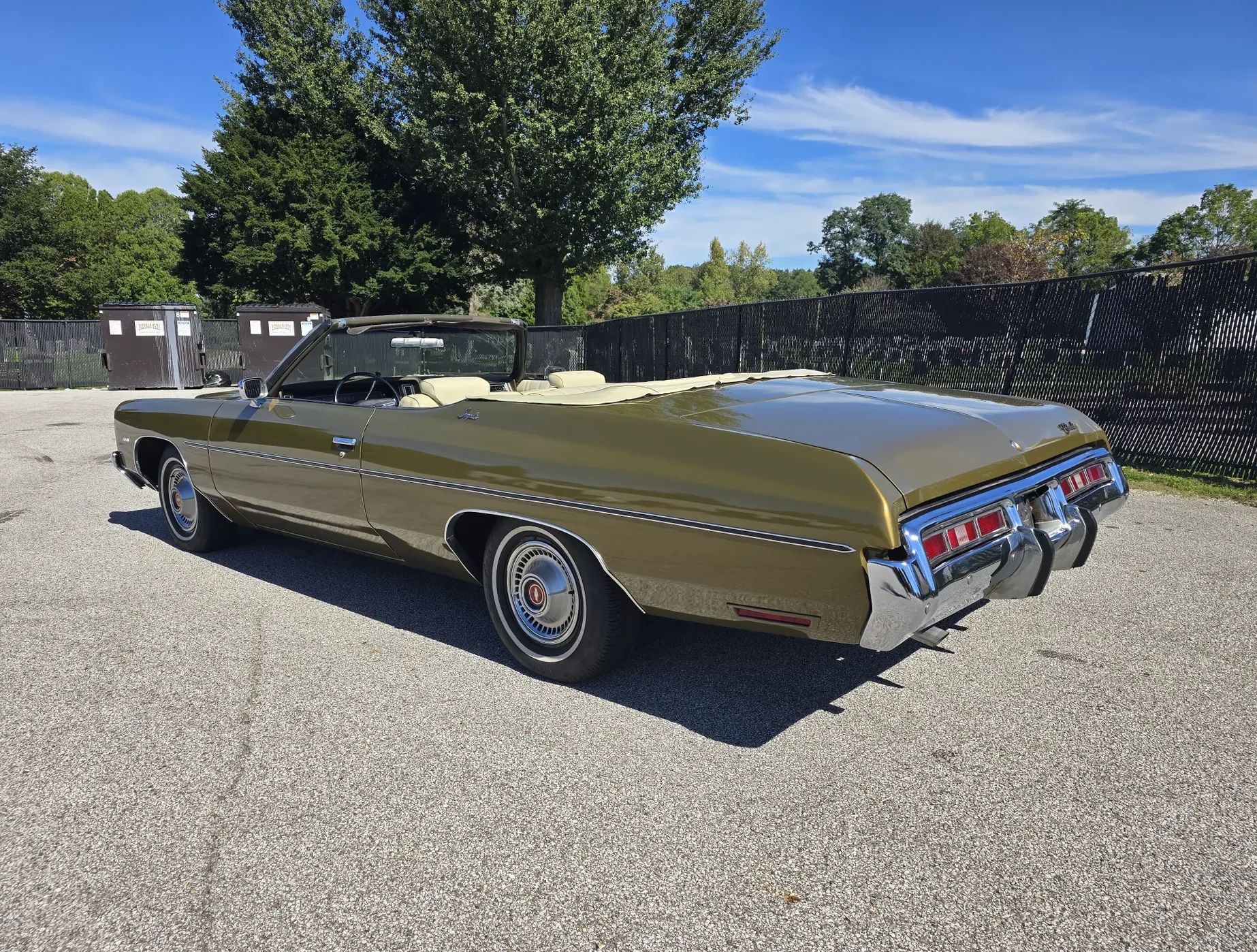
What has held up is the Impala’s styling, which looks as good as ever in this surprisingly attractive brown. My 210″ length limit to make my garage work with four cars means that I won’t ever own a 1972 Impala until I move somewhere with a pole barn on the property, so I’ll be perennially ogling them from afar. I will most assuredly miss saying hello to Kyle’s Impala and Kyle himself, but you’ll have to trust me that he wouldn’t buy a bad car, so I feel safe in saying that you’d have consent from both of us in buying this one if it checks out.
Related Reading
1972 Pontiac Catalina Hardtop Vs. Chevrolet Impala Custom Coupe: Battle Of The B-Bodies (by Aaron Severson)























Goodyear Tiempos? I haven’t seen those since the 80s. Definitely need replaced.
What a nice, affordable cruiser. Someone could live out The Brady Bunch fantasy. I think Mr. Phelps drove one of these for a season or two of ‘Mission: Impossible’, as well.
I hope whomever scores it keeps it original. I particularly like the unassuming dual exhaust where the exhaust pipes simply dump down like the OEM versions would do. Typically, on these old CCs, the owners can’t seem to resist having chrome, straight tips when they go with duals, and it ruins the otherwise original aesthetic of the car.
And, yeah, it was a little bizarre how no one would know if the 400 was the small-block or big-block version without opening the hood. In the Chevelle, they kept calling the 402 a 396, but not in the Impala.
In the case of the Chevelle and to a latter extent, the Camaro, the 396 has become a legend like Chrysler’s Hemi 426 and they might be afraid to rename it 402 would have destroyed the legend but on the other hand, it could have created another legend. Still not referring as 396 for the Biscayne/Bel Air/Impala/Caprice is a real mystery.
Still, it was a missed opportunity for Paul Revere and the Raiders to do a re-recorded version of their song SS-396 like they did with “Judge GTO Breakaway” in their essential collection of greatest hits. It could have became their counterpart to the Beach Boys’ “409”. 😉
My father had a ‘71Impala – red 4- door hardtop with black vinyl roof. Personally, I always preferred the look of the ‘71 over the’72. This car was the first one he owned that had A/C.
Regarding calling the big-block 402 a “400”. I think it had to do with GM’s rules for intermediate cars not having engines over 400 ci. So when the 396 was enlarged to 402 (I forget if bore or stroke was enlarged) it still bore “SS396” badges. And if I remember right, the 402 ci displacement big block wasn’t around long, so maybe they didn’t want to make another “402” badge for the B-bodies, because it might have given away the fact that the “SS396” was over 400ci.
The ban on engines over 400 CID on intermediates was already abandoned back in 1970, when the Chevelle offered the 454 (and 455s in other brands). It was all about the SS 396 brand; here’s a snippet from the ’70 Chevelle brochure. Note how the 330 hp Turbo Jet V8 is called a 400, but the 350 hp version in the SS 396 is identified as a “Turbo Jet 396”. The SS 396 name had become very deeply established, like “GTO”, and Chevy was not going to risk losing that.
[email protected] i interested in it i have a four door 72 impala which i pass on to my son and i would love to get my hands on this one I’m 62 years old would be nice to have