
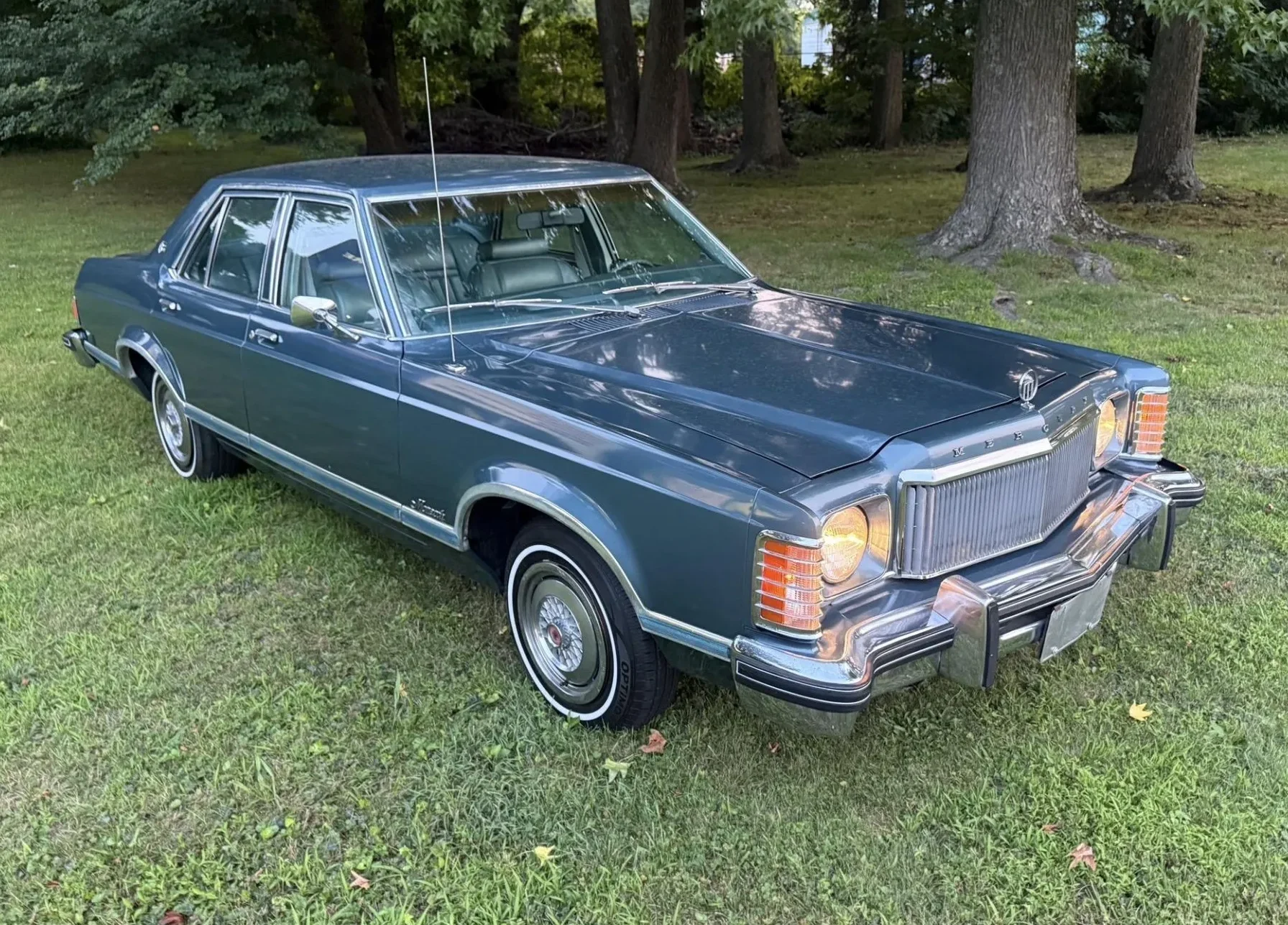
OK, so the Lincoln Versailles wasn’t available until the 1977 model year, but the Monarch Ghia, which was available in the same showroom, shows us that you could have had similar 1970s luxury at a significantly lower price. Even though the Granada/Monarch twins didn’t break any particularly new ground, you have to admit that they could be outfitted with some darn nice interiors, and this one-family-owned 1976 Monarch recently sold on Bring a Trailer for $4,500, just a bit less than it sold for new.
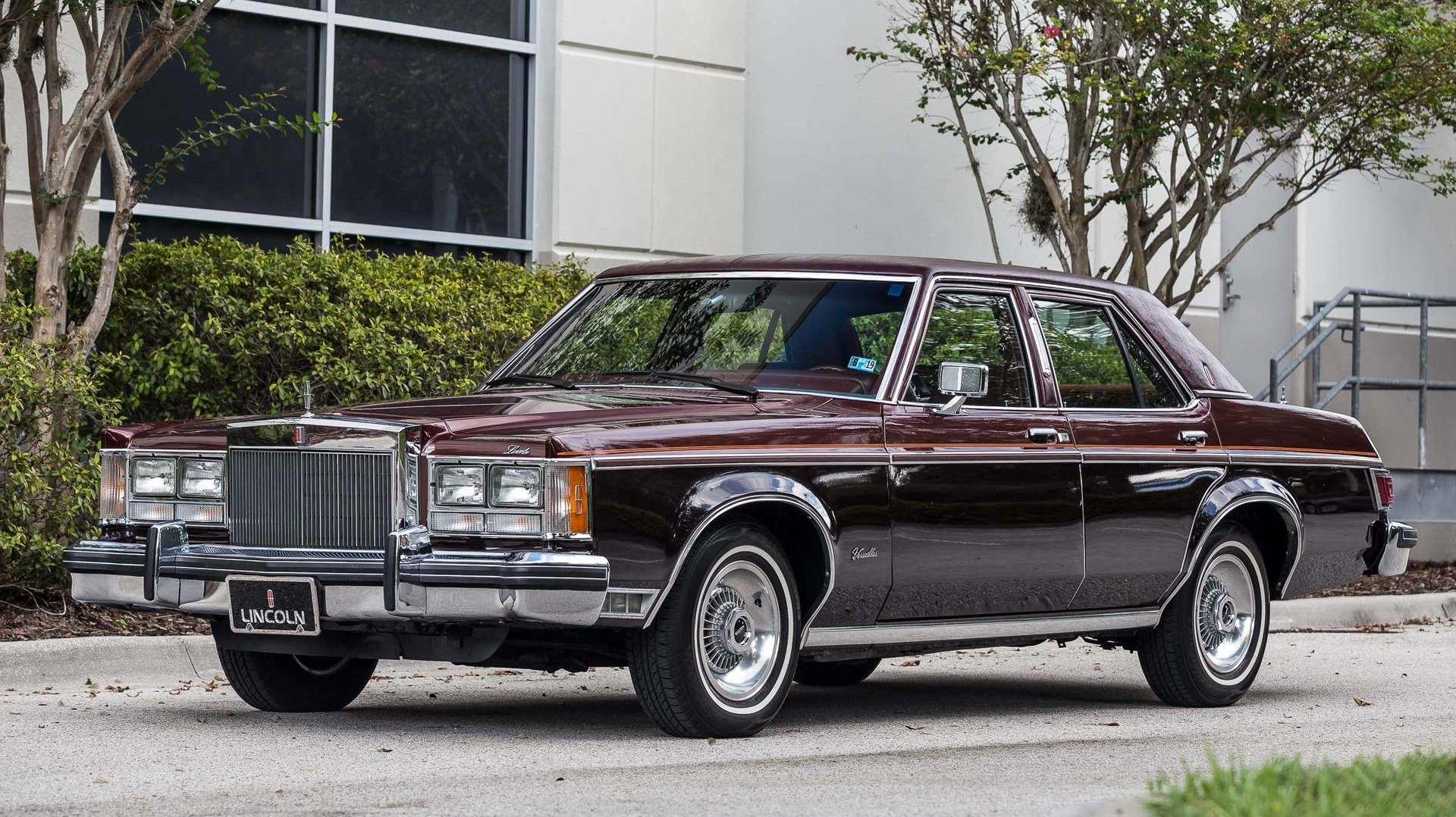
We’ve discussed the Versailles before, and most of us can agree that Cadillac did a much better job with the first-generation Seville when it came time to downsize. The Versailles looks all right, but it is what it is, an expensive Monarch with an upright grille, chic square headlights, and a “spare tire” hump.
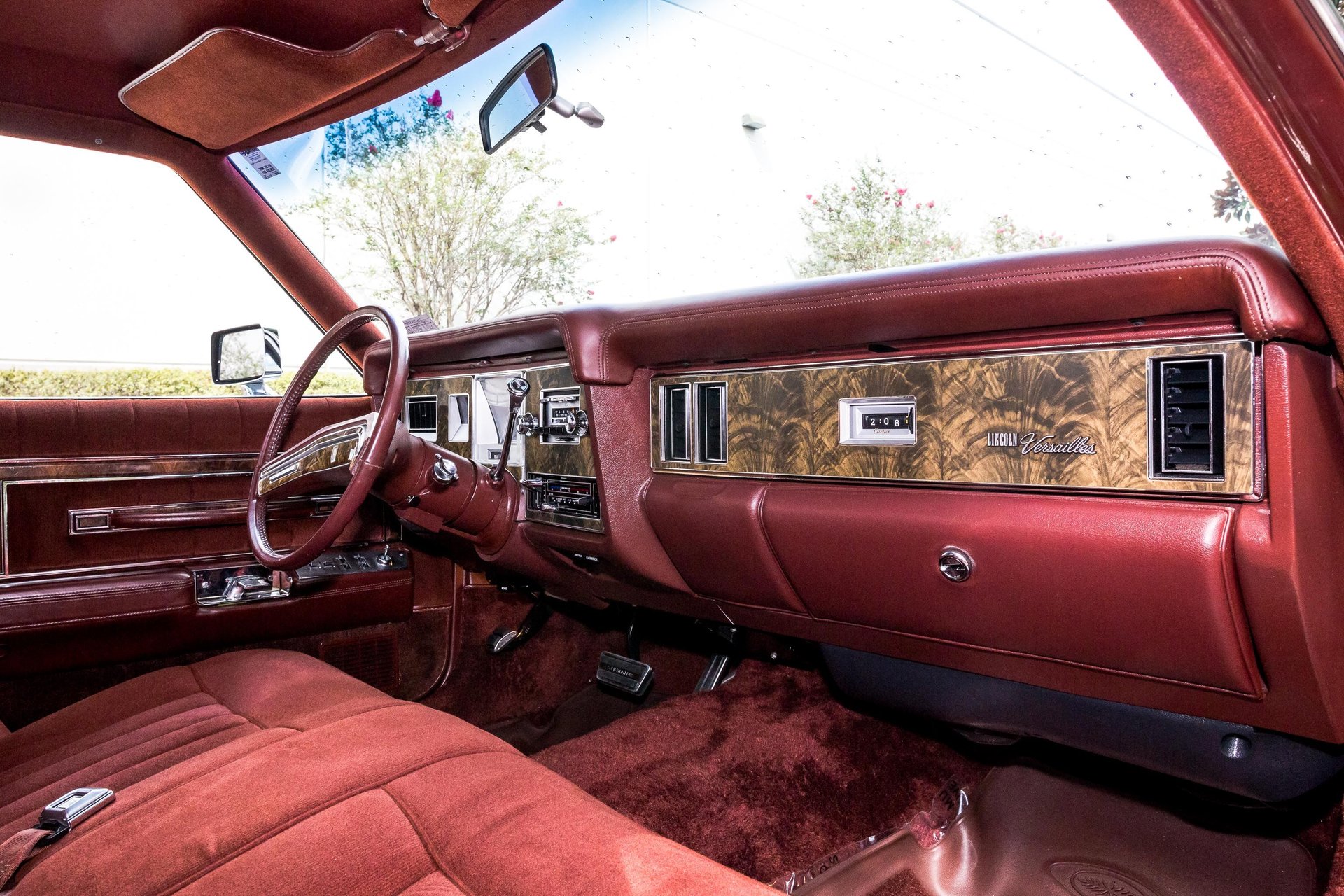
Yes, the interior looks and is appropriately sumptuous, as it should inside any car with a Lincoln badge, but…
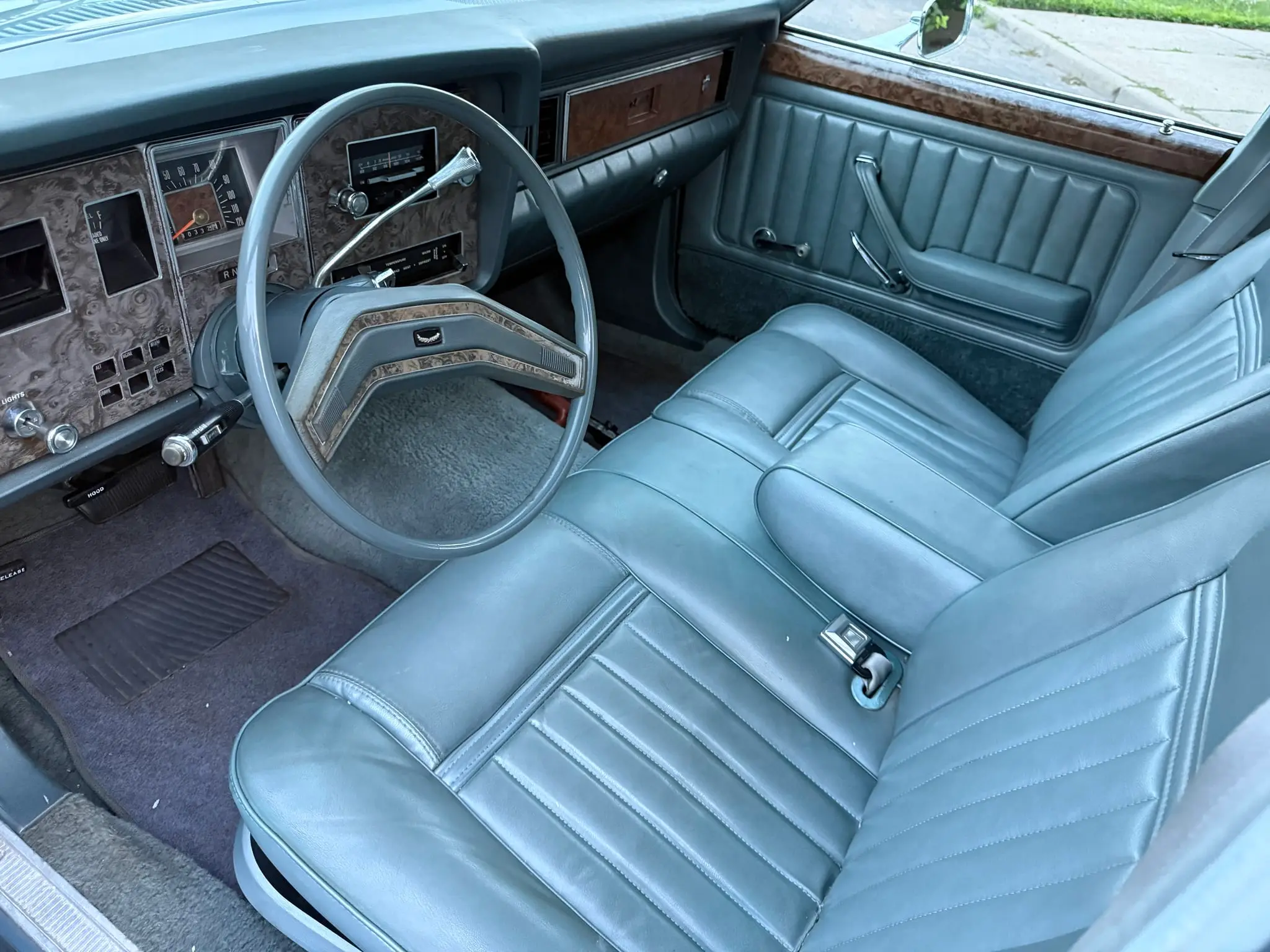
Is it $6,745 dollars more luxurious than a Monarch Ghia with a six-cylinder engine (based on 1977-model prices)? The truly hideous fake wood is similar (and remarkably faded on this example), but like the Versailles, the Ghia has deep carpet, intricate door panels, and luxurious looking upholstery, albeit in soft vinyl rather than velour.
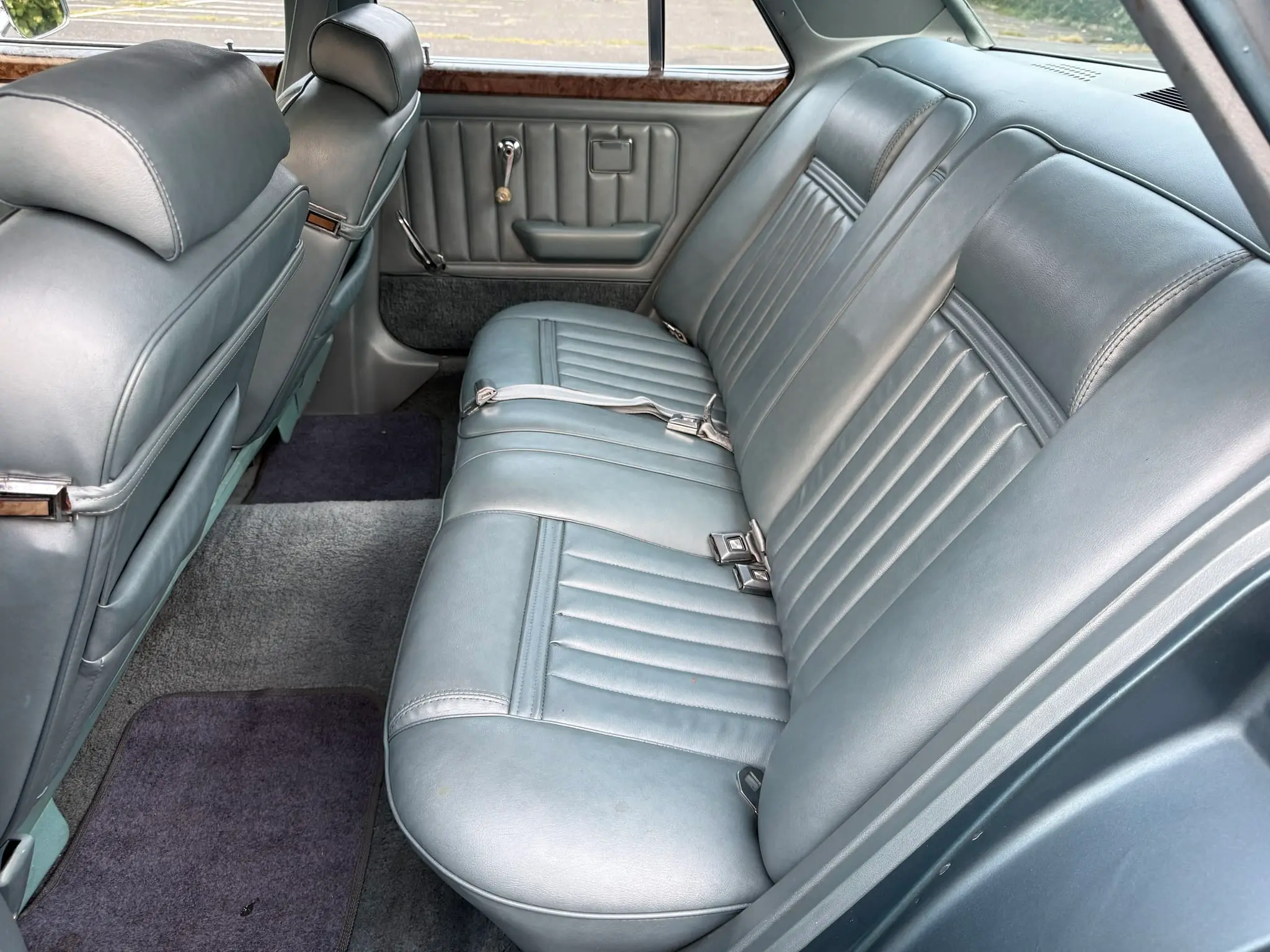
The rear seat is surprisingly spacious, but the Monarch may be larger than you remember: 197.7 inches of overall length riding on a 109.9-inch wheelbase. Believe it or not, that wheelbase is the same as the concurrent Comet and over four inches shorter than the 1960 Comet.
The brochure claims that the Monarch was “judged by 41 out of 50 car owners [to be] superior to a 1975 Mercedes-Benz 280 in all-around handling and driving comfort,” and while that’s a dubious claim, even if the tests were run by an independent outfit, the silver upholstery makes you want to believe it.
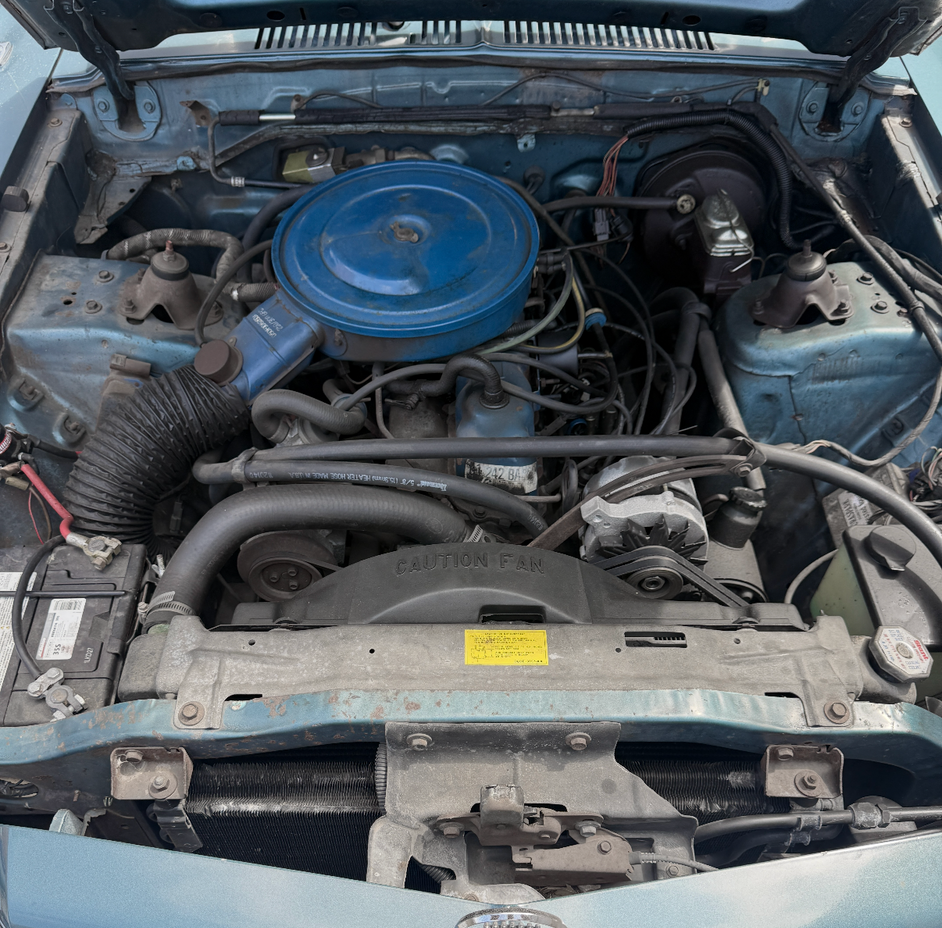
The engine, on the other hand, might make you a little sad. While the 1976 Monarch’s 250-cubic-inch inline six was bumped up to 87 horsepower (from a low of 70 in 1975), it’s still bound to tie you to the slow lane when the air conditioner kicks on. This car’s seller said that it’s had some recent service that includes a new water pump, spark plugs, an oil change, and…one drive belt. I believe there are three total, so one of them must have been in really rough shape.
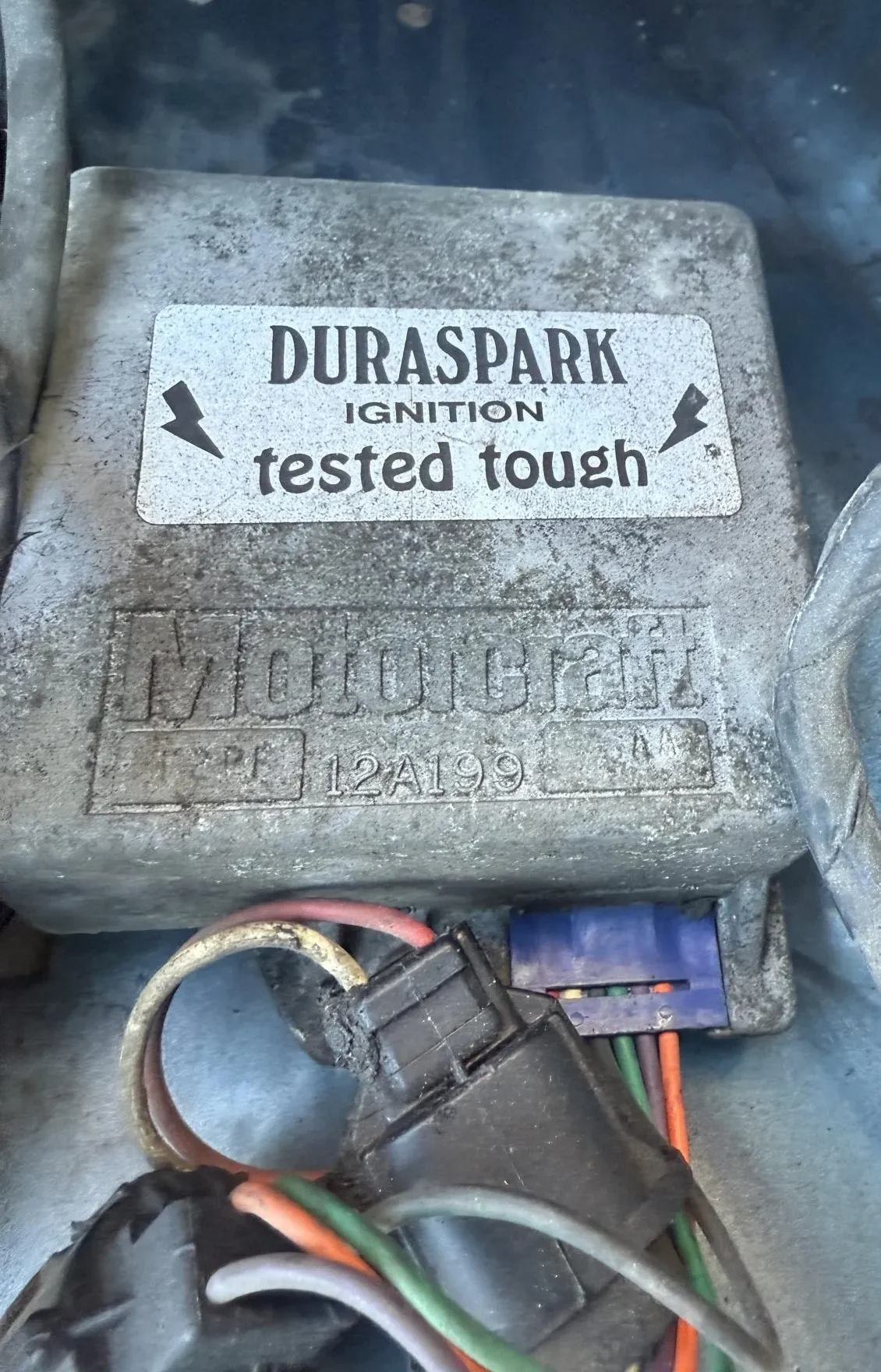
Although it was introduced at roughly the same time as General Motors’s High Energy Ignition system, Ford Duraspark ignition doesn’t enjoy the same reputation for durability. A personal anecdote took place when I was perhaps in Kindergarten or 1st grade; my dad’s 1980 Thunderbird just cranked and cranked in the driveway, and as he explained it to me after it came back from the shop, the ignition module had failed. From what I’ve read, we weren’t alone in that plight.
These days, you’re wise to carry a tool bag with a spare ignition component or ten when you regularly drive an old car. Instead of a set of points and a condenser, maybe the Monarch’s new owner could carry around a spare Duraspark module, or listen to a Bring a Trailer commenter and convert it to HEI.
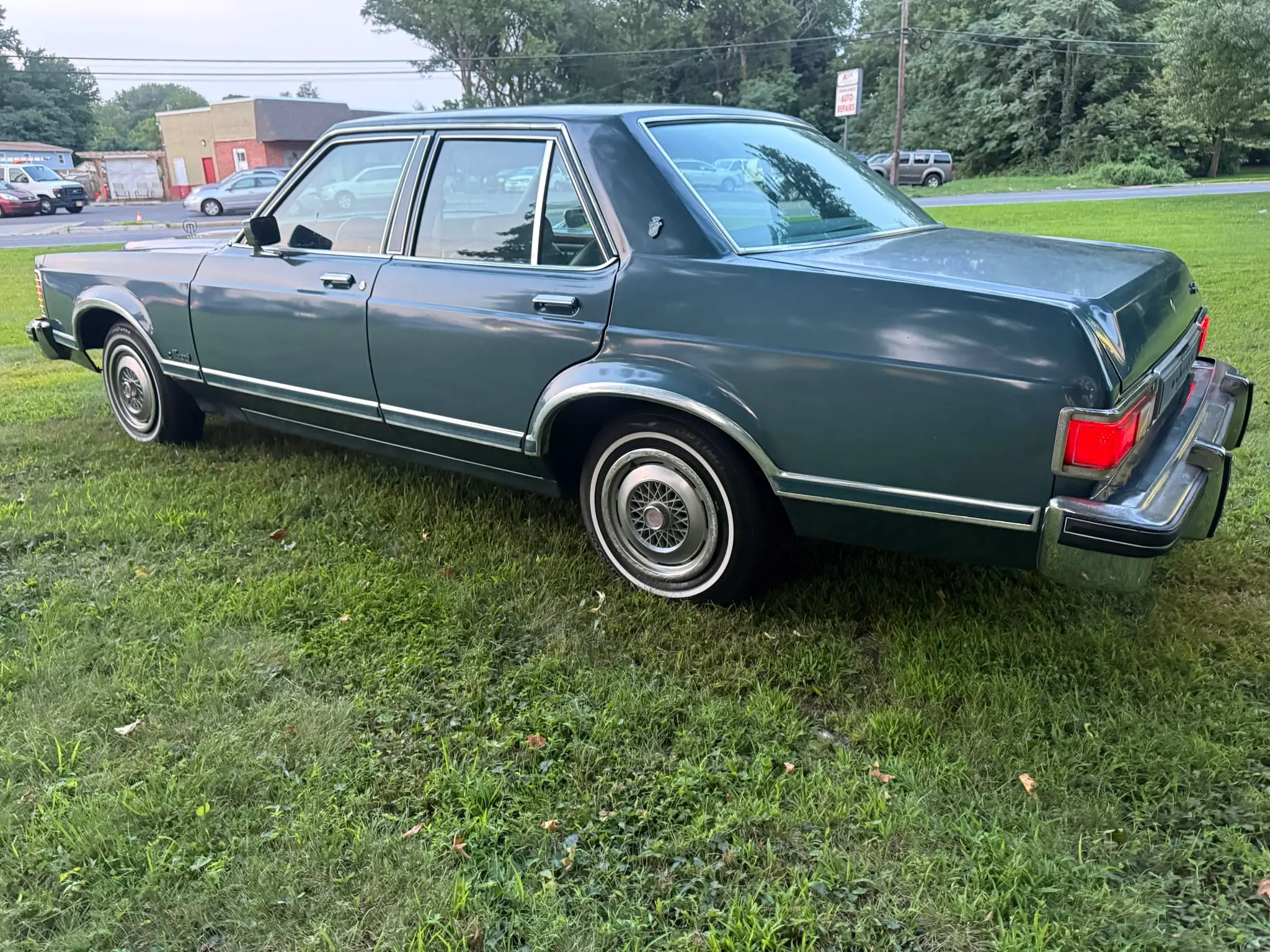
The Monarch has apparently been in the seller’s family since new, and their mother passed it down to them in 2018. She certainly bought a car with near-Lincoln luxury at a bargain price, and I think it looks less gaudy to boot. That may not have been the goal back in the mid-to-late 1970s, but it clearly did the family proud.
Related Reading
Cohort Sighting: 1977 Mercury Monarch – Outlasting Its Namesake (by Perry Shoar)
Curbside Classic- 1977 Mercury Monarch Ghia (by Dave Skinner)
1977–1980 Lincoln Versailles: Slow-Selling, Cynical, But Very Profitable (by Aaron Severson)
1975 Mercury Comet: A Few-Frills Compact With Surprisingly Little Power (by me)























Really like these Granada/Monarchs. Lee pulled another rabbit out of his hat with the Falcon frame as he did with the Mustang.
However, the inline 6 kills the deal. Not worth the effort of an engine swap
I call it Iacocca’s four-corner hit (to borrow a Hollywood term); unlike most of his memorable cars that were aimed either straight at his own cohort (Galaxie LTD, Mark II, both Imperial revivals) or to meet the leading edge of the Boomers (Mustang, T115 minivans) the Granada/Monarch was a car a Boomer in their mid/late 20s could trade their beater early Mustang or VW on and instantly look and feel like a real adult, and their empty-nest parents could downsize from that LTD to without feeling they’d gone down in the world.
I’d still rather have a disco Nova with F41 and HEI, though.
Jim Klein’s post on the junkyard Granada earlier, shows the IP ‘wood’ faded, while speedo & pass wood still holding its color. Same issue here, on a car that was probably garaged. ??
Yeah I noticed that as well, including the orange needle on the speedo and radio dial indicator. In my experience in Florida with 1980s cars that had them, those orange needles on gauges faded real quick to a nearly white. I see here that orange is still there on both, but also showing some of that white coming underneath.
I wonder if amber-tinted clearcoat would bring it back?
Speaking of the gauges, I always thought it was interesting that the one thing the Granada/Monarch’s Lido-length options list lacked was a gauge package. You could build out a really sporty-looking one but it was still leaving Dearborn with only that square speedo and a gas gauge.
Regarding a full gauge cluster, there’s so much available real estate on that dashboard for that, but I surmise Ford just didn’t want to bother with that kind of option in this class. Such a waste of space. Look at that radio being swallowed in a space twice its size as an example!
$4,500 seems like a steal for any driveable classic in this nice of condition. It’s not my jam, but it could be especially given the value quotient.
Wasn’t the illusion of a spacious rear seat partially achieved by a short bottom seat cushion?
Yes. I think I could roll in this spinach-green Monarch and crank the AM tunes on the factory Philco.
My father got a 76 Monarch Ghia that was a true proto-Versailles. Dad’s special-order car had actual leather seats (tan in color), the lace alloy wheels and a 351 V8 (which I don’t believe was available after 76). He considered the Grand Monarch, but it came with very few color choices, none he really liked. So he checked the option boxes to make the nicest Monarch Ghia I have seen to this day. And it was my experience that it was one of very few FoMoCo cars of its era that that would really scoot off the line.
This one is nice, but I would be too spoiled to appreciate it.
I think it may be a bit of missed Lincoln Versailles lore the extent to which the 1976 (and possibly 1975) Mercury Grand Monarch Ghia interior previewed the 1977 Versailles interior. The interior door handle mechanicals were reworked to accomodate a full length armrest that included standard power windows, just like the Versailles.
Not surprisingly, the Grand Monarch was cancelled for 1977, undoubtedly to avoid showroom comparison with the Versailles. Not unlike the 1969 Mark III forgetting the 1958 Mark III, Lincoln-Mercury forgot all about the 1976 Grand Monarch Ghia. It likely helped that the Grand Monarch was probably as rare as a Monarch butterfly in Minneapolis in January.
An interior fit for a Grand Monarch of the highest order………..
The $4500 sounds like a solid deal for a solid car that shouldn’t be tough to keep running—even if new owner chooses to upgrade the ignition.
I know the 250-6cyl in that car yields a low hp-per-pound ratio, but I fondly remember my Granada with it: “fast enough” on freeways and on-ramps, and it ran forever with the simplest of maintenance.
The BAT crowd probably crabbed about something, but this is “Nice Price” for me!
Note that is an OE ignition control module. The Blue grommet version as show is highly durable and I’ve had a couple of vehicles where it was still working ~40 years later like this one appears to be. Sure it is possible it died early on in its life and was replaced at the dealer, but even if that was the case it is probably at least 30 years old. Yes some of the earlier units were not as durable as old Blue.
Meanwhile the early HEI units were unreliable as they lacked any circuitry to shut off power if the key was on but the engine wasn’t running. Even once they fixed that problem their location inside the distributor meant short life due to the heat or a bad misfire finding its way to the module and frying it.
Now the HEI module can pass more current and thus fire a higher output coil and if you get it out of the distributor and onto a nice big heat sink away from any moisture a quality unit can last.
So yeah convert your Mopars and various imports to HEI but leave a Blue grommet Duraspark module alone.
Yes, and the Duraspark would run the later open frame coil from the TFI system for a hotter spark. Did that on one of my Grand Wagoneers with the Ford ignition system.
HEI was designed for easier/cheaper assembly not performance or reliability, that’s why it was self contained in the distributor (which is an awful environment for electronics).
Ford fell into that easier/cheaper assembly with the first TFI modules and bolted it to the side of the distributor. They did have a fairly high failure rate. They wised up and moved the module to a dedicated heat sink away from the heat of the engine and failures were virtually eliminated.
It is possible to permanently fix those distributor mounted TFI vehicles as the pickup signals are a pass through, you can use those outputs to send the signal to one of the remote mount versions.
We all knew what was happening. Detroit needed to take a compact car and add weight to it, glamorize the interior and removing any sporty exterior embellishments. OR take a full size car, strip weight off of it and toss in a 6. The first results were not good.
Filling up a basic car with loads of profitable options was an Iacocca specialty. Falcon to Mustang =$$$! Falcon to Granada =$$$! Lee’s mode of operations had the Granada/Monarch ready when OPEC shut off our oil supplies in retaliation for our Middle East policies. A big win for Ford!
While these offered the latest LTD touches, the engines were 60s technologies unsuited for fuel efficiency. Transmissions dependent upon big engines hamstrung with weaker engines? Then EPA crap on top of it all? Not optimal. Not fun.
Yet these cars surprised occupants with ride quality unexpected in a compact car. These sucked to drive, but enjoyable to ride in. It isn’t until years later after engine technology caught up to overcome all the challenges of fuel economy and performance that we see fun luxury cars out of Detroit that get over 20 mpg or more.
I like small luxury cars. They offer a more exclusive experience. But I like performance too, meaning I would pass on 1970’s versions of them.
Ford had a 3-5 year head start on the Japanese on loading up basic sedans to their level. It was around 1979 or 1980 when the Toyota Cressida was introduced with a baroque grille, velour interior, power windows and door locks, with a higher-grade stereo system with greater reliability, and in 1981, Nissan met the challenge with the Maxima, adding a stand-up hood ornament. After the Cressida and Maxima hit the market, sales of the higher end glitzy Granada and Monarch/four-door-Cougar as seen in the Ghia model above plummeted.
I like these and maybe just as much as the Versailles. Just a note: That first dark maroon Versailles pic looks exactly like one of the two that I once owned right down to the cloth seats and colors. Very nice car. Anyhow, back to the Ghia.
I saw this on BAT and thought about bidding for a few seconds. And I feel the selling price is very reasonable for what it is. But correct me if you feel like I’m wrong here. The engine bay just doesn’t look as nice as the rest of the car. The fake wood, although I do like that over most other choices, seems to be way over-faded compared to how “nice” the rest of the car looks. And finally, a huge red flag for me? They replaced just ONE belt of the three! How cheap can you be? Replacing just one belt is akin to putting a new chain on a bike but not replacing the worn sprockets at the same time. You are just looking for trouble. And that tells me corners were cut just to make this car look overly good but it has too many surprises just waiting to blow up.
For someone with $$, interest, and a place to keep it, this would be the one of he cooler rides to have.
I have so much difficulty understanding how the original buyer could take this loaded luxury car out for a test drive and say “Yeah, 87HP is enough”. I can understand choosing the Six in a barebones Granada, but in a luxury car??
Evan: Keep in mind that in those days, a “powerful” car would have around 140 PH (to the wheels, not gross like they used to report). Many cars were around the 90 to 100 HP area. So by today’s standards, 87 is laughable. But look at it from the eyes of 1976.
Just doing a quick search revealed that a MB 280 then had around 120 HP.
Perhaps what she was trading made this baby a hot, number.Folks were really focusing in on those “MPG”, numbers then too. They were so obviously inflated, still people zeroed in on them.
My school friends mom got a “76 Granda” wth the lil “6”. Turn off the “a/c” to ascend a hill. lol
Smooth riding car.
The Granada/Monarch was everywhere back in the day. Ford certainly got their money’s worth from the Falcon platform.
What I don’t get about the Monarch is the terrible engine choices. All off them, right up to the 351 were underpowered. A Chevrolet Nova with the six cylinder does not feel like a slug and it was genuinely fast with 350. GM’s engines simply ran better than Ford’s. The GM emission controls seem to be better than Ford’s, because GM engines ran better.
We had a 76 2-door with a 351 and few options. I wouldn’t call it underpowered, it could actually lay rubber. I would say it was well down on power compared to a comparable 1969 or 70 model. It would hit 110 mph indicated and get there somewhat quickly. It was replaced by a 1977 model 302 with AC . Now that WAS a slug. Topped at 100 mph indicated. Our 1972 302 with AC LDO Comet topped out the same, but accelerated much better.
Wasn’t there an even more luxurious version of the Monarch offered in ’75-76, that was canceled when the Versailles came out because it was “too nice” and would have made the Versailles look like a waste of money? “Grand Monarch” or something like that?
Yes, they did. Hemmings did a quick writeup on this one:
https://www.hemmings.com/stories/hemmings-find-of-the-day-1976-mercury-grand-monarch-ghia/
It was called the Mercury Grand Monarch Ghia (MGMG for short). IIRC, it had four wheel disc brakes that ran off a hydraulic pump as opposed to a vacuum. This system was incorporated into the Versailles.
One detail that’s easy to overlook from today’s perspective is just how much that grille resembles that of the big 1974 Continental. Lincoln was moving towards the Rolls Royce style grille for 1977 so why not get a little more life out of the old look while Lincoln adopts their new look.
The Lincoln Versailles had the potential to be a very nice car, but Ford “cheaped-out” and didn’t make the styling exclusive enough.
I used A.I. to help me restyle the Versailles according to my directions. Here’s what I came up with:
–Change the line of the upper door edges: less swoopy.
–Make the C-pillar more vertical.
–Lengthen the trunk a little bit.
–Eliminate the fake spare tire “hump” and make the tail lights straight across.
–Install real wire wheels and low-profile blackwall tires for a slight “donkish” effect.
I think my version looks a lot better and isn’t so much like the Monarch/Granada. I don’t think it would have cost Ford that much to make these changes.
Supposedly the door, pulls in the “Versailles” all came off round the three, year mark. ((depending on the level of use))
Don’t forget national speed limit was 55, so no worries at all about 0-60 times.
At least the failure prone ignition module was where you could access it Ford AU stuck it in the bottom of the distributor and they failed often and the x flow manifold hid the dizzy really well.
Probably the nicest example you’ll ever see. I bid on it at a lower price point and then decided better not. This car is pictured in the 1976 mercury small car brochure same color same wheel covers. It really is a much better looking car without the vinyl roof, which was standard on the Grand Monarch but as a previous commenter, noted one could option these very very well, four-wheel discs, 351 convenience group,light group, power windows power seats, moonroof. If it had a V8, I may very well bought it but having driven a similar vintage comment with the 250 I realized I would likely drop more than the purchase price on a re-power.
We had a Torino with the 250 six, and it moved nicely with traffic, was very economical, and that little engine would last forever with routine maintenance. Much easier to work on than the 8, especially with the big spring towers that these had. Six in a row for me any day!!
Wow. What year was the car? “Torino’s” got so, soo heavy with those bumpers starting in “74”! My brothers was a “75”.
Rode, drove, nice. Very front, heavy. ((“351”, under the hood)) Made it a not so good car for snow, wet roads.
My “75 Torino with a 351 was the absolute worst car in the snow I ever owned. A few flakes and it was heading for a ditch lol.
Try an Elite with a 460 in the snow! Much more engine weight and torque. It was really useless in snow.
Interesting cars .
I love the red interior .
I too think the seller didn’t take proper care of it, I’d never sell a car with one of those crappy battery cable end clamps .
Most of my vehicles get up graded 0 or 1 gauge battery cables, the improvement in cranking is *instantly* noticeable .
-Nate
I’m getting PTSD chills from this….my first car was a ’77 Monarch, and hand-me down from my grandfather, that I got in ’86. Was a rust bucket, rode like a truck, tried to kill me when the steering gear became detached from the frame and slammed the steering wheel hard right while I was backing out of a parking spot at school. Most people have fond memories of their first car…I definitely do not.