
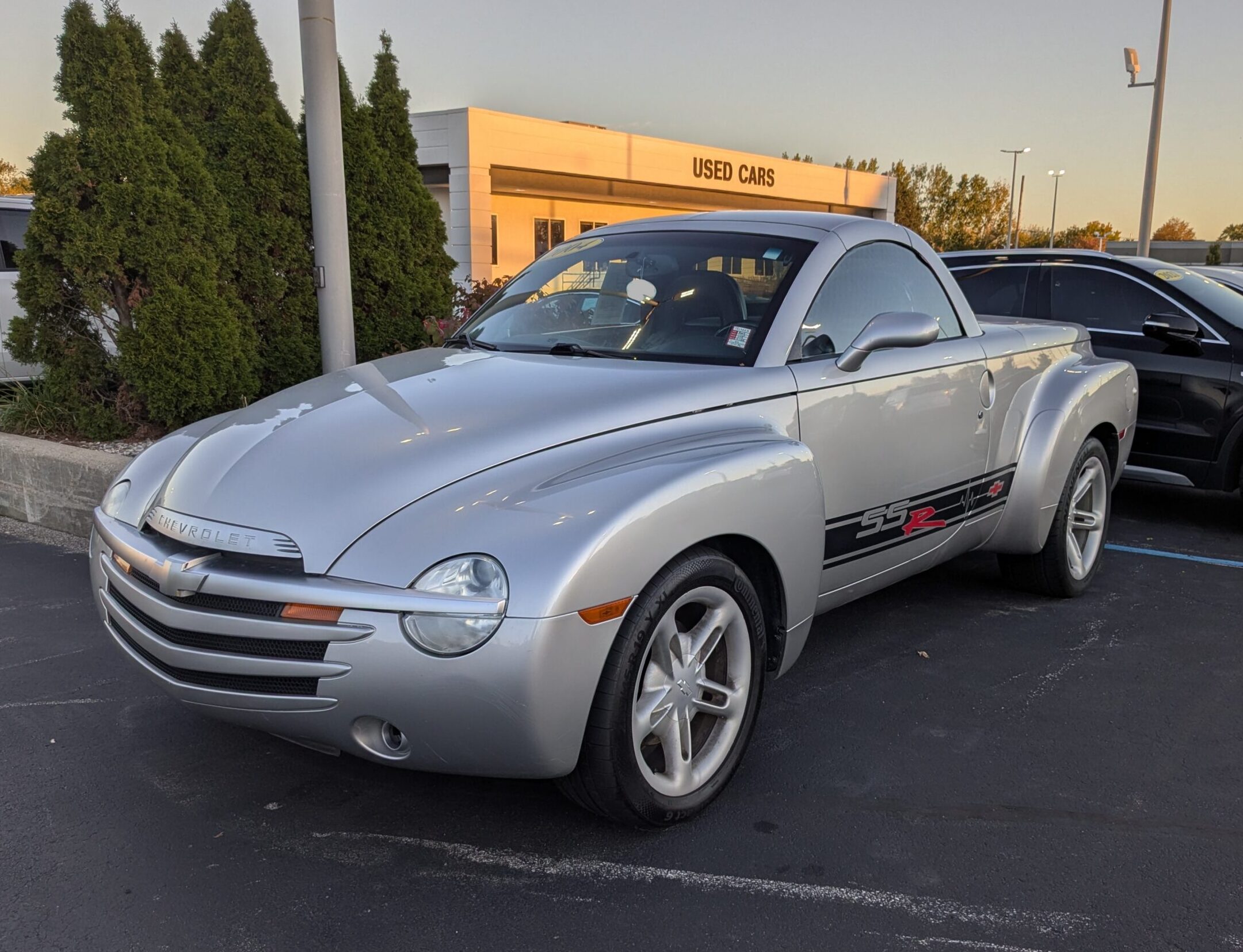
The automobile industry’s retro craze of the late 1990s and early 2000s reminds me to some extent of the swing revival of roughly the same time period. It seemed cool at the time, spawned a couple of catchy hits, and disappeared just as quickly. While many, if not most, of the retro-themed cars sold at the time have not aged altogether gracefully, just about every one of them will still have their fans, and maybe one of those fans will find themselves behind the wheel of this 2004 Chevrolet SSR, which I spotted for sale at a local dealer’s used car lot.
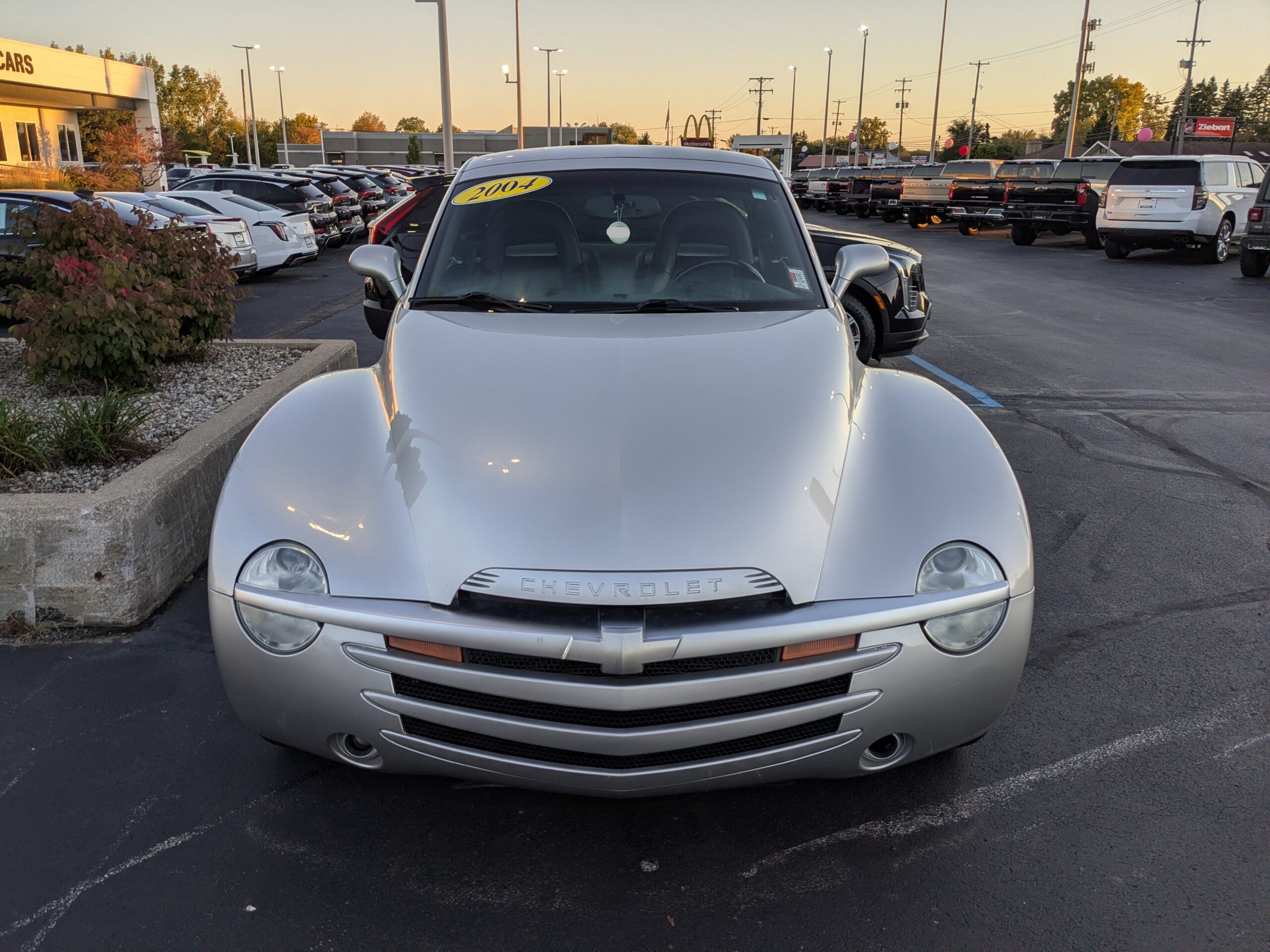
For those who have forgotten the SSR, here’s a refresher. It was released as a 2003 model and lasted through 2006, but sales were always a little disappointing, perhaps due to the premium price tag ($41,995). Additionally, since it was based on the Trailblazer platform, it was somewhat heavy at over 4,500 pounds, so the 5.3-liter LS-based V8 provided solid if not sparkling performance. Quarter-mile acceleration times of 15.5 seconds or so improved with the 2005 model, which got the potent 390-horsepower LS2 and an available six-speed manual. But it was too little, too late; the 2004 model (seen here) had the best sales figures of the run at 10,676 units. By 2006, totals were under 3,000.
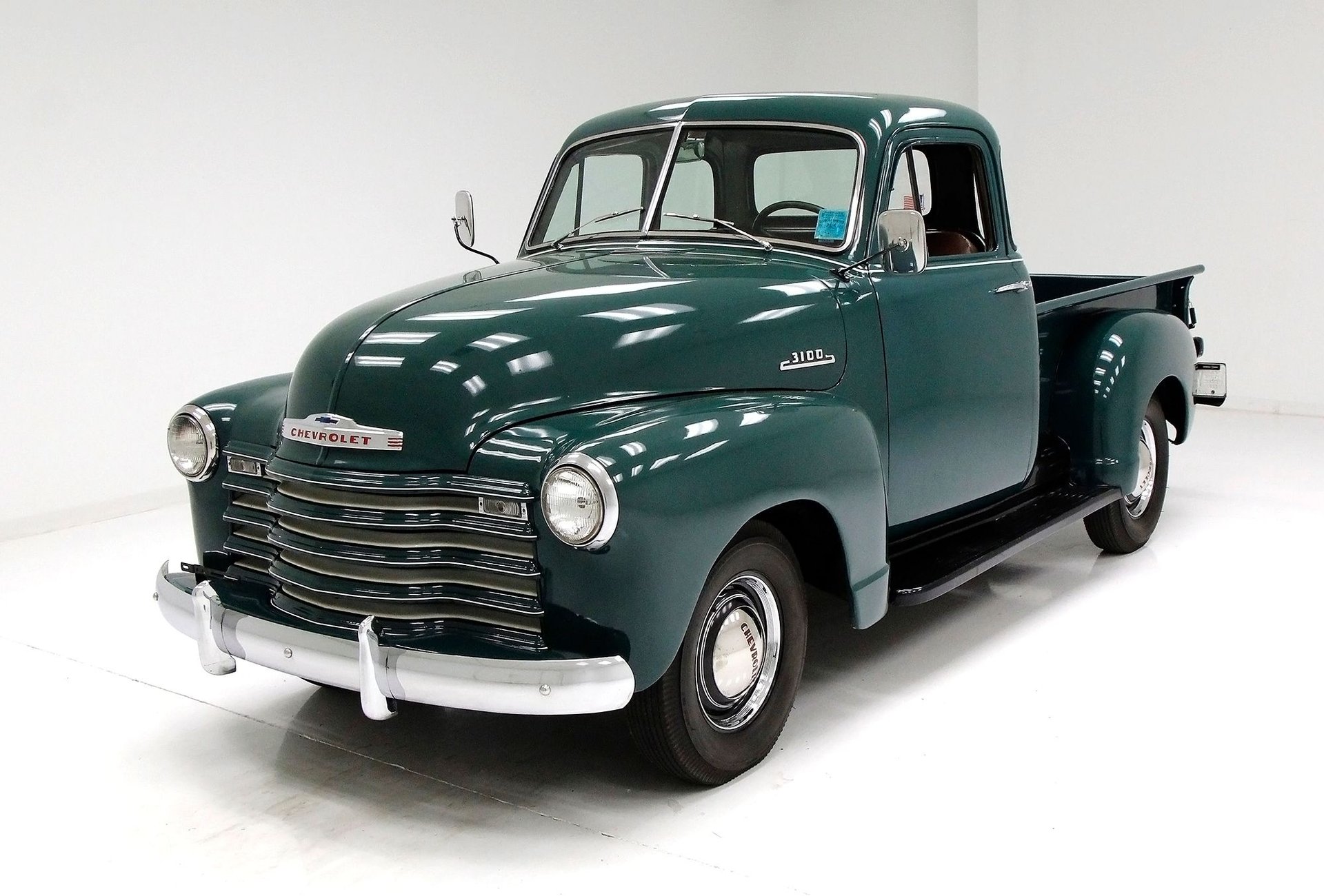
The styling might have also turned some people off. It was based on the classic “Advance Design” Chevy truck of 1947-55, which is a styling milestone even today, an image of what a truck should look like. When those cues were translated to the SSR, the sloping nose, Beetle-like rounded top (which retracted), and closed bed looked somehow too aerodynamic to be effectively retro, or perhaps the proportions were a little off. I remember thinking that it looked OK, but I didn’t have any great desire to look at one up close or drive one. Given the relatively disappointing sales figures, many others must have felt the same.
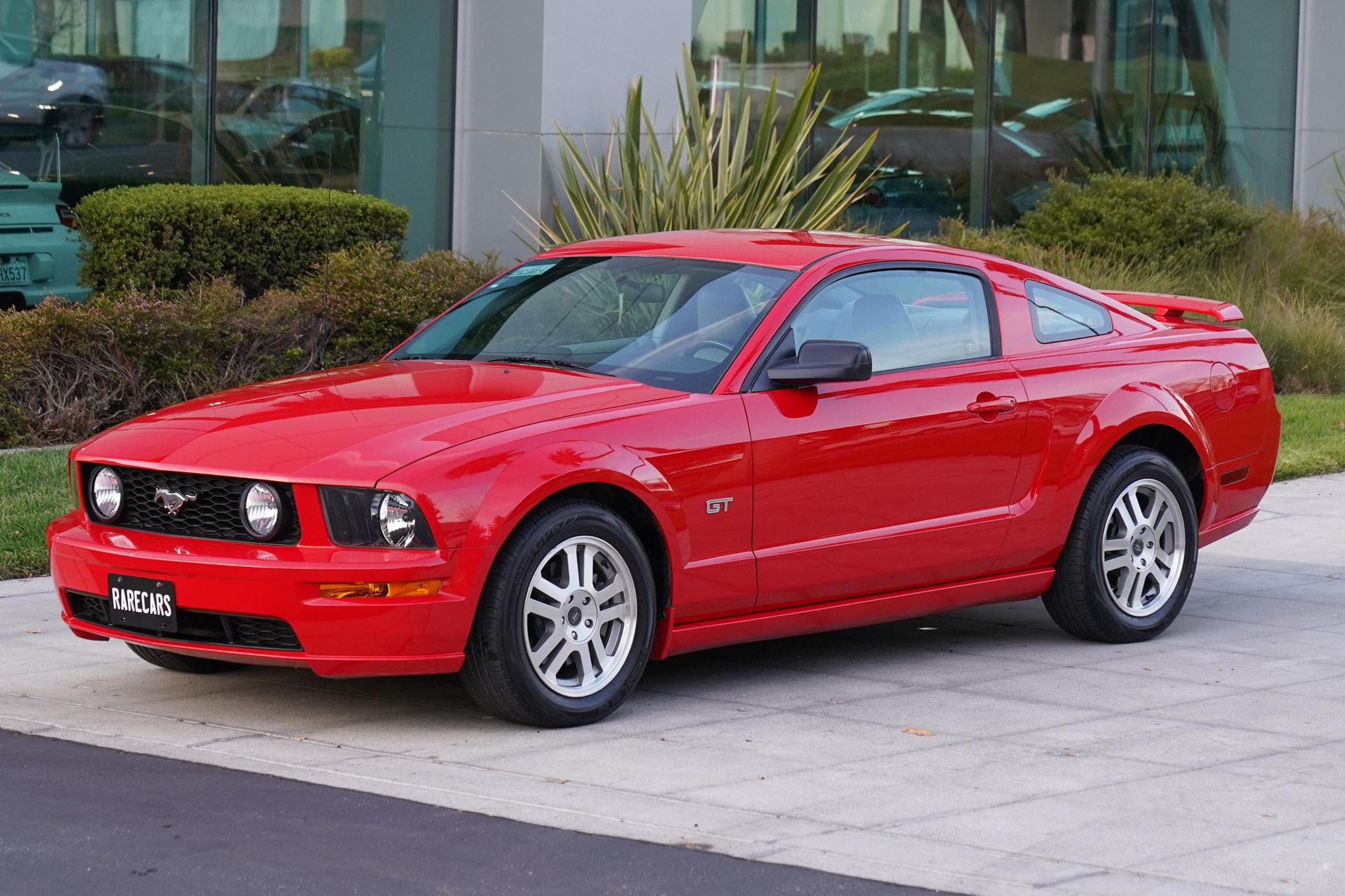
Nonetheless, not all the blame can be laid at the shoes of the SSR’s designers; I just think the retro trend was a fad that was too intoxicating to ignore. The PT Cruiser looked pretty cool at first, but it soon fell out of fashion, and the Chevy HHR was a blatant copy of that. I still think the Volkswagen New Beetle looks nice even though it too is almost 30 years old, but it doesn’t turn heads like the original Type 1. Perhaps the only car that got it unequivocally right was the 2005 Mustang, which is possibly the only retro-themed car from the era that most people would agree still looks great today; it managed to borrow heavily from early Mustangs without being heavy-handed about it. In other words, it got by on its own merits, and you could easily forget that it was a retro design at all, a tough assignment at which Ford’s design team succeeded brilliantly.
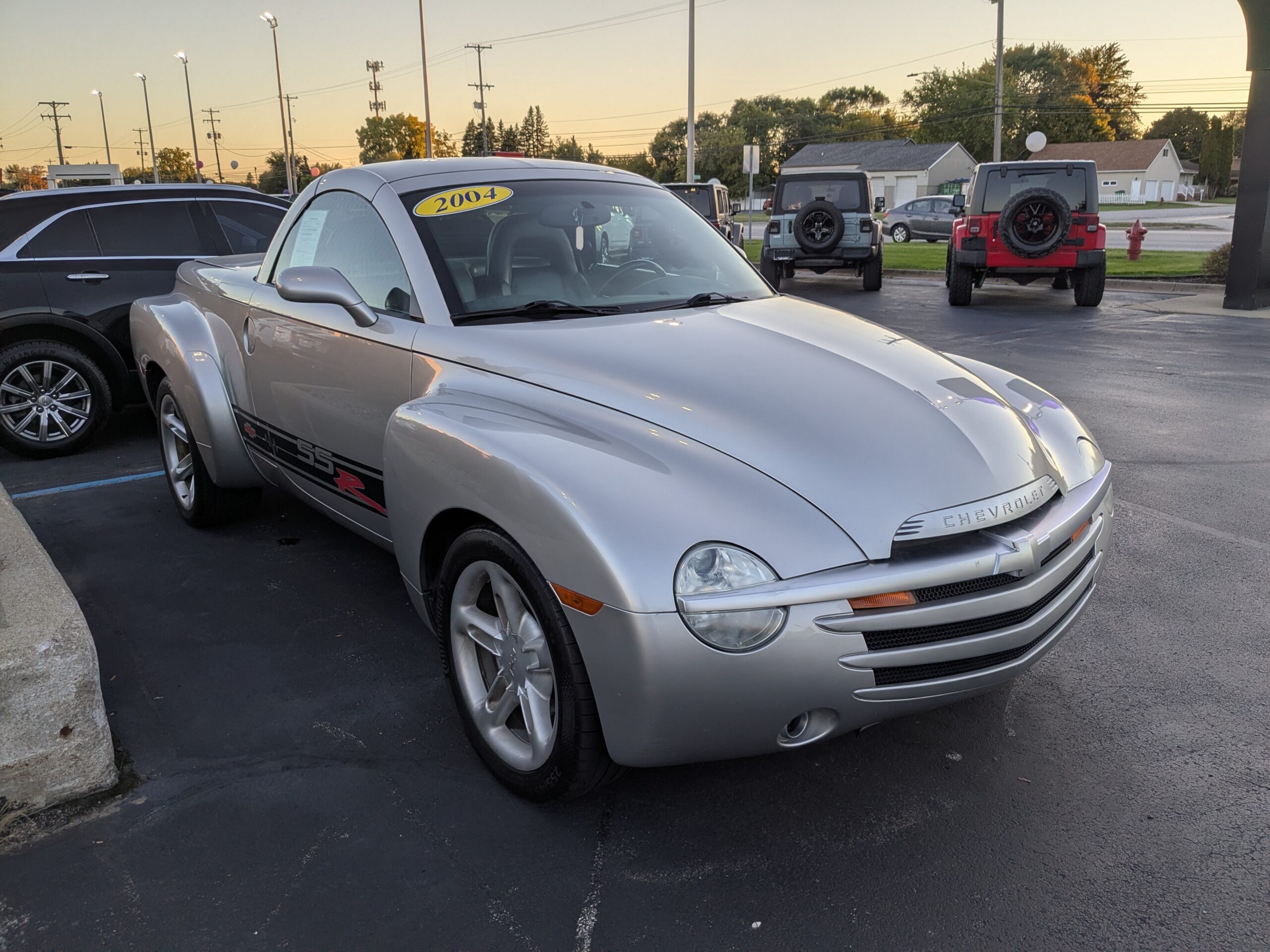
Chevy didn’t quite reach that balance (in my opinion) with the SSR, but looking at it now after years of not noticing them, I think it was a fun attempt at something a little different. Its niche, a retro convertible two-seater pickup truck, was a little too narrow for it to truly be successful, but I think it will turn some heads now that it’s entering collectible-license-plate territory itself.
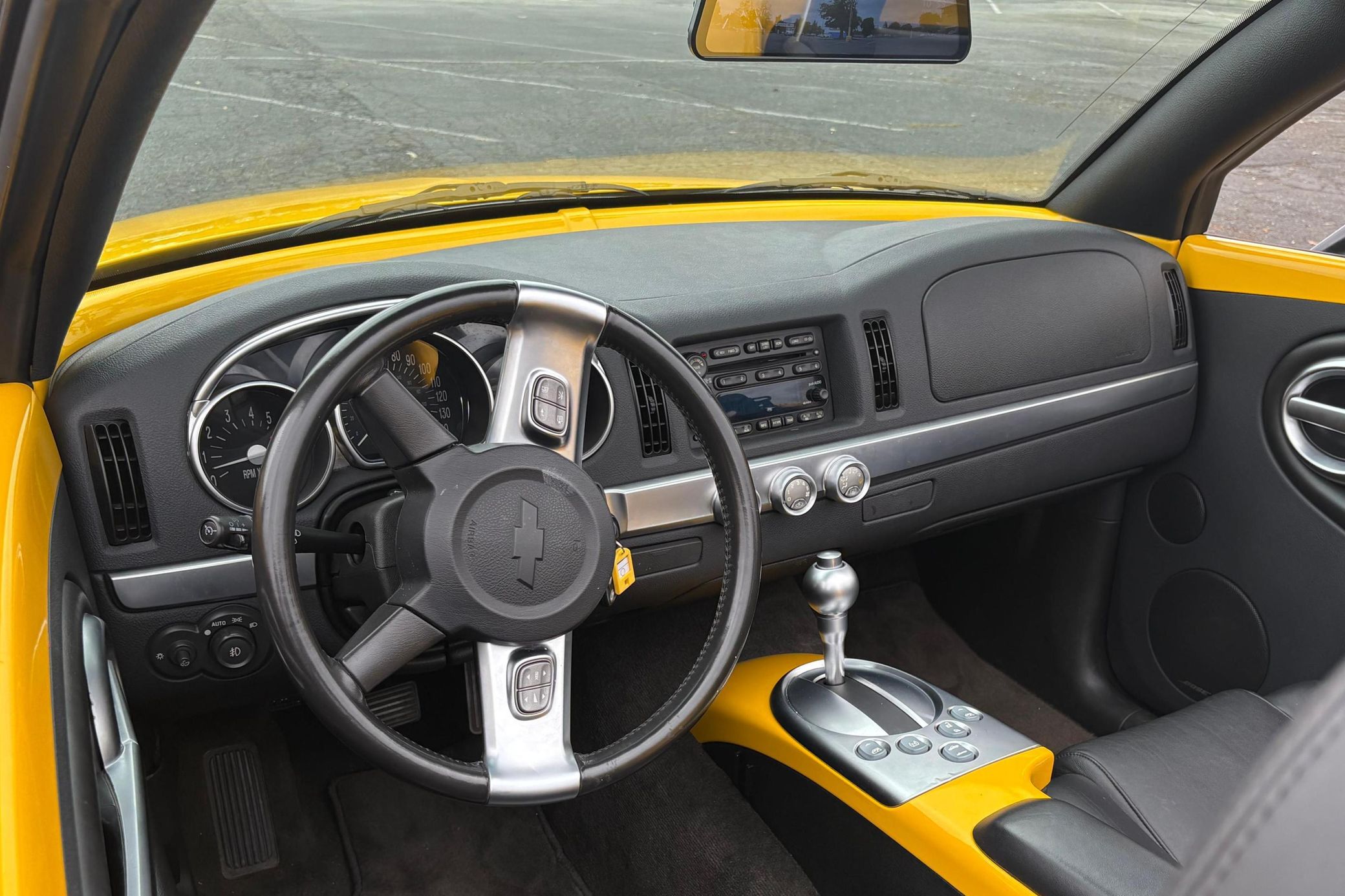
Sport Truck Magazine tested a 2004 SSR and liked its “star power” and “beautiful styling,” and while they thought the interior was appropriately flashy with its body color accents, a few of the controls on the flat dash were “hard to reach,” and in general, it was a triumph “of form over function.” They did like the easy-to-read gauges (aside from the trip odometer, which was hard to see) and the optional heated seats, a boon in a convertible.
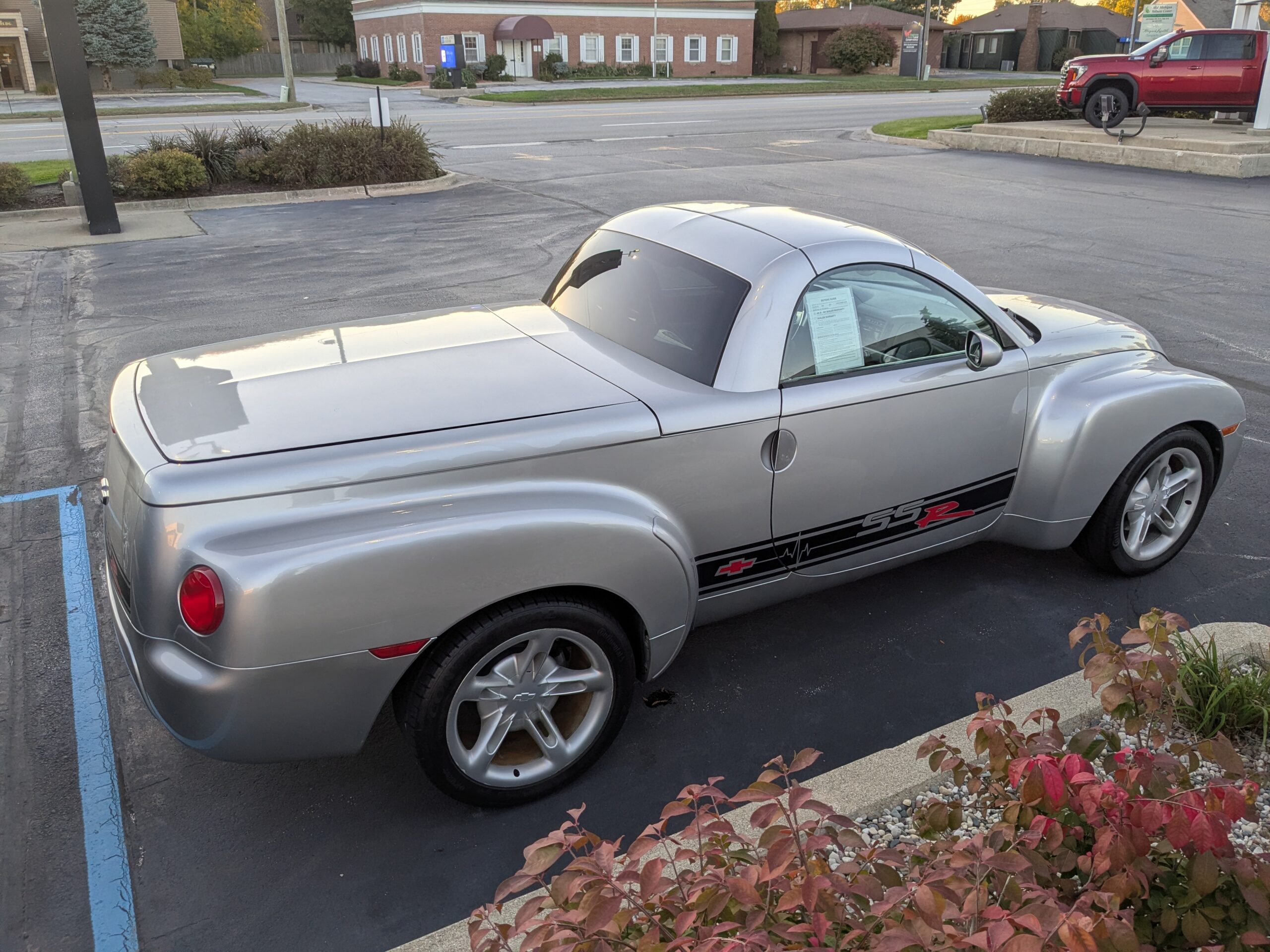
The wide fenders gave the SSR the classic look that Chevrolet was going for, but an unintended consequence was that it was hard to gauge how wide the car was from the driver’s seat. I can relate; I have brushed the garage door seal with my 1963 Riviera a few times because the fender peaks are not the widest point of the car, and when the widest point is behind you, things could get confusing very quickly.
I rather like the SSR’s styling from this angle, although I would gladly eschew the “Chevy Heartbeat” graphics on this Ricochet Silver Metallic car/truck. With only 1,388 SSRs wearing this color, it’s a fairly rare example; more popular colors included Slingshot Yellow, Redline Red, and Smokin’ Asphalt. Chevy appropriately had a little fun naming their color palette.
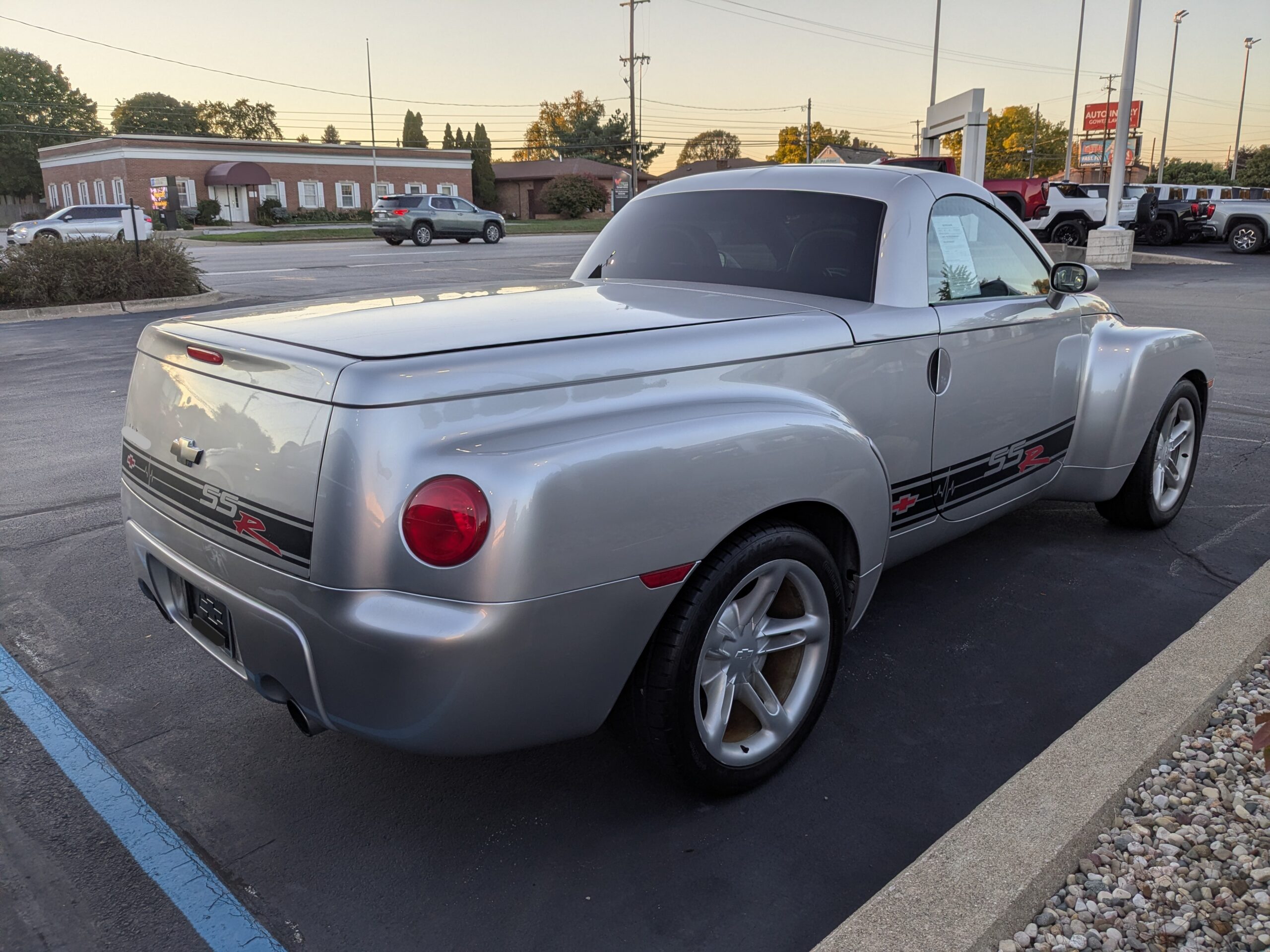
Even so, the SSR will probably remain a niche collectible that is passionately loved by its fans and is a footnote in automotive retro history to everyone else. That’s the fate of many classics, but I got a kick out of seeing this one on a used car lot (by the way, it has 100,000 miles and the dealer is asking about $19,500 for it). One question remains: Someone traded this thing in for a Buick, Cadillac, or GMC. What could possibly replace it?
Related Reading
CC Outtake: Chevrolet SSR – Did They Really Make These? (by Paul N)
In-Motion (Future) Classic: 2004 Chevrolet SSR – Two For The Show (by Joseph Dennis)
Future Curbside Classic: Chevrolet SSR – Dodge Did It, We Can Do It Better (by Gerardo Solis)























The Challenger was the grand slam retro hit, and that has to be one of the stupidest decisions in the history of the auto industry was to cancel it when Dodge was selling every one they could build (at a healthy profit since the platform had to have amortized itself several times over by 2023,) it was even outselling the Mustang. Stellantis is paying for that mistake now.
As for the SSR, they blew it styling-wise. I think if it was more squared off and looked more like a truck, it would have done better.
You’re right about the Challenger (I daily drive a 2023), but for some reason I felt that it was outside of the “peak retro” craze. Plus, it was done so well that I don’t even think of it as a retro car, although it clearly is. I agree that Stellantis messed the new car up, not because it looks bad, but because there are no options for people who just want a cool-looking daily driver with a reasonable price tag (as I did).
Challenger outsold the Mustang off and on…the big reason however was the massive amounts of incentives it had. There was ALWAYS thousands of dollars on the hood. I remember driving a 23 from a local dealer and they were giving 5K right off the bat.
I like challengers but they were to big for me.
I bought mine for $8,000 off sticker in early 2024.
I think a big part of the reason for the incentives on the Challenger versus the Mustang and Camaro was how each company went about creating their ponycars. The Challenger was effectively a big, two-door Charger, whereas the other two were much more specialized and did not have as much parts commonality with other products.
In effect, the Challenger was simply cheaper to build.
A couple retro-mobiles around the same time that were missed is the Plymouth Prowler which, arguably, could be considered the start of the wave of retro (even before the PT Cruiser and Chevy HHR) and the forelorn two-seater Thunderbird.
I’ve said it before, but I was bummed that GM chose to produce the SSR instead of the Tri-Five Chevy throwback Bel Air concept. But that got killed due to the lackluster Thunderbird sales. So, the SSR won out.
Then, too, GM made a mistake with the SSR’s hokey folding hardtop. If they had eschewed that rather gimmicky feature, they could have dropped the price substantially and found a much wider audience. Maybe a more basic version that skipped the hard truck bed tonneau cover, as well.
The Curbside Classic effect in reverse! Just last week I saw a silver SSR parked front and center in the used car section of the new car dealer nearest to me. It was the exact same shade of silver, sans graphics. Until I saw it I hadn’t thought of these in a long while.
I remember the SSR paced the 2003 Indianapolis 500 (I attended the race). I also recall the contemporary reviews of the SSR seemed to ask “What is this for?” To me it came off as a toy, a “factory” hot rod like the Plymouth Prowler.
One should credit the success of the retro 2005 Ford Mustang spurring the relaunch of the Dodge Challenger and Chevrolet Camaro (the latter drawing heavily from the 1969 Camaro).
Another rare color in these is ‘Aqua Blur’. I’ve only seen one in this color.
Agree about the Challenger, but it can always make an instant comeback, and hopefully Stellantis will resurrect it and make it available once again. Stellantis doesn’t appear to be as ponderous as GM when it comes to making decisions, as it didn’t take them long to release an ICE version of the new Charger, and then follow it up with a four door this year. We can only hope….
None of these retro-styled cars really appealed much to me – I guess I just preferred the originals.
The ones I recall seeing in my area were those with advertising artwork promoting the Red Gold brand of canned tomatoes.
I liked these and still do. But then I liked almost all of the retro cars, except for the TBird which seemed to miss the feature that was most distinctive about the 2 seater bird, its long trunk and tail fins (whether short or pointy). In retrospect I really like the Chevy HHR, and a compact pickup based on that design would have been nice. Maybe RWD on a Colorado platform.
The retro craze became goofy; I think the hits like the New Beetle, Mustang and PT Cruiser were off-set by the Prowler, SSR, Thunderbird and HHR. I wish the PT had stronger quality control and an efficient drivetrain, but on the other hand it was a lower priced vehicle for its time so I’ll give them that. I wasn’t a huge fan of the New Beetle but really loved the design of the follow up Beetle, which seemed early Porsche-like to me.
The problem with retro-mobiles is, once the newness and ‘cool factor’ wears off, there’s nowhere to go stylistically, and they just become old cars. Oh, VW and Daimler did a fair job of updating the second gen versions of their initially popular cars, but then that was it.
Even now, the retro Type 2 VW ID.Buzz (now just ‘Buzz’) has fallen into the same trap. It didn’t help that, as an EV, it failed. Once the relatively small aging hippie (or hippie wannabe) market got their’s, not many more sales to the point that VW has skipped the 2027 model year (although an improved Buzz is supposed to come back for 2028).
…and then Ford finds themselves building “The Jessica Rabbit version of the 1969-1970 Fastback” 20 years on.
Chevrolet – stop laughing. You went nearly that long with “the 1967-1969 Camaro put in a panini press” and are still basically racing that in NASCAR seemingly because there’s no other plan.
As a Boomer I really wish Nissan had imported the PAO but I don’t think that was ever going to happen .
The very first initial reports from GM about the SSR said CMD was working up a modern inline 6 cylinder engine to go with it .
To ma, both this and the HHR were near misses, my age group was the target, not my financial group, plenty of Boomers were and remain Blue Collar types who’ll never buy a new car or truck .
The Challenger two door was interesting, a MoPar enthusiast friend rented a six cylinder one for two weeks of across America travel and gave me a ride, it was nice but the gunslit windows killed it for me .
VWag shot itself in the foot with the initial new Beetle by only releasing it in the U.S.A. as a diesel the first year or two ~ I’m a Diesel Head but all my VW enthusiast frinds flat refused to even look at a new Beetle with Diesel power .
Plus of course, the gasser new Beetles were poorly made and had endless little things breaking on them .
-Nate
Not the type of vehicle I would be ever interested in, but i somewhat liked these when they were released and I think it still looks interesting today, as in “curious oddity”.
Chevy expected to sell 15K units per year but I think it was overpriced, and should have had the LS1 rather than a truck engine