

The town of White, Georgia, sits midway between Atlanta and Chattanooga, a few miles north of I-75. White is the home of Old Car City, a 35 acre slice of automotive nirvana that presents approximately 4,500 cars lounging in the Georgia forest. With seven miles of walking trails, Old Car City also rightfully bills itself as a photographer’s paradise.
Welcome to Part 3. We have covered the Chrysler Corporation and General Motors in prior installments. Pictures are being presented in the order taken, for the most part.

Old Car City began as a general store in 1931 with the addition of auto salvage several years later. The current owner, the son of the couple who opened the general store, quit selling auto parts in the 1980s as he was realizing more business from charging admission to visitors (currently $30 for adults).
The variety and scope of what can be found here is tough to comprehend, even when viewing it in person; it is sensory overload, but in a very good way.

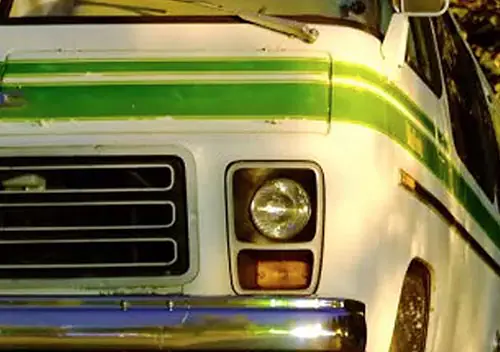
Vehicles one rarely sees, such as 1960s era Econoline vans, can be found in abundance here. This is merely one of over a dozen such vans, plus several Econoline pickups could be found.

This 1962 Mercury Colony Park wagon is an example of what is rarely seen.

Body styles that seem scarce can be found in multiples, as we will see.

Wagons of all varieties were seemingly commonplace.

Mercury was well-represented with wagons.

If I had to tell you the most commonly seen Ford, my answer would be the 1963 Ford Galaxie. Here is a ’63 two-door sedan sitting beside a ’61 Galaxie two-door sedan.

Lincolns could be found, but are relatively rare.

Conversely, there was a huge assortment of Thunderbirds.


Another section was dedicated to Mustangs and Cougars.


Remember, this was a salvage yard until the mid-1980s. Several articles and YouTube videos I’ve seen about Old Car City lament the “waste” of these cars. I disagree; all these cars were delivered here upon being classified as scrap. Is still being in existence so many years later, and being shared for people around the world to enjoy, truly a waste?

This Mustang has been corralled for such a long time that a tree has grown through the hole for the radio antenna. Seeing cars lose the battle to determined growing trees was not an uncommon sight.

Another 1963 Ford was lurking nearby.

As was this 1960 Starliner that is preventing this Lincoln (and 1961 Pontiac convertible) from escaping.


I had never realized Mercury’s affection for waterfall chrome on Cougars until I saw this pairing.


This was the newest Ford I saw. It was off the beaten path, amongst briars and saplings.

Another 1963 Galaxie sat nearby.
Perhaps my eyes are calibrated for finding ’63 Fords due to having owned one for 30-odd years.

My eyes are also calibrated for other cars I’ve owned, such as Thunderbirds like this one.

Sitting about three cars away was another ’63 Galaxie. This one caught my eye as the color was the same as mine had been.

Mine looked different under the hood. This was no doubt a fine engine, I’m just glad mine had approximately 130 more cubic inches.
The visitor policy at Old Car City states there will be no opening or closing of hoods and doors, no alcohol, no firearms, and no nudity. Seeing a hood already opened is a nice perk.


There were a surprising number of these Torino and Fairlane fastbacks, with one Mercury version that I could not successfully position myself to photograph.
Trees were a formidable obstacle in photographing cars as were other cars. Some locations in the garden had cars stored three to six wide, making cars in the middle difficult to see and identify, let alone photograph.


Yes, they are big to the point of flirting with awkwardness and they can be accused of being thirsty if not driven gingerly, but these ’72 to ’76 Thunderbirds are wonderful cars.

This ’59 Edsel wagon was one of three I found; no ’58 or ’60 models.
Part of me thinks 95% of the ’59 Edsels produced are still in existence somewhere.

The early 1950s were represented, but generally off the more traveled paths of the garden.


I’ve been wanting to lay eyes on a ’74 Marquis or Grand Marquis for years. Here it is.

It being parked here undoubtedly predates that tree, but this Lincoln still looks majestic.

These ’63 Fords have very good disbursement throughout the garden.

The trees here made for a very challenging shot; this is the best I could get. This old Galaxie wagon deserves a moment in the spotlight.

Trees and angles were a challenge, but this ’71 or ’72 Ford also deserves a moment of recognition.

This ’73 Torino reminded me of the one my parents bought new.


This brings us to the end of the Ford entry in our series. Next is AMC / Independents / Foreign.

All pictures were taken March 20, 2026; most have been color enhanced via software found on an aging iMac.










Many memories lay in those trees
Exactly, which is also part of the appeal.
I’ve been waiting for the Ford installment, Jason—thank you for being so generous with the photos. On my first pass through I tried to *not* read your essay, and simply identify year/model in each photo; I then went back to take in the narrative and check my work (me = respectable, but no better). The Edsels and Lincolns were a nice bonus.
A fine start to my day—your effort appreciated!
Thank you. I enjoyed putting this together.
I’d love to walk this yard but it looks exhausting .
-Nate
It was indeed exhausting, but very much worth it.
So after looking through these pieces I do agree with you that people clutching pearls over these cars going to waste are missing the point and positives of a place like this.
That said given what we’ve seen happen to old junkyards in recent decades all it takes is for the owner(s) to move on for one way or another and a land developer to clear it all out for stupid datacenter, sending these cars and parts that were once more savable before the forest consumed them to the crusher anyway, but I’m a cynic
There is indeed a higher purpose in having a collection of salvage cars than just selling parts. The interaction of nature and steel is formidable as is seeing the light spill onto these cars, making them look different at different times of the day. Plus the colors dancing around in the sunlight hitting roofs and hoods – there is something quite captivating about it.
The 71-72 Ford wagon is a 72 – the center grill going down below the bumper is the tell.
I’m amazed at the relatively rust-free quarter panels, that were so often full of holes or flapping when these cars roamed my area.
In all these years I still struggle to tell the front ends apart. Show the rear of a sedan and I’m fine.
Thanks for your hard work taking and posting these pics. I was a master auto tech from 73 to 98. Brings back memories. Mostly Chrysler dealers but worked on all.
Thank you.
Looks like you got one Pinto there in the mix, one Maverick, and no Falcons. Now when I think about it I don’t recall many/any compacts in the GM portion. Seems a predominance of intermediate to full size. That should make the American Motors portion interesting.
That’s a good observation. There were Vegas in the GM section but not much else other than a few assorted Corvairs and their POB brethren.
Pintos and Mavericks were sparse and there were maybe one or two Falcons – if that many.
Another fine collection, Jason!
I like that teal Mark III in the lede photo. Such a nineties color. Could it perhaps be another factory color faded by the sun?
So many T-Birds! I agree with your caption under that ’73 that these were wonderful cars. I so wish Dad had bought one of these Big Birds instead of the LTD that became my first car.
Speaking of LTD(s), the Country Squire “deserv[ing] a moment of recognition” is a ’72. But since you mention a ’71 there, that light blue ’71 (surrounded very tightly by trees) would have been a nice looking car in its day.
Finally, I’d love to know the story on how that blue ’65 or ’66 Mustang became half a Mustang… Salvage lot or not, that just does not look natural!
(Edit: JPC beat me to the comment about the ’72 Ford while I was typing.)
Regarding the 1966 Mustang, it looks like the left rear corner of the car was sold to a body shop. It was and is a common way of removing a quarter panel. The body shop orders a quarter/rocker panel combination, and the salvage yard sends them 1/4 of a car. The technician then cuts off what he doesn’t need and has a piece to fit in place of the damaged section he previously removed from the car under repair. That way you get part of the rear body panel, and all of the inner structure to use if you need it. It is labor intensive, but an economical way to repair a car that is a few years old. The difference in parts prices more than make up for the labor difference. Insurance companies really like it.
All that said, it is increasingly difficult to use said procedure on modern cars because of their complexities.
Thanks for the explanation, Patrick!
Thank you. There was an area dedicated strictly to Thunderbirds. What I captured weren’t necessarily the most remarkable, but they were the most easily photographed. I took around 500 pictures here.
Its not really any more of a “waste” than a bunch of over restored classics being hoarded in a climate controlled mega garage never to see the road again in fear they may get dinged.
It’s a ridiculous waste in that there’s thousands of parts there that would be of use to those restoring cars, and just plain stupid, but too much work to run as a parts yard as opposed to simply charging voyeurs evidently.
Loop bumpers for most fuselage Mopars are not reproduced, for example, and I saw literally dozens of good ones in the Mopar section. Pure idiocy (or perhaps just sheer laziness?)
I don’t know how much the son of the former owners knows about cars. I would think in depth knowledge at a minimum. If not then he needs someone. Then there is inventory. Keep it in his head, write it down, or put it all on a computer. This would be parts management. Who is pulling the parts? Customer? Every Pick and Pull lot I see, out my way, is a fricken mess as people rip parts out. God knows how much they destroy in the process. If operator pulls then more employees? Tool inventory? Insurance? If the owner has operational and mechanical expertise then he might be able to make something of a high hassle high reward business.
I know of a similar one off US 5 in Williams, CA. Cars packed door to door. There is a web site and as it says it is a one owner operation so time isn’t of essence. At the fellows web site click on parts cars to get an extensive look. There are no complete cars so don’t bother clicking. Below is his main yard. About a mile north is the main office where one will find more cars around just not as many.
http://www.bigmauto.com/
The office
From the street in 2024. Do we have a 71 New Yorker and a 68 Pontiac A-body.
Wow, that’s pretty bold to call the owner out as an idiot or lazy. I’m sure you are welcome to submit an offer to him for the whole shebang, if it’s that valuable surely you can’t possibly lose. How is it possible that this sure thing money making machine has completely passed everyone by over the last few decades? Someone call Jeff Bezos…Or does the proprietor just “owe” everybody access to his treasures?
I doubt he actually gives much of a shit about the cars. If his old man took in old grandfather clocks then Jason might have spent an afternoon looking at moldy wooden clocks instead and submitted his pics to CurbsideClocks instead. Whatever pays the bills, the taxes, and hopefully some sort of retirement that doesn’t just involve stamping another Yankee tourist’s hand in exchange for a few bucks.
Please…what’s he going to do, open it up to the public to pillage and break ten things for every one they pull? Or just break stuff because they want to see what it feels like? Both happen constantly at every pick and pull in the country. Or maybe hire a staff to wait for someone’s random phone call after paying to build and host an inventory website and then pounce on a car to get the one part they might want after seing photos and videos of every possible angle? Or maybe pull up his bootstraps and get out there himself and get you the one part you need that you’ll just as likely return for a refund because he didn’t notice the one small instance of pitting on the chrome that all of these 50+ year old pieces likely have?
Trust me, NONE of these cars look anything as good in real life as they do in the pictures. And they likely didn’t look all that much better when they arrived at the scrapyard. People in the 1980s needed cheap loop bumpers too when this actually WAS a scrapyard, so if it’s still there it was left by the pickers back then, and it’s unlikely to actually be good enough to use on whatever someone is “restoring”, especially since the vast majority of “restored” cars seem to aim to look better than what came out of the factory originally. The interest is in seeing the cars lying in the forest and being able to wax poetically about the GTO in the weeds or the Challenger on the roof of the Satellite, not the few parts that are somehow still in “as new” condition. Which they aren’t and likely weren’t to begin with when they landed here off the business end of a wrecker.
Just dawned on me. The owner is the son of the couple who opened the general store in 1931. This guy could be 90 years old plus. Didn’t think of it till your post.
I think his take is harsh and you bring up many many realistic realities, but I do see the flipside, and I don’t agree these cars came in looking the way they do now 40+ years ago as it’s in Georgia where cars don’t really rust that badly…….. unless you park them in a muddy forest.
Most of the cars here are indeed way beyond saving and not even that desirable, but there’s most certainly been a few cars shown in the last few days that are very valuable even in this condition if certain things like VIN or fender tags are intact. (The 69 Charger from the Chrysler entry the other day is a $20,000 item as-is and will sell for that briskly). So many of these sorts of places in the last several years inevitably wind up for sale when sadly the owner can’t operate it anymore and their family wants no part of it for obvious reasons, and the end result is the cars often get scrapped anyway, because so many are indeed now rotten junk.
My take away is this is a neat place and I love that it it exists but it seems like it’s on borrowed time and as a guy who seeks parts from junkyards rather than visit them for fun (ok well it’s kind of both) I can’t help but notice this piece and that piece and being a little irritated I can’t get it, and then find out 5 years from now everything’s been crushed to clear the land.
I understand that and you noticed a few pieces in the pictures and said you are a little irritated you can’t get them – Assuming the owner wrote a comment here that in fact everything IS now for sale would you be on the phone to the guy tomorrow offering him market value for those pieces? If honestly so, good for you I guess, it’s just as likely you can find an identical piece on ebay instead, if not now, then within a month. Just like everybody wants to buy someone’s cool car until it’s actually up for sale, then everyone has other things to do with their money…(not calling you out, but you know what I mean.) Unless of course they can take advantage of the situation and pay the PickNPull pricelist price irrespective of whether it’s off a 1969 Charger or a 2015 Charger.
He most likely is NOT at all an idiot, probably knows what the cars might be worth (since I’m sure every Mopar fan tells him “Dude, you have to sell that Charger, it’s worth at least $XXX as it sits!”) and perhaps has instructions for his heirs with a list of which cars are worth what amount of money and who to call when the time comes. In the meantime he’s charging $30 a pop for visitors and remembering he makes more money than he did when it was a scrapyard and nobody wanted the stuff and is just fine with that. Some people just don’t feel the need to chase every possible dollar all the time. But he’s also smart enough to realize that the Charger and some others in the mix are the draw that allows for $30 a pop, right?
I agree with you completely, and am on board with not labeling the owner as an idiot, that’s why I’m not too judgemental over it. To be honest I’d much rather visit this place myself for the entry fee than bother pulling these parts for myself or reselling them for profit (or just make up for the trip) as I do at u-pull-it type yards.
If anything I’m more frustrated this place didn’t just part these cars more/sell them as whole when they or parts of them were way less corroded 40 years ago. Then it was just another sketchy yard, now it’s an interesting pseudo tourist attraction. I love that the place exists as-is today, I just sadly know it won’t forever and a lot of these cars aren’t long for this world when that happens. I hope you’re right that there’s a list of cars for the heirs to be smart with… but heirs really often are in fact, well idiots, and would crush a junky 69 Charger or fastback Torino or SS396 along with the rest because “ugh, like, what a burden grandpa gave us!”
Jim, thank you. I’ve been away this evening but you have said everything I would have said.
You are right – these cars look better in pictures because, as stated at the end of each of the three parts so far – they have been color enhanced for more visual pop. Plus, I’ll be candid – some of these cars didn’t have much to allow for enhancement. But I still appreciated seeing the ’69 Charger that would have been in multiple pieces if moved, the Grand Prix that had likely been airborne, and everything else.
It’s amazing how some appreciate the place for what it is – a peaceful way to enjoy nature and cars, which we all know don’t play well together – while others are aghast that parts aren’t for sale, how the owner is a “hoarder”, etc. One of those two mentalities gets so tiring.
For what it’s worth, the owner is a very creative (as evidenced by his business model), savvy, and friendly gentleman.
It’ll be interesting to see what is said tomorrow, as one car featured was something that was never imported to the US by its manufacturer and several others are just quite rare.
One more thought…five miles away from Old Car City is the Savoy Auto Museum. I went straight to the Savoy after leaving OCC. It was the polar opposite, with a room full of limited production Ferraris (like 3 made sort of limited) that don’t get driven. I’ll write it up sometime and it’ll be interesting to see who is aghast those Ferraris don’t get driven or how two sequentially numbered ’55 Corvettes were driven.
If you actually restored cars like I did, JK, you might feel differently about all the waste going on here. Many of the parts just sitting and rotting are extremely difficult or near impossible to find.
I’ll give my preference as the 72-73 Mustang, and the 66 T-Bird. A nod to the ’63 Ford that Jason pointed out he once had a daily driver of.
Maybe these are scrap cars, it’s at least saying something that they have made it this far on this earth even if they are wrecks now. The cost to reclaim all this steel is likely prohibitive, so let them stay in place to be photographed.
Like the Pima Air Museum (outdoor) in Tucson, a lot of walking involved to see all these vehicles. Thanks for capturing and sharing.
Thank you. My legs ached (but in a good way) most of the next day. It was a lot of walking, but it’s mostly level, which helps.
No trucks? Of course it’s fun for us to recall our own experiences with cars like these, a virtual vision of our past, but in a sad twist, we all know, to many, this is nothing more than an ecological disaster, as I’m sure many stored before any regulations, leaking fluids, groundwater contaminated for miles. Things we never thought of, and quite frankly, we didn’t do so bad. These “collections” were usually way out of the way, and didn’t bother anyone. It isn’t until someone wants the land, that we hear of it. Sadly, with a few exceptions, I see all future bomb casings, building beams or appliances, or whatever scrap metal is used for today, but a grill for a ’62 Mercury? Not likely.
Awesome photos, but I have a quick question. What’s the car in the last photo? I don’t recognize it.
Are the trees Southern Yellow Pines?