
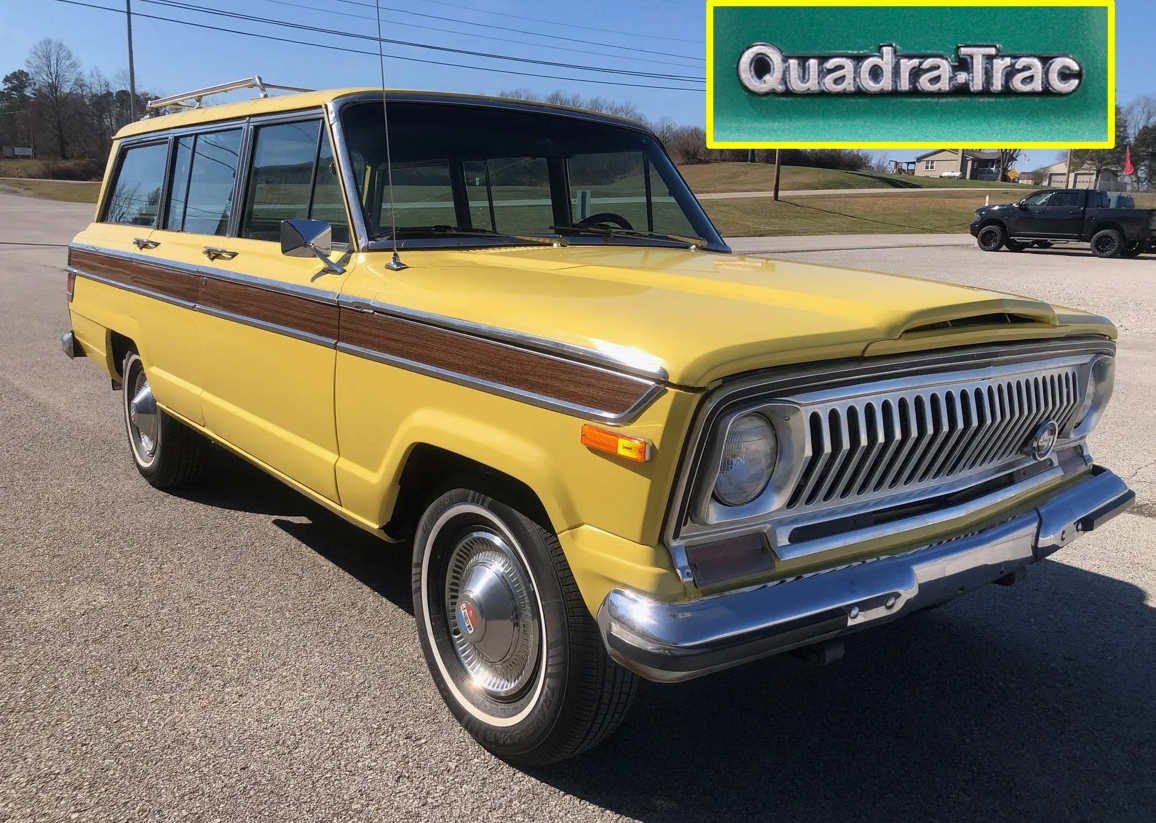
Automatic all-wheel-drive is so common in modern trucks and SUVs that its hard to remember a time when it was a novelty, but it certainly was big news when Jeep introduced Quadra-Trac in 1973; it was an automatic all-wheel-drive system that required no getting out to lock hubs and no shift mechanism for the transfer case (in its standard form). Like most elegant engineering solutions, Quadra-Trac is a simple concept with simple execution.
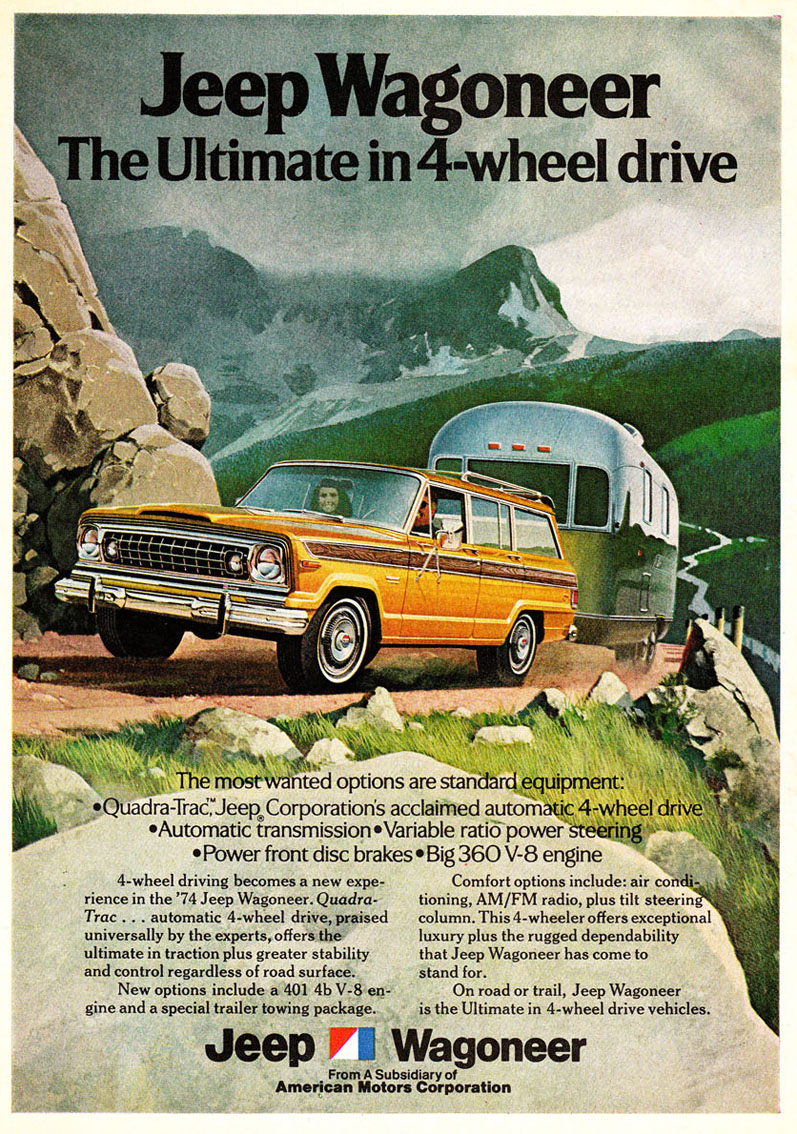
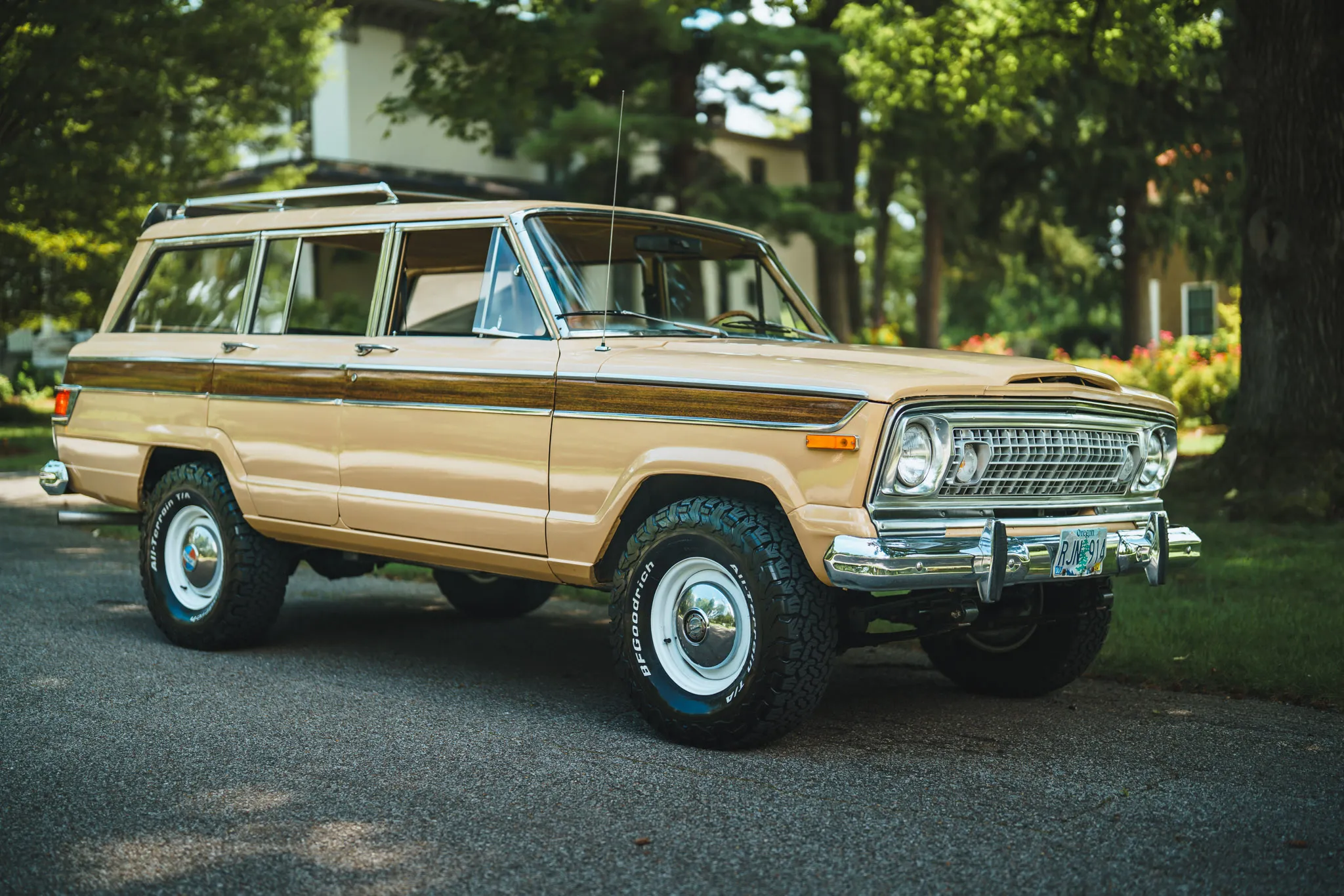
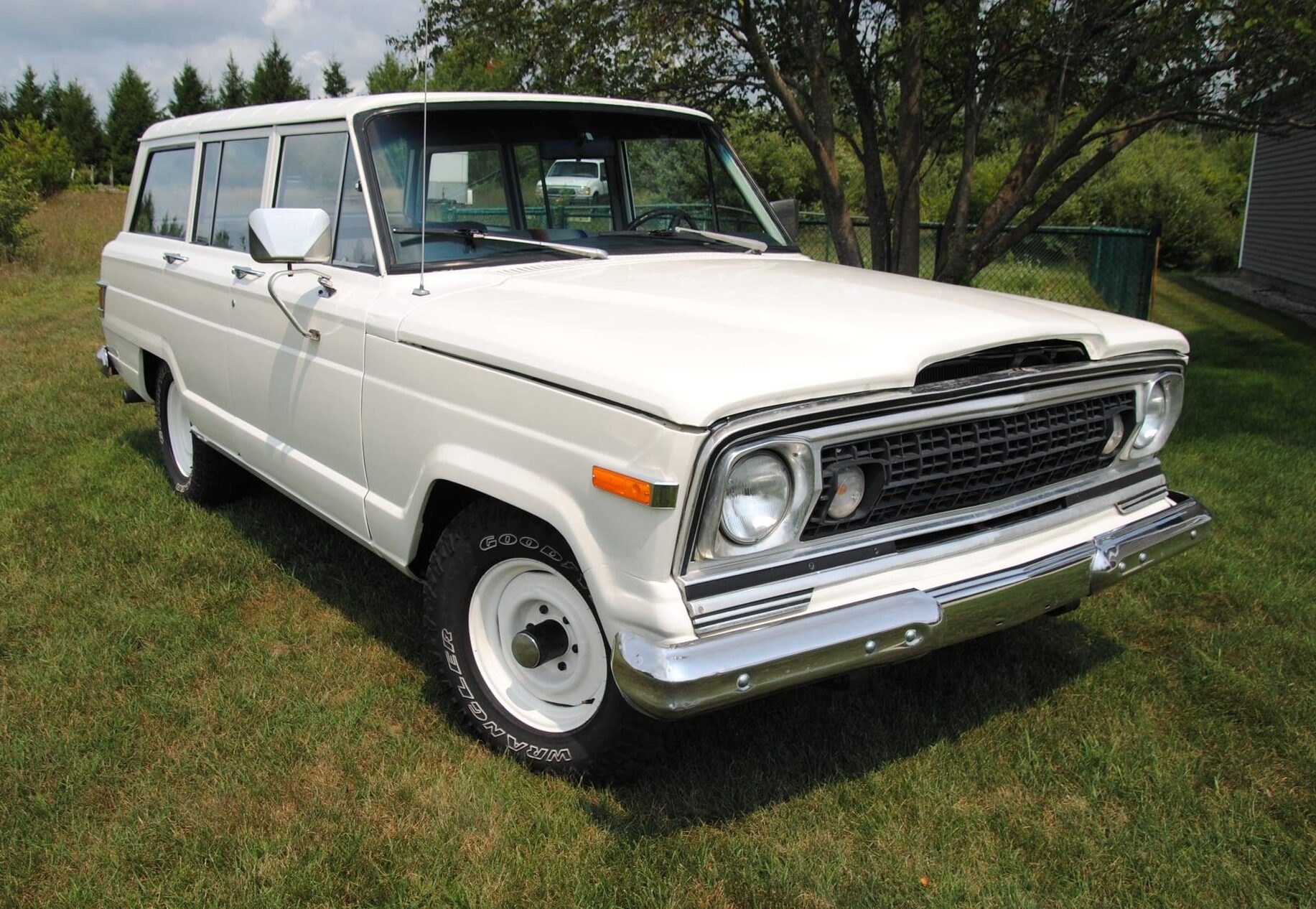
Quadra-Trac got its start with Jeep’s swanky Wagoneer, which offered it and the automatic transmission as standard equipment (it was optional in the Cherokee and Pickup). It was not intended initially for serious rock climbing or off-road work, but rather to offer better traction in the situations where an average motorist might find trouble: in sand, snow, and mud.
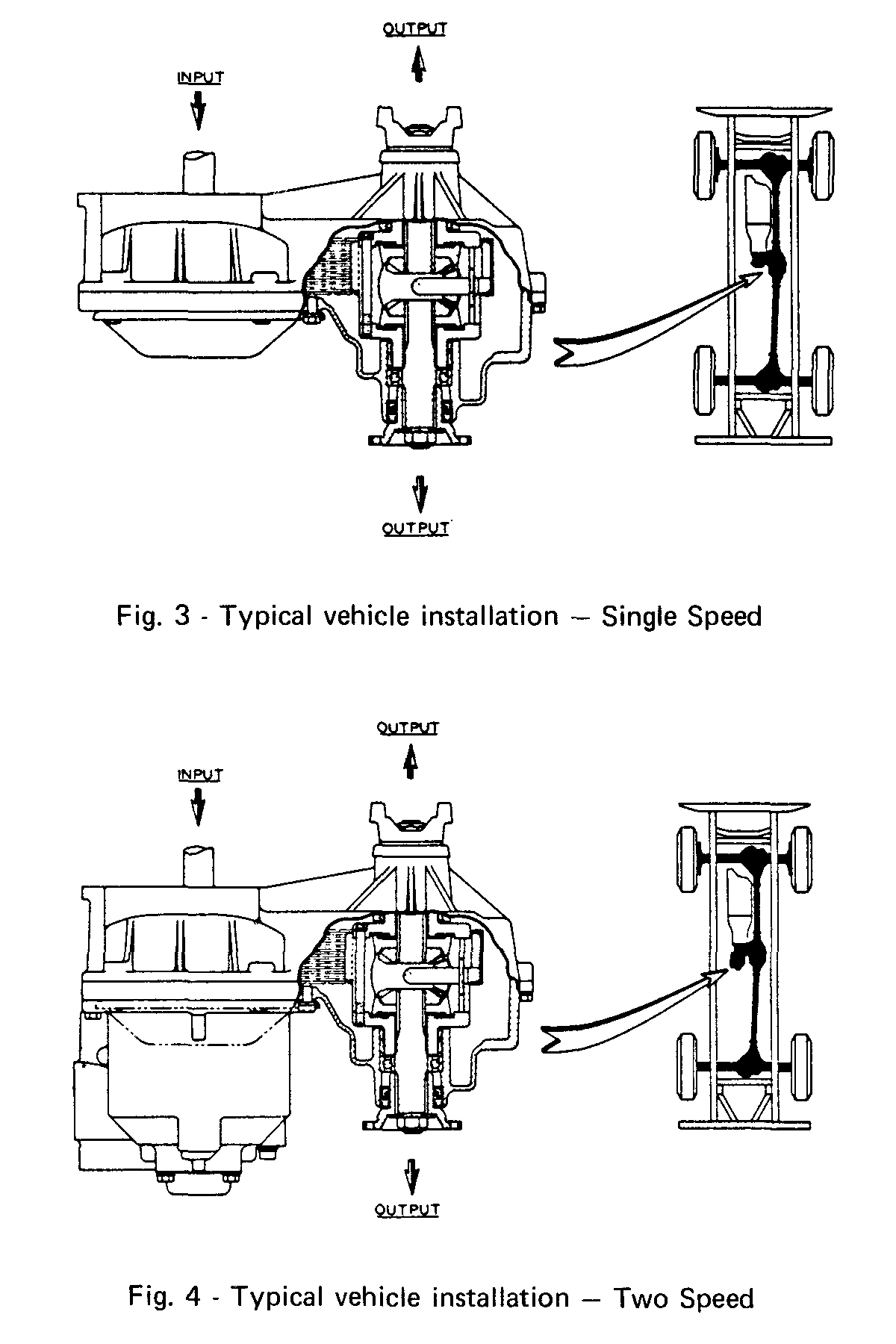
This schematic shows the outlines of the main components of Quadra-Trac (in this case with and without the “low-range reduction option” that did offer a little more customary Jeep off-road prowess). From a bird’s eye view, it looks a lot like a traditional four-wheel-drive system, but because of the differential within the transfer case, there was no need for the driver to select ranges.
For those with 17 minutes to kill, mechanic “Al” explains the basics of the Quadra-Trac system to another line mechanic and a saleswoman.
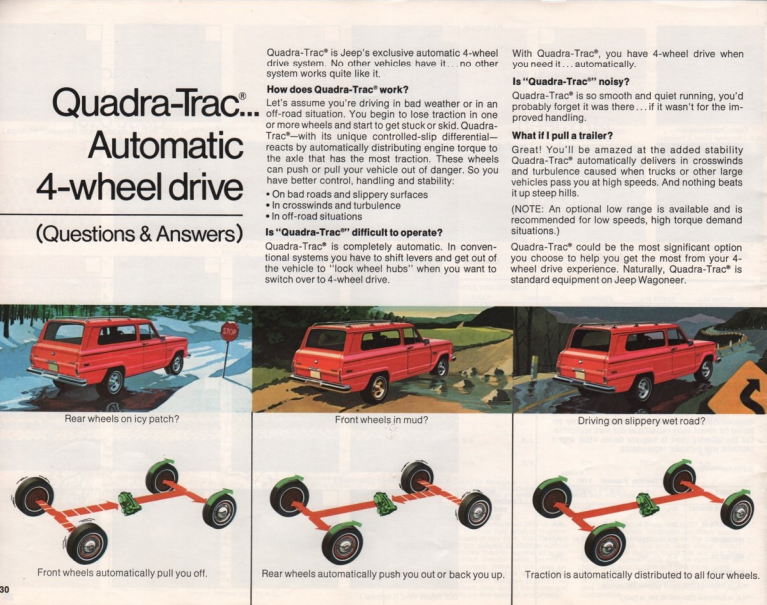
In essence, the Quadra-Trac transfer case, designed by Borg-Warner, acts like a limited-slip differential in low-traction conditions but like an open differential in normal driving, and it delivers power to the axle with the most traction while also allowing enough slip for the vehicle to turn corners without the driveline windup one might expect with a traditional four-wheel-drive system.
If you haven’t read up on limited-slip differential theory lately, this animated video may remind you of the basics. A typical clutched limited-slip differential uses the forces of the differential spider gears on the side gears that drive the axles. A beveled gear (such as a spider gear) imparts an axial (sideways) force on its corresponding side gear when torque is applied, which presses that axle’s clutch pack together more tightly. Therefore, the wheel that is on a high-traction surface receives more motive force because it takes more torque to turn than a free-spinning wheel, increasing the axial force imparted on the side gear.
This is the opposite of an “open” differential, which sends the most torque down the path of least resistance, the wheel with the least traction. The problem with a limited-slip differential is that an open differential is preferable when not trying to pull oneself out of a snowbank; there is less friction in the driveline and less of a tendency for the differential to “lock” under full power, which is great for doing donuts in a muscle car but not so great when you’re trying to balance power between a four-wheel-drive vehicle’s front and rear axles. Therefore, the problem engineers faced was how to create a differential-based transfer case that acts like a limited-slip unit in low-traction conditions and an open differential the rest of the time.
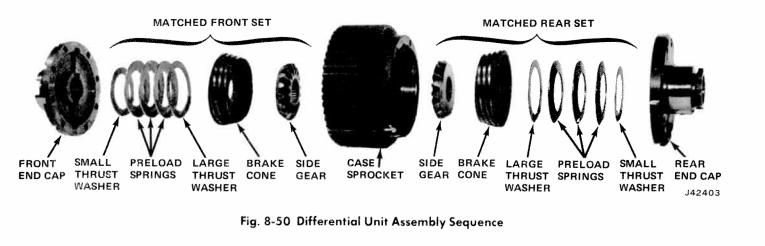
Therein lies the genius of the Quadra-Trac. The two cone clutches (brake cones, one for each axle) are loaded by a series of preload (Belleville) springs which force them into the case sprocket, which is driven by the transmission (more on that below). The side gears and brake cones are both splined to the output shafts, which are bolted to the front and rear driveshafts respectively, sending power to the front or rear differential.
When a wheel on one axle starts spinning, engine power is automatically directed to the axle that has the most traction. Its output shaft is still being driven through the spring-preloaded cone clutch, which provides enough motive force to pull the car out of the low-traction situation. On high-traction surfaces and high-torque situations, the traditional beveled spider gear loads the side gears, whose axial force unloads the Belleville springs by pushing out against the cone clutch and overcoming its spring pressure, thus disengaging the cone clutch from the case sprocket and allowing the unit to behave like a normal open differential, being driven through the splined side gear.
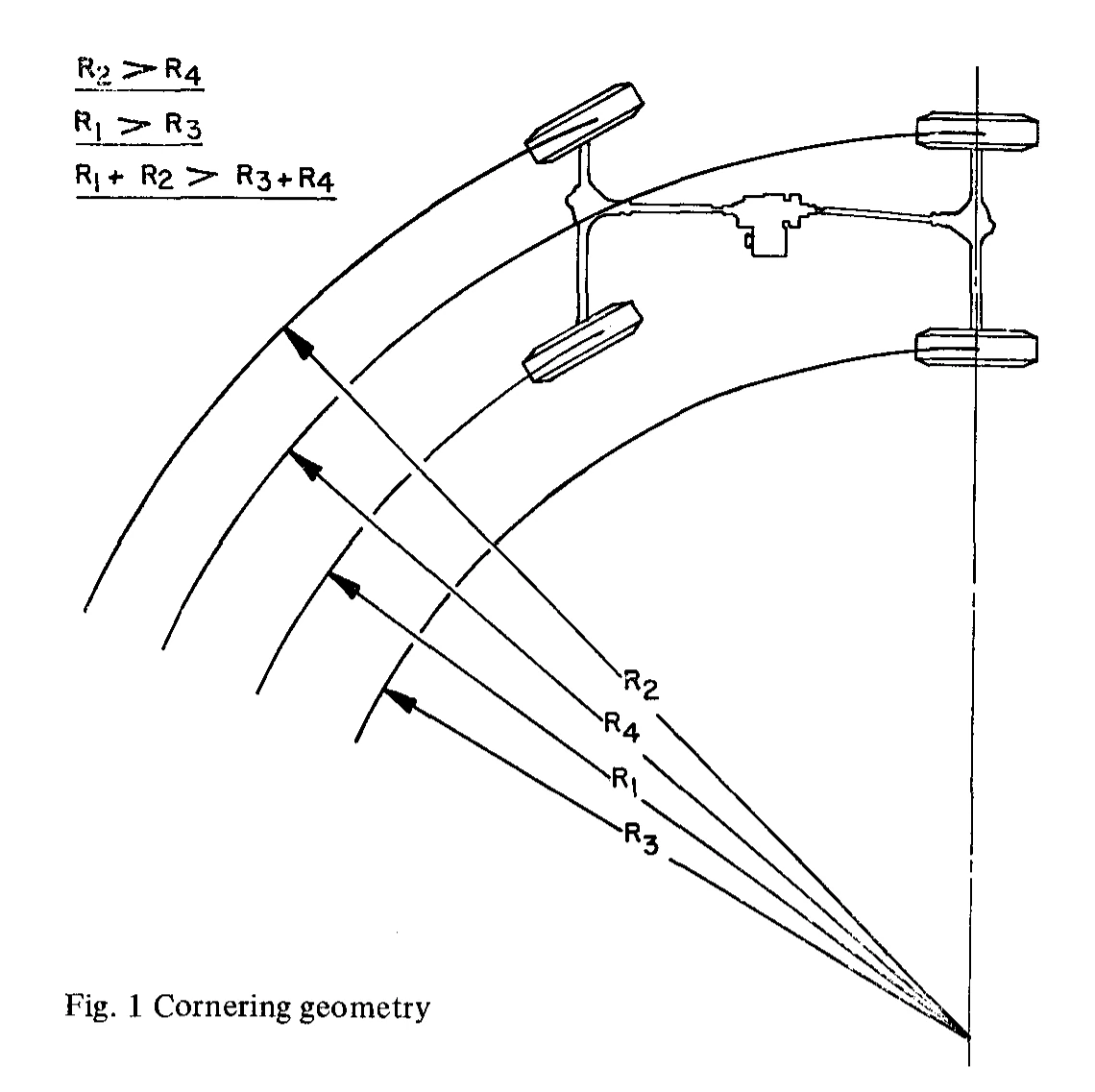
When the vehicle is traveling in a straight line, the differential again acts as any open differential would; when the vehicle is turning, clutch slip allows the system to operate in harmony under all conditions, even though the front driveshaft is spinning faster than the rear (notice how the front wheels are following a wider arc than the rear, forcing the front wheels and driveshaft to turn faster than the rear wheels and driveshaft). The same differential within the transfer case does many jobs that had previously made full-time four-wheel drive impossible.
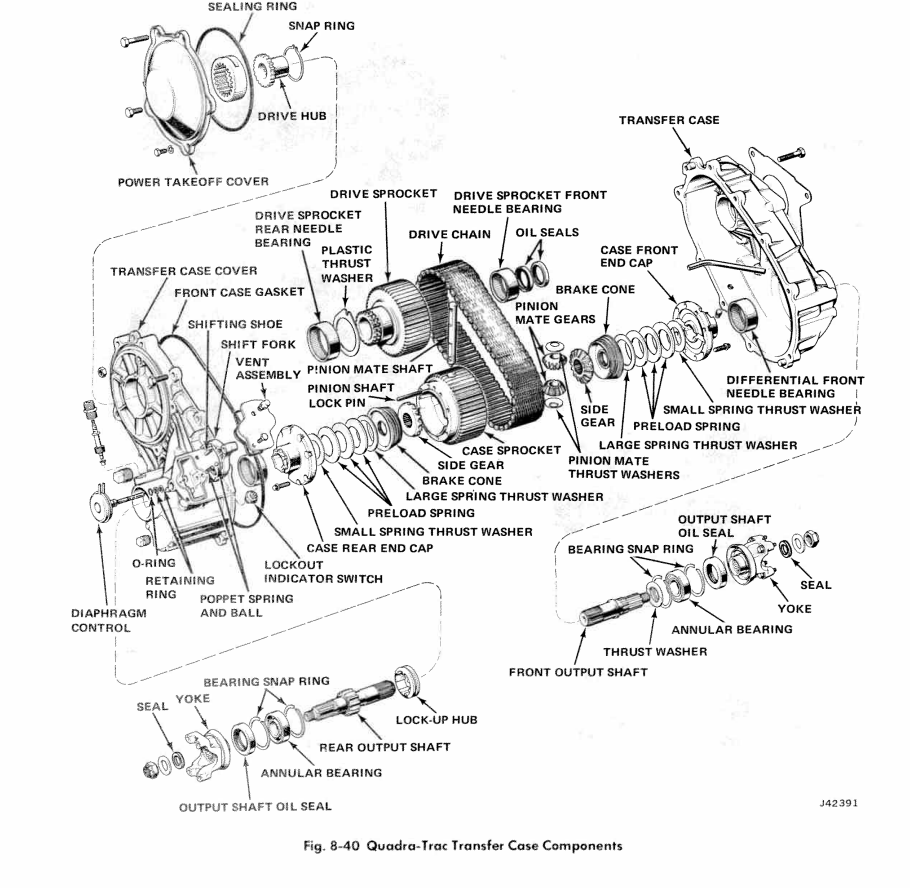
Here is the exploded diagram from the service manual showing the transfer case’s various components. One of Quadra-Trac’s most interesting differences from a traditional transfer case is how the power is routed to its “differential.” Notice that it uses a wide Hy-Vo chain similar to the drive chain on an early Oldsmobile Toronado or Cadillac Eldorado; the chain routes power from the drive sprocket (which is driven by the transmission) to the case sprocket, which contains the differential unit discussed above, and out to the axles through the front and rear output shafts.
Also notice the diaphragm control for the “emergency drive” mode, which is activated by a switch inside the Jeep. It uses engine vacuum to activate a shift fork that locks the front and rear output shafts together in case full-time four-wheel drive is needed, as in a situation where the truck is stuck in sand or snow. Jeep recommended operating the switch once a month to keep everything in working order, but it was obviously not meant for use on dry pavement because there would be no differential action between the axles, which could get uncomfortable, skittish, and potentially destructive very quickly. And according to the 1974 Factory Service Manual, “should loss of a front or rear propeller shaft assembly or front axle shaft failure occur, activation of the lockout device will permit 2-wheel drive operation until repair or replacement can be made.” Neat, but can you imagine expecting a modern SUV buyer to remember all that?
Even better: “If the lockout light does not go off [when switching off the unit], back the vehicle in an S pattern for approximately 15 feet.” Some people forget to check their oil, so good luck.
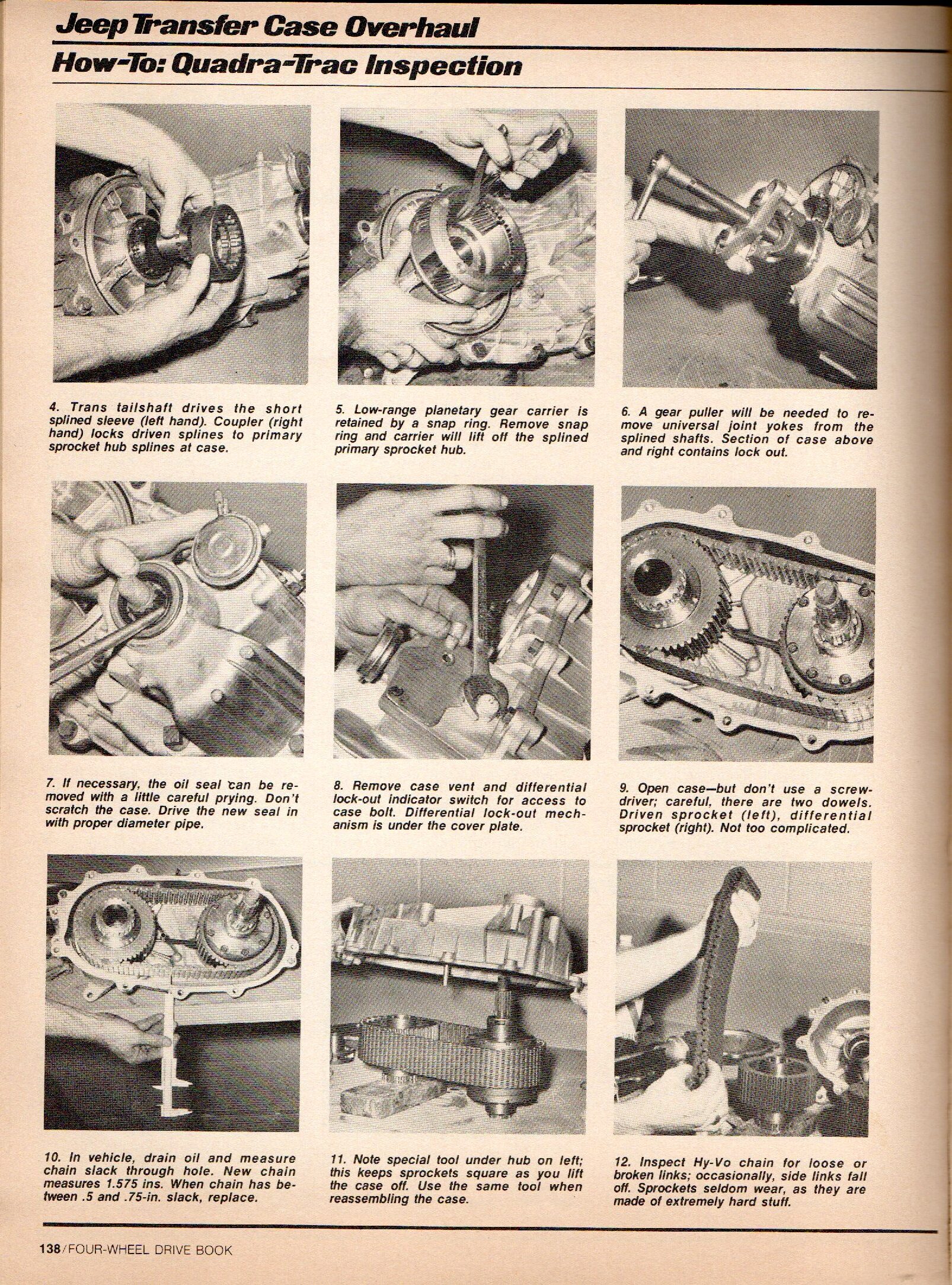
But many four-wheel drive owners are DIY mechanics who understand their vehicles and maintain them. These scans from Petersen’s Complete Book of Four-Wheel Drive show the steps for taking apart and reassembling the Quadra-Trac transfer case. The standard unit doesn’t have a low range, so it’s not intended for serious off-roading; however, a planetary low assembly was an option that was so easy to install that a dealer could do it later on (at the owner’s expense).
Mechanical issues with Quadra-Trac are relatively few. Incorrect or low lubrication (30 weight oil with a special additive) can obviously cause wear, the drive chain can wear, and the differential assembly can wear. There is a hole for measuring chain slack, but there is no tensioner, so when the chain is worn, it must be replaced. Made in U.S.A. replacements are still available, but they’re not cheap at around $350.
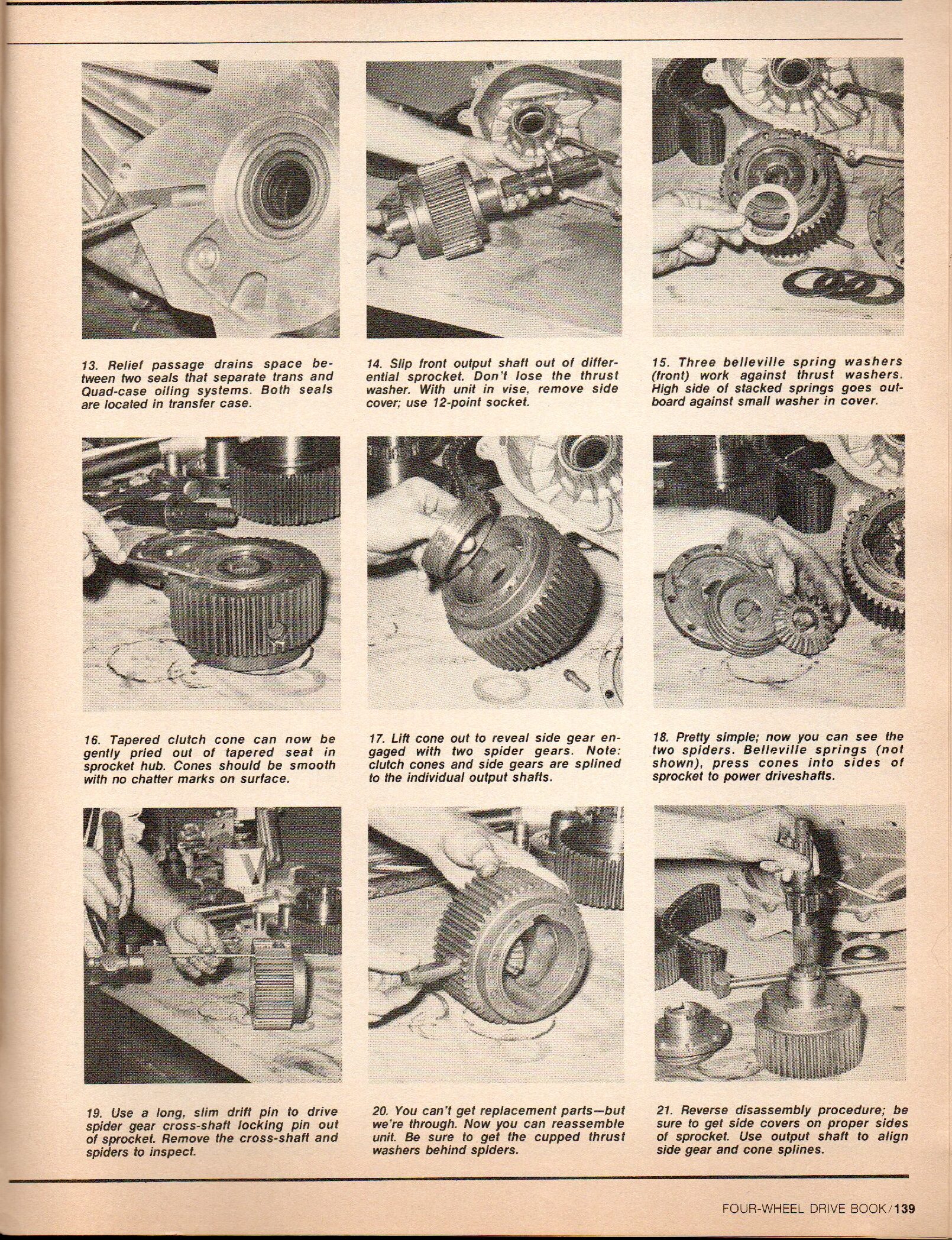
When the system is not “exercised,” the clutches can start to chatter, a situation that AMC called “stick-slip.” If that’s the case, the recommendation is to check the fluid and then go out and do some tight figure-eights. (The Quadra-Trac likes to be exercised.) If that doesn’t work, a look into the case is necessary, but fortunately, much of that work can be done in the vehicle. The case can be separated without removing the entire unit, which means that everything can be replaced except for the front output bearing and seal.
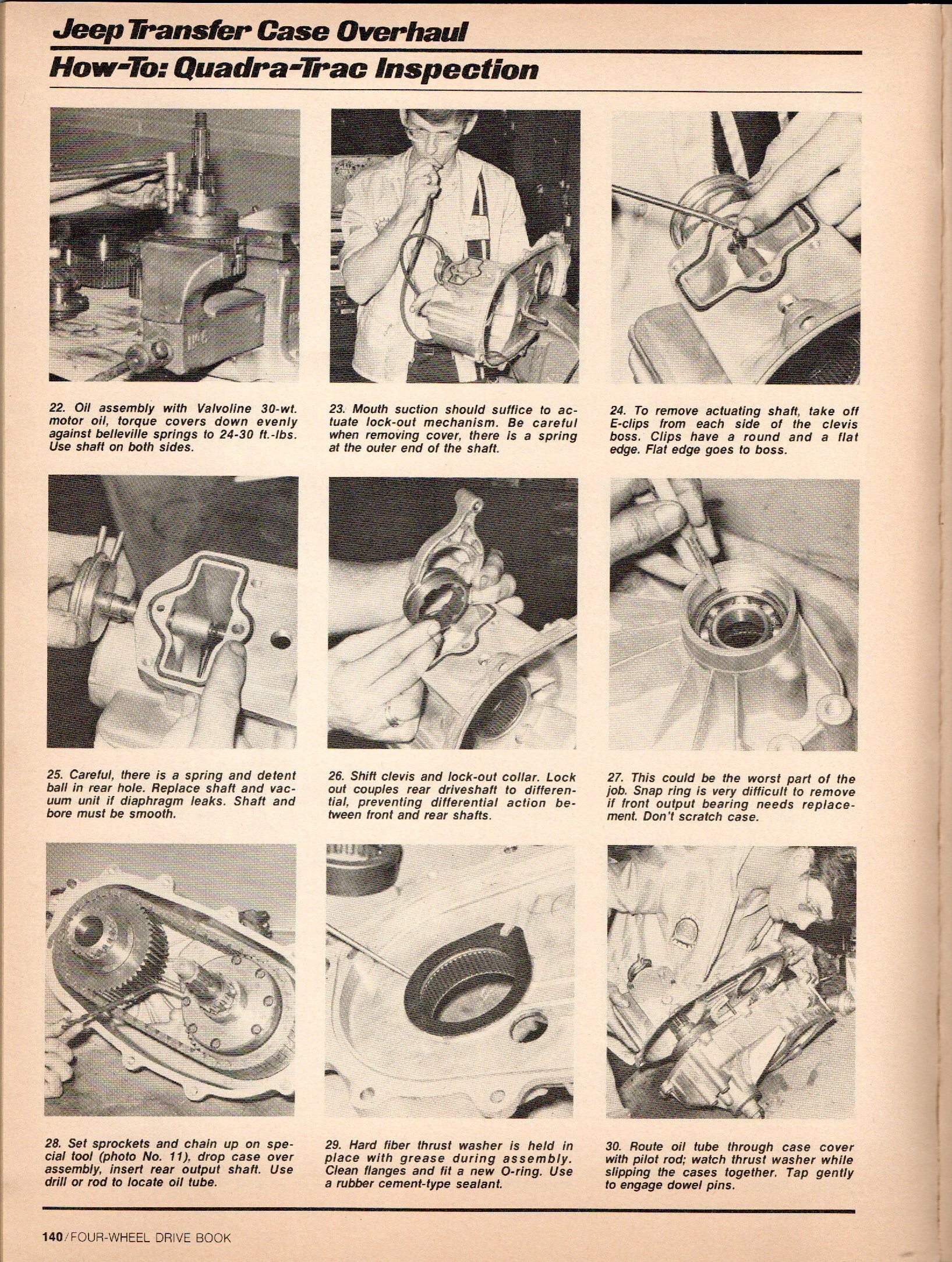
Another potential glitch in Quadra-Trac is the vacuum system that operates the emergency drive mode; some owners have converted this system to a mechanical linkage to eliminate the sometimes troublesome vacuum lockout mechanism. Jeep also reminded owners not to spin the wheels excessively without the emergency drive mode engaged, as this could damage the differential.
For those still struggling to wrap their heads around Quadra-Trac, author Eric Rickman included an anecdote in Petersen’s Complete Book of Four-Wheel Drive. He took a Jeep so equipped to a shop to test it on a dynamometer, and when the gauge read 20 horsepower, the truck tried to pull itself off the rollers with its front wheels. The simple little analog transfer case sensed that the rear wheels were “slipping,” so it shifted power to the axle with traction. From that point on, they jacked up the front end, and they could continue the test.
The original Quadra-Trac system added a degree of sophistication to the rugged Jeep line using modern (at the time) limited-slip technology with a new twist to provide a seamless all-wheel-drive experience in situations where most owners would find themselves in a pickle. When combined with the low-range add-on, it could also provide a good degree of traditional Jeep off-road capability, but even on its own, it was a successful first step toward today’s ubiquitous all-wheel-drive systems.
Related Reading
CC Capsule: 1979 Jeep Cherokee – I Love Bacon (by Paul N)























Thanks for that.
I’d thought they used Harry Ferguson’s silicone-filled LSD like the Jensen, and not a traditional mechanical one.
Maybe that dates to bad journalese in the past.
Makes more sense when mechanical ruggedness/proper four-wheel drive is required.
Silicone for sportiness!
Eventually they went to the NP229 transfer case with a viscous coupling differential in the Grand Wagoneer. It had amazing snow traction.
And said coupling is not serviceable and is stupid money just for the part. I have rebuilt a couple of those t-cases
Interesting stuff! I remember Jeep making a big deal about Quadra Trac in its advertising. I knew nothing about it, but figured it had to be better than “regular” 4WD systems – the mark of effective advertising.
Dad had a ’75 Wagoneer with Quadra-Trac. We lived in horizontal snow country near Lake Erie.
That thing would go thtough snow like nothing else I’ve ever driven (and I’ve driven a lot of 4WD trucks.).
Every modern SUV buyer is a moron in my opinion.