
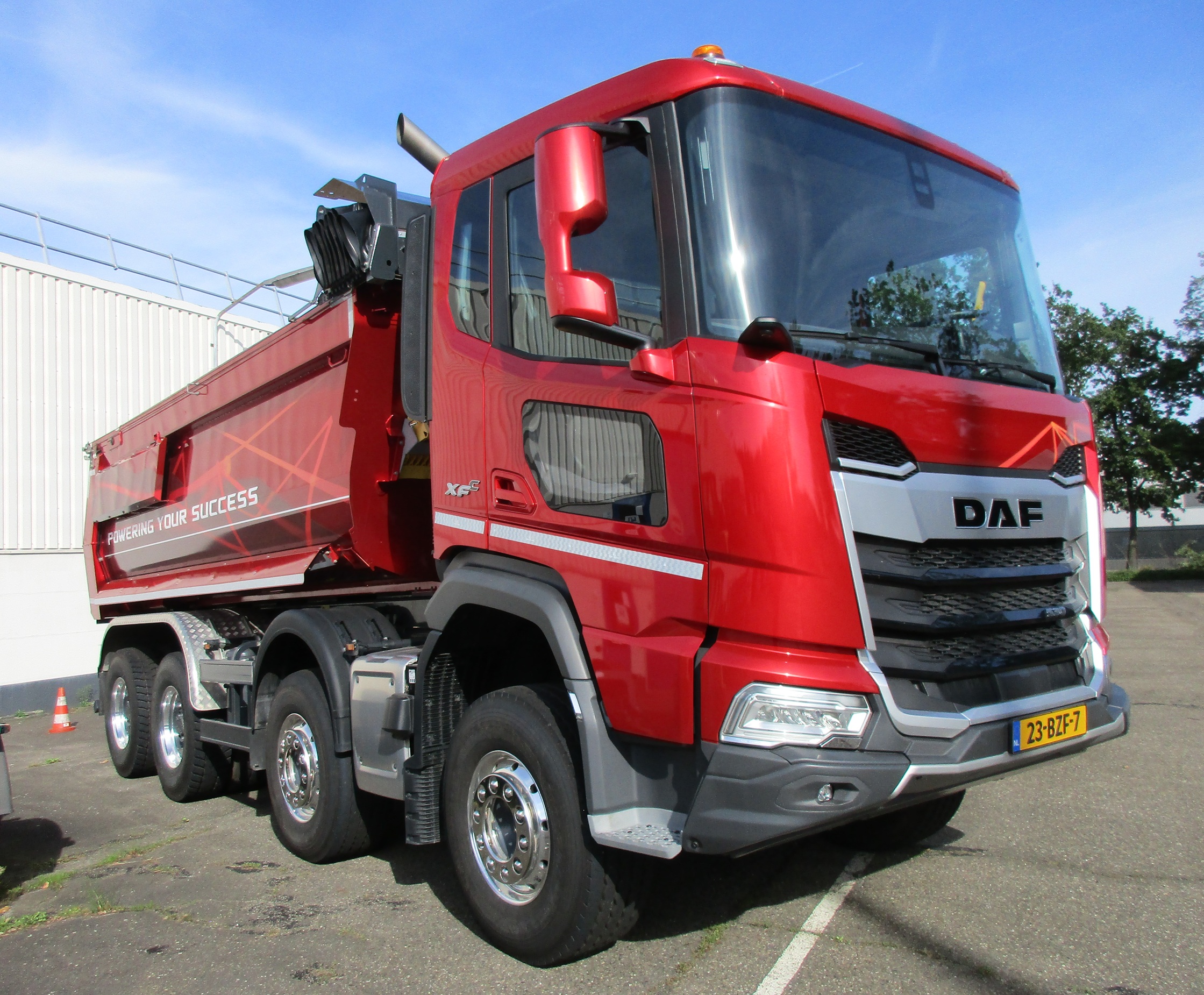
Twin-steer, a dual drive tandem with planetary drive axles, leaf springs all around, a powerful turbodiesel, and all that completed with a fully up-to-date day cab. This DAF in factory-demo-red is a customary European vocational truck for sure. All main truck makers can offer such a straightforward 8×4 chassis-cab, directly from the factory. Vocational trucks are mostly equipped with a dump body, concrete mixer, or roll-off system.
The letter C in the truck’s XFC model designation stands for Construction, as in construction site. The other C-variants that DAF offers for the on-/off-road trucking market are the XBC (their smallest model) and the XDC (the truck maker’s midsize truck and tractor range).
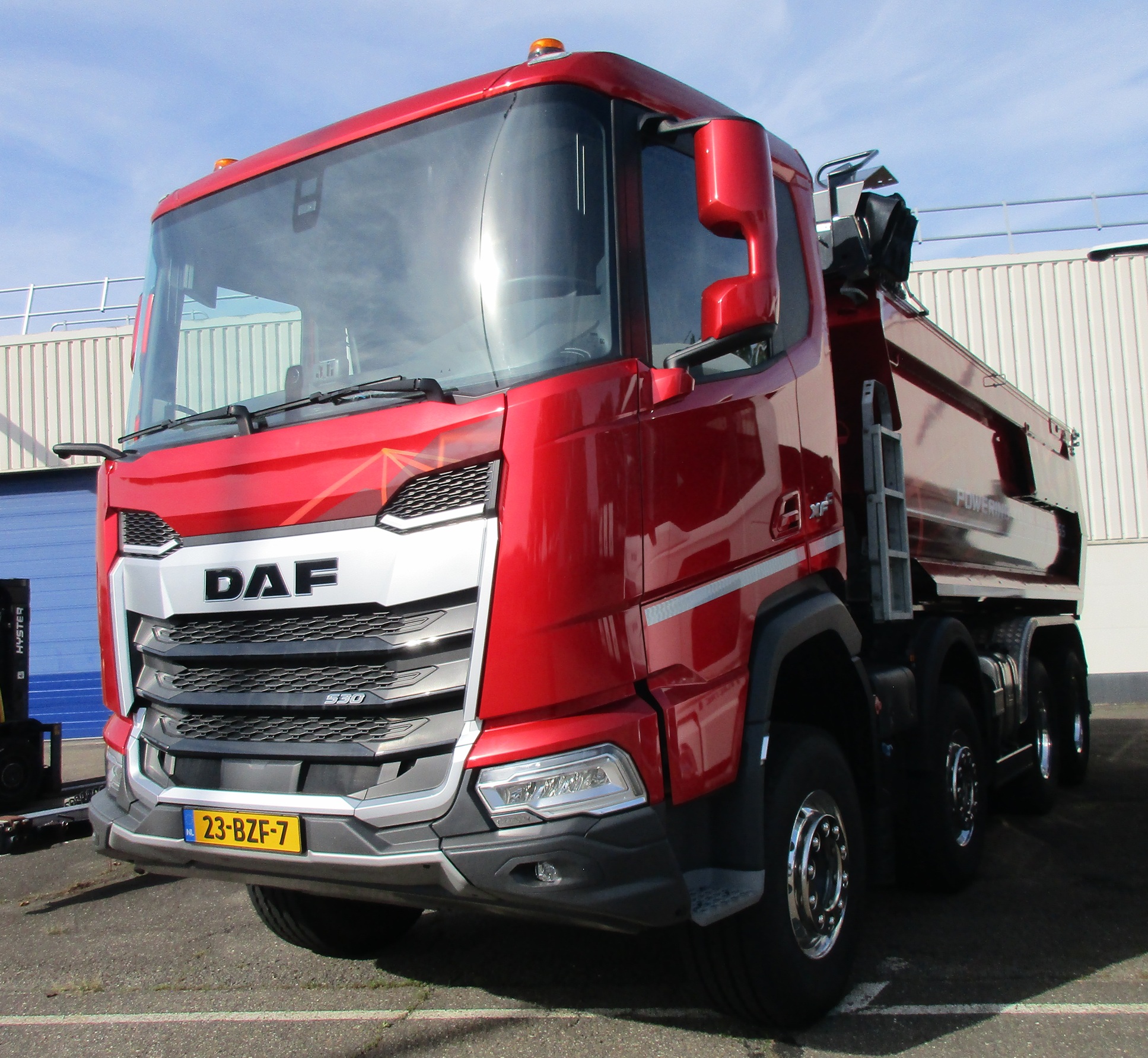
Most noticeable, compared with the on-highway XF, are the truck’s stance and the three-piece steel bumper. The XFC comes with one or two straight -as in literally straight- steering axles for more ground clearance.
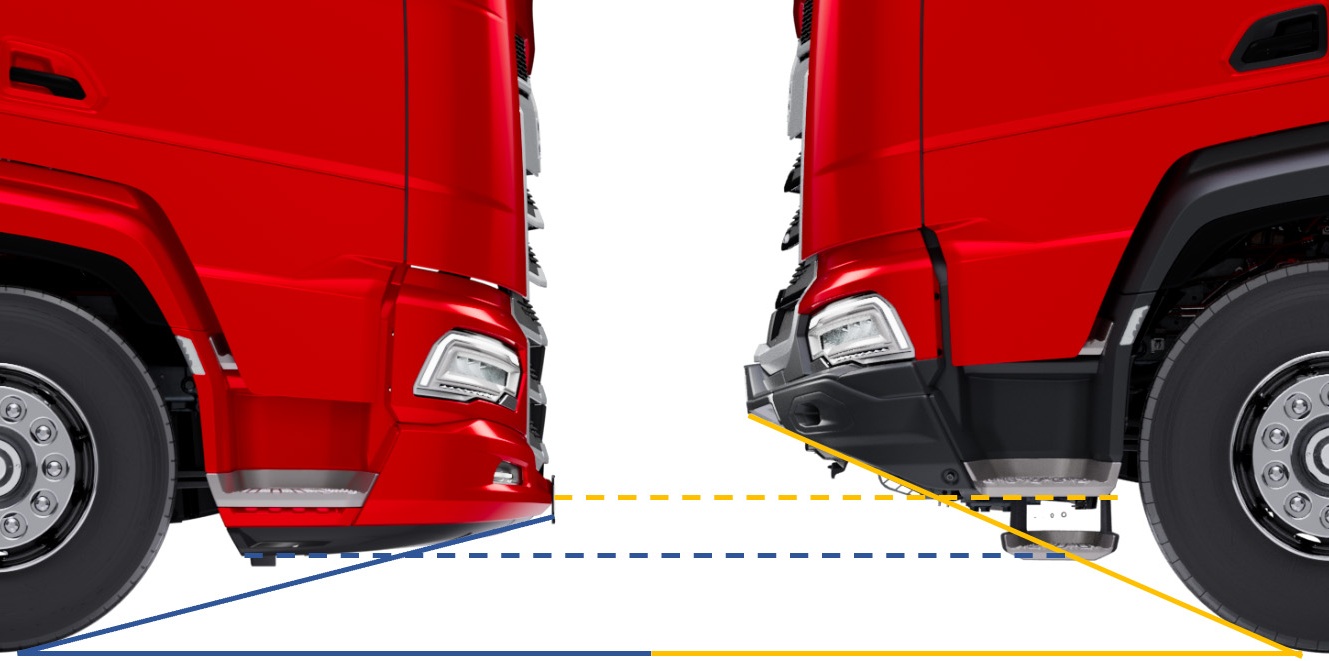
Or as the saying goes, ‘a picture is worth a thousand words’. The lower step, as pictured here on the XFC, is optional; the demo truck I caught obviously doesn’t have them (courtesy of DAF Trucks).
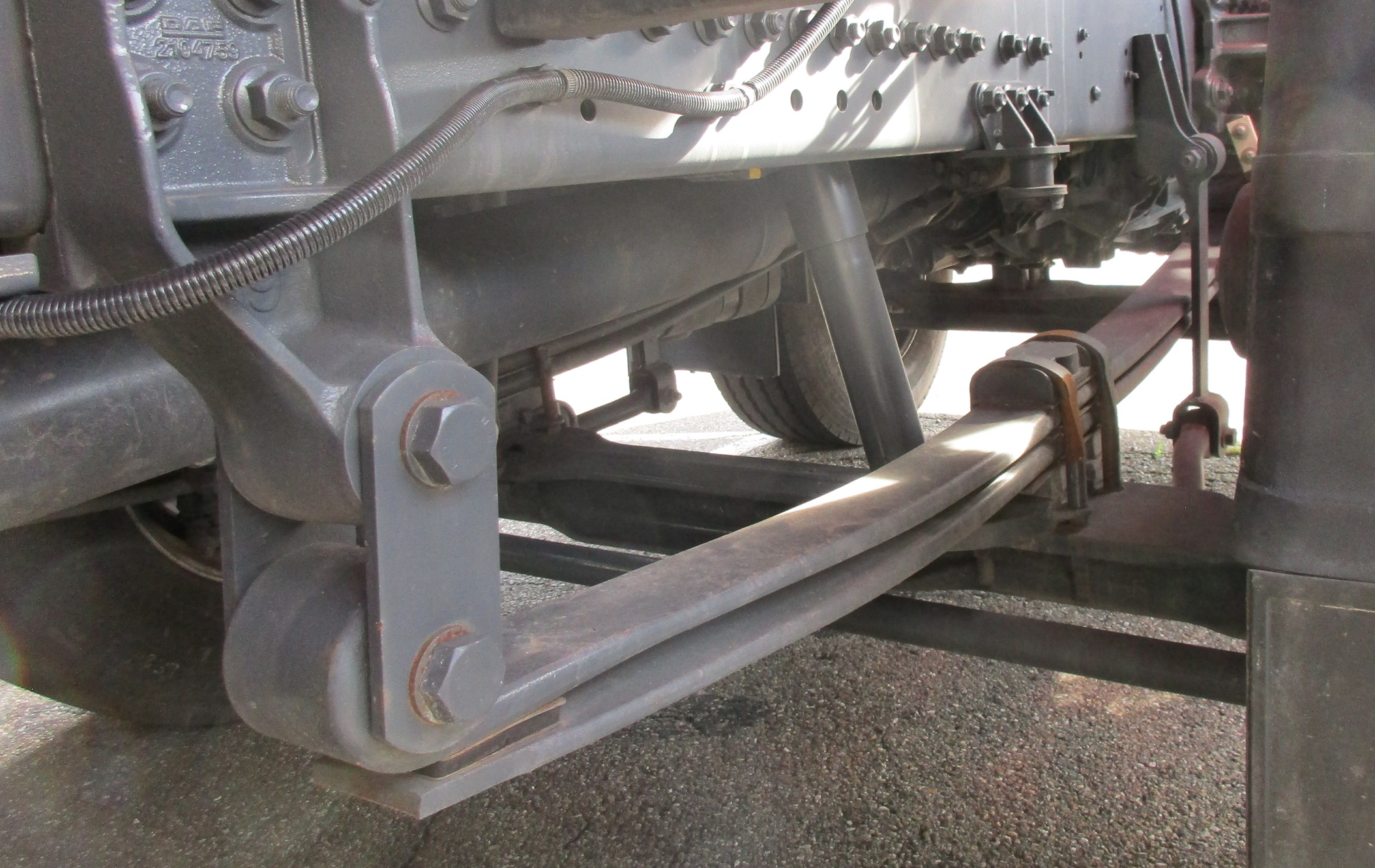
The long parabolic leaf springs on the second axle. Straight steering axles, indeed.
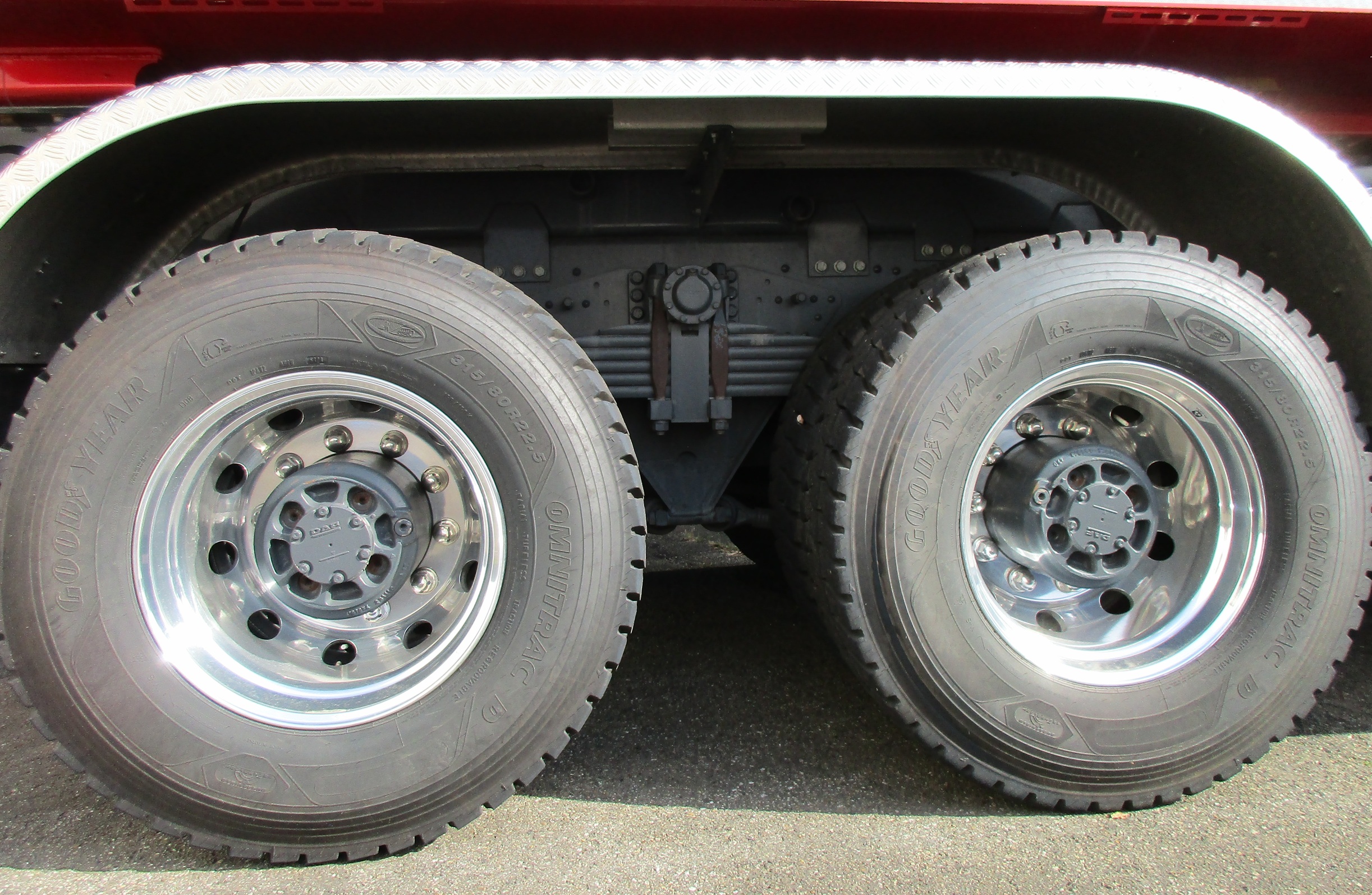
The usual superduty DAF dual drive tandem with its eight torque rods. In its homeland, the truck is rated at a legal maximum gross weight of 35 tonnes (77,160 lbs); 16 tonnes on the front axles and 19 tonnes on the rear tandem.
The ZF TraXon automated manual transmission can be ordered with dedicated off-road software and a Rock-Free function. In the video, the DAF expert behind the steering wheel demonstrates how it works. By the way, manual transmissions as we knew them are not available.
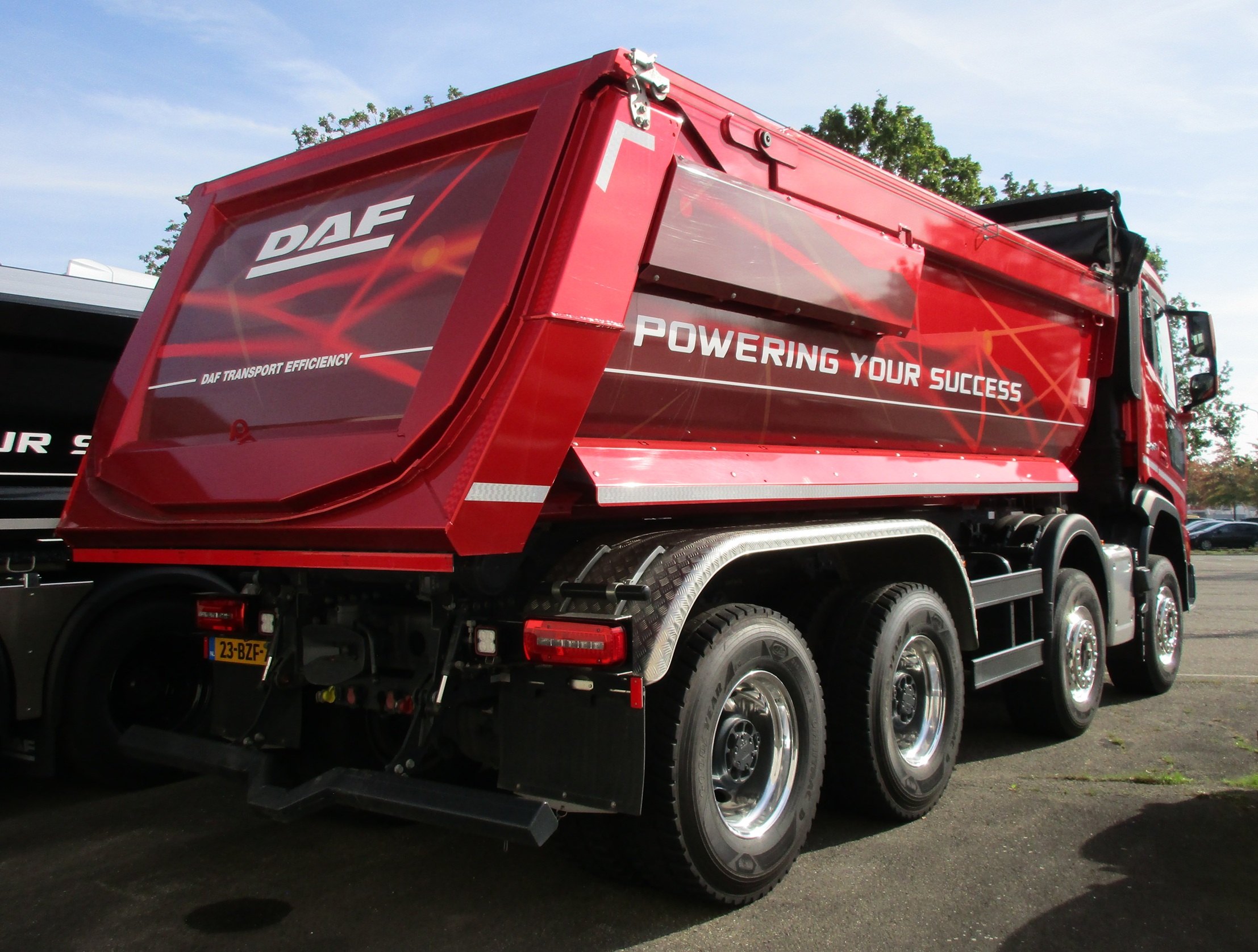
My best guess is that the dump body was supplied by the German Meiller company, it certainly doesn’t look domestic to me. As an aside, the DAF is also used by the national and international trade press for reviews and on-/off-road test drives.
Furthermore, it’s common practice that a dump truck has a trailer coupling, definitely when it’s powered by a 530 DIN-hp engine. Such trucks often tow a lowbed trailer, carrying wheeled or tracked machinery.
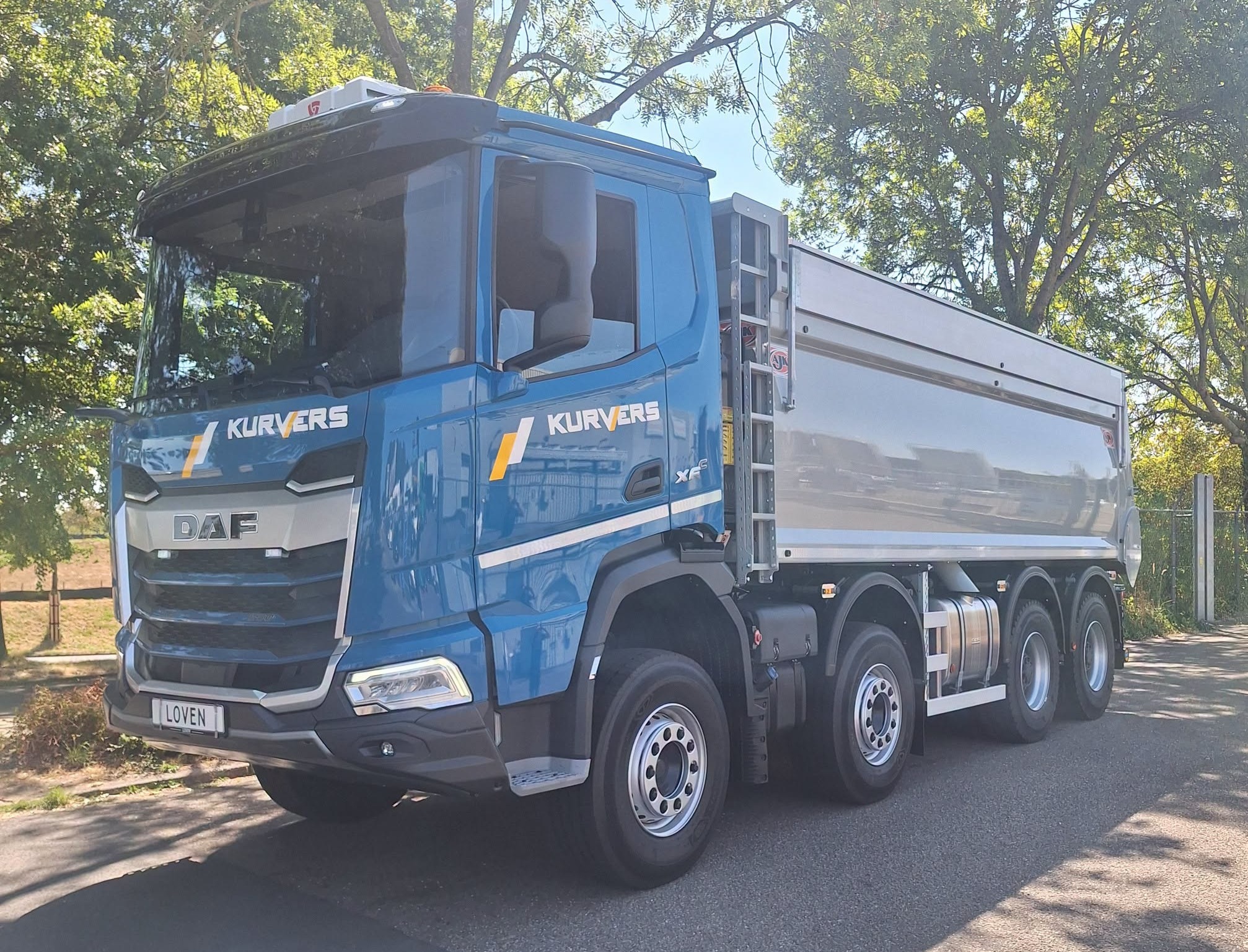
Because trucks always look best in a company livery, here’s an example of another DAF XFC 530 FAD. The insulated dump body was made by AJK from Belgium (courtesy of Loven Trucks).
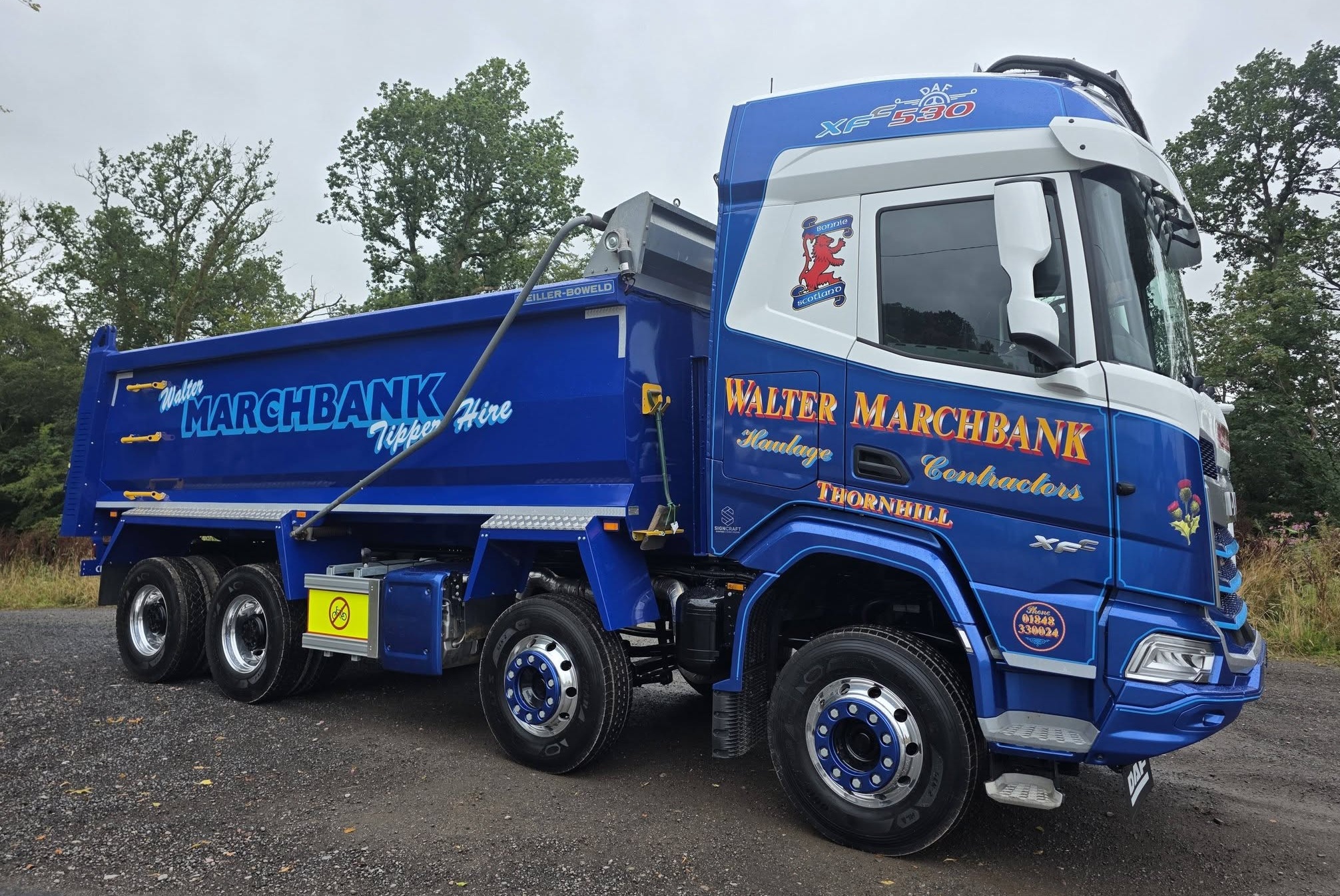
And for the record, an XFC doesn’t necessarily have to be left-hand drive with a day cab (courtesy of Walter Marchbank).
Similar, new old-school 8×4 chassis-cab models offered by the mainstream European truck manufacturers go by the name of (in random order): Volvo FMX, Scanias with the XT package, Mercedes-Benz Arocs, MAN TGS, Iveco T-Way, Renault Trucks C/K, and we must certainly not forget the Ford F-Line from Turkey. Would that be the Ford F-Line Super Duty?











Nice DAF 8 wheelers are a very common sight in NZ 8 wheelers are the standard configuation all makes all applications and almost useless off road the second steer takes weight off the drivers and you wheelspin to a stop but you dont sink as much, like the video shows a 6 wheeler will claw its way out, concrete crews here have to sign the docket that says they are responsible for access to site including recovery, we dont appear to have constructor series but Ive driven higher than stock Isuzu 8 leggers on sweetcorn, and no extra step on those, nice feature. cross locks engaged and traction control on a truck will go most places the track is wide enough for
Yes, the classic ‘8 wheeler’ 8×4 setup goes back decades. An alternative is the more recent 8×4*4 configuration as seen below (called an FAW chassis by DAF) with a counter-steering and liftable rearmost axle. The XF 480 FAW as pictured has planetary drive axles too, just like the XFC 530 FAD in the article.
Its interesting that the local dumps around in my parts(Tennessee) have a similar gvwr(80,000lbs) and same number of axles. Yet the trucks could not look more different.
Standard setup here is a conventional long nose truck, usually a Peterbilt 589 or Kenworth W900. Internationals, Macks are fairly common but less so with the odd Volvo occasionally seen. Although its a way different model than their VNL “curb sniffers” Axles are 1 steer, tandem drives and a liftable tag axle in front of the tandems.
My point is I am suprised dump/vocational trucks are not cabovers like this DAF. Better manuverability at tight construction sites. Few hundred pounds more payload cause you dont have a heavy fiberglass hood and 6 feet of frame rail sticking out the front. That adds up when you are doing 6 or 12 loads a day
Anyways my point is I am suprised dump/vocational trucks
I guess there are no cabover dump trucks in the US because there are simply no truck makers that offer a cabover in this weight segment.
The absolute max. GVWR for an 8×4 chassis is 43 tonnes (94,800 lbs) in NL, but that’s a ‘Dutch Special’ with two 10 tonnes front axles and an aftermarket rear tandem conversion. Here’s one:
https://www.curbsideclassic.com/blog/cc-global-2019-ginaf-x6-4243-s-desperado-the-blazing-asphalt-hauler/
Mack makes a couple different cabover class 8 trucks still. But they are highly specalized/niche products. Only thing Ive seen those Mack chassis used for is trash trucks, be it the residential ones with the side arm that grabs the can or ones for commercial dumpsters with the arms that swing the dumpster up and over the cab.
Mack also has a stranglehold on the market for concrete boom pumper trucks. Neat piece of very expensive and specalized equipment.
Mack could use the tilt cab from those trucks on a different chassis to make dump trucks or roll back dumpster trucks.
I guess there is no demand for cabover dump trucks, despite what I think would be several benefits listed above for a said configuration like your DAF
Ah yes, the comparable Autocar cabovers also come to mind!
Yes, forgot about those Autocar trash trucks that are very similar to the Mack.
That name/company has been bought/sold a bunch of times. But here in the USA it is the oldest surviving nameplate still in production, the first Autocar rolled off the line in 1897. Not sure if that is continuous production though, that would be a bit more than a quick google search to figure that out. I think the name might have sat dormant for a few years with the company being bought/sold/merged so many times.