
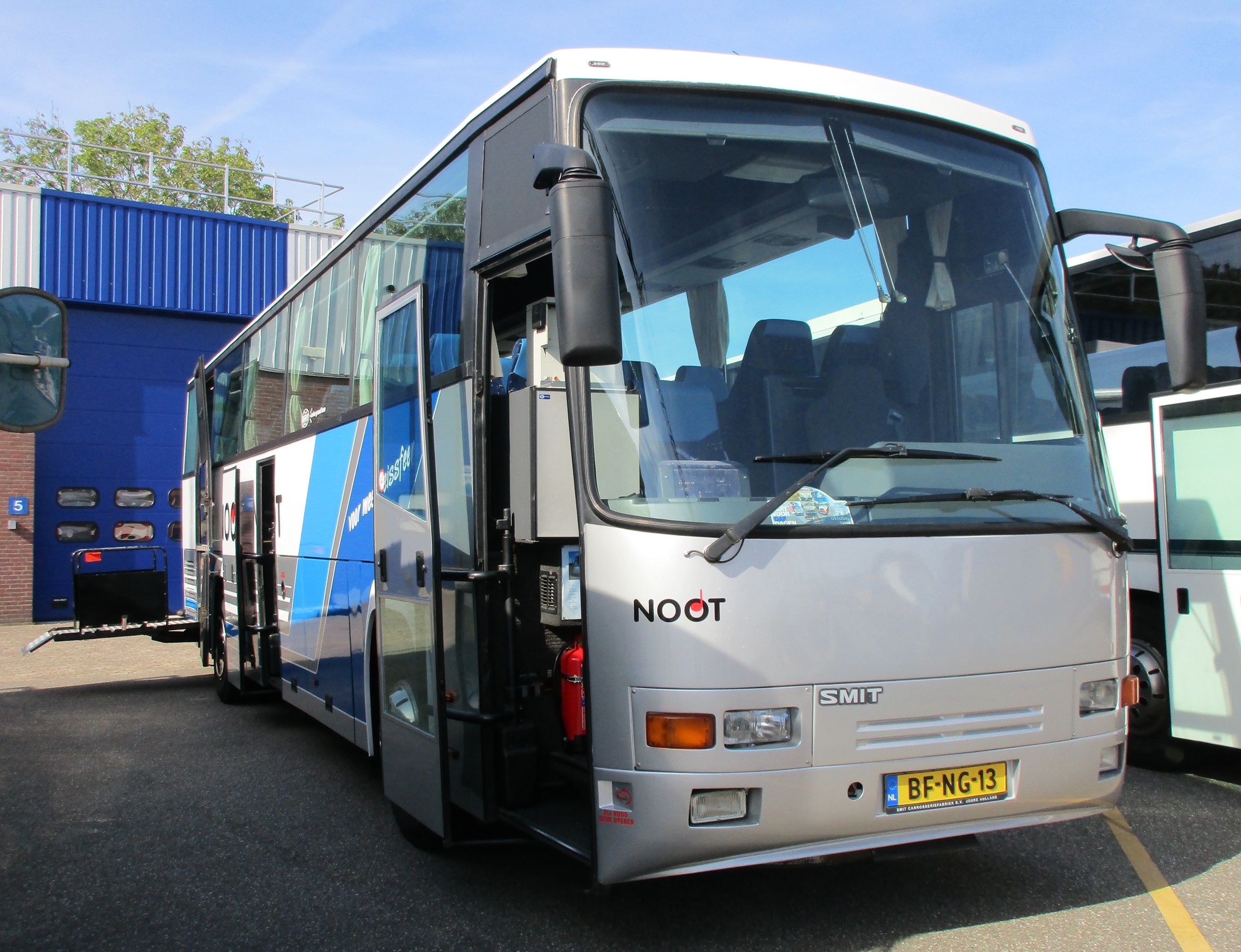
In 1996, DAF Bus International acquired the esteemed Frisian coachbuilder Smit (generally referred to as Smit Joure). At that point, DAF Bus was already a division of Paccar the VDL Group, the internationally operating Van der Leegte family business.
Prior to the takeover, DAF had supplied their rolling hardware to the independent Smit company for decades, so they were certainly no strangers to each other.
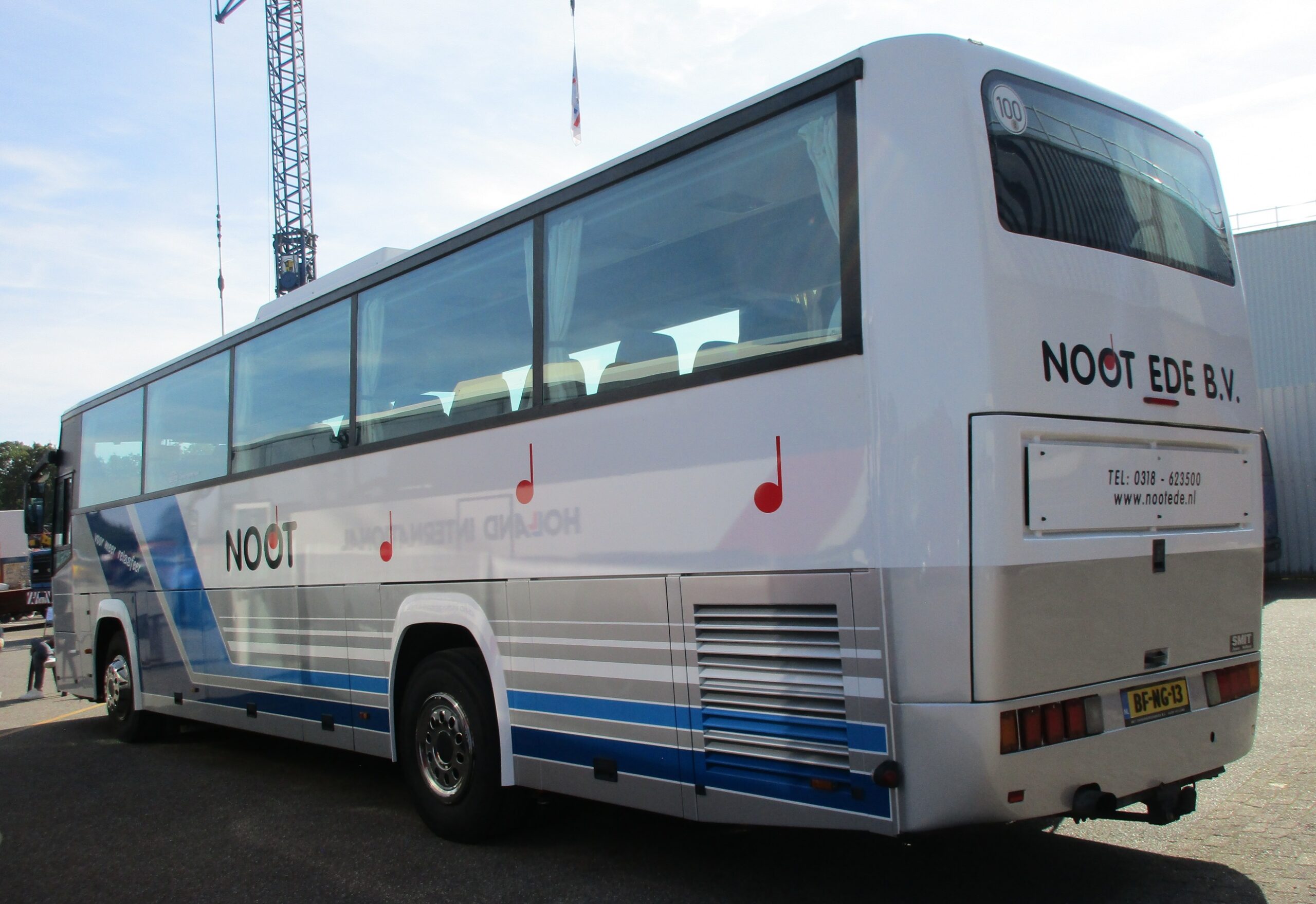
A very successful Smit coach model was the Orion, also known as the Orion Liner, originally introduced in 1983. Noot’s magnificent, 12 meter (39’4”) long, 1997 Smit Orion Grand Luxe is supported by a DAF Bus SB 3000 WS underframe at the front and rear. The letters WS refer to the DAF engine type.
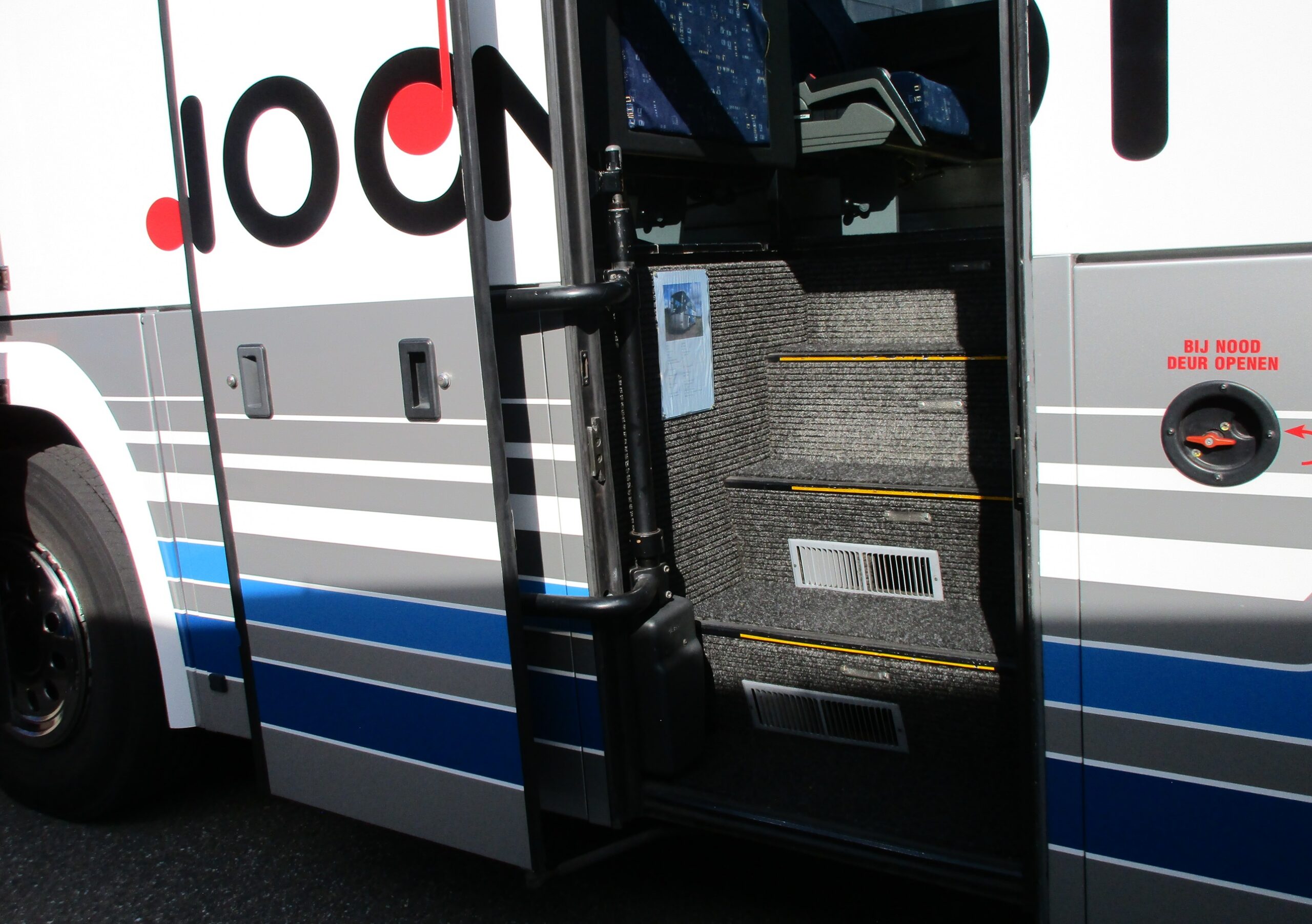
Full carpet everywhere, of course. After all, a coach is supposed to be a comfort zone.
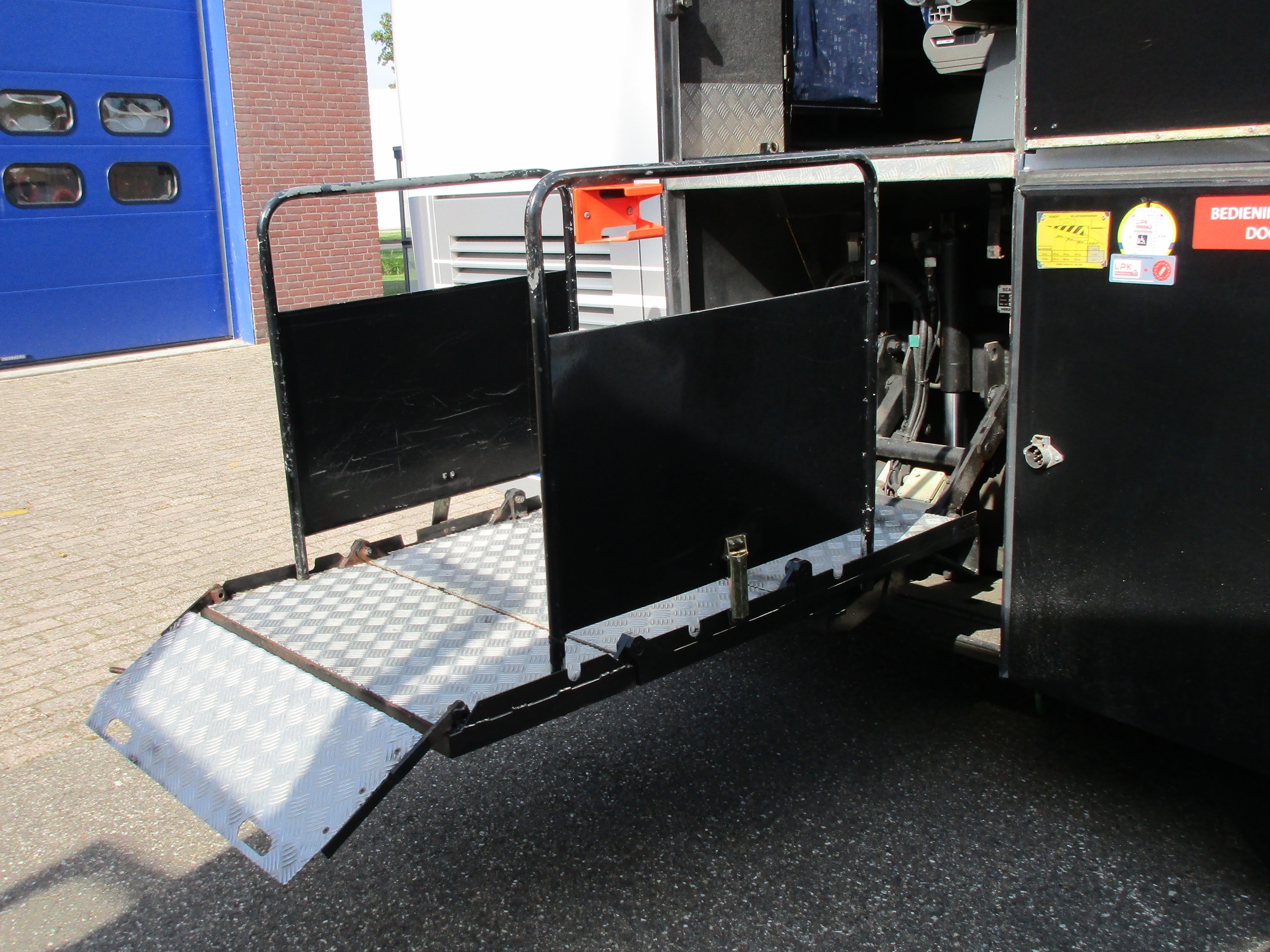
The Smit Orion of the Noot company is equipped with a wheelchair lift. It’s mounted on the right side, behind the rear axle.
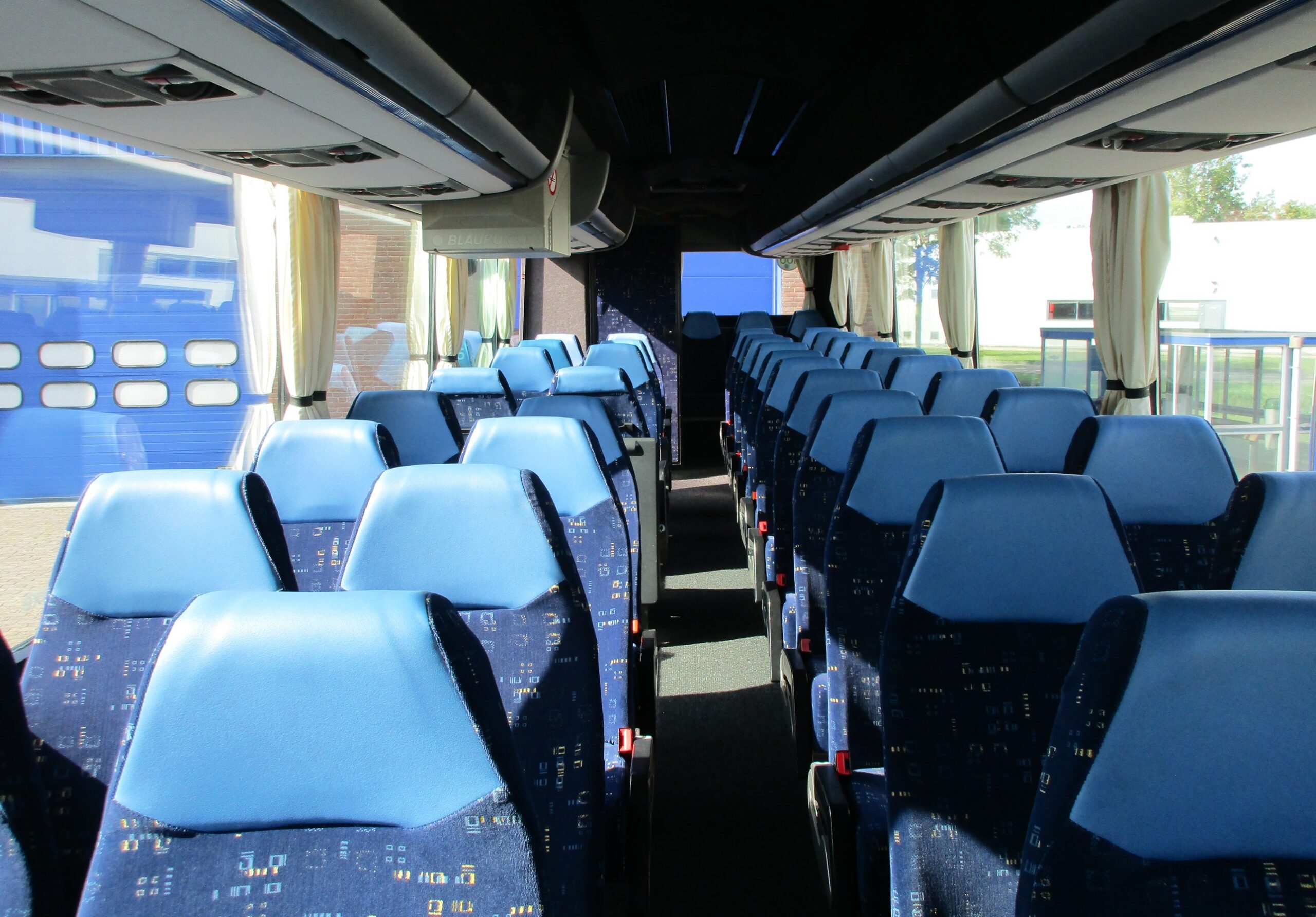
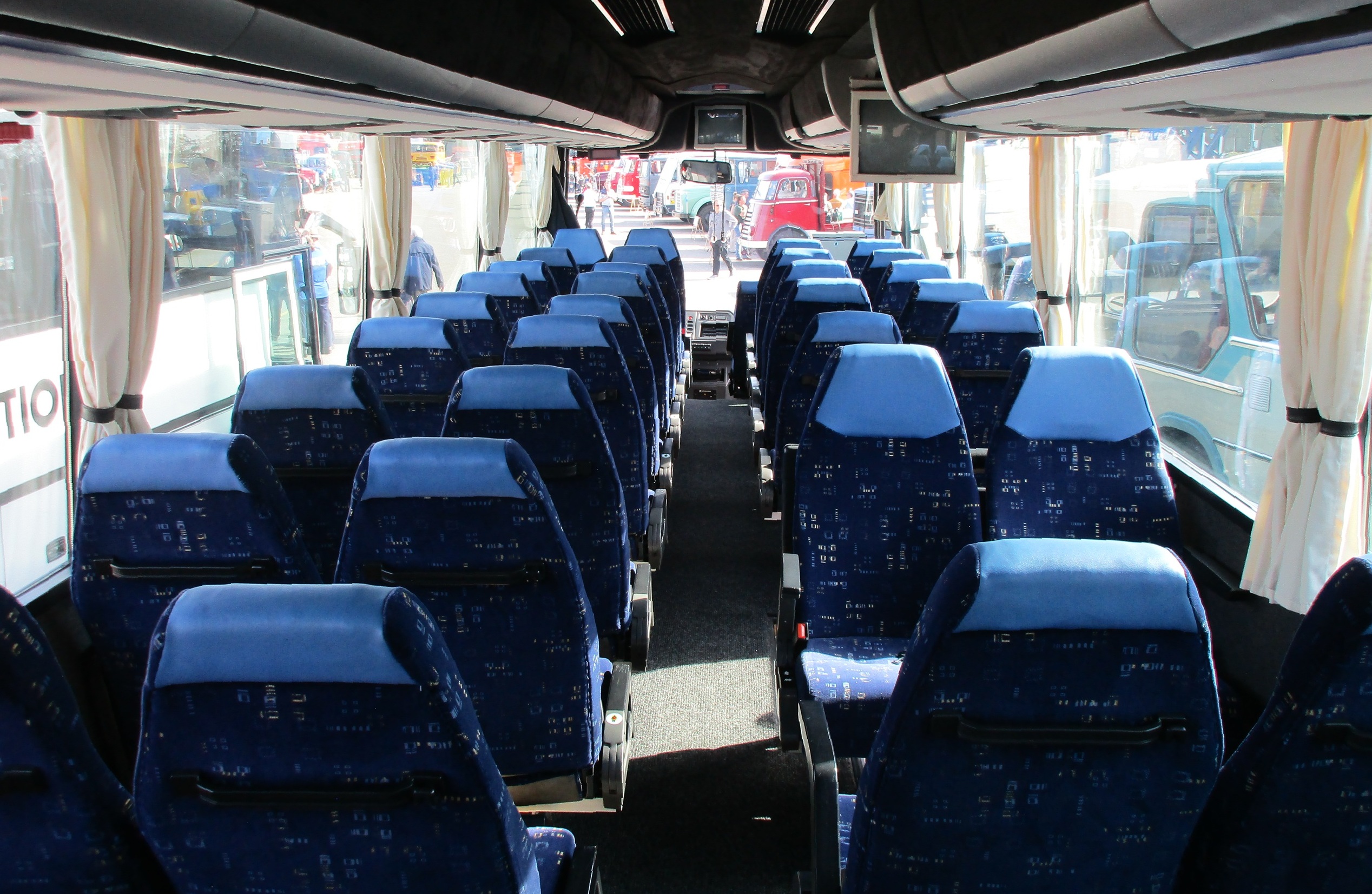
An inviting interior for sure. Such views immediately remind me of my school trips, never mind those took place in the seventies and early eighties, in the pre-Orion years.
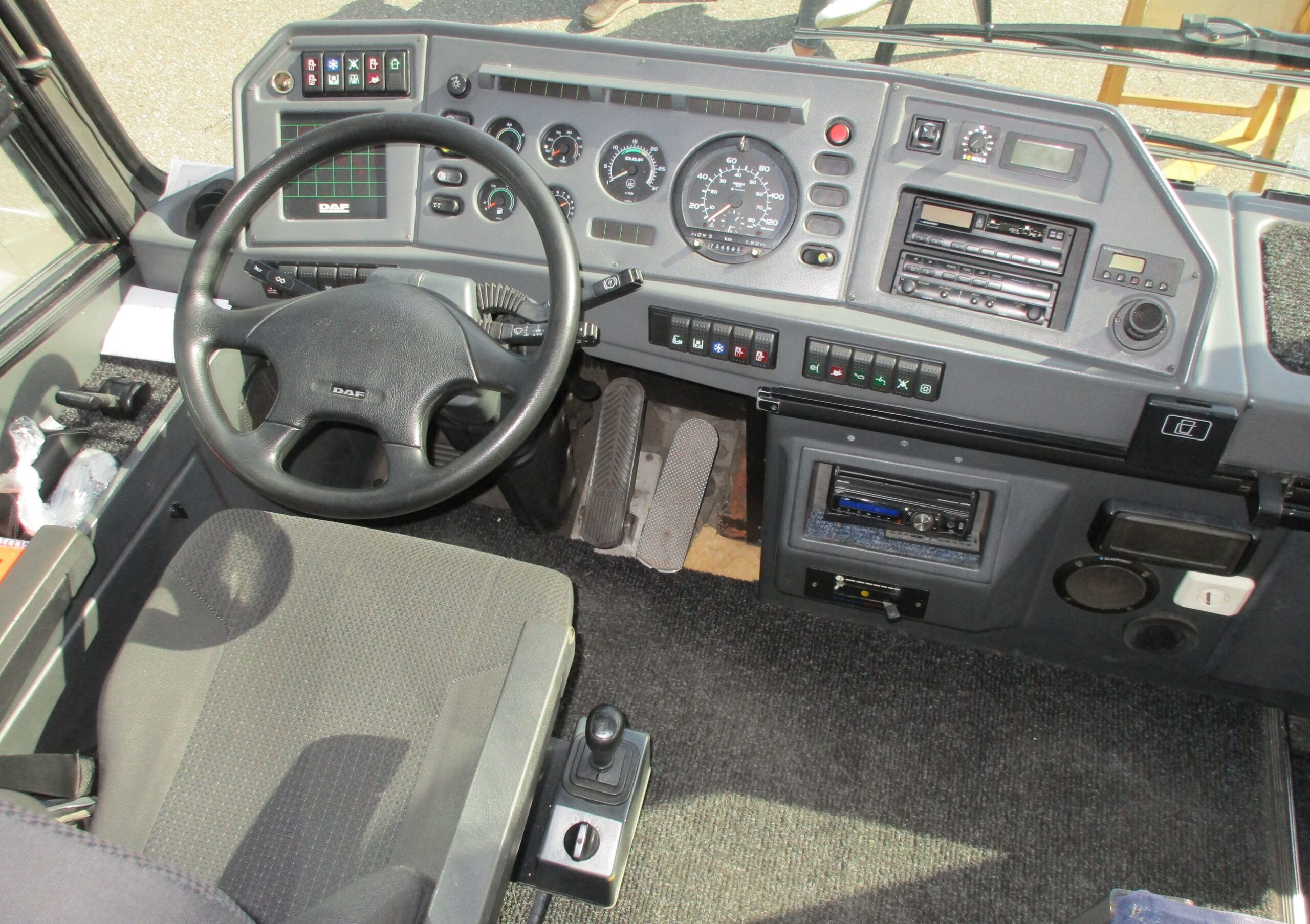
Here’s the DAF cockpit with what must be the D-N-R selector switch and stick of the optional ZF Ecomat automatic transmission, positioned on the right side of the driver’s seat. Standard was a manual, synchronized eight-speed ZF transmission.


An early nineties’ English product specification of the DAF Bus SB 3000 underframe (click on the images to enlarge). In the eighties and nineties, DAF supplied these front and rear units to multiple bus and coach manufacturers, both in and outside the Netherlands.
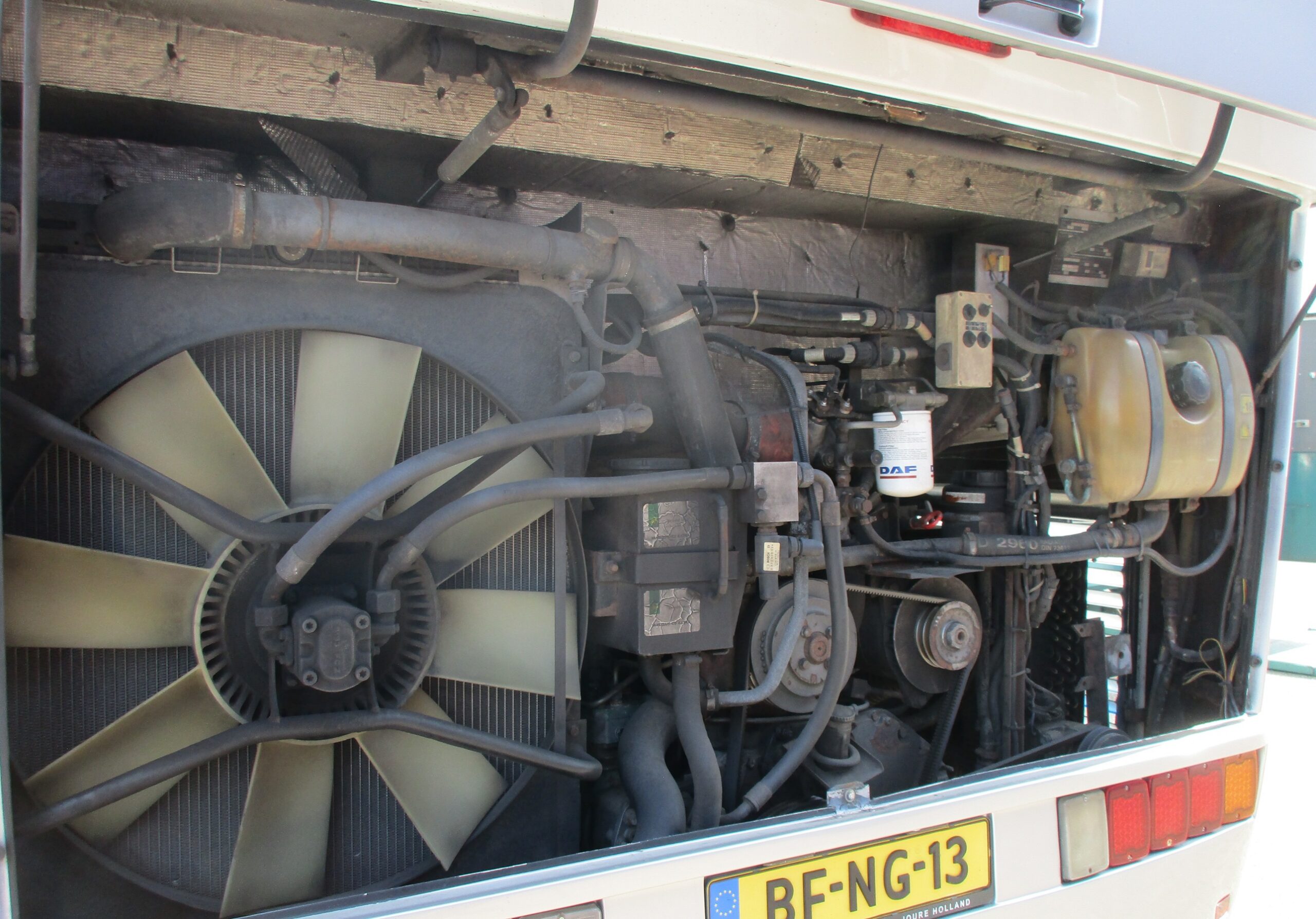
The Smit Orion I caught is powered by a DAF WS 268 engine, an 11.6 liter, turbocharged and intercooled inline-six with a maximum power output of 268 kW (equal to 364 DIN-hp).
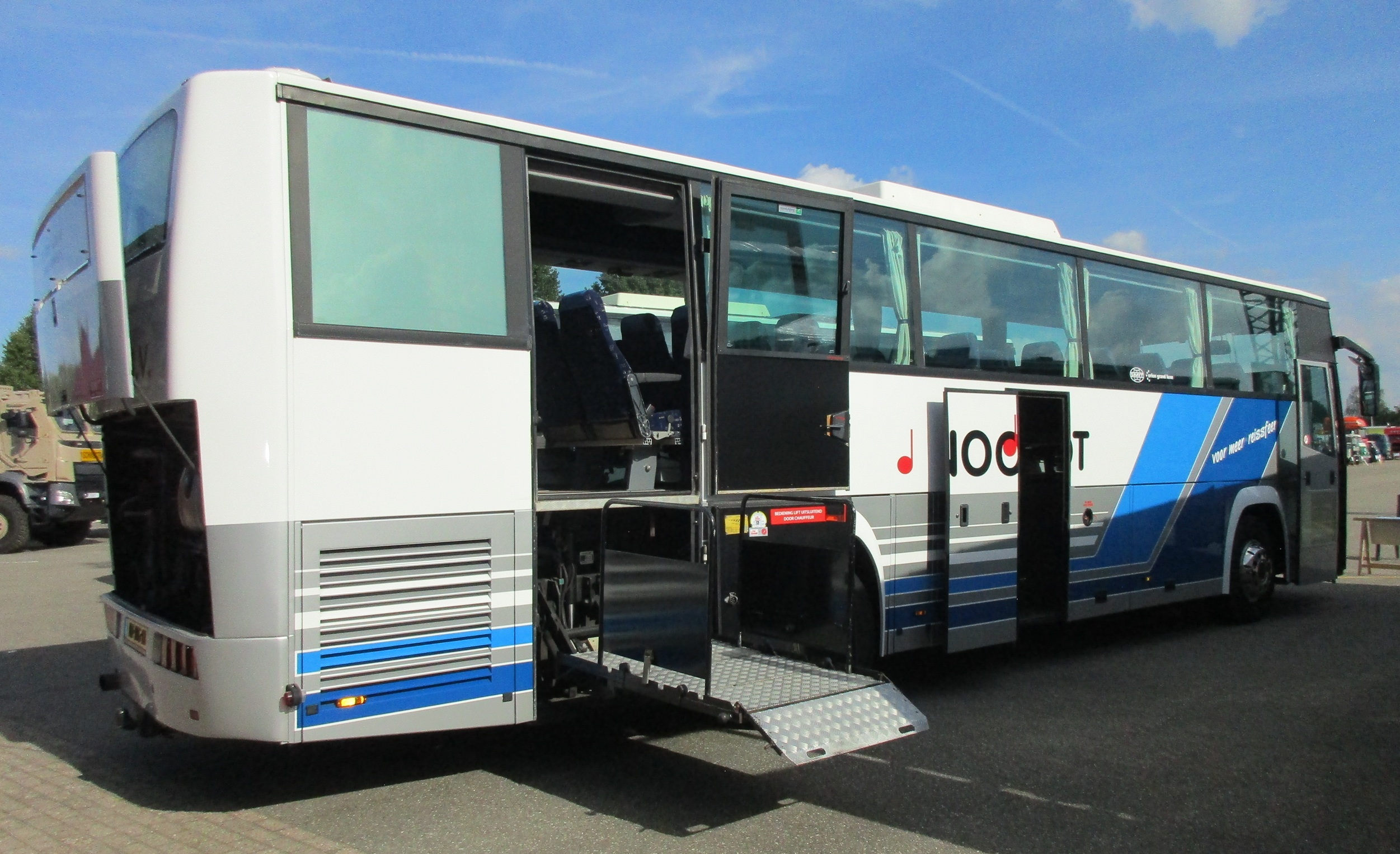
This was the last new Smit that the Noot company bought, back in 1997. They sold it in 2014 and repurchased the coach in 2021, after which it got a major overhaul and was repainted in its original livery. And that’s how you honor industrial and company heritage properly. Well done, coach and team!
And in the meantime, after some takeovers of other coachbuilders, the VDL Group’s bus activities evolved into what we now know as VDL Bus & Coach. The brand name of (and on) all their vehicles is simply VDL.
Related articles:
Bus Stop Classic: 1966 DAF-Smit Joure
CC Global: 2016 VDL Futura FHD2-129 – Headed For Austria























I normally associate Smit with ocean tugs, but it’s such a common name that there had to be other Smits in business. It’s interesting that that buss chassis are now supplied as subframes for monococque bodies rather than complete chassis.
Yes, Smit (smith) is a common surname around here. Years ago, our local smith was known as Chris de Smit. His real surname was Peters, go figure.
Very attractive bus – and kudos to the company for purchasing it back and restoring it. Nicely done.
Sorry for my lack of knowledge, but what powers the cooling fan? It doesn’t look like it electric.
See product specification in the article, page two (the one on the right, under Engine/fan).
I read this, wondering how this bus came to be so well preserved – and I’m amazed that the company did it to commemorate its own heritage. Preservation of the recent past isn’t prioritized much, whether in vehicles, architecture, or anything else for that matter.
I’m also surprised to see a manual transmission available in a tour bus of this era. Here in North America, I feel that manuals in this class of buses disappeared in the 1980s.
Synchronized manuals only, that certainly helped. No more ‘crash boxes’ in any type of commercial vehicle (so coaches and heavy trucks included) since the early eighties, roughly.
Last manual coach bus I saw was in the early summer of 2001 when I drove for Greyhound.. It was a greyhound of Canada 1990 MCI DL3. Had a 5 speed and was on a regular Toronto-Buffalo route. The driver hung on to it as it was his favorite bus.
Nice period piece, although it doesn’t exactly look that old or obsolete.
It’s still for hire, but it doesn’t have a full-time job any longer.
Looking at the top gear in the manual transmission, it’s 1:00:1. I suppose an overdrive gear wouldn’t be practical in such a heavy vehicle. But with 345 hp and a lot of torque, maybe not out of the question.
For information only, the engine is ‘in the green’ from 1,050 to 1,750 rpm, according to the rev counter.
IIRC, the ZF 8 speed is range change.
So go through the four in lo range then as slap the lever sideways and repeat in hi.
So it’s a regular four speed direct drive base unit.
I had always thought VDL was named from the merger of Volvo, DAF and Leyland’s bus divisions – never knew about that!
The bankruptcy of United Bus (see link below) in 1993 was the starting point of the VDL Group’s bus and coach division.
https://en.wikipedia.org/wiki/United_Bus
Thanks – nearly as confusing as the agricultural sector!
Fascinating! And that instrument panel would look at home in an aircraft.