

In late 1997, I acquired a 1976 Mercury Cougar XR7 with the intent of driving it cross-country in the heart of winter. I reasoned with myself that I would drive the car for a few weeks locally, to flesh out and resolve any possible issues, before taking it on that journey. In reality, I had no means to address any serious issues anyway, so I said a few prayers, and ignored a minor underhood fire that seemed to resolve itself. With that, I rolled out of Seattle early on the morning of January 3, 1998.
Packed in — and on — the car were all of my worldly possessions. While the Cougar was nearly 18 feet long, it wasn’t designed to maximize storage capacity. The passenger seat was reserved for my CD collection and other items that I would need to have readily at hand, and my desktop computer and printer occupied the back seat, along with the clothing I would require for the planned 4-day trip. As the comically small trunk was already consumed by a full-size spare, bumper jack, and some basic tools and emergency gear, I added supplemental storage capacity in the form of a white Sears “X-Cargo” rooftop carrier, housing what other clothing, bedding, and meager housewares I possessed. Hanging off a cheap rack on the Mercury’s trunk was the most expensive item I owned at the time (inclusive of the Cougar) — a purple Specialized Rock Hopper mountain bike. That was it. My entire net worth was stuffed into or clinging onto the Mercury like it was a big, pale green hobo stick.
While I said farewell to Seattle that day, I planned to ‘officially’ kick off my journey from Eugene, Oregon, the following morning. I had a cousin there and would stay at her house that evening, then just I, the Cougar, and a Rand McNally road atlas would be traversing the continental US without the safety net of GPS or any means of calling for assistance. I had planned my hotel stays based on where I hoped to stop each night, prepaying so that I would get the cheapest rates and ensure I would not exceed the little remaining credit on my one open card. I had just enough cash in the bank to cover my expected fuel and food expenses, so if disaster struck, I would be sleeping in my car. In reality, I could have called Dad collect and asked for help, but my pride would only allow that in the most dire of circumstances. This was going to be a trip of faith, and I had no choice but to trust that the old Mercury was up to the task.

Day 1: Eugene, Oregon to Ogden, Utah
The journey started beautifully as I left my cousin’s house early and rolled back north up I-5 until it connected with I-84 near Portland. From there, the Cougar and I followed I-84 east along the Columbia River Gorge, the cloudless morning revealing the stoic watch of Mt. Hood as it hovered over my right shoulder for the next 100 miles. Continuing eastward, the evergreen forest of the Cascades region rather abruptly ceded to high desert plain as we reached the town of The Dalles, which marks the westernmost point of the Oregon Trail. The Trail ended there out of necessity, as further westward movement by wagon was rendered impossible by the steep cliffs that fell to the river. I was somewhat familiar with the area, as I had seen the band Rush the prior summer at the iconic music venue called The Gorge, which lies further upstream in the town of George, Washington. It was truly a majestic morning — bright, crisp, and flawlessly clear as the low winter sun illuminated the strata of the gorge in multiple hues of pink and purple. To call this part of the country spectacular would be an insult to its singular beauty.
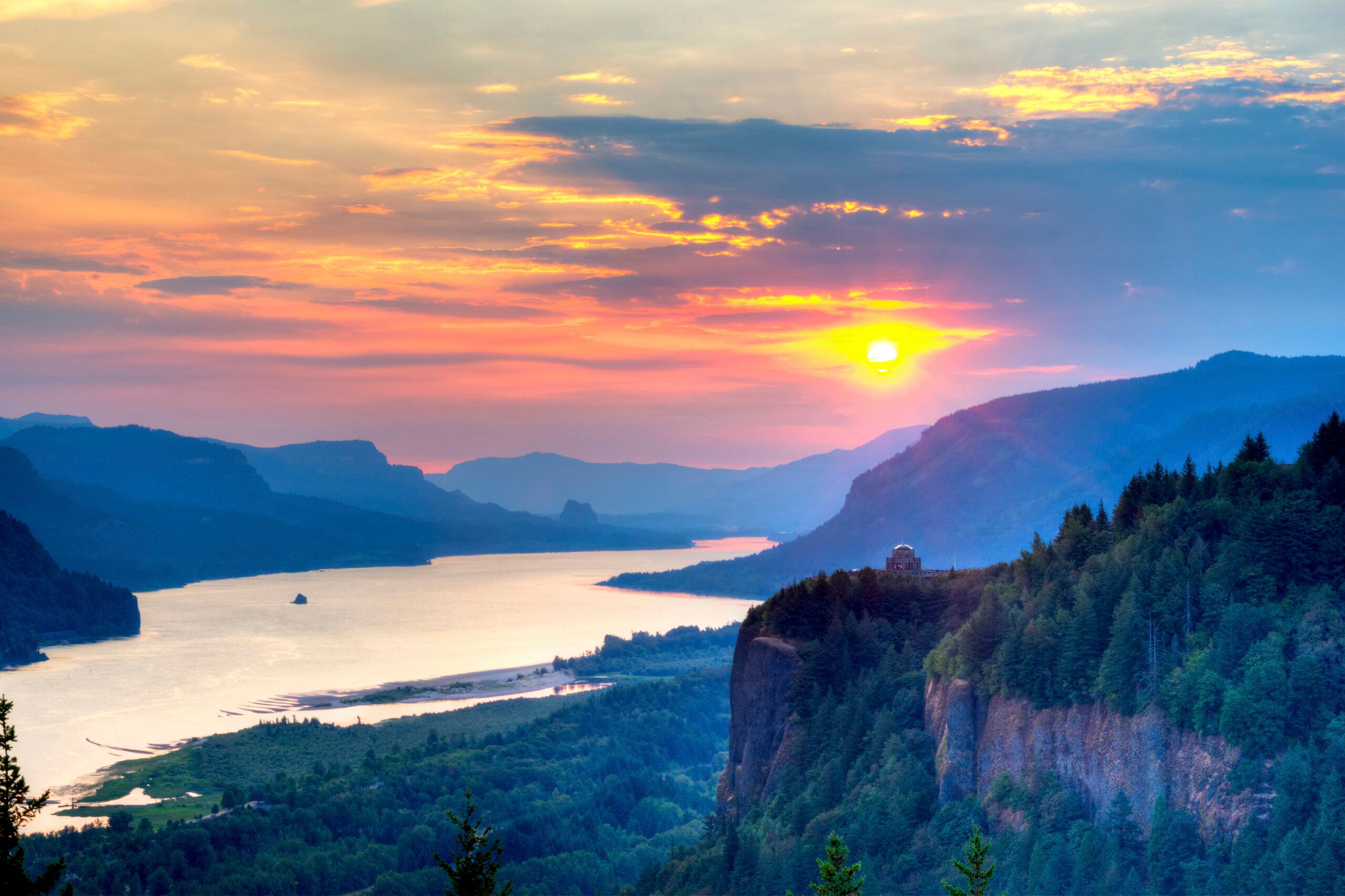
About two-thirds of the way East along the Washington/Oregon border, I-84 and the Columbia decouple, the river turning sharply north into Washington and the interstate gently shifting Southeast to cut off the corner of Oregon and cross into Idaho. The Cougar covered these miles effortlessly, clearly enjoying the cool air feeding its Rochester. Other than a couple of fuel stops for each of us, we continued purposefully, running ahead of plan and looking forward to checking into our hotel for dinner and recharging over views of the Great Salt Lake.
The snow started to fall as we approached Mountain Home, Idaho. What started as a few large, fluffy flakes quickly accelerated into a full-blown winter storm. At this point we had covered 600 miles and had about 250 more to go to reach Ogden. We ended up crawling up and down the mountain passes in near-whiteout conditions, following the path of trucks to ensure we stayed on the freeway. When we finally pulled into Ogden, it was pushing midnight. That final 250 miles had taken a solid 8 hours of tense driving, and though she slid a little here and spun a tire there, the Cougar kept me warm and ferried us safely to the hotel.

Day 2: Ogden, Utah to Kearney, Nebraska
I awoke at daybreak to a glistening blanket of fresh powder. A solid 6 to 8 inches of additional snow had accumulated on my car overnight, and the desk clerk lent me a snow brush and ice scraper to clear her off. She fired up eagerly, and we hit the road early to avoid any weather-related delays. This turned out to be an unnecessary concern, as the major roadways had all been meticulously cleared overnight, and travel was painless.
For the first couple of hours, we had the interstate to ourselves, save for an occasional truck. In what was becoming a pattern, the morning was beautiful. Blue sky, pristine snow, and the gorgeous Wasatch mountains made for yet another memorable backdrop as we departed I-84 for I-80 outside of Salt Lake City, dropping into Wyoming for a 400-mile sprint across the state. I recall hitting some snow while passing through Cheyenne, and taking note of the large gates spaced at intervals along the interstate. I was hopeful that one wouldn’t soon be closing, directing me off my planned route and forfeiting my already booked hotel in Kearney. Thankfully, the snow subsided as we entered Nebraska and the sky was again clear for a spell, until the fog rolled in shortly after sunset.

I had experienced fog before. Outside of a horror movie, I had never seen fog quite like this. For long stretches of highway, I was unable to see the stand-up kitty cat head ornament at the perch of the cougar’s hood, and had to ride in the far left lane just so that I could track the fog line out of my side window. I had thoughts of pulling off the highway and waiting for the air to clear, but as anyone who’s been through western Nebraska knows, there isn’t much there. And, even if there were something there, I wouldn’t have known it because I couldn’t see any of the road signs that were obscured by the low-lying cloud.
After about 100 miles driving 40 mph through pea soup, the Cougar was running dangerously low on gas. Having no other choice than to get off the road and locate a station, I unbuckled my seatbelt, flipped up the Cougar’s twin center armrests, and slid into the middle of the seat. From that position, I drove with my left foot while peering out of the passenger window, gently easing the car across lanes until I could locate the right-hand fog line. After a few miles, the line started to shift rightward, indicating a possible off-ramp. I couldn’t tell where the ramp would lead me, but I was out of options. As we got to the bottom of the ramp, a flashing four-way light became visible through the haze, and I could see each of the four converging lanes, but nothing else. I said a quiet “eeny meeny miny moe,” and chose left just as the car began to sputter. As I gingerly applied the accelerator, hopeful for enough momentum to guide me to a safe place to park and figure out my next move, an illuminated Gulf sign appeared out of the fog like a sign from heaven. We rolled up to the pumps with the car coughing, literally seconds from running out of gas.
Once the Cougar was refueled, I walked into the small convenience store where two young women were working behind the counter. I asked them if there was any place to grab food nearby, and they directed me to some sandwiches in their cooler. I looked at the sandwiches for a few seconds, their gray meat pressed tightly against cling wrap and sporting a sell-by date that had since passed, and asked if there was a fast food option nearby. “Which way are you headed?” asked one of the girls, pleasantly. “East, trying to get to Kearney tonight” was my reply. “Is Arby’s OK?” the other girl inquired. OK? Hell, I’d have given my arm for a beef and cheddar by that point. “Yes, that’s great, how far?” I asked. Without a trace of irony, she responded, “About forty miles, give or take, at the next rest area.” I inquired as to where I was, and learned that I was near the town of Roscoe, like the sheriff in Dukes of Hazzard. We eventually made it to that Arby’s, and then continued to slog through unrelenting fog for another 100 miles until we reached that warm bed waiting in Kearney.
Day 3: Kearney, Nebraska to Chicago, Illinois
The morning of Day 3 was beautiful. The fog had cleared overnight and it was smooth sailing all the way to Chicago. As I noted earlier, my hotels were all booked in advance, and I was going for the cheapest rates available. When I reviewed the directions that I printed from an early incarnation of MapQuest, it looked like my hotel was near the Indiana line and not far off the interstate. As I passed through Chicagoland on I-80, I saw a sign that read “LAST EXIT BEFORE INDIANA,” so I dropped off the highway and tried to follow the MapQuest turns. It wasn’t long before I was lost.

Anyone who knows Chicagoland and classic rock knows that “The Southside of Chicago is the baddest part of town,” and when I ended up on a dark stretch of road that was running parallel to a railroad line, I knew I was clearly on the wrong side of those tracks. Hopelessly lost and terrified, I caught a glimpse of a police car parked alongside the railroad track. I pulled over about 25 feet in front of the police car and noted that it was marked as transit police, or something similar, and deduced he was watching the train cars parked along the tracks. I proceeded to get out of my still-running Cougar with the bubble carrier on top and rather expensive bike hanging off its trunk, and walk toward the police car. The officer shone his light at me and quickly realized I was not a threat, as it was 20 degrees, I was wearing shorts, sneakers, and a Lehigh University sweatshirt — and I looked like a dope. Below is my recollection of our exchange:
Me: Hello, officer, do you know where the Ramada is?
Officer, after slowly looking me up, down, and up again: Where the HELL are you from?
Me: Well, I’m driving from Seattle to Pennsylvania, staying at the Ramada tonight.
Officer, matter-of-factly: You are going to die. Do you realize you are in the worst part of the country, right here?
Me: Yeah, I’m gathering that. Can you please point me to the Ramada?
Officer: Get in your car. Lock the doors. Follow me closely, and don’t stop if I don’t. If they try to take your bike, let them.
Following his direction, I tucked in behind his cruiser as he turned on his lights and escorted me to the hotel. True to his word, we stopped for nothing, bouncing through the crowned intersections at 60 mph without regard for the color of the signals, until we reached the Ramada parking lot. He then escorted me into the lobby and watched from a distance as I completed check-in. Then, after I shook his hand and thanked him, he counseled me, “Don’t leave this building until daylight, this place is the pits.” I had wheeled my bike into the lobby, and as I passed security on my way to the elevator he said, “You can’t take that in here.” I stopped for a moment, replied that there was no way I was leaving it outside, and proceeded past him into the open elevator.
Day 4: Chicago, Illinois to Harrisburg, Pennsylvania
It was again a beautiful morning as we pulled out of Chicago and crossed the Indiana line. It ended up being the least eventful day of the trip, but it was not without challenges. Torrential rain began as we hit the Alleghenies in Western Pennsylvania. This stretch would have been beautiful on a clear day, but it was sheer terror at night during a biblical rain. I-80 here follows a seemingly endless series of ridges and valleys, and it is a major truck route. Each rise was a careful effort to pass lines of trucks with flashing lights as they crawled up the mountains, and each downhill was a white-knuckle effort to stay ahead of those trucks as they furiously barreled downhill. Fear of hydroplaning prevented me from staying ahead of the most aggressive trucks, and each one that passed would send a deluge of water over the Cougar, temporarily rendering us blind as we navigated the winding downhills. The rain relented shortly before we reached Harrisburg, where I had planned to stay the evening with a friend. When he and his girlfriend came out to greet me, they both looked at the big, green Cougar, and said merely, “Wow.”
The following day I made the short run from Harrisburg to Bethlehem, pulling into my parents’ driveway on the final few gallons of the last tank of gas I could afford. I had nothing left — no cash in my pocket and no available credit on my card. But I had made it, and so did the Cougar. Other than almost running out of gas in Nebraska, which was hardly her fault, she was the perfect companion, keeping me warm and safe through some of the worst conditions I had ever navigated.
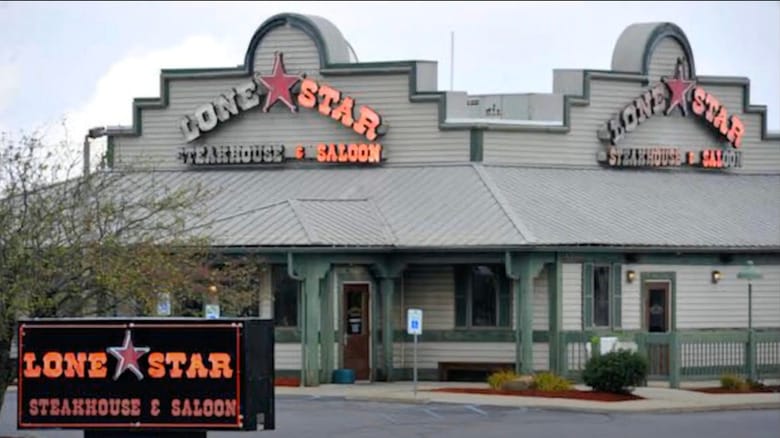
I drove the Cougar for the next two years as I re-established myself back in Pennsylvania, finding both a full-time job and a part-time gig at the local Lonestar Steakhouse. There, on my first night of work, I struck up a long conversation with a pretty waitress who was looking to transfer into the same school where I was going to pursue my master’s degree. After our shift ended that evening, she and two other waitresses laid on the hood of the Cougar, and we laughed as their heads barely touched the windshield and their feet didn’t extend beyond the edge of the hood. She was the first woman I met who didn’t make fun of my car, and she’s been my wife now for over 20 years. While I’ve remained true to her, my eye did eventually wander from the Mercury, strayed by the allure of the new. Looking back nearly 30 years on, I will remember her as the one who got away. If I could put any one of my 14 daily drivers back in my garage, it would be the big, green-on-green Cougar.

Related CC Reading
CC Outtake: 1972 Mercury Cougar XR-7 Convertible – Pony Up From That Mustang
Curbside Classic: 1971-1973 Mercury Cougar – Mercury’s Pony Goes Brougham























Parts of this sound familiar! I recall my first drive across PA on I-80, bound for grad school at Lehigh in 1987. My 78 Datsun, packed with my possessions, had a bike strapped to the back that was worth more than the car. I drove about 600 miles that day, after a late start. So the most difficult part of the trip was after the sunset. It was dark and rainy, and the semi trucks roared by me on the downhill stretches, while I very slowly overtook them going uphill. It was a LONG drive, when the speed limit was 55 (I think) in a car that could go 65 mph going downhill. When I reached my destination, a cold Yuengling never tasted so good.
I also did my grad work at Lehigh, about 15 years after you, and I spent my adolescence getting sick on Yuengling.
Fifty years ago I briefly spent a summer session at Lafayette. My Grandparents were from NEPA (Wilkes-Barre) but we’d never lived closer than about a 4 hour drive from them. They took me back with them on a visit to see us, and put me on a Martz bus to Easton. Went OK but on the way back in Stroudsburg my suitcase didn’t make the transfer bus and I never saw it again.
Back in ’61-’63 we lived outside Pittsburgh but there was no route 80 yet…we took 22 and lots of back roads so the trip took awhile…drove through lots of towns with the name “furnace” in them, and past lots of smudgepots in construction areas….after my Dad left work for the day so most of the drive was at night, my sister and I would sleep in the back of our Rambler Classic wagon.
Never drove a ’76 Cougar, but during my undergraduate day I worked as a transporter for Hertz the next 2 years, which specialized in Ford, though we did ride in a ’77 Cougar wagon, often we’d had cars to pick up in different locations so would load up with drivers and drop them off at pickup…which could be all over New England, so though the distances weren’t huge we didn’t go as the crow flies so it could be a very long day if you were one of the last pickup spots or driver of the car taking everyone to pickup sites.
Your story brings sharply to mind the days of long distance driving right before our present time of phones and GPS. I don’t miss printed out turn-by-turn Mapquest directions one bit, and it kind of makes my brain hurt to think about traveling without being able to know traffic and what lies off of each exit should I be interested. And so while sometimes I get down on myself for being so wed to these conveniences that simply didn’t exist not so long ago, I would argue that things like phone-based GPS have objectively made driving better overall.
I’m glad that your Cougar made it so reliably across country. It was probably an excellent car for such a trip. Interstate cruising is what that car was made for. Good choice on the waitress/wife too. Not making fun of your car really should be a pretty bottom line criteria for lifelong companionship 😉
While writing this, I was struck by how adventurous it was to simply drive long distances prior to smartphones and GPS units. There are vast stretches of this country where you can find yourself truly alone, even on or near a major interstate after normal business hours.
And yes, I knew right away she was a keeper.
That’s right. If a woman makes fun of your car, kick her in the ass.
By the way, I really enjoyed the ride with you in your Cougar. Thanks for the ride!
Thank you for taking us along—-a fun read this morning. It was nice of the Chicago trooper to look out for you!
My first early-career “almost” coast-to-coast covered the middle 80% of yours…and your tale rang very true. For me it was almost a decade earlier, which translates to a no-cellphone Interstate era which might as well have been 1960s-70s-80s. Great memories!
South Chicago:
In 1978 I visited Chicago, intending to ride its many commuter rail lines. One ended in South Chicago. I rode it, detrained and thought to wander the nearby neighborhood for a while before going back toward the Loop on the next train out.
A big burly security guard spotted me. His face was dark as night. He towered over me, with my camera bag on my shoulder and a Pentax around my neck.
“Boy,” he said in a voice that sounded like it came from the center of the earth, “YOU DO NOT WANT TO BE HERE…”
Thank you for sharing, was a very interesting read.
I think that many of us regret selling cars, but I wonder how much is just nostalgia for the old times.
Cars being such an important and constant presence in our life, it is easy to associate them with the pleasing memories of years gone by, but often there are very rational decisions that made us sell or get rid of our vehicle – even if those reasons are now blurred by rose tinted glasses
You are probably right. I certainly wouldn’t want it as a daily, but if storage space were not an issue, I would probably seek one out.
I like the officer’s comment to you. “You are going to die.” Definitely short and to the point and since you were in shorts he most likely would have been right. Now while the bike was protected one can tell the car was still parked there in the morning. Oh, and if the Cougar had the standard 351-2V engine it was wearing an Autolite 2150 unless swapped.
South Chicago sounds a little like Hunter’s Point area just outside the old Hunter’s Point Naval Shipyard in the 80’s after the yard closed. Dated a woman who lived there and the first night dropping her off I prayed I wouldn’t be seen as this place was rough and I didn’t belong.
Ah, you are correct. For some reason it was stuck in my head that it was a Rochester. I hate messing up the facts – 30 years can sometimes do that.
A great morning coffee read. I can relate to long drives in old cars on a shoestring budget, in the “80s I worked in northern BC and made the trek to Vancouver and back in the winter a few times. I’d done it enough times that I knew which gas stations probably wouldn’t phone in to check my maxed out credit card (remember that?) so I could hang on to my last 25 or 30 bucks. I never put more gas in than I could pay cash for if they did call, but if they did then it was a hungry ride home. I carried enough tools to deal with most minor issues but it was always a bit of a gamble.
My girlfriend at the time wasn’t a fan of shaky old cars and travel adventures. I kept the car and moved on….
Enjoyed the read and was reminded of driving through a terrible blizzard from Quesnel to Hope, BC in February, 1978 piloting my 74 Vega GT.
A tense, at times slow going trip with thankfully no mechanical issues. I would never do that again. Oh, the things we do when we’re young.
Great story! It helps to have a faithful mule when everything else in your life is up in the air. This writeup reminded me a lot of my own on my ’95 Subaru Legacy, which was also a great car that saw me through some life monuments of my 20s:
https://www.curbsideclassic.com/cars-of-a-lifetime/coal-1995-subaru-legacy-wagon-sunshine/
Great read Scott. Your description of how you felt when walking away from the Subaru is similar to my feelings when I walked away from my Z in an earlier COAL. It’s funny how some cars are just conveyances, while others find a place in our hearts. Amazing, too, that you maintained that cross-country love affair. Congratulations.
What a great read and I am happy you made it without any serious mishaps.
In all my years of driving, I have only made it as far as Saskatoon. I have just never had the time to drive to Montreal and the east coast. Someday I would like to do that.
What a great story, Brian. Thanks for taking us along for the ride.
In triple green (assuming your interior was also green), I’m quite sure that Cougar was a looker. Having gotten my license in 1976 when these were new, I could only dream of having a car that nice. I was into Broughams then, as the family car that I learned to drive on (and which would later become mine) was a ’73 LTD 2-door hardtop with the same engine as you had in your Cougar.
Ah, the crazy stuff we did a youths. So glad you made it back to Pennsylvania safely and met the love of your life!
This is a wonderful road trip story .
In the late 1980’s I was towing an old VW Beetle (“57 Canadian standard) West and ran low on gas at 02:00 in the South side of Chicago, the lone guy inside the bullet proof kiosk asked if I was insane for stopping, a cop car stopped, looked at me like I was a martian, shook his head in disgust, drove away .
Luckily I was able to fill up and get back on the interstate without any problem .
-Nate
My first trip to Chicago was part of a cross-country solo trip in 1979. Which I wrote about in my COAL ( https://www.curbsideclassic.com/cars-of-a-lifetime/coal-planes-trains-and-automobiles-and-ships-too/ ).
Chicago was my first real stop (having taken the train from DC) and I stayed in the YMCA Hotel…which was pretty much like what you’d think it was like. The Village People did in fact capture the basic spirit of the place, except they left out the part about the cockroaches.
That was about 3 months before the place was shut down as a hotel and with it, a time when even Chicago’s Loop (the hotel was at 822 S. Wabash) was a whole lot crustier than most could imagine from visiting the area nowadays.
Thanks for sharing Jeff. That sounds like an epic trip. There is something special about doing a long trip solo. I wish life would afford the ability to take off for six weeks and just wander.
What a great story, with a great ending. Cross country travel sure was a different game in those days.
The guys at Cold War Motors in Edmonton just bought a similar Mercury as a parts car, but it had been sitting in an open field too long and the 460 was stuck:
Great article! I know that cars are inanimate objects, but it almost seems like your Cougar was eager for the challenge of moving you across the country, knowing it would probably never make it back to Seattle again. It gave you no trouble over the days of driving and got you safely to your destination. The Cougar, too, was open to a new world to discover over the mountains to the east!
It would have been hard to keep it all these years, but I can understand you missing that car…
I enjoyed this. So brought back memories of trips home from university where I had 50 or 60 dollars in my pocket, a toolbox and no backup plan if anything went wrong.
This gives me warm vibes. I’ve always had a tendency towards large, older cars especially in my younger years.
Reliability could be an issue but I remember several trips where the solid carved from stone feel of those old tanks thru whatever Mother Nature and man could throw at you was oh so comforting.
That was quite a trip, especially in January. Living where I do (in the Lee of Lake Huron), I have a great fear of whiteouts, but the fog sounds even worse. You were very fortunate that it worked out so well. I probably would have done the same thing at your age, but now I am more cautious. I now try to avoid all long trips from December to March.
Thanks! Thoroughly enjoyable read; and great to learn about the geography. This would make a great podcast, perhaps with a bit of added detail. Thanks again.
I loved this story. There is nothing like a big American cruiser of that era for a long trip across interstate highways. That car was doing what it was designed to do, and it took good care of you on that trip.
Your Chicago story reminds me of when I got off the interstate in Camden, NJ – a city that is right across the river from Philadelphia, and was at that time (mid 80’s) considered one of the 3 most slummed-out cities in the US. I was trying to get back on the interstate and got lost, driving around (in a brand new car) for about an hour before I could find a highway entrance ramp going in the right direction. It was not a good feeling.
I also thought of a time in Camden when I had a similar experience. In the early 1990s, a friend of mine got married, and his reception was at some building in Camden that had great views of the Philadelphia skyline from across the river. The problem was getting there, and I did a poor job at that. Somehow, I got lost, and stopped to ask directions from a cop, who gave me directions, and then warned me not to get lost again when I’m leaving after dark.
The facility itself was very nice, once I was there, and the parking lot was protected by a squadron of mafioso-looking security guards.
I worked for an industrial laundry in Allentown that also had a facility in Camden. I volunteered to run a small box truck of supplies down there when they had a shortage. The facility was surrounded by a 12 ft cyclone fence topped with razor wire, which was the only thing separating the grounds from rows of squatter slums and known crack houses. Returning to PA requires a toll bridge crossing between Camden and Philly. I had no cash on me, and the toll operator stopped traffic and made me turn around on the bridge, in pouring rain, and go back into Camden to get cash, which would require stopping at an ATM in town. I drove around for 20 min looking for a safe spot to stop, and decided it was not worth my life. I ended up driving north out of Camden and up through NJ until I got to one of the free crossings, extending the return trip by a solid 1.5 hours.