
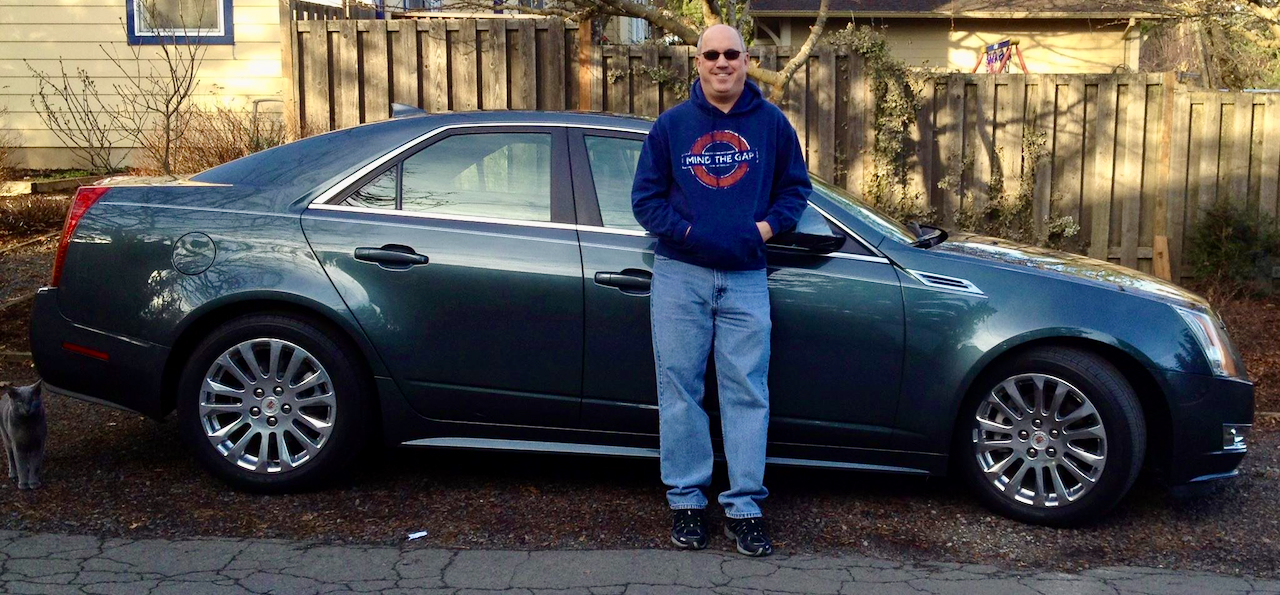
New year. New car. Same me. January 2014 in Portland, Oregon.
Sometimes you see a new car come out and immediately think, “I want it!”
Then you see the sticker price. “I’m not going to get it.”
But after depreciation kicks in, you learn you can turn “I want it” into “I got it.”
Sometimes, a dream car is merely a dream deferred.
Cruella, my 1991 Sedan de Ville, and Sabrina, my 2001 Seville, had pretty well established my fondness for Cadillacs. As a driving enthusiast, I had followed — and wholeheartedly supported — Cadillac’s drive to go head-to-head with BMW, Audi and Mercedes by developing a bona fide rear-wheel-drive sport sedan. I had been impressed with the 2003 CTS, even if this first iteration of Cadillac’s Art and Science design language was a little too severe for my taste. And the interior, with a center stack critics rightfully described as a tower PC, fell far short of expectations for this class.
But then came the second generation in 2008. The boldness of the original CTS was refined into a striking, elegant design unlike anything from the competition. The interior was equally distinctive, and to my eyes at least, one of the most beautiful I had seen in a modern car.
“I want it!”
Of course, reality is more than happy to smack you in the face.
The base MSRP was $32,245. But the one with all the bells and whistles — because why not? — was $43,455. Not only out of reach, but honestly more than I could justify spending, even if I could have afforded it.
In the meantime, I had bought Sabrina in early 2009. The Seville, a $43,000 car when new, was just $7,900 with 72,000 miles. Thank you, depreciation!
But by late 2013, as Sabrina approached 150,000 miles, she was showing her age. No spectacular failures, thankfully. The Northstar’s head gaskets remained intact, but it developed a bit of a drinking problem. I always keep a bottle of oil in the trunk of my cars, and I had to reach for it more often than I’d like.
Plus, the Check Engine light would come on intermittently. The code was for the transmission’s lockup torque converter, which didn’t always want to lock up. That would be a costly repair, hard to justify on a car this old with this many miles.
Perhaps it was time to start looking for a used CTS. The question was, could I afford it?
The answer was maybe.
I started looking. If I was going to make the investment, I wanted one of the higher trims, the direct-injection 3.6 V6, performance suspension and rear-wheel drive. A friend who briefly had a 2009 AWD CTS complained about the lack of steering feel. Plus, I didn’t want the added weight and complexity. I later came to question my choice.
Cadillac offered the CTS in a spectacular blue, but I don’t think I ever actually saw a blue one. An equally spectacular red was my second choice. I didn’t think Cadillac’s White Diamond or silver adequately showcased the car’s bold creases. And I will never buy a black car. It looks great when it’s clean. But it’s only clean for five minutes — if you’re lucky.
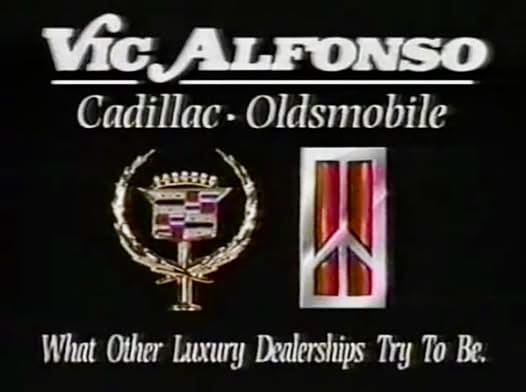
Vic Alfonso Cadillac in Portland had one that looked promising. Doesn’t that sound like the perfect name for an old-school Cadillac dealership? Today, everything is Manufacturer of City. It’s so boring. Sadly, Vic Alfonso, along with its cool retro logo, would soon become Cadillac of Portland.
Anyway, the car was a Certified Pre-Owned 2010 CTS RWD Premium Collection. Which essentially meant it came with everything. The mileage was 49,000. The price was $27,000. The color was Thunder Gray Chromaflair, a color that subtly shifted with the light. It showcased Cadillac’s Art and Science design language nicely.
It was New Year’s Eve, and we had dinner reservations, but we pushed them back.
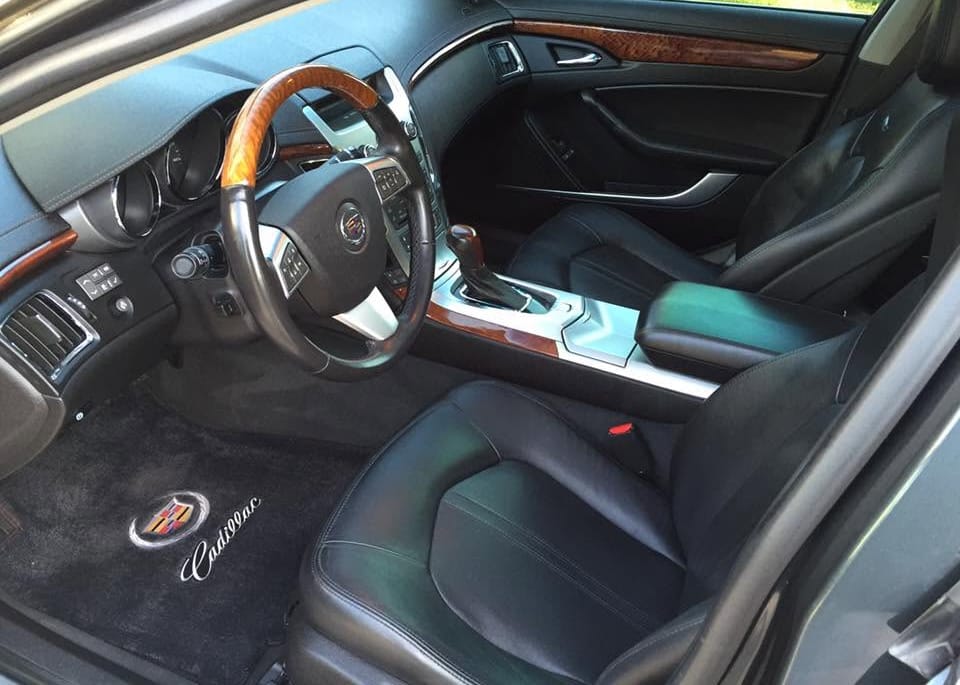
The CTS was in the showroom next to a ’75 Eldorado convertible that reportedly belonged to Vic Alfonso. The lighting really showed off the shifts in the color. Normally, I would avoid a black interior — hard to do these days — but the Sapele wood on the doors, console, shifter and steering wheel absolutely popped.
I had sprung for a rental car upgrade to a CTS earlier in the year, so I knew how well they drove. The rental, however, was a base model with the rather lackluster 3.0 V6. The difference in power with the 3.6 was notable. The ride was, as expected, firmer than in the Seville, but not at all objectionable. The car moved with confidence. Yes, this would do quite nicely.
After the usual negotiations over price, financing, the inevitable pitch for an extended warranty, and a low-ball trade-in offer I accepted, knowing the Check Engine light would make selling Sabrina myself a hassle with little prospect of a better price, I picked up my wife for a late dinner. She’d previously said, “People our age don’t drive Cadillacs,” but I was never one to follow the crowd. Plus, I had really liked my previous two Cadillacs.
Over dinner, the topic turned to a name for the new-to-me CTS. Nancy tossed out a couple that I rejected outright. One was Hank, to which I made a face, even after she explained it was for Hank Williams, who was known to own a Cadillac or two. Then she suggested Elvis. It was unequivocally perfect.
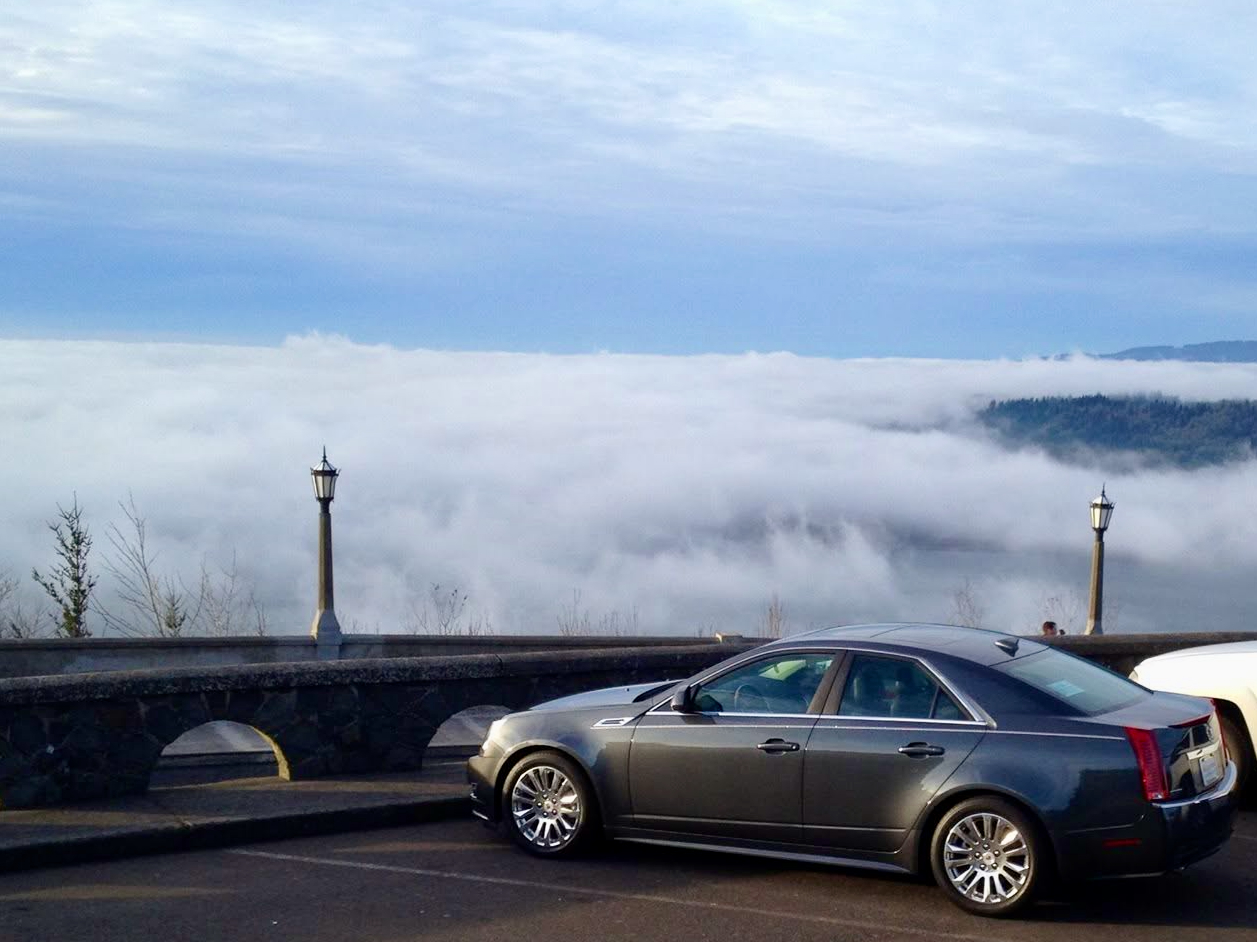
New Year’s Day, we took Elvis out on Historic U.S. 30, which parallels I-84 through the Columbia Gorge, one of the most beautiful places on Earth. As expected, the car took to the winding road with authority. Precise steering, smooth power on demand, solid grip through the turns. I was already thinking about how Elvis would do in autocross.
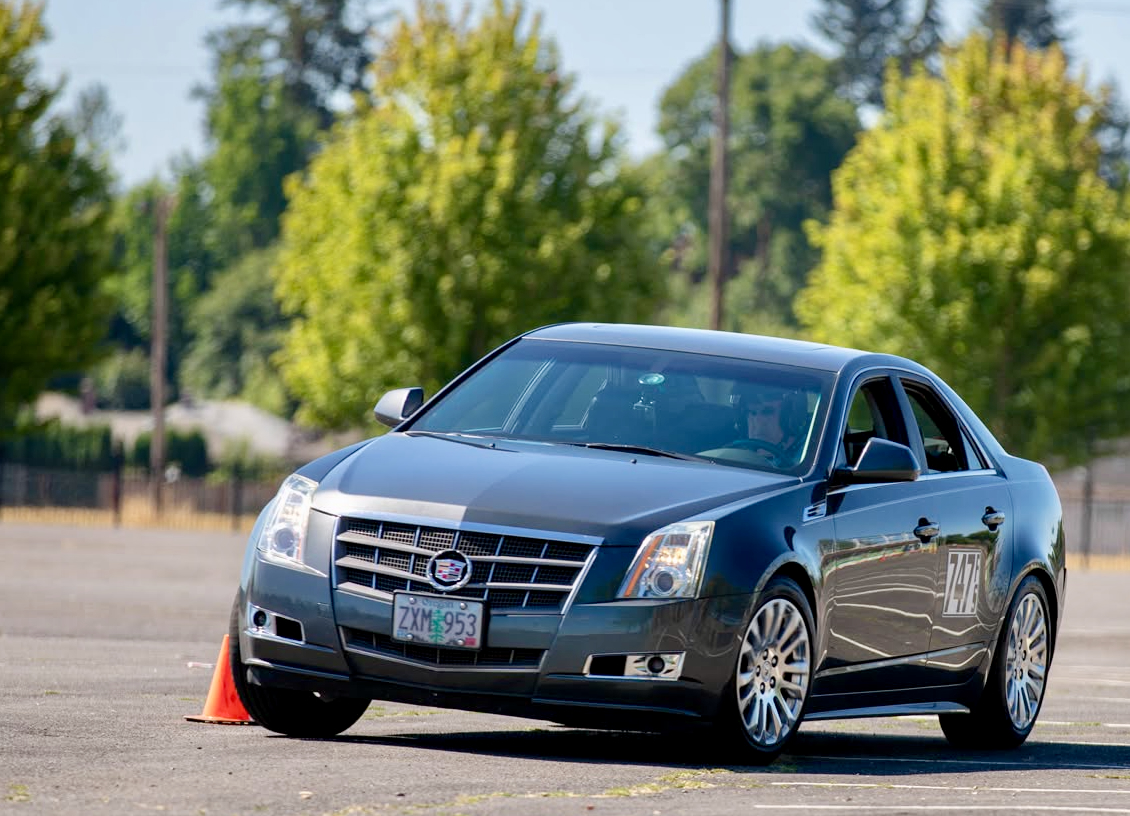
And with rear-wheel drive, plus a performance-minded suspension, Elvis did pretty well for what was still a big, two-ton luxury sport sedan. The stability control system even had a Competition Mode. I kept my very on-the-nose race number — 747 — but I started winning my class on occasion.
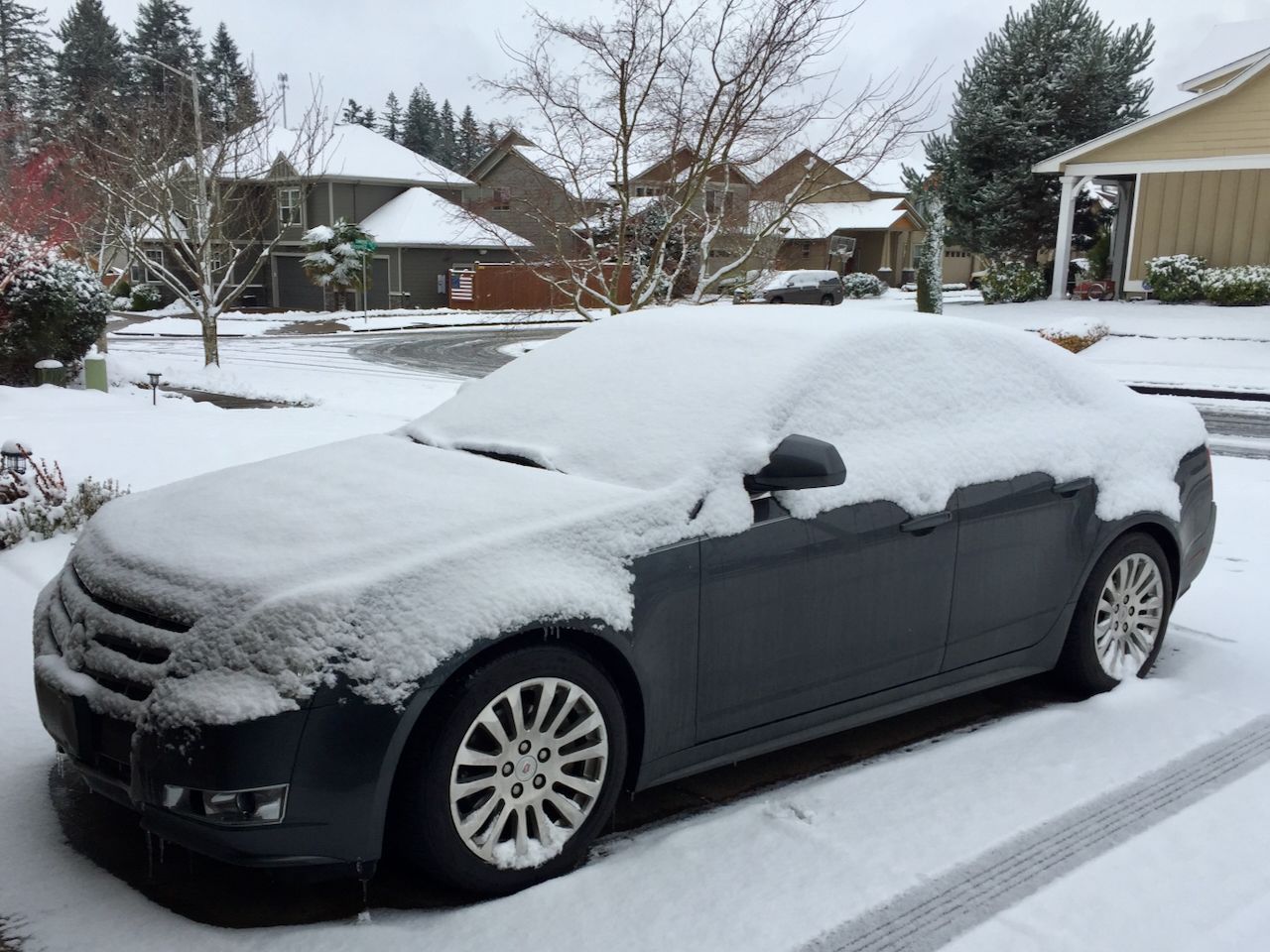
Back to that part about eschewing all-wheel drive. We don’t get a lot of snow that often in Western Oregon, maybe a couple of times a year and some years not at all. Here’s where front-wheel drive in Cruella and Sabrina had the advantage. Neither car had the slightest problem getting through snow without so much as a slip. Elvis? Not so much.
I don’t believe Elvis had a limited-slip differential, because he definitely slid. Trying to get up a hill in Portland, the best I could do was gun it and hope the friction from the tires would gradually melt the snow and ice. I eventually made it, but it wasn’t easy.
If you remember the story of my ’74 Celica, I had a semi-harrowing late-night drive with a dying alternator on the very empty highways of West Texas. My experience with Elvis was not so much harrowing as annoying. And expensive.
I was driving home from work in November, so it was already dark. My first sign of trouble was that the heated seats wouldn’t heat. Before long, I noticed the Charge warning light had lit. I was still 30 miles from home, but I thought I could make it.
I did not.
Fortunately, Elvis didn’t leave me stranded on I-5. As it became clear the car wouldn’t make it much longer, I was relieved to see the next exit was for a rest area. I did not make it all the way to a parking spot, but at least my dead car was off the freeway, and there was a shoulder where I could safely coast to a stop. I had my AAA membership (still do), and I didn’t have to wait too long for a tow truck. This was one of those rare occasions when I thought I should take it to the Cadillac dealer. They fixed it quickly, but at a cost: $1,220.98. Ouch.
I put about 83,000 miles on Elvis over nearly six years, and for the most part, I was very happy with the car. I loved how it looked and how it drove. Did this particular dream car live up to the dream? Most definitely.
Related Reading:
CC Capsule: 2009 Cadillac CTS – Turn The Boat Around























Leave a Reply