

My wife likes to say that “expectations are premeditated resentments.” While she usually applies this to having expectations on people, it is certainly applicable to automobiles. Sky-high expectations of the ownership experience offered by certain brands are often met with poor – or perhaps just ‘meh’ – realities that can forever alter one’s perception of that brand. My e90 BMW was the perfect example of that. Conversely, lowered expectations can often result in delight. That’s why my 2020 Nissan Leaf rates among my favorite COALs.

The Leaf did not immediately succeed the BMW in my garage. In fact, two cars filled the 5-year period between these vehicles. To avoid both a large repair bill and paying Georgia’s ad-velorem tax upon moving to Atlanta, I traded the BMW on a 2015 Honda Accord EX lease, drove it for 36 trouble-free months, and don’t remember much about it. It was handsome if anodyne, large and comfortable, boring as bathwater, and completely innocuous. While I agree with those who express that modern Hondas lack the character and feel of their predecessors, it is hard to find fault with a vehicle that is perfectly capable of 98.5% of what most people use cars for, and for doing so flawlessly. It was effectively a 1990 A-body Buick, updated for the 2010s. After the lease expired in 2018, I stuck with Honda and bought a 2012 Acura MDX. The MDX was a great vehicle, but I am not going to write it up, as I have nothing to add that Tom Halter didn’t already say in his COAL. My only complaint, and a primary reason for trading it after 2 ½ years, was its thirst for premium fuel that, coupled with a newly-extended commute, was eroding its value proposition.

By 2020, EVs were starting to command a meaningful proportion of new car sales, and appealed to me for both personal economics and environmental considerations. That my new employer resided in a building that had recently installed several free-access EV chargers made me give them serious consideration. I was looking for a nicely equipped but inexpensive vehicle to be used primarily as my commuter and weekend runabout, as we also had a Toyota Sienna as our family hauler. However, as cars like the EV6, Ionic5, and Solterra had not yet been introduced, there were only a few full EVs occupying the lower end of the market – the Nissan Leaf, Chevy Bolt, and Hyundai’s Niro and first-generation Ioniq. After evaluating available rebates and incentives, I concluded that a leftover 2020 Leaf presented the best total value proposition.
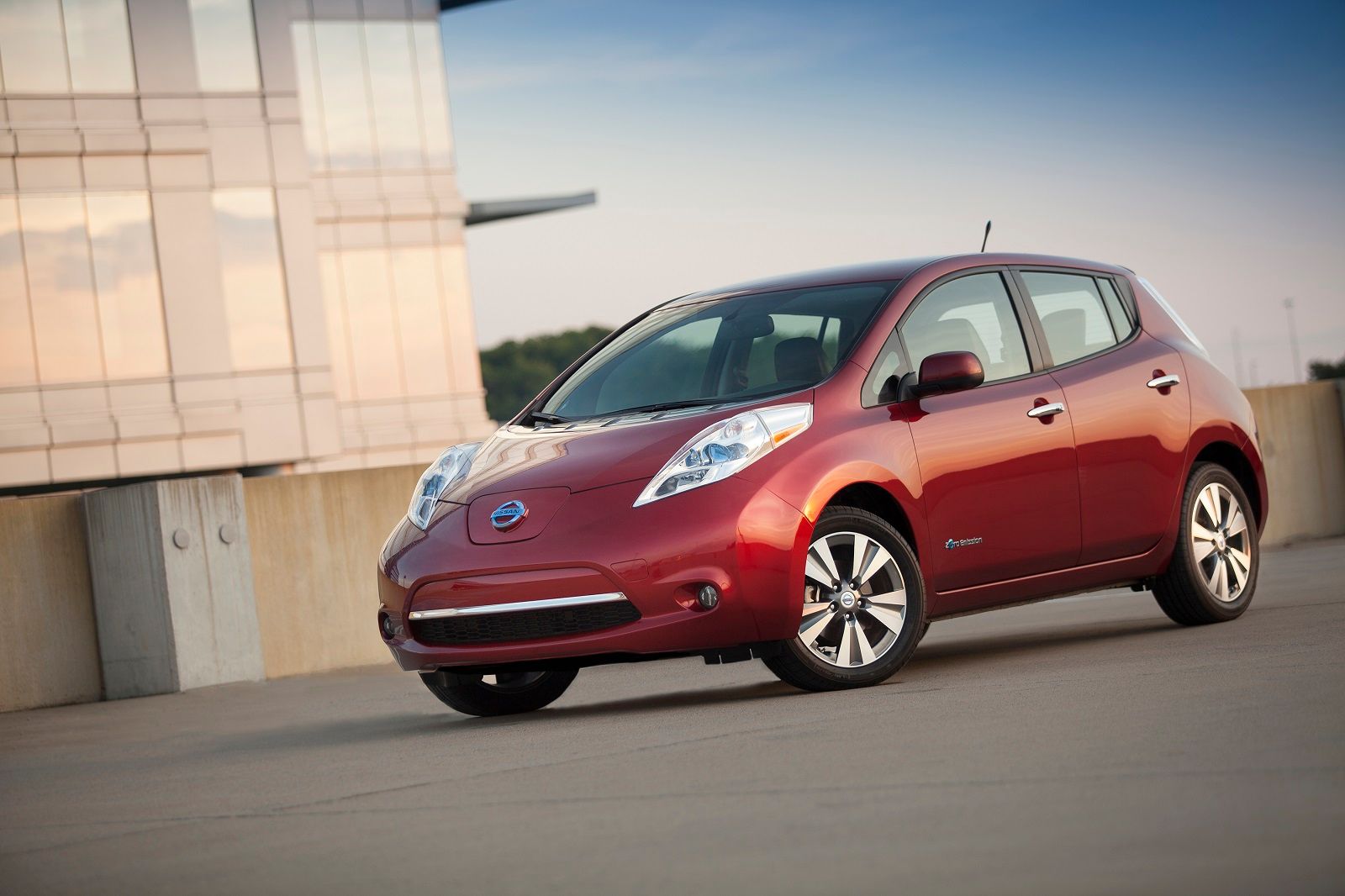
The Leaf was the OG – the first full Battery Electric Vehicle (BEV) available for volume sale in the US. Introduced to the North American market in December 2010, the first models had a lithium-ion battery developed by NEC, feeding an electric motor that produced 80 kW, or the equivalent of about 110 hp. This combination delivered a range of about 73 miles under optimal conditions, though results varied widely in the real world. This range, which could feasibly be as low as 50 miles as temperatures dropped and speeds rose, limited the use case of these vehicles to a short range commuter or in-town runabout in a multi-vehicle household.
It was also a strangely-styled vehicle – rounded, organic, and bug-eyed. It was cute and inoffensive, but weird and out-of-sync with contemporary styling preferences. It practically screamed, “Hey, look at me, I’m driving an electric car!”, in such a way that likely further reduced its potential audience. Considering that my hometown of Allentown, PA suffered long, cold winters and was a large commuter community for professionals working an hour or more away in New Jersey, New York, or Philadelphia, I could count on one hand the number of these I saw on the road during their first 4 years on the market.

That changed when I moved to the Atlanta area in 2015. The first morning that I woke up in our rental, I kept hearing faint, whistly “whir” sounds outside. Coffee in hand, I stepped onto the front porch to investigate and watched as every few minutes one of these weird little insects buzzed down a driveway and out of the neighborhood. Of the next 20 cars I watched whistle down the street, 15 must have been Leafs in every color available. Puzzled, I texted a friend who had predated me in Atlanta by a few years, and he informed me that Georgia had offered a massive tax incentive that made it possible to lease a Leaf for, effectively, free. As my neighborhood was inhabited almost exclusively by South Asian immigrants who had recently moved to the area, drawn by a large volume of tech roles in nearby office parks, these made perfect sense, and usually shared garage space with a family minivan.

While pioneering a market segment can create what is referred to as the “First Mover Advantage”, I recall from my business education that it can often be better to be the ‘second mover’ in a market that doesn’t have a substantial barrier to entry. Doing so allows the second mover to benefit from the massive investments and painful learnings that the visionary endures. Then, after the pioneer has successfully conditioned the market, the laggard can introduce a superior product, often at a lower price point. This was the case with the US EV market. By the time I was considering a purchase, there were many additional entrants in the market, and both the technologies supporting them and the range they offered had rapidly advanced.
However, Nissan didn’t sit completely still and allow themselves to be rendered irrelevant. For the 2018 model year, the Leaf received an extensive refresh. The appearance became more angular and in line with other Nissans of the day, and the interior was massively upgraded to provide a more conservative and functional layout. It also received a higher-capacity 40 kWh battery pack with an EPA-rated range of 151 miles, while an upgraded electric motor produced 110 kW (147 hp). The following year, Nissan upped the ante by offering a second powertrain option in models badged as “Plus” (e+ outside of North America). With a battery capacity of 62 kWh and a 160 kW motor making 214hp, the Plus models extended range to 226 miles and providing 0-60 acceleration in 7 seconds.
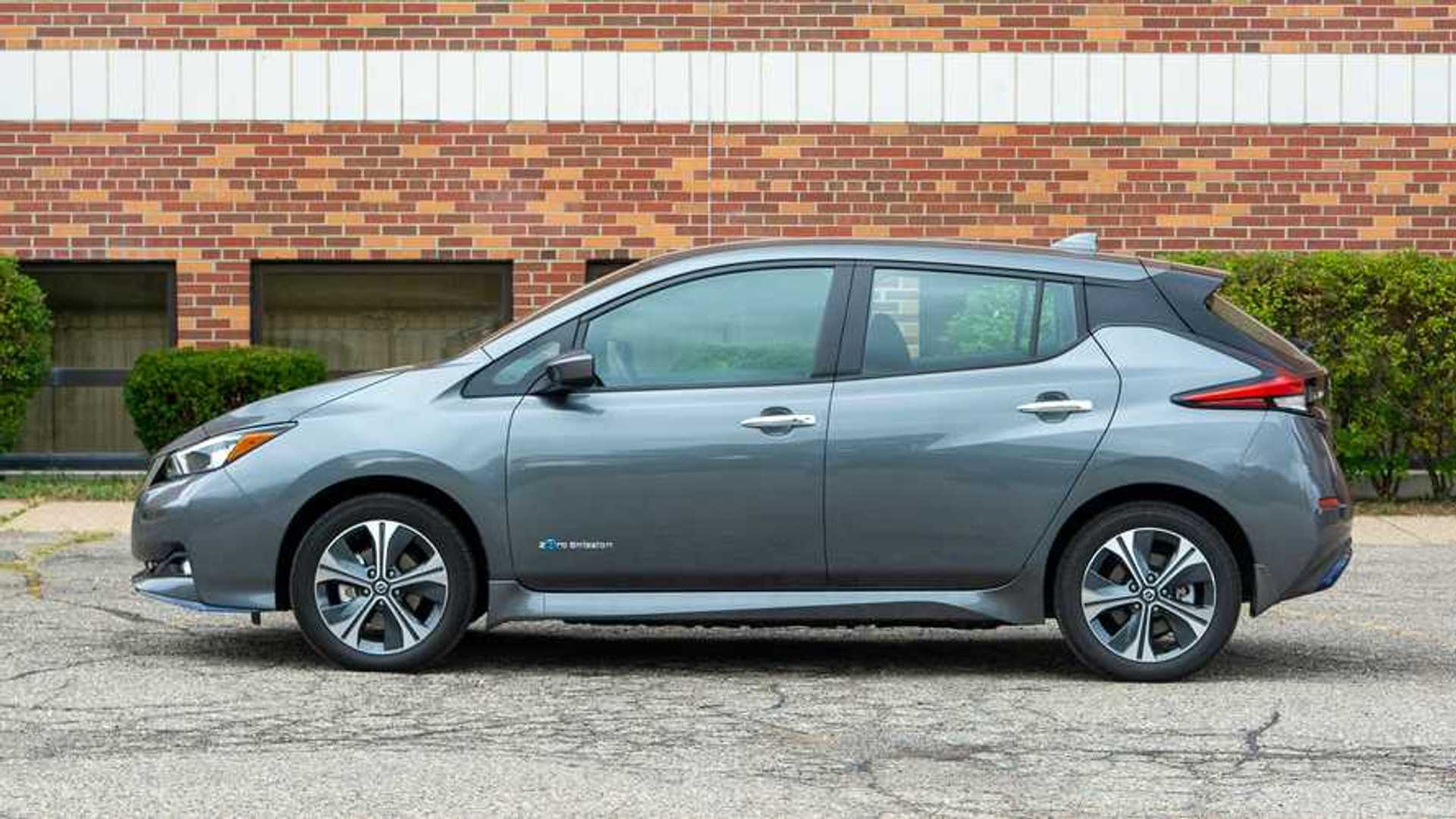
Between the heavily revised styling and massively improved range, there was significant initial argument in the online Leaf community over whether these models represented a new, second-generation vehicle or a heavily-revised first generation. There seems to now be a general agreement that the 2018-2025 models are second generation vehicles, although they do share the same basic body shell. Regardless of the extent of the redesign, the Leaf retained two critical structural disadvantages relative to the newer EVs on the market. First was that the battery retained ambient cooling, whereas competitors offered liquid cooling to maintain range and reduce battery degredation. Second was the high-speed charging technology. When Nissan developed the Leaf, there were multiple high speed charging protocols, and not yet a consensus as to which would prevail. Nissan bet on the wrong horse in picking the CHAdeMO technology, and retained it with the 2018 update while the market was coalescing around CCS2 (and is now transitioning to the Tesla NACS standard). At the time I was shopping, I was well aware of these limitations, but my use-case and the economics of the Leaf still made for a strong business case.

The Leaf was my daily driver for just over four years and about 60K miles, and I enjoyed almost every moment with it. I opted for the top-line SL Plus model, which gave me the upgraded powertrain and all available options. The car had a full suite of mostly up-to-date safety and entertainment technology, good looking alloy wheels, and cool metallic blue exterior accents that paired well with the Cayenne Red Metallic Tri-Coat, giving it a bit of an “Avengers” vibe. Driving the Leaf was a delight. If you’ve not driven an EV and experienced the instant torque and effortlessly rapid acceleration, you are missing out. There is not much that is more fun than leaving high end vehicles standing at an intersection. The other EV feature that is life-altering is one-pedal driving. This feature provides the ability to modulate speed without having to alternate between a brake and throttle, and to coast to a perfect stop and hold at an intersection without engaging the brake.
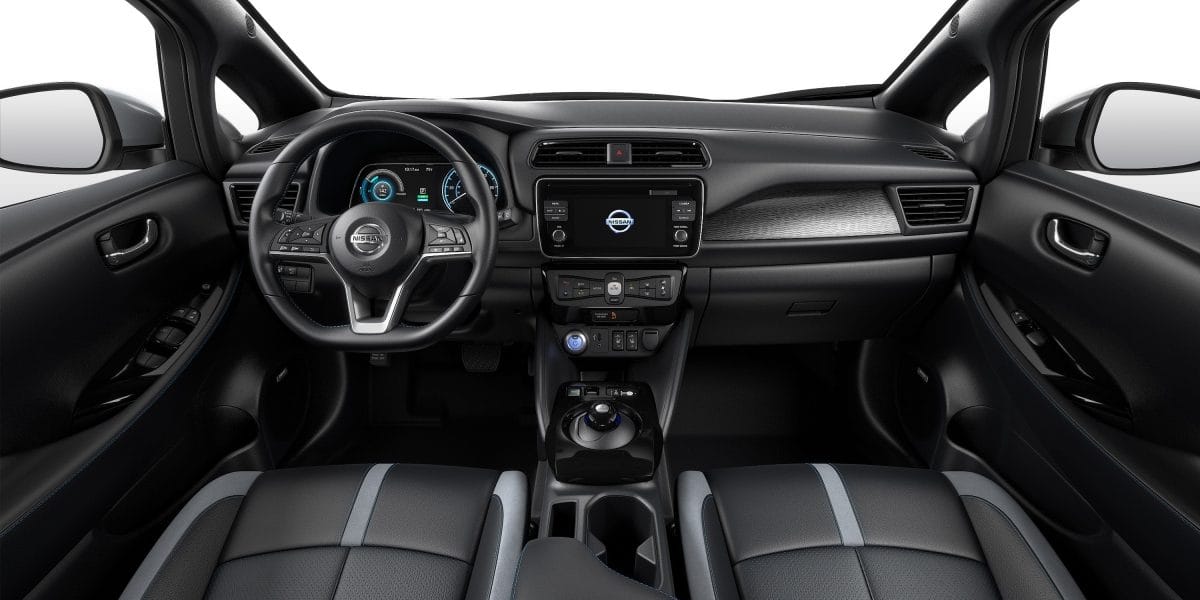
Beyond the one-pedal driving, Nissan nailed the basic controls. “Gear” selection consists of a short, stubby little joystick in the center console, perfectly designed for one finger operation. To go forward, simply nudge it slightly toward you and back, and it pops back into its home position. To reverse, flick it toward you and forward. To Park, press on a button on top of the joystick. Of all cars I’ve owned or driven, this was the hands-down king of the K-turn. The speed and alacrity with which I could perform a multi-point maneuver, with no brake application and a flick of the wrist, was unmatched. Finally and critically, this car was fitted with the best seats to ever grace my backside. Nissan calls their top end seats “Zero-Gravity”, and they are lovely – nicely bolstered, cushioned yet supportive, and all-day comfortable. Combined with near silent operation, a roomy passenger compartment, and a surprisingly smooth ride due to its road-hugging weight and relatively long wheelbase, these features conspired to make it a bona-fide stress-reducer in the heavy, erratic Atlanta traffic.
Adding to the low-stress driving experience was a low-fuss ownership record. No gas stops. No oil changes. No planned maintenance other than tire rotations in my ownership period. I had one maintenance issue late in my ownership when a battery cell went out and immobilized the car, but it was promptly replaced under warranty. Beyond that, not a single complaint. Additionally, the car was remarkably tight. The interior materials, other than high quality leather on the seats, armrest, and door inserts, did not conform to the current ‘soft touch’ fad. They were largely hard but nicely textured and high-quality plastics that held up exceptionally well. Switchgear was simple, but direct and felt substantial. At the end of my ownership, it didn’t have a single rattle or squeak and looked as good as the day I bought it. Overall, other than the large digital screen, it gave off a very late-80s Honda vibe – simple, functional, precise, and well screwed together.
 So why did I move on to a new vehicle? I mentioned before that the vehicle had some structural shortcomings. The biggest is the aforementioned CHAdeMO charging system. When I first both the car, there were a few CHAdeMO options in my area that I could use if I needed a quick charge, and I was able to locate options during the first few times I did an extended trip. By 2024, my options were highly limited, as CHAdeMO was rapidly phasing out. The ones that were still available were operable maybe half of the time, and even then, there was a high likelihood that the one CHAdeMO in a bank of 10 chargers was occupied by another Leaf owner.
While that was a mounting frustration, what ultimately did it in was user error. I left the windows open in the driveway, and a heavy summer storm rolled in, leaving several inches of water in the footwells. After extensive vacuuming, use of desiccant bags, and multiple ionization treatments over a course of several weeks, I thought it was resolved. A few months later, I found mold growing under the seats and pulled up my weather tech passenger mat to find a saturated carpet. A short time thereafter, I experienced a couple of minor electronic glitches. Fearful that this signaled the onset of serious electrical gremlins, I began researching replacements.
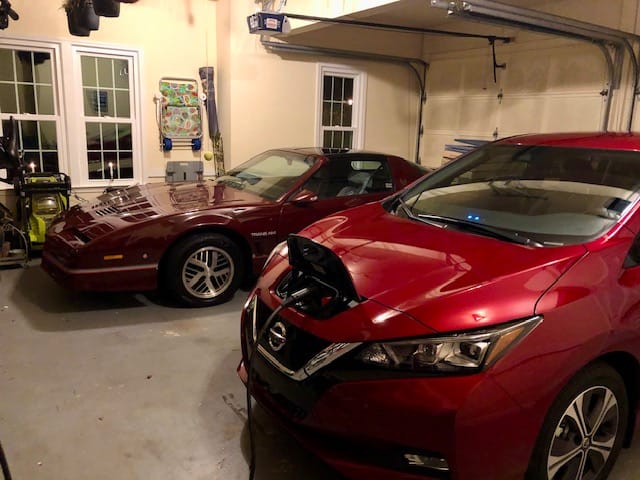
My Leaf was not merely a good car, it was a great car. It surpassed all expectations, generated no resentments, and regularly put a smile on my face. It is among my top 5 COALs.
Related CC reading:
Future Classic Introduction: 2018 Nissan Leaf – Turning Over A New One























The lack of active cooling and heating for the HV-pack makes a older Leaf a very risky business.
I like them, but that pack will die on you.
I don’t think they’re so bad in typical 4-season locales. It’s those temperate, 3-season areas where the issues arise. EV batteries and extreme ambient temperatures don’t play well with each other, but it’s worse in the heat, and it would have been further exasperated by passive air-cooling.
In fact, in the earliest days of the Leaf, there was something of a quiet warranty program where Nissan would replace the battery if the state of charge (SOC) would not go past 75%. That’s a significant hit when the 100% range back then was EPA rated at only 73 miles (although real world was supposedly closer to 80 miles). Still, losing 20 miles of that would put a real crimp for even short-range, daily urban driving.
IIRC, the state where the issue was most common was Florida.
I don’t want to join the EV debate. They are just not for me. I literarily hate plugging in my cell phone. If there were gas-powered phones, I would consider getting one. Plus, maybe I am jaded; running over the cord of a short-lived electric lawn-mover, years ago.
My family puts on a lot of miles on our vehicles. I do want good gas mileage, but lots of comfort and versatility. We have a 2025 Honda Ridgeline with 35 K. Absolutely, great truck. Nah, don’t want an EV version. 5 minute fill-ups are for me.
It sounds like you identified the perfect vehicle for your use case and made the most of it. There are multiple Leafs in my neighborhood and hundreds in town, they seem to work just fine despite the inevitable naysayers and the teething troubles the first few years exhibited, the larger battery pack such as in yours seemed to really help adoption. Those that signed up for a second one after their first lease expired or added a second one to the fleet are the ones that really prove the concept to me. Above everything else the total cost of ownership is so low as to make almost any comparable conventional car (if used the same way) look foolish, never mind the convenience of never having to stop at a gas station if you can plug in at home overnight or at work while the car sits anyway. One of our EVs plugs in maybe once or twice a week in the garage on a level 2 charger which keeps it topped up, the other one sits in the driveway and exclusively charges on a 110 outlet, that one is mostly driven around town and that low speed charging keeps up with the demand just fine even though we do have the adapter to make it work with the fast charger but have only used it a couple of times in over two years now. People don’t know what they don’t know. (But seem to like talking about it).
The red color is nice on the Leaf, around here most seem to be blue or graphite. And the new (third gen?) Leaf looks extremely promising, they are starting to sprout up around here starting about a month ago now, I predict it to be a big winner even as the U.S. starts (chooses?) to fall seriously behind the rest of the world in terms of EVs and transportation progress, which doesn’t bode well for our domestic manufacturers in the medium to longer term. Oh well.
Great comments Jim. As noted below, the low cost of ownership is dependent on a convenient source of cheap electrons. The whole time I owned the Leaf, I got by mostly on charging at work (free) and 110 trickle charging at home. The cost equation changes when you have to use public charging for more than occasional top offs or for frequent extended trips.
You mentioned the convenience of never having to stop at a gas station – when it was time to trade the Leaf, I put all the options on the table, but ultimately limited my search to EVs because I love the driving experience, but also because of the convenience factor. I had not had to stop for gas on my way to or from work for over 4 years, and I was not interested in going back to that PITA. What a lot of EV naysayers don’t take into account when they talk about ‘5-minute fillups’, is that your cars is stationary much more often than not. If that time in a garage or parking deck can be conveniently used for passive recharging, it’s a heck of a lot more convenient than having to actively stop at a gas station. With the newer 300+ range EVs, combined with home and/or office charging, range anxiety should not be an issue for most people’s driving patterns. For the occasional long distance journey, access to the Tesla NACS network is game-changing, as that is the largest and most reliable network, and their charging stations are typically in safe, well-lit areas near popular conveniences. I’ve found that on a long drive, i’m typically ready to stretch my legs after 250 miles anyway, so a 45min charging stop gives me time to use the facilities, get a cup of coffee, and be back on my way.
Upon her graduation from college 2 years ago, one of my daughter’s friends bought a new Nissan Leaf. It’s absolutely a great reliable little car, but when she got a job 90 miles away (and moved there), her weekly trip home for the weekends reared the range and charging challenges. After a year working within those confines, she’s looking at trading it in for an Ioniq5 or Ioniq6.
Sad end, but why wouldn’t an electric car have an inexpensive windshield wiper rain sensor that could shut the windows?
I am following the improvements in EVs pretty closely. My take on EVs is that if you have a place at home to charge them, they are a great deal. Overnight power rates here in British Columbia make running an EV very cheap. The same cannot be said about DC fast chargers. BC Hydro charges $0.34/kwh for fast charging. By comparison, I spend about $0.20 for gasoline for my Golf. A little less, actually.
I assume fast chargers will be cheaper once the upfront costs are paid up.
You are absolutely correct. Key to the EV value proposition is access to free or inexpensive charging – at home, the office, or both. DC fast charging is more expensive than gas, and public level 2 isn’t that much better and too slow to be practical
Indeed, widespread DCFC for all BEVs (not just Tesla products) was going to be the Great Leap Forward for BEV adoption. Unfortunately, while there are most definitely way more DCFC stations today than ever before, pricing is almost always at least 3x that of local residential rates (and, often, ‘way’ more) to the point that the value proposition of low-cost DCFC use is largely a fallacy. Believe it or not, there are even a few DCFC stations that, when compared with the cost to travel the same distance on gas, is the equivalent of paying ~$22/gallon.
And then there’s the annual EV registration surcharge of at least several hundred dollars in all but a handful of states to compensate for payment of road maintenance tied to gas prices. Even when exclusively using low-cost home charging, BEV ownership is no longer the value proposition over ICE it was not that long ago.
With Trump’s elimination of the federal EV tax credit, it’s not much of a surprise that EV sales have fallen off a cliff with manufacturers cancelling current and future EV projects left and right.
A point of correction is I believe in order here: It’s not “at least several hundred dollars”, the highest I am aware of is New Jersey at $260 which is more than a couple hundred but less than a few hundred…. Here’s my source link:
https://taxfoundation.org/data/all/state/electric-vehicle-ev-taxes/ Which state were you referencing as being “at least several hundred”, perhaps some changed more recently?
Many/Most of those states that charge an EV surcharge to make up for lost gas taxes are charging a surcharge for Hybrid vehicles too which are now in some auto-journalism circles being touted as America’s Savior so there’s no getting away from paying for the roads…My state charges $62 extra for an EV annually, which is fine seeing as how they gave us a $4000 credit for one of our EV purchases and I believe $5000 for our older one that we no longer have.
An EV tax credit being cancelled with tons of advance publicity will always result in pulling demand forward, that’s just common sense, same as when something is “on sale”. Yet EVs are still selling, and EVs also sold in the past without an EV tax credit back when several manufacturers had exhausted the at-the-time limit before it was extended again. The rest of the world is advancing at a fast pace and the United States is being left behind with only seemingly ever-larger trucks to make up the difference. The only people cancelling stuff wholesale are American manufacturers or smaller manufacturers (such as Porsche) that sell most of their product here, the rest of the world’s normal automakers seem to be advancing their offerings (especially in the smaller car segments) and overall EVs are selling in greater numbers than ever, and surprisingly even in what we would consider “developing nations”.
China though is kicking everyone’s arse to the point that Jim Farley, Ford’s CEO, is vocally (and perhaps rightly) scared of them (while absolutely and very publicly admiring their products) and apparently looking to joint venture with Chinese manufacturers since their VW-built stuff in Europe isn’t working out very well and the full size Lightning truck appears to have been a poorly thought out bondoggle.
In the U.S. Rivian is introducing several smaller/cheaper vehicles in the US, Lucid just intro’d another one and is working on a third, Tesla shot themselves in their pud so that opens up market share for lots of others, Ford is still talking about their $30k “skunkworks” EV (we’ll see), Volvo has recently/is introducing several EV vehicles, RAM and Ford are both talking about EREVs (EV with range extender gas engine), Nissan just intro’d the new Leaf which looks like a good replacement for far less money than the Ariya, Toyota’s redone BZ is apparently now setting sales records (at least compared to what it replaced), and there are plenty more. Most people that own an EV are very clear that they have no desire to return to non-EV’s unless whatever segment they need doesn’t offer one. The author of this post sounds like one, my wife is another, as is my son, you may have friends and neighbors that feel the same way, I certainly do…
Yes it makes less sense for someone without home or office charging to have an EV, yet there are oodles of ride-share drivers that somehow still make the overall economics work for themselves as one example and al they do is drive and fast charge all day long. With a minumum of planning and especially local knowledge it’s possible to avoid rip off chargers (there’s apps for that!), just like it’s possible to avoid rip off gas stations.
We charge at home pretty much exclusively, and find we are saving massive amounts of money (and time) over purchasing gasoline. We luckily have low rates but if we didn’t we’d invest in solar (and would do so anyway even without an EV in that case). We’ve taken the EVs on road trips and since we don’t cross the country every week it isn’t a big deal monetarily. But usually for long distances we’ll usually fly nowadays anyway or sometimes even rent a car instead, why not rent a 50mpg gallon Camry or a minivan for a week and keep multi-four-figure mileages off our cars.
It’s too bad most of this country has zero good first-world public transportation, we’d likely have less cars in total of any kind. I can easily see not owning (and not remotely wanting to own) a car in many places in the world, but in 99% of locales here it’s an unfortunate necessity for most people and families.
We’ve owned a 2015 and currently own a 2019 LEAF SL which was purchased as a Certified brass hat car. Just about $10,000 spun off in depreciation after 2300 miles. Being retired and owning four cars we don’t pile up the miles, but our “deep blue pearl” honey has been perfect and I agree with all of your critique, Brian