
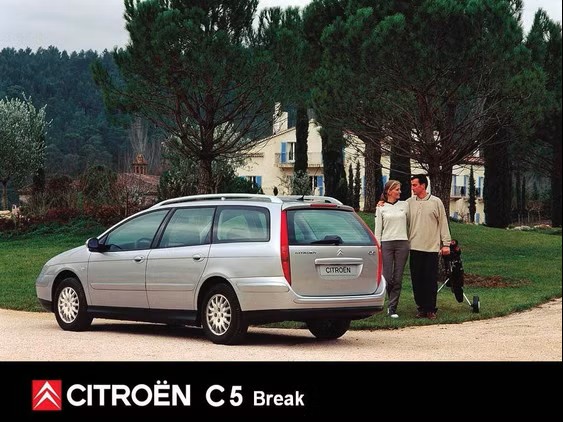
Back in 2002 I recruited a new Planner for our Consultancy’s office in Yorkshire and whilst we were beginning to phase out company owned and run cars, as part of his deal he asked for a sensible family estate car to haul his missus, two young boys and all his cricket kit around. It seemed to me that the Citroën C5 110LX diesel estate (‘station wagon’, or ‘break’ if you are French) that was in the local dealership showroom would do perfectly. Jim ran KL02 UZS for 38000 miles and three years and handed it back to Head Office on 17 March 2005.
I can’t say that I didn’t buy in the first place without having some devious plan in mind for the day its company role would be complete and indeed I took it home that night. I’m not sure how long I expected to keep it but it arrived at just the right time and I didn’t say goodbye until May 2009. It was the answer to a question I should have asked a long time ago.
To recap, I had bought a 2003 Subaru Impreza WRX STi in October 2004 to be a ‘practical’ replacement for my Porsche Boxster – we had my wife’s 2000 Alfa Romeo 156 as well as our small collection of classic Citroëns – the Ami Super, 2CV Van and D Super 5 – which were used mainly for Citroën Car Club events and holidays. We also had two children who were now 13 and 9 and were old enough to have opinions of their own about travel arrangements. In March 2005 we had just returned from our ski apartment in the French Alps in the Subaru which had proven not to be a quantum leap over the Alfa Romeo in terms of space for people and luggage and was both a lot thirstier and generally more tiring to travel long distances in – as one would expect of a rally honed machine.
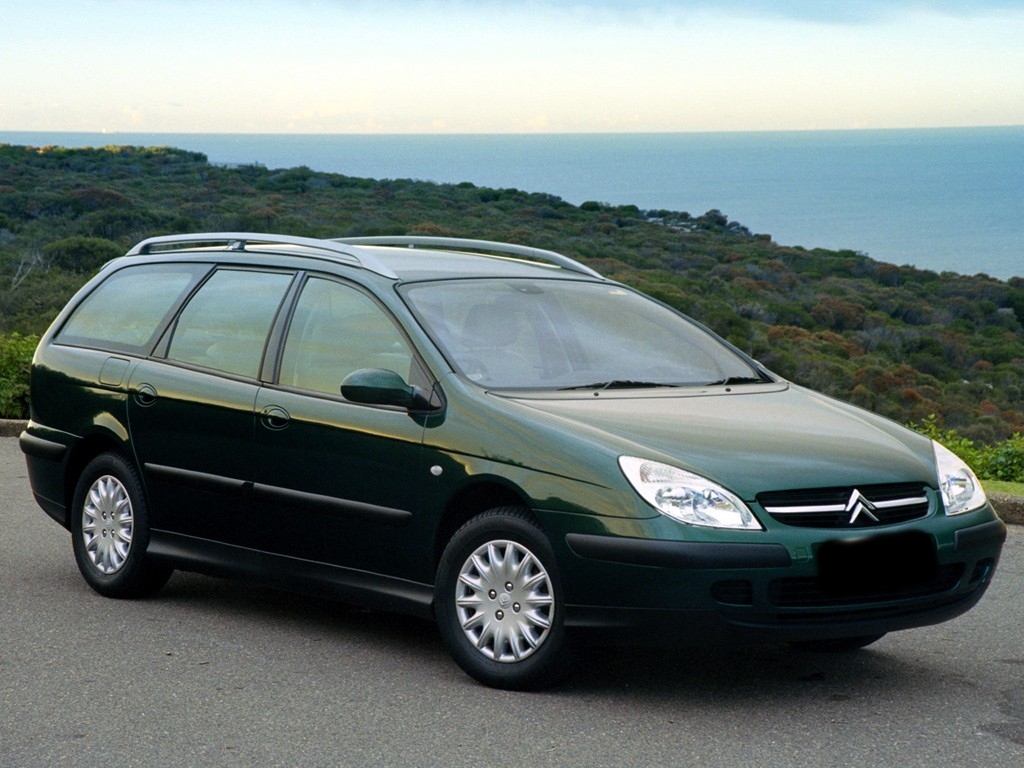
Although I had started my motoring life with Citroën and, by choice, had not driven anything but Citroëns until 1992, it had been almost 13 years since I’d last driven a ‘modern’ one on a daily basis. The C5 was big, it was comfortable, it was lazy (in the sense that it loped along like a good companion) and it was economical – it was my first diesel. In short it reminded me what French cars are supposed to be about even if it looked like a dead fish (even Citroën people call the X4 series “the ugly one”) and had all the glamour of a hearse, especially as it was black. It very quickly became the car of choice for work as well as for family days out; and for shopping, and trips to the DIY store but its forte was the three trips a year to the French Alps, which was 767 miles door to door, a distance it could easily eat up in a day and on barely more than one tank of cheap French supermarket diesel.
The High Pressure Direct Injection HDi diesel was a joint PSA/Ford project in the late ’80s. At that time diesel was considerably cheaper in France than petrol and the HDi became the engine of choice in pretty well every Peugeot and Citroën. Citroën had been building passenger car diesels since 1933 and whilst the diesel powered Citroën CX of the mid ’70’s was (like its Peugeot equivalent) a pretty rough and distinctly unpowerful lump the HDi soon carved out a reputation for driving exactly like the petrol alternative – in fact rather better in many respects as its turbo provided ample torque which made for easygoing motoring, complemented by the ever relaxing qualities of its hydro-pneumatic suspension.
The early C5 was available with a 90bhp version of the DW10 series HDi diesel but this was barely any cheaper to buy and hardly any more economical, so was largely limited to the taxi trade. The 110bhp was the popular choice and whilst there was a 2.2 litre it was reserved for higher trim levels. More expensive trim bought adaptive suspension and a ‘sport’ button and you could buy a range of petrol engines up to a 3.0 litre V6. My C5 was an LX, the base model with the 110 engine, and that suited it well. It wasn’t the sort of car that needed air conditioning, leather, cruise control or other ‘luxuries’ to make it enjoyable. It was just good, honest get you there transport. I loved it – but then I wasn’t selling the Subaru (not immediately anyway); this was going to be an addition to the fleet not an early substitution.
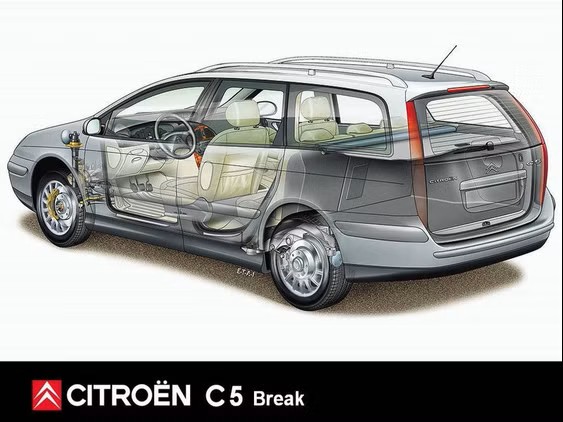
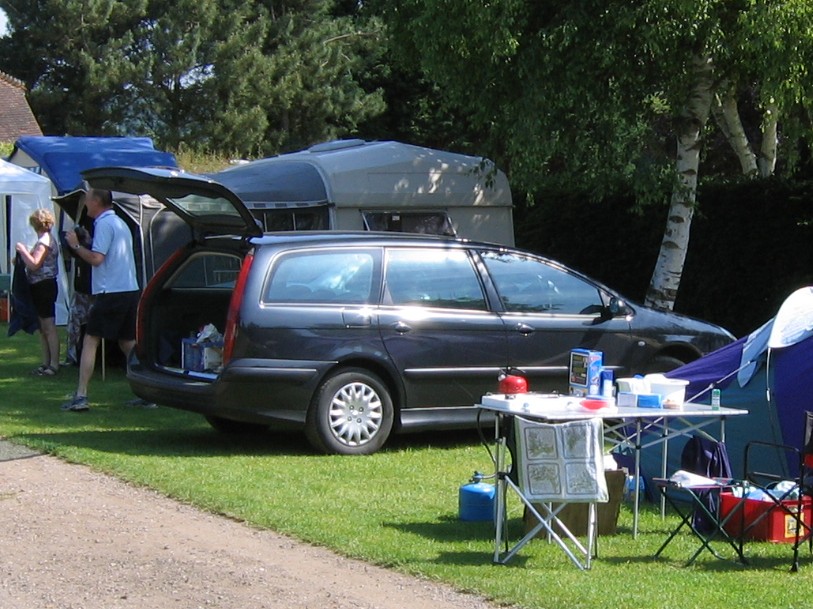
In fact, as mentioned it rapidly became the vehicle of choice for everything and as a matter of fact, the Subaru only stayed with us for another eight months. Being a Citroën it was eligible to carry us to Citroën Car Club meetings and camps as well as fulfilling the full range of domestic and work purposes. My work as a town planning consultant often meant meeting with clients on-site which was often no more than an undeveloped parcel of land, be it a field or an urban clearance. The ability to raise and lower the ride height to drive over rough ground was always a bonus, one that I’d forgotten from the days of running the Citroën BX’s and a CX back in the ’80s. Jim, its first keeper and still a good friend, and his boys had, shall we say, made full use of the interior which wasn’t in factory fresh condition despite hours of cleaning but that also meant it didn’t matter if muddy boots, wet camping equipment or skis got chucked in. Whatever the task, the car seemed to be up to the challenge.
I was also happy to volunteer its services to friends – for example helping with house moves and, on one occasion loading it to the roof with personal effects and household goods and heading to Moravia in the eastern part of the newly formed Czech Republic. On that journey we left the ferry at the Hook of Holland at 8.30am and were parked up in central Prague by just gone 6pm. We’d been cruising at over 100mph for most of the way across Germany and maxing out at almost 120mph for a good part of that. That sounds a lot but not when you have to keep a constant eye out for the Porsche Cayennes that aren’t in the mirrors until they are and when they are, they are approaching at 160mph plus. But don’t ask me for a better car for that journey because I wouldn’t have been able to think of one and we were fresh enough on arrival to spend the rest of the evening out on the town. Later on that same trip, having arrived at our destination where my friend owned an old water mill, we went exploring and ended up on a narrow forest track clinging to the side of a hill. It got rougher and rougher and we had no option but to keep going forward. Probably nothing a Jeep wouldn’t have managed but the height adjustable nature of the suspension allowed us to climb over rocks and across gullies and we eventually got back to the village by quite a different route across farmland. The C5 didn’t blink an eyelid and I learned the value of a car that is not so precious that you fear to use it. That’s not to say its life wasn’t important at that time – we’d got to get back to England somehow!
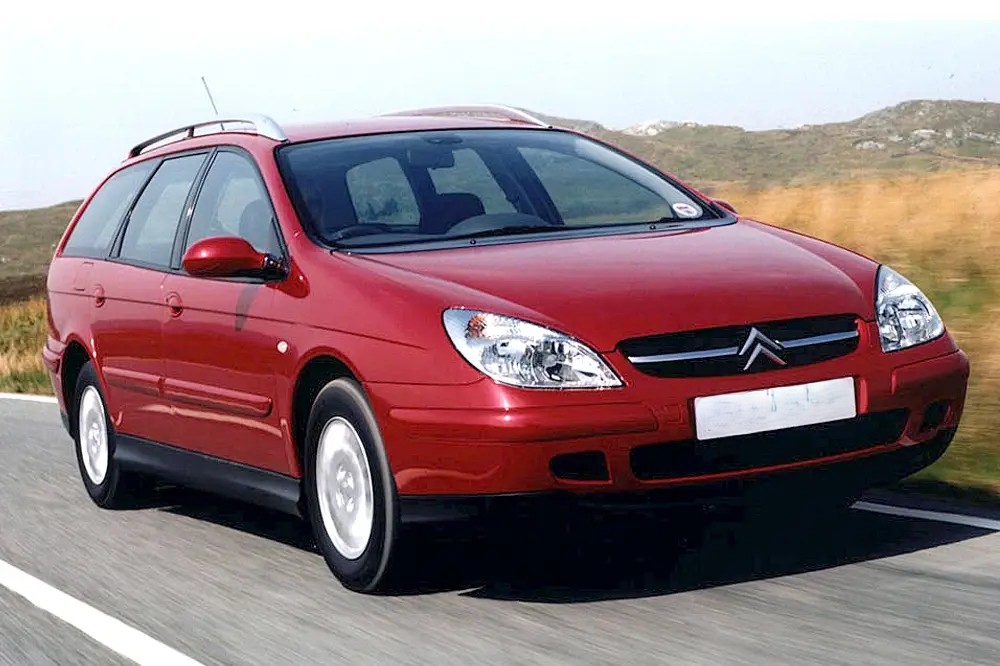
As a result of its sheer usefulness the C5 was clocking up mileage like the old days. As my business had expanded in the late ’90s and early 2000’s I’d anticipated doing less business mileage as we now had several regional offices around the country. The reality was that I liked to be a presence in those offices and was always happy to accompany local managers to new client meetings. After a dip, work mileage had begun to build up again and with the social, domestic and pleasure elements the C5 was covering in excess of 30000 miles a year and that was on top of the use we were making of the Alfa 156 and the classic Citroëns. I kept it serviced regularly and it repaid me in kind but by 2008 and with 145000 miles on the clock Janice and I agreed that if something major happened we’d just walk away. I knew by then what I wanted to replace it with.
That event happened in May 2009 when the gearbox started playing up. I’d hammered the gearbox for 100000 miles, more often than not changing up at the red line in pretty well every gear every time. Second and third got ‘crunchy’ to select and then fifth went AWOL and it reminded me of my Citroën CX back in 1991 which had eventually jammed in fourth. What was it with me and Citroën gearboxes? Rob Moss at Chevronics, my favourite specialist, told me he would need to take the box out to see exactly which one it was and his regular breaker had two of the four potential types. It would cost money even just to find out if it could be fixed, let alone the cost of a new box. The car wasn’t worth anything. I’d not paid the company a lot for it in the first place, it now had a big mileage and sported a huge scrape down one side where metal had met our brick gatepost – I never got that fixed because I thought it just made the car look more French. As per the unspoken deal with my wife, it was time to move on.
What I wanted was for sale at a Citroën dealer about an hour south of where we live. The salesman scribbled a figure on a piece of paper and pushed it towards me whilst looking away. I had to look at it twice. He was offering me £500! I wouldn’t have been surprised if it had been £50. I metaphorically bit his hand off before he could change his mind. I had told him the gearbox was bust and he could see the scrape for himself.
As a postscript, KL02 UZS only dropped off the DVLA register after another nine years, in June 2018. Somebody had fixed it, somebody had done another 50000 miles in it. I should have got the work done. I should have kept it. I would have it now. There is an active C5 group in the Citroën Car Club and I would be looking at the car from my window as I write this. It’s story is more about the places we went, the adventures we had and the people we traveled with rather than the car itself. That was just a facilitator but its memory brings a tear to my eye, I miss that car, I miss it more than I can tell you.























I’m not familiar with it, but from what I can see, it appears to be a comfortable and safe wagon.
It’s also very nice-looking.
We had the 2.0 16V Exclusive version for 8 years, also a break. Very robust, comfortable and reliable transportation that never let us down. The resale value was abysmal though, for an 8 year old car with only modest mileage.
I wish we’d had access to Citroens post early ’80s here, after our ’81 Peugeot Diesel Automatique break I’d loved to have tried a C5, or a CX for that matter, an object of lust for years. There’s a strong resemblance to a Taurus wagon for sure, and I’d have liked one of these much better, though the diesel advantage has diminshed and reversed due to excessive taxation. Here in CO current gas ia bout $4/gallon while diesel is around $6, so certainly not a viable proposition. However it would be great to have the opportunity to own any French car at this point.
The C5 should be reasonably well-known to CCer’s as our man in New Zealand, kiwibryce – I think he now uses “KB” – has had a couple, and raved for years here about their virtues.
They do have a lot appeal as a car: and the wagon even looks pretty ok to me from the back. But the front! Even being kind, they look like a gormless, cross-eyed drunk – and it’s pretty compared to the facelift. I could also never work out why the front wheels are so damn close to the front doors. A DS Chapron with the roof down it is not.
Alas, they played out of their zone here, being far too pricey. And because of that luxury price, I’d hazard a guess that 98% of them were automatics, which is something the French cannot make. They worked badly when pristine, began sulking at low mileages, and then not much further on, they broke, expensively (and often incurably). A pity, because despite the fact they look like a baboon’s bum – and as your experience shows – they’re fundamentally good and useful cars.
I totally get your feelings for this car. Cars that are unpretentious low-cost workhorses really earn their keep and their owner’s love. I felt exactly like you did about our 1970 Peugeot 404 wagon; it had pretty much all the same qualities (except of course being able to cruise at 100 mph) and I sold it for peanuts because after a big pay raise a new car seemed too irresistible. I still miss that car and I’d still be driving it if I had it.