
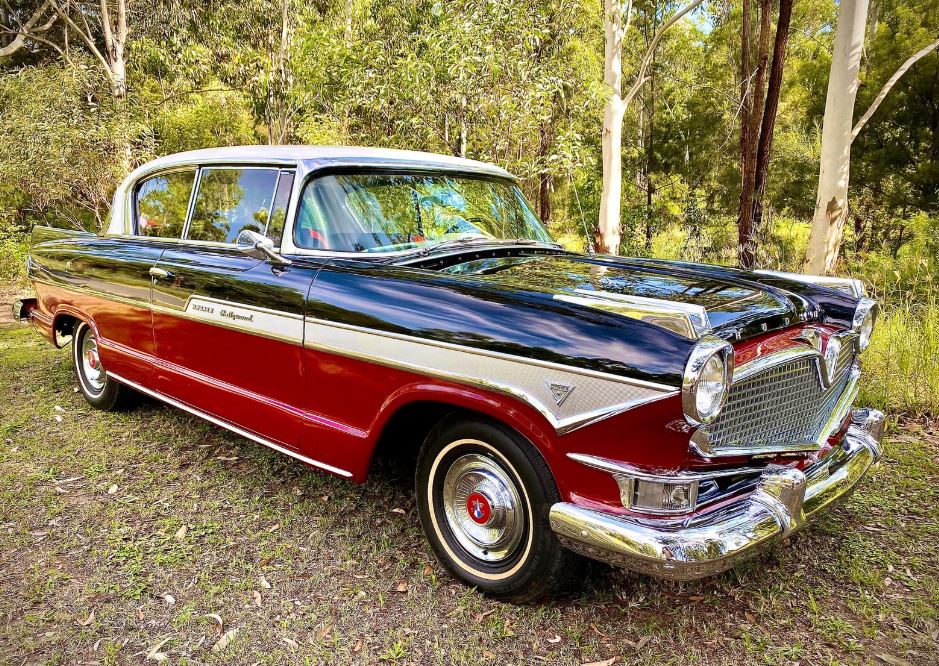
“You have to give them credit for trying” is an old, timeworn phrase used to describe someone or something that strives for greatness, but still doesn’t quite achieve it. I suppose a lot of people would apply this sentiment to the 1955-1957 Hudsons, which were interesting mixtures of Nash and Hudson components and features, conceived after the merger of the two car companies to form American Motors Corporation (AMC). I thought it would be interesting to take a close look at the last of the line, the 1957 Hudson–was it a good car, a bad car; or something in-between?
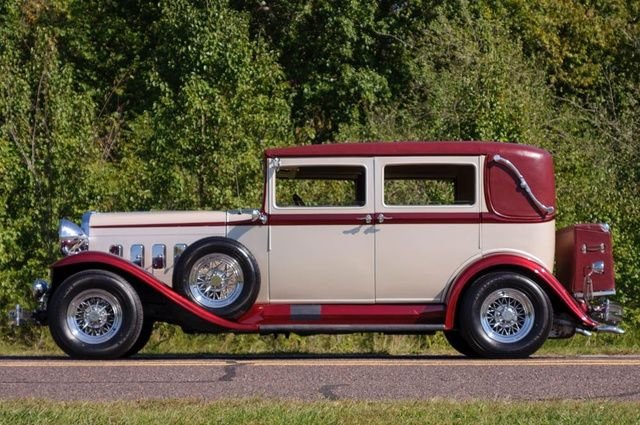
Hudson had been building and selling cars since 1909 (the name Hudson comes from an association with the famous Hudson’s department store in Detroit). Hudson cars typically looked a lot like other cars of its period, but often with a little more style and class than competing makes.
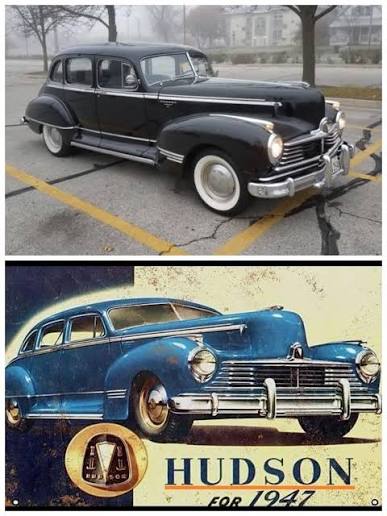
After World War II, Hudson kept producing cars based on its pre-war designs, which was fine for the time. But wait for ’48…
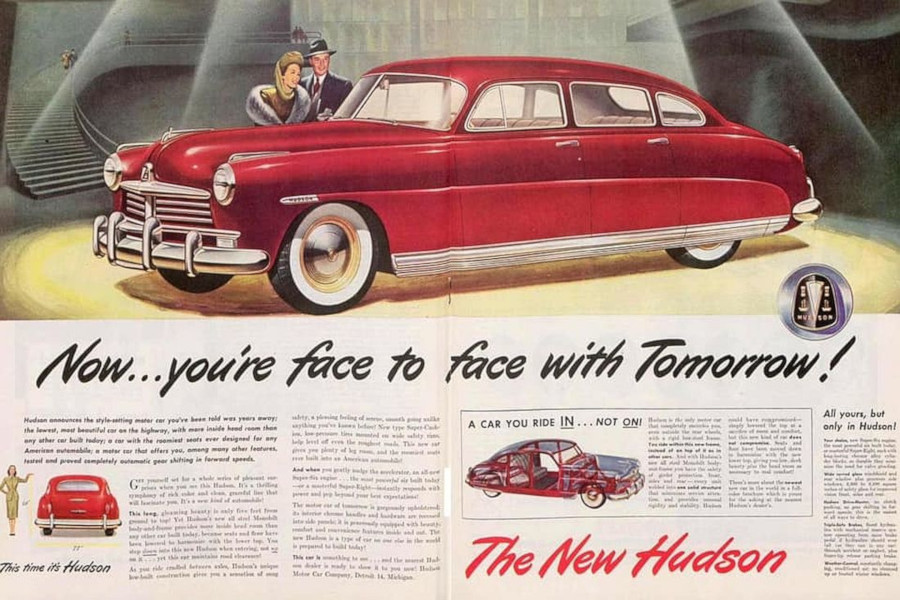
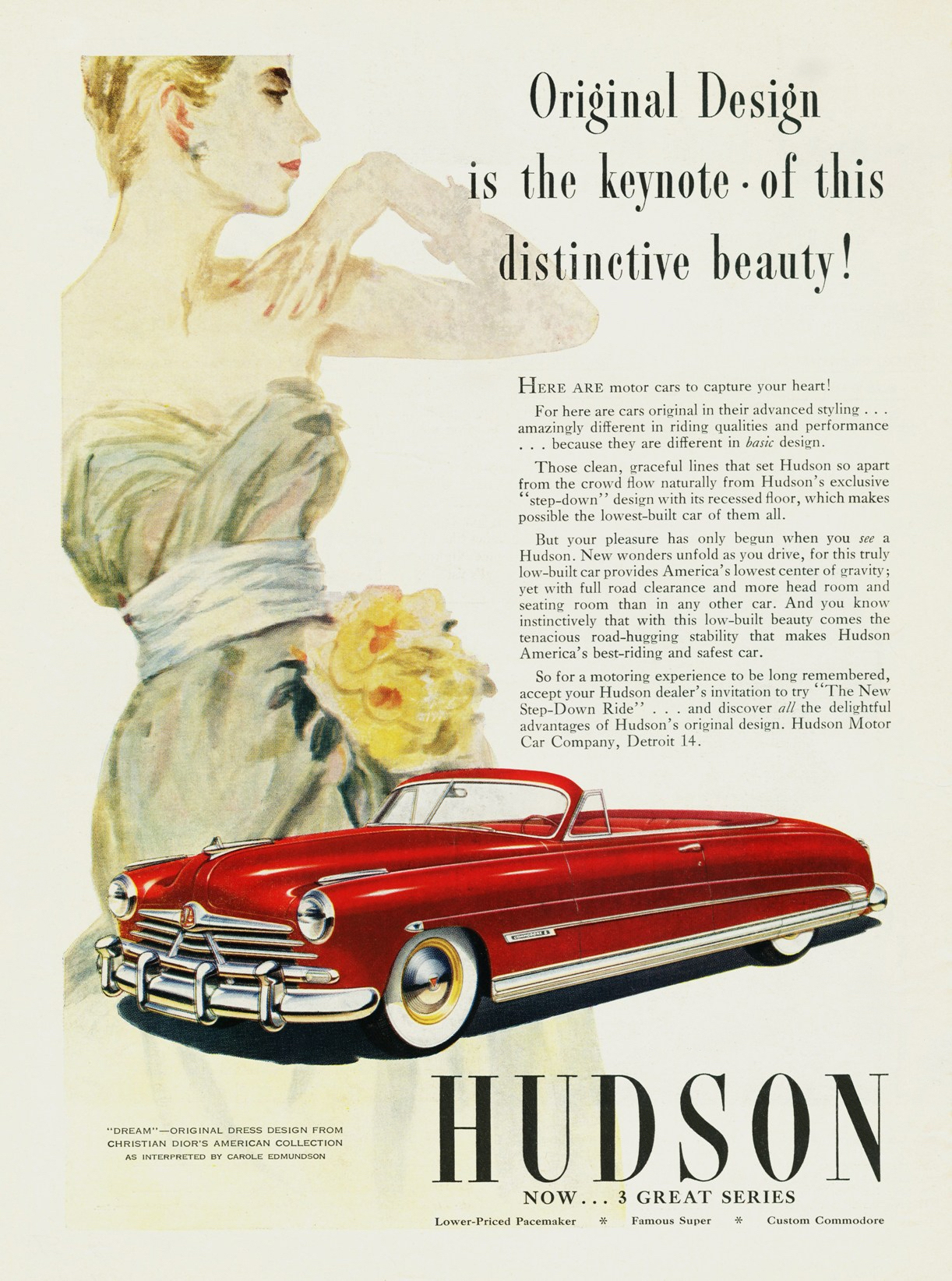
Bam! Wow, what’s this? Yes, it’s a Hudson, but it’s all new, and in a truly radical way. It’s low, it’s streamlined, it has single unit body construction, it’s fast (for its time), it hugs the road, it feels solid as a tank. It also is not that easy to see out of with those narrow windows, and it looks like a giant slug cruising down the road, but it’s new, it’s modern, it’s great!
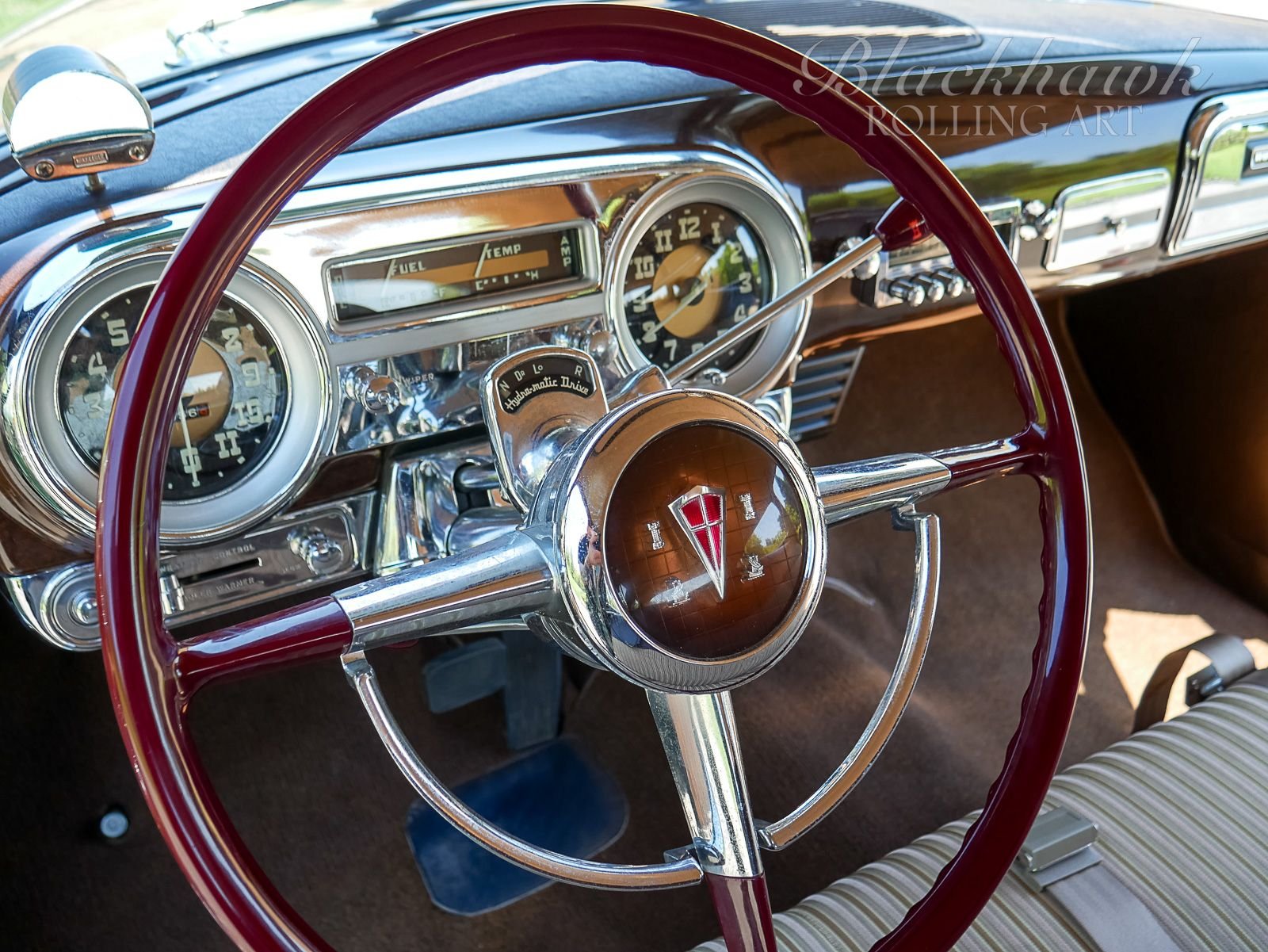
I recently saw a very original early ’50s Hudson at a local car show, and I was super-impressed with the quality and richness of the interior upholstery and fittings. Rolls-Royce and Bentley could hardly do better. But unlike those staid British sedans, this Hudson dashboard is pure American jazz!
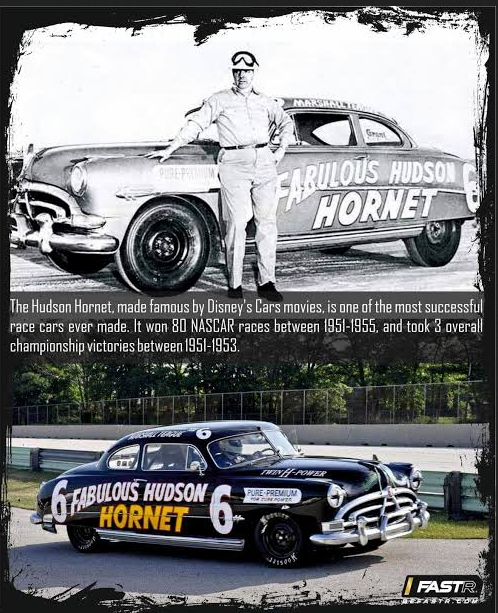
The “Step-Down” Hudson went on to dominate NASCAR racing, not because it was necessarily the fastest, but because it handled so well and was so tough and durable.
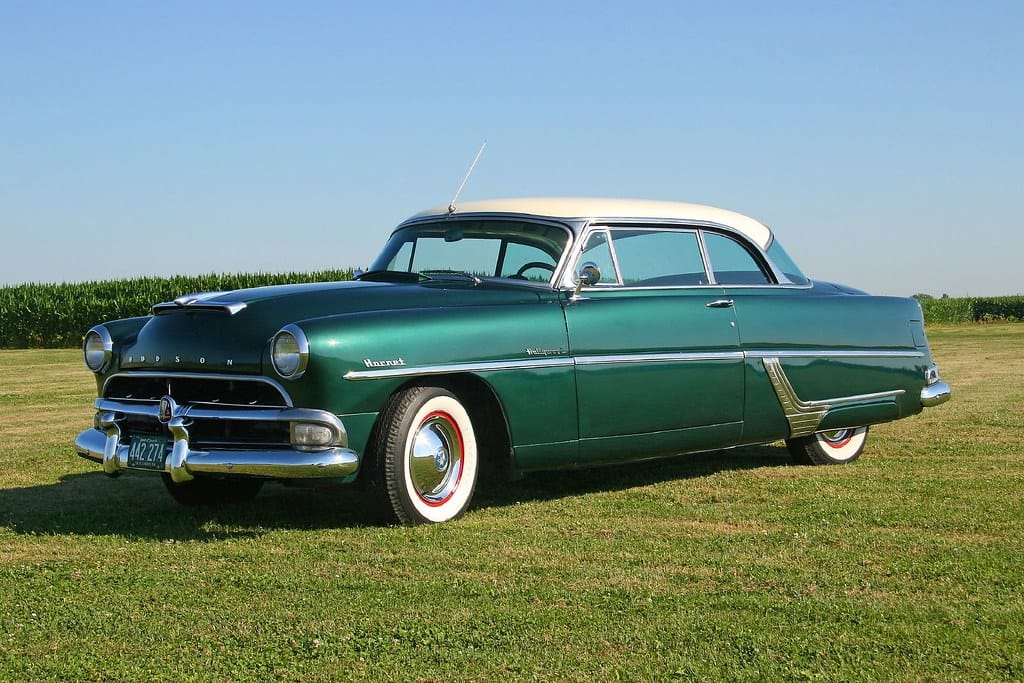
The problem was, what was radically new in 1948 was old hat in 1954. Hudson tried to update the same basic body shell with a new grille and fenders, and even introduced a “Hollywood” hardtop. But sales of these tanks were tanking; Buick and Oldsmobile were the new glamour stars, with their jet-inspired wrap-around windshields, OHV V-8 engines, and new styling all around.
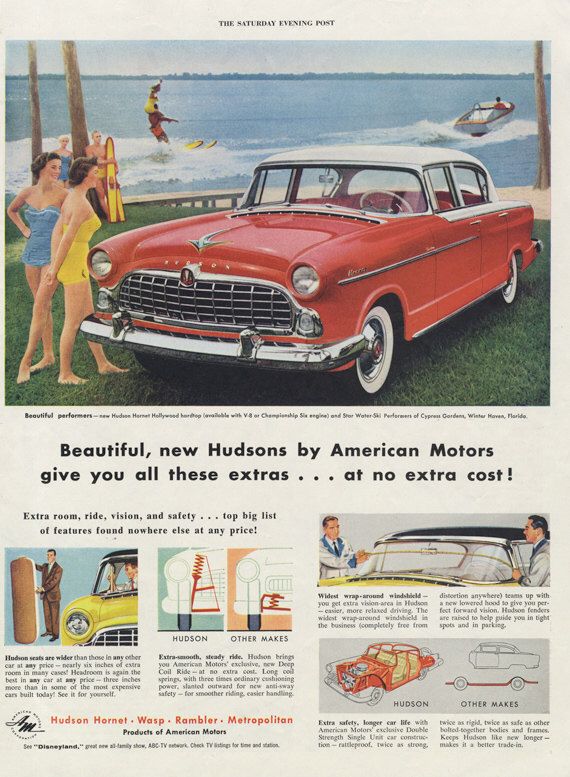
In spring 1954, Nash (that other builder of unibody slugs) merged with Hudson to form AMC. The new 1955 Hudsons are built with Nash bodies, but some unique Hudson features are retained: there’s a very Hudson-like grille up front, and two Hudson-built 6 cylinder engines are still available. The dashboard is carried over from the 1954 Hudsons, and Hudson’s backup mechanical brakes–that take over in case of hydraulic brake failure–are standard on cars without power brakes. Spring rates are set firmer than Nash’s in order to somewhat replicate the good handling of the older Hudsons.
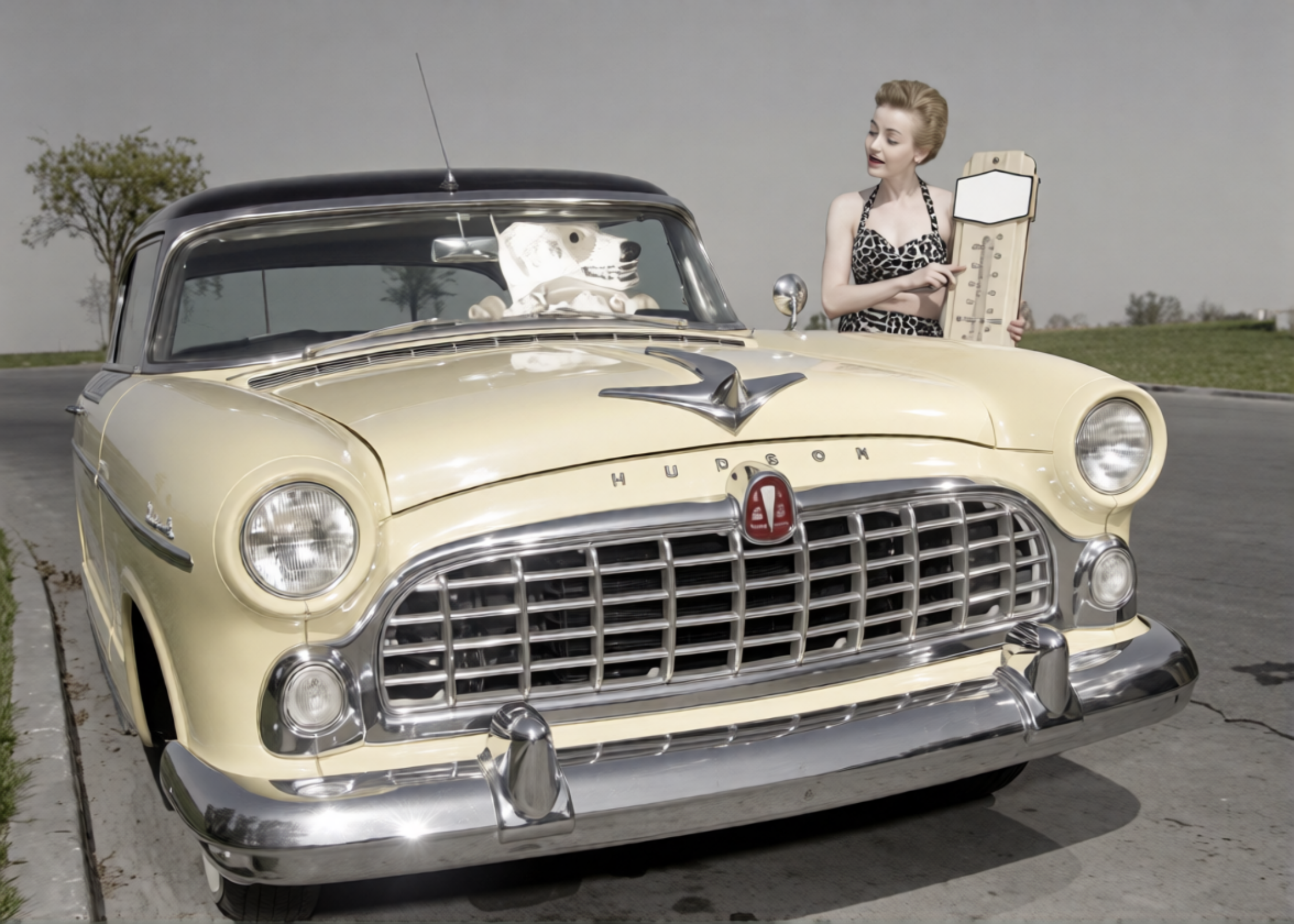
To my surprise, veteran automotive tester Tom McCahill did not pan the new Hudsons. In the August issue of Mechanix Illustrated he wrote: “The 1955 Hudsons have lost none of [their superb roadability] … the car gets around the tightest bends just as well as it ever did…. These Hudsons are great, safe road cars and the brakes are as fine as any I’ve ever tested on an American car.” He added, “If you’re an old Hudson fan, you’ll find the ’55 Hudson your dish of tea.” Hmmm.
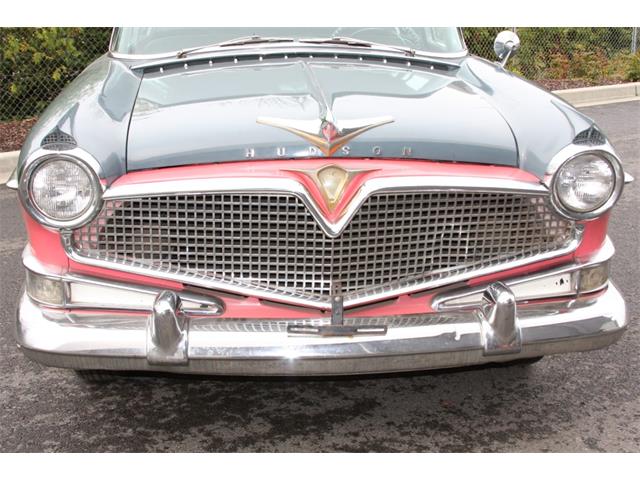
1956: Sales Department: “Our cars aren’t distinctive enough.” Styling: “Let’s try this!” 🙄 There was also a new dashboard design.
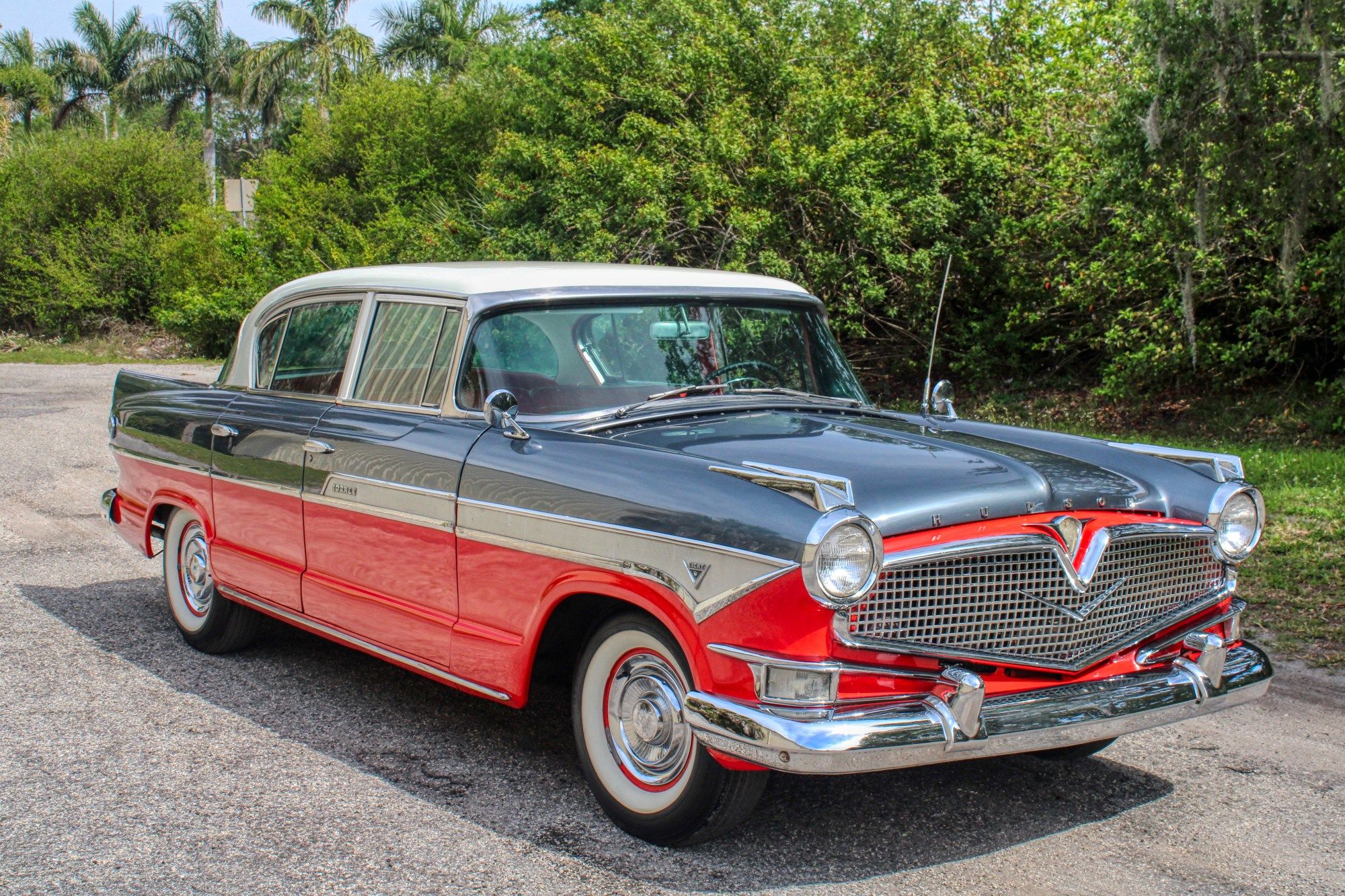
Which brings us to the 1957 model, the last of the line. I selected an extra-fine example that was sold by Vintage Motors of Sarasota. There are lots of high-quality, close-up photos, so let’s take a look:
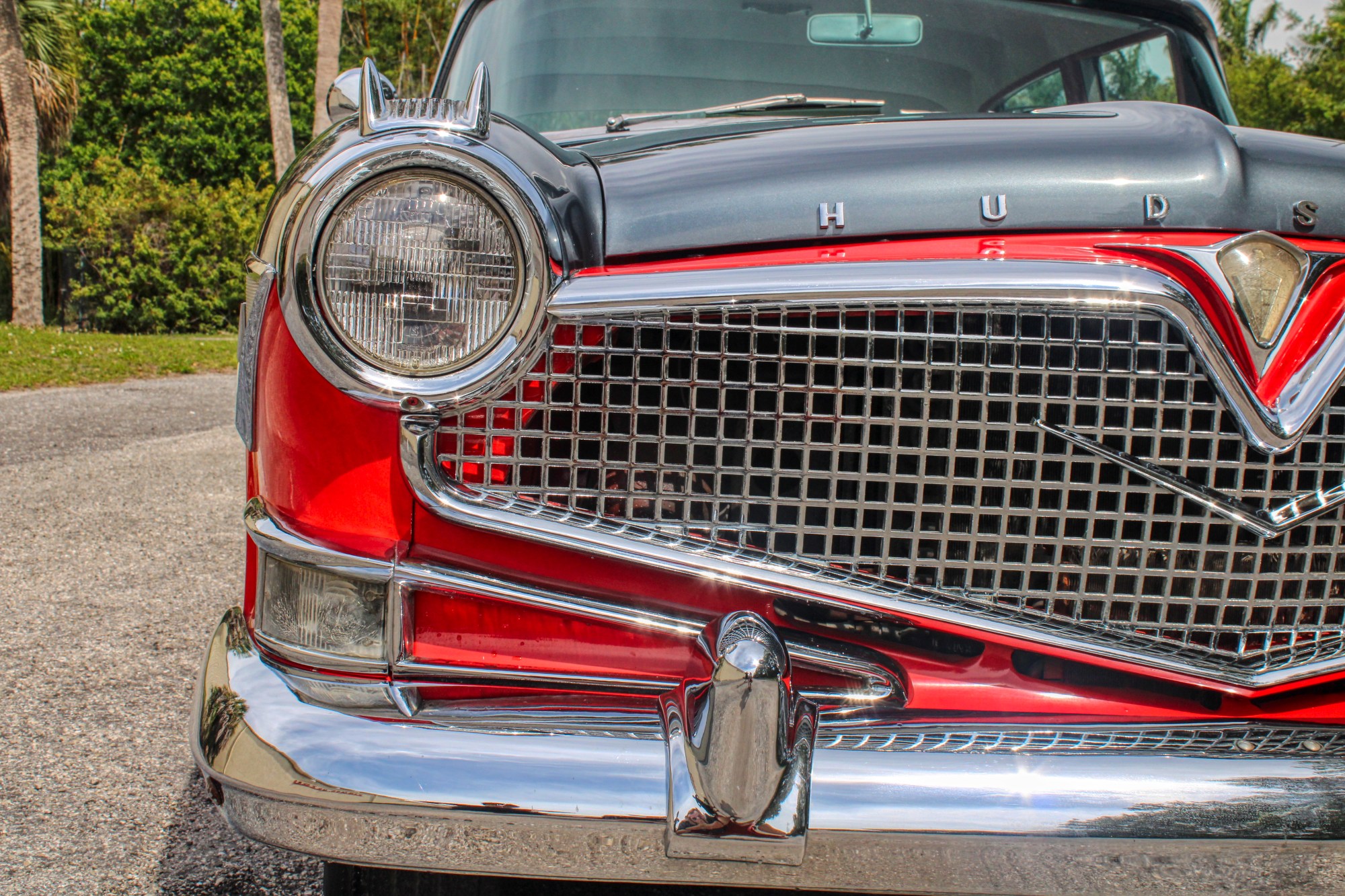
This car really has its own charisma. You may or may not like its charisma, but it’s bold, avant-garde, scintillating. ✨
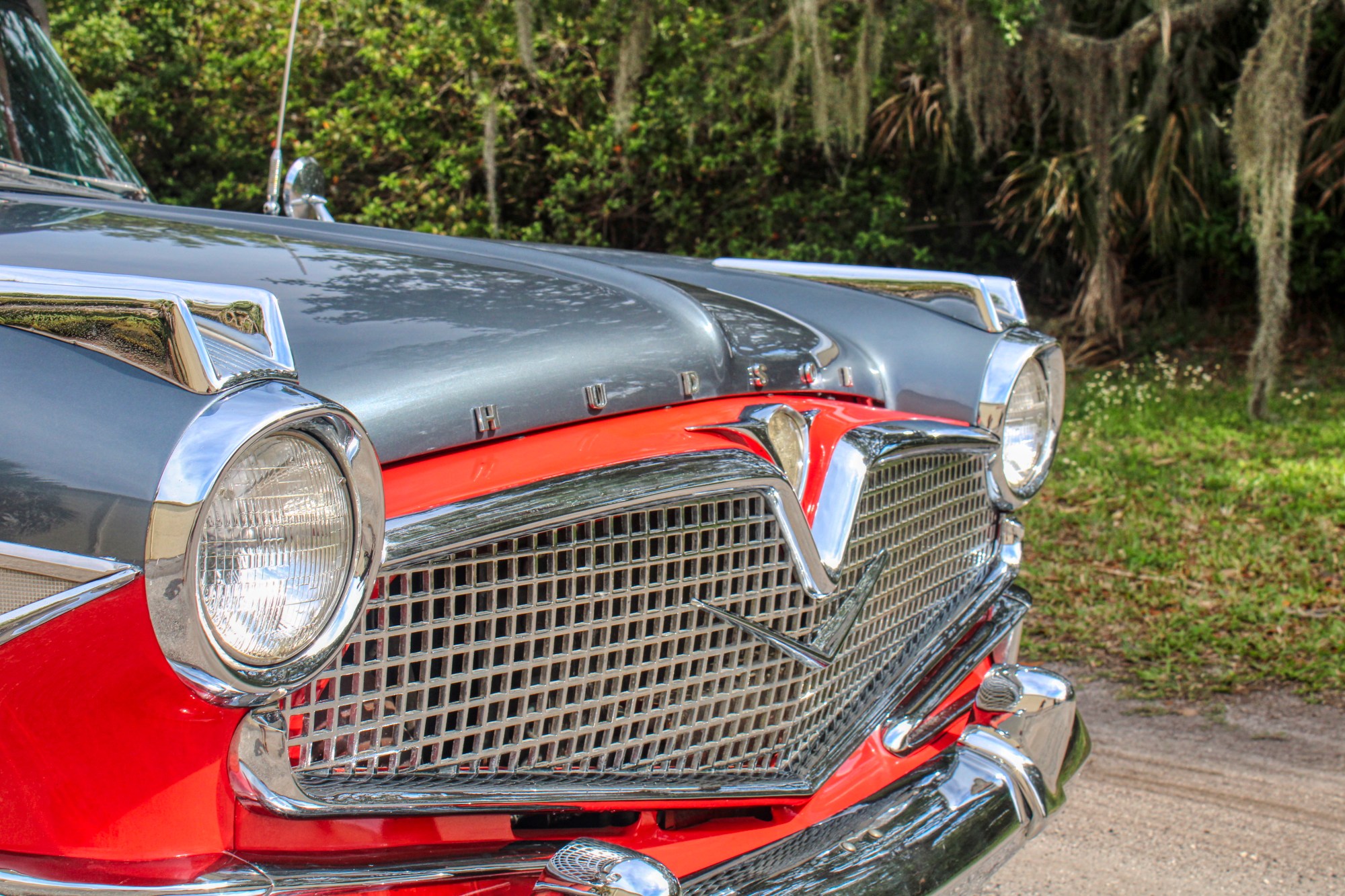
I like the way the hood is “raked” back from the grille, leaving a space which is emphasized through the use of contrasting color. Highly creative and three-dimensional.
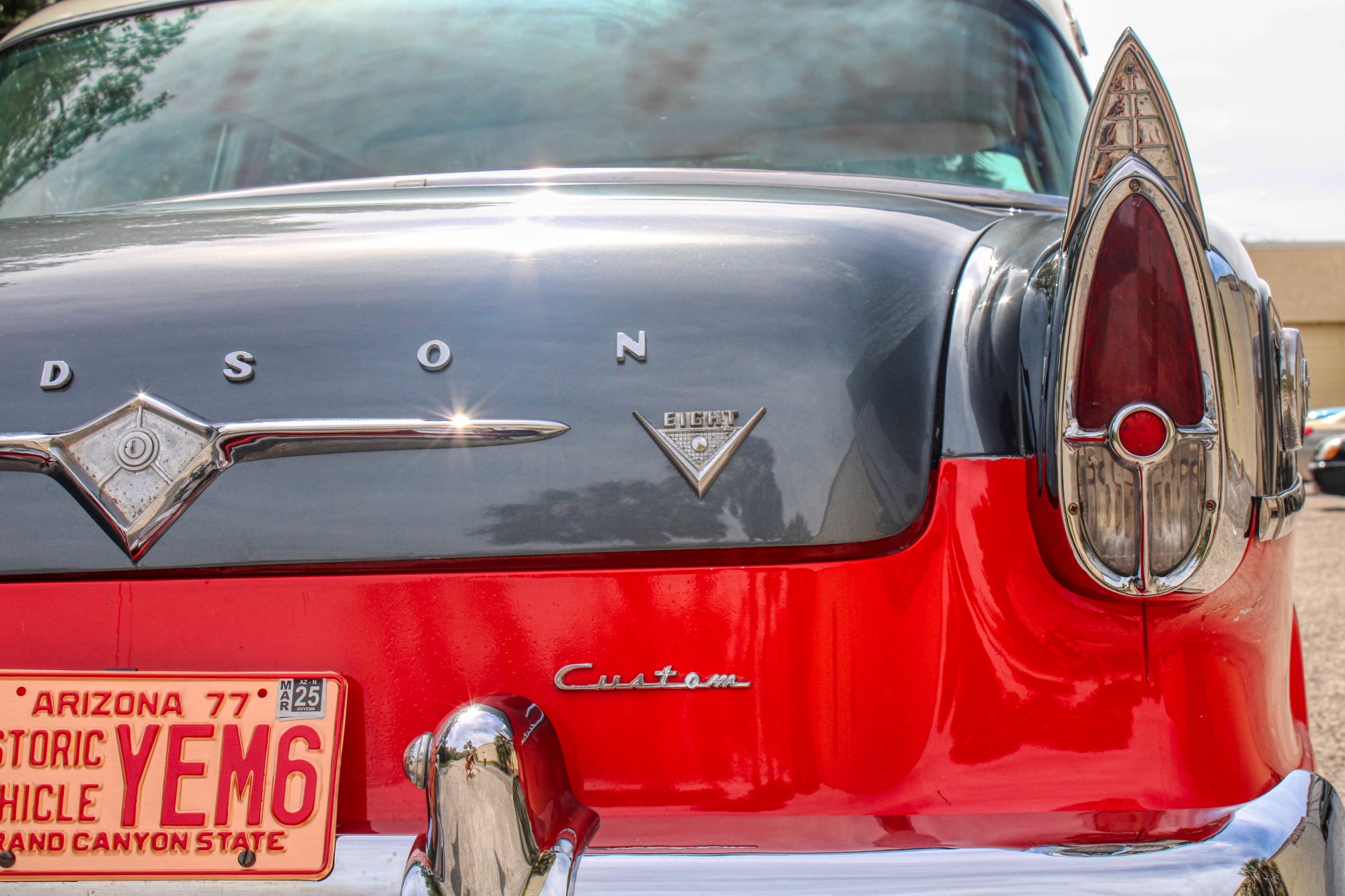
Lots of sparkle in the back too. Mercifully this one doesn’t have the bulky and awkward Continental tire mount. Custom is the higher of the two trim levels.
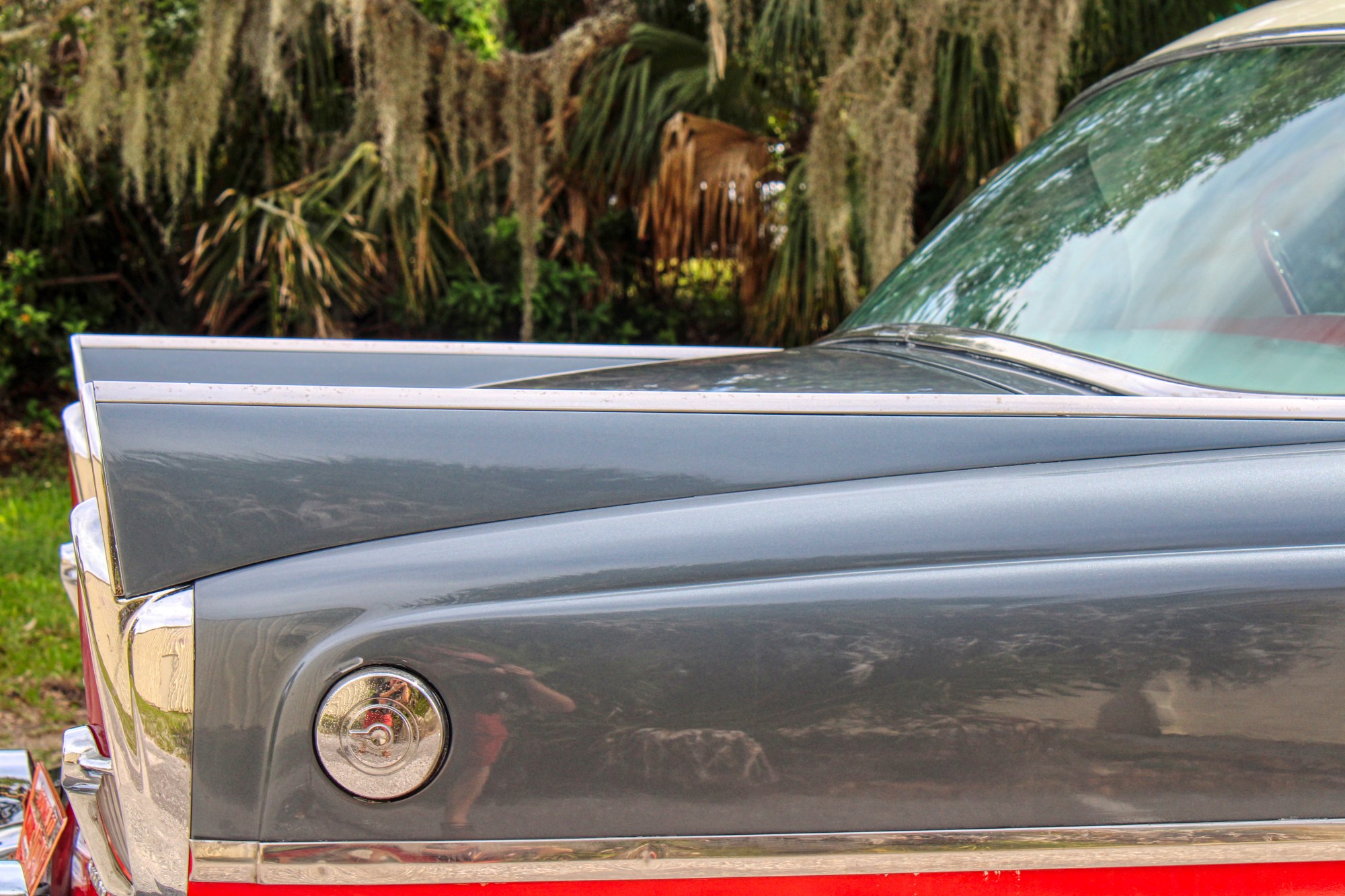
Fins are all the rage in 1957, so I guess we better tack some on. The top edge of the fins are in-line with the little chrome finlets above the headlights–an attempt to make the rounded Nash body look long, straight, and level.
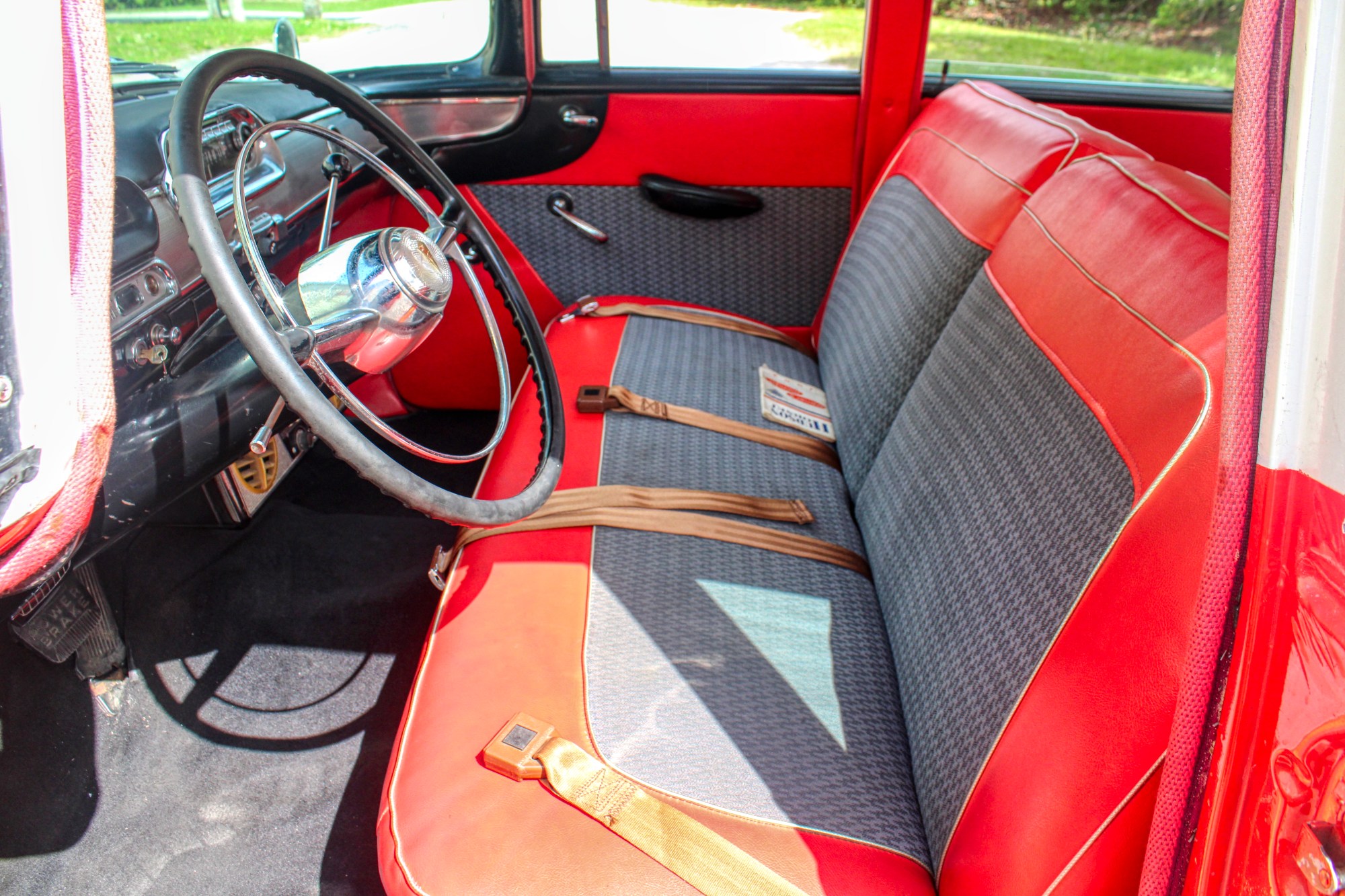
Interior: colorful, roomy, comfortable.
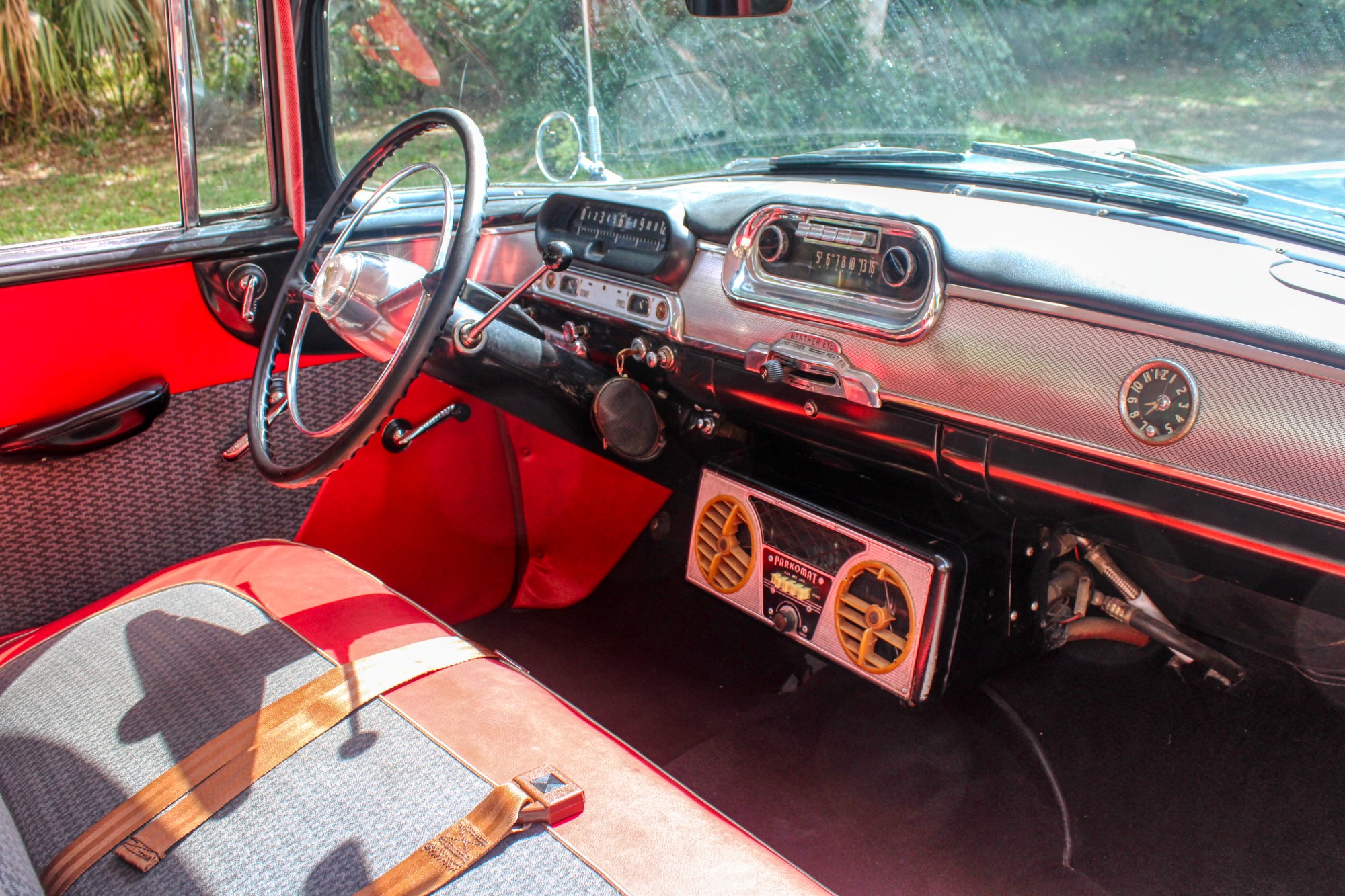
Engine is started by turning the key to “ON” and moving the shift lever toward you, engaging the starter. Too bad this one doesn’t have the factory Kelvinator air conditioning. I don’t like the broken vents and awkward placement of the aftermarket unit. You’re looking through the industry’s widest wrap-around windshield–forward visibility is now so greatly improved over the old Step-Downs.
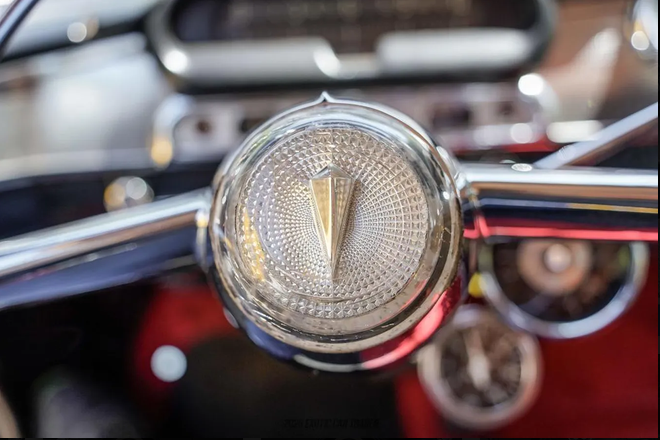
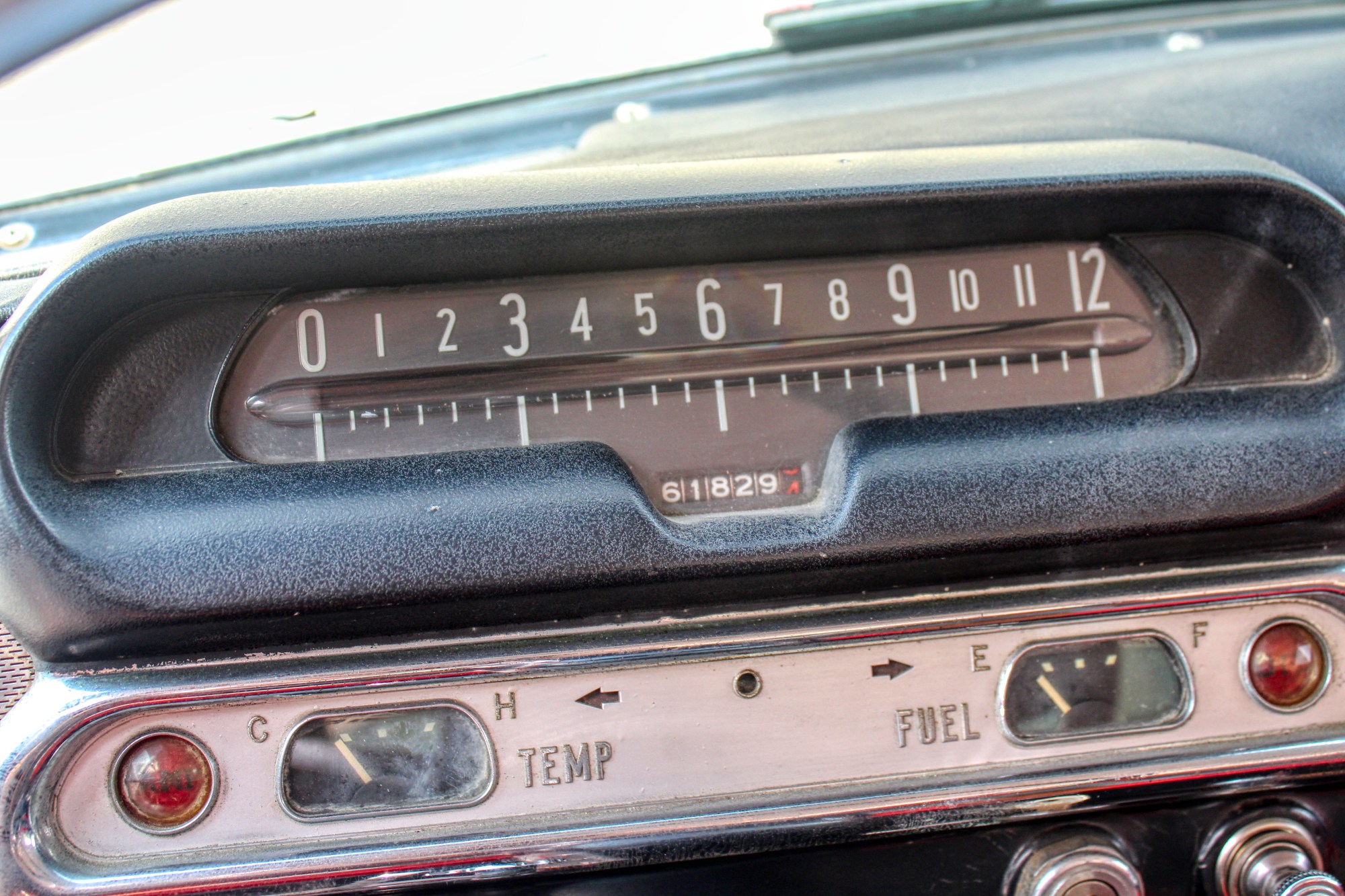
Unique speedometer is a carry-over from 1956. Both Nash and Hudson liked to use single digits. No one knows why.
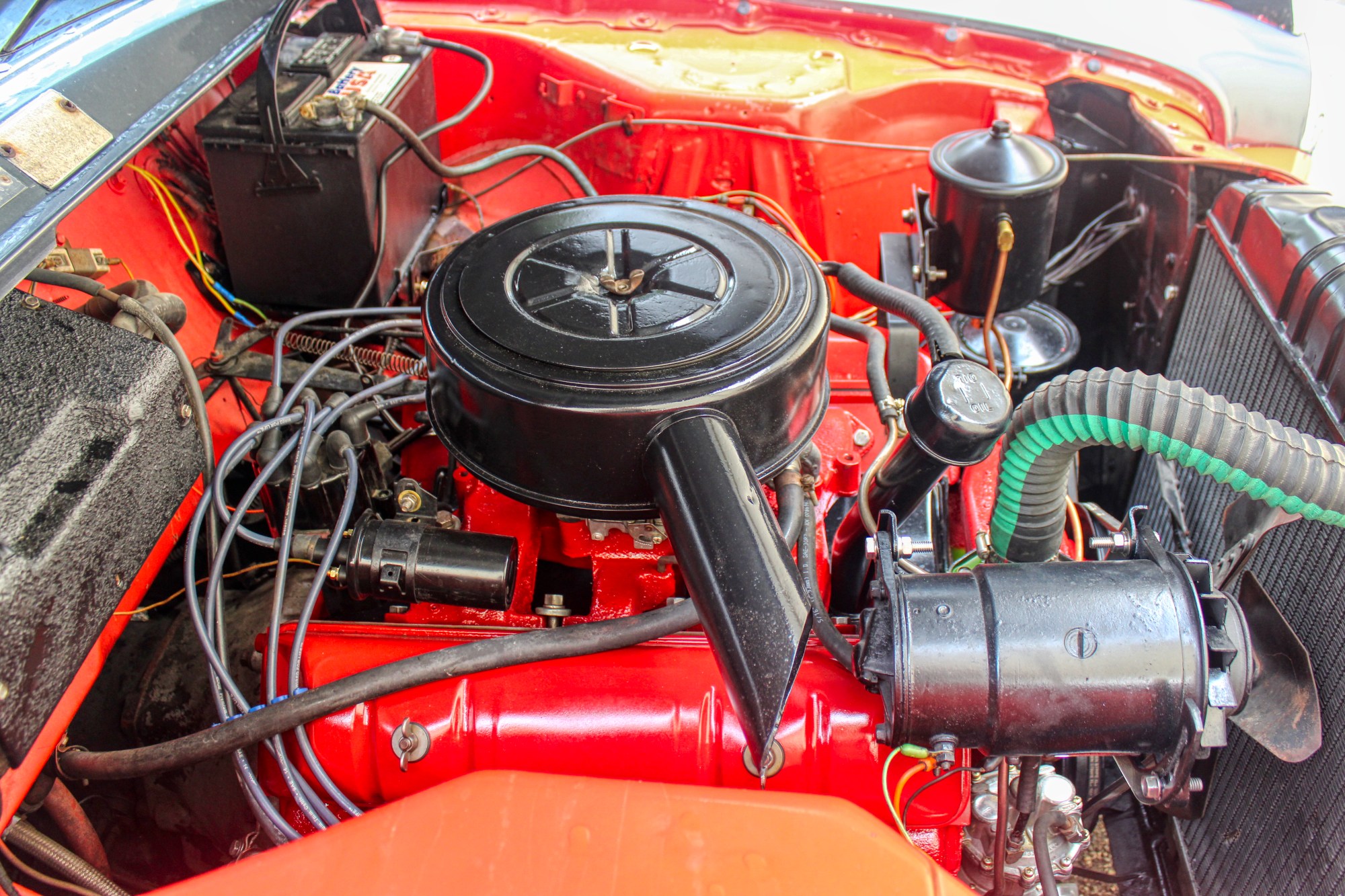
Big news of the year at Hudson is this all-new AMC V-8: 327 cubic inches; 255 horsepower, 345 foot/pounds of torque. Testers at Consumer Reports found it to be a very smooth and capable engine. I think the new V-8 is best suited for use in this big Hudson–in the smaller, lighter Ramblers, the extra weight up front would make for reluctant, nose-heavy handling.
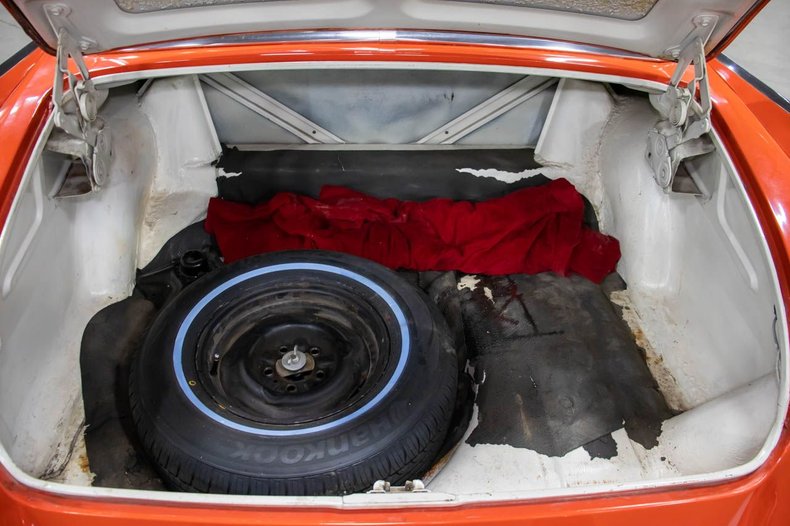
CU was less enthusiastic about the trunk–“Poorly arranged” they said. Especially with the spare mounted on the floor like that.
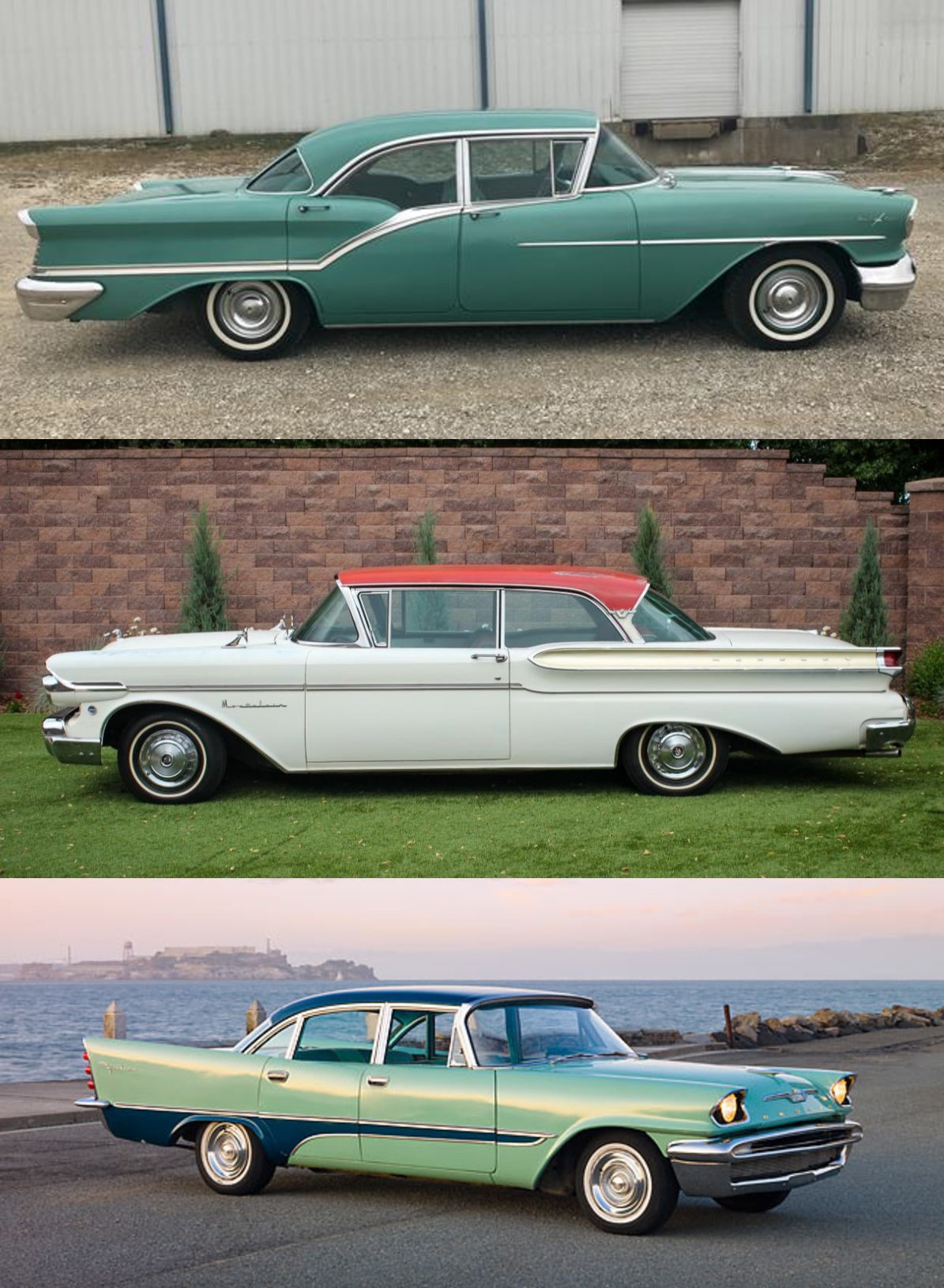
Despite the Hudson’s good features, by this time it really couldn’t compete with the medium-priced lines of the Big Three automakers. Oldsmobile, Mercury, and DeSoto all had unified, fresh, all-new “clean sheet of paper” designs, not an old body with newer stuff added on. Steering and suspension refinements like ball joints, Torsion-Aire (DeSoto), and Air-Cushion suspension (Mercury) made these cars ride and handle much better than AMC products, which were still using old suspension technology left over from previous years.
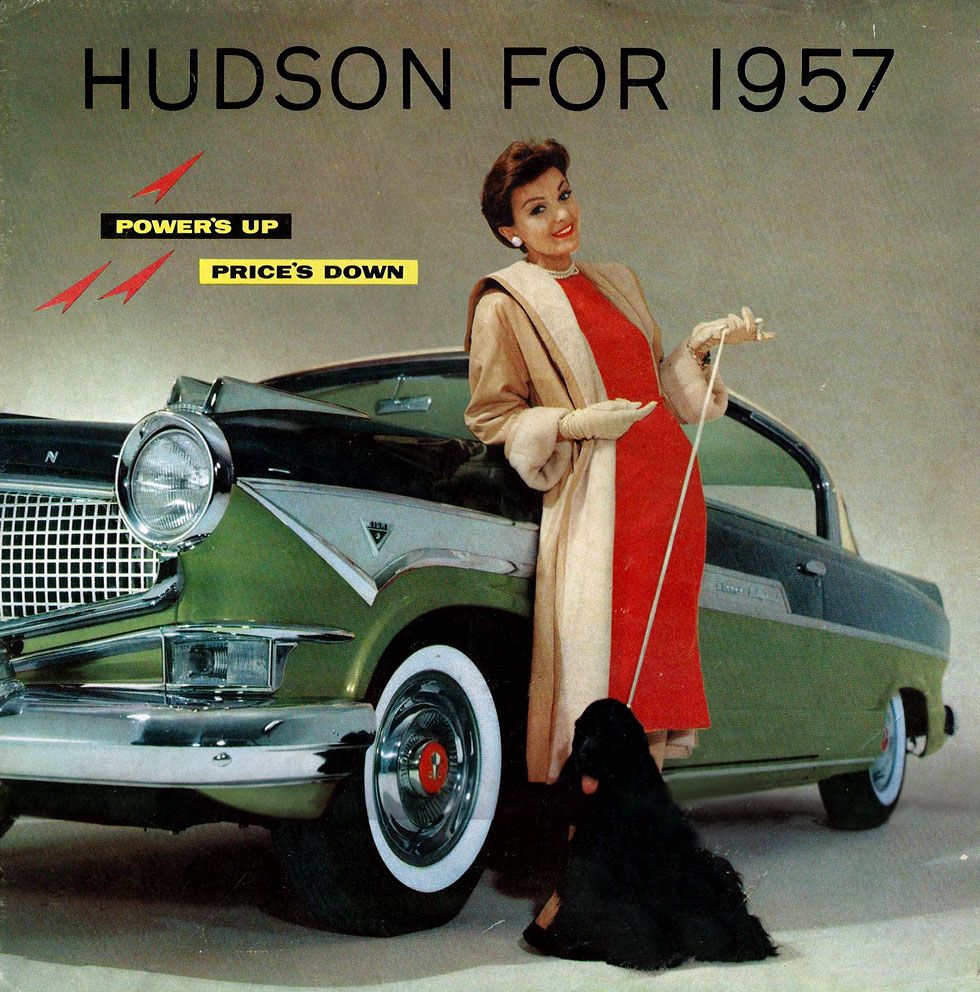
But assessing the desirability of the 1957 Hudson may not be that straightforward. Every individual has his own tastes and preferences. Trying out a car is much like trying on new shoes–what may look stylish may not be that comfortable. You have to find the right fit for you. And some people may have preferred Hudson’s ease of entry and good seating position, the solidity of the single unit body, the feel of “Deep Coil” springs, cold A/C that cost less, better-than-average assembly quality, and freedom from new car “bugs”. And maybe some people really liked the flashy, distinctive styling. Not everyone has to like the same things.
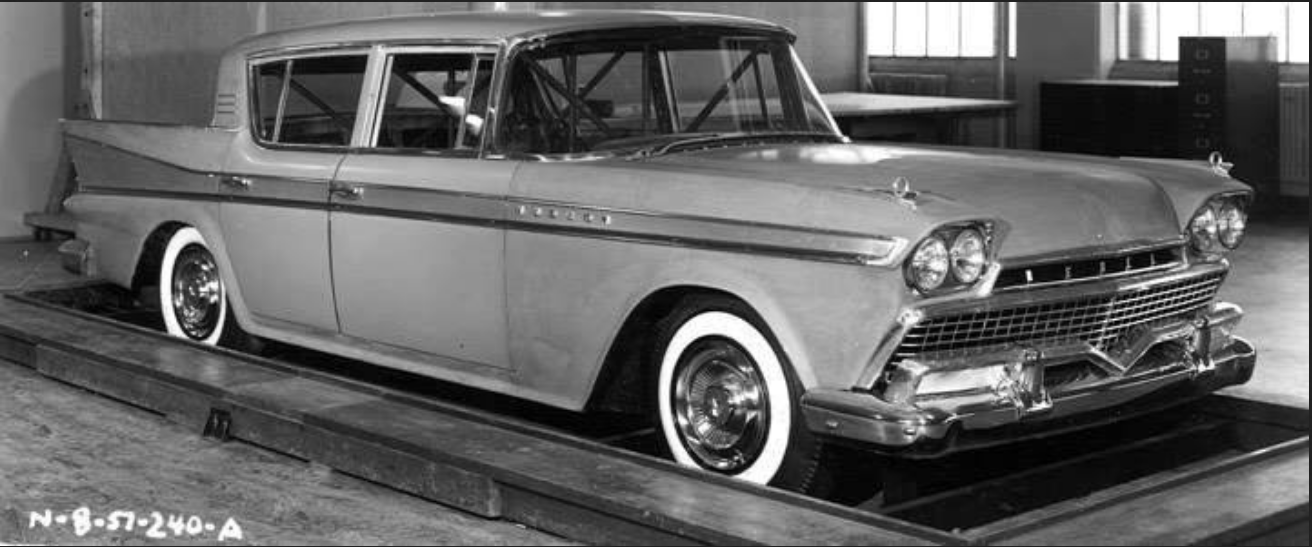
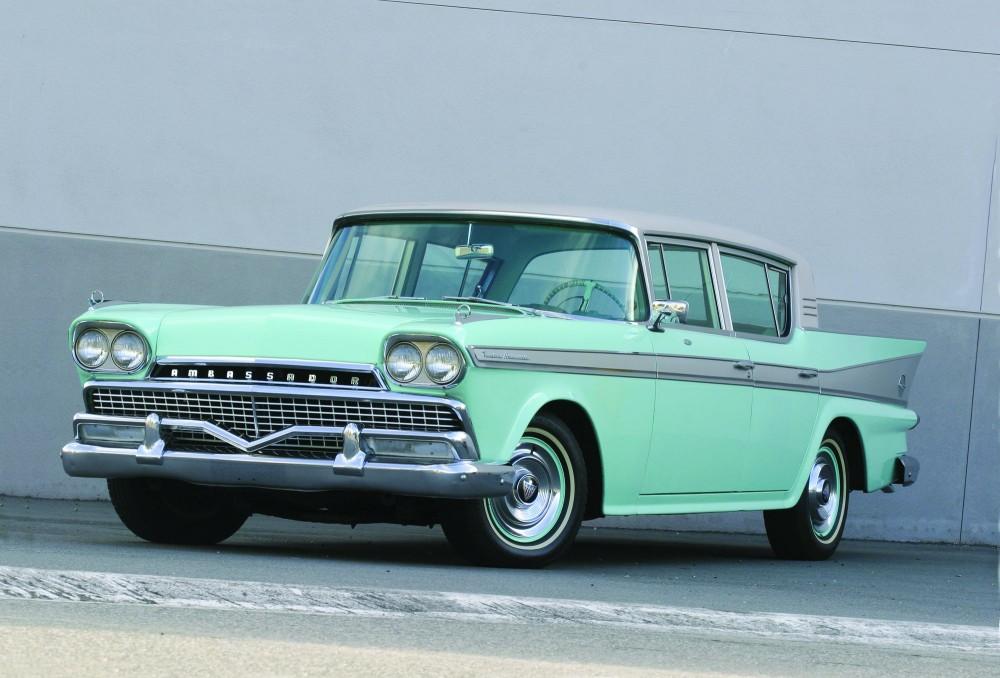
Hudson was supposed to continue in 1958, based on the smaller Rambler but with a longer front end. Separate Nash and Hudson versions were planned, with different grilles and other styling cues unique to each. However at the last minute, AMC president George Romney decided to discontinue the old Nash and Hudson names, and all succeeding cars would be called Ramblers. The car above, the Hudson Rebel (with a grille that had a “Hudson V” in front of it), would become the 1958 Rambler Ambassador.
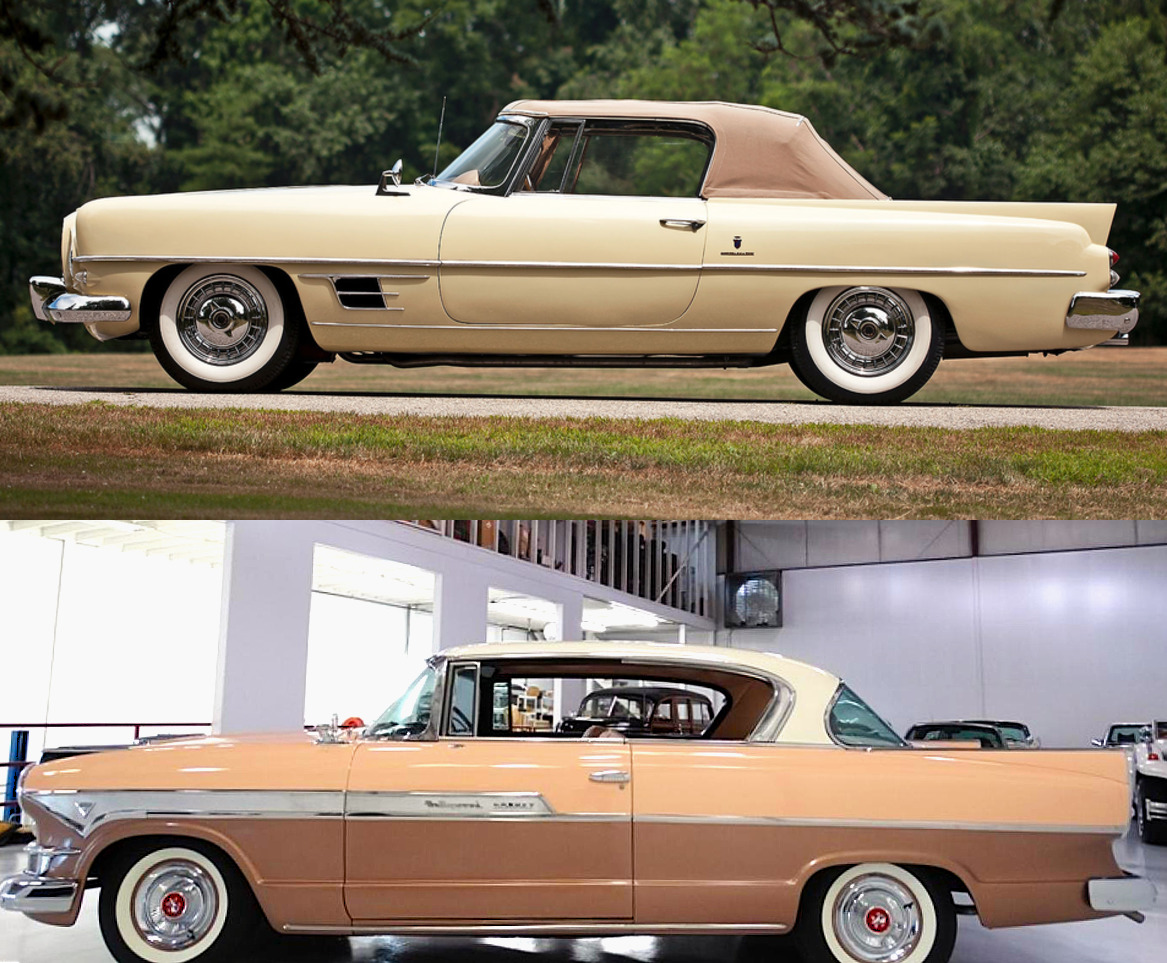
If you wanted a Dual-Ghia but Frank Sinatra wouldn’t sell you his, you could get a ’57 Hudson Hollywood hardtop. They look remarkably similar in profile!
Further CC Reading:
CC For Sale: I Found The Hudson I Want–“Are You Crazy?!” by Stephen Pellegrino
CC Formerly For Sale: 1958 Ambassador–Something For Nash And Hudson Loyalists To Buy In ’58 by Stephen Pellegrino








Well, I guess it is low-volume 1957 AMC week! I had to look at production numbers – Hudson went from roughly 20k units in 1955 to 10k in 1956 to 4100 in 1957. Not a good trajectory. That was down from about 37k non-Jet models in 1954.
You may have found the best angle on a 57 Hudson I have ever seen with that hardtop model at the end. It is not a bad looking car from the side, or even the rear. But that front end is something else altogether.