
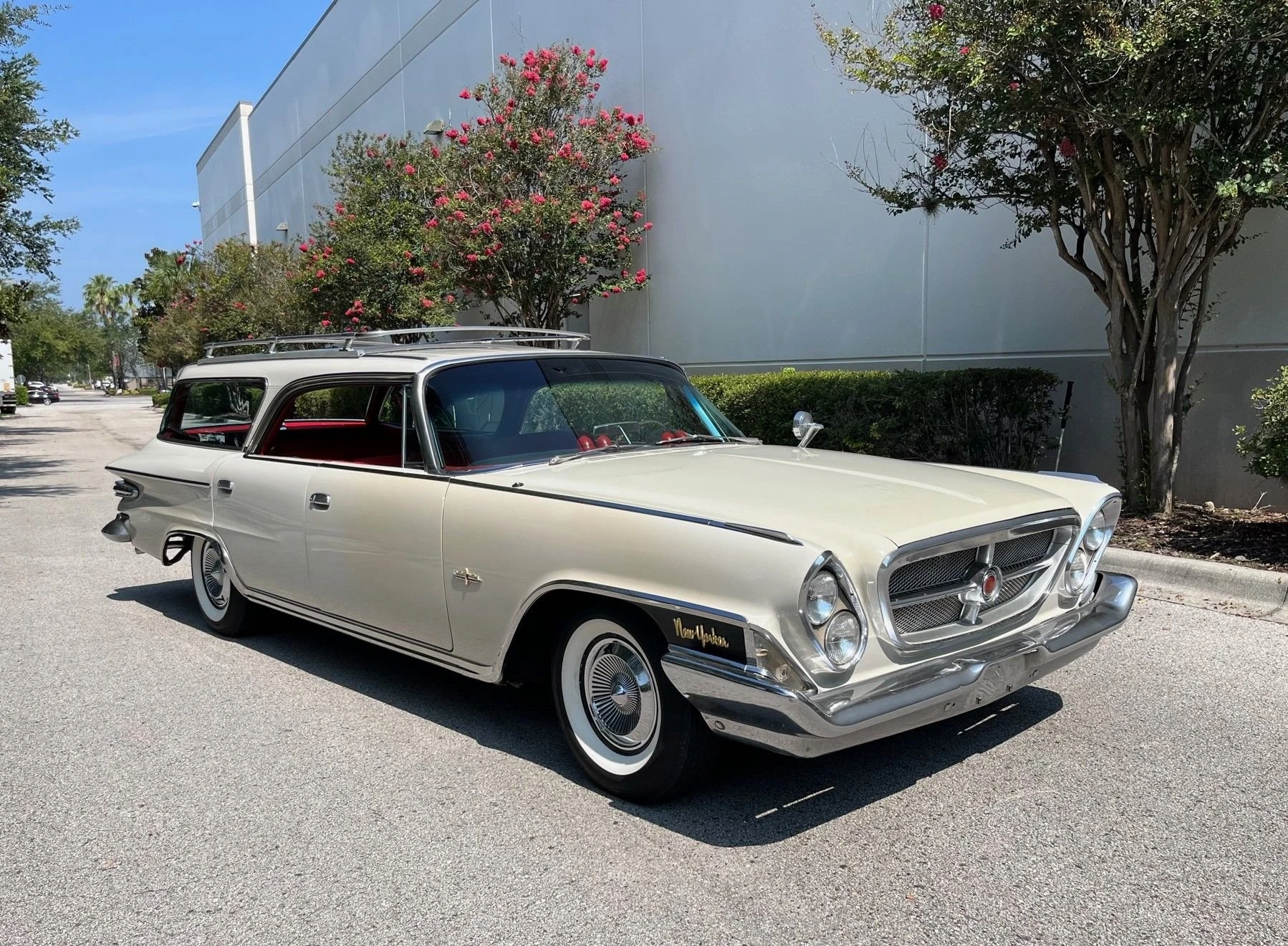
The very rare nine-passenger Chrysler New Yorker Town & Country four-door hardtop was the most expensive station wagon made in America in 1962, with a base price closing on Cadillac territory. This one is equipped with nearly every available feature, including a dual air conditioning system. Yet, despite its equipment and trim, this was basically a 1961 Plymouth Suburban with a Chrysler front end.
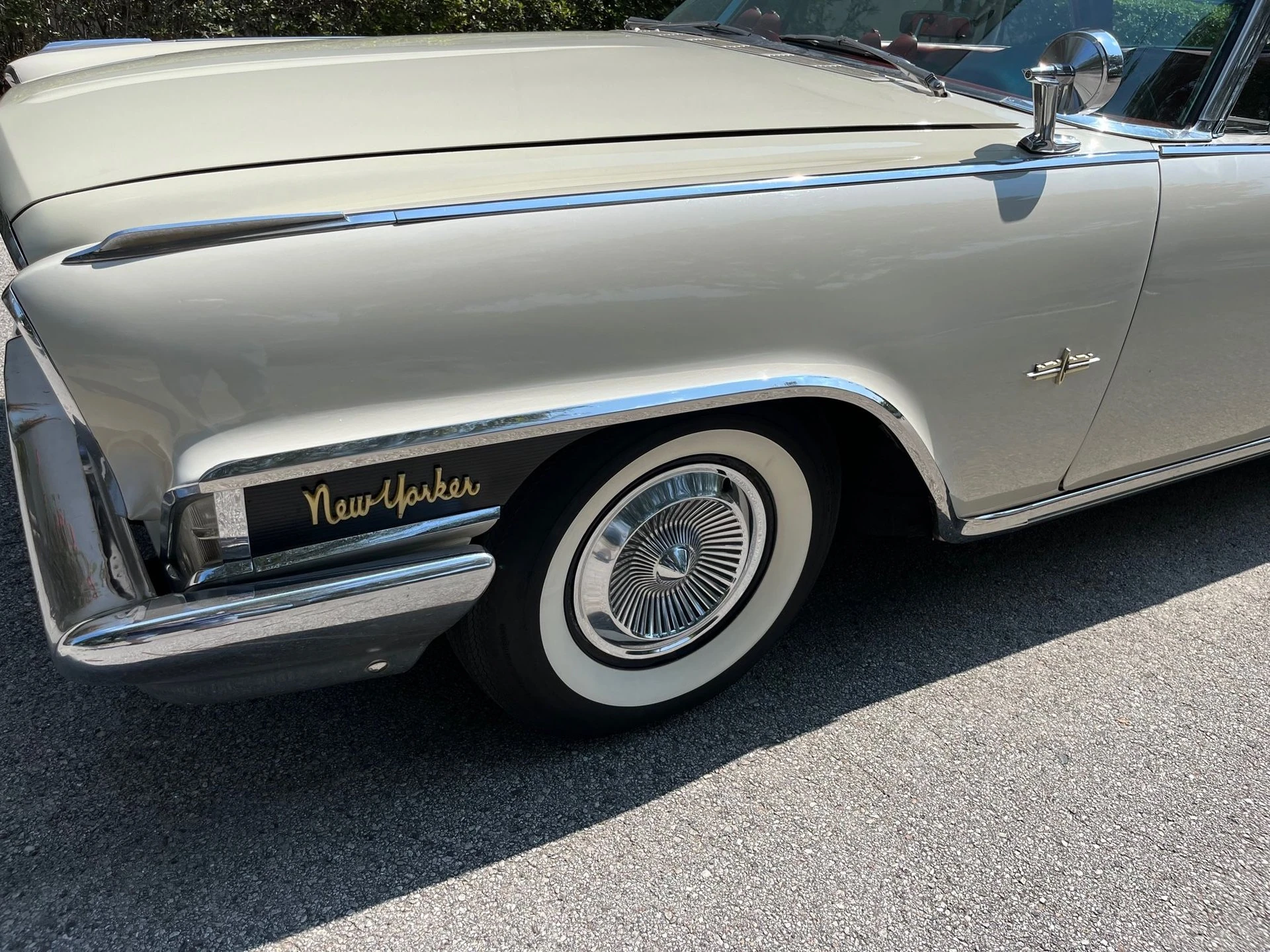
In 1962, a Chrysler New Yorker nine-passenger Town & Country station wagon had a hefty base price of $4,873, a relative worth of about $66,000 in 2025 dollars. That was almost $1,300 more than the less elaborately trimmed Chrysler Newport nine-passenger wagon, and close to $1,000 more than a Buick Invicta wagon. This fully equipped New Yorker would have stickered for at least $6,000 — a relative worth of around $81,000 today, enough to put you in an air conditioned Cadillac back then.
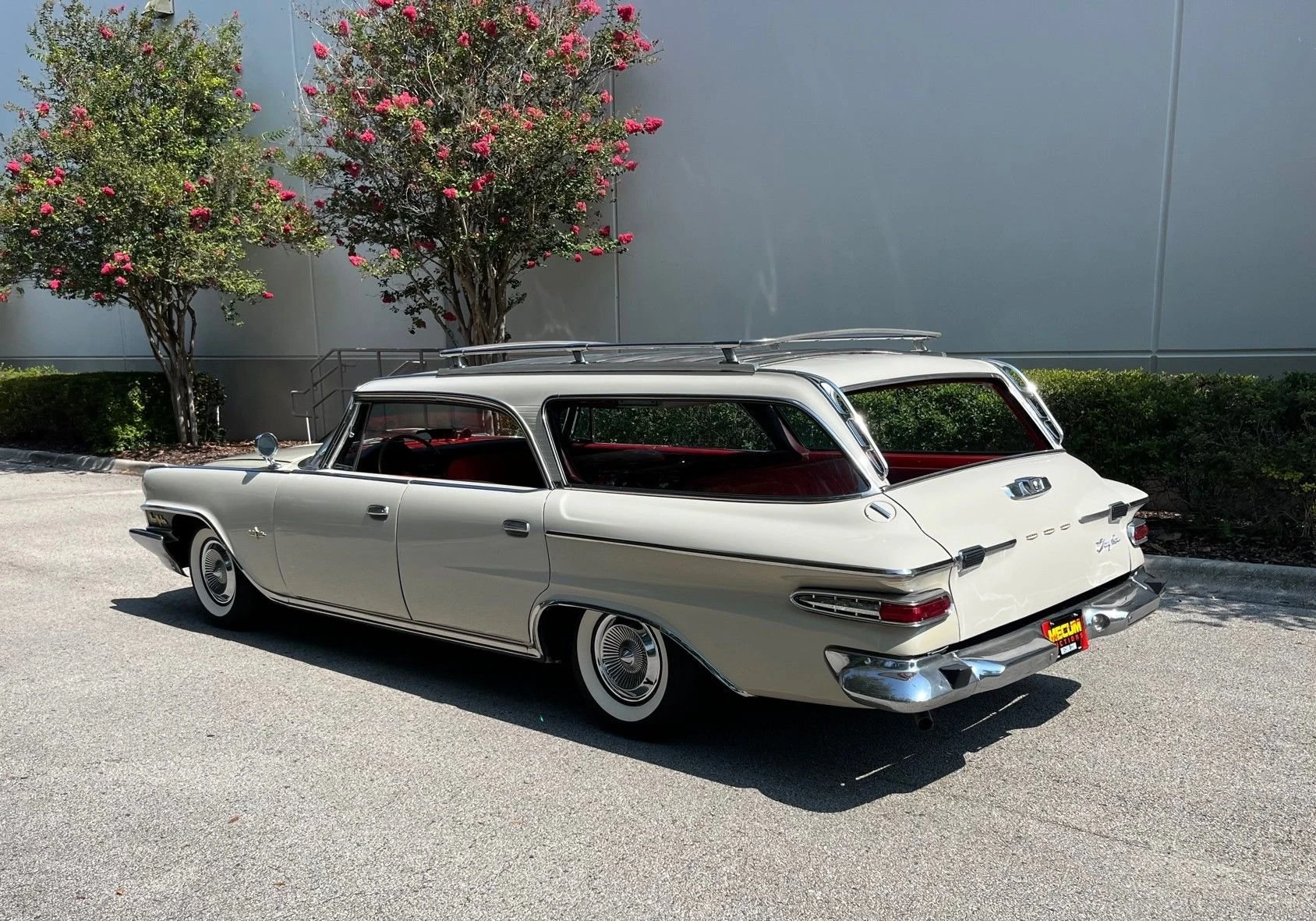
While Chrysler had previously used the “Town & Country” name to refer to wood-bodied vehicles, the 1962 wagons had no exterior wood, simulated or otherwise. They also had no fins: Chrysler deleted the tail fins on its full-size models for 1962, although exterior styling of the big cars was still much the same as before, since a plan to field all-new Chrysler styling for 1962 had fallen through due to the company’s early ’60s financial woes. Outgoing Chrysler styling VP Virgil Exner privately dubbed the ’62s “plucked chickens.”
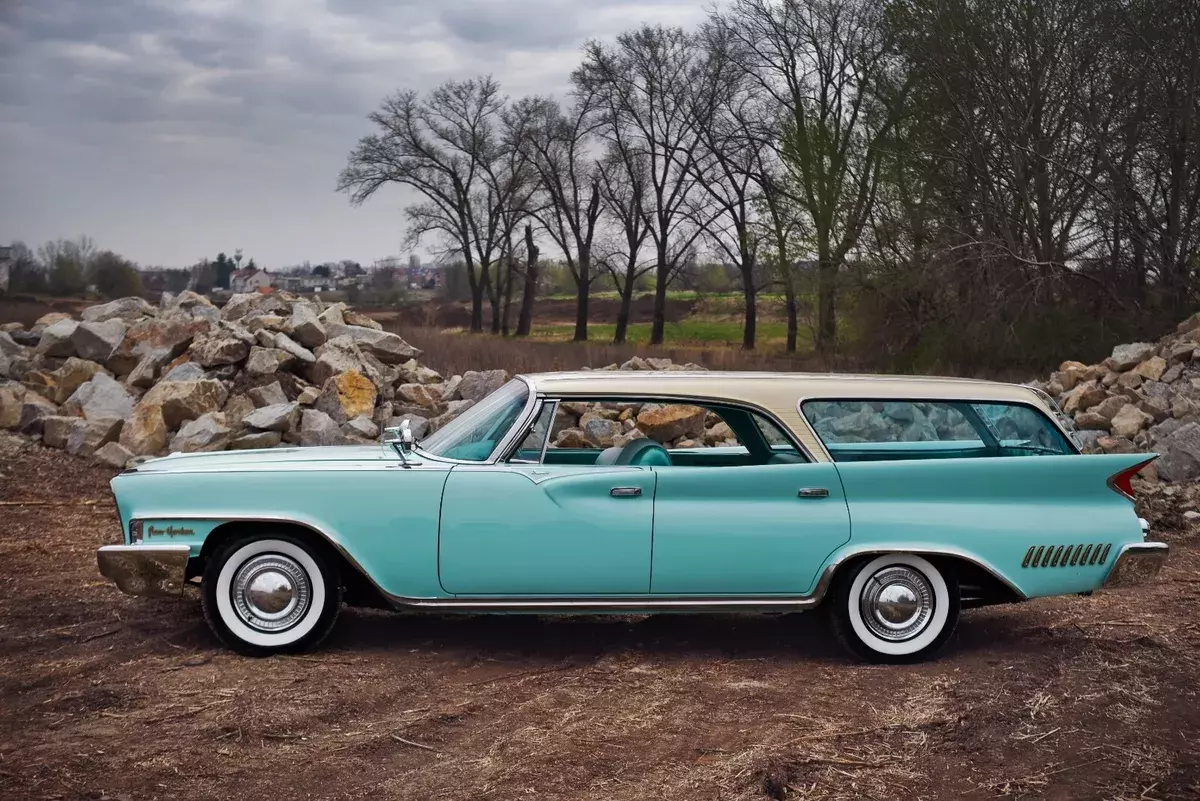
Plucking the fins from the wagons took some doing. This 1961 New Yorker Town & Country illustrates the previous year’s rather dramatic tail fins, which extended through the doors.
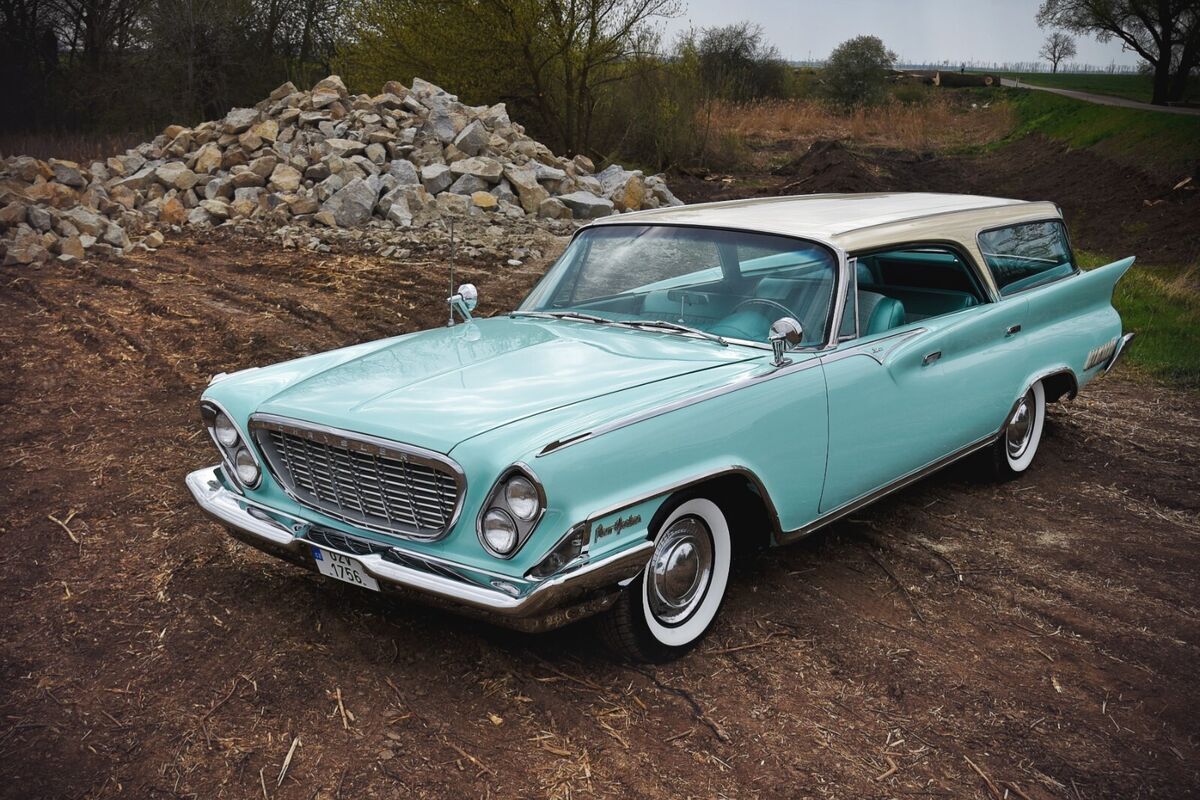
The Chrysler-badged wagons were not what you’d call high-volume products — 1961 production had totaled 3,403 in the Newport line, 1,436 in the New Yorker series — and for 1962, they would have to stand alone. Chrysler’s DeSoto brand was gone, and the Plymouth and Dodge lines were being radically and controversially downsized for 1962. (A full-size Dodge Custom 880 line was hastily contrived for mid-year 1962 introduction, including six- and nine-passenger wagons, but that was an afterthought.) So, the Chrysler wagons needed to be updated on the cheap.
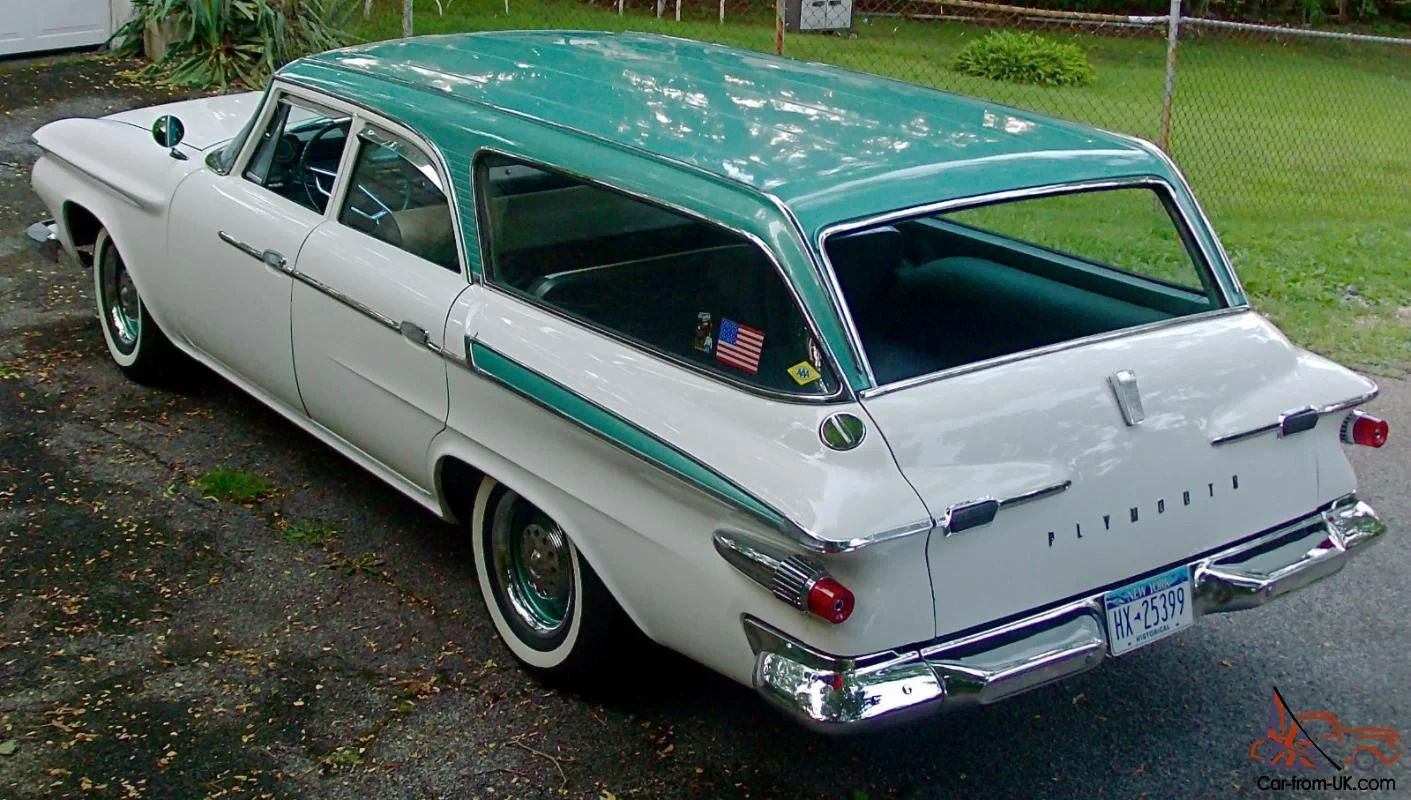
What to do? The 1961 Plymouth four-door Suburban wagon body hadn’t had fins, at least not exactly: It had horizontal “winglets” instead. Substituting new taillights and different trim moldings was not too costly, and since the 1961 full-size wagons all had considerable structural commonality, it would be no great challenge to add a Chrysler front clip onto the Plymouth body.
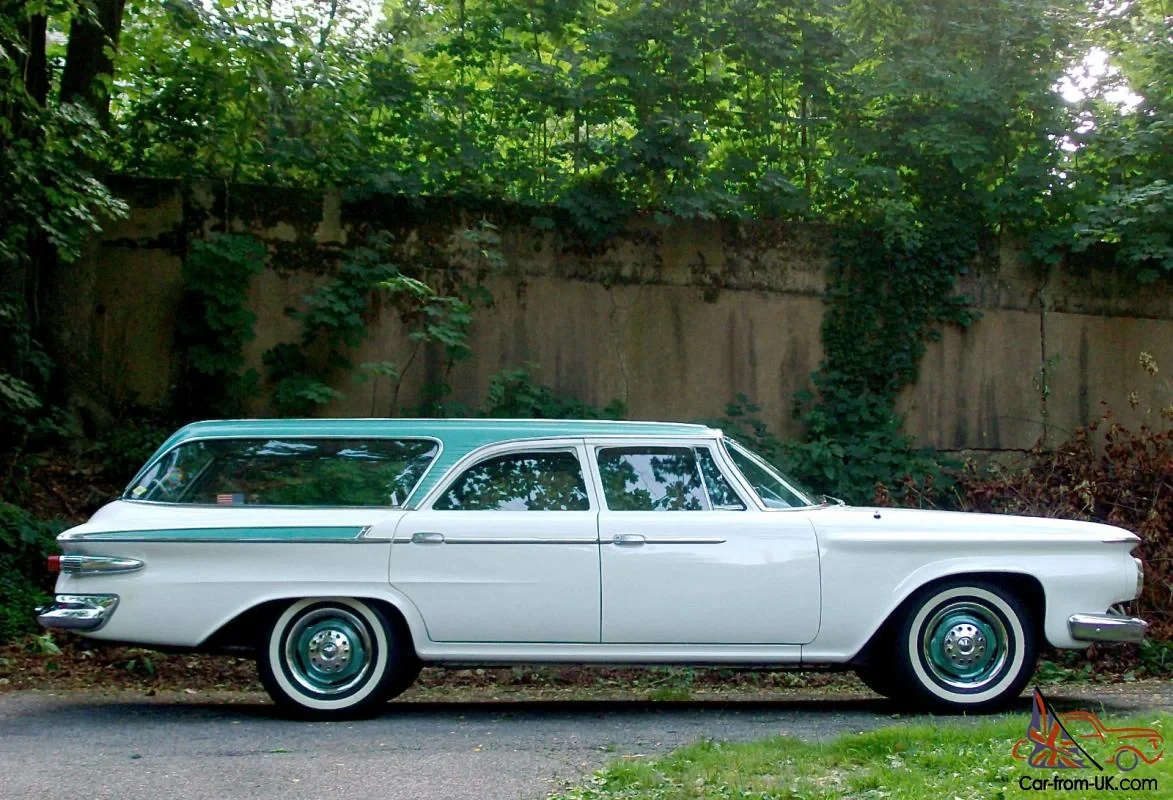
If you look at the brochure specifications for these wagons, you might notice that the 1961 and 1962 Chrysler wagons had a longer wheelbase: 126 inches versus 122 inches for the 1961 Plymouth Suburban.
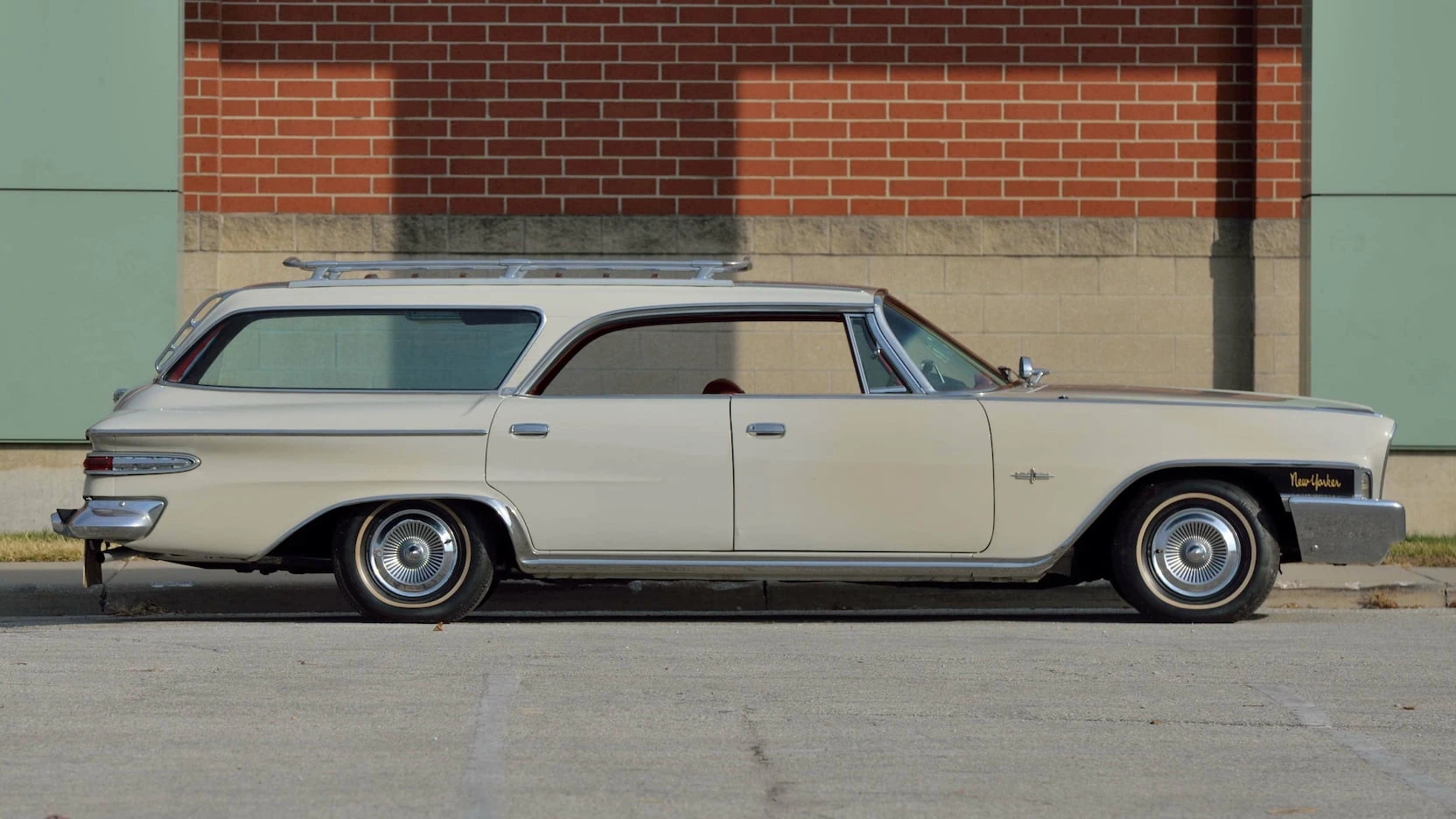
For reasons of production economy, the extra length of the Chrysler version was added ahead of the front doors, increasing the distance from the front edge of the car to the leading edge of the front door. The Chrysler wagons actually had a bit less front overhang than the Plymouth, giving an overall length of 220.4 inches, only 2.7 inches longer than the Plymouth. Rear overhang was identical, as were all the major dimensions of the cargo area. Note that the 1962 Chrysler wagon also picked up the crease through the rear fender into the rear door, which wasn’t present on the 1961 Town & Country.
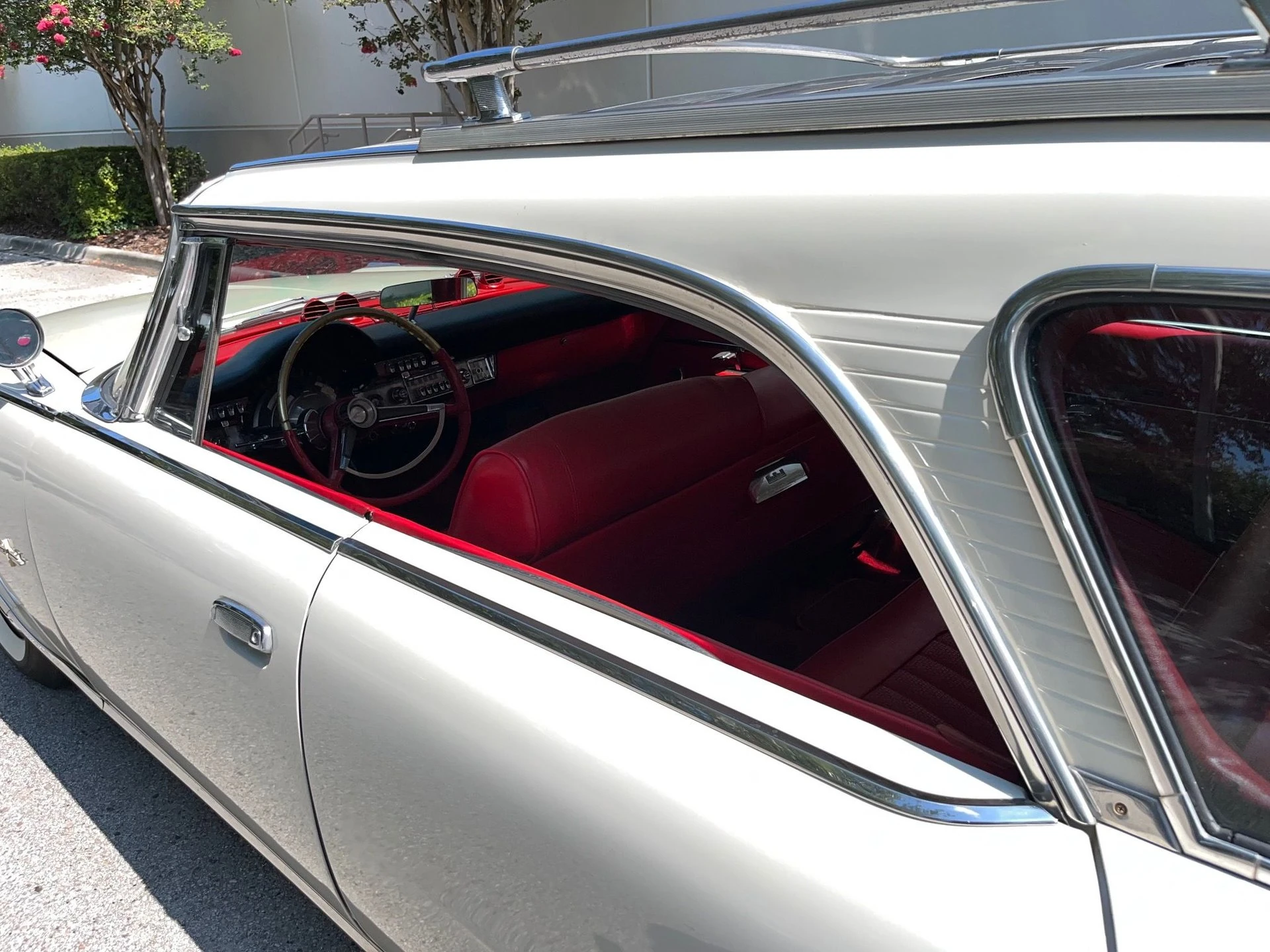
However, like the 1961 wagon, the ’62 Town & Country was still a four-door hardtop, where I think all the 1961 Plymouth wagons had B-pillars. (Chrysler also didn’t offer an equivalent to the 1961 Plymouth two-door Suburban.)
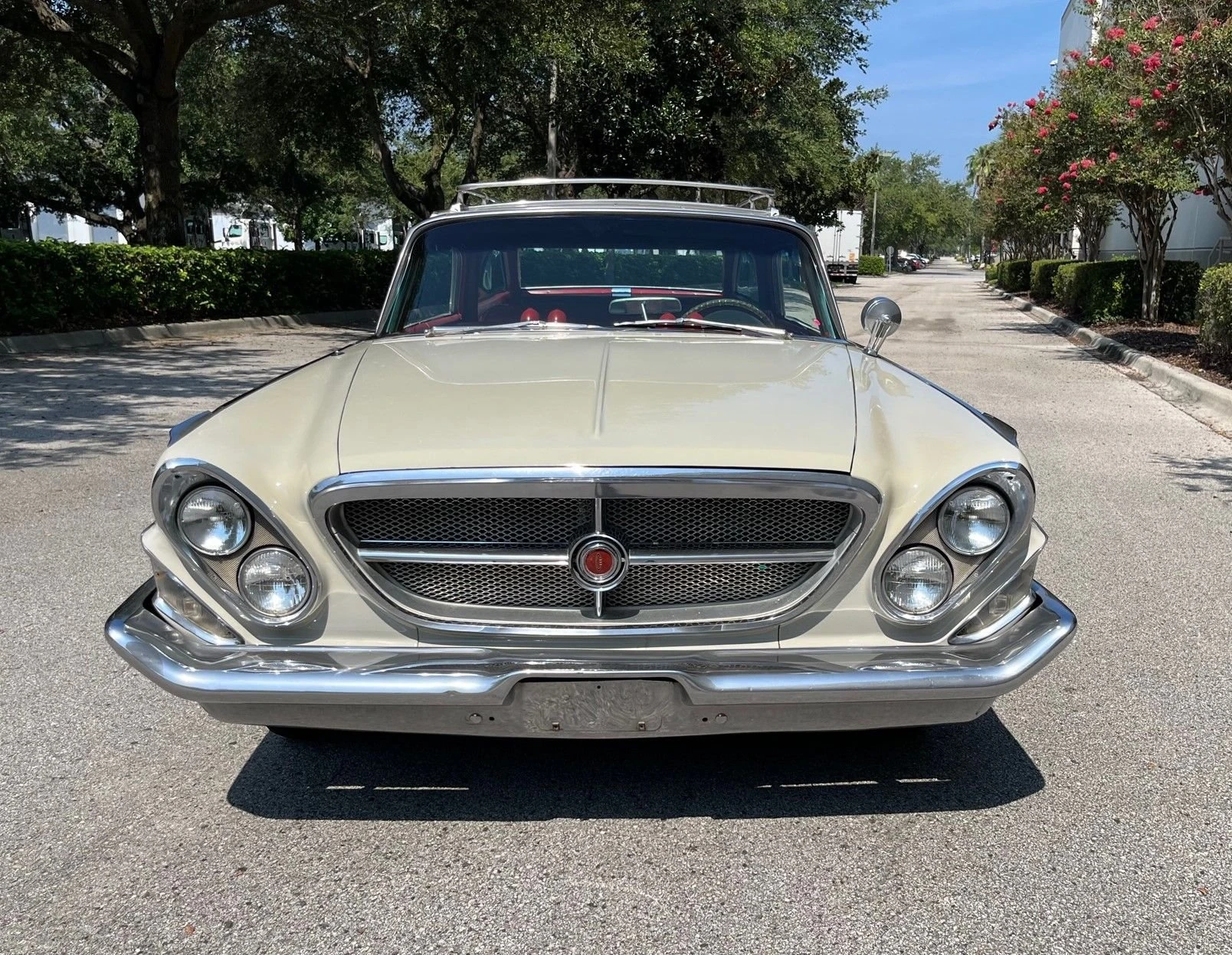
The question I can’t answer is how well this cafeteria-style (one from column A, one from column B) styling went over with contemporary observers. Did the hardtop roof and dramatic Chrysler front end, with its big grille and canted quad headlights, adequately disguise the resemblance to last year’s Plymouth wagons, or did everyone immediately recognize that the Town & Country was a hastily contrived goulash of stylistic leftovers? The 1961 Suburban sold quite a bit better than the pricier Chrysler wagons, so people were more likely to have seen the Plymouth, but did they care?
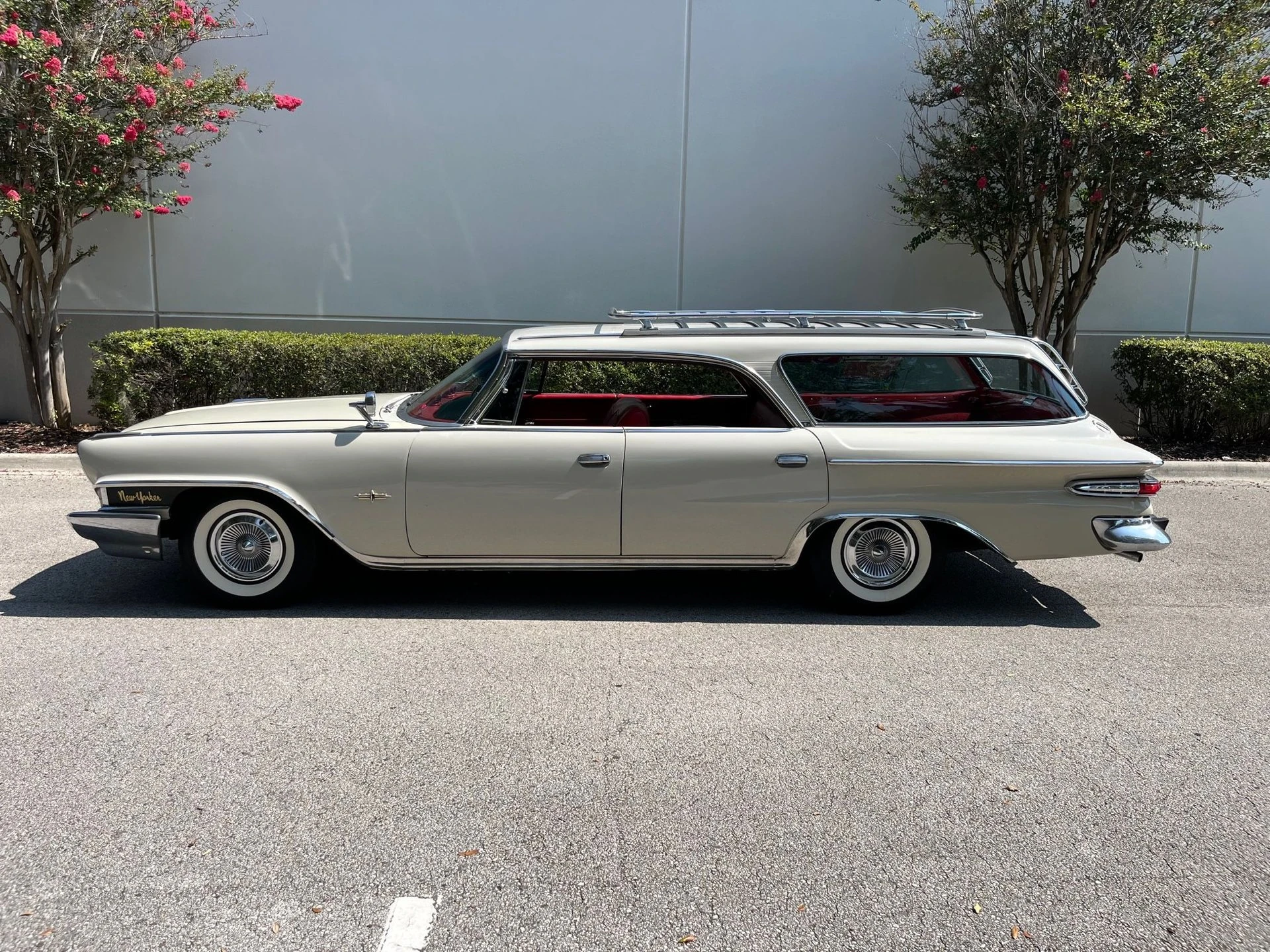
In any event, sales of the 1962 Chrysler wagons remained modest. The much-cheaper Newport wagon, which was the same four-door hardtop mashup with different trim and a different grille, sold somewhat better than in 1961 — 1962 production totaled 5,634, including 3,271 six-passenger and 2,363 nine-passenger wagons — but the New Yorker Town & Country remained a rare sight. Chrysler built just 728 six-passenger and 793 nine-passenger wagons in the New Yorker series this year.
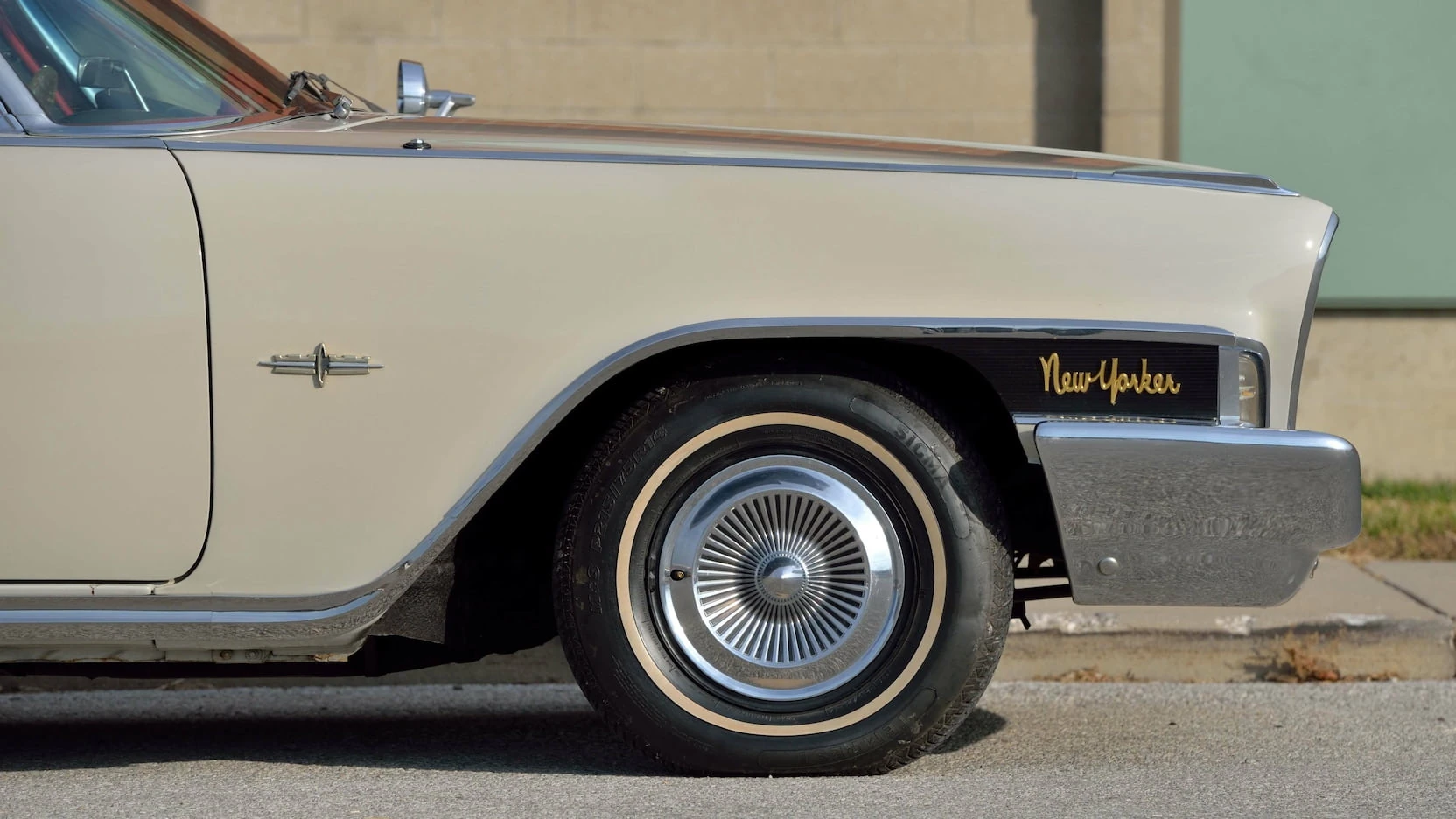
Given the price tags, that was hardly surprising. Today, lavishly equipped station wagons (in 4WD SUV drag) are a ubiquitous part of the automotive landscape, but in the early ’60s, it was obviously a tiny niche market. I don’t know who back then was buying wagons like this in 1962, but I somehow suspect the typical customer may have also had one or more other vehicles in the $6,000+ price class.
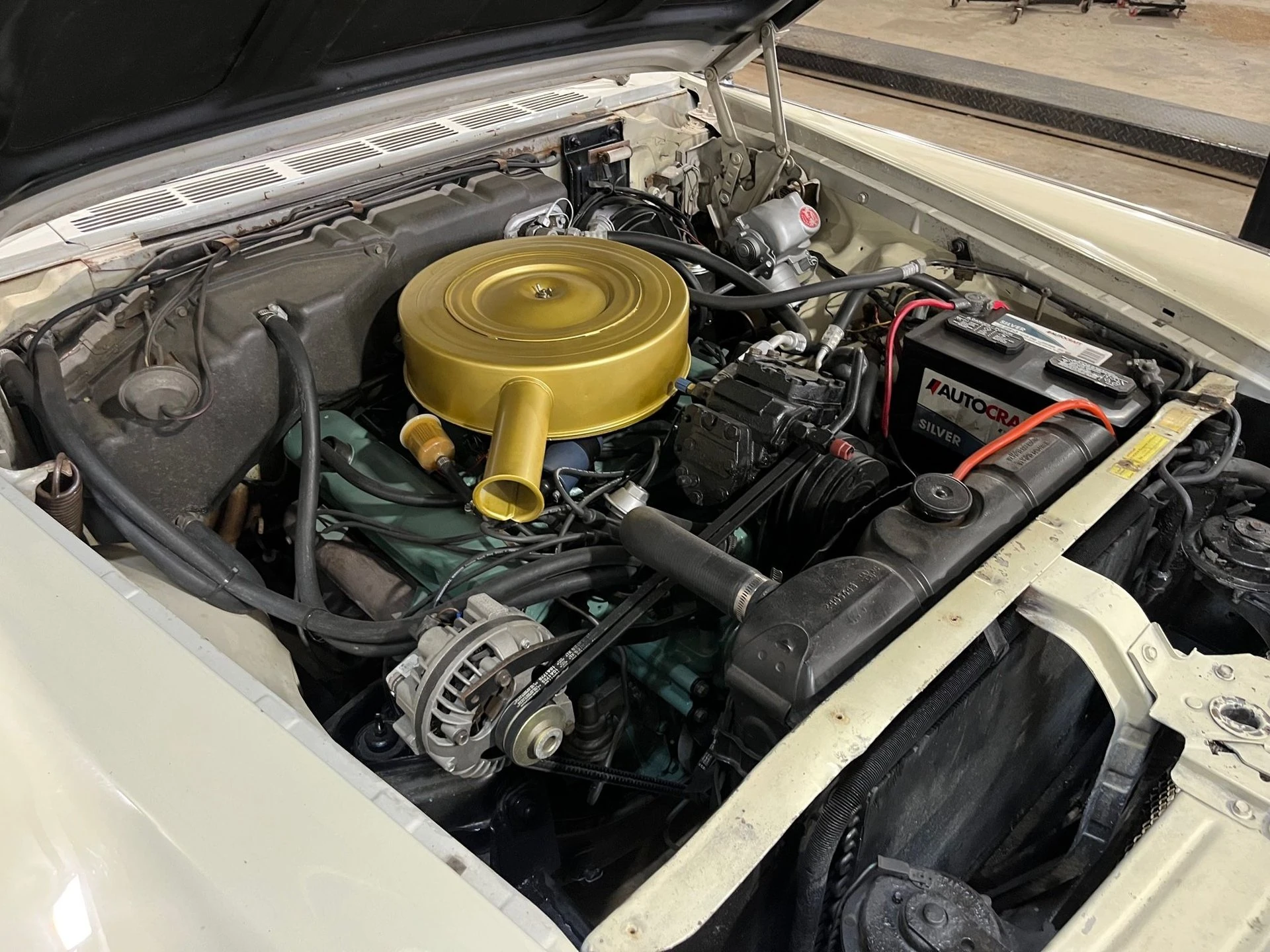
About that price: The list price of the New Yorker Town & Country included TorqueFlite, the FirePower 340 413 cid V-8, power steering, power brakes, and various convenience items like a clock and a remote outside mirror. It did not include a heater — Ford and GM had standardized fresh air heaters on all passenger cars for 1962, but Chrysler was still holding out — much less air conditioning or a radio.
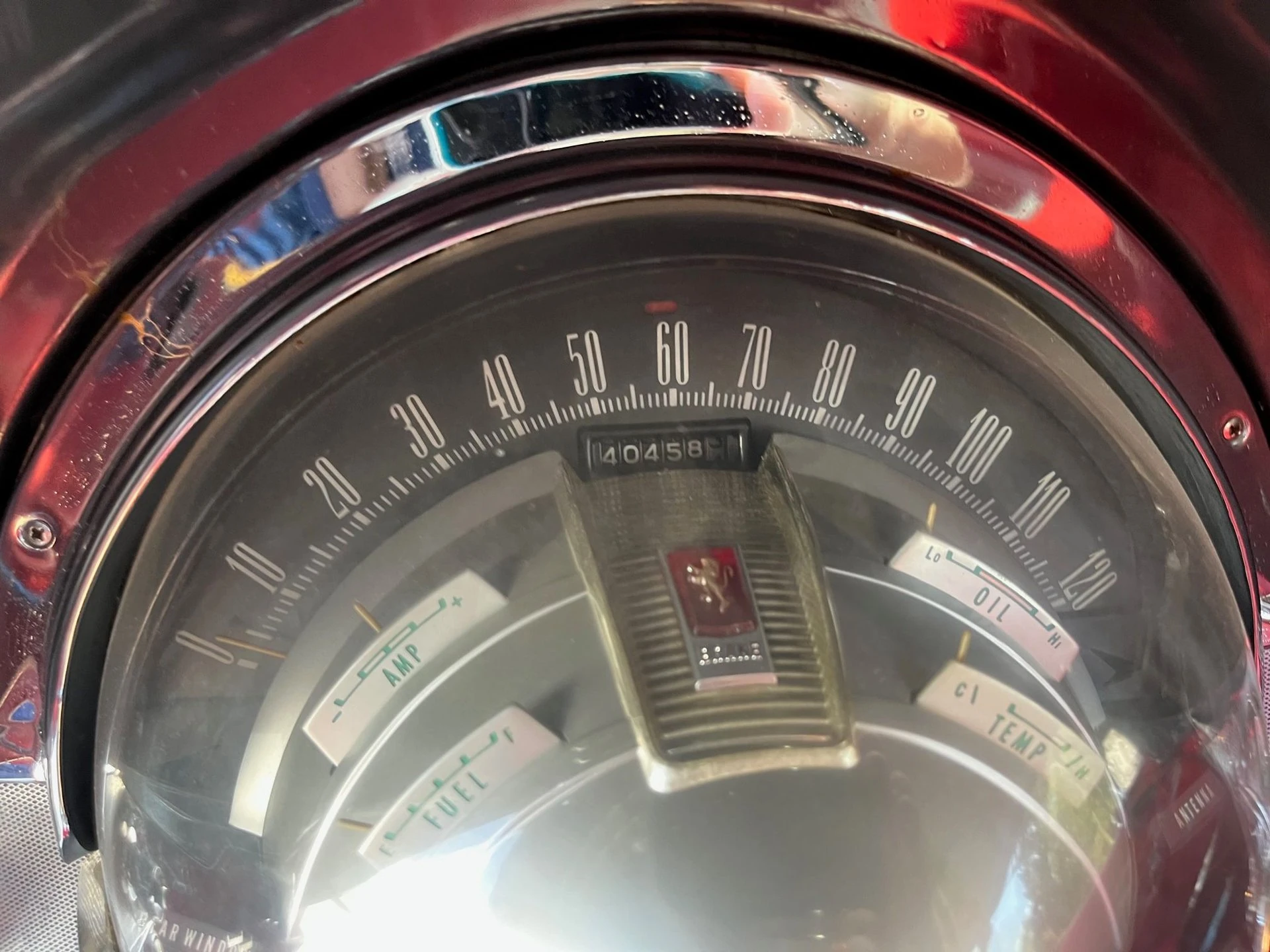
It did feature the Astradome instrument panel, surely the most impressive dashboard display of its era.
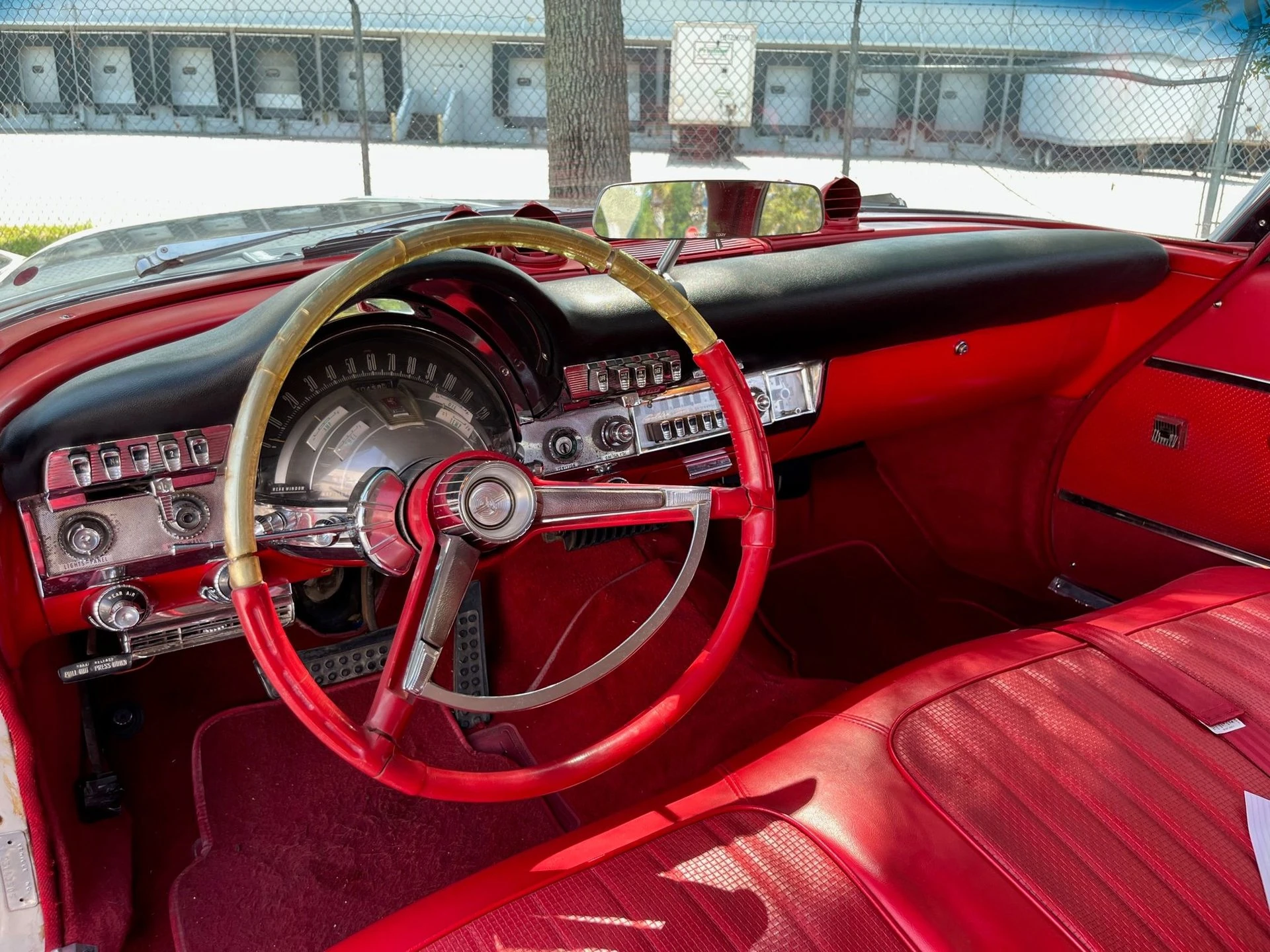
This wagon has all those features and more. The bright red upholstery is vinyl, not leather (which wasn’t available on wagons this year), but the little cup-shaped vents atop the dash indicate the presence of factory air conditioning.
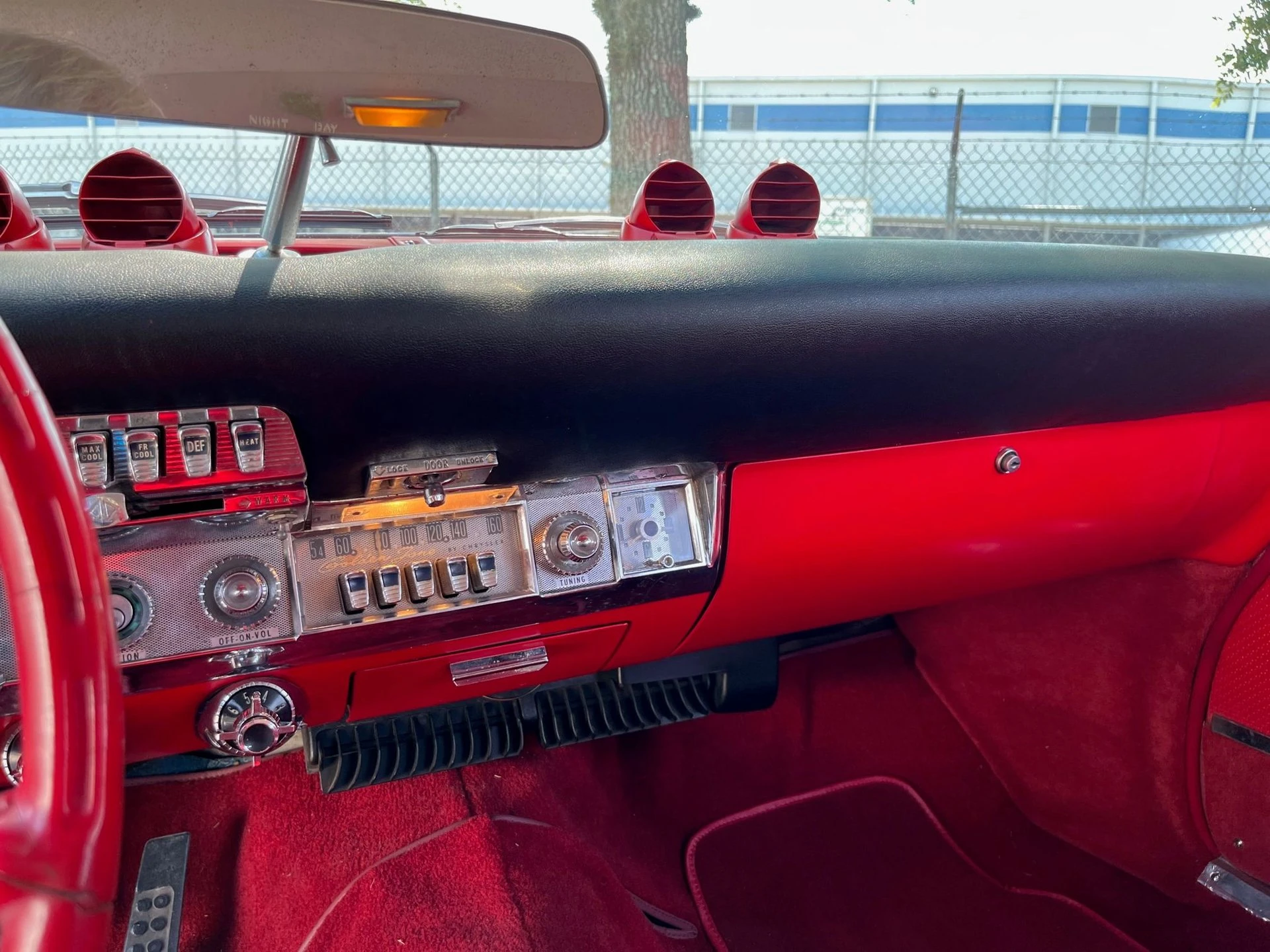
In addition to the Golden Tone radio (a $92.80 option), this Town & Country has power windows ($107.60), power door locks ($56.00), and Auto-Pilot cruise control ($86.10).
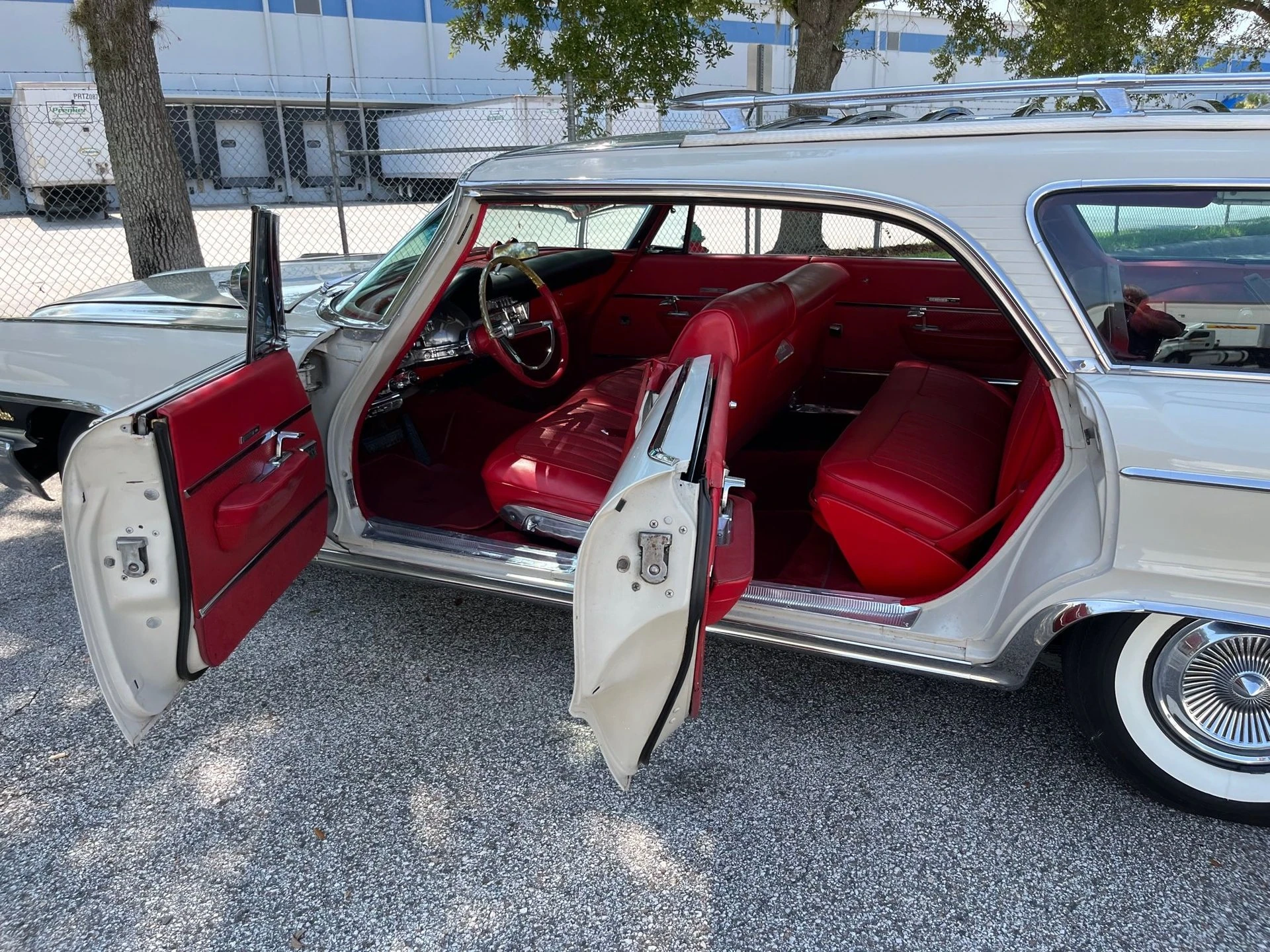
There was also 6-way power adjustment for the “High-Tower” front seat ($101.90), which had a taller backrest on the driver’s side. From 1963 to 1966, the Town & Country would substitute standard front bucket seats, which could be ordered with adjustable headrests instead.
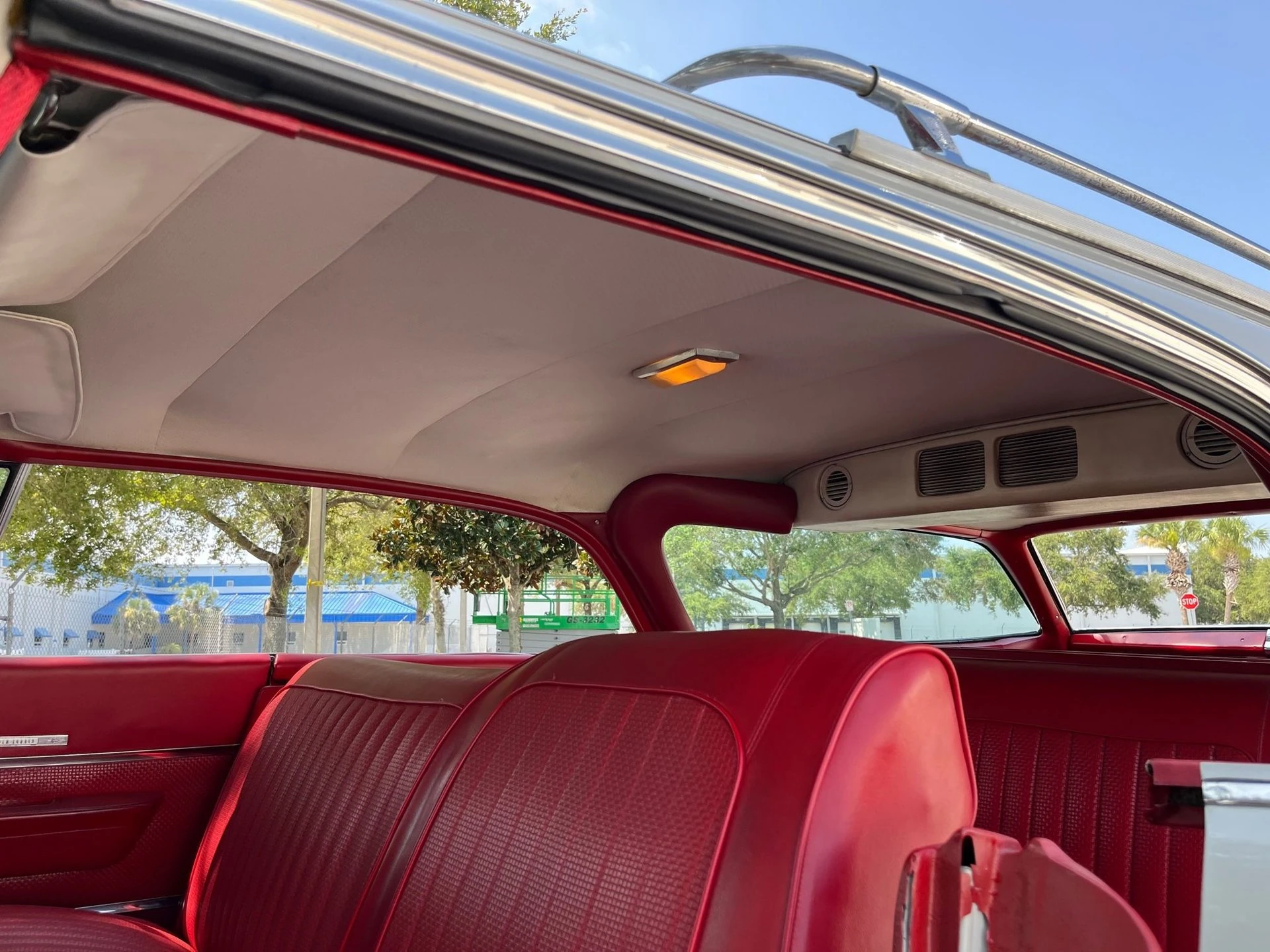
Town & Country wagons with factory air generally had a dual system, with a second set of outlets above the second-row seat. You could order dual air conditioning on sedans or hardtops, but it was the only system normally available on wagons. (If you made a fuss, you might have been able to special-order a wagon with the single unit, but it was at least strongly discouraged.)
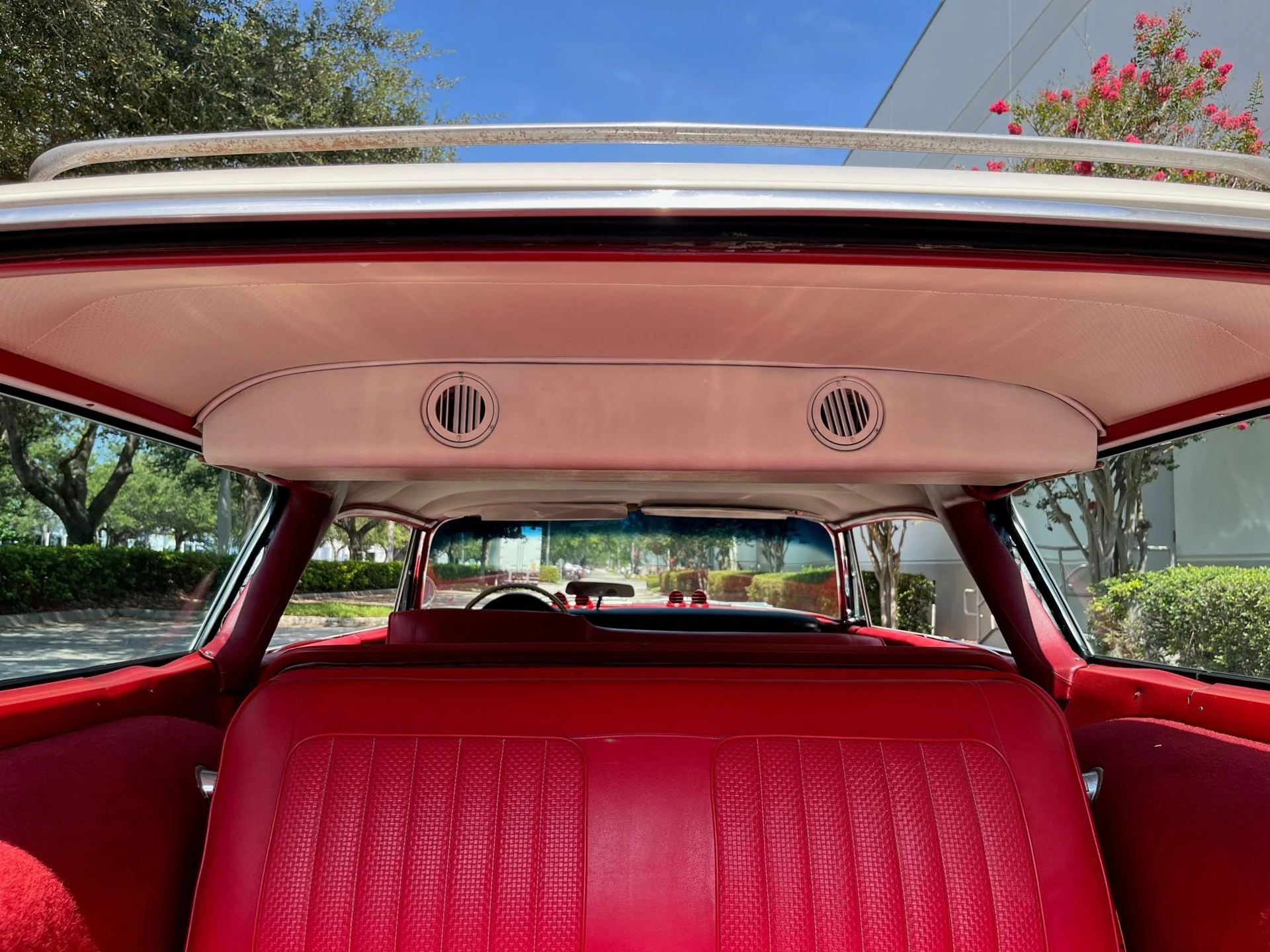
Dual air conditioning listed for $714.25 in 1962, a whopping $200 more than the single unit. Part of the reason for the high price was that it included a heater, which cost $101.90 without air conditioning. (You couldn’t order air without a heater.)
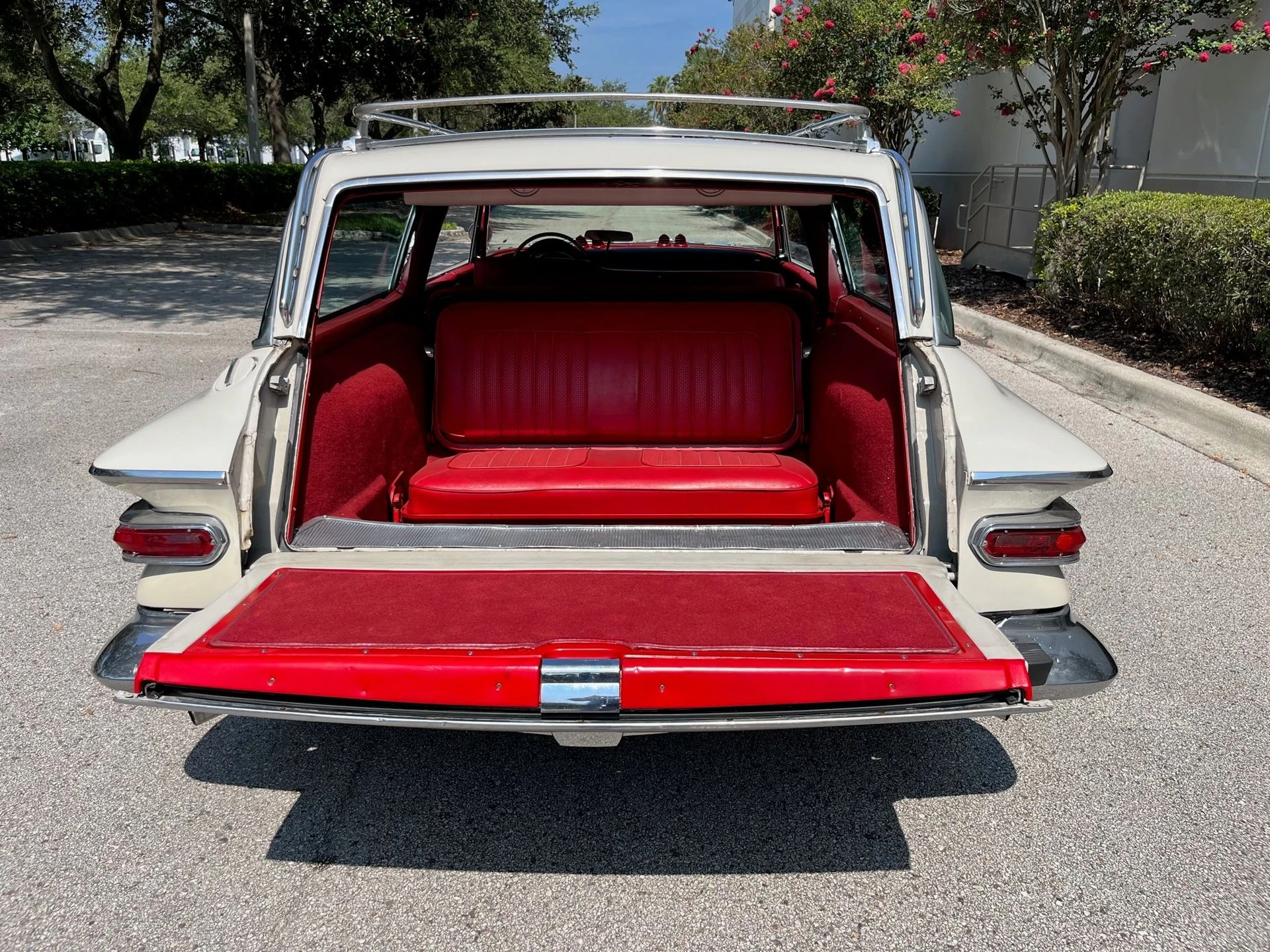
Many kids would not have considered a rear-facing third-row seat the ideal way to travel, but third-row inmates at least had a good view and the benefits of the rear-facing rear air conditioning outlets. The vertical bars on either side of the tailgate opening are tailgate entry assist handles, a $17.30 option. I suspect their utility might be limited by their being finished in bright metal, which likely makes them yowie-hot in the direct sun.
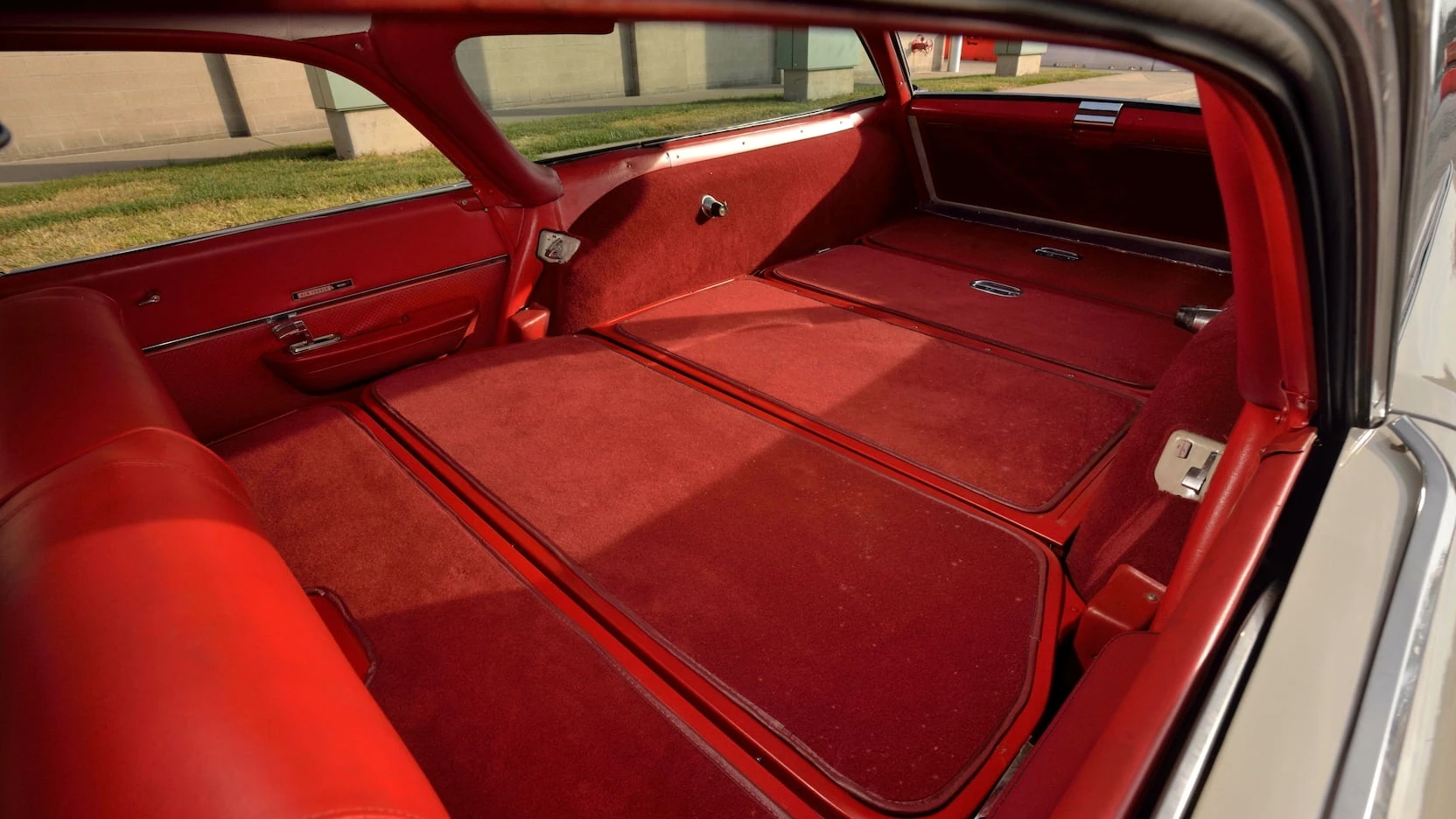
The 1962 brochure boasted up to 95 cu. ft. of cargo room. Minimum width between the rear wheelhouses was an unexceptional 45.8 inches, but the cargo area stretched 100.7 inches from the base of the front seat to the tailgate, so it was quite roomy, as you’d expect of a full-size wagon.
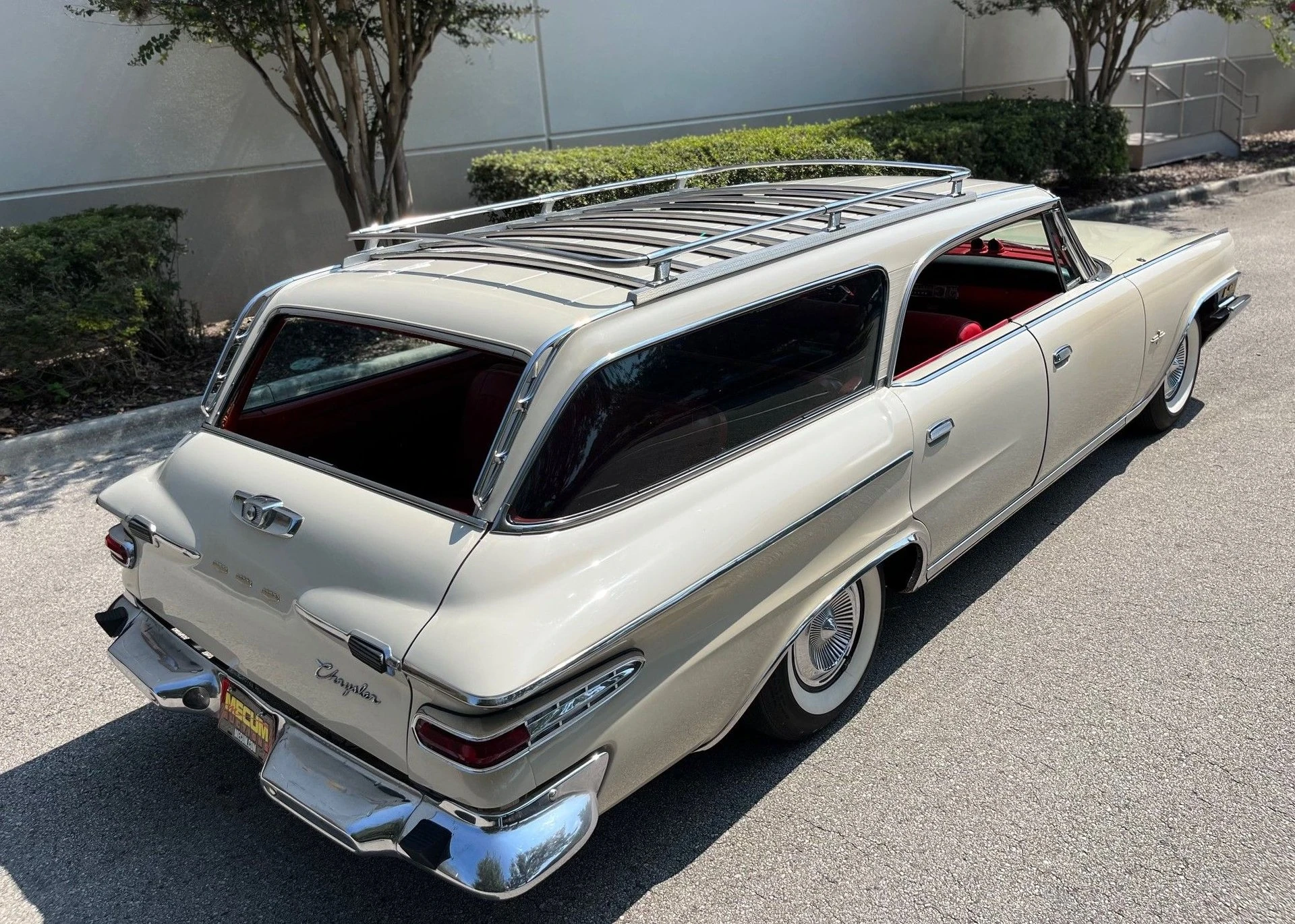
If something didn’t fit in the back, you could strap it to the roof rack. I don’t see the luggage rack on the 1962 Chrysler price list, so it might have been a dealer accessory. (A factory roof rack was listed as a $99.00 option for 1963.)
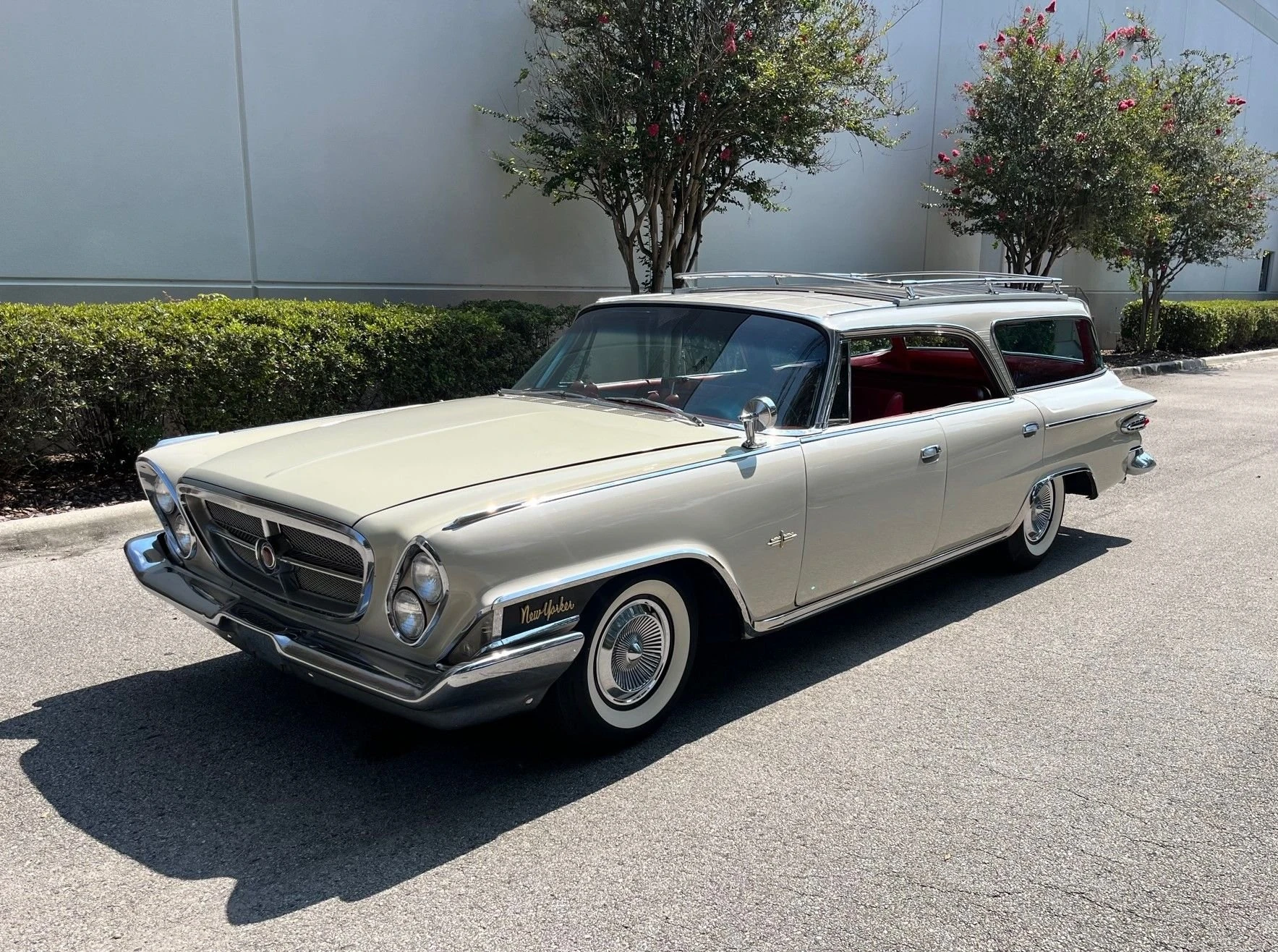
This is an attractively furnished wagon, and if you don’t know or don’t care about its hodgepodge half-Plymouth styling, it’s not a bad-looking beast either. I prefer the fins of the 1961 wagon, but I can see why Chrysler decided they’d had had their day.
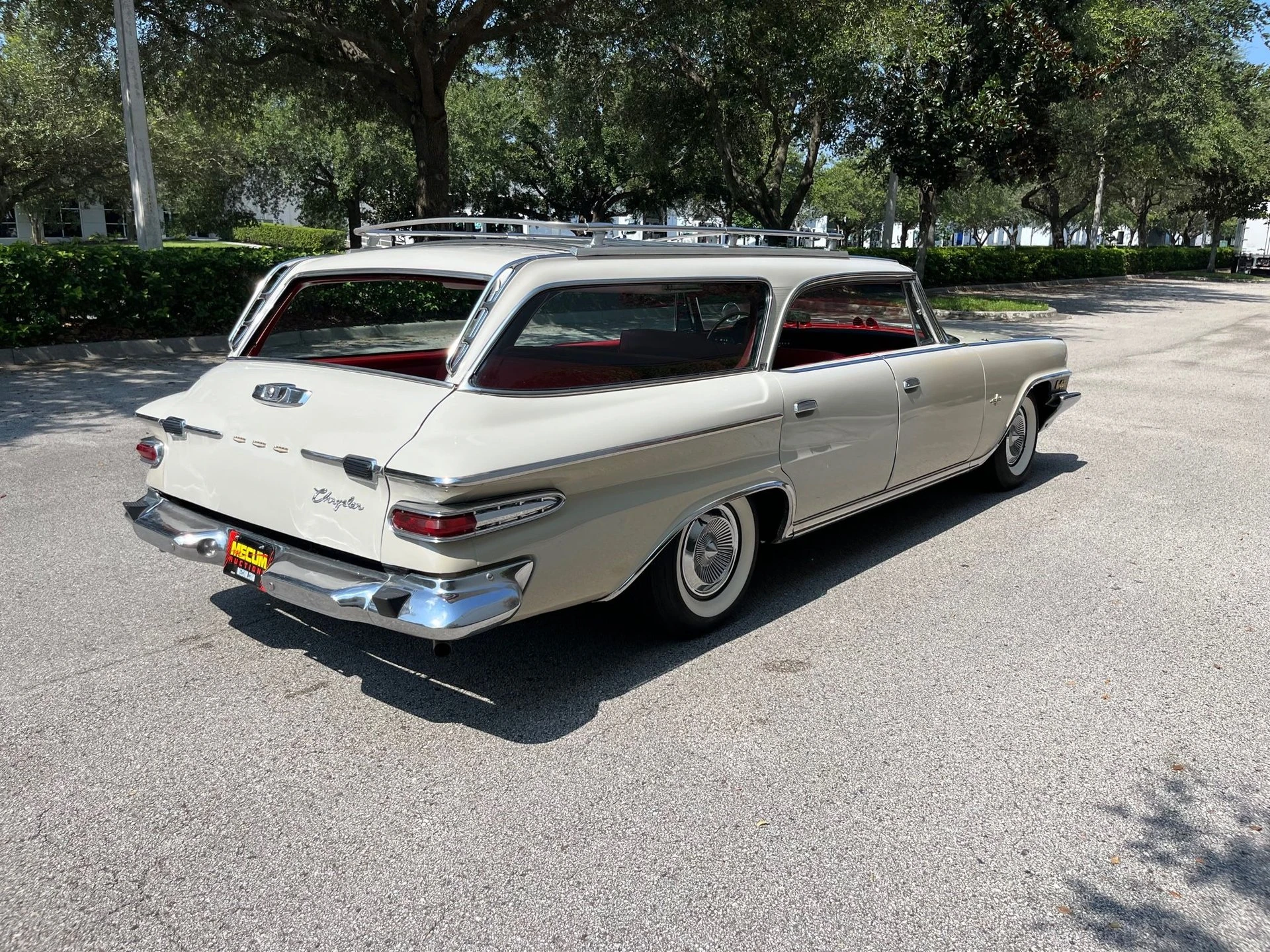
However, the $6,000-ish price tag still stops me in my tracks, and the premium for choosing the New Yorker over the Newport Town & Country seems hard to justify. (Except the bigger engine, you could order most of the same equipment on the Newport.) Perhaps the closest analogue to this wagon in the modern Stellantis lineup is the eight-passenger Jeep Grand Wagoneer L, whose base price was cut to $66,995 for 2026 — not too different from the inflation-adjusted base price of the Town & Country. However, the modern Grand Wagoneer has an array of capabilities and features undreamt of in 1962, many as standard equipment.
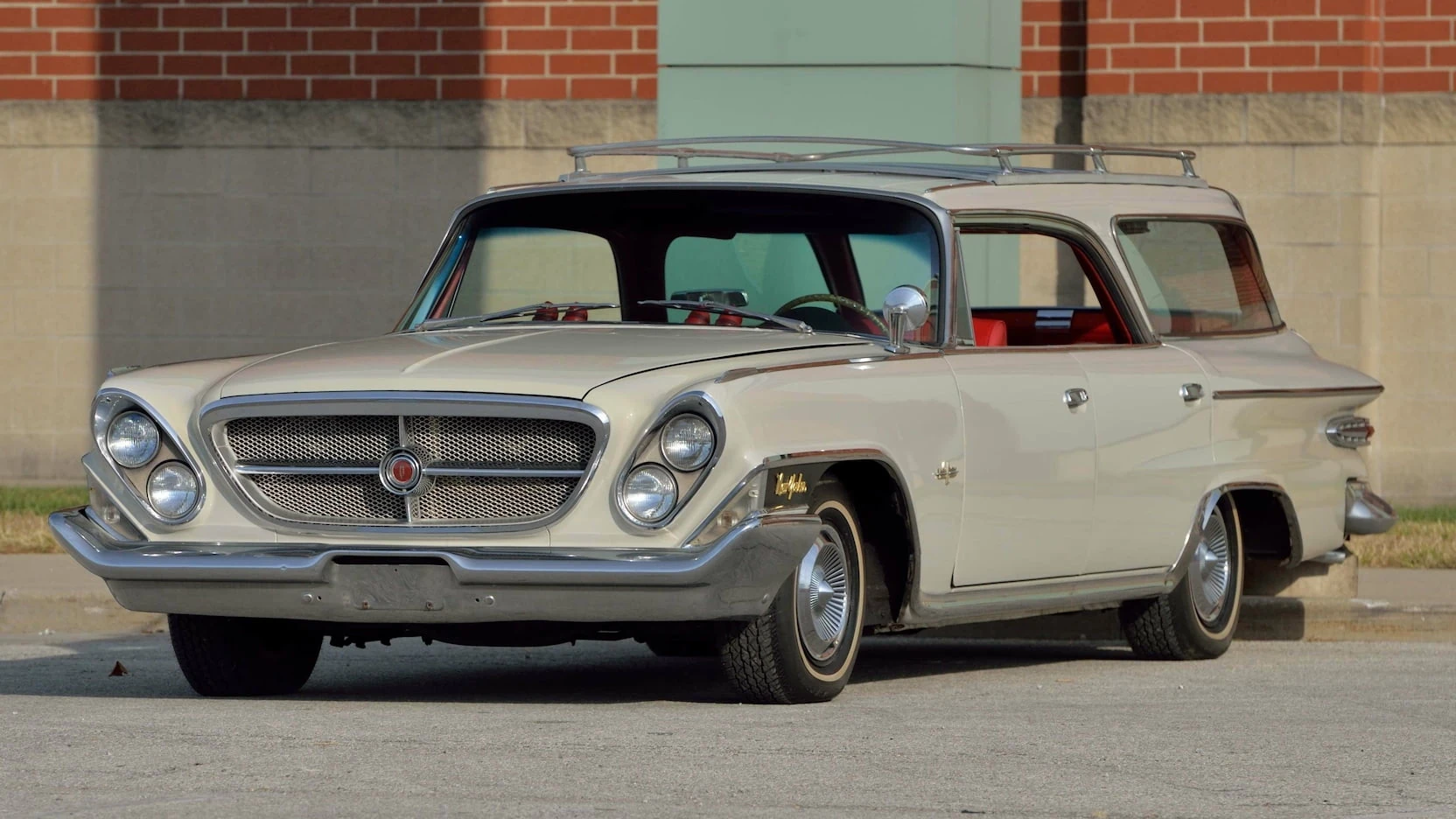
Before we leave this Town & Country, a brief note of explanation: The reason I haven’t tried to specify the color of this wagon is that I’m really not sure. None of the three auction/sale listings from which I drew the photos included the trim plate, and they only described the color as “gray” or “white.” I think this is too light for 1962 Dove Gray (code M) and has a yellower cast than Chrysler’s rather refrigerator-ish 1962 Oyster White (code W) — it looks more like Alabaster (code N), a 1962 Imperial color (here’s an Imperial Crown in that hue) that would have been a special order on a New Yorker. Since it’s likely been restored at some point and I have no idea in what color it left the factory, your guess is as good as mine.
Related Reading
1962 Chrysler Newport 3-Speed Four-Door Sedan: Basic Big Car With An Upscale Badge And Not Much Else (by me)
Vintage MT Review: 1962 Chrysler Newport – Big Car Power and Luxury (by Rich Baron)
Curbside Classic: 1962 Chrysler New Yorker – Adios Fins (by Tom Halter)
Car Show Classic: 1961 Chrysler New Yorker Town & Country – Exner’s Finest Truckster (by Tom Klockau)
Vintage Car Life Road Test: 1961 Chrysler Newport – Big, Strong, Fast And With Auto-Pilot (by Paul N)
Curbside Classic: 1961 Chrysler New Yorker- Neither First nor Fowl (by Dave Skinner)























I full-on love this. Chrysler continued to use this body for the 63-64 models (including the Dodge 880) and it looked even less related to the sedans than this 1962 version did.
That’s a really good question on the paint color – It would not surprise me that someone who spent this much money on a New Yorker wagon in that era could get an Imperial paint color for a special order. In any case, it is a subtle color that really works with that bright red interior.
Spot on with each point JPC.
yowie-hot
Never liked the front bumpers on these, but otherwise: chef’s kiss!
Absolutely stunning! This is a total “wow” car, from the looks to the way it was equipped from new. This would stop me in my tracks at any car show where I would walk past all the supercars…
The color on this wagon appears in online photos anyway, as the common milky tan Chrysler divisions all used in `62. I didn’t realize this shade would have been special order, but perhaps so. It works great with the bright read interior! This wagon features `61 Dodge wheelcovers with whitewalls better suited for 1961–the last year mfrs. used them but no matter–the overall look is gorgeous!
You mean Coral Gray? Maybe, although that has a pinkish tone in similar lighting, whereas this looks more yellow. I dunno — it might not even be a 1962 color.
Huh, you’re right, I hadn’t noticed. Since this is still a 1961 body, more or less, I think the wider whites are defensible, but they do contribute to the “We remixed last year’s car” vibe.
This is a beautiful car. The idea of a hardtop wagon may be interesting, but I have to wonder if rattles were a problem. The wagon body style was already prone to rattles, and I doubt that eliminating the center pillar helped in that regard.
The Astradome instrument cluster is fascinating, but once one moves beyond that, I can see why buyers viewed Chrysler’s interior fit-and-finish as a step down from that of the GM medium-price marques.
I cannot speak to these wagons, but a high school friend had a 63 Newport 4 door hardtop and it had an exceedingly taut structure. Its only weakness was the iffy quality of the 15+ year old weatherstrips around the windows. Actually, every Mopar unibody 4 door hardtop I was ever in was a tighter structure than the big pillared sedans of several other manufacturers.
Is that a slightly modified cross-hair grille from the 300? For how many years did the T&C wagon have that?
The 1962 New Yorker also shared the cross-hair grille, albeit with a different nose badge, and since this is a New Yorker wagon, that’s what it has. It’s not specific to the Town & Country per se — the Newport T & C had the Newport mesh grille. It does give a sense of what a 300 wagon might have looked like, which would have been interesting (although at the time I think Chrysler would have sold like eight of them!).
I like the mix-and-match body panels on several Chrysler Corp cars of this era, including the smaller ones. Dodge fenders on a Plymouth body? Why not?
The AstraDome instrument panel, as awesome as it looks in the daytime, can’t be fully appreciated until you see its electroluminescent glow at night:
And in complete darkness:
I was 11 or so when I saw the astrodome at an auto show. For pure wow factor nothing has ever come close.
Always wondered why they put the indicator needles BEHIND the gauges on the Astrodome? Such a cool IP!
I like goulash-at least my take on it-and I love this car. Plus it comes with the excellent torqueflite/RB combo sufficient torque to seat or in the case of the third seat unseat passengers on command.
For a mishmash I think the design is cohesive enough. It’s not a beautiful car, but it is unique and very appealing to me.
The picture with the doors open is wild; an exclamation point on hardtop.
The color combo is striking.
I wonder if the price and few takers generated enough of a profit to make this model worthwhile to produce?
Aaron, bravo on your model deep dives. They’re always fascinating to read!
The question I can’t answer is how well this cafeteria-style (one from column A, one from column B) styling went over with contemporary observers
I can only speak from my own experience of these various Chrysler cars at the time, but I suspect my observations were not uncommon: It was all too obvious that Chrysler had to do a lot of mix-and-match improvising at the time, across their whole range of big cars. They just didn’t have the resources that GM and Ford did and I think folks accepted that reality. The hardtop and the Chrysler front end, especially with the distinctive black New Yorker badges on the front of the fenders went a long way to give this wagon the credibility and respect it deserved.
Chrysler Corp. cars at the time (early ’60s) had a pretty unique image. On the one hand, their styling was highly uneven and often unorthodox. On the other hand, they had a rep for being well engineered, and popular with folks who appreciated that, like engineers and such. They styling quirks were just a price to pay as well as to perhaps show the world you were willing to have different priorities.
I would have been very impressed with this wagon in 1962, especially the dual ac. It was clearly a very high-end wagon and superbly equipped.
It’s a bit like Mercedes: in Europe, diesel Mercedes taxis were ubiquitous and not exactly a status item (diesels were shunned back then by private buyers except farmers). Yet the same company made these utterly superb high end cars. For example, the ultra-rare and ultra-expensive W112 Mercedes 300SE Lang (LWB) had the same basic body as a 190D taxi. Nobody thought the lesser of the 300SE because of that.
I had been thinking that the cachet the Ford Country Squire carried in that era really crimped the market for station wagons above it, and the T&C’s limited sales especially in New Yorker form show that.
I wonder to what extent Chrysler’s reputation for engineering and willingness to improvise on the styling front were what even made this niche worth pursuing when even GM didn’t bother above 88/LeSabre level.
I definitely agree. High-end station wagons just didn’t have the allure that well-equipped “commoner” wagons like the Ford and Chevy did. Were wagons considered family workhorses? Fast forward 30 years and the Lincoln and Cadillac pick-ups were essentially failures, but you could easily buy fully dressed up Ford and Chevy models.
Oh my…that turquoise ’61 is just a dream. Not many wagons adopted the fins of their sedan and coupe brethren as stylishly as this. Well done, Aaron, best article of the week (so far).
It is great to learn about the finer points of the 1962 Chrysler wagons.
What a beauty this is. I’m not really a fin guy but the 61 is stunning as well with its clean bodysides and in that color combination.
Even though it was becoming outdated, the most beautiful windshield of the late 50s era, avoiding the vertical or reverse angled pillars.
Given how well it was equipped, it’s a wonder it didn’t have passenger side mirror being a wagon.
Fascinating period in Chrysler history, so many issues yet they put out machines like this.
If this was the original color, I wonder if this wagon’s original home was in the southern half of the country. You have the dual AC, but you also don’t want a dark car absorbing all that sun.
Thanks for this great piece and observation. I’ve looked at these ’62-’63 Town and Countries for years and while I knew the body was dated and not updated in ’63 – a not uncommon phenomenon – I’d never clicked to its true source.
And surprising that the cargo width didn’t meet the 48″ standard. Or maybe that came later.
I see it has what appears to be an aftermarket turn signal switch. I wonder if it was owner preference, or the original dash mounted switch failed and a replacement was not available.
My parents were wagon buyers in 1962, but this would have been way out of their range in both size and price. I barely remember that time, but I still have a Dodge, Plymouth & Rambler brochure from the car shopping trips. They were looking for a smaller and less expensive car, and ended up with a demonstrator 1962 Studebaker Lark with a 6 cylinder. It was a big step over the 1956 Hillman Husky that got moved to second car status.
Great article on a neat car. Thanks!
Your sharp eyes continue to amaze me — I hadn’t registered the lever at all. As for the why, it might have been a combination of the two: The dashboard switch might have failed and a past owner said, “I hate this thing anyway, why don’t I get a real turn signal lever rather than try to scrounge around replacing the dashboard switch?”
The pretty white over blue wagon is listed as a 1961 but the taillights are from 1960. In 1960 they were once piece convex/concave, and my all-time favorite taillights. In 1961 Chrysler changed to a two “bullet” or lump with more chrome filling around the lenses. The behind the times fins were about the same in 1960 and 1961 which made the 1961 Chryslers really out of style.