
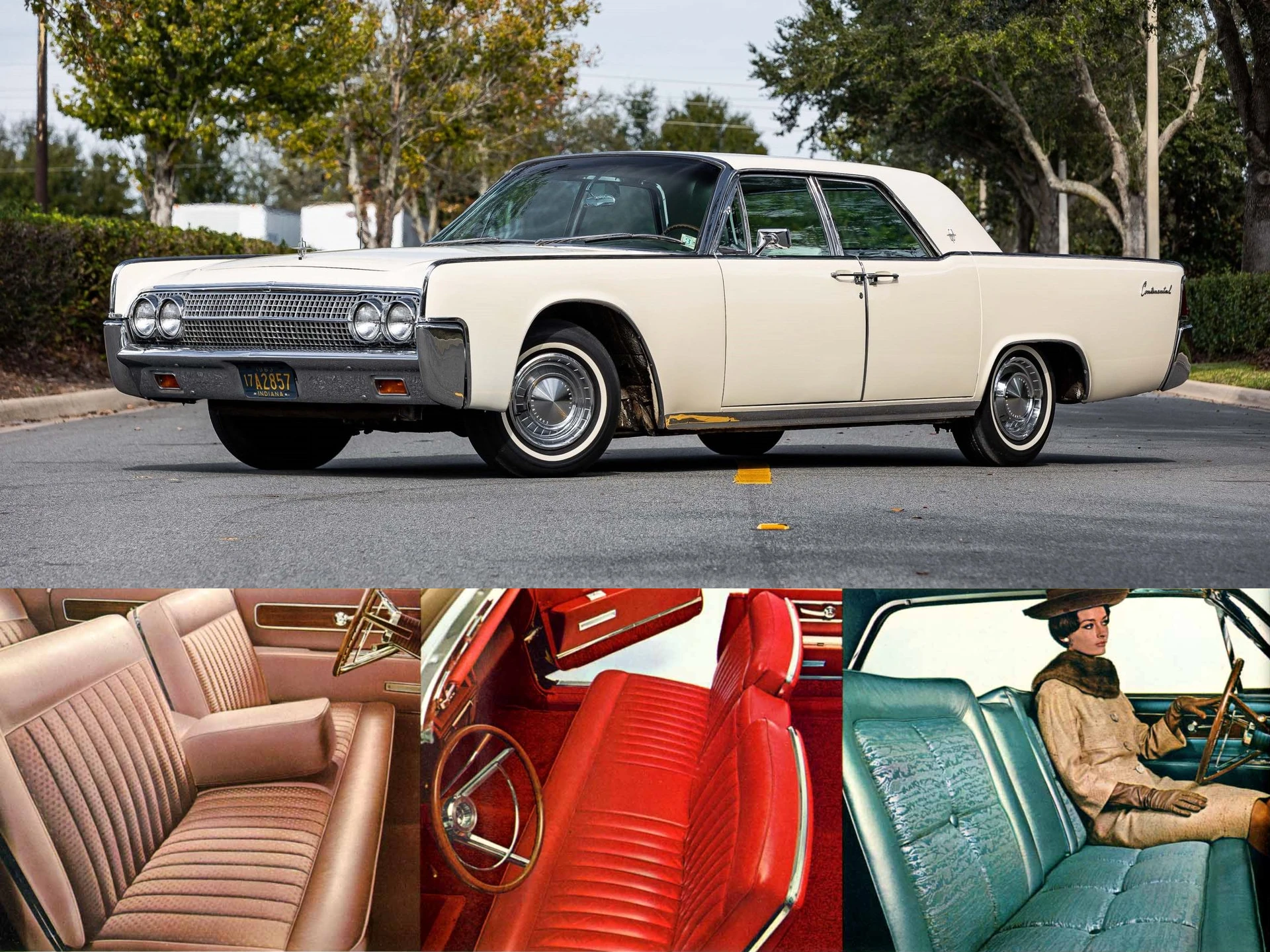
If you spend a lot of time reading car magazines, it’s easy to absorb their preoccupation with performance statistics: top speed, quarter-mile elapsed times, lateral acceleration on the skidpad, or racetrack lap times. With a ’60s luxury car like this 1963 Lincoln Continental, the most important numbers were not its gross horsepower rating or its 0 to 60 mph time, but the vast number of available color and trim choices (18 exterior colors and 17 interior choices), in a car that was designed for luxurious cruising rather than burning rubber.
I spent a lot of time as a teenager reading car magazines, both new ones and ones from the ’60s and ’70s, and absorbing their perspectives and conventional wisdom. The consumer magazines were preoccupied with practical considerations (gas mileage, legroom, road noise), while the enthusiast publications fixated on acceleration and sporty road manners. Neither was particularly interested in luxury accoutrements — the buff books disdained plush upholstery, wood trim, and brightwork, and didn’t much care for any extras that didn’t promise to cut a few tenths off the quarter-mile ETs or add a few hundredths to the skidpad ratings.
From those perspectives, a car like this Lincoln Continental really didn’t rate. It was definitely not an enthusiast’s car, and that kind of driving really wasn’t what buyers were interested in; I think it speaks volumes that the Orlando Classic Cars listing for the featured sedan neglected to even include a single photo of the 430 cid engine, which had a four-barrel carburetor this year, giving an extra 20 gross horsepower. A 1963 Continental sedan accelerated adequately (0 to 60 mph in 10.9 seconds, per Motor Trend), rode softly, and stopped eventually. It had absolutely no interest in challenging BMW (of which few Americans had heard in 1963) or Ferrari. The design priorities of this Continental were comfort, prestige, and the luxuries befitting a car that started at $6,270 and could top $7,000 with options (a relative worth of over $91,400 in 2025 dollars).
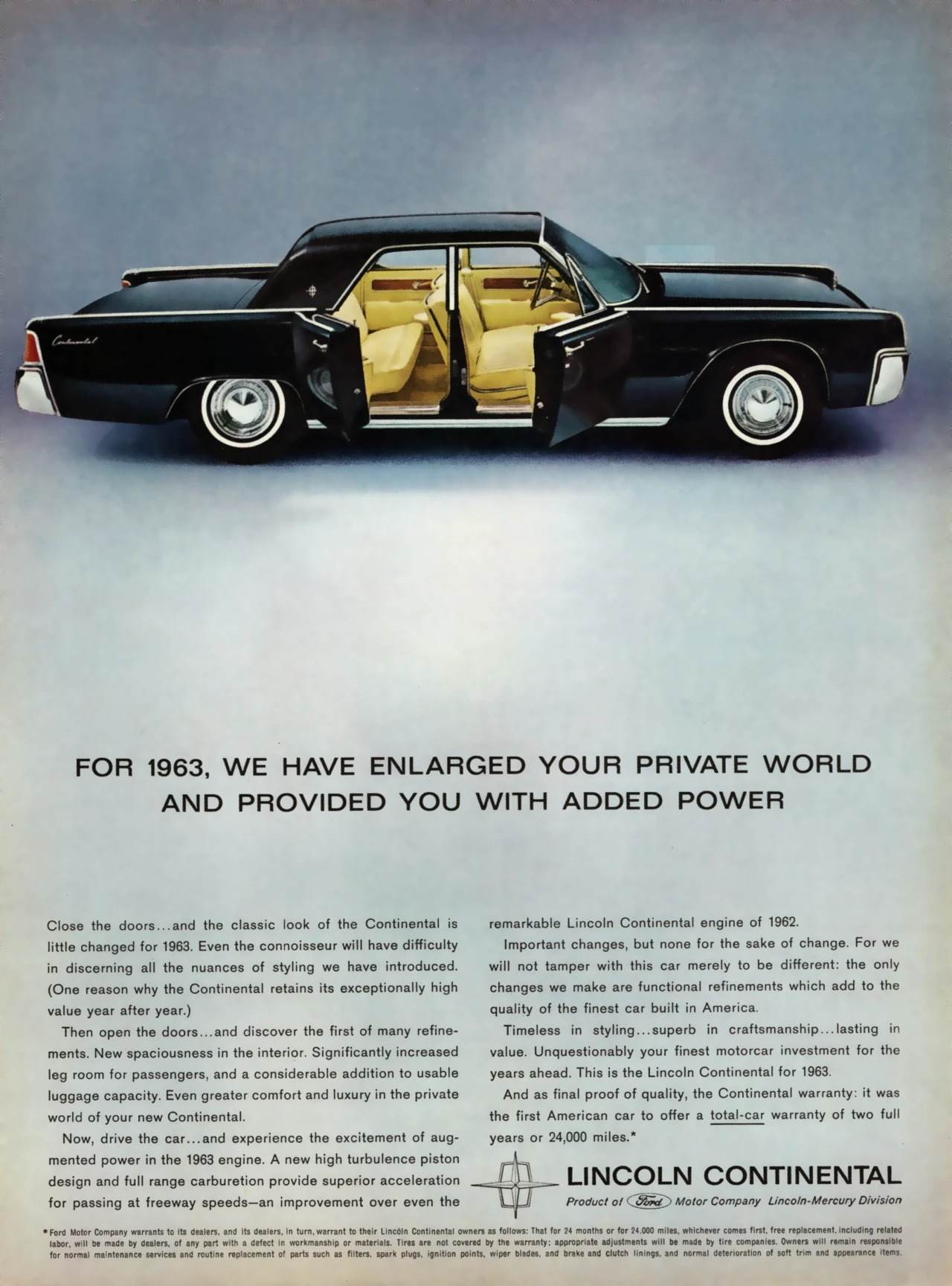
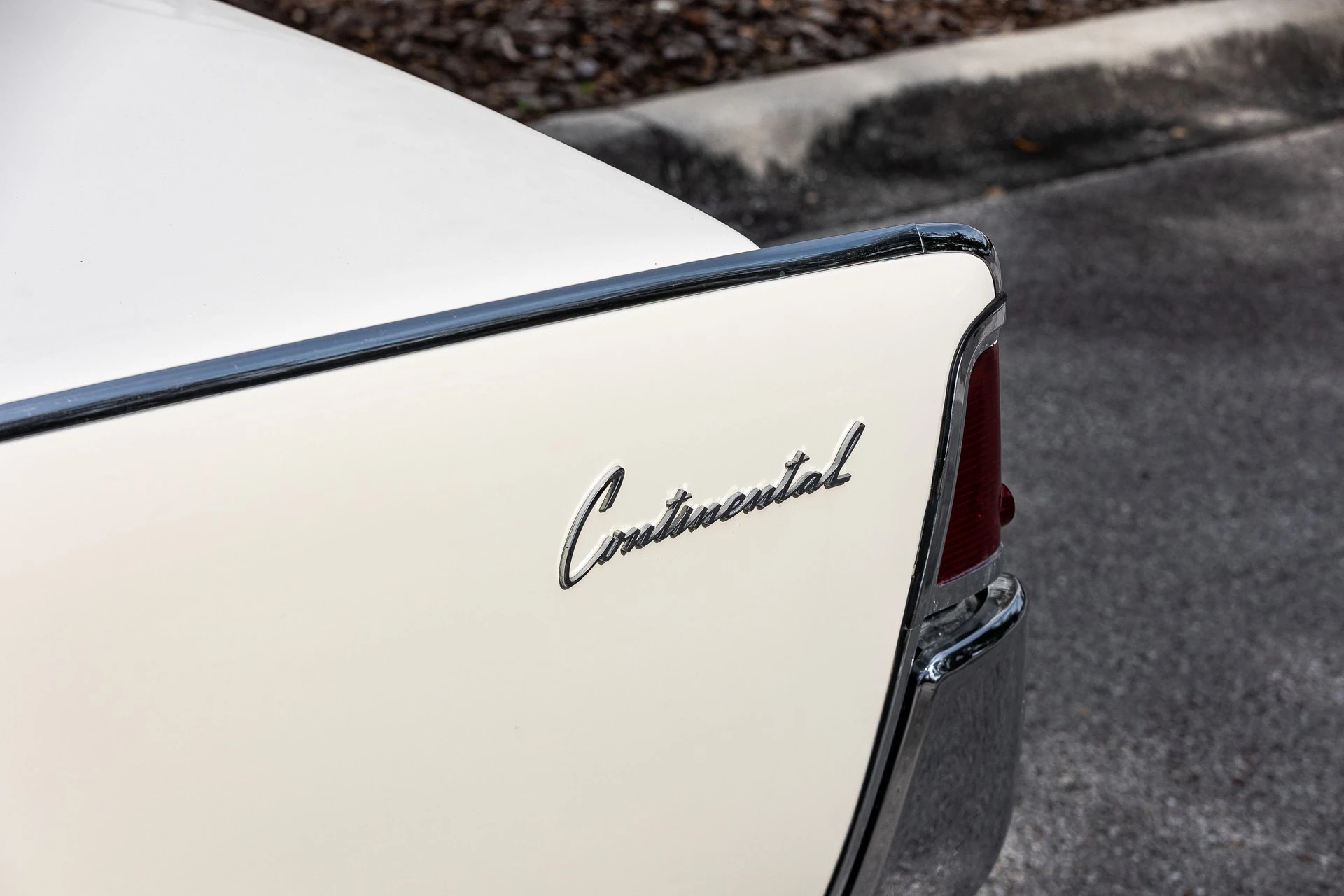
1963 marked the end of the initial phase of the ’60s Continental generation that had been launched for 1961. Changes from the two previous years were subtle — as Lincoln-Mercury noted, “Even the connoisseur will have difficulty in discerning all the nuances of styling we have introduced.” However, after this year, Lincoln-Mercury broke its promise to “not tamper with this car merely to be different.” This basic body shell continued through 1969, but later versions got bigger; they (temporarily) lost their curved side glass; and the styling was touched up in various ways that were not always in the best of taste. They sold a bit better, but they were increasingly compromised, and aren’t as highly regarded today.
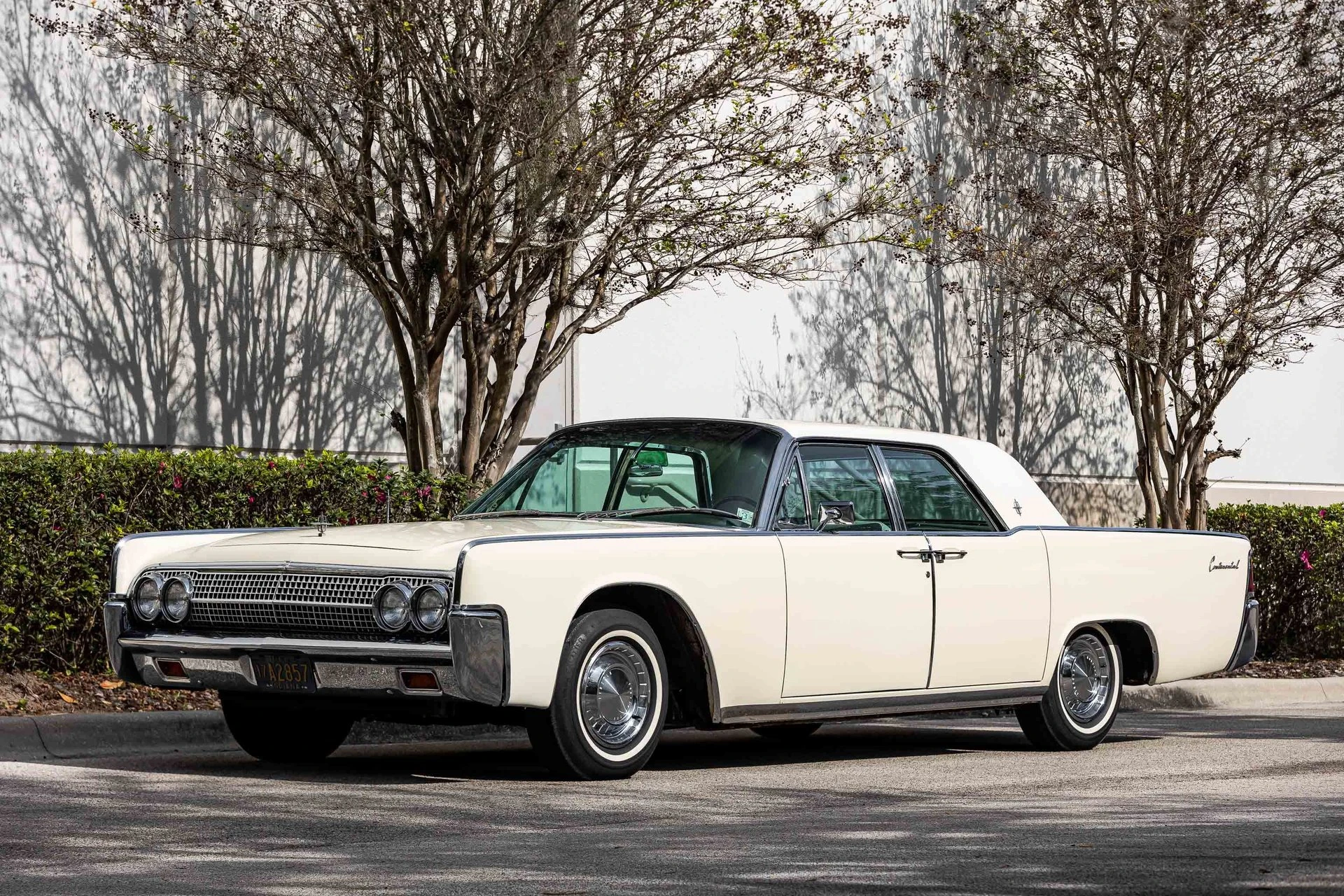
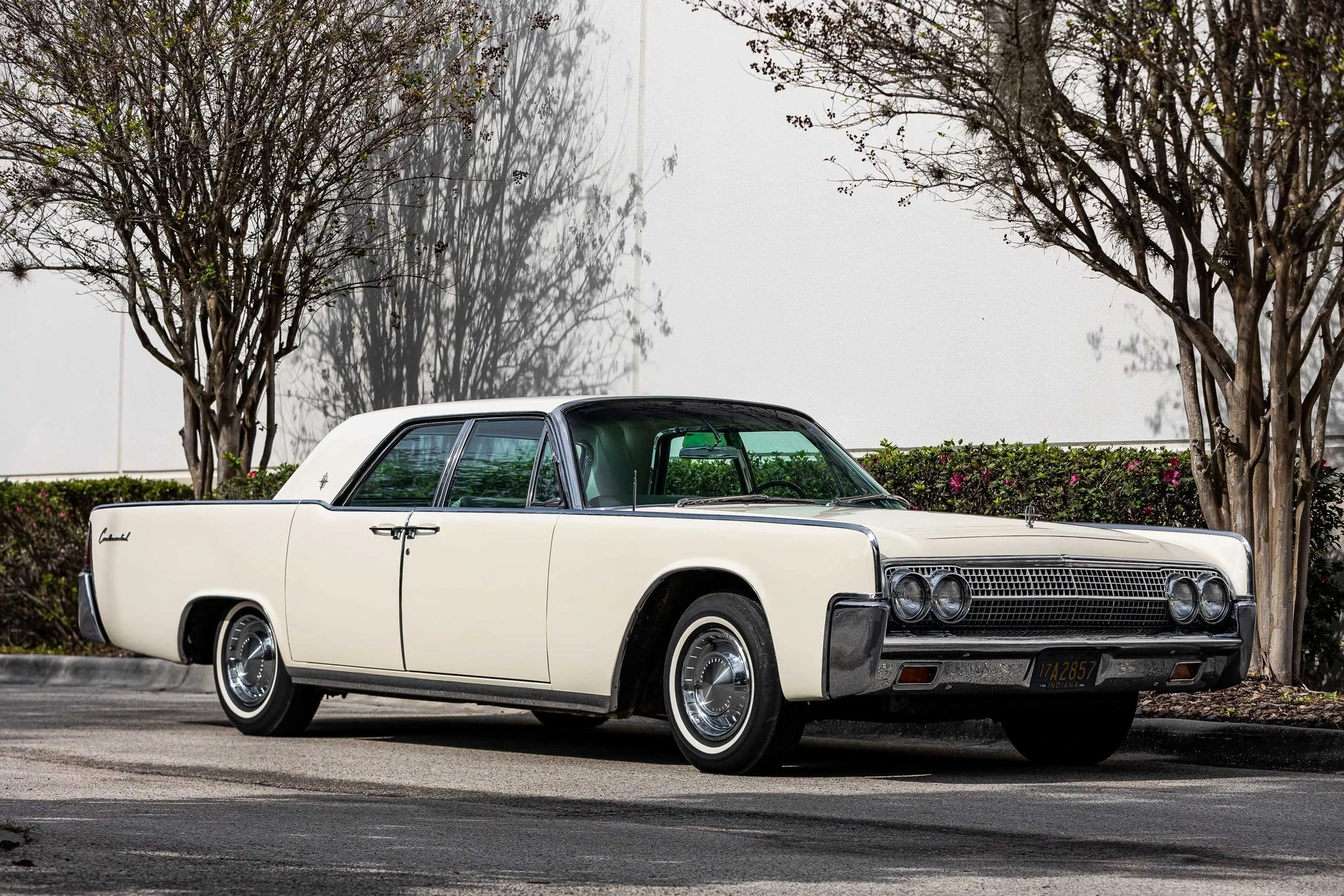
There’s little I could say about the exterior styling of these cars that hasn’t already been said. The styling development of the 1961 Continental has been chronicled in exhaustive detail, and many a paean has been written to their clean lines. Personally, while the exterior styling on the Continental has grown on me a little over the years — and I think it’s infinitely preferable to the gawky contemporary Imperial — it still leaves me a bit cold, especially in lighter non-metallic colors like this.
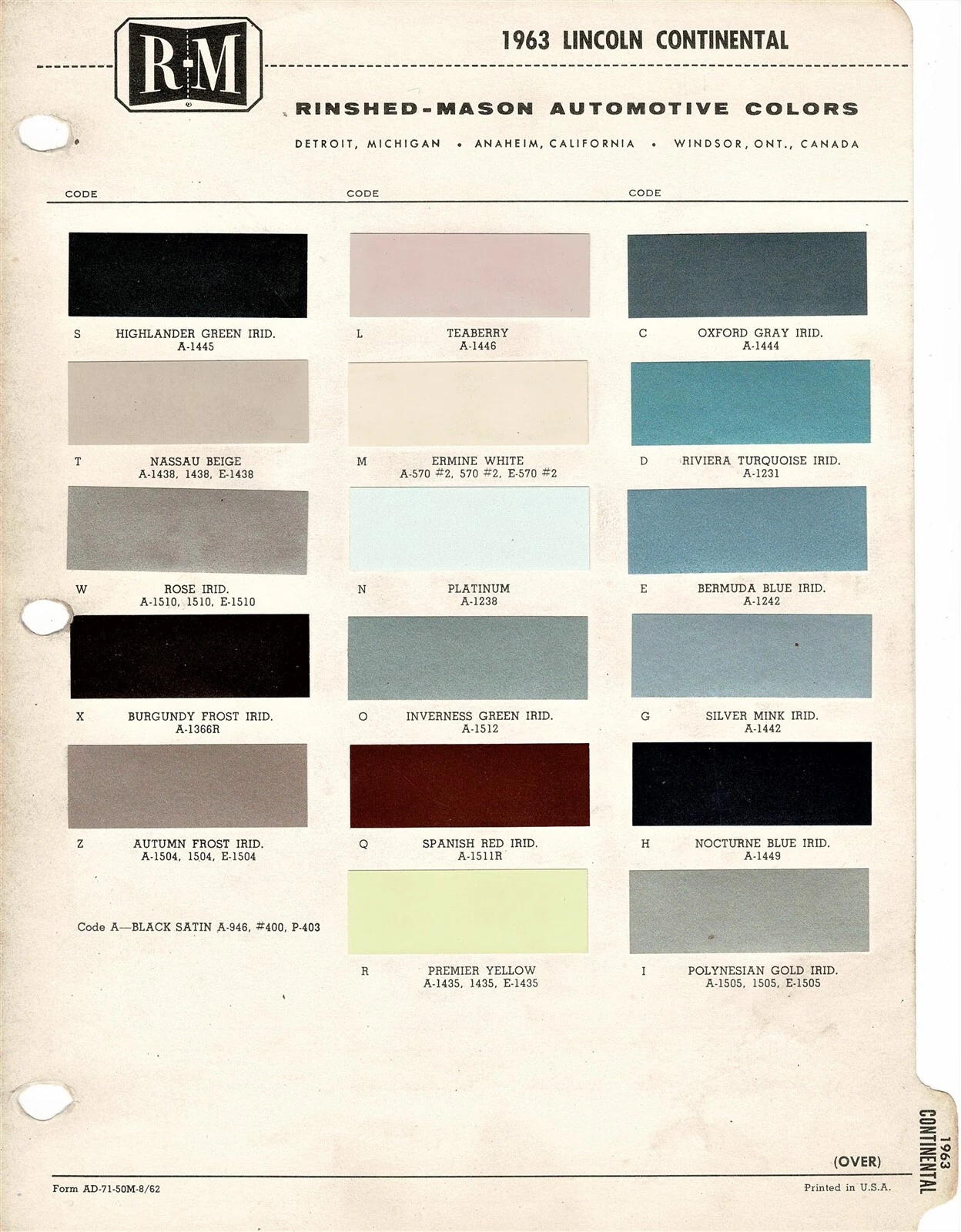
Lincoln offered 18 paint choices for the 1963 Continental, although most of them were muted and quite conservative.
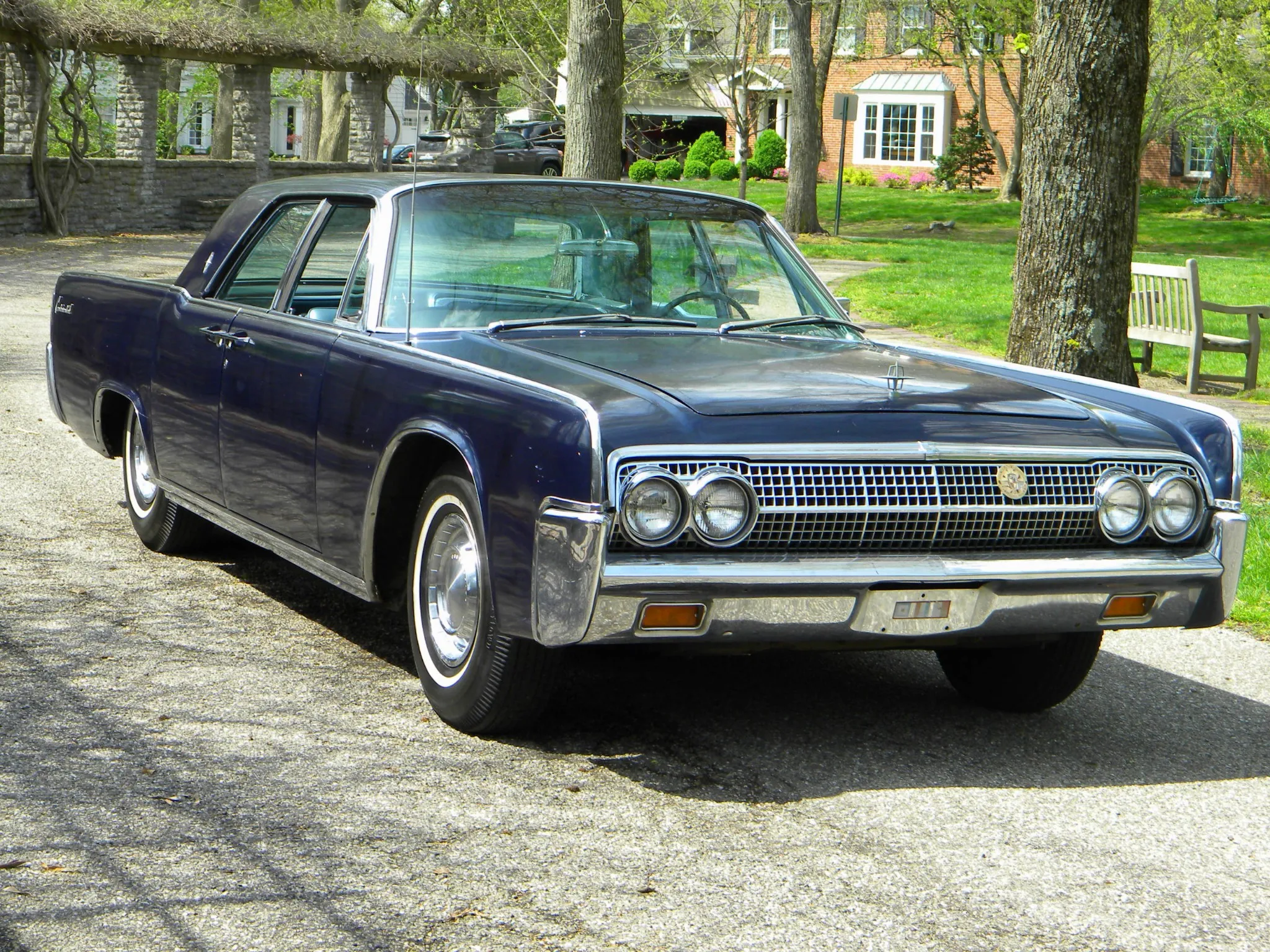
I think the ’60s Continental shows best in darker colors like the Nocturne Blue shown above, but the most popular auto color in that era was white. I don’t have a color breakdown for 1963 Lincoln production, but white was by far the most popular color on 1963 Cadillacs, and it probably ranked highly with Lincoln buyers as well.
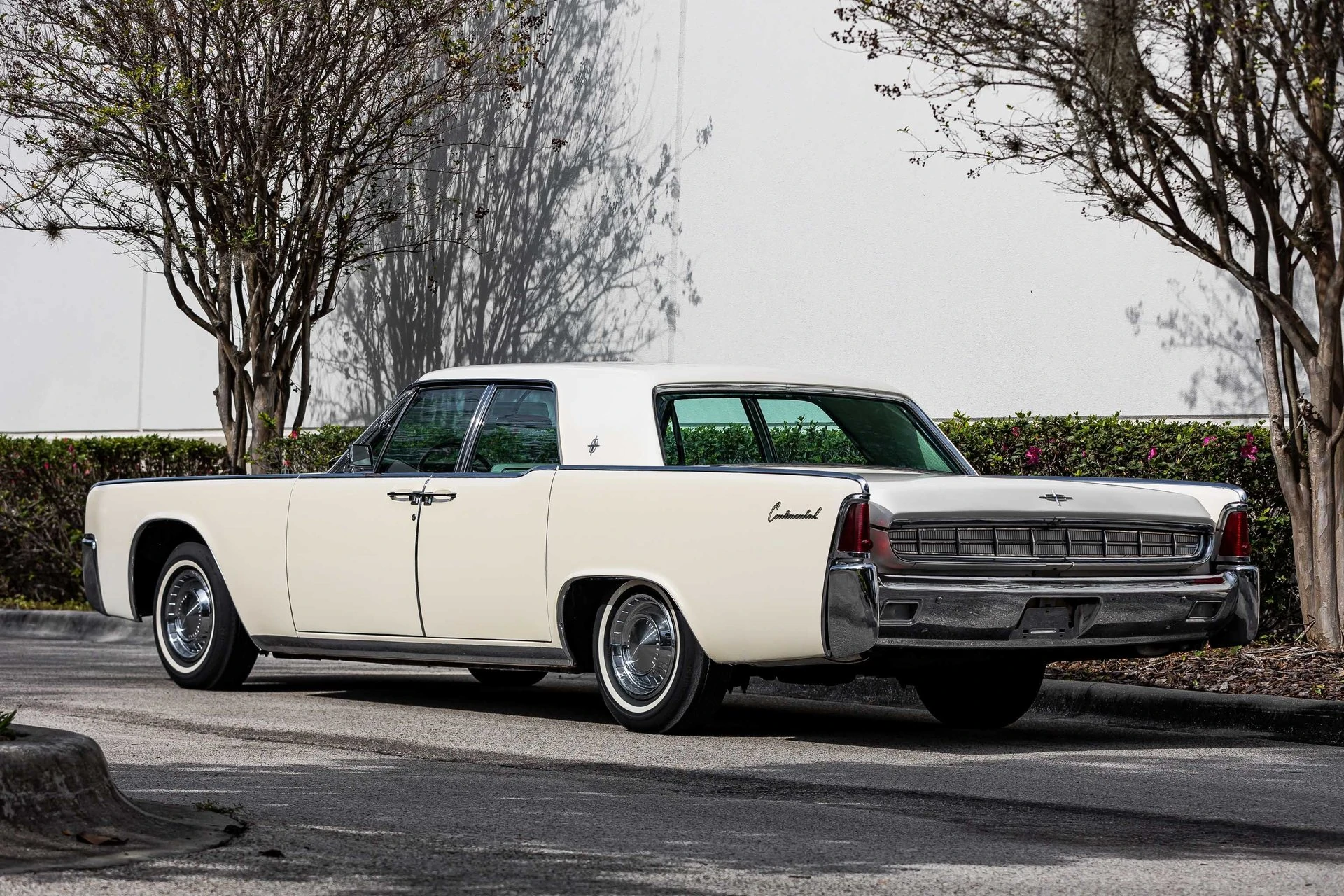
The 1961–1963 Continental was not a small car even by contemporary American standards, but it was on the smaller side of big, if that makes any sense. Stretching 213 inches overall on a 123-inch wheelbase, the 1963 Continental was a bit smaller than a Buick LeSabre, Oldsmobile 88, or Chrysler New Yorker, and significantly shorter than the GM C-body cars (Electra 225, Olds Ninety-Eight, Cadillac).
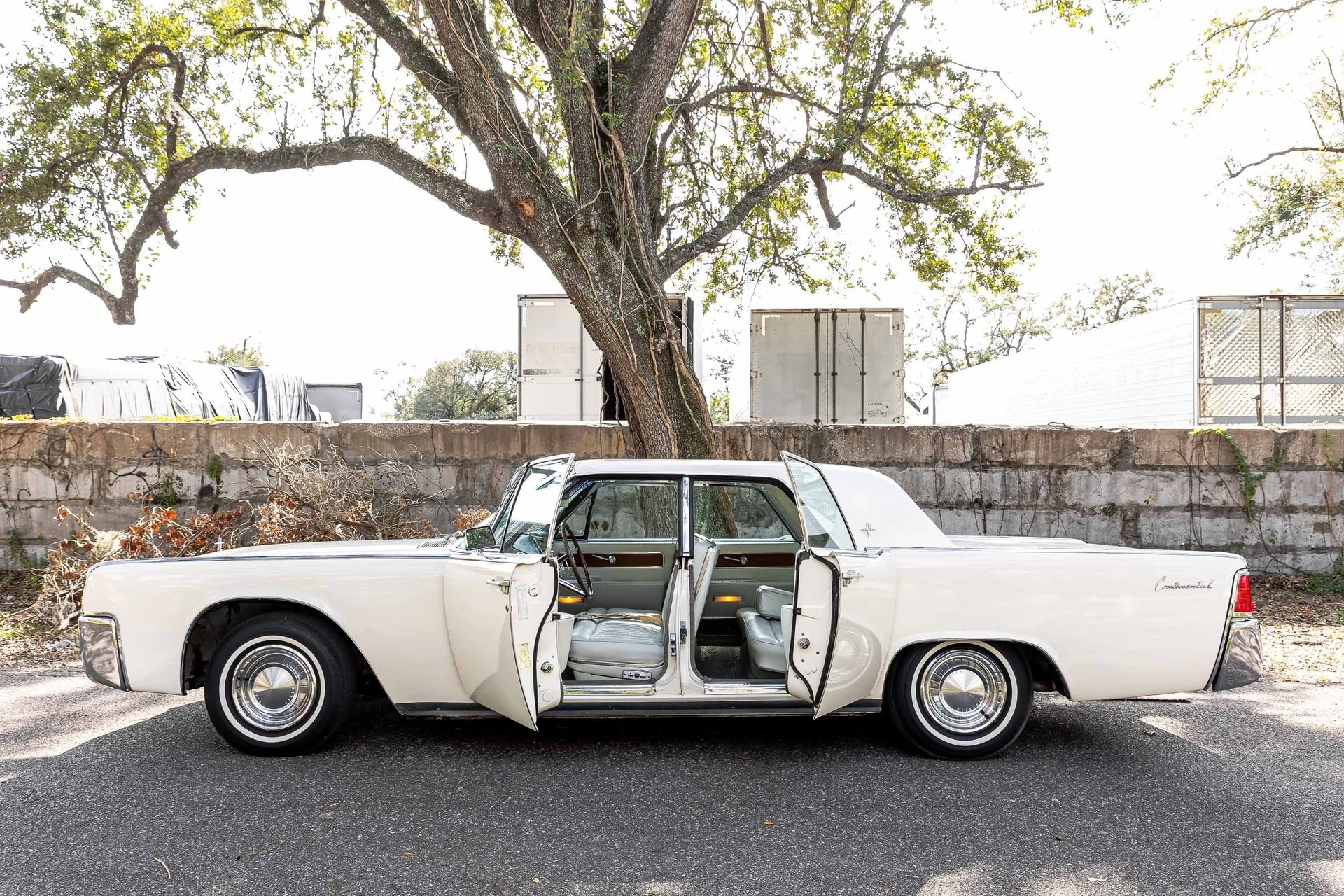
Consumer Reports, which mostly regarded cars in this class coolly and distantly, allowed that the Continental was comfortable, but was really better suited for four occupants than six, whatever the specifications said, and however much Lincoln-Mercury claimed to have carved out a little more space here and there. The Continental of this era was originally conceived as a Thunderbird, and it still shared its cowl and some of its body structure with the T-Bird, which entailed some compromises to its proportions and interior dimensions.
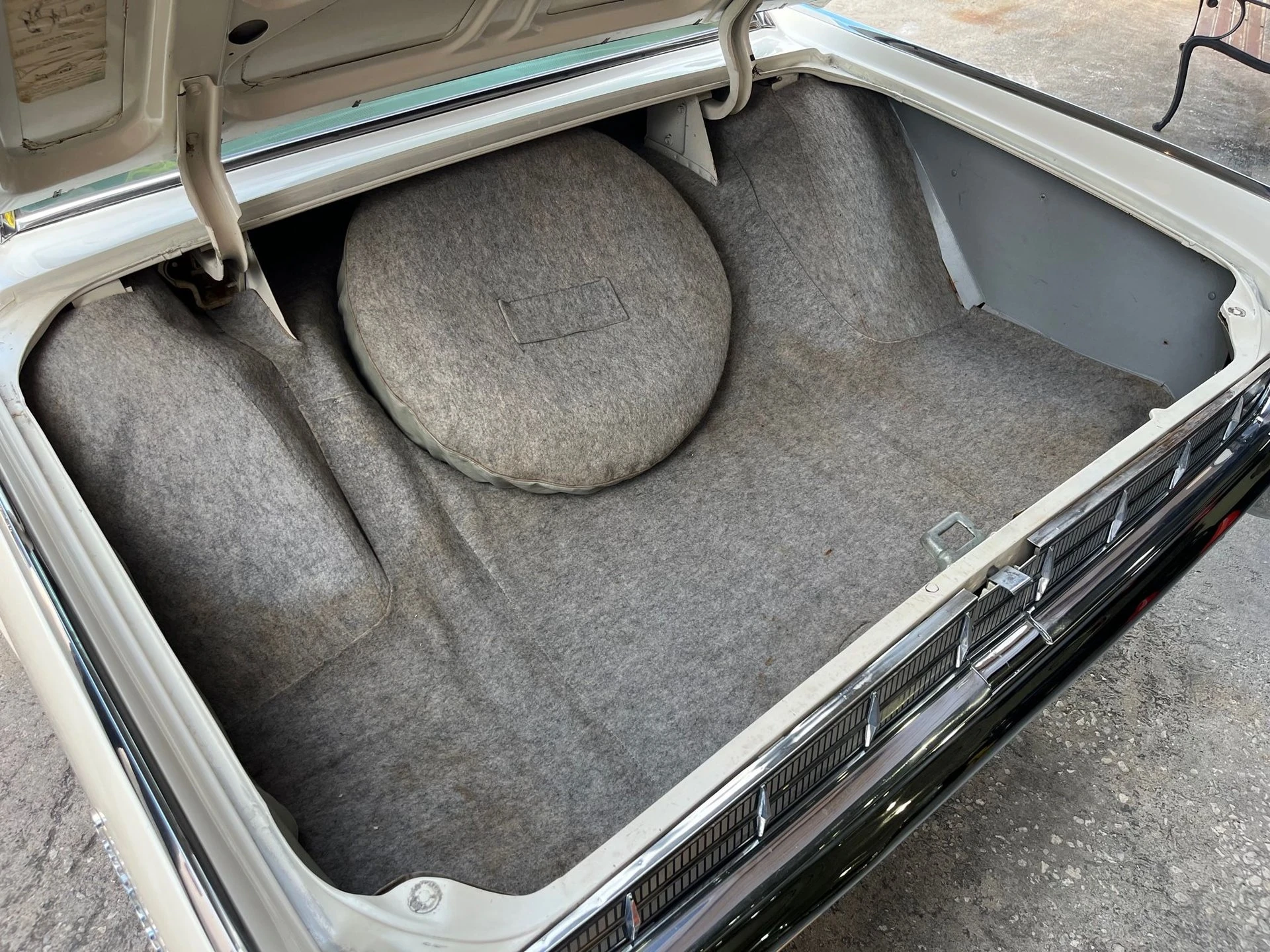
For the most part, I don’t think people cared about the dimensions, although the trunk was awfully small for a car this size. Lincoln-Mercury rated its usable luggage capacity at 13.5 cu. ft. trunk, less than a Plymouth Valiant sedan, and the convertible was even worse, since luggage space had to coexist with the bulky and elaborate convertible top mechanism. If your ego depended on having the biggest car on your block or if you expected to take your whole wardrobe on road trips, the Continental came up just a tad bit short.
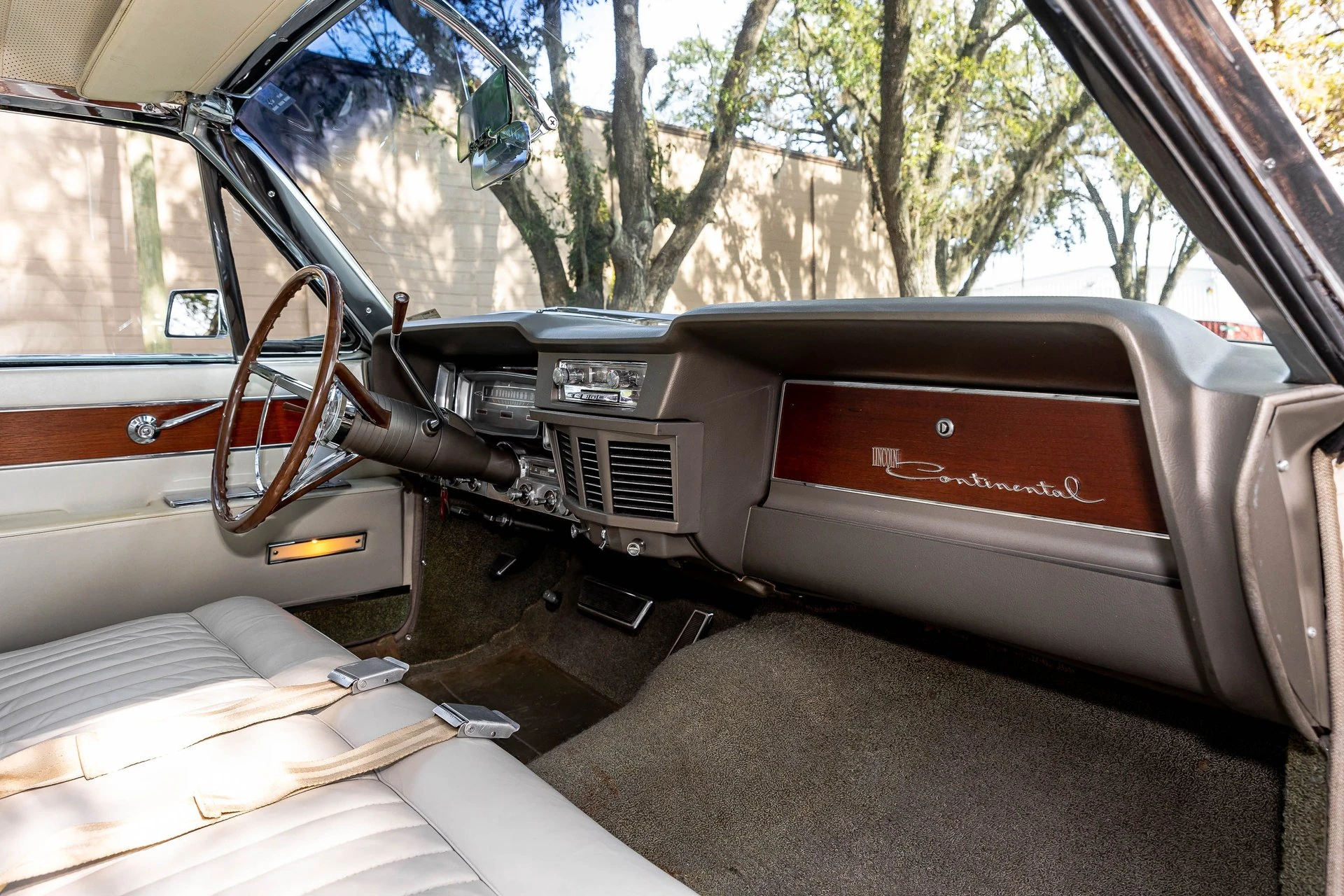
If I’m a little ambivalent about the exterior, I have fewer reservations about the Continental interior. It’s not a sporty cabin in any way, but it’s classy and restrained for an American luxury car of this era, with visibly higher-quality materials than would become the norm by the 1970s.
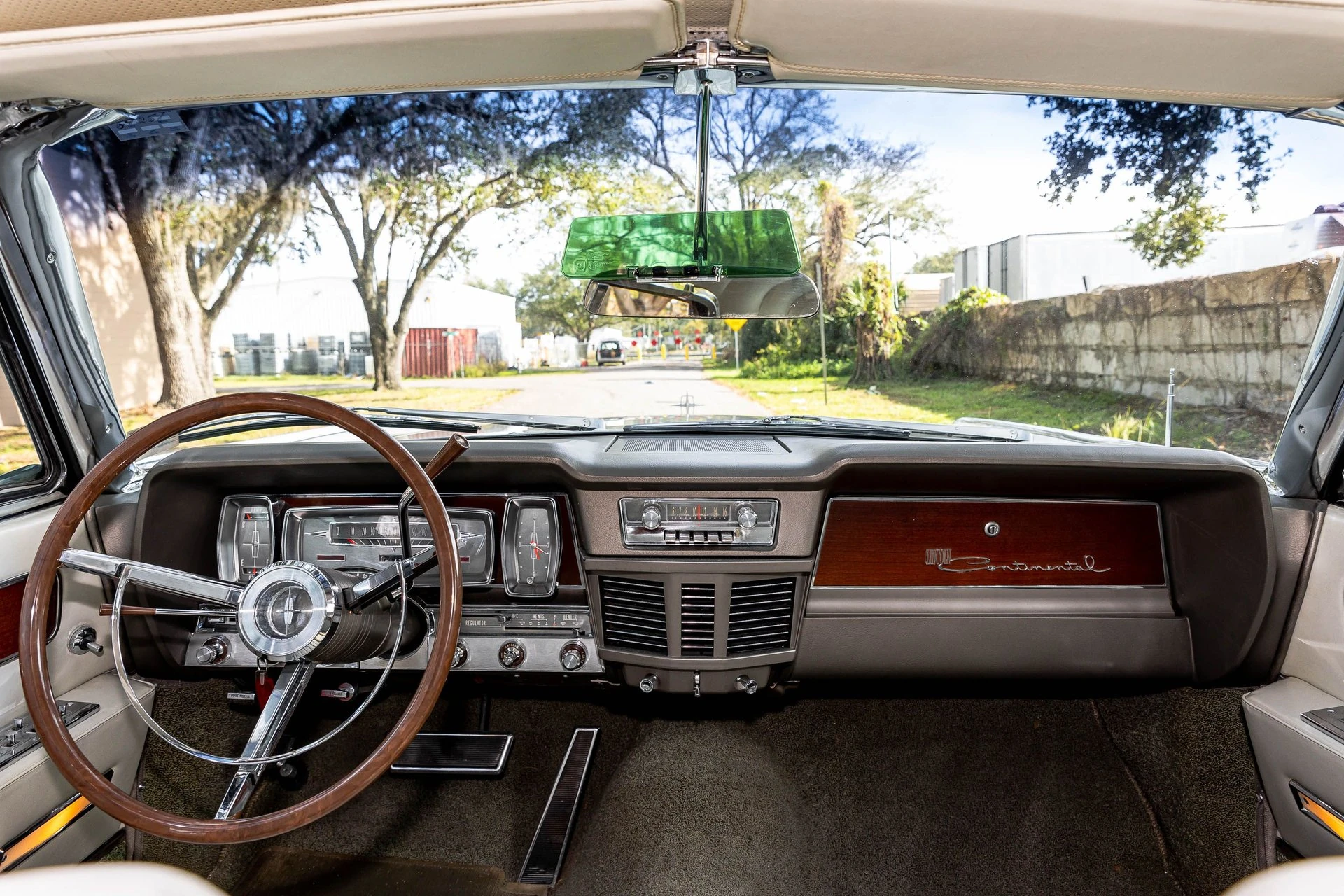
The Continental was also a remarkably well-equipped car, second only to the short-lived Chrysler New Yorker Salon. Continental standard equipment included the expected basics (automatic transmission, power steering, power brakes), plus power windows (including vent windows), power door locks, a 6-way power seat, whitewall tires, and a pushbutton AM radio. (AM/FM was an additional charge.) The Cadillac De Ville had power windows and (on some body styles) a 2-way power seat, but you paid extra for the rest, which helped to explain the $637 difference in the base prices of these cars.
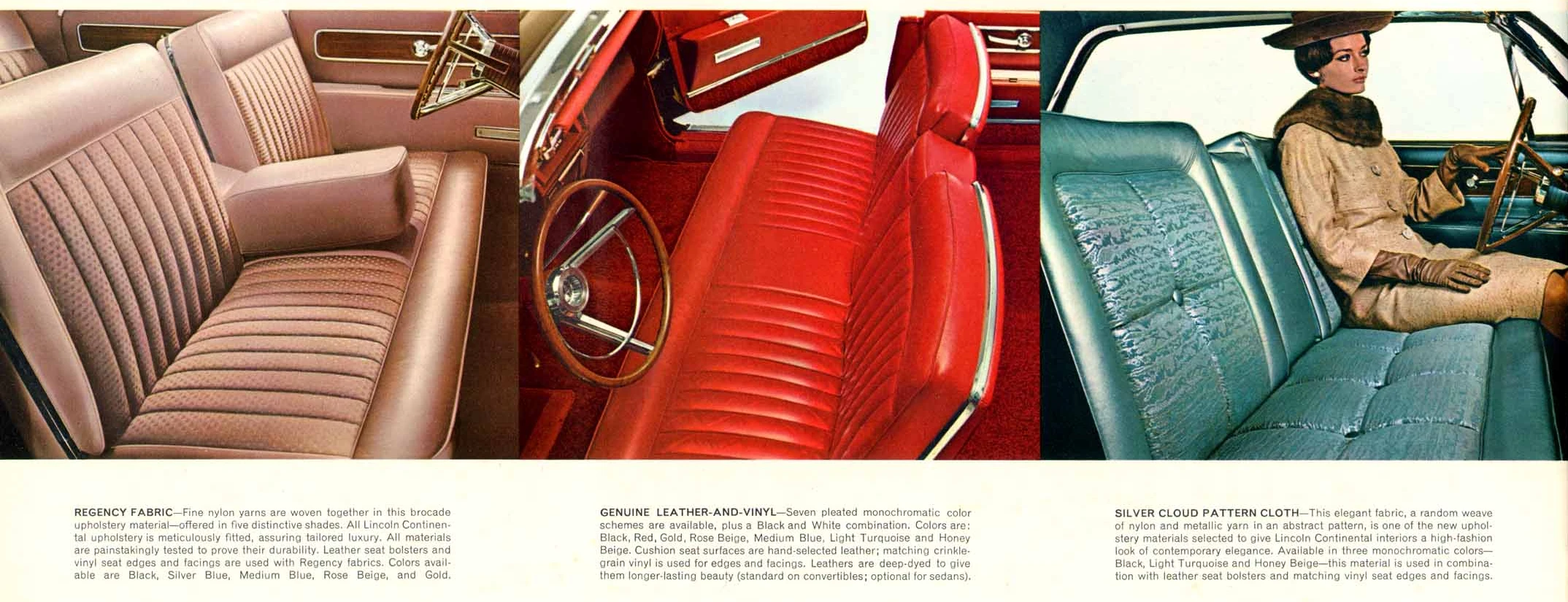
Given Lincoln’s modest sales volume in this period, they offered a remarkable variety of interior decor choices. This was a crucial lesson that Ford Motor Company and General Motors had learned after the expensive failure of the ultra-luxe Continental Mark II and Cadillac Eldorado Brougham of the ’50s: Actual bespoke luxury cost too much to be profitable, but giving customers an array of options for color and materials was enough to make a high-end car feel like a custom job without requiring prohibitive tooling investments or labor costs.
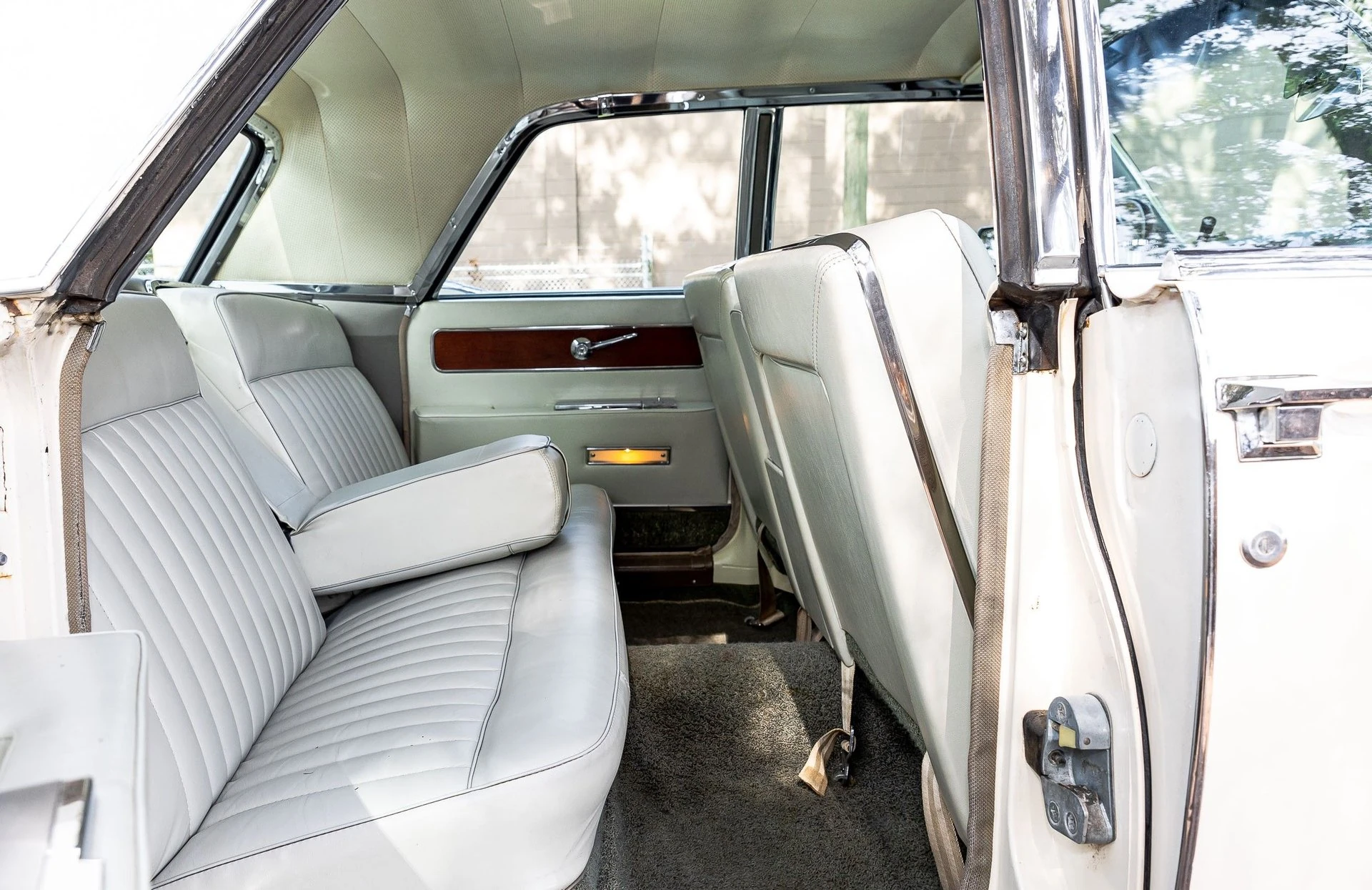
I looked through the Lincoln Continental Colors and Upholstery Selections dealer book and found that in 1963, Lincoln offered 17 combinations of interior color and upholstery for Continental sedans. The following is a list of those choices; the numbers in parentheses are the trim codes that appeared on the warranty plate:
- Silver Cloud Pattern cloth (box pleat), bolstered in leather
- Honey Beige (Trim Code 64)
- Black (Trim Code 66)
- Turquoise (Trim Code 67)
- Regency cloth (rollover pleat), bolstered in leather
- Silver Blue (Trim Code 70)
- Rose Beige (Trim Code 71)
- Blue (Trim Code 72)
- Black with white leather (Trim Code 76)
- Gold (Trim Code 78)
- Leather (rollover pleat), with vinyl edges and facings
- Rose Beige (Trim Code 81)
- Blue (Trim Code 82)
- Honey Beige (Trim Code 84)
- Red (Trim Code 85)
- Black (Trim Code 86)
- Turquoise (Trim Code 87)
- Gold (Trim Code 88)
- White and Black (Trim Code 96)
- Wool broadcloth (rollover pleat)
- Silver Blue (Trim Code 30)
For comparison, a 1963 Sedan de Ville offered 12 fabric/color combinations as standard options, plus some additional leather colors available by special order. However, Cadillac sold almost three times as many De Villes as Lincoln sold Continentals (79,049 versus 31,233), and that wasn’t counting the cheaper Series 62 or more expensive Fleetwood Sixty Special (which had their own interior selections). With so few Continentals built in these years, production of some of the available interior combinations was undoubtedly quite limited.
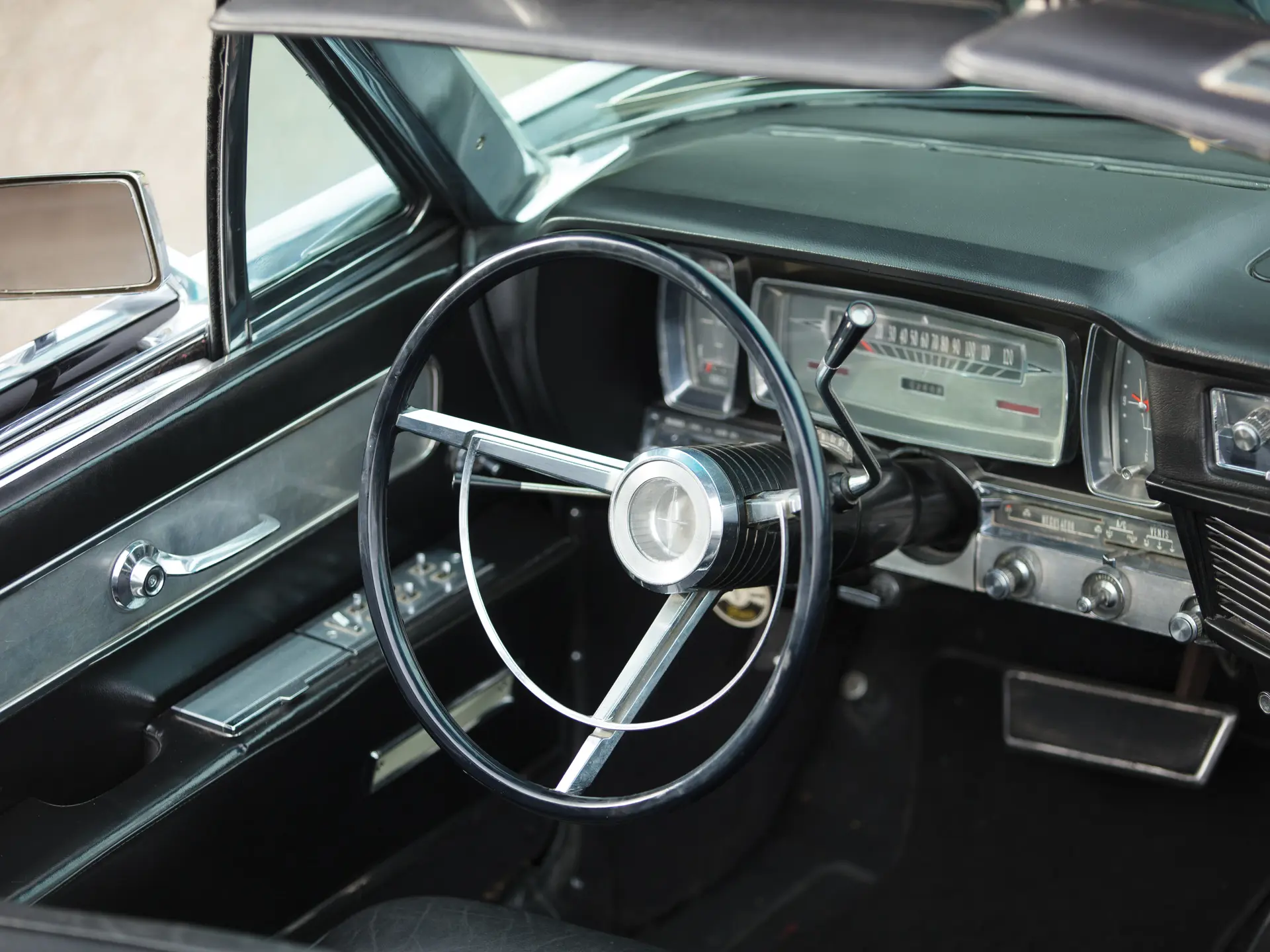
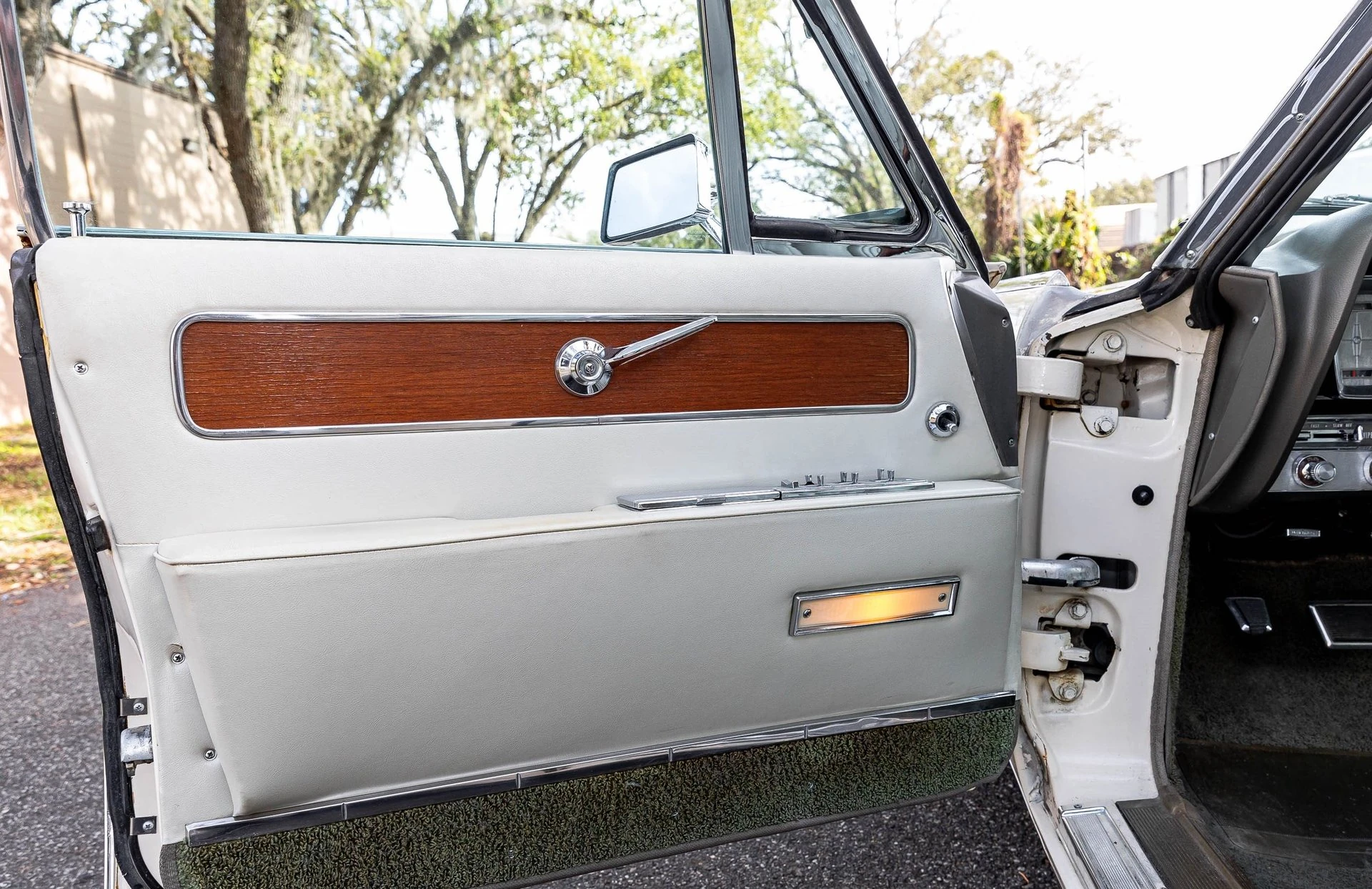
In addition to the upholstery selections, Lincoln also offered another interior variation: You could choose either walnut paneling or brushed aluminum trim on the door panels and dashboard. This created a different visual effect, so in a sense, there were actually 34 available interior combinations.
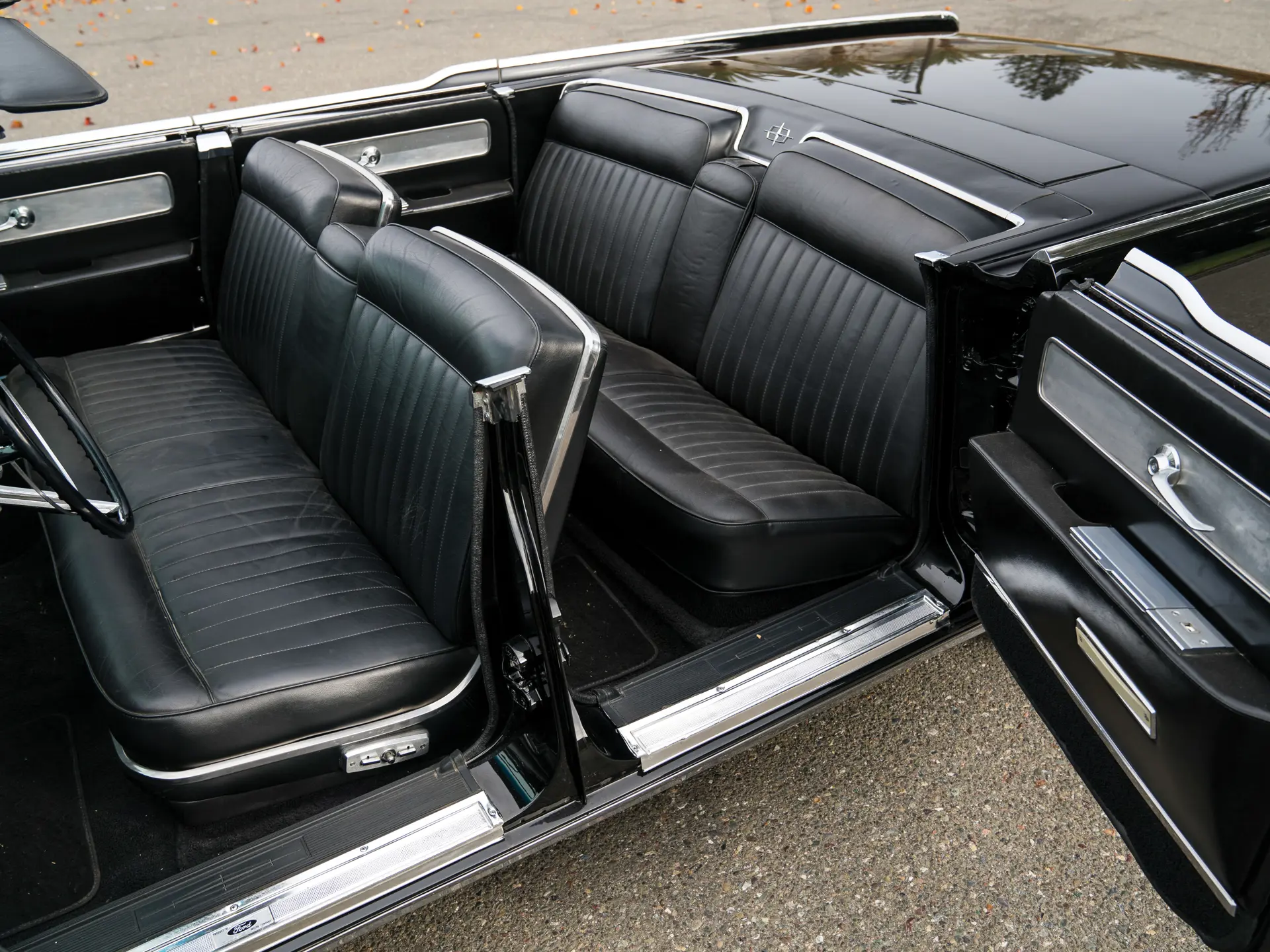
I wish I could show you examples of Continentals in each of the available interior combinations. However, the surviving ’63 Continentals one finds online today are disproportionately convertibles, even though the sedan originally outsold the convertible by almost 9 to 1. The Continental convertible had standard leather upholstery — you paid $100 extra for leather in the sedan — and didn’t normally offer any of the cloth options except maybe by special order.
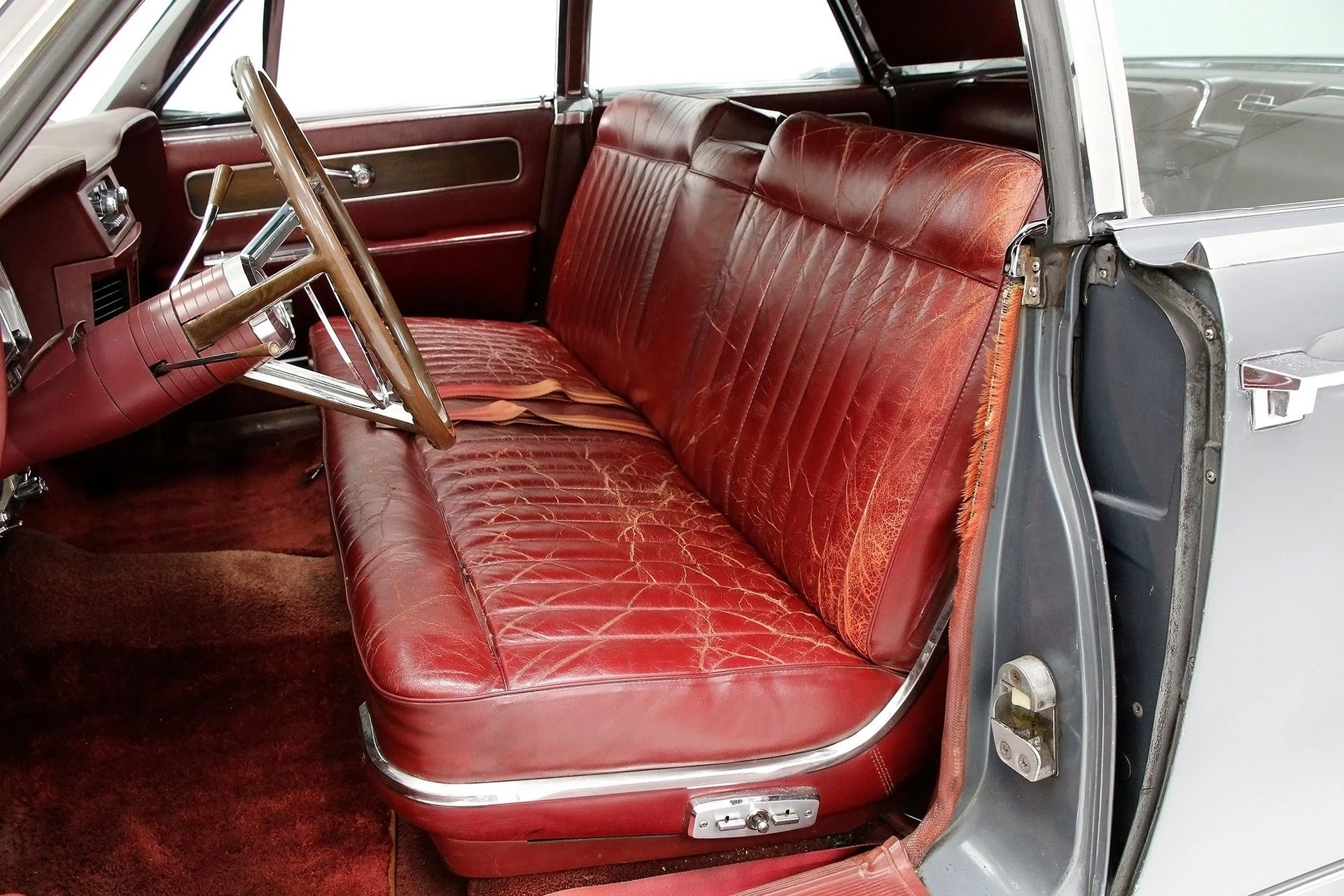
Quite a few surviving sedans have leather upholstery as well. It was a good investment, sometimes worth more in trade-in value than it cost up front, and as it aged, it lent a pleasing Olde World character to the Continental interior.
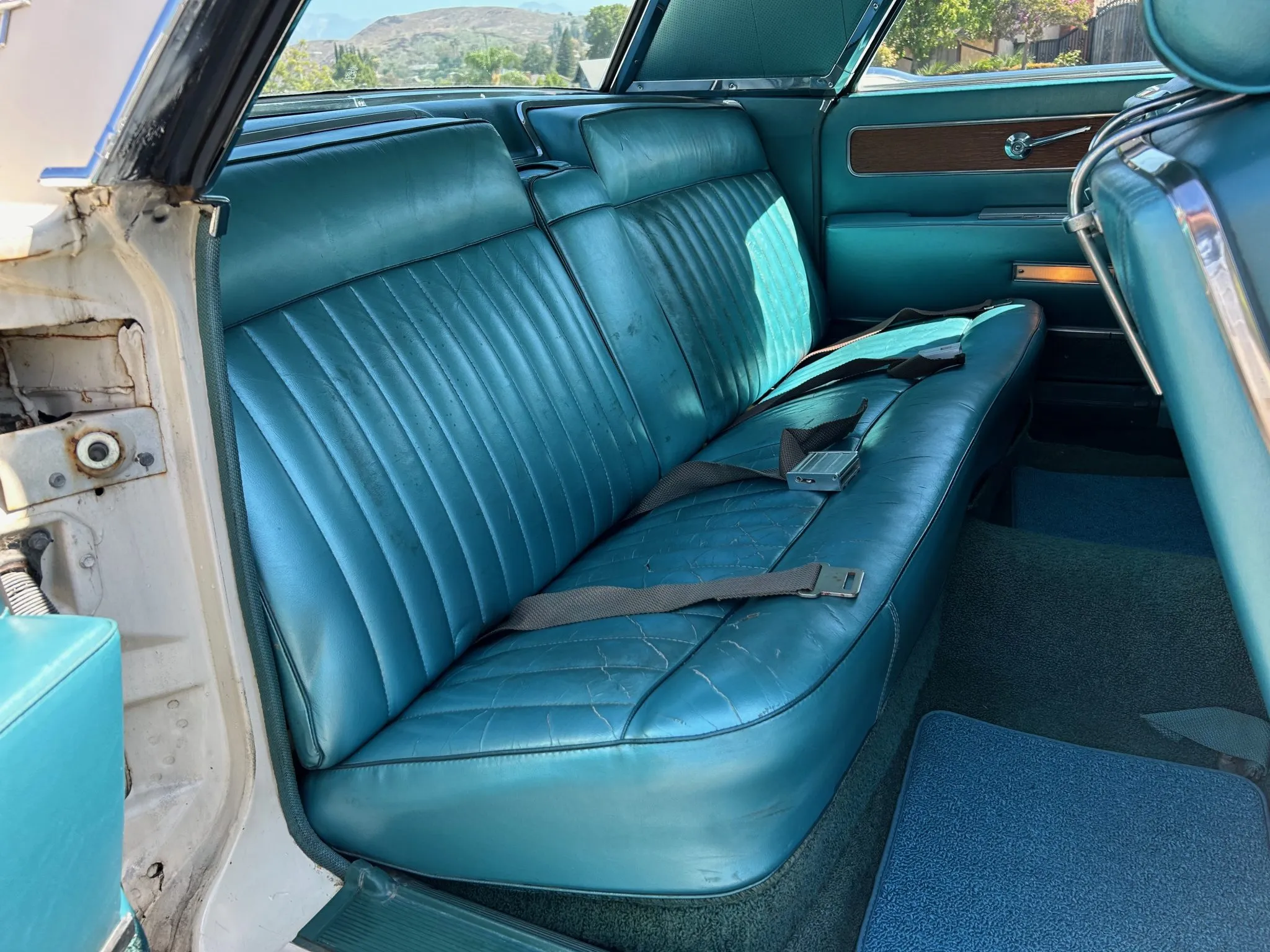
I’m very partial to the turquoise leather, with its metallic sheen.
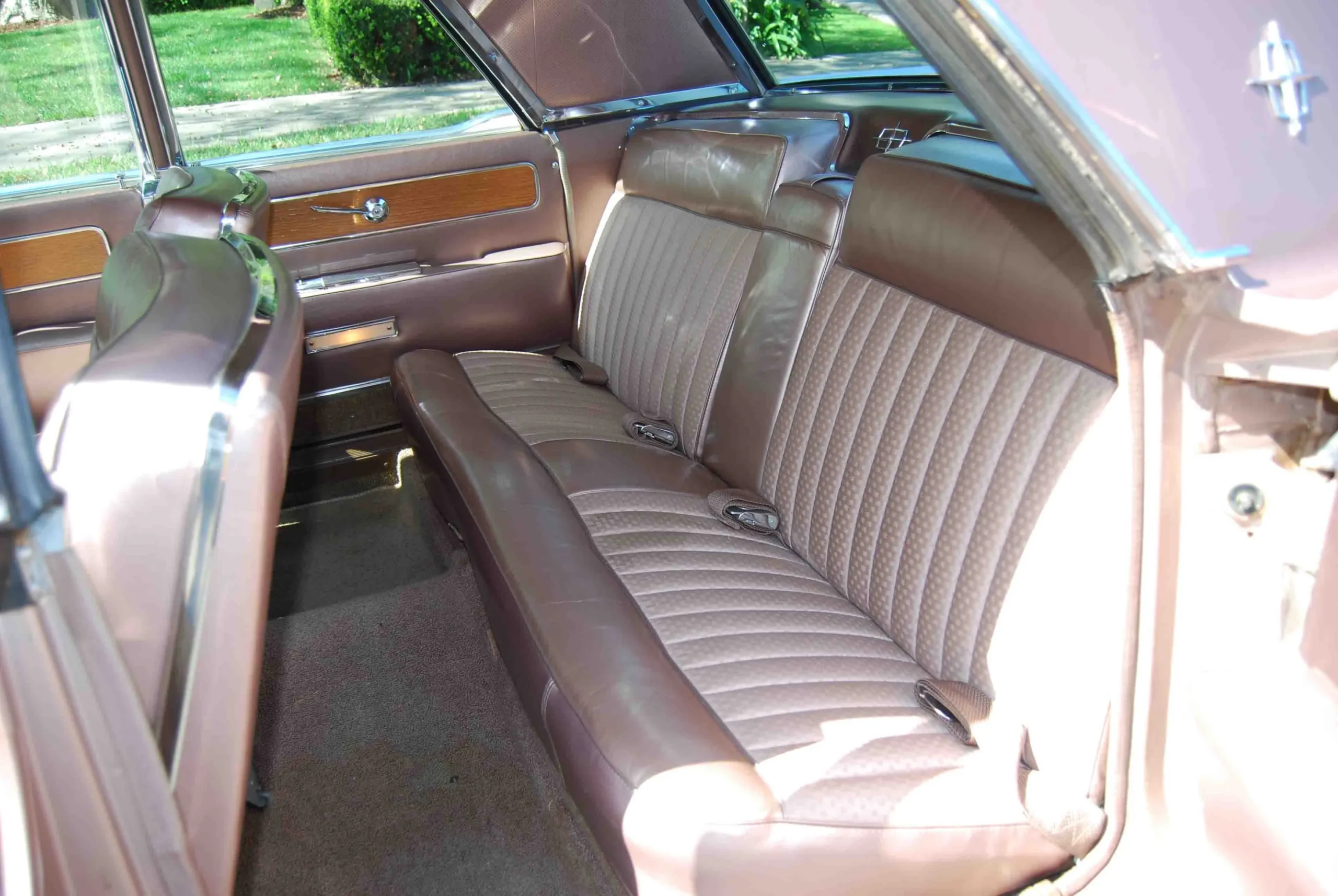
By comparison, I don’t find the Regency cloth as nice to look at, although it feels luxurious.
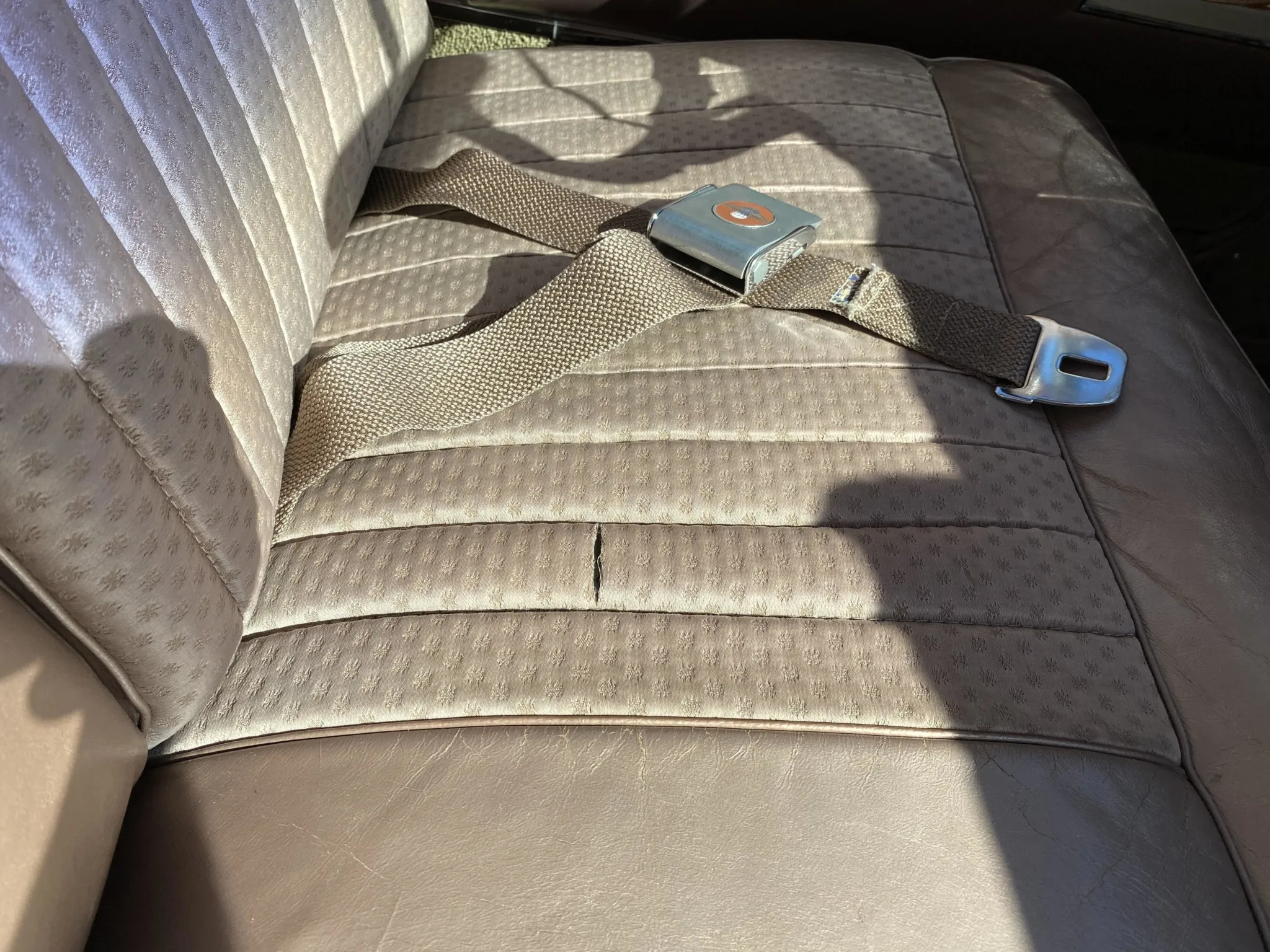
The Regency cloth (above) compared closely with the Cambria pattern cloth optional on the 1963 Cadillac De Ville (below) …
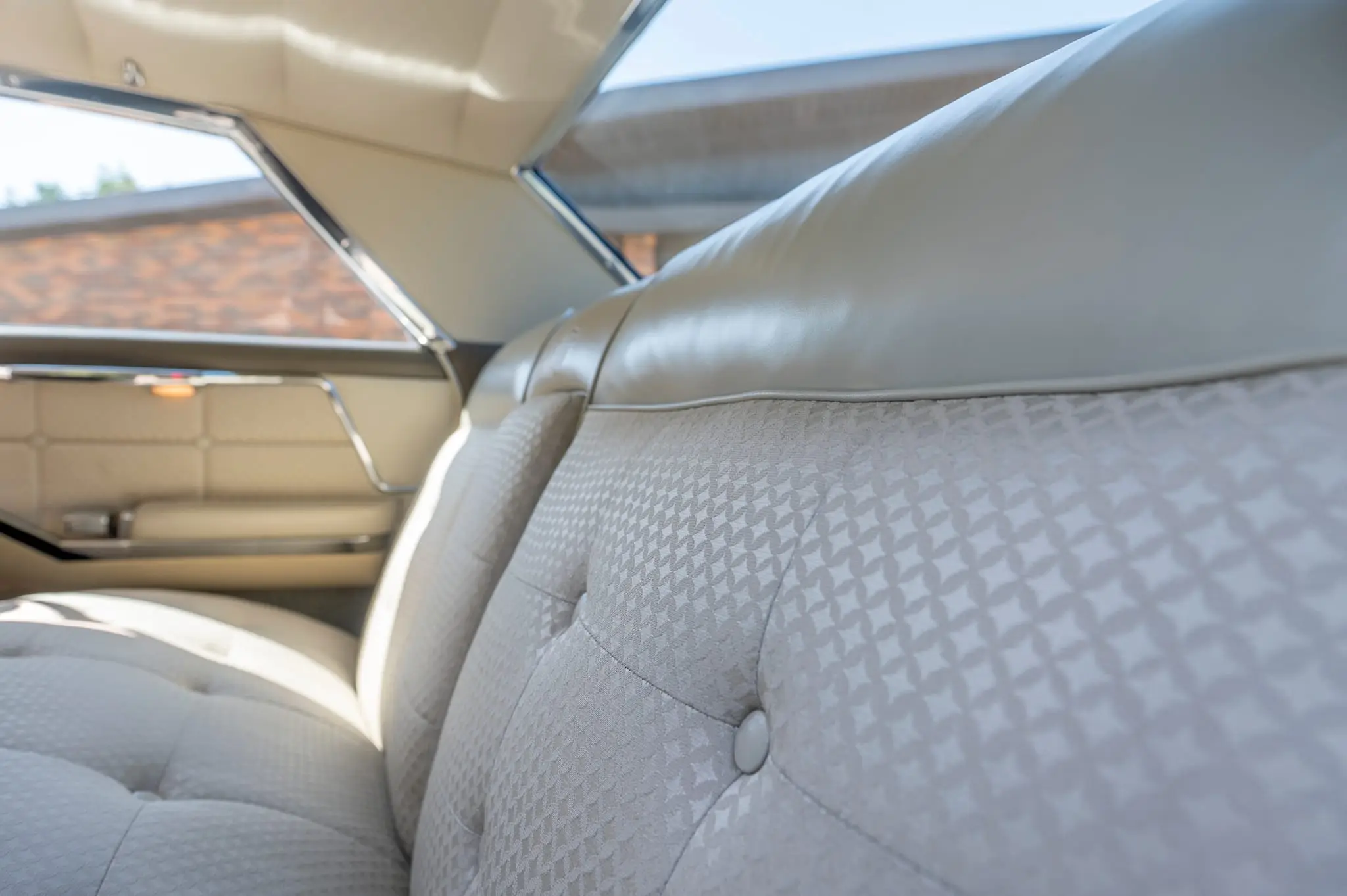
… although the Lincoln upholstery didn’t have the Cadillac’s biscuit-and-buttons stitching pattern.
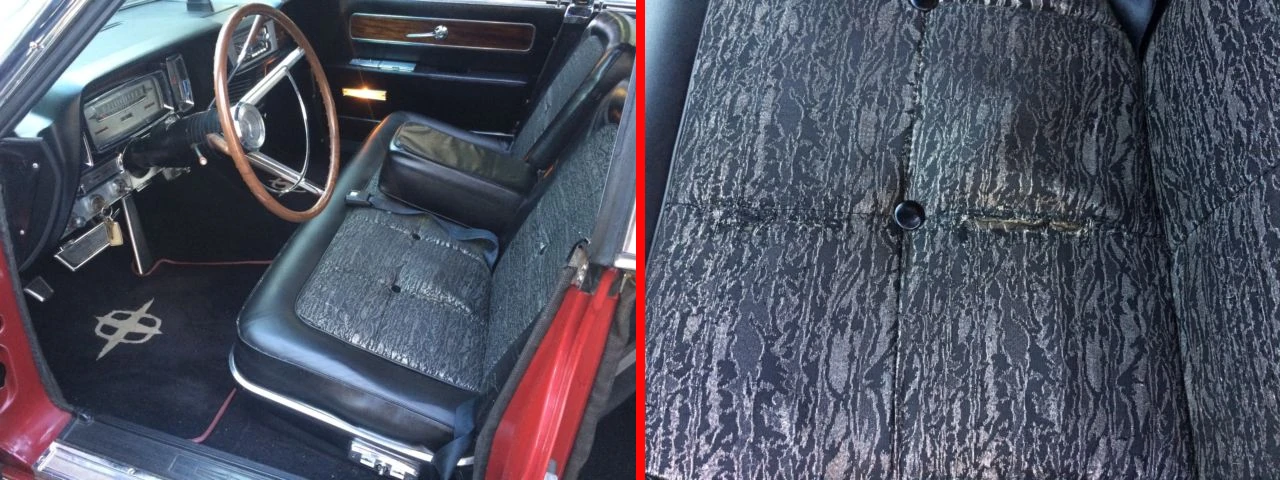
On the ’63 Continental, tufted buttons were limited to the Silver Cloud Pattern cloth upholstery. I wish I’d been able to find higher-resolution photos of that option, as it looked very cool. The random-weave nylon was woven with metallic yarn to give it a bit of sparkle even in black.
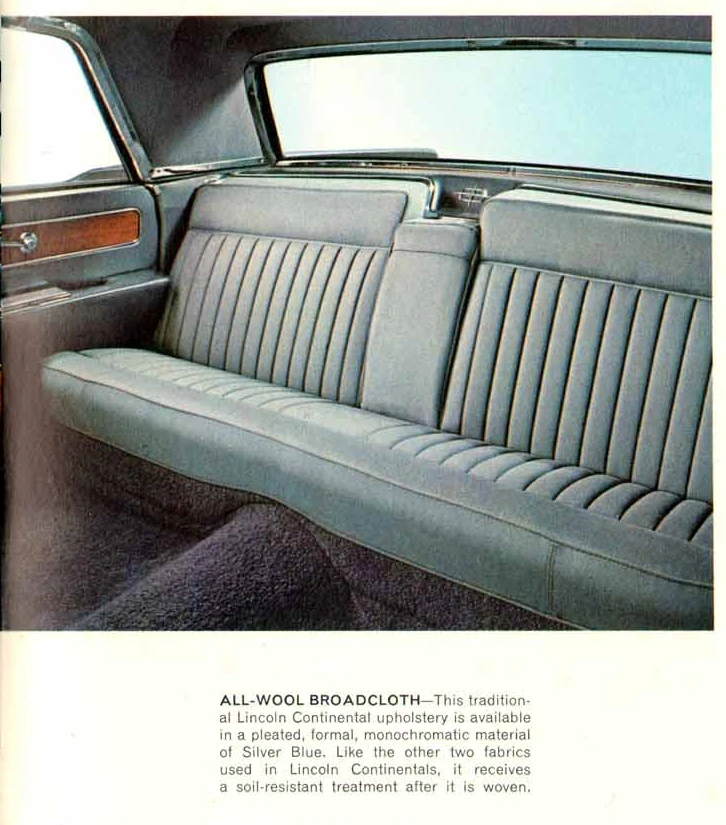
The optional wool broadcloth, available only in silver blue with no leather bolsters, proved hard to find outside the brochures. I wonder if Tatra87 has spotted a broadcloth-upholstered Continental in Japan, where luxury car fanciers tend to shun leather upholstery.
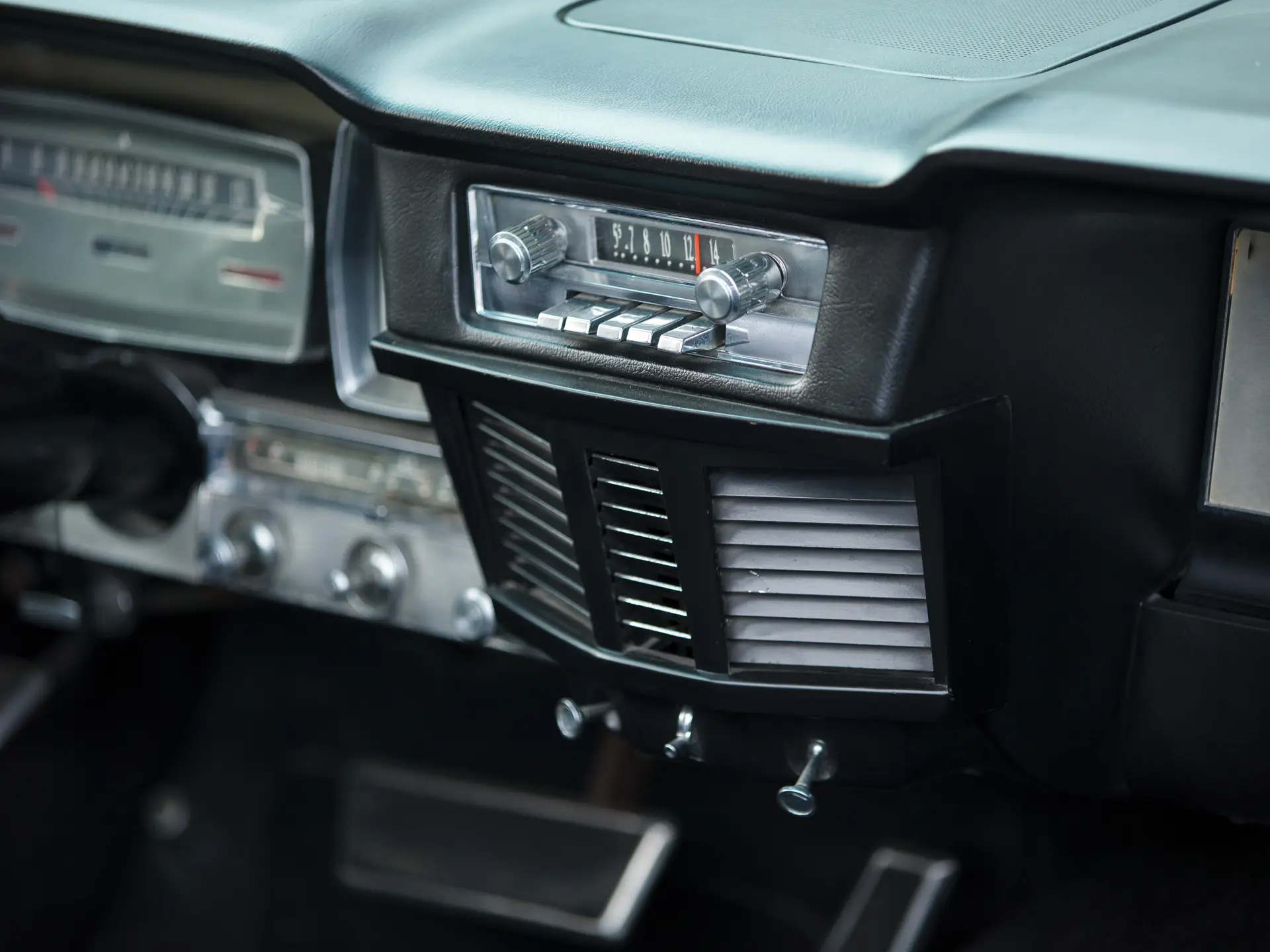
There are a lot of interesting, charming interior details in these cars. Perhaps my favorite is the architectural swell of the radio speaker installation in the center of the dash. Its style is very ’60s, but in character, it seems like a throwback to the late ’30s, when integral radio speakers were first becoming trendy. The ’80s and ’90s cars I grew up with were from the era of standardized DIN slots, which were more practical, but lacked the same sense of occasion.
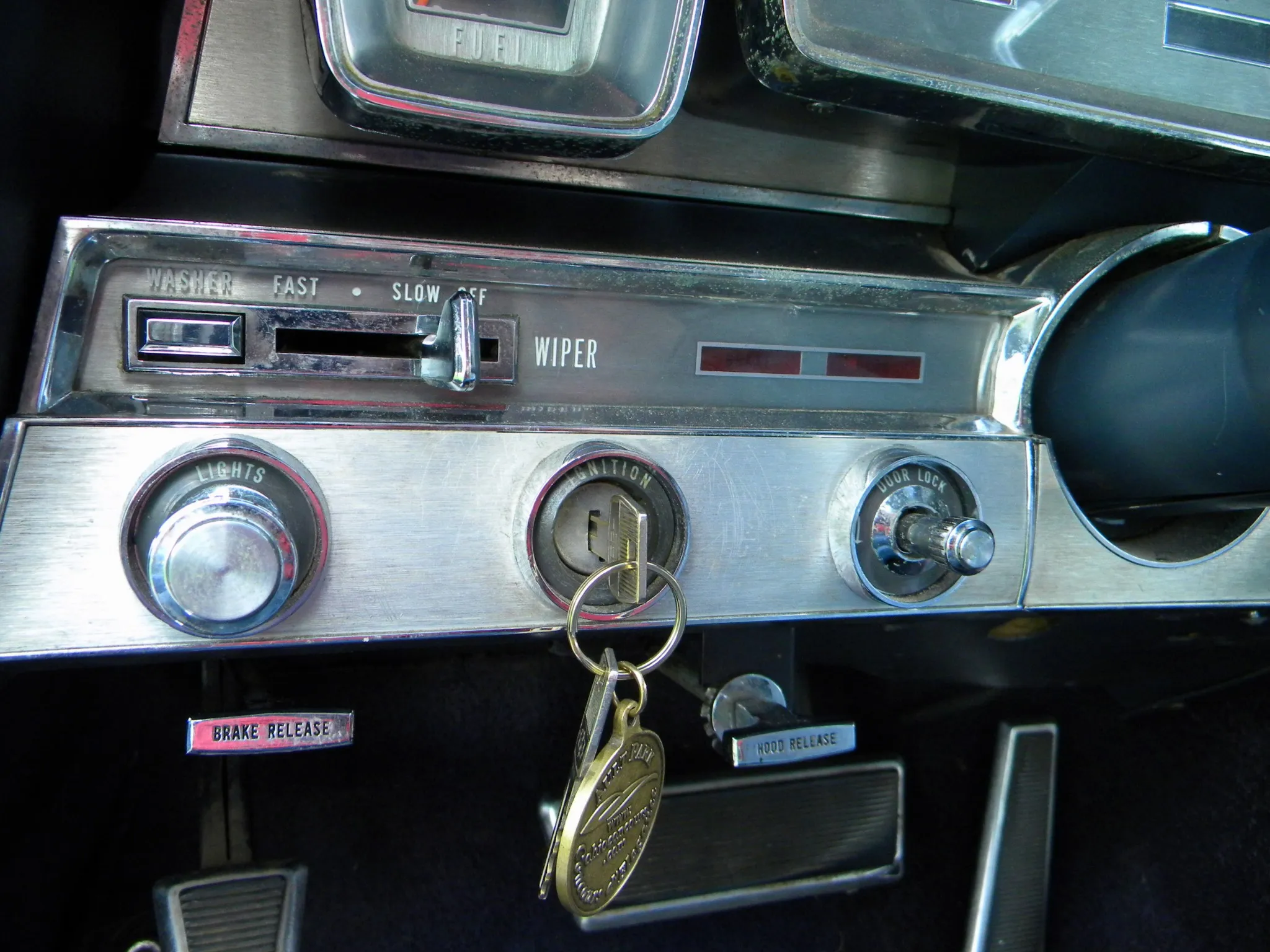
Another notable Continental feature was the hydraulic windshield wipers, which were infinitely variable in an era when two-speed electric wipers were still considered a luxury.
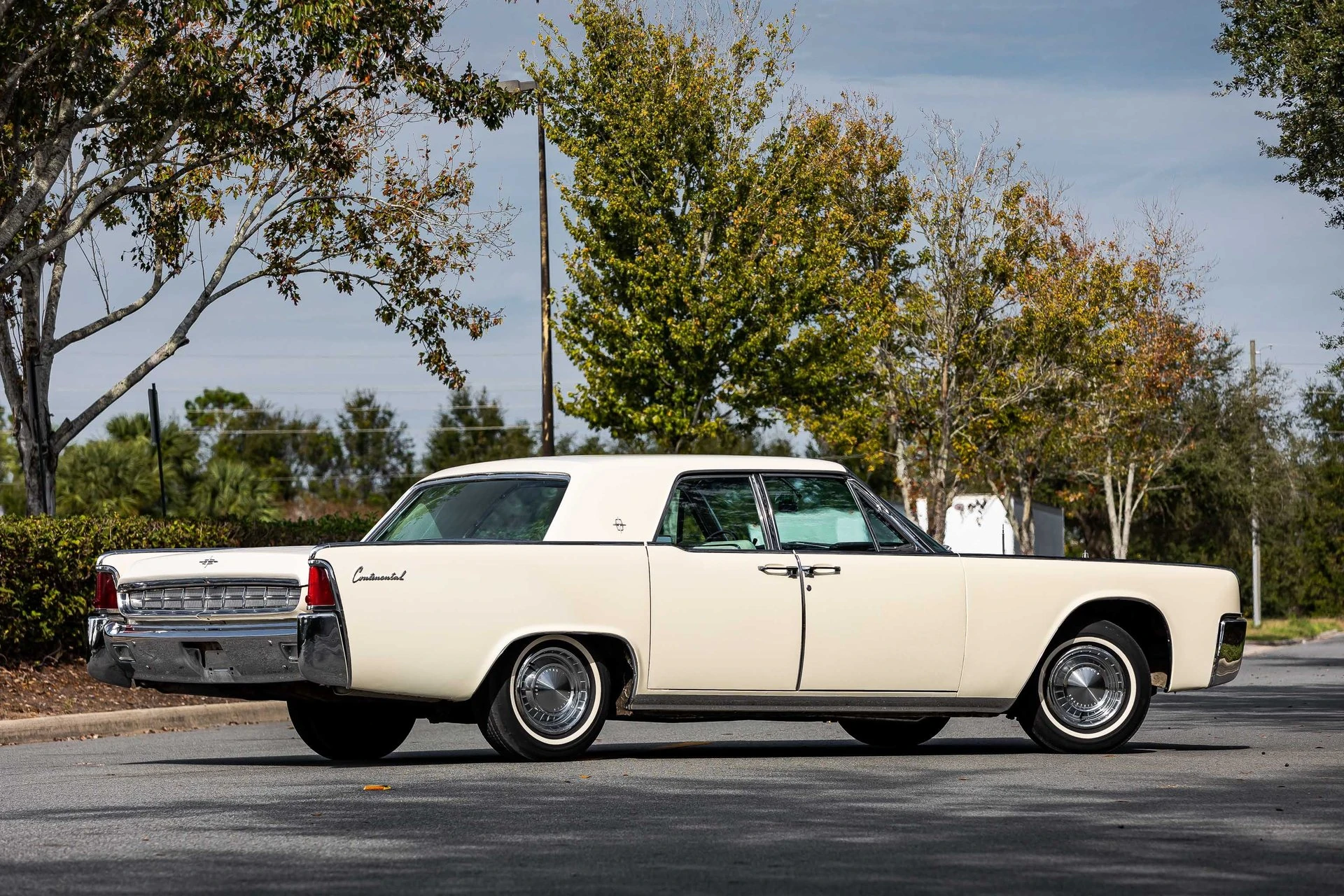
For those of us reared on vintage Car and Driver snark, learning to appreciate cars like the Continental (other than as abstract objets d’art) requires internalizing a different set of values — judging them not as Driving Machines, but as one would the kind of luxury home featured in Architectural Digest, true living rooms on wheels.
Related Reading
Vintage Car Life Road Test: 1961 Lincoln Continental Sedan – “The Best-Looking American Car Built Today” (by Paul N)
The Missing 1961 Lincoln Continental Hardtop – It Was Cancelled At The Last Minute (by Tom Halter)
Junkyard Classic: 1962 Lincoln Continental – Ashes To Ashes, Dust To Dust (by Jim Klein)
Lincoln Continental Vs. Cadillac Sedan De Ville – Which Held Its Value Better In The Early 1960s? (by me)























Great article, thanks for your work.
One can bet the wool broadcloth interior would be the rarest; especially when it was offered in only one shade. Studebaker offered four different colors in their broadcloth interior option on Cruiser models in 1963, and even with four color choices, very few of them were equipped with the broadcloth seats.
“I wonder if Tatra87 has spotted a broadcloth-upholstered Continental in Japan, where luxury car fanciers tend to shun leather upholstery.” Because the Japanese know better. The “Leather” seats in cars are accurately called “pleather” for a reason – real leather has do be coated in what essentially in plastic to survive the extreme environment of vehicle interiors. Looks like -15F to 150F. “Leather” seats are also inferior in the way remain frozen or frying pan hot in weather extremes, no such problem w/ a good broadcloth. No heating or cooling needed. PLUS cloth holds the passengers in place, while leather does the opposite.
The Japanese developed the modern fix for people who wanted leather w/o all the problems – alcantara or “ultrasuede” is a Japanese invention and used in truly top tier cars. It is a brilliant engineered blend of around 68% polyester and 32% polyurethane that completely eliminates the “frying pan” effect of hot leather while offering superior lateral grip for spirited driving. Despite the hype, here are no vehicles that use full aniline leathers and semi are plastic coated. Even the highest-end “aniline” automotive leathers feature a microscopically thin clear protective lacquer or fluorocarbon treatment to provide baseline UV and moisture resistance while semi-aniline automotive leather is absolutely coated in a polyurethane (plastic) resin.
I believe marketing and ignorance caused high-end fabrics like wool, mohair, and velour to fall out of favor in Western luxury cars while fabrics stayed alive in Japan.