
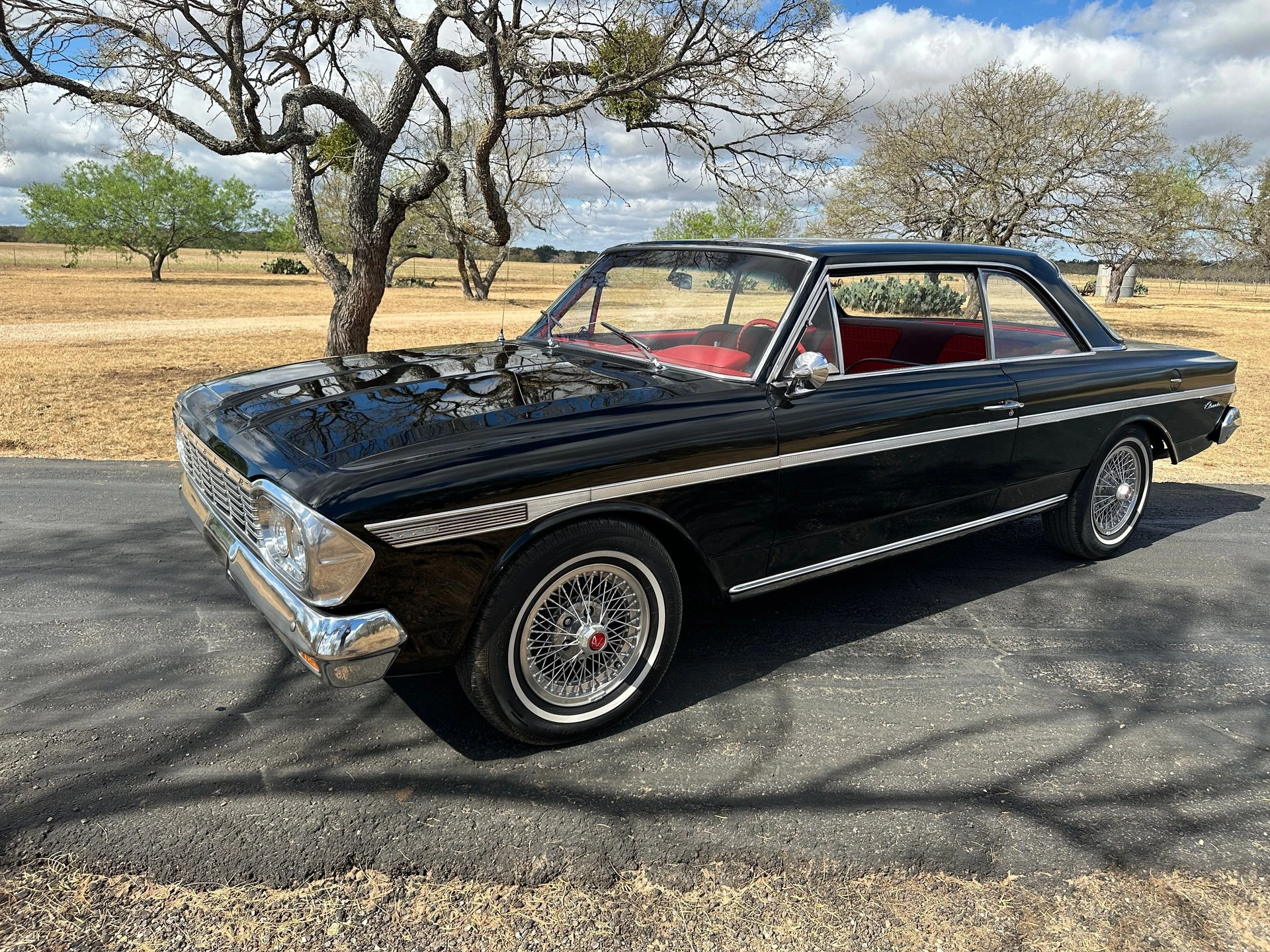
“The heart wants what it wants” is a frequently recurring sentiment when it comes to old cars, and one that justifies a lot of expenditures (of time, money, and effort) that don’t otherwise make a lot of sense. This 1964 Rambler Classic 770 hardtop is a case in point: It started off as a six, but someone went to a surprising amount of trouble to make it into a well-equipped V-8 of a kind rarely seen even when these cars were new.
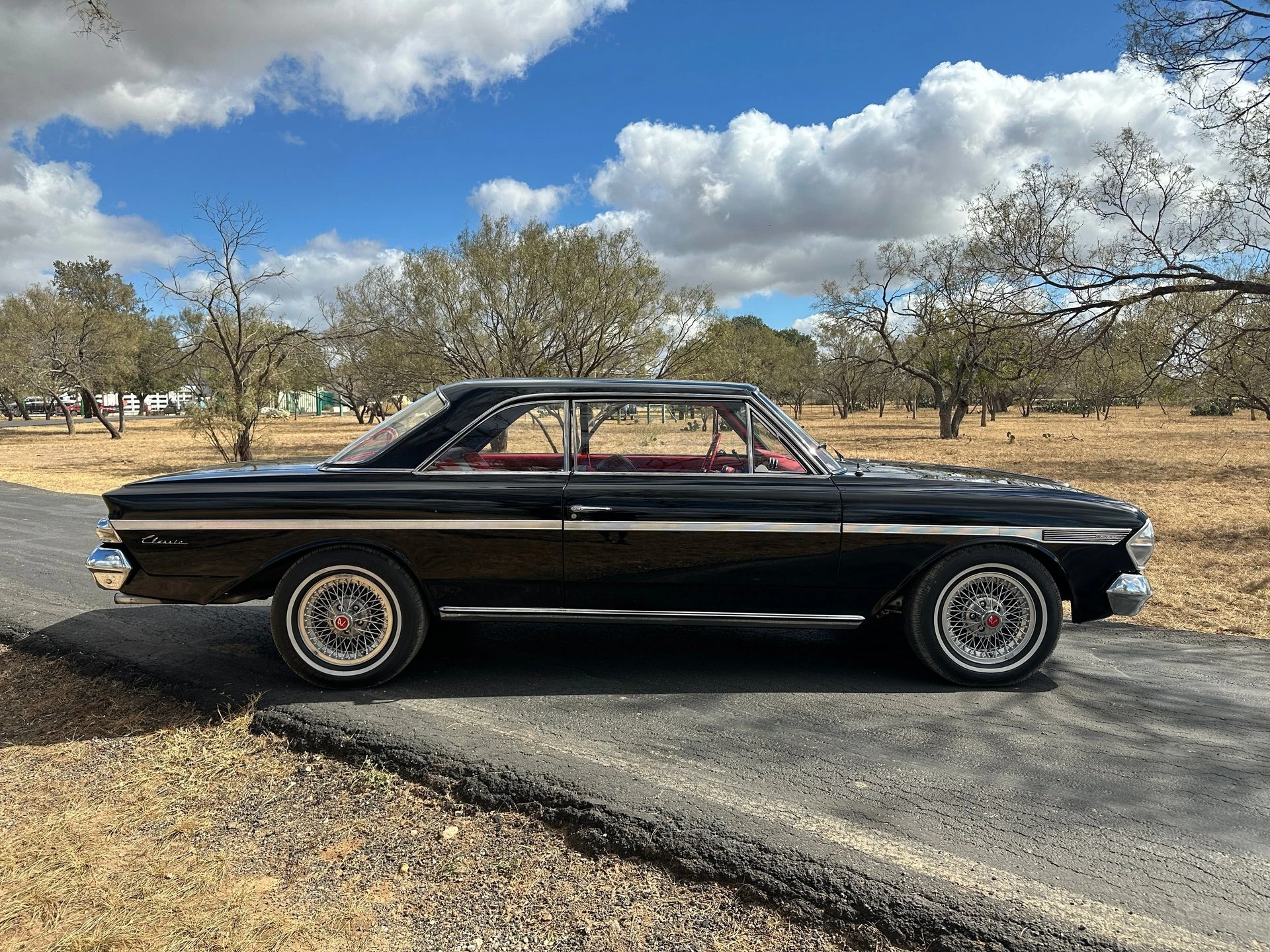
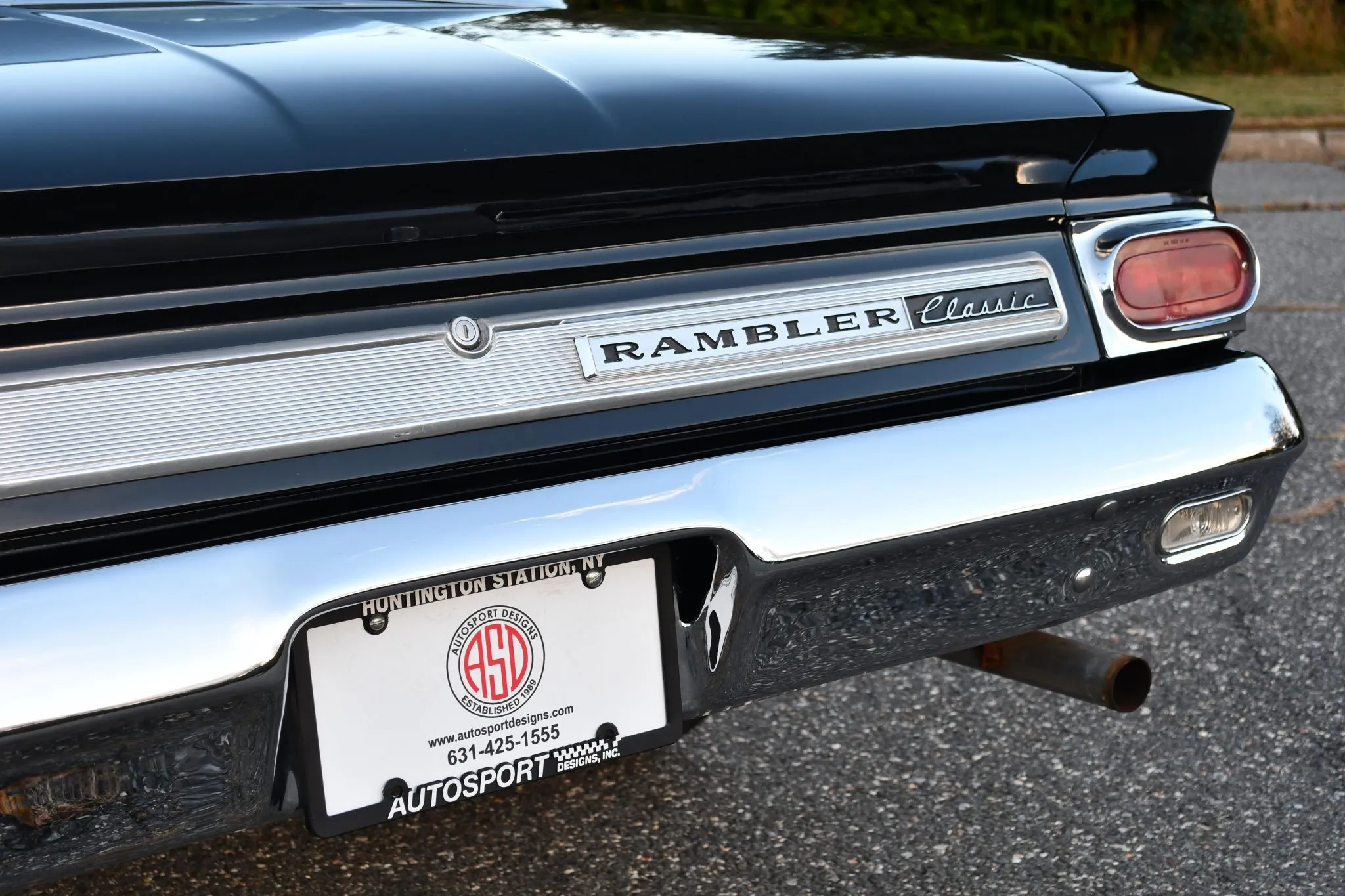
I’ll say this for the 1964 Rambler Classic: It was one of the best-looking cars AMC fielded in the 1960s, especially with its attractive new-for-’64 two-door hardtop roofline. You can tell at a glance that this wasn’t what Americans of the ’60s considered a big car; stretching 190 inches on a 112-inch wheelbase, the Classic was at the lower end of the intermediate range, 7.8 inches shorter than a 1964 Ford Fairlane. “Rambler Classic is trim where a car should be trim — on the outside,” AMC boasted. A sensible amount of car, in other words, pleasingly presented in proportions and detailing.
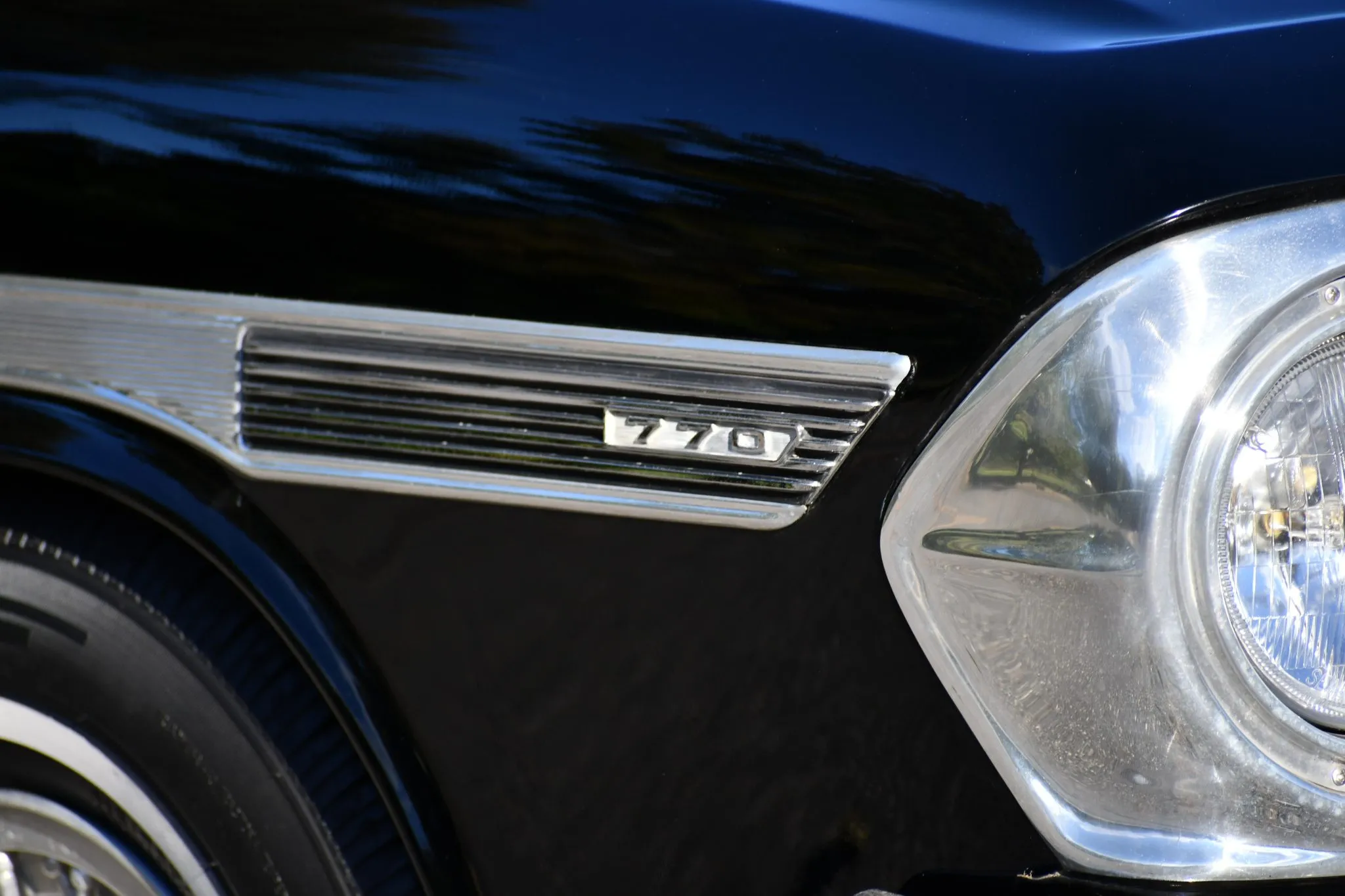
This car is a Classic 770, which was the fanciest iteration of the Classic series. Above it in price and appointments was the Ambassador 990, which in 1964 was the same size inside and out, but had better trim and the larger of AMC’s V-8 engines. The Ambassador was significantly but not dramatically more expensive, starting at $2,736 for a 990 hardtop where the Classic 770 hardtop was $2,497 with a six-cylinder engine or $2,602 with a V-8. Judging by the sales figures, AMC customers didn’t feel strongly motivated to pay extra for either — both the cheaper Classic 550 and 660 greatly outsold the 770 series, which in turn outsold the Ambassador.
Commercially speaking, 1964 was the beginning of the end for AMC. A few years earlier, in 1961, they had briefly displaced Plymouth to achieve the coveted No. 3 slot in total model run output, and their model year sales in 1962 and 1963 had been over 400,000 cars. They still sold nearly that many for 1964 (379,412), but they had slipped to 8th place. More troublingly, Chevrolet had now entered the intermediate field with the new A-body Chevelle/Malibu, while Pontiac, Oldsmobile, and Buick had rolled out their own A-body midsize cars. The midsize Rambler had done well against the first wave of GM “Senior Compacts,” but the latest contenders had less eccentricity and lower costs. AMC was surrounded, and about to be overrun.
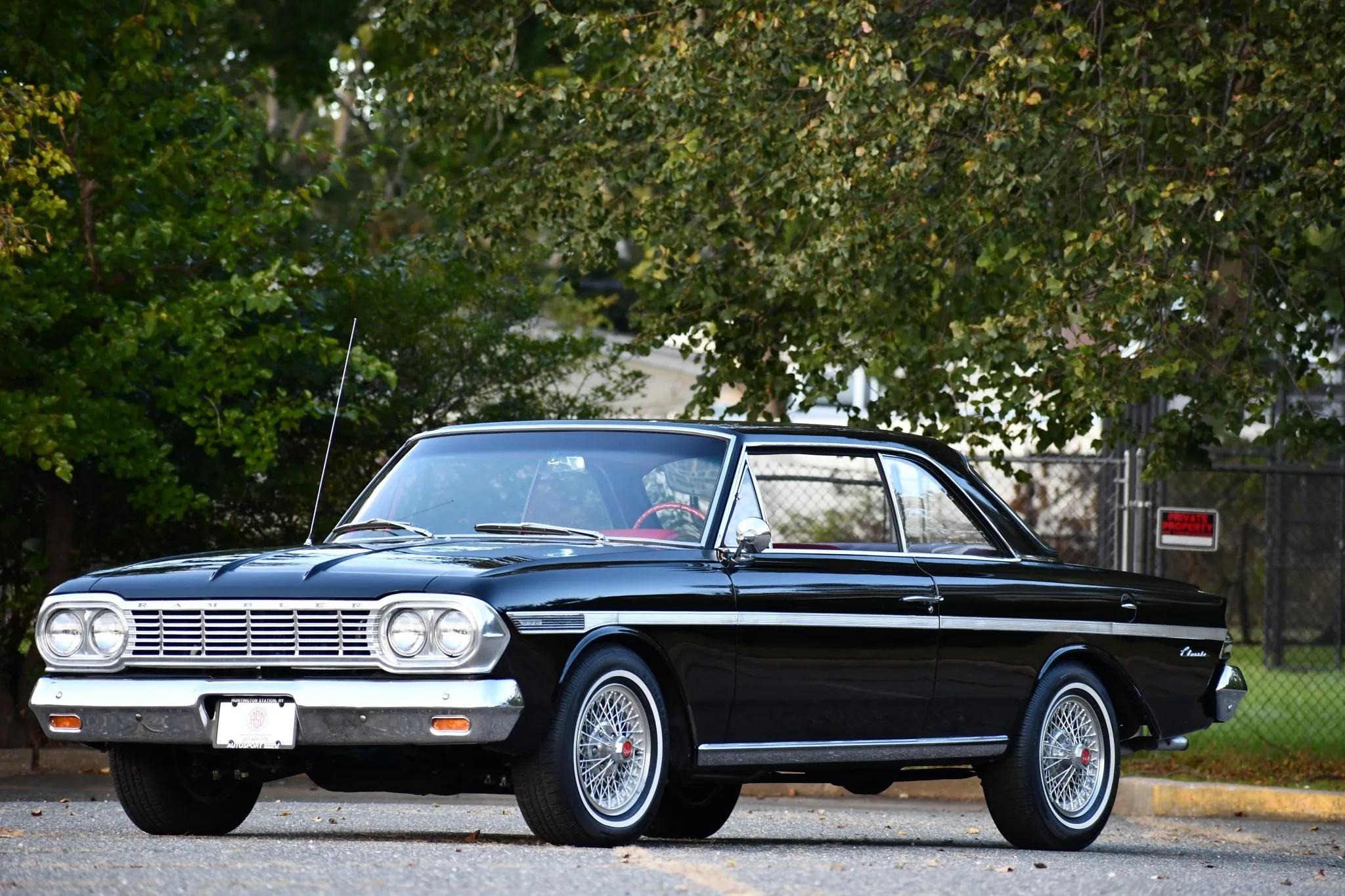
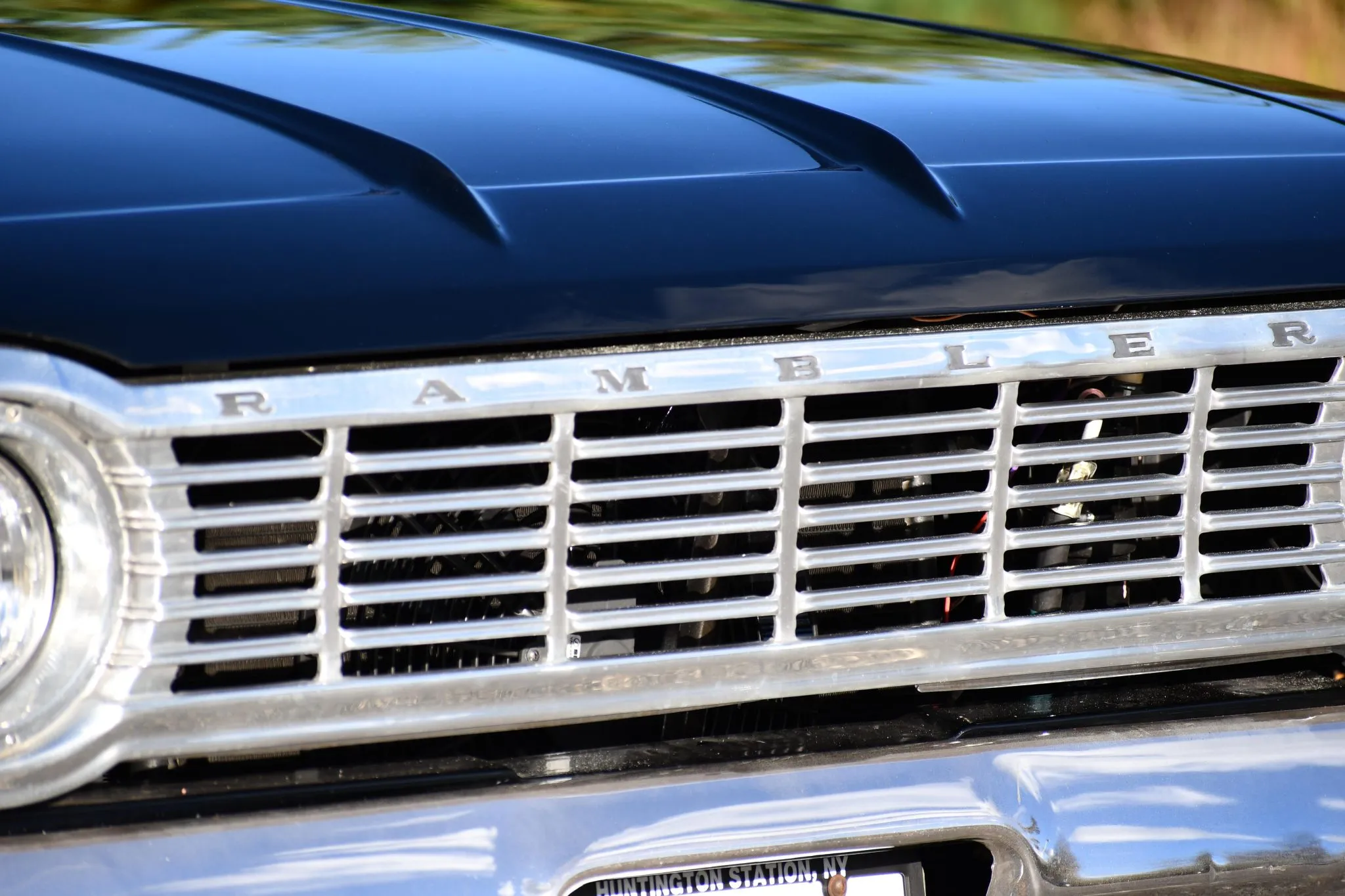
The 1964 Classic was a facelift, but a good one. To modern eyes, it looks like a computer-generated composite of all the contemporary compact and midsize models — a little of this, a little of that — but there was nothing weird or off-putting about it other than perhaps the less-tangible impact of the Rambler image, which was rapidly tarnishing in the face of changing buyer tastes.
Typical Rambler customers were, in a word, cheap. AMC offered a wide array of optional goodies, some of them rather interesting, but buyers mostly didn’t order them. Only 61.6 percent of 1964 Rambler buyers even selected automatic transmission, an unusually low percentage for the segment. Power steering was fitted to only 20.7 percent, and power brakes to just 9.0 percent. Only 36.9 percent of Rambler customers this year bought a factory radio, and a mere 3.9 percent selected power windows. For automakers, selling cheap cars is better than selling no cars, but selling cheap cars when your rivals are selling better-equipped ones tends to be bad for the bottom line, even if your volume is good.
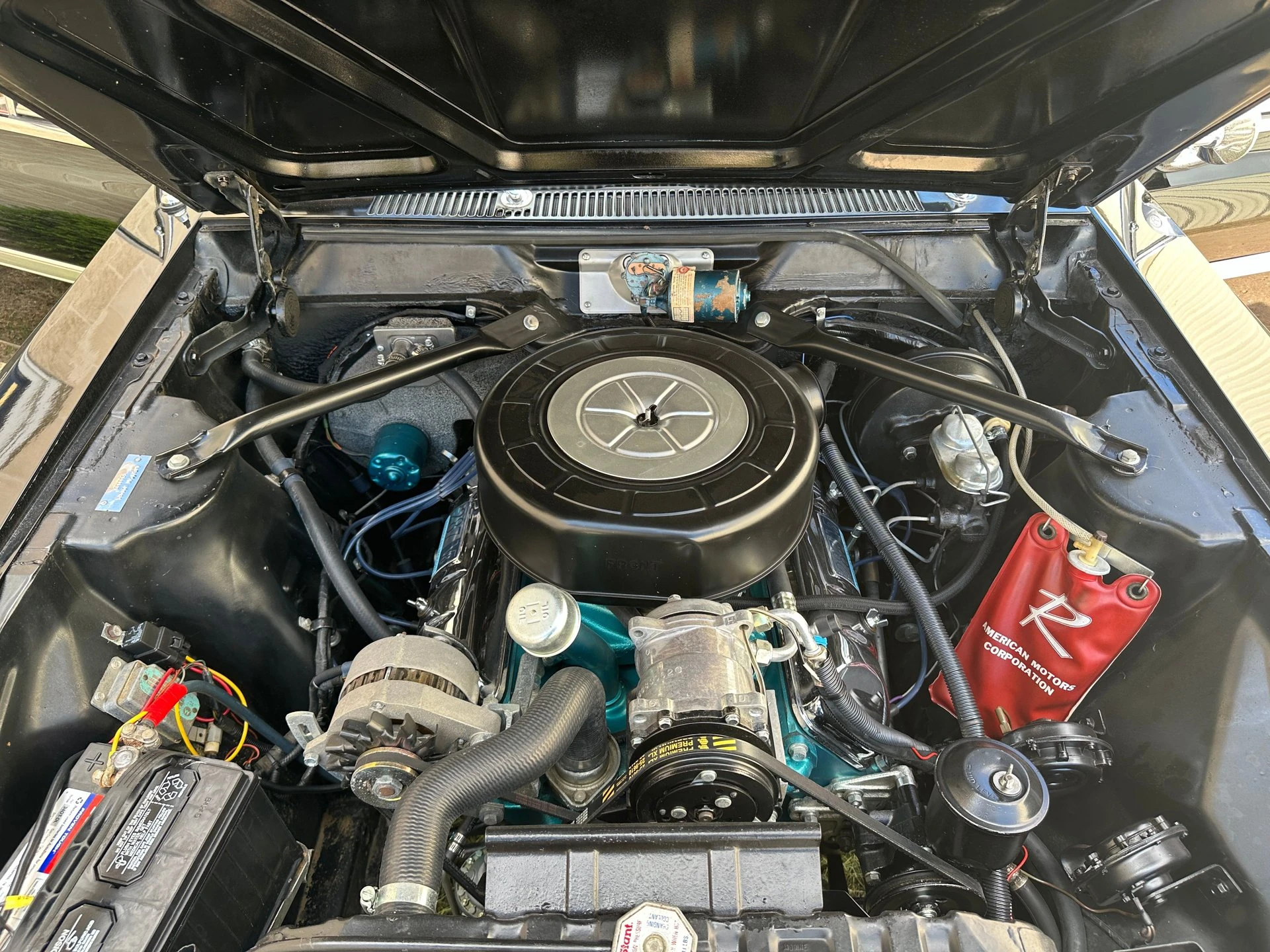
The 1964 Classic was usually ordered with the 195.6 cid six (although the new 232 cid Typhoon six became optional late in the model year). A 287 cid V-8 was optional for $105, but it wasn’t very popular: AMC built 59,486 Classic V-8s for 1964, compared to 146,813 Classic sixes. (By comparison, almost 60 percent of 1964 Chevelles, 58 percent of ’64 Tempests, and 71.2 percent of ’64 Fairlanes had V-8 power.) The 287 was smoother, quieter, and more powerful than the 195.6 cid six — Car Life managed 0 to 60 mph in 11.6 seconds with a 287 Classic 770 hardtop with Shift-Command automatic, which was quite acceptable for a base V-8 — but the V-8 levied a stiff penalty in gas mileage and handling as well as initial cost.
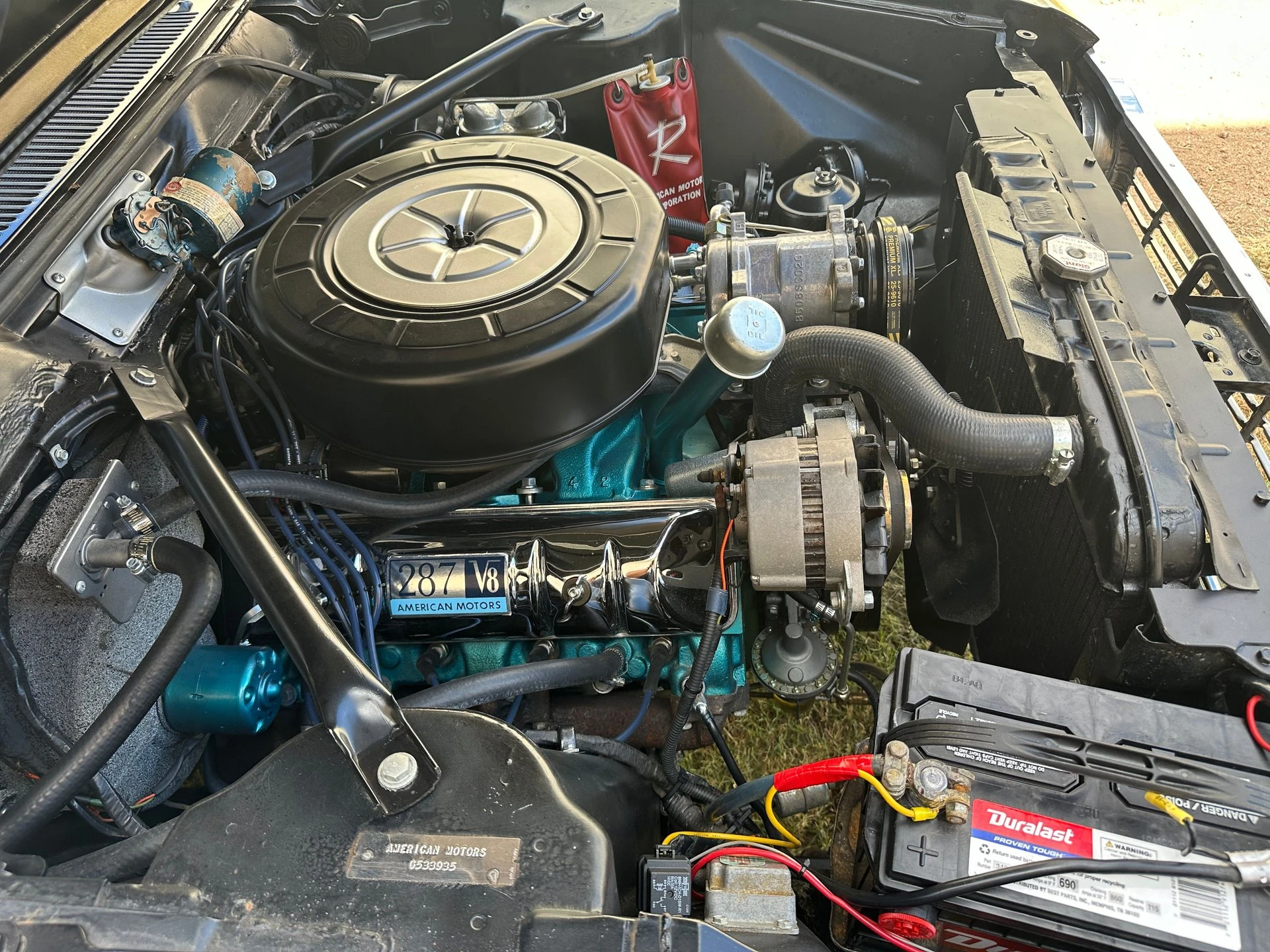
Originally introduced for 1956, the first-generation AMC V-8 wasn’t horrendously heavy for a ’50s engine (AMC quoted a complete weight of 601 lb for the initial 250 cid version), but it was about 70 lb heavier than a Chevrolet small block and around 120 lb heavier than the new thinwall Ford 289 cid V-8. Installing it in the Classic also required a bigger radiator, bigger brakes, larger wheels, and so forth, so the total weight penalty compared to a Classic Six was about 360 lb, most of that on the front end. Adding a load of accessories and air conditioning brought the weight distribution to 58.7/41.3 percent, with predictable effects on cornering balance and traction on slippery surfaces.
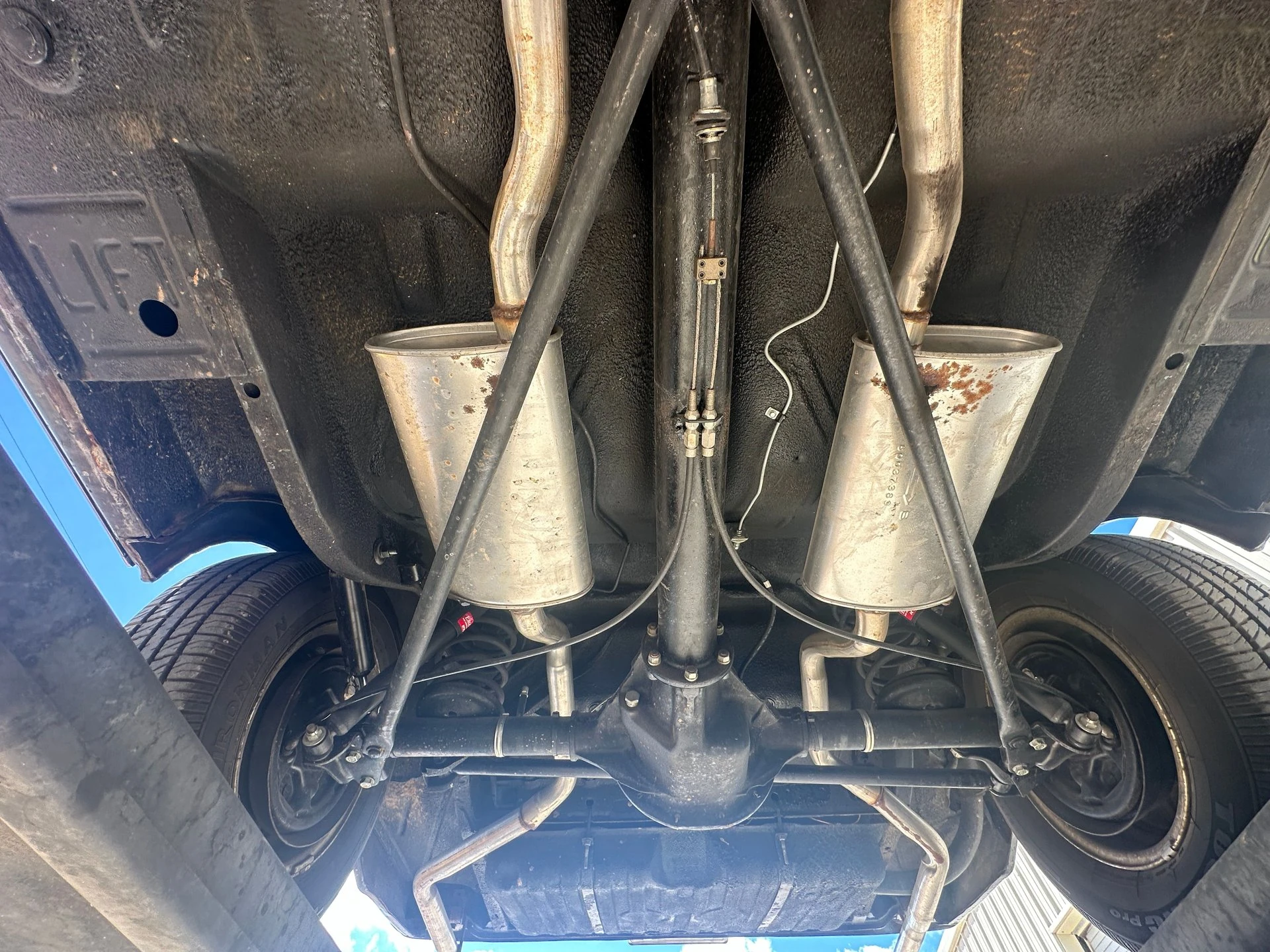
Rambler’s modern styling also concealed a rather dated chassis design, with trunions rather than ball joints in front and a torque tube rear axle. The V-8 included a front anti-roll bar, which improved stability at the cost of exacerbating the car’s heavy understeer. “The Classic plows through corners with the front trying to maintain a straight line,” noted Car Life. Consumer Reports felt the ride wasn’t great either, with too much harshness and road noise; with the V-8, they thought ride and handling were “well below highest standards.”
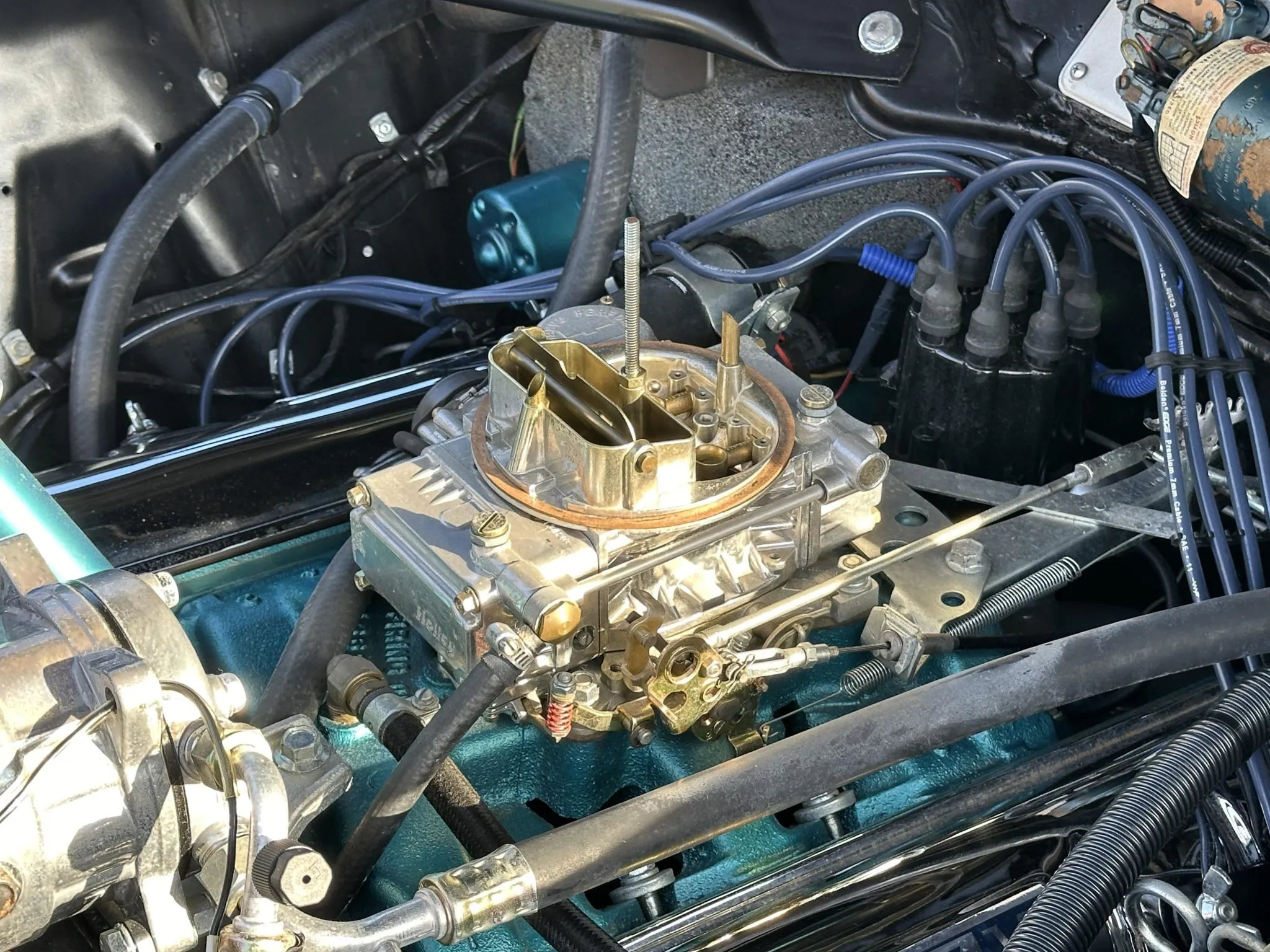
The black car pictured here actually started life as a Classic 770 six, but at some point, a devoted AMC fan decided that the total number of V-8 Classics needed to increase by one. They decided to use an AMC 287 rather than the bigger 327 cid engine from the Ambassador (which wasn’t available on the Classic in 1964), but gave it a little discreet help by adding a four-barrel Holley carburetor (the stock 287 was available only with a two-barrel) and dual exhausts (which the 287 didn’t have, and which I don’t think AMC offered as an option at this time).
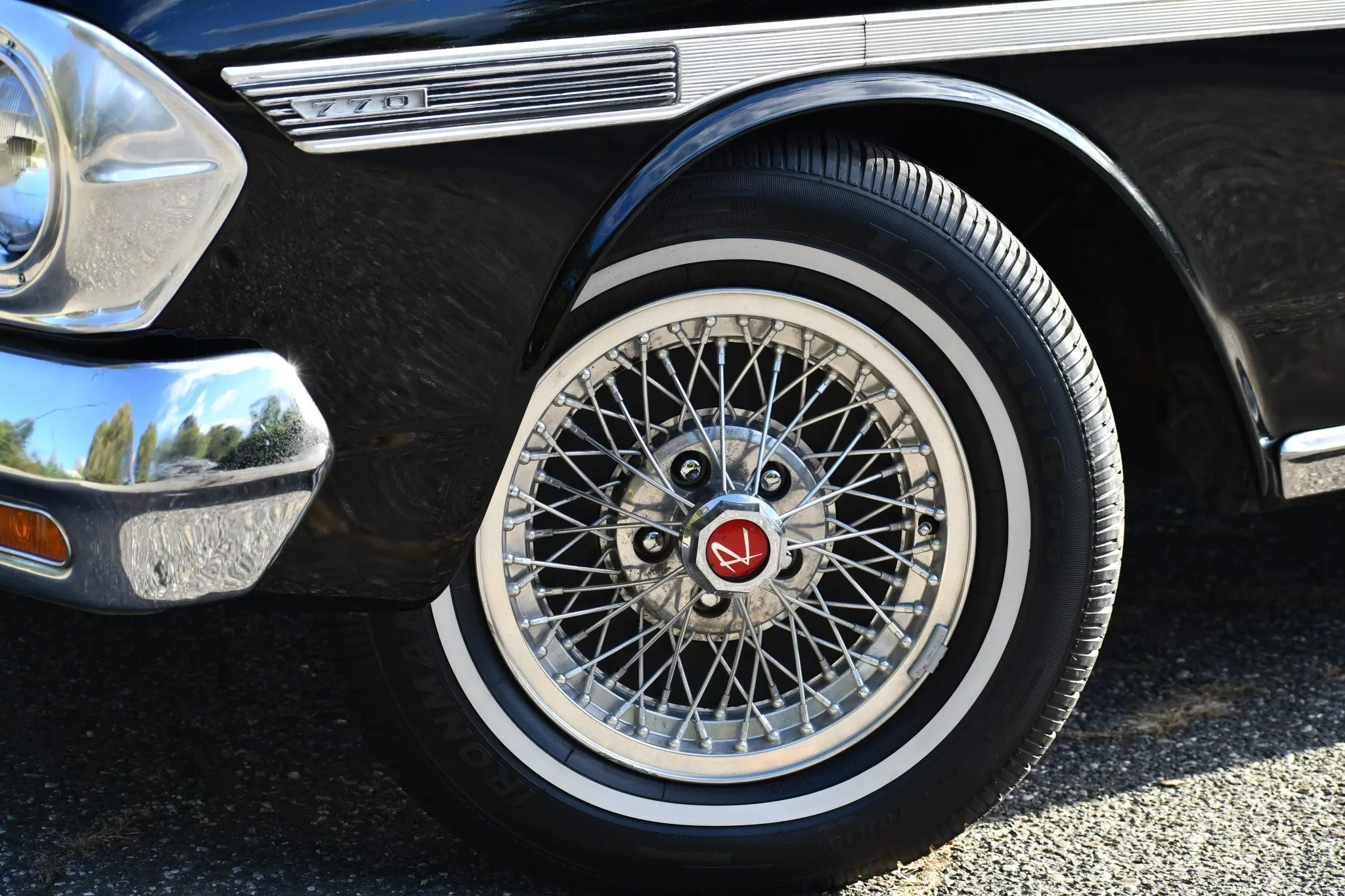
Rambler logos on the hubs notwithstanding, AMC did not offer wire wheels in 1964, and I don’t think simulated wire wheel covers were yet optional (although they would be later, starting in 1965).
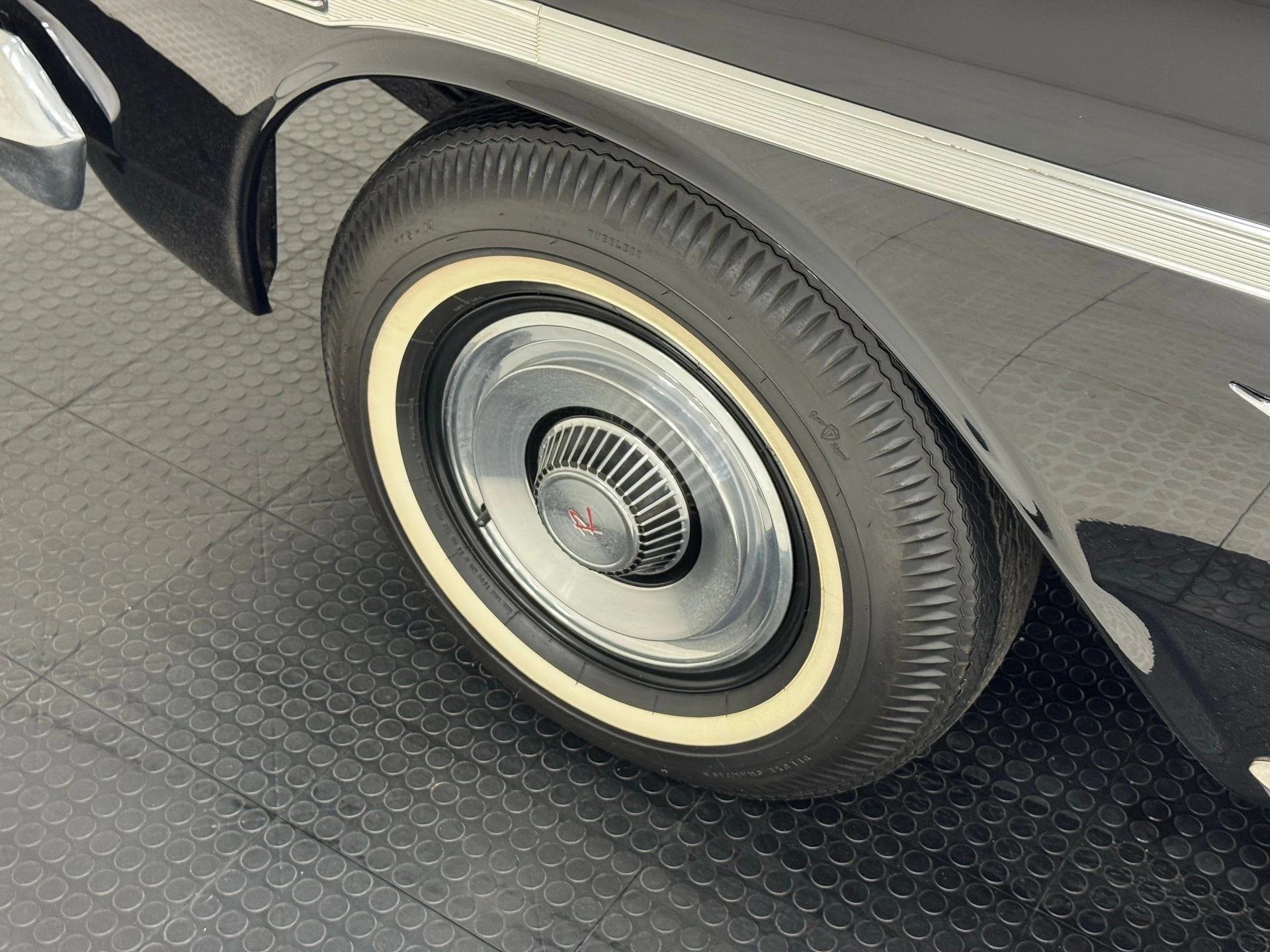
However, the original wheel covers (standard on the Classic 770) were admittedly pretty dreary. One commendable Rambler touch was that the original 7.50-14 bias-ply tires had ample load capacity, leaving a margin of 910 lb on a fully equipped hardtop — not something you could take for granted with domestic cars of this era.
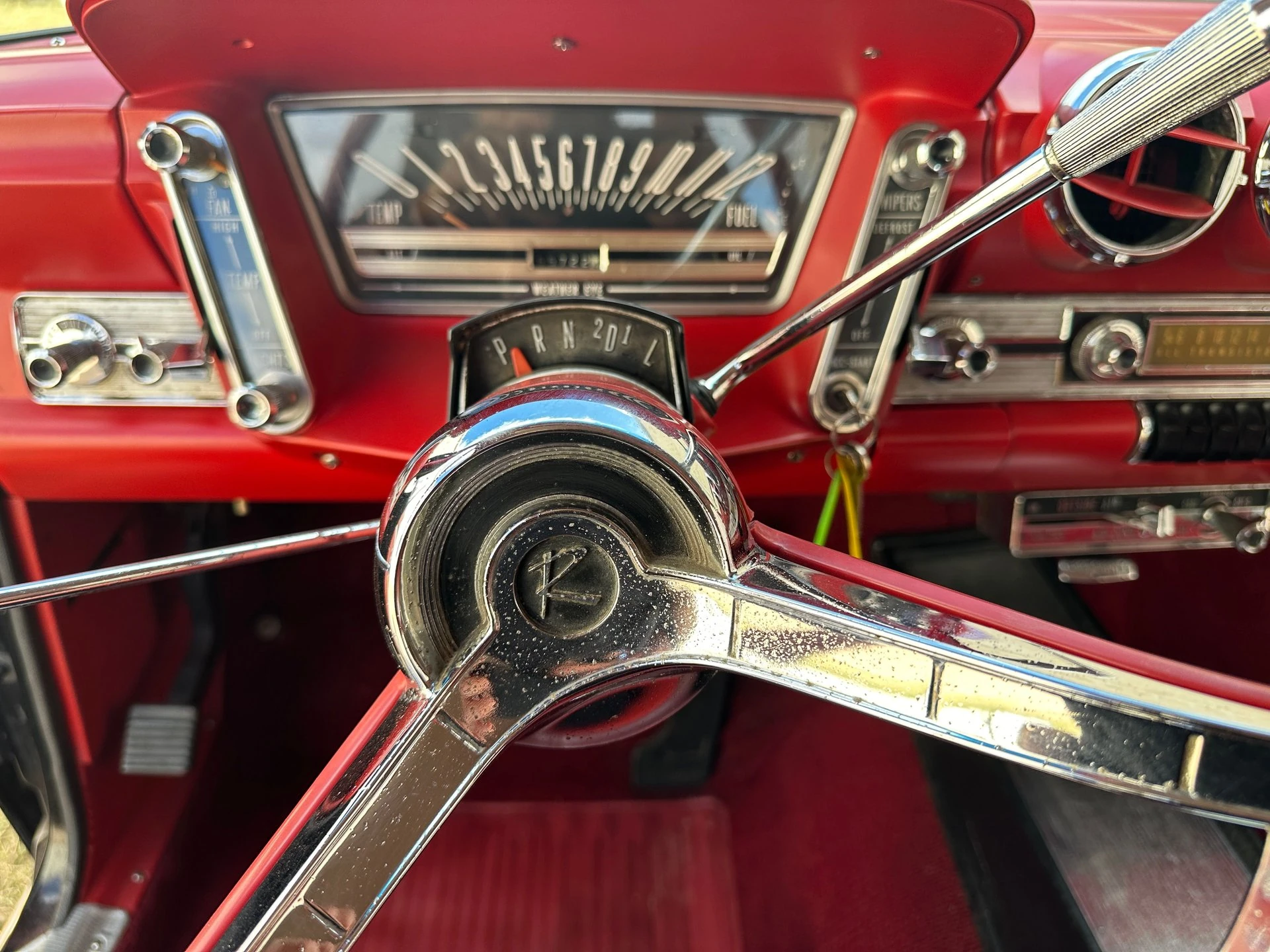
The transmission on the black car seems to be a period-appropriate Flash-O-Matic, which originally listed for $186.50 on a six-cylinder Classic or $193.65 with a V-8. This was the most common transmission on 1964 Ramblers; the optional floor-shifted Shift-Command was more expensive ($208.65 on V-8 Classic) and had the inconvenience of always starting in 2nd gear if you left it in D. (With column shift, you could choose to start in 1st or 2nd.) AMC didn’t offer a 4-speed this year, although 9.3 percent of buyers ordered overdrive, either for the column-shifted 3-speed or with the floor-mounted Twin Stick arrangement.
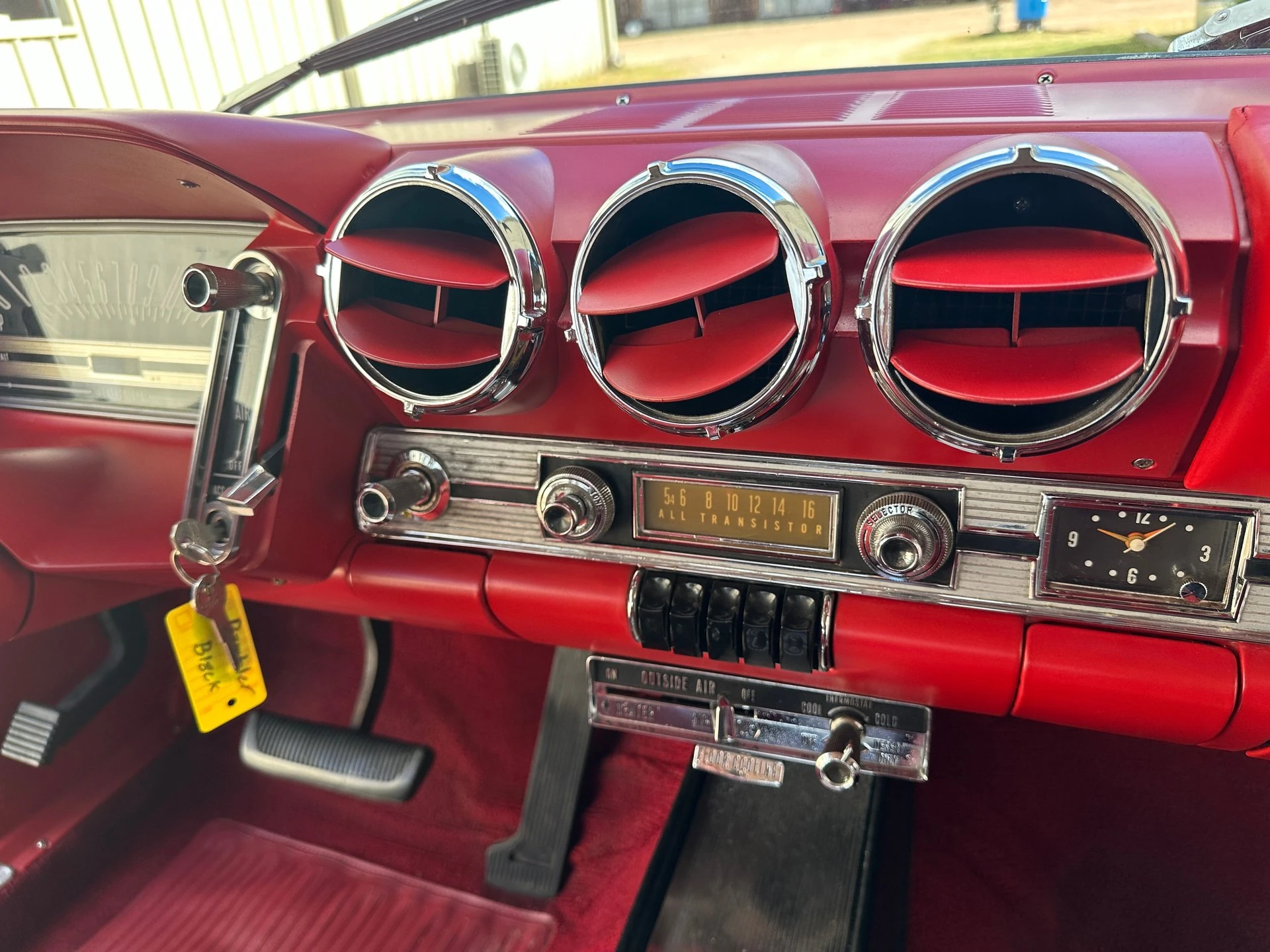
This Classic isn’t fully loaded, but it has an uncommonly extensive list of options, including power steering (originally ($75.50), power brakes ($42.95), a pushbutton AM radio ($58.50), windshield washers ($11.95), backup lights ($10.70 by themselves, also available as part of a Light Group), and All-Season Air Conditioning ($360). How many of those options did this car originally have? Impossible to say, but not many Ramblers were ordered with all these features in 1964. (Only 9.0 percent of ’64 Ramblers had factory air.)
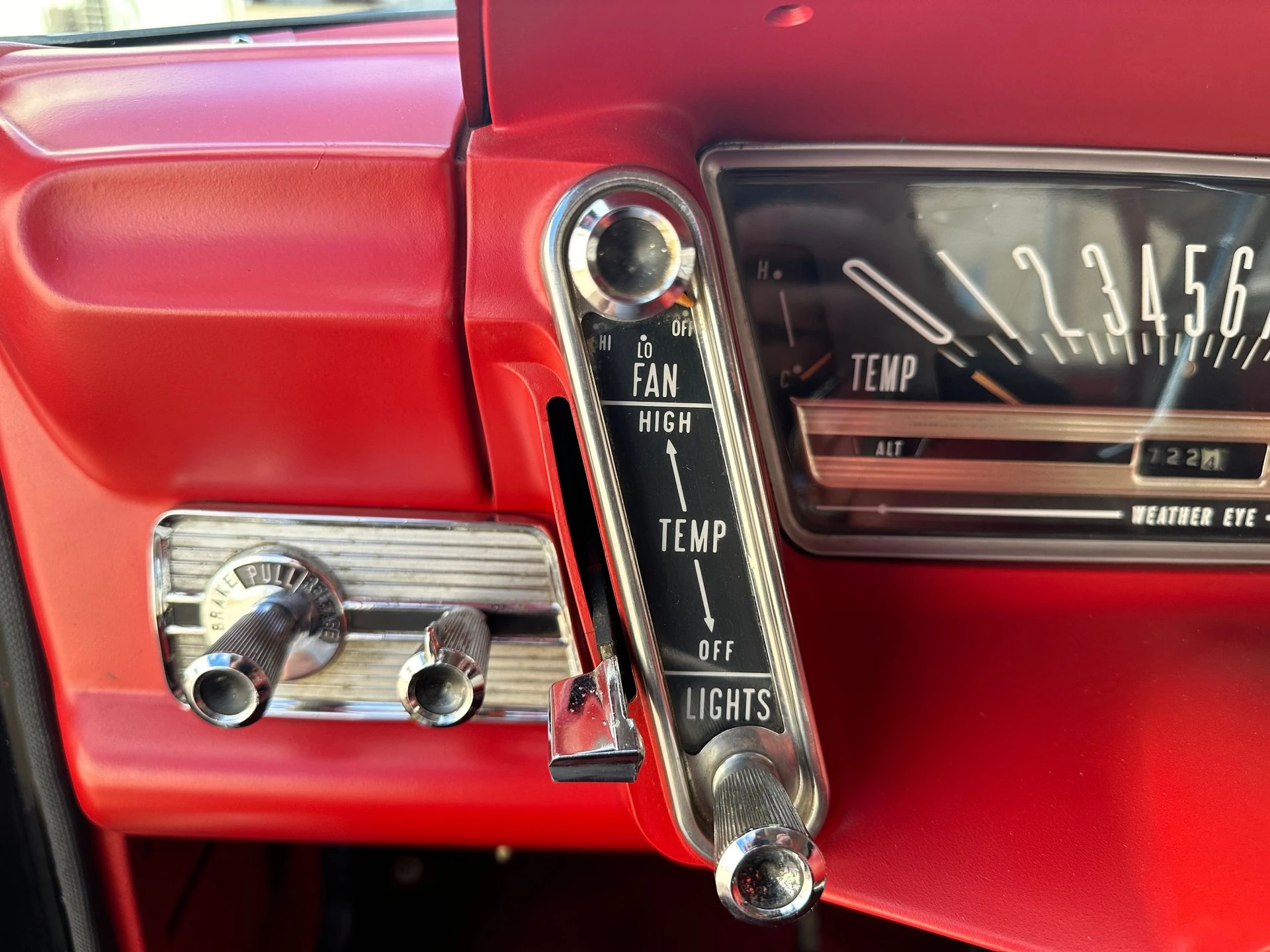
AMC, Chrysler, and Studebaker lagged behind in standardizing heaters on their cars, which GM and Ford had done for 1962.
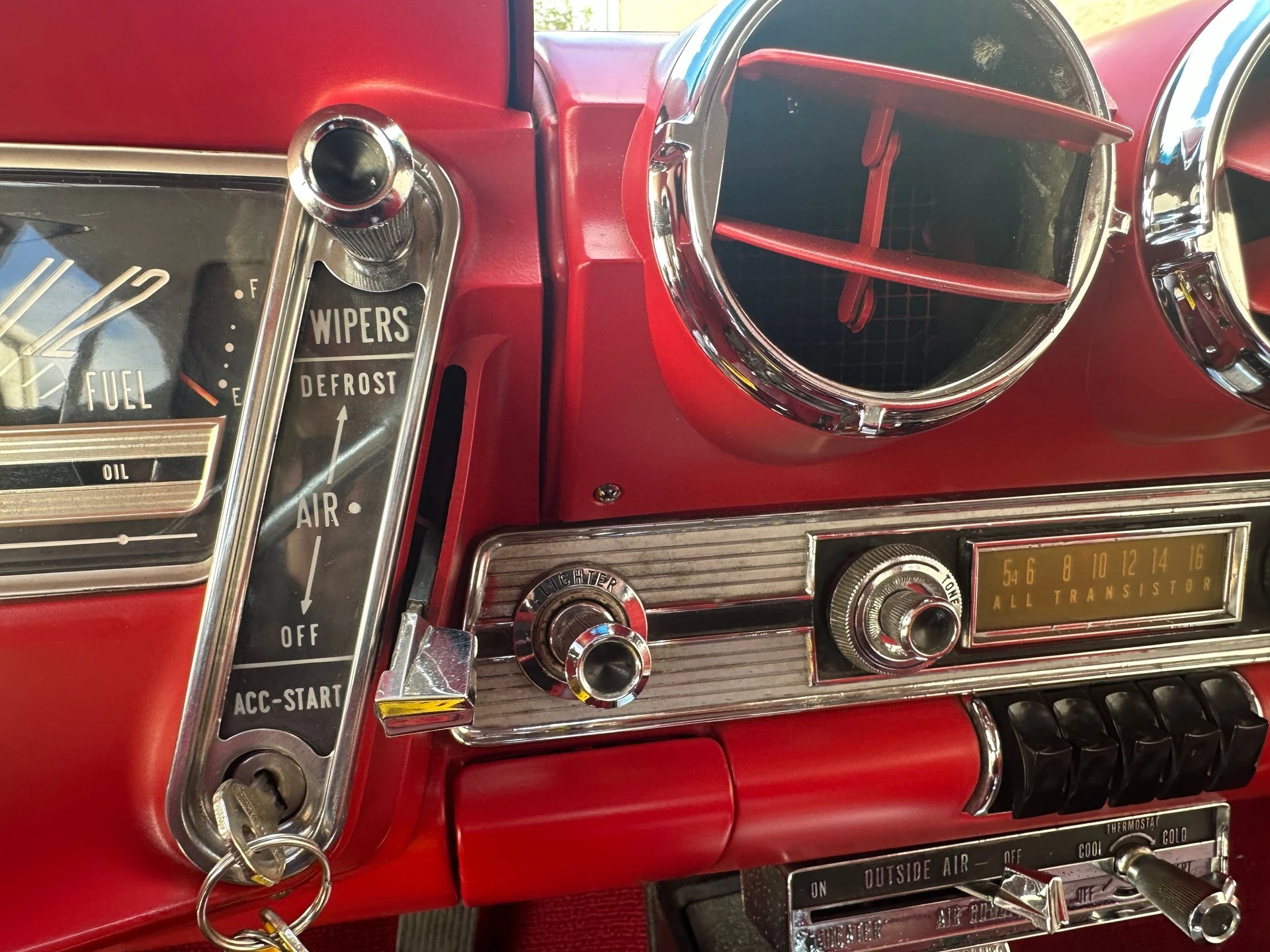
In 1964, AMC still charged $78.00 extra for its “Weather Eye” heater-defroster, whose controls were awkwardly split between the two diagonal pods on either side of the instrument panel.
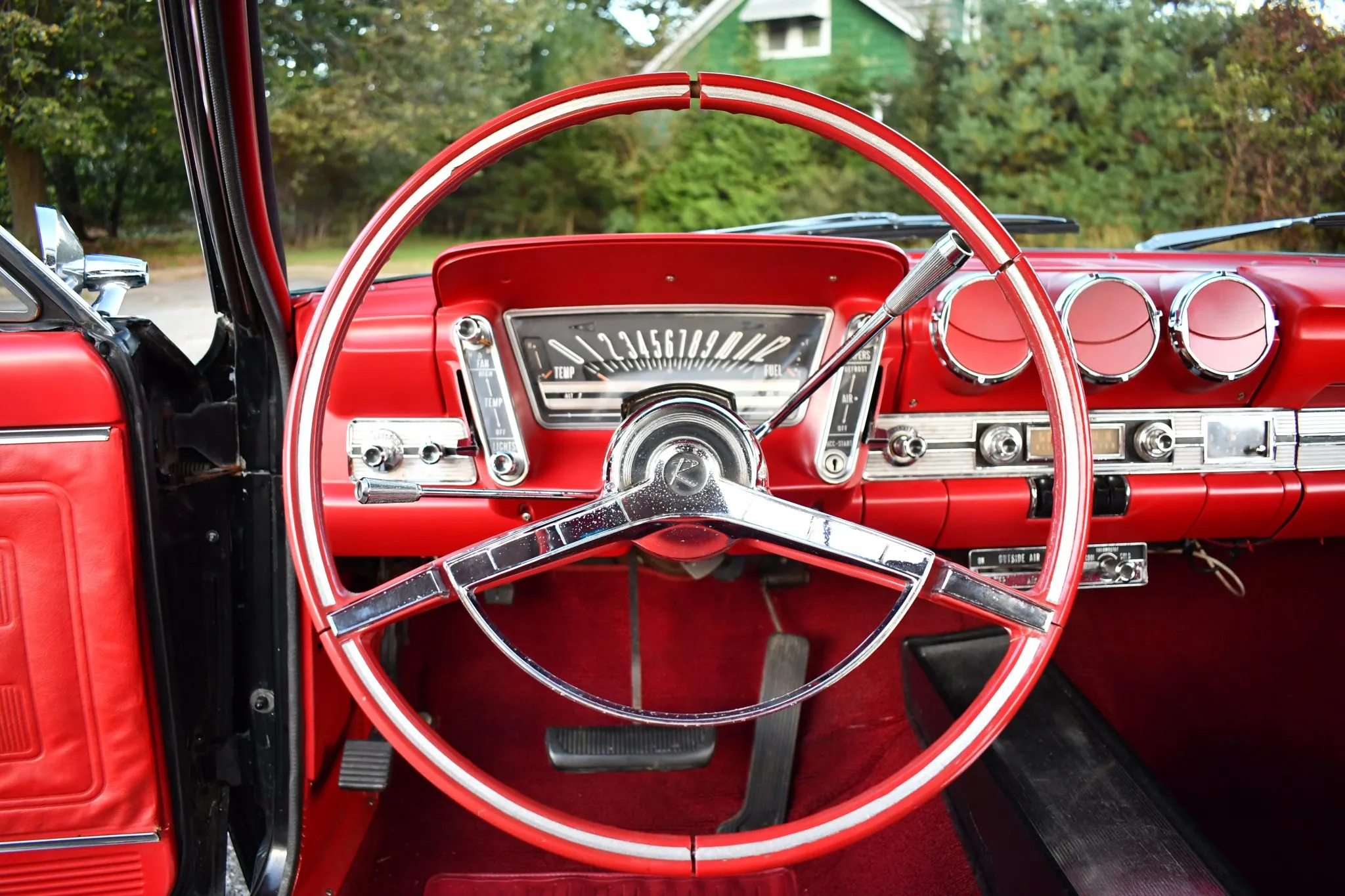
The dashboard of this car is a good example of how hard it can be for the modern observer to judge cars like this as people did at the time. Car Life editors turned up their noses at the Classic/Ambassador dashboard, a 1963 carryover that they felt “offers a prime area for improvement,” with its “jumble of levers and switches.” With its ’50s style instrument lettering and scattered controls, this dashboard design was dated for 1964, but I find it a delight to look at. Also, within a few years, the trends of modernity would make most domestic auto interiors look featureless and plasticky, so why not relish this last burst of Jetsons style?
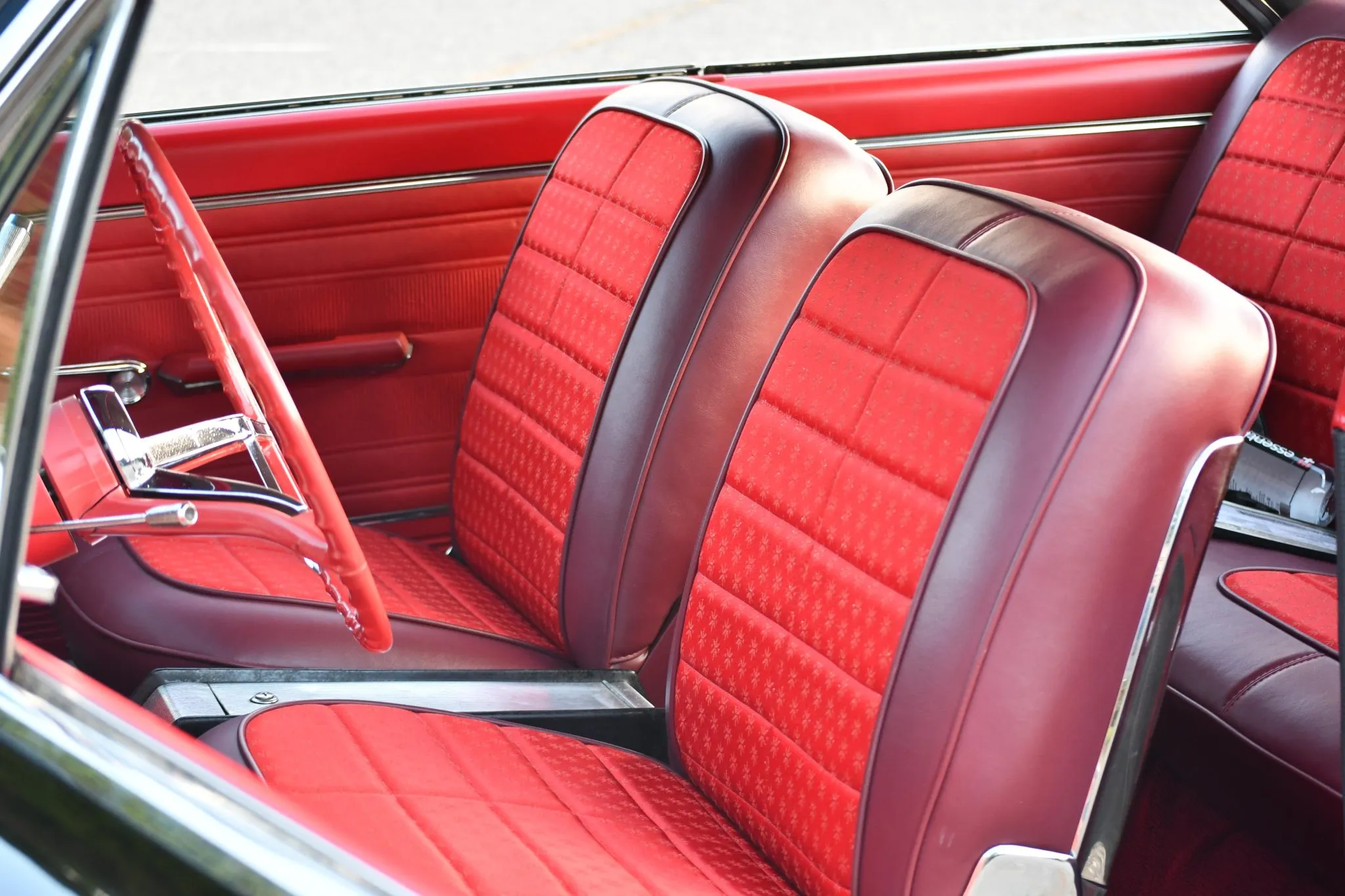
Bucket seats were optional on both the Classic 770 and the Ambassador. Unusually, AMC offered two types — the seats in this car are the slim buckets, which included a center console or (on the Ambassador) a center cushion with a fold-down armrest. These listed for $99.50.
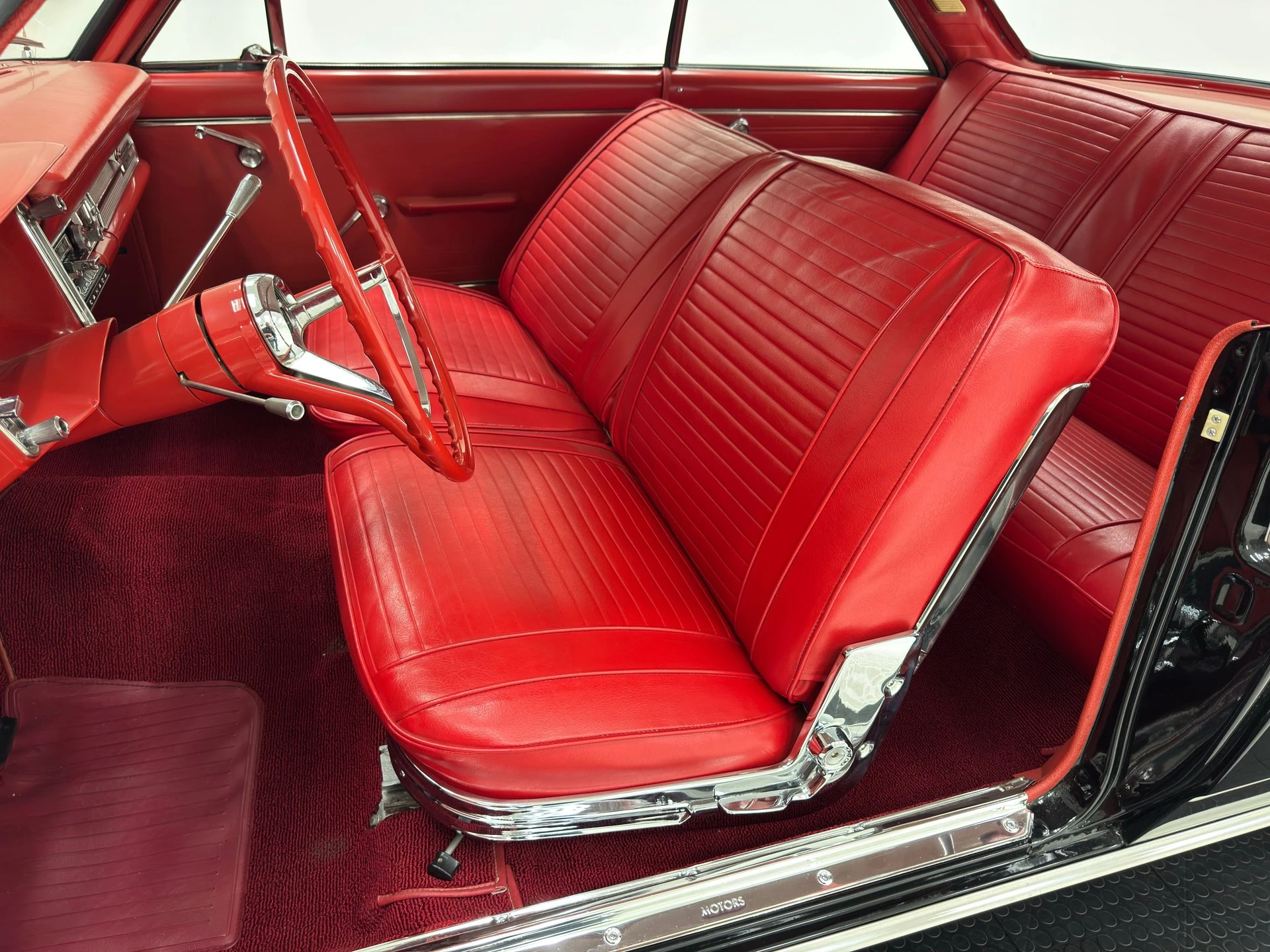
There was also a wide bucket seat option, which omitted the console. (Some people argue that these should be described as a split bench, but AMC called them wide buckets, so I will too.) These were $59.50.
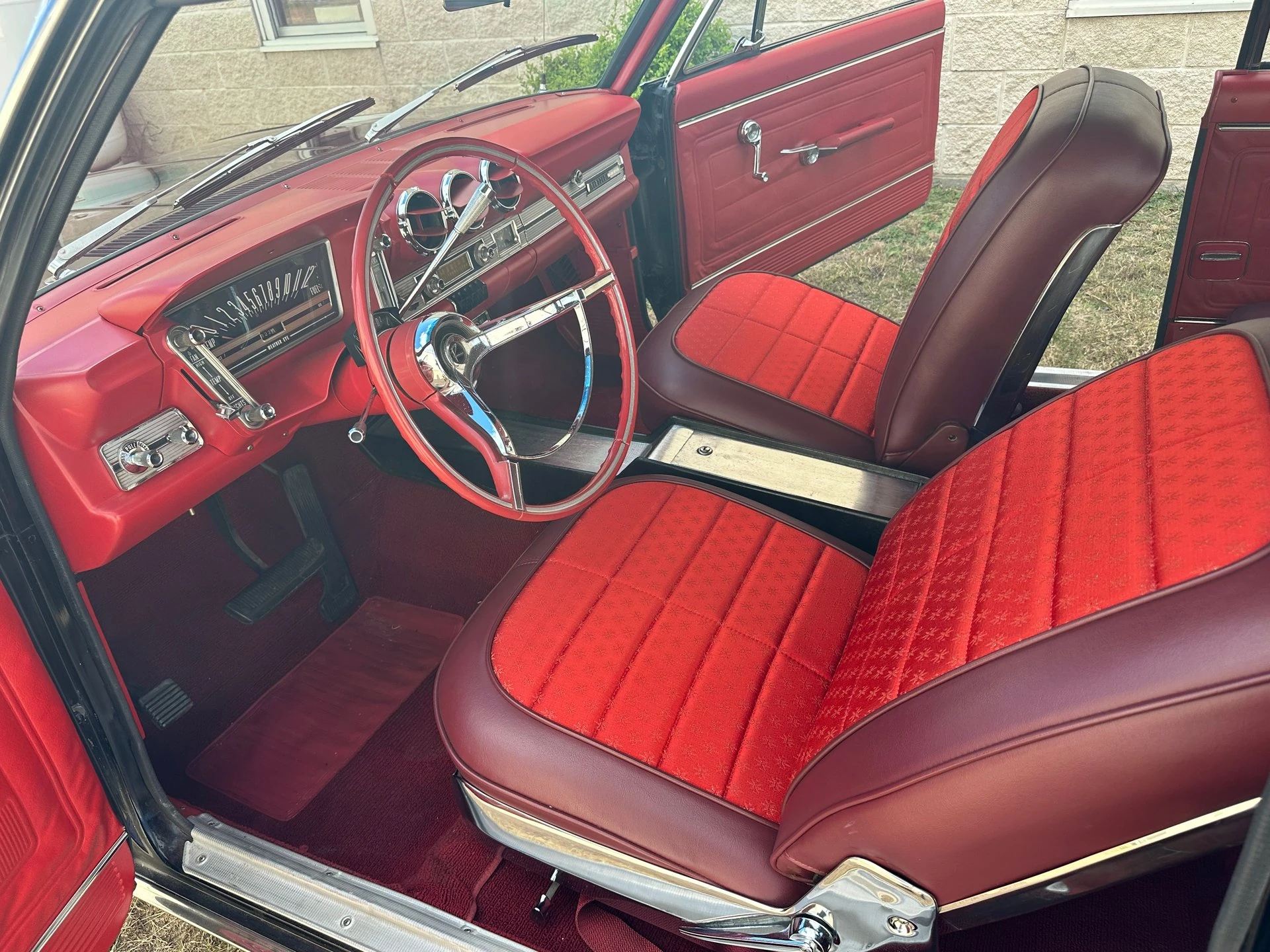
Either way, five-position “Aircraft Reclining Seats” were an additional $25.50. These were also available with a split-back bench seat, and could be combined with front headrests ($12 each, $24 the pair).
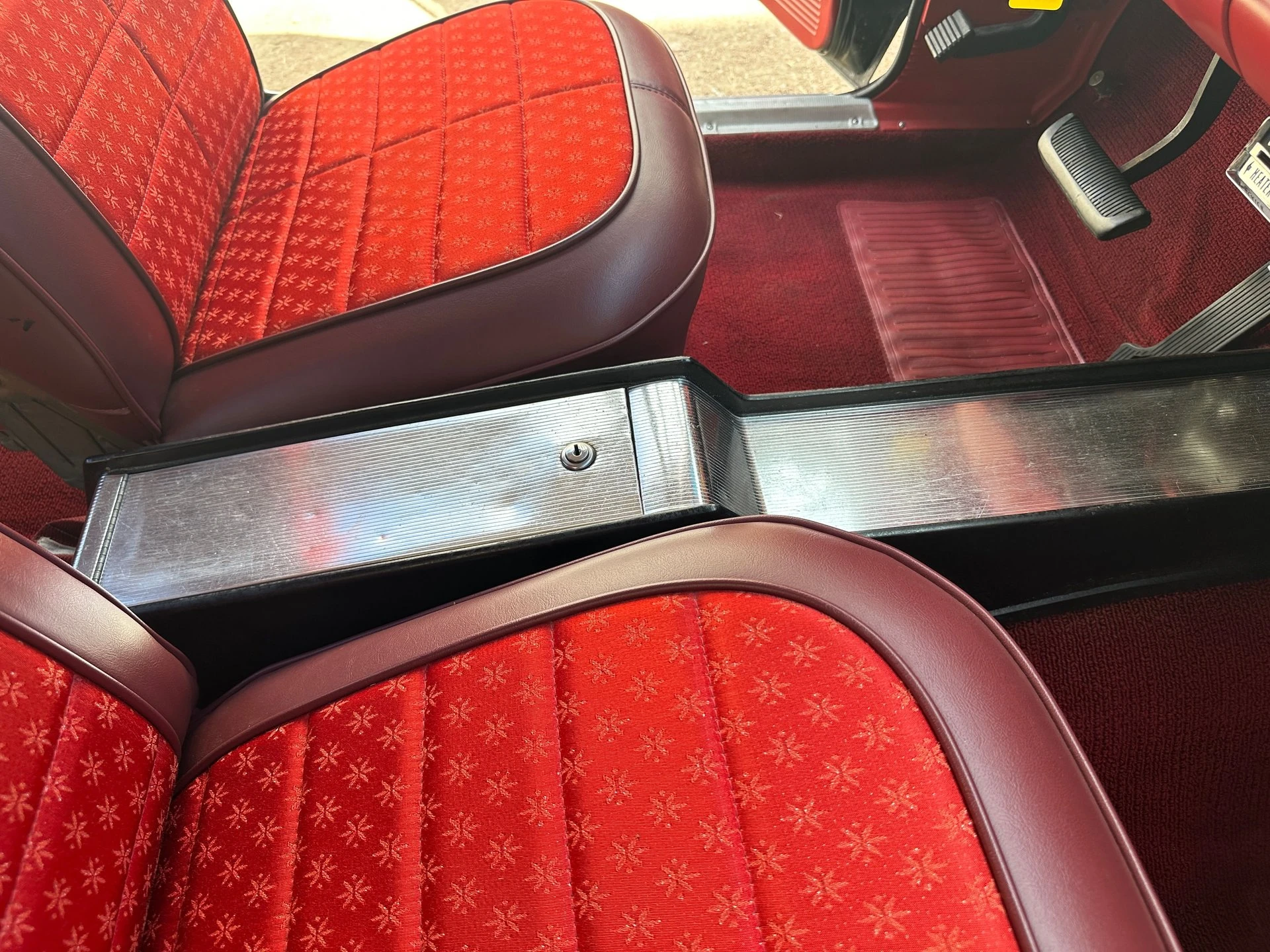
The door tag on this car indicates that it did originally have red cloth-and-vinyl upholstery, but while I unfortunately don’t have access to a 1964 AMC dealer data book, I don’t think this car’s cloth inserts are correct for a Classic 770. Also, AMC offered both red and maroon interiors in 1964, and the vinyl bolsters on these seats look more maroon than red — I think the red vinyl would be bright red, like the door trims.
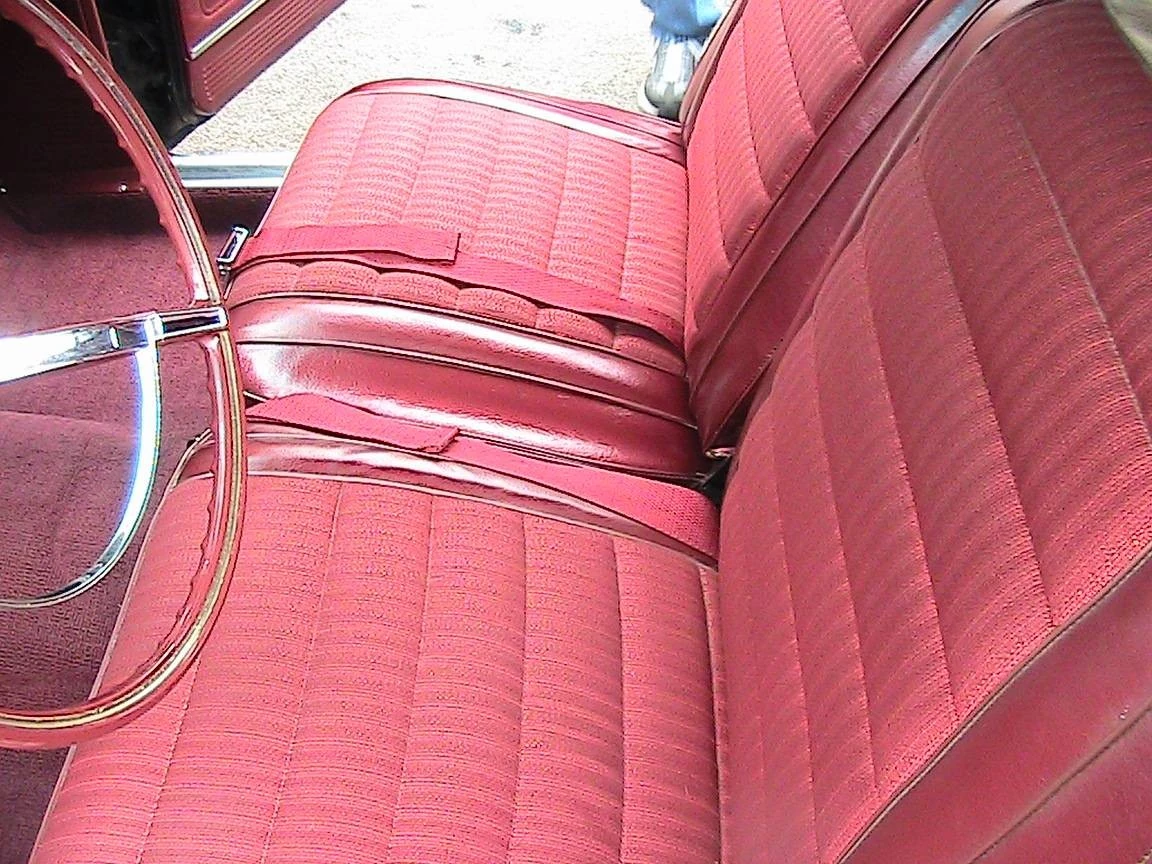
Here are cloth-and-vinyl wide buckets in a Classic 770 sedan. Note that both the fabric and the stitching pattern are different.
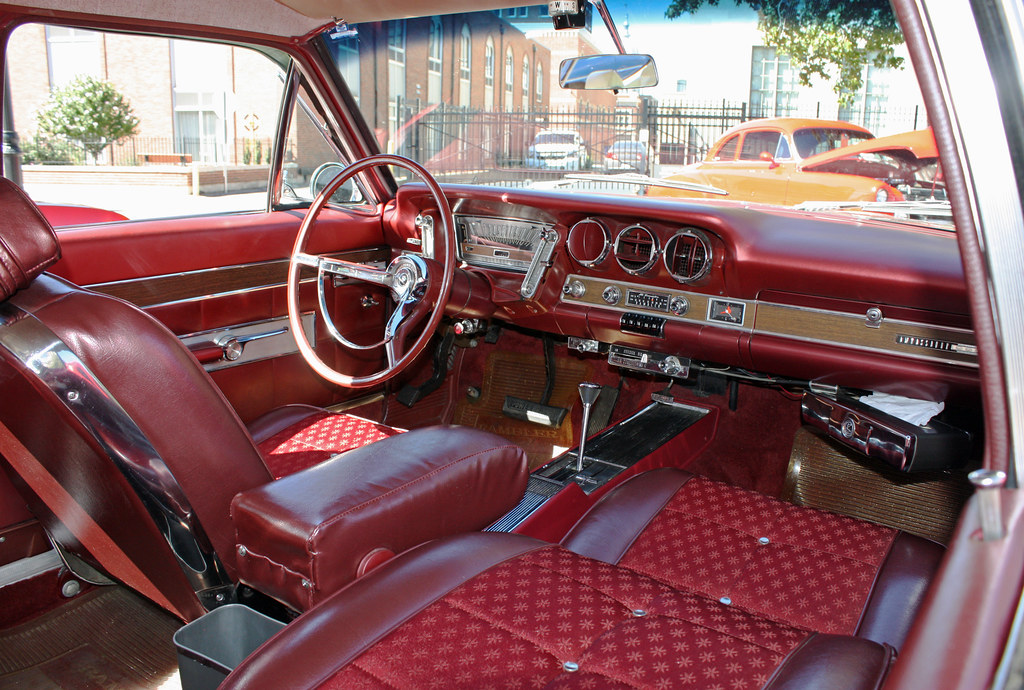
I think that the floral print cloth of the Classic’s seat inserts is actually from the pricier Ambassador, albeit without the Ambassador’s buttons. Here’s a 1964 Ambassador 990 sedan with cloth-and-vinyl buckets for comparison.
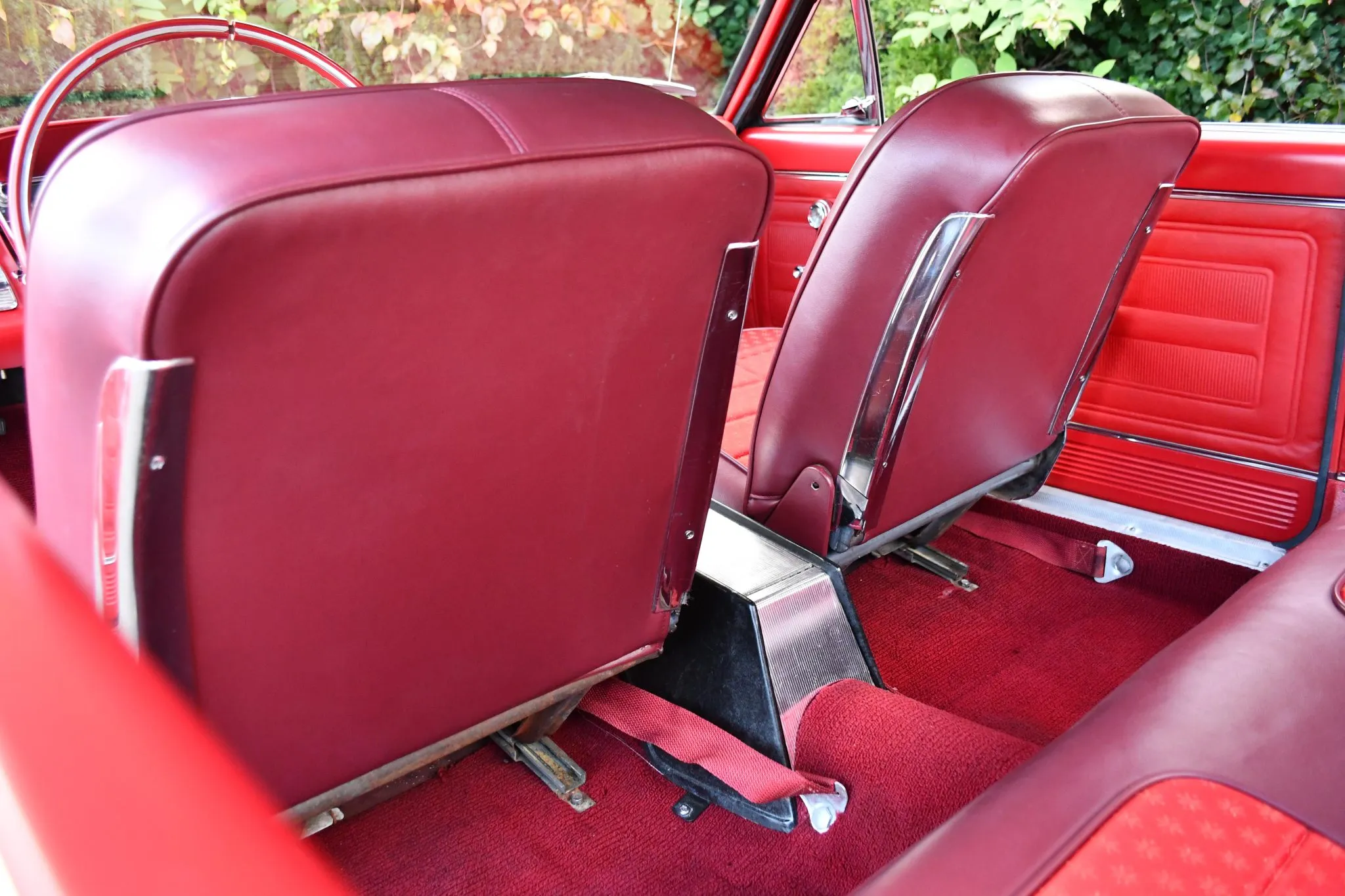
Although it was trim on the outside, the Classic had competitive interior space, including in back. However, an interesting point to which I want to draw your attention on this car is the front seat belts, which are anchored to the sides of the floor and the tunnel. AMC standardized front seat belts on January 1, 1964, as part of an industry agreement orchestrated by the AMA. There was no federal law requiring them, but a growing number of states mandated their installation, at least in front. However, retractable seat belts still cost extra on many cars, as did rear seat belts, which this Rambler still lacks.
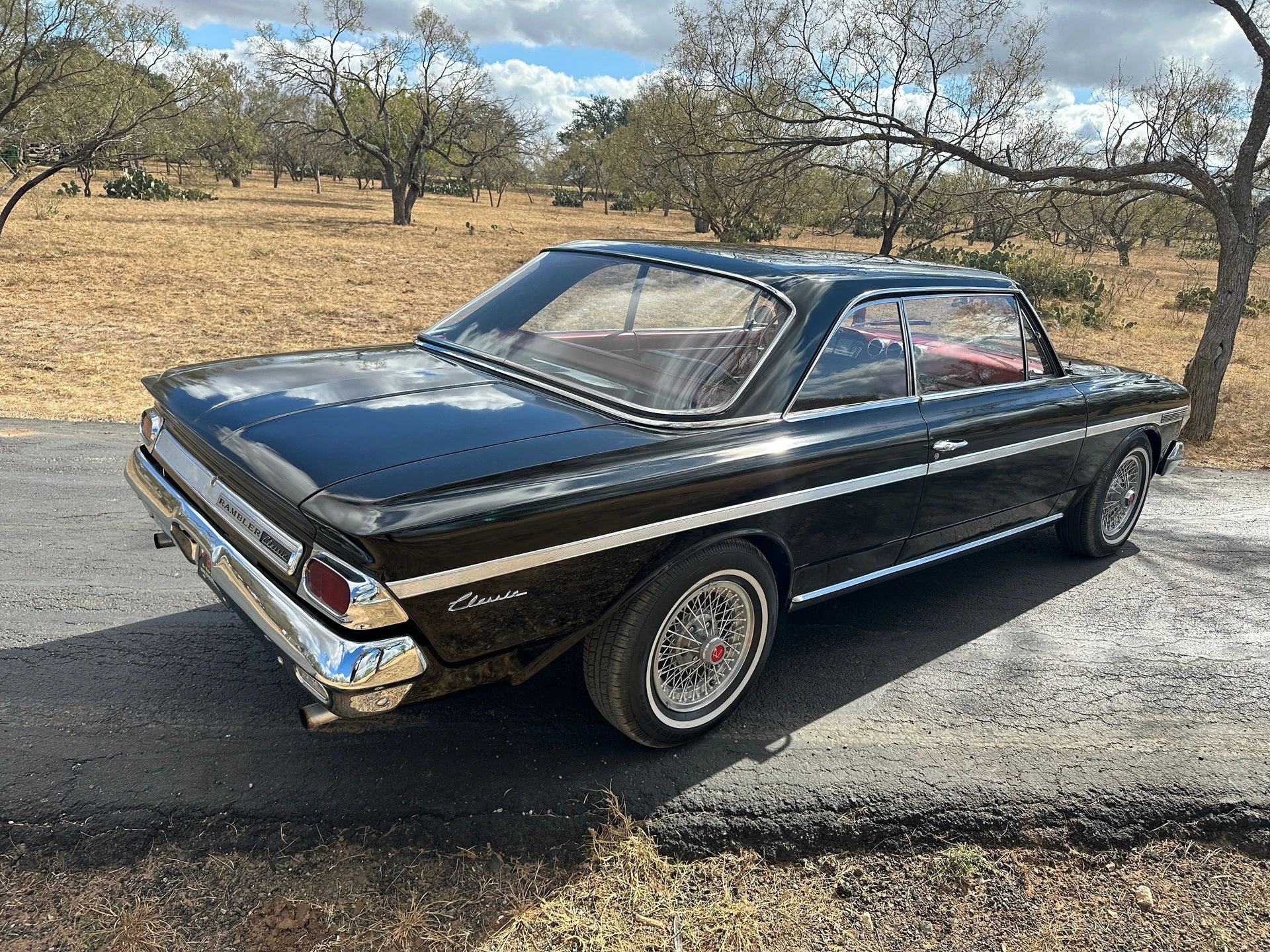
Consumer Reports praised the solidity of the unit-bodied Classic, which was lighter than many rivals — with the V-8, automatic, and air conditioning, this car has a curb weight of around 3,430 lb — and yet felt more stout than body-on-frame competitors.
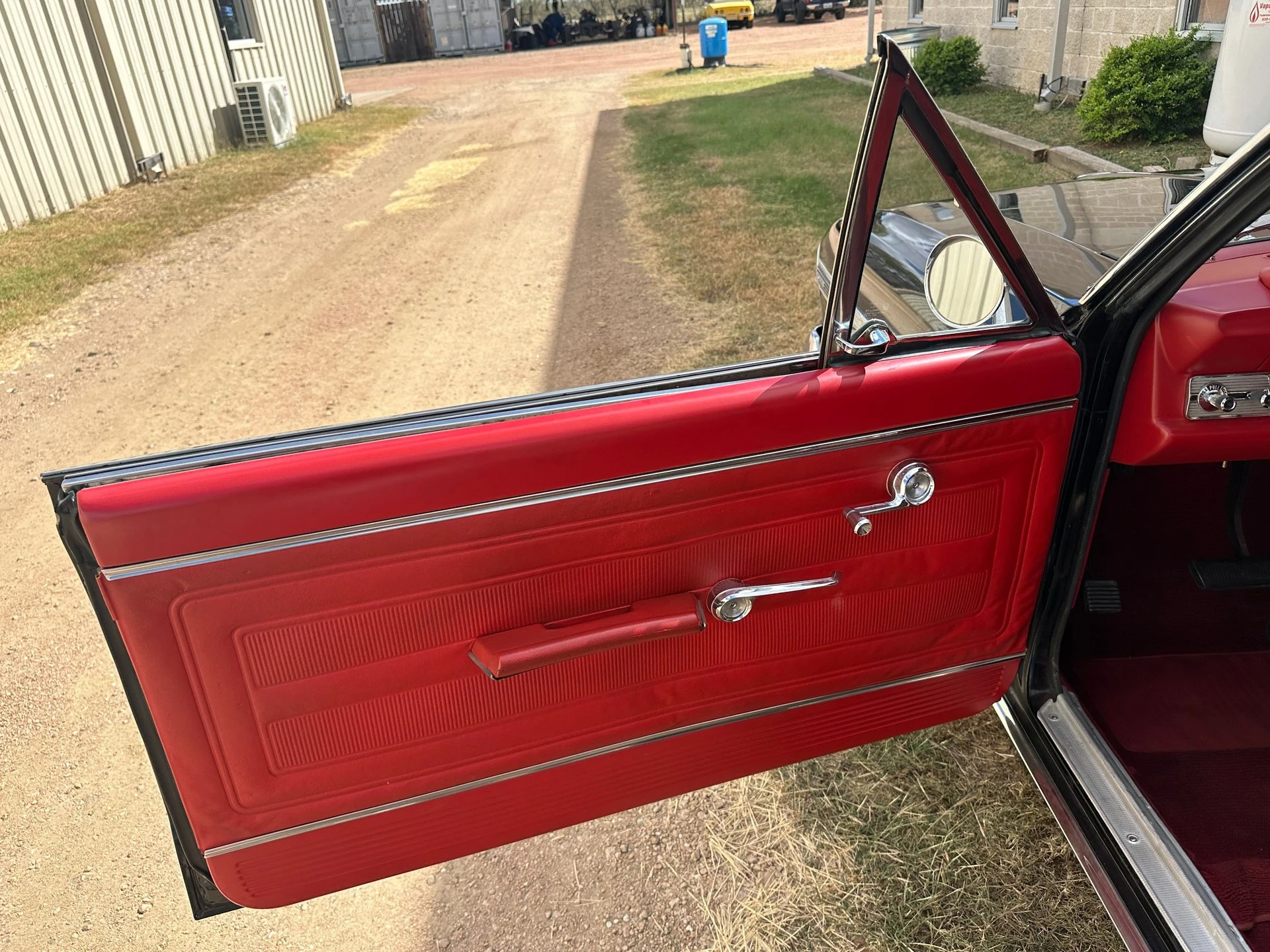
Even accounting for the ways this particular car isn’t quite original, it was also very well-trimmed. Despite their distaste for the dash design, Car Life conceded that “a Classic 770 hardtop, like this month’s test Rambler, has an extremely high ‘plush’ factor.” The consequence was that the 770 wasn’t cheap. If you factored in the extra cost of the heater, a six-cylinder Classic 770 was nearly $200 more than a six-cylinder Malibu and $234 more than a Fairlane 500 hardtop, a tough sell. You can see why AMC sales went into a tailspin from this point on — the Classic was really their core model, and as it lost ground, so did AMC.
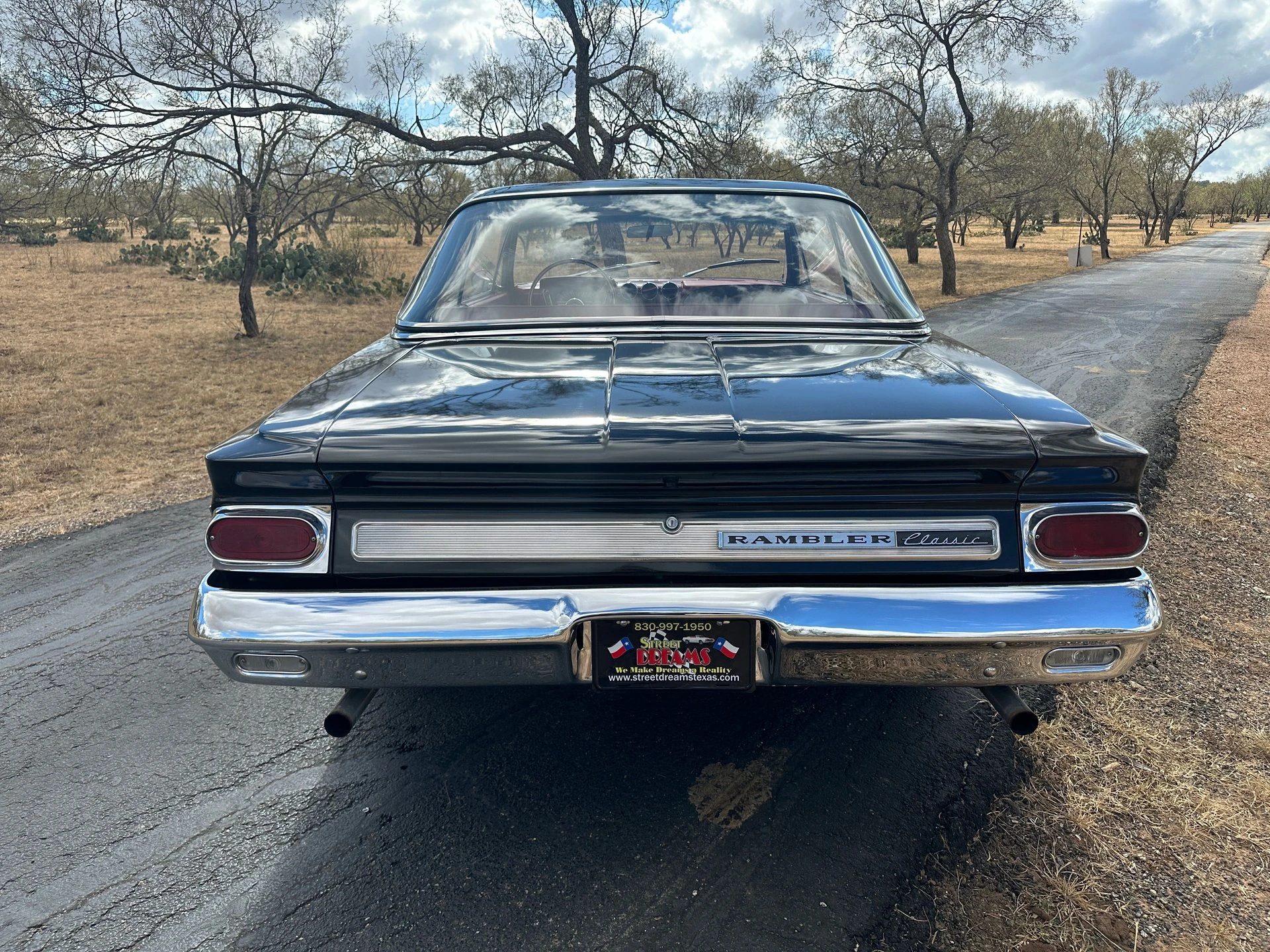
This Classic is a last holdout from the waning end of AMC’s brief glory days. If it’s not entirely correct, few of its liberties would offend even a purist. Sure, the engine isn’t the one with which the car left Kenosha, but it is an AMC V-8 — and a 287. Substituting the lighter second-generation V-8 might make this a better car, but it would no longer quite be a 1964 Rambler Classic, and that was what the person who modified the car obviously wanted.
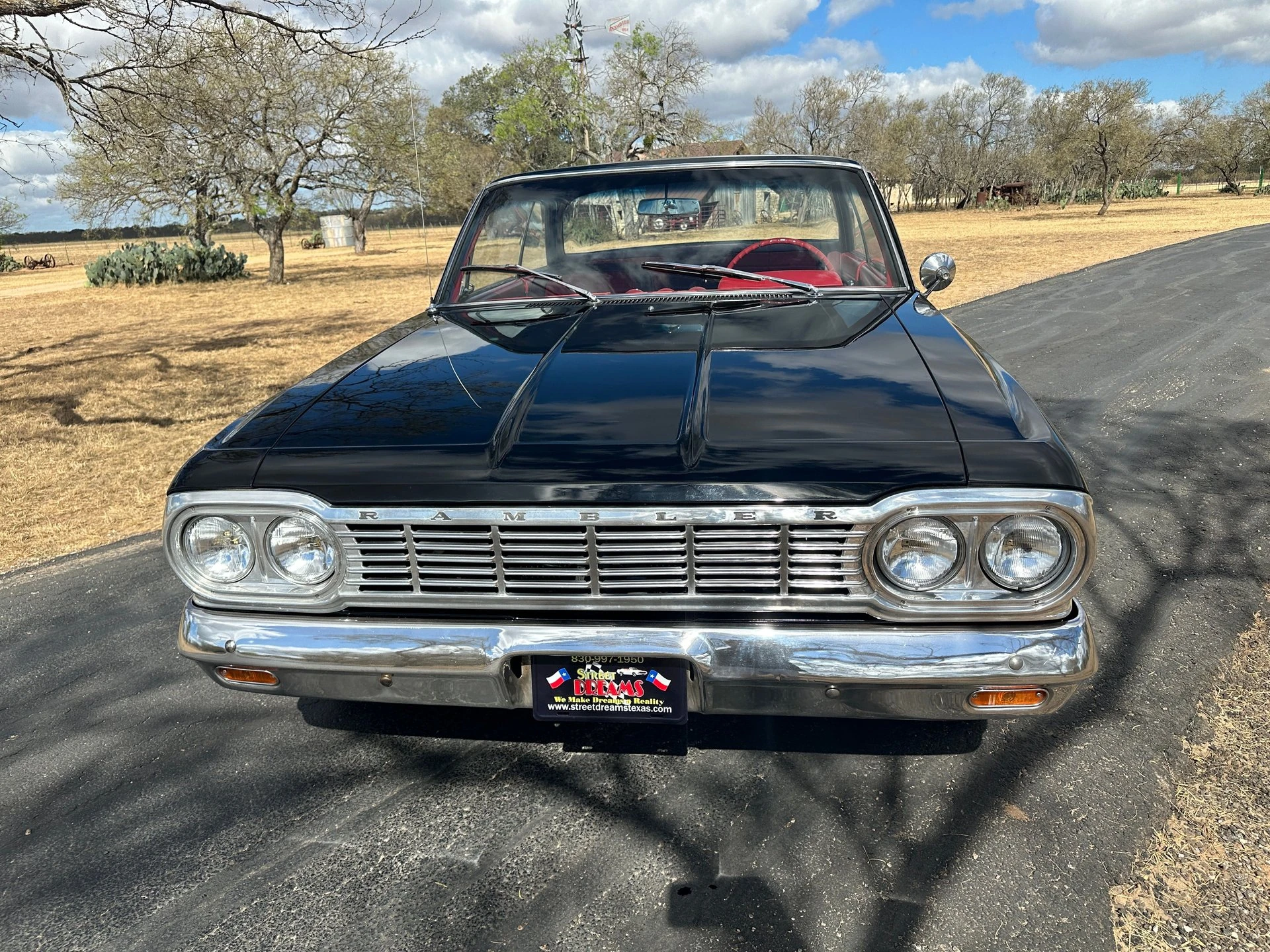
It’s common to think back on cars we used to have and fantasize about getting another one, this time with all the extra bells and whistles the original didn’t have. Someone seems to have actually done that with this Rambler. It isn’t the most original ’64 Classic, but, in this form, it might be one of the most desirable. It sold for $32,500 from Street Dreams Texas a number of years back, and again on Bring a Trailer in October 2023 for $40,777.
Related Reading
1964 Rambler Classic 770 Coupe: A True Classic? (by Paul N)
1964 Rambler 770 Typhoon – America’s Newest And Hottest Six Cylinder Engine Gets A Stylish Wrapper (by Paul N)
Vintage Car Life Review: 1964 Rambler Classic V-8 – Chasing Market Trends (by Rich Baron)
1960 and 1964 Rambler Americans — Two Survivors From The “Peak Rambler” Era (by jeromesolberg)























$40K? Holy smoke! That’s the value of a driver quality 283/pg 64 Malibu SS!
I had a bachelor great uncle who drove an aqua 64 Malibu SS with a six and three on the tree. His favorite nephew bought it new, then got drafted and had to sell it to the uncle.
It looks like the car that has been on ebay, overpriced, for a longgg time.
These were very handsome as a 2 door hardtop, but the 4 door was nice as well. I much prefer the ’63 grille. The rear end style was as good as any other car that size. I recall this was one of the first cars to have a complete one-piece body stamping for the 4 door frame.
I grew up near Kenosha and AMC products were always around. I wonder what would have happened if they just kept this body (not stretching it) and updated the drivetrain into the late 60s and positioned themselves as an American Volvo.
A high school friend’s family had a ‘64 Classic 4-door identical to the one pictured with the 287 V-8 and I remember it as being extremely smooth and quiet the many times I rode in it.
Those wire rims look like 1980s Lincoln Town Car rims with Rambler hub inserts. Clever!
My second car (1978, junior in high schhol) was an original‘64 Ramber Ambassador coupe, cream with a painted gold top. Power everything, including windows. Four-barrel Holley. Kept a couple bags of Kwikrete in the trunk! Paid $600 for it, earnings from my paper route. Drive the car from Arizona, to Tulsa, to Detroit, to Canton, then Dallas, and back to home in Arizona that summer of ‘78. Fantastic car, not one problem. The most I spent on lodging was $17. one night. Gas was near fifty cents a gallon, and I remember thinking that that was highway robbery. Thank you, Aaron, for dusting-off memories of one of my favorite cars.
CC Effect: I found myself behind a white ’66 Rambler Classic on my way home yesterday. I’ve never seen this car around previously and wasn’t sure what it even was until I saw the R A M B L E R on the trunk lid. I don’t think I’ve ever actually seen one in person.
I ran across this 64 Ambassador 990 four door sedan in Hollywood some years back. It has the bucket seats/console/floor shift option. IIRC it was loaded, including A/C and power windows. I prefer the 63 grille but otherwise nicely styled small sedan.
Exterior
Thanks for the photos. That’s the same interior as my Ambassador coupe. Nice to see it after many years.
There was an Ambassador for sale in my area some time back, and the red interior was RED! So I agree with your conclusions about this one not being exactly showroom.
That 1964 GM A body was tough on the competition. Even with Rambler being the most modern alternative (and an attractive one, too), it didn’t come off well against the GM quartet.
My dad drove Ramblers and Ambassadors and loved the ride, economy and durability. In college I bought a used tourquois 66 Ambassador hardtop with the 327 V8 with a four speed and bucket seats. FAST and fun! Beautiful and simple styling.
Fairly sure we only got the mordor models an if the V8 came with them nobody ordered it, never seen one, and these cars werent rare being locally assembled Ramblers were quite popular a bigger car than the Australian and British big sedans most people bought here, I like it.
Nice car. But……if I went to all the trouble to change it to a V8, I would have gone with an AMC 327. And just maybe, a 327 Chevy!
This is a superb example of Rambler’s best design ever, their ’63/64 models were what the US car should have remained, as far as size. Too bad they didn’t just stick with it and refine it, as said becoming the American Volvo.
Our new garage is small and I considered one of these or a Dart/Valiant sized car as our last vintage ride. These Ramblers are now getting quite scarce for decent ones, so we ended up with a solid Duster out of California, far easier to restore as far as parts availablity, but would have welcomed a ’63/64 Rambler Classic.
Memories! The father of a good friend of mine had a ’63 Classic 2 door very similar to the pictured car. It too was black with a red interior, bucket seats and a console, along with just about every other option except A/C. The man was more-or-less the original owner, having bought the car as a leftover demo in 1964. What was unusual about it was that it had an Ambassador 327 V-8 in it, supposedly a special order installed in some Classic demo’s in 1963. Not sure of the accuracy of that story, but it sounds nice! Sadly both the father and son have passed away, but the Rambler is in the good hands of an AMC aficionado.