
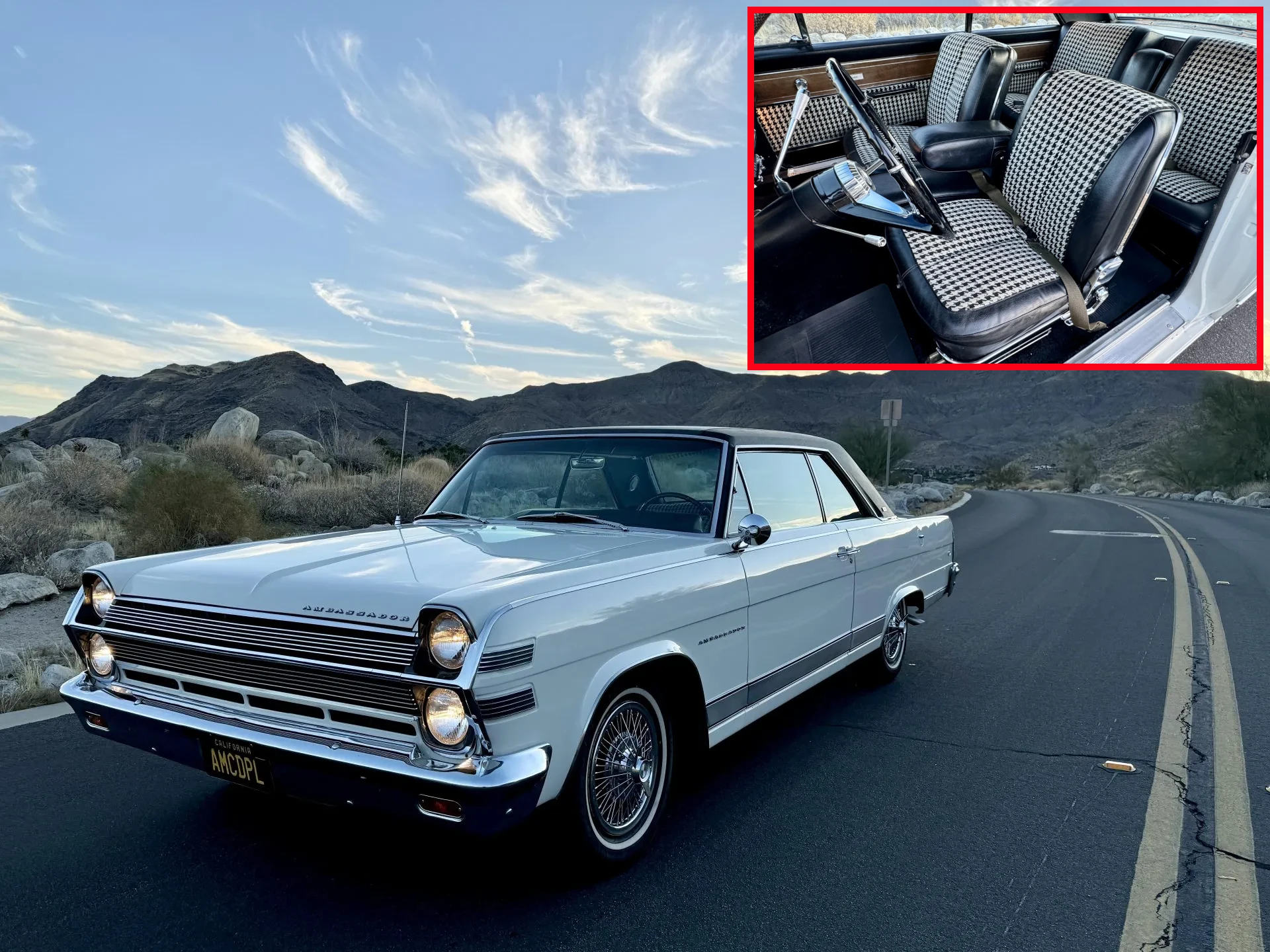
Although the mid-’60s AMC Ambassador was still firmly in the intermediate class in exterior size and interior space, American Motors encouraged buyers to compare the plush new Ambassador DPL with the full-size Chevrolet Impala, Ford Galaxie, and Plymouth Fury. Did the DPL’s fancy Custom Trim Package really merit comparison with bigger, roomier cars? You be the judge.
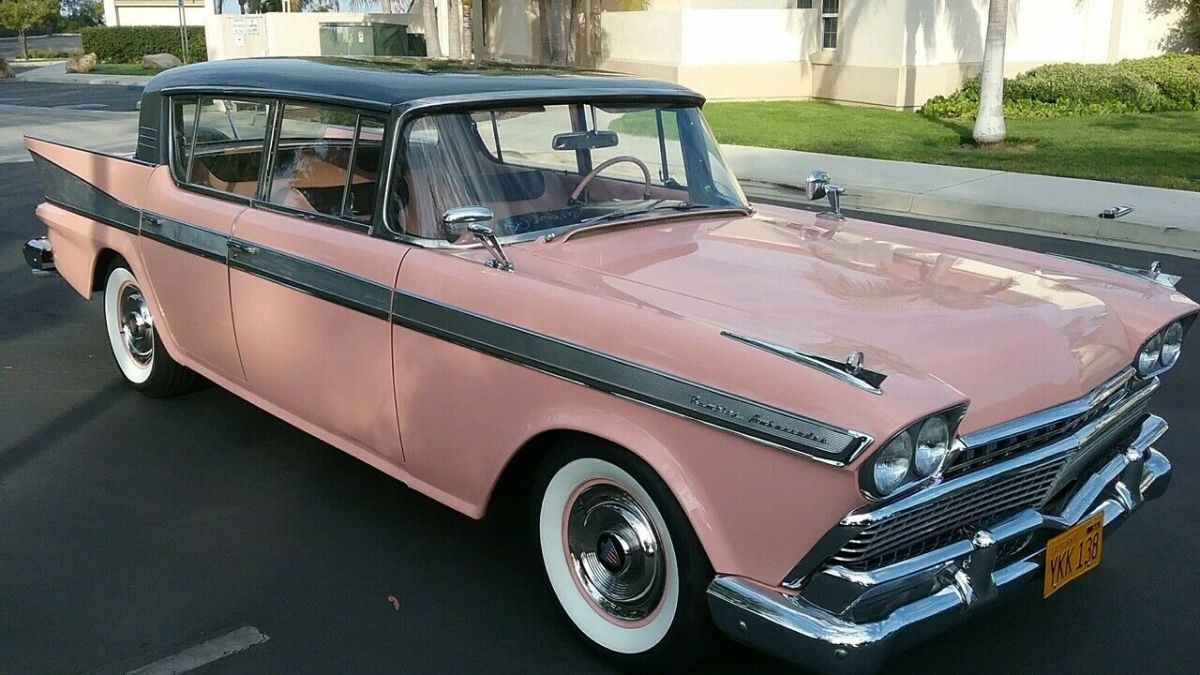
Former American Motors PR director John A. Conde once said the only real reason for the Rambler/AMC Ambassador was to placate AMC executives who were nervous about the company’s decision to drop the full-size Nash and Hudson lines in favor of the compact Rambler. The initial 1958 Ambassador was really just a superficially stretched version of the Rambler Rebel (later called Rambler Classic V-8), with a longer wheelbase (all in the front), but no additional interior room. However, it reassured old-line AMC people to know the company still had at least one “big” car, sort of, wearing a familiar old Nash nameplate.
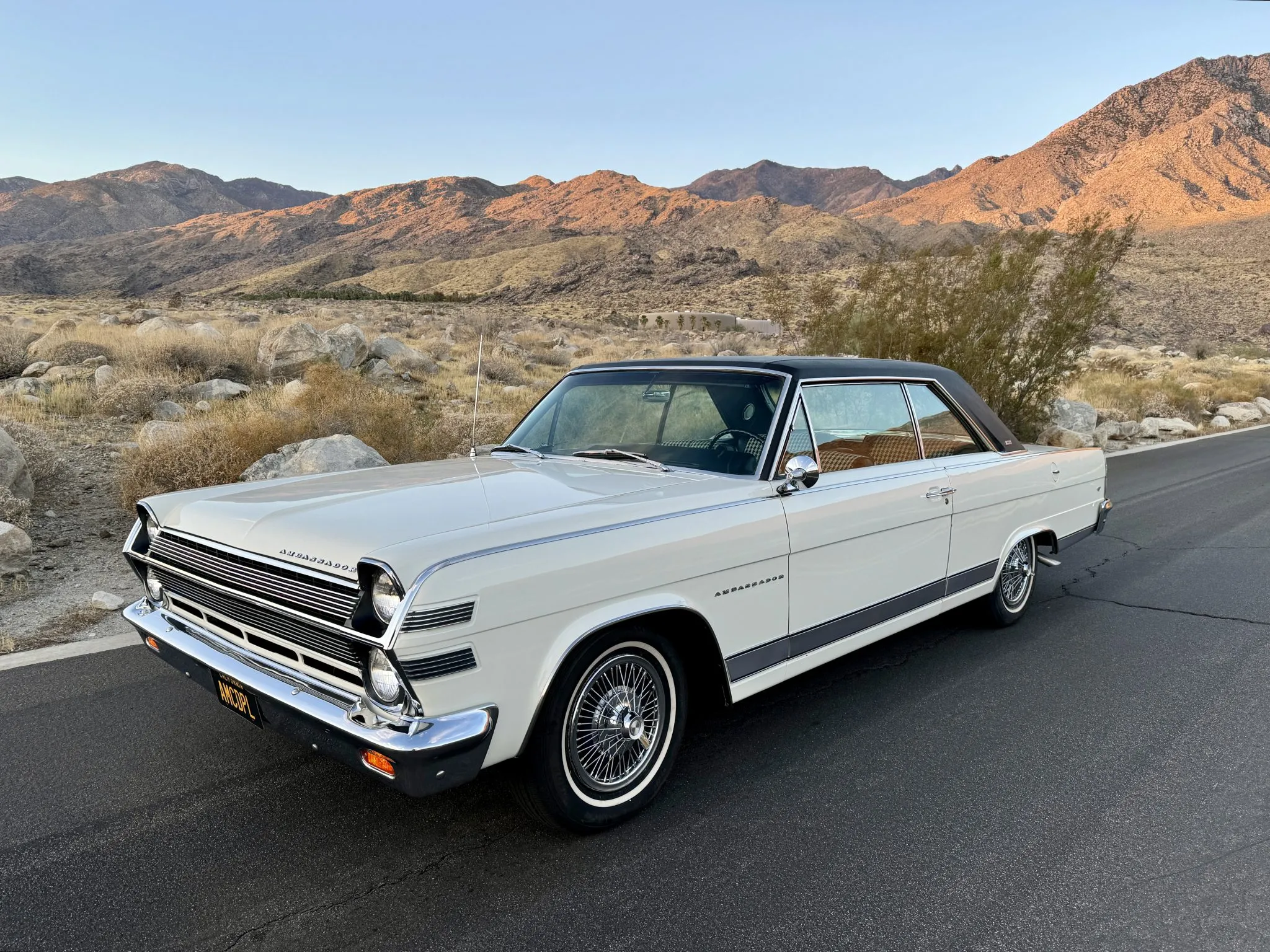
The Ambassador then stumbled through the early ’60s in a state of identity crisis. Between 1962 and 1964, it was just a fancier Rambler Classic Eight, with different styling and trim, but the same dimensions. For 1965, the Ambassador was once again stretched relative to the Classic, but standard V-8 power gave way to the new 232 cid Torque Command six. That situation continued for the 1966 model shown here, although the 1966 Ambassador was notable as the first car badged as an AMC rather than a Rambler.
Over the years, AMC president Roy Abernethy has taken a lot of criticism from AMC fans for attempting to go head-to-head with the Big Three rather than staying the course on compacts. In practical terms, he really didn’t have much choice — the Big Three had invaded every segment where AMC had any foothold. As much as the Rambler name was associated with compacts, the company’s bread and butter was really the midsize Rambler 6/Rebel/Classic line, which AMC proudly declared was “America’s first intermediate.” By 1965, that field had been overrun with rivals from GM, Ford, and Chrysler and having been first no longer counted for much.
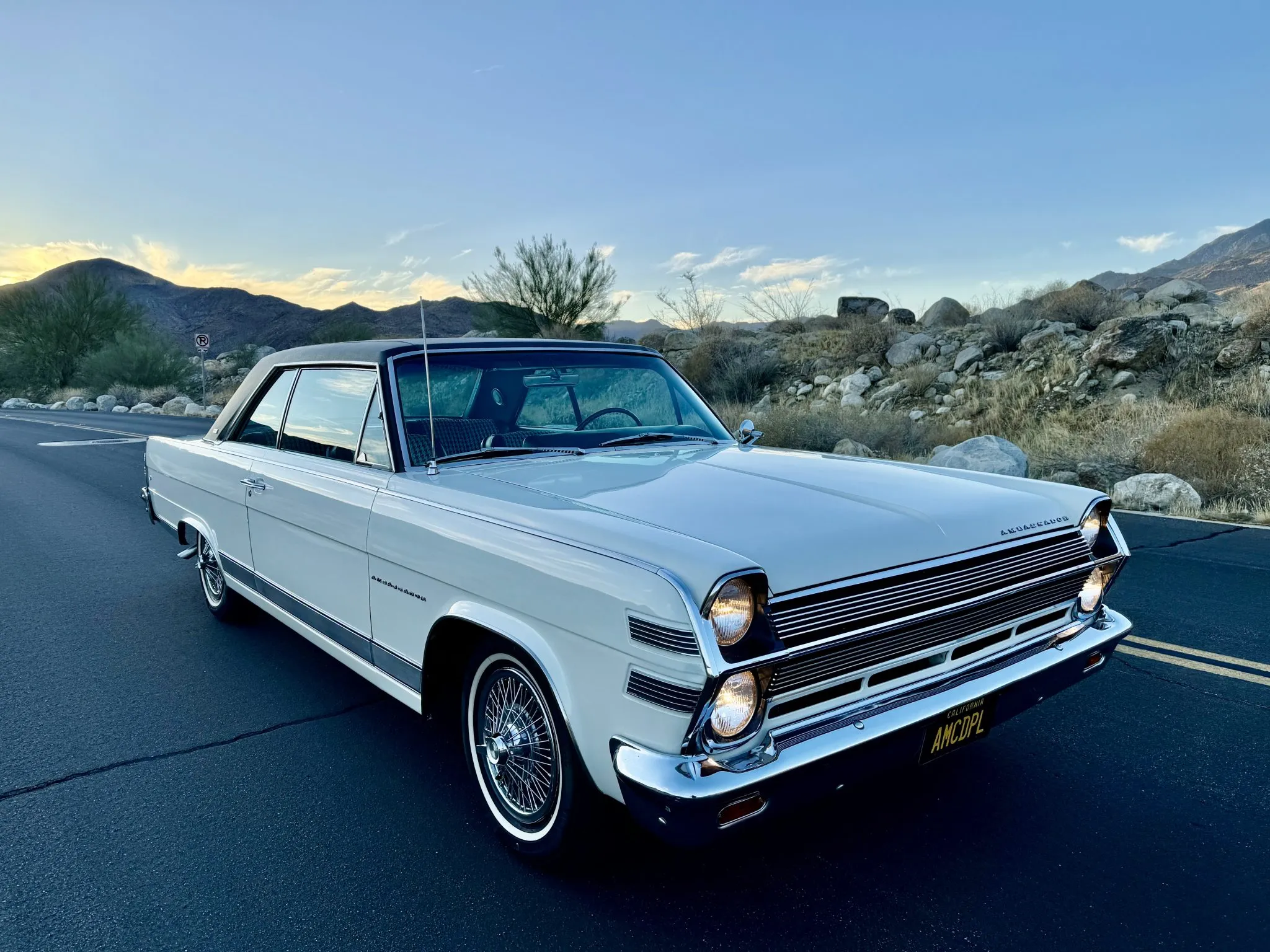
Confronted with that reality, Abernethy did something suicidally bold for 1966: introducing a new top-of-the-line Ambassador DPL that had, as the brochure put it, “a suggested list price about the same as Impala, Galaxie and Fury.” AMC had previously compared the Ambassador to mid-price models like the full-size Oldsmobile, Dodge, and Mercury, but I don’t think many people took that seriously — Rambler might have picked up some conquest business from mid-price buyers during the late ’50s recession, but it was because AMC cars differed from the full-size mainstream rather than that they were directly comparable. Now, AMC was inviting comparisons with the world’s most popular mass-market cars.
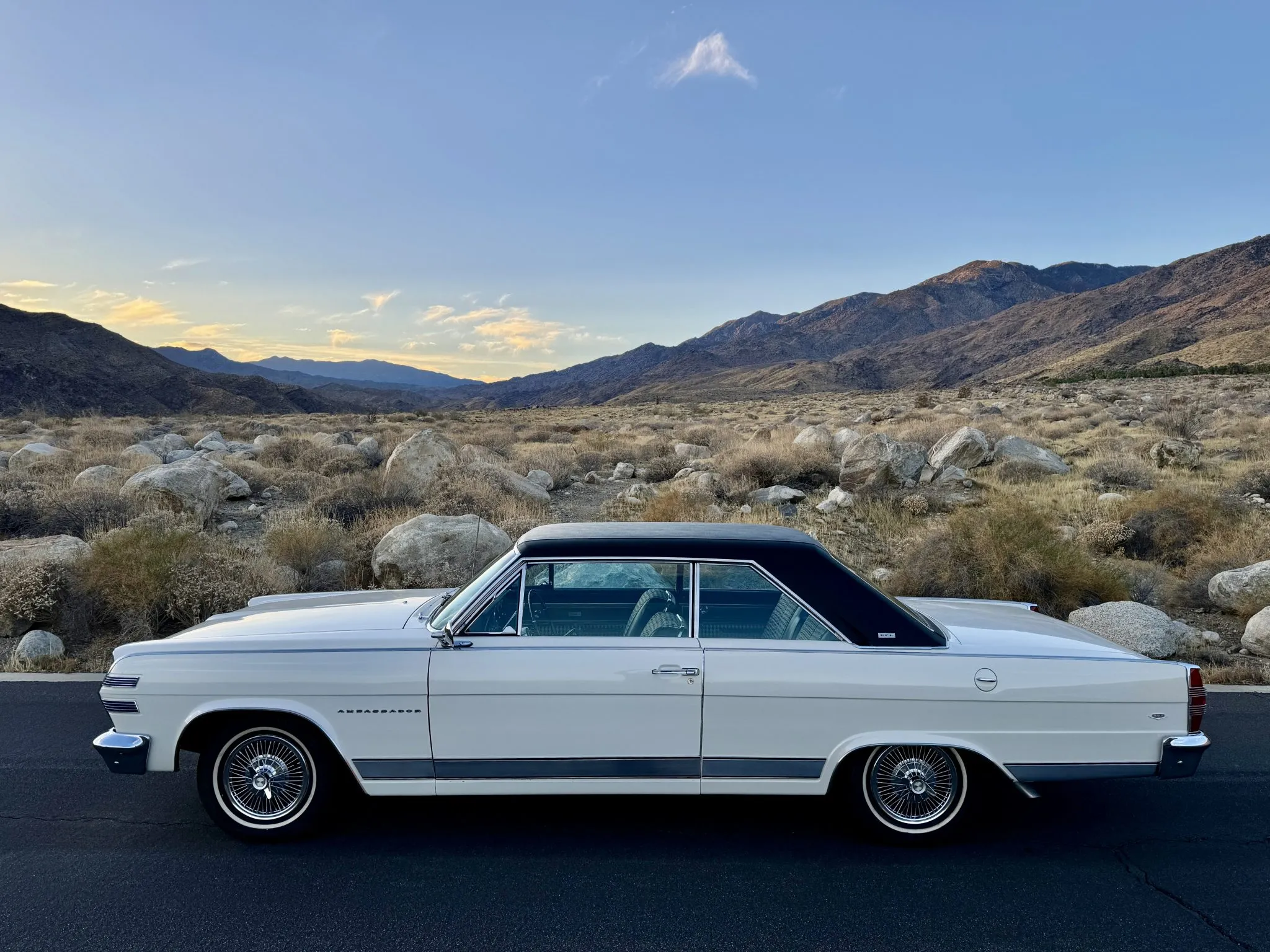
Even today, 60 years later, this strategy leads people to assume that the 1965–1966 Ambassador had become a full-size car. It hadn’t. The Ambassador had a 4-inch-longer wheelbase than the Classic and an extra inch of rear overhang, but it was still unequivocally an intermediate by ’60s standards:
| 1966 Model | Overall Length, In. | Wheelbase, In. | Overall Width, In. | Track F/R, in. |
|---|---|---|---|---|
| AMC Ambassador | 200.0 | 116.0 | 74.5 | 58.6/57.4 |
| Rambler Classic | 195.0 | 112.0 | 74.5 | 58.2/57.4 |
| Chevrolet Chevelle | 197.0 | 115.0 | 75.0 | 58.0/58.0 |
| Ford Fairlane | 197.0 | 116.0 | 74.0 | 58.0/58.0 |
| Plymouth Belvedere | 200.5 | 116.0 | 75.5 | 59.5/58.5 |
| Pontiac Tempest | 206.4 | 115.0 | 74.4 | 58.0/59.0 |
| Oldsmobile F-85 | 204.0 | 115.0 | 75.4 | 58.0/59.0 |
| Buick Special | 204.0 | 115.0 | 75.5 | 58.0/59.0 |
| Chevrolet Impala | 213.2 | 119.0 | 79.6 | 62.5/62.4 |
| Ford Galaxie | 210.0 | 119.0 | 79.0 | 62.0/62.0 |
| Plymouth Fury | 209.8 | 119.0 | 78.7 | 62.0/60.7 |
As the above table shows, in sedan, hardtop, and convertible form, the Ambassador was 200 inches long and 74.5 inches wide, on a 116-inch wheelbase. That made it longer than a Chevrolet Chevelle or Ford Fairlane, but a bit shorter and narrower than a Plymouth Belvedere. The Ambassador was 10 inches shorter than a Galaxie or Fury, and more than a foot (13.2 inches) shorter than an Impala. The AMC was also somewhat narrower than full-size rivals, since it was the same width as the Classic.
If AMC had managed to squeeze full-size room into a midsize package, that might have been one thing, but the Ambassador had precisely the same interior dimensions as the Classic. Its passenger space was about average for the intermediate class, but compared to the bigger, wider Impala, it inevitably came up short. The fact that the Ambassador had a 19-inch-shorter turning circle than the full-size Chevrolet, as AMC proudly noted in its X-Ray comparison brochures, was small consolation, especially considering that the Ambassador’s greater length made its turning circle 24 inches greater than the shorter Classic V-8.
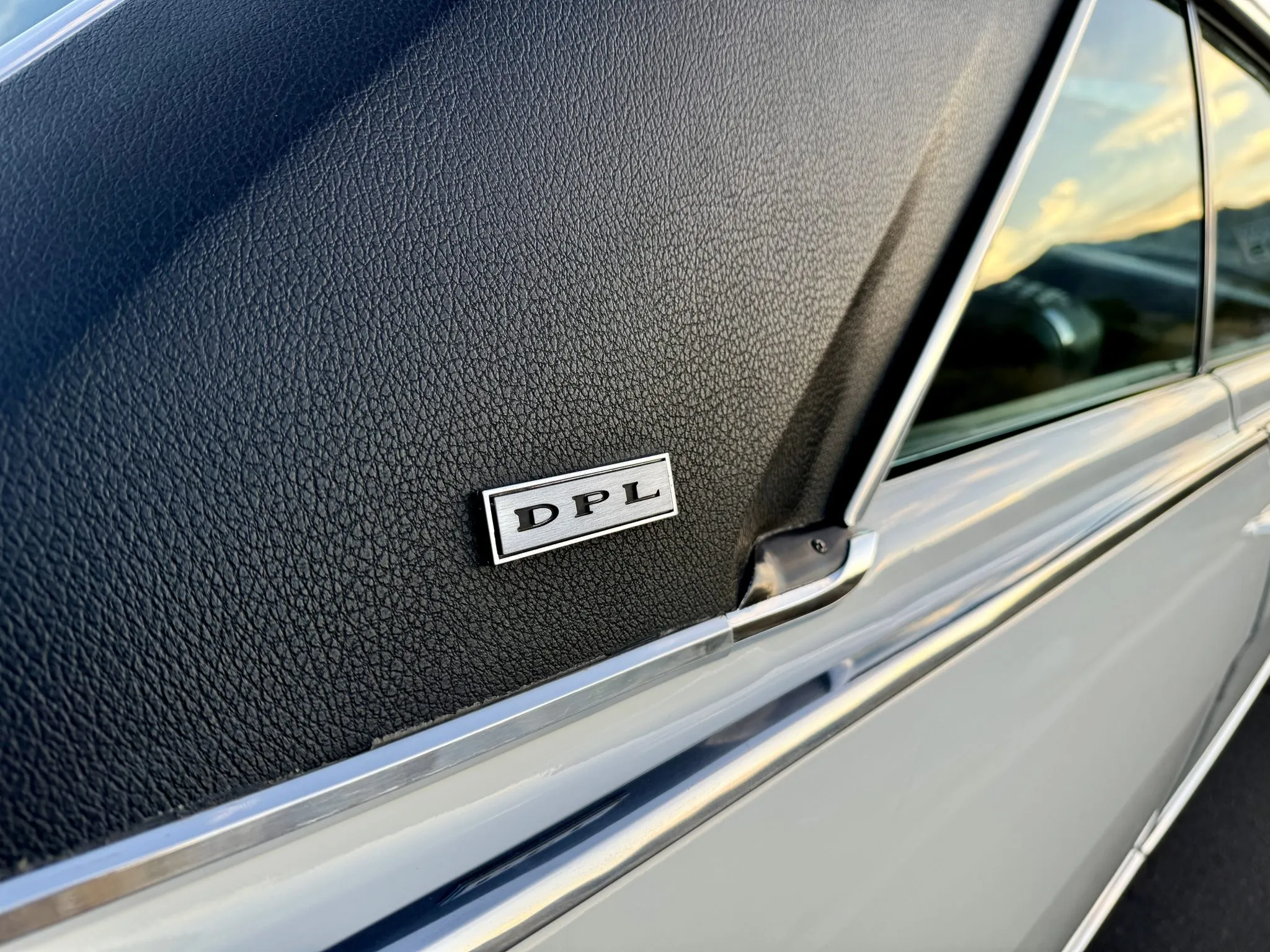
The new Ambassador DPL was not, as AMC officials were occasionally obliged to point out, an Ambassador “Diplomat,” since that name was owned by Chrysler. At the time, the “DPL” abbreviation was used for diplomatic license plates in the District of Columbia, which was apparently different enough that Chrysler decided it wasn’t worth squawking about. (In the ’60s, nameplate registration for domestic cars was generally handled through the Automobile Manufacturers Association, under a range of gentlemen’s agreements that were less litigious than in some other eras.)
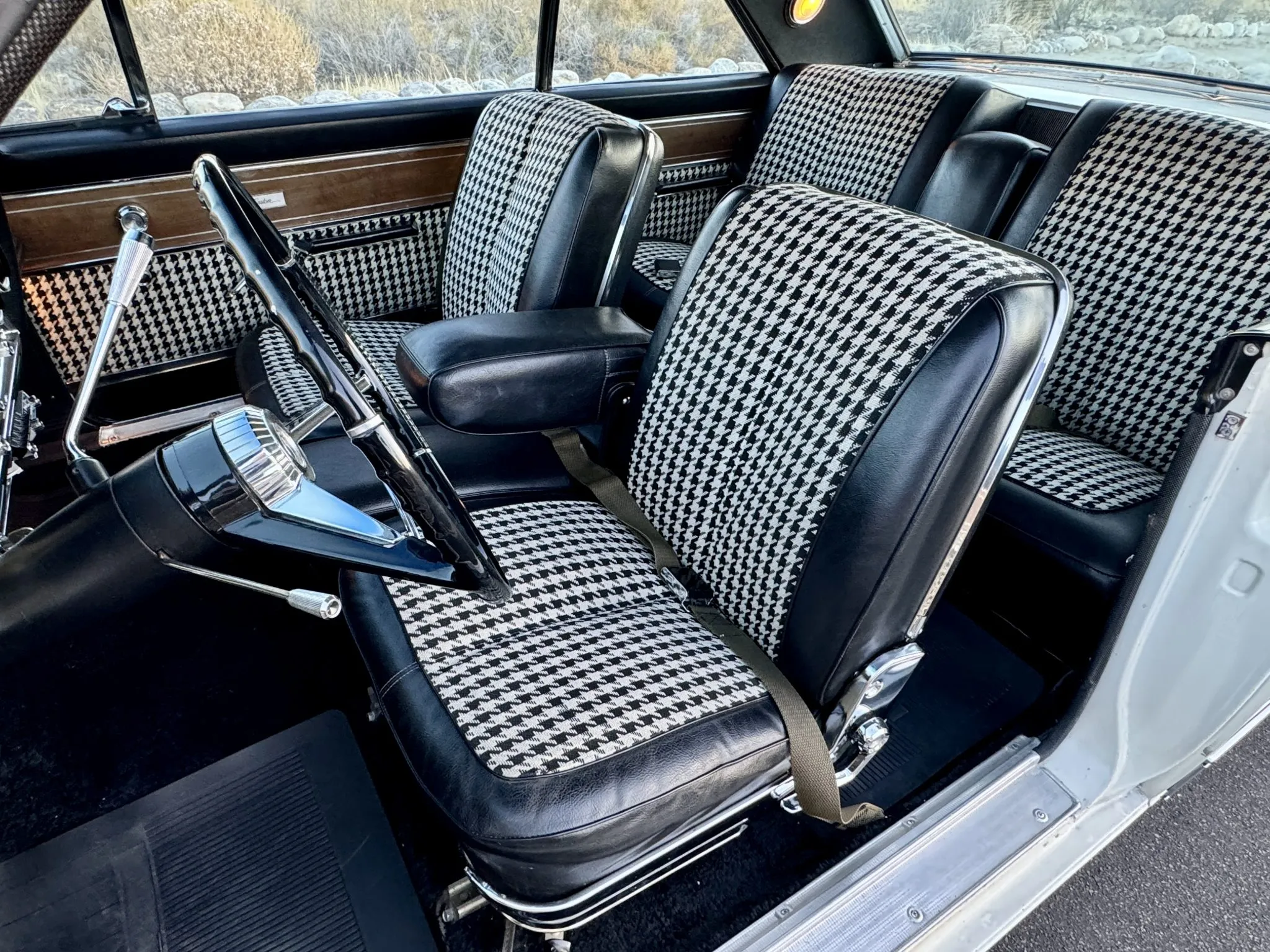
Available only in two-door hardtop format, the DPL featured plusher trim with reclining bucket seats and front and rear armrests. Like contemporary Chryslers with bucket seats, a front center cushion with folding armrest was standard, but you could order a center console instead at extra cost.
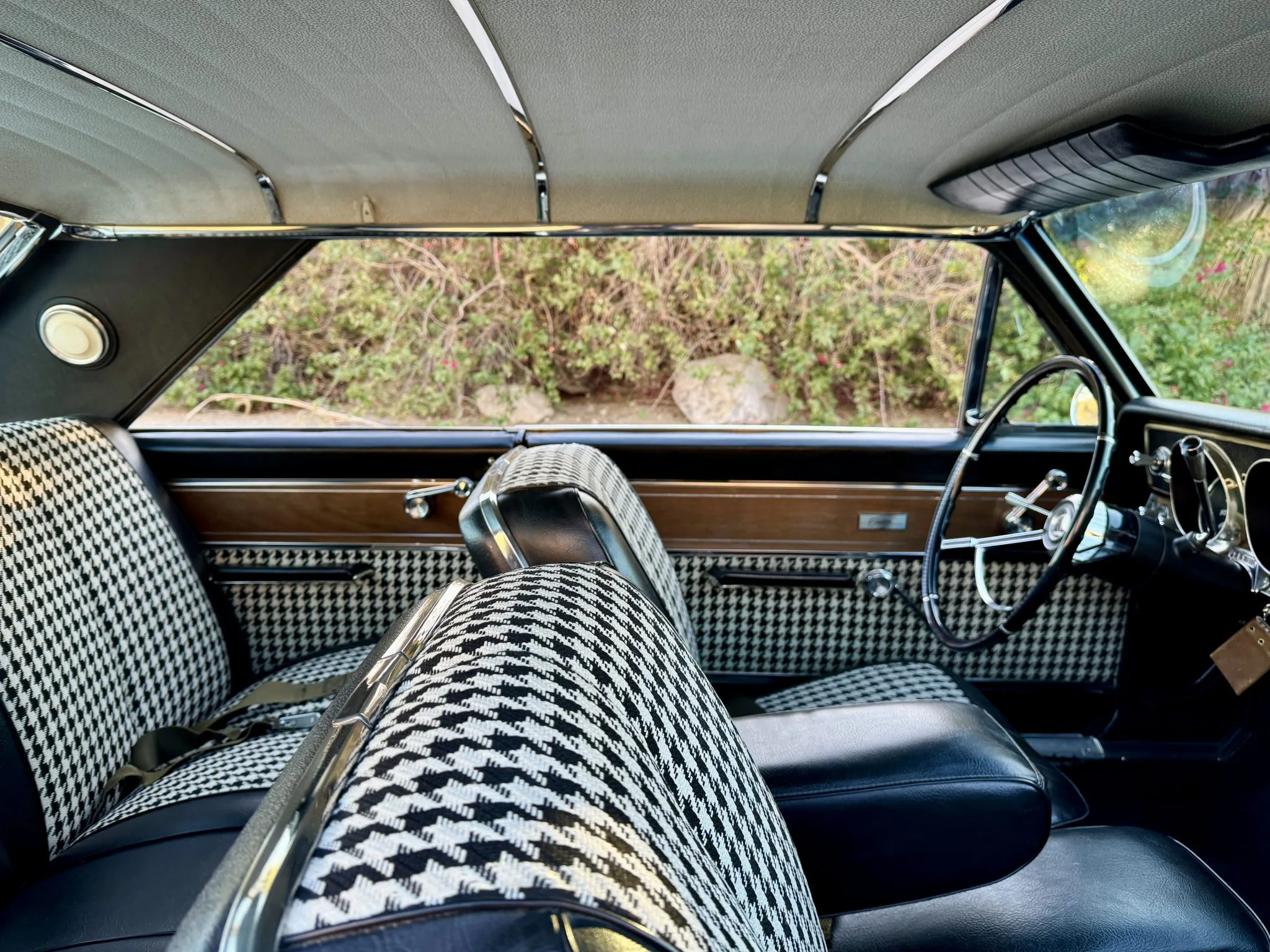
The DPL also had simulated top bows on the headliner, like the early GM hardtops.
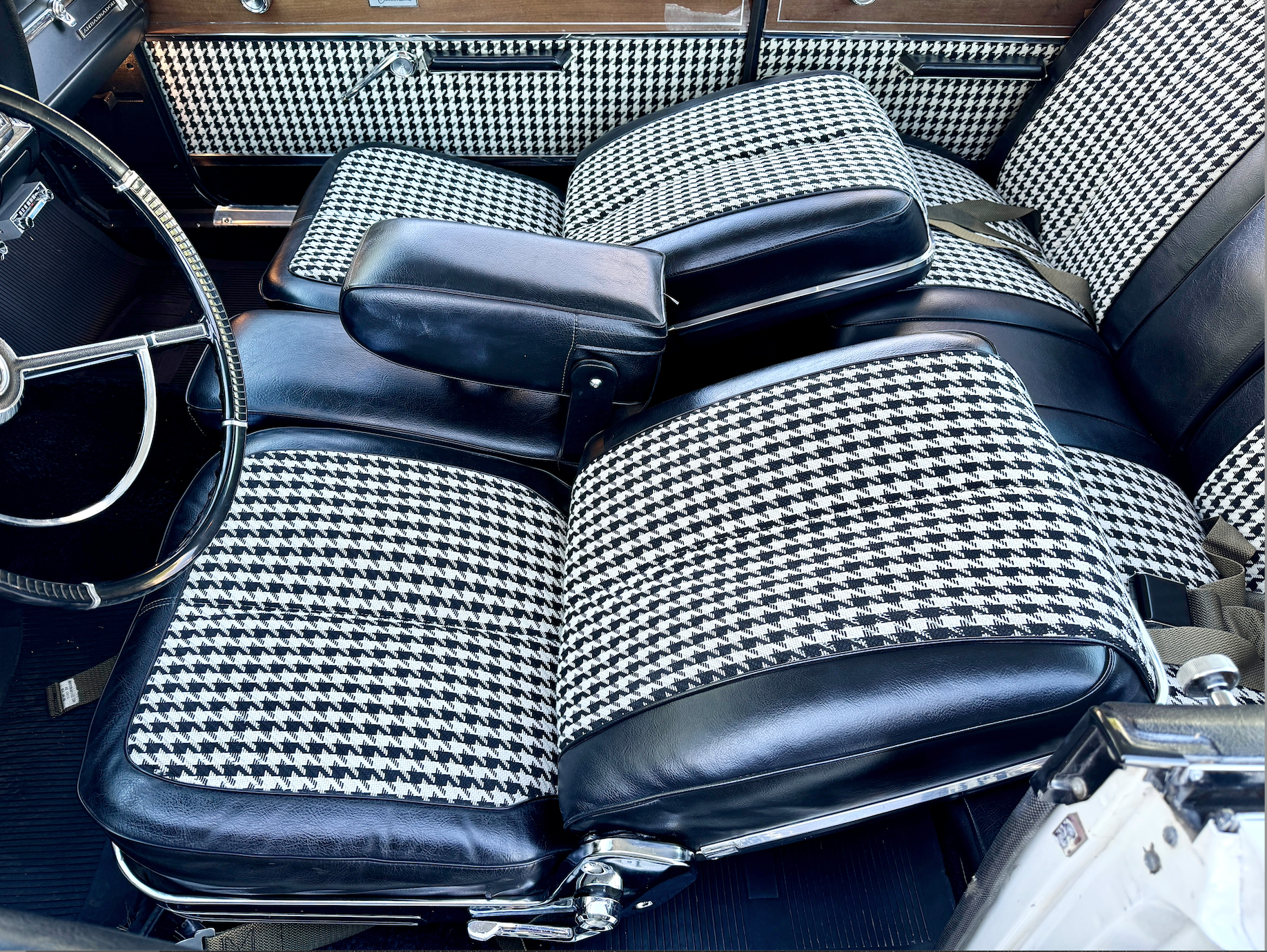
AMC had offered individual front seats as far back as 1959 (when they were advertised as “sectional sofa front seats”), so that part was not really new. Likewise, the reclining feature was optional on other AMC models with buckets.
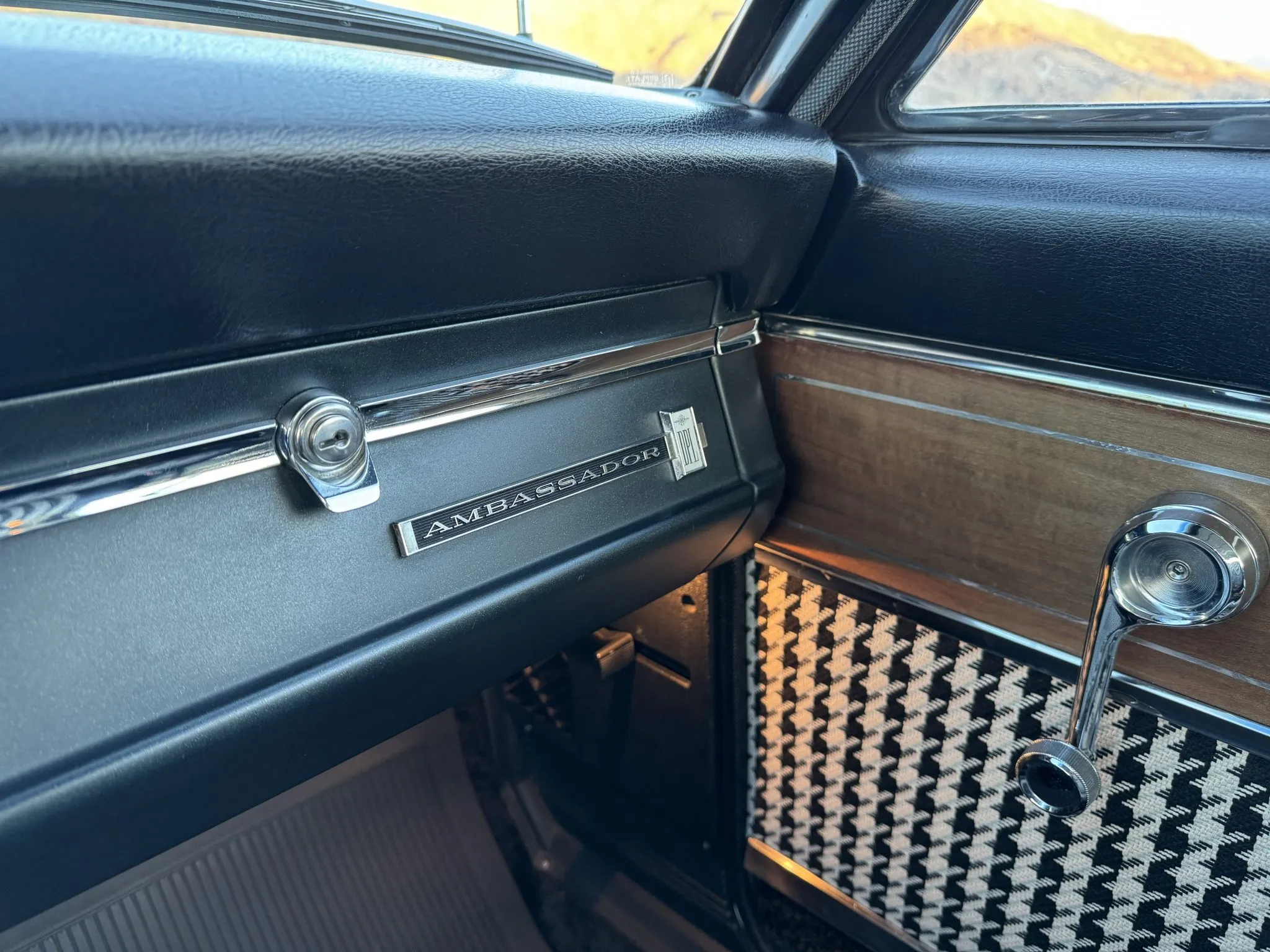
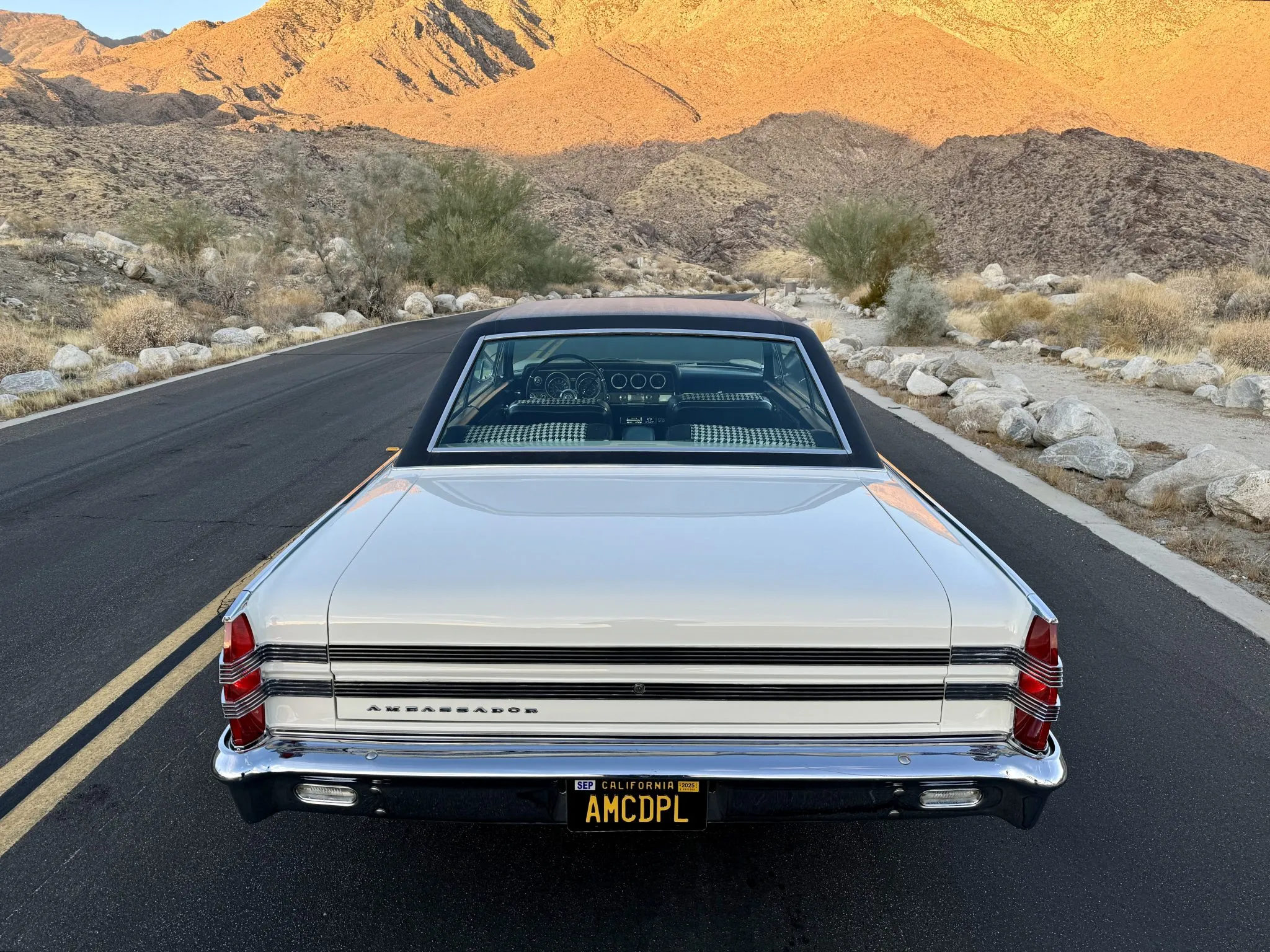
The standard DPL interior had either Vinylair upholstery or vinyl-bolstered Mantilla floral-print cloth. The vinyl-bolstered cloth-and-vinyl houndstooth check trim seen here was part of the optional Custom Trim Package. This pattern was available in six colors, and included a pair of matching throw pillows, which are missing on this car.
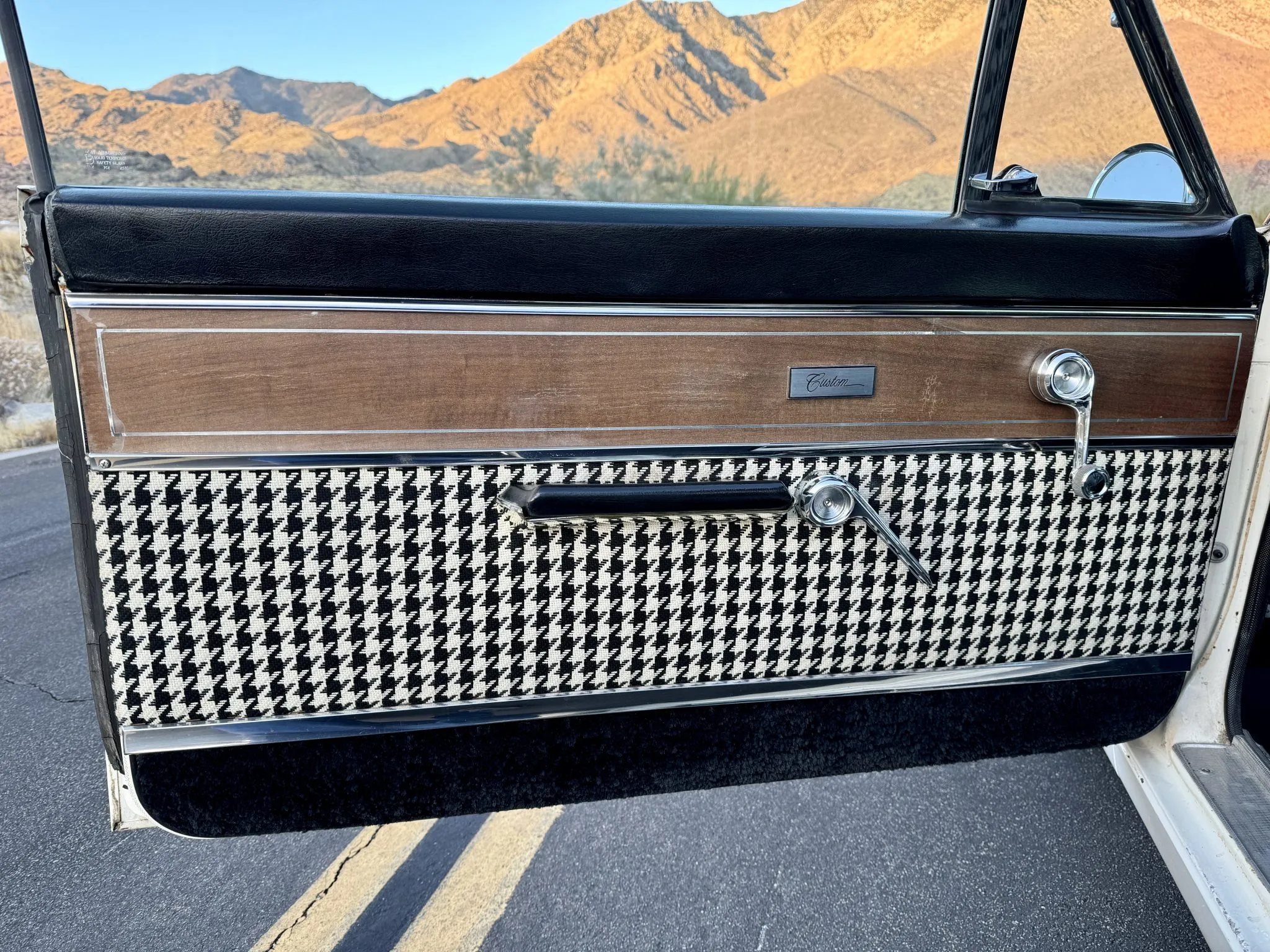
Although the woodgrain trim on the dashboard of the DPL and Ambassador 990 was simulated, the Custom Trim Package included real walnut panels on the doors and rear quarters, an unusual touch for a car in this price range.
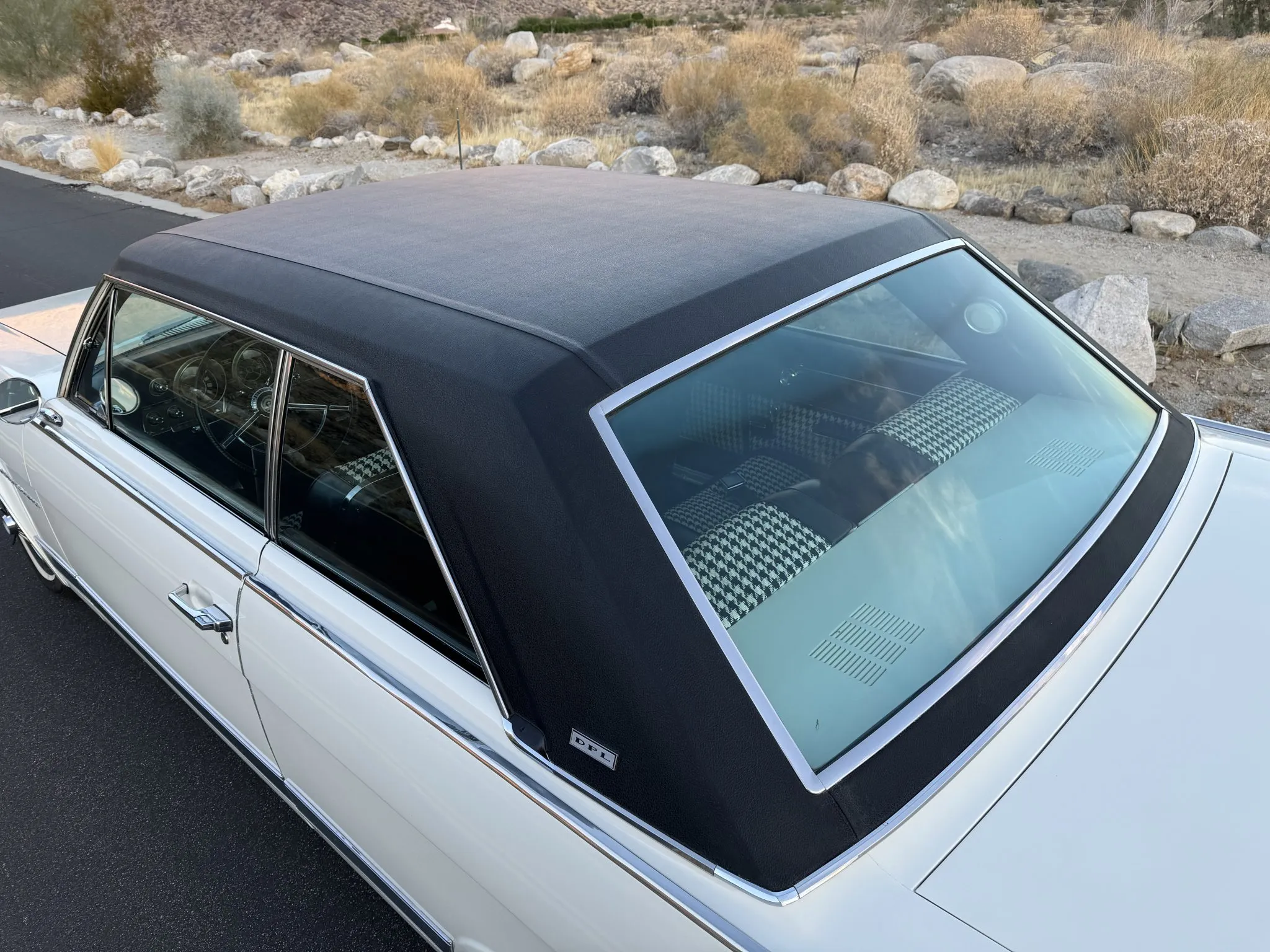
The Custom Trim Package also included a vinyl roof, which was fast becoming a popular fashion accessory in this period.
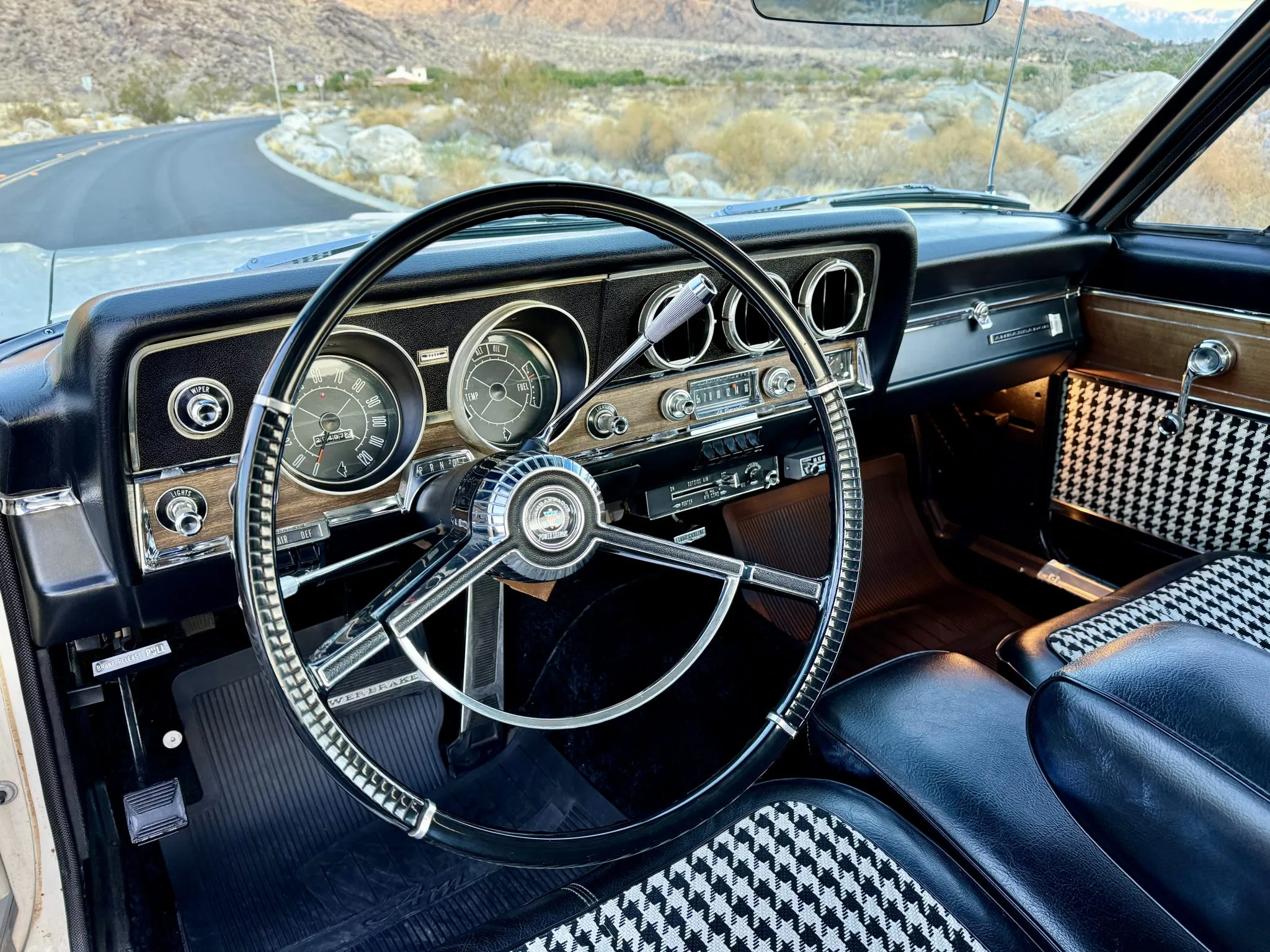
Luxurious interior trim packages were really taking off in these years — this was the age of the Ford LTD — and so AMC was really just trying to catch the wave. However, contemporary observers were not always keen on the results, feeling that AMC interior design tended to the excessively jukebox-y. Today, that’s part of its charm, but it does seem like the designers (or perhaps their bosses) just didn’t know when to stop. Everywhere you looked, there was some new texture or bit of visual business, which was seldom dull, but not always tasteful or coherent. It didn’t help that the minor controls were also rather scattered, which wasn’t something that would likely bother an owner for long, but became a constant source of annoyance to the magazine reviewer.
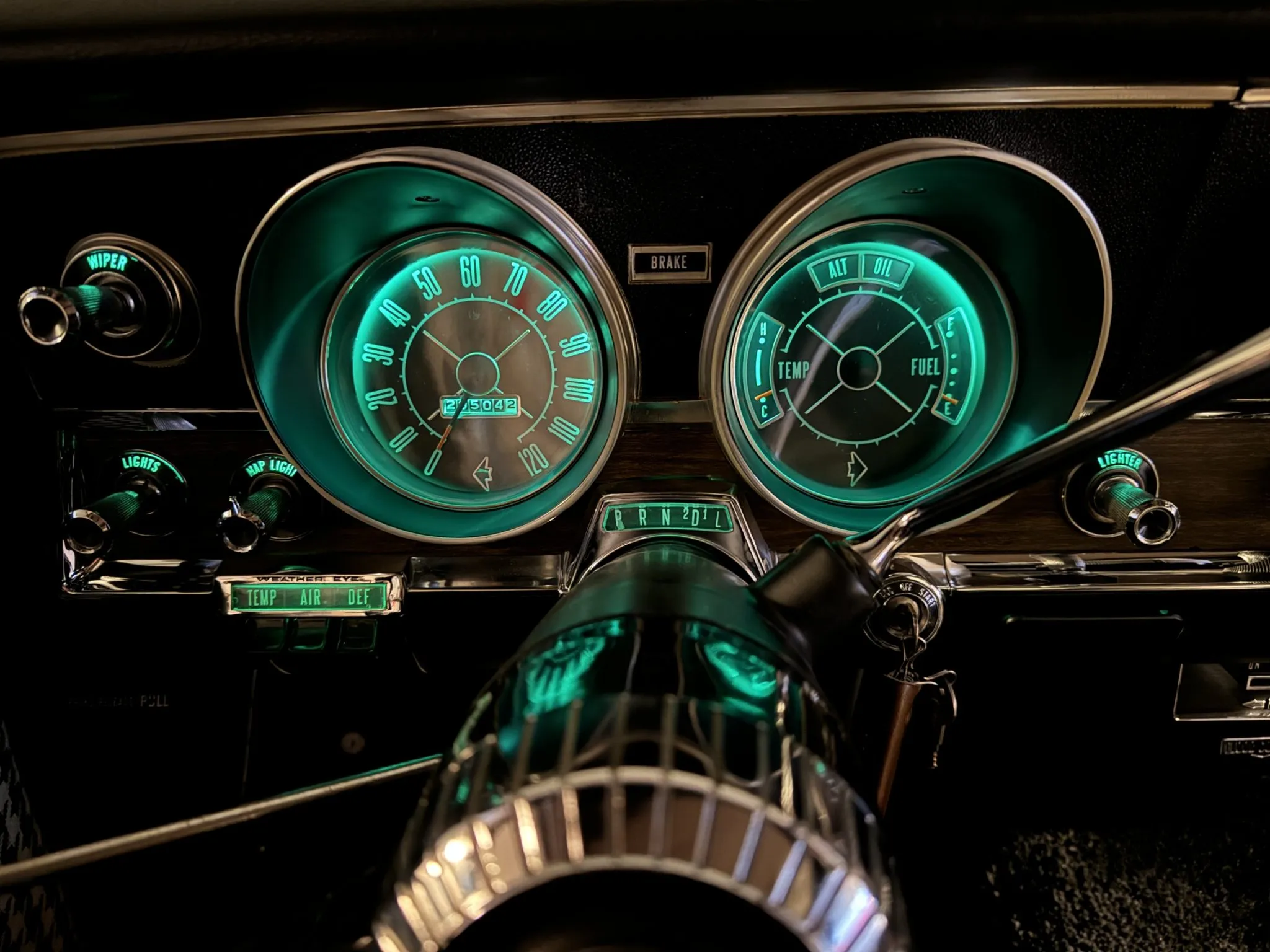
The Ambassador dash did get full marks for its cool blue-green lighting, which AMC claimed was better for night vision.
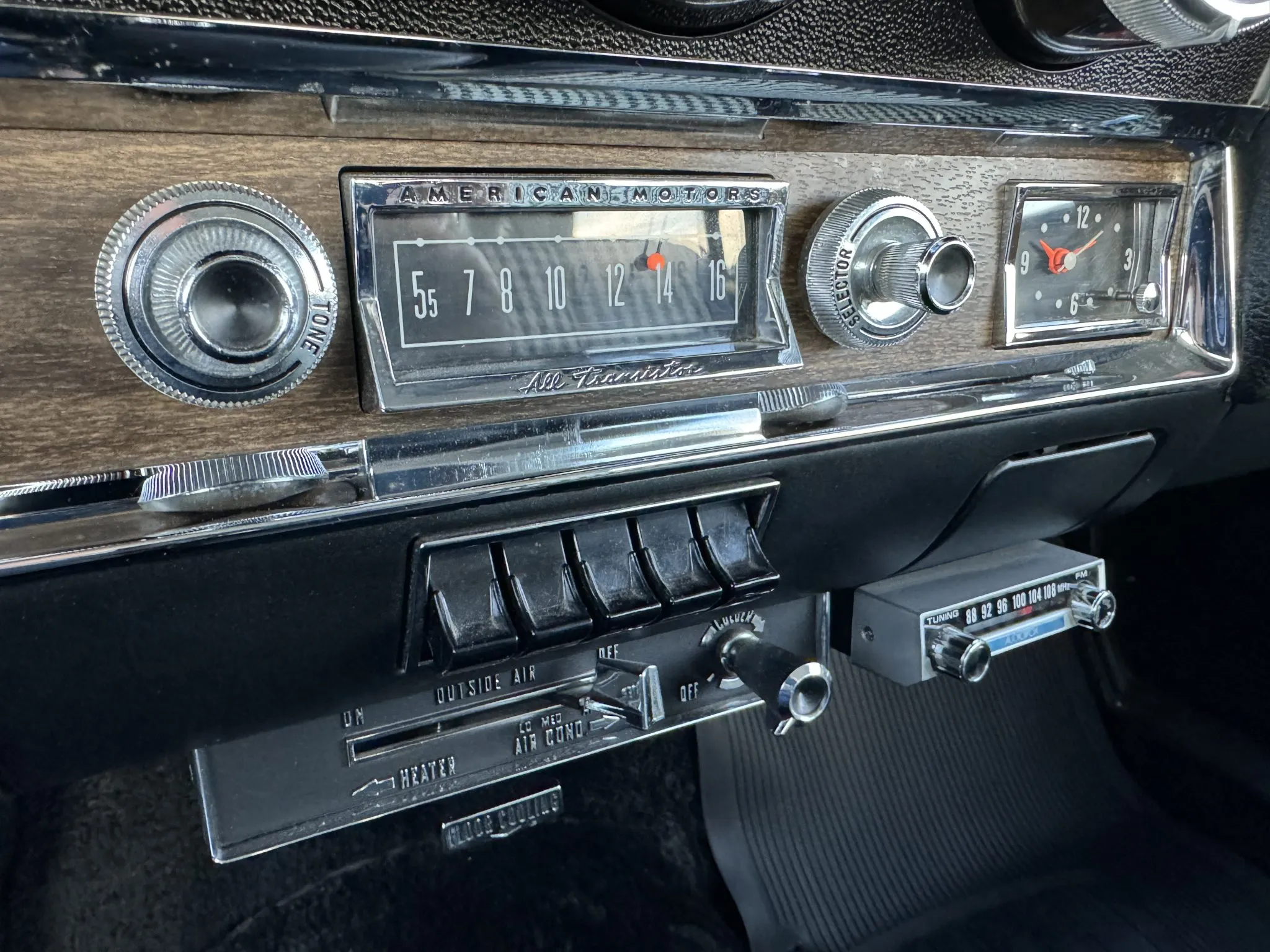
This was a well-equipped car, with factory air as well as Flash-O-Matic, power steering, and power brakes. A clock was standard on the DPL, and the device under the dash below the clock is an aftermarket FM converter.
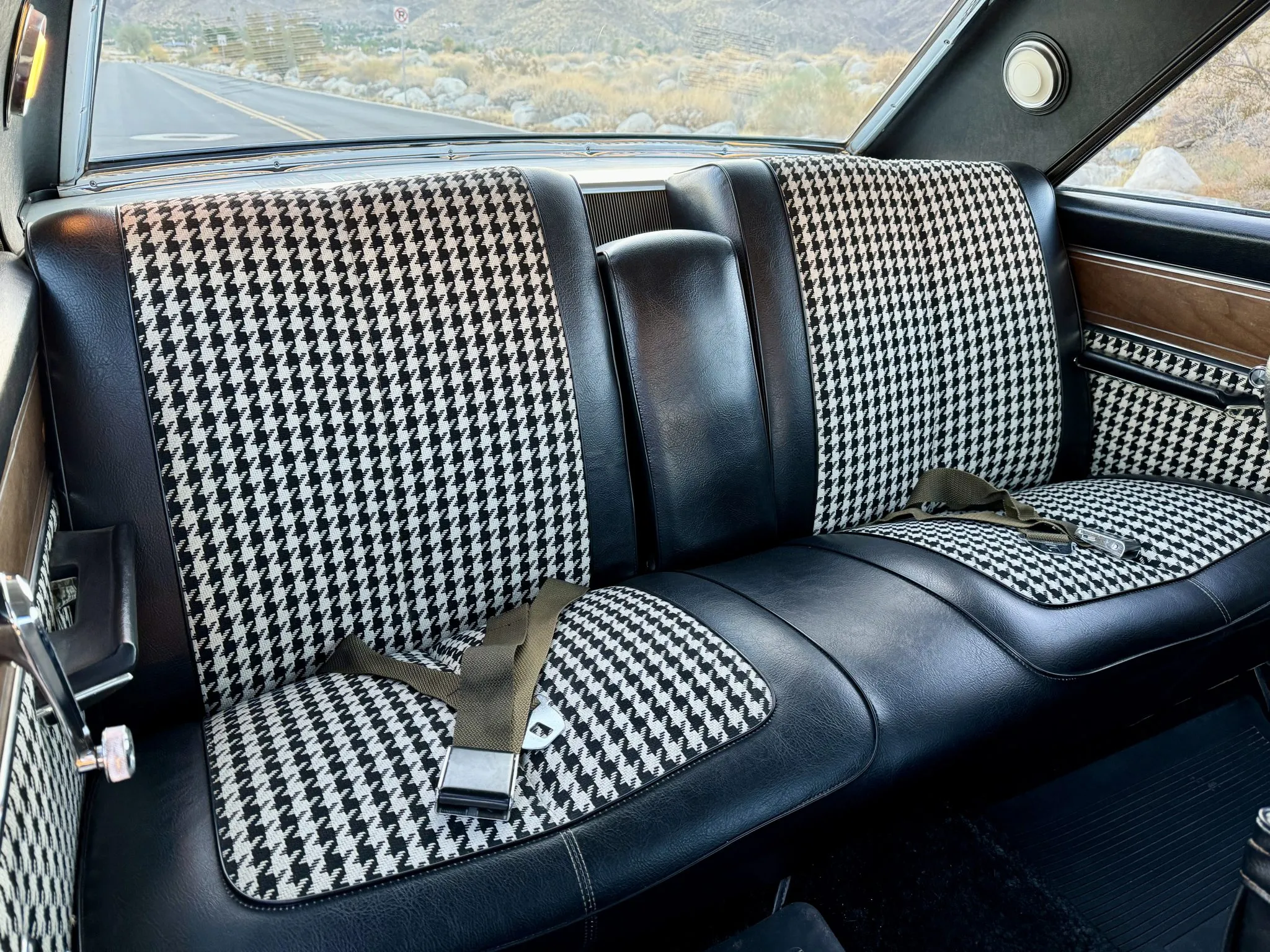
Even without the original throw pillows, a DPL with Custom Trim was as plush an intermediate as you could get from a domestic manufacturer in 1966. Back seat room was no better than average, but occupants traveled in style, it was reasonably comfortable, and interior noise levels were low.
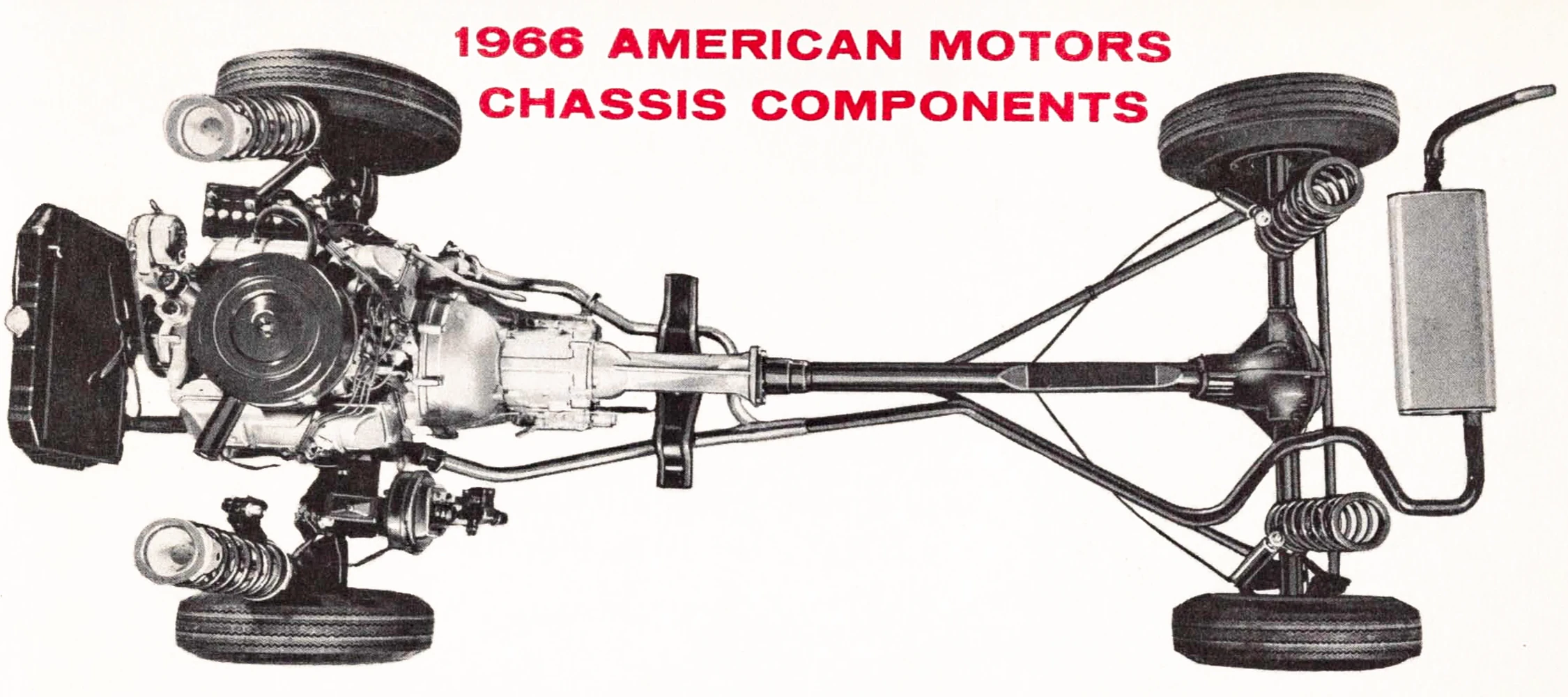
As a driver’s car, the Ambassador left a lot to be desired. AMC’s bigger models still had a rather elderly chassis, with a torque tube rear axle, a layout that even Buick had abandoned five year earlier. AMC claimed that the torque tube better protected the propeller shaft and axle components from “stones, dirt, and water” and minimized squat and dive on acceleration or braking. However, it had a lot of unsprung weight, and once set to hopping, it didn’t like to stop. Motor Trend complained that this rear suspension simply would not tolerate any kind of aggressive jackrabbit starts without ferocious axle hop, which, on stick-shift cars, tended to be very hard on the clutch.
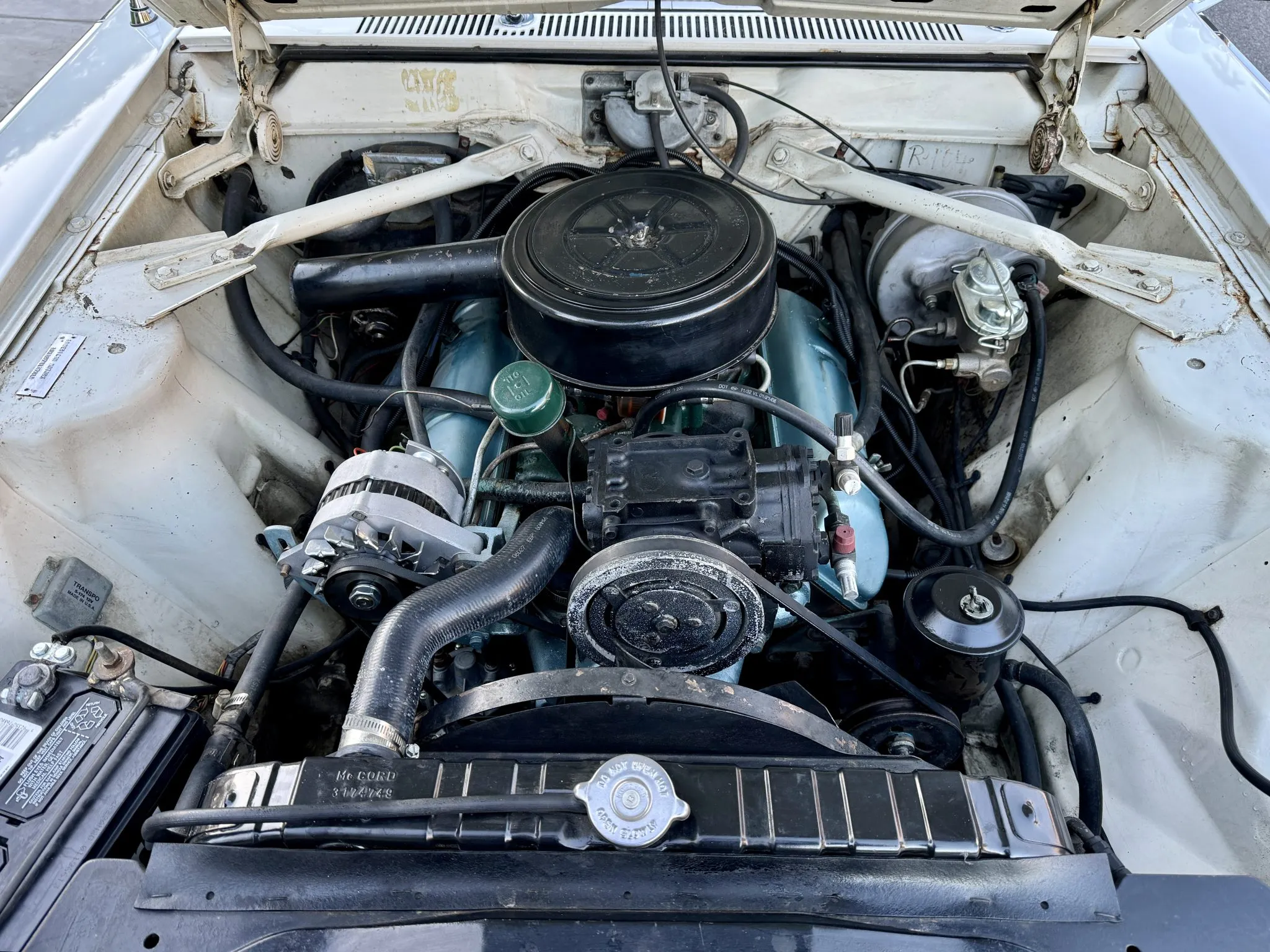
More than two-thirds of AMC buyers still ordered six-cylinder engines in 1966, but this car has the 287 cid V-8, which had 198 gross horsepower. The 287 and the larger 327, which dated from the mid-’50s, were on their way out; the new, lighter 290 cid engine became available late in the model year.
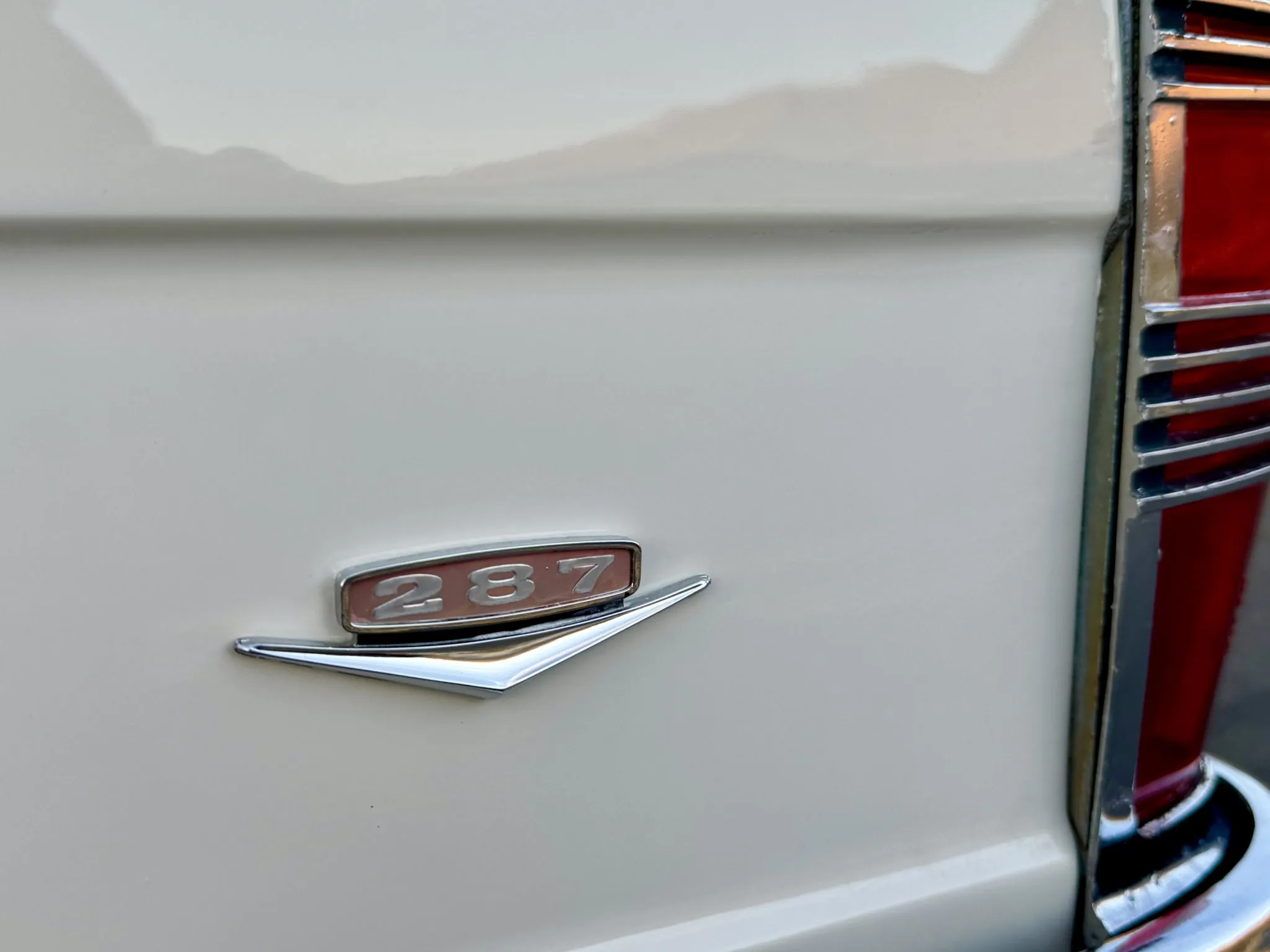
With the 287 and column-shifted Borg-Warner Flash-O-Matic, which was far from the smoothest or slickest automatic of the era, performance and fuel economy were adequate rather than sparkling. The AMC 327 had more power, but the axle required so much babying that I don’t know how much real advantage it offered. Motor Trend needed 12 seconds to reach 60 mph with a 1965 Ambassador convertible with the four-barrel 327 and manual transmission with Twin Stick overdrive, worse than Car Life had managed with their 287-powered 1964 Classic. I’d guess that 0 to 60 mph times for the automatic Ambassador DPL would be in the 13-second realm.
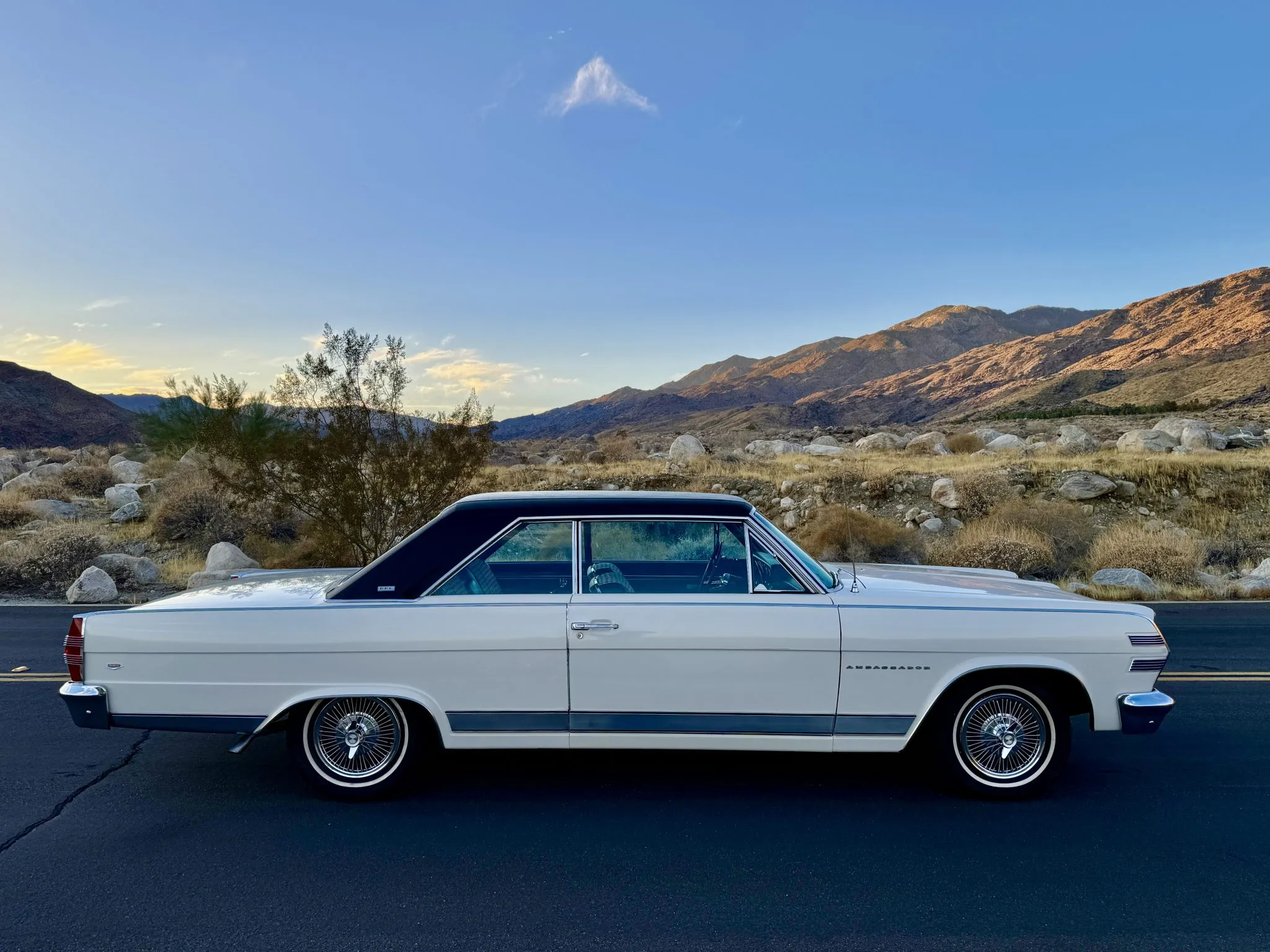
“Handling” was not really part of the AMC image, and even Consumer Reports complained that the nose-heavy V-8 cars were prone to “rather excessive amounts of understeer.” The contemporary GM intermediates didn’t handle very well in standard form either, but, as Oldsmobile demonstrated with its Cutlass 4-4-2, firmer springs and shocks combined with a rear anti-roll bar could work wonders. The existing AMC chassis just didn’t lend itself to that sort of thing, even if buyers had been interested. AMC offered a handling package in 1966, but only for the American and six-cylinder Classic.
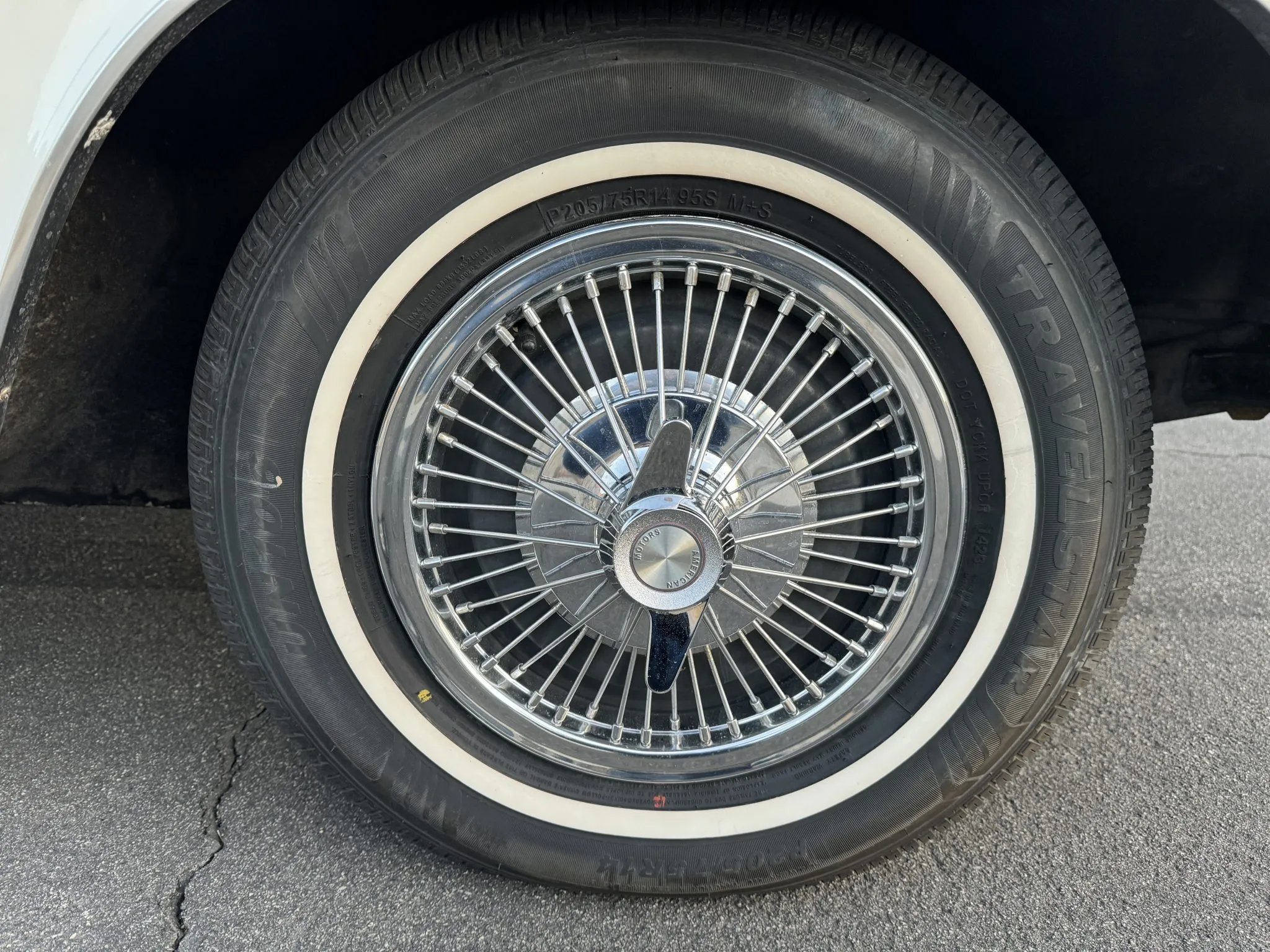
A useful option this DPL lacks is front disc brakes. Bendix disc brakes had been optional on the Classic, Ambassador, and Marlin since 1965 (they were initially standard on the Marlin), which was commendable — at the time, most rivals still didn’t offer disc brakes at any price. Unfortunately, the discs were rare, installed on only 4.3 percent of 1966 AMC production, and the standard drums were inadequate for V-8 cars even by the dubious standards of mid-’60s domestic intermediates. AMC provided dual-circuit “Double-Safety” brakes, but the brakes specified on V-8 Ambassadors had only 167.5 sq. in. of lining area, little better than the grievously under-braked GM A-bodies.
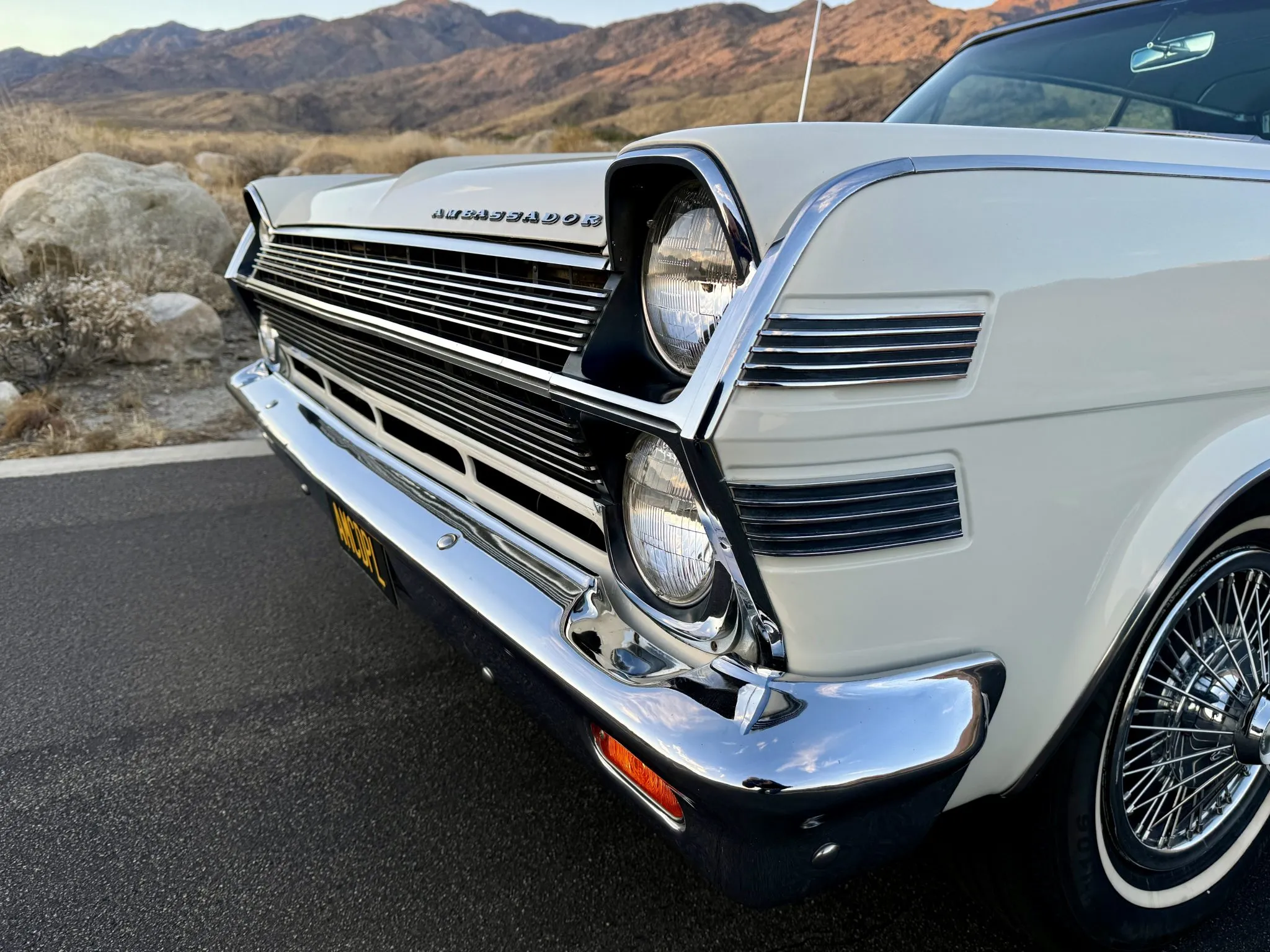
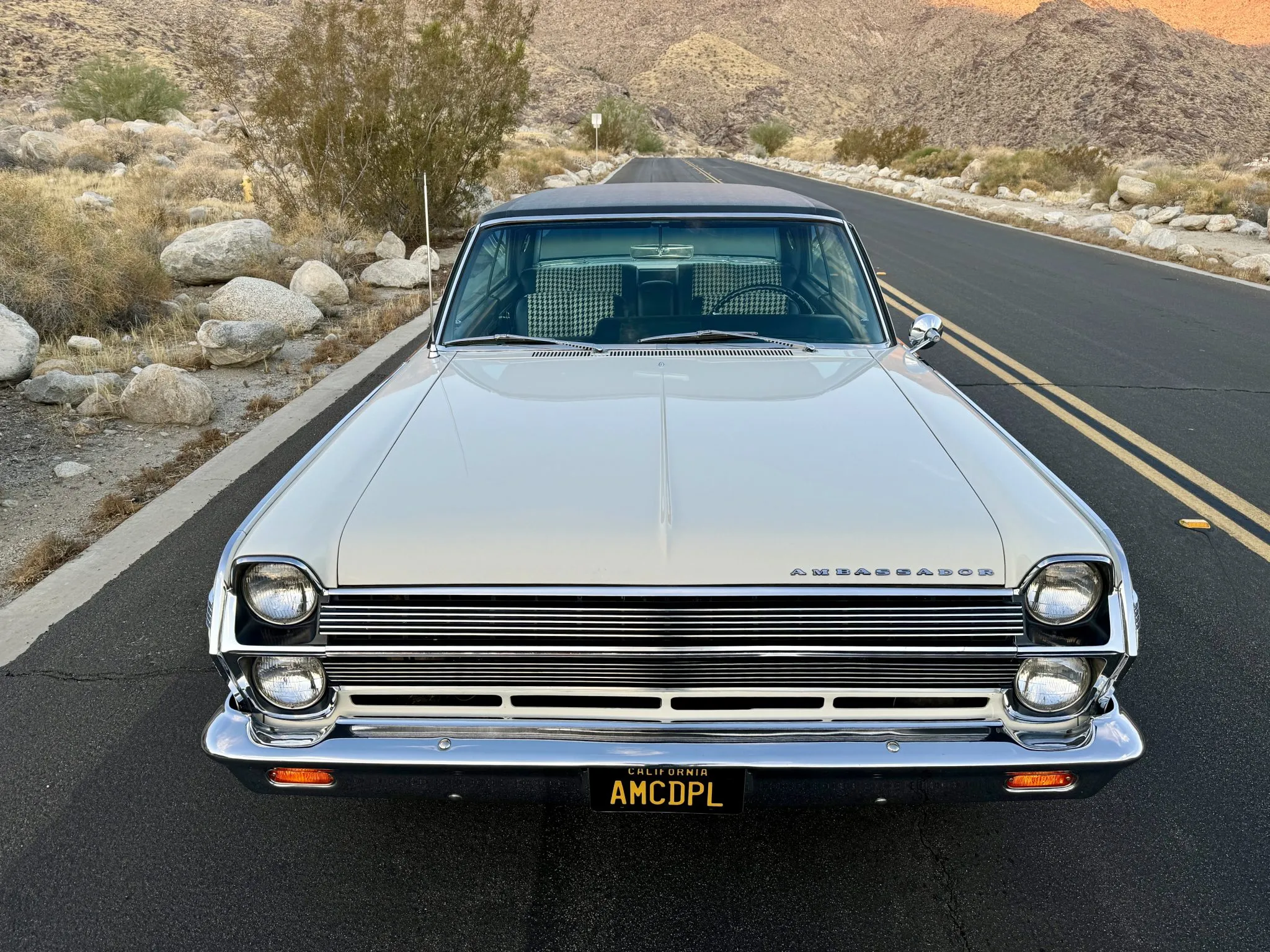
I can’t quite decide what to think of the styling of this Ambassador. Like the interior, it has more going on than it necessarily knows what to do with. It has character, and its architectural vibe led this particular car to be featured in a 2024 exhibition of Midcentury Modernism, but I can readily understand why a lot of contemporary intermediate buyers ended up with a more conventionally attractive Pontiac Tempest LeMans or Chevrolet Malibu instead.
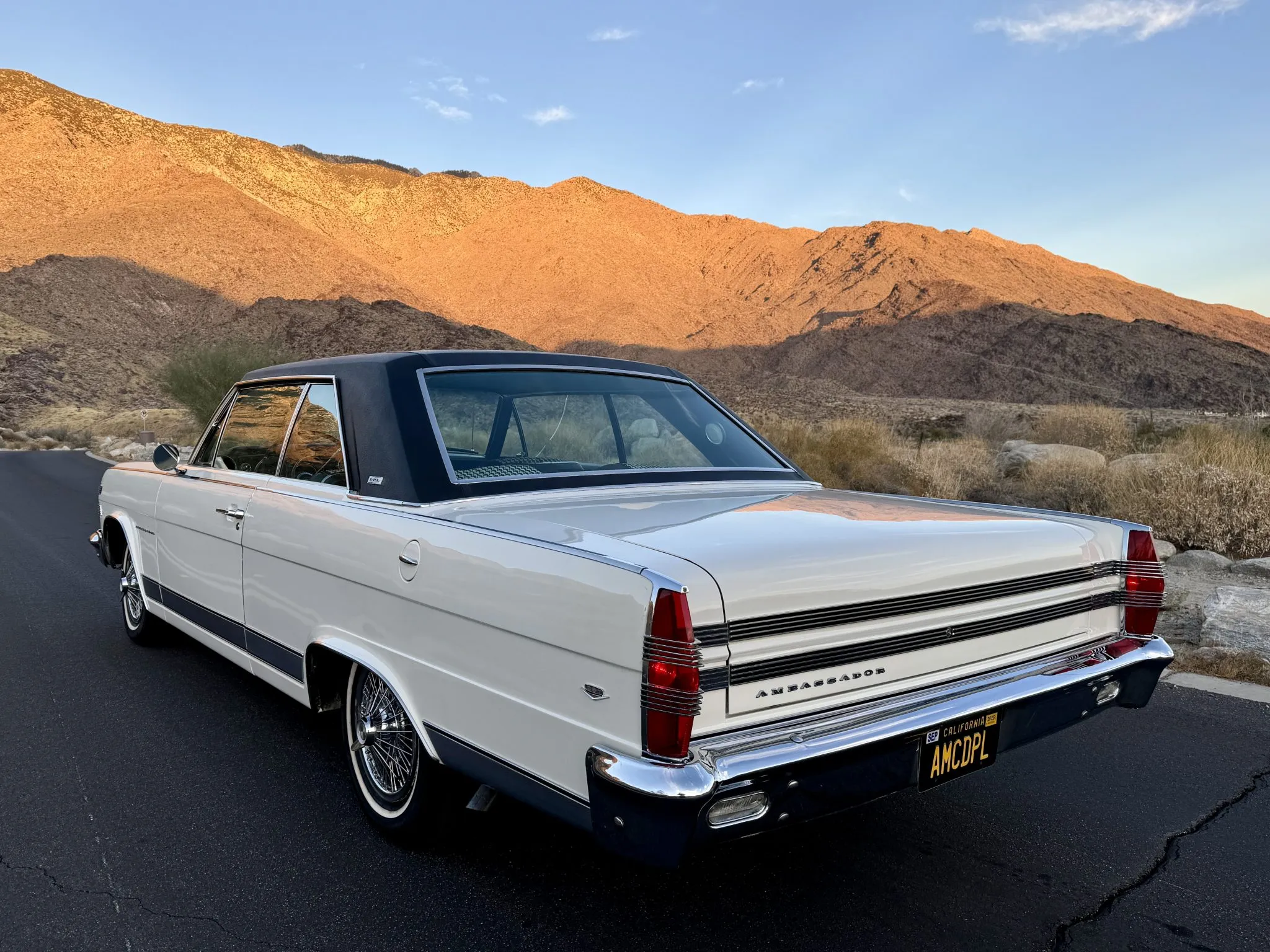
Even more troublesome was that price. As the brochure indicated, the Ambassador DPL was right in the thick of the full-size low-price field. A 1966 DPL V-8 started at $2,862, which was $20 more than a V-8 Impala Super Sport two-door hardtop. The DPL’s list price did not include the Custom Trim Package (for which I unfortunately don’t have a price, although it was probably at least $100 extra). With the DPL, AMC had dressed up the Ambassador to the point where it had to compete on price with cars that outmatched it in size, space, and often performance — an unenviable commercial position, to be sure. An Ambassador 990 hardtop was $156 cheaper, but it didn’t have the fancier interior that was really the most appealing feature of the DPL.
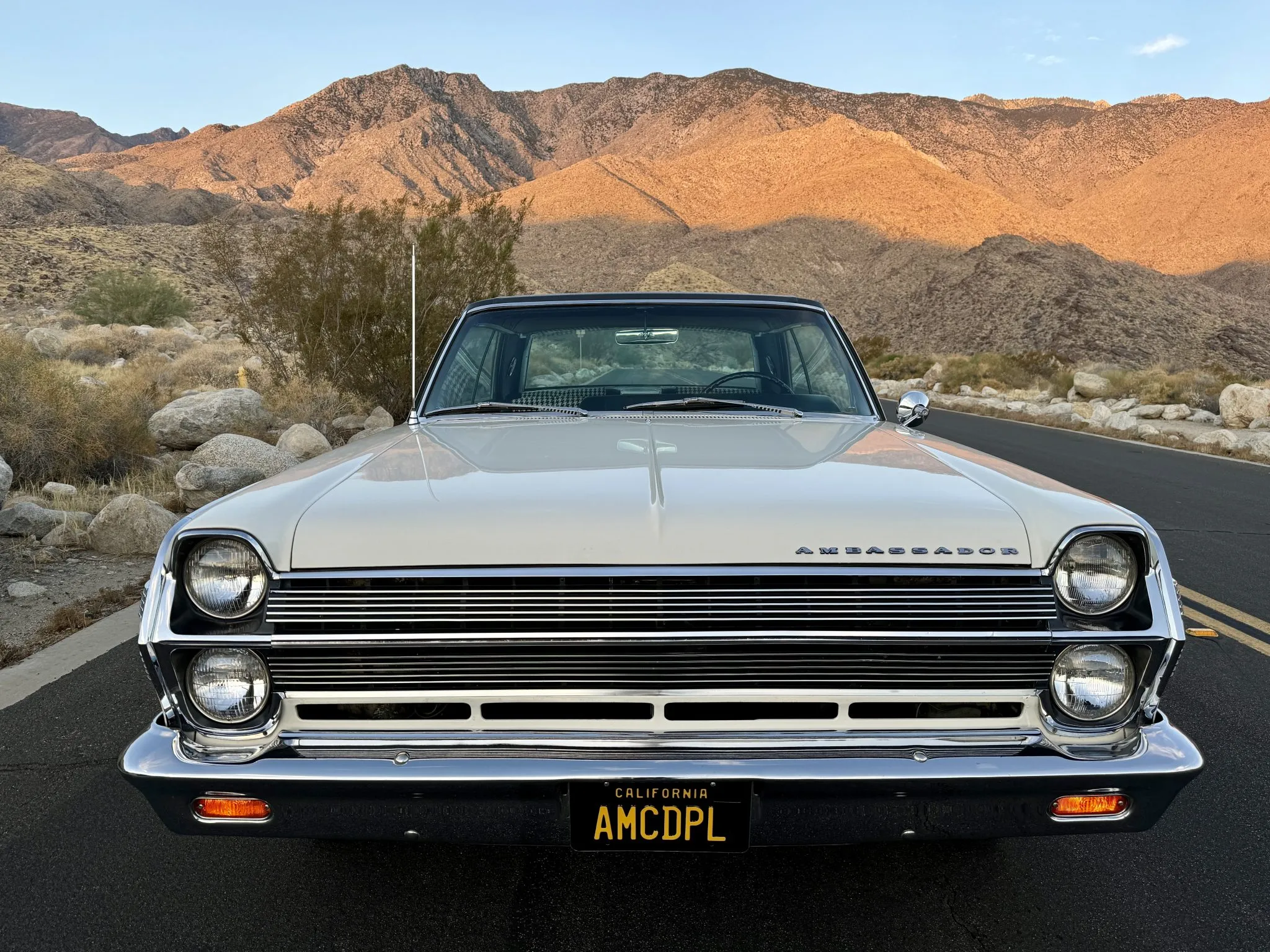
Given all that, the DPL didn’t sell terribly, with 1966 production hitting 10,458 units. That was on top of a respectable 61,234 units of the cheaper Ambassador 880 and 990. GM executives would have rolled their eyes at numbers like that, but it was nearly one-quarter of AMC’s rapidly shrinking sales volume. That earned the DPL a place in the Ambassador lineup through 1971, but in typical U.S. automaker fashion, the nameplate was soon diluted to meaninglessness. The final 1971 Ambassador DPL was a six-cylinder base model of no particular distinction.
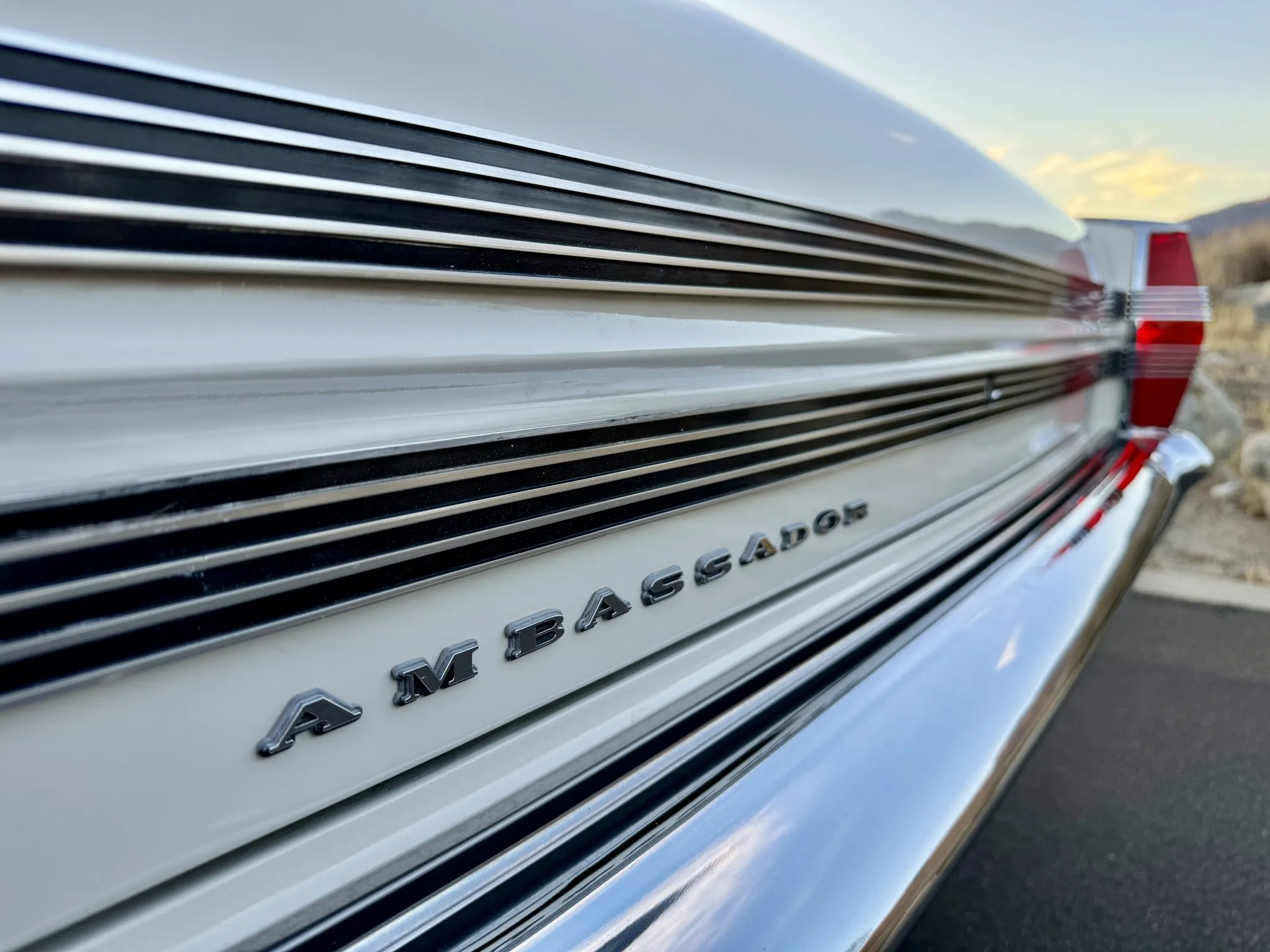
Looking at this DPL now makes me think of movies that weren’t appreciated in their day, but are now considered classics of their time. As fashion statements go, the DPL was eccentric then and is iconoclastic now, but, divorced of contemporary comparisons of size and price, it stands out in a way that its more popular contemporary rivals do not. This one sold for for $14,653 in December 2024.
Related Reading
CC Formerly For Sale: 1958 Ambassador – Something For Nash And Hudson Loyalists To Buy in ’58 (by Stephen Pellegrino)
Curbside Classic: 1961 Rambler Ambassador – Does Size Really Matter? (by Paul N)
Curbside Classic: 1966 AMC Ambassador 990 Convertible – Abernethy’s Asinine Assumption (by Laurence Jones)























Nice FM converter under the dash. I put a Radio Shack “Realistic” unit in my dad’s pickup. Worked well although it was dial tuning only.
An interesting question Aaron.
If we stick to traditional metrics, the Ambassador was an intermediate; a Cutlass was actually a little longer.
Price wise, the DPL matched more or less that Cutlass, and I am rather confident that many would question why they were paying Olds money for a Rambler, if they were compared.
By positioning it against the cheapest full-sizes, AMC could leverage the traditional selling point of value, which the brochure clearly emphasizes, rather than trying to convince people that they were buying an upscale intermediate – which in fact it was
As I see it, the Ambassador complemented the Classic, which was on the smaller end of the intermediate size
I remember reading comparison tests of the late 60s/early 70s when the field would consist of Ford/Chevy/Plymouth – and the Ambassador. Even then I felt like the Ambassador didn’t really belong in that group, but the magazines included it anyway.
My neighbor’s grandpa had a 67 Ambassador sedan that seemed like a nice car, but I don’t think I knew anyone else with one back then.
I like almost everything about this one but the front styling. And the “DPL” name. It seemed like AMC got to the name barrel last and had to scrounge leftovers to get it.
Great selection Aaron, a wonderful read (as always), and a very concise analysis. In all my travels, I’ve only come across only two of these in the wild. Most memorable is the yellow one with a black top a neighbor had in the 70’s. He kept it spotless. To me it was really neat looking and stood out among all the “me too” cars in the neighborhood. I recall it carried a Richards’ Motors dealer tag on the trunk lid. They were our local dealer in Union NJ.
I was enjoying reading this until I got to the photos of the houndstooth checkerboard interior. My eyes!! Too early in the morning for this. It does almost give off a Carnaby Street vibe … it just needs an occupant in a white minidress and black thigh-high boots.
I love that interior! I used to have a cashmere hounds tooth jacket someone gave me that they got from a Goodwill or such. Now that would be the thing to wear while driving this.
Yes, it’s easier to appreciate this car now than in its time. The stacked headlights looked like a last minute decision to add them. And the longer front end was always a bit silly; I rather liked the ’63-’64 Amby that didn’t have the longer front end. But that probably sold even more poorly.
The 1967 Eldorado and old Porsche 911s wore houndstooth better.
Are those gauges electro-luminescent like the old Chrysler AstraDome or 1966-67 Charger? They sure look like it and, if so, that’s yet another small tidbit I had no idea existed on anything other than the Chrysler products.
But, yeah, as stated, the DPL was an attempt by AMC to ride the luxury, low-priced three Ford LTD wave begat by Lee Iacocca, along with the Chevrolet Caprice and Plymouth VIP. I guess it was worth a shot but, like Roy Abernethy’s other attempts to go model-a-model with the Big 3, just didn’t pan out, largely due to the Ambassador’s obviously smaller size (and similar pricing). Who would buy the AMC when they could get a larger Big 3 car for the same (or even less) money?
The rather awkward styling didn’t help matters, either.
Over the years, AMC president Roy Abernethy has taken a lot of criticism from AMC fans for attempting to go head-to-head with the Big Three rather than staying the course on compacts. In practical terms, he really didn’t have much choice — the Big Three had invaded every segment where AMC had any foothold
That’s the independent’s curse. They need to be innovative, but broadly end up being beta testers for the big 3. If a design fails they are out a ton of money, and if it succeeds the big 3 come out with me too models in a couple years that outsell them 8 to one . It didn’t help either that the Ambassador looks almost cartoonishly boxy
I actually rather like this car, regardless of the size class. I like this implementation of stacked headlights more than most, and the houndstooth is a hoot!
I’m curious how the torque tube suspension handled as opposed to issues with launching? It’s got coils all around and a panhard bar for location so it seems to have a decent system.
Also that generation of AMC was fine, although the next one was better. I’d actually rather have this car with a 6 and a manual – AMC’s 6 was good for a lot of power if you were so inclined.