
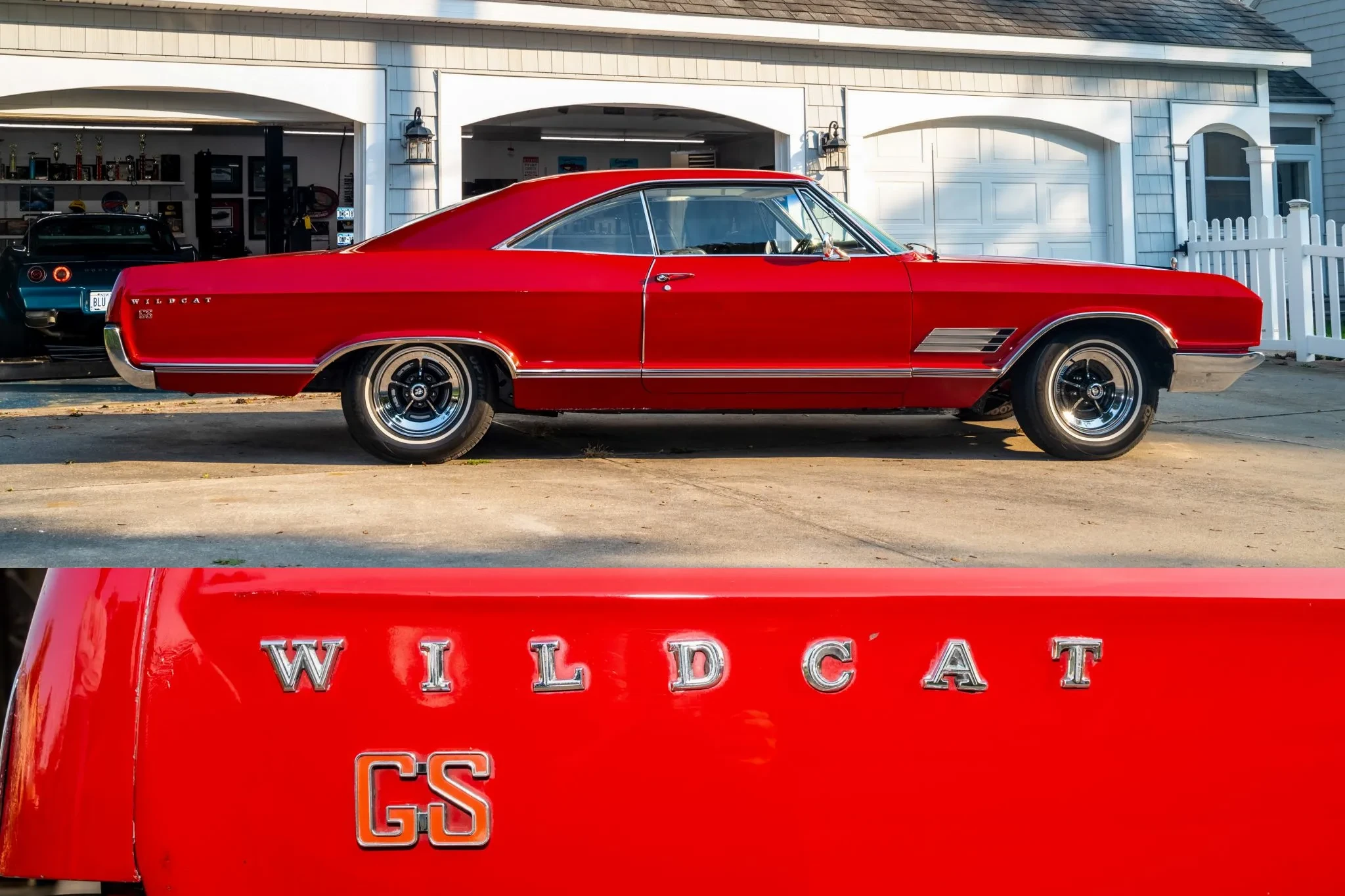
By 1966, the sporty car market had shifted inexorably to intermediates and pony cars, but Detroit thought there might be still some remaining demand for full-size performance models. Even Buick joined the fray, fielding a little-seen, one-year-only Gran Sport version of its full-size Wildcat.
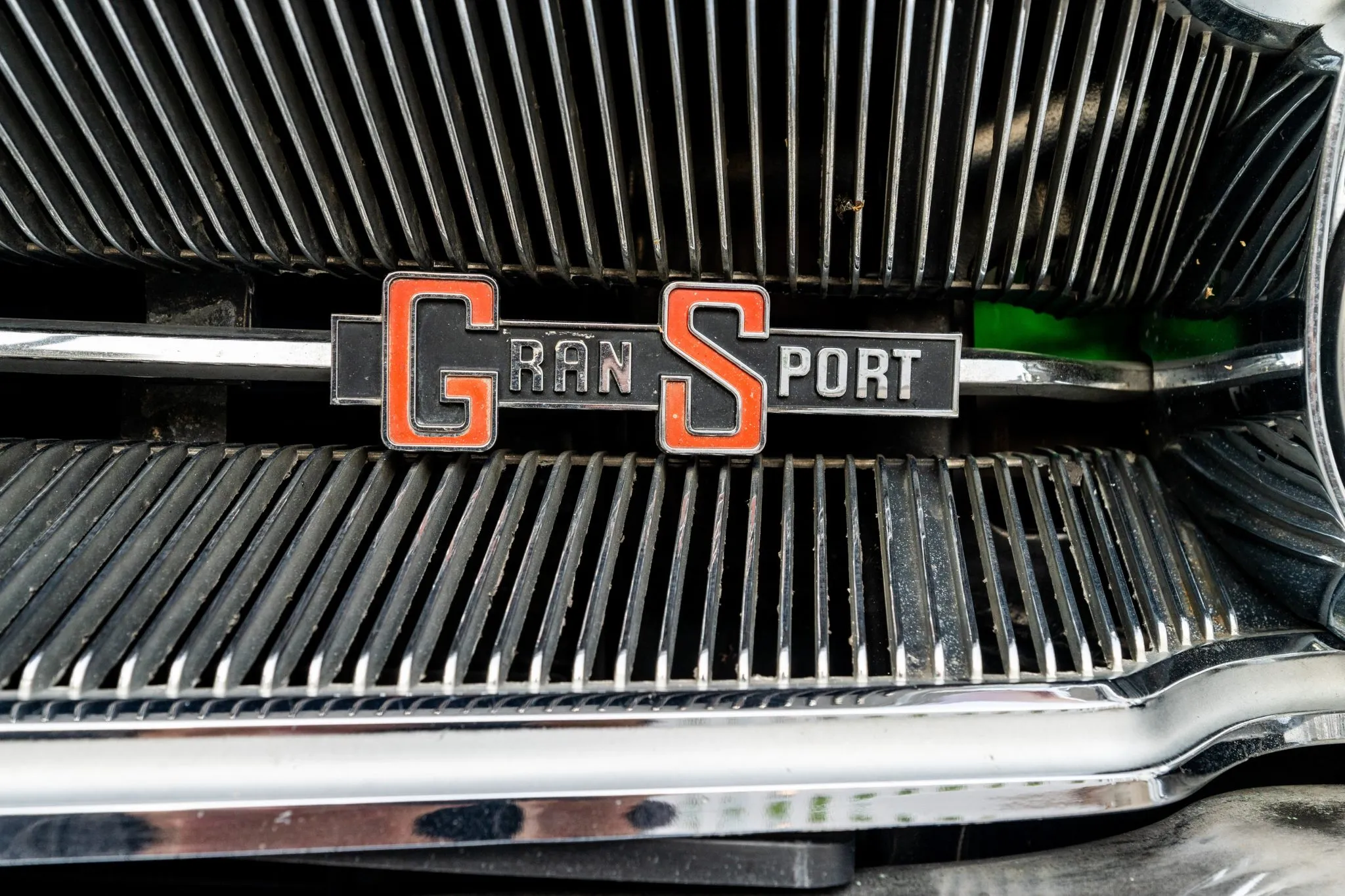
Buick first introduced its long-serving Gran Sport nameplate during the 1965 model year, applied to sporty versions of the A-body Skylark and the posh Riviera. It wasn’t until 1966 that they added a GS version of the B-body cars, and the resulting Wildcat Gran Sport was offered only that year.
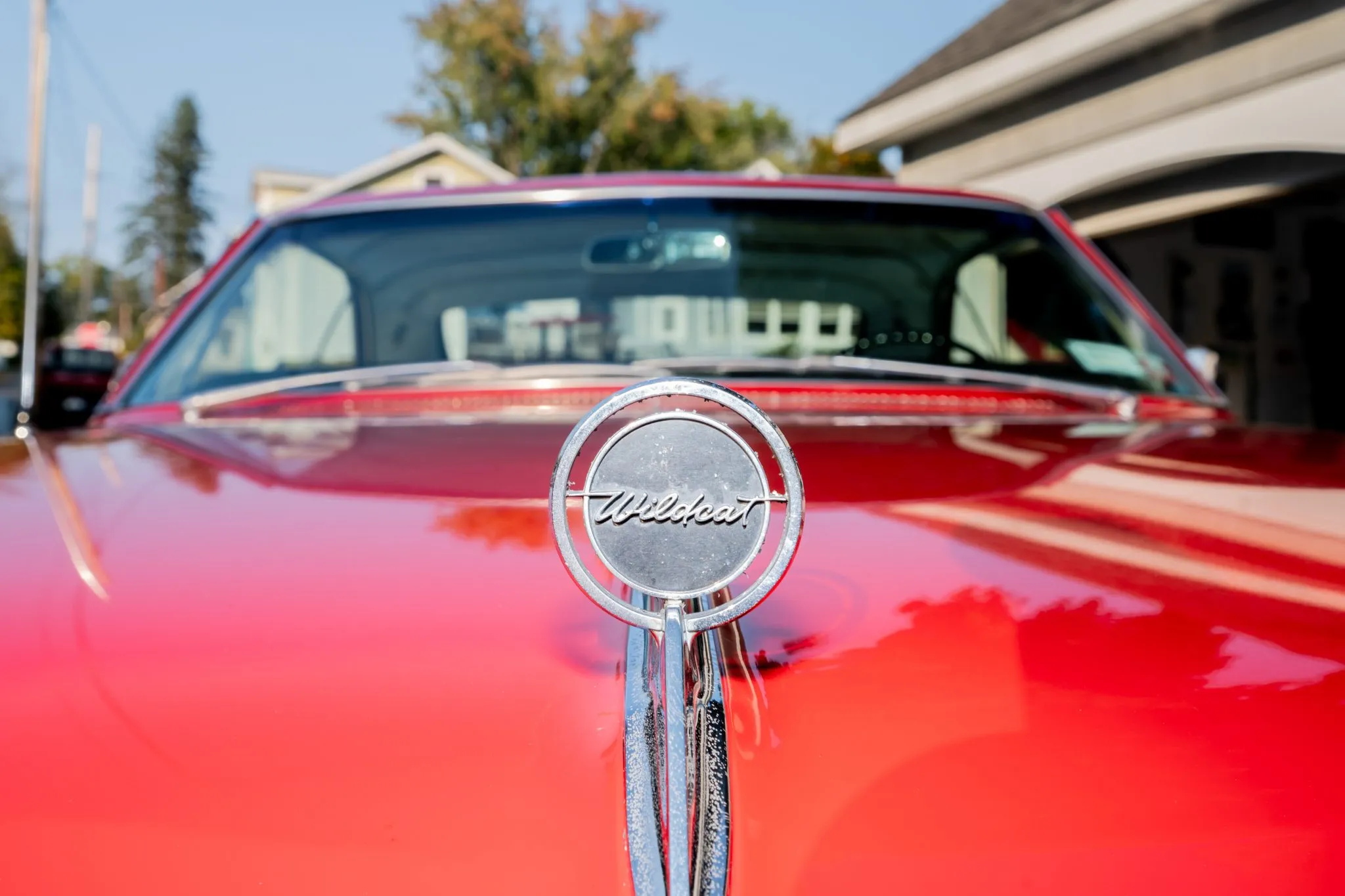
If you’re at all familiar with the ’60s Buick Wildcat, you might be thinking, “Wait, wasn’t the Wildcat always supposed to be the sporty full-size Buick?” The answer is “Sort of.” The Wildcat, as I’ve previously chronicled, was introduced midway through the 1962 model year as a sporty version of the mid-level Invicta, with bucket seats, a center console, and dual exhausts. For 1963, a four-door version with bench seats was added, and by 1964, the buckets and dual exhaust system had moved to the options list even on the two-doors. You could still put together a pretty ferocious ‘Cat from the options list, but the Wildcat didn’t normally come that way, and not a lot of buyers were interested.
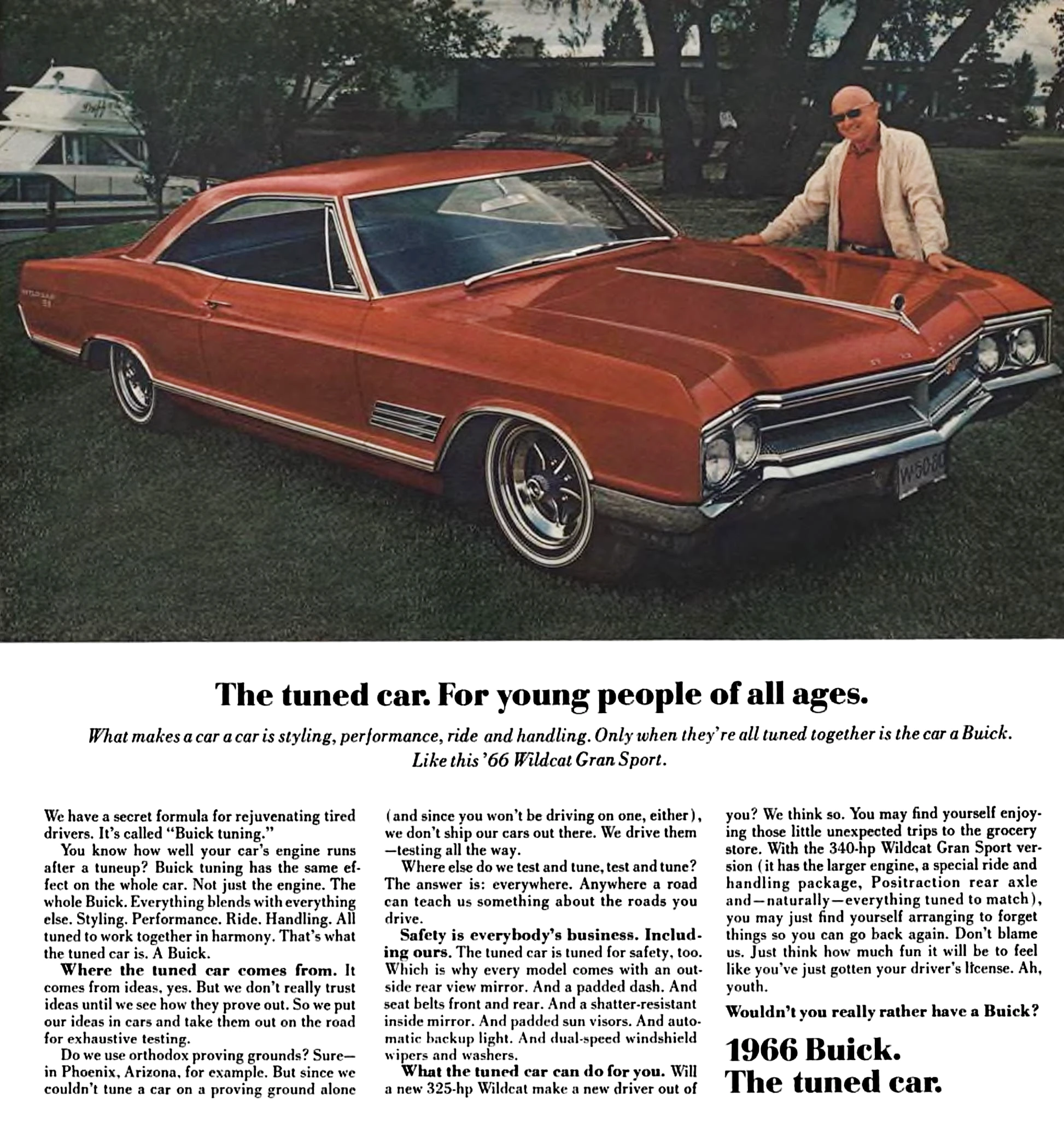
This unexpectedly on-the-nose February 1966 magazine ad for the Wildcat Gran Sport zeroed right in on the problem: Full-size Buicks generally appealed to an older crowd who favored a plush ride and no-fuss performance over brisk cornering or a sporty exhaust note. There were some middle-aged sports who wanted some dash with their luxury, but they generally bought Rivieras. Actual young people who didn’t sneer at the big Buicks’ self-conscious Geritol image (a “secret formula for rejuvenating tired drivers” — and tired blood, no doubt) did buy Skylarks, but Skylark GS sales were limited.
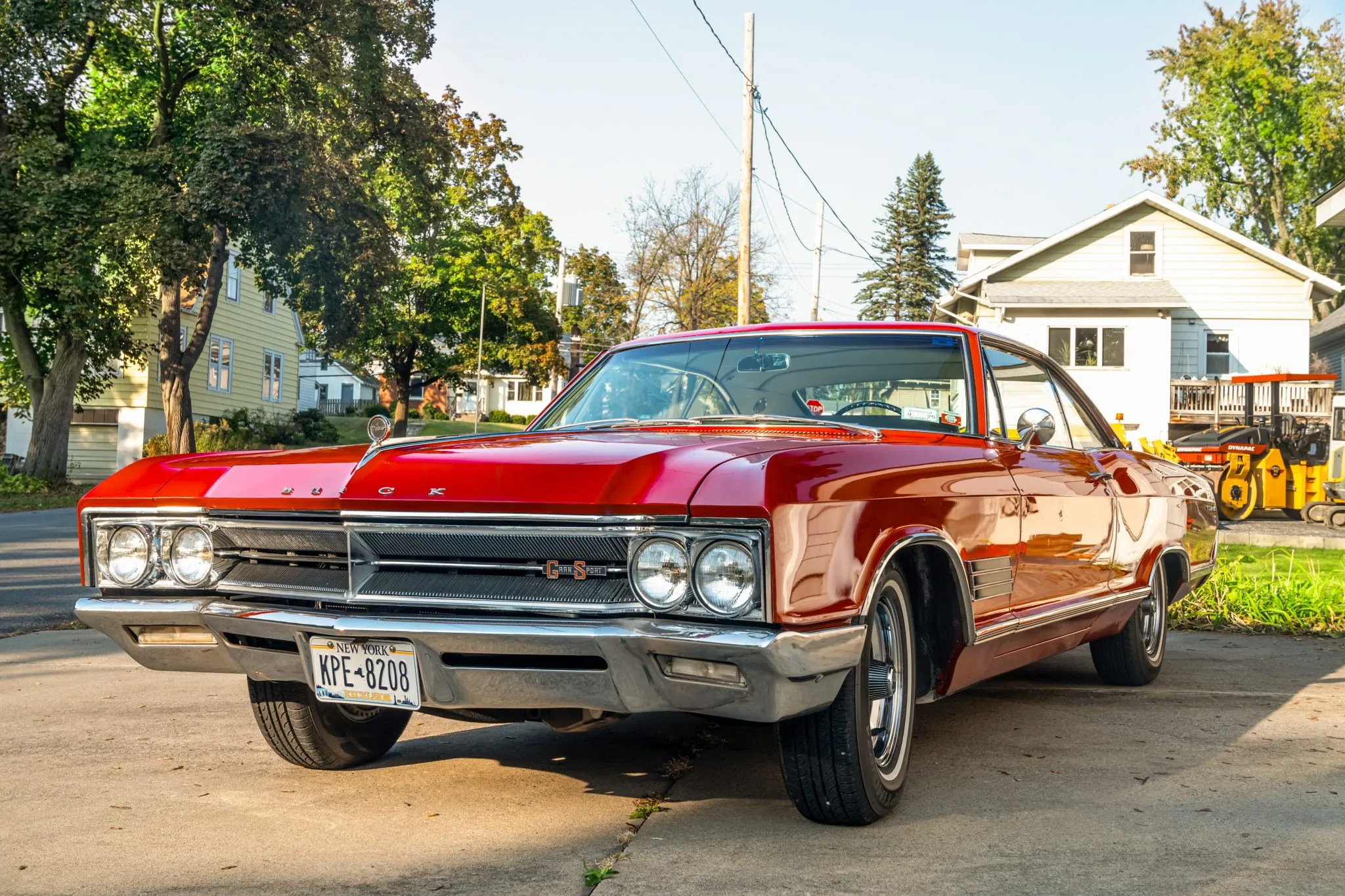
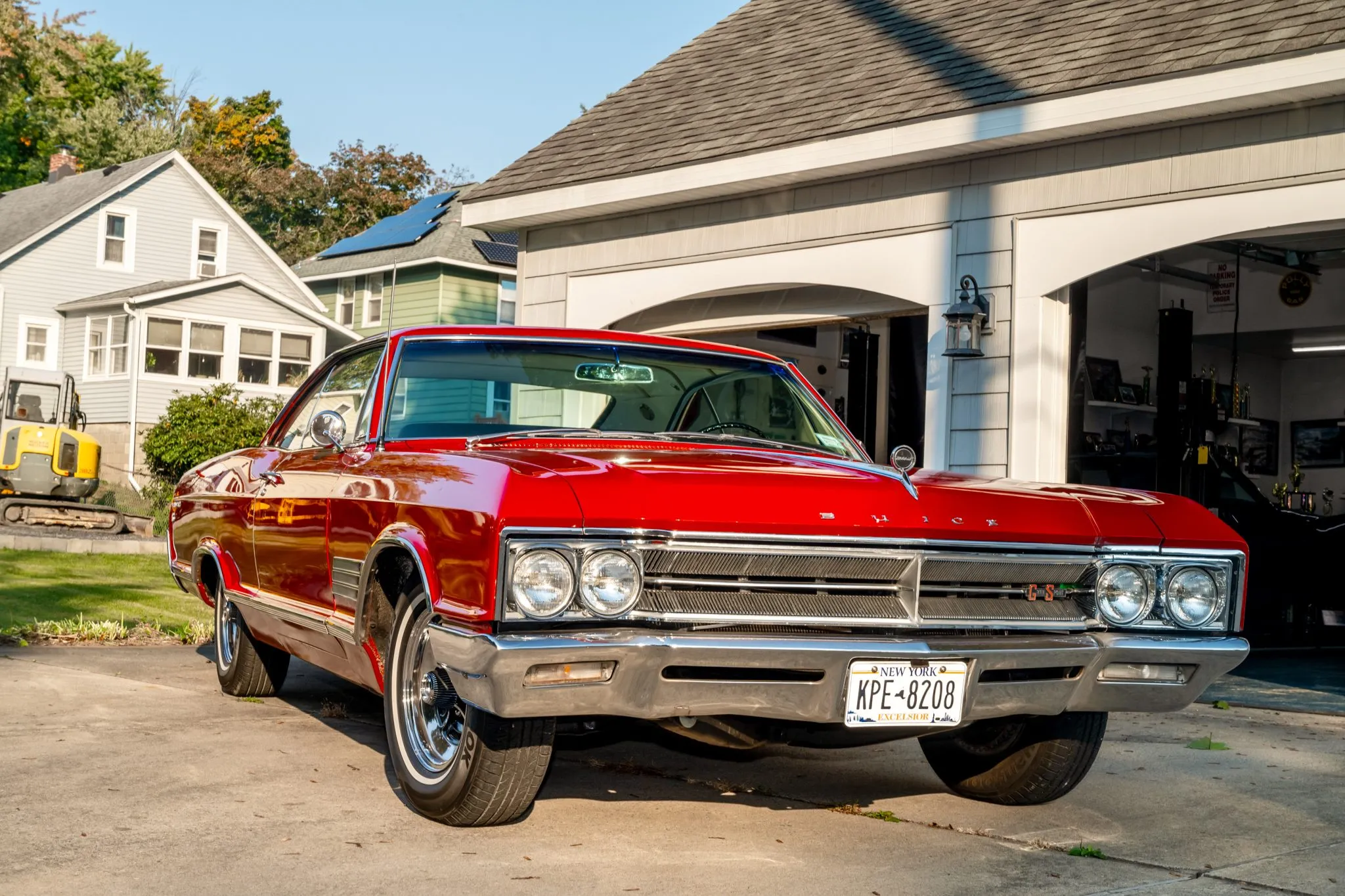
Nonetheless, the 1965–1966 Wildcat was a terribly handsome big car. These cars look pretty good in pictures, but they’re really impressive in the metal — like contemporary full-size Pontiacs, the shape has subtleties the camera doesn’t easily capture. I still remember encountering a red Wildcat convertible on the street and being struck by its dramatic shape and array of visually pleasing details. There’s no one standout feature, but the proportions are well-considered and there’s something interesting to look at from almost any angle.
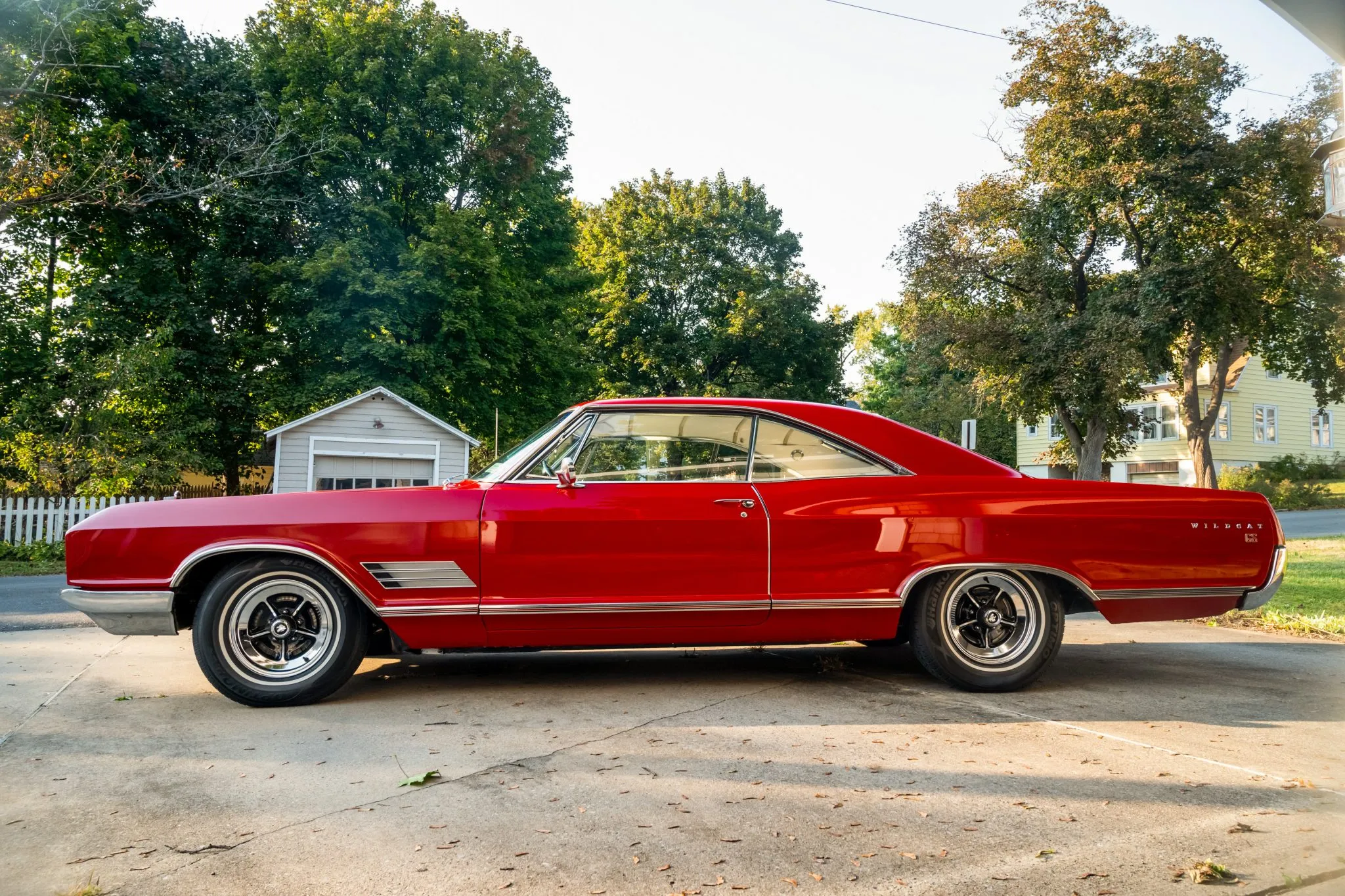
In previous years, the Wildcat had been essentially a fancier LeSabre, but the 1965–1966 models rode the longer 126-inch wheelbase of the Electra 225. A sport coupe (two-door hardtop) like this was 219.9 inches long, 2.9 inches longer than a LeSabre sport coupe, but 3.5 inches shorter than a comparable Electra 225 hardtop.
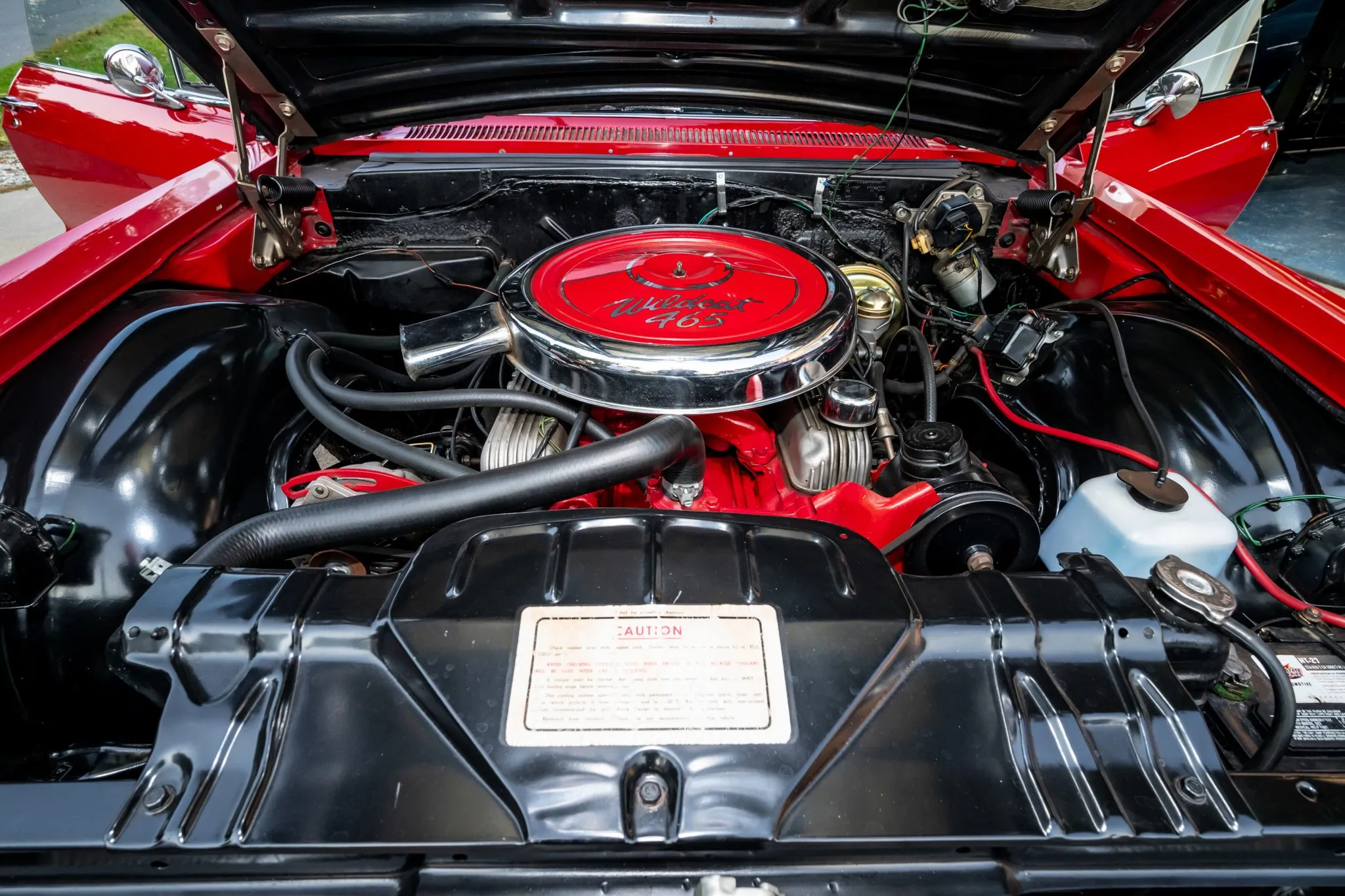
The Wildcat Gran Sport option was a predictable but solid package, including a 425 cid “Nailhead” V-8 engine with a chrome-plated air cleaner and aluminum rocker covers, dual exhausts, a Positive Traction (limited-slip) differential with a 3.42 performance axle, and heavy-duty suspension. All this cost $254.71 with the 340 hp single-carburetor Wildcat 465 or $381.01 with the 360 hp dual-carburetor Super Wildcat engine. The red car pictured here has the more common single-carb engine.
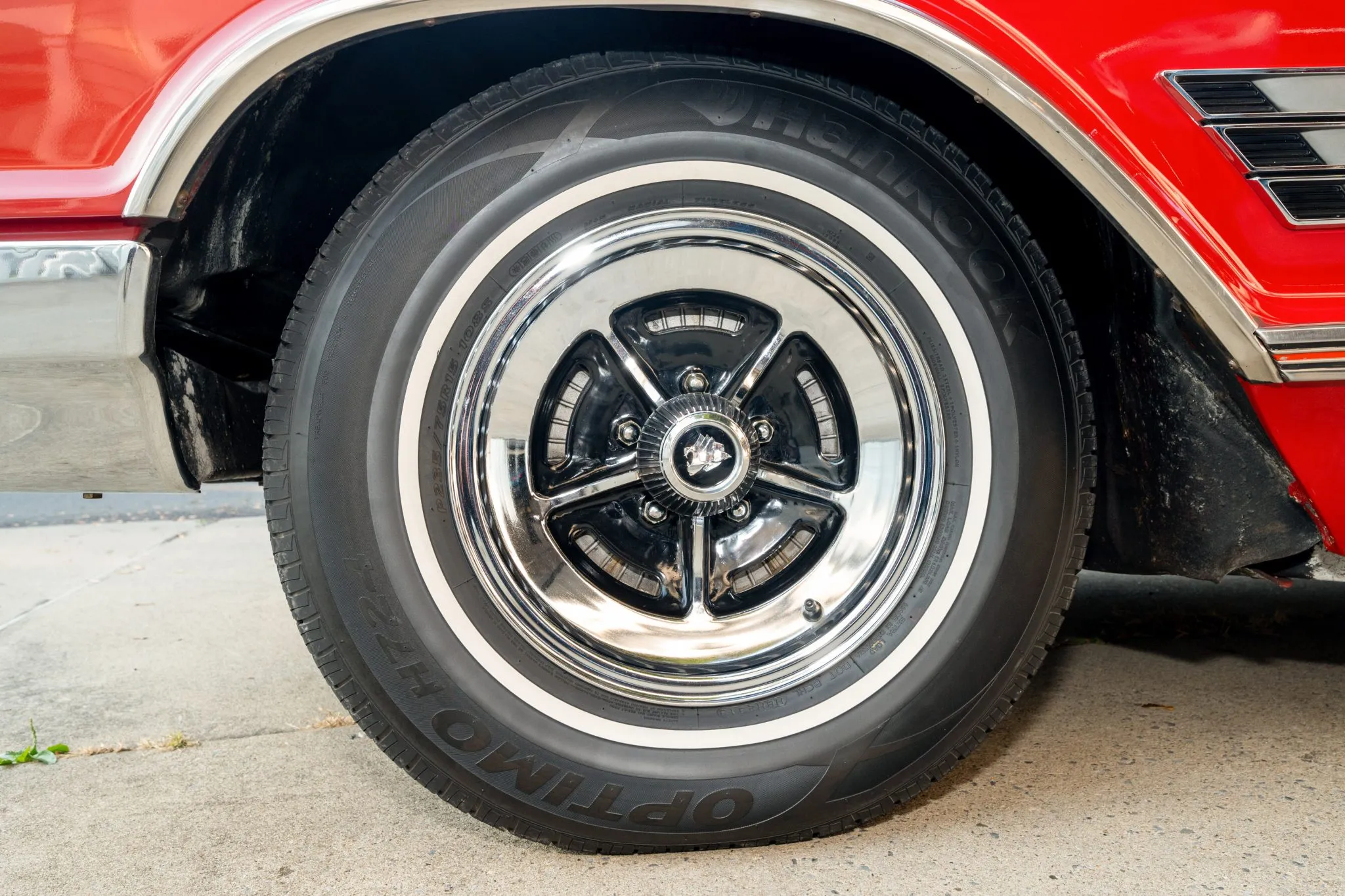
Whitewall tires were part of the Gran Sport package (whitewalls were $42.41 without it), but the chrome-plated wheels were an extra $89.47. The road wheels are a frequent collector add-on, but the build sheet for this Wildcat indicates that it was originally ordered with them. They’re much more period-appropriate than the nasty aftermarket alloys with which these cars are sometimes saddled.
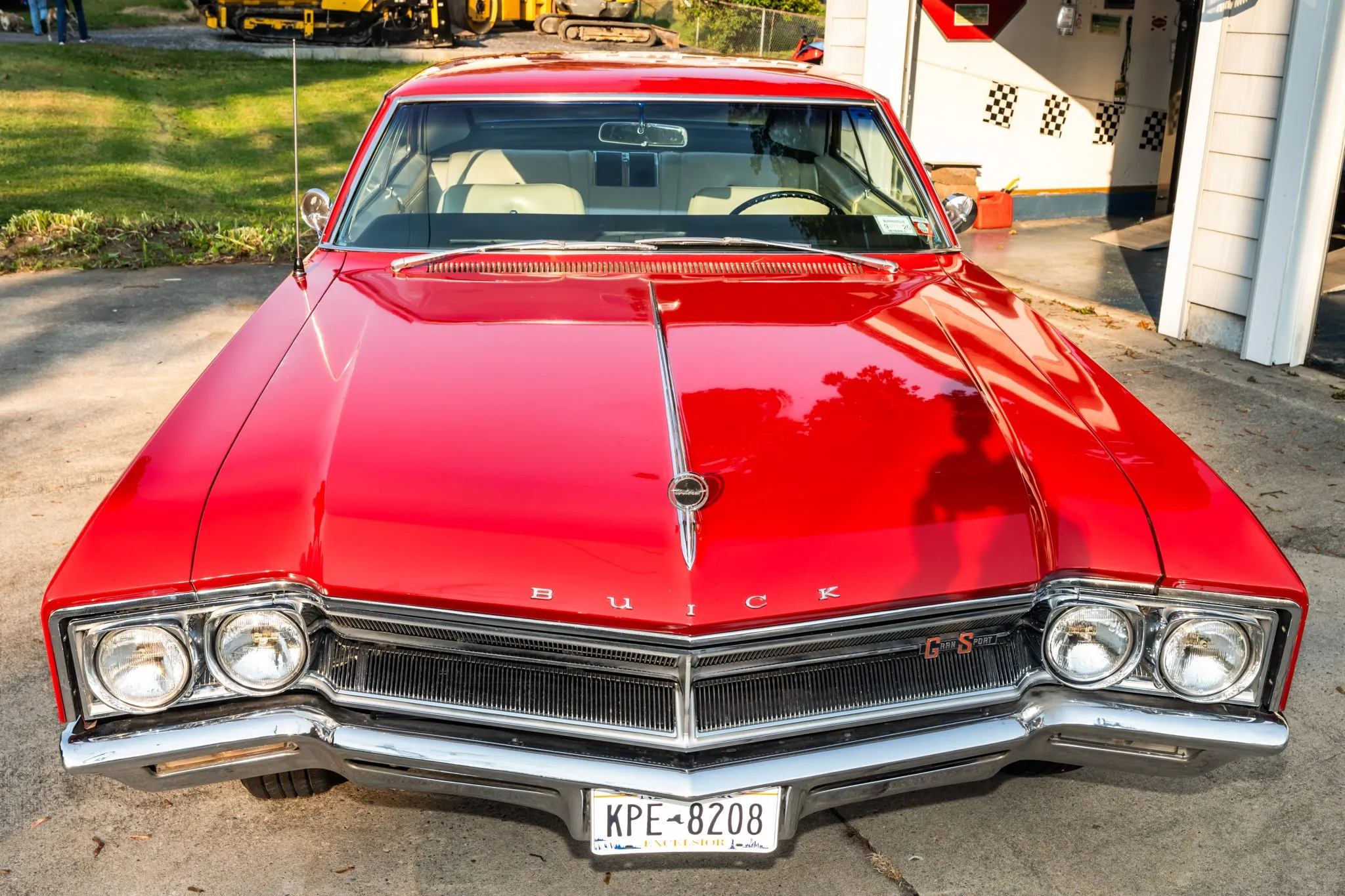
Tom McCahill of Mechanix Illustrated tested a Wildcat Gran Sport sport coupe with the 340 hp engine and automatic, the only contemporary road test I’ve found of this model. He was very impressed with its performance, recording a 0 to 60 mph time of 7.4 seconds, 0 to 100 in 20.8 seconds, and a top speed of “125+ mph.” McCahill’s performance figures were taken with a stopwatch and a corrected speedometer (the one in his test car was 8 percent fast) rather than a fifth wheel, but those figures seem reasonably credible for a car of this size and power.
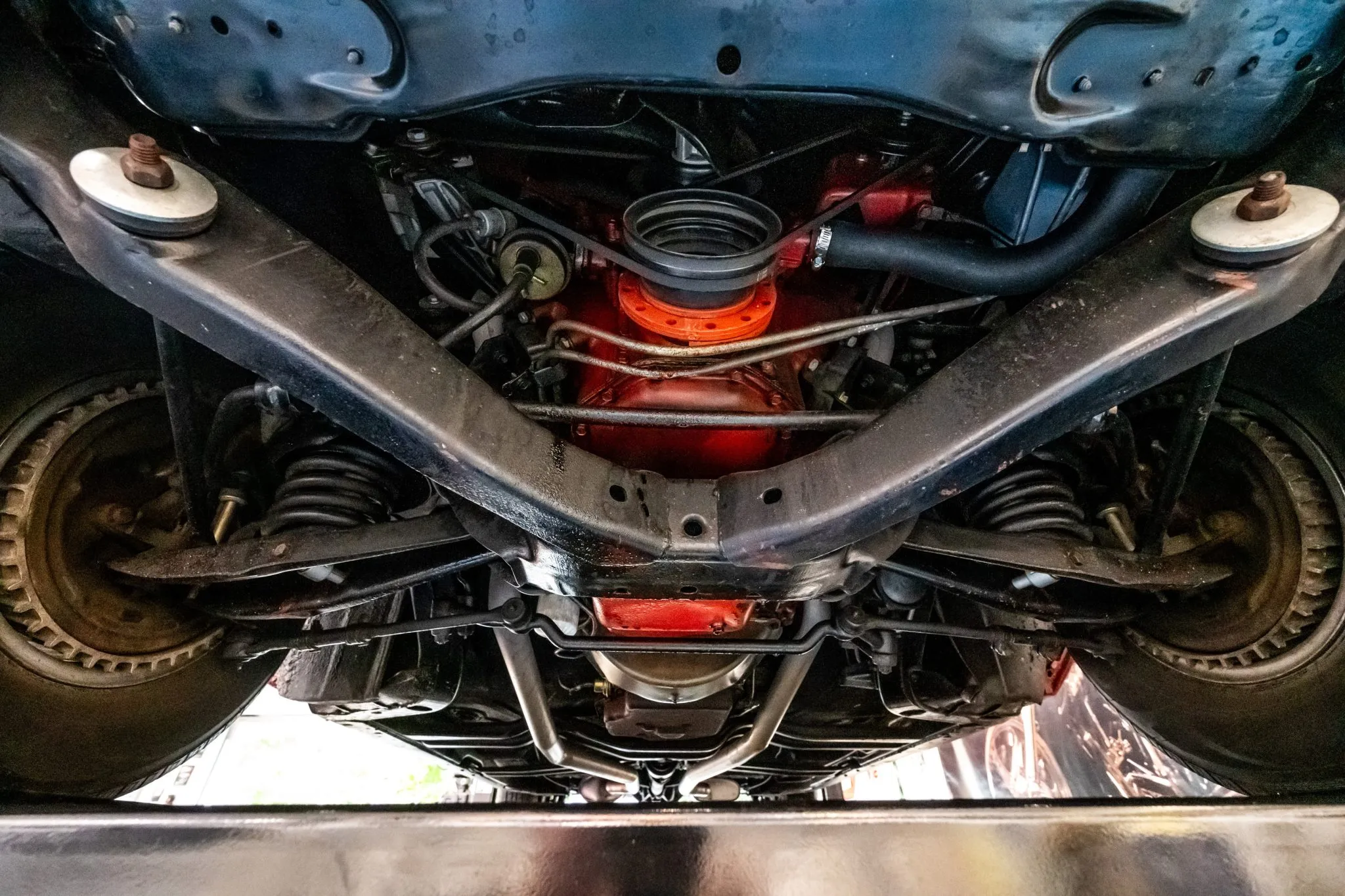
McCahill was also pleased with the heavy-duty suspension, calling the GS “without a doubt the most comfortable and best Buick I have ever driven. Even the suspension, which is pretty sloppy on some other models, is beefed up on the Gran Sport series, making the car highly maneuverable and a lot safer.” It sounds like his test car may have had the fast-ratio power steering, which was $121.04, $15.79 more than normal power steering (which was not standard on the Wildcat). This useful option was also available on the Riviera Gran Sport.
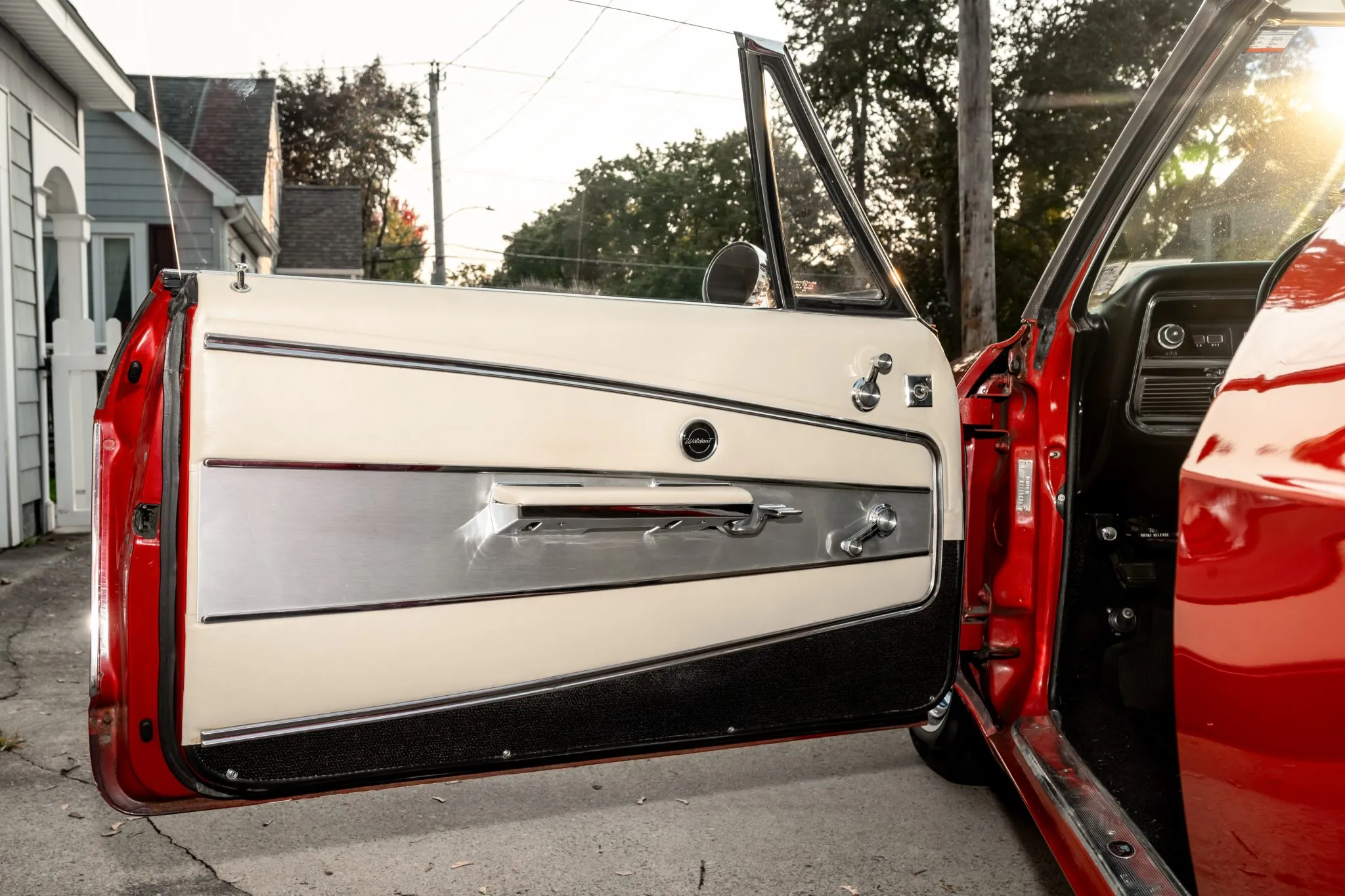
The Wildcat pictured here is a Wildcat Custom, which was a Wildcat sub-series with fancier interior trim. In two-door sport coupe form, it started at $3,547, $221 more than an equivalent “standard” Wildcat.
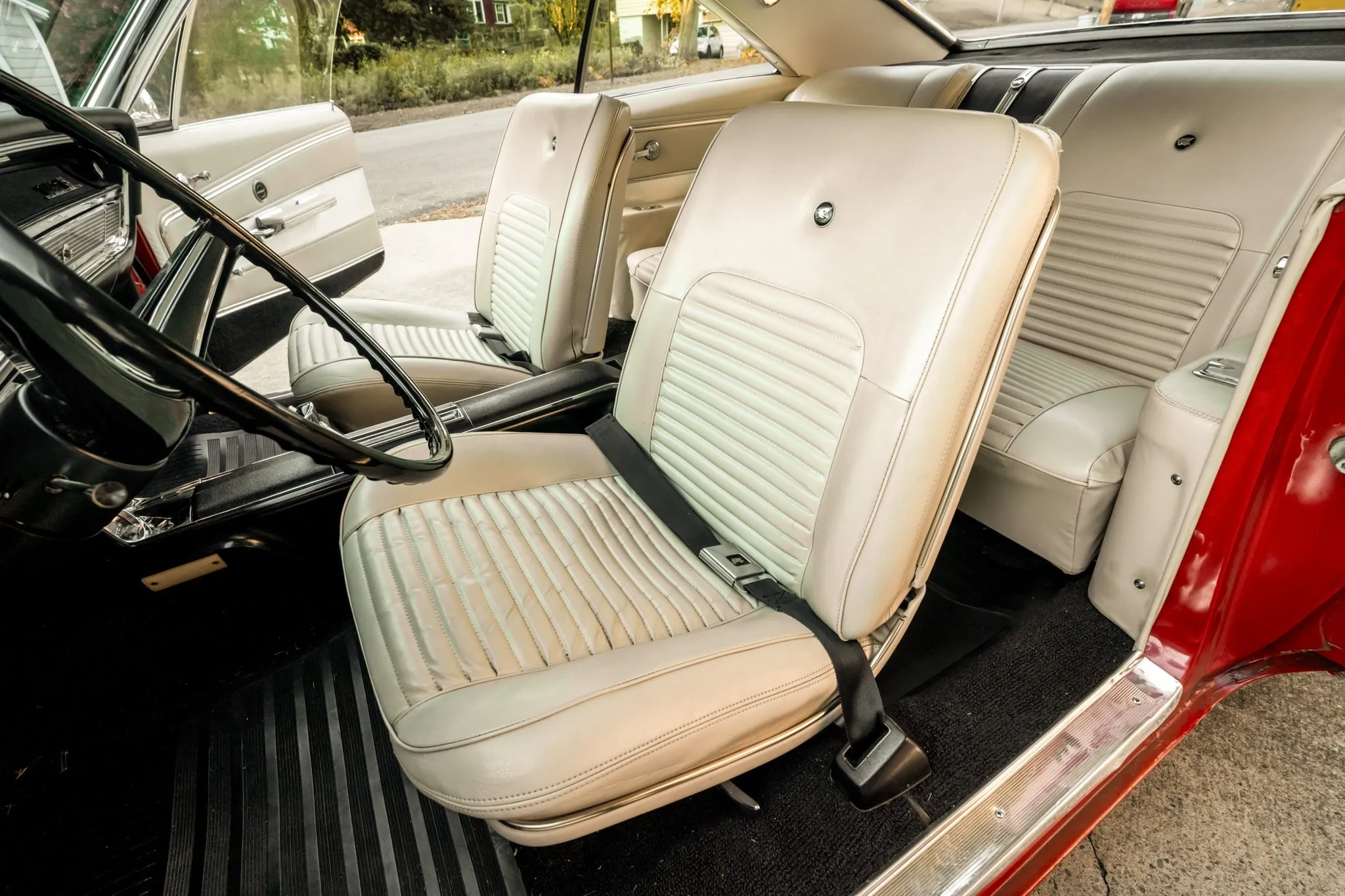
Ordering the Gran Sport package neither included nor required bucket seats, although all-vinyl Strato Buckets were a no-cost option on a two-door Wildcat Custom. (They cost $115.78 extra on a standard Wildcat.)
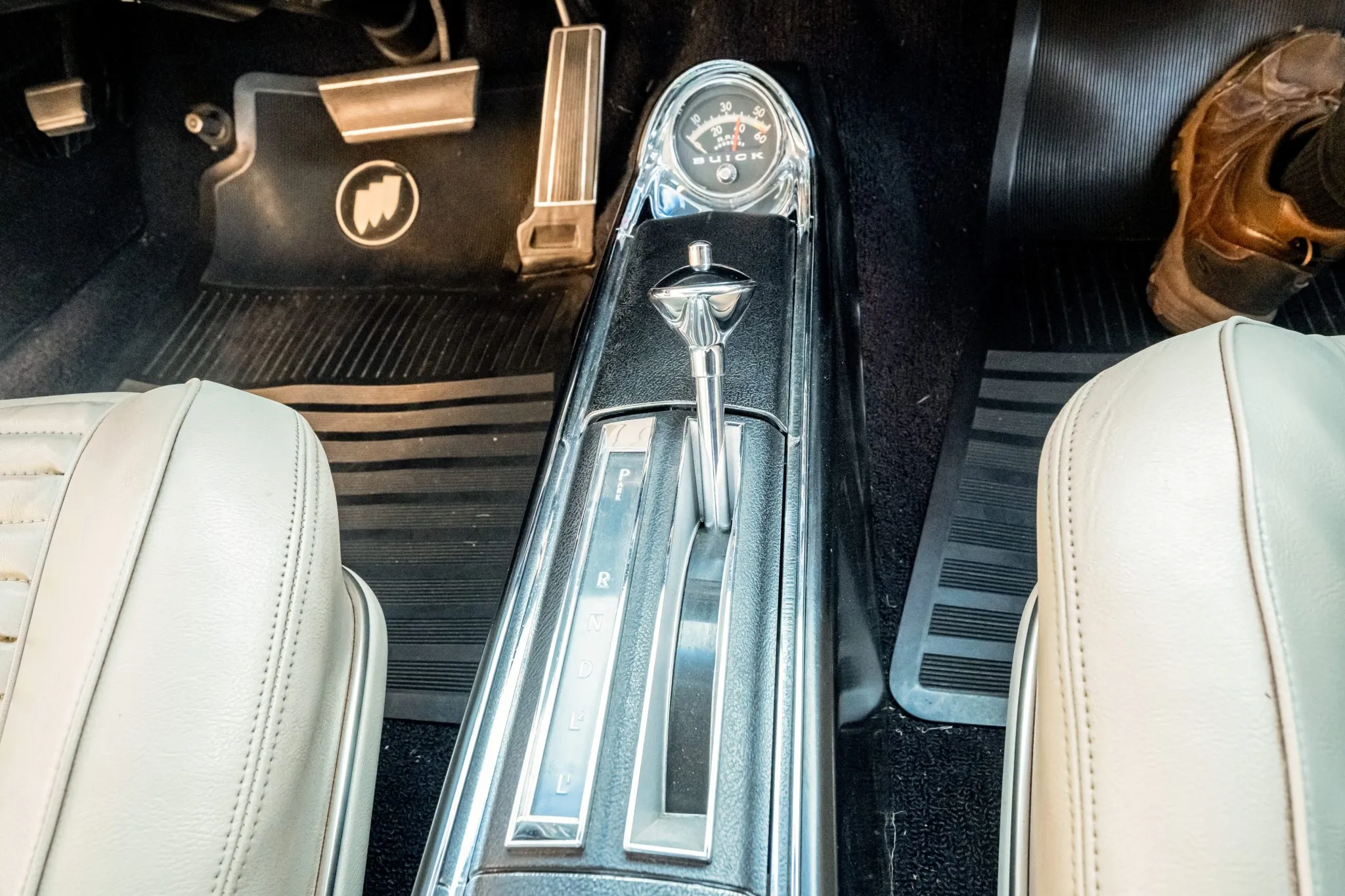
A console and floor shifter, which had been standard on the initial Wildcats a couple of years earlier, were now $47.37, and if you wanted to add a tachometer at the leading end, it would cost you another $47.37; without it, there was a Wildcat emblem in its place.
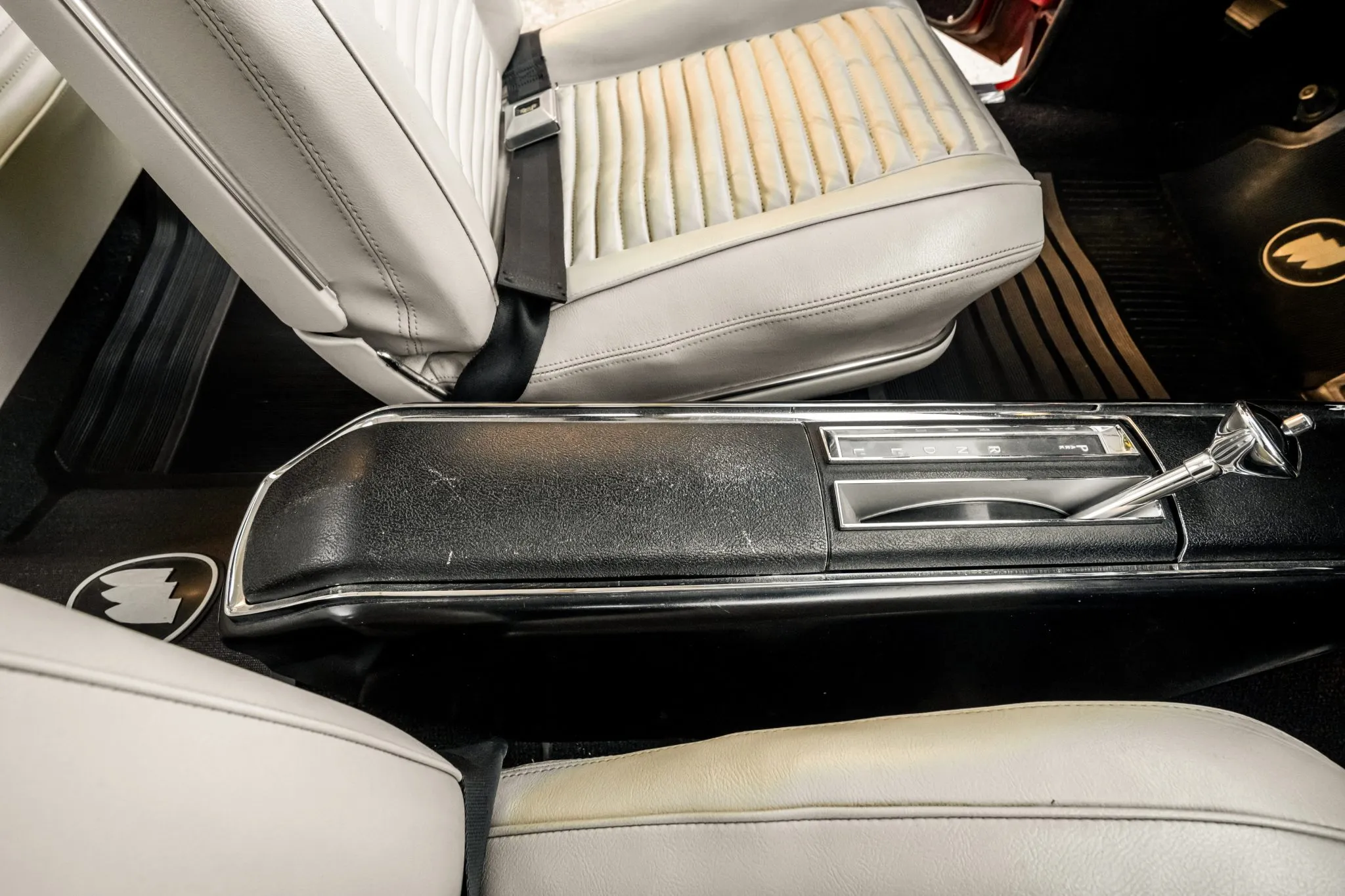
A Ford-sourced all-synchro 3-speed was theoretically standard on the Wildcat, but most if not all had Turbo Hydra-Matic, which Buick called Super Turbine 400. It was a $236.82 option that included a variable-pitch stator, reducing creep at idle and providing a little extra kick between gears without a kickdown. Four-speed manual transmission was no longer on the full-size Buick options list for 1966, and TH400 was the way to go in any case — the manual 4-speed hadn’t been any great joy to shift, and it provided little performance advantage.
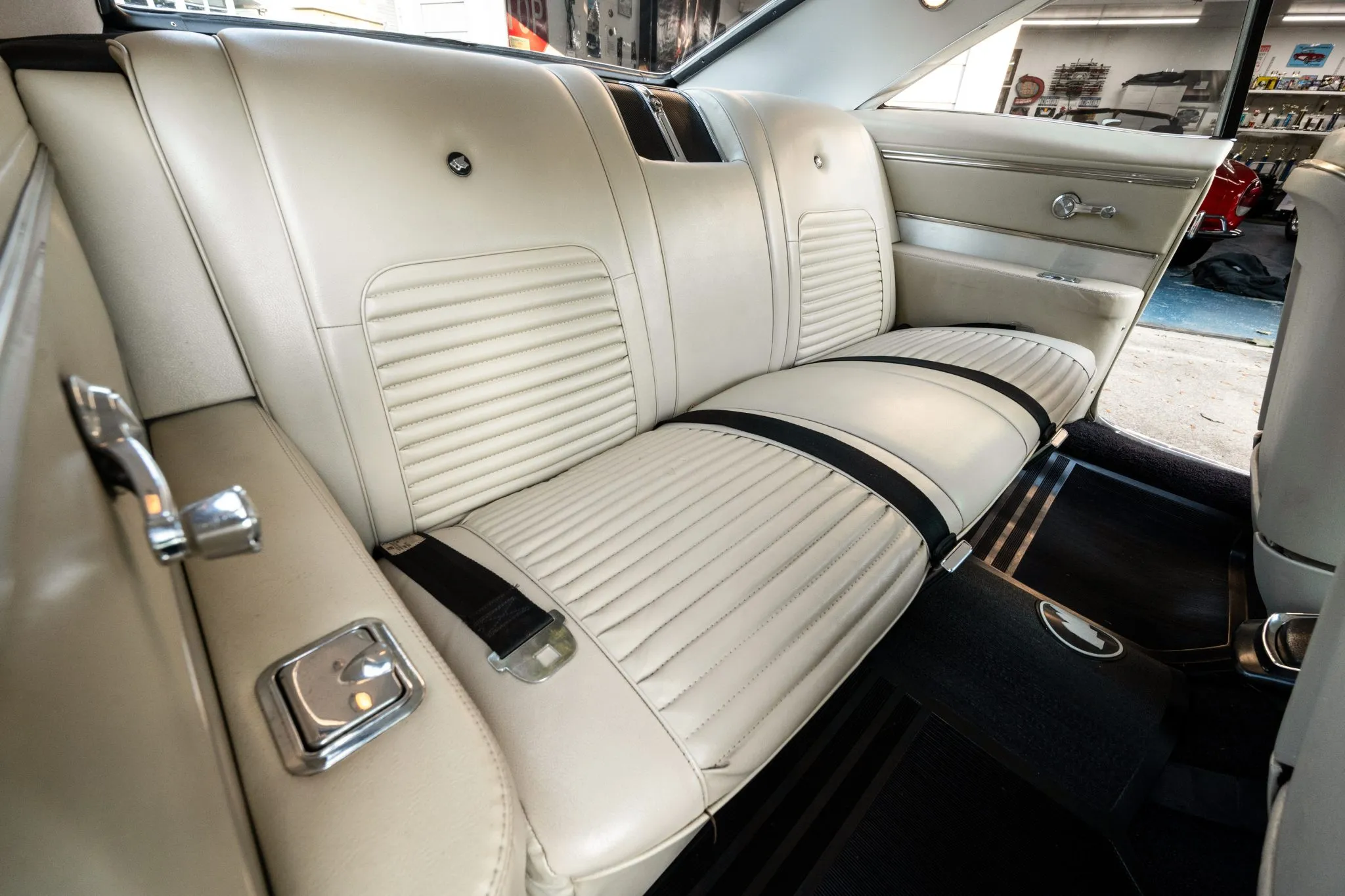
Buick marketing suggested that the Wildcat was a “big, lively car” with room for the entire family “and all the comfort you deserve,” but the back seat of the two-door models was not exactly the lap of luxury. They had a modest 34.9 inches of legroom, over 3.5 inches less than the four-door Wildcats, and McCahill warned, “The pitched rear window is a real sun-burner. At certain angles while riding in the back seat you could fry the ears off the devil.” This was the price you paid for the two-door hardtop’s rakish roofline.
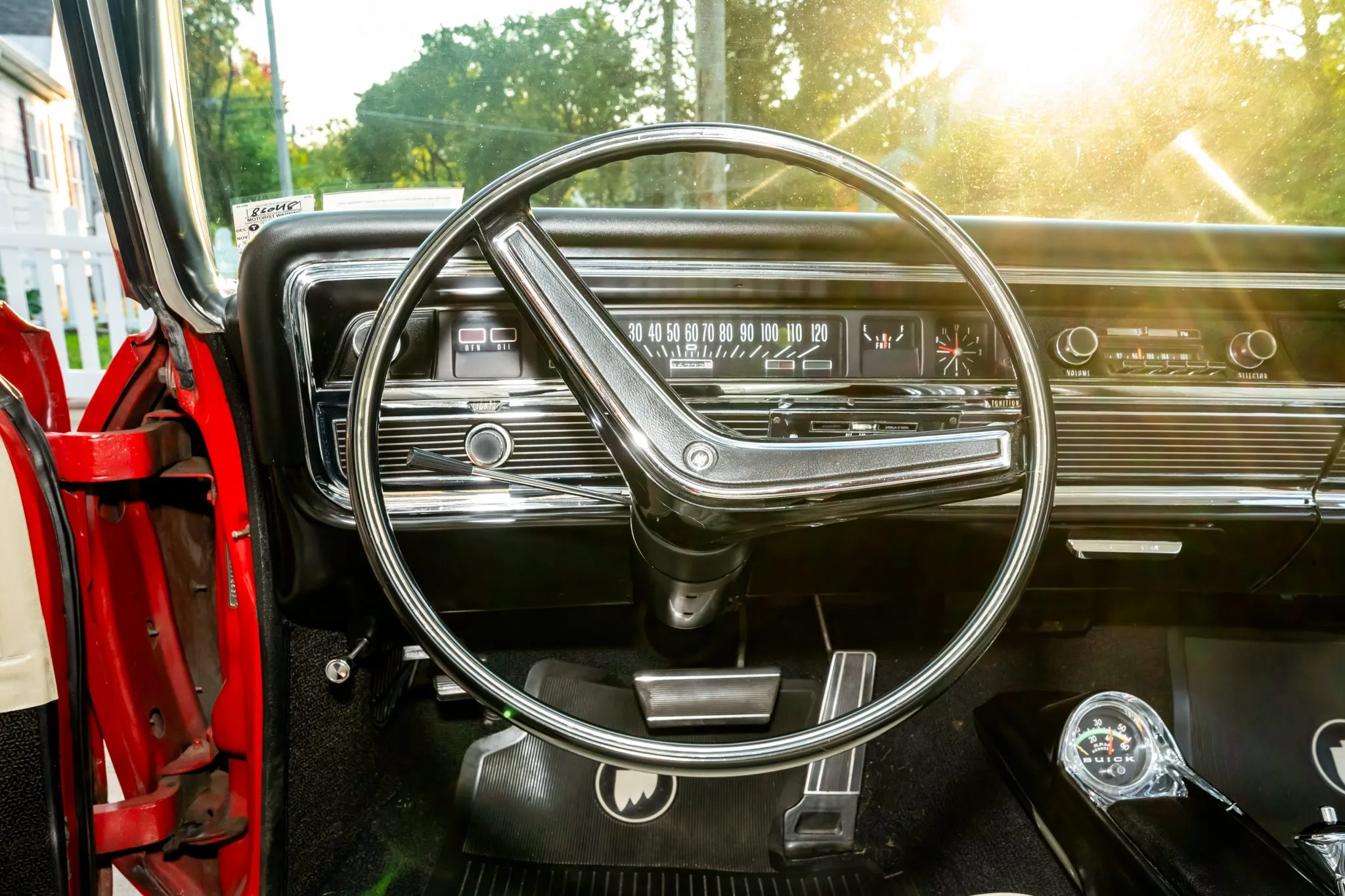
Unfortunately, the Wildcat had the usual Buick instrument panel, with a ribbon speedometer and minimal instrumentation. GM did occasionally offer some attractive gauge packages in this period (the one available on the 1967 Impala was nice) — it’s too bad Buick didn’t bother, although I suppose there was no real demand.
Uncle Tom McCahill mused:
When I first tested the Wildcat in 1963 it was a hot car of no particular character. Shortly after the Wildcat’s introduction in ’62 Buick had brought out its glamorous Riviera, which made the Wildcat look like an unweaned kitten. I thought that Buick might drop the Cat but they stuck with it. Today they have a great car that should have a lot of appeal for the Riviera fan who would like a little more room.
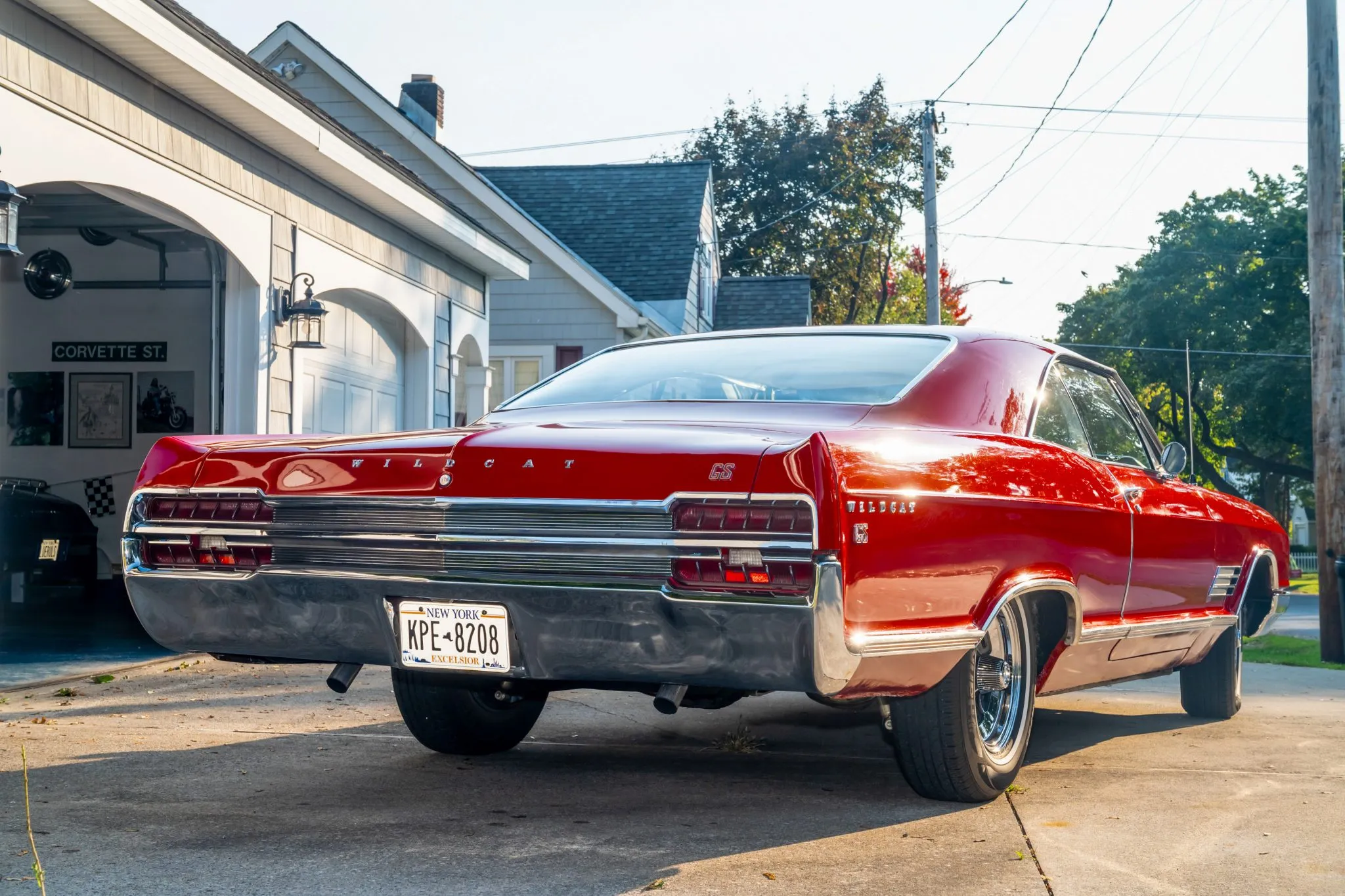
This turned out to be a very small segment: Only 1,255 Wildcats were ordered with the Gran Sport package, about two-thirds of them (852 cars) Wildcat Custom sport coupes like this. Just 21 cars got the dual-carb Super Wildcat engine, although since the extra carburetor didn’t meaningfully improve performance, it was just as well.
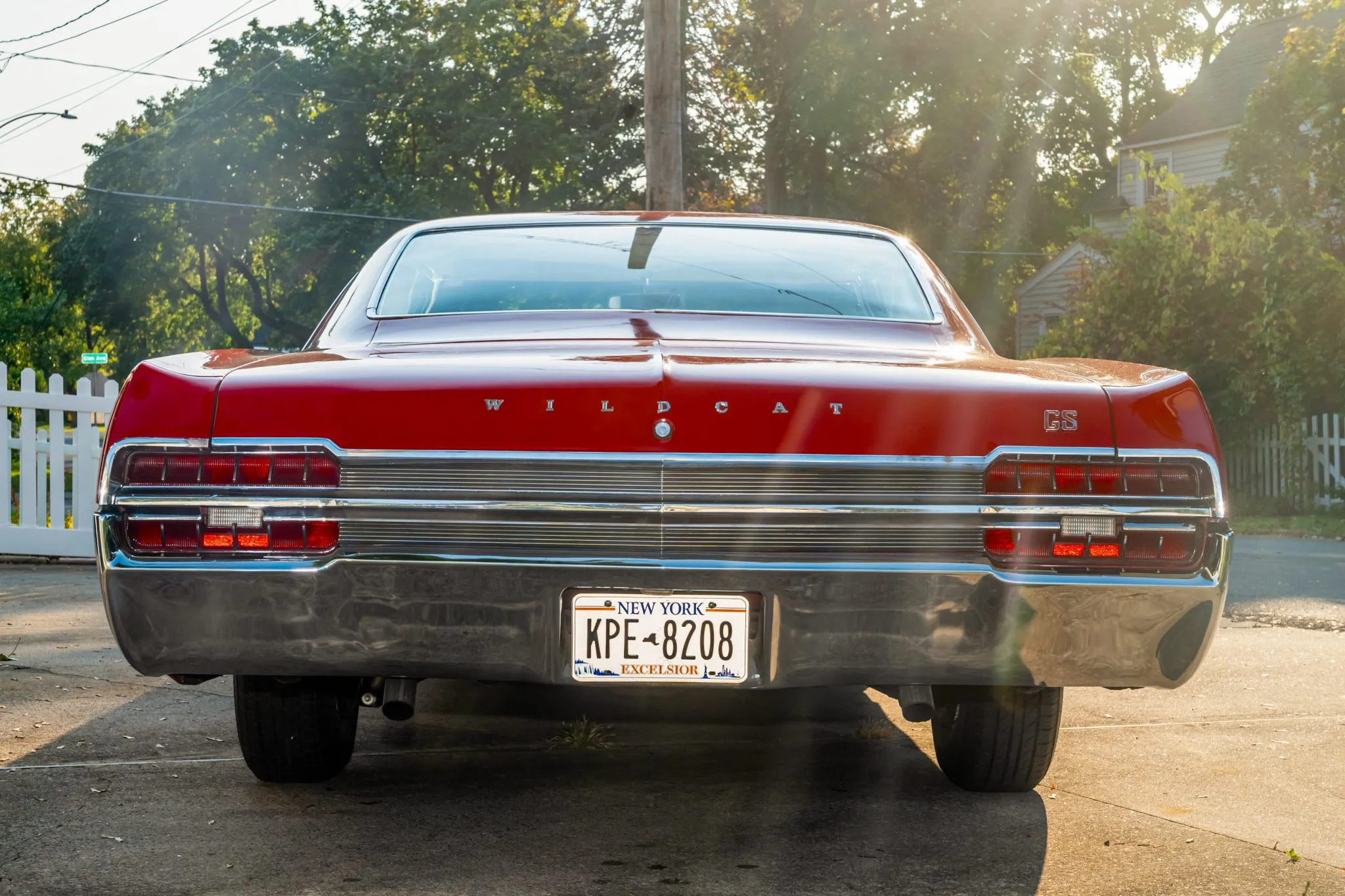
Why didn’t the Wildcat GS sell? The Wildcat wasn’t a hot item in general: 1966 production totaled a modest 68,584 cars, 41,934 base Wildcat and 26,650 Wildcat Custom (including 10,800 Wildcat Custom sport coupes). I strongly suspect it wouldn’t even have sold that well if Buick had made the 401 and 425 cid engines available on the LeSabre and LeSabre Custom (which at this time were limited to the Buick 340).
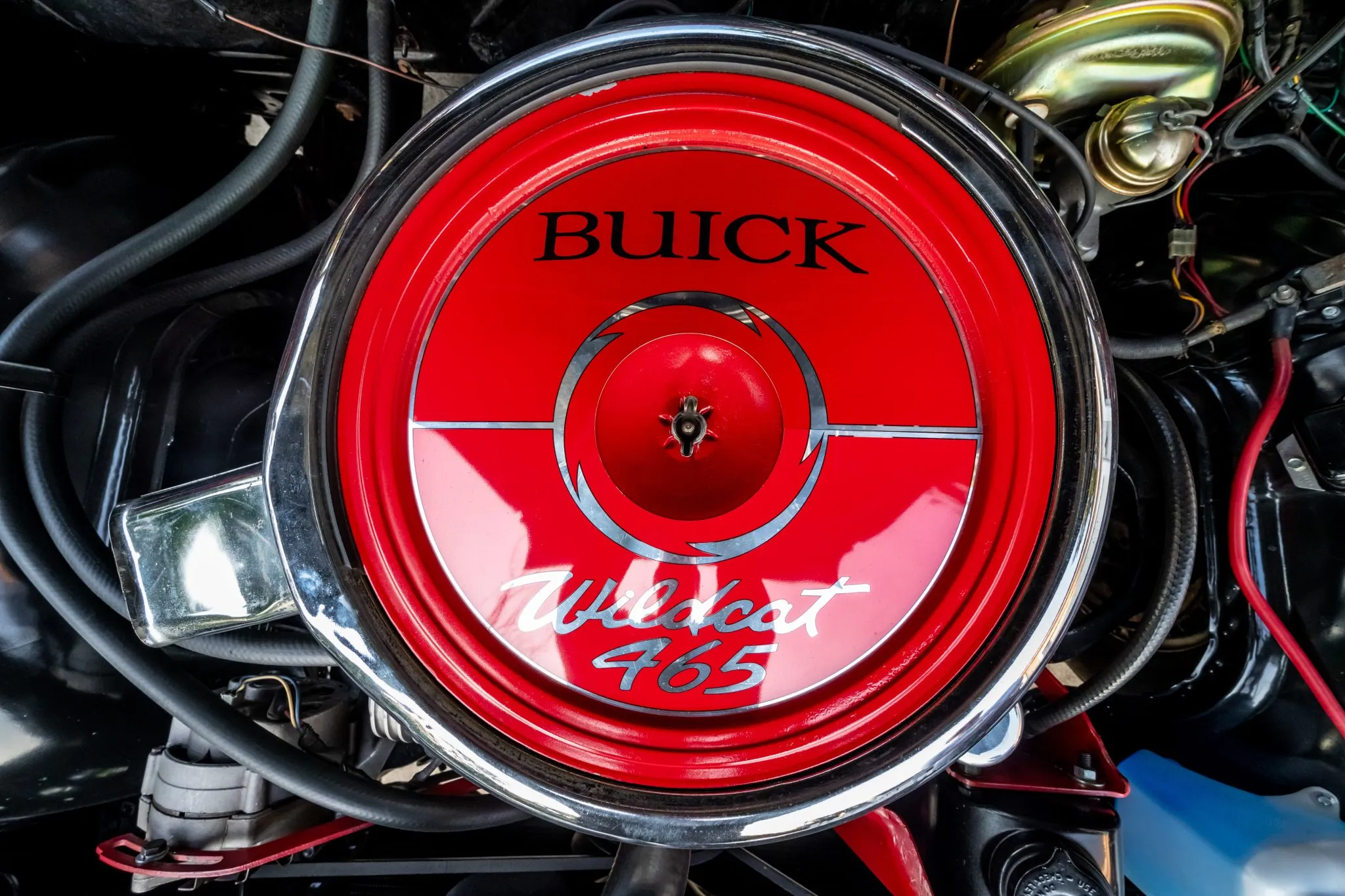
The Gran Sport package also didn’t really give you anything you couldn’t order separately for less, other than the engine dress-up and the availability of the fast-ratio power steering option (for which you paid extra). Ordering the 340 hp 425, dual exhausts, heavy-duty suspension, and whitewalls individually cost about $80 less than the A9 Wildcat Gran Sport option. Packaging those features together could have helped to promote their availabilty, but there just wasn’t much interest. The Wildcat’s ancestor, the full-size Buick Century, had once been a pretty hot number, but those days had passed, and they wouldn’t return.
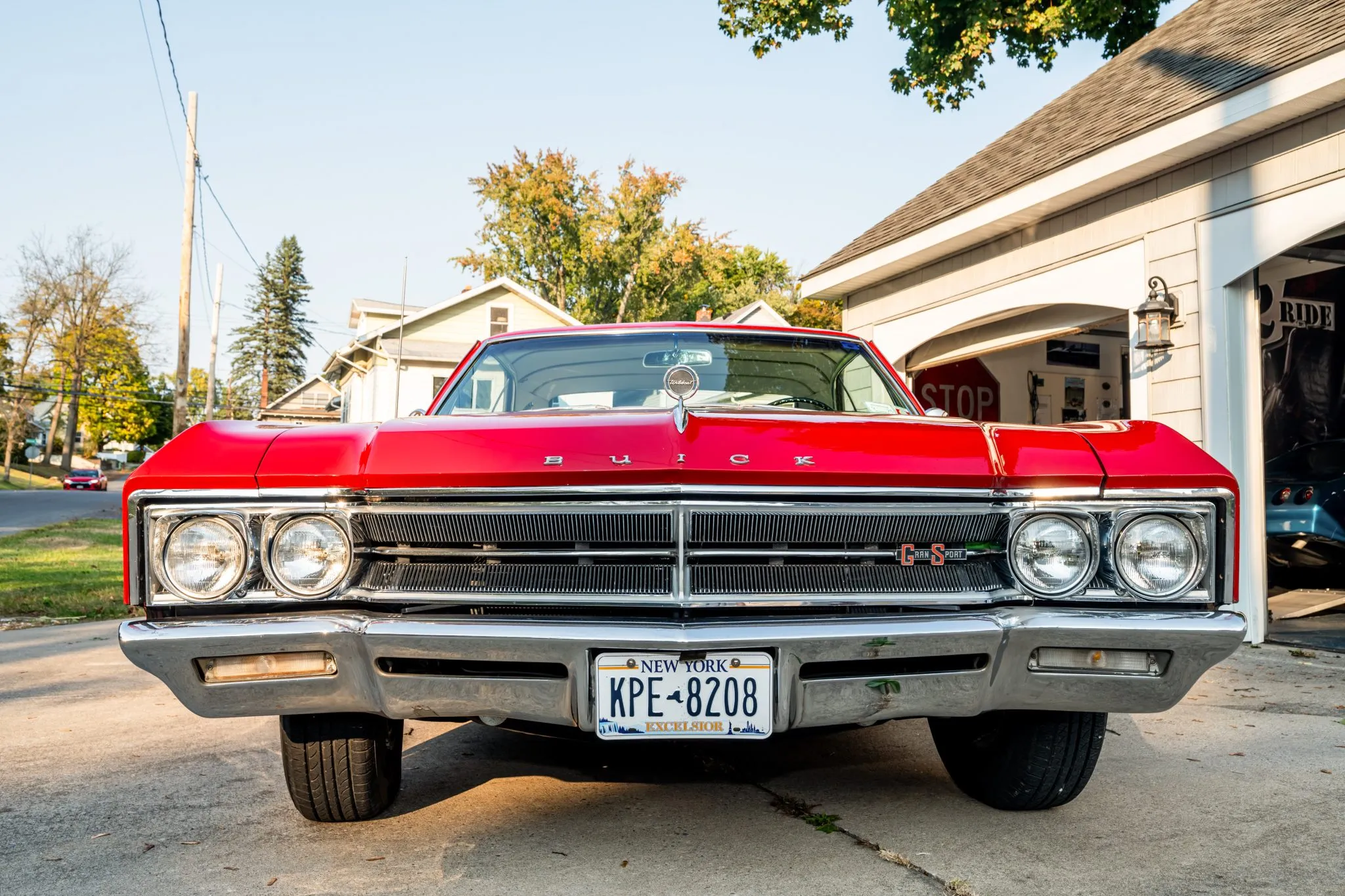
It’s too bad, because I find this Wildcat a really appealing car. It’s too big, of course, but it looks good, it goes as fast as you’d probably want with a collector car, I love the bucket seats, and the heavy-duty suspension gives it more composure than usual without a big ride penalty. (I grew up with German and Japanese cars, I’m used to feeling the road.) A nice Wildcat GS would be far more desirable today than people seemed to find it at the time.
Related Reading
Vintage Car Life Road Test: 1962 Buick Wildcat Sport Coupe – A B-Body Buick Joins The Bucket Brigade (by me)
1963 Buick Wildcat: Only 30 ’63 Wildcats Had 4-Speeds — Here Are Two Of Them (by me)
Auction Classic: 1964 Buick Wildcat – A Dual-Quad 425 “Nailhead” V8 and Four-Speed Stick Make This Cat A Sleeper (by Jon Stephenson)
Curbside Classic: 1965 Buick Wildcat – Sabre Tooth Cat Or Dodo Bird? (by Paul N)
Curbside Classic: 1966 Buick Wildcat Four Door Sedan – Mild Thing (by Paul N)























It looks quite good but it feels like an answer to a question no one was asking any longer.
Older buyers were going for personal luxury coupes, younger ones were buying GTOs, the Mustang had essentially created a new category at the lower end of the market.. who was the target customer of full size, sporty coupes of “intermediate” price?
Sure, the Wildcat even with GS was a little cheaper than the Riviera but it had none of it’s prestige
Reality check: I can’t believe this gorgeous Wildcat is 60 years old already. I remember when these came out, even at the age of 5! I have the dealer promo model of this car too. Boy, does this put my age (66) in perspective! LOL
A very attractive car. It’s actually more appealing than the big Pontiac from the side view, and the main reason for that is that the Wildcat has the longer C Body front end with a B body from the cowl back. The Bonneville had the same front end as the Catalina, but the rear end was longer which didn’t help its proportions. But this Wildcat looks great with that longer nose.
I’m kinda partial to Wildcats as I have a ’68 I’ve owned since 1987. Full size muscle is what I always preferred to the mid size muscle cars. Mine used to run mid 14’s in the quarter. Probably still does but I haven’t had it on a strip since 2003.
This is a very attractive car! The colour is beautiful and suits the car. I am tired of modern cars that are black, silver and white.
What I don’t get about these cars is the brakes. A car this big, heavy and fast needs front disk brakes. I’d wager the drums would heat up pretty quickly on a mountain road.
I never saw this particular year model Wildcat before. I find it very attractive. My father should have bought this instead of the 1968 LeSabre couple that he did at the time. But they were just starting out then with baby me and probably couldn’t have afforded it in 1966.
Great looking car! GM was firing on all cylinders with the 1965-66 B-body coupes, especially those from Pontiac and Buick.
These look chiseled from granite. It’s really got a lot going for it; the styling is straight up excellent, big and heavy sure, but when compared to a Skylark GS the Skylark looks like a diminutive knockoff even though it was a good looking muscle car in its own right. The dress up on the nailhead is worth the extra cost of the GS package as far as I’m concerned because how can one stop staring at it? It’s such an interesting pretty and distinct engine why not spring for some pizzazz? Wildcat is arguably the greatest name for a sporty car ever conceived, it’s both outrageous yet flows from the tongue so naturally it’s a perfect fit for the Buick brand for a bankers hot rod model. Even the lack of 4 speed and lack of gauges I don’t mind, it is a Buick afterall, and what is there is still attractive and interesting to look at.
It’s a kind of tragic car because in many ways this(and actually a handful of full size performance cars of the same rough time)really did make a strong case for itself among the fresher hiper intermediate class, and realistically for stoplight races this wouldn’t have been THAT much slower, and the same day-2 performance modifications one would do to anything intermediate could be done to something like this with similar results. Truly from todays perspective, plus my personal perspective of not being from the era these were new, I’d not even slightly differentiate a Wildcat GS over a Skylark GS if I were seeking a Buick “muscle car” from today’s perspective it clicks all the right boxes and then some. I’m not even all that into Buick as a brand, but this one ranks high, and this example is gorgeous!!!
On the note of the Buick road wheels, agreed! I’m not even slightly anti-aftermarket mag/alloy wheel if they’re period correct of the correct sise for the era to boot, but Buick absolutely nailed these, I think it might be the prettiest wheel ever and I’d go so far to say what I wish people taking wheel liberties would do rather than go straight for Cragar et al. is fit 15” Buick road wheels onto cars that originally came with magnum 500s(well, at least where the bolt circle interchange is applicable)! They look similar but so much better! Late 60s Mustangs, Camaros, Chargers, etc would all look better with Buick road wheels over Mag 500s OR aftermarket. Sorry purists!
The intermediate musclecar just killed the higher-profit, full-size luxury/performance car that began with the 1955 Chrysler B300, and I have no doubt it’s a big reason why GM’s 14th floor execs hated John DeLorean so badly.
Still, the Big 3 kept at it all through the sixties with the Wildcat, Mercury Marauder/S-55, Pontiac 2+2, and non-letter 300. I’d probably skip the Merc and Poncho but would have a tough time choosing between the Buick and Chrysler products. I’m partial to the latter but a 1966 nailhead fastback with the right options would be hard to pass up.
Not a GS, but my dad’s younger brother had a ’65 Wildcat coupe, bought new. Nice style and I noticed the lack of ventiports on that model. What ruined the look was the dull beige paint on his car.