
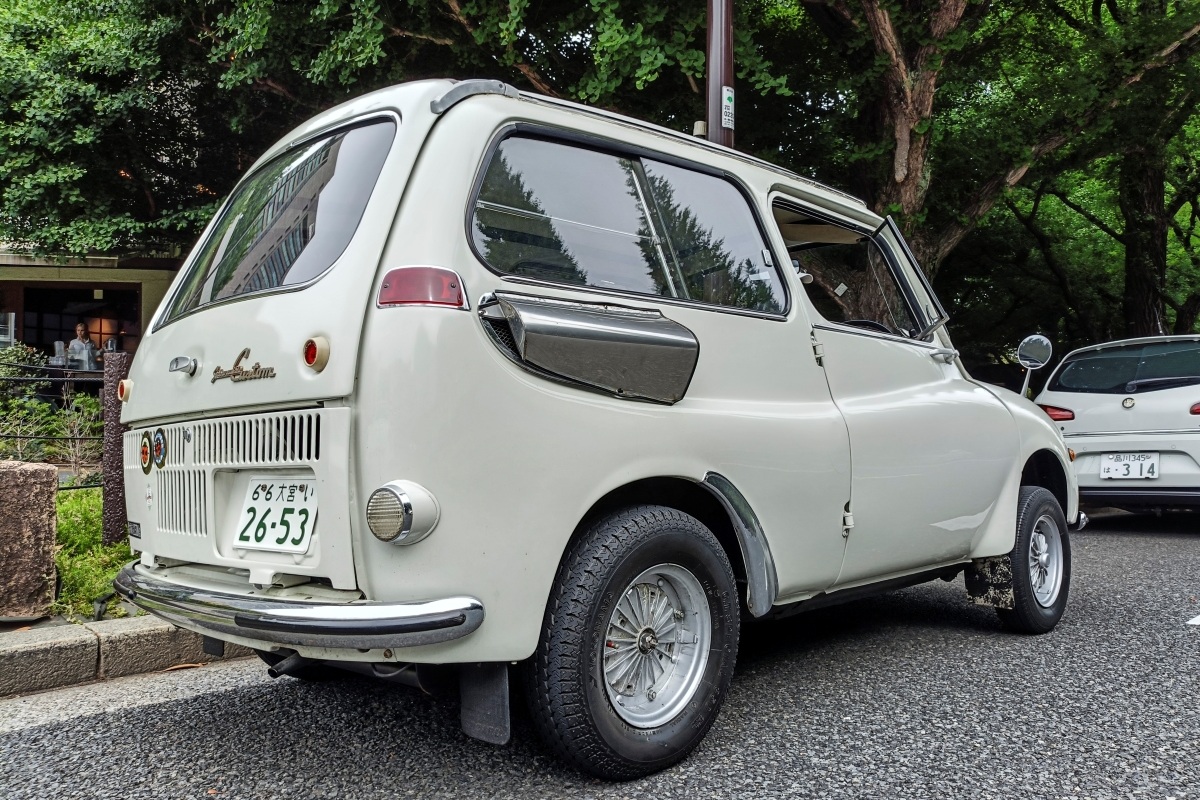
The diminutive Subaru 360 (1958-70) was, without a doubt, the most successful of the first wave of kei cars. They remain beloved in their home country as a symbol of the dawn of mass-motorization, a Model T of sorts. Only a lot smaller and with a 356cc two-stroke parallel twin in the rear. The Lady Bug even had a long-roof variant – not the most obvious development for a rear-engined car.
There were precedents and contemporaries, of course. The VW Squareback, the Fiat 500 Giardiniera, the Hillman Husky and (my personal favourite) the Corvair Lakewood were all there in the early-to-mid ‘60s, off the top of my head. I’m sure there were others, but not many.
It’s obvious that sticking an engine aft of the rear wheels does not make for a very wagon-friendly platform, so there were far fewer rear-engined wagons than saloons or coupés. I guess that makes this a niche-within-a-niche kind of vehicle. Plus it’s a kei, so make that a niche squared.
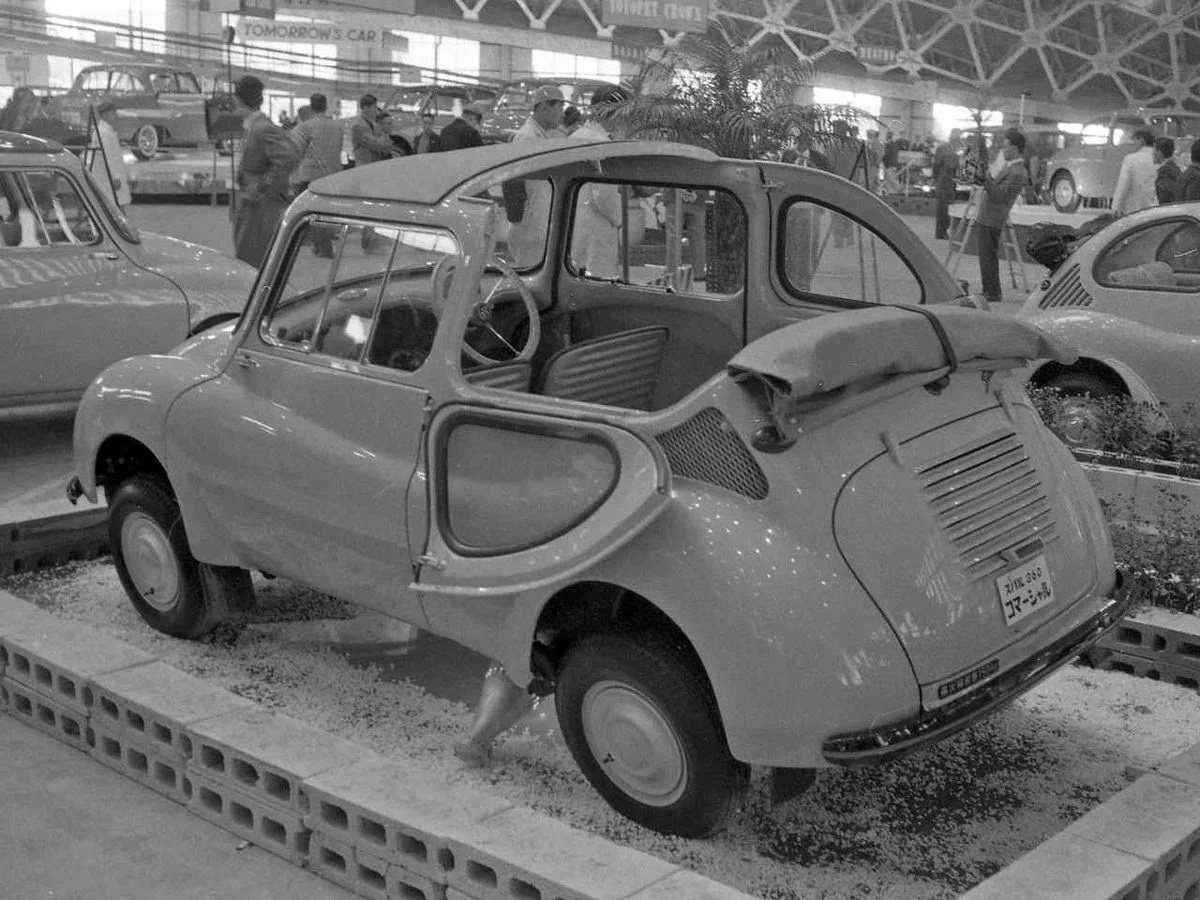
Initially, Subaru tried solving the layout conundrum this way. The two-seater 360 Commercial premiered in 1960 with a canvas-topped rear half and hinged rear windows in a bid to turn the little kei car into a practical cargo-hauler. Which it clearly wasn’t.
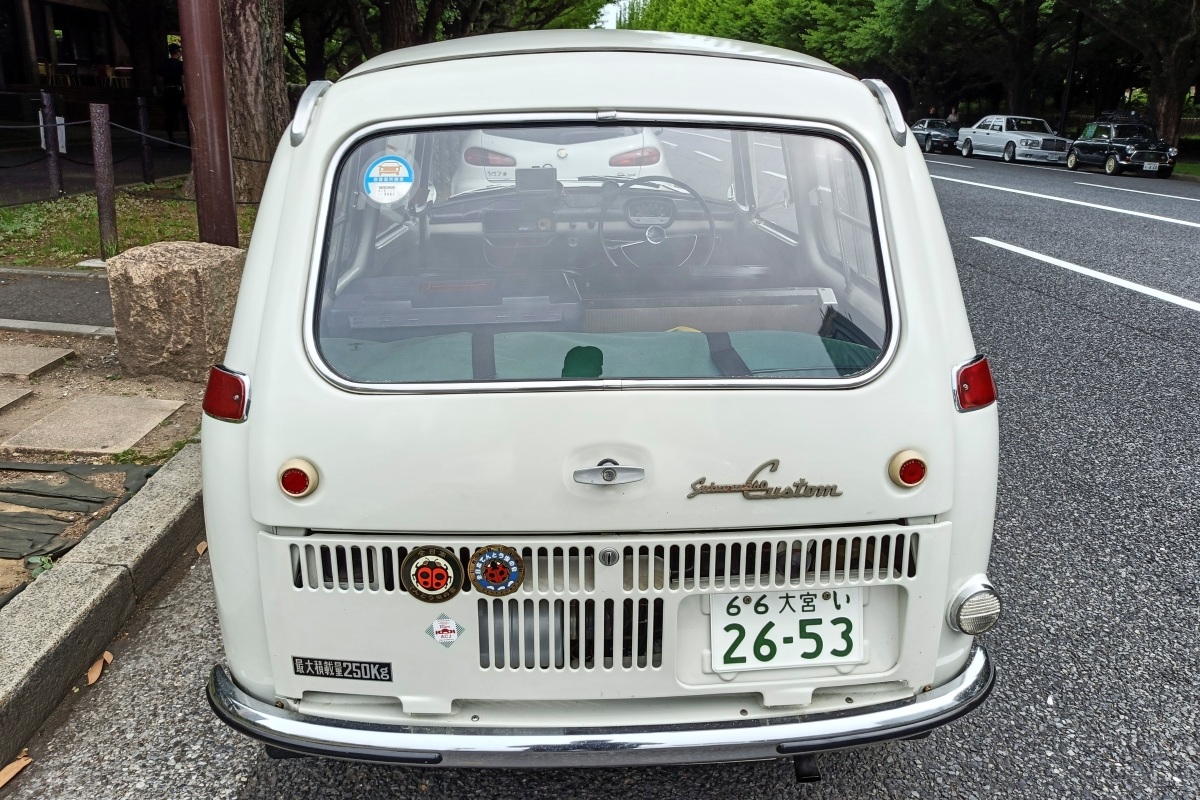
In 1961, Subaru launched the Sambar, a rear-engined one-box kei van that used the same 18hp parallel twin that the 360 did, albeit with the engine sitting on its side, just like what Fiat had done with their 500.
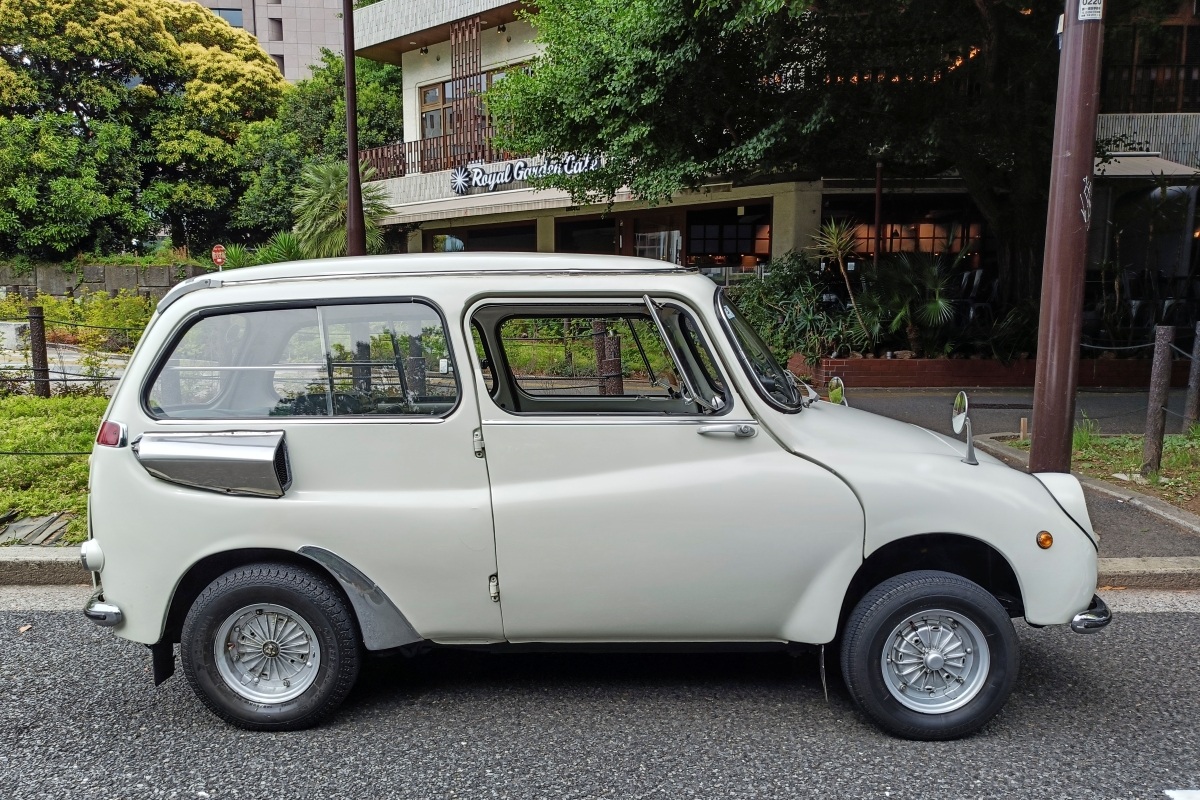
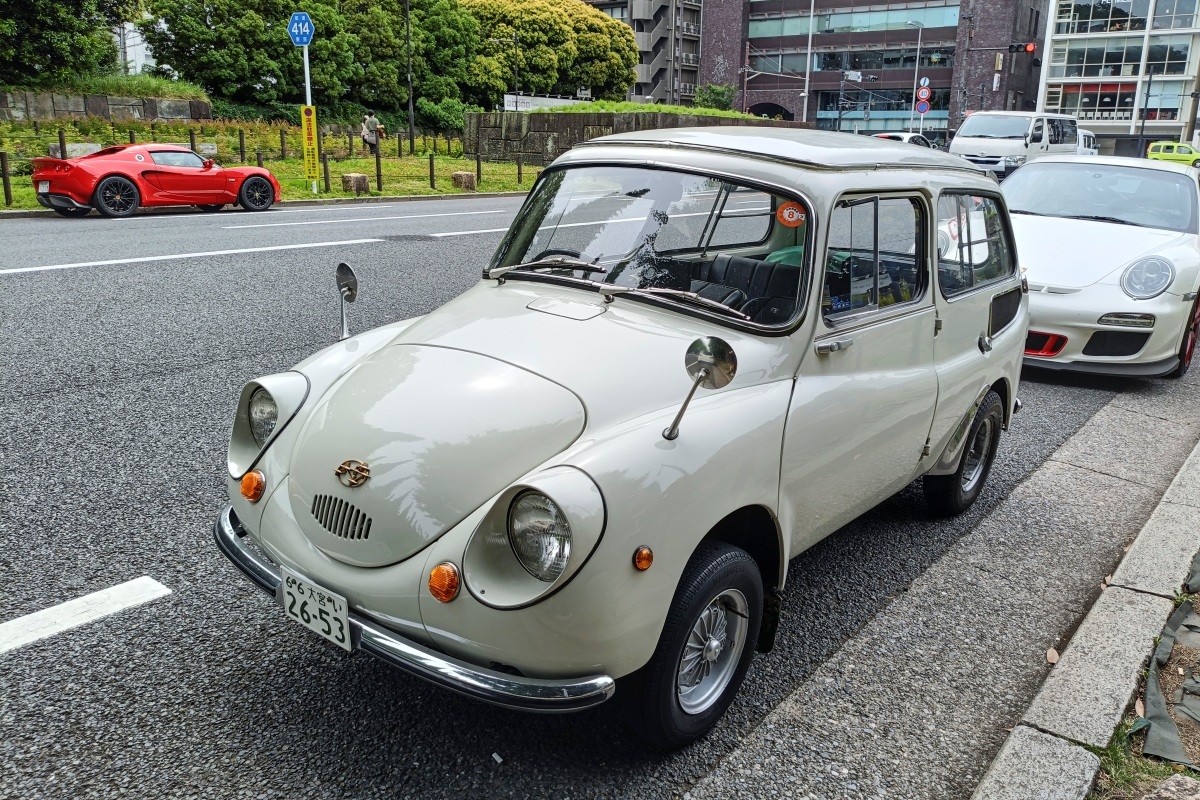
Using the Sambar’s engine and slightly different chassis, Subaru modified the 360’s bodyshell with a roof-hinged tailgate and, by September 1963, the 360 Custom was born, replacing the odd and unlamented Commercial.
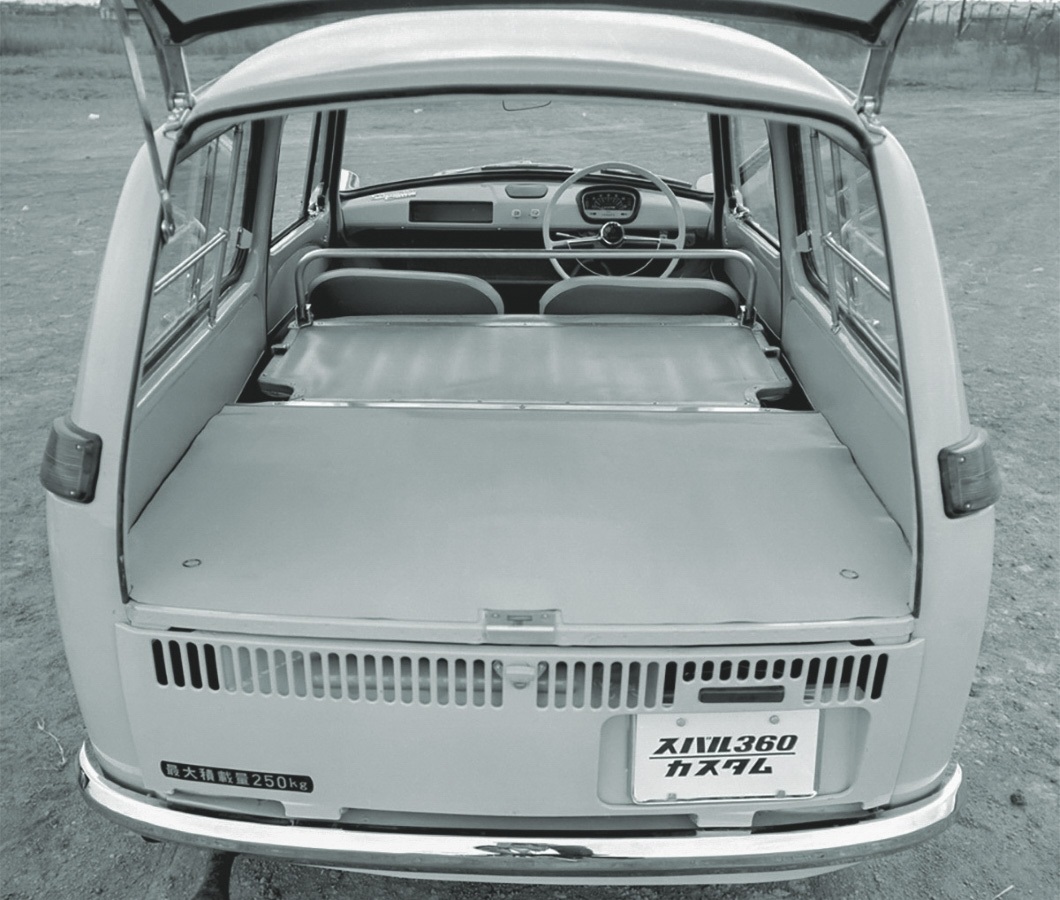
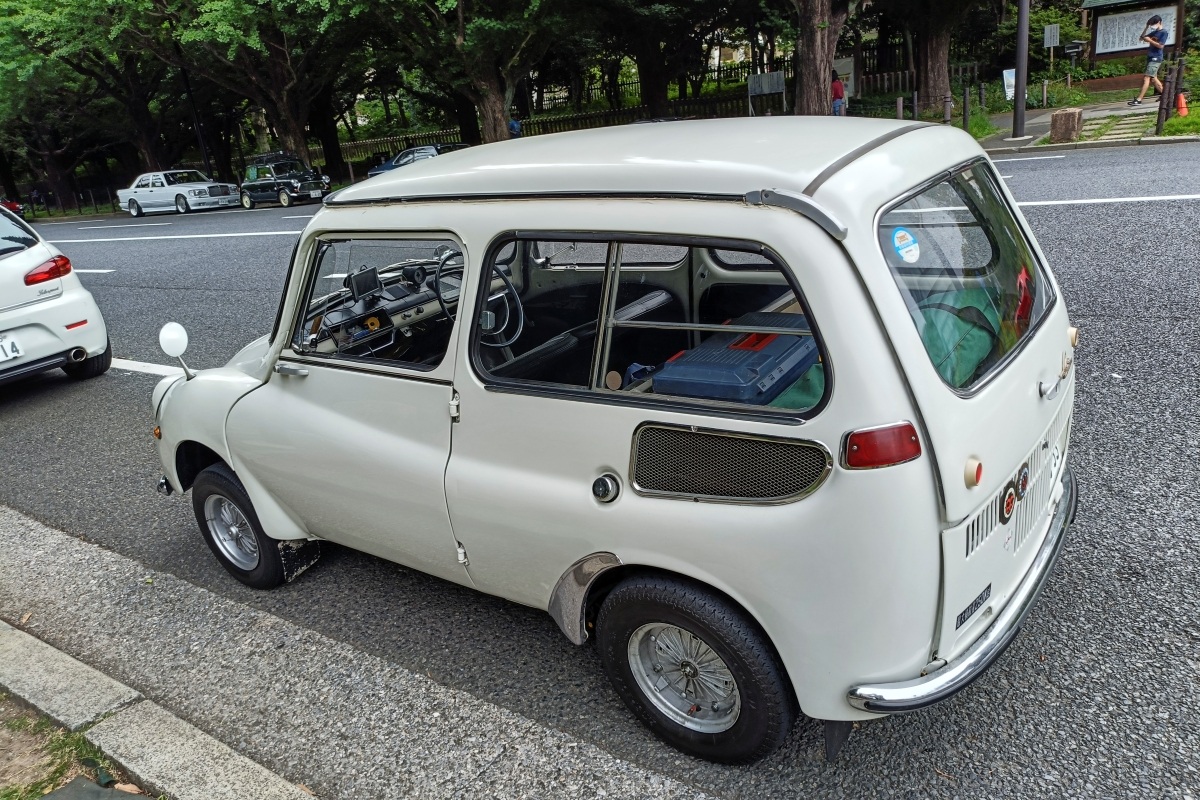
The back seat could be folded down flat, making the back half of this tiny car deceptively roomy, if a tad shallow. With two passengers, the Custom was allowed to haul 250kg in the back. With an additional two people in the back seat, the legal limit went down to 150kg. That may not seem like much, but given the rather limited amount of space available in four-seat configuration (not to mention the 18hp engine used to move the whole vehicle), that was actually not too bad.
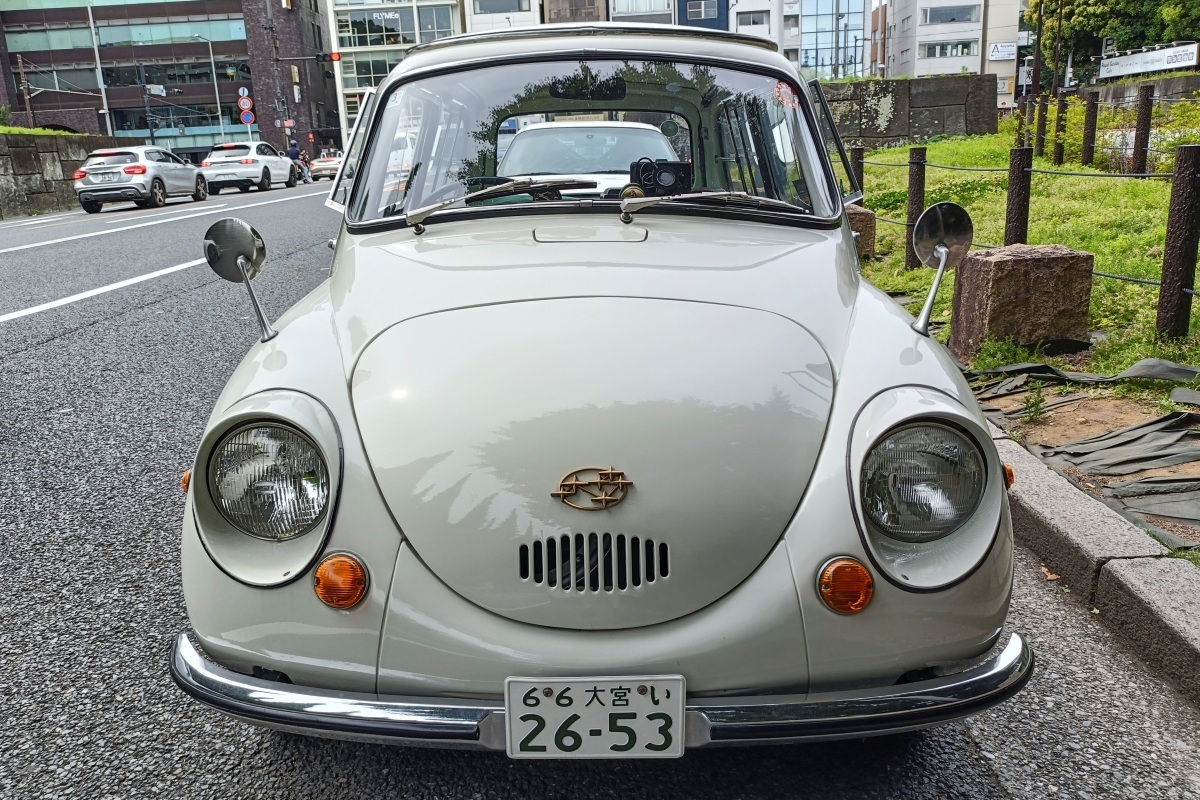
Everything from the B-pillar forward was pretty much identical to the standard-issue Subaru 360 in Deluxe trim, as attested by the gold-coloured logo on the frunk. Measurements-wise, the Custom is identical to the 360 saloon in every way, save for a minuscule (3cm) extra height.
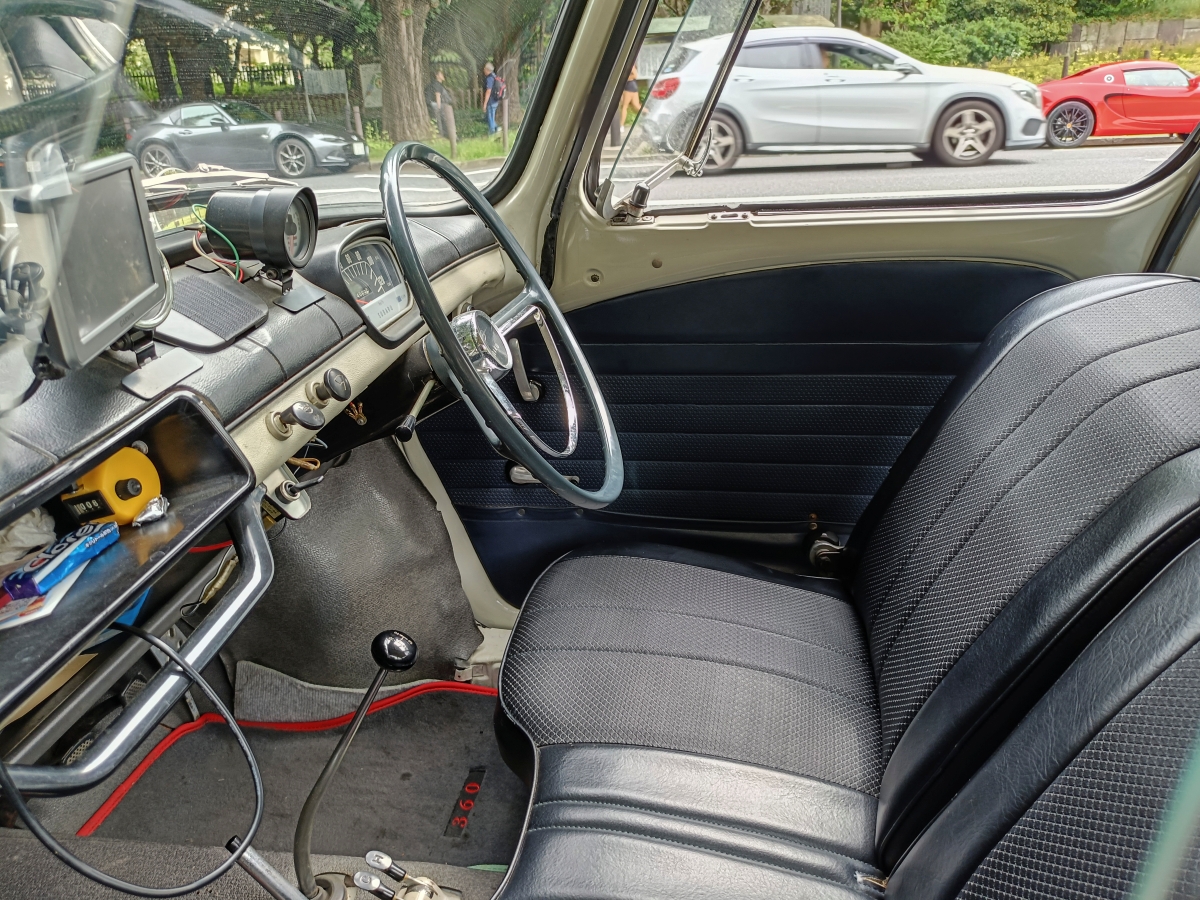
Just because it was a more blue-collar “van” kind of vehicle did not mean that Subaru played penny-pincher here and there. Or inside, for that matter.
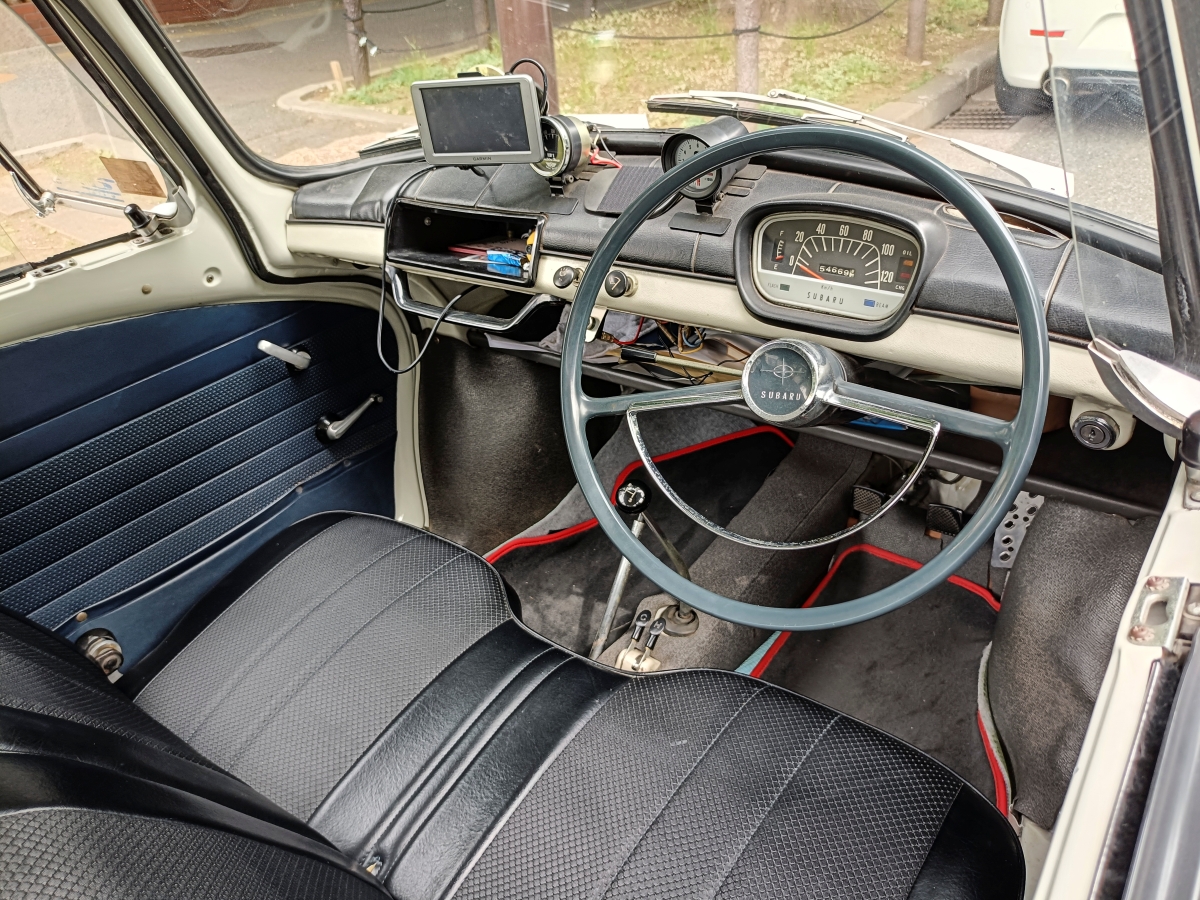
Putting in a speedo graded up to 120kph was certainly proof of a good amount of optimism on Subaru’s part. I would be astounded if this thing could reach 100kph going downhill, but apparently, it could, at least when new. Our specimen here, being a 1965-66 model, does have a slightly more powerful (20hp) engine, so there’s that. Later versions, from 1968 onward, had a 25hp twin.
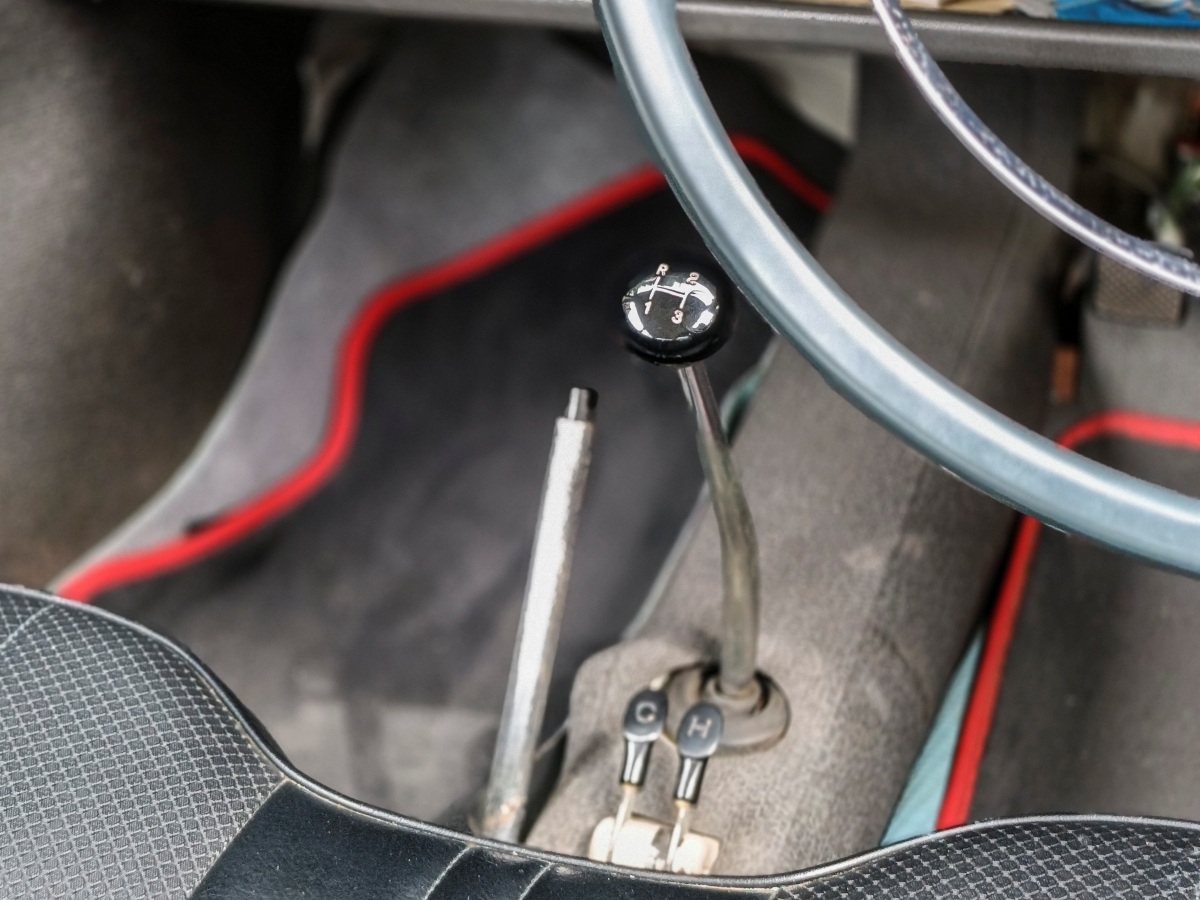
Three gears were all you got on the 360. More would have been a luxury, though an overdrive was optional. I’m guessing the little lever with a “C” is the choke – could the other one be the heater? “Put it in H!”
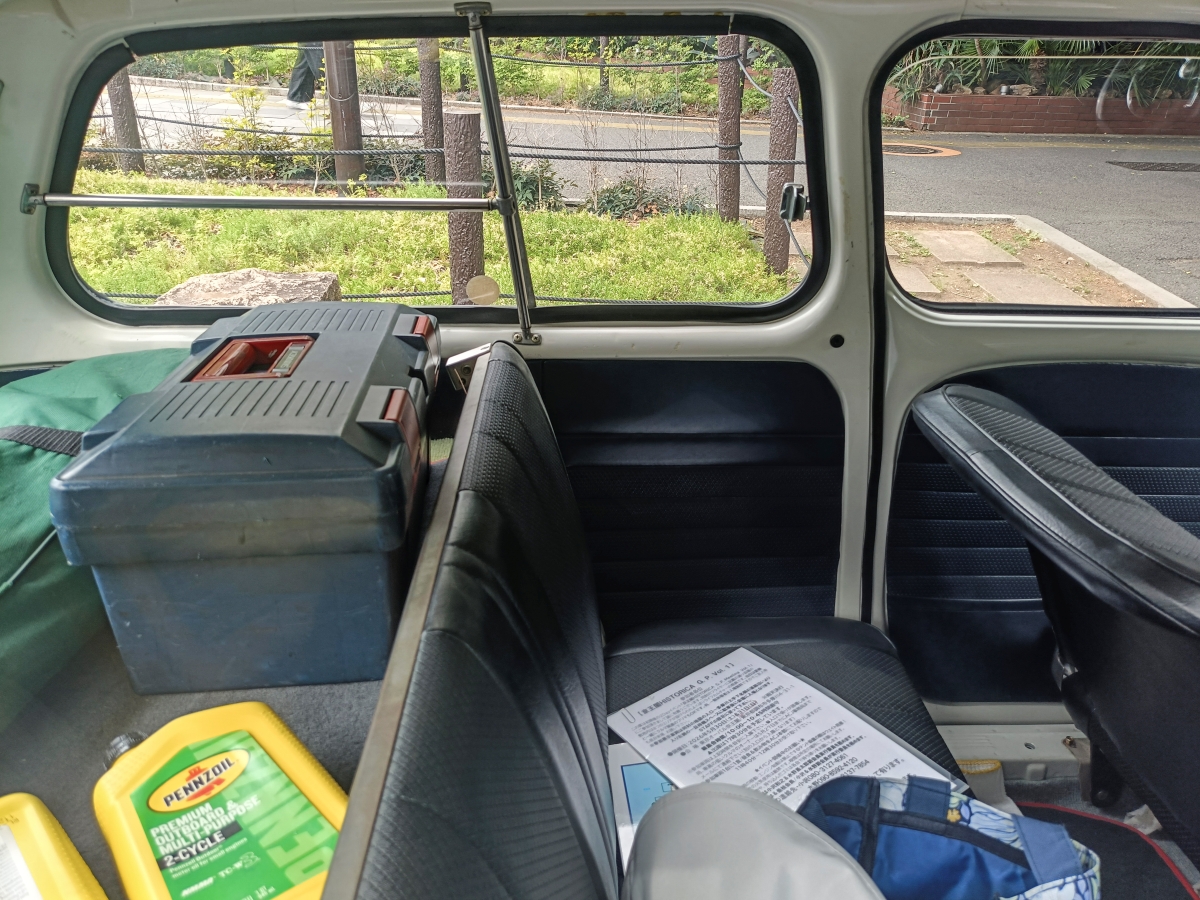
The metal bars on the rear window are a traditional feature of JDM wagons. Never figured out what their exact purpose was, but perhaps someone on CC will enlighten us.
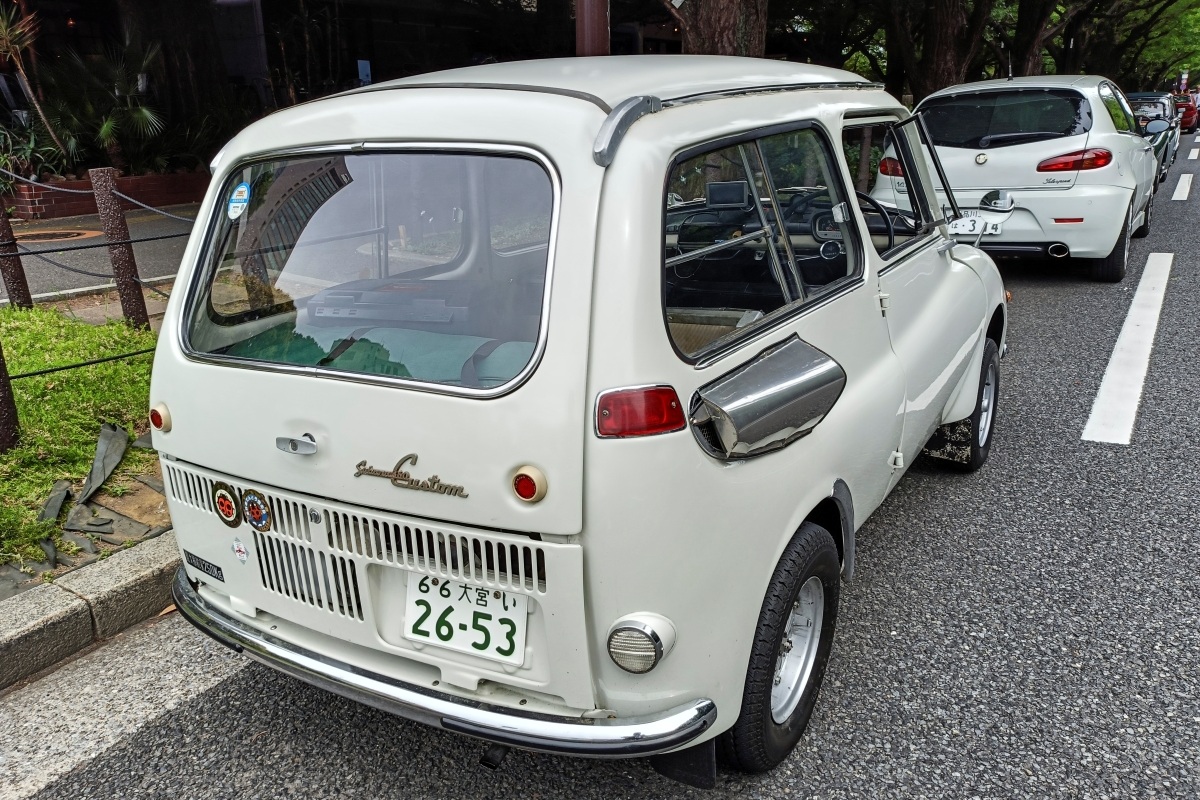
I’m guessing that the polished aluminium thing on the right air intake here is some sort of aftermarket item to improve engine cooling, but I cannot find anything like it online. Could be home-made…
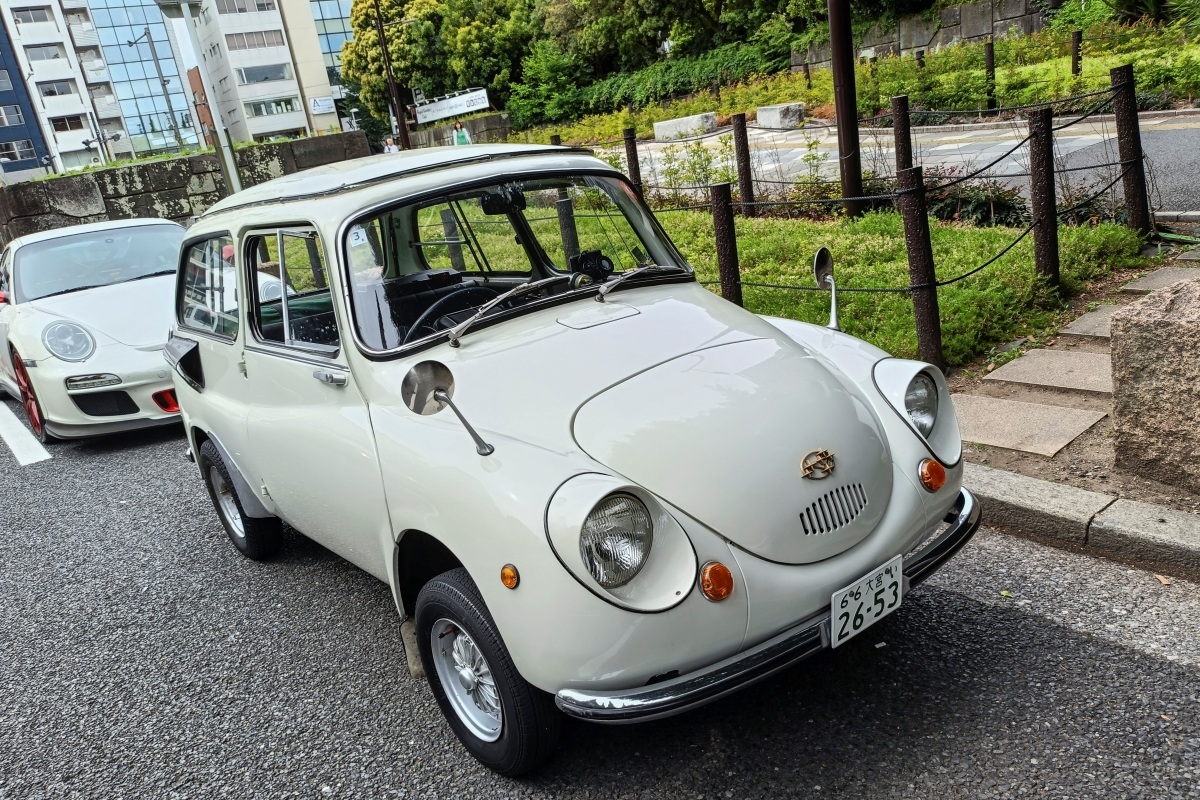
As the most successful kei car of the ‘60s, the Subaru 360 is still a relatively common sight around Japan. They did manufacture close to 400,000 of them. The 360 Custom, however, only accounted for about 50k units. And those were, almost invariably, work vehicles that were driven into the ground, making this variant quite rare nowadays.
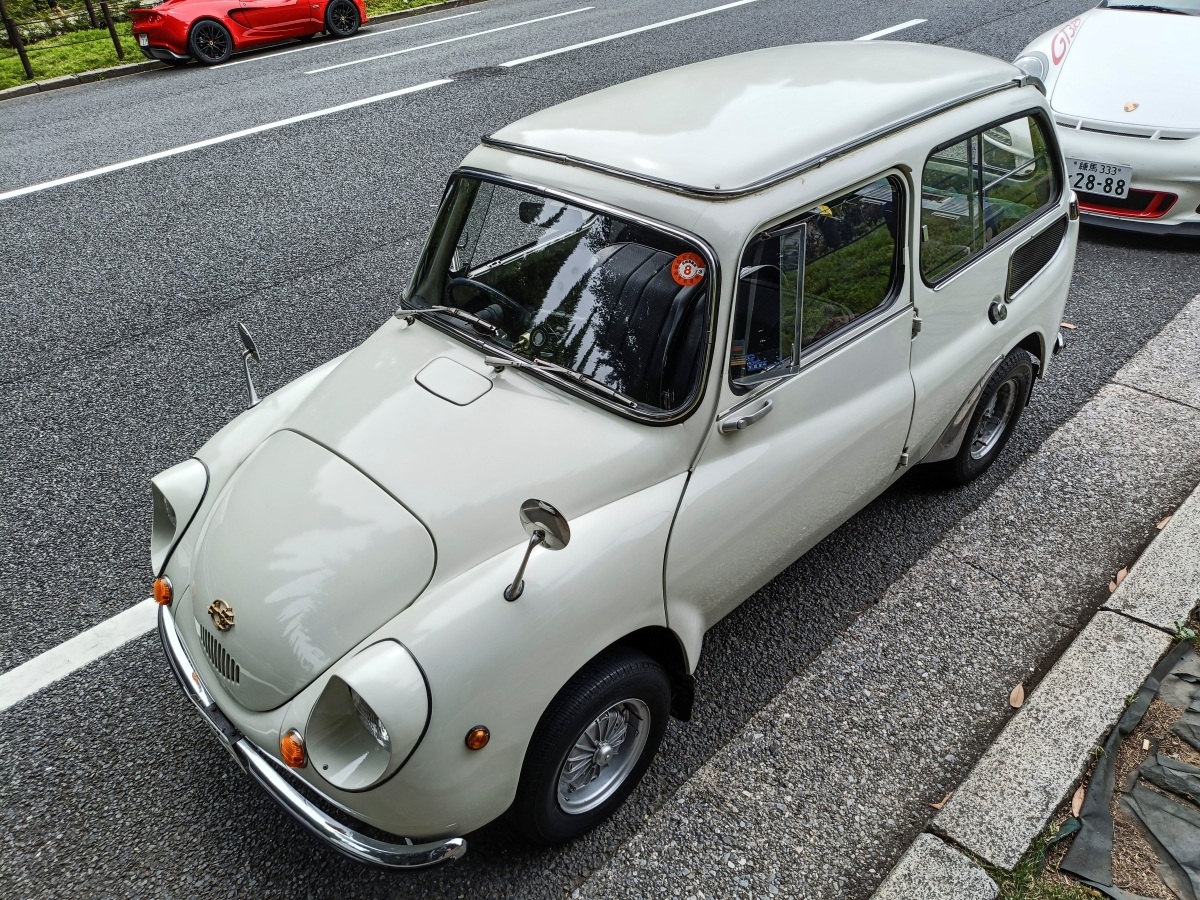
Much as I like the regular 360 saloon, I must say that this wagon/van variant is infinitely superior – it might overtake the Lakewood in my personal pantheon of rear-engined wagons. A little extra cargo space goes a long way, and I find the car’s shape is much improved by this longer roofline.
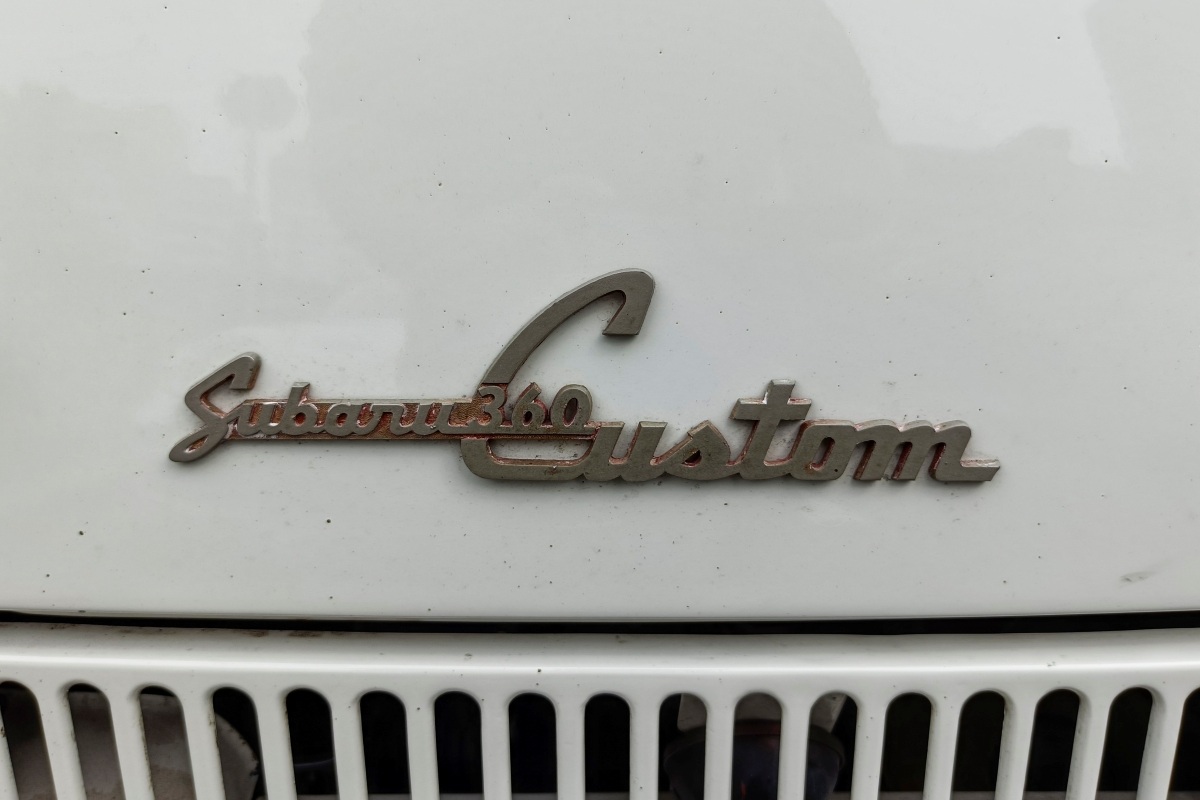
Besides, as a recent (and hopefully long-term) immigrant to this country, I will always strive to observe, respect and, if given the chance, adopt local Customs.
Related posts:
Curbside Classic: 1968 Subaru 360 Deluxe – The Legend Of The Ladybird, by T87
Junkyard Classic: Subaru 360 – It All Started With This Little Wart, by PN
Junkyard CC Capsule: Subaru 360 Sambar Van: The First Kei Truck, by PN
CC Driving Review (With Video): Subaru 360 – Can I Even Fit In It?, by PN
COAL: 1969 Subaru 360 – Really, by Michael Ionno























The metal bars protect the rear side windows from shifting cargo