
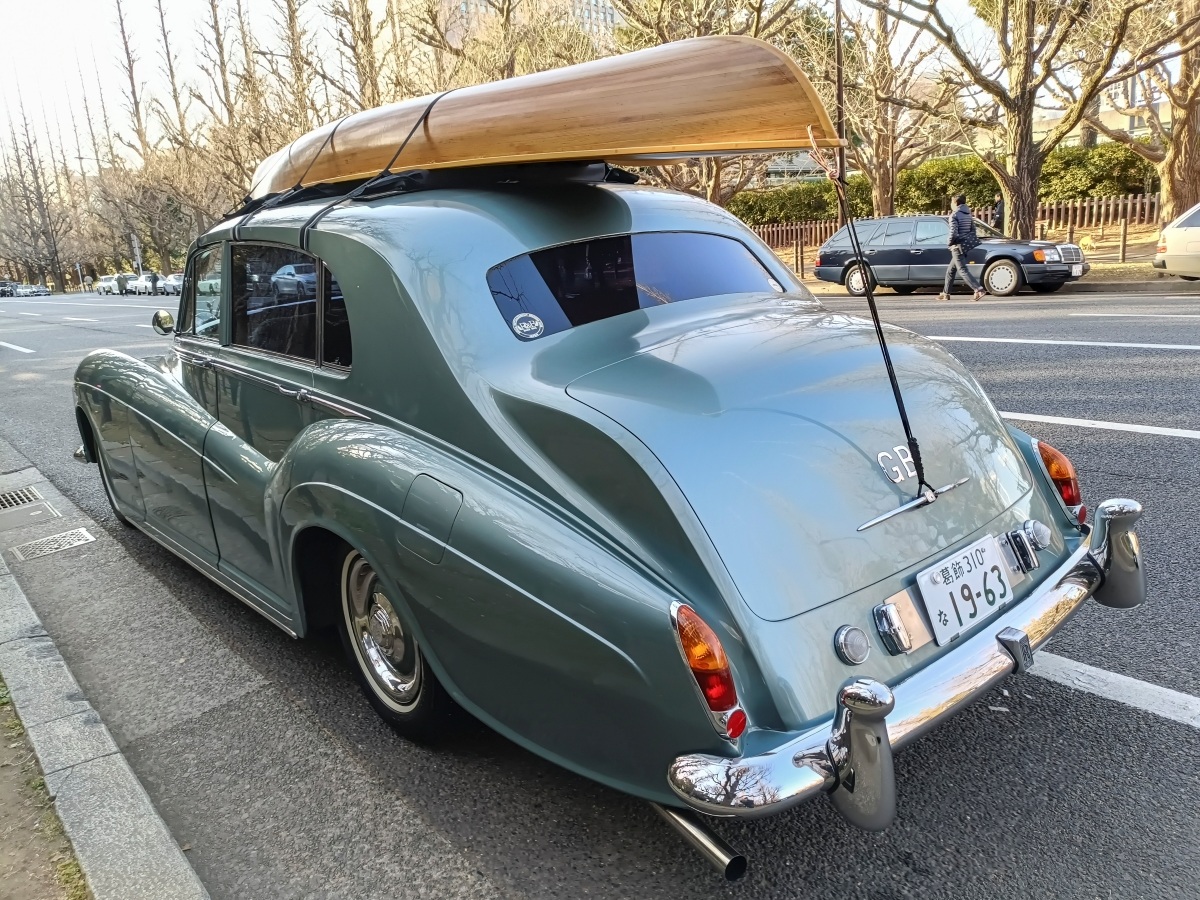
After the hat on a hat, putting a cherry on top and the cat on a hot tin roof, the new idiotic idiom for 2026 will be: strapping a canoe on your Rolls. I’m not sure what it’s supposed to mean either, be it figuratively or literally, but it does have a certain je-ne-sais-quoi about it, only I don’t know what it is.
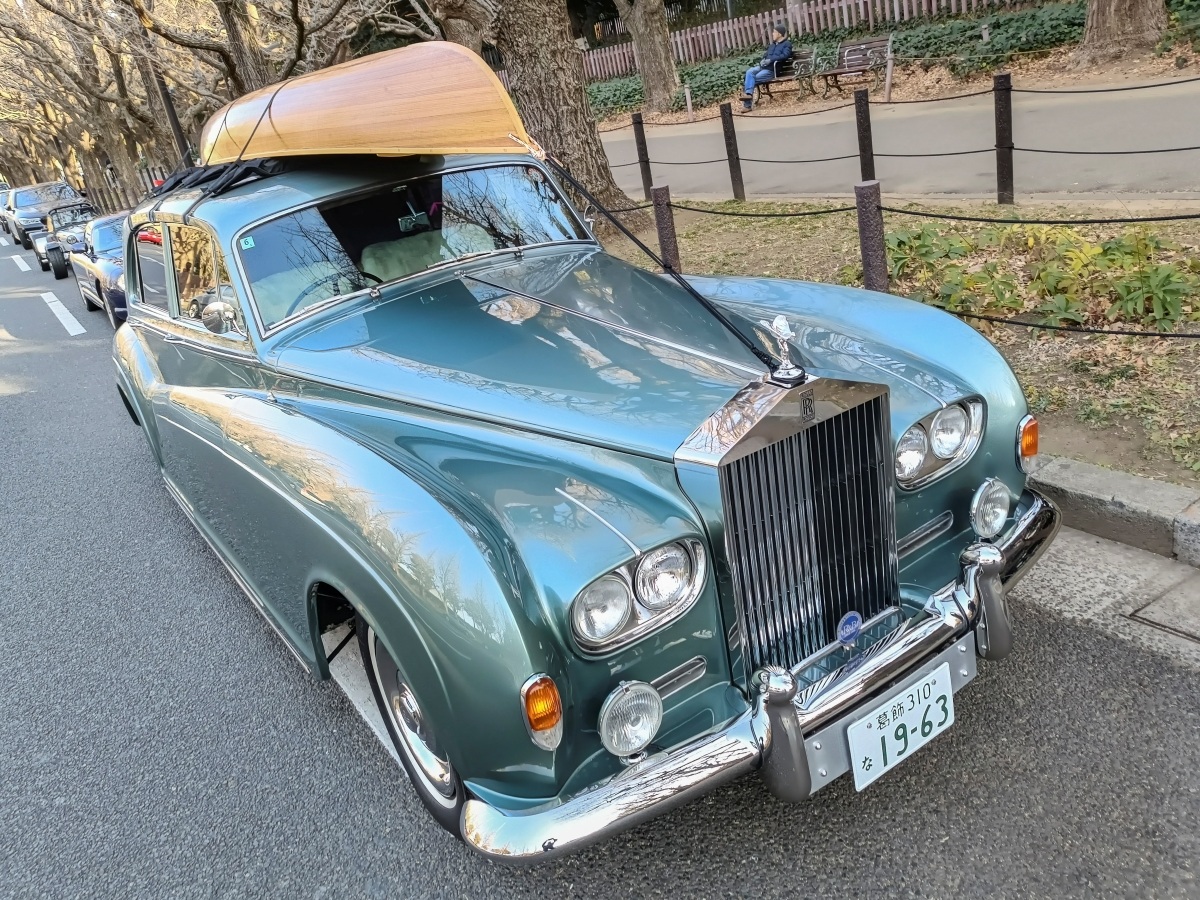
This absolutely sublime Silver Cloud III has wafted by the Meiji Jingu Gaien on a few occasions. It has never been seen without the canoe. One of the more puzzling pairings I’ve ever seen, but let’s just go with the flow and see where it takes us.

There isn’t all that much to say about the Silver Cloud III chassis, I should think. We’ve seen a few of those in pretty close detail over the years – a Bentley S3 standard steel saloon and a Rolls-Royce convertible. The same applies here: a 6.2 litre V8 mated to a license-built 4-speed Hydramatic, a coil-sprung IRS and a leaf-sprung live rear axle, drum brakes all around… All pretty typical for the times.
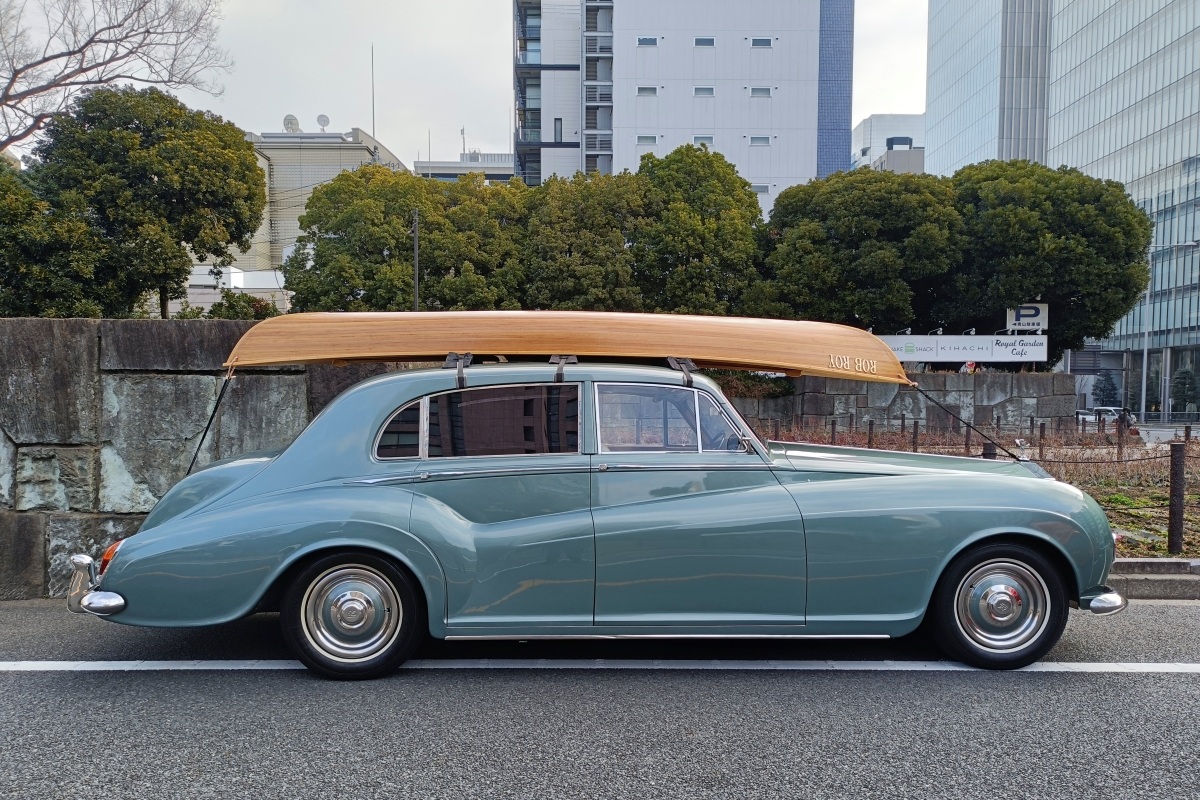
The main difference in this case is the wheelbase, which is 127’’ (322cm) in this stretched variant – an extra four inches compared to the standard model.
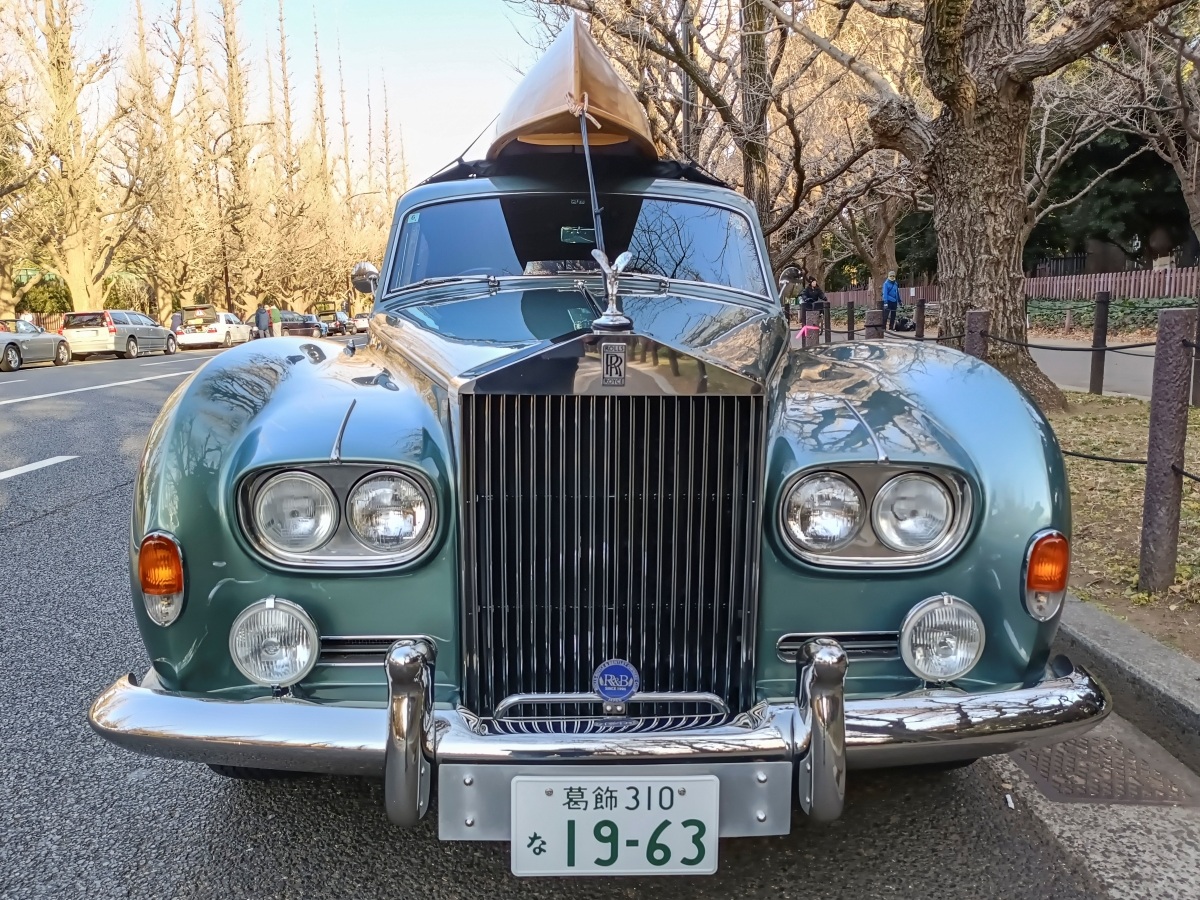
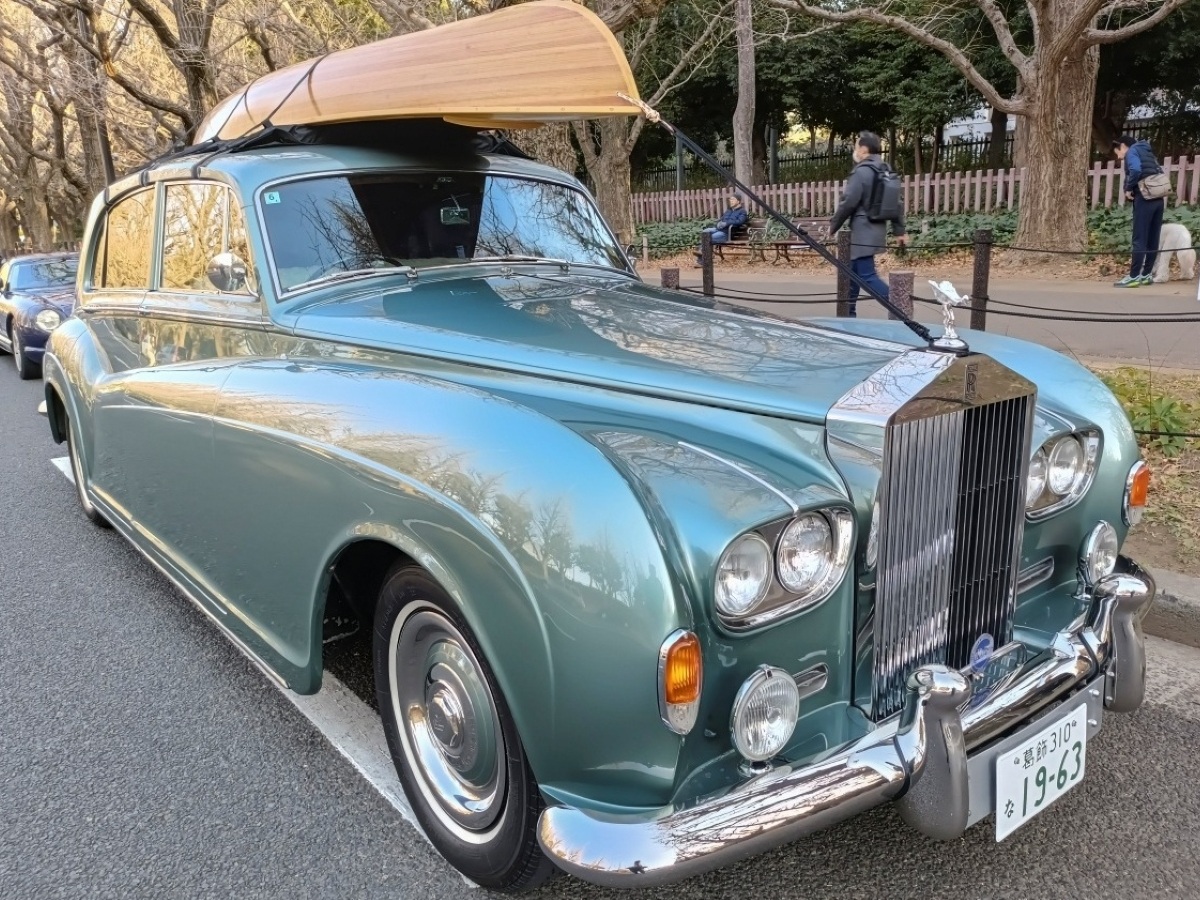
The Greek temple up front is identical to the other Rolls-Royces of the period. It is, after all, one of the few externally visible features of the car that Rolls produced themselves. Everything else was farmed out: either it was a standard saloon from Pressed Steel, or a very limited list of coachbuilders could fashion a body to the client’s wishes. That second solution is what was chosen in this instance.
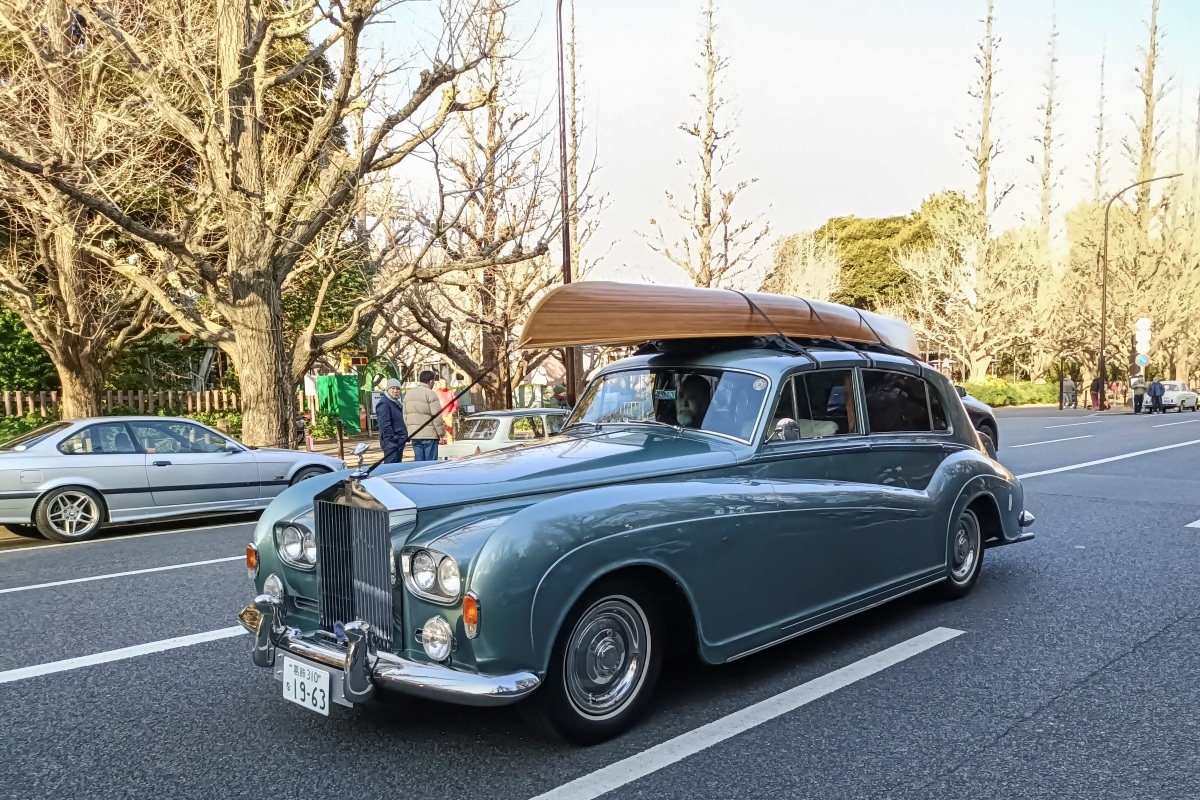
So let’s try and put the canoe to one side and focus on the actual Roller, and its sumptuous coachbuilt body in particular. Thirty-nine Silver Cloud IIIs (out of a total of 2809 chassis made) were dressed this way by one of the last traditional English coachbuilders still active in the ‘60s, James Young.
We’ve already had a chance to take a deep dive into that famous Kentish house’s history in general and their work on postwar Rolls-Royce / Bentley chassis in particular when discussing a mid-‘50s Bentley R-Type coupé in an earlier post. Ten years on, the situation had not changed much at James Young: the demise of many other coachbuilders in the interim meant that a steady trickle of extremely wealthy customers still came calling, wishing for something a little different from the norm.
Phantom limousines represented the lion’s share of the work by the early ‘60s, as those remained strictly custom-built, but Silver Clouds and Bentley Continentals also attracted a number of orders. Only handful of specials made by James Young were two-doors; with such a vast chassis, a four-door body was a natural fit.
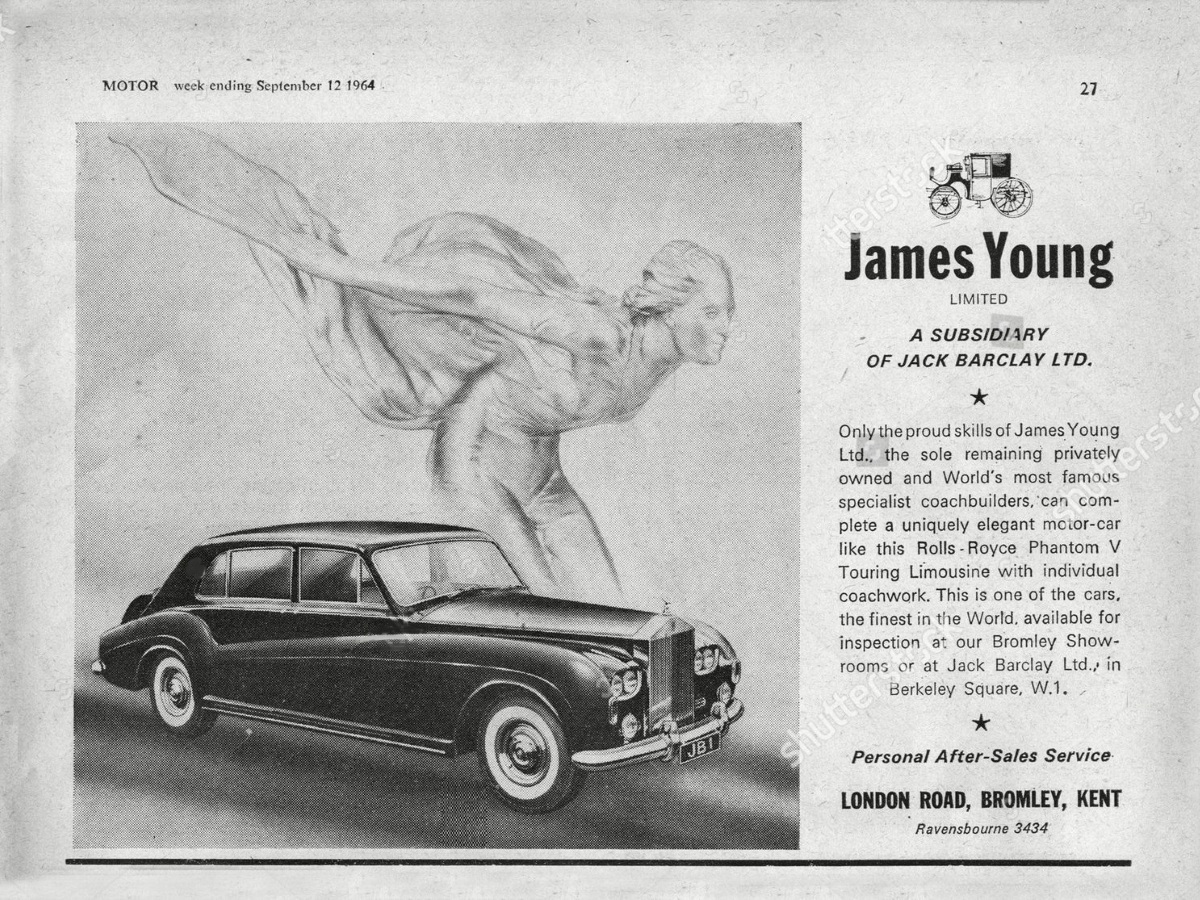
Our boat-topped example du jour happens to wear design SCT-100, known in the exclusive Rolls owner circles as the “Baby Phantom,” as it looks pretty much like the most popular James Young limousine design for the Phantom V (above), albeit scaled down to the Silver Cloud, which even in this stretched form had about 20 fewer inches in wheelbase compared to the titanic P-5.
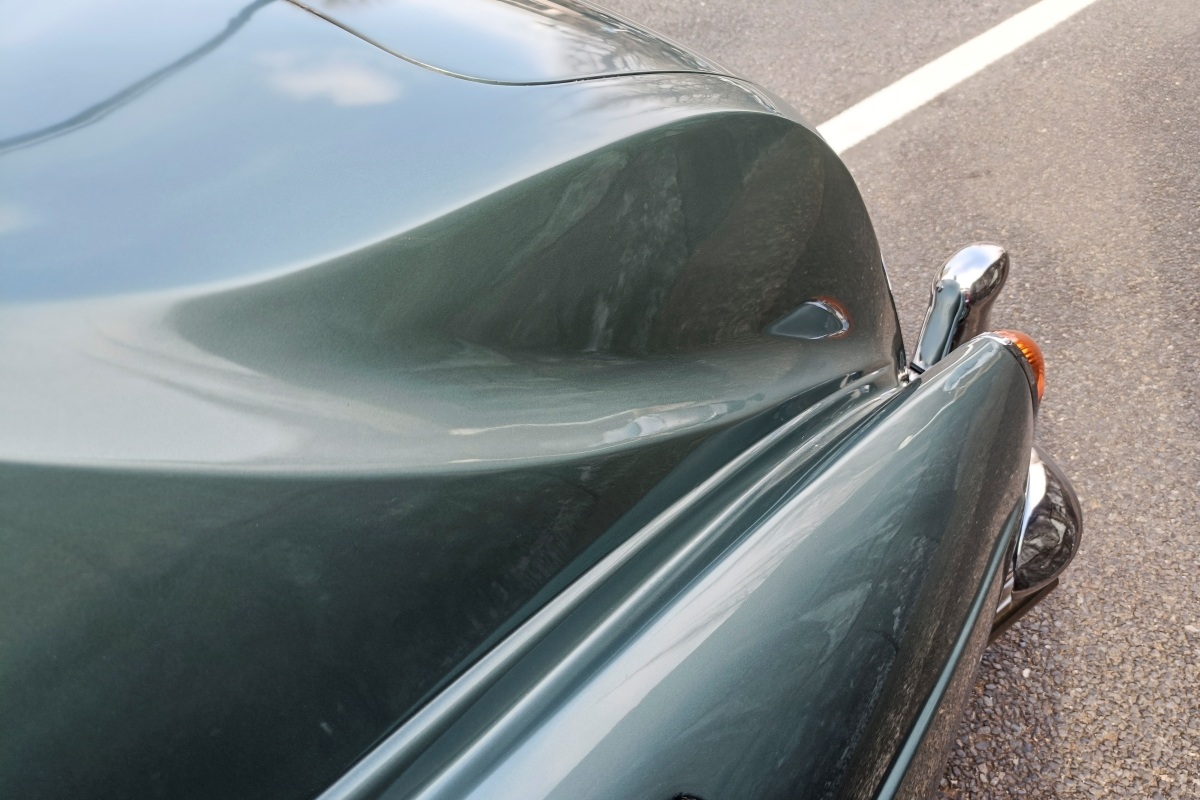
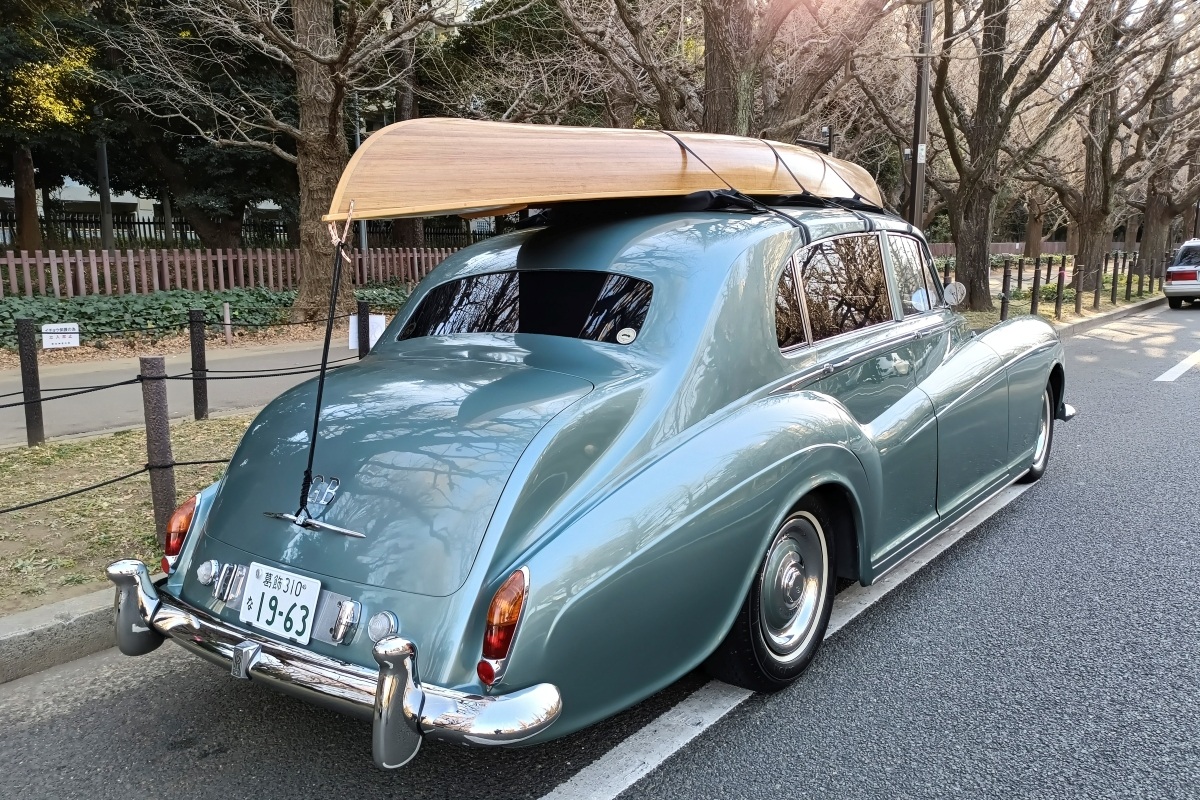
The most distinctive feature in the James Young design was the rear end. Standard saloons and Bentley Continentals had a relatively prominent trunk, whereas the James Young style called for a shorter “turtleback” semi-fastback trunk. Very elegant, but also very old-fashioned – this part of the car would not have looked out of place on a late ‘30s Rolls.
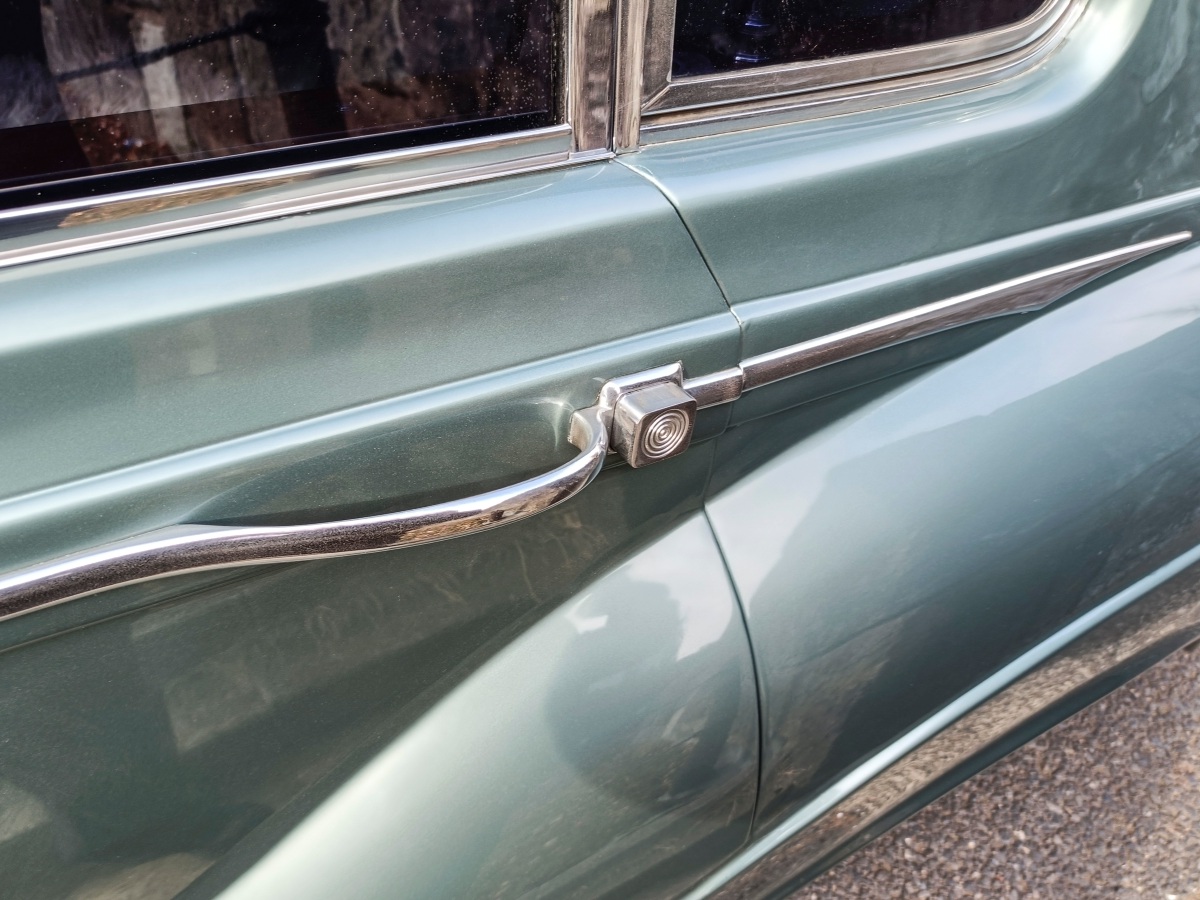
Other tell-tale signs that one is looking at a special-bodied Silver Cloud include the shape of the headlight bezels, the “speed streaks” on the fenders, the shape of the door handles… Ultimately, everything is different, but given that a James Young car is seldom seen side-by-side with a Mulliner-Park Ward or a standard body, it’s not as straightforward as all that, especially from the front.
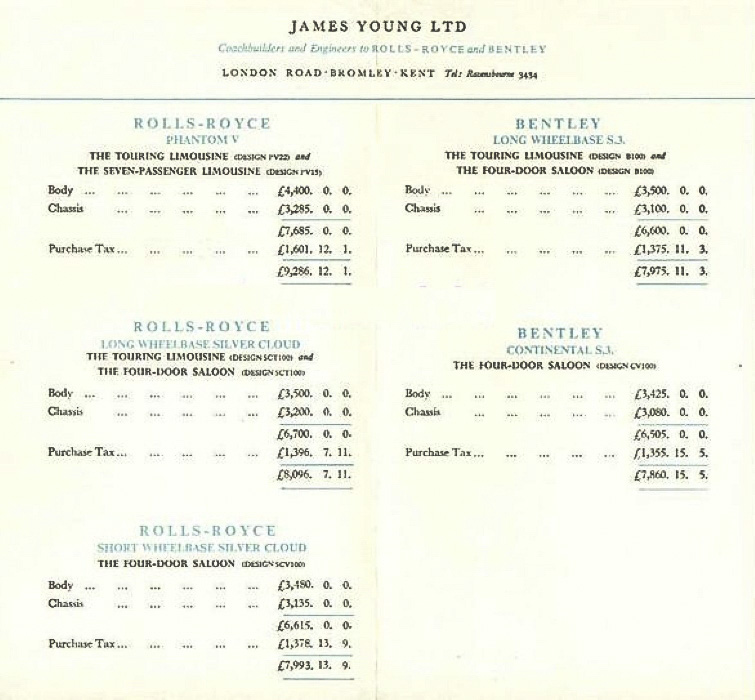
There is no real point in doing a comparison table with this kind of car, given the asking prices seen above. What could really rival with it? In 1963, the Daimler Majestic Limousine cost less than £4000 – the only four-door cars one could possibly order that would have cost more than that sum would have been the Lincoln Continental, the Cadillac Fleetwood, the Mercedes-Benz 300SE, the Lagonda Rapide and, in theory, the Facel-Vega Excellence. At over £8000, this James Young-bodied Silver Cloud III was worth about twice the price of any other luxury saloon.
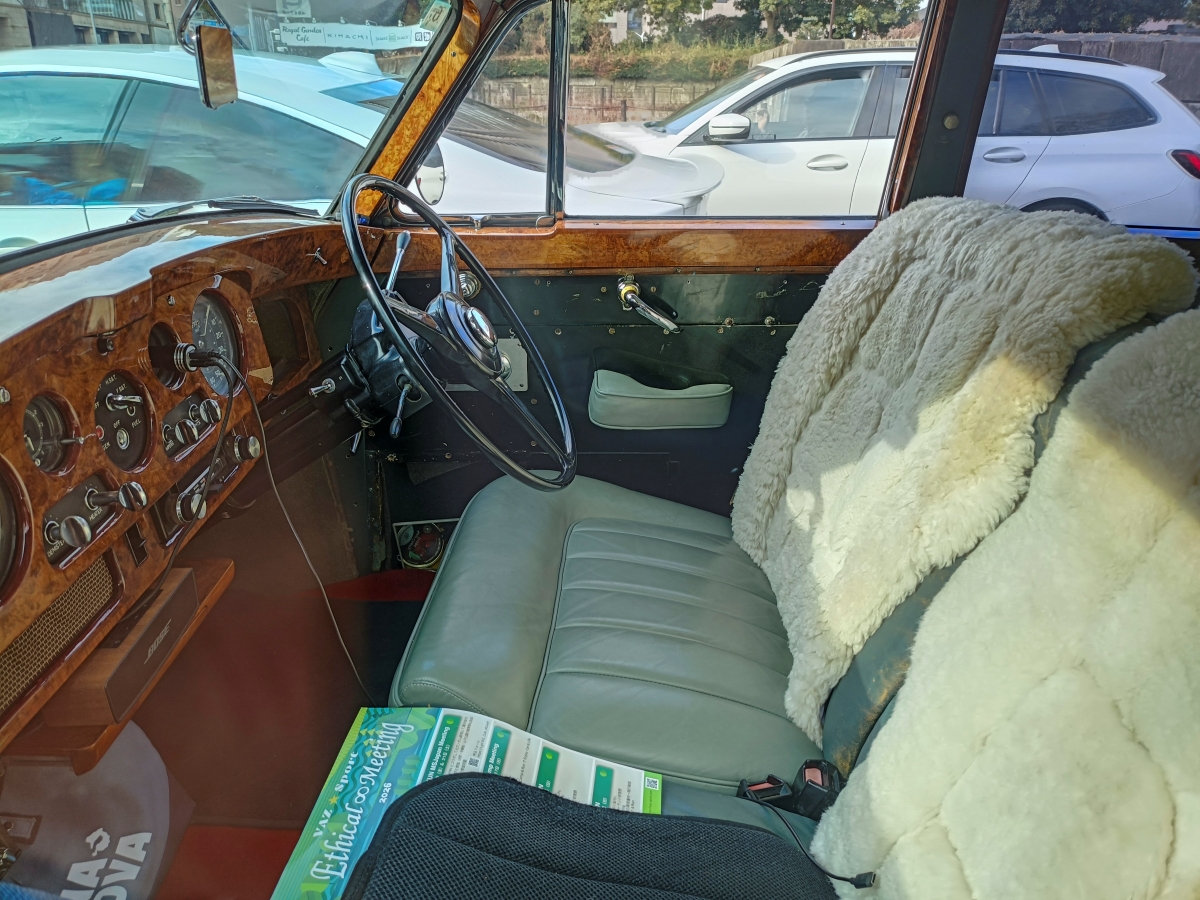
Included in this lofty price was a completely different dashboard compared to the standard saloon – a solid piece of expertly carved and veneered wood, as per tradition. No padding to be seen anywhere. The driver’s door card seems to be M.I.A. here, and I shudder to think how much it would cost to manufacture and fit a replacement. Probably £8000…
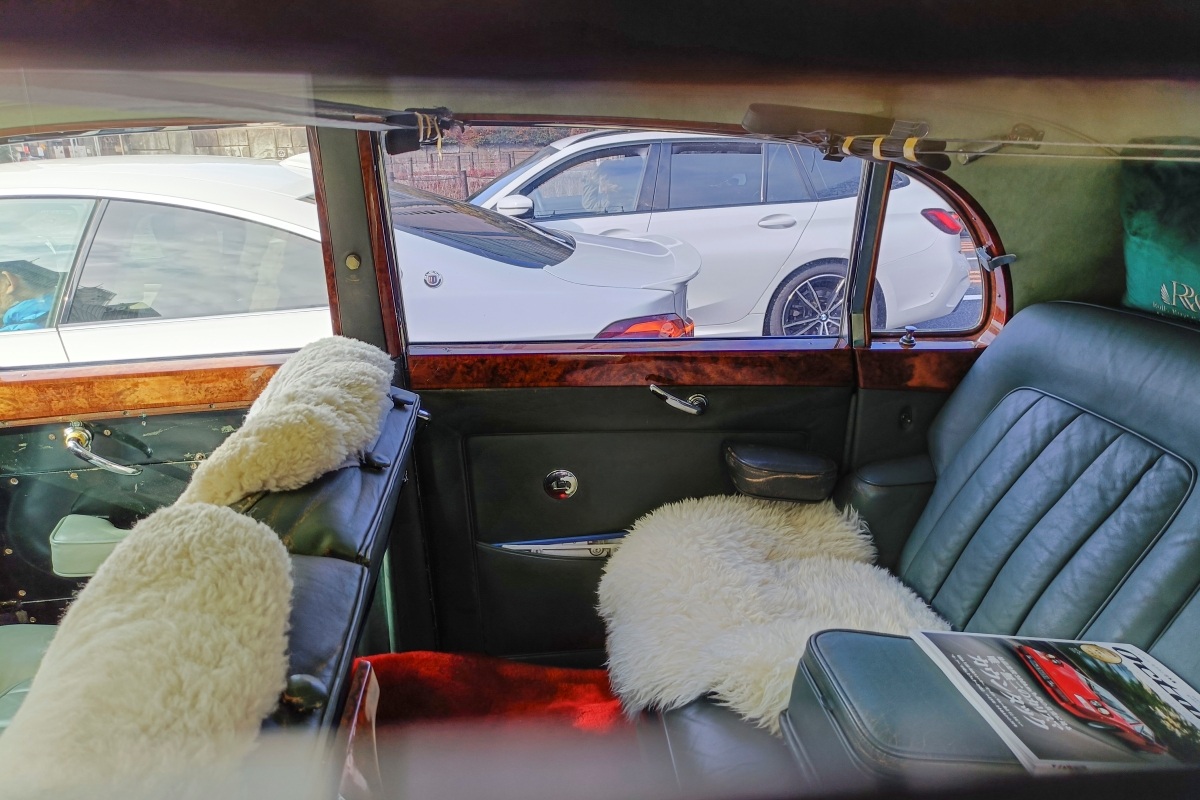
The difference between the Four-Door Saloon and the Touring Limousine is that the latter has an internal separation. Apparently, out of the 39 cars that James Young dressed with this body, at least 20 had no separation, like our feature car. And all but seven were RHD – James Young’s clientele was chiefly domestic. Times were changing, however slowly.
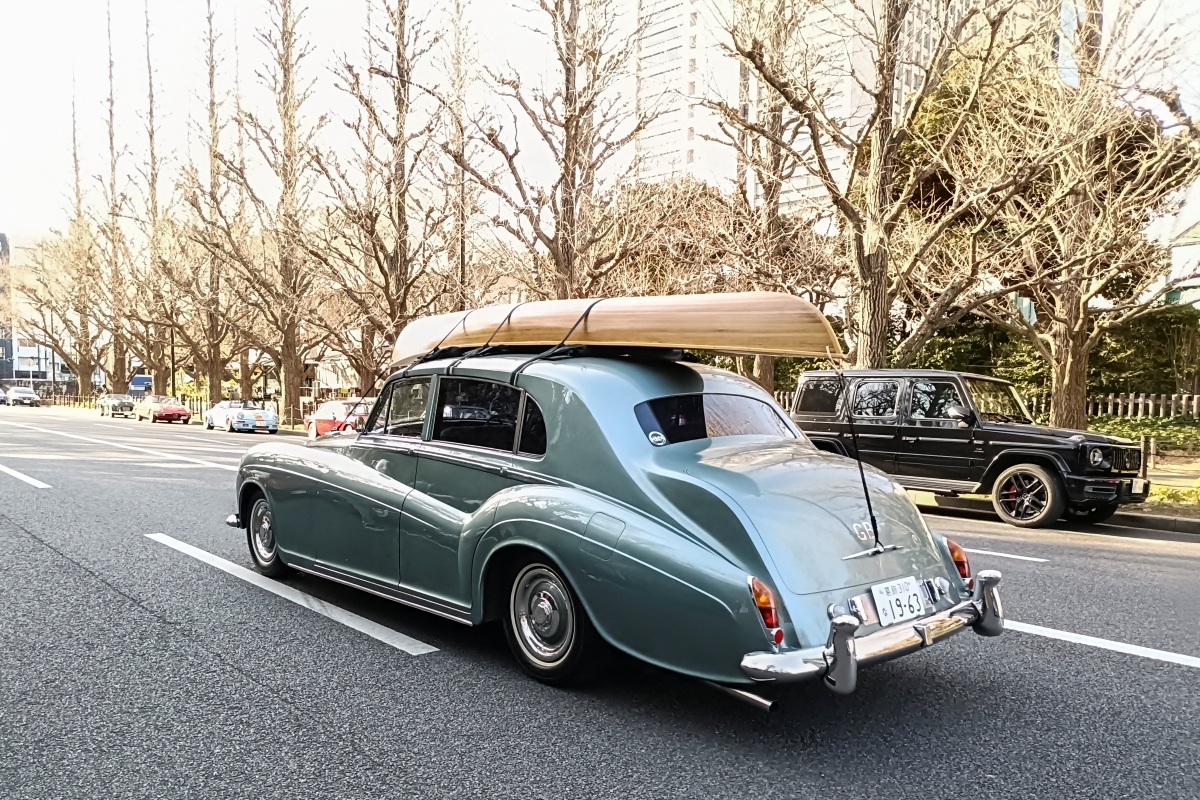
And now, this dignified and sophisticated representative of the last vestiges of the art of traditional coachbuilding is parading its handmade wood-framed and aluminium-panelled self down the streets of Tokyo with a canoe on its roof. You know, to make it stand out some.
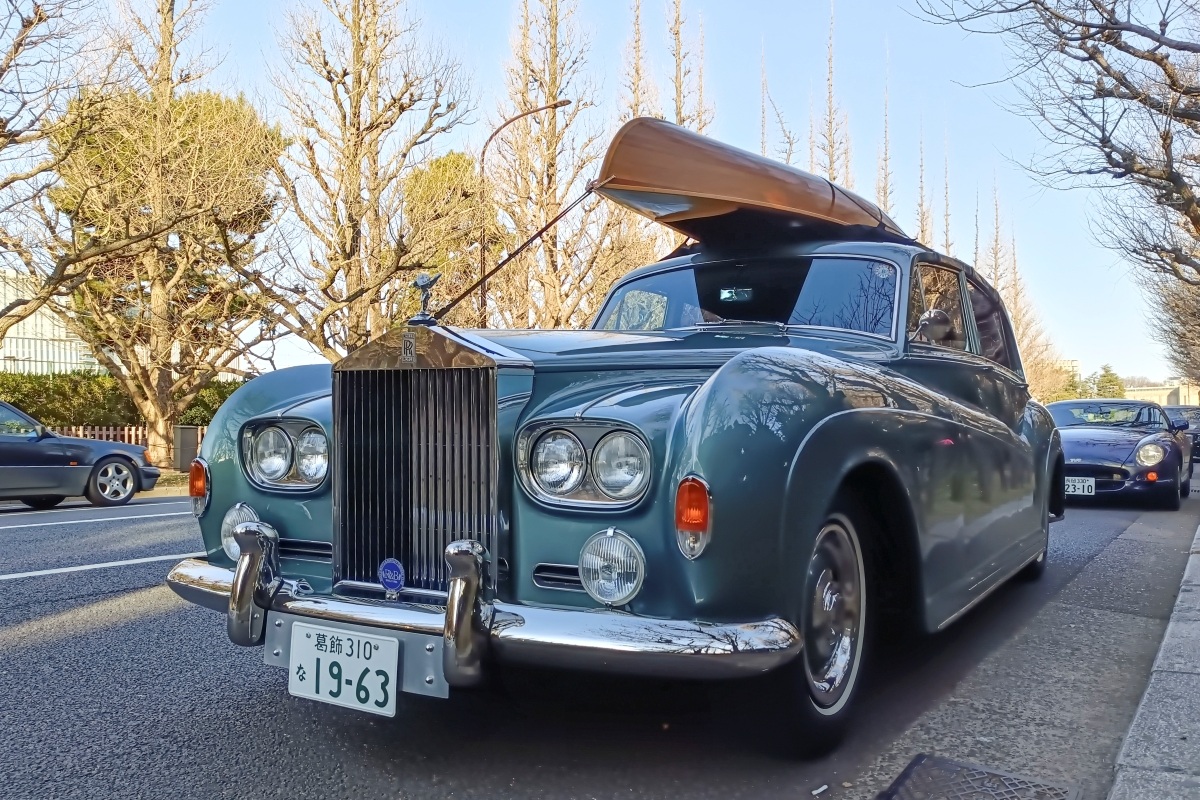
Part of me would rather leave the boat in the back of the garage (but then, will the car fit in it?), but on the other hand, it’s such a delightfully Pythonesque vision that I’m glad to have captured it and shared it with you all. Takes the stuffing out of that aristocratic Rolls, and in the best way possible. If nothing else it is certainly a new take on the term “land yacht.”
Related posts:
Curbside Classic: 1964 Bentley S3 – Grille Engineering
Curbside Classic: 1963 Bentley S3 Continental Flying Spur – Three Houses’ Worth























What a nice car. But I can’t imagine securing that canoe like they did. Using that famous hood ornament and the rear trunk trim? Whew!!
An actual luxury car custom built by a coach builder not stamped out in the thousands, like beer cans, thats the true mark of a luxury car, joe public cant just go into the dealership and finance himself into one like the wannabe brands, The canoe looks like it might have been built by someone who knew what they were doing as well its tied to trim that was built properly too
Very nice vehicle by any standards, winder why the owner puts the canoe on top of such high end luxury automobile, or just an eccentric act. Also from mechanical standpoint, is the Flying Angle stronger to withstand the force from vehicle operation on various roads and speeds? My question also goes to the trunk handle as well.
Also, even from the photos, the craftsmanship of this car is very impressive, just look at the gaps between the doors. In today’s world, I doubt even RR products can match that.
Once again people in Japan really like automobiles by looking through the various post from this author over years.
The classic cedar strip canoe is an appropriate choice in contrast to a recent photo on social media showing a plastic Coleman canoe perched on an add on air deflector atop a CyberTruck.
Based on my knowledge of Japanese car culture this canoe and its tie downs are as carefully calculated as the roof rack clutter on a stanced Volkswagen or the Burger King wrappers and empty Big Gulp in a Fox body Mustang.
Both the car and canoe are beautiful and I hope the owner uses the canoe instead of just carrying it around