
Some people are just not content with the basics. BMC created the Mini in 1959 to be as small as a four-seater could be – minimal in size, but highly advanced and ambitious in every other way. But of course, it was soon everywhere and rather bare-bones. In a class-obsessed society like the UK, that just couldn’t fly. Or so BMC thought.
The conventional thinking was that good people of Hampstead, Mayfair and South Kensington might be tempted by the Mini’s practicality, but a dollop of chrome on the outside and a smattering of wood inside would be needed to set their Minis apart from those of the toiling masses. BMC had the perfect solution: badge-engineering.
BMC had an array of marques at their disposal. The Mini initially came out as a Morris and an Austin, but the powers that be decided to rope in Riley and Wolseley to broaden the family. The Riley Elf was to be the aristocrat, the most exclusive and expensive of the little front-drive go-karts (save for the Cooper S, but those were a different kettle of fish). Wolseley, being more of an Oldsmobile in the BMC ladder, would be the upper-middle class of the Mini clan.
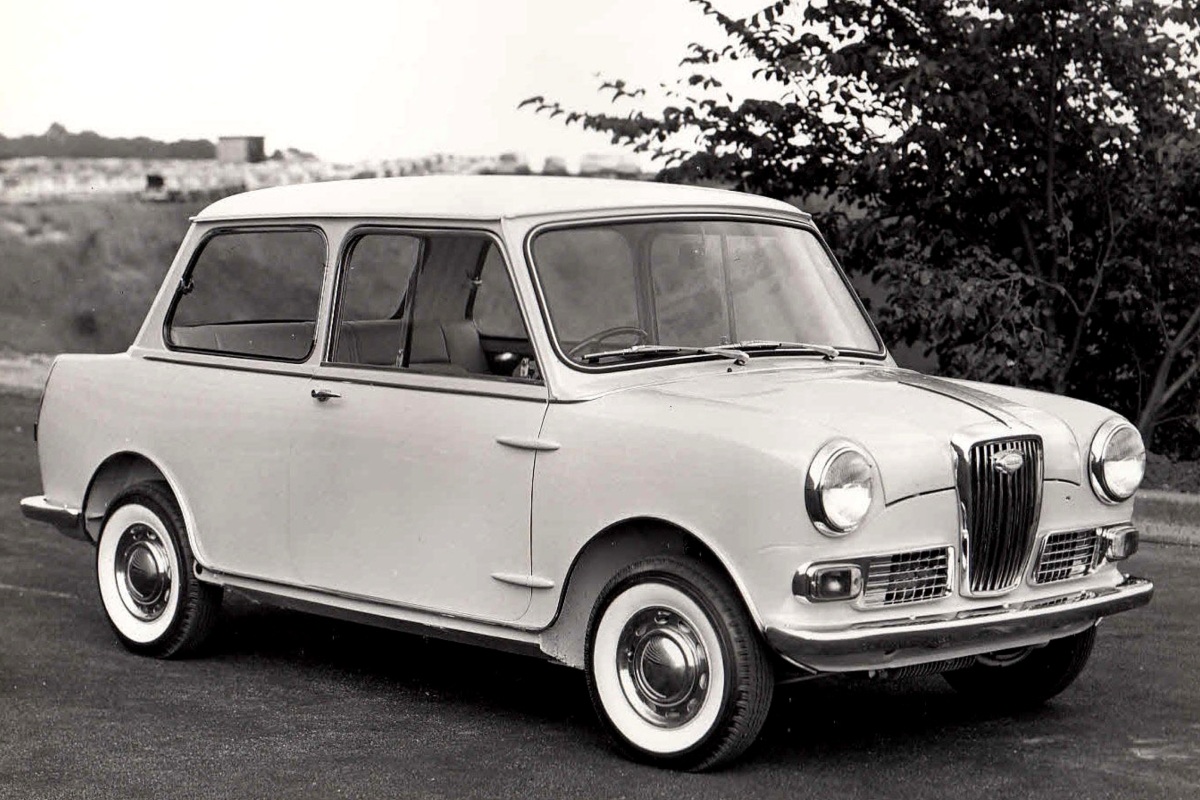
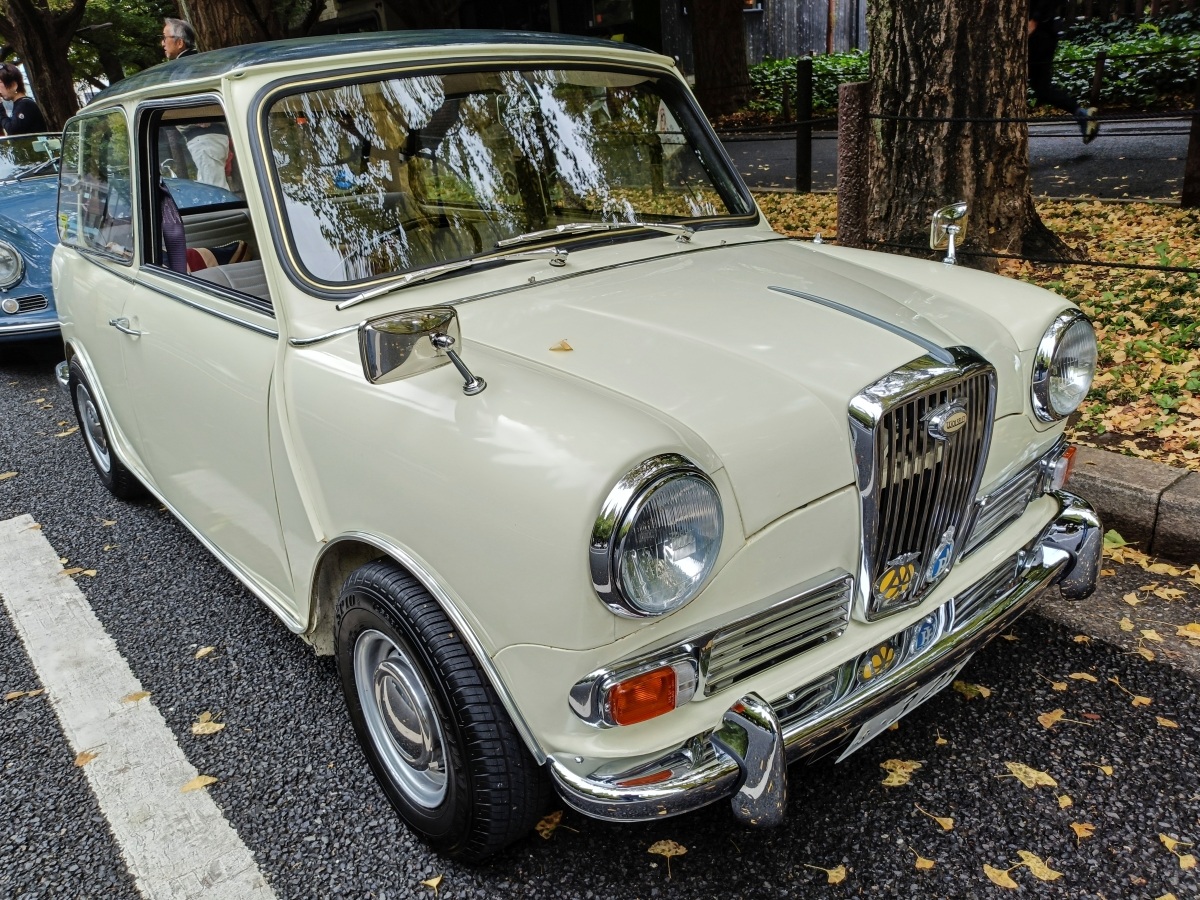
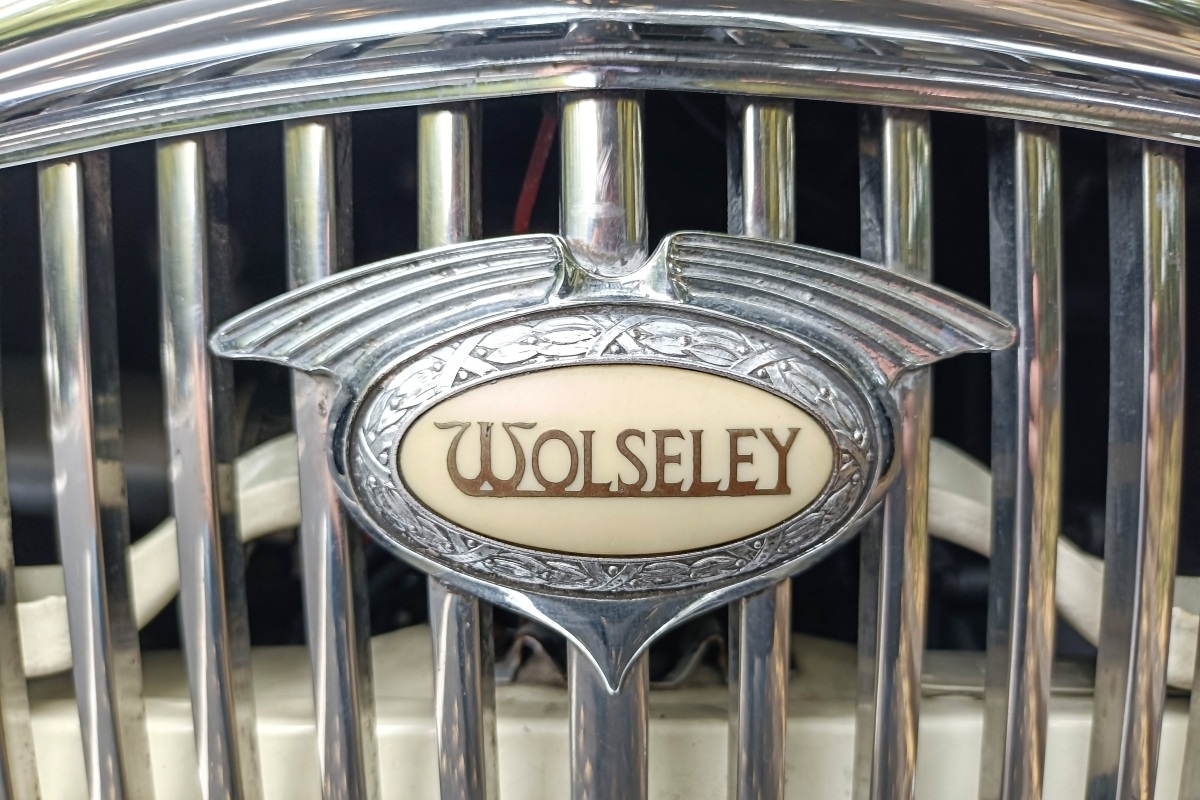
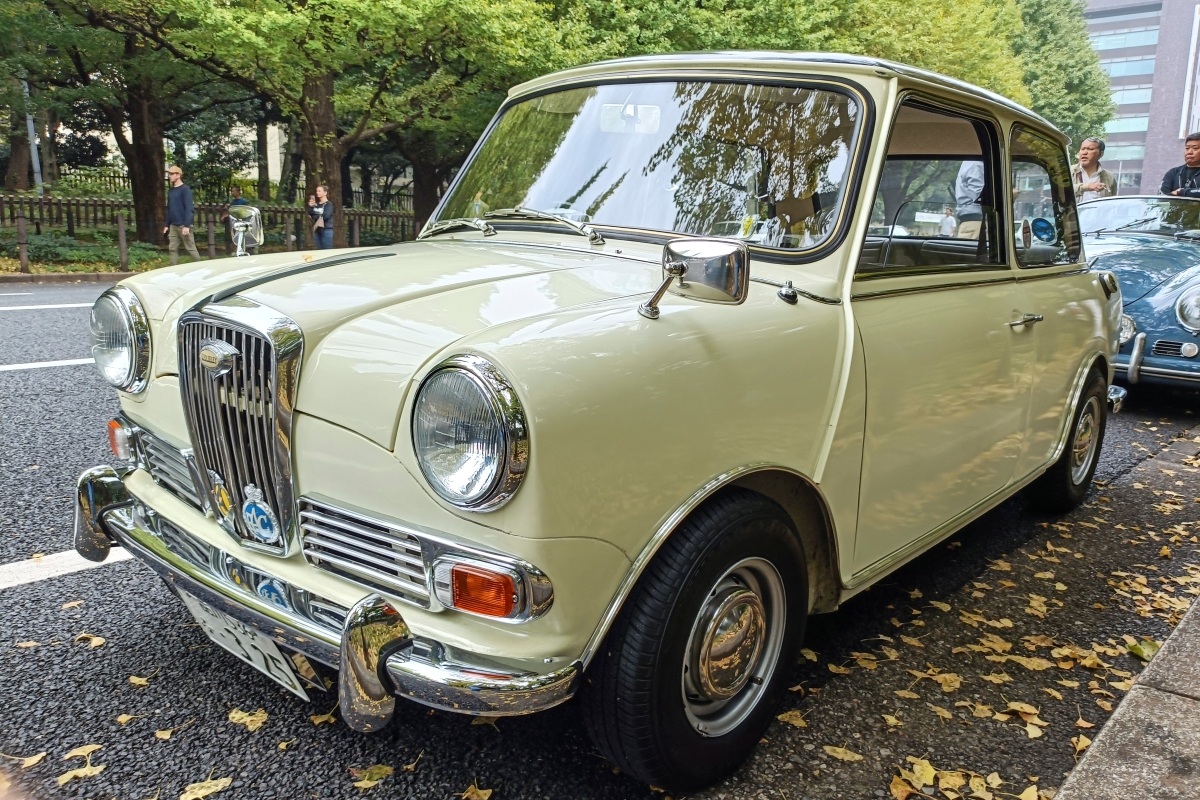
In practice, when both deluxe Minis hit the streets in late 1961, it was a little hard to tell them apart. They bore a very similar front end arrangement, with a rather ill-fitting stand-up grille slathered in chrome and two lower air intakes on either side that encompassed more serious-looking turn signals than the standard Mini had. The bumper was fattened up, the windows all got the full bright trim treatment and two-tone paintwork (but perhaps not the whitewall tyres) was almost de rigueur.
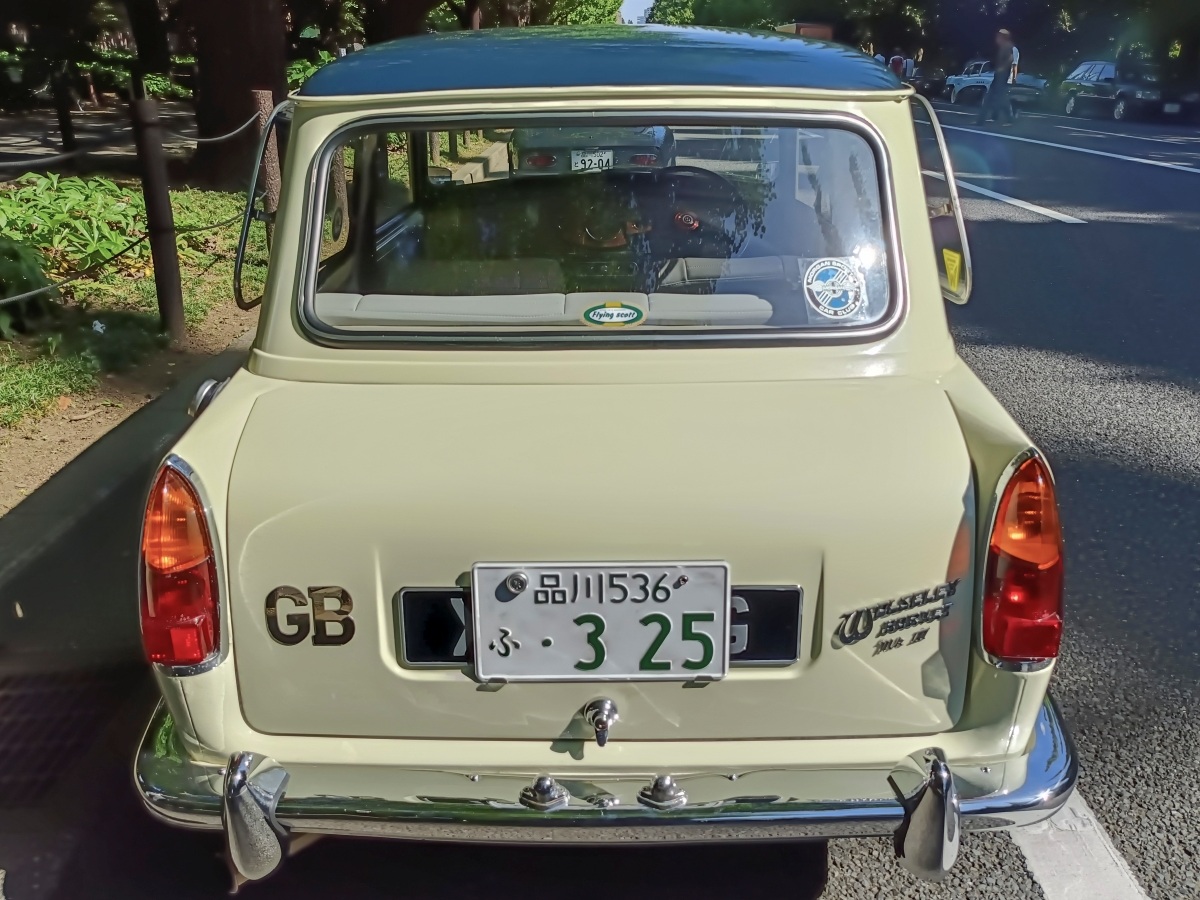
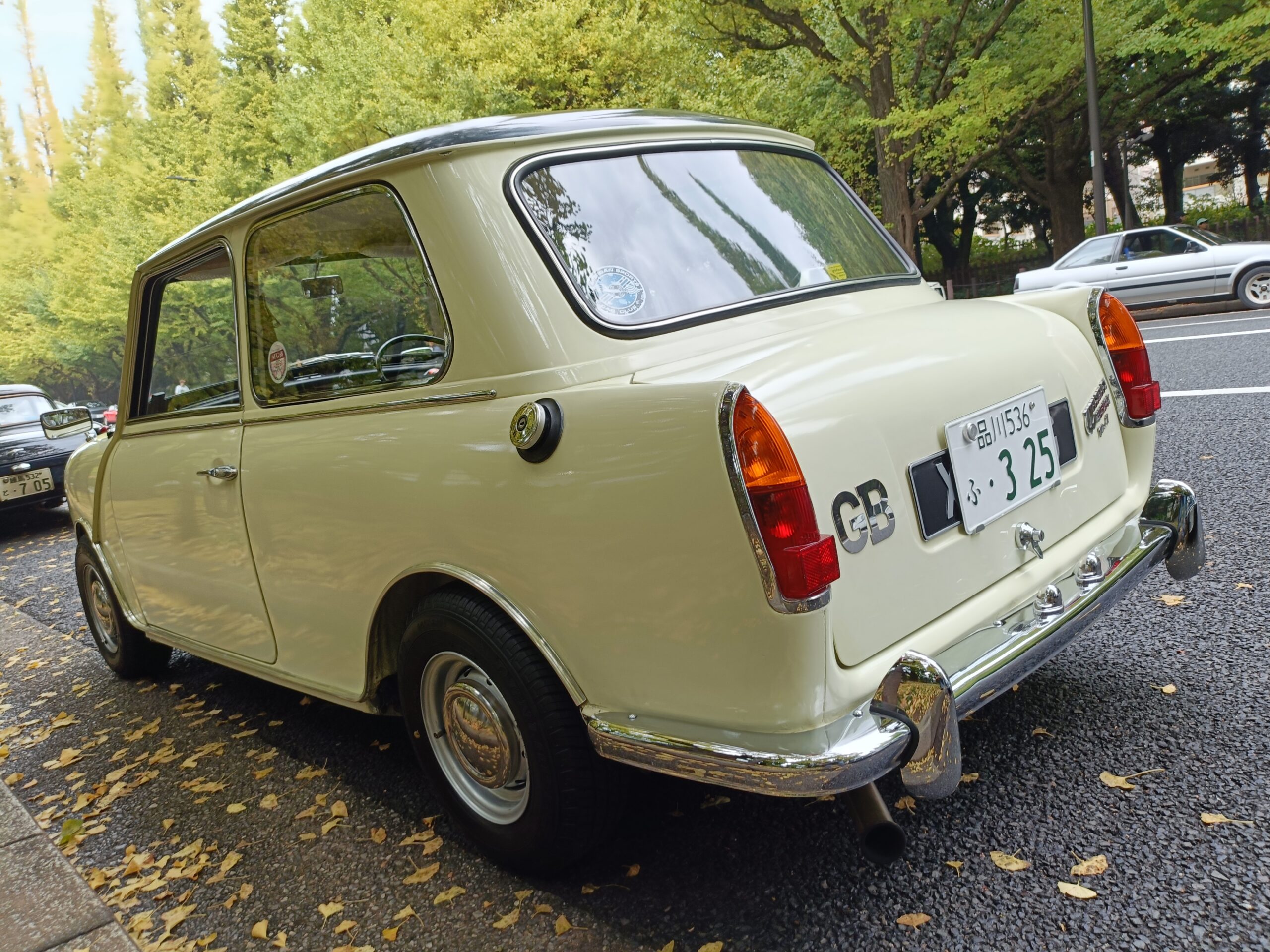
The biggest novelty was the stick-out boot, complete with obligatory finlets on either side. All this added a pithy 0.5 cubic feet in capacity to the cargo area, but it was somewhat illusory anyway: the standard Mini’s bottom-hinged boot meant it was capable of carrying fairly large items in the back, which could not be done with the Wolseley / Riley versions.
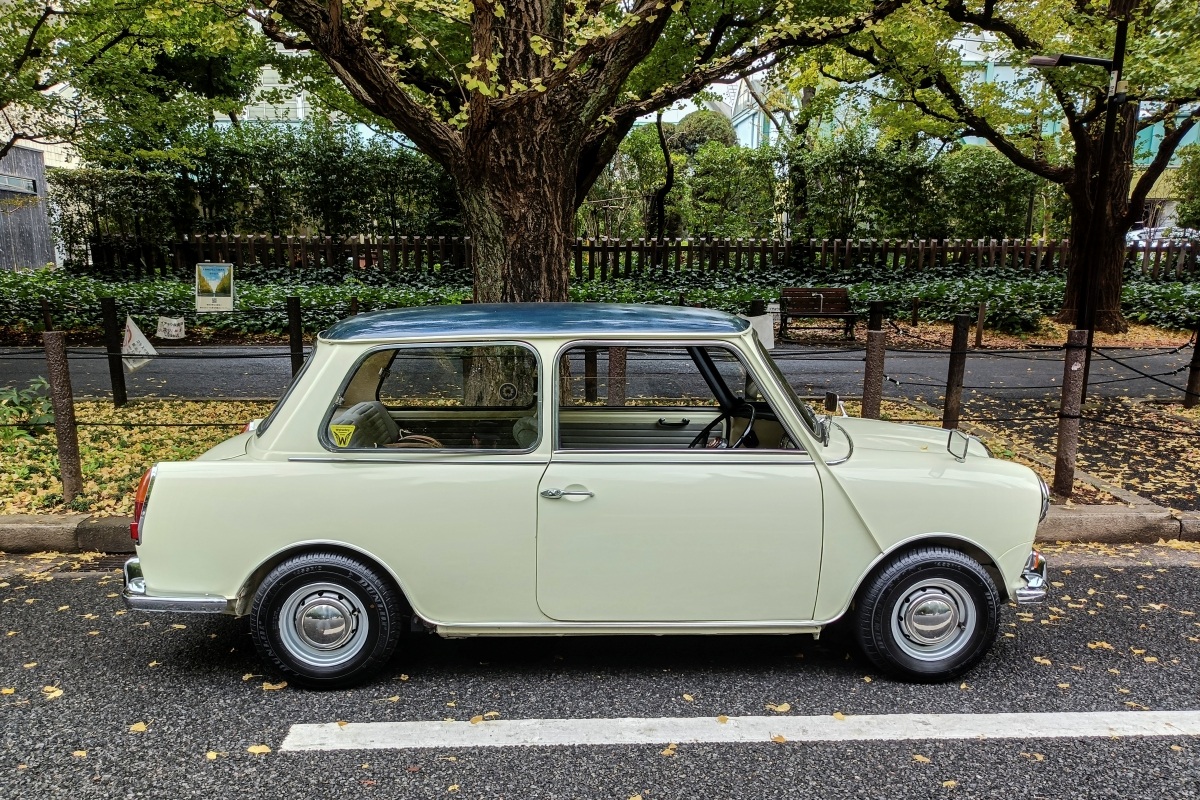
And let’s not sugar-coat it, that pointy stuck-on butt was an esthetic disaster. The Mini was designed by Issigonis to have a wheel in each corner and it looked perfect that way. With the extra rear overhang, the balance was completely off. Still, this was the brief that Dick Burzi, BMC designer in charge of the Riley / Wolseley marques, was given by the C-suite.
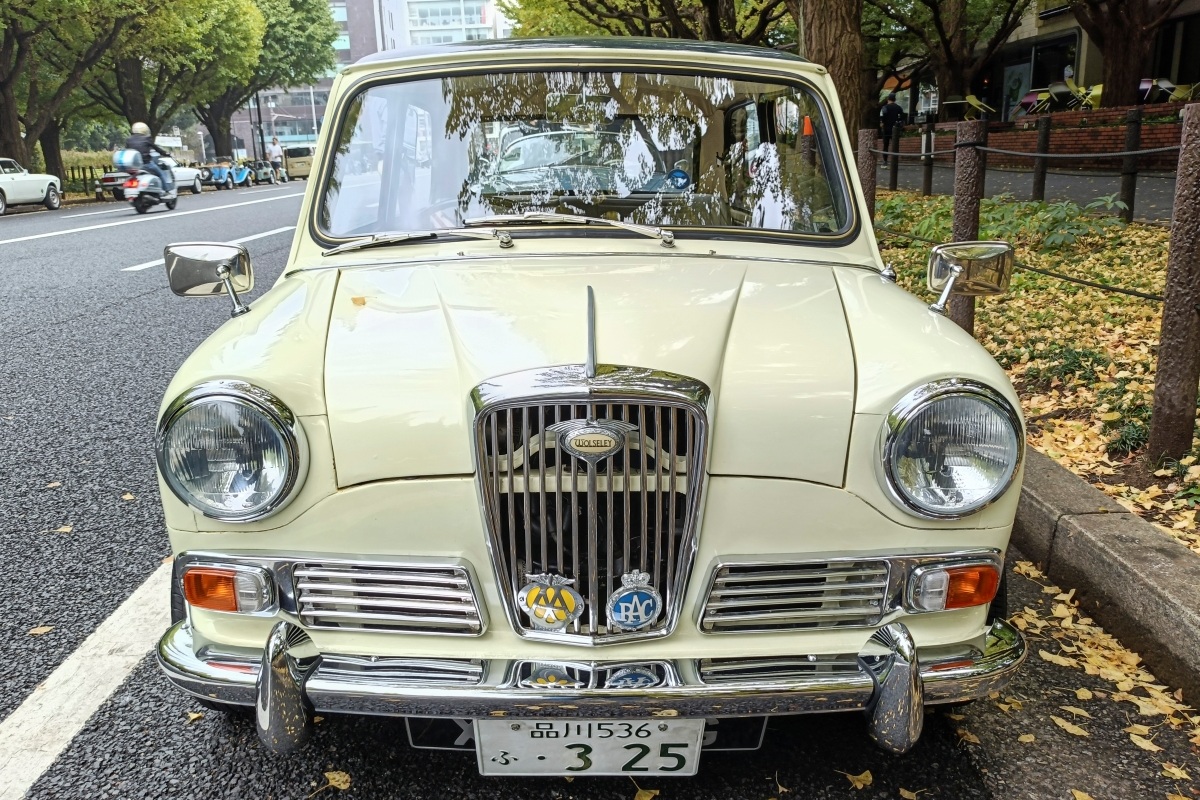
Wolseley reached into their long corporate history to unearth the Hornet name, which had last been seen in the mid-‘30s on a line of small but sporty 6-cyl. cars. Riley did the same. The initial cars had the same 34hp 850cc engine used in the standard Mini; by 1963, the Hornet and the Elf gained access to the 1-litre motor seen in the Cooper, albeit cooled down to 38hp. Bumper overriders were also added to the mix and the infamous BMC automatic transmission was on the options list. Those were designated as the MkII (1963-66).
I found the prices for 1963, so let’s take a gander at those to get an idea of how the Mini and its clones were situated. An Austin or Morris Mini with the 850cc engine cost £492.19.2, purchase tax included. By comparison, the 1-litre Wolseley Hornet was £556.7.11 and the Riley was a little more than that at £574.10.5 – of course, the 1.1 litre 70hp Cooper S was £695.7.1, but those were pretty much bona fide sports cars meant for the road, not chic suburban runabouts.
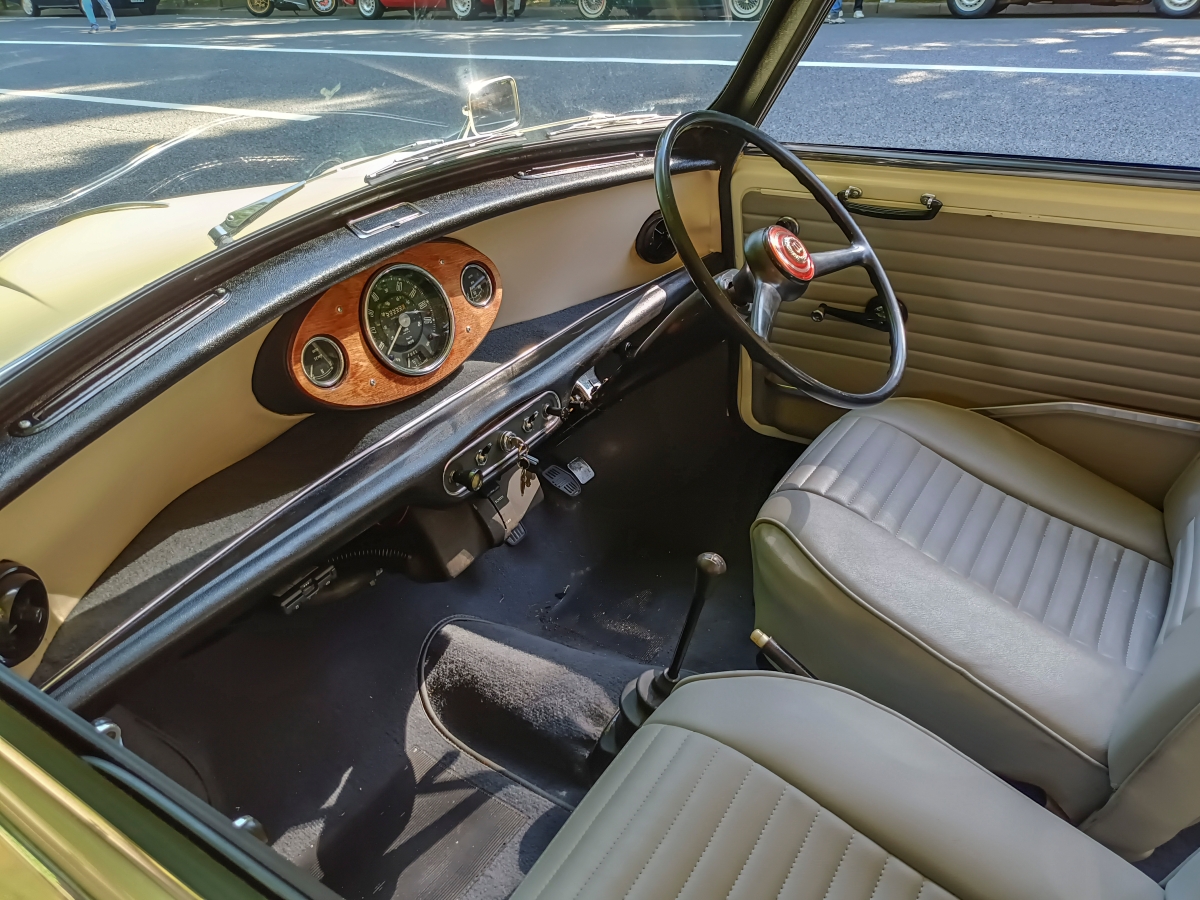
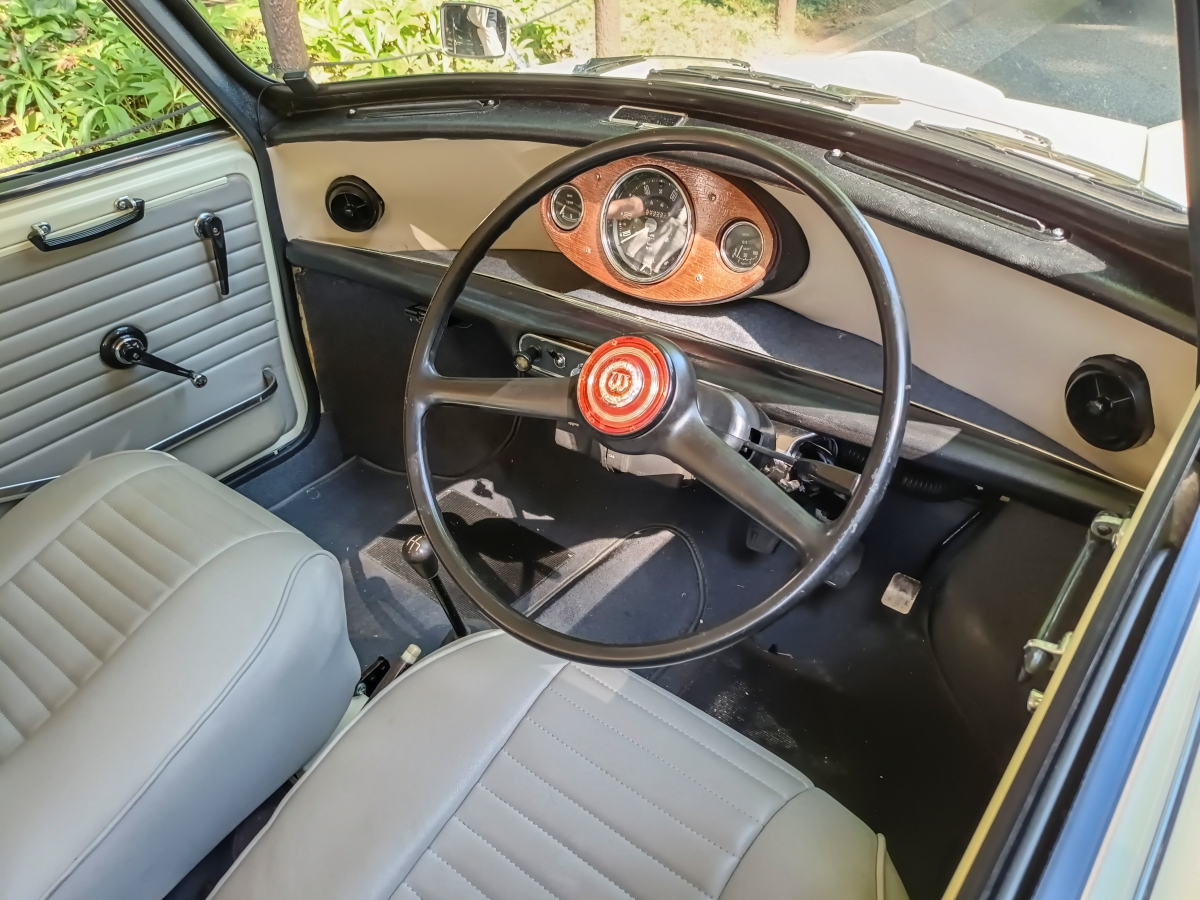
For that extra dosh, the Hornet provided a nice enough interior with real leather seats. The extra £20 commanded by the Riley was apparently due to its full-length wooden dash; the Wolseley made do with the Mini’s central binnacle, albeit with a little tree bark on top.
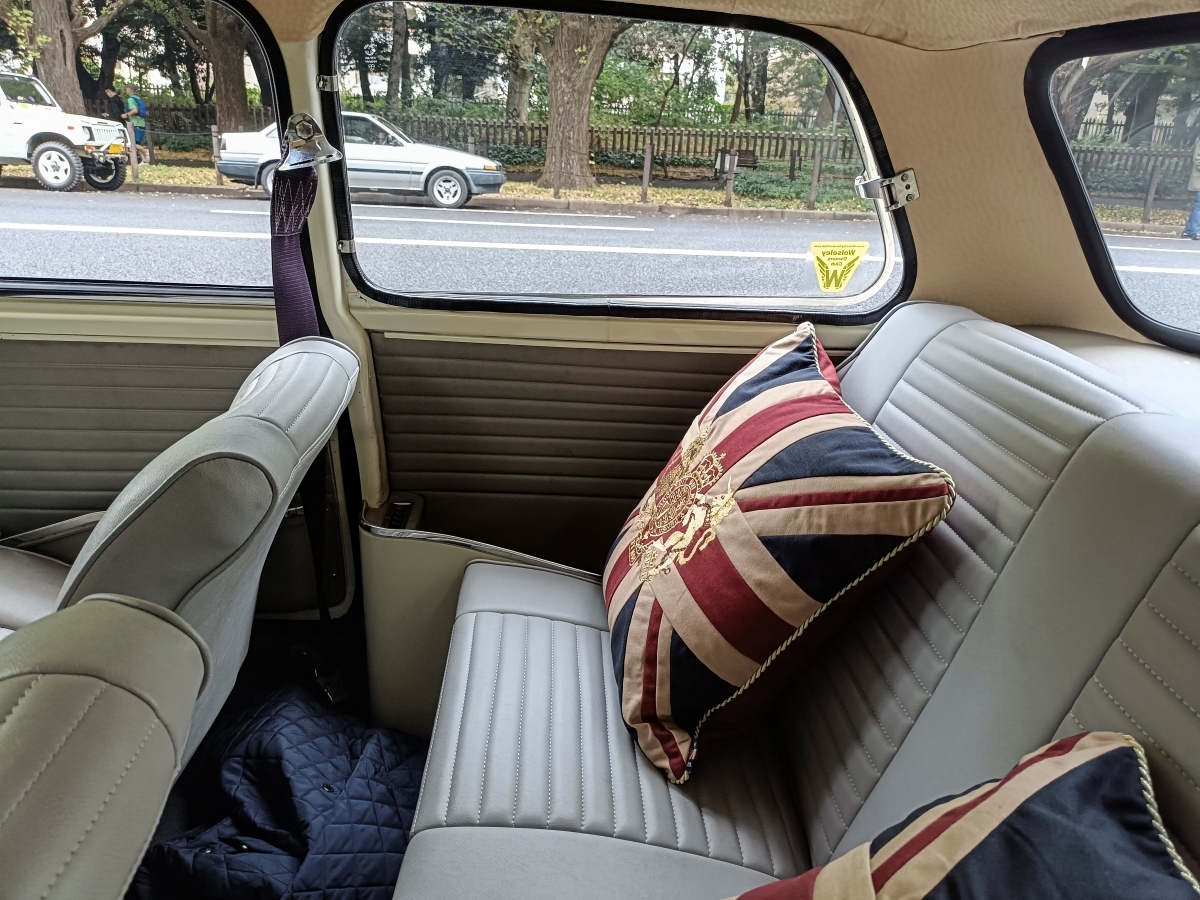
The people who were really in the know – like pop stars, lesser royals, cabinet ministers’ mistresses – would get Harold Radford to add a bunch of bling to a Mini Cooper base. Those were well over £1000, depending on the customer’s wishes. Thanks to those Union Jack throw pillows though, this more modest Hornet manages to be a contender in this race for bragging rights. Well done there.
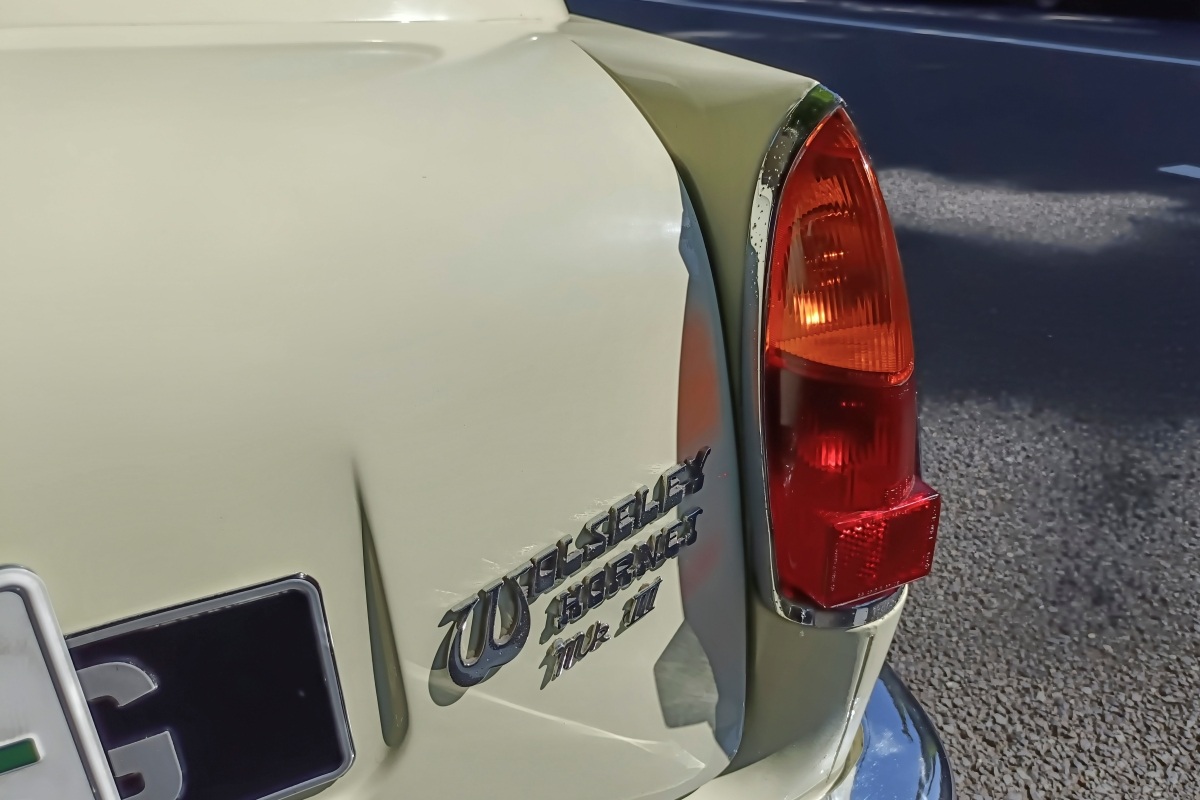
The Hornet Mk III arrived in late 1966 with a host of new improvements, many of which would only be extended to the basic Mini only years later.
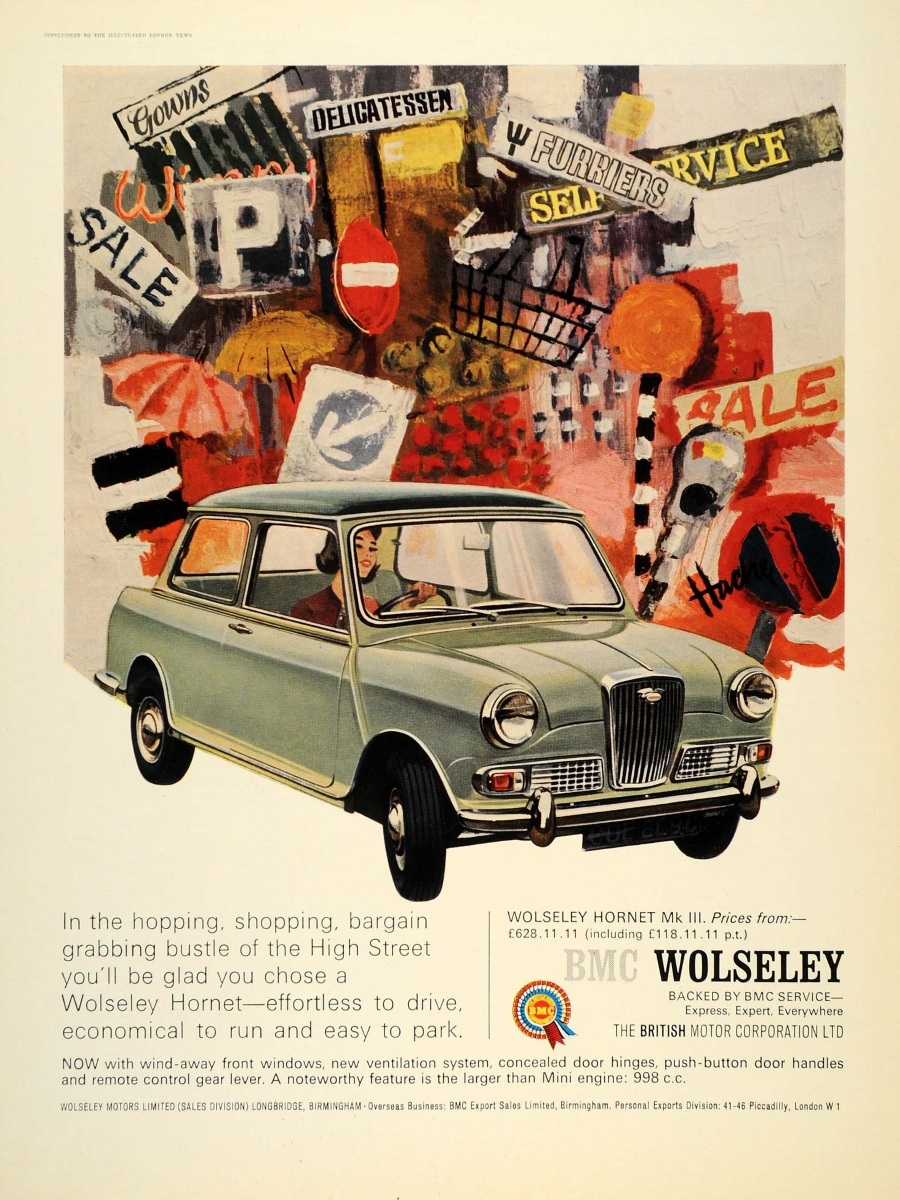
These included, as summarized in the advert above, front windows that could fully wind down, concealed door hinges and a better HVAC setup. Our feature car being a G-reg (mid-1968 – mid-1969), it also has a late addition in the form of a fully-synchronized 4-speed transmission.
Alas, this was the end of the road for the big-booty Mini. In the autumn of 1969, BMC (now a central part of the living nightmare called British Leyland) elected to quit production – the Riley marque was being retired outright at the same time. Wolseley kept their grille badges’ lights on for a half decade longer, but it too was eventually deemed surplus to requirements. (unlike VandenPlas, for some unfathomable reason).
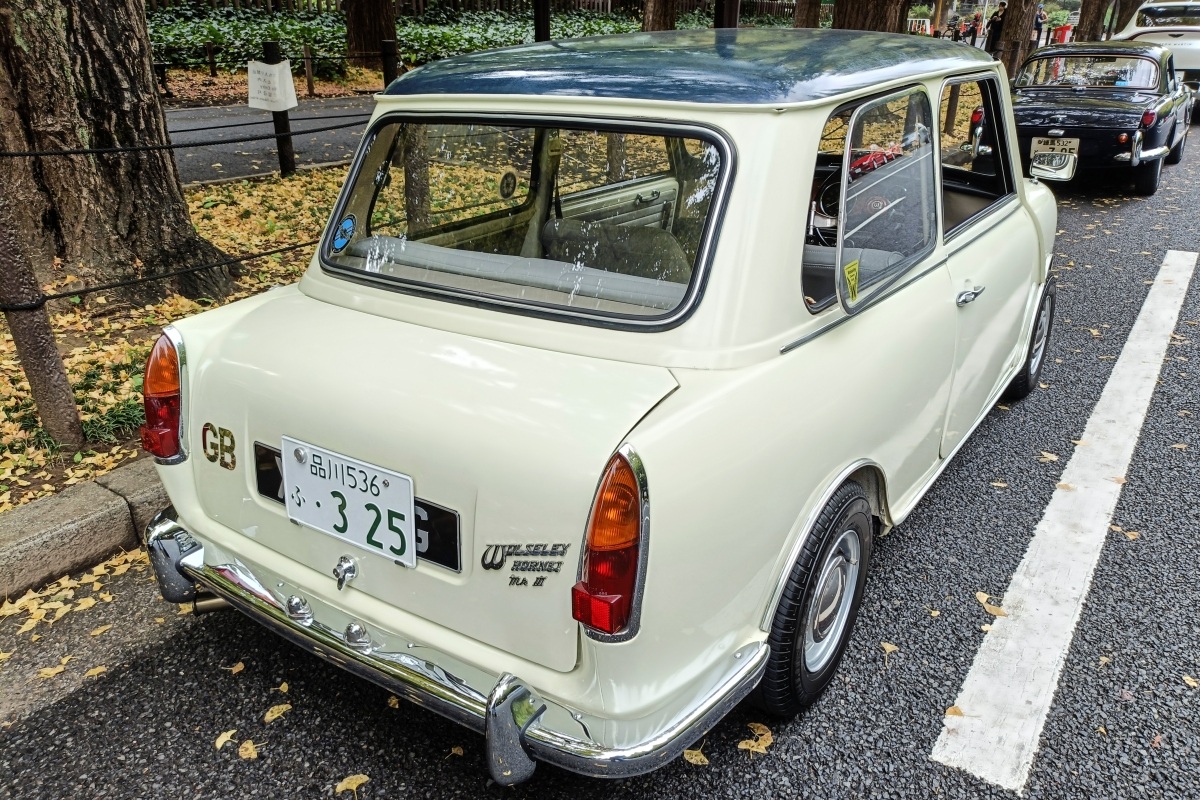
Why did they do away with the Hornet? Well, it’s not as if these were all that popular. Between 1961 and 1969, BMC made 28,455 of these tarted-up Minis (Riley did a little better at just over 30k). And the MkIII (1966-69) only accounted for 8500 sales.
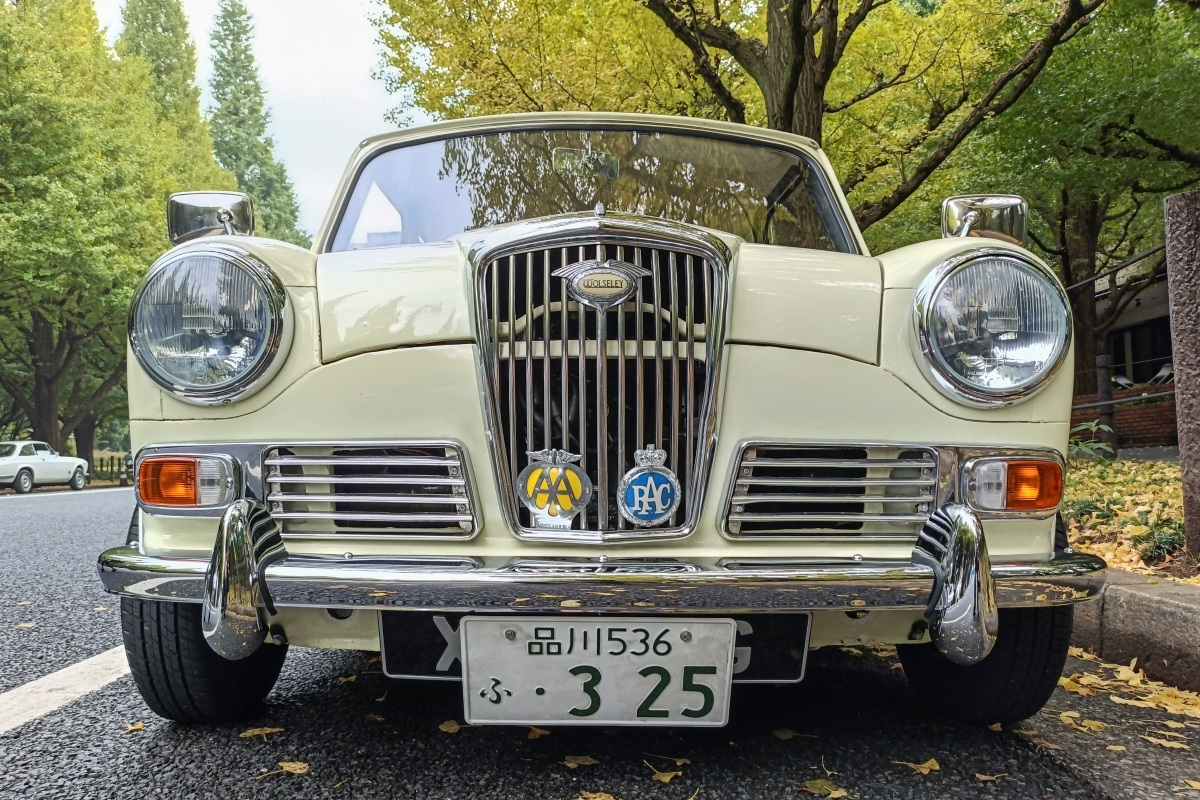
The Hornet’s market performance was dismal, really. It turned out that snobbish affectations like a big chrome nose and tacked-on fins did not mesh with the Mini’s image in the slightest. They wanted more all right, but not more of that. BL got the message and just made the iconic car a stand-alone model, deleting all the legacy marques from its grille, at least on the domestic market. And it still sold like the Dickens, both at home and abroad, and across the social spectrum. Buy wisely, not Wolseley.







These are so cute, so ridiculous, so lovely. I think they (Riley and Wolseley) are much better and interesting looking than the regular Mini. I’d love so much to see one in person!
I don’t find the styling that bad; badge (and grille) engineering at the front of BMC cars was taken for granted in those days, and I don’t think the tacked on rear end is any worse than the first generation Jetta, which took about 20 years for me to get used to.