
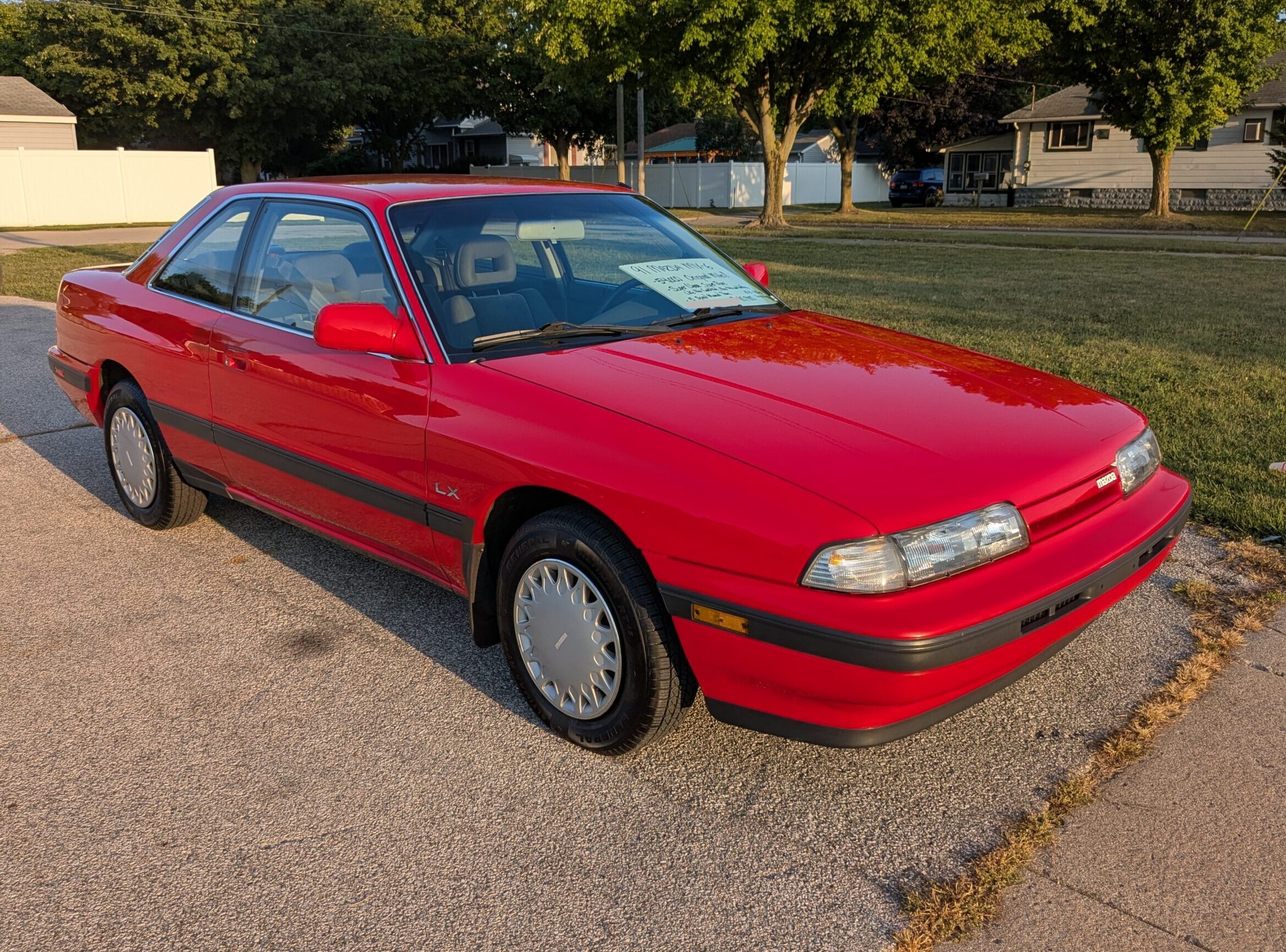
If you’re at all a student of Ford Motor Company’s long history, you probably know that the Fox-Body Mustang came within a whisker of being replaced by the sport coupe that eventually became the Ford Probe. And if you know that, you probably know that the Probe was based on a Mazda platform, making it mechanically the same car as this 1991 Mazda MX-6 LX, which I recently saw for sale on the side of a busy road. Being roughly the same size and a little more powerful than the 2300-powered Mustang 2-door sedan, aka “notchback”, this MX-6 (or something like it) could have very easily slotted into the “cheap wheels” post once occupied by that car, and that may not have been a bad thing.
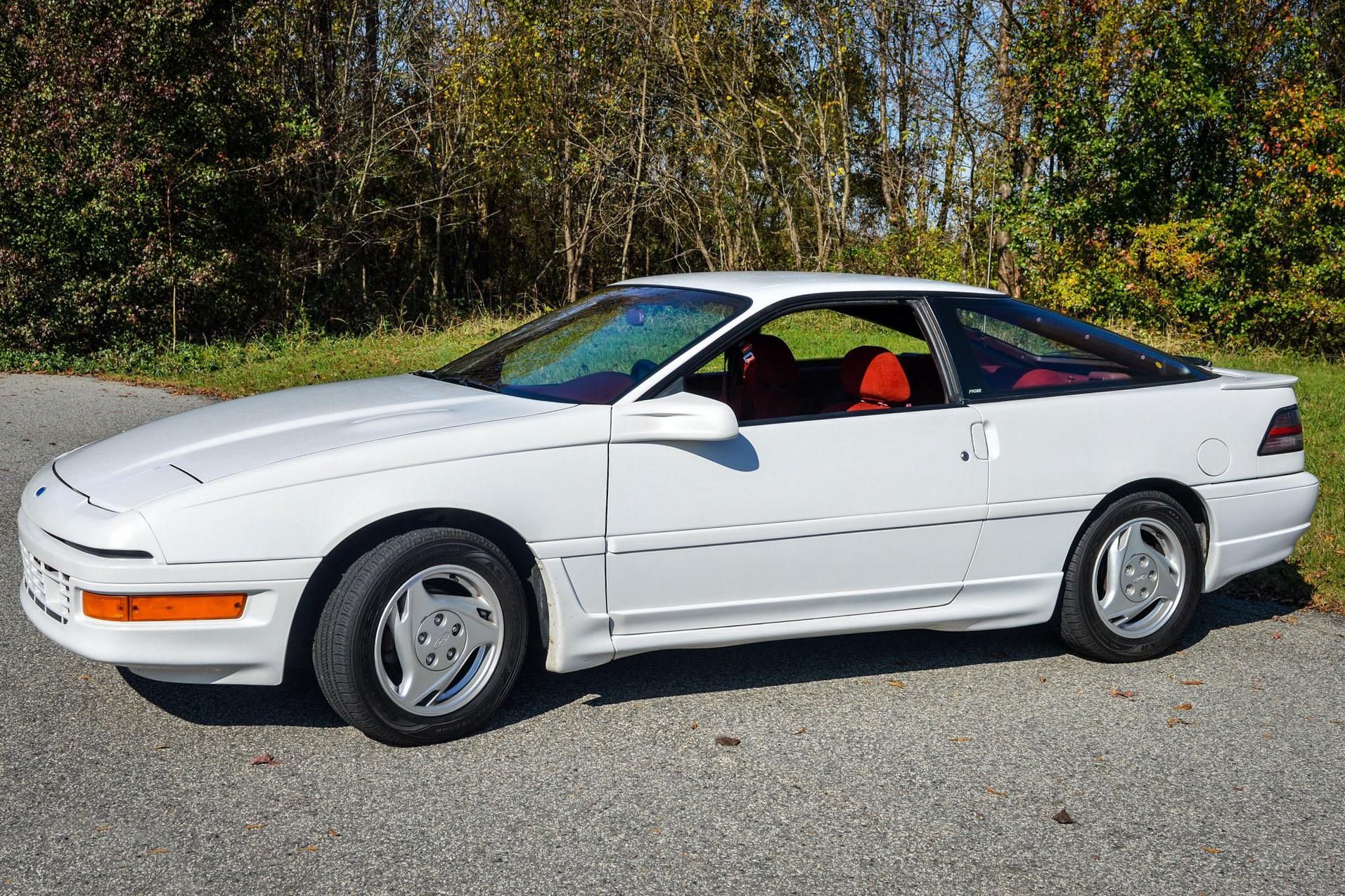
Of course, that didn’t happen. An angry horde of V8 Mustang enthusiasts gave the old Fox Body a reprieve and sent the rear-wheel-drive Mustang on a trajectory that continues today, and that has probably saved it in the long run (at least for now). In the 1990s, however, there was a market for both an old-school muscle car and a somewhat more refined front-drive sporty coupe, so the Probe, as the Mustang replacement became, actually sold reasonably well for a time. It looked good and had almost Mustang-like performance with its optional turbocharged 145-horsepower four. Period road tests showed that the GT was capable of zero-to-sixty times in the high-sixes and low-sevens, which was nipping at the Mustang’s heels, and the quarter-mile could be dispatched in the low 15-second range.
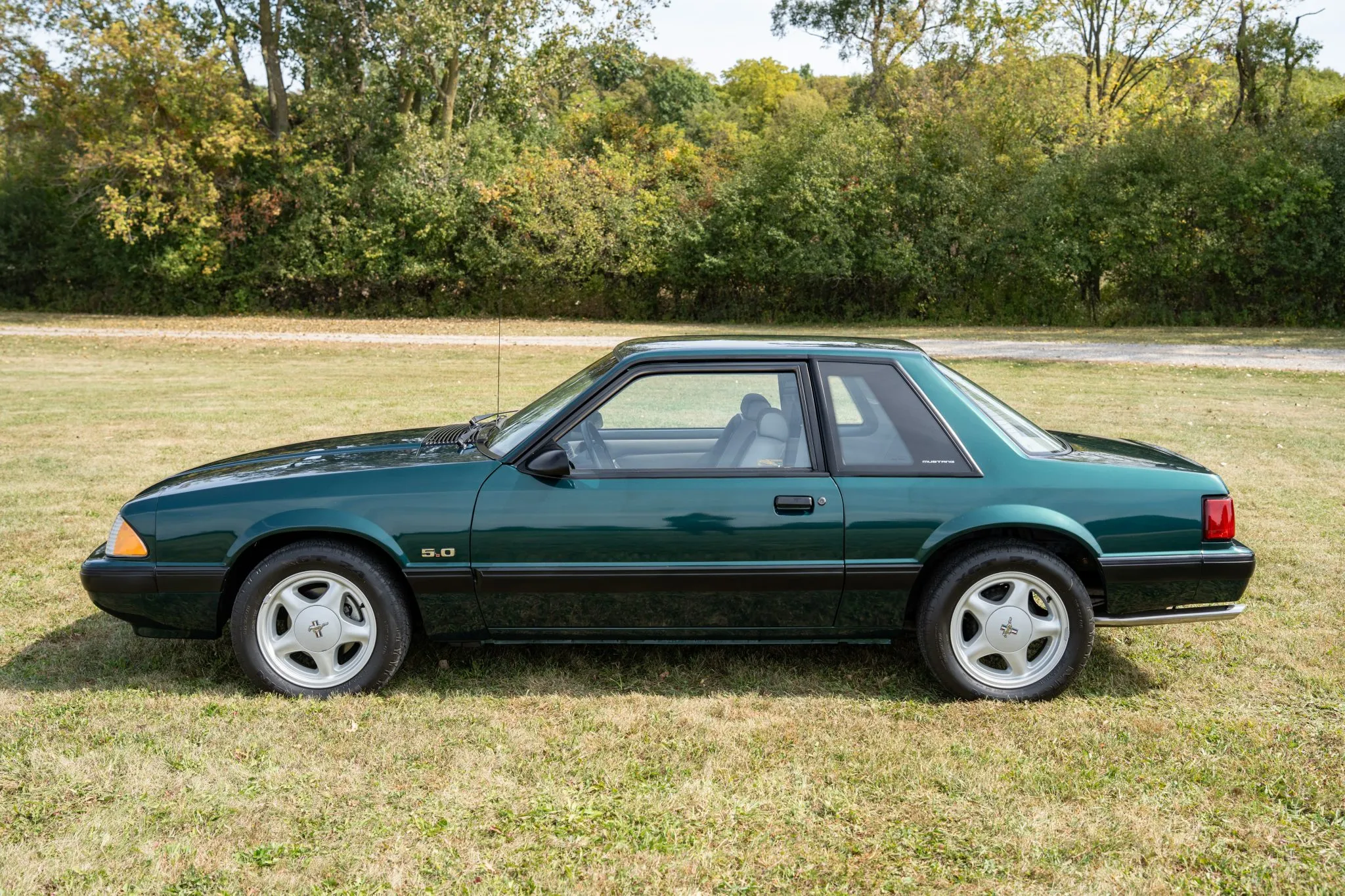
While the journalists’ attention was heaped on the Probe GT, a lot of basic Probes with the standard four-cylinder engine were sold, just as a lot of basic 2300-powered Mustang 2-door sedans found homes in rental fleets and with those who wanted a cheap, fun car. The notch didn’t have all the flash of its GT cousin, but it looked like a Mustang, and it could even be powered by Ford’s famous 5.0 High Output V8 for less money than the GT. This low-mileage example of a car so equipped sold on Bring a Trailer in 2025 for a shocking $64,500; it’s doubtful a Probe will ever sell for that kind of money, showing that Ford probably made the right decision in splitting the two lines.
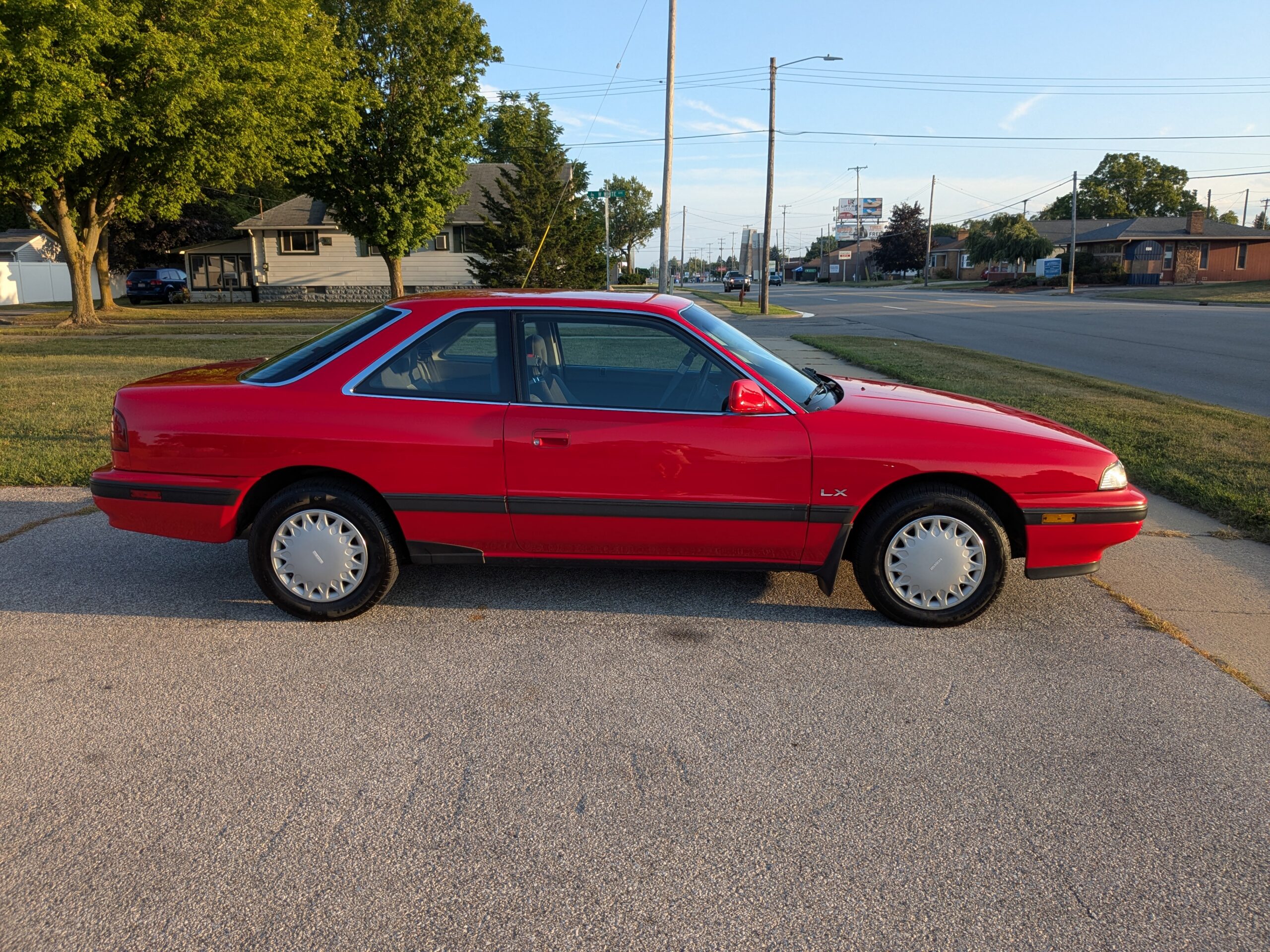
But what if they didn’t? Something akin to this virtually pristine MX-6 might have become the bread-and-butter Mustang; after all, it’s almost identical in size, with wheelbase and overall length measuring within inches of the rear-wheel-drive Mustang (with both coming in at under 180 inches in length, it makes one wonder why modern pony cars are so big). Its shape is nowhere near as dramatic as the Probe’s, which those at Mazda called “the pretty one,” but then again, nobody could call a notchback Fox Mustang pretty without exposing their bias. The Probe and MX-6 were even built in Michigan (most of them, anyway), at the Flat Rock plant that now builds, worlds colliding, the current Mustang.
Yes, the MX-6 might have made for a perfectly acceptable cheap Mustang.
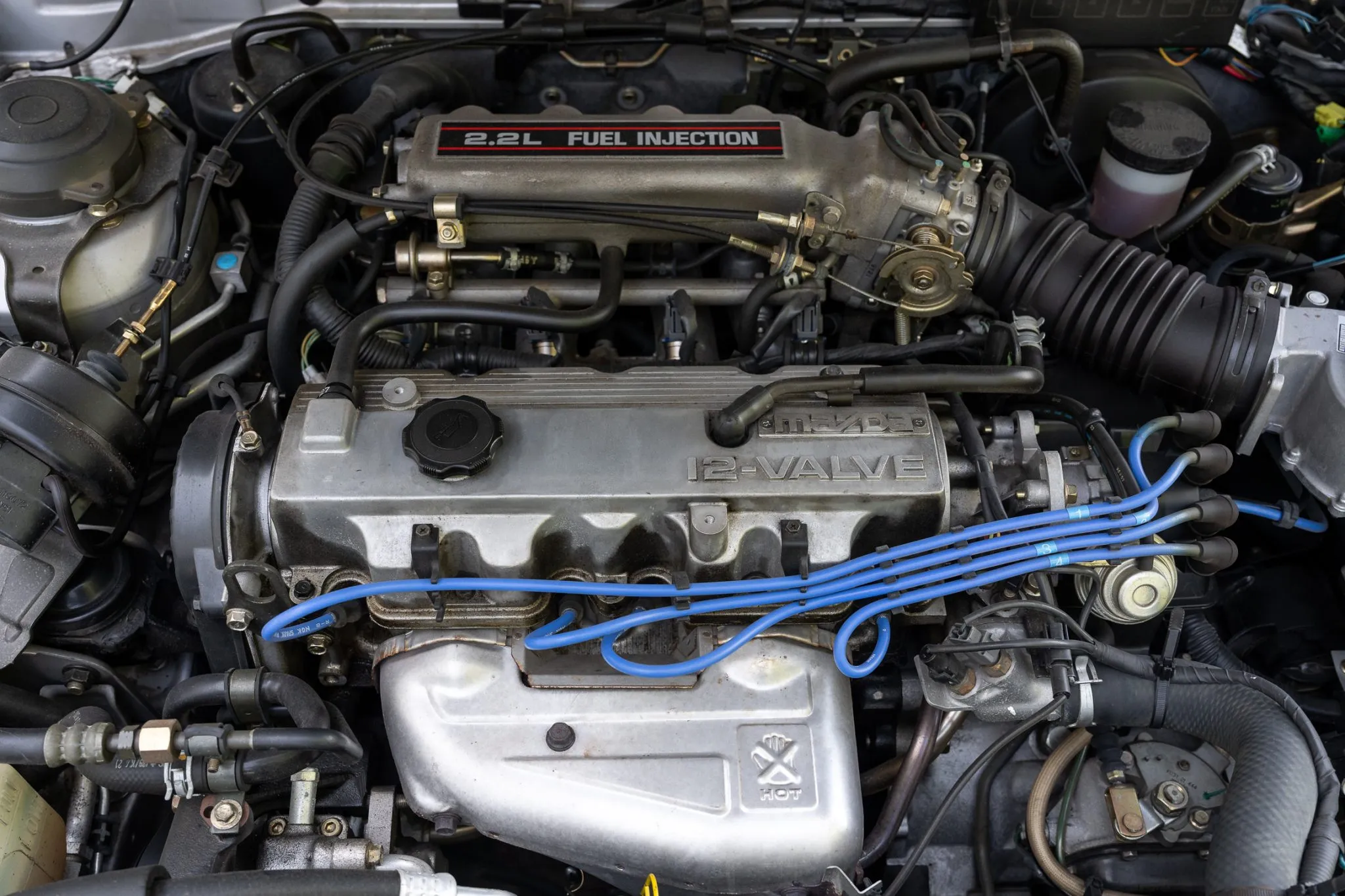
The 2.2-liter 12-valve four was certainly an upgrade over the old 2300, with a five-horsepower advantage at 110 (the 2300 got a twin-plug head and a 17-horsepower bump in 1991). I do have experience with this engine; my sister drove a Probe LX back in the 1990s, and even with an automatic transmission, it felt far zippier than its 110-horsepower rating would suggest. I do not suggest replacing the alternator in a Probe/MX-6 in a 7-11 parking lot as I had to do on her car when I was 19 or 20. When one of the steps tell you to lower the exhaust system, you know you’re in for a long day, especially when the car is a half-hour from home. It was a good thing that I remembered to bring jack stands, because the alternator had to be extracted from underneath.
By the way, this engine shot is from a low-mileage 1990 MX-6 that sold on Bring a Trailer in 2025 for $10,750, just a little less than the $10,900 that the owner of the featured red MX-6 is asking for their 54,000-mile five-speed car.
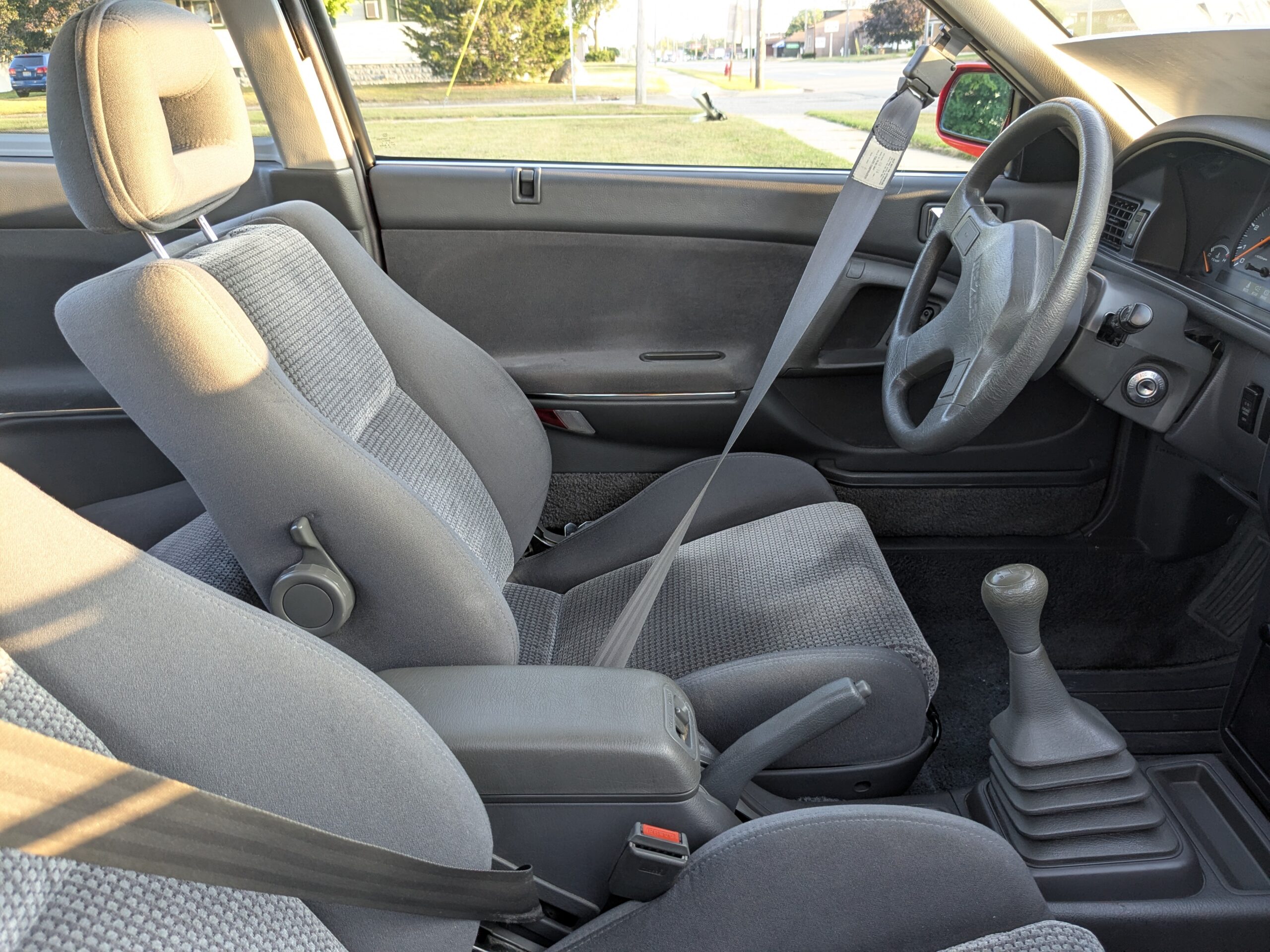
Not that it looks as if it has 54,000 miles; the interior is so new I can almost smell it (and I assume it smells a lot like my sister’s 1989 Probe, being built at the same plant out of similar materials). It’s undoubtedly fun to drive with a five-speed, making it an even better choice than a 2300-powered Mustang; having ridden in several of those back in the day, I can attest that they were both rough and slow.
Fuel mileage was similar, although the Mazda beat out the Mustang in that category by a fair bit—the Mustang with a manual was rated at 19 city/28 highway, while the MX-6 earned numbers of 24 city/31 highway.
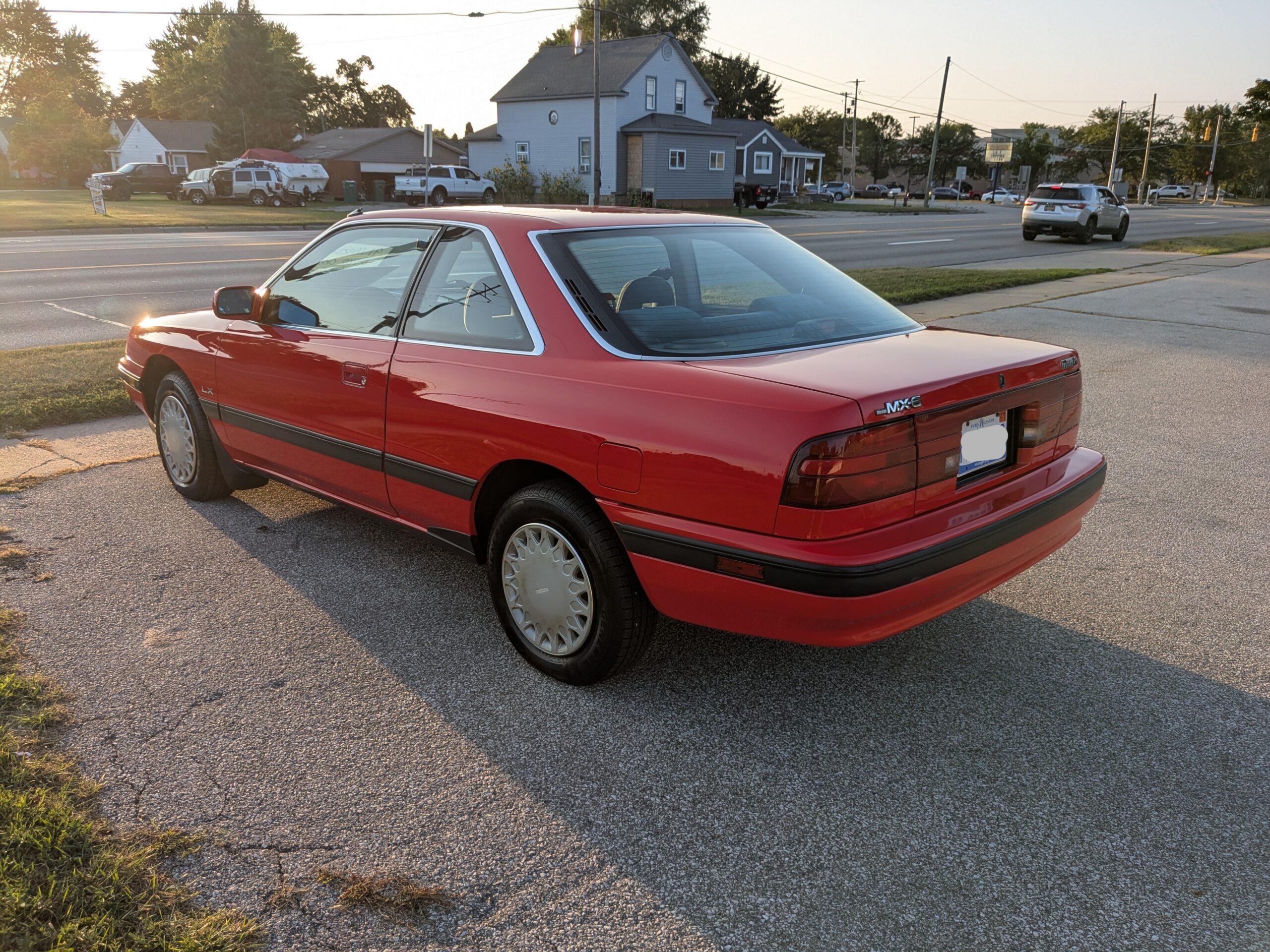
What might have hurt the MX-6 as a Mustang, however, was its cost. A basic Mustang coupe started at $10,215, the Probe GL Hatchback at $11,743, and the MX-6 DX at $12,625. Our LX began at $14,395, which was about a thousand more than a no-option coupe with the world-beating 5.0 HO and a T5 five-speed. The MX-6 was a nice car, but baseline Mustang shoppers probably would have balked at the extra $2,410 it would have taken to drive even a DX home in 1991.
But hold on. What did production numbers look like? It might come as no surprise that the Mustang outsold both the Probe and the MX-6, but the numbers are a little misleading. Ford moved 98,737 Mustangs and 73,200 Probes in 1991, while Mazda only sold 25,687 MX-6s; however, Mustang notchback sales made up just 19,447 of the total. It was even less popular than the far-more-expensive convertible. And of course, Ford dealers greatly outnumbered Mazda dealers, so it’s quite possible that the Mustang/MX-6 would have been a reasonable success.
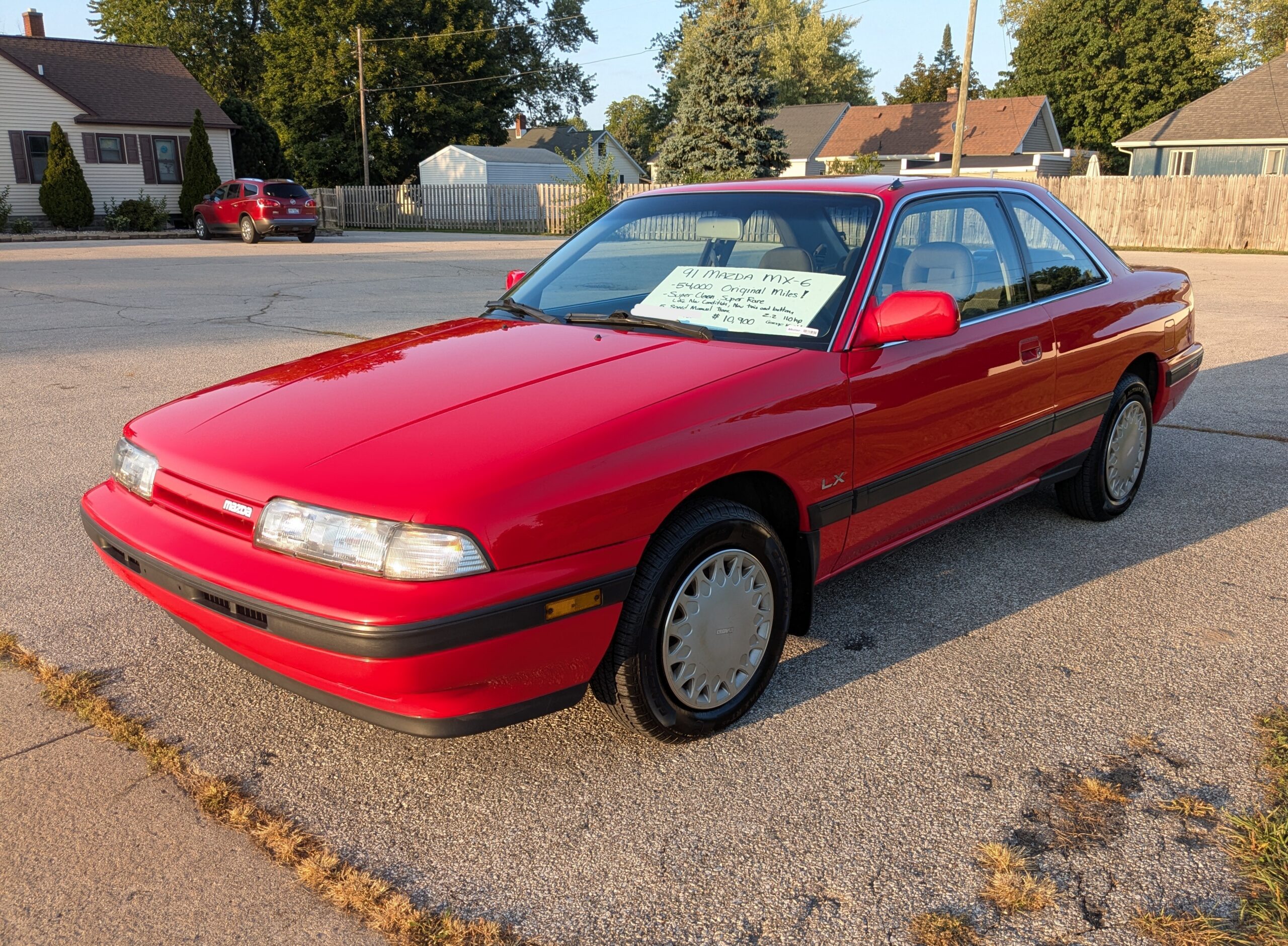
But let’s face it, we’re all glad that things didn’t shake out that way. The way things did shake out is that sporty coupes mostly died out after the 1990s and the Mustang became a niche product that is still well-loved today, even though the hallowed ground it sits on is a little less firm these days. The Probe and the MX-6 on the other hand are footnotes in Ford Motor Company history, but they were good-looking cars that were pretty solid, and this red ’91 is magnificent. I was happy to see that it still exists…but it’s not a Mustang.
Related Reading
Vintage Road Tests: Honda CRX Si, Mazda MX-6 (by Yohai71)
Curbside Classic: 1989-92 Ford Probe – Protecting A Legacy (by William Stopford)























Very interesting topic!
Not only was the MX-6 more expensive that the Mustang, the same applied to the Probe, with base models price quite higher than 2.3 Mustangs; if I recall correctly, the turbocharged Probe was around Mustang GT prices, perhaps something more. The LX was simply unbeatable price wise.
There is no doubt that the Probe was a very competent car, with performance, nice interiors and solid construction, and I am very sad that no accessible, fun coupes of the ’80s and ’90s survived, but as you say: it was not a Mustang, and I am certain that an FWD Mustang would also not have survived into the 2000’s.
And while the Fox and SN95 Mustangs were rather crude, they kept the flame alive and allowed Ford to invest more in their successors.
So i do feel that the fans who swamped Ford with angry letters at the time were correct: FWD Mustang was a heresy and the world is a better place thanks to those who listened
It is a little hard to remember this period of Mazda. “What will I be when I grow up” is the phrase that described Mazda in my mind. They were coming out of their rotary phase and trying luxury sedans (929) and sports cars (MX-5) in addition to family sedans. This car (and the earlier 626) always struck me as a car for someone who wanted a Honda Accord but did not want to pay the Honda full-sticker premium. That said, I always found these attractive, if part of the Japanese 2nd tier (which also included Mitsubishi and Subaru).
As it worked out, I think the 5-door liftback in the 626 line might’ve made a better companion to the liftback coupe in the Probe line. It would’ve filled a model gap in the Ford line for a 4-door car more sophisticated than the Tempo and more compact than the Taurus.
Taking the liftback rather than the 4-door sedan would’ve made it somewhat niche, yes, but that would’ve both minimized the damage to Tempo and Taurus sales (it would seek “conquest” ones and people upgrading from an Escort), and kept the Mazda sales organization from feeling like they were being stripped for parts.
One of the most important stays of execution in all of automotivedom.
Those Mazdas are very rare now the Probe like wise mate of mine had a Mazda MX 6 was a nice car until the transmission failed
That’s a nice looking car. Most everything in the Mazda line back then was a simple but nice looking vehicle. That’s not something I can of today’s Mazda line.
Elsewhere, this chassis was sold as a Ford Telstar, albeit in sedan or 5-door hatch guises, and the hatch (and MX-6) could be had as a turbo. I cannot now recall whether it was a hatch or Mazda Mx-6 that I drove approximately 2000 years ago (or so), but I do vividly recall it was a turbo, and that it did not have steering. Well, it did, but one lost meaningful involvement with the car’s direction if one accelerated with intent in the lower gears.
The torque steer was just shocking. Going hard at it, the wheel would go stiff to the point of having to be wrenched, and it liked far left and far right upon every weave of the road or cough of the accelerator. It was rubbish, and a pity, as the atmo 626 or Fords were very nice vehicles.
Yeah, the torque steer on the turbo models was much discussed in the States as well. The 2.2 turbo engine sold here was probably underrated in power (Car and Driver argued that for it to achieve the acceleration times it did, it would need to have more like 190 net horsepower, not 145), but the combination of boost lag and torque steer was, uh, lively!
I work in Mazda dealership in the 90’s. MX -6 now hard to find a nice one to come by, would love to buy the red one.
Ok, the MX-6 is basically a 2 dr. 626 when you get under the skin changes. One boxier and one sleeker. That is pretty much it. I, myself, check Northern California for any 88-92 Mazda in the 626 or MX-6 along with the Probe. Talk about rare as hen’s teeth when it comes to the Probe and even more so the MX-6. Currently I ran across a manual 91 626 hatch, like mine, and a debating if I should get it for a second one. I am sort of a ghost whisperer for the 88-92 Gen although this car would make it 12 in the fleet. I drove my 626 all day Wednesday and still marvel, when driving it, how nice it is to drive.
Nice car. Problem was, there were so many nice cars competing.
We leased a car just like this only it was a higher trim level. Paul (FIL) let us take over his Sable wagon in 89 when we found we were expecting, and he leased the Mazda.
For the couple of road trips we took in it (without our son) it was a pleasant car. And it never needed anything for the full 3 years.
Great memory!
“it makes one wonder why modern pony cars are so big” Isn’t the current larger size necessary to meet all the various crash standards?