

In the world of light trucks, it’s well known that Dodge has always played distant third fiddle in sales. Which doesn’t mean that their products are less deserving or less memorable. Indeed, bold looks were often part of the maker’s repertoire for decades. Of those, the wide-eyed Jet Age goggle-headlight look of the 1965-1967 D-Series models is among the most unforgettable ones. Characterful and striking, the single headlight D-series of that brief period causes an indelible impression; as easy to tell from a distance as a billboard. Perfect branding.
Notice I mentioned Jet Age, which may sound slightly odd when talking about an old workhorse. But Jet Age it was, since the general theme of the D-Series face shared a great deal with that Chrysler dreamboat, the 1963 Turbine car. A look that had become a “Dodge face” by the mid 1960s. However, let’s not get ahead of ourselves; those Jet Age genes aren’t as straightforward as they seem at first.

Memory is a tricky thing. Ever since I became aware of these Dodge trucks from the 1960s, my mind immediately jumped to the 1963 Chrysler Turbine cars. Which was odd, particularly because my mind also wandered to other memories that I couldn’t quite place. But what were they?
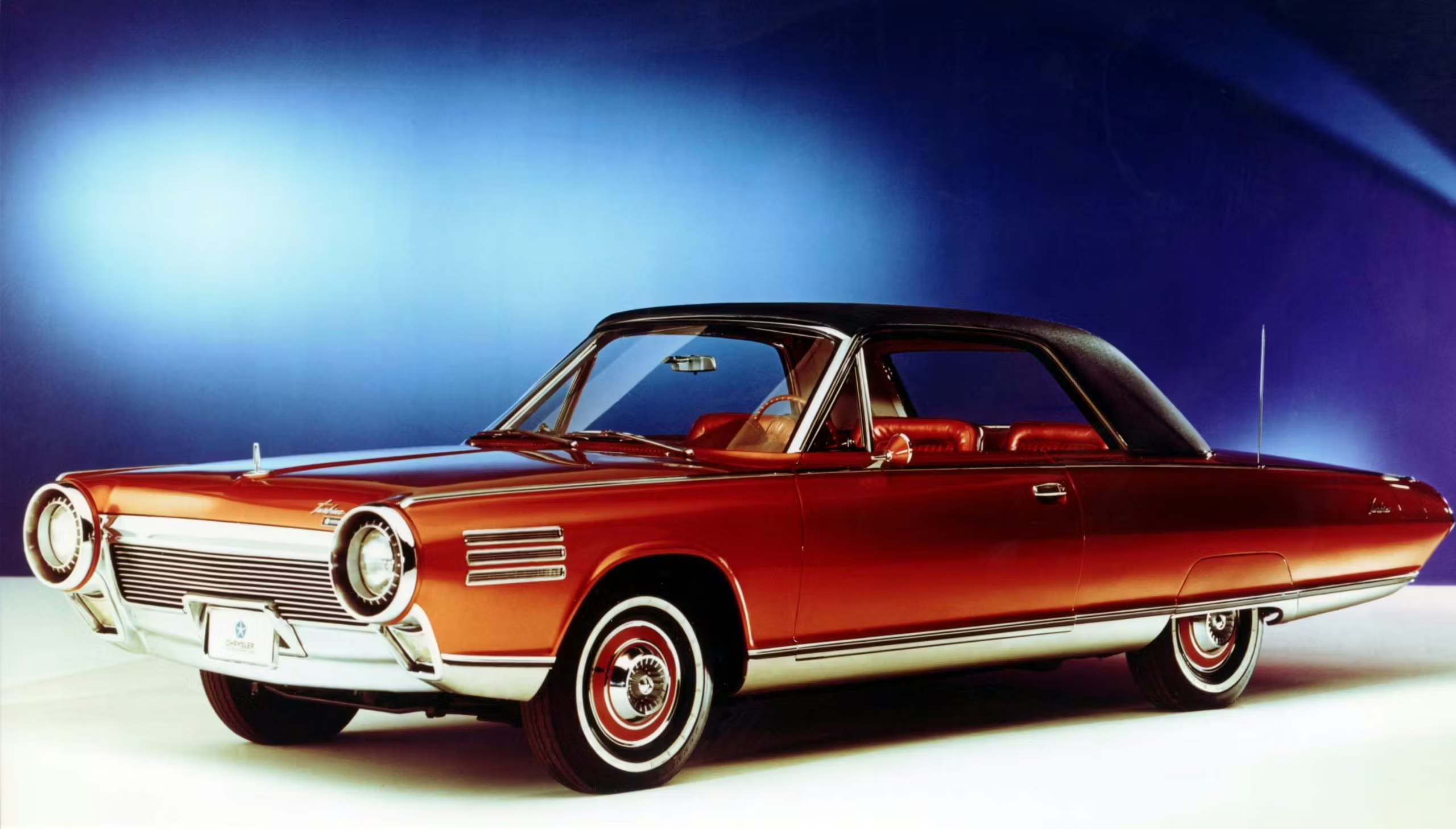
I’ll say it openly, this being about styling themes and cues, it won’t be a clean story to tell. As with many such neat-looking ideas, picking up how it came about from who, what, when and to whom is basically impossible to track. Not that we ain’t going to jump into this rabbit hole…
So rather than start from the beginning, let’s start from the first reference that comes to my mind, the 1963 Chrysler Turbine car. Clearly, the Turbine’s wide-rimmed chromey headlights and slender grille with thin horizontal bars are echoed in the 1965-1967 single D-Series headlight looks.
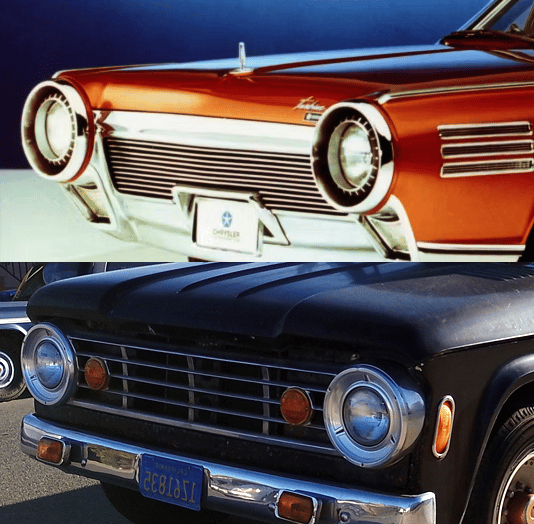
Yes, father, I remember you…
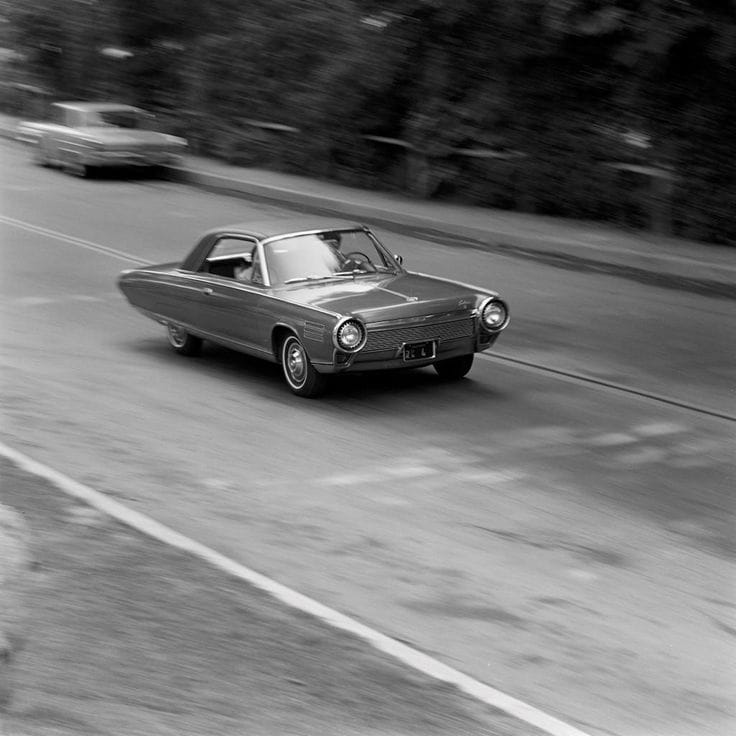
I’d like to think that this vehicle needs no introduction; it’s a well covered and well known concept, born in the days when the automotive future was thought to be turbine. All part of a wave from the heady, optimistic dreams that came from the 1950s Jet Age –If turbines had done wonders for planes, think of what they could do for cars!
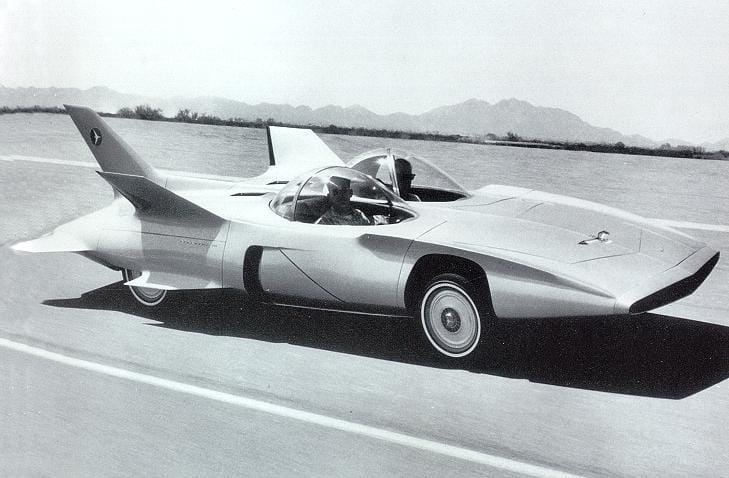
Admittedly, cross-pollination between airplanes and cars had been a constant since their relatively mutual dawn, and Chrysler had been toying with turbines for a while, way before the 1963 car came to be. But in line with postwar optimism, several carmakers jumped into the turbine dream and turbine-charged the idea, with the Big 3 investing heavily. The race was on.
And while GM played with out-of-this-world Firebird extravaganzas in the 1950s (above, the Firebird III), Chrysler’s turbine cars were generally closer to earth.

Indeed, to leapfrog the other Big 2 (i.e. GM, Ford), Chrysler started a series of real life testing programs. In 1962, a well publicized coast-to-coast turbine evaluation took place, with the vehicles displayed in dealers across the US and Canada. Not long after, the Turbine Car User program was created. A daring approach where about 55 lucky recipients were to be loaned Turbine vehicles to be used as their daily drivers, free of charge, and to be returned after three months of use.
However, for this, the quirky market-challenged looks of the 1962 test mules would not do.
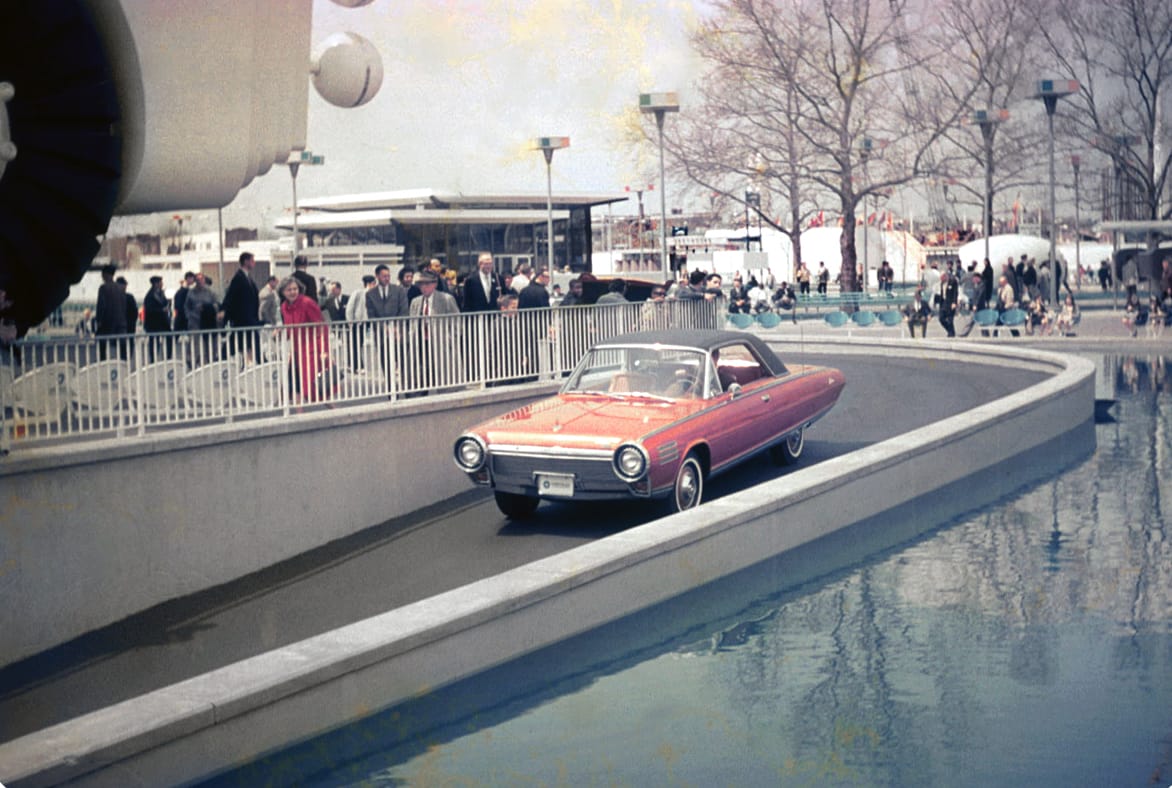
Instead, the 1963 Turbine was the first official job done under the direction of Chrysler’s new VP of Design, Elwood Engel, fresh(ly kicked out) from Ford. Along with the displays of the other Big 2, Chrysler’s Turbine was prominently displayed at the 1964 New York World’s Fair, with the User Program getting much PR. While other makers made noise about turbines, Chrysler was making it real! The Turbine Age was coming for the roads!
I guess it’s no wonder my mind jumps right away to the 1963 Chrysler Turbine as the D-Series influence.

However, let’s revisit that earlier Turbine/D-Series image. In close inspection, the D-Series’s headlights and grille arrangement are more barbell-like than the Turbine’s. Something else must had to be at play…

Of course! The barbell effect and goggly eyes are much closer to those found in the 1962 Plymouth and 1963 Dodge Dart, cars with settled styling by the time Engel arrived at Chrysler.
So, here’s where the story gets muddy.

As is well known, the original Jet Age dreamer at Chrysler was Virgil Exner, father of the Suddenly It’s 1960! finned wonders of 1957. By late 1961, however, his reign as the Pentastar’s tailor came to an end after his unsteady hand was blamed for the less than stellar looks of the 1961-1962 products. But as said, the 1962 Plymouth was already being prepped for production, while the 1963 Dart’s styling was locked in place by the time new VP of Design Engel arrived in November of ’61.

Not that it would be that unseemly for Engel to take something like the ’62-’63 Plymouth and Dart as a good starting point for his Turbine car. In styling, nothing is really new under the sun, and picking cues, shapes, and forms is all part of the game. The point is for all those disparate elements to feel like a cohesive whole in the end, while also managing to look fresh and appealing.
However, if someone is (un)famous as a reinterpreter or someone else’s themes, that is Engel. Among Detroit’s designers, he’s the one VP of Design whose career seems to be a long-running reinterpretation of about 4-6 styling themes. (For more of Engel’s styling remixes, look HERE).

But well, Engel knew how to do good remixes (DJ N-Gel in the house!), and knew what samples to take and from whom. All with enough of a spin to appear current and marketable. As such, it’s well known and very obvious that the 1963 Turbine borrowed lots from earlier Ford concepts done while he had worked there –and even looked a great deal like the 1961-1963 Thunderbird.
In any case, Engel got his (underlings’) hands busy with the model soon after arriving at Chrysler, with the Ghia-assembled Turbines presented to the public in May of 1963 –a mere seven months after the 1963 Dart had been launched (we’ll disregard the Plymouth, as it had tossed that concept for 1963). How much the general public noticed similarities between the two is hard to tell, being that they shared little other than their faces. I would think the Turbine’s arrival was likely beneficial for the Dart, showing that Dodge’s compact shared styling cues with Chrysler’s “face of the future.”

But before we call this a solved case, attributing the goggly-eyed barbell look to Exner’s hand, here’s a likely earlier source of the idea; the 1958 Ford La Galaxie. A non-rolling, futuristic mockup, created at Ford, and on which Engel must have played a role in some form or another.

A fuller view of the La Galaxe’s rear (which you saw a portion earlier in the Engel montage).
Exner was no stranger to being “inspired” by others’ creations; as is well-known, several of his designs are curious amalgams of futurism and classic-era automotive cues. And appearing in 1958, the La Galaxie was no mystery in Detroit’s circles, as it was often on public display. Exner, or some underling of his, had to know about it.
So did Exner take cues from the La Galaxie for the ’62 Plymouth and ’63 Dart? With Engel, upon arrival at Chrysler, seeing them and thinking, “Gosh, I remember that! And it works! How if we use it once more?”
Then again, perhaps it was the case of two stylists arriving at similar ends separately?

Whichever the order of events, by Engel’s arrival, the theme couldn’t be new to him. He certainly liked it and pushed for it to remain around as a “Dodge face.” In the 1965 Darts, the look is, naturally, more developed. Meanwhile, the A-Series vans of 1964 debuted the goggly pie-plate look on Dodge’s workhorses.
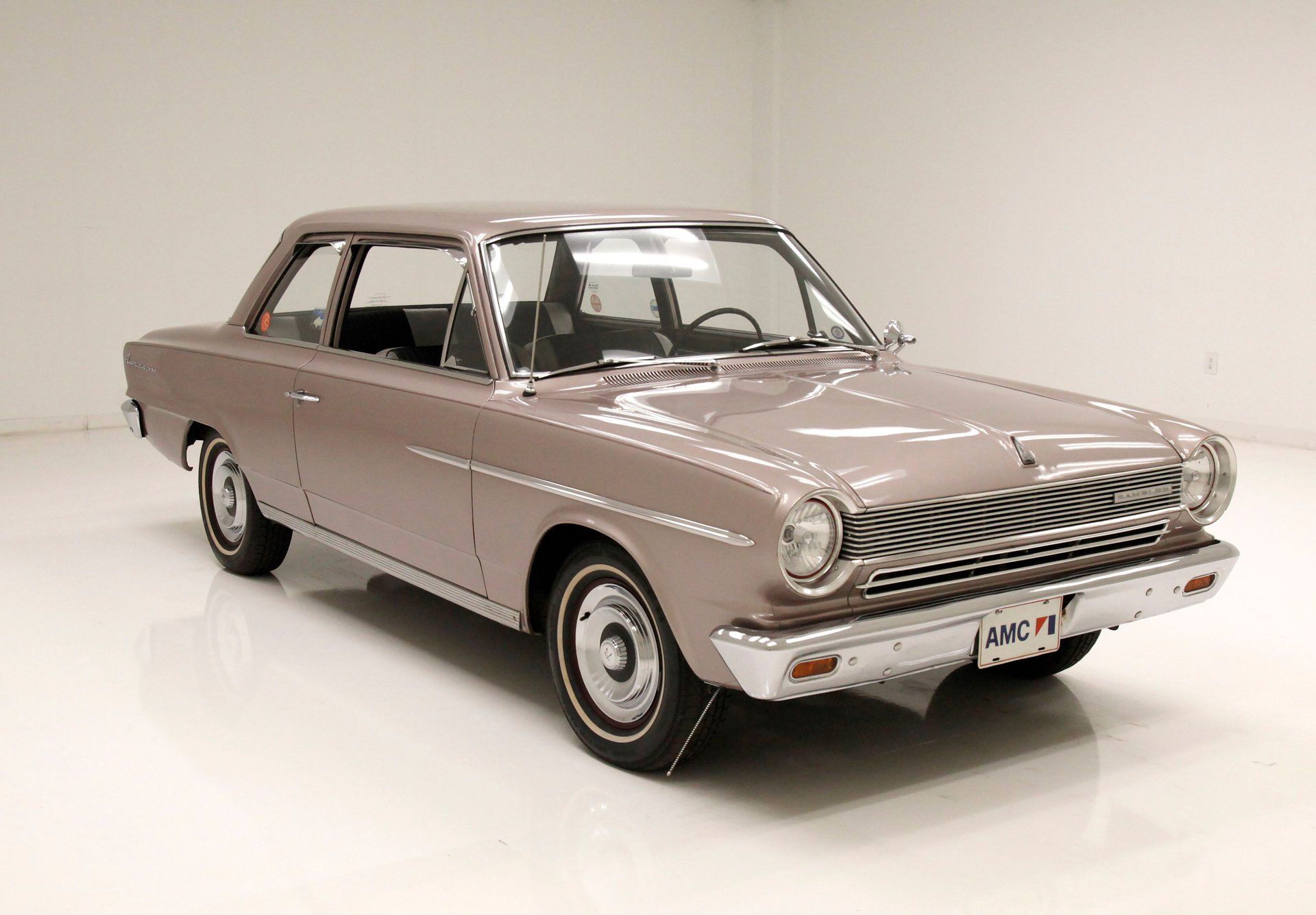
Let’s muddy the waters a bit more, shall we? Here’s that familiar face once again, in a somewhat more modest –but recognizable– form, as it appeared in the 1964 Rambler American. One of the cleanest and best looking products that ever came out from American Motors. A design that dates from the early years of Dick Teague as the company’s styling director.
Another stylist with 1958 La Galaxe references?

Could be. However, Teague was part of the group of stylists that arrived at Chrysler in 1957, working under designer William Schmidt during the months when official VP of Design Exner recovered from a heart attack. While Exner’s condition remained in question, Teague and others under Schmidt produced “alternative” production proposals that ruffled lots of feathers at Chrysler, with Exner’s underlings and Exner himself.
Hard to tell what Teague might have picked up from Chrysler in those days, since he remained cagey about the whole thing ever after. A tense period, about which he either refused to talk or just referred to as “… the worst 18 months of my life.” For all purposes, the official record considers the 1964 Rambler American a Teague job, with the front design attributed to stylist Bob Nixon.

Mysteries aside, let’s go back to the D-Series face. Like a lot of final designs, it looks like a mix of several different pieces, with a barbell shape that looks like the La Galaxie and the ’62 Plymouth goggly pie-plate rims.
Regardless of source, it is a wonderfully optimistic, joyous visage. A very distinctive statement.
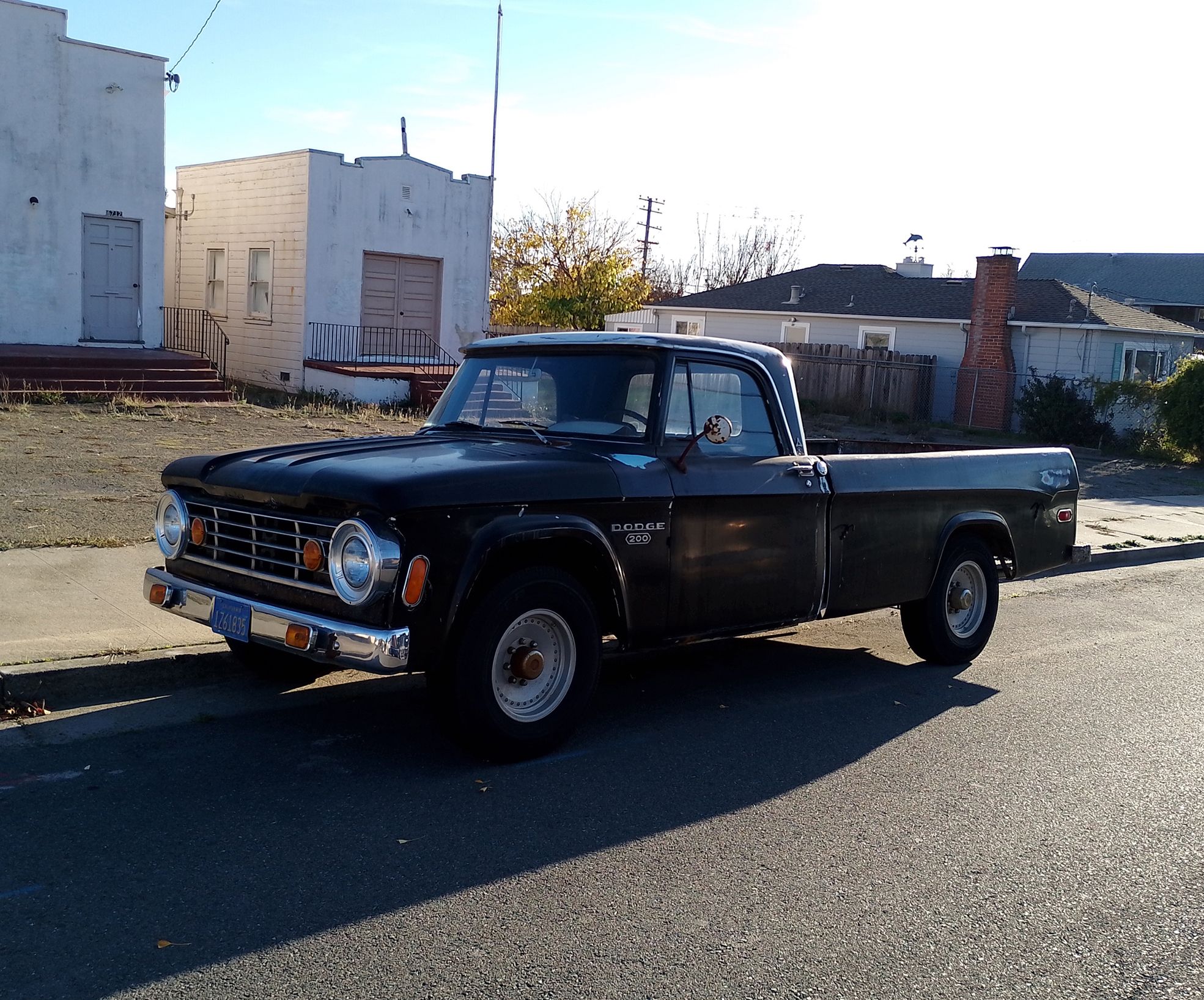
And while I’ve gone on about the Jet Age roots in this truck’s face, elsewhere there are no hints about that era in its body. By the mid 1960s, Jet Age trinkets were just passé in the automotive world and this D-Series is mostly pure workhorse in its styling intentions.
Not that it’s completely devoid of Exner Excentricities.

Arriving for model year 1961, the D-Series was also done under the guidance of Exner. Regardless of his fondness for Ex-uberance, as his later 1963 lineup would show, the man knew how to play mostly normal.
As such, the 1961 trucks are attractively styled, with only some distinctive touches to tell-tale who was at the styling helm. To my eye, the most telling sign: The way the curiously shaped grille created a “central radiator” look, much against the “wide low look” everyone else was using, and quietly in keeping with Exner’s preference for classic era cues –while being somewhat odd all the same.

While the face would get updates, creating a less quirky look, much of the body remained throughout the D-Series run. The hood, a case in point of neat styling, with scoops and indentations that provide a tough, muscular look (particularly with the worn “don’t mess with me” black paint of today’s find).
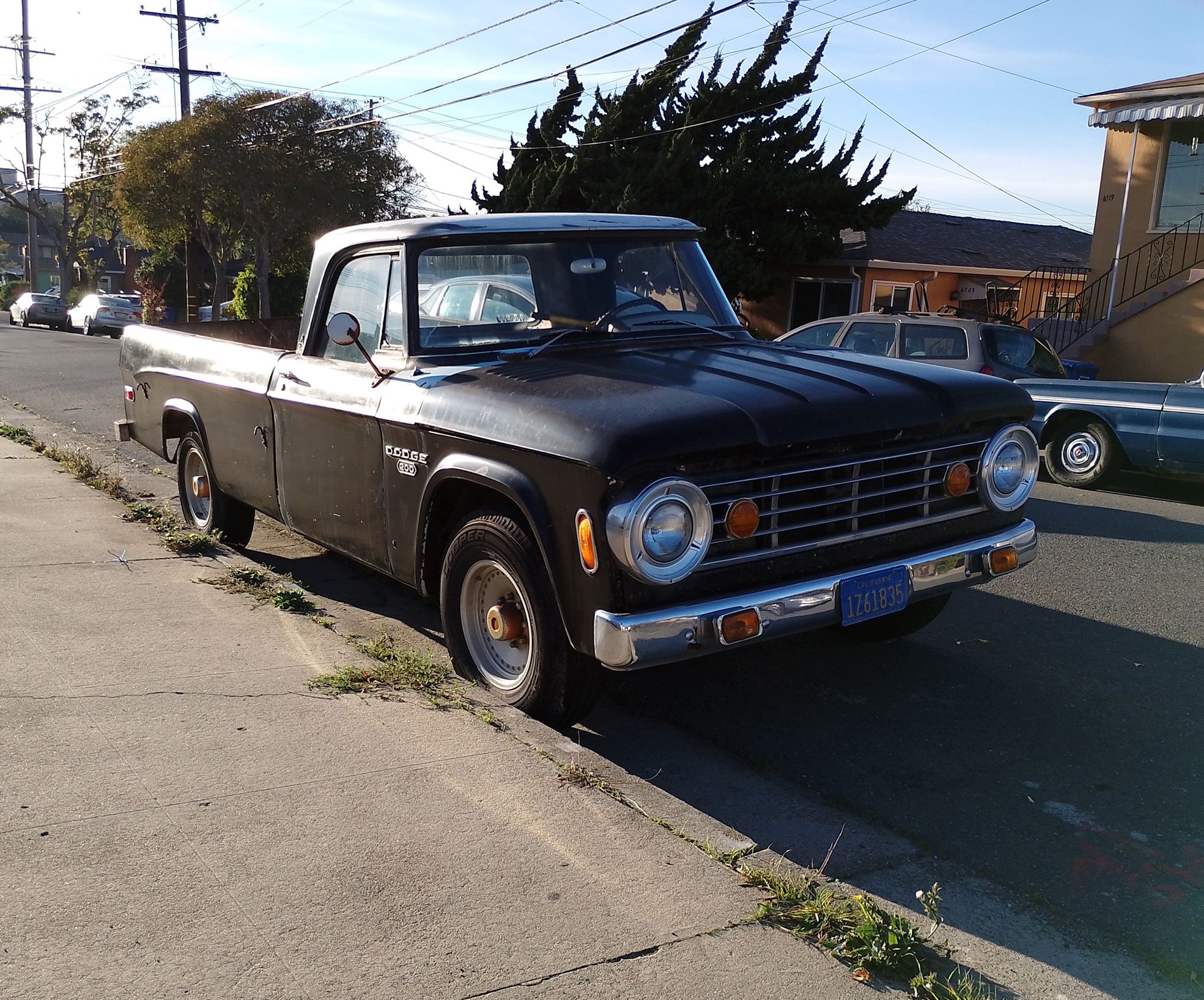 Like other Exner works from the period, there’s prominent side sculpting to keep slabsideness under check. In my mind, an early form of what would later be called “surface treatment”, and which I tend to think Exner was an early proponent. A pioneer of sorts, in that regard.

By the time this 1965-1967 came from the assembly line the greenhouse was, understandably, its most dated styling element; from the wraparound window, to the curiously cantilevered-looking profile of the B-pillar/roof. The latter, one of those Exner touches that showed up across the Pentastar’s utilitarian range of the early 1960s.

Today’s 1965-1967 model was one of two MoPars I came across in December of 2024 in El Cerrito, California. Parked across from each other, I would think they belong to the same household (If you wonder, I already covered the 1966 Belvedere).
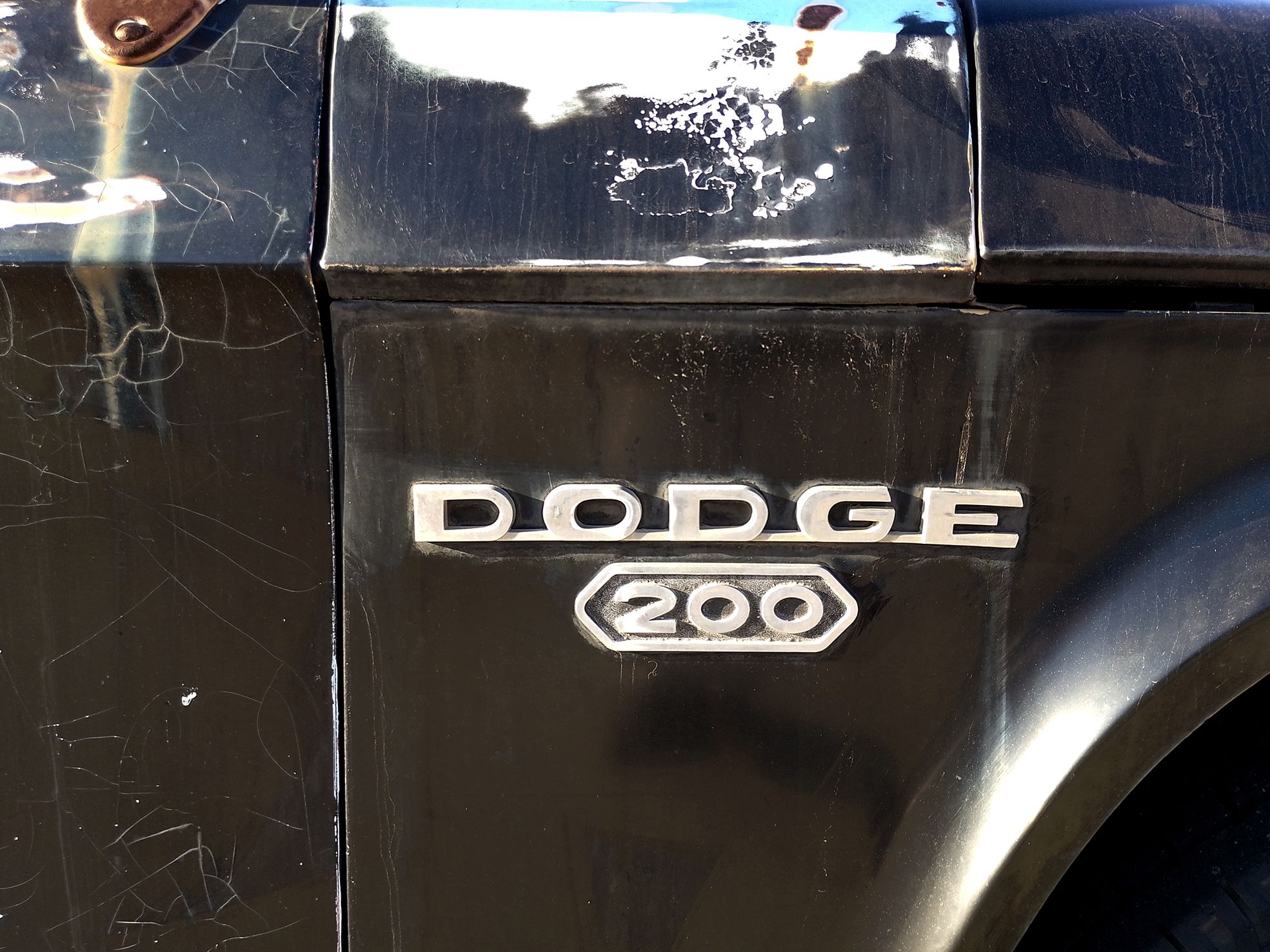
Officially, it’s a D-200, the 3/4 ton version.

It’s a long wheelbase model, and that dual tailpipe is a sign that this is V-8 powered. Original, or transplant? No way to know, but most certainly, MoPar power. About which, if you want a more technical and detailed take on the 1965-1967 D-Series, there are several posts linked further down that cover those.

Ford F-Series and Chevy C/Ks are usually far more abundant, so it’s a treat to come across an old D-Series like this, not overrestored, and in working condition.
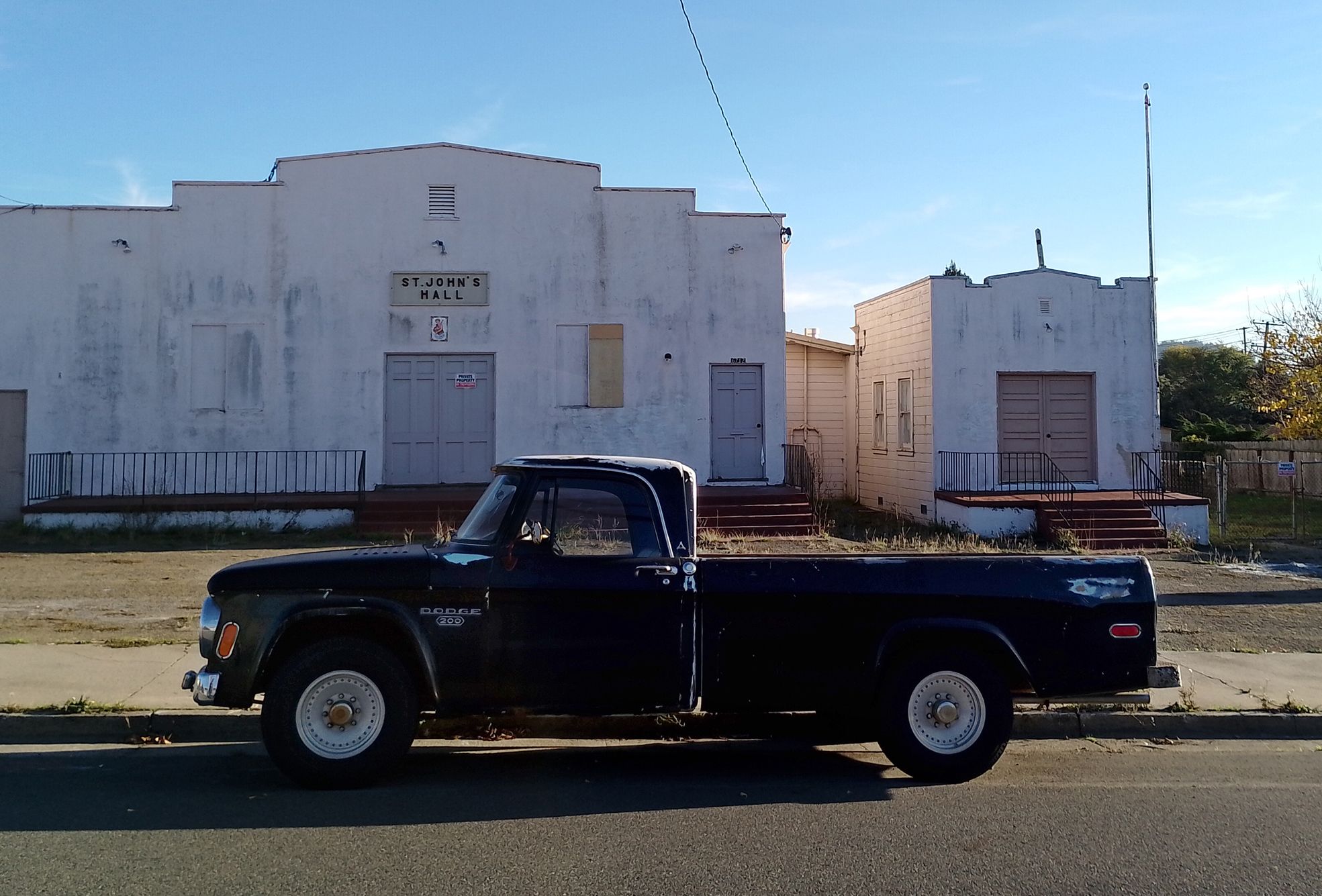
Admittedly, the D-Series is less carlike and rougher-riding than those other more common competitors; an area where Dodge was lagging at the time, and part of the reason why there are fewer of them around. Still, it makes an encounter with one all the better. One just has to keep in mind that the goggly-eye face may look friendly, but that underneath, it’s all toughness.
Related CC reading:
Curbside Classic: 1966 Dodge D100 – New Old Stock?
1967 Dodge D-200 Camper Special – We’re Number Three So We Try Harder, Dude!
1964 Dodge D-200: The Big Three’s First Crew Cab







I’ve always known those as pie pan Dodges. The little A-100 trucklet and vans got the same treatment.
Thanks Rich–I love the googly eyed Mopar theme whether it was featured on cars or pickups.
I always thought Exner was responsible for the motif, but was it Engel? Teague? Sometimes I think such things are in the ether waiting for those tuned in to draw them out. All are part of it, but none invented it–like the wheel.
The A100 vans which are probably my favorite application of the bold headlight bezel theme given their shape was continued horizontally across the body front to rear.
That 1957-59 period where Exner recovered from his heart attack and and when the 1960-61 models were worked up is a really mysterious time for Chrysler styling. The Schmidt people vs. Exner people tug of war echoed the Exner people vs. Loewy people period at Studebaker between 1947 and 49. I wish both of these situations was documented better than they are.
So do I.
Make mine a W-200 please!
I guess the 1954-55 Kaiser could be the spiritual grandpa of some of these designs, with its googly headlight + indicator clusters and that electric razor grille.
I always liked that design, it feels ahead of it’s time in a way with its sleek, low and wide look. Too bad no one was buying Kaisers buy that time anymore, its such a good looking car.
I think the Kaiser was more like the early 50s Buick motif, not the same thing.
The La Galaxie is the first source I’ve seen. Maybe there was something previous in Europe?
Left off the list is the ’64 full size Dodge. As a kid I remember being a little confused that Mopar and AMC were both featuring the same styling theme at the same time. I recall it being referred to as the barbell look.
The issue with the convergence of the prominent headlights on both the ’63 Dart by Exner and the Turbine car by Engel has long been one of the bigger styling mysteries for me. I’m pretty convinced that Engel liked what he saw with the Dart and pulled out some of the many drawings he photocopied on the way out from Ford and decided to play on the similarities.
Seems like the first appearance of the pie-plate front end was on the downsized 1962 Plymouth, then was quickly transferred over to Dodge styling.
Chrysler had a habit of switching styling between the two divisions, sometimes from year-to-year. Consistancy definitely was not their forte.
True, that pie-plate face did show up production ready in the 1962 Plymouth. One more piece to the story.
Take the back of a ’59 Ford, change the lens color from red to white, add a grill and call it a Dodge.
Dr. Sam B. Williams originally did engineering on the Chrysler turbine, but saw broader applications and left to form his own company ca. 1955, now Williams International (not to be confused with Williams Electronics), which specializes in small turbofans such as for cruise missiles and drones.
Chrysler’s XM1 tank prototype used a Lycoming turbine.
I think you are right, Engle seemed to spread these these ‘turbine-esque’ styling cues across the line, trucks included. I also remember there were turbine powered Dodge truck prototypes built over the years, some from this generation in the early 60’s. Most appropriate!
That a “66-7, Belvedere” across the street?
Yes, it’s a 1966. I covered that one in an earlier post
https://www.curbsideclassic.com/curbside-classics-american/curbside-classic-1966-plymouth-belvedere-ii-the-mostly-sedate-side-of-the-1960s/
I always thought that these headlight bezel designs were unfortunate. The Turbine’s bezels were goofy looking, and the Chrysler products with these oversized bezels looked extreme. I don’t care if they were inspired by the Jet Age or inspired by Harold Lloyd, it’s not a great look.
I remember these ‘Pie Plate’ headlight trims when new, I hated them but they’ve aged reasonably well .
Dodge trucks of this era really were work horses unlike the average light duty Chevy or Ford unless specifically optioned .
-Nate
Those trim rings got a lot of use, starting with the ’64 A-100 van & pickup, and later on the L-Series heavy-duty COE and the LCF trucks when they switched to single headlights.
We had a pickup and a medium-duty dump truck at the public golf course my family ran when I was a kid. Always liked the look of these the best of all the Sweptline variants.