

For 1969, Buick chassis engineers tried a new suspension concept they called Accu-Drive, which was featured in all full-size models and the Riviera. The February 1969 Car Life included a test of the 1969 Riviera, in which the editors tried to get their heads around Accu-Drive did and what it was supposed to do.
This isn’t quite a full road test of the 1969 Riviera — Car Life had already tested the 1968 Riviera, and not much was new for 1969 other than Accu-Drive, which was essentially a tweak of the existing front suspension. It’s NOT about the GS option, a $131.57 performance package for buyers who wanted a sportier Riviera. Accu-Drive was a new approach to suspension geometry, used on all full-size Buicks in 1969.
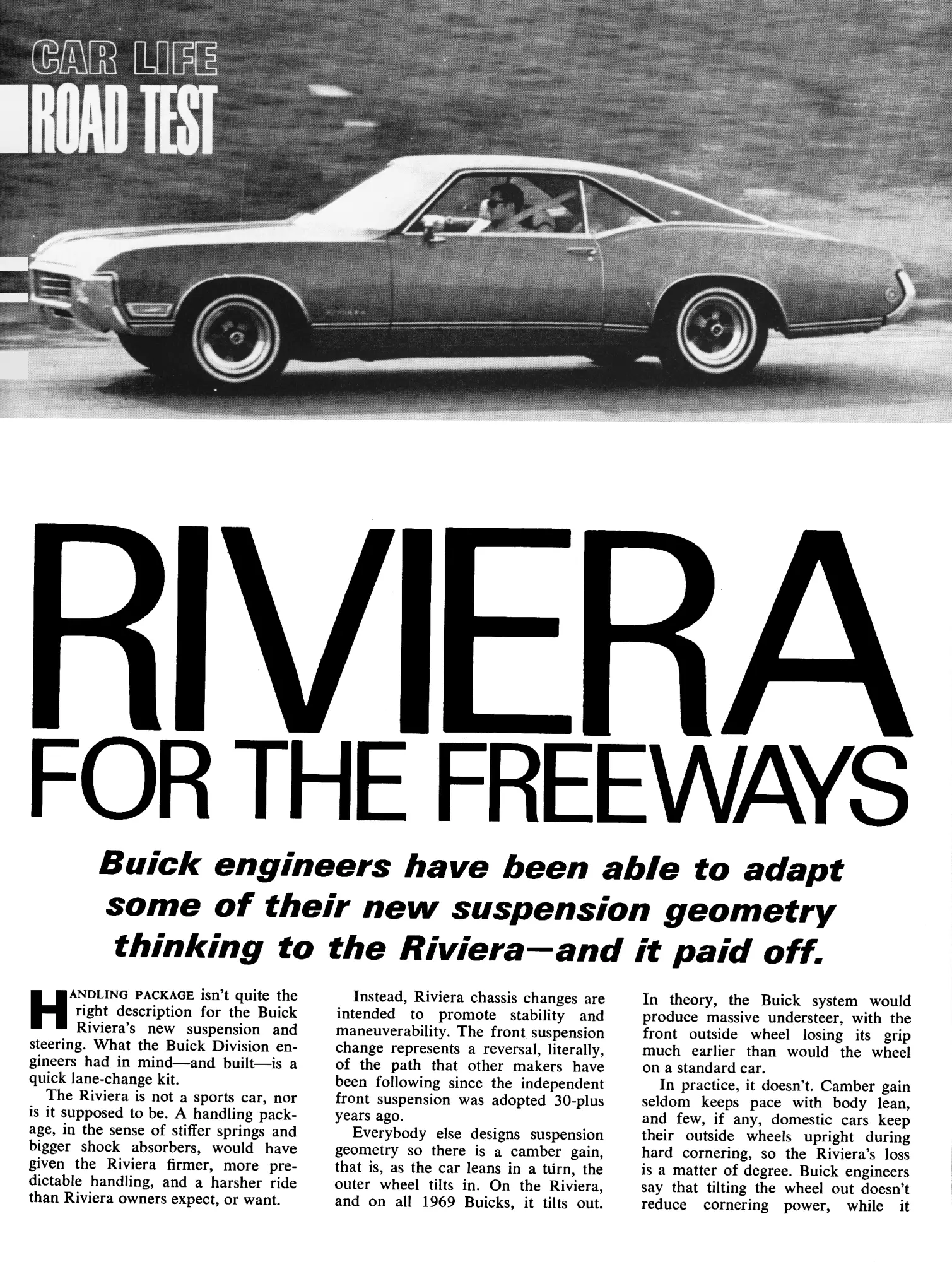
Car Life explained Accu-Drive like this:
HANDLING PACKAGE isn’t quite the right description for the Buick Riviera’s new suspension and steering. What the Buick Division engineers had in mind—and built—is a quick lane-change kit. The Riviera is not a sports car, nor is it supposed to be. A handling package, in the sense of stiffer springs and bigger shock absorbers, would have given the Riviera firmer, more predictable handling, and a harsher ride than Riviera owners expect, or want.
Instead, Riviera chassis changes are intended to promote stability and maneuverability. The front suspension change represents a reversal, literally, of the path that other makers have been following since the independent front suspension was adopted 30-plus years ago.
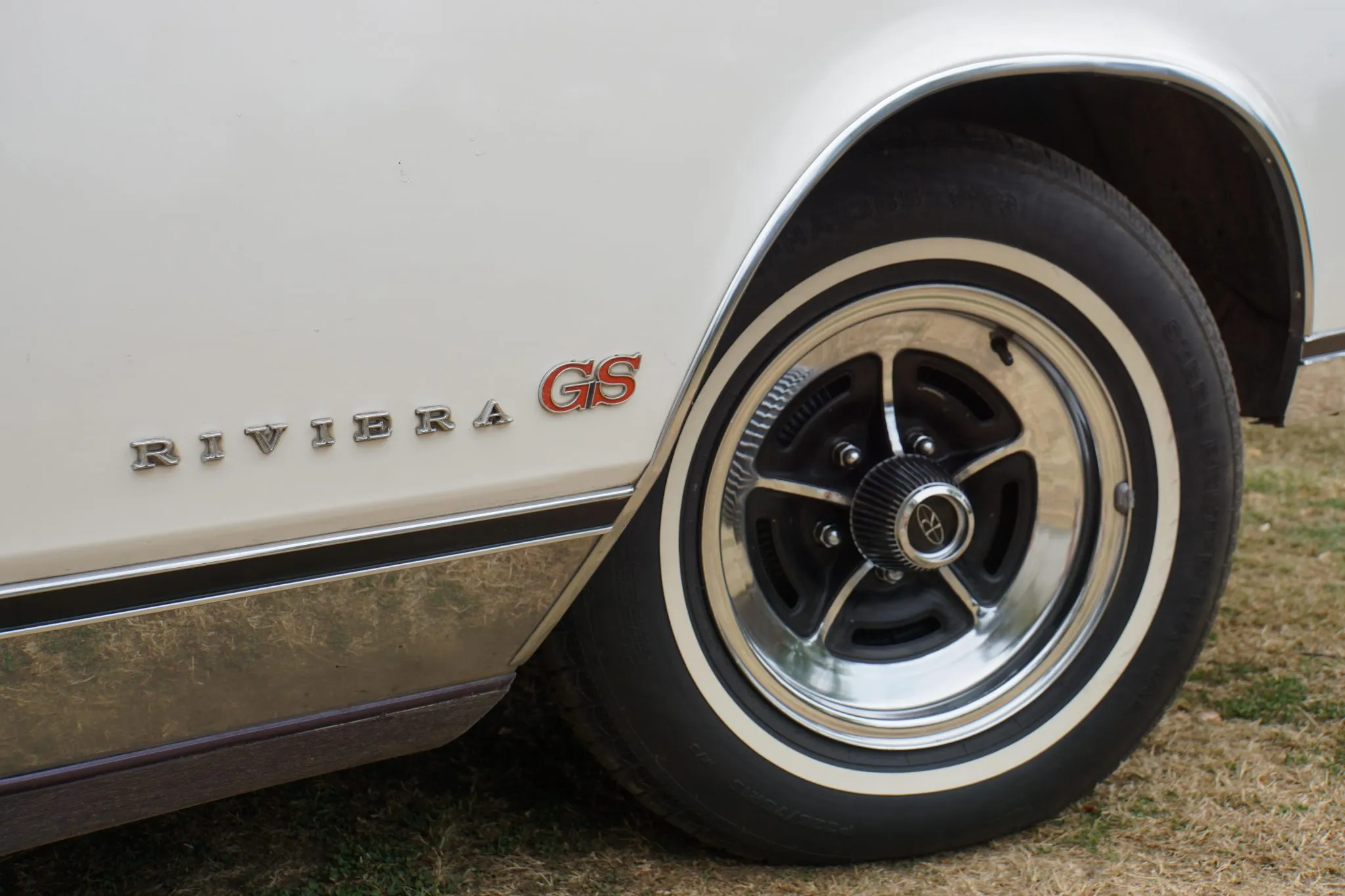
I want to interrupt to emphasize that Buick DID offer a handling package for the Riviera in 1969, available as either as part of the GS option or as a standalone option for a mere $3.79. About 10 percent of 1969 Rivieras had the GS package, which did provide firmer, more predictable handling at a modest cost in ride comfort. The CL test car, however, had the more common standard suspension.
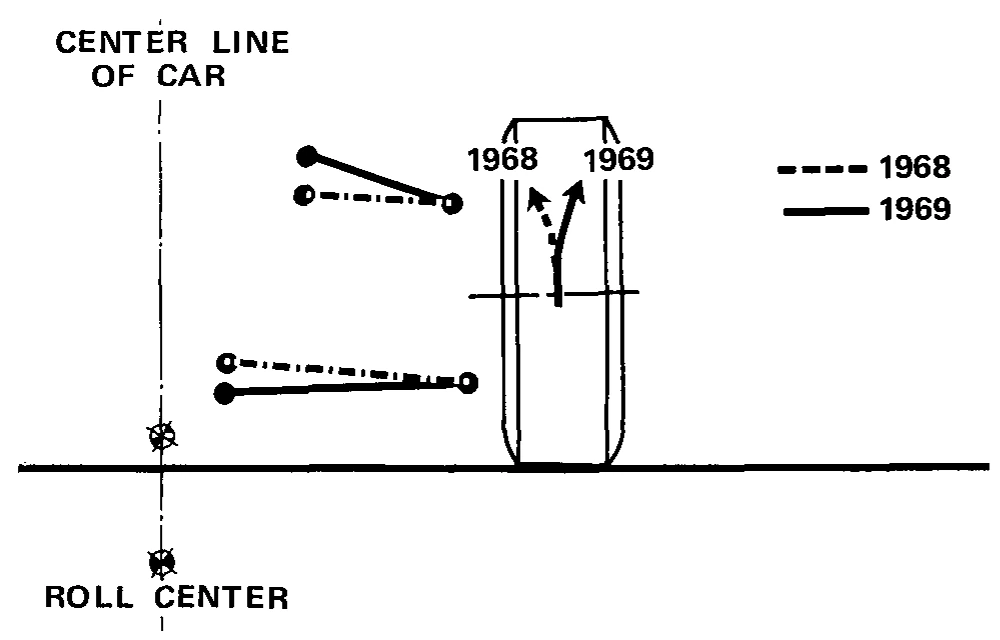
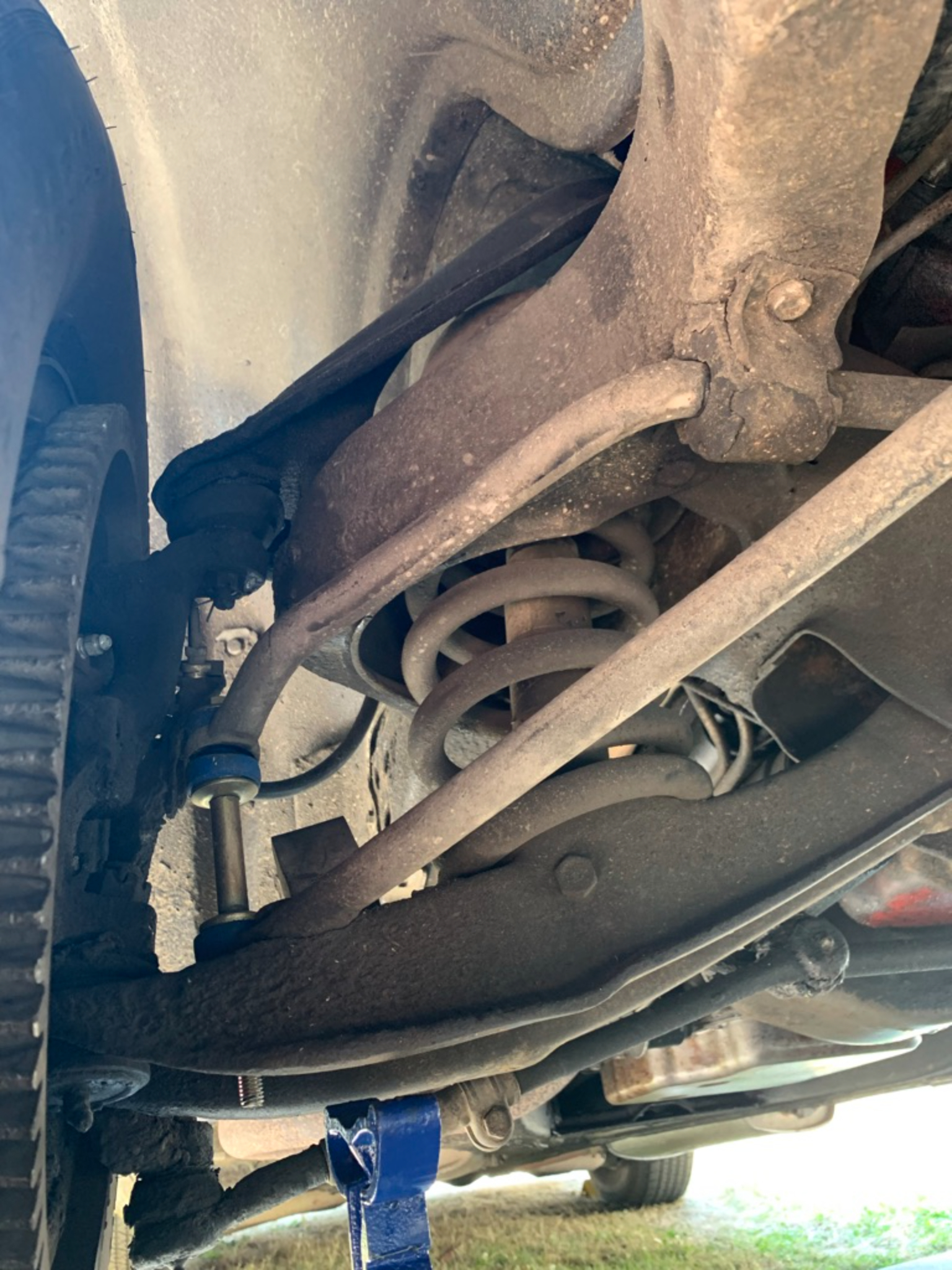
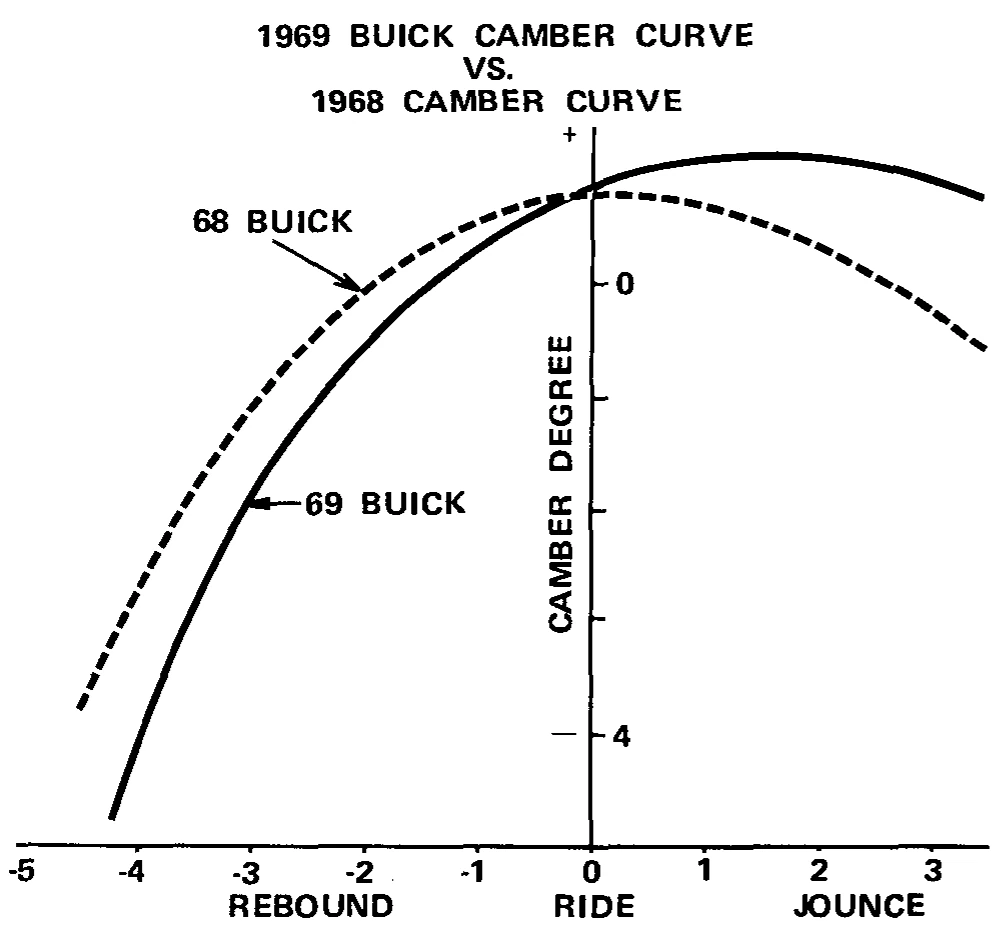
As Buick engineers R.E. Owen and Marlow R. Ladd said in their 1969 SAE paper on the new suspension, the new geometry was achieved by changing the locations of the front suspension arms’ inner pivots: The upper pivot was raised and the lower pivot was lowered. This dramatically lowered the static roll center (which in principle meant more front body roll in turns) and shortened the effective swing-arm length so that the wheel camber would change more rapidly than before.
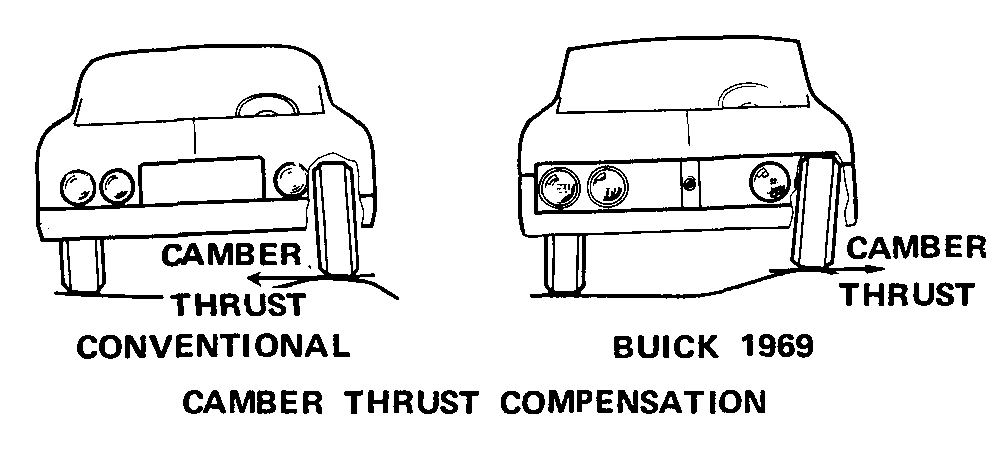
Car Life explained:
Everybody else designs suspension geometry so there is a camber gain, that is, as the car leans in a turn, the outer wheel tilts in. On the Riviera, and on all 1969 Buicks, it tilts out. In theory, the Buick system would produce massive understeer, with the front outside wheel losing its grip much earlier than would the wheel on a standard car.
In practice, it doesn’t. Camber gain seldom keeps pace with body lean, and few, if any, domestic cars keep their outside wheels upright during hard cornering, so the Riviera’s loss is a matter of degree. Buick engineers say that tilting the wheel out doesn’t reduce cornering power, while it makes the car much more stable over bumps and ridges in the road. When the front wheel hits a bump, the car moves away from it, the engineers say [as illustrated above]. As the wheel rises, it moves in and pulls the car back. The two forces work against, and cancel, each other.
Why did Buick adopt this geometry? Owen and Ladd explained:
When independent suspensions were first introduced in American automobiles in 1934, the steering systems were all manual. The camber curves used with these independents were tailored to keep the force levels for the driver as low as possible on winding roads. Today, almost all heavier cars are equipped with power steering and the driver does not have to exert high forces. It was recognition of this fact that led us to begin experimenting with changes in the front suspension linkage to create new camber geometries. …
You may have noted that the “ACCU-DRIVE” camber curve should reduce the maximum lateral force that was attainable from a pair of front tires.
We also recognized this, but questioned if it reduced the usable cornering power of the vehicle. Our early evaluations did not indicate any noticeable reduction in cornering ability. In fact, because of the stable, sure-footed feeling, the new geometry promoted driver confidence on winding roads and during quick transitional maneuvers.
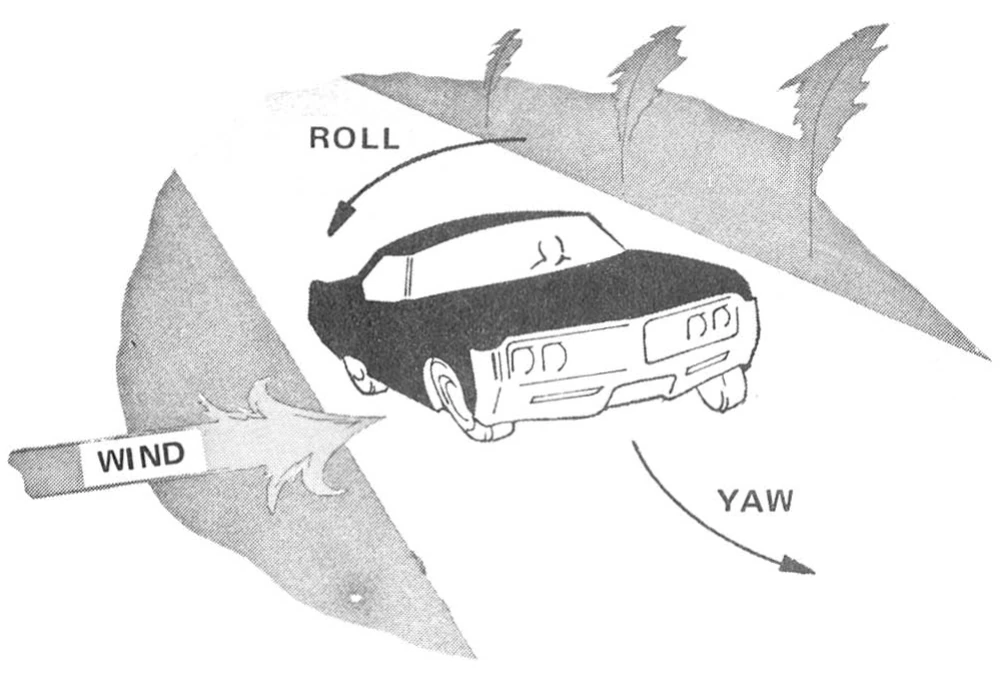
Buick claimed that the Accu-Drive geometry “automatically help[ed] the driver maintain a straighter course,” reduced “passenger side-to-side jostling” on uneven surfaces, and resisted cross-wind forces.
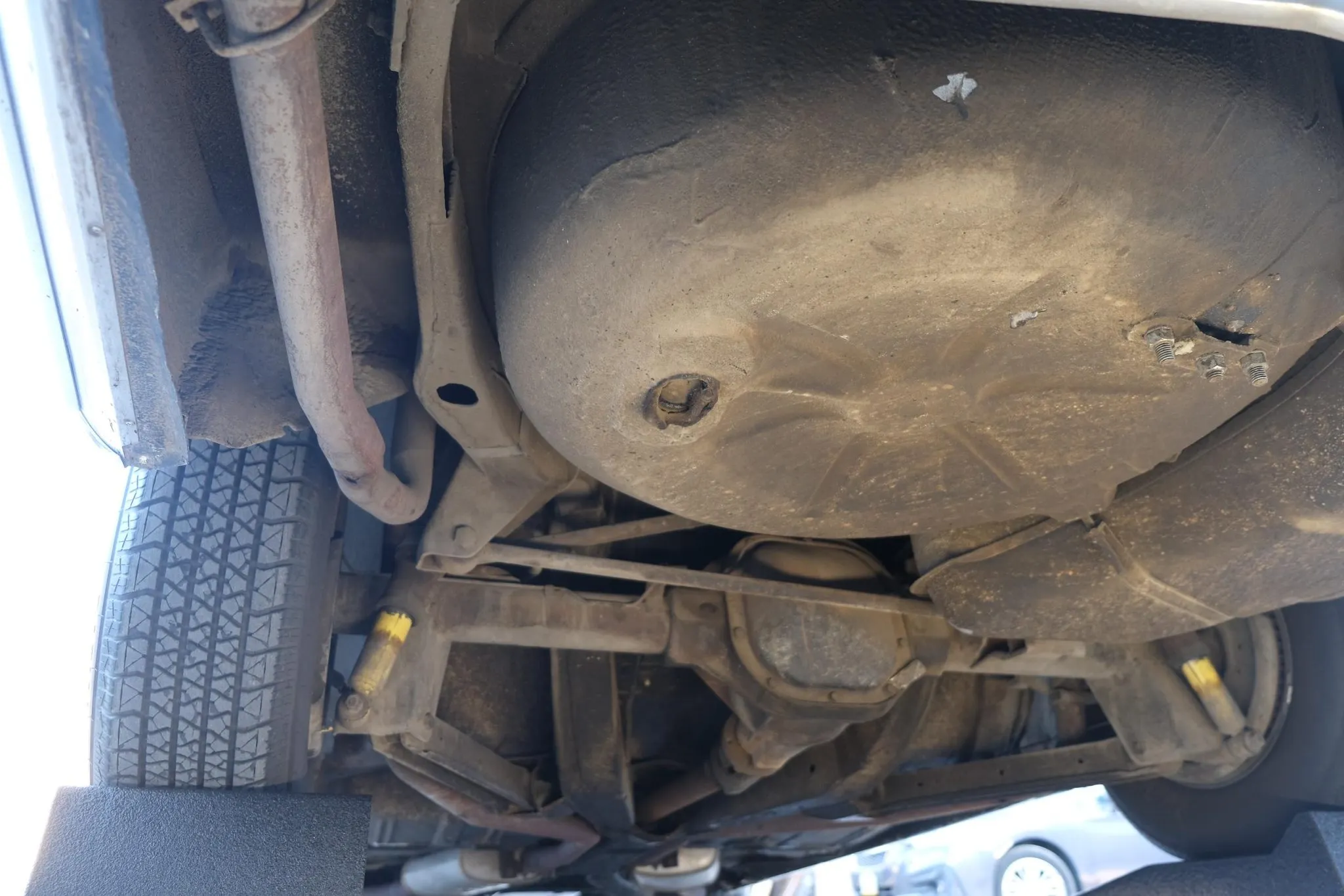
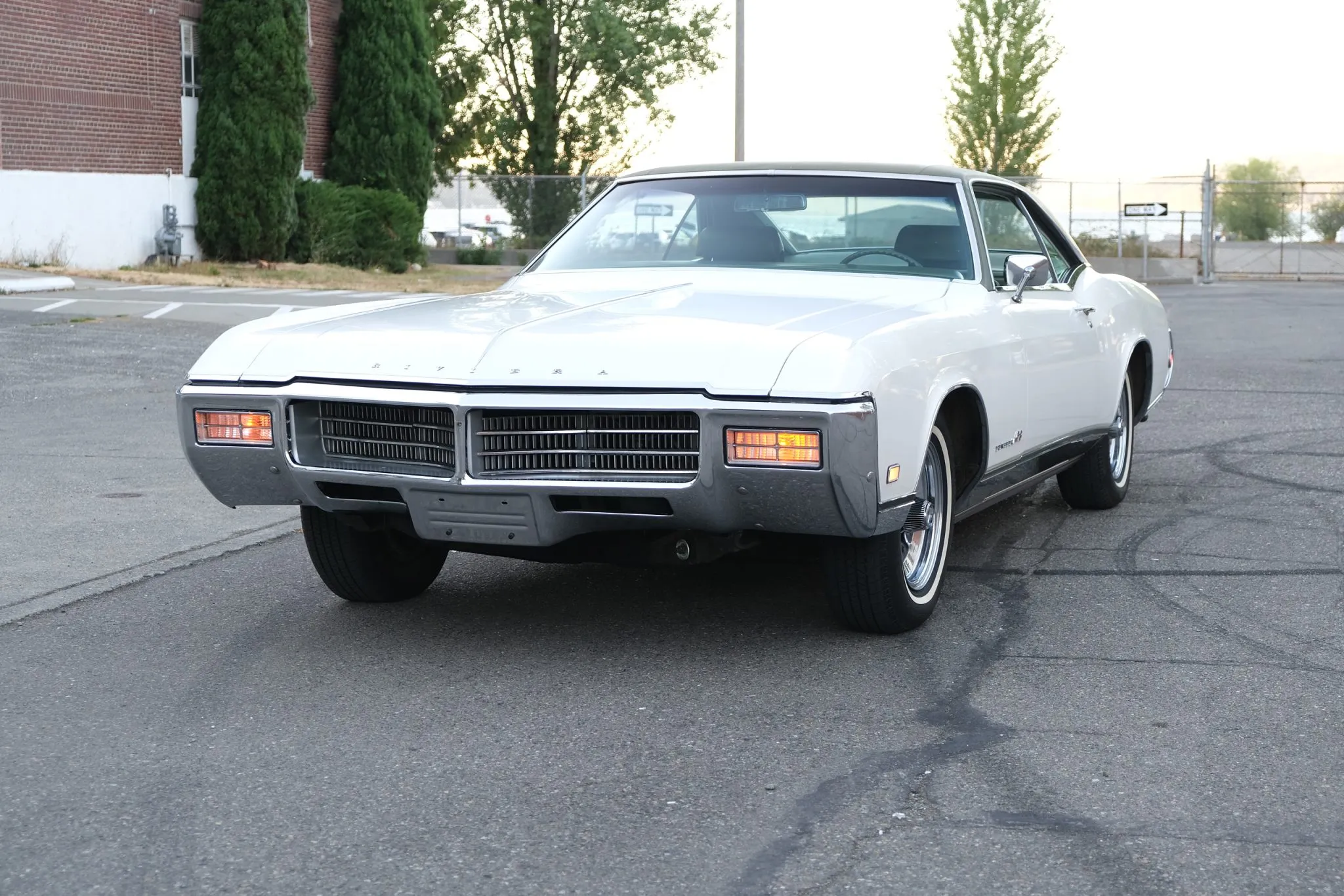
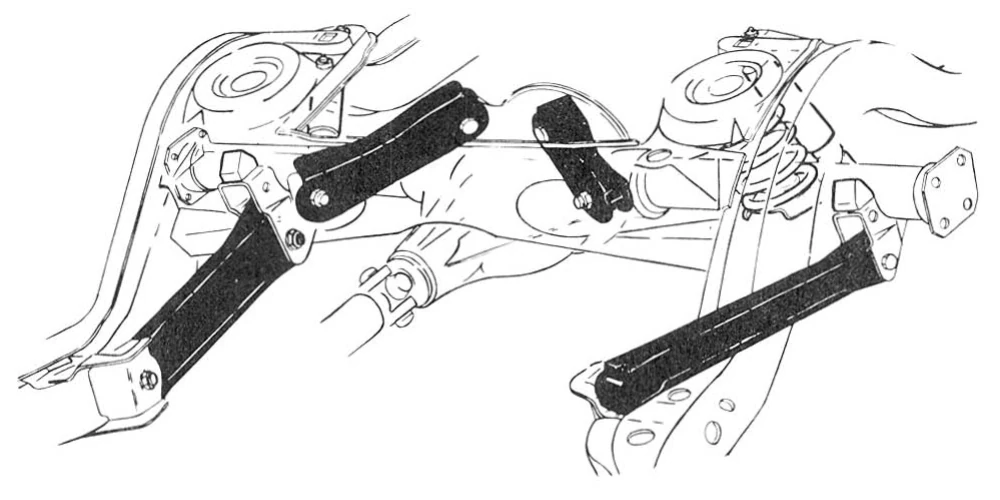
On Buick B- and C-body cars, the new front geometry was also accompanied by changes in the rear, including a wider splay angle of the upper control arms, which also had lower pivot points on the axle carrier to reduce the rear roll center height. The 1969–1970 Riviera didn’t incorporate these changes because the Riviera still used the early ’60s three-link rear suspension, which had only one upper arm and a Panhard rod to help locate the axle.
Car Life thought the Riviera suspension worked well enough, aided by Saginaw variable-ratio power steering, a standard feature:
On the highway, the Riviera is beautifully stable, easy to control in a straight line, and to snake through traffic from lane to lane. It’s very responsive on sweeping turns, and in the parking lot. On twisting roads, where Riviera drivers probably don’t try to set speed records anyway, there’s more understeer than, say, showed up in the Thunderbird tested on page 38. The engineering changes for 1969 improve the Riviera’s handling where buyers will notice it, and decrease grip only during situations the buyers aren’t likely to get into. A big improvement for a slight loss is a good bargain.
As a minority report, if not a dissenting opinion, one tester reported that he thought he could feel the Riviera’s suspension hitting bumps, and reacting to them a split-second later. He read the Buick engineer’s report before he drove the car. The other testers, who drove the car before they read the book, didn’t notice this.
It would have been interesting for them to compare the new standard suspension with the ride and handling suspension included in the GS option, which had the same basic geometry, but stiffer springs, shocks, and bushings, plus a bigger front anti-roll bar and heavy-duty rear control arms. The 1969 AMA specifications unfortunately don’t indicate the spring rates for the ride and handling suspension, but I’d guess they were something in the realm of 20 percent stiffer than the standard suspension.
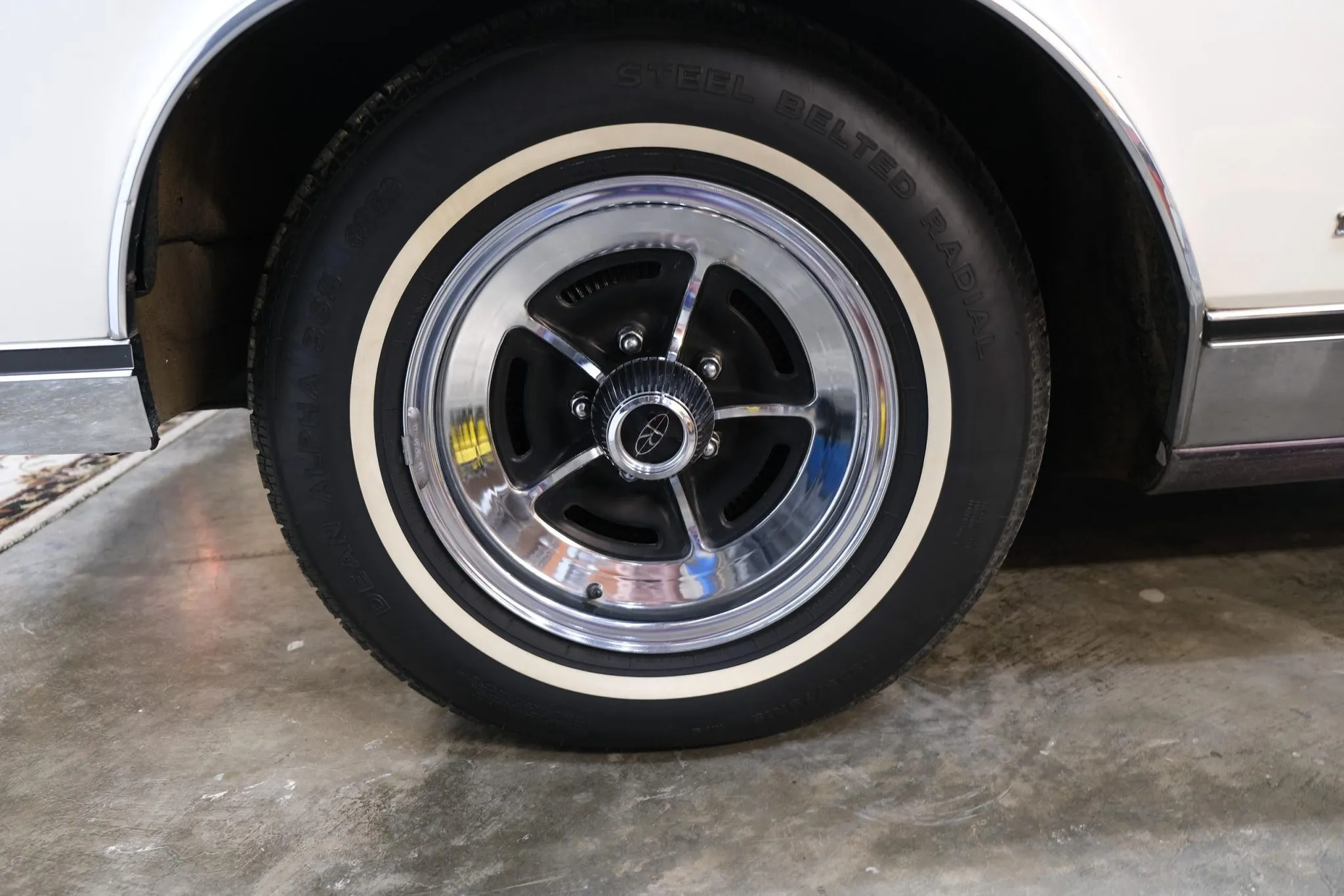
The GS also including H70-15 Wide Oval tires with more grip than the standard 8.55-15 rubber.
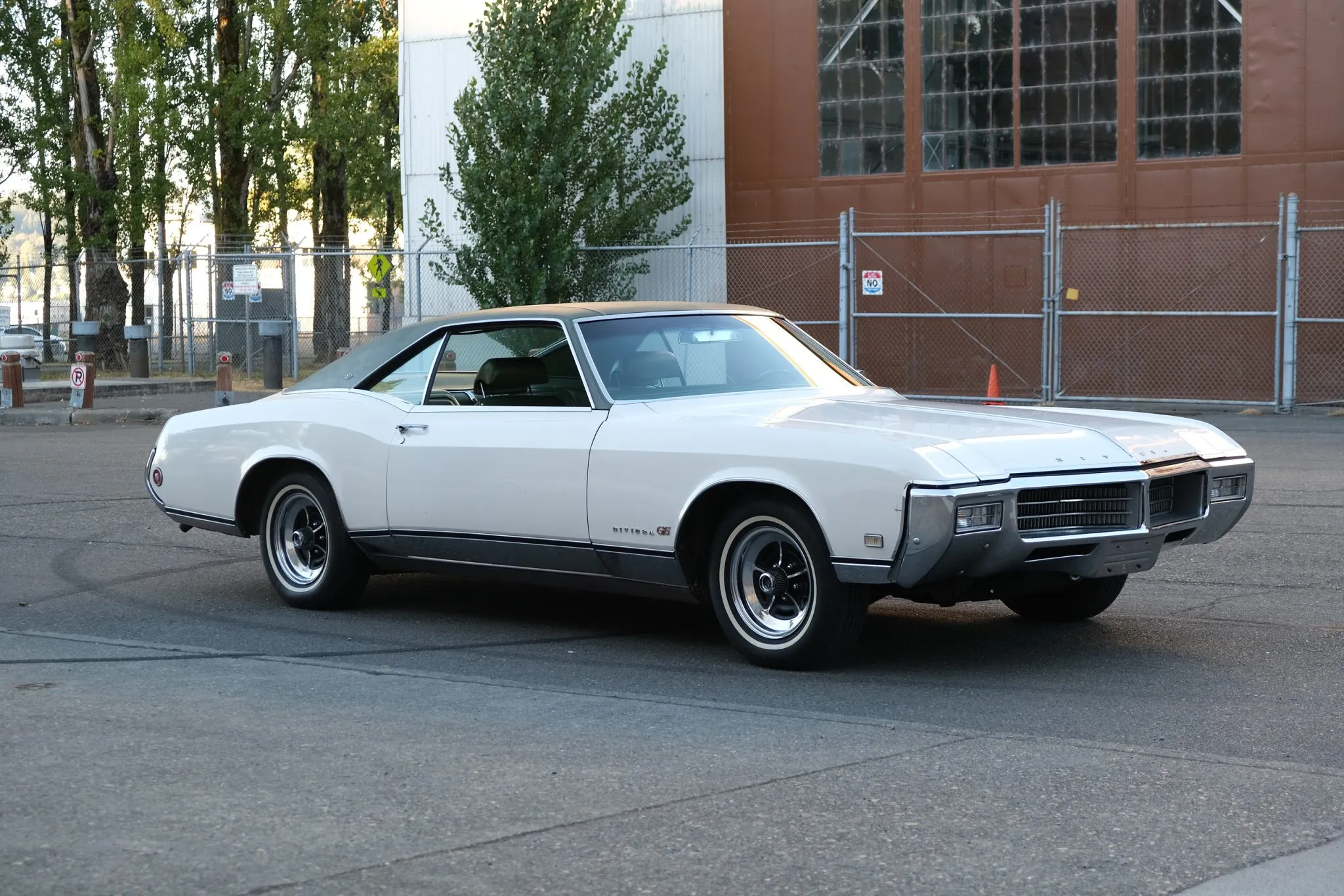
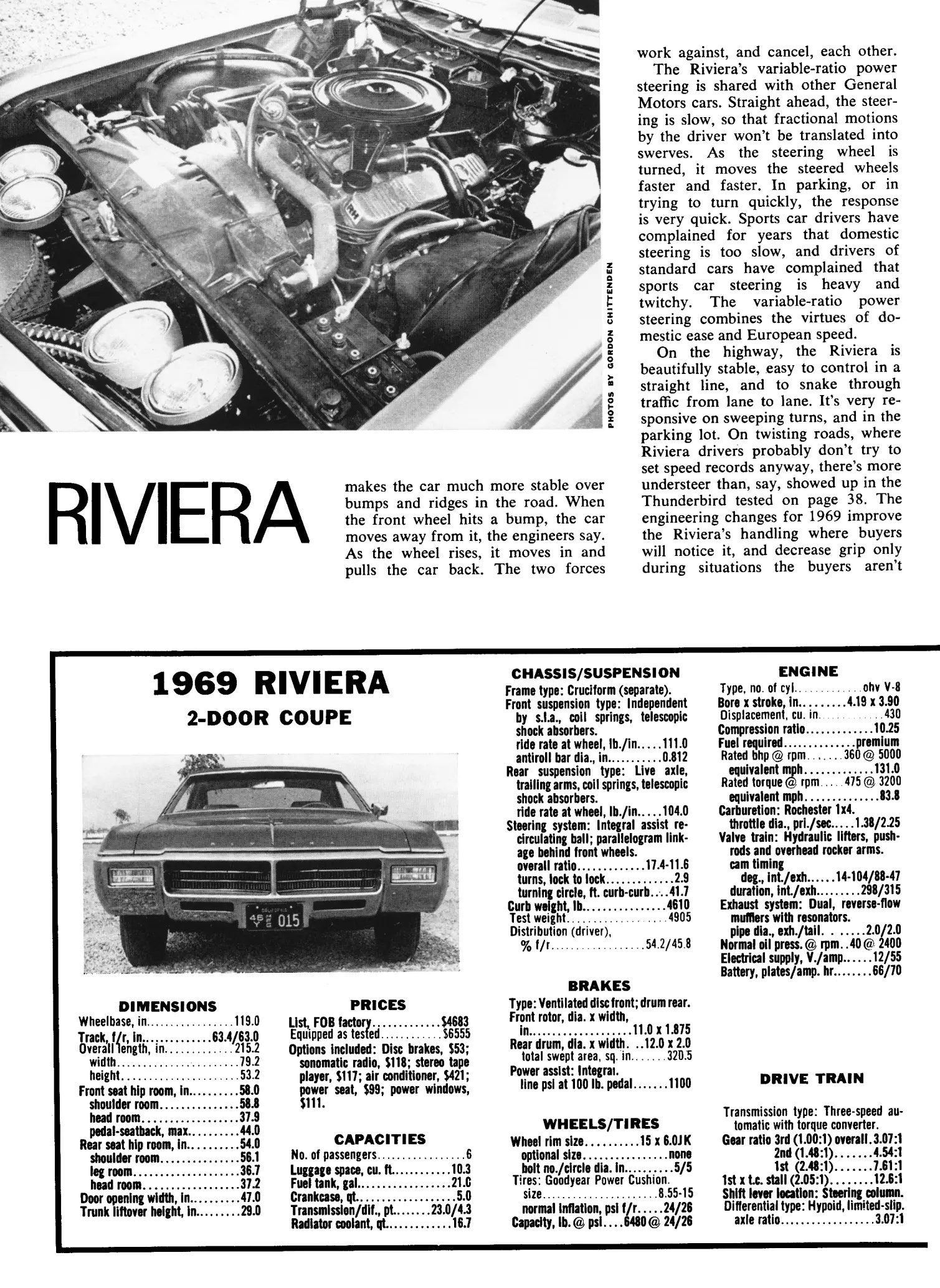
The specifications on the Car Life data panel are a reminder that the Riviera had become a very big car: 215.2 inches long on a 119-inch wheelbase, 79.2 inches wide, with a curb weight of 4,610 lb with air conditioning. Their tester also cost a hefty $6,555.
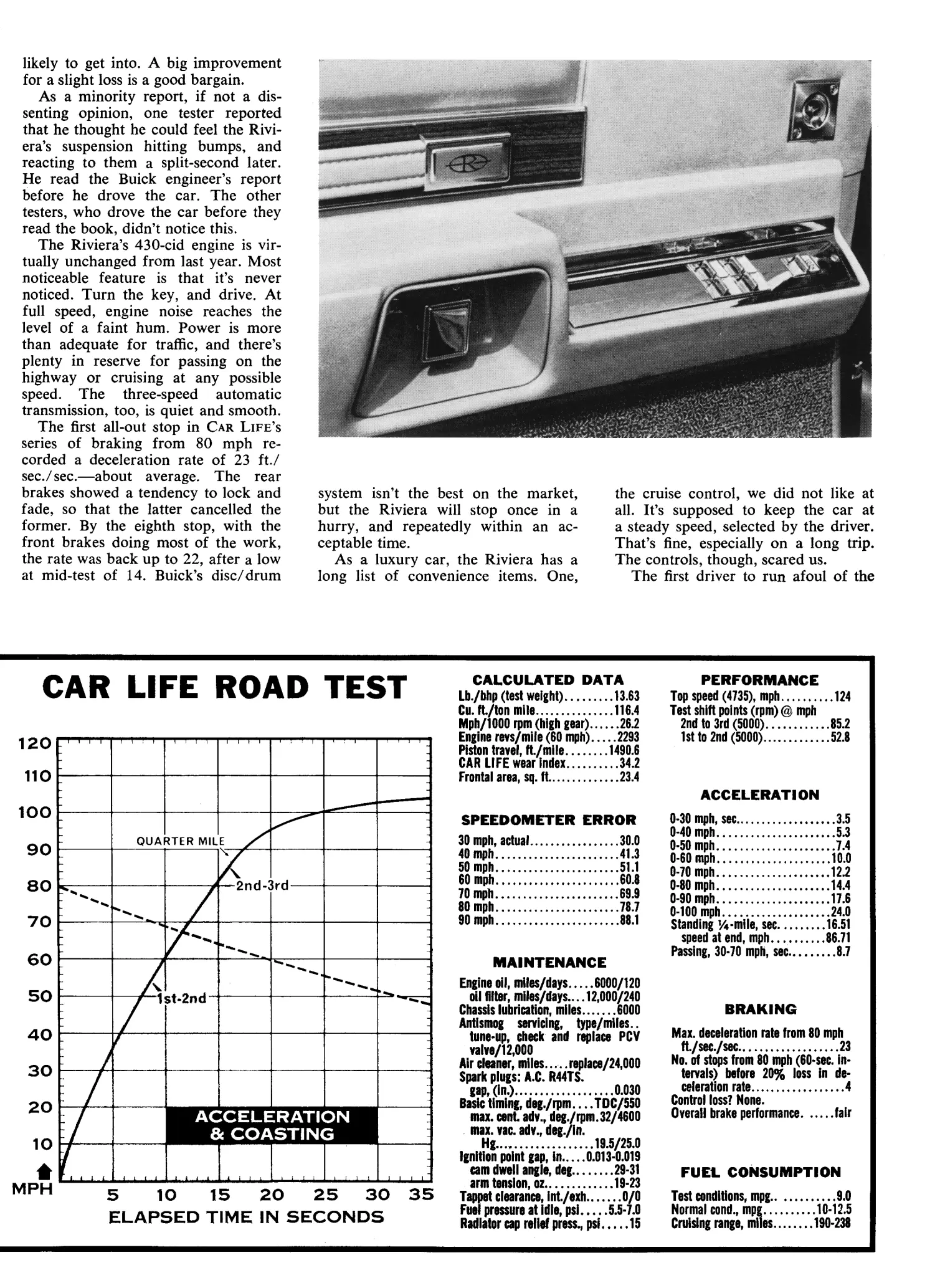
Car Life testers found that the 1969 Riviera had decent go and OK stop. It was not as quick as the first-generation Riviera, or 1966 cars with the defunct dual-carburetor 425-cid Super Wildcat 465 engine, but it was noticeably snappier than Car Life‘s 1968 test car, which had suffered some undiagnosed mechanical maladies:
- 0 to 30 mph: 3.5 sec.
- 0 to 60 mph: 10.0 sec.
- 0 to 100 mph: 24.0 sec.
- Standing ¼-mile: 16.51 sec. at 86.71 mph
The specified 124 mph maximum speed at 4,735 mph in 3rd seems plausible, and might actually be an observed top speed. Unfortunately, their test mileage seems equally plausible: just 9.0 mpg, with an estimated “normal” range of 10 to 12.5 mpg! This was with the standard 3.07 axle; the 3.42 performance axle included with the GS option would have given better acceleration, but even worse mileage.
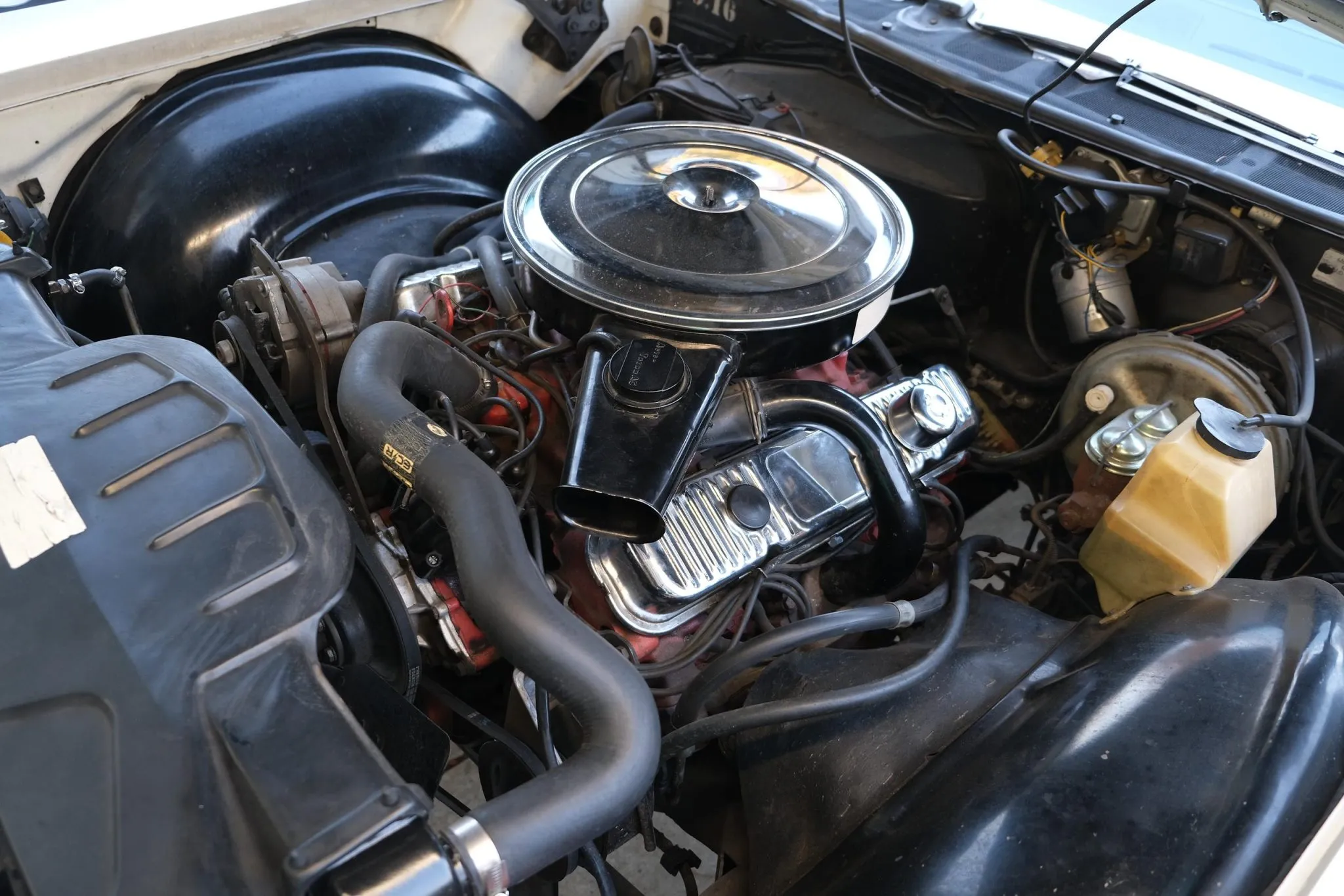
The CL editors noted:
The Riviera’s 430-cid engine is virtually unchanged from last year. Most noticeable feature is that it’s never noticed. Turn the key, and drive. At full speed, engine noise reaches the level of a faint hum. Power is more than adequate for traffic, and there’s plenty in reserve for passing on the highway or cruising at any possible speed. The three-speed automatic transmission, too, is quiet and smooth.
One change for 1969 was that the Riviera now had an electric rather than mechanical fuel pump.
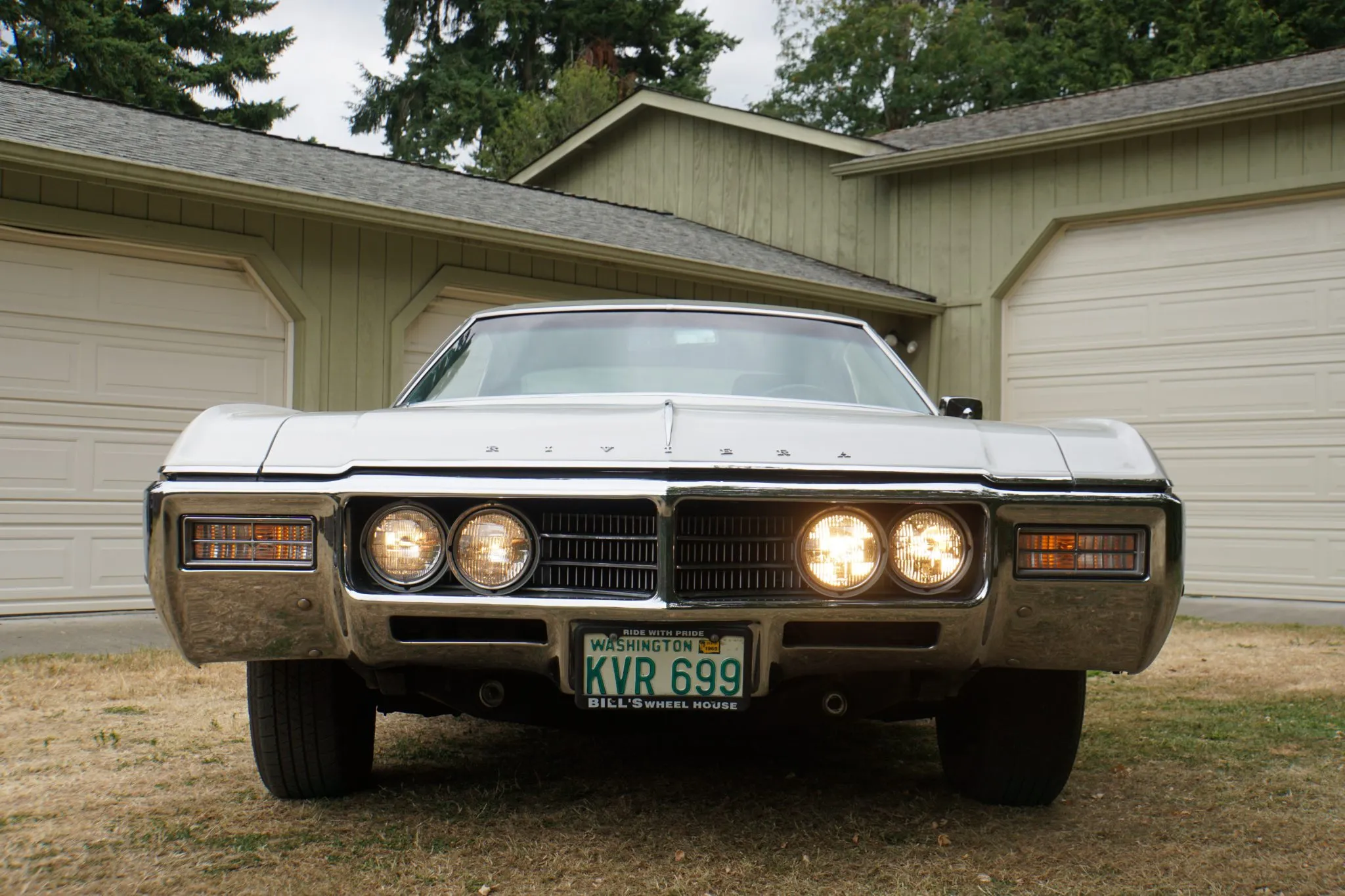
The CL test car had front disc brakes, which were a $52.63 option. These still weren’t often specified; only 11.2 percent of 1969 Riviera production had discs, although they provided decent stopping performance:
The first all-out stop in CAR LIFE’s series of braking from 80 mph recorded a deceleration rate of 23 ft./sec./sec.—about average. The rear brakes showed a tendency to lock and fade, so that the latter cancelled the former. By the eighth stop, with the front brakes doing most of the work, the rate was back up to 22, after a low at mid-test of 14. Buick’s disc/drum system isn’t the best on the market, but the Riviera will stop once in a hurry, and repeatedly within an acceptable time.
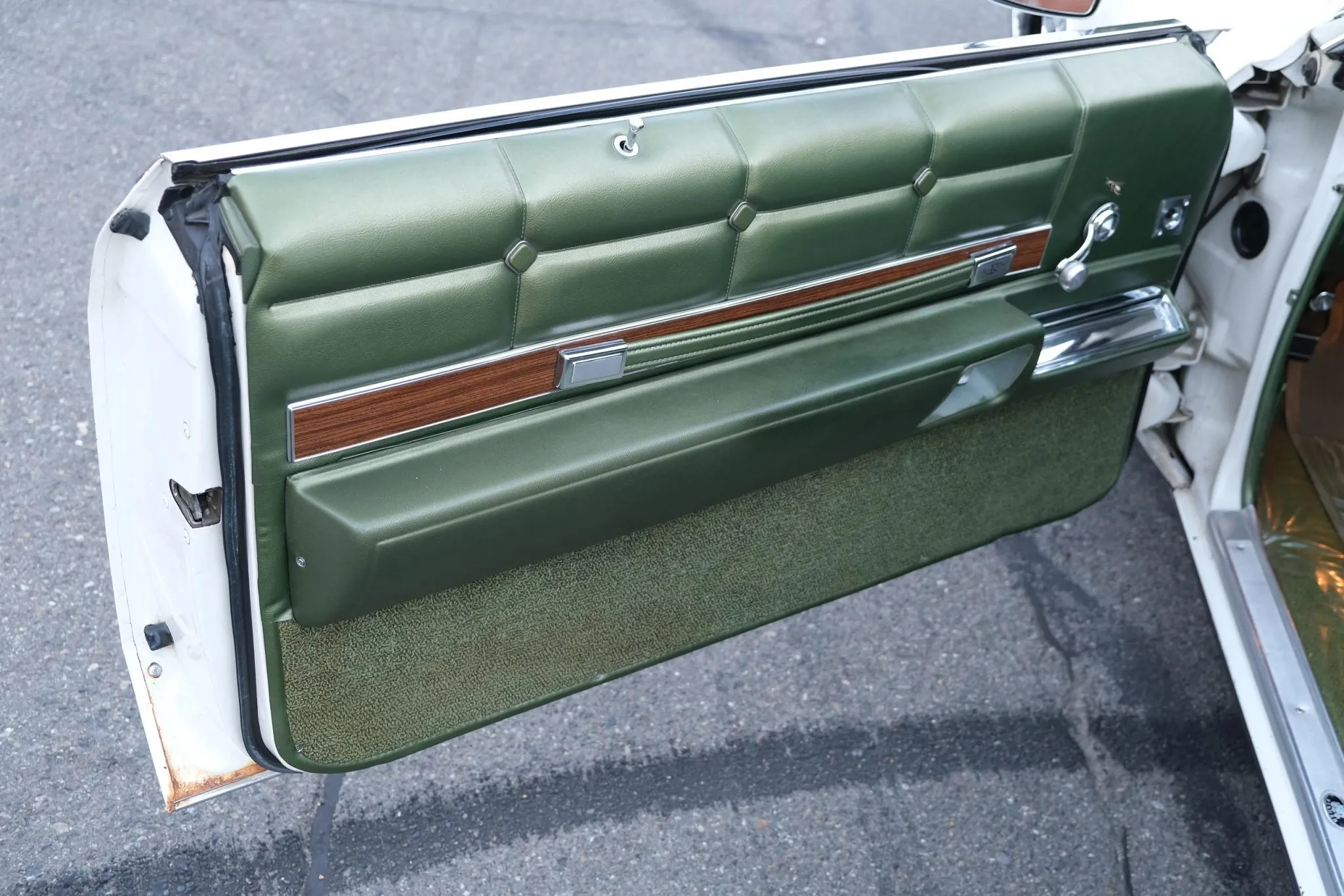
Their test car was more extensively equipped than the rather basic white-and-green Riviera pictured here, which lacks the tester’s air conditioning, power windows, and power seat.
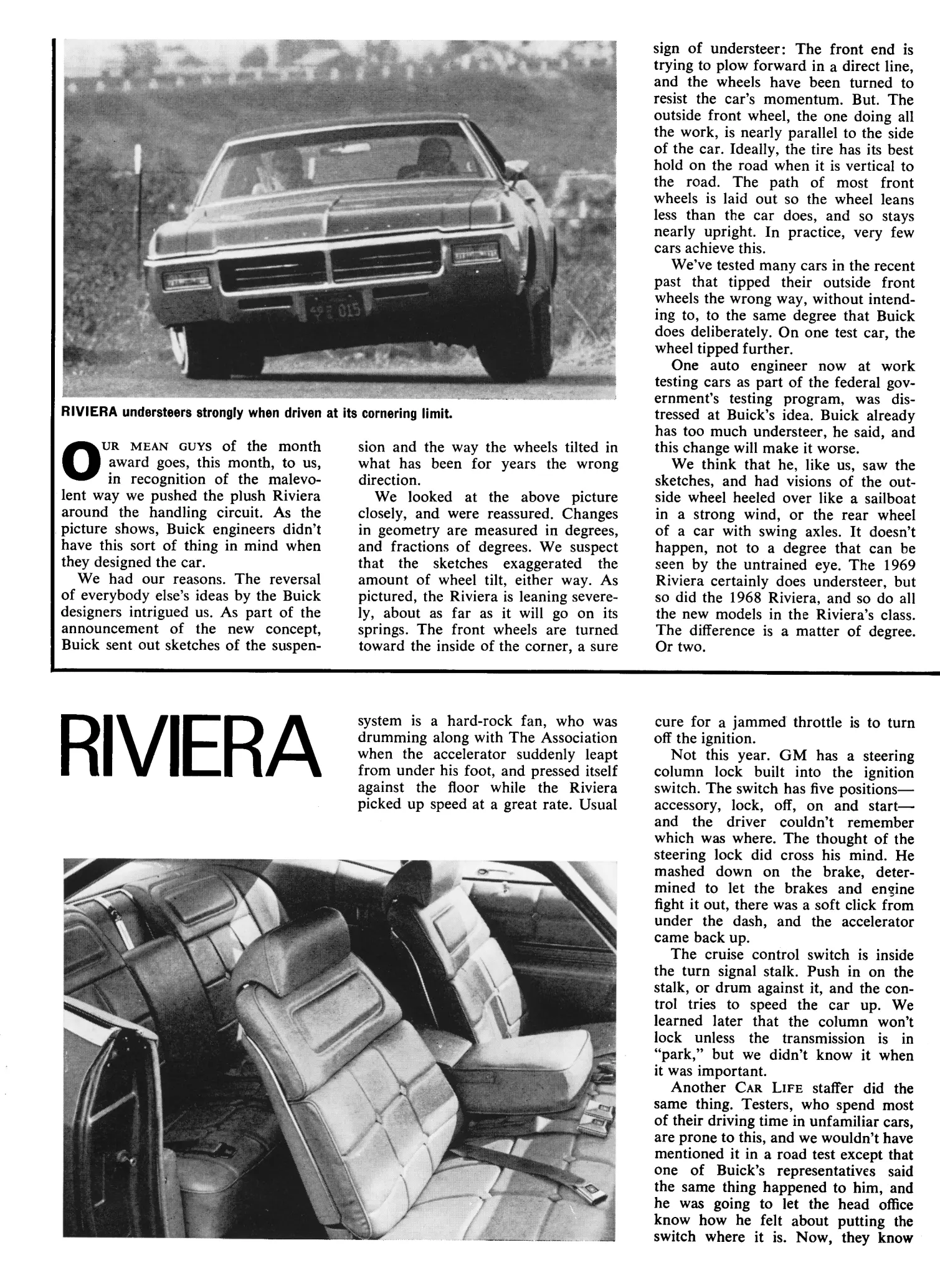
The sidebar on the top half of the page further discusses the handling of the Accu-Drive Riviera, which they put through a handling course. (The caption of the photo reads, “RIVIERA understeers strongly when driven at its cornering limit.”)
The editors remarked:
OUR MEAN GUYS of the month award goes, this month, to us, in recognition of the malevolent way we pushed the plush Riviera around the handling circuit. As the picture shows, Buick engineers didn’t have this sort of thing in mind when they designed the car.
We had our reasons. The reversal of everybody else’s ideas by the Buick designers intrigued us. As part of the announcement of the new concept, Buick sent out sketches of the suspension and the way the wheels tilted in what has been for years the wrong direction.
We looked at the above picture closely, and were reassured. Changes in geometry are measured in degrees, and fractions of degrees. We suspect that the sketches exaggerated the amount of wheel tilt, either way. As pictured, the Riviera is leaning severely, about as far as it will go on its springs. The front wheels are turned toward the inside of the corner, a sure sign of understeer: The front end is trying to plow forward in a direct line, and the wheels have been turned to resist the car’s momentum. But. The outside front wheel, the one doing all the work, is nearly parallel to the side of the car. Ideally, the tire has its best hold on the road when it is vertical to the road. The path of most front wheels is laid out so the wheel leans less than the car does, and so stays nearly upright. In practice, very few cars achieve this.
We’ve tested many cars in the recent past that tipped their outside front wheels the wrong way, without intending to, to the same degree that Buick does deliberately. On one test car, the wheel tipped further.
They noted that other observers also expressed concern:
One auto engineer now at work testing cars as part of the federal government’s testing program, was distressed at Buick’s idea. Buick already has too much understeer, he said, and this change will make it worse.
We think that he, like us, saw the sketches, and had visions of the outside wheel heeled over like a sailboat in a strong wind, or the rear wheel of a car with swing axles. It doesn’t happen, not to a degree that can be seen by the untrained eye. The 1969 Riviera certainly does understeer, but so did the 1968 Riviera, and so do all the new models in the Riviera’s class. The difference is a matter of degree. Or two.
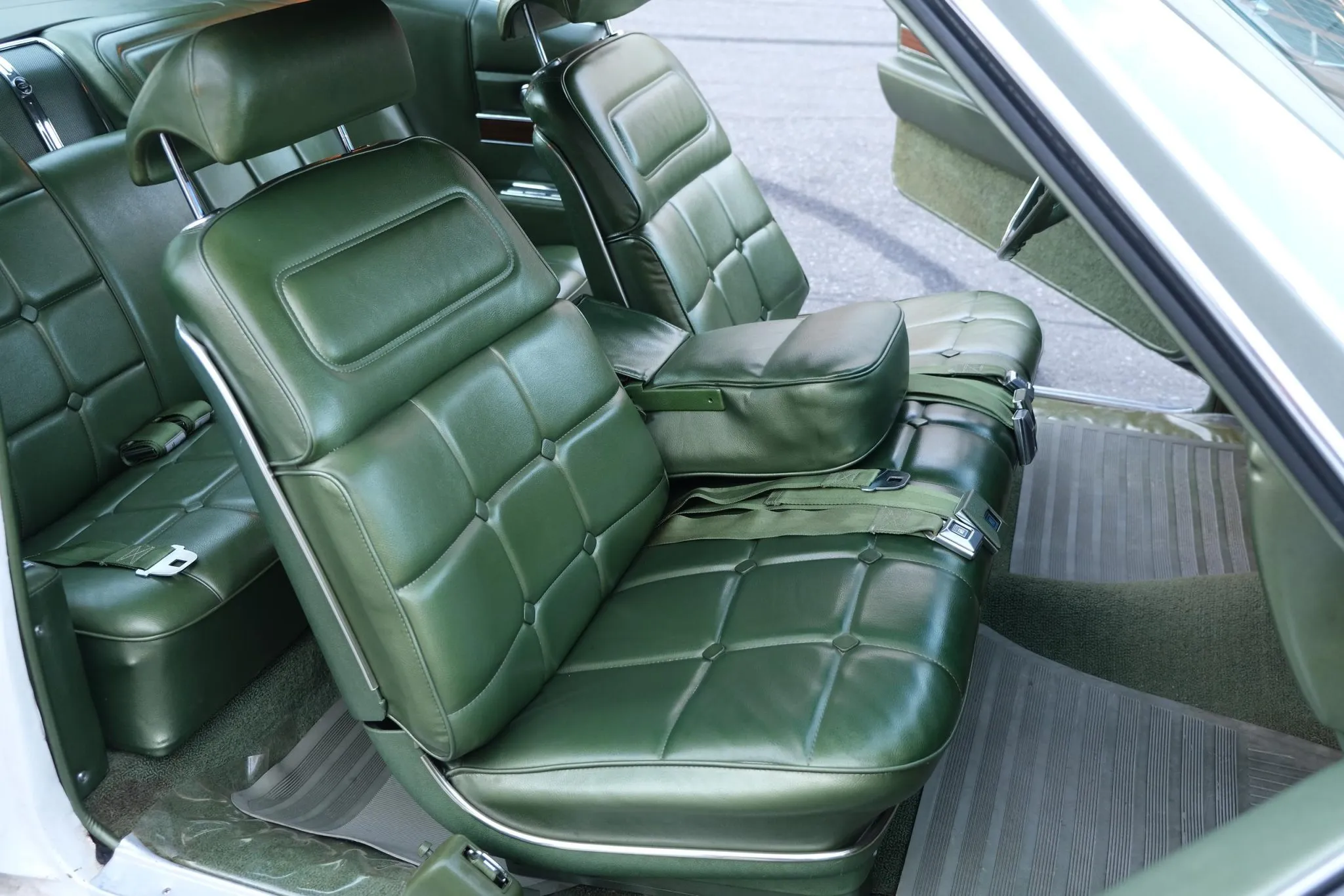
CL‘s tester appears to have had the same Custom Strato-Bench seat as the white-and-green Riviera shown here. (Bucket seats were still available, but ordered less and less frequently.) The editors found the bench comfortable and liked the inertia reel lap belts. However, Car Life was not at all happy with the Riviera’s $63.15 “Cruise Master” cruise control, which caused one of their editors a bad moment:
The first driver to run afoul of the system is a hard-rock fan, who was drumming along with The Association when the accelerator suddenly leapt from under his foot, and pressed itself against the floor while the Riviera picked up speed at a great rate. Usual cure for a jammed throttle is to turn off the ignition. Not this year. GM has a steering column lock built into the ignition switch. The switch has five positions—accessory, lock, off, on and start—and the driver couldn’t remember which was where. The thought of the steering lock did cross his mind. He mashed down on the brake, determined to let the brakes and engine fight it out, there was a soft click from under the dash, and the accelerator came back up.
The Thunderbird they tested in the same issue also had problems with the cruise control. These systems had been available for about a decade at this point, but automakers still hadn’t worked out all the bugs.
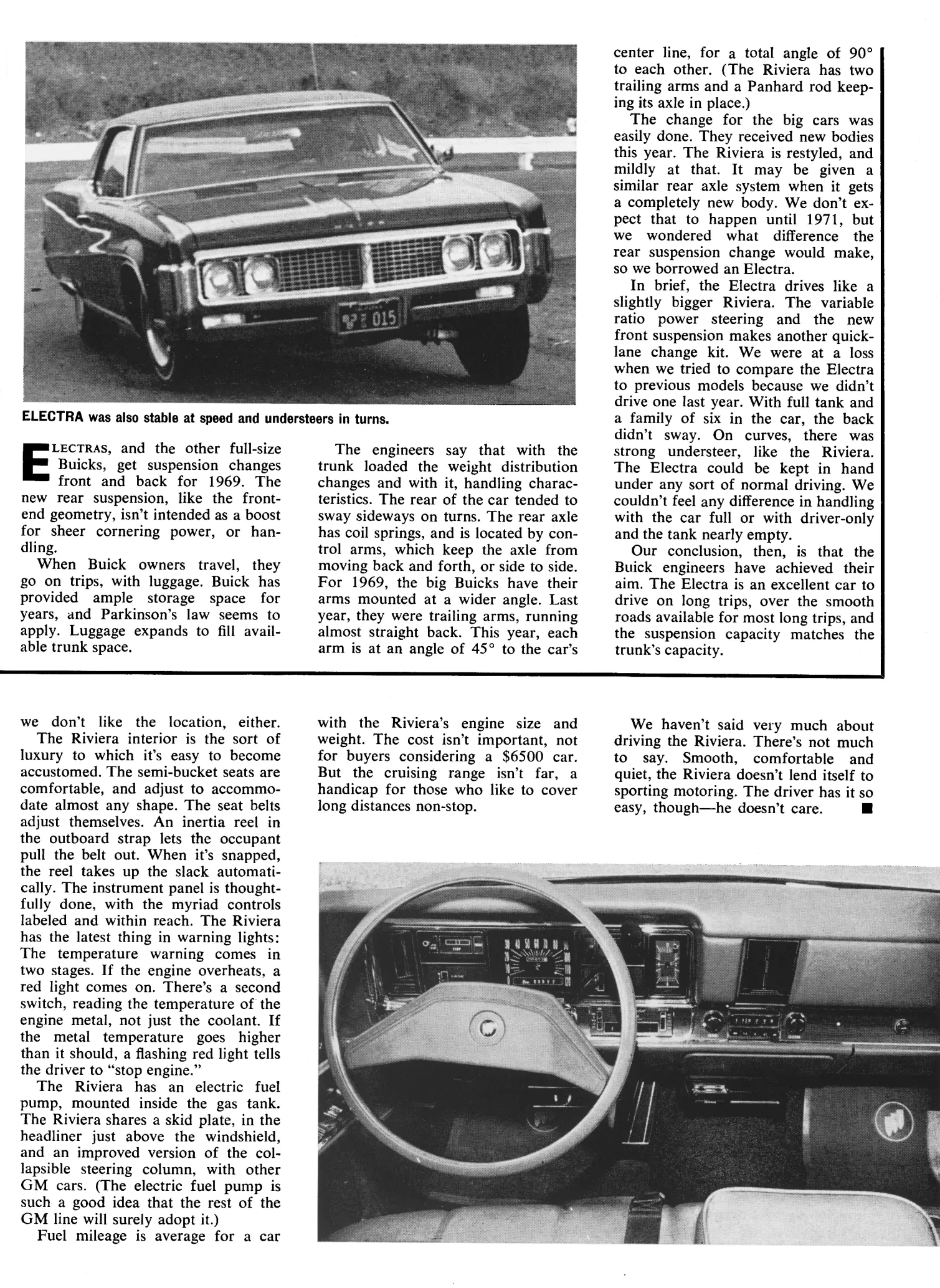
The second sidebar discusses the effects of Accu-Drive on the 1969 C-body Buick Electra 225, which had the same front suspension geometry as the Riviera, but also the new rear suspension with the more widely-splayed, lowered control arms. Car Life hadn’t tested a 1968 Electra 225, but they were curious about the 1969 version.
They remarked:
In brief, the Electra drives like a slightly bigger Riviera. The variable ratio power steering and the new front suspension makes another quick-lane change kit. We were at a loss when we tried to compare the Electra to previous models because we didn’t drive one last year. With full tank and a family of six in the car, the back didn’t sway. On curves, there was strong understeer, like the Riviera. The Electra could be kept in hand under any sort of normal driving. We couldn’t feel any difference in handling with the car full or with driver-only and the tank nearly empty.
Our conclusion, then, is that the Buick engineers have achieved their aim. The Electra is an excellent car to drive on long trips, over the smooth roads available for most long trips, and the suspension capacity matches the trunk’s capacity.
Consumers Union, publisher of Consumer Reports, took a much more jaundiced view of Accu-Drive, noting in a March 1969 test of the Buick LeSabre:
GM has been touting the Buick’s newly designed front suspension for 1969, claiming that it markedly increases directional stability. But we hadn’t found our previous full-sized Buicks to lack directional stability, and the new suspension proved no more competent in that respect than the old. In normal driving, our LeSabre handled well and tracked straight. At the test track, however, the response to emergency handling maneuvers became noticeably slower, and the car understeered increasingly as the cornering severity increased.
Buick continued to advertise Accu-Drive (sometimes styled “AccuDrive,” with no hyphen) at least through 1974. During that period, Consumers Union complained that the handling of full-size Buicks, which they’d previously rated highly, had deteriorated significantly, especially in the bigger Electra 225. How much that was due to Accu-Drive geometry and how much was due to ever-increasing curb weights and pillow-soft suspensions is harder to say.
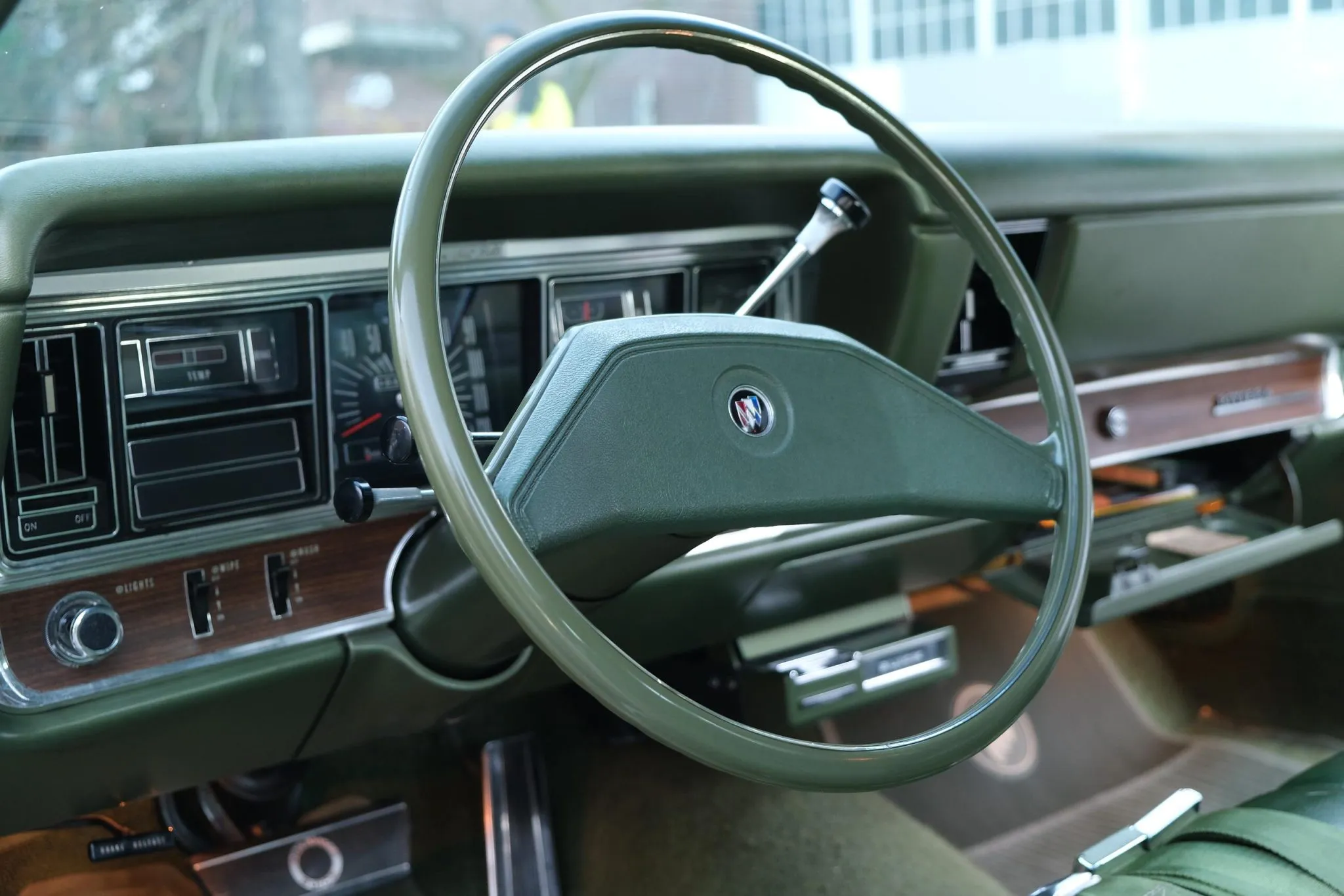
As for the Riviera, Car Life said its interior “is the sort of luxury to which it’s easy to become accustomed,” with a “thoughtfully done” instrument panel and various nice touches. Their biggest complaint, other than the cruise control, was that the 21-gallon fuel tank was awfully small given the car’s thirst. “The cost isn’t important, not for buyers considering a $6500 car,” they said. “But the cruising range isn’t far, a handicap for those who like to cover long distances non-stop.”
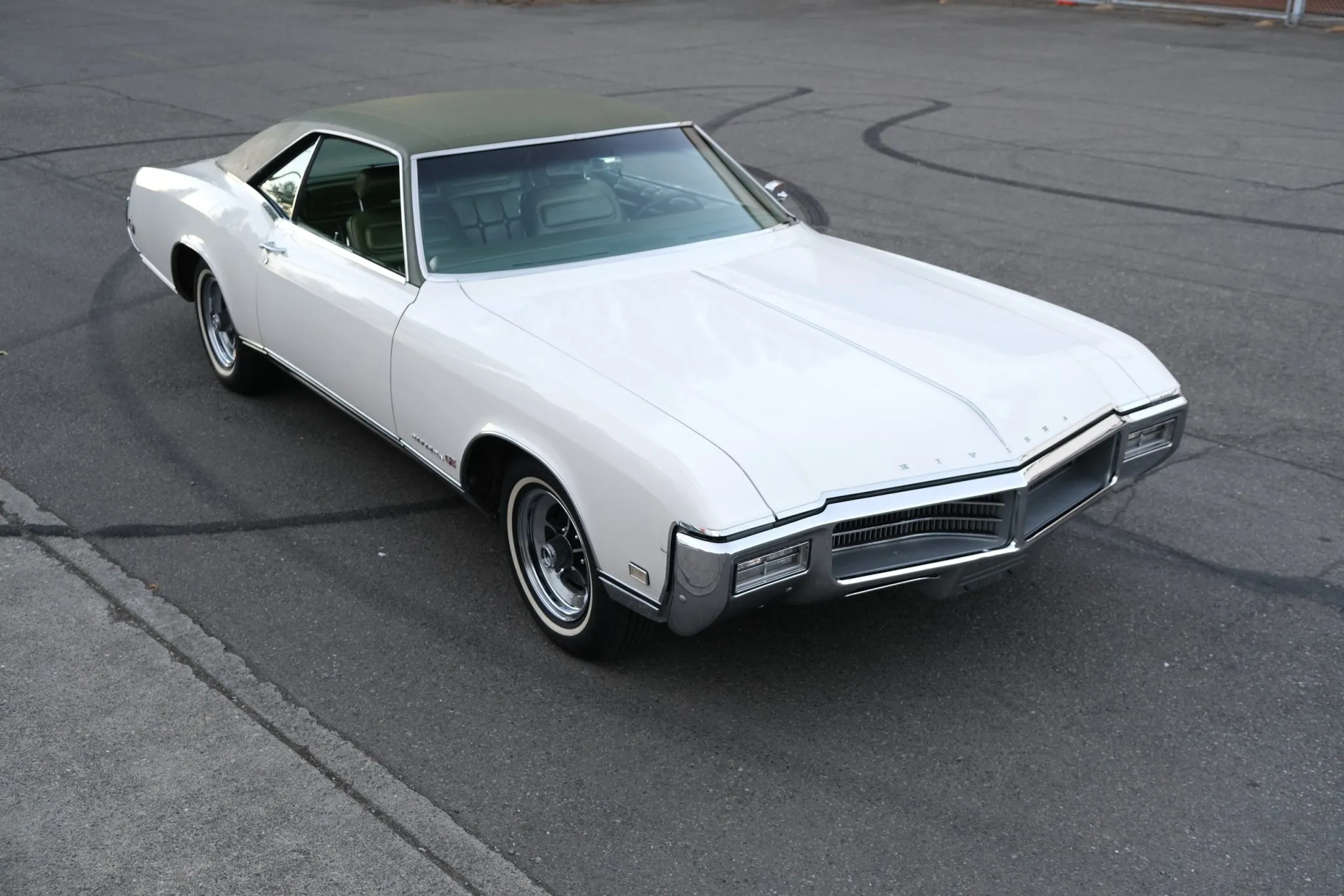
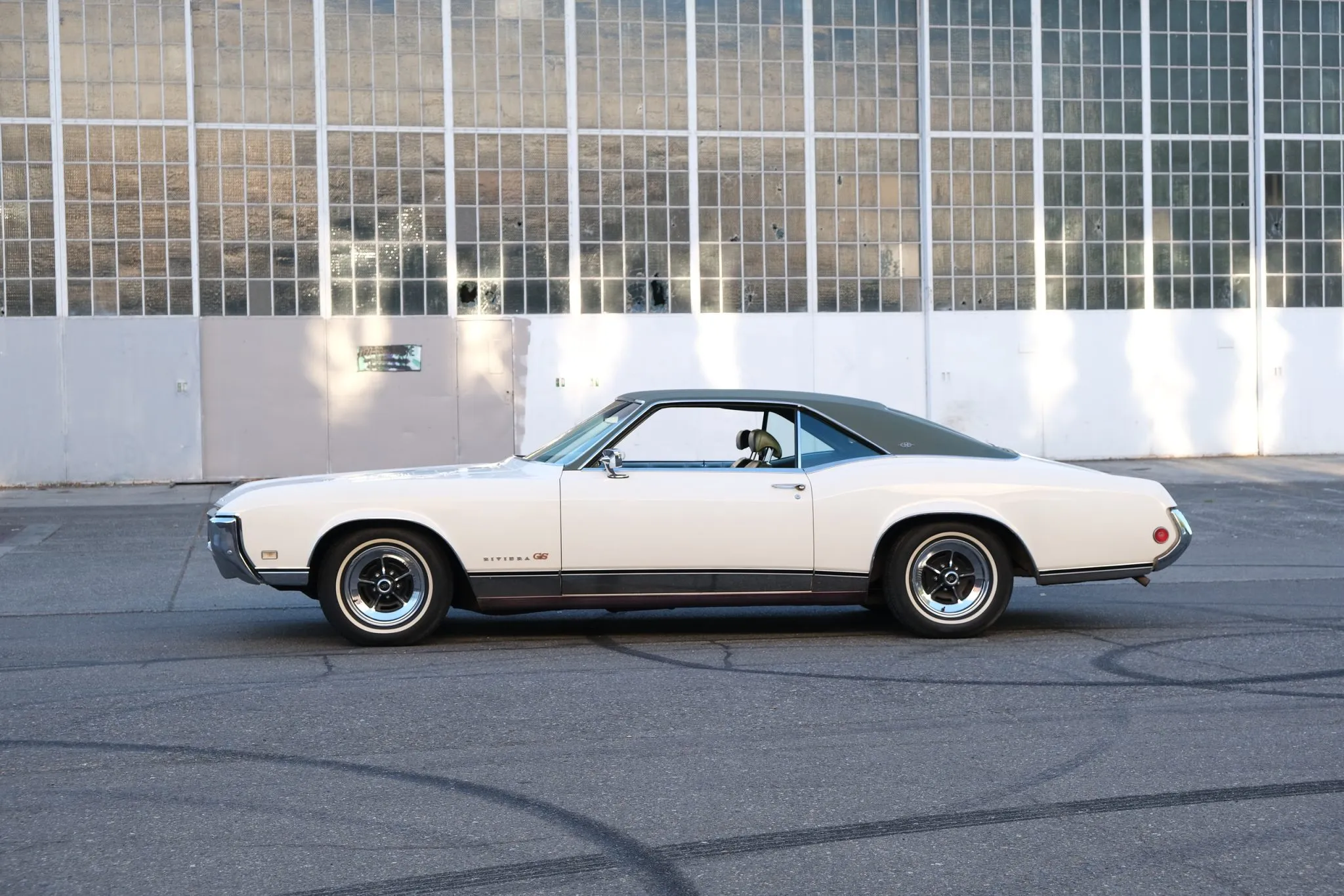
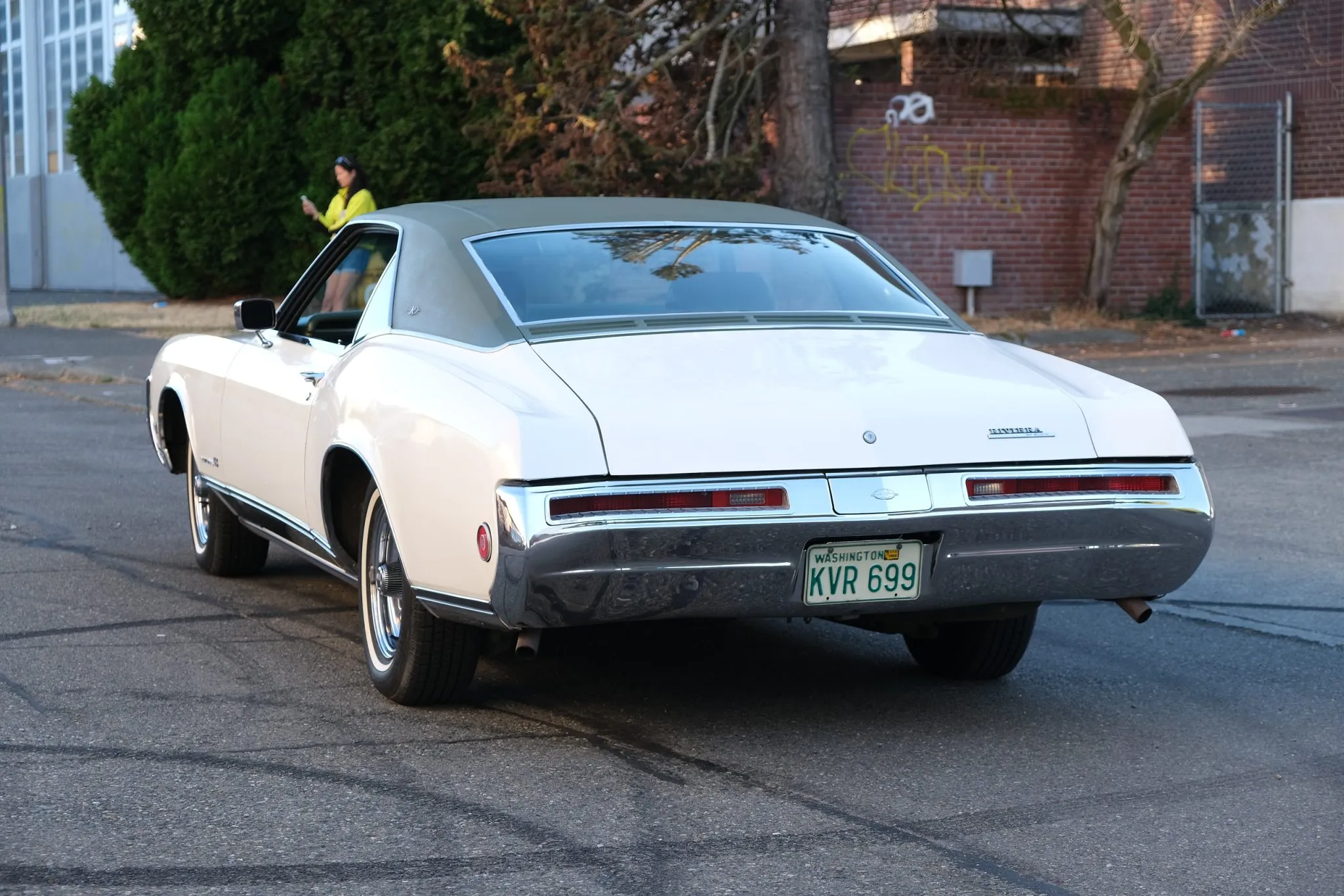
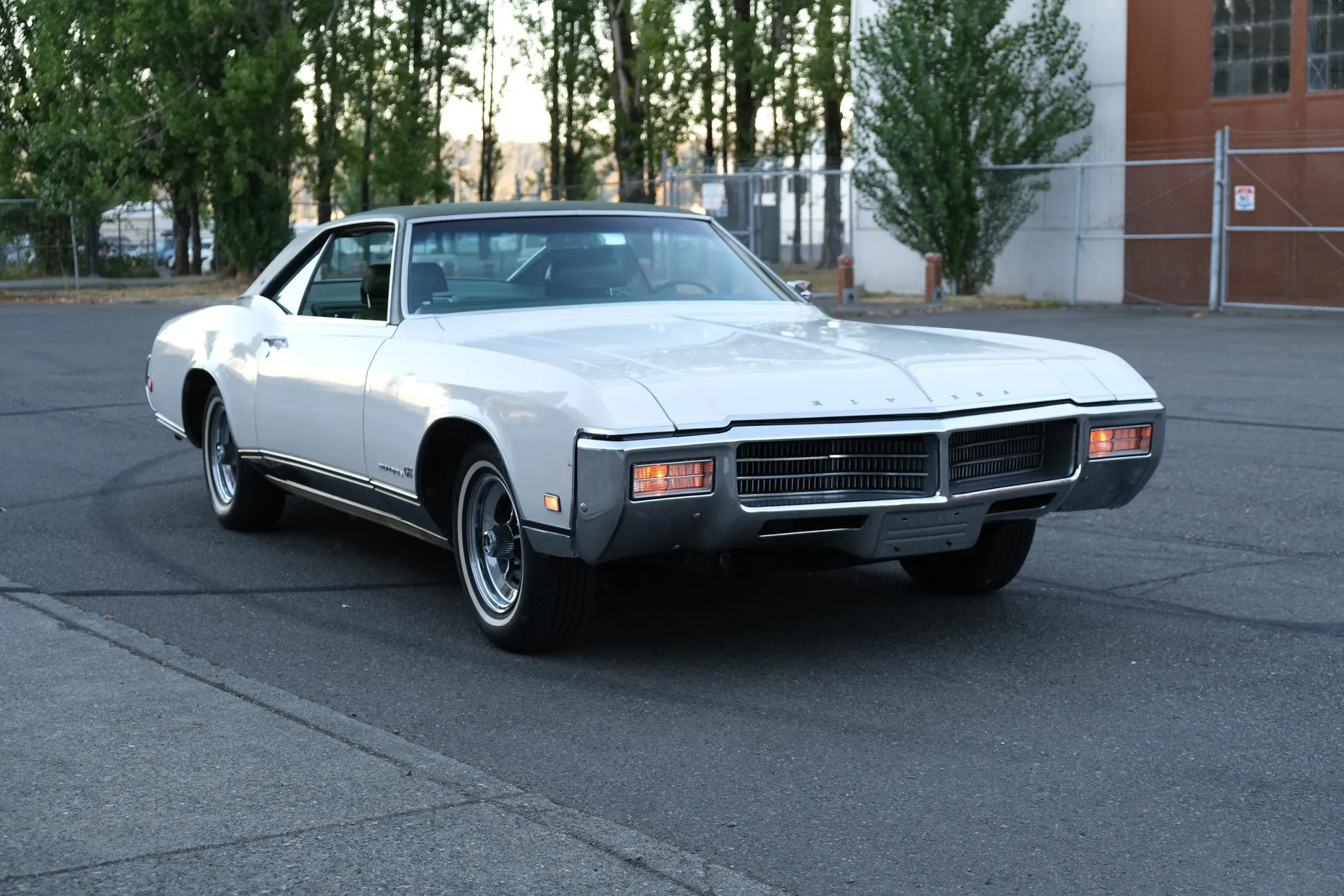
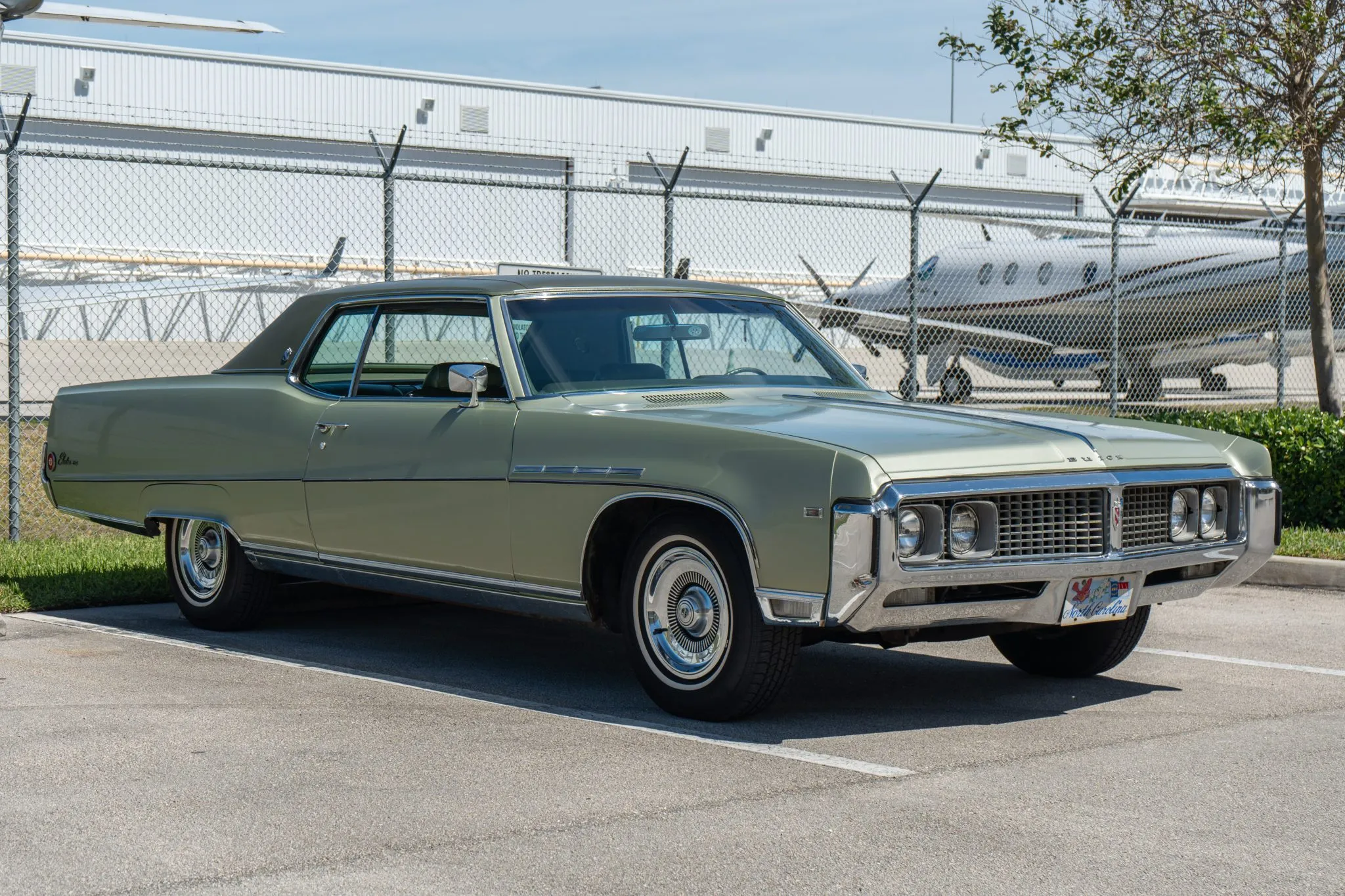
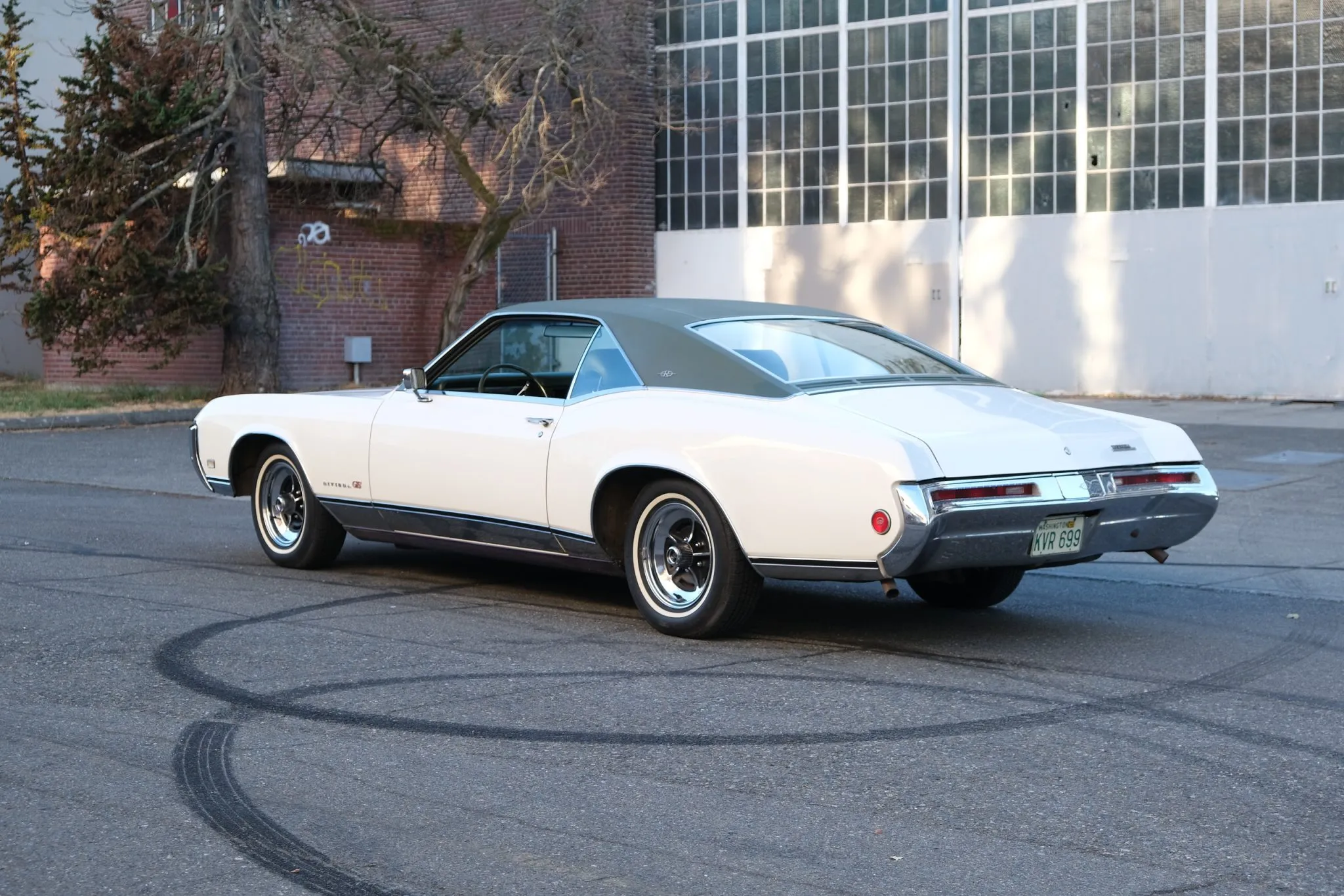
I should probably say a few parting words about the white Riviera featured in the color photos, which has shown up twice on Bring a Trailer, first in 2021 and again in 2022. It’s a very late 1969 car, with a build date in the first week of August. Aside from the GS package and chrome-plated wheels, it’s lightly equipped. Curiously, while it has drum brakes all around, it has a “BUICK DISC BRAKES” brake pedal — a junkyard swap? It failed to sell in 2021, and sold for $14,050 in December 2022; commenters seemed to think the color combination and lack of air conditioning (installed in 94.9 percent of 1969 Rivieras) dragged down its value.
“We haven’t said very much about driving the Riviera,” Car Life concluded. “There’s not much to say. Smooth, comfortable and quiet, the Riviera doesn’t lend itself to sporting motoring. The driver has it so easy, though—he doesn’t care.”
Related Reading
Vintage Car Life Review: 1968 Buick Riviera – “Lots Of Sound, Well-Styled Automobile” (by me)
Curbside Classic: 1968 Buick Riviera – Riding The Curve (by Perry Shoar)
Curbside Classic: 1969 Buick Riviera – A Discourse About Awkwardness, Pragmatism, Family Dynamics, and Buicks (by Jason Shafer)
Vintage Car Life Review: 1969 Pontiac Grand Prix Model SJ – “Tiger In Tuxedo” (by me)
Vintage Car Life Review: 1969 Ford Thunderbird Landau – “It’s Better Than My Living Room” (by me)























“The first driver to run afoul of the system is a hard-rock fan, who was drumming along with The Association…”
I like The Association. I would not propose that their musical style is anywhere near “hard-rock”.
Ha ha…I’ve read this “Car Life” article before and that was the first thing I thought.
That was my first reaction too. I’m old enough to remember their Top 40 hits getting a lot of airplay during the 2nd generation Riviera years, but hard rock they definitely were not.
Goodness, the woman in photo #8 is a time traveller with a smartphone. I wonder what she thinks of The Association.
I’ll bet she’s watching a video of them from YouTube on her smartphone. Probably this one where the Association shows some psychedelic influence added to their usual well-crafted, pop rock/soft rock sound: https://www.youtube.com/watch?v=Q2jH6WhzvzM&list=RDQ2jH6WhzvzM&start_radio=1
Thanks for this. It confirms something I was trying to research AGES ago, when modifying the suspension of a Late ’60s A-body.
I was sure I’d seen an advertisement from Buick about suspension (camber) tuning; although I thought it was in relation to the Skylark A-body, not the Riv and Full-Size. I never did find a copy of that ad. I looked all-over in those pre-internet days. Apparently, I was looking in the “Intermediate” section when I should have been checking out the rest of Buick’s lineup.
For the record, the modifications I made to the A-body are exactly the opposite of what Buick did. I installed the so-called “Tall Spindle” (really, steering knuckle.) Buick raised the inner pivot at the bushings, I raised the outer pivot at the ball-joint. I installed lower, stiffer springs to affect that slope even more. And at the rear, I raised the rear-axle pivot point for the upper control arms where Buick lowered them. This is done for straight-line traction, using suspension geometry to lift the rear of the vehicle under acceleration–which pushes the tires harder into the pavement. The downside here is that it does the opposite when braking.
Buick went for a lower front roll-center, (it’s an imaginary point that in the case of these vehicles is actually below the level of the pavement) which makes the vehicle sway more in corners. The low roll-center acts as a longer lever on the front center of gravity (really, roll axis) so the car flops over on it’s side at the slightest hint of side-force. My modifications raise the roll center so it’s not so “deep underground”, and therefore the lever arm is shorter, less-effective–it’s like adding a bigger sway bar only done with geometry instead of a torsion-bar.
Shelby did something similar with the original GT-350: They relocated the Mustang front upper control arm pivots (lowering them by about an inch) to raise the front roll center from 2.6 to 4.9 inches, reducing lean. (The GT-350 also had a very fat front anti-roll bar, but that was in addition to the geometry revision.)
Yes. The F-body Contingent did the same thing, they called it the “(Dick) Guldstrand Modification”; the bracket on each side of the chassis that the upper control arm bolts-to has two holes re-drilled lower, and more rearward. This provides the same benefits as raising the ball-joint end, plus causes an increase in available positive caster.
Additional info, including a handy template for positioning the holes:
https://www.hotrod.com/how-to/four-holes-improve-your-cars-performance-in-the-turns
Should work for A-bodies, too, but I did not do this.
I actually like the color combo on this example, and I’m not normally one to say flattering things about 68-69 Riviaras but I think it suits it flatteringly.
That said Accu-Drive seems like a genuine dead end to me, right from the getgo reading through this I thought it was backwards, the literal antithesis to the “Shelby Drop” that made Mustangs handle better a few years earlier, and while I see the case is made for it not being meaningfully detrimental in the real world, not being that beneficial either is my takeaway in the end. It strikes me as Oldsmobile Turnpike Cruiser logic applied to the suspension rather than the engine/driveline, but ultimately this suspension geometry logic only was really applicable to the heavyweight landbarge class whose window would only last a fleeting number of years at GM before downsizing.
“We made handling worse but it was bad to begin with but in select everyday driving scenarios it’s mildly smoother!”
I also like the white with the green top. A white car with a different-colored roof (whether vinyl or painted) adds some interesting visual character, and Buick did a much better job than Oldsmobile did in tailoring the integration of the vinyl top and the fastback roof.
I agree regarding the roof. In fact I think the styling overall is top notch. Up front, the integration of the bumper, grille & parking lights with the headlights hidden is masterful. As is the rear bumper with its strong horizontal effect. Model year 1969 overall was IMO at the pinnacle of styling.
4,905 lbs test weight, 120+ mph, and 90-odd percent of them sold with 4-wheel drums. What a disgrace.
Just to add spice, if your 9mpg wasn’t exciting enough for you, they cobbled up this InnAccu-FlopAbout front end geometry in some addled defiance of perfectly sensible basic principles (though it is true that negative camber, and strong castor, adds weight to steering). Surprisingly, it didn’t work.
Finally, they iced the top with a dab of a killer cruise control (and here’s to betting that that didn’t get changed till the next model year). What a machine!
I reckon the ’60’s drugs got to the middle class engineers in Detroit before they got to the hippies.
So Buick spent plenty of time, effort and money to design, develop and build Accu-Ride into their line only for it to make little difference except when pushed to extremes where it exacerbated an already problem?
If only Buick opted for the UPP this car would be perfect GM.
It is a pretty car, though, and I like the white / green color combo.
GM one-button cruise control – memories of Dad & the ’73 Impala, fiddling with the button trying to cancel the thing or slow it down a bit – and it suddenly leaping ahead full throttle