

There is no other car in the world that I feel more intimately connected to and familiar with than the Volkswagen Beetle. I’ve called the Beetle my surrogate mother and I’ve written dozens of posts about it, including a very deep dive into its origins. But I’ve never actually written about my own VWs, so I’ll start with my first, a white ’64 1200 sedan just like the one above but without the sunroof.
Thinking about it once again confirmed what I’d intuitively known about the Beetle since I was a toddler: It was the greatest car ever built. And that it was my automotive soulmate.
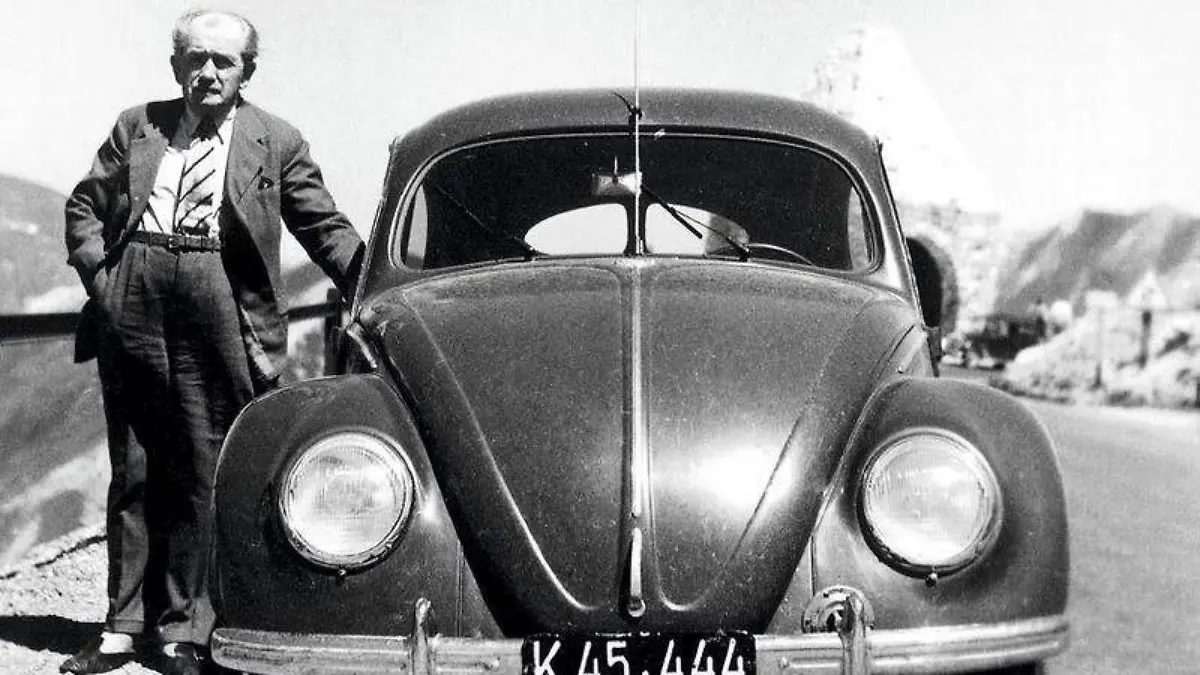
I’m not going to do another in-depth VW history here, but to back up my claim, here’s a few key tidbits: The premise of the VW was of course to put Germans on wheels, just like the Ford Model T had done for Americans some twenty years earlier. Yes, its creation was instigated by Hitler, but it was Ferdinand Porsche who birthed it, and what a superb job he and his team of engineers and designers did. It ended up putting folks on wheels all over the world as the most built car ever, with over 21 million built over its 65 year production life. The Model T lasted only twenty years, and by that time it was utterly obsolete.
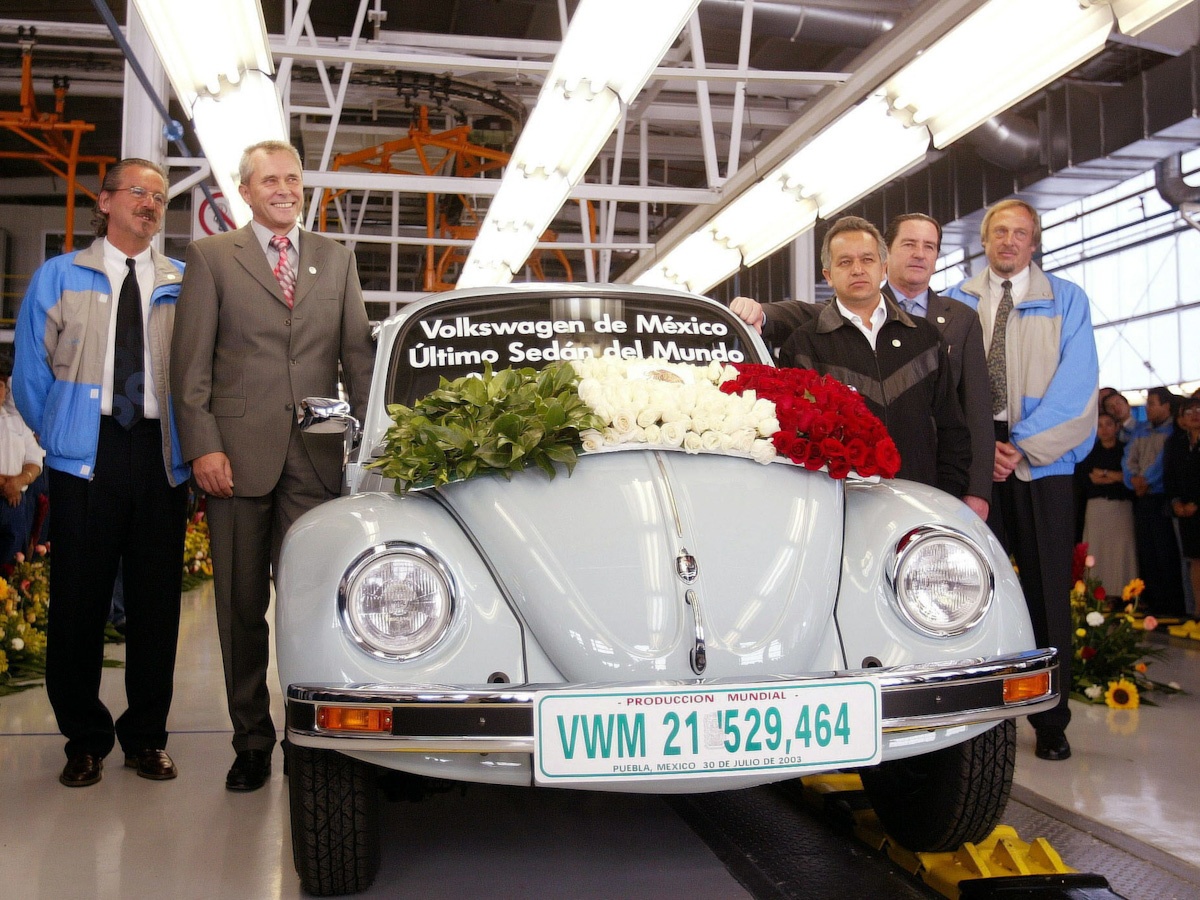
The Beetle was still being built in Mexico all the way until 2003. Of course it was hardly up to date by that time, but it was still a viable economy car and one that would still perform quite adequately in modern conditions. A testament to a very advanced and sound design in 1938.
I had the opportunity to drive a ’69 Beetle a few years back and wrote up my report of that here. I was pleasantly surprised at how nicely that car drove and behaved, and it would be a viable daily driver for me. That of course acknowledges the reality that my daily drive usage pattern is a bit outside the typical. And I still use my ’66 F100 as a work truck. But the VW very much does not feel or drive like an “antique”. It’s actually fun to drive, with the kind of light but mechanical feedback all-too often missing from more modern cars.
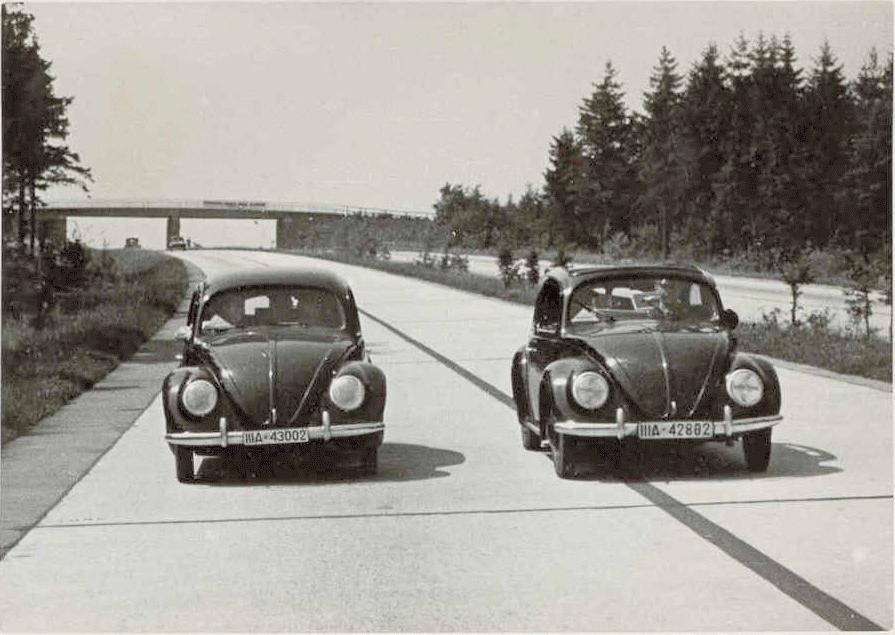
Porsche was given a very unenviable task by Hitler: build a four-passenger car that can cruise at 100 kmh (61 mph) on the autobahn with a fuel consumption of no more than 7.0 L/100km (33.6 US mpg). Most significantly, Hitler wanted it to be sold for less than 1000 RM (Reichsmark), or some $250 at the time. This was deemed as utterly absurd by the existing German manufacturers, which is why they pulled out of a coalition to build it. Yet Porsche was able to meet the 995 RM sales price target in the end, although that was only possible since the price of building the huge factory did not have to be amortized by its sales price, as it was paid for by the KdF organization.
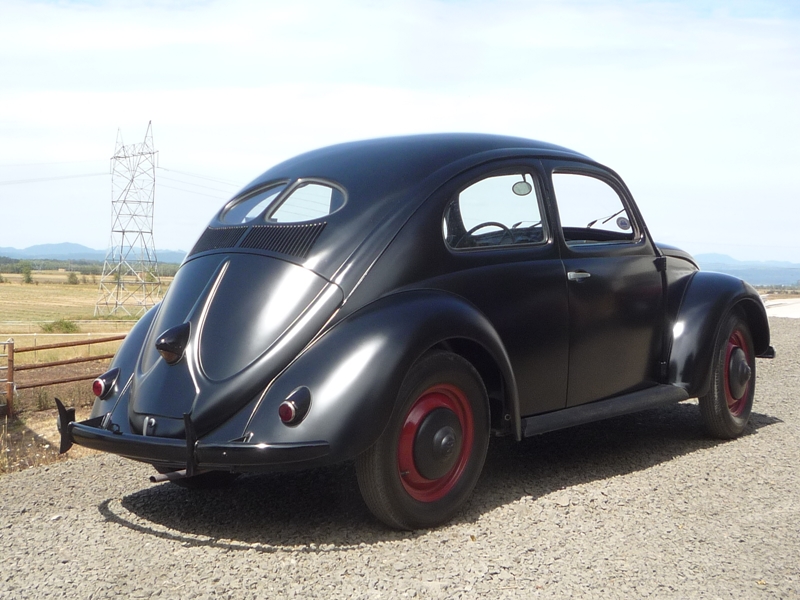
It’s all-too often claimed that the VW was just a scaled down Tatra or such, or that others “invented” the Volkswagen first. I’ve debunked all those claims thoroughly here, but what was actually so brilliant about the VW is not its shape or rear engine, but all the myriad of small details and their execution that actually made it such a vastly superior car in its time. For instance, all of those swooping lines (creases) in the body were not there for aesthetic reasons; they made the large pressings much stiffer, allowing a thinner gauge of steel to be used, which saved a significant amount of weight, which made a material difference in meeting its performance and fuel economy targets. This alone was a breakthrough, but just one of many.
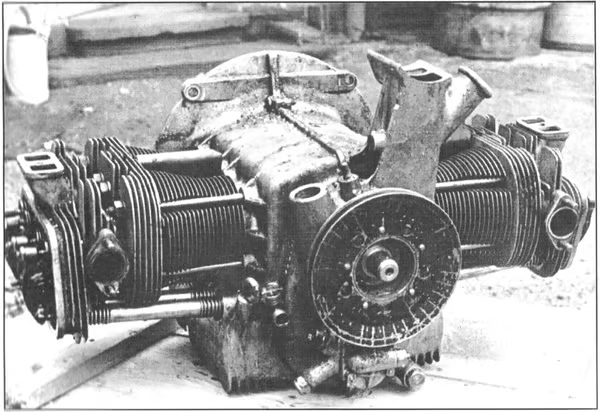
Perhaps the single most significant engineering choice was in the engine, in terms of its oversquare bore and stroke (bore greater than stroke), created by Porsche engineer Franz Reimspiess after the earlier two-cylinder engines proved inadequate. I don’t have the time to dig through vast engine statistics, but oversquare engine were extremely unusual in the prewar era; most had decidedly undersquare dimensions. This was a key factor in the ability of the VW engine to run all day long wide-open, with substantially reduced friction as well as improved breathing. And of course it’s a key element to its longevity, both in terms of racking up miles as well as still being a viable engine built into the 21st century.
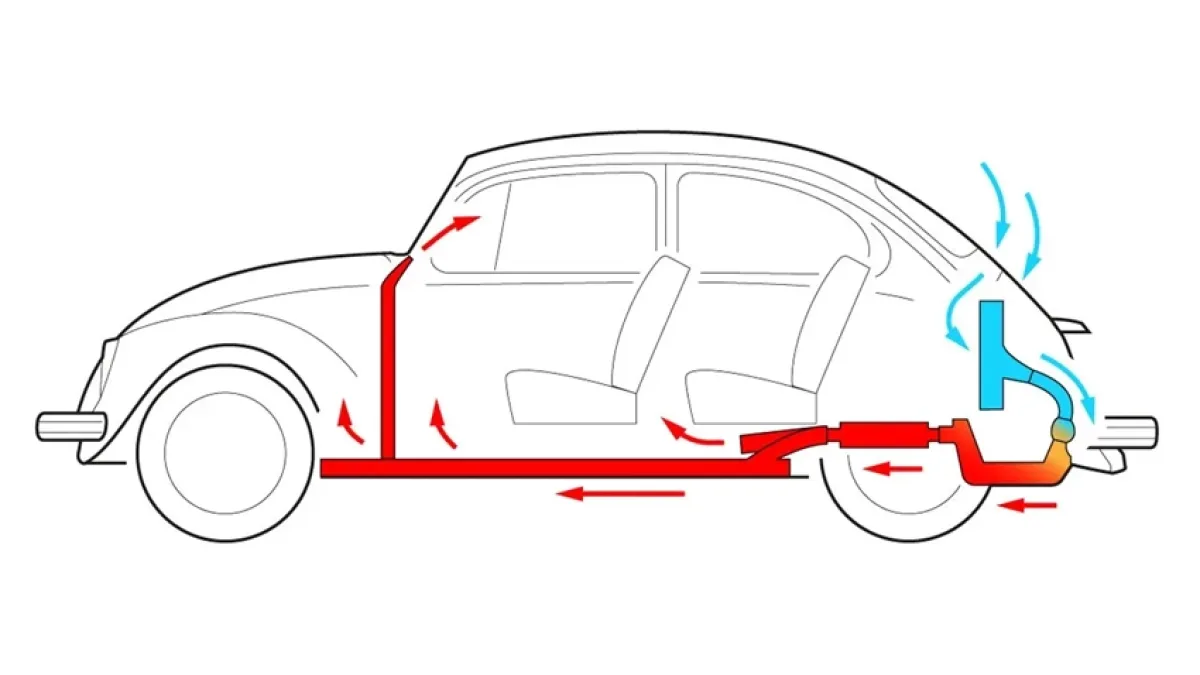
Despite the immense pressure to find ways to keep the Beetle’s cost within Hitler’s mandate, Porsche and his team found it possible to add a heating system at almost the last minute. Among other accolades, the VW was the first mass produced car to have a standard heating and defrosting system; American cars didn’t get that until about 1962. And no, contrary to popular myth, it worked quite well, as long as it didn’t have leaks or was operated correctly.
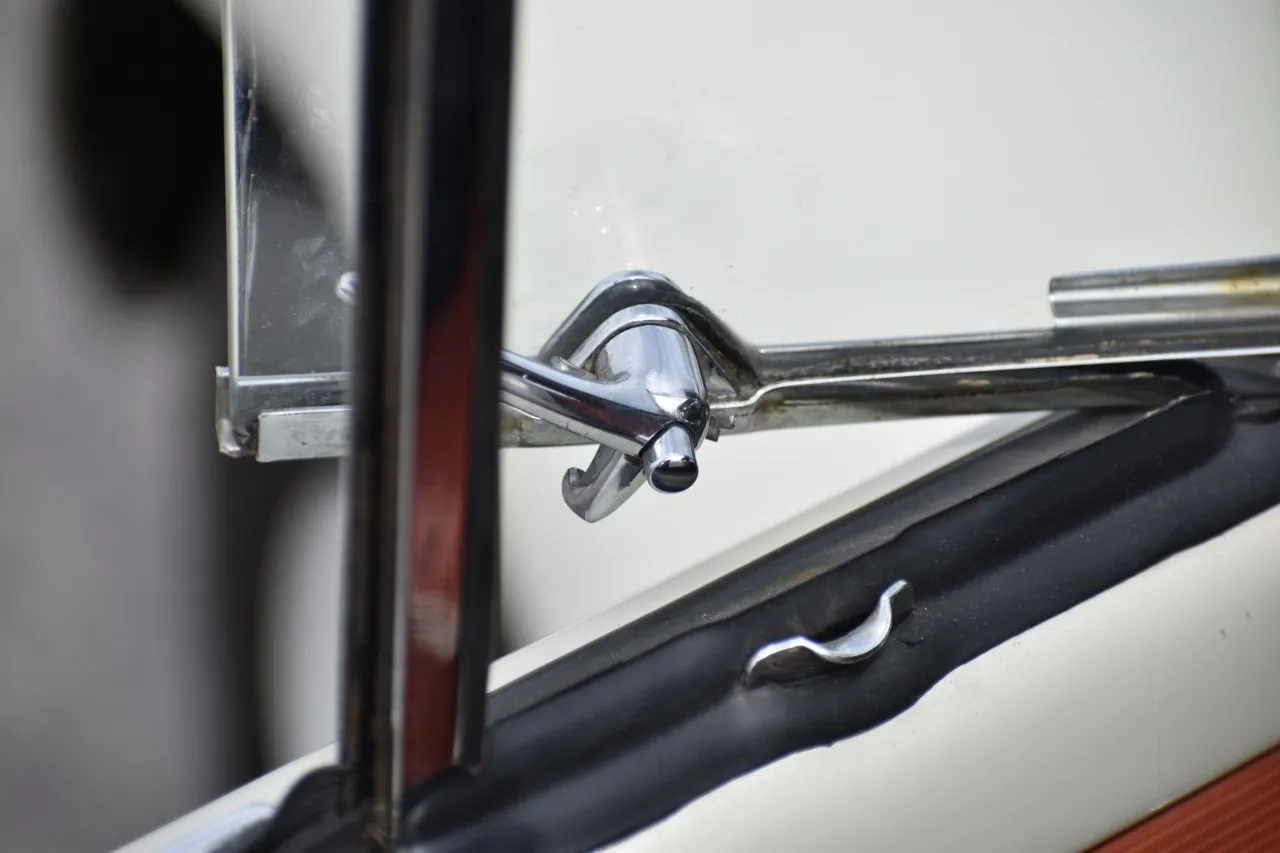
That meant cracking open the vent window as otherwise the engine blower wouldn’t be able to be effective in delivering heat into the near-air tight VW body. I always stayed cozy in my VWs, even in Iowa’s winters.
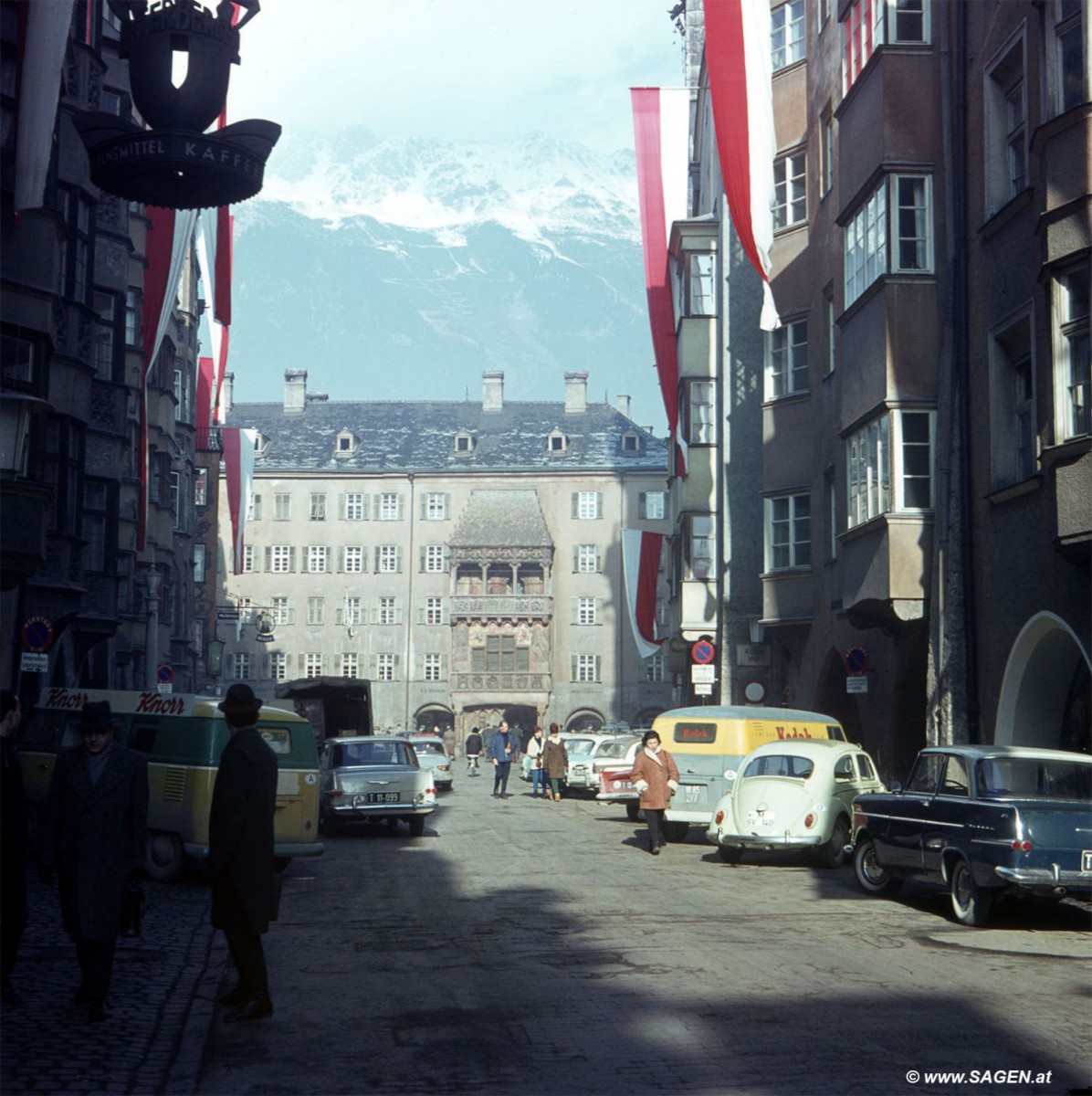
My deep affection for the Beetle was cultivated at a time in Austria in the 1950s when it was of course extremely common. Although I don’t have the statistics for this either, it was most likely the best selling brand there at the time, although probably not quite as common as in Germany. They weren’t all that affordable, as Austria had a lower average income back then and imports like the Fiat 600 and 1100 were very popular.
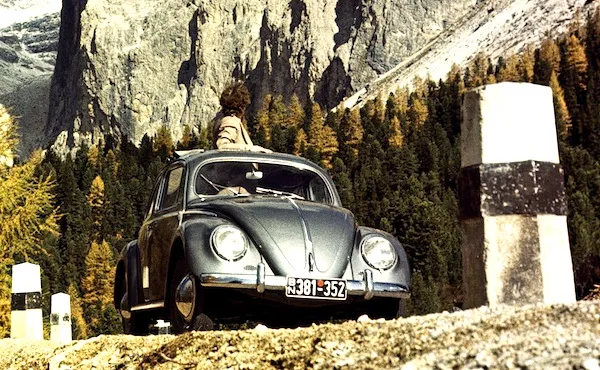
Riding in any car was a relatively rare occurrence for me at the time, and I can literally remember every ride in a VW. A friend of my mother had one (she was from a wealthy family) and she took us out a couple of times, up in the mountains. Us kids stood up in the sunroof, which made the ride (and views) that much more memorable.
And another acquaintance had one with hand controls, as her legs were impaired from polio. I was fascinated to watch her drive it. Some friends down the street bought one in 1959 or so, and I was so jealous as they washed it out front in the street with a bucket every Saturday morning and then drove off somewhere on Sundays. We had to walk to the train station to get out of town…
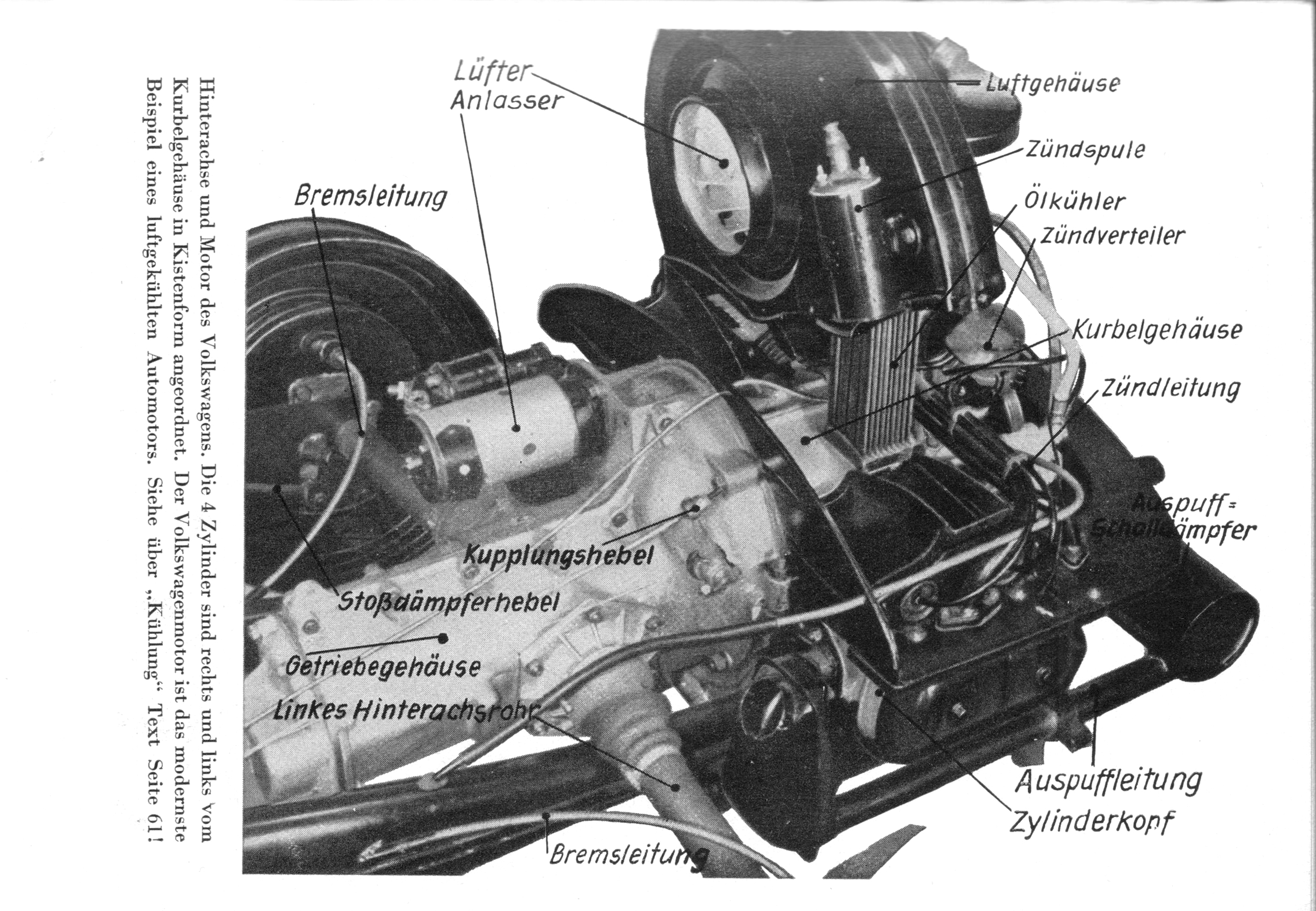
I discovered a book of my father’s, “Mit…Zig Sachen” (1942), a quite comprehensive tome on “all one needs to know about the automobile”. I struggled with the dense text but I did find this image of the Volkswagen’s engine and transmission fascinating. He got his driver’s license sometime during the war when he was back from active duty, so presumably he used this to prepare for the very comprehensive written test which did cover basic technical aspects of the car. Or he was just interested. Having spent way too much time gazing at this and other pictures of the VW in that book may explain in part why I feel that every part and element of the VW is just…so right, and familiar.
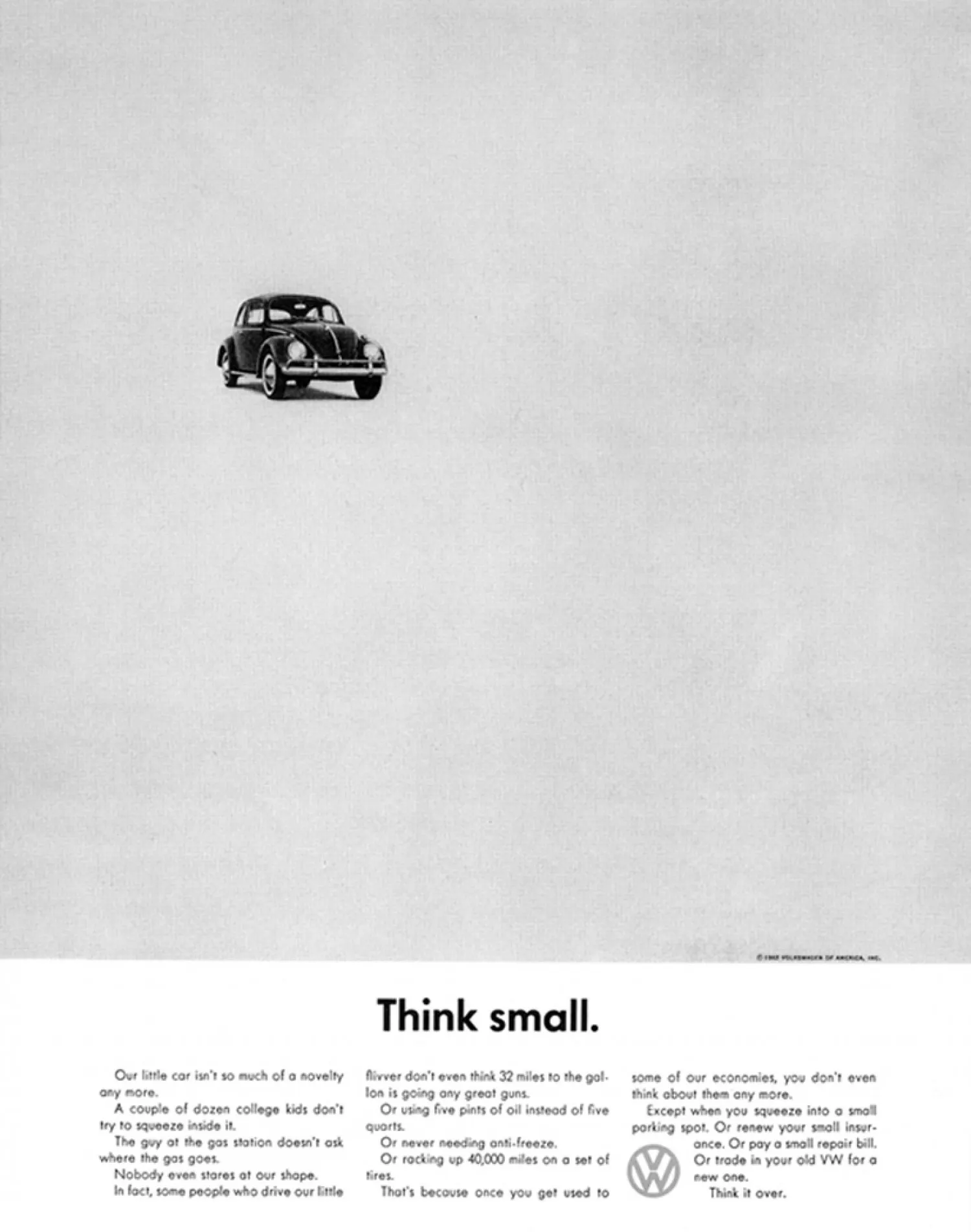
I was rather surprised to see how common the Beetle was in the US when we arrived here in 1960. I had no idea…But starting in 1955, VW sales began a meteoric rise that didn’t end until 1970, when over half a million were sold here. Well, that’s another big story which I took on here. The VW’s qualities (and its quality build) really resonated with any Americans at a time when the domestic cars were getting bigger and bigger. Here was a car that provided economical and reliable transportation and did it with some flair and fun.
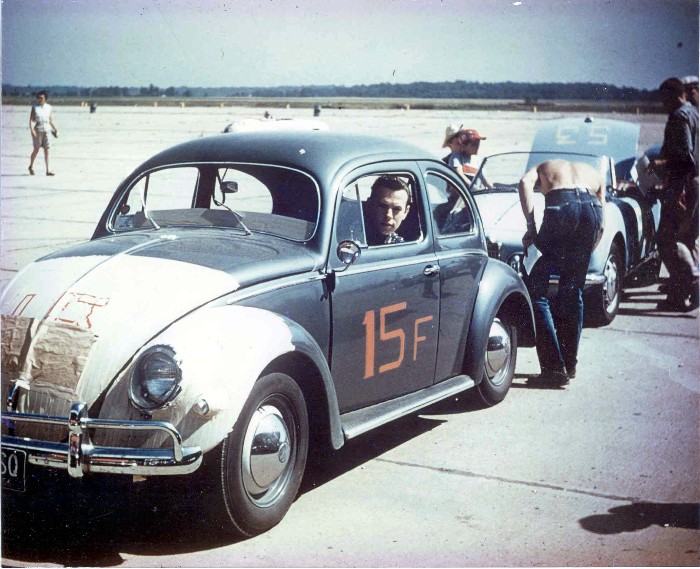
Yes, fun, as in fun to drive. Let’s not forget that the VW was still quite advanced at the time, and with its light and accurate steering, slick-shifting gearbox, a small but willing engine, and very good ride and handling (if one knew how to utilize oversteer properly) thanks to its four wheel independent suspension. It was of course very closely related to the Porsche 356, which started life essentially as a rebodied VW.
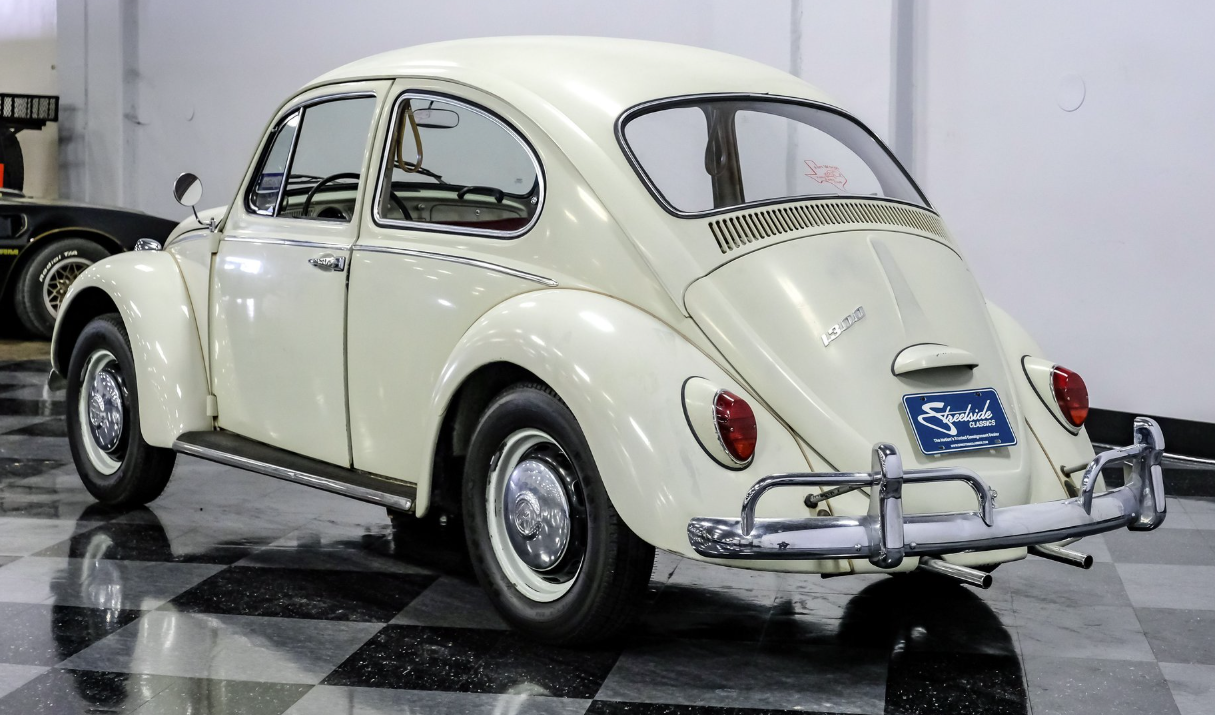
In 1969 when my older brother’s rusted and clapped-out ’57 MGA gave up its British ghost, my father insisted he buy something more reliable, since he was financing it. That turned out to be a white 1966 Beetle 1300, and what a great choice it was. It cost $900, but it was in very rude health. He finally sold it to a woman I knew in 1972, by which time it had well over 100k miles on its original engine. I helped him put in a new clutch just before he sold it, but that was the extent of any real repairs.
I drove it daily for some six weeks in the summer of 1971 while he was in Europe and I fell deeply in love with it. It was surprisingly zippy for a VW, thanks to its new 50 hp 1300 engine, a 25% boost in power. And since it kept the same final drive gearing as the 1200, it accelerated with a bit of actual oomph. I went as far as to call the 1300 “The Best Beetle Of Them All , Or At Least The Sportiest” in my CC of a ’66. That’s because the 1500 and later Beetles had a higher (lower numerical) final drive ratio, which improved highway engine noise but somewhat blunted the sporty qualities of the higher-revving 1300 engine.

In the spring of 1973, I drove my ’63 Corvair back to the Towson, MD area to reunite with my high school sweetheart. She had come out to Wisconsin a few months earlier to visit her sister and I actually drove my brother’s ’66 VW up there (borrowed from its new owner) to see her, and the long-simmering embers reignited. I moved in with her and got a job as a bricklayer’s helper. I’d only had the Corvair for barely a year but some issues were cropping up, most of all the engine started to knock again, a deep low knock that I assumed was in the very guts of the engine. A rod bearing? Or? I didn’t know for sure, but I certainly wasn’t going to deal with it and the car wasn’t worth an expensive repair. It had small rust holes on the top of both front fenders behind the leading edge. And it was just feeling a bit tired, so I decided to buy a…what else? A VW, of course.
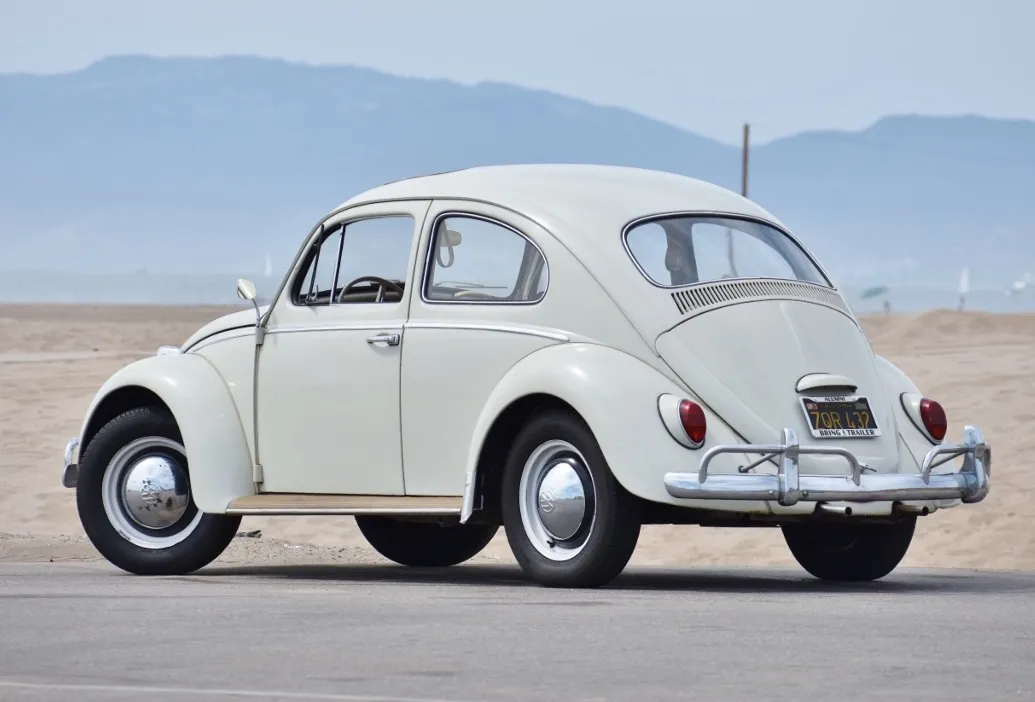
In the Sunday paper I found a ’64 for sale, for $400 (about $3,000 in CPI adjusted dollars). It was owned by a youngish married guy who was ready for something new. It looked very clean and solid and had some 70 or 80k miles on it? It drove great and I agreed to buy it. Maryland had a mandatory safety inspection required at the time of sale, so he needed to have that done first.
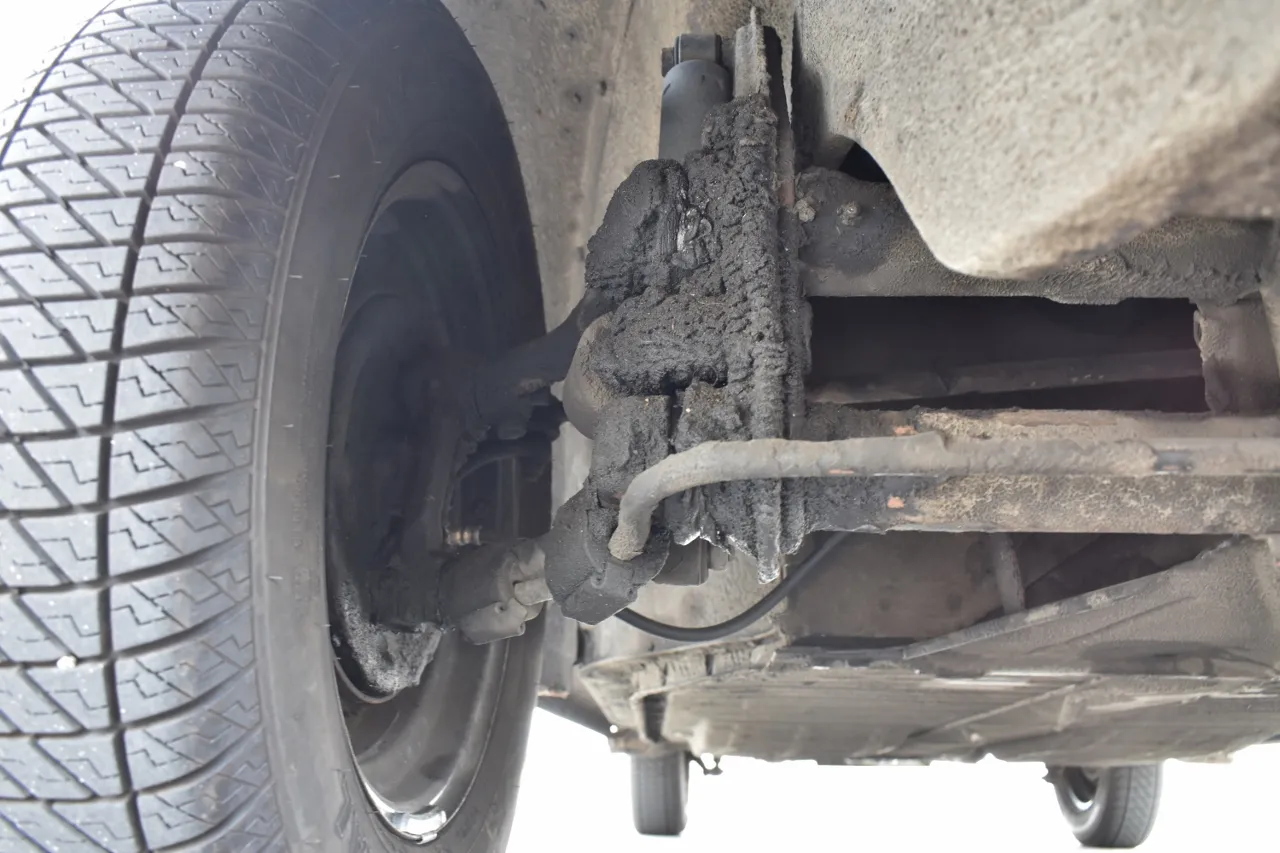
That didn’t turn out so well for him, as it needed new kingpins in the front suspension. That cost $140, IIRC. Ouch! He was none too happy about that, but I was! The front end was really nice and tight now. I splurged and put a set of European textile-belt radials on it, some obscure brand (the cheapest I could find), but they made a very significant difference. The steering was crisper and the handling was improved significantly, with higher lateral adhesion and greater predictability.
Speaking of handling, while I fully acknowledge the ability of a swing-axle VW to do nasty things, it never, ever happened to me. I cut my teeth on the Corvair, which had a significantly higher rear weight bias, and never had a scary moment with it either. I understand oversteer and I know how to utilize it appropriately and avoid its bite. Frankly, I’m a fan of oversteer; I love setting up a car into a brisk curve with a bit of steering input and then letting the rear take over while the steering wheel goes back to close to neutral (or even countersteering). I removed the front anti-sway bar on my xB in part because it has increased its oversteer. Bring it on!
The reality is that the great majority of VW drivers in the US had no experience with oversteer, or any relevant education or training. The typical VW-ends-upside-down-in-the-ditch was the result of hitting the brakes in a curve when the driver felt that maybe they were going too fast. Bad call; the oversteer will scrub off speed by itself, unless the throttle is floored.
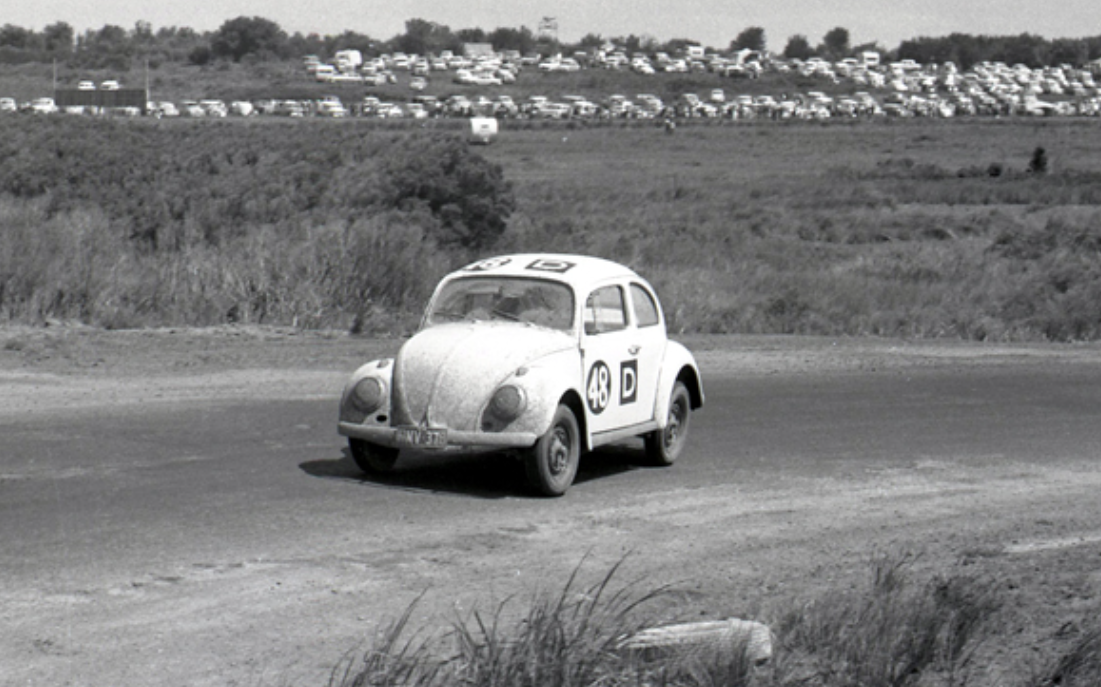
This stock VW racing flat-out in Australia in 1962 clearly shows the camber change at the rear as it oversteers as well as the front wheels having a bit of countersteer to compensate. Looks a bit precarious, but this is how you drive a swing-axle VW briskly, as in flat out. Hit the brakes and/or steer into the curve, and…game’s up! By the way, VW Beetles utterly dominated the grueling Round Australia Trials in the ’50s and early ’60s, to the consternation of much more powerful and expensive cars.
Obviously there’s a number of fairly easy ways to mitigate this, the most obvious being to adjust the rear torsion bars for negative static camber as well as anti-camber bars or similar devices. And of course VW eventually made changes in the rear suspension to take away its sting. Or fun, depending on your relationship to swing axles.
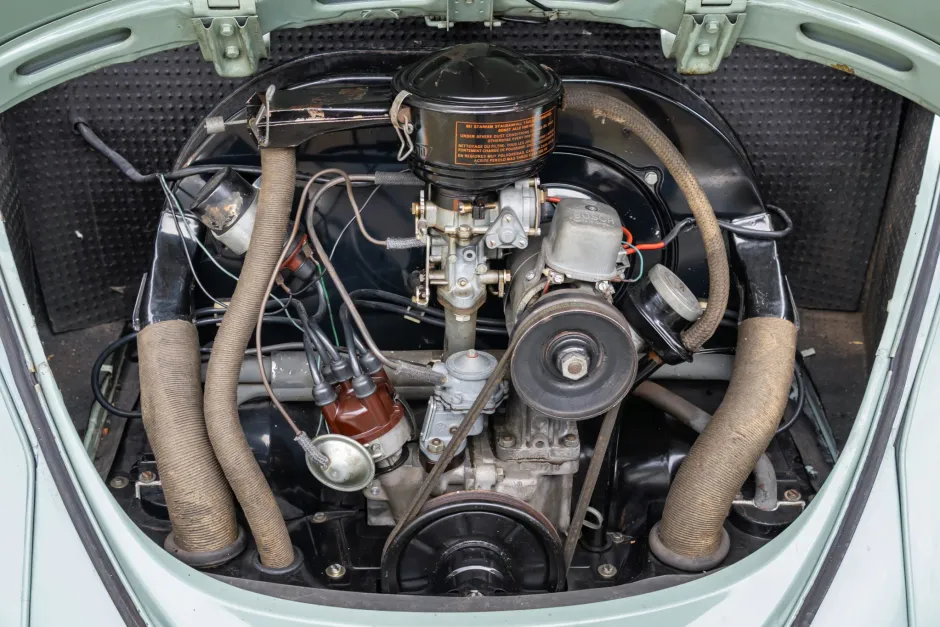
Having had a lot of seat time in my brother’s 50 hp 1300, the 40 (gross) hp 1200 was a bit of a comedown. In the more modern net rating, that would be some 34 hp. Not much to work with, but it became a real (and fun) challenge to make the most of every one of those horses. Like going flat out down hills and using that momentum to get up the other side or to pass a car. And not letting up on the throttle in curves. Momentum is everything!
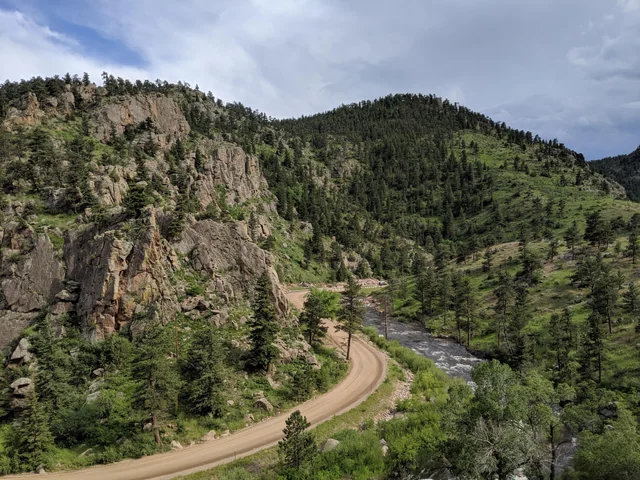
I surprised myself (and a few other drivers) on how quickly I could cover ground in my Beetle, especially in certain terrain. I was out in the Rockies that summer and had driven to Boulder to a small independent VW shop there to…not sure exactly why. I hit it off with the owner, who actually wanted me to come work for him, doing oil changes and such. He showed me how to advance the ignition to compensate for the high altitude.
That really made a difference, enough so that I could drive the whole uphill drive on Hwy 36 from Lyons to Estes Park in 4th gear. That was because I had a good running start in the flats, there were no slower cars to hold me up that early evening, and I just kept it floored the whole way, curves and all. Maintaining momentum is critical. I was able to keep it at between 45 and 55 or so, up into the mountains, never once having to downshift into third. I know it may sound trite or silly, but these are the kind of challenges drivers of more powerful cars never think about. This drive was one of my high points of my VW ownership years.
I still like driving a relatively underpowered car; it’s what makes driving interesting and a bit challenging. Like passing on two-lane Hwy 58 or 126 going up into the mountains from Eugene in my 103 hp xB.
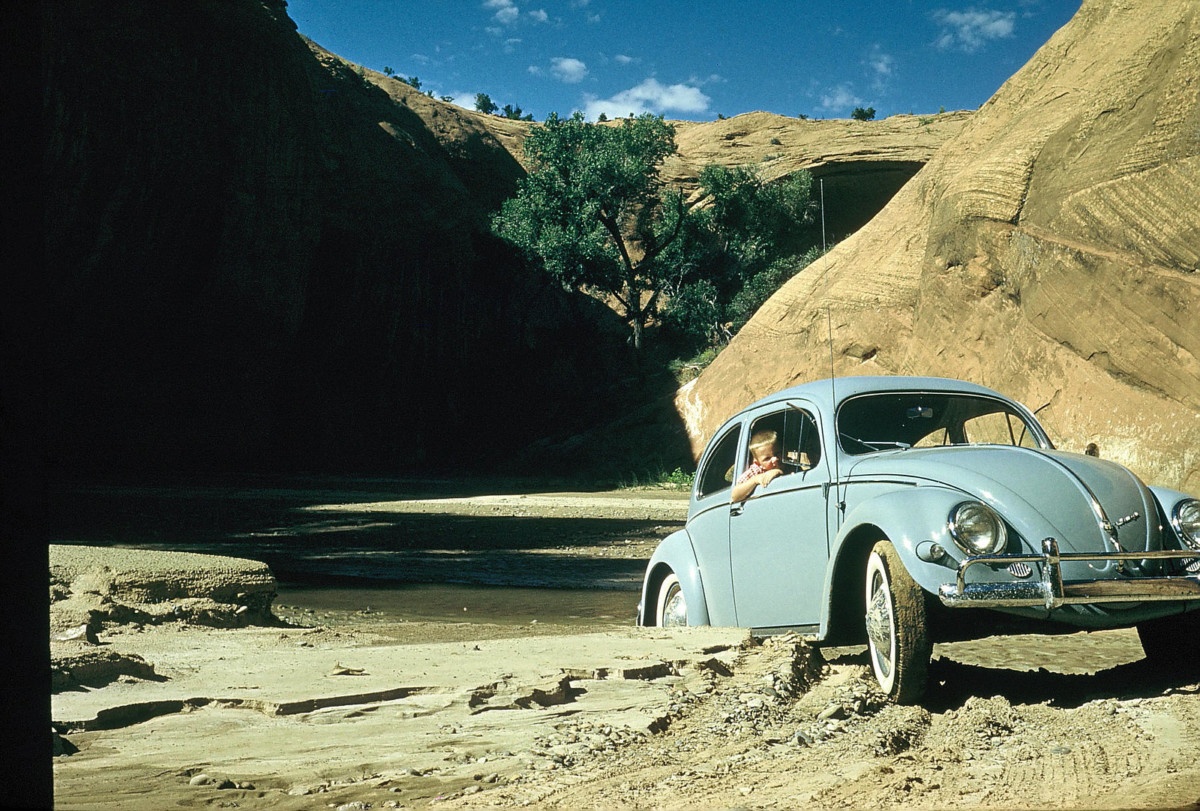
While in Colorado I would just turn off onto some little gravel or dirt road and follow it to wherever it went. Those turned out to be “Jeep” roads (old mining roads) and I surprised a few Jeep owners but puttering along in my W, which was virtually unstoppable in first gear. That’s when I fell in love with “overlanding”. And I still use a non 4×4 vehicle for that.
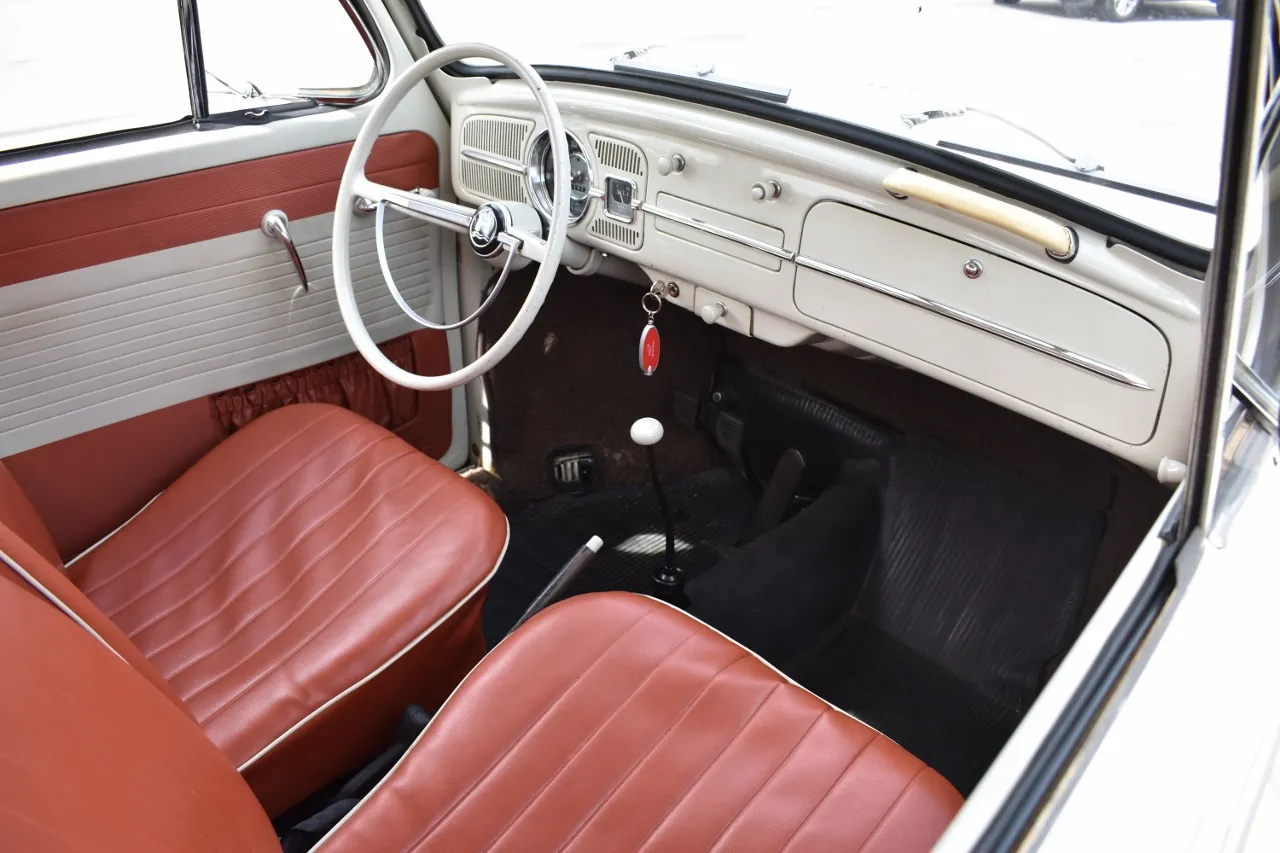
I buzzed all over the country (except the far West) behind that lovely white wheel. I’d readily drive a thousand miles at a stretch to visit friends, go to the Rockies, or just hit the road. The seatbacks lacked lumbar support, something I rectified in my next Beetle. It always started and ran like a top and got 32 mpg, just like the ads said it would. Top speed on a level highway was always exactly 72 mph, but I usually rolled along at about 65 on the interstate unless I was in a hurry.
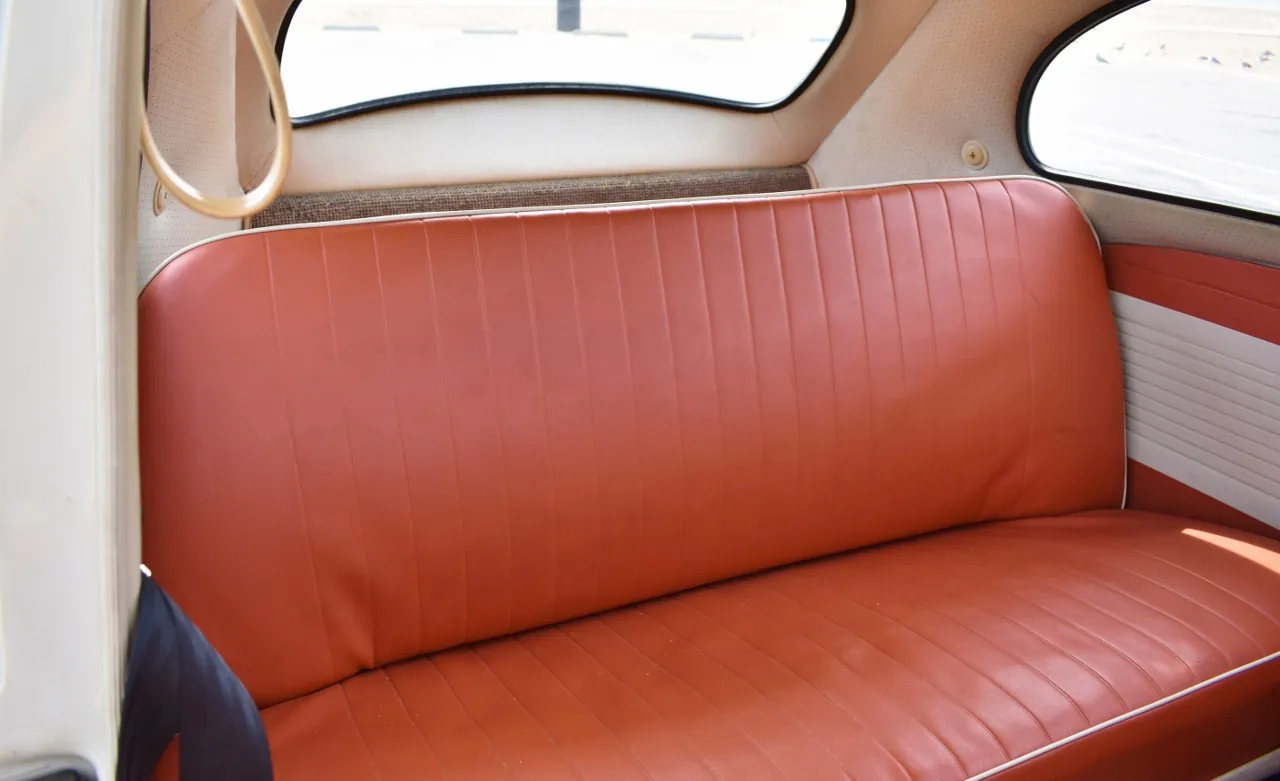
On more than one occasion I’d find myself somewhere late at night on the road and I’d hop in the back seat and sleep a few hours, my (then) 6’4″ body curled up in the fetal position. Talk about returning to the womb…I remember waking up to the windows all fogged up and wondering: where am I? Some who wander really are lost.
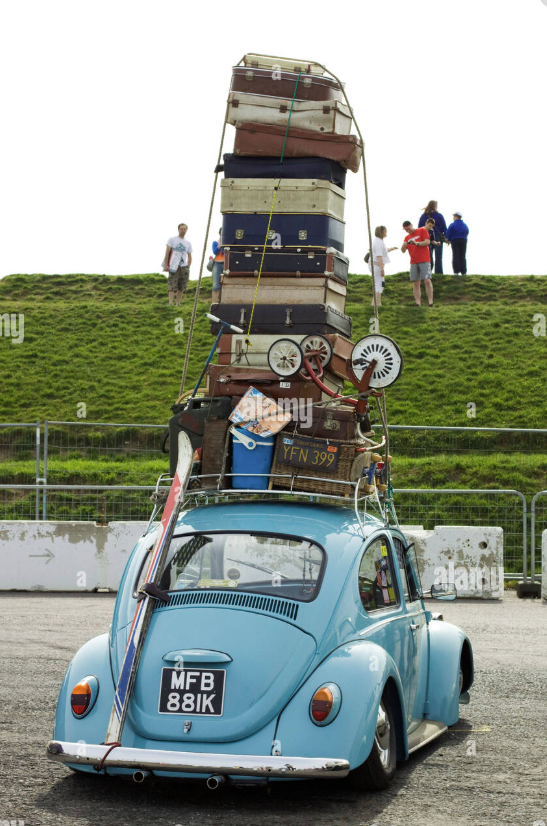
Come summertime, I was done with Baltimore (and the GF) and was eager to head west (again). I had a top carrier and packed up all my worldly possessions, much of them on the carrier, with my bicycle strapped on top of it all. My route was circuitous: I headed north, via the White Mountains in New Hampshire where I saw “Deliverance” at a little drive in theater. Perfect location and setting for that movie, before driving back to my camping spot.
Then I joined my parents and younger brothers who were vacationing on the coast in Maine, climbed Mt. Katahdin, drove through the remotest area of central Maine, up into Canada, spent a few days in Quebec City and finally crossed the border at Sault Ste. Marie into Northern Michigan. Or tried to, as the US Border Patrol pulled me aside and made me take absolutely everything out of my car and spread it out on the tarmac for them to examine. That was fun…
In the fall of 1973, having watched them perform several times, I went to an open audition for the Iowa Theatre Lab, an experimental troupe sponsored by the University. Their work was gestural, very physical movement and non-literary (no script/speaking, except for a few select words. I was surprised to be accepted and became a paid “Performing Fellow” on the UI payroll. Here’s a not very flattering but pretty honest NYT review of one of their pieces. I moved into digs in town and didn’t really have a need for a car anymore, so I sold it, for the same $400 I had paid for it. VWs do hold their value. And it was still running as strong as ever. It was sad to see it head off to Vermont with its new owner.
But it would not be my last white VW. And I would not be satisfied with its stock 40 hp.
Paul Niedermeyer is the founder, Publisher and Editor in Chief of Curbside Classic, and has authored over 7,000 posts. Paul has been writing extensively about his life-long passion for all things automotive (and just about anything that moves) for over 20 years. He was previously the Managing Editor of thetruthaboutcars.com.
Some VW Beetle posts by me:
Curbside Classic: 1946 Volkswagen 1100 (Type 11): The Beetle Crawls Out Of The Rubble
Curbside Classic: 1957 VW 1200 – The Beetle Takes America By Sturm
Curbside Classic: 1966 VW 1300 – The Best Beetle Of Them All; Or At Least The Sportiest
Curbside Classic Driving Review: 1969 VW Beetle – Still A Viable Daily Driver?
Why Millions Of People Think Air Cooled VWs Had Terrible Heating – Operator Error
Vintage Kodachrome: Exploring and Off-Roading In The Southwest In A ’56 Volkswagen
Curbside Classic: 1977 VW Beetle – The Fuel Injected End Of The Road For The Beetle
Curbside Find: 2003 Volkswagen Sedan (Type 1) – Finally Final Edition























Excellent write-up and commentary. What makes a vintage car from the 60s or 70s a classic? Even though Toyota was overtaking VW in the early 70s, one doesn’t see many vintage Corollas on the roads or at car shows today. There is something very special and desirable about a vintage VW. I just sold mine to my brother, and I miss driving it around town with people waiving at me.
Yes, the sheer quantity -and quality- of classic Beetles that’s still around is amazing, worldwide that is. I shot the picture below in January 2016 in the parking lot of a local supermarket on a chilly Saturday afternoon. Truly amazing.
Anyway, this was a wonderful Saturday afternoon read!
There’s something undeniably special about the Beetle in particular and air-cooled Volkswagens in general. It’s why my father chose a ’61 convertible as his and my mother’s first new car, and he returned again for a ’68 or ’69 Squareback and again for a ’74 Super Beetle. I don’t think he liked any car he had after that as much as he liked those Volkswagens, and even though I have vague recollections of the latter two, air-cooled Volkswagens still hold a special place in my and my sister’s hearts.
Very interesting and informative article. The body style made these look very archaic in the early 70’s compared to, say, the Austin America (one of which my parent’s owned!). But I can see that the shape made for fewer body pressings (the top and the sides merge into one). They were also roomier inside than you might expect (but no trunk space). How were the aerodynamics?
BTW: a VW plays an excellent supporting role in the movie “The Secret Agent”, which should have won last year’s Oscar for foreign film. The opening scene, where Wagner Moura fills up his bright orange Beetle, is brilliant.
A blue 1200 from 1964 was my first car in 1976, just after I’d passed my driving test.
However, the licence only allowed me to drive. Of course, I couldn’t ‘really drive’ yet. To learn how to ‘really drive’, a schoolmate decided to do a ‘crash course’ with me. To do this, we drove out of our village onto an unpaved track – where he used to practise riding (fast) on a modified NSU Fox, often (and sometimes I did too), far too young for a licence.
(This went unnoticed for a long time, as we’d pushed the motorbike there. But one day it was noticed – or rather ‘heard’ – because my schoolmate wanted to see how much extra power an open exhaust would give.) The noise could be heard across half the village and led to a ‘smacking’ at home and an amateur career in motocross on a Maico 125cc.)
So there we were. He was on his Maico (not road-legal) and I was in my Beetle. “I’ll lead the way and you try to keep up with me,” he said. After several excursions into the fields to the left and right of the track due to “oversteering”, I eventually managed to keep the Beetle on track and maintain the pace – and have some fun.
The Beetle was then visually modified to resemble a ‘917’. It was given an orange ‘go-faster’ stripe and race numbers on the doors and front hood.
When I was called up for military service a year later, I made my final trip to the Zillertal, where I swapped the Beetle with an alpine farmer for a bottle of (illegally) home-distilled schnapps. He carried on using it for years to take his milk down to the valley. (Without number plates or registration, of course. Yes, those were completely different times.)
So very well written Paul and every word rings true .
My first VW experience was when Pops bought a 1954 Typ II Kombi in Europe and brought it home to haul us six brats ’round in .
I agree it’s the perfect car for almost any need .
I still have and love driving my unrestored 1959 # 113 DeLuxe Beetle .
-Nate
One of my many daydreams is to buy an early 1970s non-Super Beetle and learn how to work on it. I loved Beetles as a kid because of the Herbie movies, and one of my parents’ old apartment house neighbors always had derelict Beetles hanging around. I remember one of their yearly “reunions” where I got to poke around a Beetle languishing in his backyard and float on inflated tractor inner tubes in a nearby lake (heck, it might have been Lake Michigan…I was about 10 or 11). One of those tubes left me with a long-lasting scar on my arm, because nobody thought to put a plastic cap on the end. Good times, and I have a couple Beetle service manuals hanging around just in case.
Imagine trying to make the call in 1964 between a VW Beetle, Rambler American, Ford Falcon, Chevy Corvair, or Plymouth Valiant. My dad chose the latter as his first new car for his growing young family, a strippo 2-door sedan with the only options being the 225 engine and AM radio. He took poor care of it but would still be driving it today except the midwestern winter road salt quickly took its toll on the typical poor Chrysler body integrity.
One thing often forgotten about VW sales back in the day was VWoA’s strict ‘no haggle’ policy; all VWs were sold at MSRP with no negotiating allowed. You either paid the price, or walked.
Thanks, Paul. The first car my dad bought new was a 1966 1300 in what I thought was “Sahara Beige”. I’ve seen it called “Savannah Beige”, Savannenbeige in German. But TheSamba shows only “sea sand”. Perhaps a color expert can weigh in on what color was delivered in the US in 1966. My frugal and keen to negotiate dad was not happy about paying list price, springing only for the pop out rear windows, but no radio. I installed one years later. When I was awarded custody of the Beetle, I learned how to set the timing with a static light, adjust the valves and the drum brakes, which I did religiously. That helped it live a long life. Both of my younger sisters drove it in turn.
My first glimpse was a LOL in our small Illinois town in 1958. She would cruise the snowy back roads with an aplomb that no one else could match.
My brother would buy beater VWs, use John Muir’s book to trouble shoot, then sell at a modest profit. He would post on an index card on the bulletin board at the local record store and almost always sold them on the same day.
Strength Through Joy. Hitler’s alternative to unions. My first car was a blue ’73 Super Beetle. I don’t remember anything about how it handled or its turnpike speed. The ’73 oil shock caused my parents to shake up their vehicle choices. Mom traded her ’70 Cutlass Supreme coupe for a ’73 Squareback with a stick. She learned to drive on a stick so no big deal. My father traded his ’71 Electra for a ’73 Le Sabre Custom. He stuck with Le Sabres throughout the 70s, buying a ’75 and a ’79. It was back to Electras in 1983 when oil prices receded. I sold my Super Beetle and took over mom’s Squareback in 1976. She bought a Bobcat wagon- ugh. My VW phase ended when I traded the Squareback for a ’79 Ford Fiesta- a base model in silver. A couple of years later, it was on to my first Corolla.
A good piece Paul. I am still enjoying my 1963 beetle after 20 years of ownership. As an antique it does need extra attention, but not much and I can hop in and go places with confidence.
My sweet spot for speed is 50mph, most of the engine clatter is carried away by the wind at that speed and I don’t have to think too much about the so-so brakes or the consequences of hitting something.
Someday when I retire I would like to take another run at Triumph with a TR3 or TR4, but I can’t imagine selling the beetle after all this time.
A wonderful write up. Your passion for the Beetle shines through. I think if I had been born a decade earlier I would likely have had a series of Beetles. Alas, I only had one and then only briefly. They were legitimate collector cars rather than affordable transportation by that time.
In 1967 with a college friend and his new 67 Beetle we drove from NY to LA and back and spent 6 days in LA area in late May. The days of driving were long. Crossing the desert in AR and NM the hot air through open windows was brutal so we ran the rest of the day to Flagstaff sweating it out with the side windows up and drinking lots of ice tea. The side windows were still up when we pulled into Flagstaff still all sweaty and when we climbed out we promptly froze! The temp had dropped to the 40s. The motel owner got a good laugh as he had seen that show before.
Through the Sixties & Seventies, many caught “the bug”. A bit later on, I think the Honda Civic became an integral part of people’s memories but not as many folks were affected. I don’t think any of today’s cars are capable of endearing themselves. Perhaps the Mustang and Camaro but that applies to a small and specific subset whereas before, everyone had some connection to the Volkswagen in their life. Mine was a light blue 1967 convertible. I have also owned a 1970 Corolla, and the Beetle was both better and more enjoyable.
I think the Beetle could still sell today if people weren’t so obsessed with crashing. Myself, I think always of driving and never of crashing. Maybe that’s because I don’t use my phone in the car and don’t have to look at a screen to change the climate control.
Growing up in China in 1970s, automobiles were rare and not accessible to general population. In terms of sedan, the most common was GAZ M-20 Pobeda, and its Polish version. A more upscale was Volga M21 and China own Shanghai SH760. I heard about VW Beetle as a teenager because my uncle friend living in Hong Kong owned a1969 model. When he visited mainland, he often showed the photos and talked about his car with us, a unimaginable dream for us back then. I first physically saw them on the streets of Peking when I lived briefly there in 1975. They were belong to diplomats in Peking. Its district shape was always a pleasant to look at, more it gave us an impression that vehicle was a personal car for ordinary people in the West. The adults in our family whenever talking about that always bought up its WW2 usage in North Africa because its air cool engine. However I believe the original design of VW air cooling engine had never taken into consideration of its later usage in North African campaigns. Actually back then China did have air cool car and truck from Trata, so air cooling engines were not a novelty item.
Great article Paul, as ever!
I’m one of the few (idiots?!) driving air cooled VWs every day!
They have so much character that you cannot be neutral about them. They are practical, involving to drive and pretty easy to look after and service. Great parts backup is the real key to being able to daily them – you’d be surprised at how many parts are available at O’Reiley’s/Autozone/Nappa and on line specialists can supply any other parts needed within a day or two.
The Ghia’s 0.37cd and low frontal area mean it is surprisingly happy at higher speeds, easily fast enough to avoid getting flattened on New England’s freeways. VeeDubs were built to be driven flat out as you have said – top speed was cruising speed. A classic that couldn’t handle freeway speeds would be a lot less usable for me. A friends 383 Dodge SuperBee has great acceleration due to steep gearing, but, somewhat hilariously gets hot and unhappy at much more than 60. Even a late T2 bus in good fettle will sit at 65-70 all day.
The safety question? Drive it like a motorcycle – make sure people have seen you and be ready to avoid those that haven’t.
And be ready to have people stop and tell you their VW stories – I just came back from the local supermarket and got into a great conversation with a lovely older lady who had grown up with buses and had a Ghia when she was younger.
Paul – I feel you need another air cooled VW. I can see you in a Beetle with the suspension raised a bit and some all terrain tires happily oversteering along some of those gravel roads on the way to a favorite hike…
I think you owe it to yourself and us CCers!
I was way into VWs back in the early 70s. Even into the mid 70s. The Bugs really were great cars for their time, with the caveat of they really were better and much longer lasting at 65 than 70 or 70+. My 40 horse ’64 would do an indicated 75 pretty much any day, sometimes an indicated 80, and I often drove it at such speeds. But they just ran too hot at those speeds, and no temp gauge to go by. Was it hundreds of thousands or millions that sucked a valve, ie broke off #3 valve because of the oil cooler sitting in the way and causing it to run hotter than the rest. But not if you just ran them at 65 max, except perhaps for passing.
Still, even more than ever, I would love to drive a mid 60s Bug again. Not as a daily driver, just for 10 or 15 minutes to compare my memory to reality. Around town a bit, just on the freeway, briefly, not a lot, just to get a feel. I have the feeling it would be slower than I remember, but not much different otherwise. Ah well, one more thing that will probably never happen.
I was always wary of this cute little bulge, a car that stank of petrol – of course it did, there was an unemissioned tank on your knees ahead of you in the breeze – it was very slow, heaterless (for all except P Neidemeyer), it was cramped, noisy, exhaust-smelly (that heater had to be in perfect nick), and, when finally I drove a (perhaps) ’65, quite scary. Also, it attracted fanatics, who are always boring and wrong. Also, I’d ridden in Japanese small cars, and, crap as they often were, everything about them, was better in the everyday world.
But it’s through this very site that I have come to properly understand the VW, and to come to a real appreciation of its brilliance. What just seemed old and hairshirt-ish to me emerged as damn clever stuff for the time it was designed. Really, really clever design from all under the aegis of Dr Porsche, although it had reached its end in the ’70’s when it reached its end for most of us. By then, no-one was aircooling or rear engining. Or, dare I say it, swing-axeling….
And yet, and yet. As I get older, I am increasingly repulsed by the origin story, and I find I cannot ignore it. (To their great credit, VW is quite open about it on their own site). Maybe Porsche didn’t salute Hitler: maybe he didn’t join the party. But the only way such an innovative design could come about, from scratch, was with vast investment, and that came from monies stolen from trade unions, and later, ordinary Germans as taxes (not to mention the 5 RM a week scam). It worked from slave labor, and from murder. And the good honorary Doctor was fully signed on as a director to all this. And his fervent Nazi son-in-law, also a director, helped to hide away money after the war, money and ownership which has gone on to make the family one of the richest in Europe today.
In short, there would be no VW at all without deep involvement of the worst regime after Stalin in modern history. In short, the VW tale is one of theft, and one that cannot be extricated from the blackest soul of humanity.
Does it all matter? Quite probably not anymore, and to the fans, I say that I DO get it.
But for me, there is a chill I cannot remove from my thinking, and never will.
First-rate post. Incidentally, the NSDAP membership number of that honorable gentleman from Austria is 5,643,287.
I asked my mother about that once, since she grew up in wartime Holland and had actual experience dealing with actual Nazis and several people in our family had VWs postwar. Her response was “Well, we needed cheap transportation to get to work. And Germans need to eat too.”
So if my grandfather, who had a Righteous Among the Nations medal for hiding Jews during WW2 had no problem driving a VW than I figure I shouldn’t either.
And your post is first-rate too. Actually, the Netherlands was the first export market for Volkswagen, just two years after the war. There were countries to rebuild, and that included Germany.
On a related note, plentiful (former) US army trucks got a Mercedes-Benz, Deutz, or Henschel diesel engine swap in the post-war years.
Well, on a lighter note, my dad – a barely-made-it refugee from the regime in mid-’39 – later bought a couple of splittie vans, the second of which became our family car for years and years.
Its registration was HTL 495. Yes, really!
The VW Transporter wasn’t designed by Nazis!, So your father is off the hook.
As to your previous comment, I find these sentiments about the Nazi connection a bit tedious and boring (sorry). Some of your allegations (like the money being hauled off to Austria) are disputed. What money was there at the bombed out factory at the end of the war?
Anyway, the post war Volkswagen AG was a totally new company created with the impetus of the British who wanted to see the locals have jobs. Well, a few of those Brits were rather enamored with the Beetle too. The Porsches had essentially nothing to do with the initial creation of VW AG. A few years later Porsche did get a nice development contract, but then VW never had any development department; it was strictly a factory.
Oops; I wasn’t going to get into all of this again. But let’s not forget that Ferdinand Porsche’s arrest in France for so called war crimes (still widely regurgitated by his detractors) turned out to be the result of a local business/political dispute in France, and he was fully exonerated.
Will we ever know the really true extent of Porsche’s feelings about Adolf, and other truly objective facts of his presumed complicity? I seriously doubt that. What I read are all either pro or con, as is the usual way by humans. Praise him or smear him. Love or hate. Black or white. Gray is not a popular or interesting color.
It’s true that conversations with the murdered tend to be boring. They just don’t respond, you know?
Porsche was a properly brilliant engineer.
In the face of Nazi Germany, he was also – along with many, many others in industry – a vile opportunist.
Every single stolen cent that made the very advanced Beetle possible became available because of his choice to be that.
Fuck him.
Praise for the design can never be removed from just how dark that is.
I have been reading and writing about VWs very widely on the web for a long time. And literally to a man (or woman) these endless articles and conversations are able to discriminate about the VW as a car and the history and brutality of the Nazis. Well, except you, that is. Of course you’re perfectly free to vent your spleen here about those atrocities while the rest of us discuss automobiles.
Perhaps we should also be discussing the 10-30 million who died under Stalin’s regime whenever we cover a Moskvitch or Volga? And the 80 or so million who died under Mao whenever we discuss Chinese cars?
My point is not to minimize the dark side of history. As you know, my grandfather was thrown into a concentration camp by the Nazis, and I’m part Jewish. My point is CC is here to discuss cars, not atrocities. Yes, I find it predictable (and a bit boring) when you inevitably get all worked up in a lather whenever a vintage VW is the subject matter here. But help yourself if it’s therapy for you.
As long as the therapy remains unbilled, thankyou, I shall. As my somewhat uncouth grandmother used to say, better out than in (though in truth, she generally wasn’t referring to her thoughts).
Sounds like you’d have problems with German Shepherd puppies too, right? Those dogs love him! How could anyone like a German Shepherd after seeing such devotion to such an evil man? Right? LOL!
Always cozy, even through, “Iowa”.winters? Ok.
I grew up in Beetles. That said, after spending the first 20 years of my life in them, I rarely heard anyone say they loved them. Admired, yes, but about as loved as a work horse. They were chosen because the drivers were pragmatic and budget minded. They were dependable and cheap. They were good in snow, (but not in crosswinds). Beetles were beloved.
But they were the Peanut Butter and Jelly of cars. Our automotive go-to best friend. The little tough can-do character that unexpectedly saved the day. The comical “Love Bug”. They were cute, but they weren’t desired. We ate millions of PB&J sandwiches, but when we go out, we prefer to order something else.
I tolerated them. I saw their brilliant engineering, admired their workmanship, but it seems we always wanted better. When discussing cars, the guys in the dorms didn’t discuss them. Beetles weren’t desired as much as they were just consumed.
We love them in hindsight, like seeing a firefly in late autumn. They engender happy memories, their smiling front ends make us happy. Their sounds are like mechanical purring. We remember them being ubiquitous, like a Saturday Morning Cartoon.
Yet like a Tom and Jerry movie, the VW Beetle wasn’t aspirational. It was just another PB&J. I admit, that’s unfair. We should be more aware of their contribution. But I have never wanted one.