Text by Patrick Bell.
Nashville, Tennessee, is where we are headed today to visit the E. B. Smith Chevrolet dealership. They bought the Coggin Chevrolet shop in May of 1968, and started a journey that capitalized on the muscle car movement. Their showroom displayed many of them to attract floor traffic, and they always had a good stock of all models, so you could be sure to find a car to fit your needs, desires, and budget.
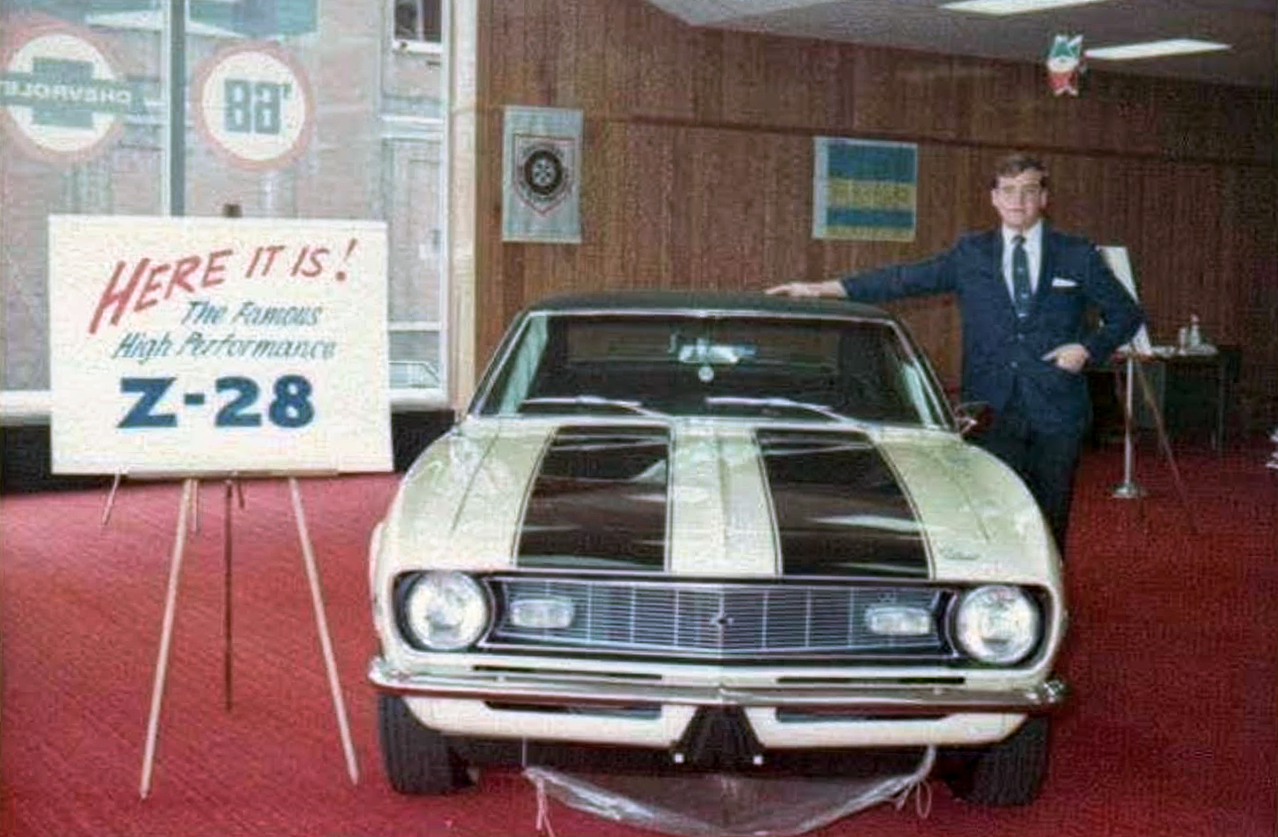
Here it is! We begin with a 1968 Camaro Z-28 on the showroom floor. It was Ermine White with a black vinyl roof, stripes, and interior. It appeared to have the Air Spoiler Equipment option that included a special front valance and rear deck spoiler. Plus a plastic diaper was attached to protect the showroom carpet.
First introduced in 1967, the Z-28 was a high performance option package that was available on the Camaro Sport Coupe. The engine was a special 302 cubic inch V8 with 290 horsepower, and the package cost $400.25 in the 1968 model year. Required options were a 4 speed transmission ($184.35), and power front disc brakes ($100.10). Add that to a $2694.00 car, and you had $3378.70 for a basic new Z-28. There were only 7199 units produced, which amounted to about 1.1 cars per dealer.
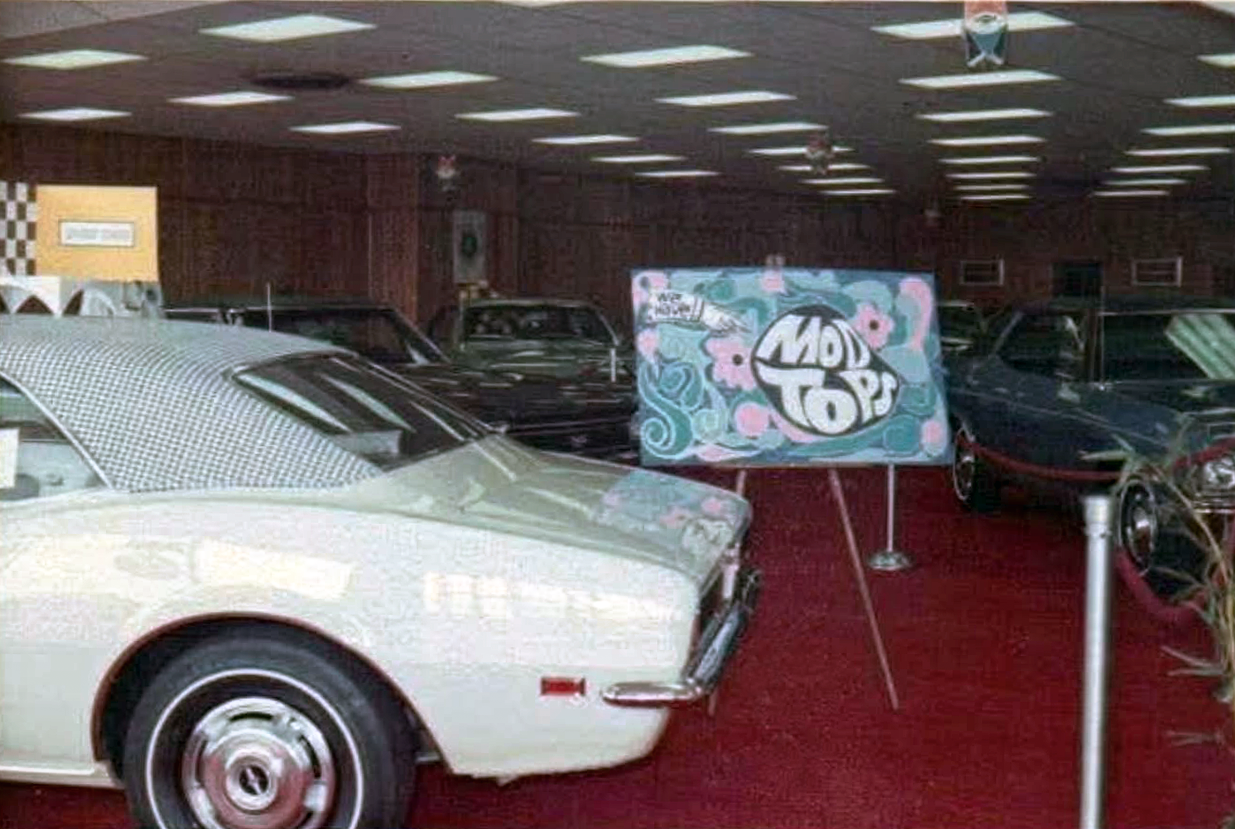
Vinyl tops were becoming popular during the 1960’s, and that naturally led to some that were on the artistic side. The “Mod Tops” sign leads one to think of the floral version, while the Ermine White Camaro shown had a houndstooth pattern style. Either way, they were aftermarket and were added by the dealer as a sales gimmick. As far as I know, only Plymouth and Dodge had a floral style vinyl that was a factory installed option, and Plymouth also offered a paisley version. And Mercury had a houndstooth version available on the Cougar. None of them were very popular overall, and there are few originals left.
In the background left was a Chevelle SS 396 Sport Coupe, and on the right a Chevelle Malibu Sport Sedan or Concours Sport Sedan.
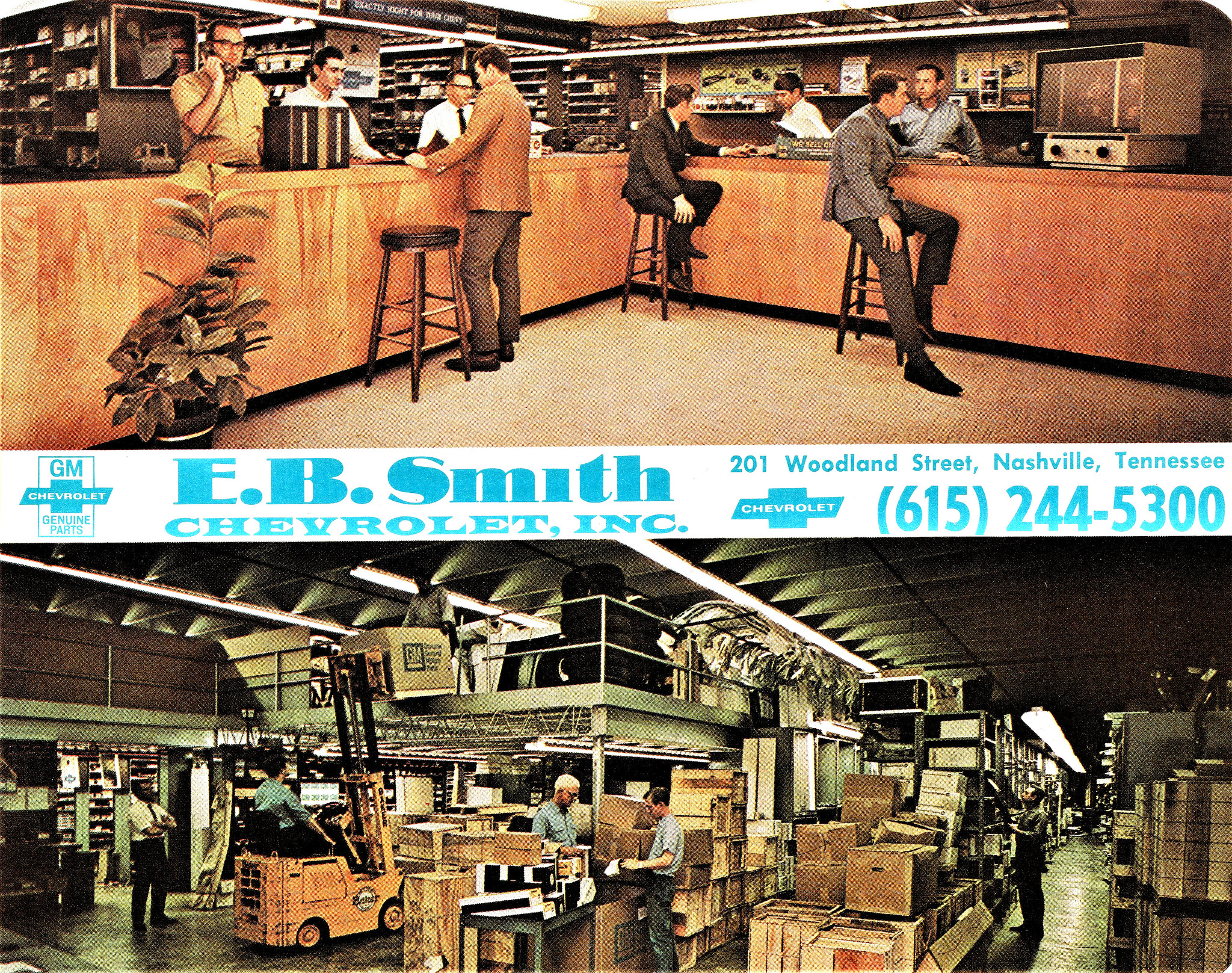
This was an advertisement for the parts department, showing the retail counter with well dressed customers in the upper section. The manager was likely the guy with the tie behind the counter, who was also seen supervising on the left in the warehouse shown in the lower section. A forklift was in use lifting an engine to the upper floor, while others were about their duties. They obviously had invested in a well stocked parts department.
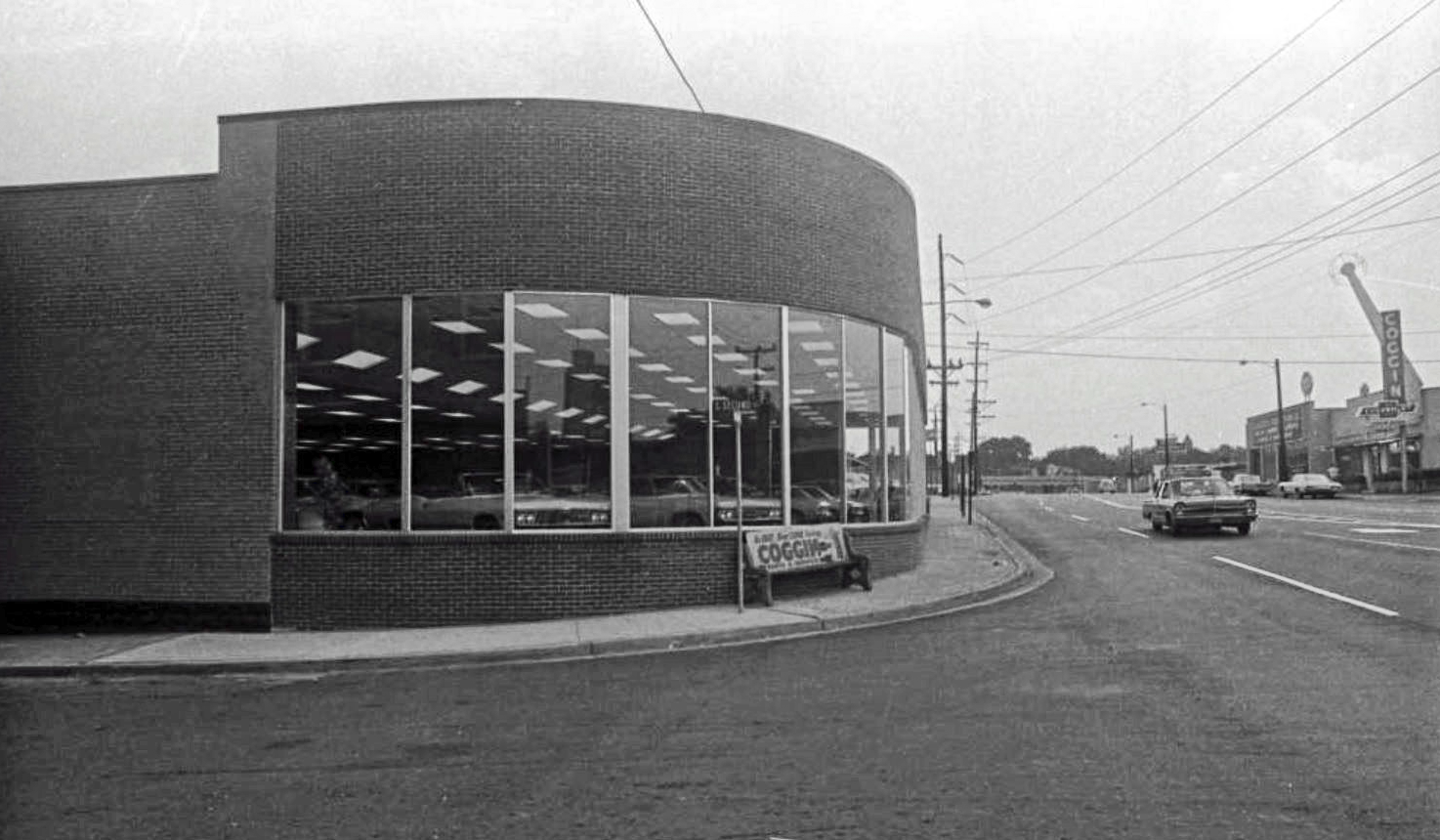
This location at 201 Woodland Street was a car dealer of one brand or another from 1920-1985. It is shown here in 1967 when Coggin Chevrolet was the occupant; 1967 full size models could be seen in the showroom, and a 1965 Plymouth Fury was passing by.
Coggin opened in 1953, and as you can see on the right side of the image, they also had property across the street. This building was used by various other occupants until it was torn down in the early 2020’s as part of the ongoing redevelopment of that part of town.
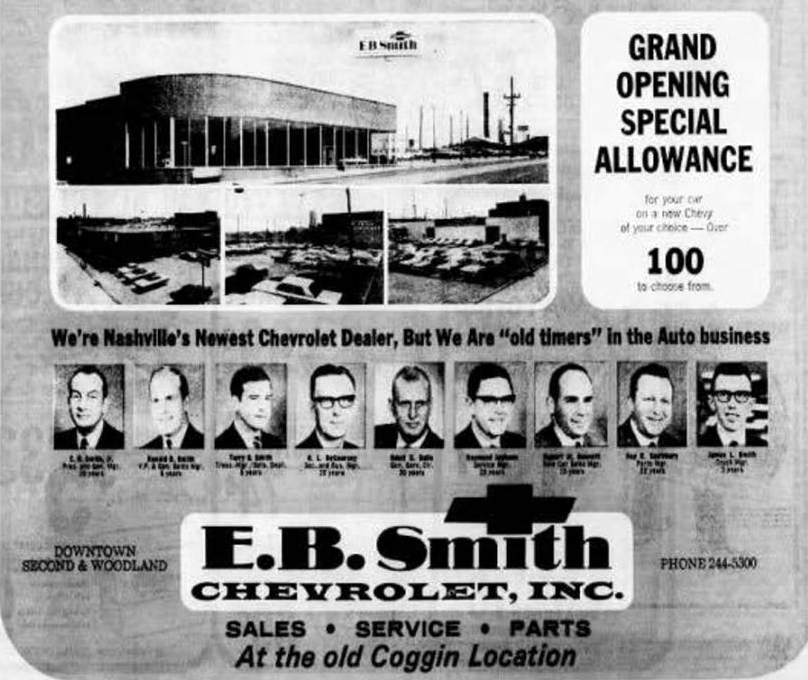
Here was an advertisement in “The Tennessean” in May of 1968 announcing the ownership change, and introducing the management staff. E. B. Smith was the man on the far left, and three others appeared to have the last name Smith.
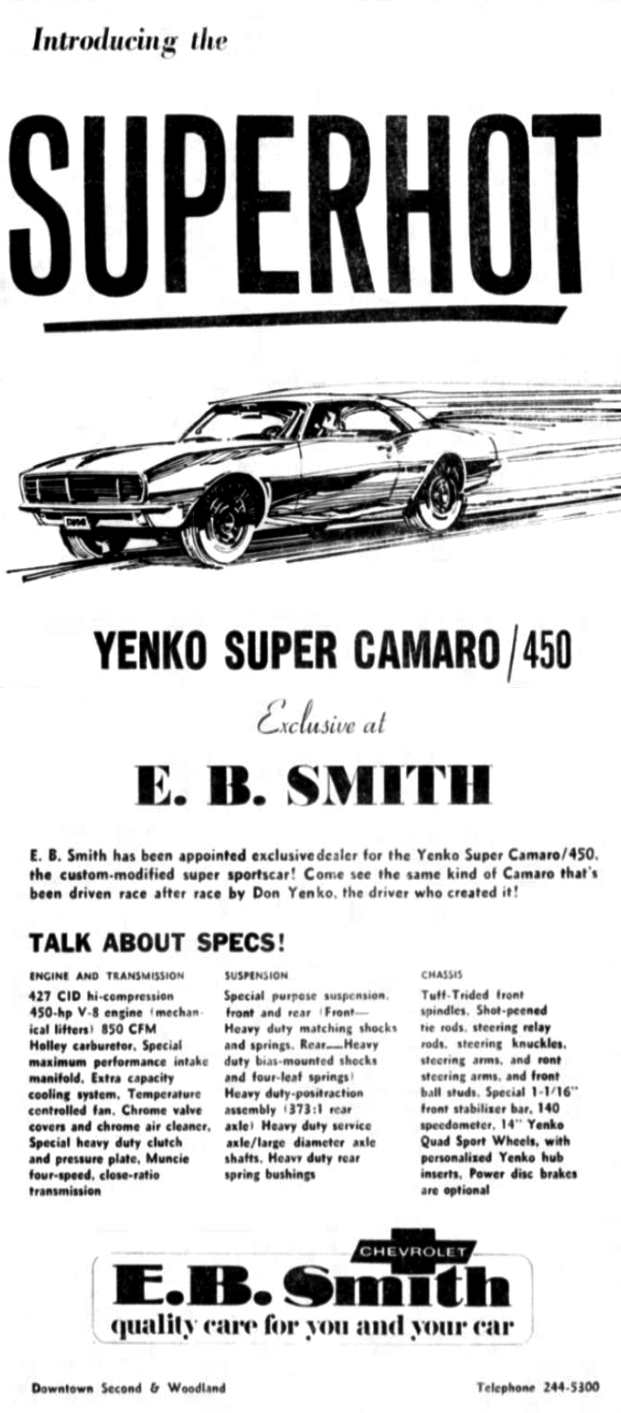
They also became distributors for the Yenko Super Camaro, shown in this ad from “The Tennessean” dated to September 12, 1968. Besides Camaros, Nova and Chevelle Yenkos were coming for 1969.
The Yenko Camaros were built from 1967-1969, with a total of 319 over the three years. 212 Novas were produced in 1969-1970, and just 99 Chevelles were built, only in 1969. They were built for high performance with a list of specifications, as in the Camaro shown above, and they became quite legendary.
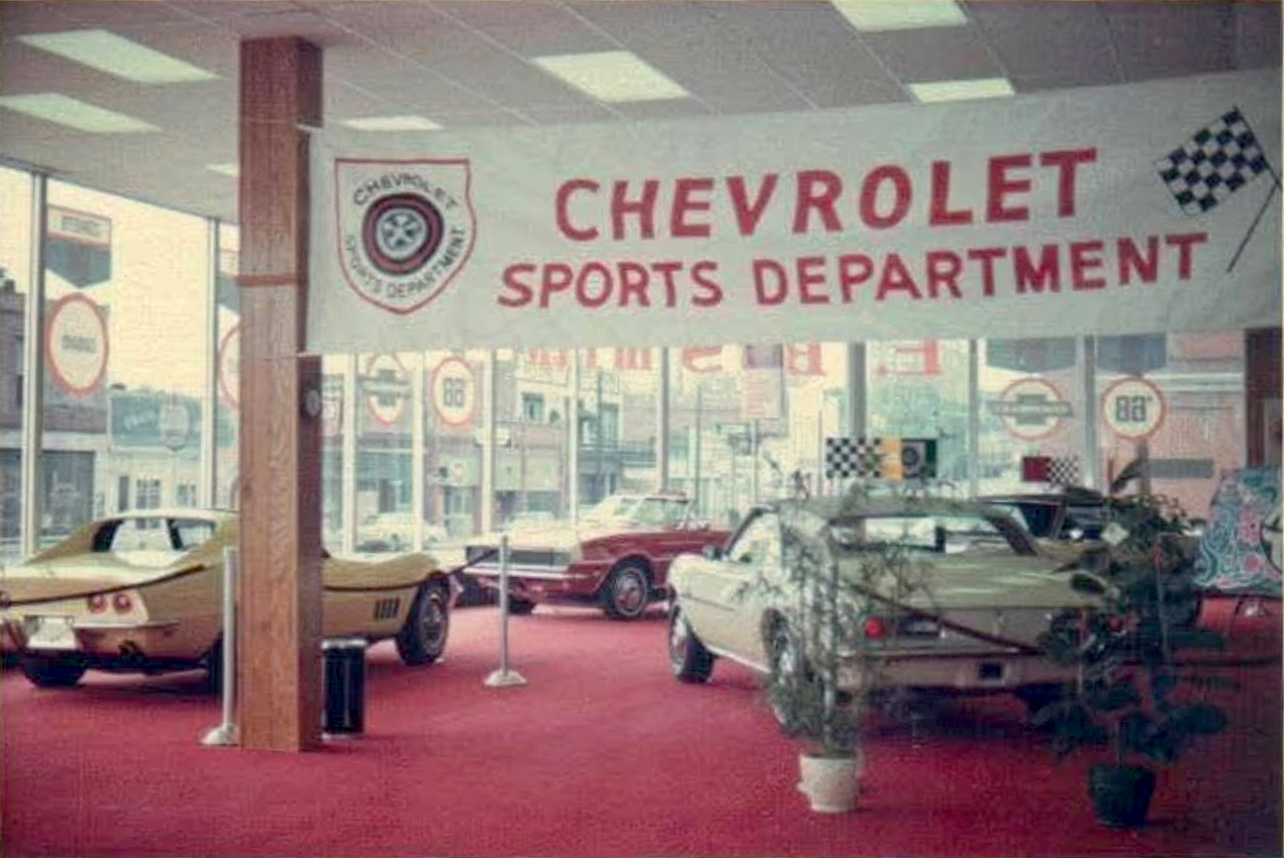
Here was an inside view of the rounded corner on the showroom where they had a Sports Department display set up. From the left, a Safari Yellow Corvette Sting Ray Coupe, Matador Red Camaro RS convertible with a front accent stripe, and the Ermine White Camaro with the Mod Top seen earlier.
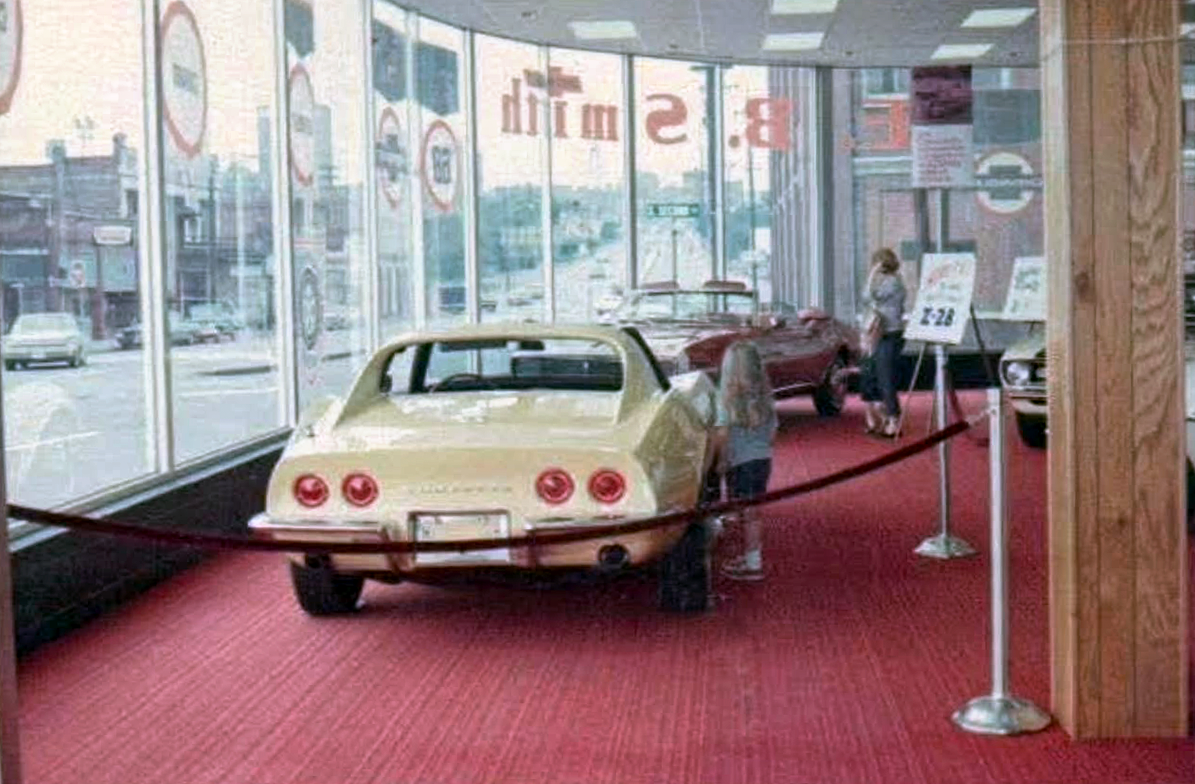
This one was a slightly different view of the same corner and cars, this time with a couple of customers. The young girl seemed to favor the Corvette, while Mom was a convertible gal. The Z-28 from the first image was off to the right.
None of the buildings seen outside have survived, due to the redevelopment program underway in that part of town. Nissan Stadium (home of the Titans) now occupies much of the land across the street on the left side.
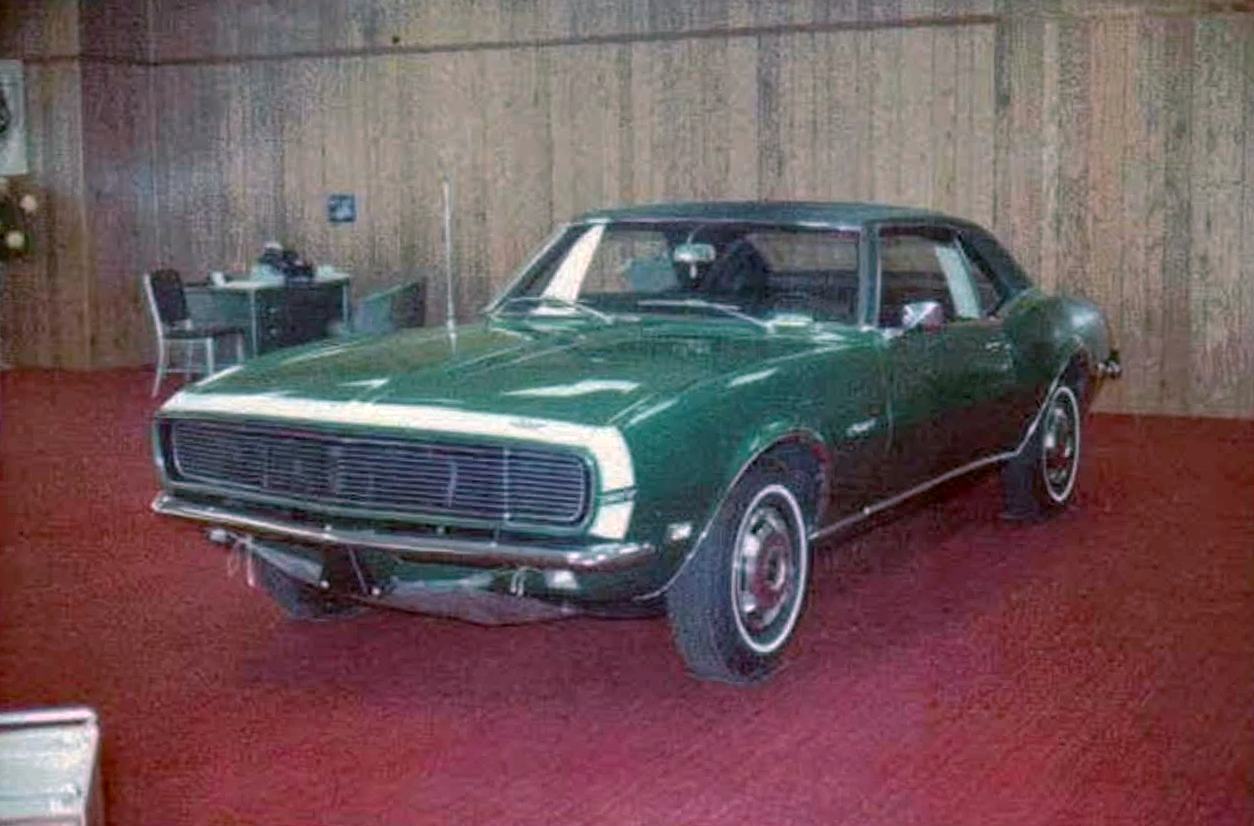
A Grecian Green Camaro RS Sport Coupe with black vinyl roof and interior was in the back portion of the showroom. It also was equipped with one of the two Turbo-Fire 327 ci V8’s available, along with a front accent stripe in white, full wheel covers and white wall tires.
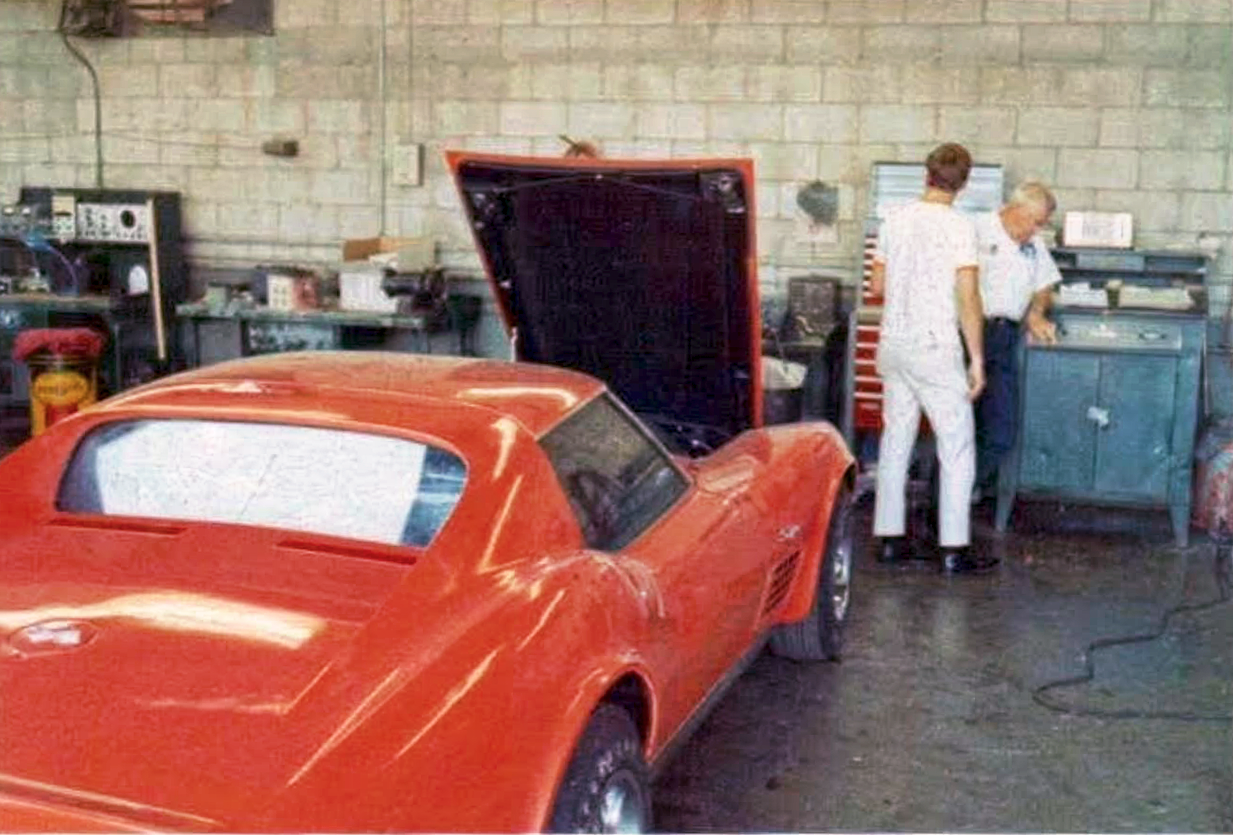
To show a different area of dealer life, our final image was a later shot in the service department with a 1970-1972 Corvette Sting Ray Coupe getting some work done. The guy on the right looked like he was reading something, so it must have been pretty serious.
Thanks for joining us and have a great day!




Great pictures here .
-Nate
Didn’t realize new cars in the showroom leaked fluids back then…!!! My neighbors half brother was a salesman at our local Mid Hudson Chevy in Poughkeepsie ny. My neighbor was a farmer, he bought a new 68 midnite blue ss396 Camaro with a four speed Muncie. We used to ride to livestock and farm auctions in that bad boy.. Man it was cool…!!!!!! I was 15 at the time
The biggest issue with those printed vinyl tops was fading. A solid color wasn’t so bad (like the ubiquitous black), but the printed ones seemed to fade fast if left out in the sun.
Maybe with today’s technology, there’s some sort of clear coating to prevent that. But I sure don’t know of anyone attempting it since those halcyon days of the late sixties, especially since factory vinyl tops have virtually disappeared on any of today’s styling. I mean, with nothing but sedans, SUVs, and pickups, vinyl tops are essentially defunct.
The closest thing left might be the colored hardtops available on, say, the Jeep Wrangler.
A car dealer in Hastings NZ regularly has a ear;y Z28 in their showroom they rotate their collection of classics among the new GWM Suzuki and Stellantis brands they sell,Coggins of Auburn NSW was where my 63 EH special was bought new, any relation?
Only 602 Z28s sold in 1967
I always thought Mod Tops were a trademarked Mopar thing only; didn’t realize they were available from other manufacturers.
I thought so too – but in looking for an answer to that question, I didn’t find any evidence of the name being trademarked. And it looks like Plymouth marketing materials referred to it as “Pop Prints” (an awful name, in my opinion… sounds too much like Paw Prints). The ad below is an example.
So I guess Mod Tops was a more informal name – and maybe other suppliers furnished decorated vinyl roofs to non-Mopar dealers and called them Mod Tops? Just a guess.
I bought some 66 chevelle decals from the eb smith.chevrolet parts dept in 1978 for Mt chevelle..I ask for all new 66ss decals for my 66 chevelle..they ordered all the decals from the Atlanta gm factory in lakewood Georgia..I got all the decals..all new old stock from gm factory supplier..that’s how connected eb.smith was.to Chevrolet motors and regional zones and parts sales..they could get anything made by Chevrolet motors..r
That “Mod Top” sign in the Chevrolet showroom does look damnably similar to the promotional material used by Plymouth. The houndstooth was available also on the 1970 Mustang Grandé (a rarely ordered US$28 option, left) and sunlight could affect the color of vinyl in a short time, the “one off” shades seeming especially to suffer. Ford put a “Dark Rose Beige” on the roof of the 2000 1963 “Thunderbird Limited Edition Landaus” (the so-called “Princess Grace Edition”); it was noticeably deeper hue (closer to maroon) than the “Rose Beige” offered as a RPO on the standard Thunderbird line but, within a couple of years, those most exposed to harsh sun had faded and the effect wasn’t always consistent, some ending up darker on one side than the other.
Most notorious was the “Burgundy” vinyl (code V1M, center) offered in 1971 in conjunction with “Sparkling Burgundy Metallic” paint (code GM8), exclusive to the Imperial line. The industry legend is that after some 2,800 Dodge and Plymouth buyers in 1969 ordered a patterned roof (“Mod Top” at Plymouth; “Floral Top” at Dodge), stocks of the material were ordered to meet projected demand but in 1970 only 84 freaks repeated the mistake, the warehouses thus left with bolts of unwanted colourful vinyl. The inspired suggestion was to dye the vinyl a dark purple, the theory being familiar to hairdressers: dark can always be applied atop light. Some testing verified that and, in September 1970, the 1971 models began to be shipped to dealers, some cars parked outside… in direct sunlight and, almost immediately, the now burgundy vinyl began to fade (right). Option code V1M was withdrawn in November, making it one of the industry’s shorter lived ventures. A few actually were sold with the purple fabric still attached, later to fade, at which point most owners took up the offer for a re-cover in white or black vinyl but at least one (which must have spent the decades mostly protected from the sun) still exists as it left the factory.