
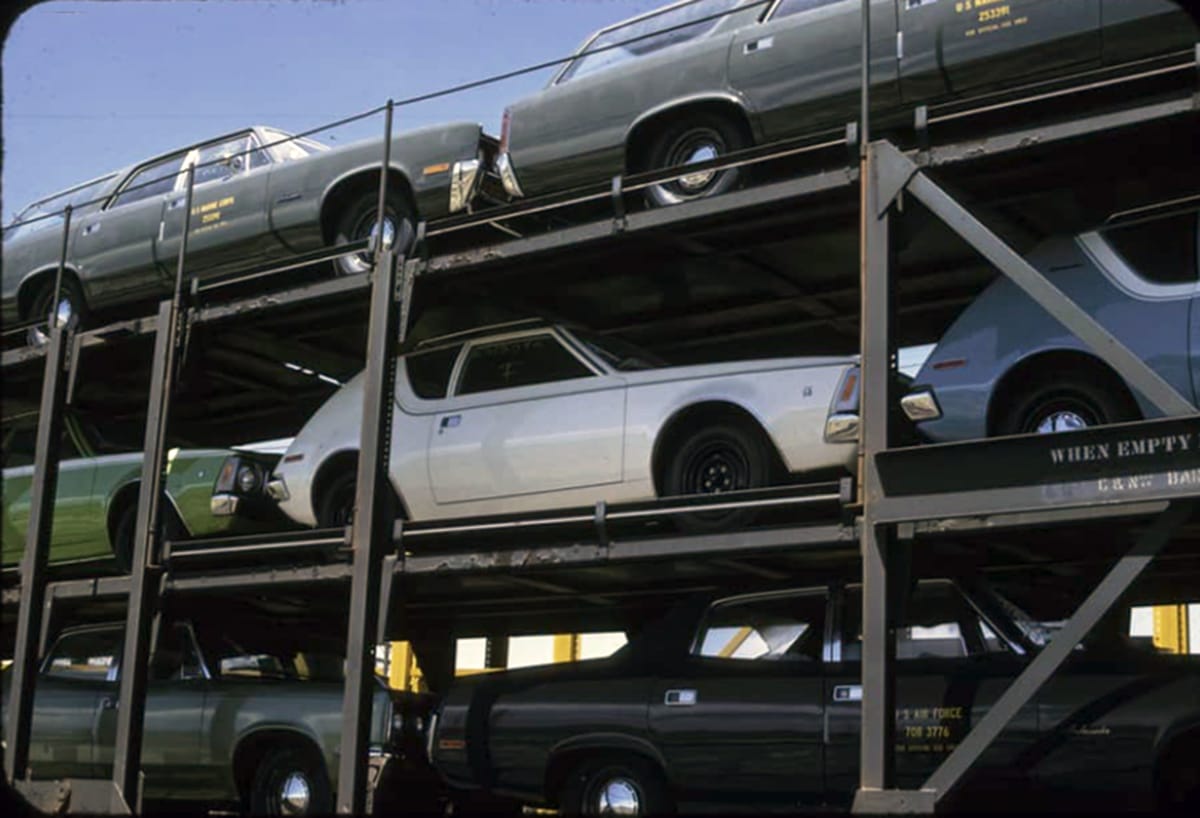
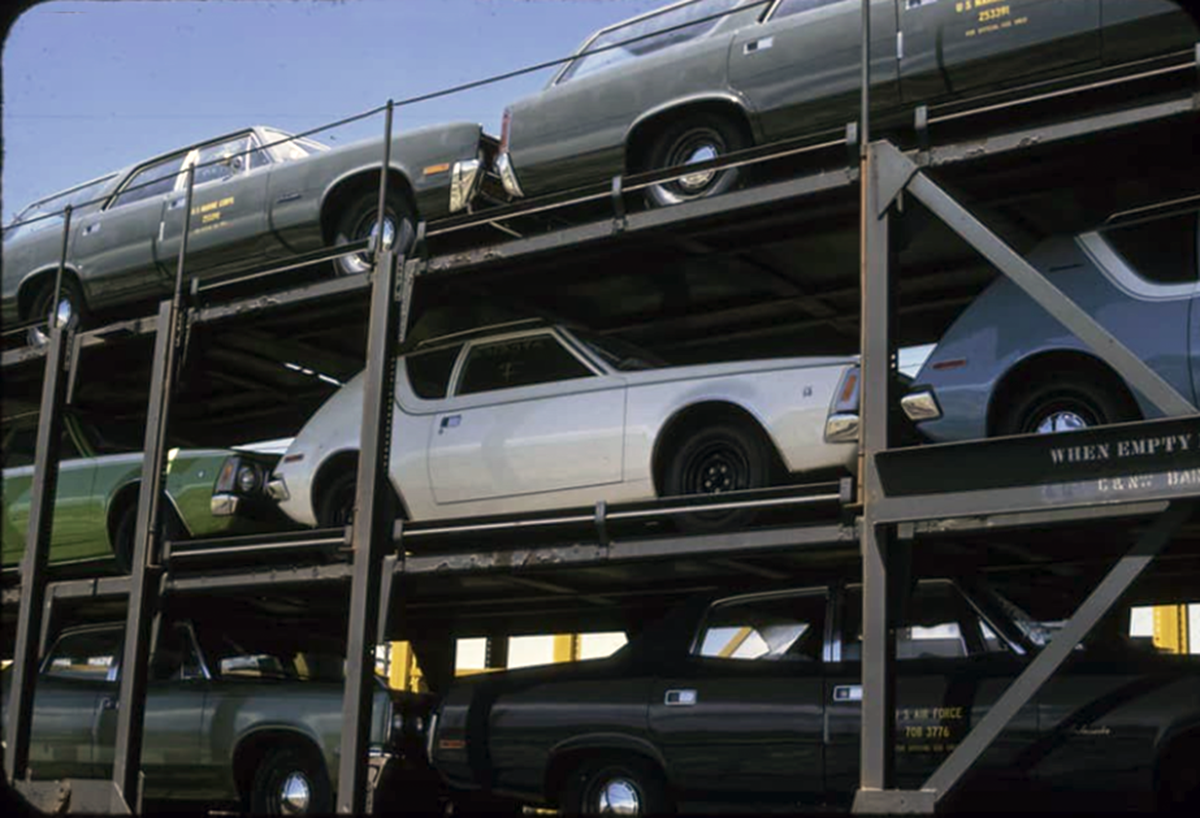
Here’s a fun vintage photo from the past: a trainload of Gremlins and U.S. Air Force Ambassadors that captures the dichotomy of AMC’s business as the 1970s dawned. On one hand, the company was a purveyor of quirkily distinctive models aimed at serving (ever more desperate) niche segments of the retail market. On the other, it was a steady supplier of fleet vehicles. This snapshot captures, in a way, AMC’s increasingly difficult balancing act as it fought to remain independent; a company that followed its own muse all while trying to take on the Big Three segment by segment.
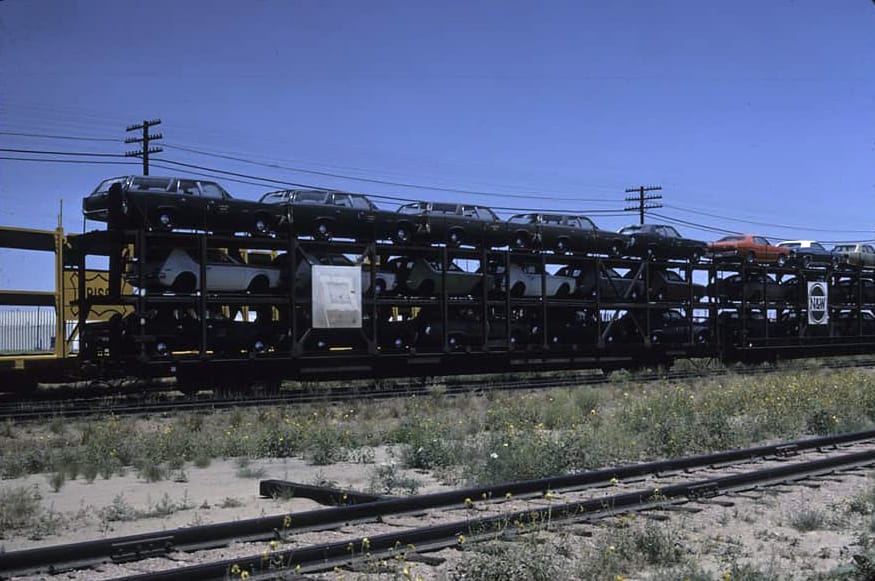
The photos are part of a short series showing the dual load on a multilevel autorack train, and didn’t come with a date. Still, we can make a good guess based on the cars themselves. In this case, the Ambassadors appear to be 1970 models, which, along with the Gremlins newly introduced that year, somehow capture AMC’s state of affairs at the start of the decade. The autorack in front seems to carry a mixed load of new and used cars, mostly Pentastar stuff.
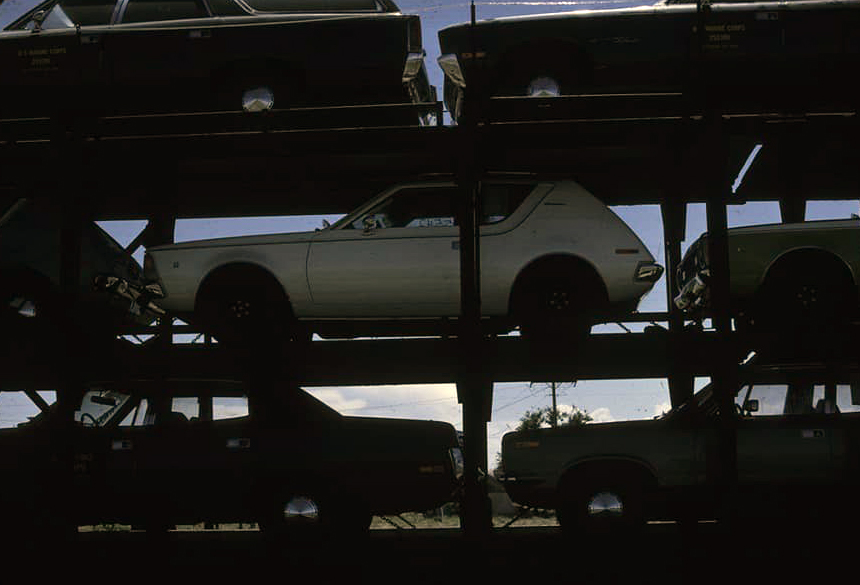
By 1970, AMC had been trying to take on the Big Three segment by segment ever since a change in company policy was applied for the 1965 model year. As today’s Ambassador load suggests, the strategy wasn’t working particularly well, with a substantial number of the company’s larger models finding their way into fleet service. That year, about 13 percent of AMC’s sales went to fleet customers. American Motors didn’t have a large share of the overall fleet market, but those sales were important enough that it was the only domestic automaker that didn’t reduce or eliminate its fleet discounts in 1970.
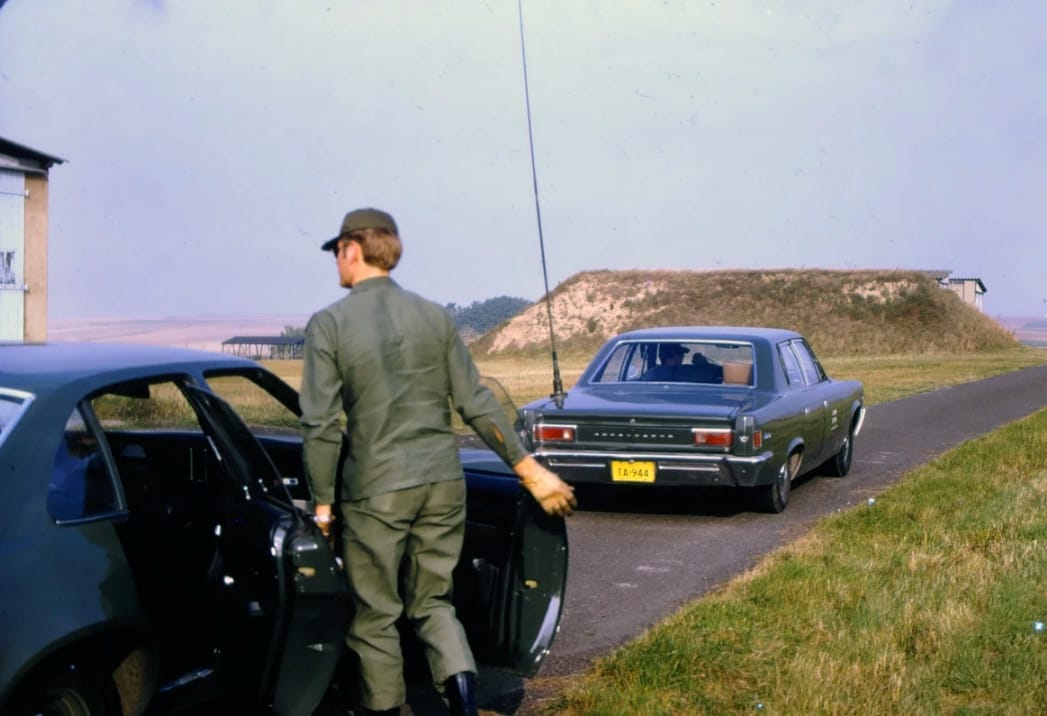
Another image reinforces the point, showing an Ambassador in government service, this one a 1969 model in Army livery. Honestly, I can’t recall seeing an AMC Ambassador or Matador on the road back in the day that wasn’t being used in some kind of fleet capacity. Whether Army…
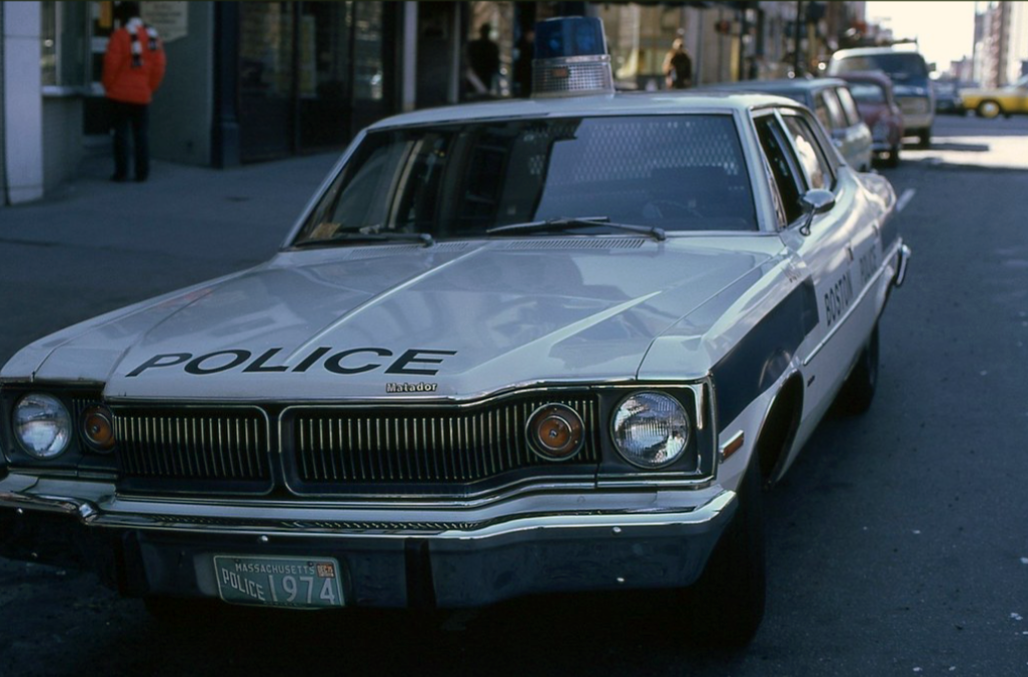
… police, taxi, or some other government or commercial service, they seemed to turn up everywhere but in private driveways. At least in my part of the world. And in the case of Ambassador station wagons like the ones in the lead photo, they hardly seemed to turn up anywhere. AMC sold only 13,286 of them in all of 1970 and 9,094 in 1971.
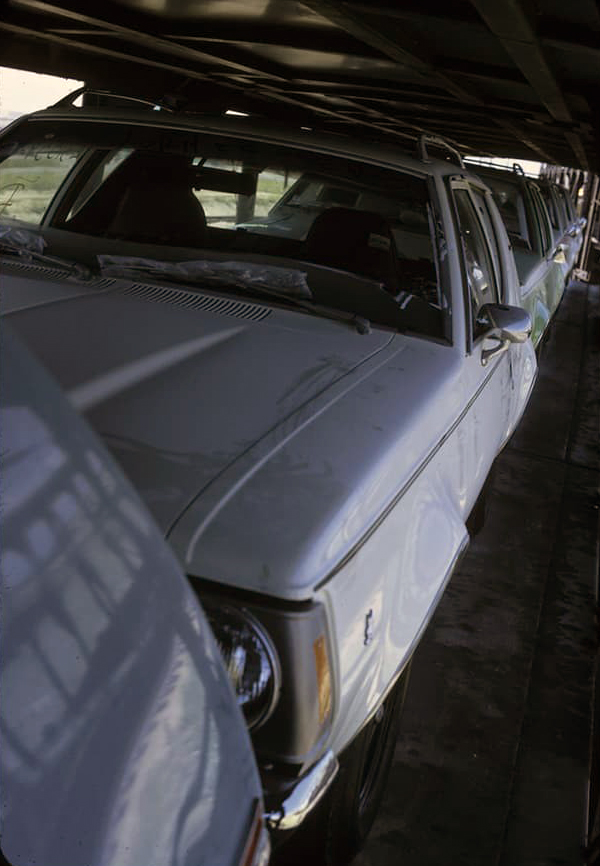
The Gremlin, meanwhile, was a spin-off of the new Hornet, conceived almost as a lark as a subcompact. Of all things, it turned out to be one of AMC’s hits. Along with the Hornet, it became one of the company’s true breadwinners after their introduction in 1970. In all honesty, I admit I have a somewhat cynical view of the Gremlin, but it’s hard to argue with the results. Reading stories behind its conception, I get that its creators felt that whatever reaction the car provoked, favorable or otherwise, meant it was doing its job. It was also cheap to produce, and every sale helped the bottom line. As for the naysayers, didn’t they just give the model more publicity? The Gremlin arrived in April 1970, and by the end of the calendar year, it had sold 39,701 cars. It sold 70,096 more in 1971, 94,037 in 1972, and 133,146 in the 1973 calendar year, making it one of AMC’s best-selling models of the time.
Of course, AMC fans know there was more to the company’s lineup than Gremlins and Ambassadors when these photos were taken. Still, the AMC family-car lineup would be seriously pruned by 1979, with only the Hornet’s descendants remaining around during the company’s final years. And then there was the Jeep acquisition, but that’s a whole different story. Curiously, viewed from the perspective of today’s photos, that story began with an Army fleet vehicle—and it’s one that continues to this day, with Jeep still doing quite well with the general public.






I doubt AMC made much money on the government bulk purchases of vehicles, but it did help to amortize the overhead cost at the plant. Somewhat similar to automakers do with rental car fleets. Thankful for the volume.
Angelo Lamonea (RIP) on the Thrill Show Circuit jumped an AMC that he executed a 360 degree roll in the air that he copyrighted as the “AngiRoll”.
Angiroll 2026
The good old days when you could see the cars on the trains. Now there are steel walls for protection.
Ambassadors are rare, but wow, that license plate on the Army Ambassador in Picture #4 is even moreso. I could find only one photo example of this kind of plate on the Internet (below). US military forces in Europe were headquartered in Germany in the late 1960s/early 1970s, but those headquarters forces didn’t use the mint green “USA” plates that other US forces in Germany used. Instead they used yellow plates, like the one shown here.
Headquarters staff themselves used yellow plates with an “HQ” prefix, but there were a few other prefixes used in this series too. The “TA” shown here belonged to TASCOMEUR (Theater Army Support Command, Europe), which was responsible for supply management, as well as certain administrative and transportation services. And judging by that antenna, maybe communications too!
Great picture – thanks!
The Air Force bought loads of them for the Recruiting Service and for general purpose sedans for leadership and “base taxi’s”. In Security Police we were issued well worn models for base patrol. They were 6 cylinder with column shift.
The Iowa City Police Department bought a complete new fleet of Matadors in 1973. Oddly, they were all painted in various pastel hues.They were then known as the rainbow brigade.
My parents owned a 1973 Hornet, which they traded in for a 1975 Matador wagon. I loved that car. It lasted until 1986, when my dad had smashed into another car trying to kill a spider and lost the front quarter panel. By that time, the heat didn’t work and the “gear shift indicator” was a bent nail pointing at letters on a strip of masking tape. I still wanted the car anyway for when I turned 16, but they junked it – by starting it up and driving it to the junkyard. Sadness
There are a at least a two photos of AMC sedans in military admin fleet service, in the book ‘US Military Wheeled Vehicles’ by Fred Crismon, published in the late ’70s.The caption for one of the photos includes some memories from someone he met while researching the book. According to that person ( or Crismon himself), AMC built those cars to a standard BELOW regular production cars. For example, it was noted that the interior door panels were nothing more than plain vinyl glued over cardboard, resulting in a trim level below AMC’s regular base trim. That was bad enough, according to the photo caption, to cause “many of the cars’ drivers to never own an AMC product.”
Whenever I go to the Sunday morning Cars & Coffee, in Lafayette, I usually take the Ambassador wagon. Most times there are 2-3 people see the car come in and and walk over before I have finished parking. One fellow passed me on the freeway and told me he hoped I was going to the event. Another fellow searched me out to relate to me his restored Gremlin he had but had not brought. Showed me pictures of his car and was thrilled to see another AMC car. The wagon gets tons of questions every time it shows up compared to say my F100 which is just another Ford truck. AMC does have some die hard fans out there.
Not there today as rain cancels.
I think a lot of AMC’s success in fleet sales, at least to the Federal Government, was due to Sen. William Proxmire of Wisconsin. Story was Proxmire was able to get AMC classified as a small business (which it most certainly was compared to the Big 3) which allowed AMC preferential treatment in the award of Federal contracts. AMC’s fleet business in the 70’s was actually quite substantial when you consider its AM General division, which had some large contracts supplying the military with M35 and M54 6X6 trucks along with their transit bus business.