
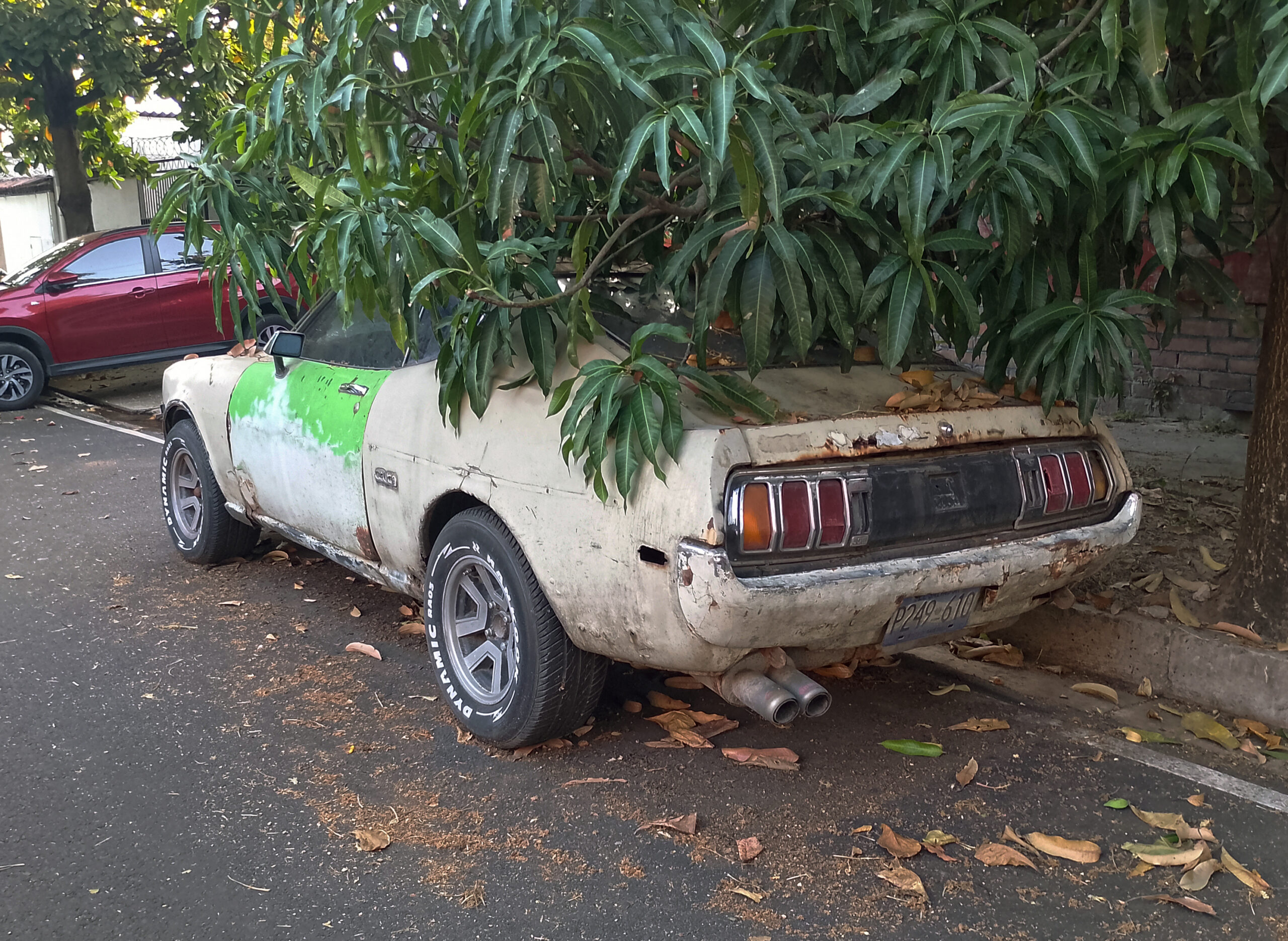
I’m glad it was a first-generation Toyota Celica under this mango tree in San Salvador. Its unmistakable shape caught my eye from a distance, making me stop and turn around in haste. A bit of an overreaction, perhaps, but then, the first-generation Celica has been one of my favorite cars ever, and spotting one in the wild—even in this rather sorry state—was enough to bring out childlike enthusiasm on my part.
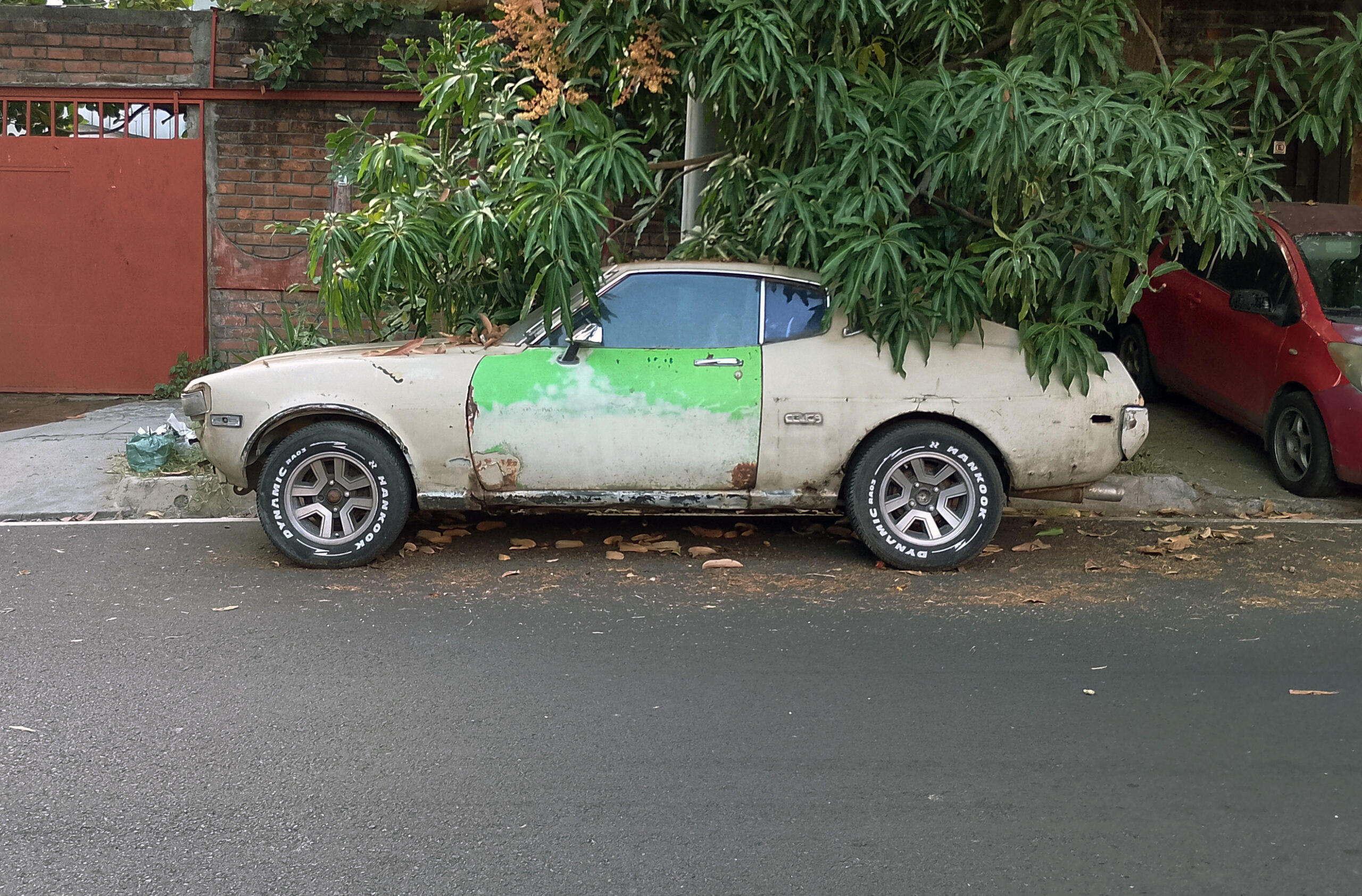
Actually, as soon as I saw it, I’m pretty sure I shouted, “An early Celica!” Good thing I was on my own, or my wife would’ve further questioned my sanity. Either that, or giggle at my kid-like enthusiasm.
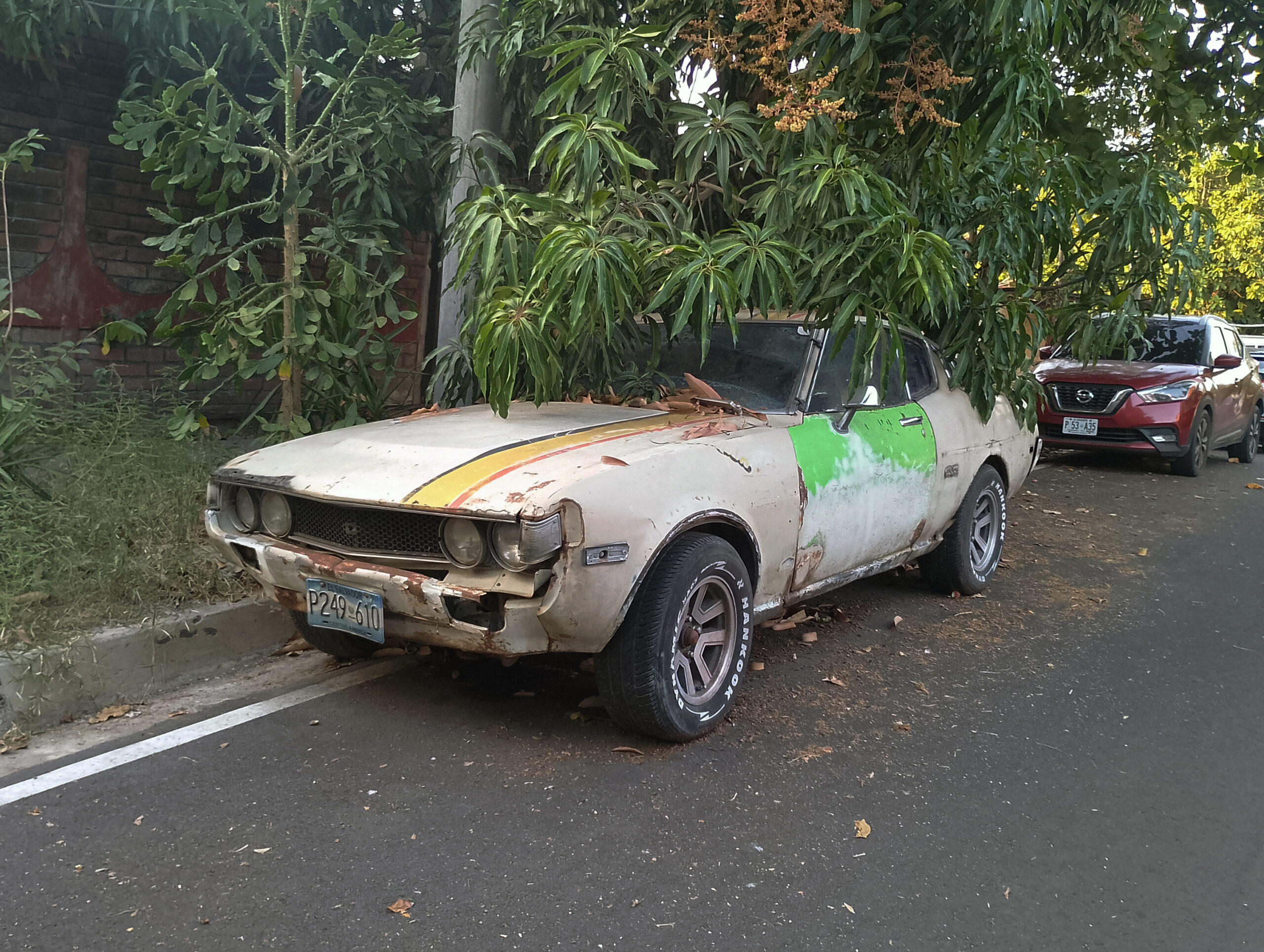
As I said, the first-generation Celica has been one of my favorite cars, ever. A yellow notchback was the brightest thing in my San Salvador neighborhood back in 1976–79, and I loved staring at it. It sat in the open parking area of a corner home, looking like some Japanese flying-saucer prop. Every day it was there, tempting me from an ideal vantage point, as if the whole scene had been arranged for an idyllic scene in a family sitcom.
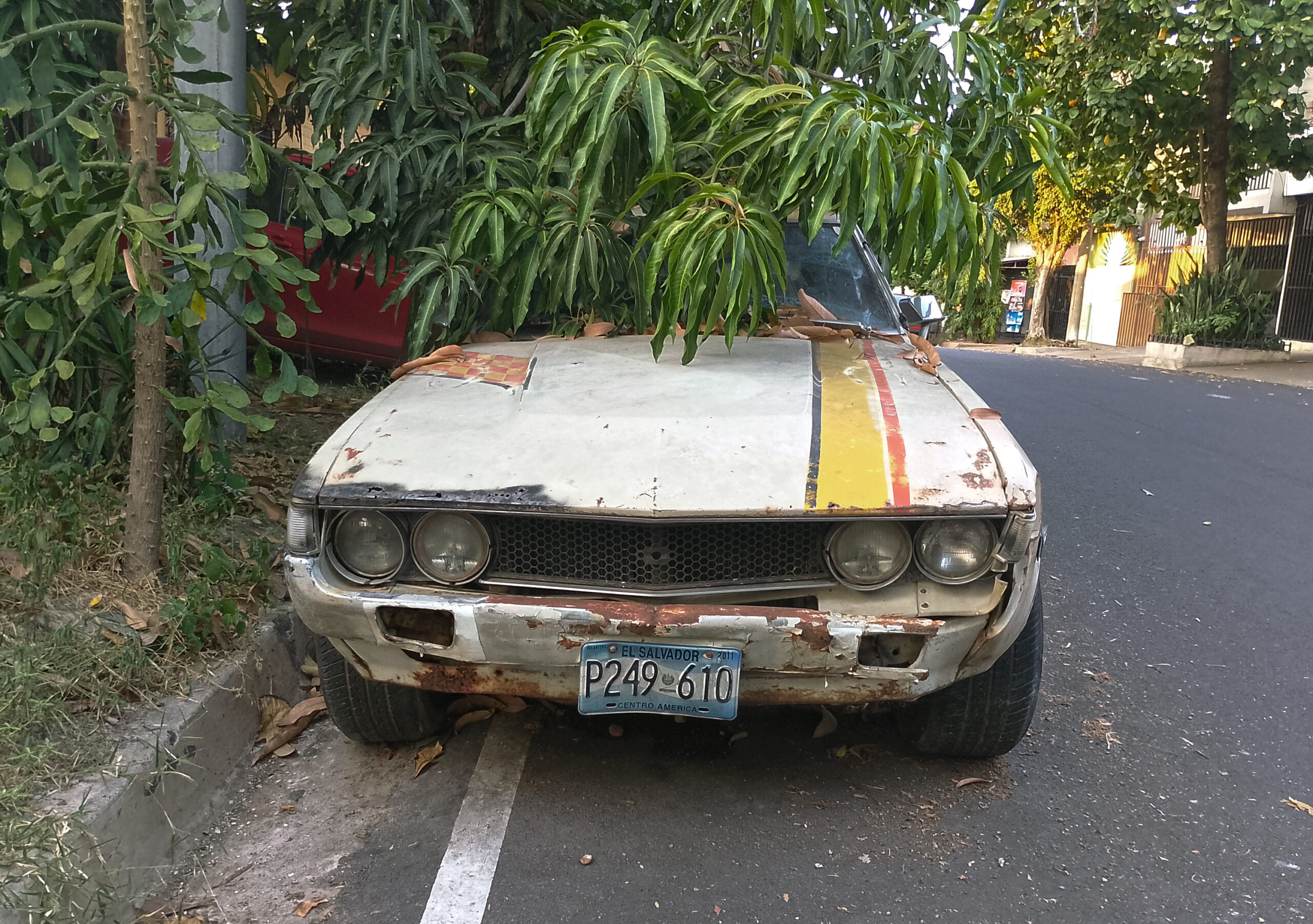
The Celica was available in this country as Toyota’s halo car; it sold in small numbers as an exclusive offering (its cost was a bit high for this nation of Corollas and Publicas), aiding the model’s mystique. The last time I saw one was… back in California, sometime in the 1990s. No wonder I shouted to myself when I spotted this one last weekend. Sure, it’s tired and battered, with hardly a part left untouched, but it still worked its curbside-find magic on me.
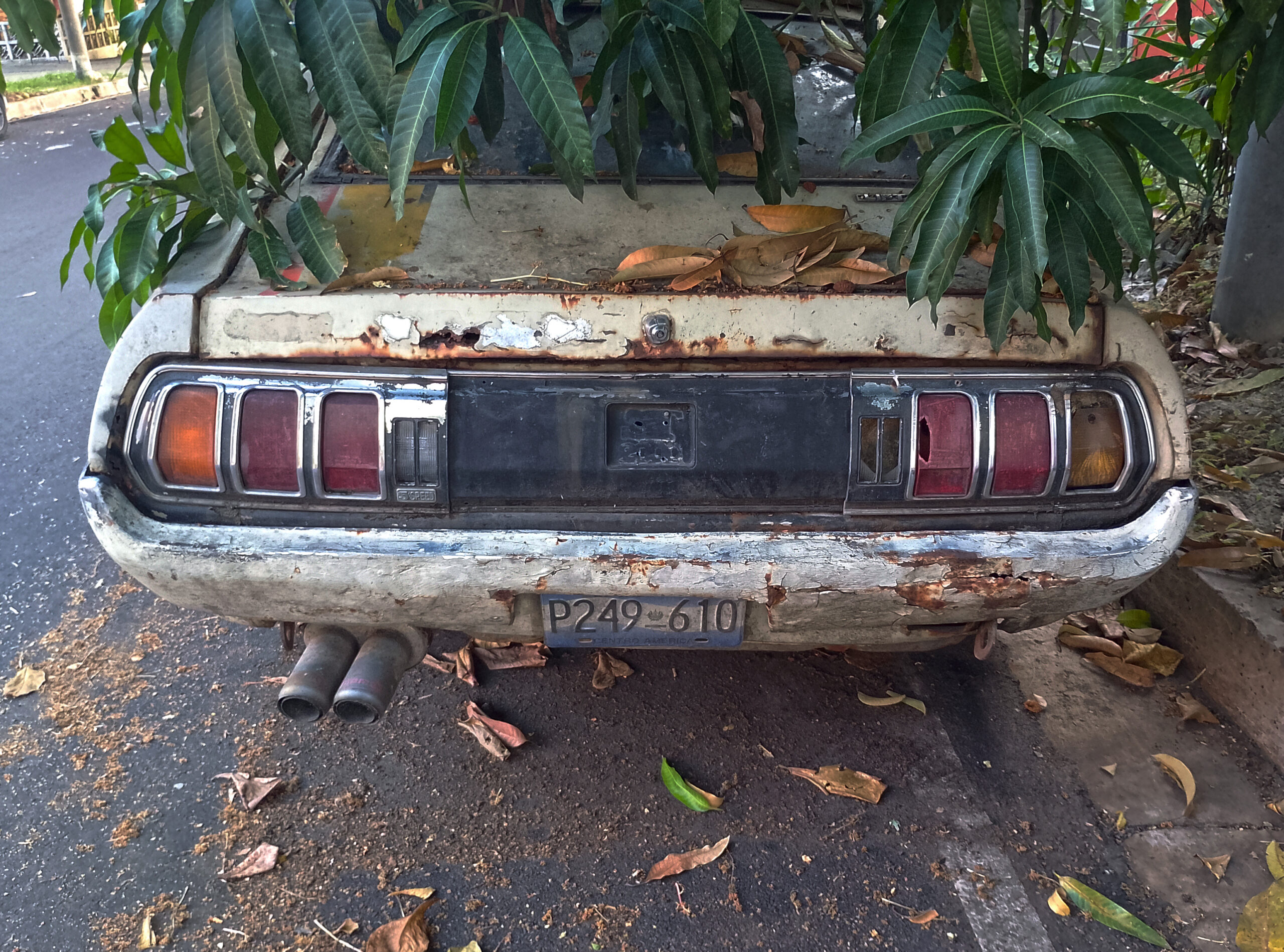
The bumpers show this as a non-U.S. model, meaning it was originally imported into this country. Another clue that its specs will differ somewhat from those of American-market cars is the ST 2000 badge, a trim I don’t see available in liftback form in US brochures.
Still, the ST 2000 badge indicates it’s powered by Toyota’s 1,968cc (2.0L) 18R SOHC inline-four. Output on that powerplant varied through the years and markets, but using the info on a 1976 UK Celica brochure (the earliest I could trace ST2000 trim in export markets), it would be 86HP at 5000RPM, with max. torque of 105lb.ft at 3600RPM. Another badge indicates this liftback is equipped with Toyota’s much-vaunted five-speed manual, a desirable option.
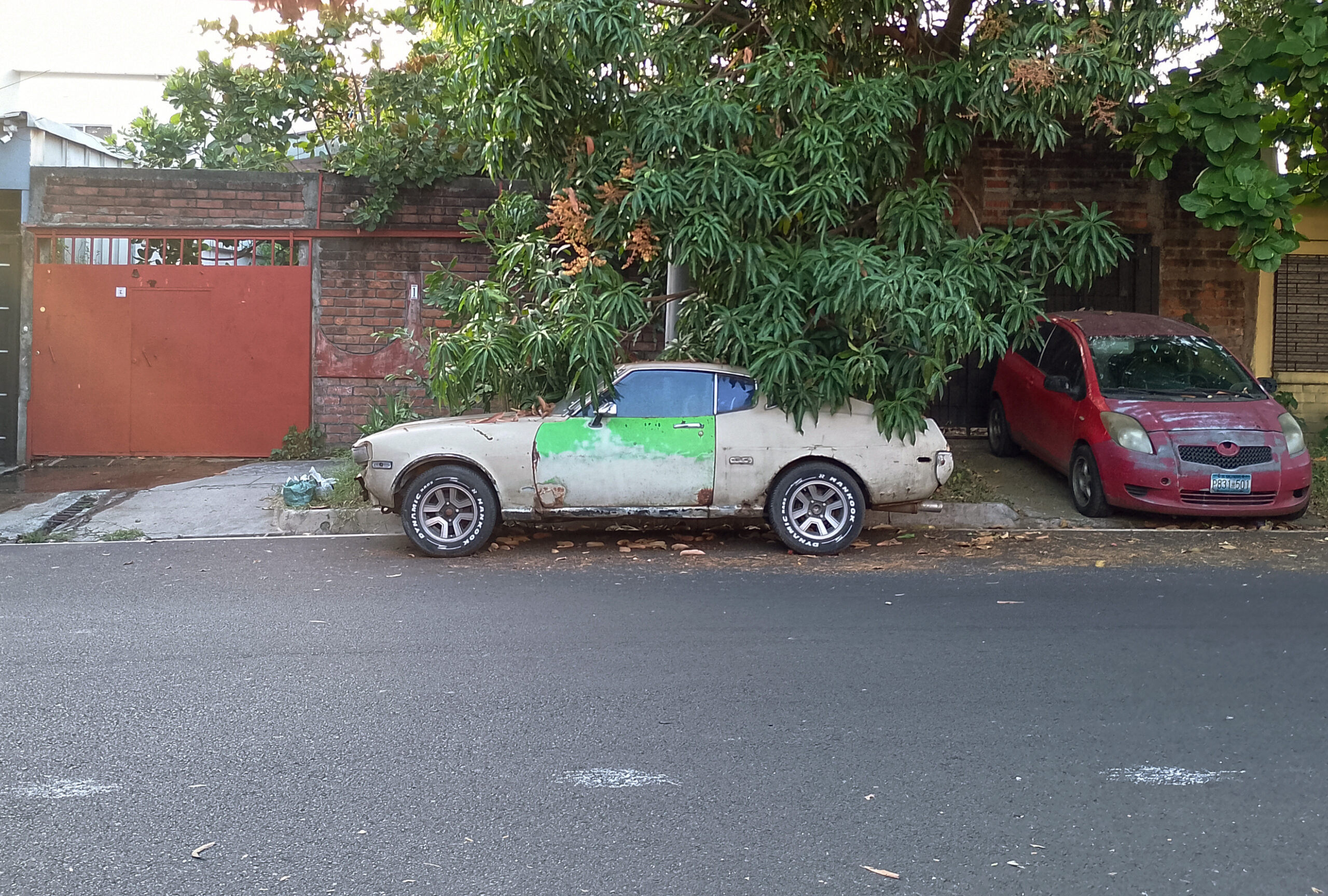
In the US, the fastback didn’t arrive until 1976, though the body style came out as early as 1974 in Japan. No idea when it became available in Central America. I tend to prefer the original notchback’s looks from the car’s 1970 debut, but all first-generation Celicas are lookers to me. In any case, as many have pointed out, the Celica was Toyota’s take on the American ponycar, something that became even clearer when the fastback appeared.
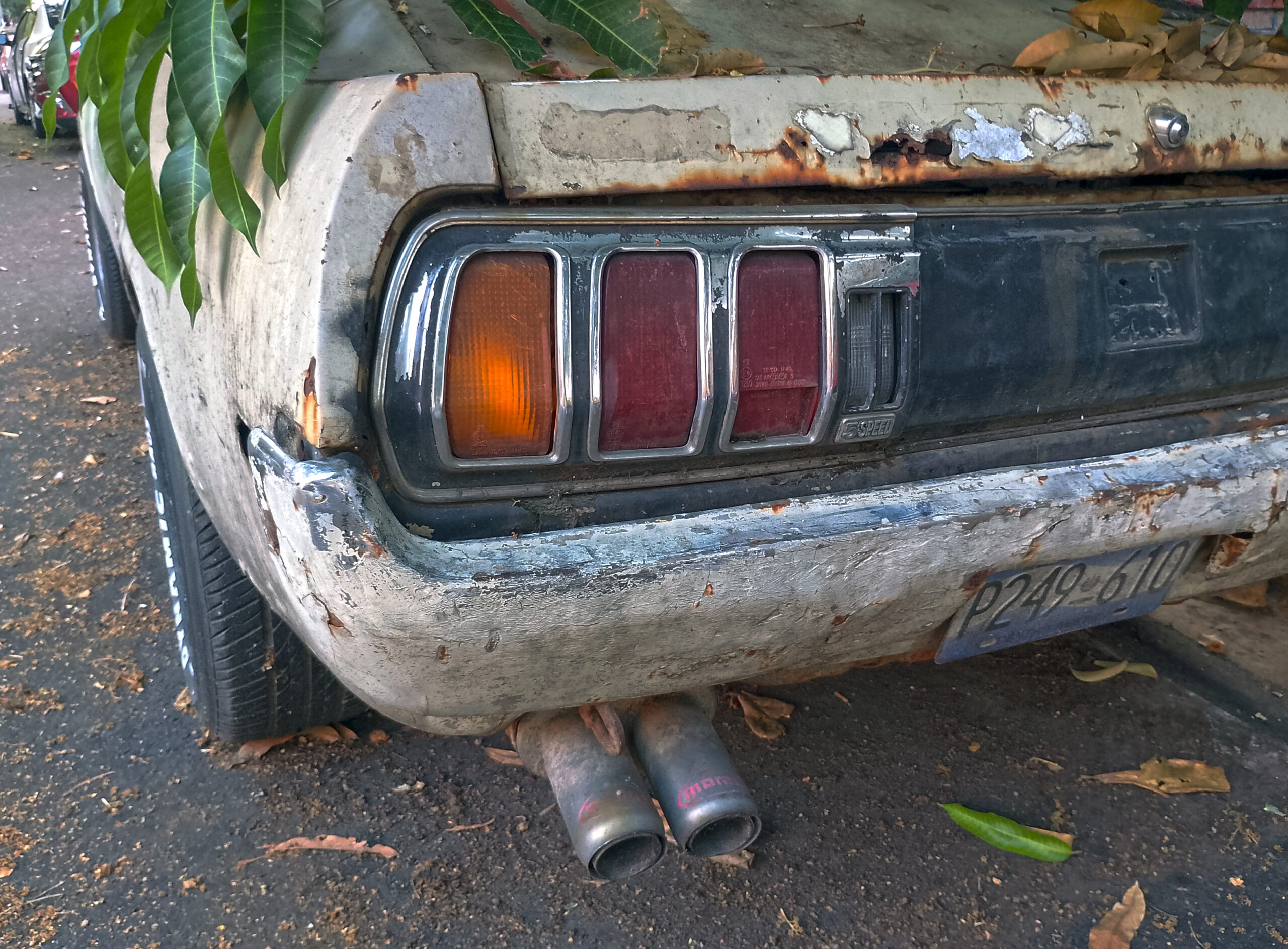
Even down to the Mustang taillights. Depending on where you stand, this is blatant cribbing… or, ahem, homage!
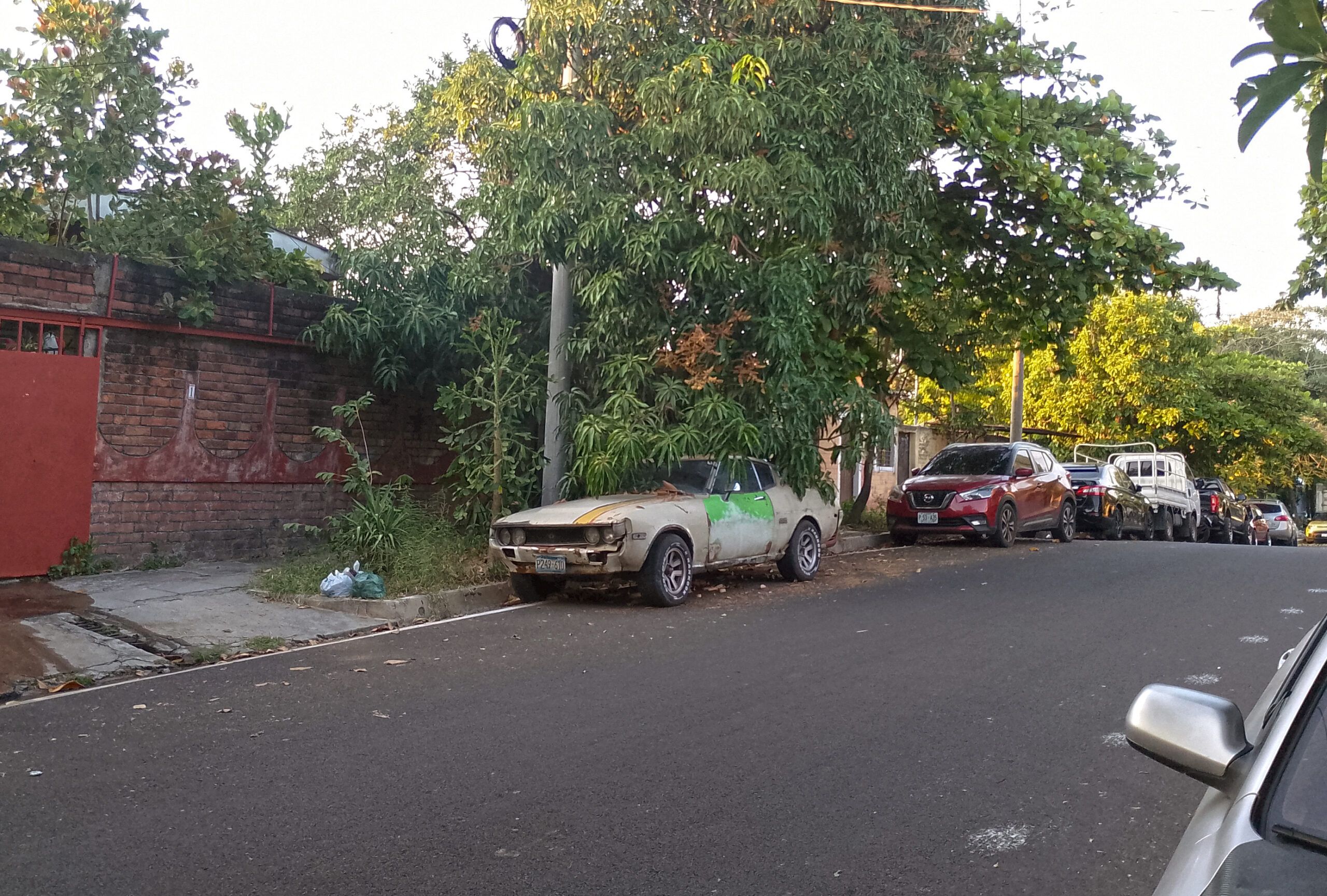
Looking at these photos, you’d think the mango tree is winning the fight against this Celica. But that only tells part of the story; this car is a survivor in every way.
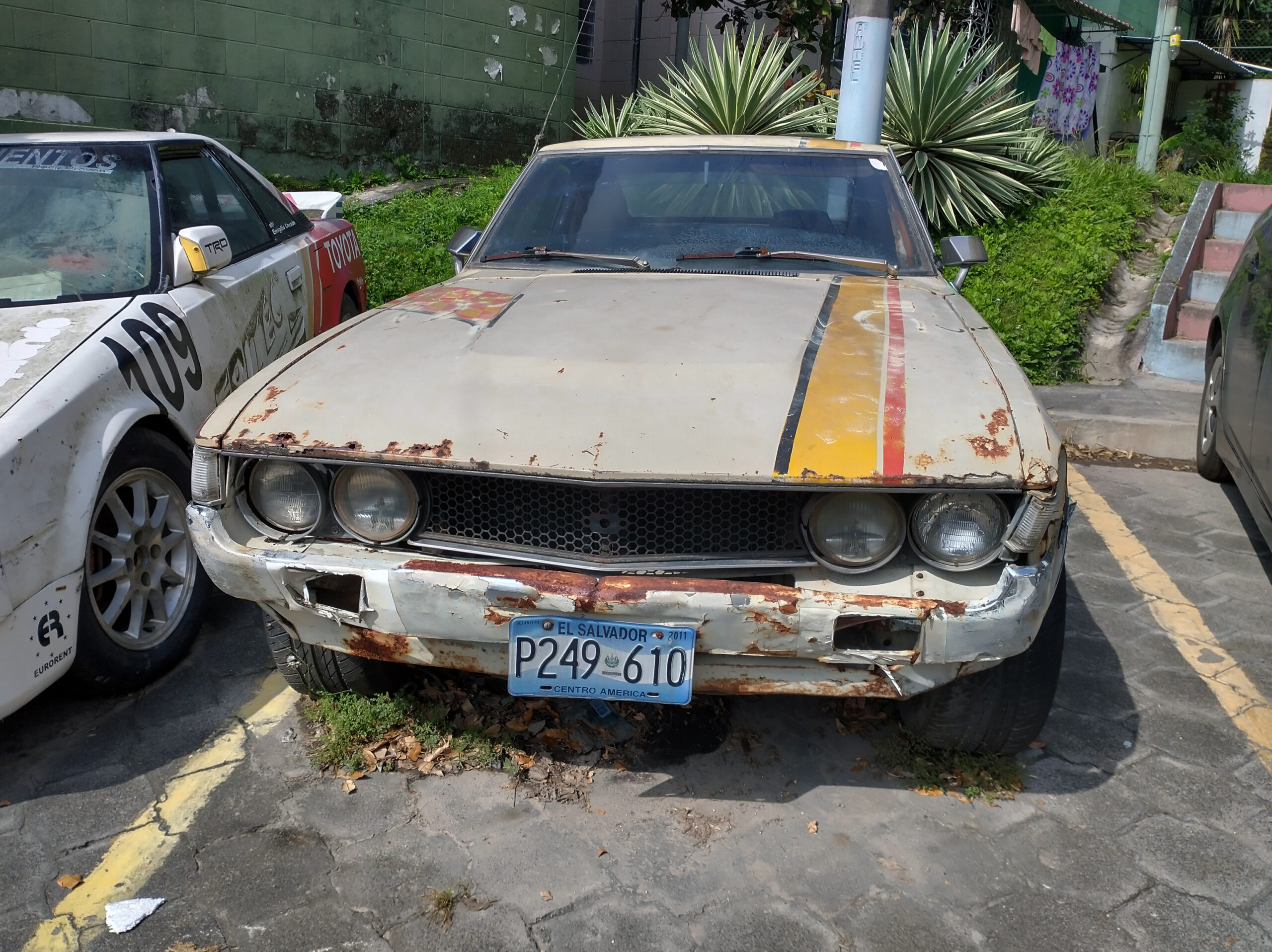
About four years ago, my wife came across it in a hard to photograph spot and sent me some photos.
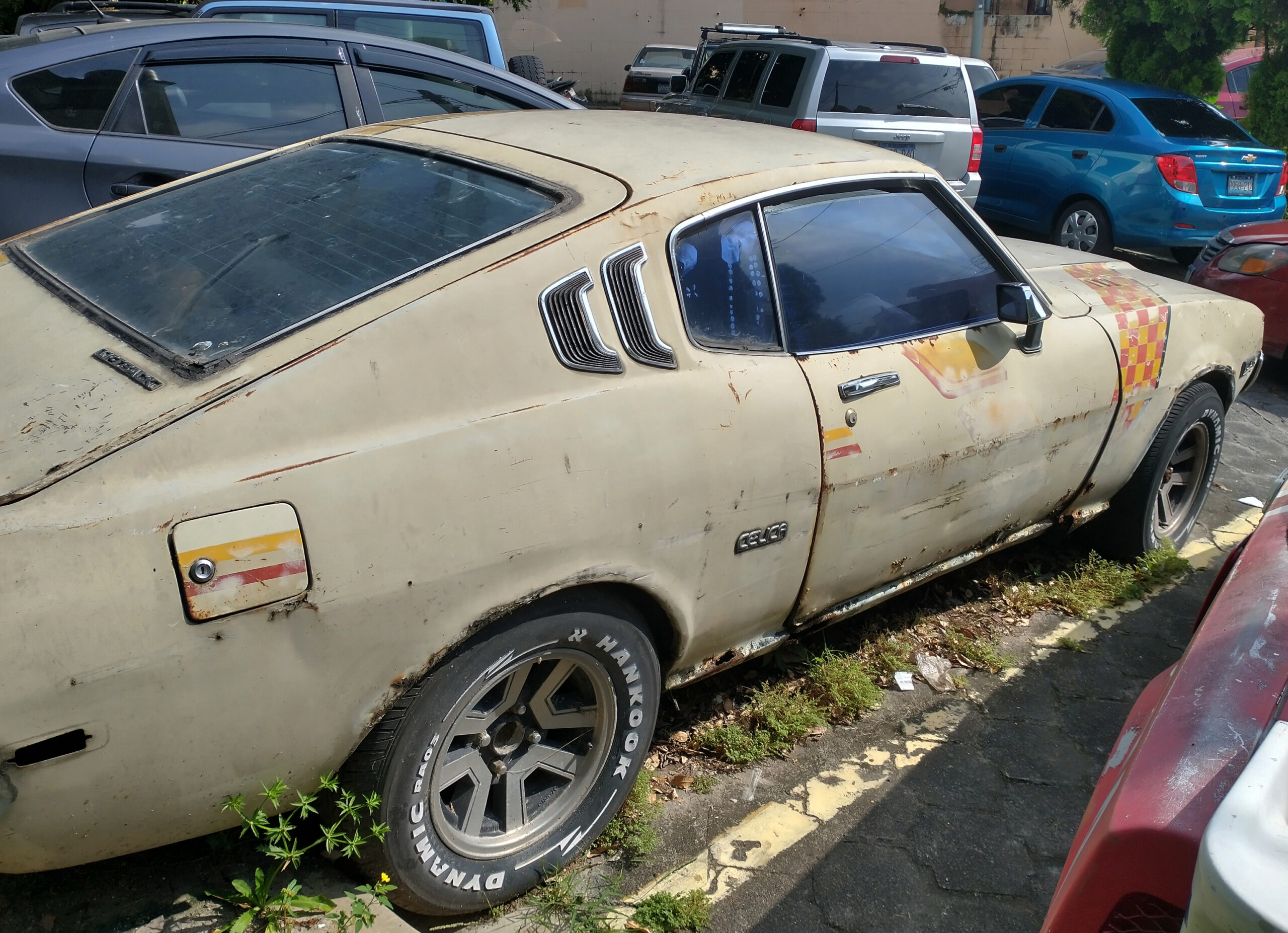
Back then, it looked like it hadn’t moved in a while. Now, I caught it in a different part of town, showing there’s life in it. Or that there’s hope; it may not have moved on its own, but someone did bother to take it to a new home.
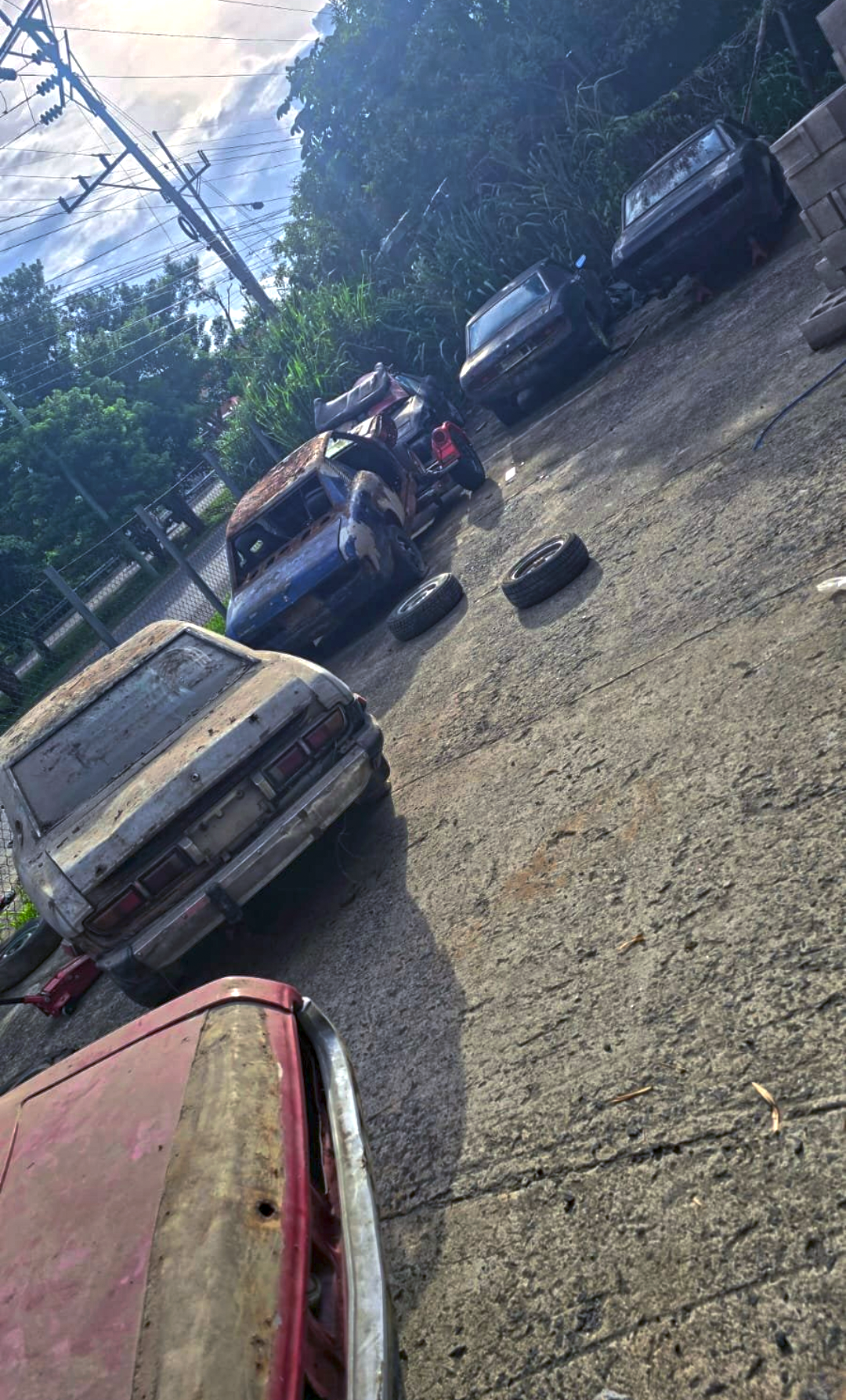
Then, more recently, an FB Marketplace post popped up in my feed, advertising a local outfit dedicated to selling spare parts for first-generation Celicas. Now, that’s a pretty narrow niche in the local restoration market, but it exists nonetheless.
So, who knows? Labor is relatively cheap here, and enthusiasts of old Japanese iron are becoming more commonplace. Besides, early Celicas are rare as hen’s teeth and carry a certain halo. I’m not sure anyone will even attempt to save this fastback, but perhaps more Celica sightings are in store for the future.
Related CC reading:
Curbside Classic: 1974 Toyota Celica Coupe – Betting on The Wrong Pony
Vintage R&T Review: 1971 Toyota Celica – The Arrival Of Toyota’s Pony Car
CC Outtake: 1973 Toyota Celica ST – Welcome To The Neighborhood























Love it! What a survivor. Wearing wheels from one of its successor generations.
Nice, rarely see any of those sat all now.
Outstanding find! I guess there’s a chance that this car has some more life in it yet, if it’s been moved recently, and also the wheels and tires look like (relatively) new additions.
Also, I’d love to know what the entire stripe packing looked like when new, especially with that orange checkerboard pattern on the right fender and hood!