
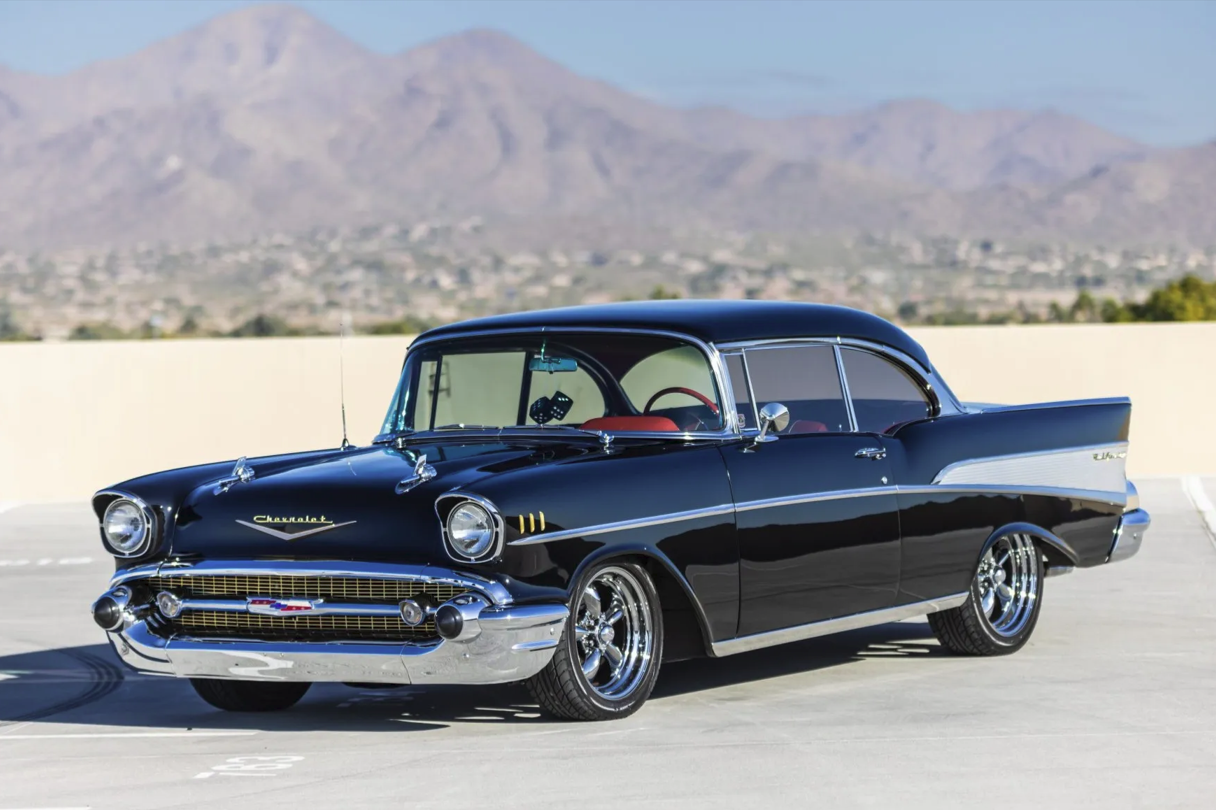
The word “icon” is overused but no one is likely to dispute the iconic status that the ’57 Chevy has acquired. It has become the most universally recognized symbol of 1950s American cars as well as Americana in general. It achieved star collector status decades ago. It adorns restaurants, living rooms and offices. It’s been hot-rodded, customized and modified to every degree possible. And not a few think it’s been over-exposed in the process and wonder how it ever achieved its lofty status given its styling and that it was outsold when new by the ’57 Ford.
It didn’t happen by coincidence; there are five very real and good reasons that made the ’57 Chevy an automotive celebrity (with a small “c”). But celebrities don’t last forever, and the ’57 Chevy’s peak is likely past.
1. Build Quality

The ’57 Ford and Plymouth were all-new that year. They certainly looked dramatic with their extravagant styling on bigger and lower bodies, but they both suffered from serious build quality issues. The new ’57 Chrysler cars were originally intended for 1958, but were pushed up one year, leading to numerous problems, especially with body integrity and leaks, highly premature rust, torsion bars snapping and other maladies. The Fords were somewhat better, but also suffered from various first-year issues. Both of them developed reputations for having poor all-round build quality within a year of their arrival and they both ended up in junkyards all-too soon and had a lower survivor rate.
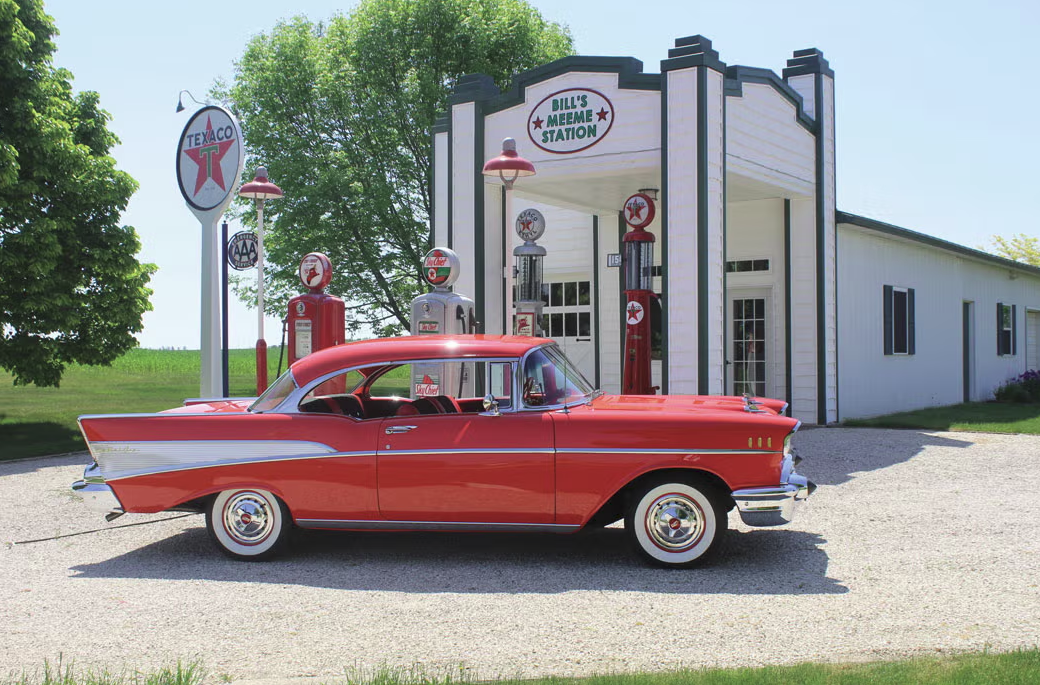
Meanwhile, the ’57 Chevy was just an update on the ’55-’56 Chevys, which had already developed a reputation for being solid, well-built cars by this time. The ’57 was now in its third year of using the same body, frame, suspension and other key elements. The Chevy six had long proven itself, and the new V8 that arrived in 1955 had a few early teething issues resolved. The ’57 Chevy was the culmination of the Tri-Five Chevys, and the best-built of them all.
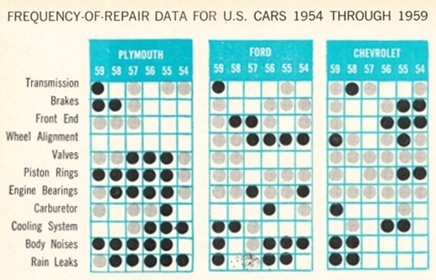
This is not just hearsay or bias; Consumer Reports had become the arbiter of reliability and quality issues for decades already, with their annual Frequency-Of-Repair Data. This snippet from their May 1960 issue graphically shows the ’57 Chevy without one of the dreaded black dots while the ’57 Plymouth had five and the ’57 Ford had three.
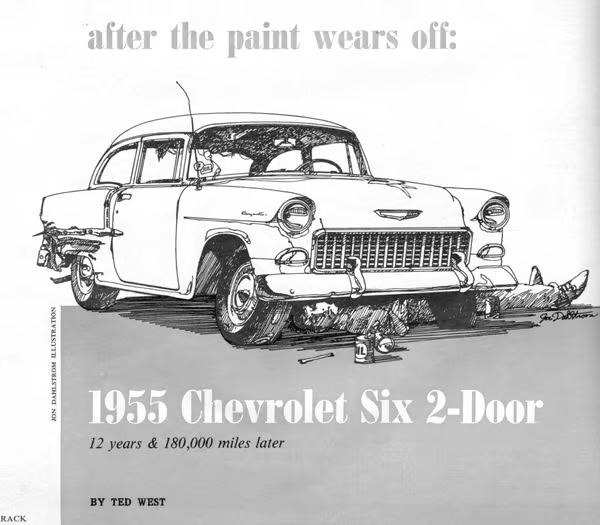
Already in 1958, with increasing reports and general awareness of issues with the new Plymouth and Ford, the Tri-Five Chevys became the used cars of choice. They were a known quantity, were simple and tough, and easy to fix. Stories like this one in Road & Track of a young guy buying a 12 year-old Chevy six and keeping it going to 180,000 miles were hardly unusual. My brother’s best friend had a hand-me-down ’55 Chevy six like this in the late ’60s and it was unkillable.
Used car buyers shunned the ’57 Plymouth and Ford, which directly led to their lower survival rate compared to the Chevy.
2. Size, and the 1957-1958 Recession
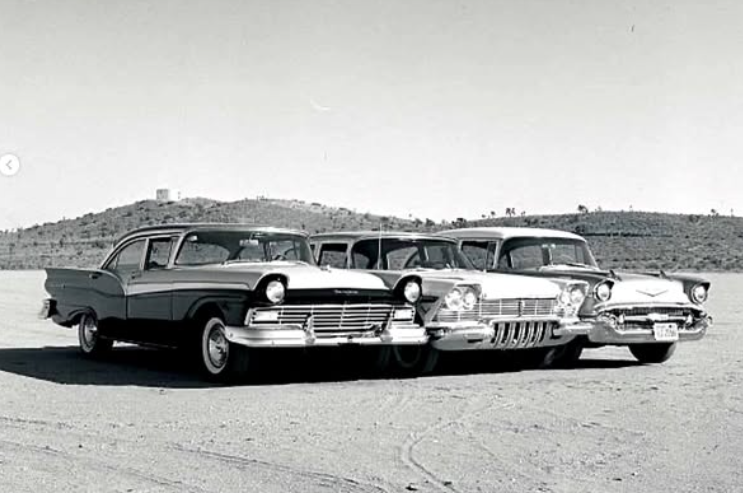
Both the ’57 Ford and Plymouth were substantially longer, lower and wider than their predecessors and the ’57 Chevy. This trend to ever-bigger and lower cars by the Big Three had been under way ever since the end of the war, and there seemed to be no end in sight. The ’57 Ford was 7.7 inches longer, 3.1 inches wider and 3.6 inches lower than the Chevy.
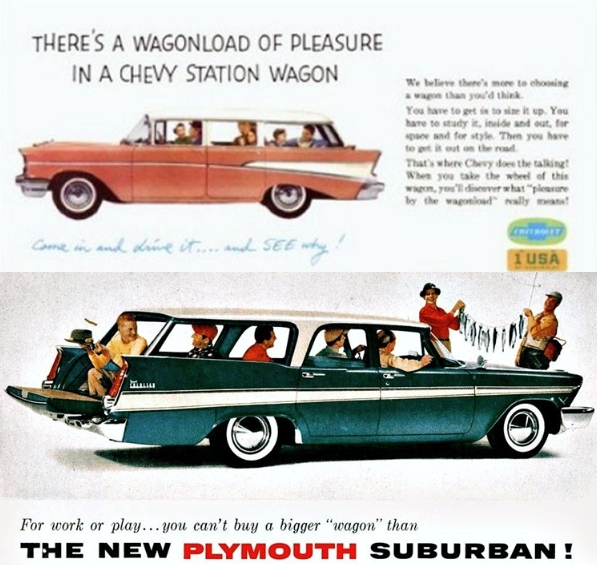
The new 1957 Plymouth wagon, at 211″ long, was a full foot longer than a 1957 Chevrolet wagon. The extra length and width compensated for the reduced height, but that wasn’t an advantage in many buyer’s minds. The Chevy wagon’s height meant that it could still have a forward facing third seat. And the Chevy weighed 340 lbs. less. Never mind how well it was put together.
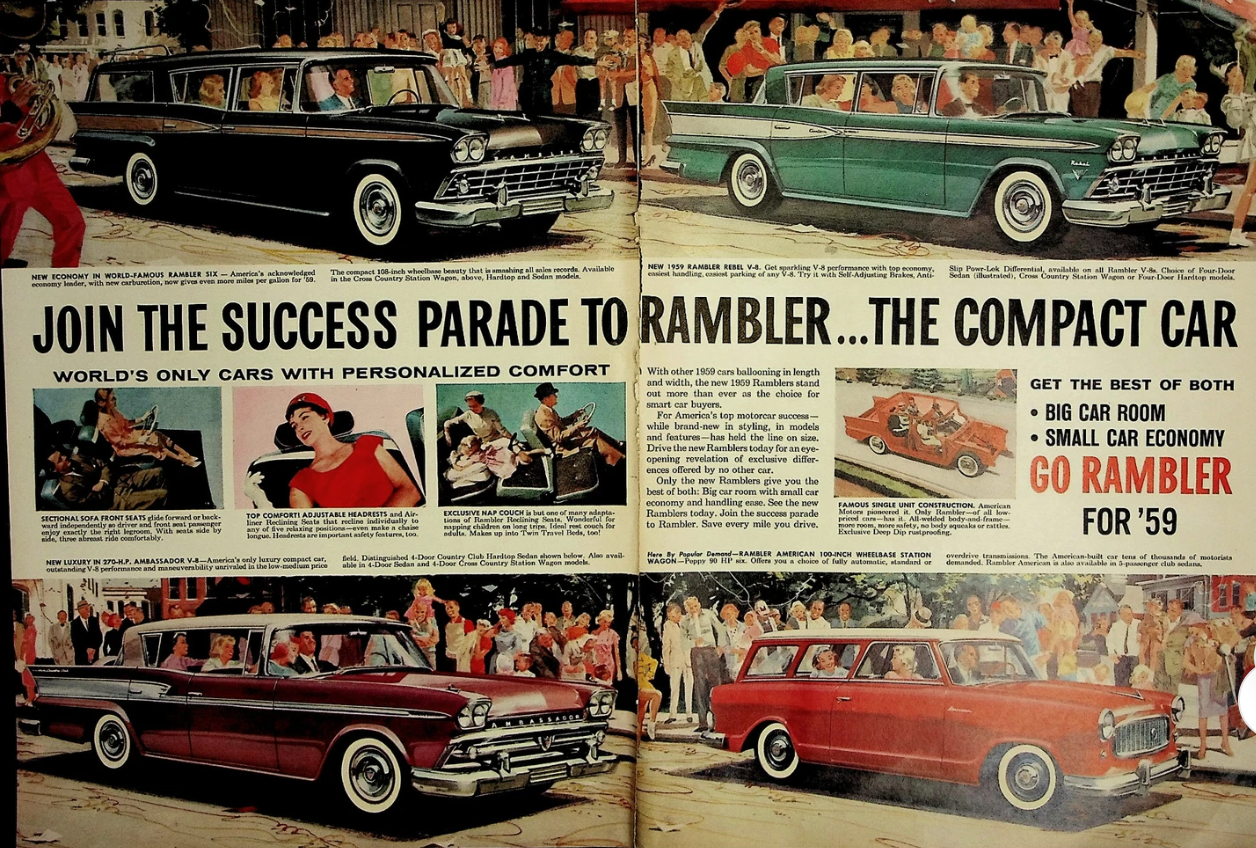
This obesity crisis coincided exactly with the start of the 1957-1958 recession, which began in the middle of 1957 and had a huge impact on the 1958 model year market. Overall, 1958 MY car sales were down a whopping 31%. But that doesn’t begin to tell the full story, as Rambler sales exploded by 75% and AMC’s market share shot up to 3.5%. Import car sales also boomed, with market share more than doubling from 3.9% in 1957 to 9.4% in 1958. There was a massive vibe shift away from big cars, as many strapped consumers felt they just weren’t worth the expense of buying, feeding and repairing them. They literally lost their allure almost overnight.
Although the ’57-’58 recession ended in April of 1958, the vibe shift away from big cars didn’t. The whole period from 1958-1961 (there was another short recession in 1961) was characterized by a degree of economic uncertainty and an aversion to big cars.
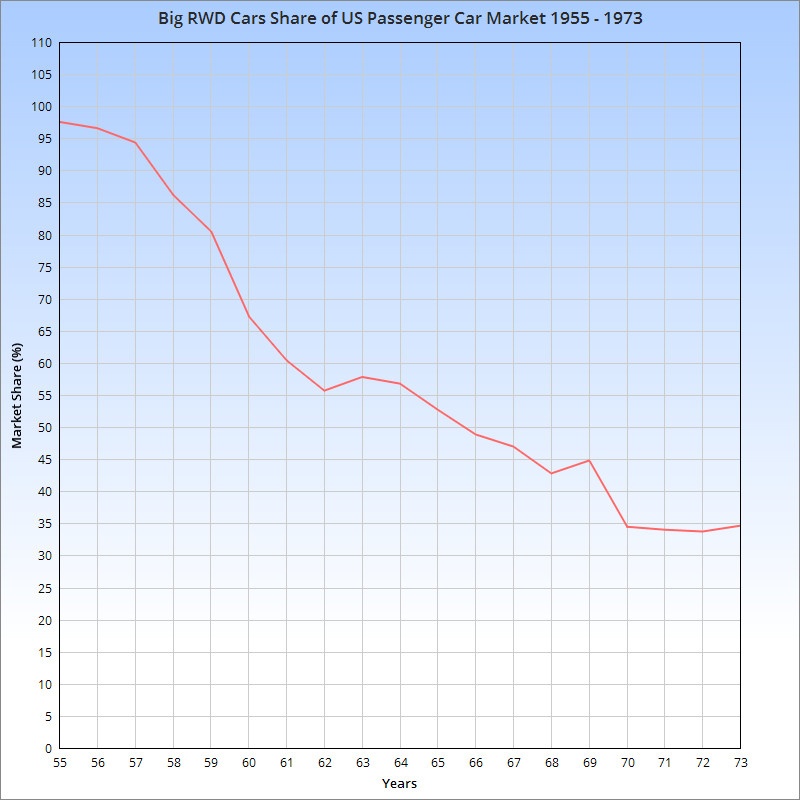
This caused a huge drop in market share for full-size cars, from 94% in 1957 to 56% in 1962. Although the Chevy brand was impacted too, its market share compared to Ford and Plymouth actually improved during these years. This may well have been in part due to the perception of better quality that was so solidly established by the ’55-’57 model years.
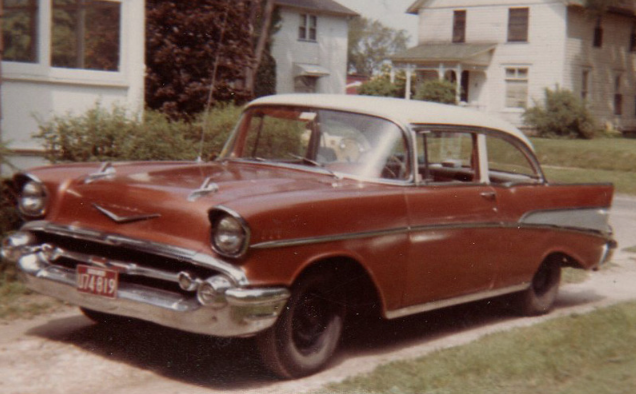
The Tri-Five Chevys’ resale values were significantly higher, having become the preferred used car. And continued to be the case well beyond the 1958-1961 period, as these Chevys would go on to be the preferred first car for so many young Americans for years to come. Their reputation was rightfully earned and it played a big role in the transformation into becoming an icon. There’s at least two generations of Americans who had (or wanted) a Tri-Five Chevy as their first car; no wonder so many of them had to have one again later in life, to relive that experience or to satisfy that unmet desire.
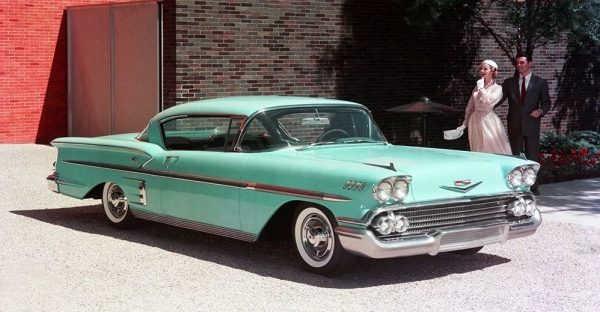
Chevy ruined this all in 1958 when it joined Ford and Plymouth with a substantially longer, lower, wider and heavier car. The ’58 Impala coupe has its fans, but in general the ’58 went over like a lead balloon, at least with lovers of the Tri-Fives. The big Chevys to come only enhanced their desirability further.
3. Performance: The Chevy Small Block V8
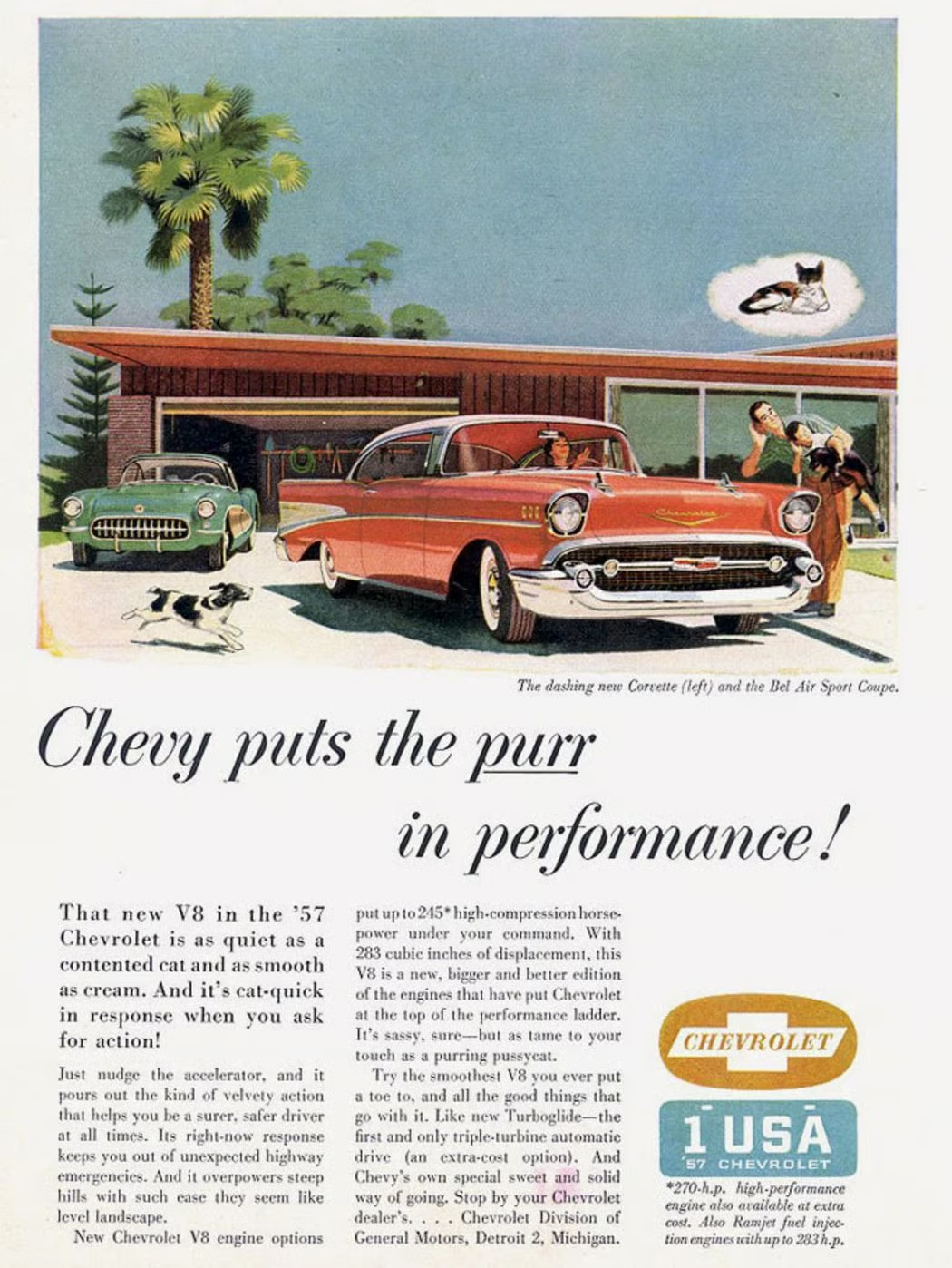
Is this the single biggest factor of them all? It would be easy to argue that, but the combination of the Chevy’s more compact size and weight along with the incomparable small block V8 made the tri-Fives utterly untouchable in terms of their appeal to the go-fast and hot rod crowd. This of course started in 1955. Road & Track tested a ’55 with the 180 hp “power-pack” (4 barrel carb) version of the new 265 cubic inch V8 with a 4.11:1 rear axle and said: “it certainly appears…it will out-accelerate any American car on the market today!” The ’56 was upped to 205 hp, which caused it to accelerate considerably faster than the ’55. And of course Chevy upped the ante in 1957, with the new larger 283 cubic inch version, with up to 283 hp with fuel injection. A legend was born.
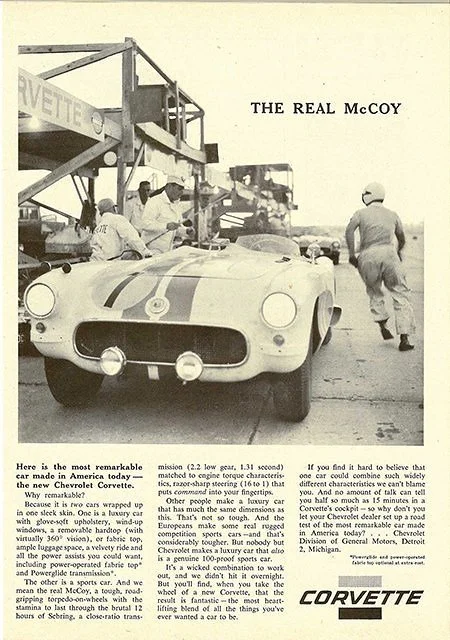
And its image was of course further enhanced by the Corvette, which had become a genuine race-ready sports car by this time, one whose performance was absolutely world-beating in the production class. There was essentially no difference between the engine in a used ’57 Chevy and a race-ready Corvette except for some parts readily available at your local Chevy dealer.
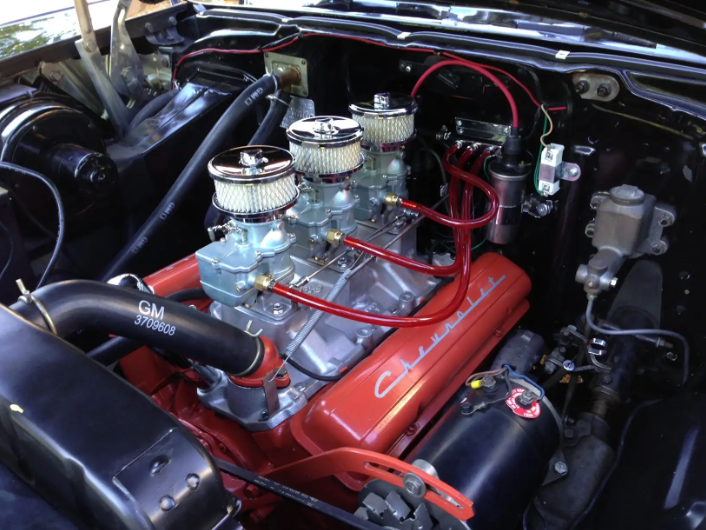
As famous as the fuelie 283 is, it was very rare (and expensive). What really made the SBC was the fact that it not only had better than average performance in its common basic versions, but that it was so remarkably easy (and cheap) to improve its power. That was the real key. Every 283 (except the rare 315 hp ’61 FI Corvette engine) had essentially the same excellent-breathing heads. They had the same valve and port sizes; the only difference between the heads on a 170 hp and 270 hp versions was their compression ratios.
So kids bought a used ’57 base V8 manual transmission 2-door sedan and as they could afford to, they added a bigger intake system, slid in a $29 “Duntov” cam, and bolted on headers. And swapped in some high compression pistons, if the money allowed. Along with a few other minor tweaks, 300 honest hp (and more) was readily in reach.
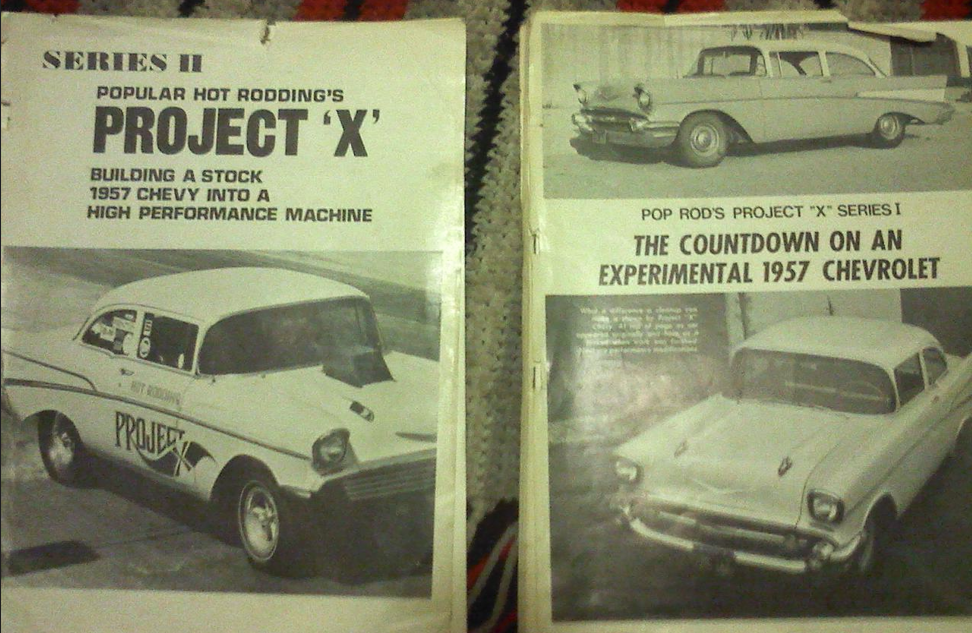
The poster boy for what tens of thousands of American guys were doing was Popular Hot Rodding’s Project X, which started out as a $250 beater 2-door sedan in 1965 and went through numerous iterations over the decades, until it became an icon itself.
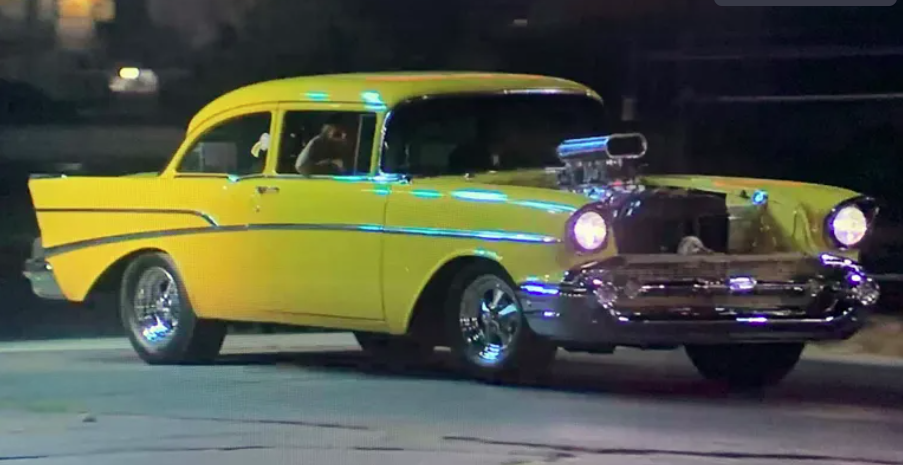
In 1980 it was the star car in the cult classic Hollywood Knights. Project X both mirrored the huge interest that the ’57 Chevy already had as a hot rod and amplified it further, reflecting the ever-changing taste and current state of performance parts through its many evolutions. In a reflection of current trends, it even had an EV conversion a few years back but that didn’t go over so well, so it was undone in favor of a 1,004 hp 632 cubic inch big block V8.
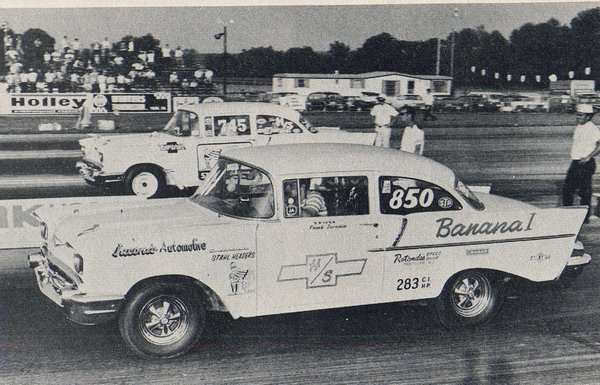
The significantly bigger and heavier full-size Chevys from 1958 on lost their performance edge with the small block V8, and had to rely on the new larger 348 and 409 big blocks to perform competitively at the drag strip and in stock car racing. But that was mostly in the hands of those few hard core and professional racers; a new big block Chevy was out of the reach of the typical working younger guy. This just further fueled the preference for the more compact Tr-Fives, on the strip, on the road,
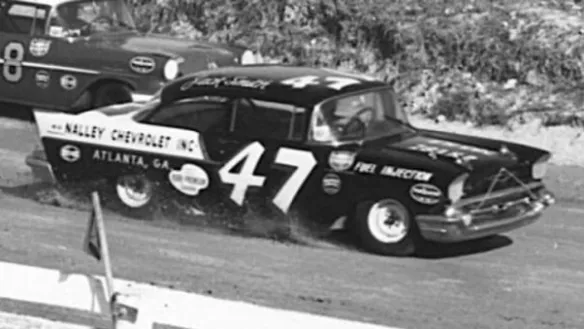
Or on the beach of Daytona or other NASCAR tracks, where the legendary Black Widow dominated until its fuel injection system was banned by Bill France.
The bigger and heavier Chevys from 1958 on only enhanced the desirability of the ’57, as it was the best platform for its utterly dominant small block V8.
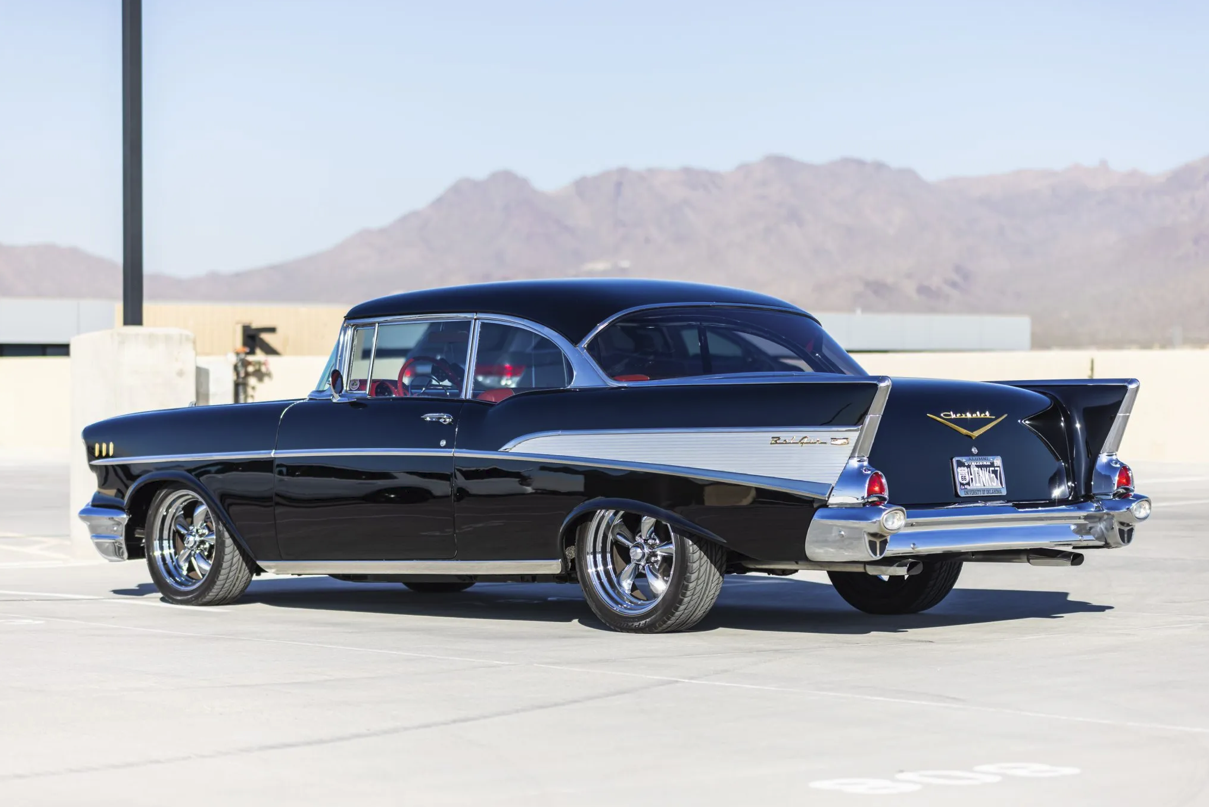
Eventually the ’62 Chevy II, the ’64 Chevelle and the ’67 Camaro would all take the small block to new heights. But by then the ’57 was already well on its way to immortality.
4. Styling: In The Eye Of The Beholder
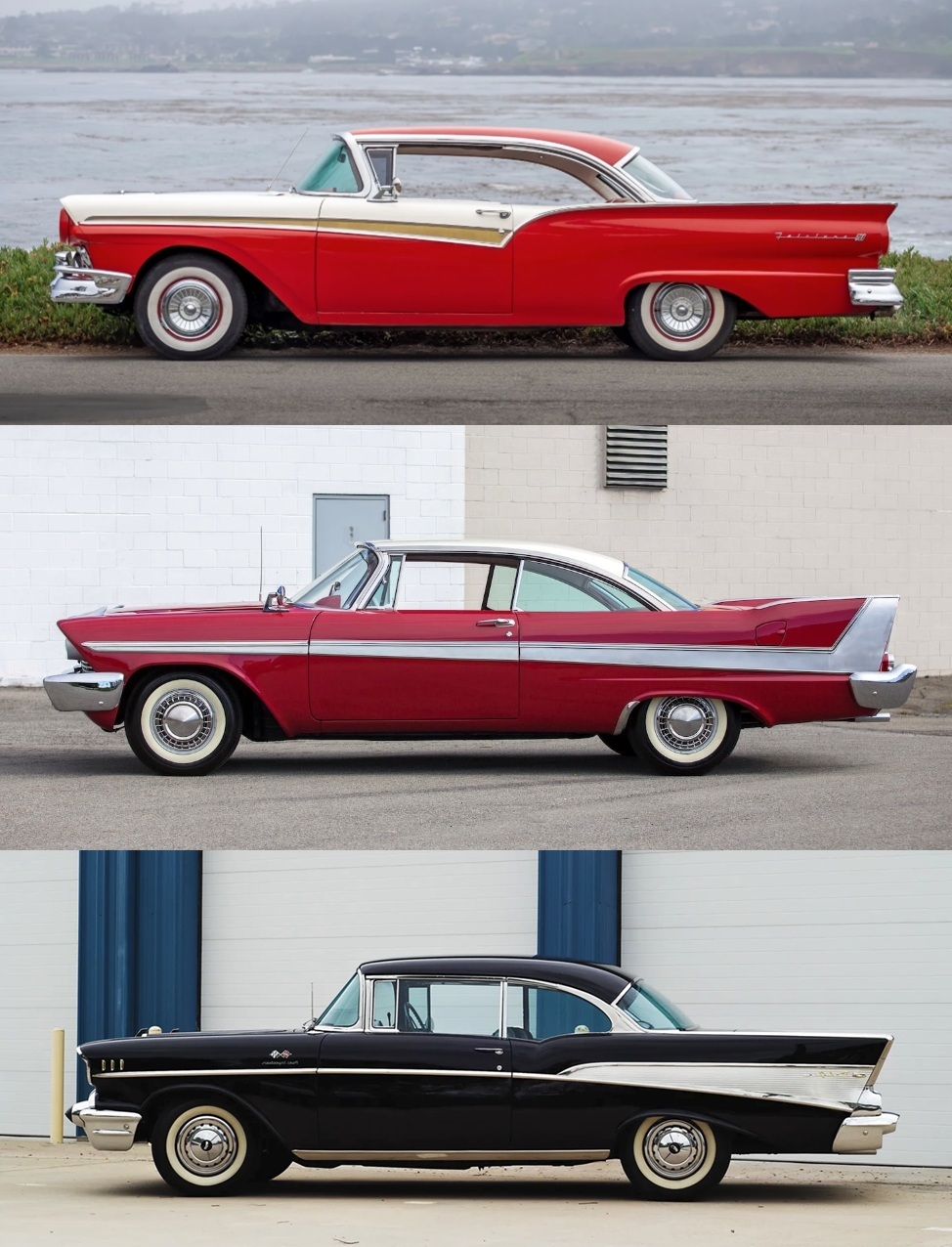
It may seem illogical to apply an objective standard to car design and styling, but clearly the ’57 Chevy runs third against the Ford and Plymouth if we apply the usual weight to certain key elements. The Ford (top) and Plymouth (middle) were all-new, and as such they were both relatively organic, cohesive and balanced. They reflected a complete vision for all-new designs. One can easily debate the specific elements, like the google-eyed headlights of the Ford.
Of the two, the Plymouth strikes me as the more advanced and cohesive design of the two, with its sleeker and larger windshield, more steeply raked backlight, less sculptured sides and thinner roof, along with a few other details. This was a breakthrough design, overseen by Virgil Exner at the height of his powers.
The Ford just isn’t quite in the same league as the Plymouth, but it certainly was reflective of the best that came out of Ford’s design studios at the time. It just looks…a year or so older than the Plymouth, undoubtedly a reflection of the shorter development time the ’57 Chryslers had.
As to the Chevy, well yes, it’s wearing pretty heavy lipstick, an effort to keep a three-year old body competitive despite the inherent limitations of doing so. What was Chevy to do? They knew it wasn’t going to win a styling concours. All they needed was for it to win over enough buyers, and it did sell very well, given its styling deficits, losing out to Ford by a couple of percentage points.
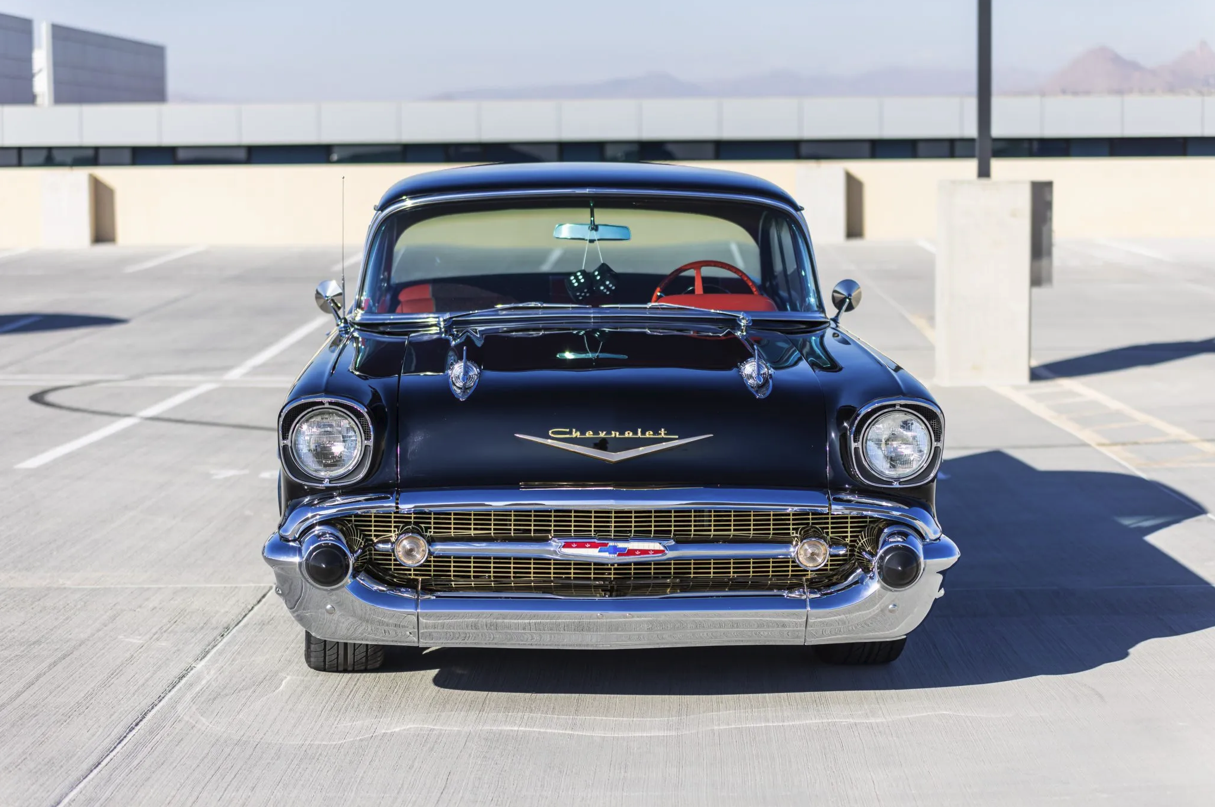
Its front end had its grille lowered to make it all look a bit less tall and also heavier. Certain styling elements obviously are trying to convey a Cadillac vibe.
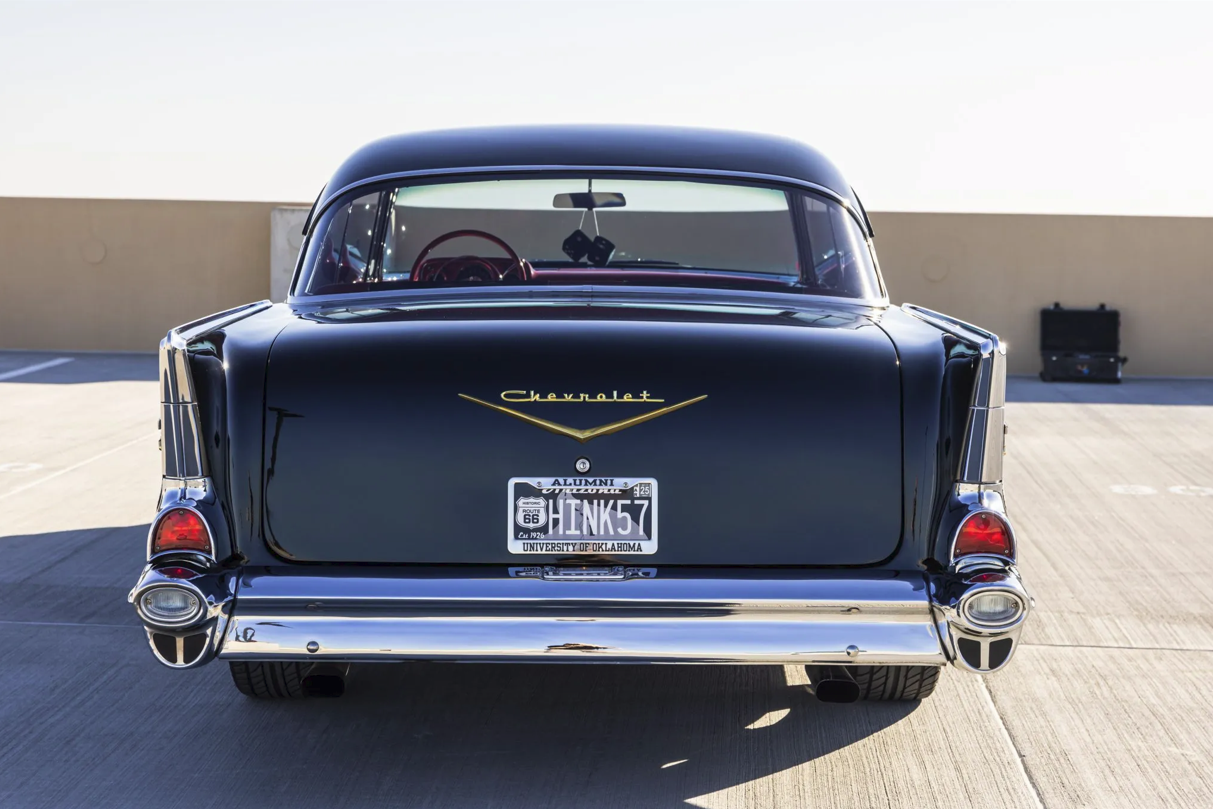
The fins are what they are, and fins were of course all the rage in 1957. The Chevy looks downright boxy from the rear compared especially to the sleek Plymouth. But it can only hide so much, fins and all.
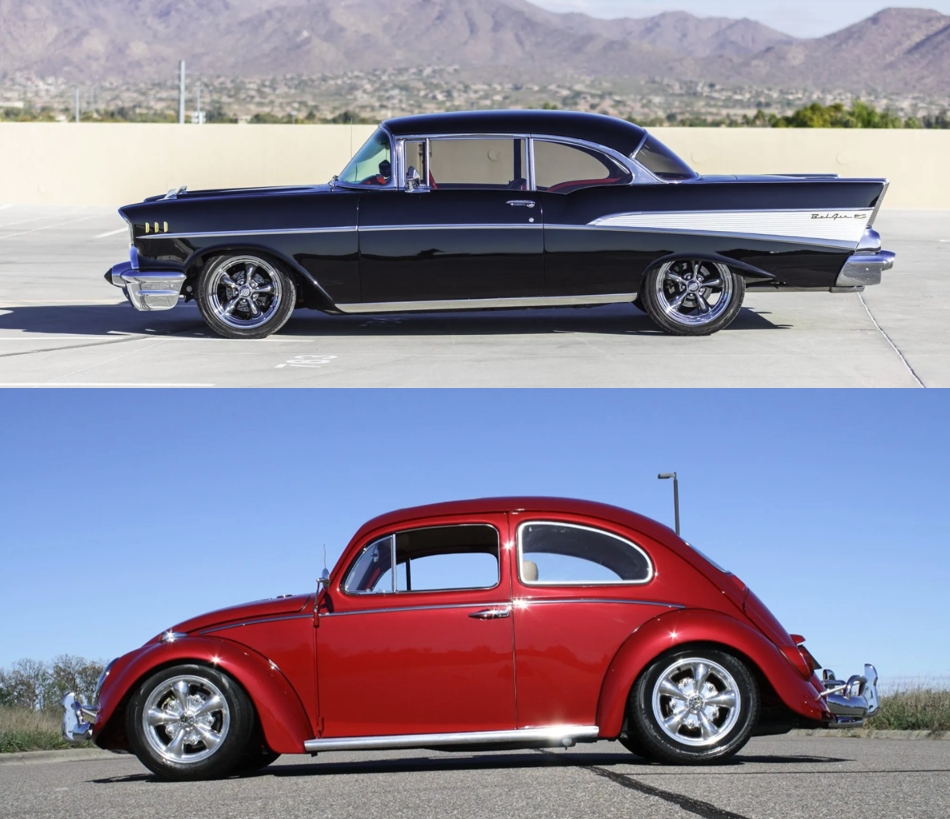
It’s easy—and very common—to criticize the styling of the ’57 Chevy. But what that fails to do is account for popular taste. The ’57 Chevy’s huge popularity isn’t because of the sophistication and even the beauty of its styling; it’s simply because it’s so accessible, simple and distinctive. Even a kid could draw a recognizable ’57 Chevy. It’s not really any different than with the VW Beetle, which no one will accuse of being objectively beautiful. They’re both instantly identifiable, which makes it easy for the masses to relate to them, in a positive way. And that’s the case with so many popular things, cars and otherwise.
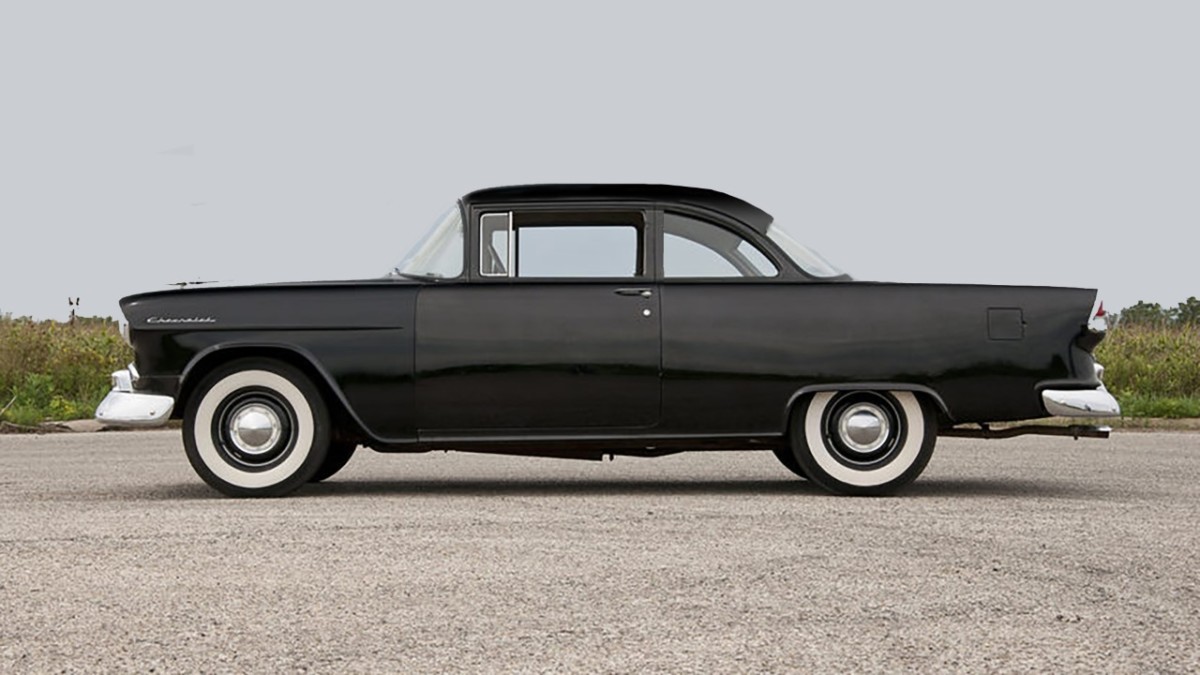
Having said that, I’ll take a ’55 over a ’57 any day. And make it a business coupe, please.
5. The X Factor
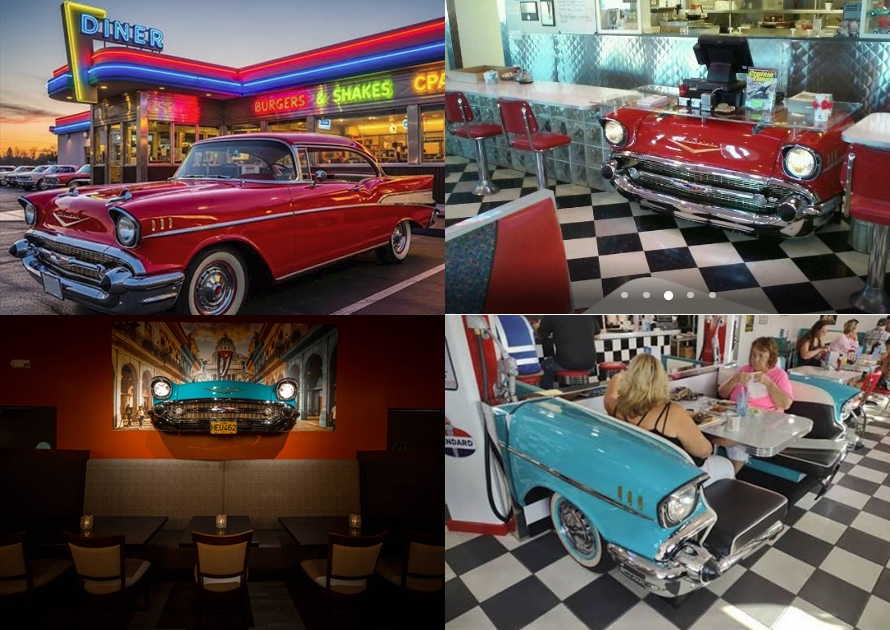
I’m not referring to Project X, although it undoubtedly contributed to what I call “The X Factor”. It’s the factor that multiplies the other factors that already contributed to the ’57 Chevy’s popularity and status. Humans are profoundly social, and generally want to be associated with others that share similar values, interests, and cultural totems. Those can be clothing, music, food, entertainment and of course, cars. Many of these are always changing and shifting, to one degree or another; others last for surprisingly long times. Is Taylor Swift’s music really that much vastly better than…(I’m clueless about pop current pop music)? It’s just easier to go with the flow of what’s popular and acknowledge that certain things (and people, as in celebrities) have achieved true mass popularity, and the ’57 Chevy definitely achieved celebrity status. It’s simply become the symbol that most readily represents American cars from the classic period of the 1950s. How many people today can tell the difference between a ’57 Ford and ’57 Plymouth without looking at the badges?
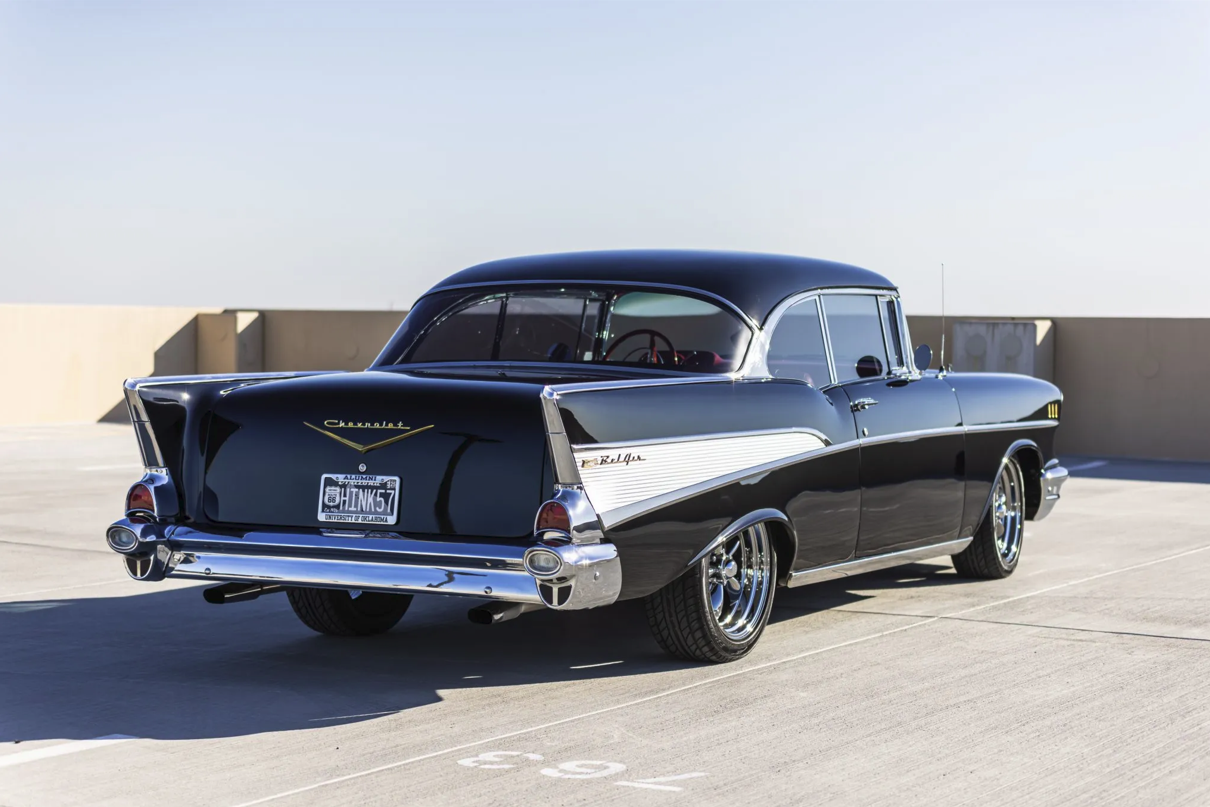
The ’57 Chevy had enough objective factors going for it to be propelled even further to genuine iconic status. That wasn’t of course guaranteed, but then the cars and culture of 1950s Americana have been an object of global influence and admiration since they happened in real time. And certain elements of any time and culture are bound to be placed on pedestals. There’s no point in trying to question or denigrate the ’57 Chevy’s exalted place in history. Like Ferraris, the VW, Porsches, Corvettes and a few others, there’s a legitimate requirement for being considered and accepted into the automotive Valhalla. They all had exceptional qualities that made them perform at a higher level than the competition, at least in their early days; they proved themselves. The ’57 Chevy also made the cut, and the rest is history.
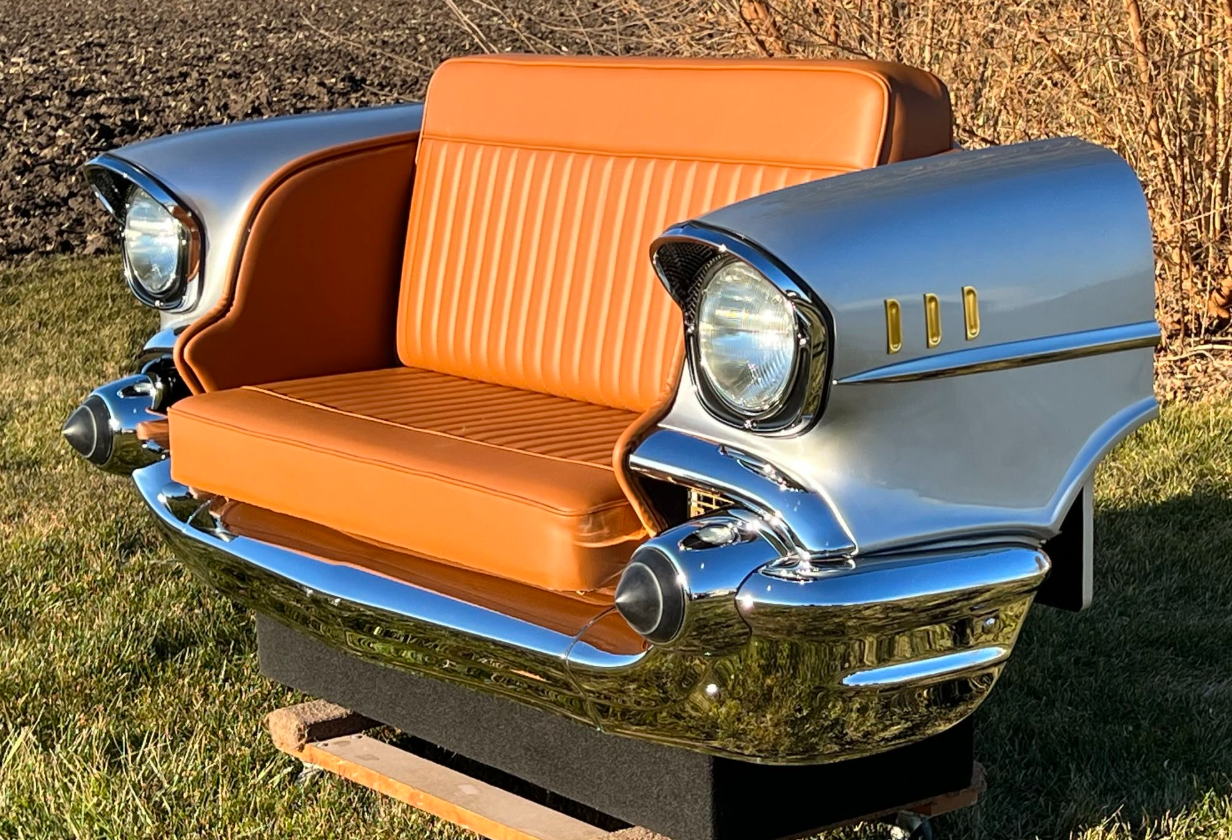
For those not enamored of the ’57 Chevy or just tired of seeing it everywhere, there’s reason to think it’s best days are behind it. Prices for ’57 Bel Air coupes have dropped the past few years, although they’re still at around $50+k for one in #3 (good) condition. On the other hand, a Google search for “1957 Chevy furniture” suggests that there’s still money to be made cutting up ’57 Chevys (sedans, presumably) to turn into couches and dinettes and more. I suppose these items might make both lovers and haters of ’57 Chevy happy; the lovers can enjoy them at home and the haters can rejoice in knowing there’s one less ’57 Chevy out there to be returned to the road.
Paul Niedermeyer is the founder, Publisher and Editor in Chief of Curbside Classic, and has authored over 7,000 posts. Paul has been writing extensively about his life-long passion for all things automotive (and just about anything that moves) for over 20 years. He was previously the Managing Editor of thetruthaboutcars.com.
Some related CC reading:
Consumer Reports’ Automotive Dot Charts–Every Dot Has a Story: Part One–1954-63
Vintage R&T Feature: 1955 Chevrolet Six – Keeping A 12 year Old Chevy With 180k Miles Going
Automotive History: 1957 Chevrolet Fuel-Injected 283 V8 – Ahead Of Its Time And The Competition
Curbside Classic: 1957 Chevrolet Two-Ten – Overexposed, Commercialized, Handle Me With Care
Curbside Classics: 1957 Chevrolet 210 and Bel Air Station Wagons – Gilding The Lily























At a rest stop in NC, September 14, 2026, I saw a 4 door Saturn sedan with a 1957 Chevrolet front and rear ends grafted on. Reminded me of Australian cars from the 1960s which look like reduced versions of American cars. Unfortunately could not get a photograph.
I know a fellow who took a Toyota (Camry, I believe) and built a ’57 Chevy body over it.
Strange but definitely a conversation piece.
I found this
Also seen at a rest stop, earlier this year.
Good reasons indeed.
As a kid in the 1970’s I had a long bus ride to school, and I passed two derelict 57 Chevys on my way. I made sure to sit on the left side of the bus so I could see them, a black one under a tree beside a farmhouse and a salmon one in the yard behind Terry’s Garage and Towing. Every day I schemed about how to get the two of them and produce one good car, being 7 years old this was just dreaming. Even then I knew they must be good cars because I still saw so many on the road.
(Hi, Doug!)
As a kid, maybe 6-7 years old, there was a house down the street where I used to play with a friend from grade school. In the back yard was a tri-five Chevy up on blocks and missing the wheels. We were occasionally allowed to play inside it.
My babysitter, who lived a few houses closer, had a really old VW Beetle in which I got to ride once or twice.
Agree with your points.
As far as the styling goes, I like all the 57’s. Comparing only the tri-five Chevies, I would choose the ’55 over the ’57 and the ’57 over the ’56. The ’57 headlight bucket, fin and tail light, and especially the side sail panel are very appealing and iconic.
There have been a number of choppers inspired by the ’57 and they always use the headlight bucket, sail panel, and fin/tail light.
I prefer the VW fender scooter
When I was a kid, in the 70s, I could tell a ’55/56/57 Chevy apart at a young age. But I didn’t even know what a ’57-58 Plymouth looked like until “Christine” came out in late 1983.
Actually, “Christine” could even serve as a good example of how popular the ’57 Chevy was! I can still remember one day, in that 8th grade class, a girl said she was going to see “Christine.” Another girl said something like “ewww, who wants to see a movie about a car?”
The first girl responds back, huffy, “Well! A 1957 Chevy is NOT just a car!!” I told her it was a ’58 Plymouth and she looked confused. And then followed up to her friend with “Well! A 1958 PLYMOUTH is NOT just a car!” It was common back then for people, if they couldn’t identify an old car, would simply call it a “57 Chevy,” which shows how ingrained they were in the fabric of society.
Anyway, “Christine” had 13 year old me LUSTING after a ’58 Plymouth. Between my Mom and grandparents, I got them to take me to see the movie 3 times. Only other movies I ever saw in the theater three times were “Smokey and the Bandit” and “Star Wars.”
Funny thing, my Mom’s first car was a 1957 Plymouth, bought for $75.00 in 1965, and she HATED the thing! It was just transportation to her, a means to an end. And her memory of the thing was so bad she couldn’t remember what series or body style it was. And I certainly wouldn’t have expected her to know what engine it had. The only things she could remember were that it was “big” and gray. I remember asking my uncle, her younger brother, about it, and he didn’t remember much either, other than one time someone slammed a door and it made the window shatter. But, he would’ve been around 12-13 at the time, and probably lusting after GTOs and such.
I think that’s one problem with “high fashion” for lack of a better word. It tends to go out of style after awhile. A ’57 Chevy wasn’t really all that high fashion when it came out. It was rather conservative. A bit pretentious in my opinion, with a bit of “baby Cadillac” aspiration in its style that Chevy often had, but not bad looking overall. But compared to the Ford and especially the Plymouth, “Suddenly it was 1949.”
But then, suddenly it’s 1965, and no teenager wants a big, hulking beast with tortured, contrived sheetmetal and soaring tailfins. Those represented the cars your parents drove, as did the Chevy, starting in 1958. So while a ’55-57 Chevy was also the car a lot of parents drove, I think it just aged better, style-wise, than the Ford and Plymouth.
My Mom didn’t have that Plymouth long. She replaced it with a pink and black ’59 Rambler wagon that she (probably over)paid $200 for. At some point, it lost a wheel, which I hear was somewhat common with Ramblers. Finally, in 1966, she bought herself a brand new Catalina convertible, at the ripe old age of 17. She worked as a waitress at the Hot Shoppes and saved up 1/3 of the price. Borrowed another 1/3 from her parents, and another 1/3 from an aunt, and then paid them back.
I always thought it was amusing that Mom thought the Plymouth was “big,” yet she never complained about the larger Catalina being too big.
I wonder, if the movie “Christine” had never come out, would the popularity of Forward Look era Mopars ever caught on?
Personally I’ll take a ’56 Chevy any day over a ’57! Oh yes, I did for 20 years until I $tupidly $old her…. (: DFO
I fully agree the 57 Chevy is an icon of Americana, recognized worldwide, and I had always associated that to the combination of high sales (i was surpised to read that the Ford sold better), styling and performance; it is not just the immediate sales that matter, it is how much the car is appreciated over time, and this article certainly brings up many good points of why that happened.
I disagree only on styling, I prefer the Plymouth, but perhaps it was too much for the time?
Actually, I would say that 1957 was Plymouth’s year. It retook 3rd place. And even though Ford and Chevy still outsold it, they simply had greater production capacity and a wider dealer network. And brand loyalty was a lot stronger in those days. People were less likely to switch to another company, no matter how good the cars looked.
However, Ford and Chevy traditionally outsold Plymouth by around 3 to 1. For 1957 they closed that gap, to around 2-1. 1957 was Plymouth’s best sales year ever up to that point, with 762,231 sold. I believe they only topped that once, in 1973, when they sold 882,196. However, by 1973 the car buying population was no doubt larger, and a lot of those sales were thanks to the Duster and Valiant.
Also, in ’73 that sales gap was back to about 3 to 1. Chevy sold about 2.58M cars, and Ford was good for around 2.35M. And Plymouth had slipped to 5th place, as Olds and Pontiac outsold it. Plymouth would return to 3rd for the last time ever in 1974, thanks again mostly to the Duster/Valiant. Olds and Pontiac were more dependent on bigger cars, and those took a huge hit that year.
Another thing that might have held Plymouth back a bit in 1957 was Chrysler’s dealer structure. There were no stand-alone Plymouth dealers, but rather Dodge-Plymouth, DeSoto-Plymouth, or Chrysler/Imperial-Plymouth. So, there was always the incentive to upsell a prospective Plymouth buyer into a more expensive brand. Still, the Plymouth was so popular that they were often backordered. I seem to recall reading somewhere that it was somewhat common for dealers to order DeSoto Firesweeps in plain white, and when the supply of Plymouths ran out they would talk prospective buyers into that model, offering to paint the roof and side spear contrast whatever color they wanted, at the dealership.
In my opinion the1957 Chevy, much like the first generation Mustang, is a pleasant car, a good car, but NOT a great car and unworthy of all the long term affection and popularity that it has unfairly received all these years.
It also helped in the “Land Before Video Games” Matchbox and Hot Wheels had 1957 Chevrolets in their product line, and model companies in the US had 1957 Chevrolets in their lineups. AMT, Revell, MPC, and Monogram, when they were independent companies, all offered a 1957 Chevrolet and all four were often available concurrently. Both AMT and Revell released updated kits (AMT in 1998, Revell in the 2000s) to replace the older releases they had, but the original AMT kit from 1962 is still available, and the old Revell kit is available from a company named Atlantis. So younger kids were introduced to the ’57’s alure.
(Interesting to note the OTHER GM 1950’s icon, the 1959 Cadillac, was ignored by mainstream model companies until Monogram brought out the first detailed kit in the early 1990s)
Built a Monogram back in the sixties, I remember it being a sky blue and I put Hooker Headers decal right in front of the door. Jacked up and I think Cragar S/S wheels. I probably looked at that thing every night before bed.
Many compare the 57 Chevy styling to Cadillac but to my eyes it looks like an evolution of the 1955 Oldsmobile which was a nice aspirational car to many.
Prices will continue falling as potential buyers age out of the hobby. Just as prices have fallen on pre-WWII cars. If you bought a 1955 Chevy when it was brand new, the youngest you could be right now is 69 years old. Of course, the “tri-five” Chevys are iconic and there will continue to be younger buyers who weren’t even born when the cars were new. But fewer and fewer as time goes on.
“If you bought a 1955 Chevy when it was brand new, the youngest you could be right now is 69 years old.”
I guess if your parents bought it for you at birth 😆
To that end though I don’t tend to equate declining values to declining interest. I know plenty of car people my age (30s) who are aware of tri-fives and would probably buy one for a reasonable price, they’re one of the few 50s cars that have a lot of demographic crossover with 60s-70s muscle cars, where it isn’t just Happy Days style 50s nostalgia that makes them appealing, half the ones I see at car shows are owned by Gen X aged men and have Chevy Rally wheels (or cragars et al)and RWL tires fitted to them as if they’re a 10 year newer Nova or Chevelle. They’re eminently appealing to multiple generations including my own because they’ve been an endearing presence. I had a toy in the 90s shaped like a 57 Chevy! However with the 50s nostalgia element absent from younger generations of collector car buyers it’s now in a pool of later cars that have a lot of other compelling traits to them; they’re competing for dollars against GTOs, Chargers, Camaros etc. it’s not that the people currently laying out big money for those aren’t interested in tri-fives, they just aren’t the standouts of their peers they once were
I think pre-WWII cars are soft largely because they’re just not capable of comfortably driving among modern traffic. Many 50s cars aren’t much better but a tri-five with the infinitely serviceable and plenty peppy Small block Chevy V8 will get up to speed and cruise like you expect of a modern ordinary car. I personally find cars from that period interesting and remarkable in many ways as a died in the wool life long car enthusiast, but truthfully for me they’re museum pieces like a horse drawn coach, I’d never want to own one, and if I did I’d probably turn one into a hot rod which I’d feel utter guilt for doing to a car that old. A 57 Chevy though? Sure! 67 GTO yep! 78 Trans Am oh yes! 80s Grand National? Yes! My souped up 94 Cougar? Obviously! This hobby is full of interesting cars to choose from, but just as what made 57s appealing the value for the dollar is what attracts me, not the value of the investment… which repels me.
I agree with you and didn’t mean to imply that the Tri-Five Chevys are going to go the way of pre-war cars. Perhaps they’ve peaked somewhat, but I agree that they will likely stay popular for the reasons you gave.
Aesop’s fable about the tortoise and the hare seems apt here, with the Chevrolet playing the turtle, and Ford and Plymouth being the hapless rabbits.
I would also use a rueful comment made by a lady who regretted the choices she had made, paraphrased here: Chevy knew the importance of the pot of gold, but Plymouth and Ford threw their’s away, to chase the rainbow.
This should become the standard source for those trying to understand the long lasting appeal of the ’57 Chevrolet.
Off the subject, Paul, but I would certainly like to hear your views on AI.
My views on AI? That’s not exactly easy to answer. I tend to be a moderate on many things, so I think the odds of AI killing us all are quite low, but it might try, on a smaller subset of people. It’s a legitimate concern, and if it were to happen it would be the ultimate irony.
As to its impact (other than trying to kill us) undoubtedly it will have a significant impact on a wide range of human activities, but I also tend not to subscribe to the more extreme predictions of everyone losing their jobs while AI-powered robots do it all for us.
Personally, while I was (and partly still am) intrigued with how AI might be helpful in aspects of my life and work, I find myself increasingly shunning a lot of technology. I love driving my very basic stick shift xB and my ’66 F100 and I’ve never used things like Alexa or Siri (except maybe to time the tea), as I simply enjoy using my mental and physical abilities while I still have them. Perhaps AI will have a place in my life if those start to go? Hmm.
One thing seems pretty clear: nobody really knows just how AI is going to impact us. So I suppose it will be interesting to see how that unfolds, in real time.
How would AI go about overtaking us? A Montreal professor proffered this simple scenario. AI makes a copy of itself, but with no off switch. Done.
I’m not qualified to speculate on that. Take down the whole internet? That would likely kill some people. But I really don’t know.
Thanks, Paul, I enjoy your occasional insights into other matters.
When I was little, I remember seeing some ’57 Chevys, a very occasional ’57 Ford, and no ’57 Plymouths.
It always seemed to me that the ’57 Chevy was a very attractive design. Even people who didn’t like ’50s Bulgemobiles had to admit that the ’57 had a beautiful, classic look. Not a bad-looking line on it–at all. When I first started reading Curbside Classic, it surprised me that quite a few people disliked the ’57 Chevy–kind of a shock.
Many people don’t know that the 1957 Chrysler Saratoga had that same graceful side trim as the ’57 Bel Air. It looks good on the Chrysler, but somehow I think it “belongs” to the Chevy.
Sometime in the mid-’70s, Chevrolet had color print ads showing the new Impala or Caprice with a ’57 Bel Air hardtop in the background. As if to say, in 15 or 20 years this bloated, plastic-y ’70s barge they’re selling now will be a desired classic in a few years like the charming, solidly-built ’57. At the time, I thought the idea was totally ridiculous!
From the late ’70s thru the ’90s, there was a lot of ’50s nostalgia. Cars from that era were shown in TV commercials, movies, and even rock videos on MTV. Kids back then (myself included) thought they were cool. I think there’s a difference between how Silent Generation and Boomer people see these cars vs. Gen X and Millennials.
As to why the ’57 Chevy (among all the other exciting cars of its time) is so popular–logical explanations explain some of it–but on an emotional level it just has that “certain inspired something”. It just “is”.
I wonder if people who hate on the ’57 Chevy do so, simply because it became so popular? Sort of a victim of its own success?
They used to be so common at car shows…not just the ’57 but the ’55-56 as well, that I would get tired of looking at them, simply because they were EVERYWHERE!
But, I’ve noticed they don’t seem so common anymore. For instance, there’s this car show every August in Macungie, PA that’s part of their “Das Awkscht Fescht.” I’ve been going to it since 2002. Back in those earlier days, they had a whole section dedicated to the ’55-57 Chevy, and there could be a good 40-50 of them there. Nowadays, they just lump them into the “1946-60” class with everything else, and usually there’s only a handful of them.
I have noticed with myself at least, now that they’re not so common, I’ll pay more attention to one at a car show. So maybe with the hatred it’s the “familiarity breeds contempt” phenomenon. Also, when those cars were new, people were a lot more brand loyal, often to the point that they would love and praise their favorite car, but show outright hatred and derision of its competition. I think sometimes that might carry over to the collector car hobby as well.
I was actually taught to hate Fords at a young age. Mostly it was from my Dad, who favored GM musclecars. Granddad (his Dad) always bought Fords, so I think there might have been some rebellion against the parents going on, as well. But then my maternal Granddad, who did a lot of shadetree mechanic work, also hated Fords. Most of his attitude came from working on them. He said that they way Ford did things was “stupid” compared to GM. For whatever reason, neither of them had much of an opinion of Chrysler, either way, and I ended up becoming more of a Chrysler fan. Although that was probably thanks to “Christine” more than anything else! Nowadays though, I like them all!
I blame AMT – they did several tri-five kits and I was taken by the Nomad but fascinated by them all.
I suspect that SBC made it into the working-class hero as much as the cool restraint.
Now that I think about it, when I was a little kid my Dad and I (mostly my Dad) would build car models. I remember a black and white ’55 Chevy, a copper and white ’56 Chevy, and a pink ’57 Chevy. I’m thinking these were actually by Revelle, but I know AMT was a big name, too. We also had a ’57 Ford Ranchero, but I can’t remember its color. And a ’58 Impala hardtop coupe, in sort of a medium, steely blue. Whenever I think of a ’58 Impala, that’s always the color that comes to mind!
I don’t recall any Chrysler products in that fleet of model cars. I wonder if anybody even made one back then? I know 1960s musclecar models became popular, but would the model builders have offered something that new in the mid 70s? I can’t remember.
I think the newest car model I ever got was a Buick Regal Grand National. That was in the late 1980s, maybe 1990. I never did build it, though.
Chevrolet was top of the GM pile here in the 50s/60s, nothing else from GM Canada was assembled by GM, Pontiacs were assembled by another party We got Plodges and Fords but only in mordor no hardtops rag tops or two door cars Fords had V8 engines Plodges had a flathead 6, and Chevy finally got a V8 for 1956 Automatic transmission was only a rumour until 1960, 57 Chevs didnt sell well new but youd never know that now by scanning any cars n coffee event used imports have been a thing in this country since cars began,
The ’57 Chevy has spot on proportions. Thinking back to my first impression as a kid in the late 70’s, what stood out to me was its seemingly good natured “face” and the swoopy rear trim on certain models. As mentioned, it made it instantly recognizable to my young eyes. To me it looked “just right”.
IMHO, the ’57 Chevy is the looker amongst these three. The Ford looks bug-eyed. And the Plymouth is just TOO much. This was a great piece Paul, and puts all this into perspective.
The two wildly styled cars back then were likely perceived as more modern, but the ’57 Chevy’s looks stood the test of time to become the ‘icon’ of the era.
I was not yet born for these ‘fifties icons’, but appreciate them. My first car ride ever was home from the hospital in 1960 in my Dad’s ’56 Chevy Two-Ten.
Someone said above that there was a lot of fifties nostalgia in the seventies. TV shows like Happy Days and the like, so even though we all weren’t born yet, we could appreciate the cars of the era as teenagers.
Many, including myself, consider the ’57 Chevy the high water mark of the era.
Like Stephen says above, I too was very surprised when I first came here to see that the ’57 Chevy was not liked very much, even compared to its brethren, the ’56 and especially the ’55. Maybe it’s just Car Show Fatigue… too many of them. Much like Mustangs, these cars are a tad over-represented at your local Cars and Coffee.
The frequency of repair records for the 55 and 56 Plymouth were even worse than for the 57 Plymouth. This surprises me, since I thought the earlier Mopars were well regarded from a build quality standpoint (and they certainly looked great).
It should be noted that the Consumer Reports’ frequency of repair surveys cover only the most recent 12 months of ownership, not the entire ownership experience from when the cars were new.
Therefore, for the examples shown by Paul, these were for the 1959-60 calendar year time frame, which means the 1955 models were in their 5th year of ownership, ’56s in their 4th year, and so on. Obviously, as a car ages (especially back then), it becomes less reliable. But it is notable that the ’54 Plymouths were holding up much better than the ’55 and ’56 models!
Yes, I understood that. But look at how they compare to similar year Chevies and Fords. They are relatively worse, just as they are for the 57s.
This article came at an ironic time for me. Yesterday I, and our car club members attended the funeral of a dear friend of almost 50 years. He was dedicated to his family, community, our car club and his red ’57 Bel Air hot rod. He redid it a couple of times in the 40+ years he owned it and finally got it just right a few years ago. He was a friend to all of us and was always willing to help out if you needed it. Dave will be missed by all of us and many people in our community and around our part of the state.
The first ’57 Chevy I remember was when my great uncle bought his 150 two door sedan new. It was a very basic car with six and three on the tree and the only option being a heater. He drove it until the early 1980’s and then gave it to me. It had just 56000 miles on it when I got it. Unfortunately it had been parked in a dirt floor barn it’s entire life, so rust was an issue. It ran like a charm, though. After a few years I ended up selling it because I moved and didn’t have an indoor place to store it. The friend I sold it to did a lot of work on it, drove it to Florida a few times, and kept it for about 30 years before he sold it to another friend. He let me drive it once. It is a real odd feeling driving a car you had been around for most of your life and then getting to drive it again after 30 years.
I am just old enough to remember when the ’57 Chevys were introduced as new models. My mom had a ’55 Chevy 210 Delray club coupe that she bought new and kept until 1961, at which time she sold it to my uncle, who in turn gave it later to his son (my cousin). I remember last seeing it in 1964.
It was a good solid car and had only 30K miles when she sold it. In all likelihood, she could have kept the car another 6 years (skipping entirely the ’61 Bel Air she purchased) and then bought the ’67 Bel Air (the car in which I learned to drive).
She always said the ’55 was her favorite among the three.
My aunt, who lived with us at the time, bought a new 1957 Plymouth Savoy sedan. It turned out to be very problematic, and she dumped it after only 2 years for a ’59 Chevy Bel Air. No more Mopars for her!
Something remarkable to me that I became aware of with my diecast model cars is the fins on the 57 really aren’t actually all that finny, at least in the upwardly protruding 59 Cadillac sense, the tops of the rear quarters are basically the same as they were in 55 and the “fins” were just extended a bit further back to a bit more of an angle/point, which is further exaggerated by the side trim on the 210/Bel Air.
To that end of the tri-fives I feel I’m kind of all or nothing, I by default prefer the 55 because I think the front end is tidiest and best… yet do love the 57 for being the evolutionary peak of the bodystyle. I by no means dislike the 56s but they have elements of both the preceding year and successive year in aspects and can’t help but find them a little uninteresting. After reading this I realize my interest in 57s is undoubtedly influenced by these factors either consciously or subconsciously, yet when I think of other GMs (Pontiac especially given the mostly shared body structure) they definitely look better. My favorite Tri-Fives are Nomads, yet even in almost equally cool Safari form I’ll still pick the Chevys, which I’d never say later… I’d pick a 77 Bonneville over a Caprice, and I don’t even think that was close to a strong a strong design for Pontiac!
On the end of #3 and #5 the X factor. I think for me being a child of the 90s there was still a lot of 50s nostalgia to go around. I wish I could remember what it was but it was a Toys R Us toy that was a flamed out exaggerated proportion 57 Chevy with flames with a light up engine that cycled pistons when you’d push a button I had. Silly as it was it was the first idea of how an engine worked! Other exposures from the time was in the movie Captain Ron in the scene when they were stranded in Cuba and a 57 Chevy sedan piloted by the hero saved the day…
https://m.youtube.com/watch?v=CwD8bb9-r4k
And this probably forgotten Tales From The Crypt episode where a young Brad Pitt challenged an old racer with a hot 57 to a final race… I did t forget! I had it recorded! 😆
https://m.youtube.com/watch?v=C__N4W-X5T0
Funny enough I didn’t see Hollywood knights/Project X until WAY WAY later(actually I think I watched it during the lockdowns). I did see American Graffiti very young though and Two Lane Blacktop as well in my teens which may have bolstered my 55 preference.
Certain cars seem to become icons, and the 57 Chevy is absolutely one of them. I recall reading somewhere that the styling team that worked on it simply hated it at the time, but all these years later it just looks so right.
I had to laugh at the Chevy/VW comparison. This is my attempt with sidewalk chalk a few years ago.
If we aren’t there yet, I suspect that the ’57 Chevy will become the default ’50s car the way all prewar cars are assumed to be Model Ts or Model As.