
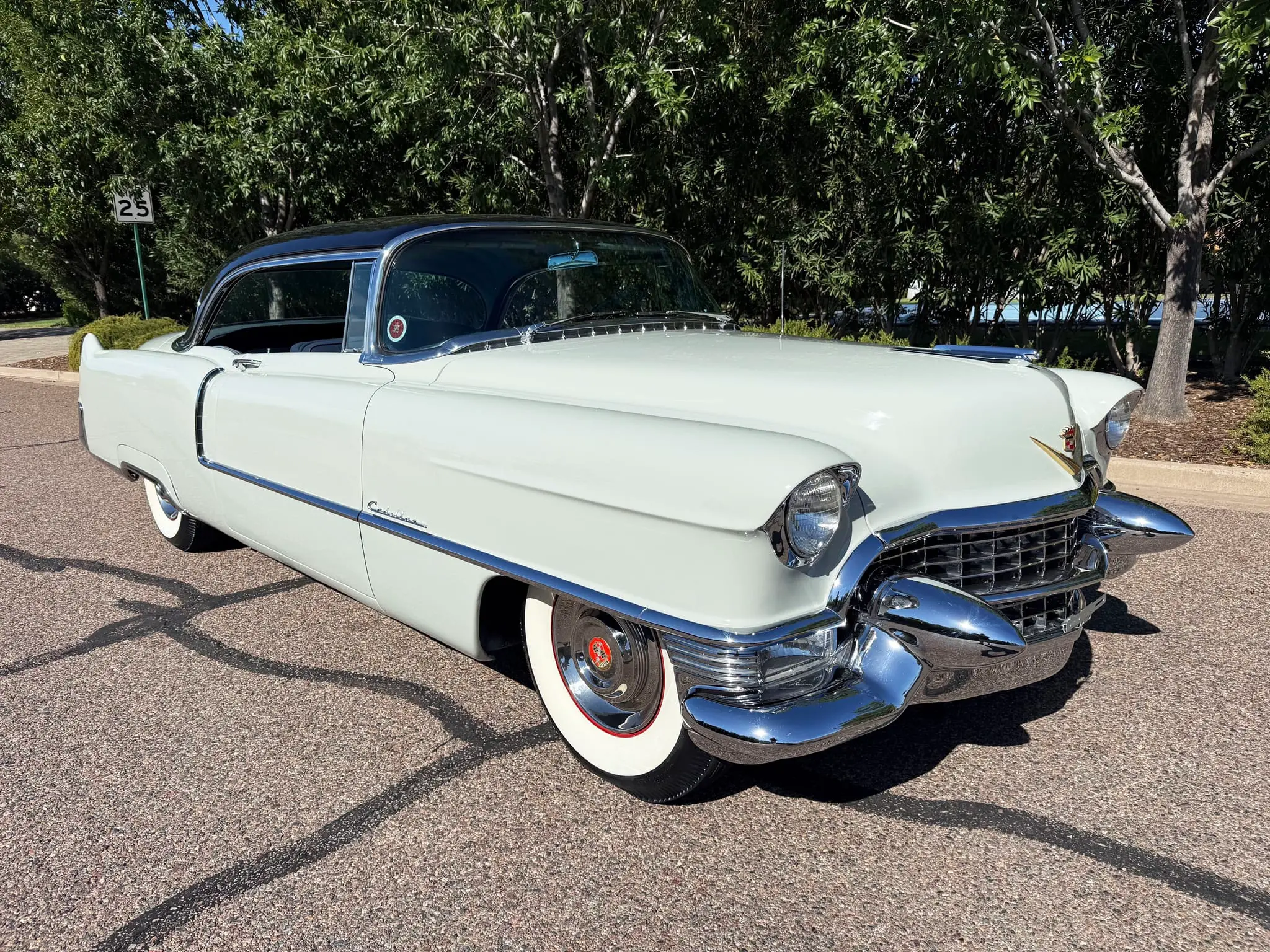
What car represents Cadillac at its very best, the true Standard of the World? Is it one of the magnificent sixteen-cylinder locomotives from the Classic era? The “take on all comers” cars of the early 1960s? The 1967 Eldorado? For my money, it’s the 1955 Cadillac, and more specifically, the 62 Series Coupe and the Coupe deVille. This Series 62 is a glorious example of a very good breed, and it’s for sale on Bring a Trailer in Scottsdale, Arizona.
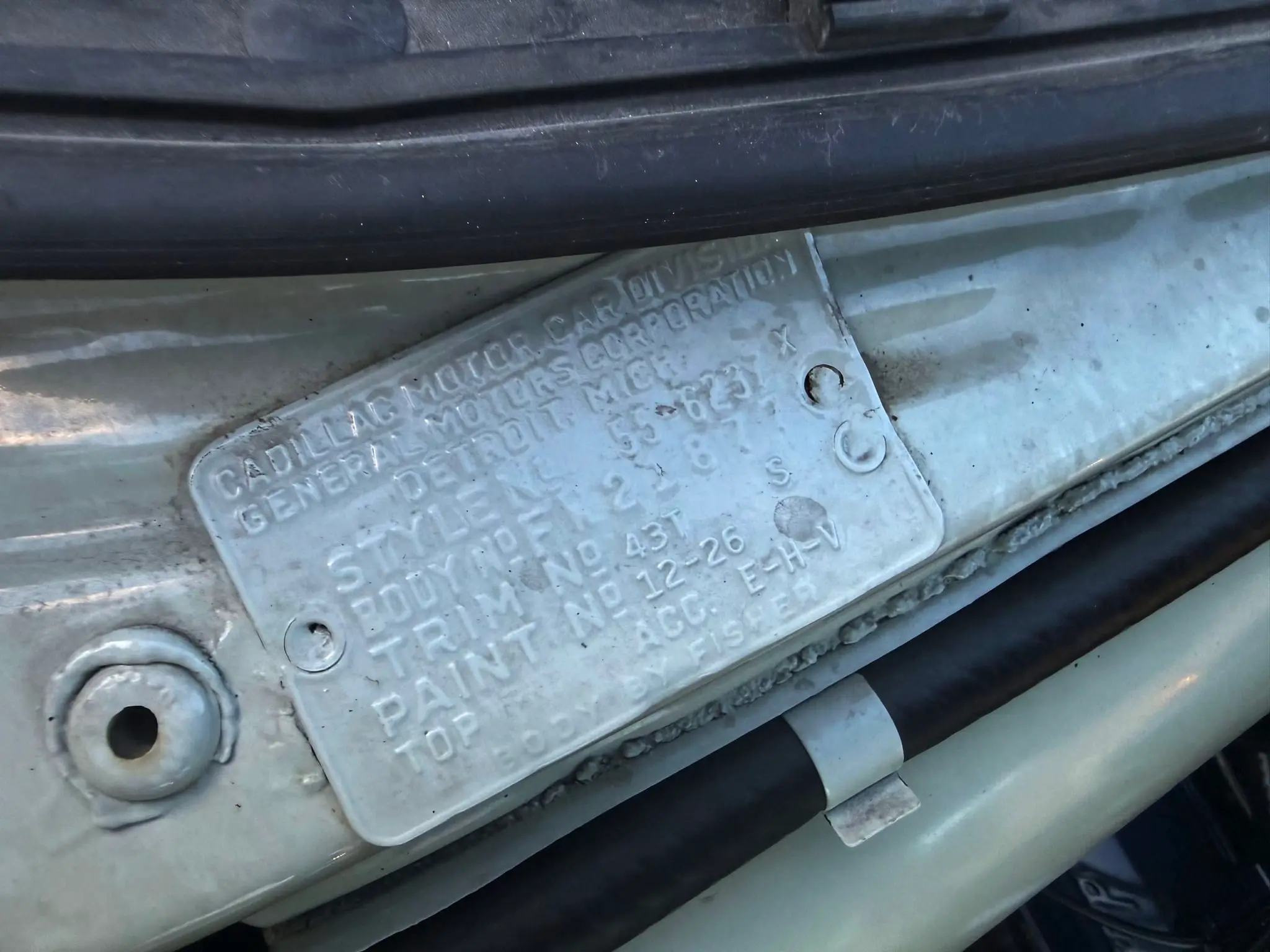
The Fisher Body tag isn’t an exhaustive resource when decoding a GM car, but it’s a good place to start. This one tells us the following:
- 55-6237x: 1955 Cadillac 62 Two-Door Coupe with power windows
- FW21877: This is the Fleetwood body number
- 43T: Light Blue/Dark Blue cloth interior
- 12-26: Alabaster Gray and Cobalt Blue two-tone paint
- E-H-V: “E-Z-Eye” safety glass, heater/defroster, and power seat
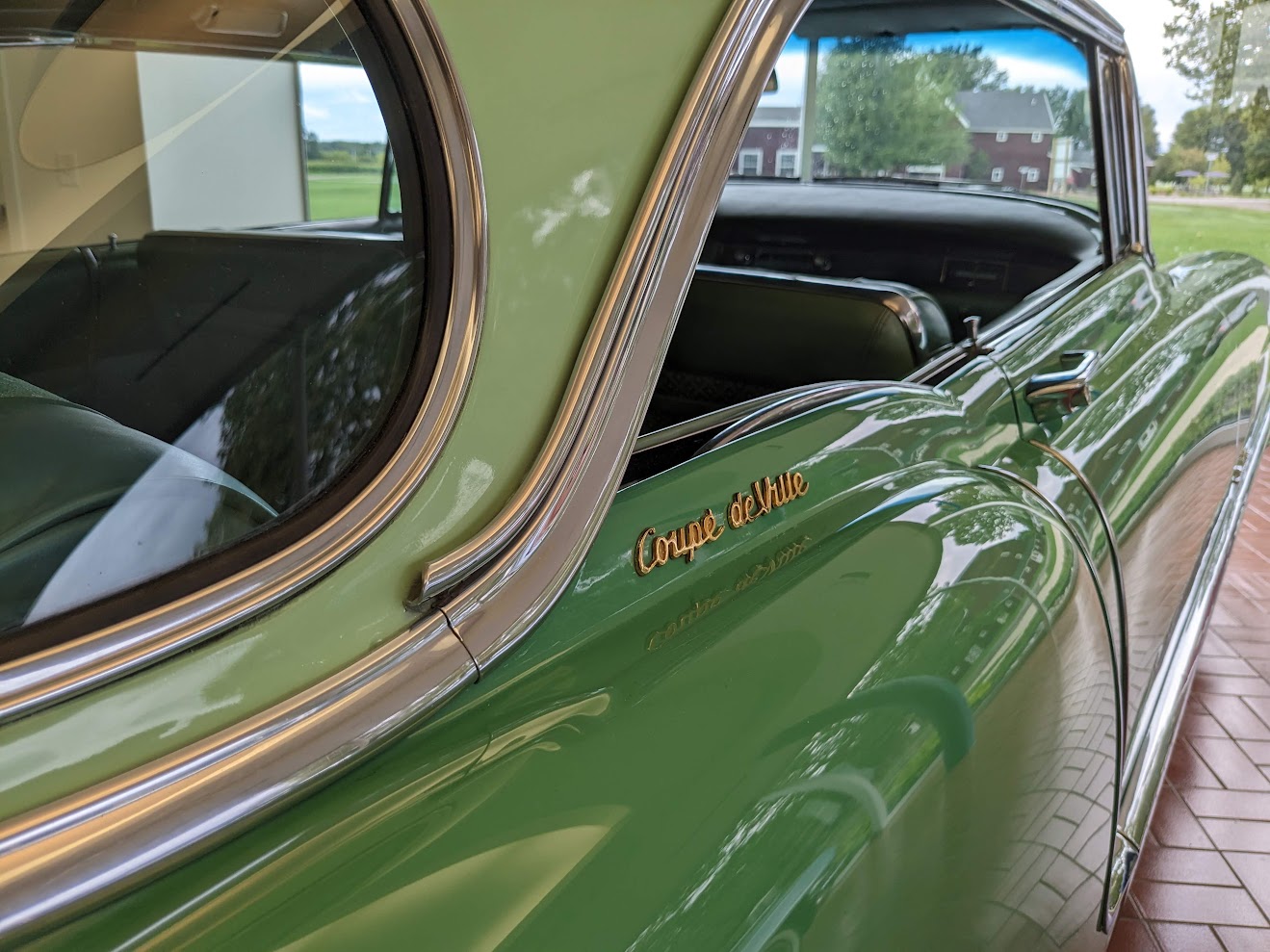
It’s important to note that the Series 62 Coupe is not a Coupe de Ville, even though they look almost identical. A quick tell (if the car is original) is this gold script beneath the quarter window. The Coupe deVille cost a fair bit more than the “base” Series 62 ($4,305 vs. $3,882), but despite that, the Coupe deVille was the bigger seller by a decent margin: 33,300 vs. 27,879. The main differences were inside, as the deVille had a more luxurious interior.
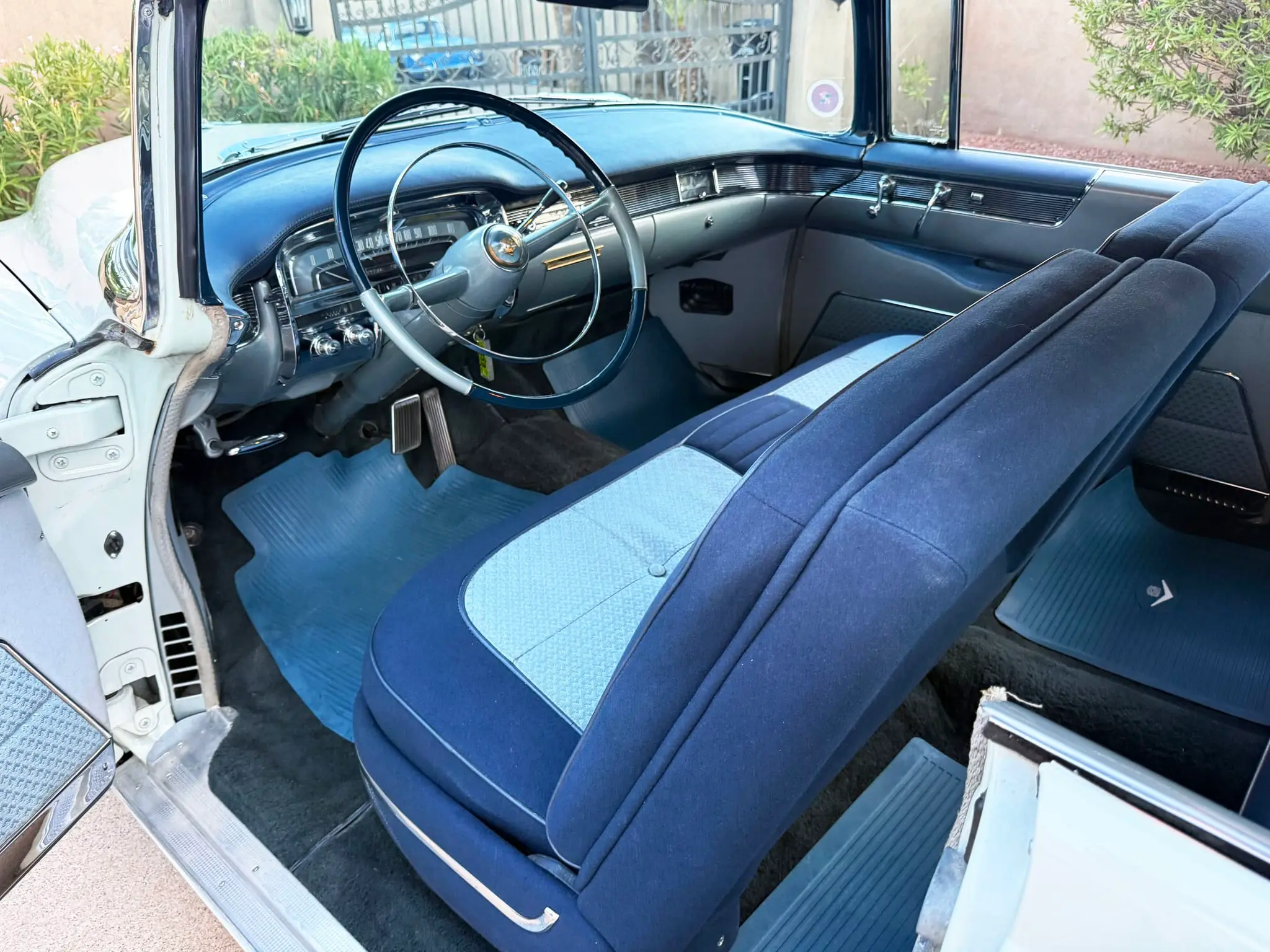
It would be hard to tell, however, by looking at the Series 62’s plush cocoon.
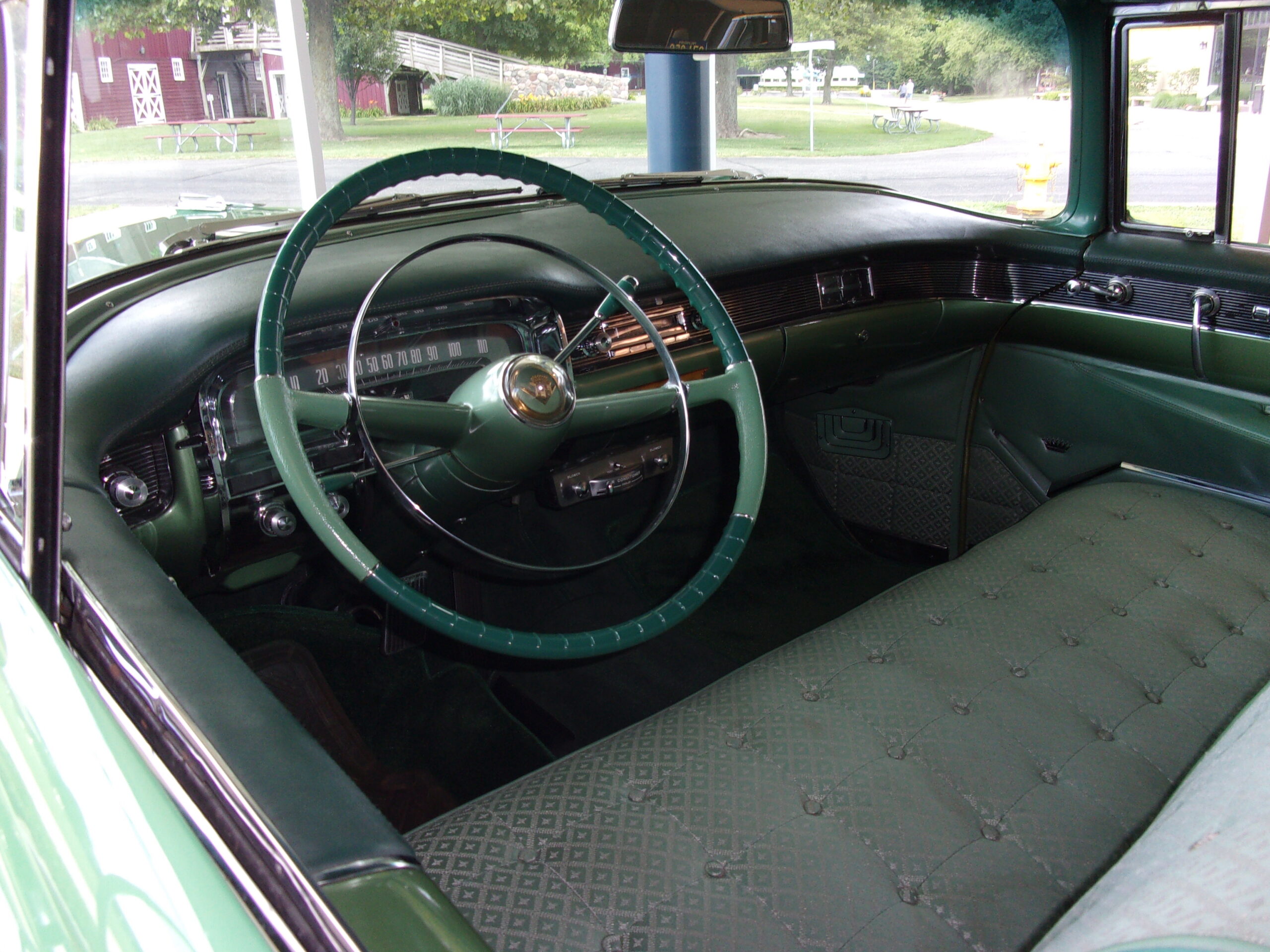
For comparison, this is the interior of a 1955 Coupe deVille with air conditioning. Both this and our featured Series 62 Coupe have power windows, which were an option on both models.
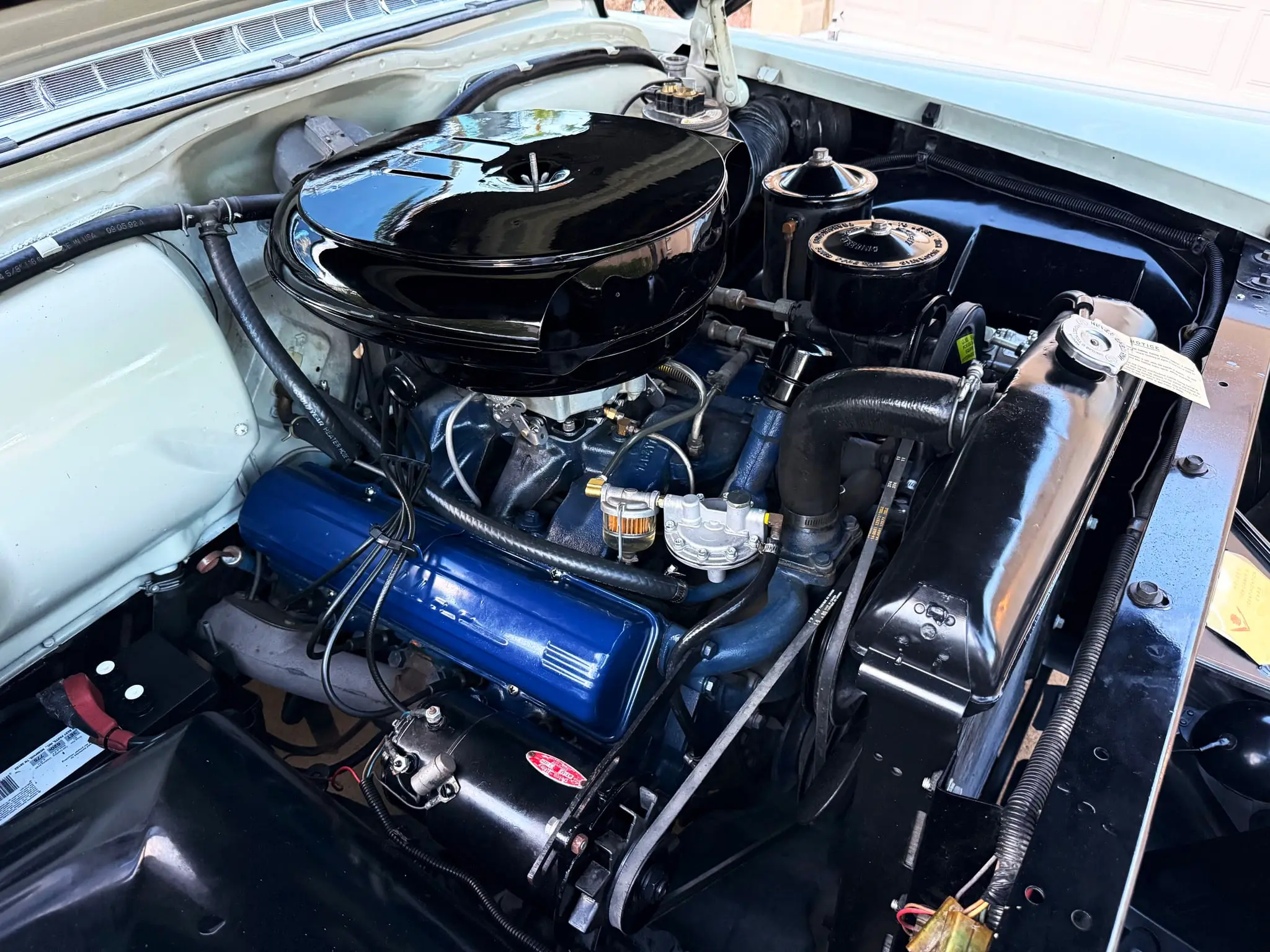
All Cadillacs aside from the Eldorado (which used a dual-four-barrel intake manifold) were powered by a 250-horsepower, 331-cubic-inch Cadillac V8. Motor Life’s May 1955 road test of a Fleetwood Sixty Special found the Cadillac capable of a zero-to-sixty time of 11.2 seconds, a quarter-mile time of 19 seconds, and a top speed of 114 miles per hour. In other words, it’s no high-performer by 2026 standards; however, it’s more than capable of keeping up with traffic, even at interstate speeds. But can it stop from those speeds? Braking from 60 took 159 feet, which is certainly longish, so leave plenty of room in front of you.
The seller says that this car has had a recent fuel system servicing, and indeed the fuel pump and filter look fresh, as does the carburetor. As a matter of fact, everything looks fresh under the hood, right down to a tag on the radiator cap.
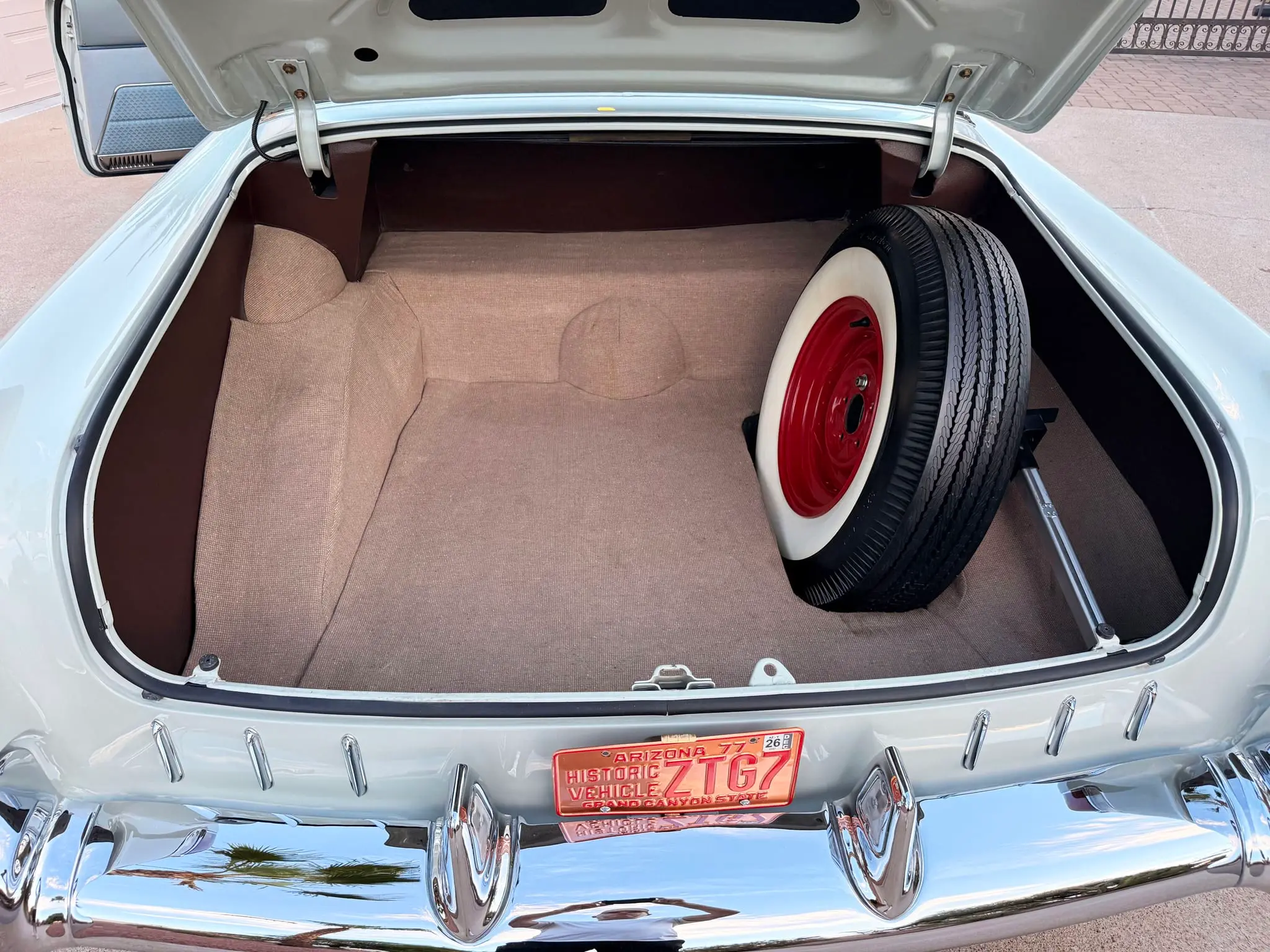
The luggage compartment is ready for enough luggage for a weekend trip to Palm Springs.
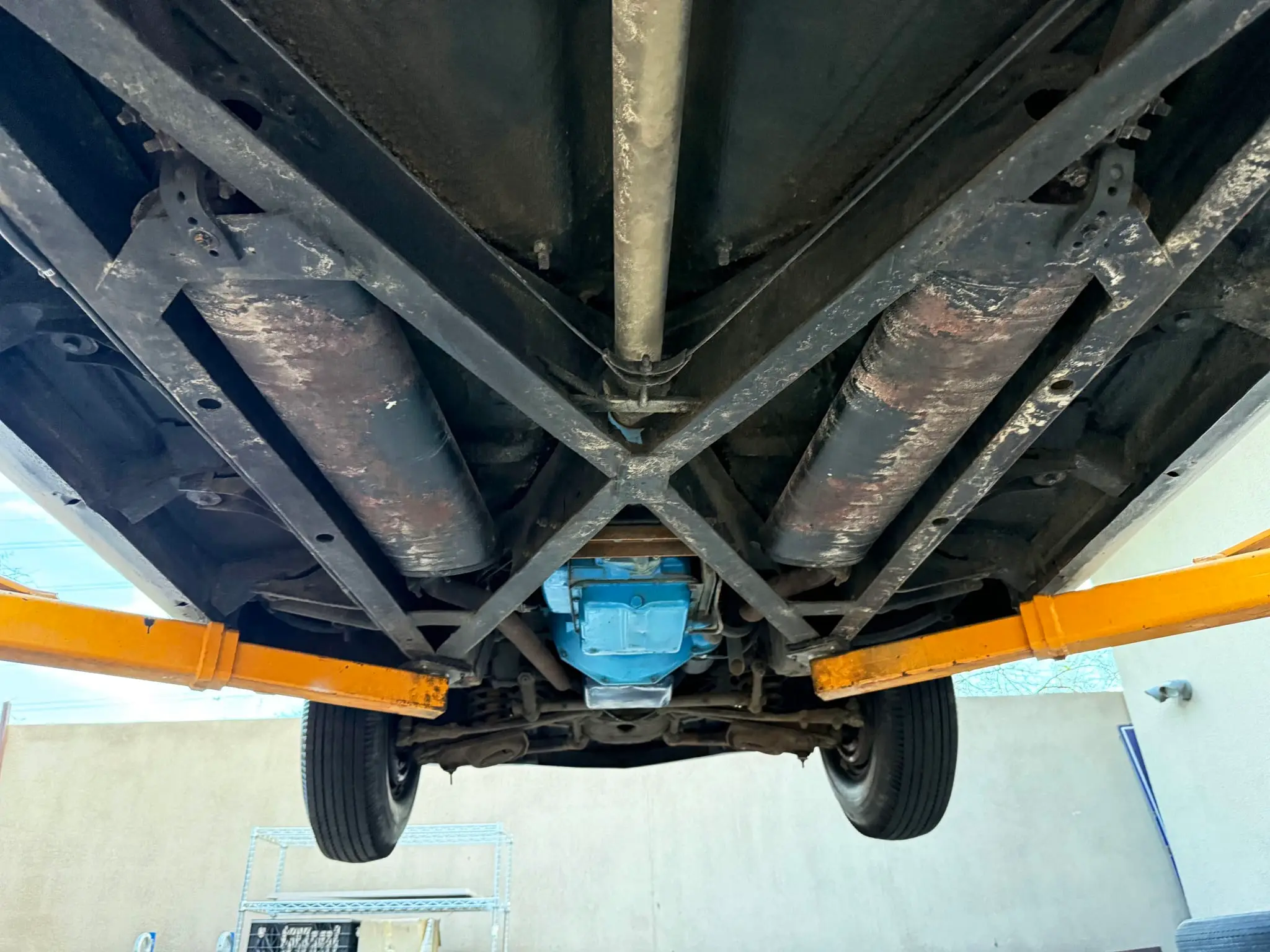
The only part of the car that isn’t detailed to nearly new standards is the undercarriage. The brakes have been serviced recently, and we can see that the Hydra-Matic transmission has been given a coat of light blue paint, something rebuilders sometimes do to identify their units for warranty work. Nothing regarding a transmission rebuild was mentioned in the ad, but an overall lack of oil and grease on the undercarriage makes it at least a 50/50 proposition. Those big, long mufflers undoubtedly do an effective job of muting the 331’s burble.
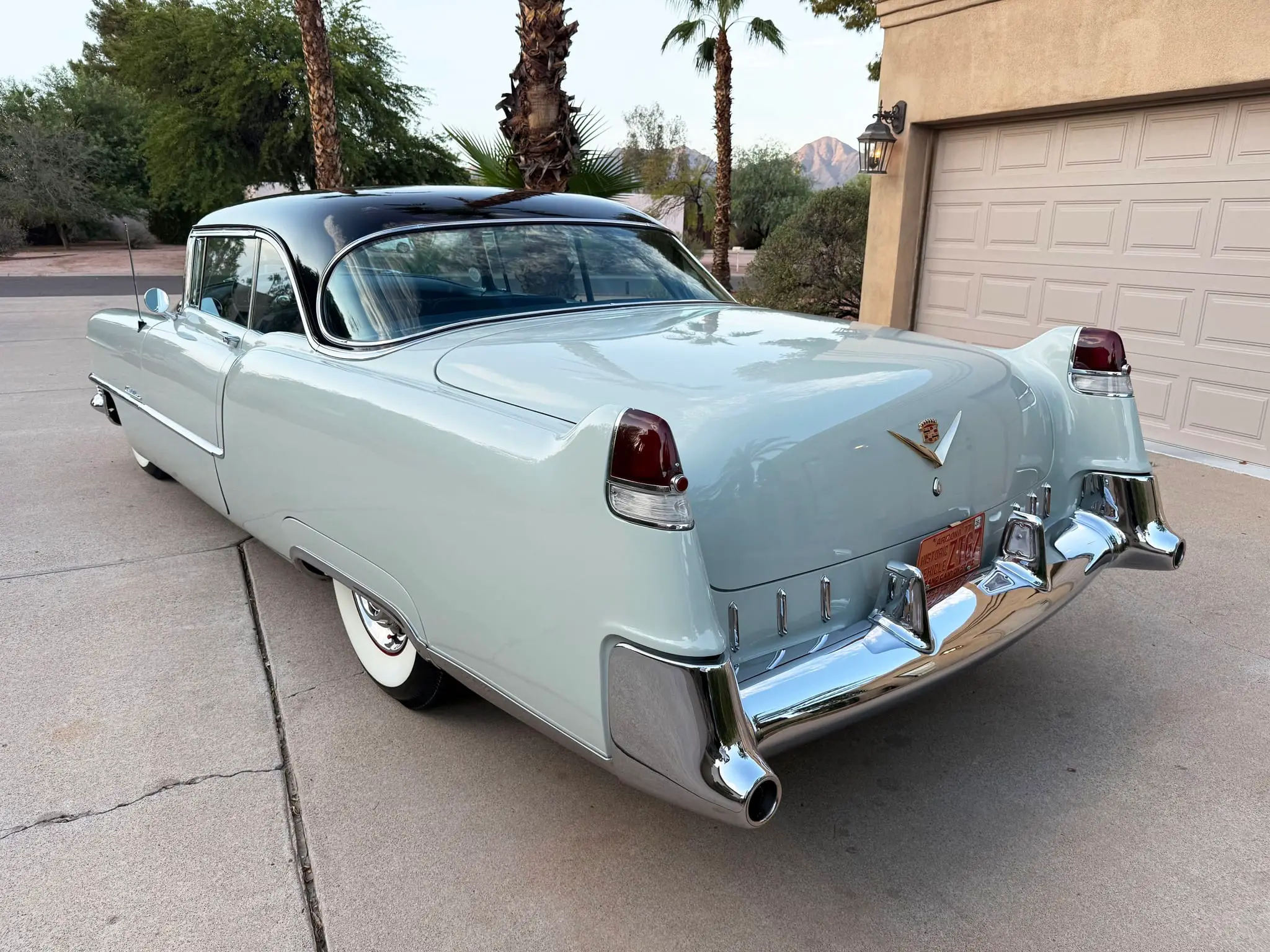
But nothing mutes the fact that the 1955 Cadillac in any variation is an example of Cadillac at its very finest, capable of standing proud against any motorcar in the world. It’s a well-crafted and well-maintained piece of sculpture that I’d be proud to park in my garage, if only my garage were about two feet longer.
Related Reading
Museum Classic: 1955 Cadillac Coupe DeVille – A New Contender for My Favorite Car (by me)
Curbside Classic: 1955 Cadillac Coupe DeVille – You’re The DeVille In Disguise, Oh Yes You Are (by me)























Peak Dagmar.
Very nice example here.
While I appreciate “all original”. I don’t think I’d want to drive it with those bias ply tires (unless these are radials made to look like bias ply tires).
Thanks for posting, Aaron.
You’re welcome, Rick!
I don’t mind bias-ply tires on a ’50s car. My ’53 Buick Special does tend to “follow the road,” but if the front-end alignment is at all within specs, it actually tracks quite straight. You eventually get accustomed to the oscillations you feel as it settles into the grooves of the road, but only on the worst roads does it require much correction. But it’s also possible that I’m just used to driving it after 21 years. 🙂
I am right there with you! This was from Cadilac’s “no excuses are necessary” period. I have that tendency to root for the underdog and therefore I throw love towards Lincolns, Imperials and Packards of that time period, but in my heart I know that every one of them took a back seat to Cadillac in the big, overall picture of driving and ownership.
I am also there with you in having a garage that is not as big as I might like. True, I once got a Ford Club Wagon and a 68 Chrysler in side by side, but there was precious little room for anything else and my wife made me the designated garager-ungarager of the cars.
The aunt from whom I bought my 63 Fleetwood all those years ago had previously owned a black 55 Fleetwood. I have occasionally wondered what that one might have been like to get my hands on had she not replaced it.
Sold for $31,805!
Agreed, as to being peak post-war Cadillac. I’ve always loved these taller ones more than the lowboys to come.
Built before the longer lower softer fad kicked in these are nice and never sold out here new, even the USA embassy didnt bother they drove Buicks.
Wow, another stunner, just look at the SIZE OF THOSE “DAGMARS” ! =8-) .
Too bad they changed the paint color but it’s still beautiful .
-Nate
Gorgeous car, love it!
Never noticed those Dagmars before, wow. Are those original or from JC Whitney? Seriously!!!
This one is close, but to me the early 50s, just a year or two earlier, or the mid 60s are peak Cadillac. And I’m not a Caddy fan.
Still, a nice one for a 70 year old car.
Just so we remember who the original Dagmar was…