
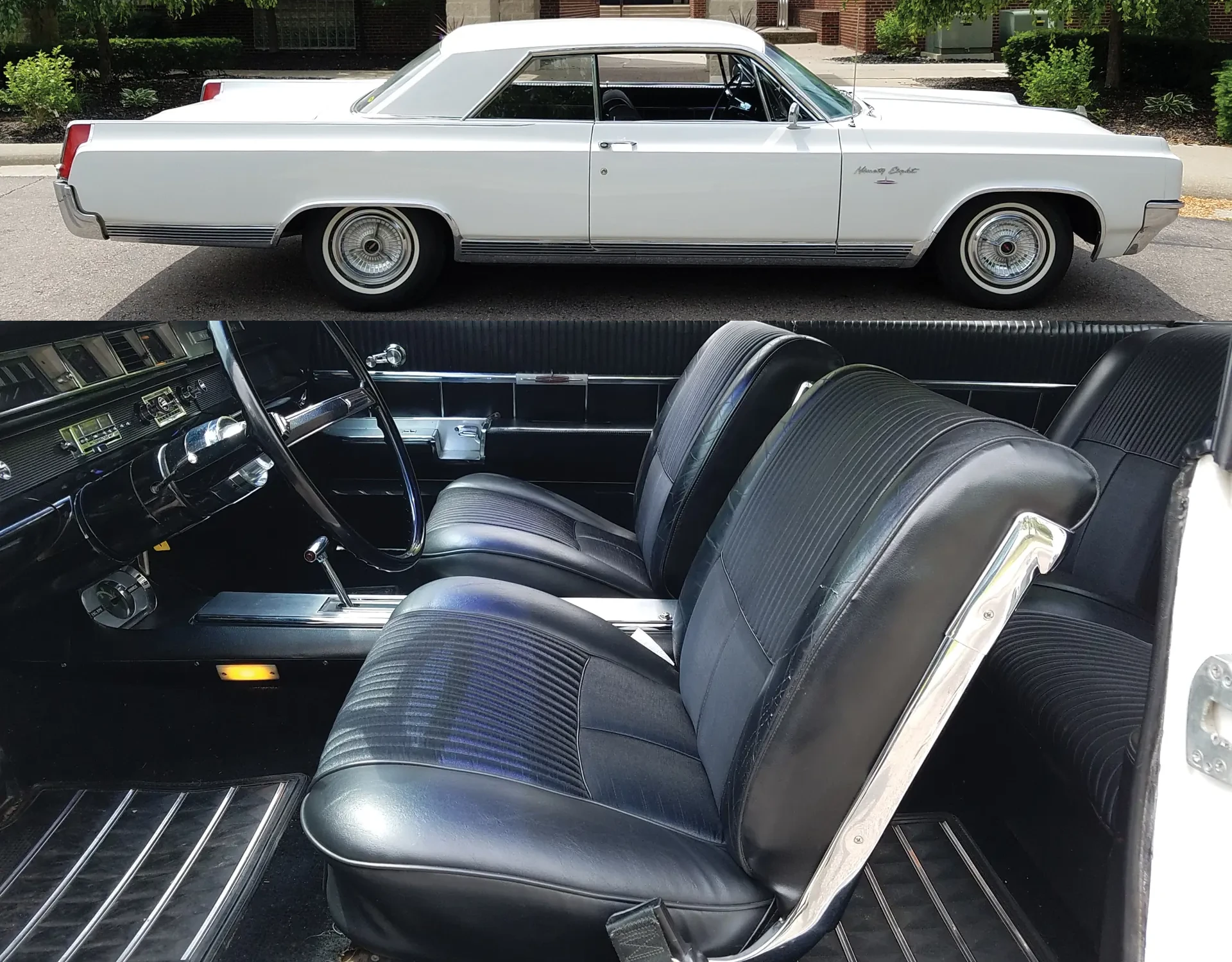
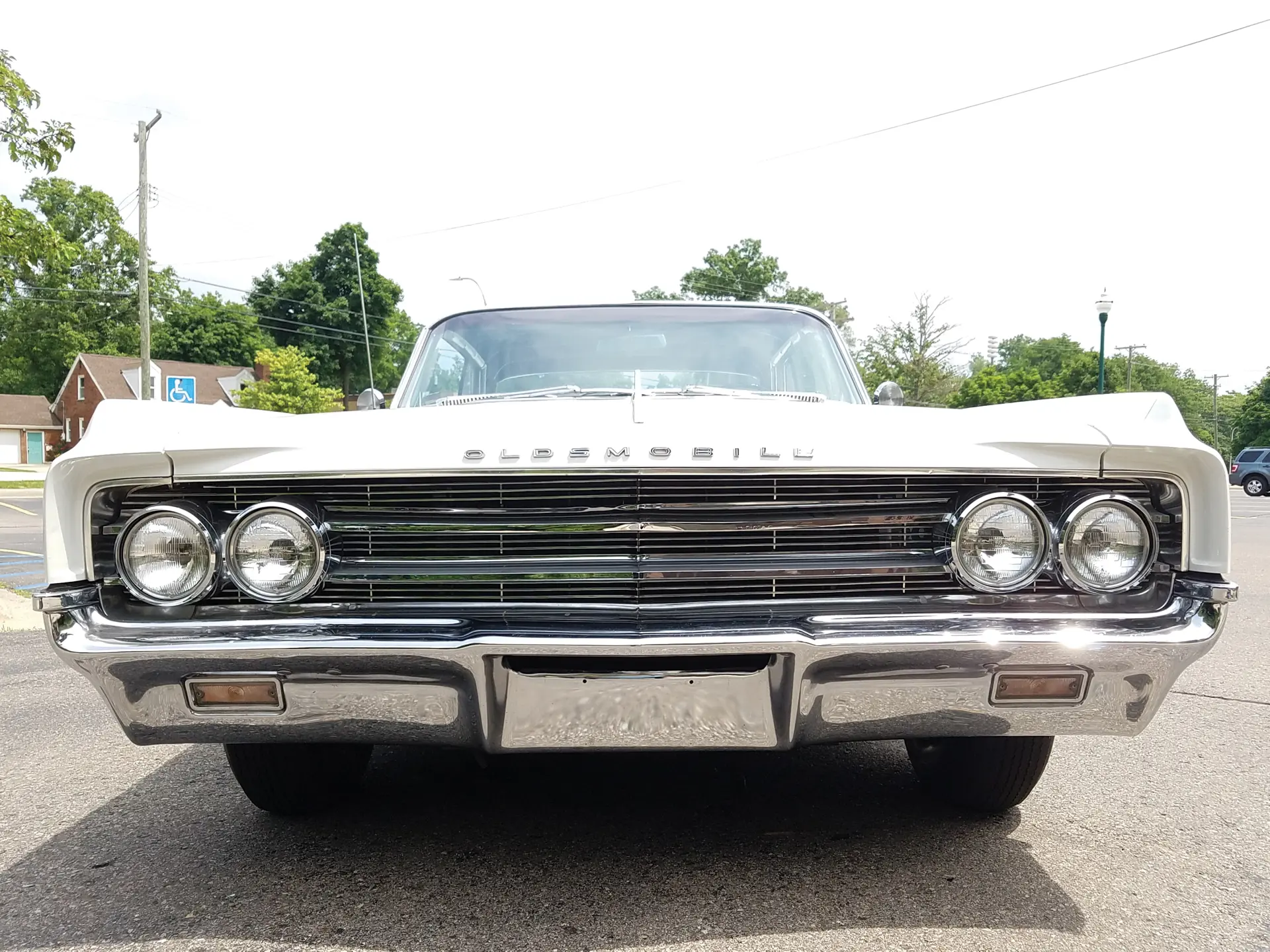
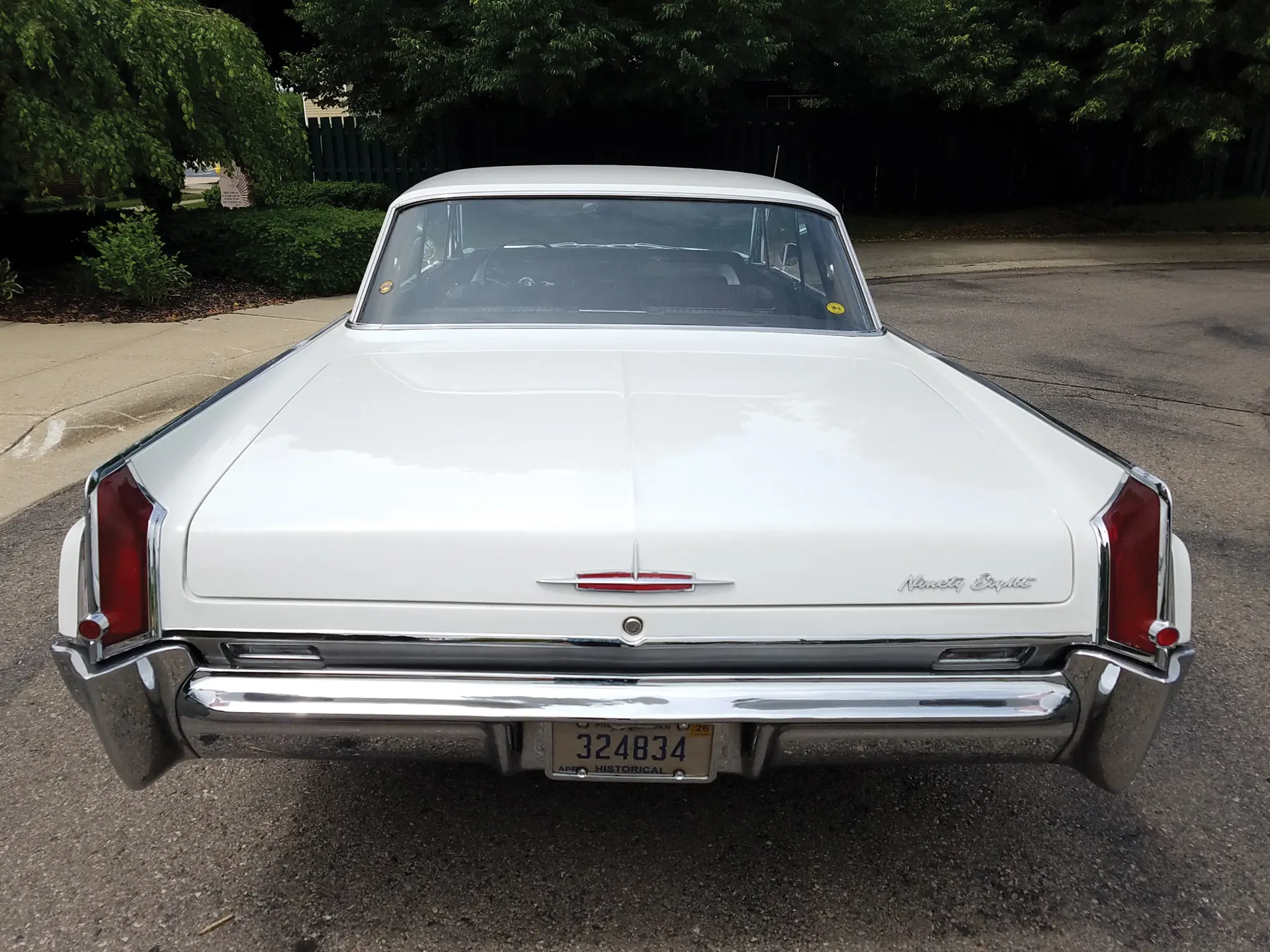
In 1961, Oldsmobile added a sporty Starfire convertible with bucket seats, aimed squarely at the Ford Thunderbird. A year later, they added a hardtop Starfire Coupe. As if that wasn’t enough, for 1963, Olds added a sporty buckets-and-console version of the big Ninety-Eight — the Custom Sports Coupe — which was basically an even bigger Starfire hardtop. This is one of those now-obscure “sporty” Ninety-Eights.
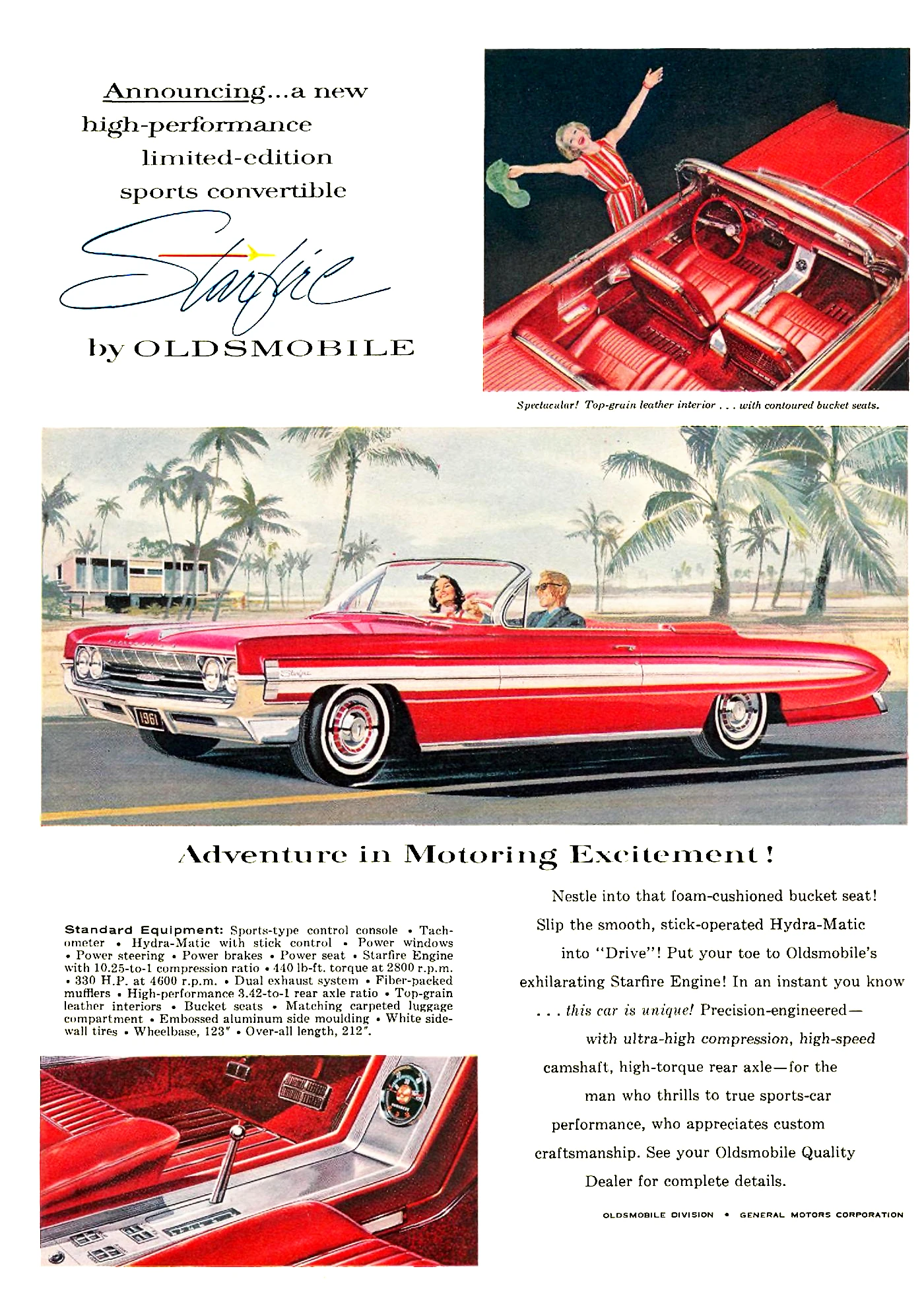
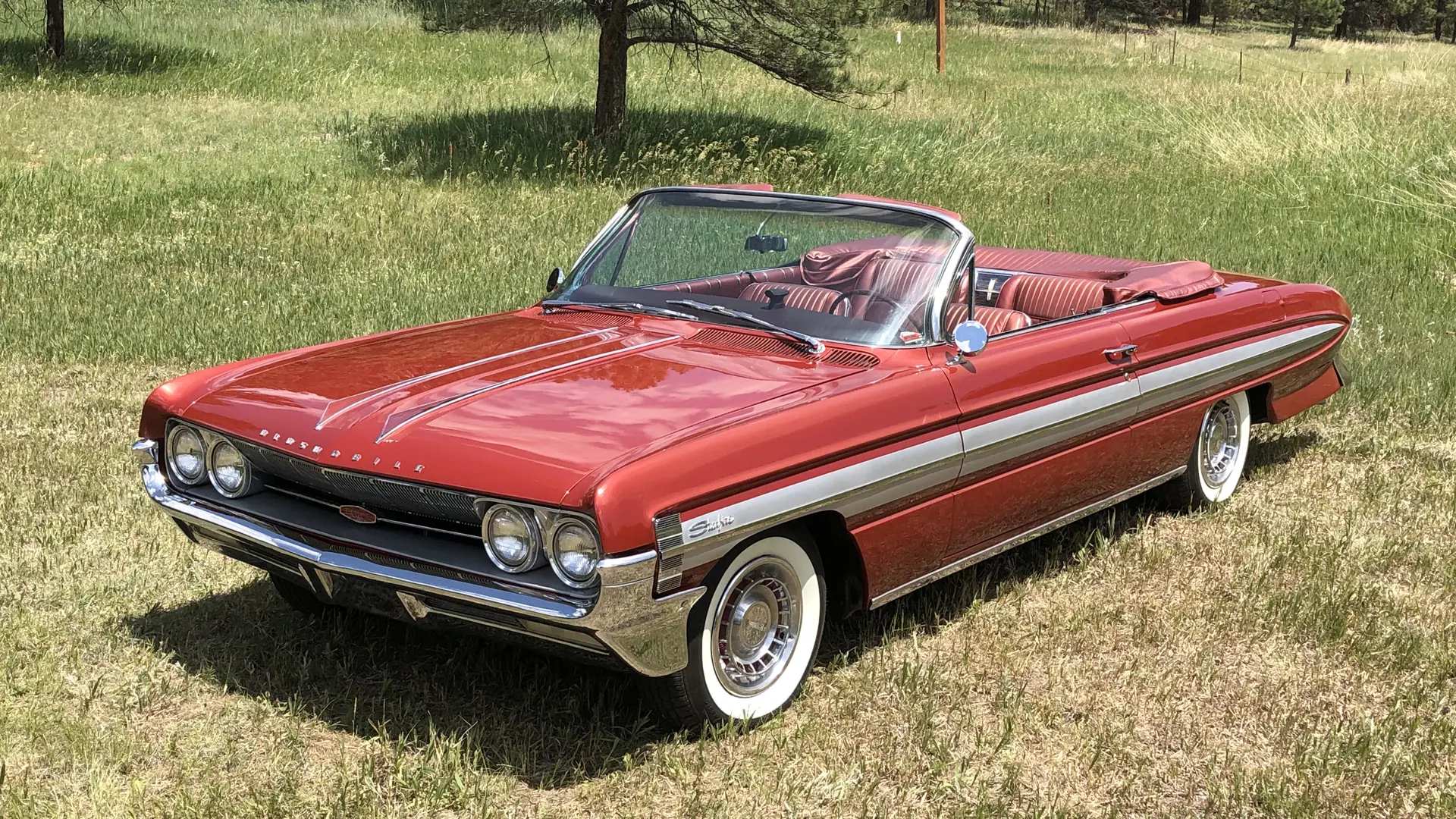
The first Oldsmobile Starfire, offered only in convertible form, was a late addition to the 1961 Super 88 line (added in December 1960, about two months after the rest of the ’61s). It was undoubtedly prompted to at least some extent by the success of the Chevrolet Corvair Monza, which had demonstrated that adding bucket seats and special trim was a profitable way to pitch a workaday model as some kind of sports car. Purists wailed, but the cash registers kept ringing, which had started giving Detroit product planners new ideas.
However, the Starfire was also clearly intended, albeit somewhat clumsily, as a Thunderbird fighter, with a suspiciously similar $4,647 price (compared to $4,637 for a Thunderbird convertible). “The mere $10 difference between the T-Bird and the Starfire indicates what Olds is shooting at,” Motor Trend editor Don Werner remarked at the time.
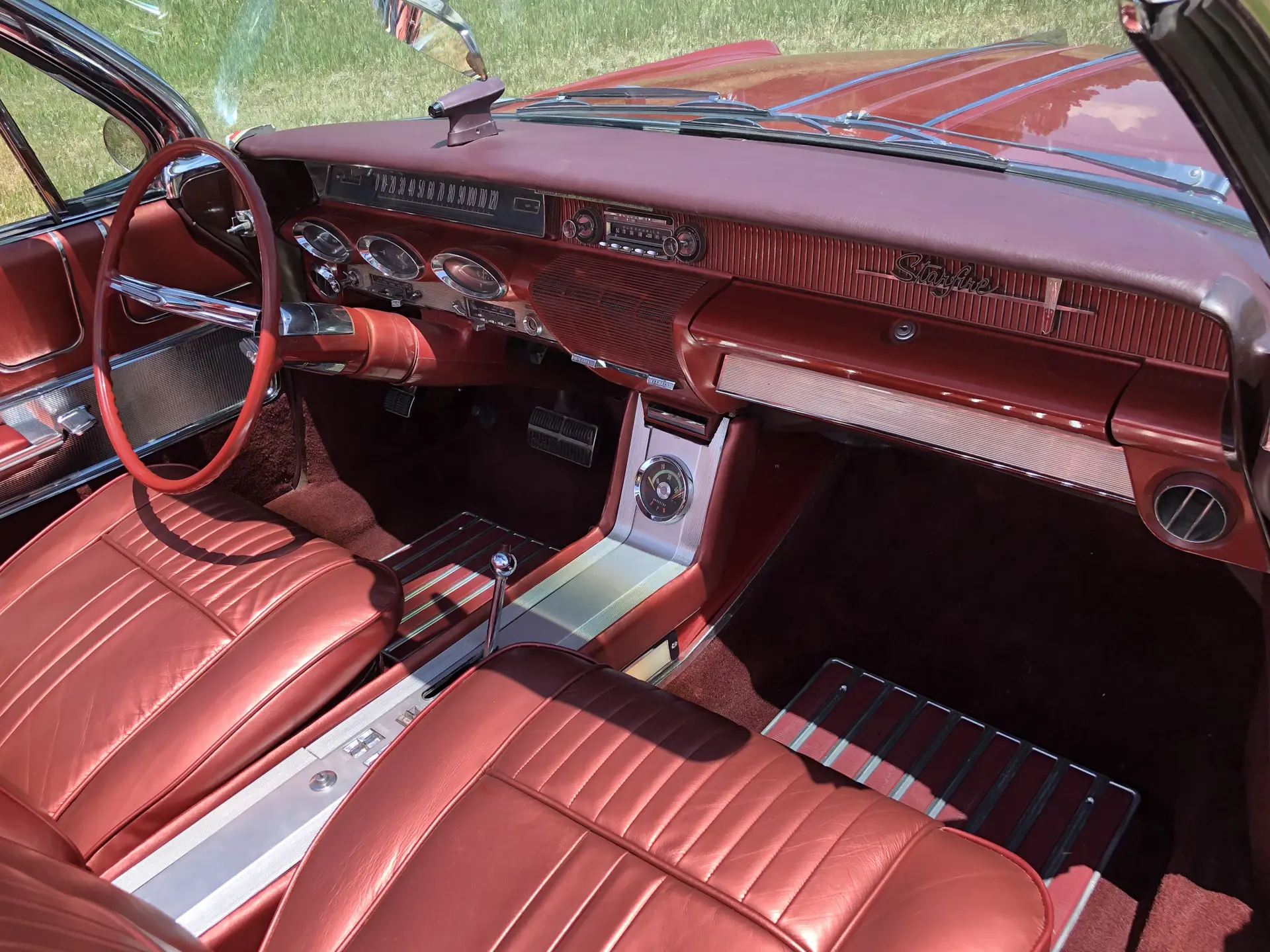
I say “clumsily” because the Starfire had really failed to understand the assignment. The Starfire was just a dressed-up Super 88 convertible with leather bucket seats, a center console, a slightly more powerful engine, and a big helping of goodies from the full-size Oldsmobile option list. It was a nice car, but it was not the same kind of car as the T-Bird. The Thunderbird was a specialty car; it had its own body shell (although by 1961, some of its structure was shared with the new Lincoln Continental) and it looked dramatically different from other Ford models. It wasn’t just a Galaxie with special trim.
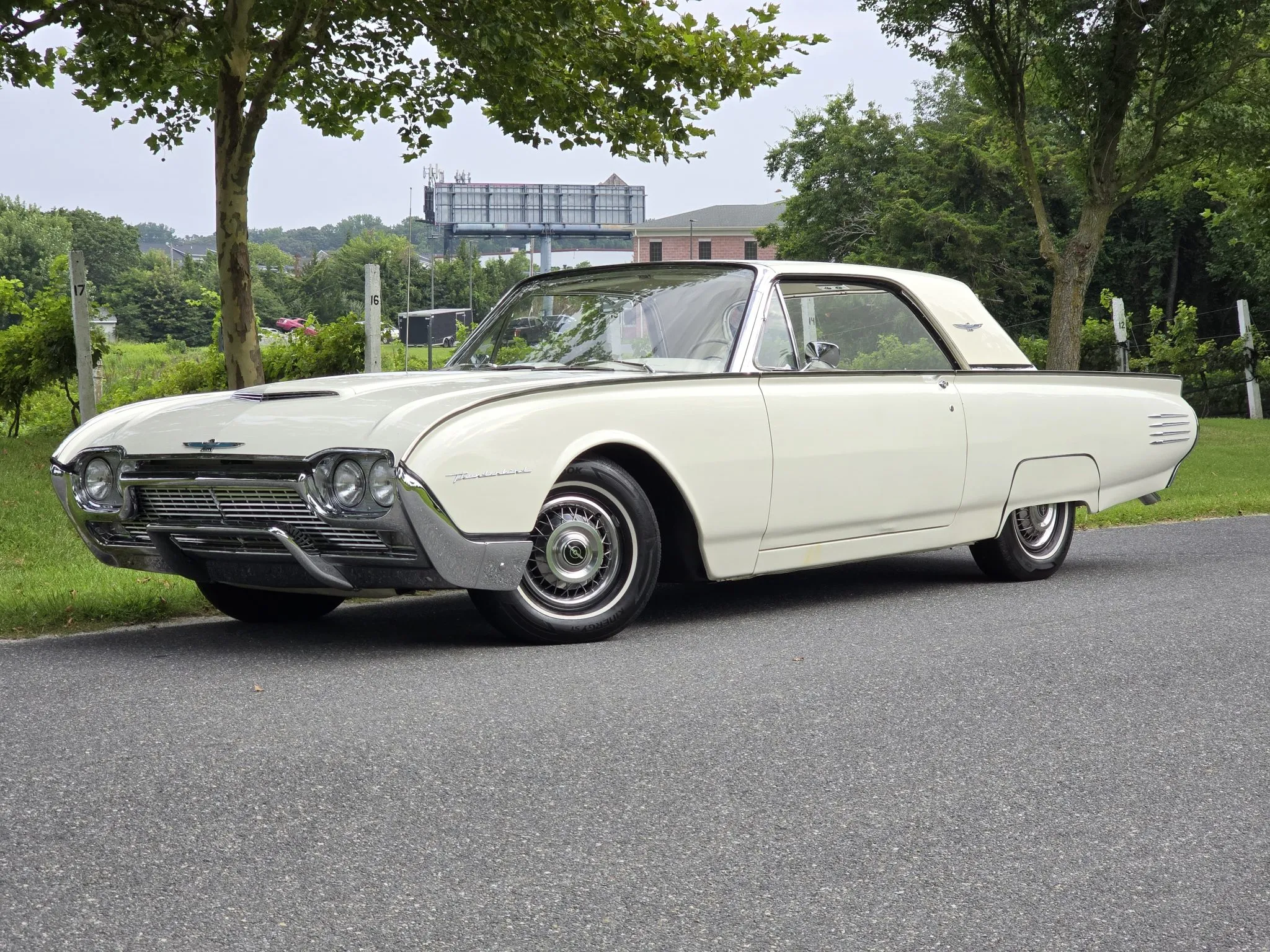
Why did it matter? Normally, Fords were more or less beneath the notice of Oldsmobile or Buick, but the Thunderbird was a different story. It was priced in the same realm as an Olds Ninety-Eight — in some forms, the T-Bird actually cost more — and it appealed primarily to well-heeled middle-aged customers, the kind of buyers that Oldsmobile general manager Jack Wolfram undoubtedly figured ought to be buying senior Oldsmobiles. The ‘Bird had prestige, too; for a lot of American adults of the time, it was a very desirable car. Worse, it was actually outselling the senior Olds Ninety-Eight. Here’s how the model year production totals compared:
| Model Year | Ford Thunderbird (all models) | Oldsmobile Ninety-Eight (all models) |
|---|---|---|
| 1959 | 67,456 | 81,102 |
| 1960 | 90,843 | 59,364 |
| 1961 | 73,051 | 34,833 |
| 1962 | 78,011 | 64,154 |
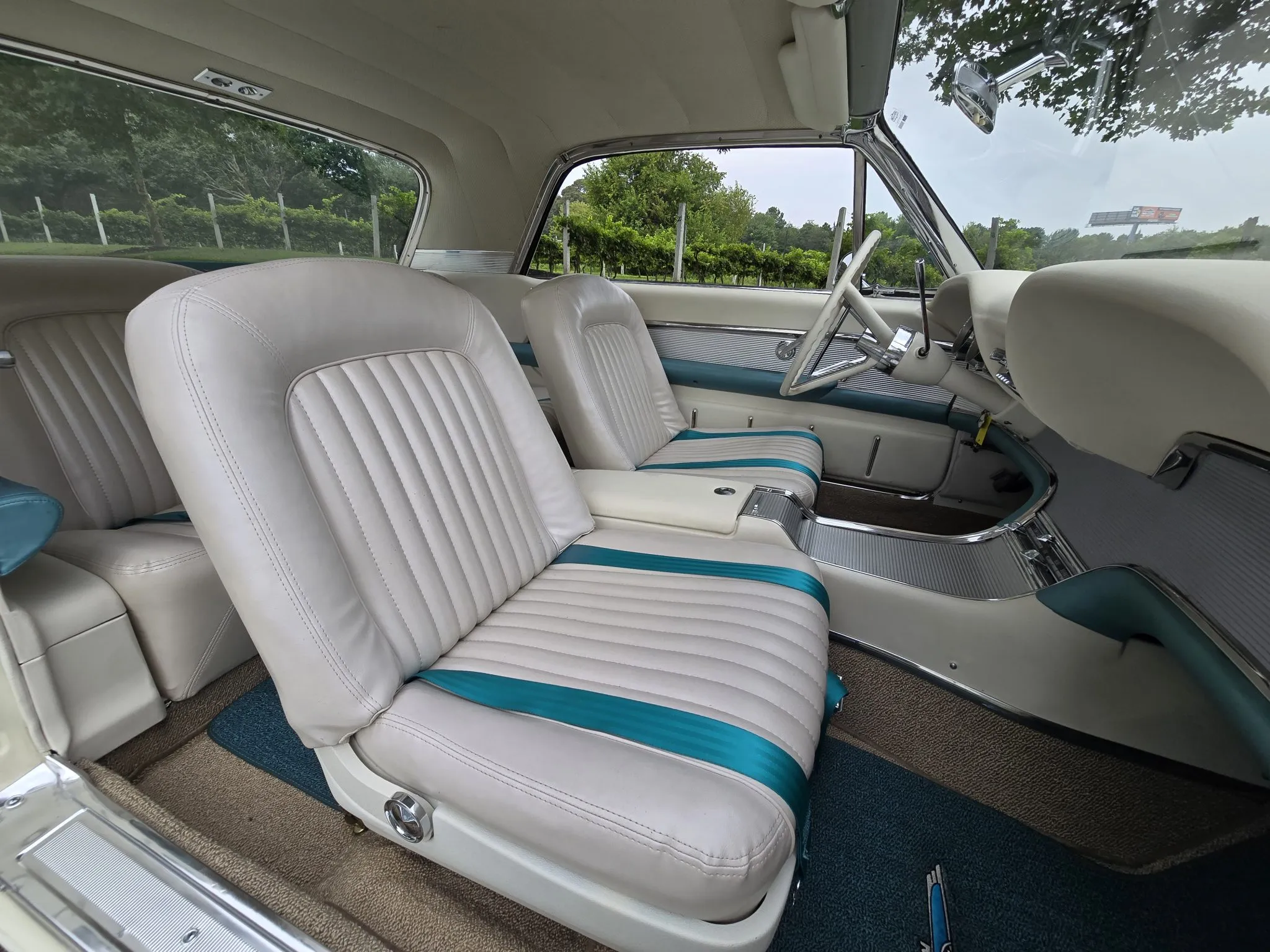
I’m not convinced that Jack Wolfram ever really understood WHY people were buying Thunderbirds. Buick did, by this time; they had done the market research on the emerging personal luxury segment. However, Wolfram was older and more conservative than Buick chief Ed Rollert, and I think Wolfram may have struggled with the Thunderbird’s violation of one of GM’s cardinal rules: Stick with your mass-market bodies. If you wanted a special model, the financially reasonable course was to give one of your existing B- or C-body cars a new grille, a different roof, special trim, or maybe an extra carburetor. An actual specialty car with its own body shell was just too expensive. You can’t make money that way, went the conventional Detroit wisdom. You can’t get the volume up enough, and you’ll lose your shirt. Even making significant changes to an existing body shell could become prohibitive, something GM had found out the hard way in the ’50s.
I think the Starfire represented Oldsmobile’s attempt to fit what they did understand about the Thunderbird (like the fact that it had bucket seats and a center console) into a framework that made sense in GM terms.
There was one area where I suspect even the Starfire rankled Wolfram’s old-school mentality: Despite its price, the Starfire was still a B-body car, not part of the top-of-the-line C-body Ninety-Eight series. The Olds B-bodies of this period were plenty big, but for Ninety-Eight buyers, the extra few inches of wheelbase and rear overhang on the C-body cars mattered. That extra length added a bit to rear legroom and trunk space, but the bigger significance was that it signaled to neighbors, golfing buddies, and car-spotting kids that it was the top of the line. What if some buyers weren’t happy with the Starfire because it was the size of the cheaper Dynamic 88 and Super 88?
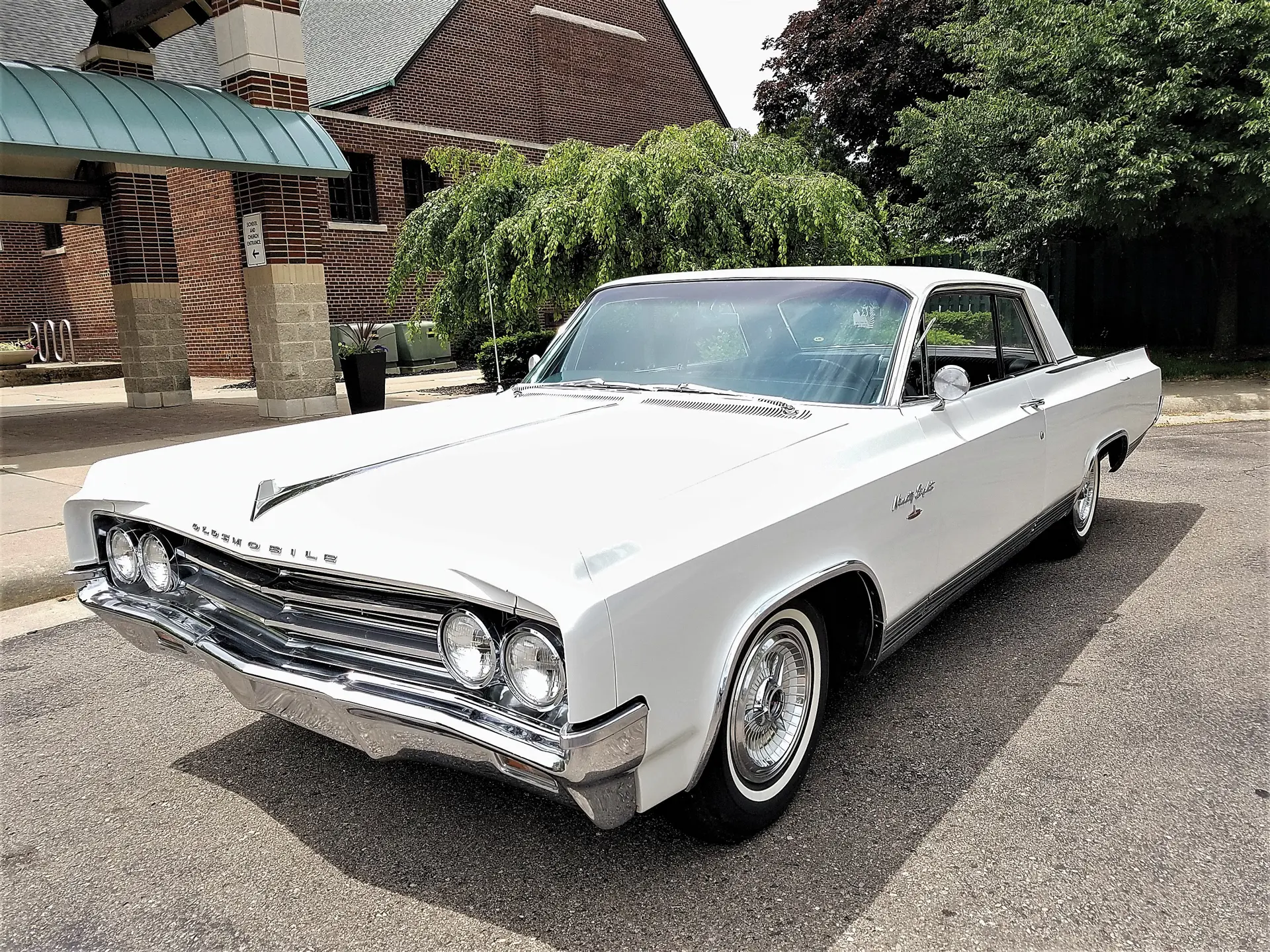
So, for 1963, Oldsmobile hedged its bets and created a new Ninety-Eight model with most of the Starfire equipment, including bucket seats and a full-length console. An important point here is that unlike Buick and Cadillac, Oldsmobile in this period did not make bucket seats optional: There were models that came with buckets and ones that didn’t. Olds could have made bucket seats a standalone option on the Ninety-Eight, but for whatever reason, they seemed determined not to.
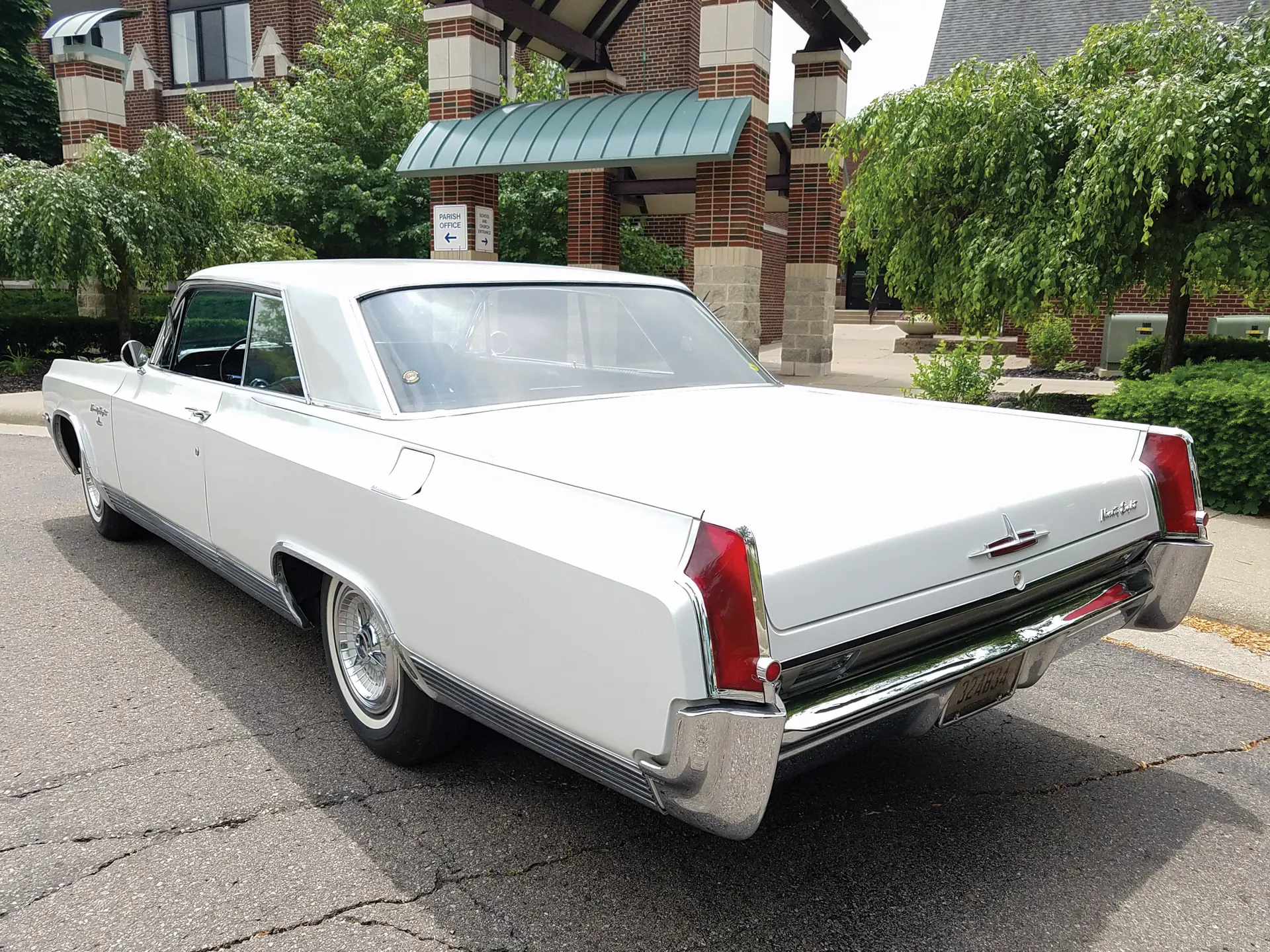
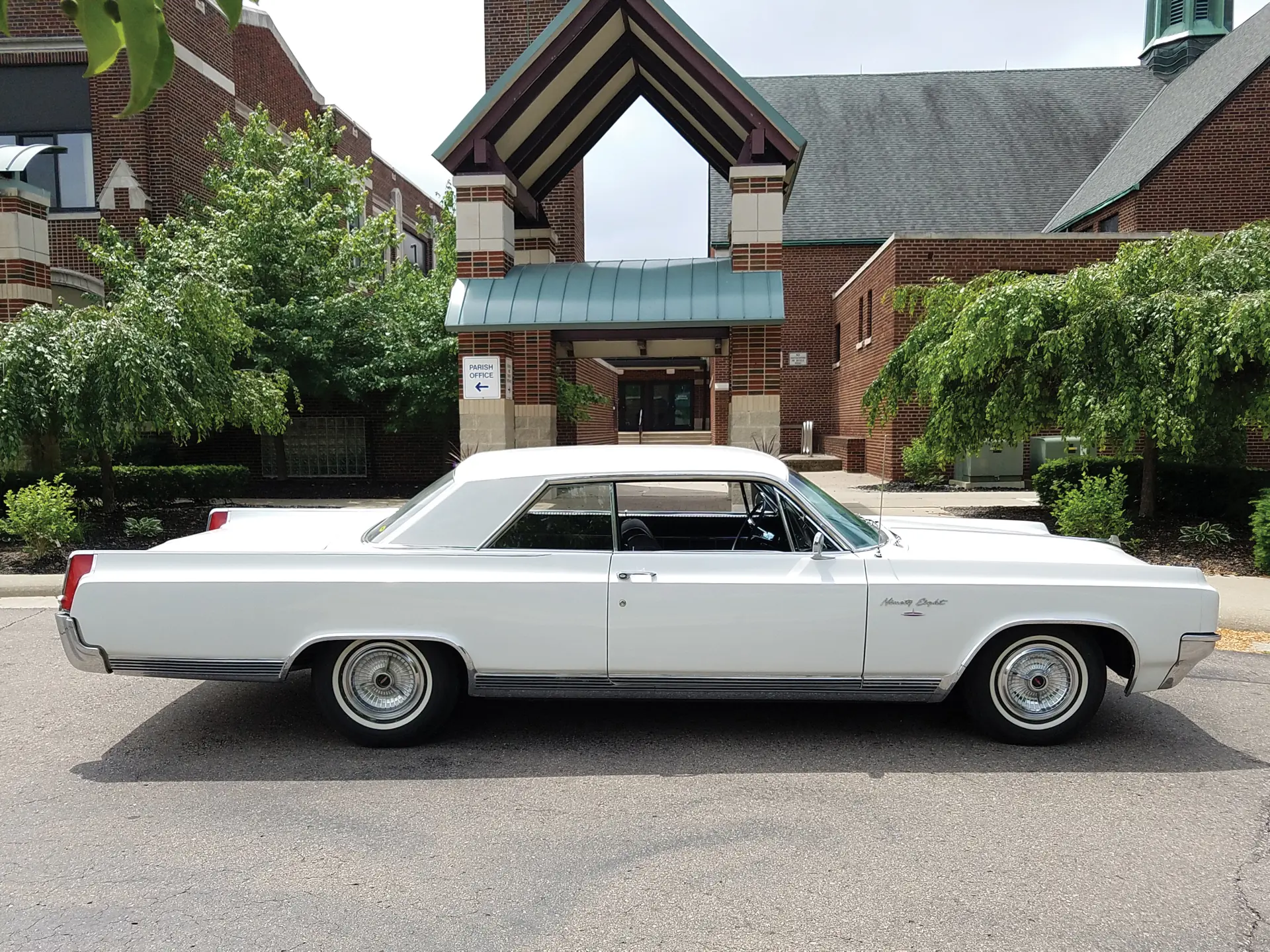
On the outside, the Custom Sports Coupe looked like the regular Ninety-Eight Holiday Sports Coupe — unlike the Starfire, it didn’t get a unique roofline or even any special exterior badges.
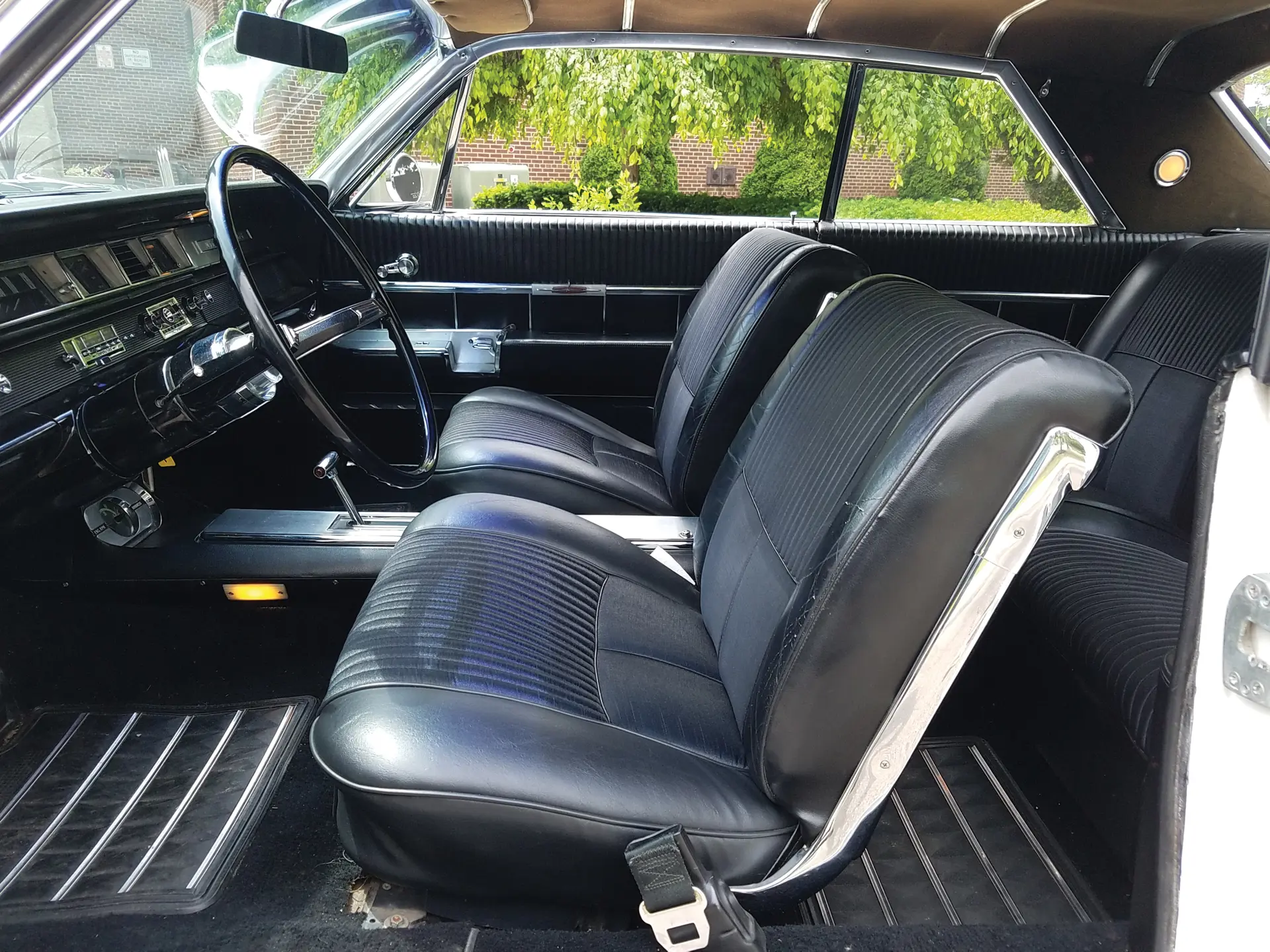
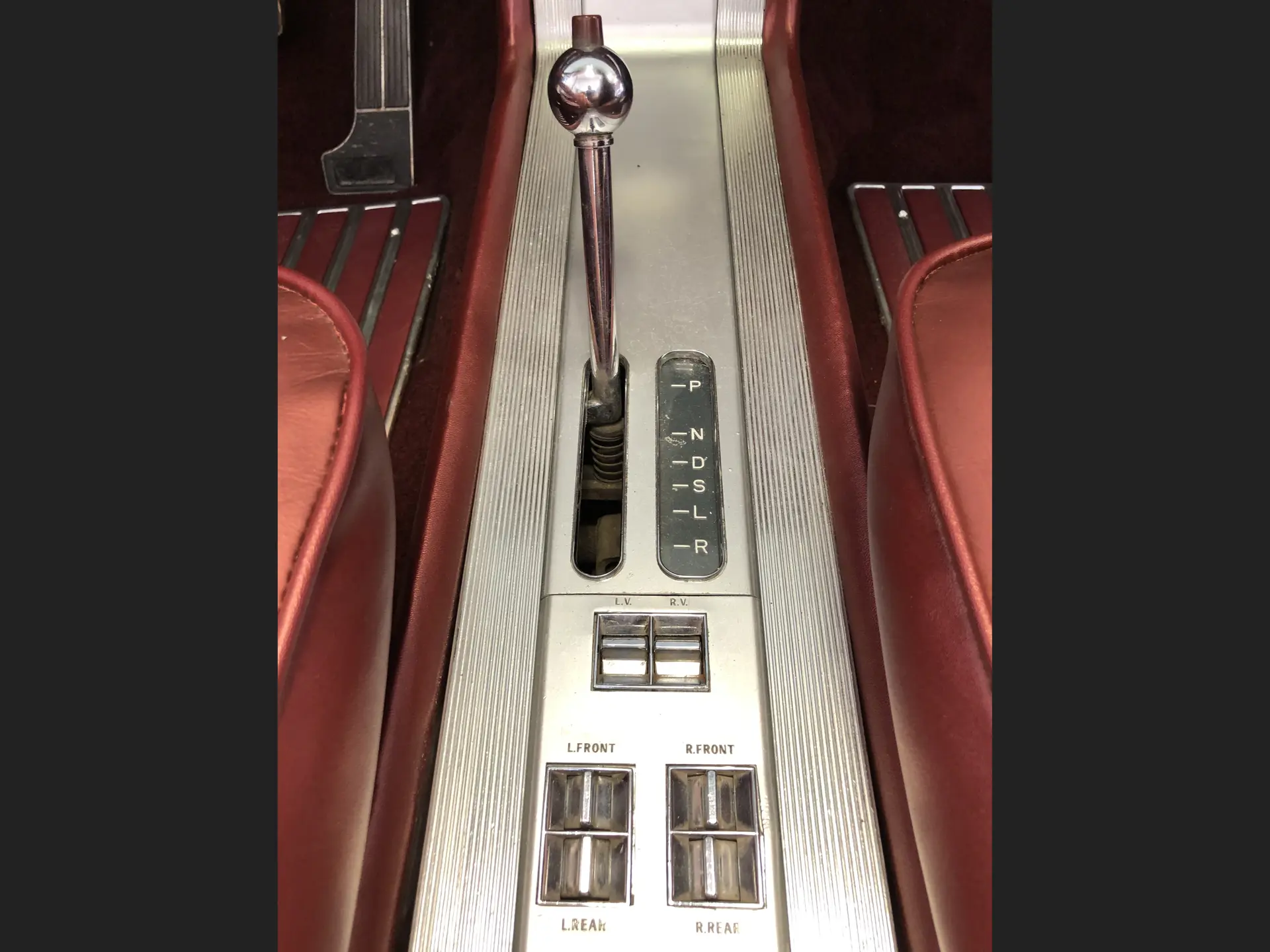
Inside, the Custom Sports Coupe had bucket seats separated by a full-length “sport console” with floor shifter, very similar to the ones in the Starfire Coupe. The biggest difference was that the Ninety-Eight buckets had fabric inserts bolstered in leather …
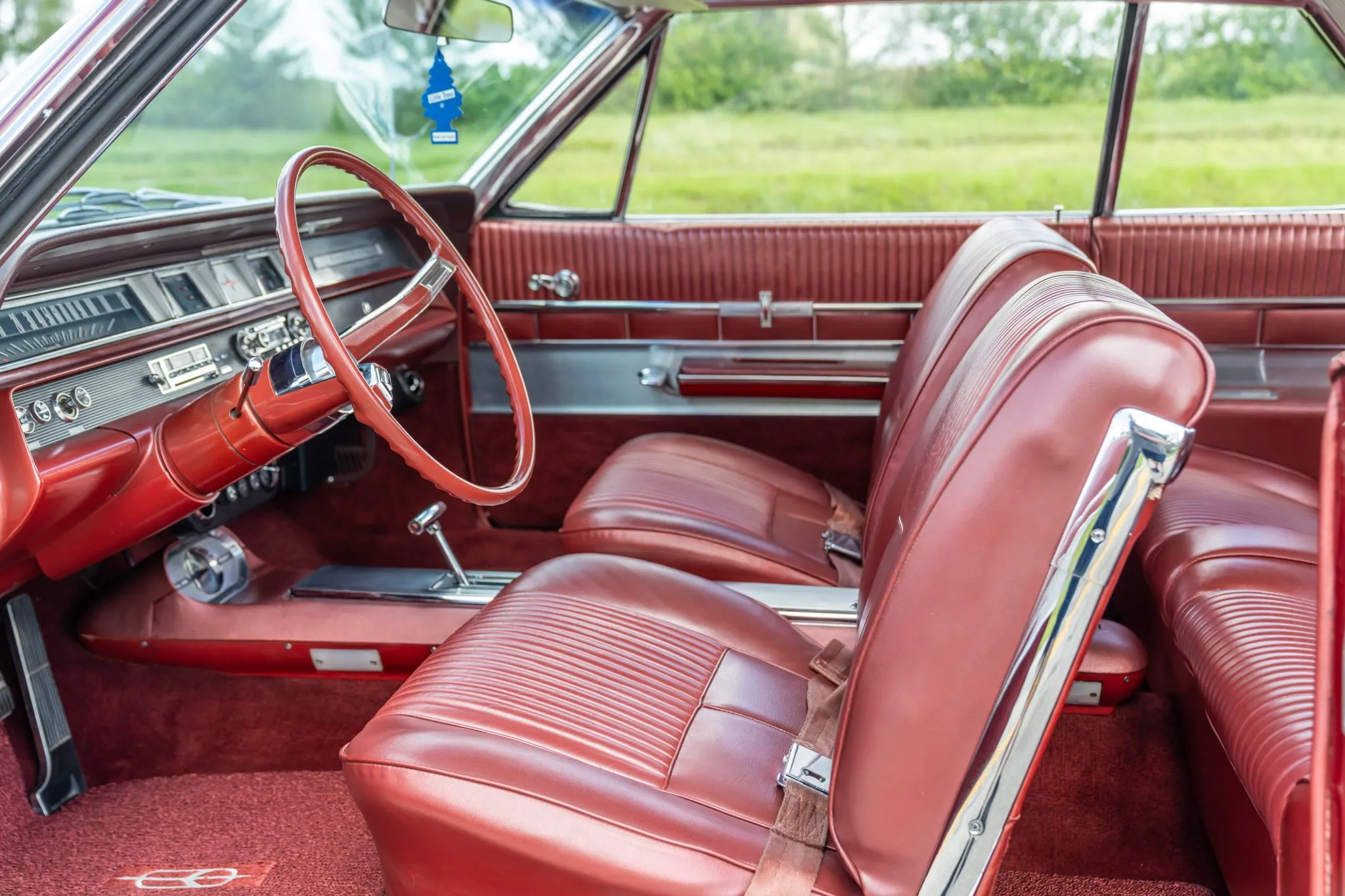
… while the Starfire seats had leather inserts as well as bolsters. (The cushion faces were vinyl.)
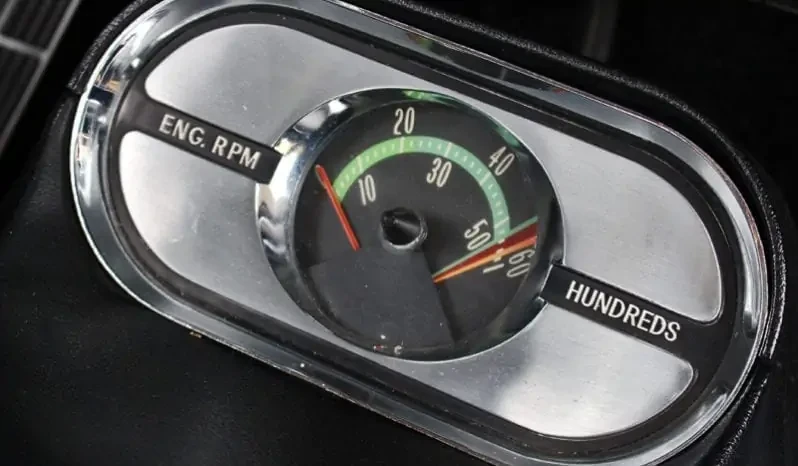
As in the Starfire, mounted at the far end of the Custom Sports Coupe console was a hard-to-see, largely ornamental tachometer.
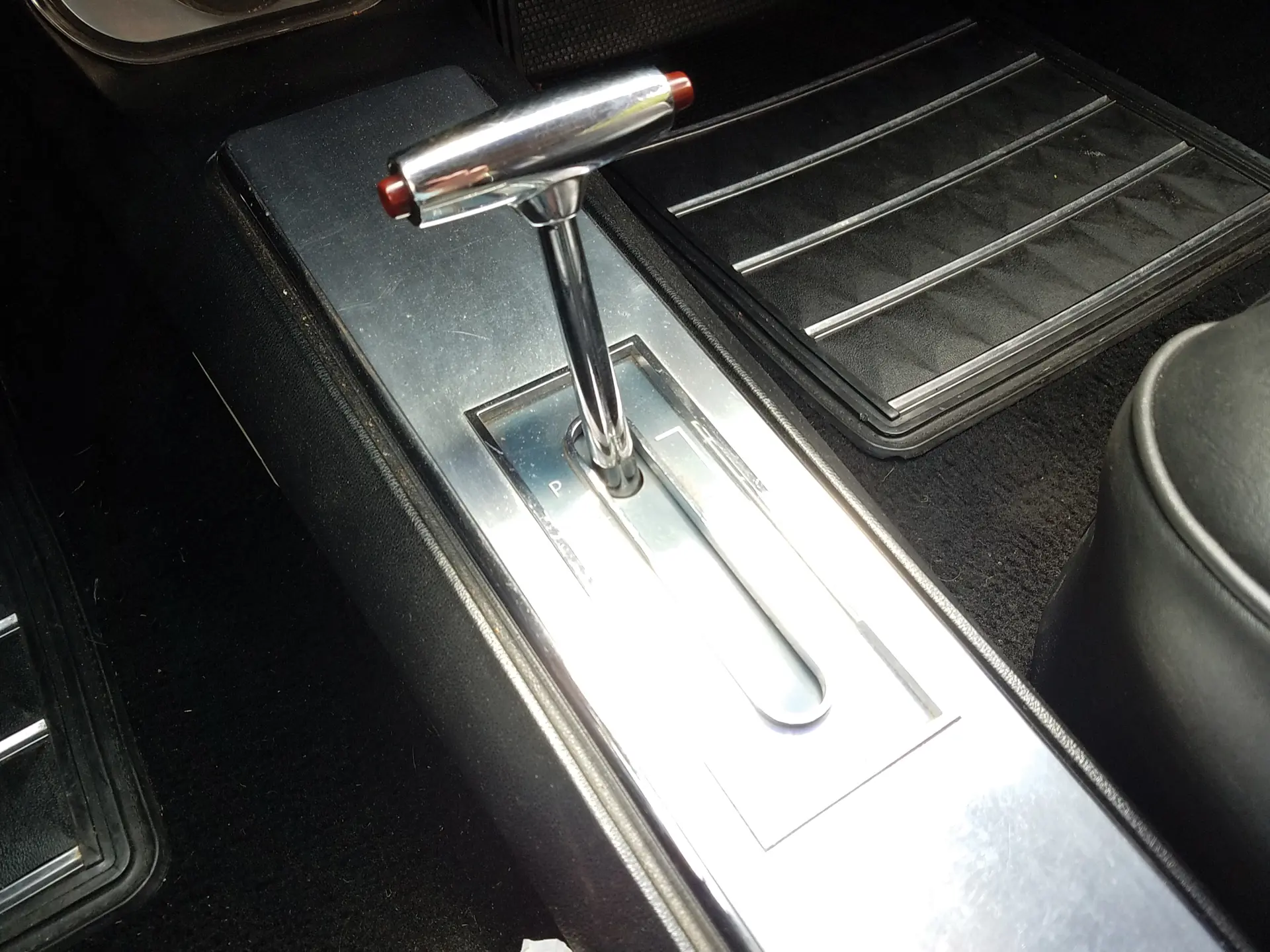
Hydra-Matic (the wretched 3-speed Roto Hydra-Matic version) was compulsory on the Ninety-Eight series, so the utility of the tachometer wasn’t great in any event, despite the Custom Sports Coupe’s sporty floor shifter.
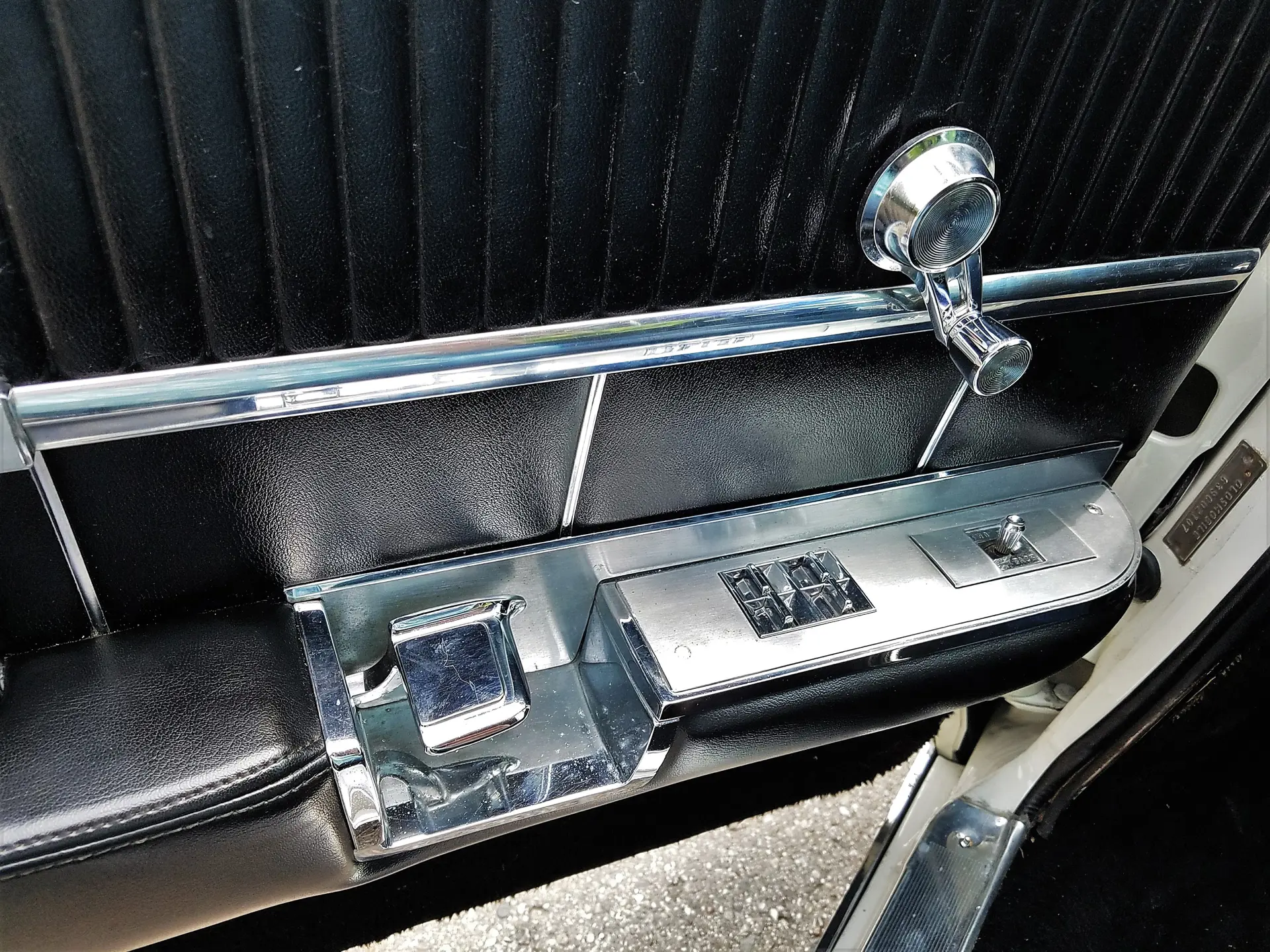
Another minor divergence from the Starfire formula was that the Custom Sports Coupe mounted its power window switches on the doors in conventional fashion. The Starfire still put them on the console, as in the Thunderbird. (Power windows were also standard on the Custom Sports Coupe; they were optional on both the T-Bird and the Starfire Coupe, although they were standard on Starfire Convertibles.)
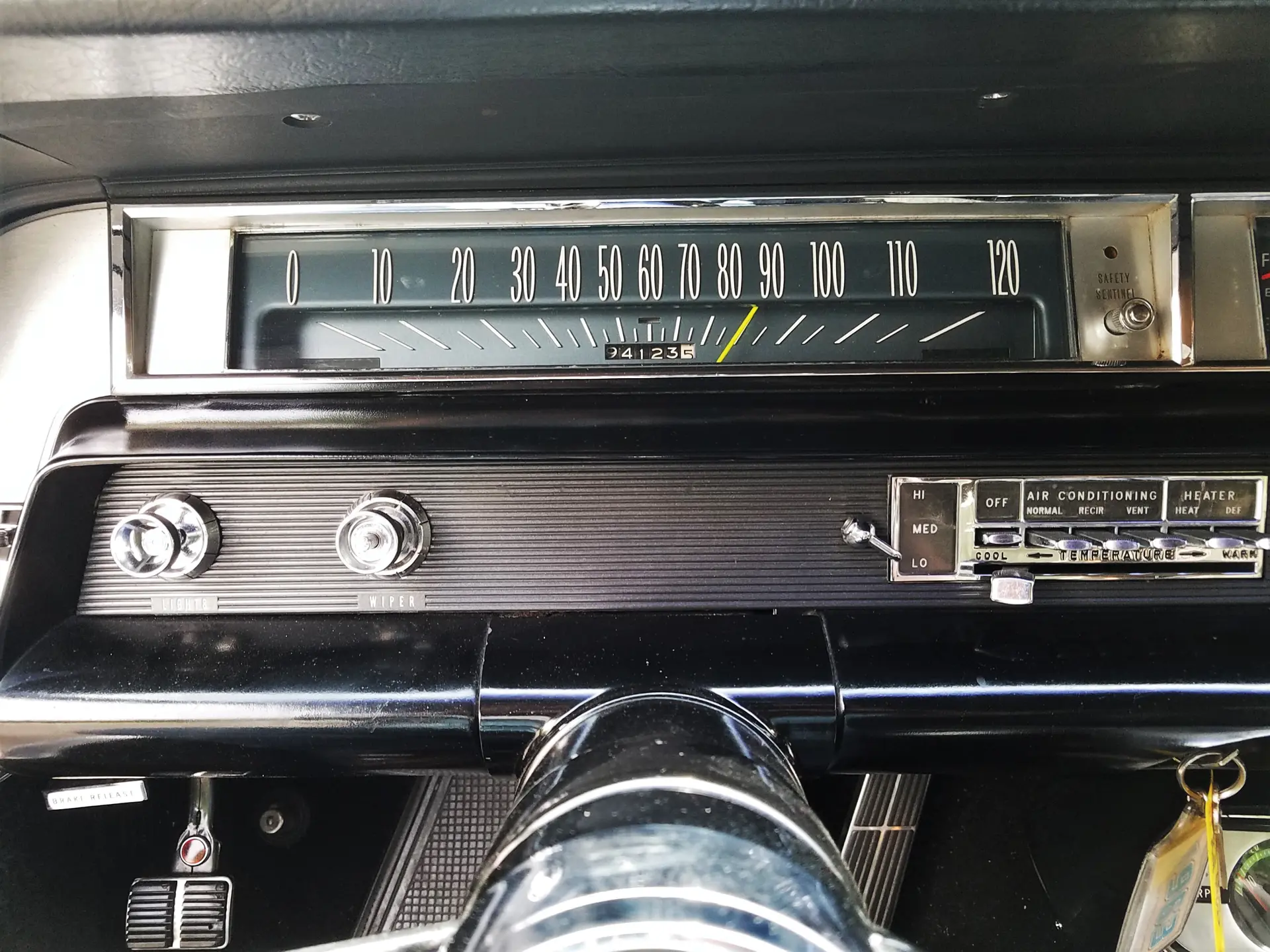
Like the Starfire, the Custom Sports Coupe shared a standard Oldsmobile instrument panel, with its ribbon speedometer and conspicuous lack of any other instruments beside a fuel gauge. Giving these sporty models a unique dashboard might have added to their Thunderbird-fighter bona fides, but it would have cost too much to tool.
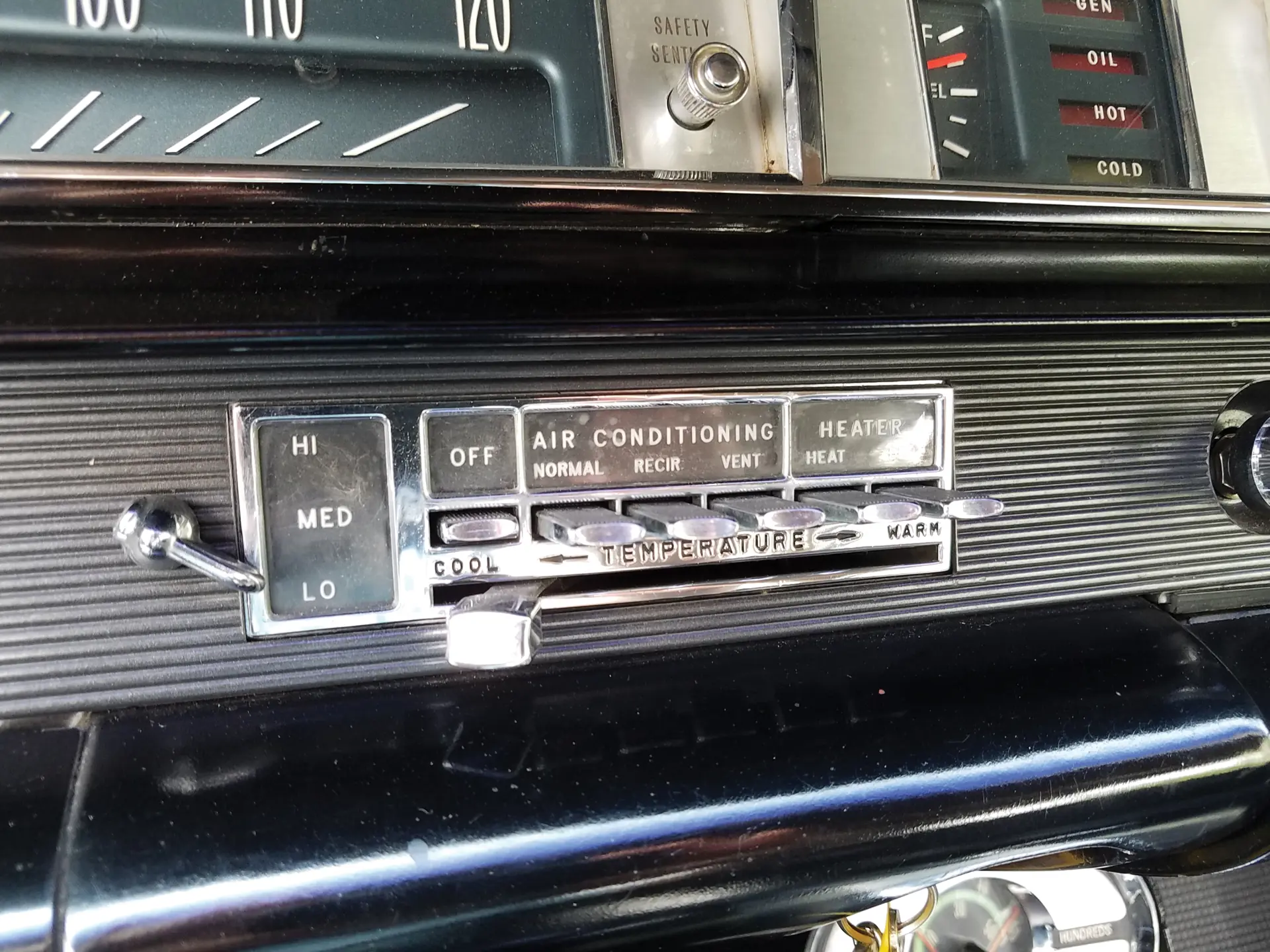
Air conditioning was one of the few features that WASN’T standard on the Custom Sports Coupe, although this car has it, at an original cost of $430.40.
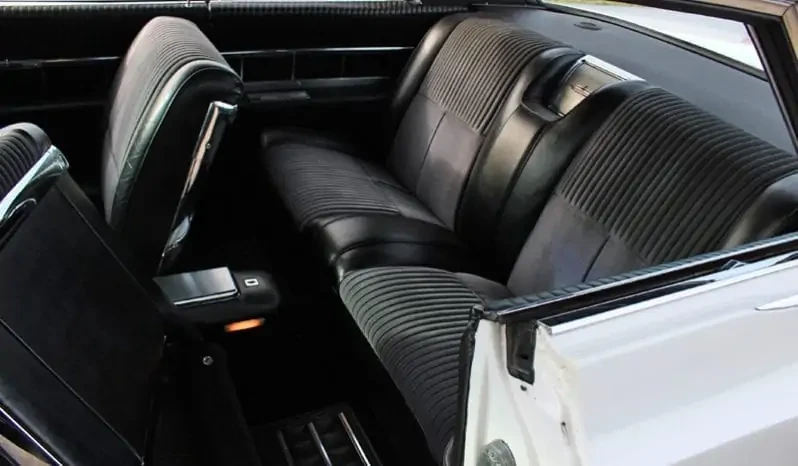
Because it was still a Ninety-Eight, riding a 3-inch-longer wheelbase than the Starfire, the Custom Sports Coupe had an extra 3 inches of rear legroom, a generous 38.8 inches. However, as in the 1963 Starfire, the console (which would be easier to see if the interior of this car were some color other than black) went almost all the way to the rear seat cushion, which made this 221.7-inch hardtop effectively a four-seater.
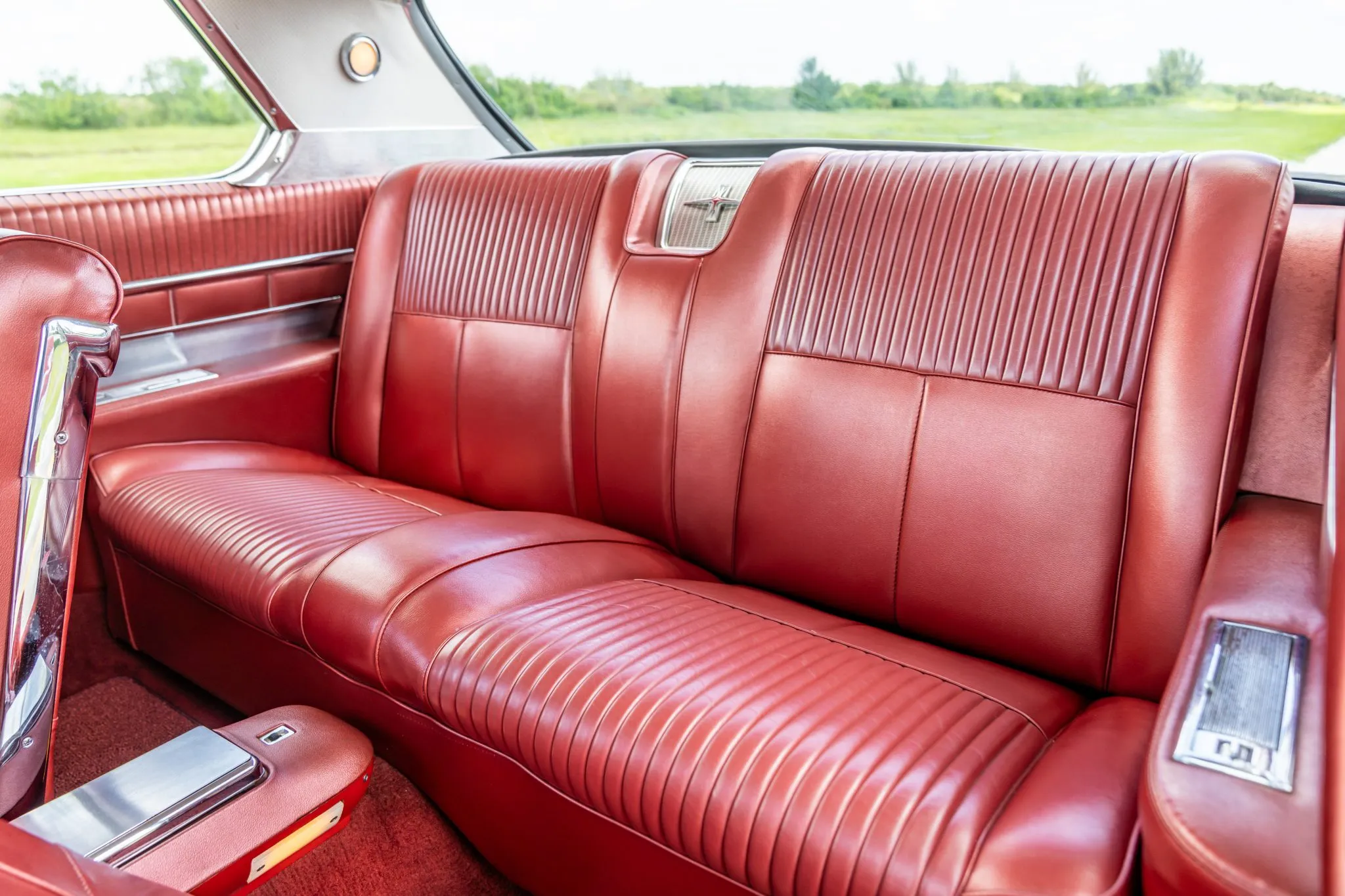
Olds claimed five-passenger capacity for both the Custom Sports Coupe and the Starfire, but where a rear center passenger was expected to put their feet (or rest their head) was left as an exercise for the interested reader.
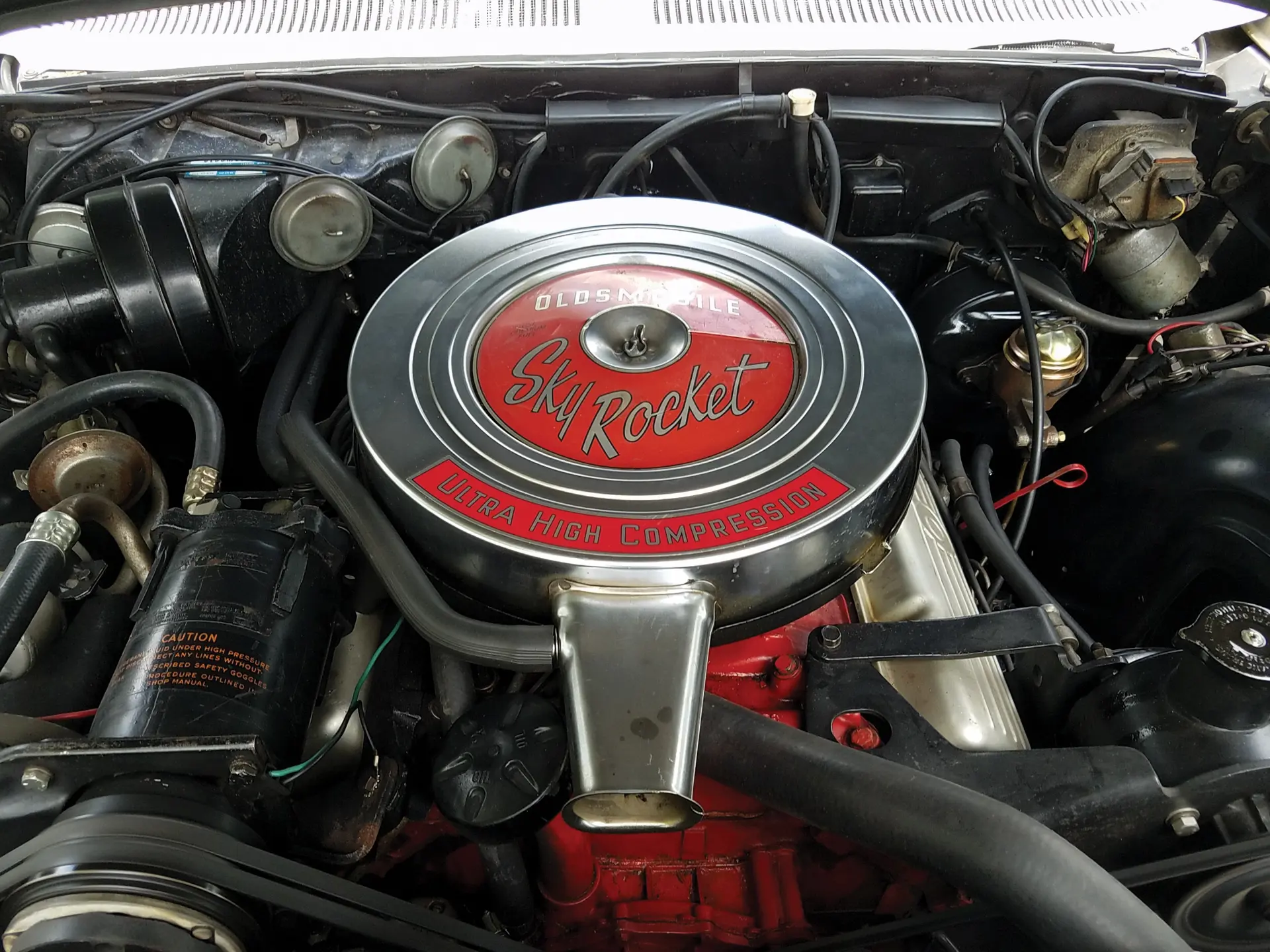
Power steering and power brakes were standard on the Custom Sports Coupe, as on all Ninety-Eight models, but buried in the specifications was the interesting fact that the Custom Sports Coupe came with the more powerful Starfire engine, with 345 gross hp. This was accompanied by dual exhausts, which were otherwise optional on the Ninety-Eight, giving an extra 25 or so net horsepower. The Custom Sports Coupe also used a 3.42 performance axle, just like the Starfire.
A Starfire was capable of 0 to 60 mph in 8.5 seconds, which was pretty good for a big luxury car of this vintage. The Custom Sports Coupe was about 106 lb heavier than a comparably equipped Starfire, so it was probably a little bit slower, but not by much.
Sporty handling wasn’t really part of the Oldsmobile lexicon in this era. They did have some police packages with stiffer suspensions, but those weren’t on the regular options list, and weren’t normally available to retail customers. The Ninety-Eight was sprung as softly as the Starfire and had an even thicker front anti-roll bar (with none in back). People who bought these cars expected a pillowy ride, and that’s what they got, accompanied by an heroic degree of understeer.
With its lengthy list of standard equipment, the Custom Sports Coupe was naturally quite expensive, starting at $4,381, although it was still not as expensive as either a Ninety-Eight convertible or a Starfire convertible. The price spread at the top of the 1963 Olds line was a little odd:
- Starfire Coupe: $4,129 ($4,235.25 with power windows, standard on the convertible and most Ninety-Eights)
- Ninety-Eight Holiday Sports Coupe: $4,178
- Ninety-Eight Holiday Sports Sedan: $4,254
- Ninety-Eight Luxury Sedan: $4,332
- Ninety-Eight Custom Sports Coupe: $4,381
- Ninety-Eight Convertible: $4,457
- Starfire Convertible: $4,742
I’m sure this made sense to somebody, but anyone trying to discern a hierarchy in it was advised to bring their Ouija board.
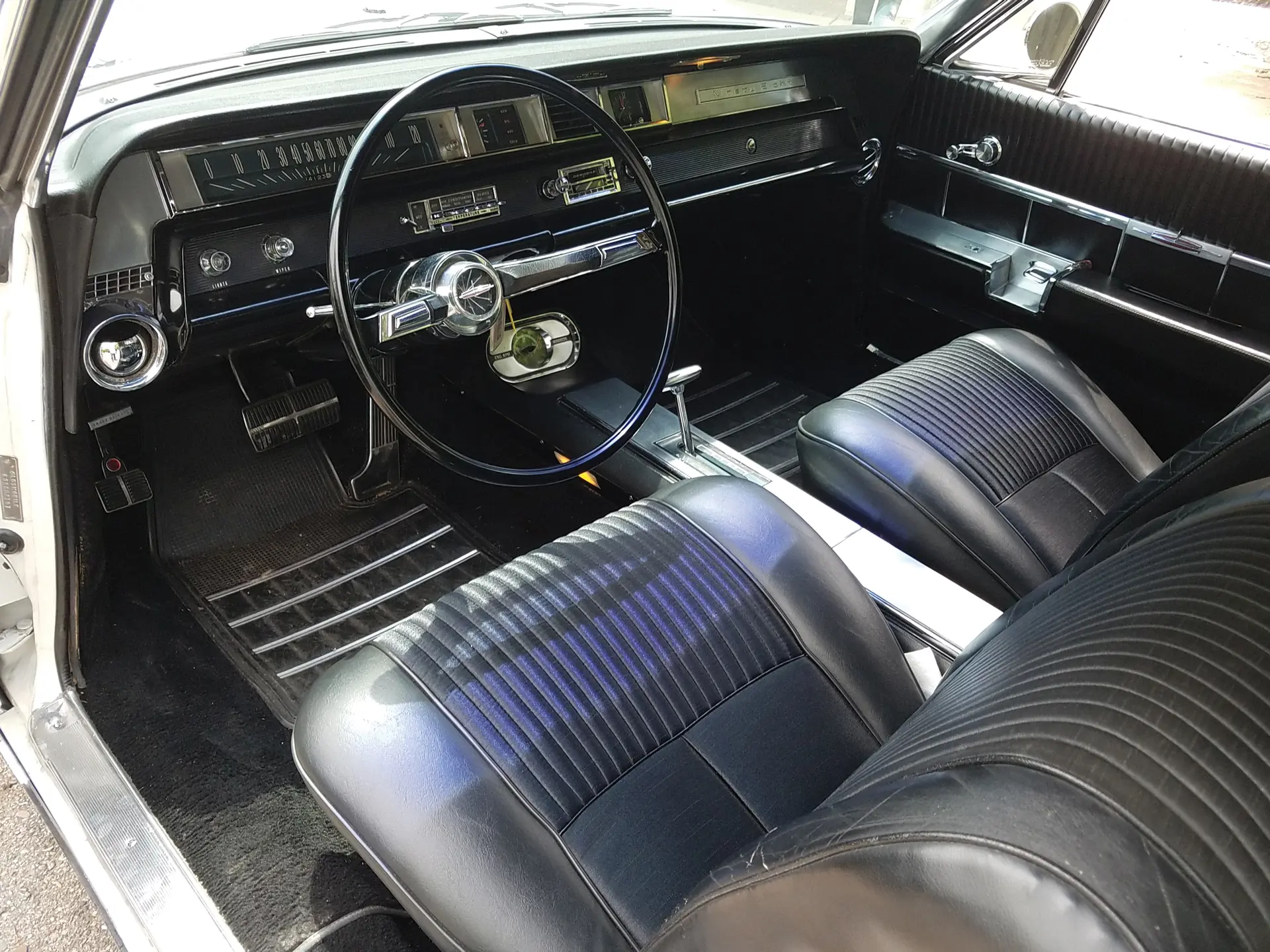
Oldsmobile ended up building 7,422 Ninety-Eight Custom Sports Coupes for 1963, which, honestly, is more than I would have expected for such a thing. Bucket seats were always a little incongruous in a car this size, but to me, the element that crossed the line into absurdity was the full-length console. Buick and Cadillac had come up with a reasonable compromise, separating the buckets with a short center console that provided a lockable storage bin while still leaving the driver and front passenger plenty of room to stretch out, and their bucket installations didn’t restrict rear-seat space. Limiting the usability of the back seat in a car this size to two passengers — who also couldn’t enter or exit on the opposite side unless they were quite limber — just seems silly.
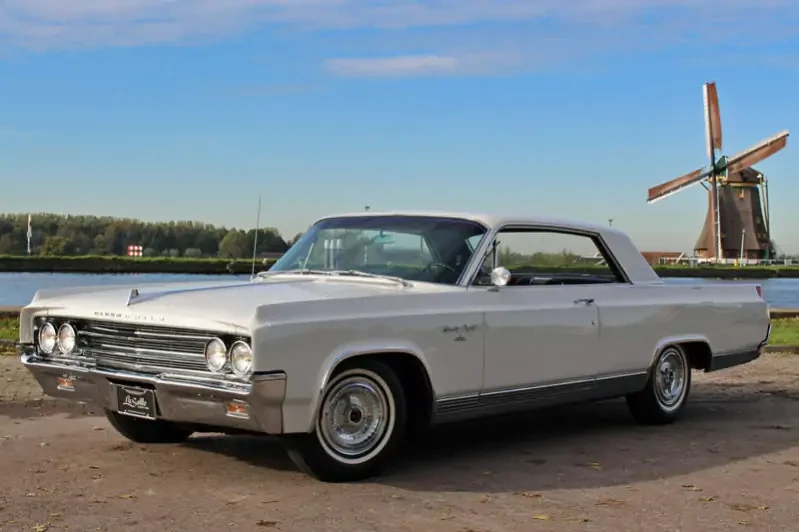
Obviously, pitching a car this big and this soft as a sports coupe was also very silly, but you could say the same of the Starfire or the Thunderbird. The audience for these cars was older and more sedentary than the typical car magazine subscriber. People didn’t buy a four-seat Thunderbird expecting to compete with Corvettes in SCCA events; they bought the Thunderbird because it looked cool.
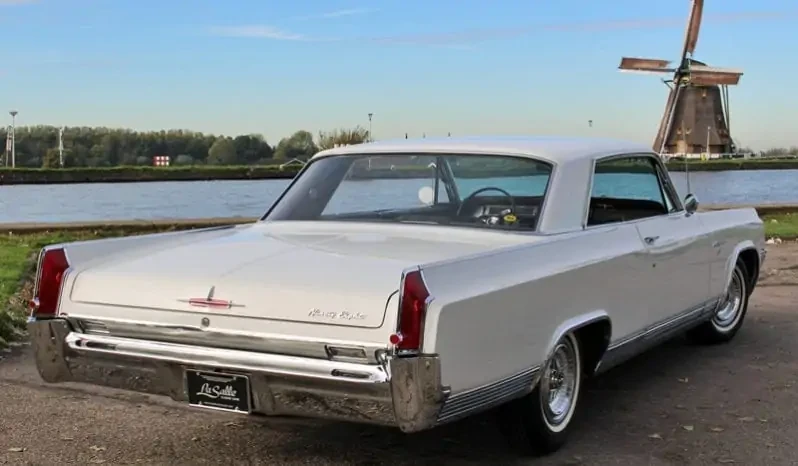
That of course was where the Custom Sports Coupe really fell down. The Starfire had at least made an effort: It had satin-finish aluminum side panels, and the coupe had a special roofline. The Custom Sports Coupe was unrecognizable from the outside, and unless you were in the habit of reading Oldsmobile brochures, you might assume its bucket seats were some kind of weird special order. When you bought a Thunderbird, it was immediately clear to everyone that you had something unusual and special. If you bought a Custom Sports Coupe, it was only clear that you’d bought an Oldsmobile Ninety-Eight.

Olds tried again for 1964, but Custom Sports Coupe production fell to 4,594 cars. Such sales weren’t disastrously bad for a low-investment model, but the downward trend made clear that it was a dead end. The Ninety-Eight line now did significantly better with the new Luxury Sedan, whose plush interior was more on the wavelength of full-size Oldsmobile buyers, if not Thunderbird fanciers. The Custom Sports Coupe wouldn’t be back for 1965, although the similarly declining Starfire would stick it out through 1966. Jack Wolfram was gone by then; he retired in July 1964.

The short-lived Ninety-Eight Custom Sports Coupe was the kind of product companies end up with when organizational logic and corporate habits take precedence over any kind of real marketing wisdom. I can see how Olds would have come up with the idea of a C-body Starfire, and I can see why they would have decided it made sense. However, it wasn’t really a good idea, both needlessly elaborate (they could have just offered a bucket seat option for any Ninety-Eight hardtop) and kind of half-assed. I can’t see these cars having tempted many people out of a Thunderbird — they just didn’t scratch the same itch.
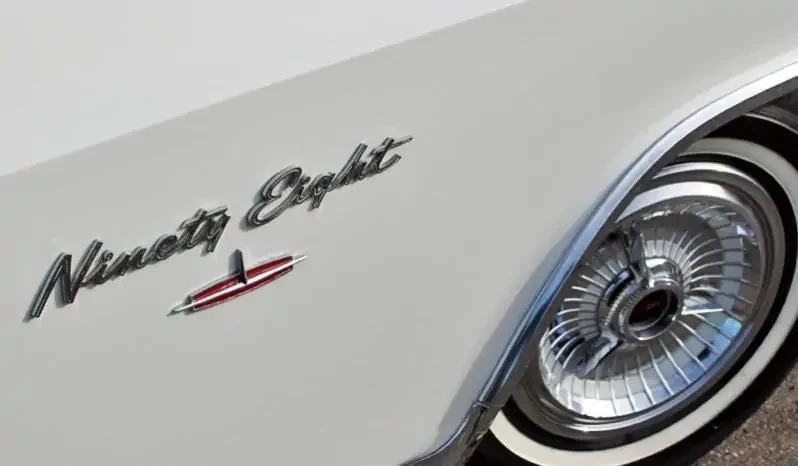
Still, a bucket seat Ninety-Eight is a conversation piece, even if the conversations was, “Why did they make this car?”
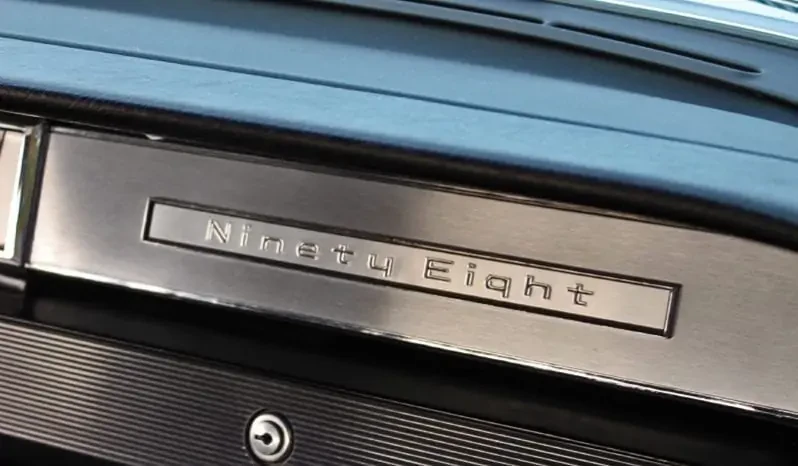
(If you’re wondering, all the pictures of the white Ninety-Eight are of the same car, which has bounced around many of the sales and auction sites over the past decade. That’s why some of the photos are different sizes.)
Related Reading
1963 Oldsmobile 98 Luxury Sedan – When Olds First Leapfrogged Buick On The Sloan Ladder (by Paul N)
1962 Buick Electra 225 Sport Coupe: Rare Bucket Seats In A Loaded C-Body Hardtop (by me)
1963 Cadillac Sedan De Ville With Rare Factory Bucket Seats And Center Console (by me)







I think the 1963 Olds ’98’ coupe is beautiful and new to me is the “Custom” model. In 1955 Mom bought a new ’98’ Starfire convertible and later traded for a new 1960 T-Bird convertible. In 1963 Dad took me car shopping and I know he considered a new Starfire but with much urging from my young self, bought a new T-Bird. I would say my parents liked the uniqueness of the T-Birds for all the reasons mentioned. We had new 1960, 1963, & 1966 T-Birds and I am still driving a 1966 convertible.
The Starfire does make sense as a conservative answer to the Bullet Bird. Hard to justify the price against the Ford which was a far more advanced design and had a bespoke interior, but I imagine Olds thought there would be enough buyers who did not appreciate such innovations. And it does look nice, although it lacks the uniqueness of the T-bird, and explains why each has a very different place in collective memory..
Regarding the pricing, going for the simplest answer I can think of, I would imagine Olds just aimed at the T-bird and bypassed the Ninety-Eight as most expensive model in their lineup. A misstep on the Sloan ladder as they outpriced Buick too..
The ’63 98 4-dr. hardtop was a huge beast for this skinny 16 year old to learn to drive in.
After 6 years as a kid passenger, I finally got to the wheel in 1969.
But my parents never knew that, 2 years earlier, I was at the wheel, if they were on date night in the other car.
Heart-pounding, in 9 PM darkness, I moved it 5 feet forward & back, in the driveway ….. .. and the neighbors never noticed.
or DID THEY ?!
How would the brand new 1963 Buick Riviera compare with this Olds and the Thunderbird, in terms of engine performance, automatic transmission performance, twisty 2 lane road handling, braking, ride quality and interior appointments?
Exterior styling, was and is today, a subjective thing and “in the eyes of the beholder”.
Oh, the Riviera was clearly superior to the 1963 Thunderbird in most any dynamic respect. A 401 Riviera was a bit quicker than a Starfire, which would also make it quicker than the heavier Ninety-Eight pictured here, and the Riviera’s handling was a good deal more competent. The thing is that Buick actually tried to give the Riviera above-average handling, whereas that was just not a priority for Oldsmobile or for the Thunderbird, whose chassis design was “soft ride and understeer uber Alles.” None of that was terribly relevant to why people bought Thunderbirds, though.
Aaron, I do agree with your observations.
In the early 1980’s I had a 1963 Riv. A friend of mine had the same year T-bird, a hand me down gift from his doting Grandmother.
He wanted to trade me his Bird for my Riv. Having driven his low mileage cream-puff Bird several times; I was put off by the soft, loose and floaty ride. New Sears & Roebuck “Roadhandler” nitrogen gas filled shock absorbers did little to tame the Bird’s float.
Several strong stops during rush hour traffic on Interstate 10 made me wish for an anchor and chain behind the driver’s seat to grab for and toss out the door for stopping assistance,
I politely demurred on his proposed trade.
Owning one of each (a 1963 Riviera and a 1963 Thunderbird), I agree with your sentiments, Mark. One area where the T-Bird is surprisingly better is in shock control over large dips at higher speeds. The Riviera reacts very poorly in those situations; I have a pair of KYB shocks on the front, but a lot of first-gen owners will buck up for Bilsteins. It’s bad enough that I don’t know if it would make that big of a difference, but aside from that, the Riviera is a much better driving, steering, and handling car. Plus, it’s noticeably faster, even with the Dynaflow.
Ahhhh, your comments might explain why the seller of my Riv made a point of mentioning the four new Bilsteins on my Riv when I first looked at it. As they were on the car when I bought it I assumed all Rivs rode like mine.
The only other Buick Dynaflow that I had driven before my Riv was on a relative’s 1952 Buick. His drove MUCH different than my Riv. A quite loose and more sloppy Dynaflow autommatic tranny; with an odd disconnected feeling when stepping strongly on the gas pedal suddenly, At a stop light I could “goose the gas” pedal of the 1952 Buick and hear the engine rev up but with no car movement whatsoever.
My 1963 Dynaflow Riv felt much “tighter” and well connected to the rest of the car.
I found it a very smooth and pleasurable powertrain, A recent 2016 Honda CRV that I drove felt much like my Riv, oddly enugh.
The 1948-52 Dynaflow was the most inefficient of the bunch, so your experience isn’t surprising, Mark. Buick improved it in 1953 and kept tweaking it throughout the next decade.
The Riviera was if you wanted to go faster, the Olds was a nice speedy & comfy banker’s Hot Rod that looked (maybe) better than the Riviera .
Those porky T-Birds were never about driving enjoyment .
Bilsteins are a must for any vehicle,I always slap on a set of four HD’s to every new vehicle to me .
Replacing all the soft rubber bushings through out the entire suspension will make an oldie ride & handle so much better you’ll be shocked & amazed .
-Nate
The 98 makes sense as a luxury car, but as a sporty car, no. The Riviera was the correct GM answer to the T-Bird, and in my view superior in every way except, perhaps, not matching the cool airplane cockpit feel of the ‘bird, which was very unique.
I was not aware of this version of the 98. I don’t think that the rear seat and console are silly, as the kind of people who bought these were realistically never going to have three persons in the back seat anyway. Maybe another couple to go out to dinner or such, but this was clearly not a family hauler. What’s silly is that Olds officially called it a 5 seater.
Learned something today. I always thought the pseudo stick center console automatic transmission shifter was a 21st century brain fart. (Uses up usable space that the column mounted version does not; collects crumbs and small objects thanks to gravity–which the column can’t do). But here one is way back in 1963. It is not a 21st century phenomenon. I just never had one in a 20th century car.
Only 21st century difference is they have moved so much other junk from the floor and dashboard (high beam switch, wipers, cruise control, column angle adjustment, in addition to the turn signal that was always there) that there is no space for a column shift any more.
Bucket seats were practically mythical in my family. My dad and brother talked about them all the time and as a little kid, I thought that said seats were in fact buckets. My mom’s used 1970 Toyota Corona was the first example of bucket seats that I ever saw.
I am not a big fan of this generation of Oldsmobile. The styling is too angular for my liking and a huge car with only four seats strikes me as poor use of space.
Thunderbird led the way, but by 1962, the bucket seats/console thing in 2 door cars had become a fad that no car manufacturer felt it could afford to ignore. They were what the most stylish buyers of a given brand were buying, be they fans of Chevys or Studebakers.
Nice article. I too was unaware Olds offered this version of its 98 coupe.
I love it. It is old school cool without screaming look at me!!! It’s got a so cool interior and so subtle fins housing such cool taillights. It’s so cool it would just drive by without being noticed except by the driver and passengers who would be loving their experience. Sometimes less is more.
THIS .
-Nate
Even in our small town in Indiana we had three Starfires – a 61 convertible, and 65 and 66 coupes. IIRC one or two households bought Olds 98s but always four door hardtops. These models had distinctly separate audiences. I never knew there was a 98 Custom Sports Coupe and never saw one anywhere. It really does seem to be a strange choice for a production model and surprising that GM sold as many as they did. I agree with Aaron that obstructing the back seat with that partial extension of the console is pointless. It doesn’t serve any purpose other than to block the utility of the space. The Thunderbird full length consoles were in smaller cars and part of an integrated interior design that combined luxury with a jauntier yacht/country club feel.
The more I thought about this, the more I came to the conclusion the Mercury Marauder might provide a better comparison than the T-Bird.
Sorry about hijacking your Oldsmobile entry with my Buick comments, Aaron.
Too much strong New Orleans dark roast morning cawfee makes me giddy and verbose.
What a beautiful rag top ! .
If big whales were your meat this one was hard to beat in looks & style, the looks got much better after the squaring up this car got .
I’d love me a hard top coupe with red upholstery, well loaded up like this car is with AC and so on .
-Nate