
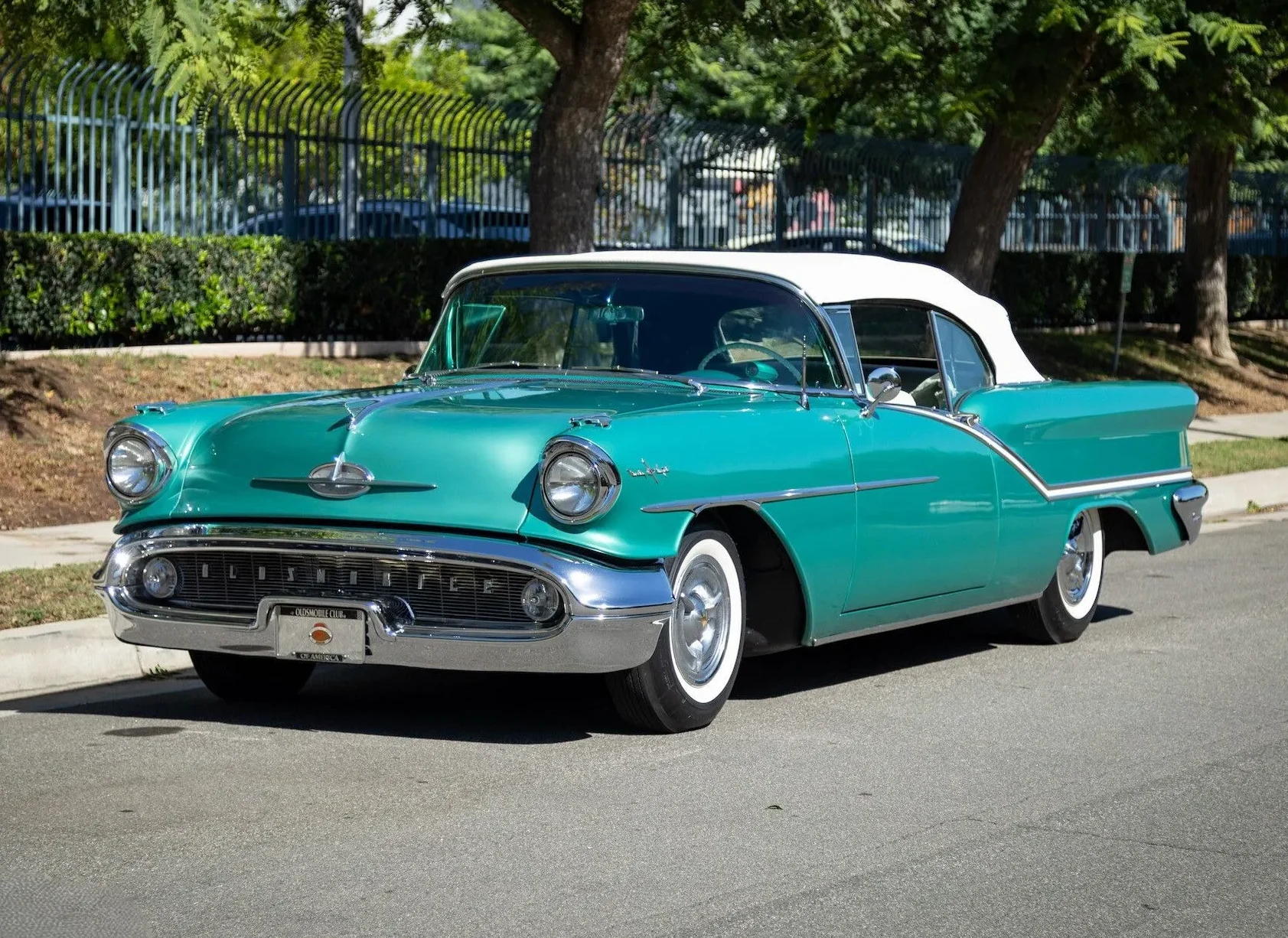
It’s a fact of life that each generation celebrates the goods that they remember from their youth, so it’s melancholy but not unexpected that collector cars from the 1930s to the 1950s have begun their inevitable decline in popularity. But don’t throw dirt on the grave just yet, because nice versions of flashy examples of 1950s cars are still bringing in some impressive bids at the auction sites; for example, this 1957 Oldsmobile Starfire 88 Convertible was bid up to $70,000-plus on Hemmings Auctions, but it didn’t meet reserve. It’s a one-time AACA award winner located at West Coast Classics in Torrance, California, and it’s now listed with a price tag of $89,250.
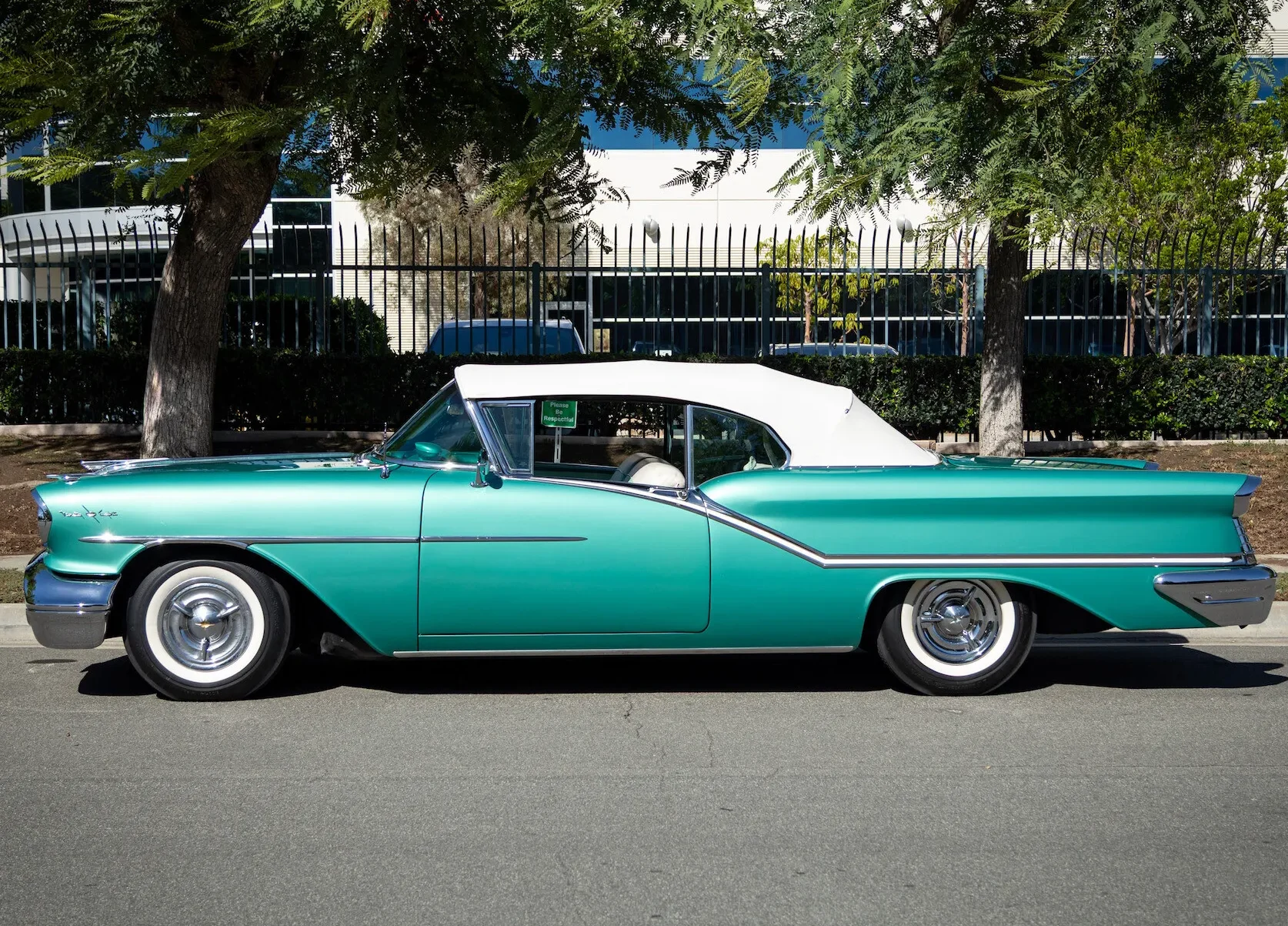
It’s unsurprising that if any 1950s car were to maintain its value, it would be a fancy convertible, especially one in an alluring color combination such as Jade Mist Iridescent and Alcan White. And while some 1957 Oldsmobiles began to show signs that Harley Earl missed the mark a bit, hardly anyone could look at this long, low Starfire 98 and think it’s an unattractive car. By the way, the name itself, Starfire 98, was given to all models in the 98 line for 1957.
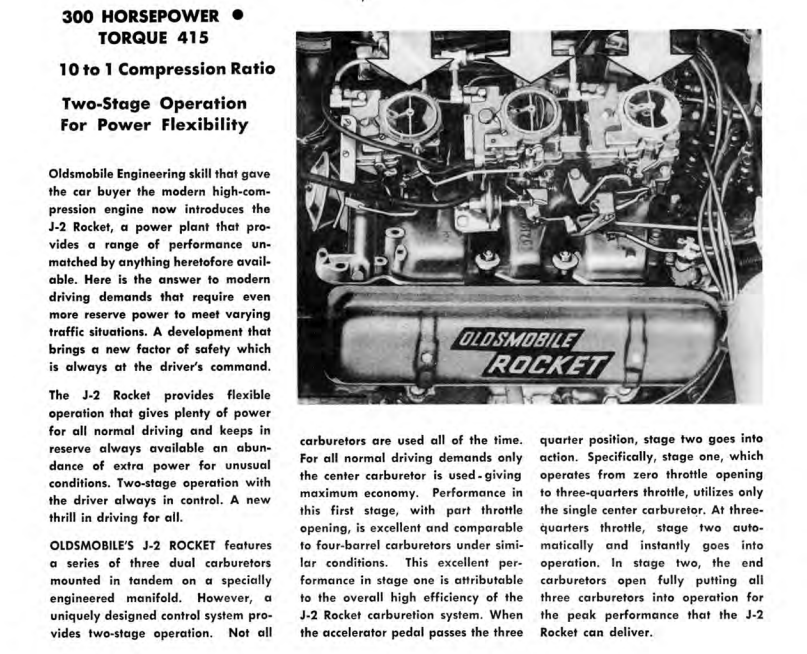
Another reason for this 98’s staying power is its engine, a 300-horsepower 371 with the newly optional “J-2” package, which was a deal at just $83. For comparison, the Jetaway Hydra-Matic, which most Oldsmobiles were ordered with, was a $215 option on lower-line models (but was standard on the 98).
The J-2 (and all Starfire 98s) had dual exhausts, which increased the engine’s power to the rear wheels. The extra gross horsepower came from a fairly straightforward three-two-barrel carburetor setup that increased the 371’s rating by 23 over the standard four-barrel engine while operating on the center two-barrel in most driving situations.
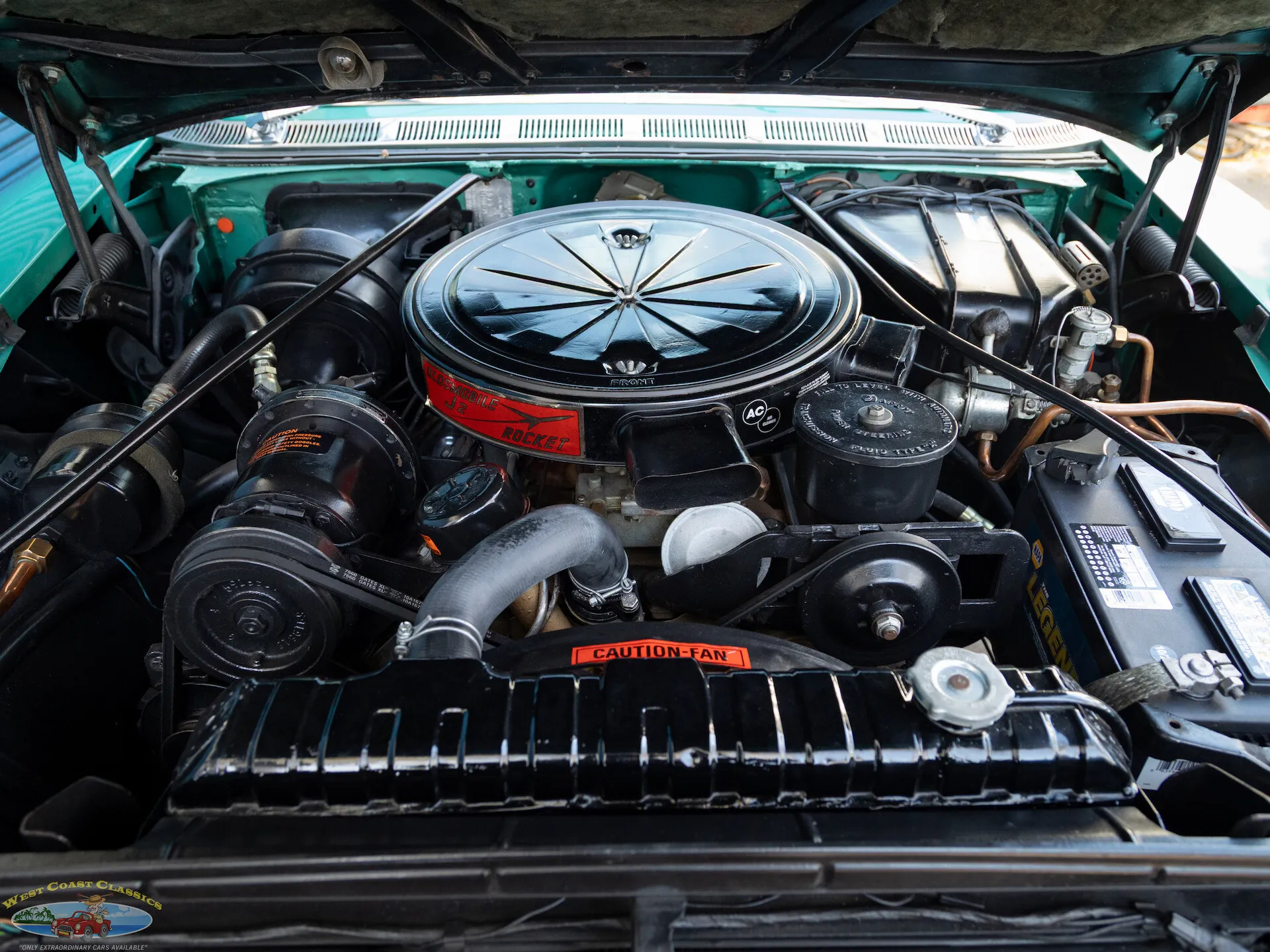
This J-2 was also ordered with the $430 air conditioning system, but most luxury equipment was standard on the Starfire 98, including power steering and power brakes. Aside from the stickers on the air cleaner and three wing nuts holding it on, you’d be hard pressed to tell that this is a J-2 car. For a big 1950s Oldsmobile, maintenance room looks tight under the hood, which is an indictment of the car’s power options rather than its packaging.
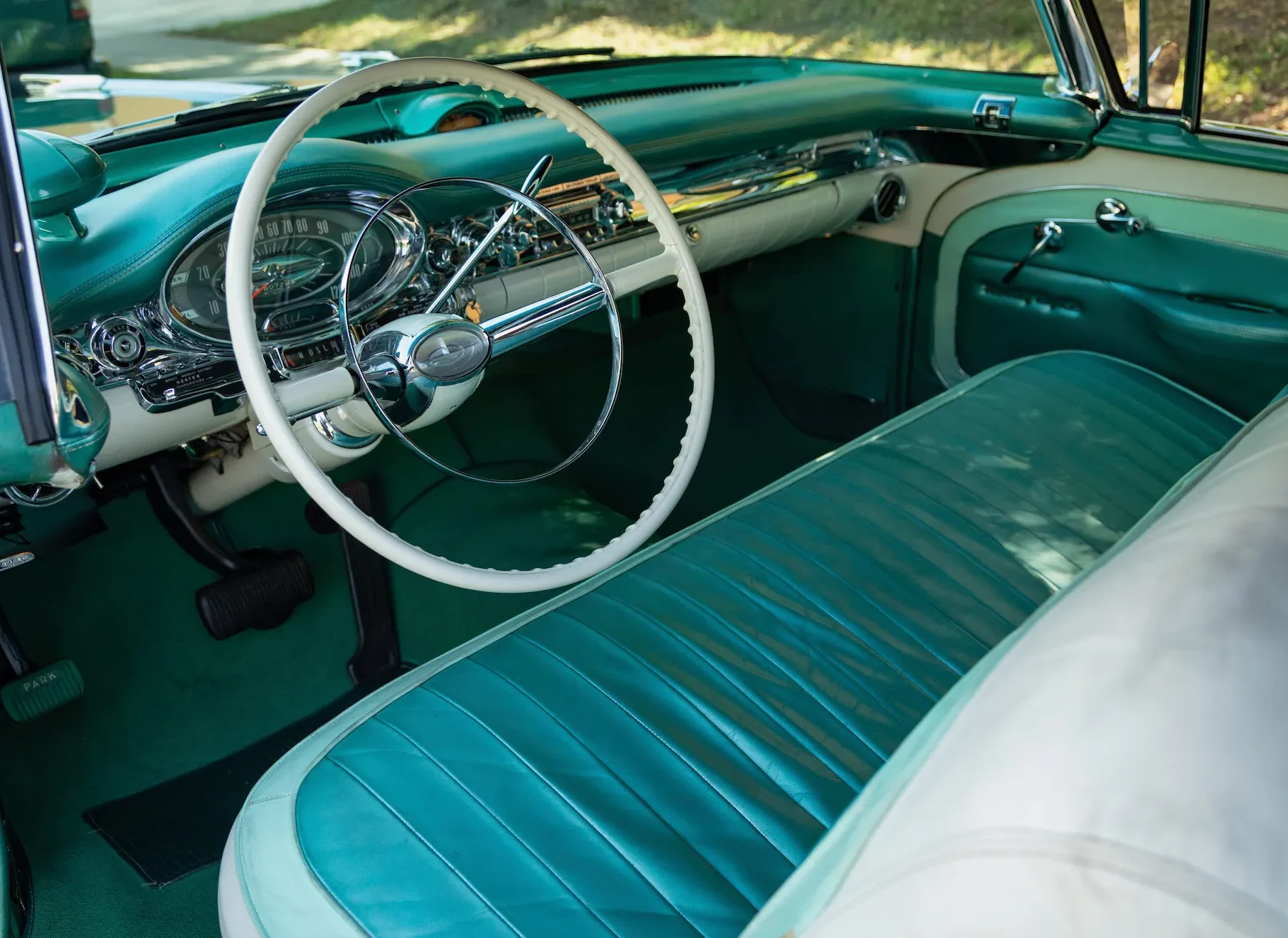
If anything looks aged on the Oldsmobile, it’s the upholstery, which is showing signs of wear, but aside from that, the interior is standard 1957 Oldsmobile, which is not standard at all. There’s enough bright trim to cause problems on sunny days, and this one has a power seat, power windows (which were standard), and a power top. For those who are searching for the power window switches, they are located at the corners of the dashboard near the doglegs.
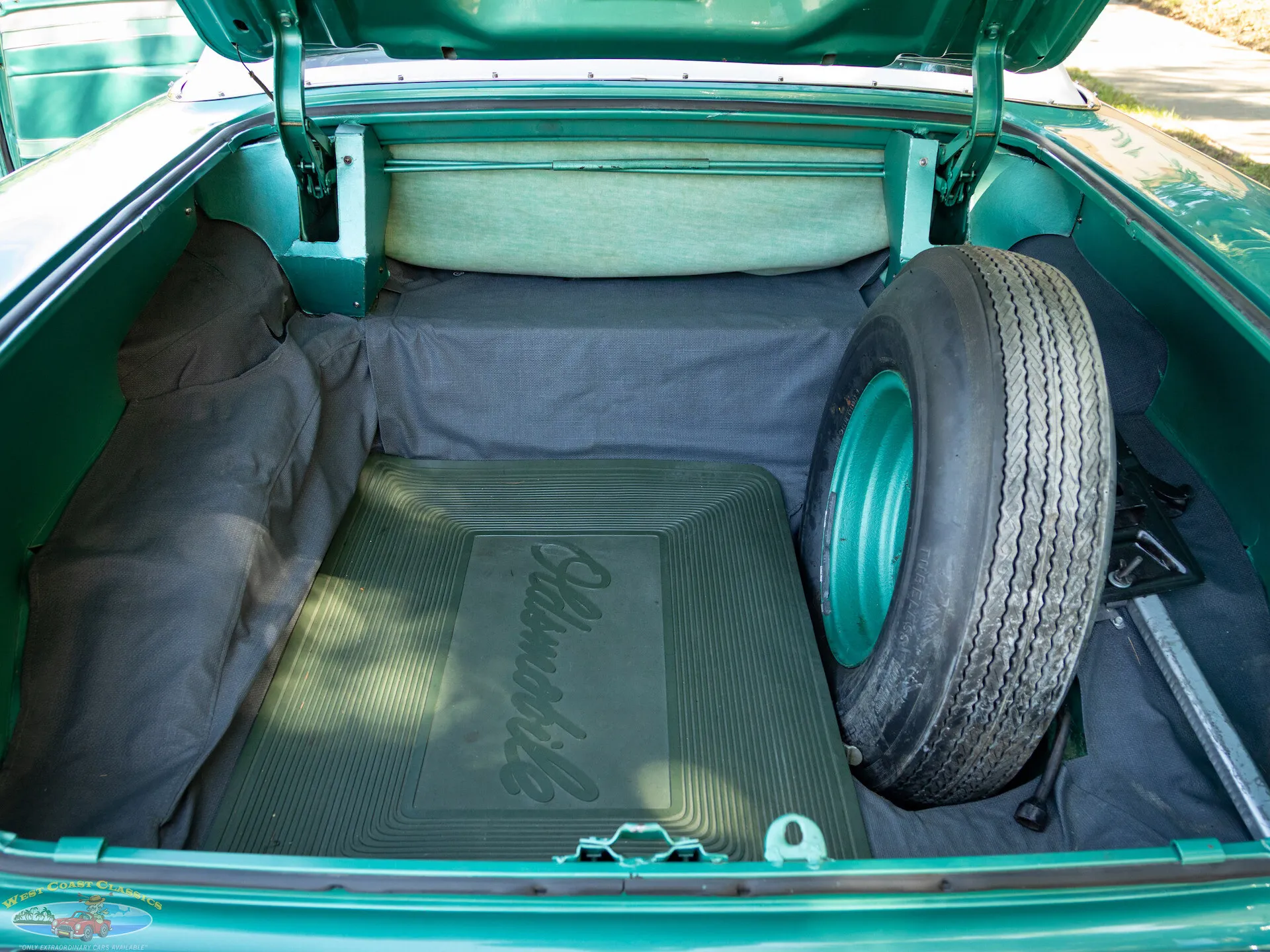
The trunk is trimmed like most luxury GM products of the time period, with a shaped board liner covering the inner quarter panels and hinges.
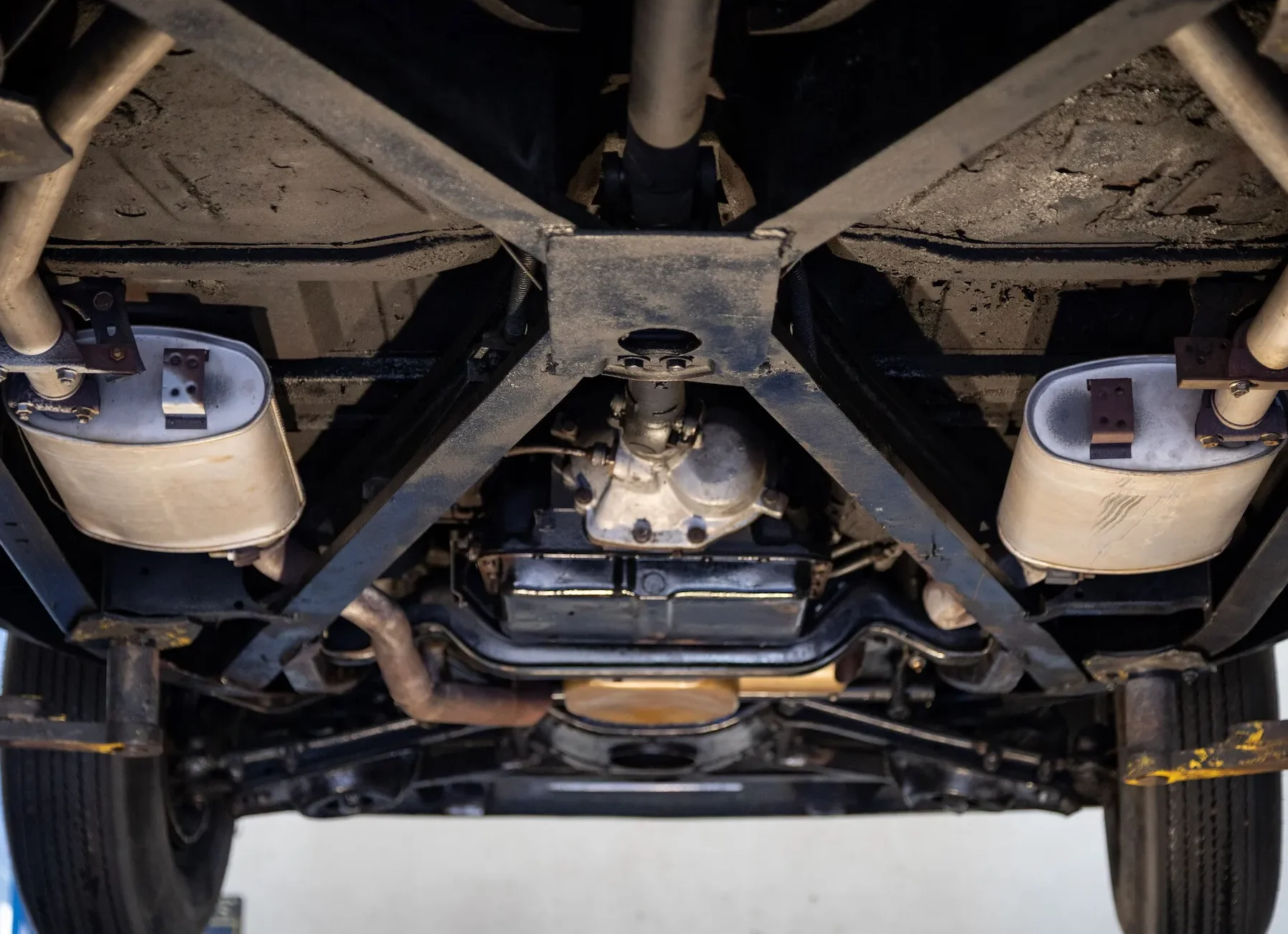
The undercarriage pictures show the beefy X-braced frame, dual exhausts, and Jetaway Hydra-Matic. The undercarriage is certainly no longer show detailed (if it ever was), but it looks clean and solid.
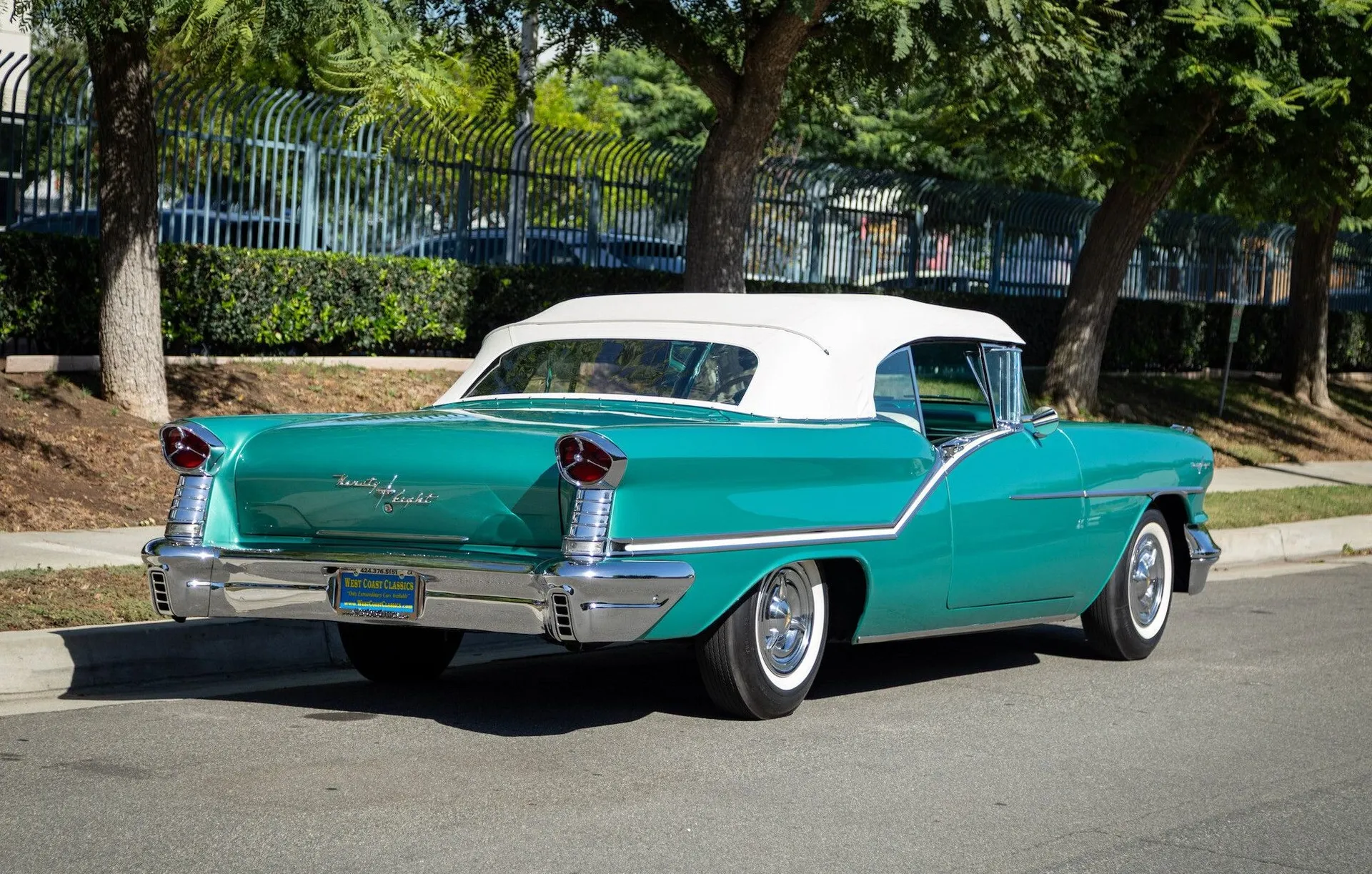
Historically, the Chevrolet has been the 1957 GM car to grab the attention of the public at large, but one look at this Starfire 98 makes one wonder if the public at large missed the mark. The Starfire 98 Convertible was not inexpensive, but it was fairly popular, selling 8,278 units, which made it the most popular convertible in the lineup. Given that the 98 Convertible was over $700 more dear than a comparable Super 88 to start, that may sound surprising, but remember that the 98 came with a nice list of standard features that were optional on other lines. And with an extra four inches of wheelbase and eight inches of length, it just looks right, which has helped to keep the Starfire 98 popular even when some other 1950s cars are cooling off.
Related Reading
Car Show Classic: 1957 Oldsmobile Super 88 – Pressed In A Book (by me)
Auction Capsule: 1957 Oldsmobile Ninety-Eight Convertible – For 57 Years, A Fair-Weather Ride (by Jim Grey)
1957–1958 Oldsmobile J-2 Engine: Similar To Pontiac Tri-Power, It Was Developed First (by Aaron Severson)























I had never noticed how much lower the tops of the side windows are than the top of the windshield in these cars. The first two photos make this hard to miss, and is something I will never be able to un-see in these.
There is certainly life in this segment of the market for a really nice car, but it is worth noticing that this one has not yet sold. I wonder if the owner will eventually regret not taking the $70k.
That raised windshield line went on for some years at most of the manufacturers. I’m looking at a 1962 Super 88, which still has a residual dogleg to the base of the screen, and a noticeably arched top to the while windshield.
When I wrote this up, it was going for $61,000, which I thought was a decent price given the tiredish upholstery and the undetailed undercarriage. Later, the high bid was $70,000, which was even better, but $89,250? I agree that they should have taken the 70 large.
wow even as a little kid I thought the ’57 Olds was sharp, the same year Buick not so much. I believe the J2 carb linkage was all mechanical. Olds reprised the linkage on the 442 for 1966.
Just read an article the other day on a financial website talking about the decline in value of cars of this era and the rise in value of 80’s and 90’s cars.
If I had disposable income a car like this would be what I would want. The appeal of 750+ hp modern muscle cars is lost on me. Where can you drive the things without endangering your life or more importantly someone elses life, let alone the danger to your drivers license. Give me style and sound and like the lowriders say, low and slow cruising.
Nope, it was vacuum-controlled.
I simply don’t get muscle cars. Where I live, we have speed limits, so you can’t drive your 750 hp car anywhere near its limits or you will go to jail. My VW Golf makes 242 hp with its performance tune, but I rarely ever use it because the traffic is too bad where I live.
Same issue over here the second turbo scroll rarely can be or needs to be activated on my car, too many cops and cameras about to open it up,
! “clean and solid” ?! I can see holes rusted through in the floor pans, no wonder this one didn’t make it’s absurd reserve .
The color is sharp but this is yet another car that’s not what it appears to be .
-Nate
I’ll never know without looking underneath, but I wonder if those are holes or just flaking undercoating. For some reason, dealers sometimes seem to spray a coat underneath their cars to balance out the color or to cover up surface rust so it looks better on film. If there are holes there, that does cast doubt on the entire car. Luckily, my price range is about a sixth of this car. 🙂
Importing that car to NZ means the underside would require blasting it clean to pass compliance and any non factory welding investigated, tales of woe about old used car imports abound but that looks like a recoat of old underseal I recently recoated my estate and it looks similar underneath now.
I had a gold ’57 Super 88 convert and Rose mist & white ’56 Super 88 convert back in the ’80s in my vintage car flipping days, and founder of an OCA Chapter. A good friend has/had a white with white/gray/black leather interior ’57 Starfire 98 convert in 98% show condition. It was valued at around $125k 10-15 years ago, no J2 or a/c. Values have dropped but to my eye still the best GM car for ’57. Dan’s 98 is now at the Northeast Classic Car Museum in Norwich NY.
I should have kept my 1957 Olds 98 Starfire hardtop forever… and never wasted money on another car…
The previous owner had souped it up for racing and it would go about 140+ MPH… single 4 bbl. but faster than the tripower ones…
I like the look of the 1957 model much better than the 1958. The basic design is quite attractive and slavering all that chrome on it didn’t make it look any better in my opinion. This is a very nice car, but that reserve price is pretty absurd. The market for 50’s cars isn’t that strong.
Being a “halo” car from the fifty’s is what sets this apart. remove it from the equation and yes the fifty’s are failing off the radar quickly. I go to two Cars & Coffees. They draw from the Danville, Blackhawk, Alamo, Lafayette, Moraga, and Orinda area of Contra Costa meaning money. Most of the cars owned by men 70 and above so the cars are heavily concentrated between 1965-72 pony car category. If a full size car or wagon shows up it is almost always mine or my friend’s 65 Catalina
. Trucks being the early 50’s Chevy 3100. Maybe a 64 C10 now and then, my 65 F100, and an early 70’s F100. Upper 70’s to 80’s men will see some British sports cars from the 50’s and early 60’s.
The under 45 crowd brings cars that are relatively new such as 10 years old or younger. They happen to be Porsche and Corvette. Gads, so many newer Corvettes!. Of course, a few 70+ year olds try to roll back time by driving a newer Corvette also.
As to the fifty’s it would be most likely the Tri-Five of course. I have seen two 53 Buicks and one 56 Olds this last year and that is it for that decade. Thirty’s and forty’s are rare. John, our 46 Dodge Panel van guy can bring a 37 Dodge truck, 37 or 38 Packard, and a 41 Chevrolet which are his daily drivers. I kid you not but he is different. Any other thirty’s car is always driven in by someone in their 80’s.So 40’s, 50’s, and full size cars are very rare and money is not an issue. There comes a point where generations move on and the older market disappears and dies. My antique friend saw his market dry up totally by 2010 as old European antiques lost their desirability out here and his wife was stuck with trying to liquidate them.
Going to the local cars n coffee I can almost guarantee mine will be the only one of its make and body style there, very few have survived, most old wagons were beaten to death years ago the sedans survived in better numbers due to less utility value, but the market for old cars has crashed nobody is buying anything even VWs dont sell for good coin now, a mate created an immaculate 63 Beetle he cant sell.