
On a recent trip to San Diego, I found myself with about three days to fill while my wife attended a national conference. Fortunately, nearby Balboa Park has a multitude of museums, and one in particular was right up my alley. Housed in a picturesque historic building, the San Diego Automotive Museum may be relatively small, but it offers an interesting collection of automobiles and vintage motorcycles spanning more than a century of motoring history. I particularly enjoyed its selection of Art Deco-era cars, and came away having discovered a few fascinating local automotive legends as well. Some of the museum’s information cards, however, left a little to be desired, but we’ll correct those along the way. Let’s get going.
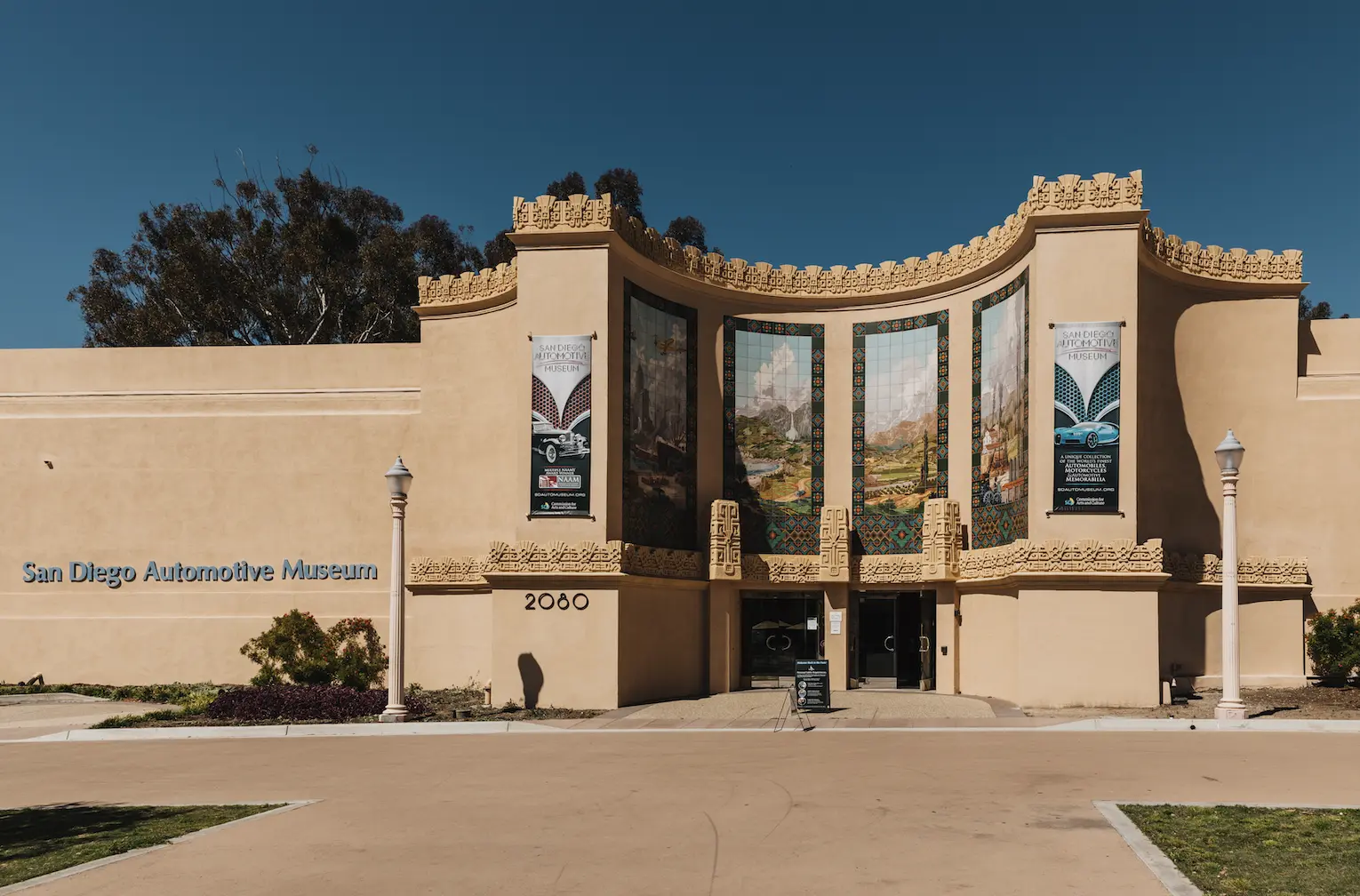
Tucked inside San Diego’s historic Balboa Park, the San Diego Automotive Museum occupies a landmark that predates most of the collector cars parked within its walls. Originally constructed as the California State Building for the 1935–1936 California Pacific International Exposition and designed by architect Richard Requa, the Art Deco structure—accented with pre-Columbian-inspired ornamentation—sat as a civic centerpiece long before it opened its doors as an automotive museum in 1988, following an initial concept championed by famed racer and collector Briggs Cunningham. Today, the nonprofit institution curates a rotating collection of vintage automobiles and motorcycles that traces more than a century of mechanical evolution, styling, and Southern California car culture.
Besides a major-league sports team and a state fair – we get together with all the other New England states in Agawam, Massachusetts for the Eastern States Exposition, a.k.a “The Big E” – one of the things Connecticut is missing is an automotive museum. Even though Mike Scheidel has been trying to launch the New England Auto Museum for many, many years now, I’m not entirely confident it will ever become a reality. Therefore, when traveling, I always try to take in an auto museum when I can.
At just 17,000 square feet, the museum is dwarfed by the 135,000 square-foot Petersen Automotive Museum just 132 miles away in Los Angeles, but at $20, tickets are nearly the same price. However, I wasn’t about to drive to L.A. for the day (although I really, really wanted to), so this museum would have to do. Was it worth it?
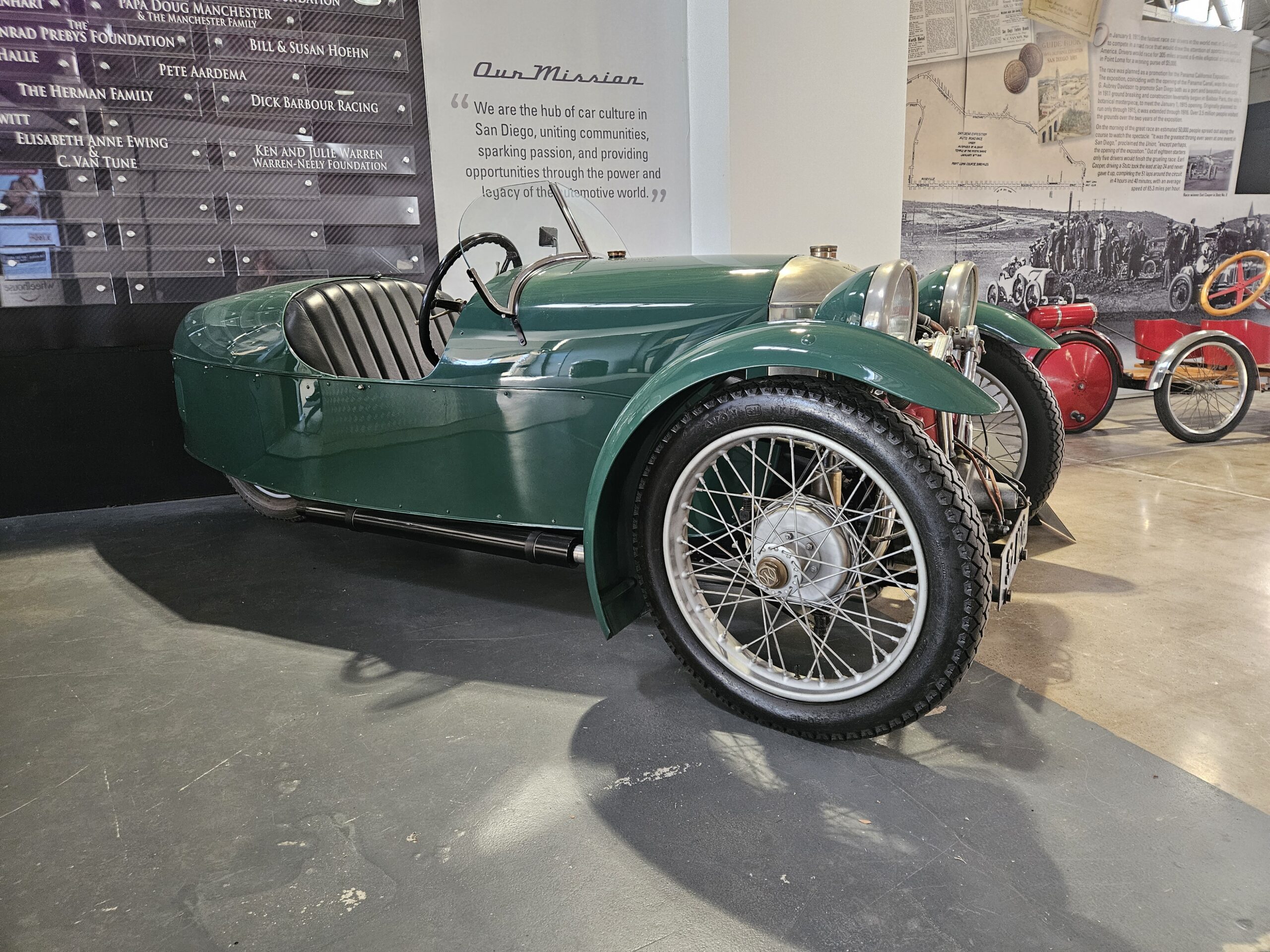
Upon entering the museum, you’re greeted by this strange creature – a 1932 Morgan Super Sports three-wheeler.
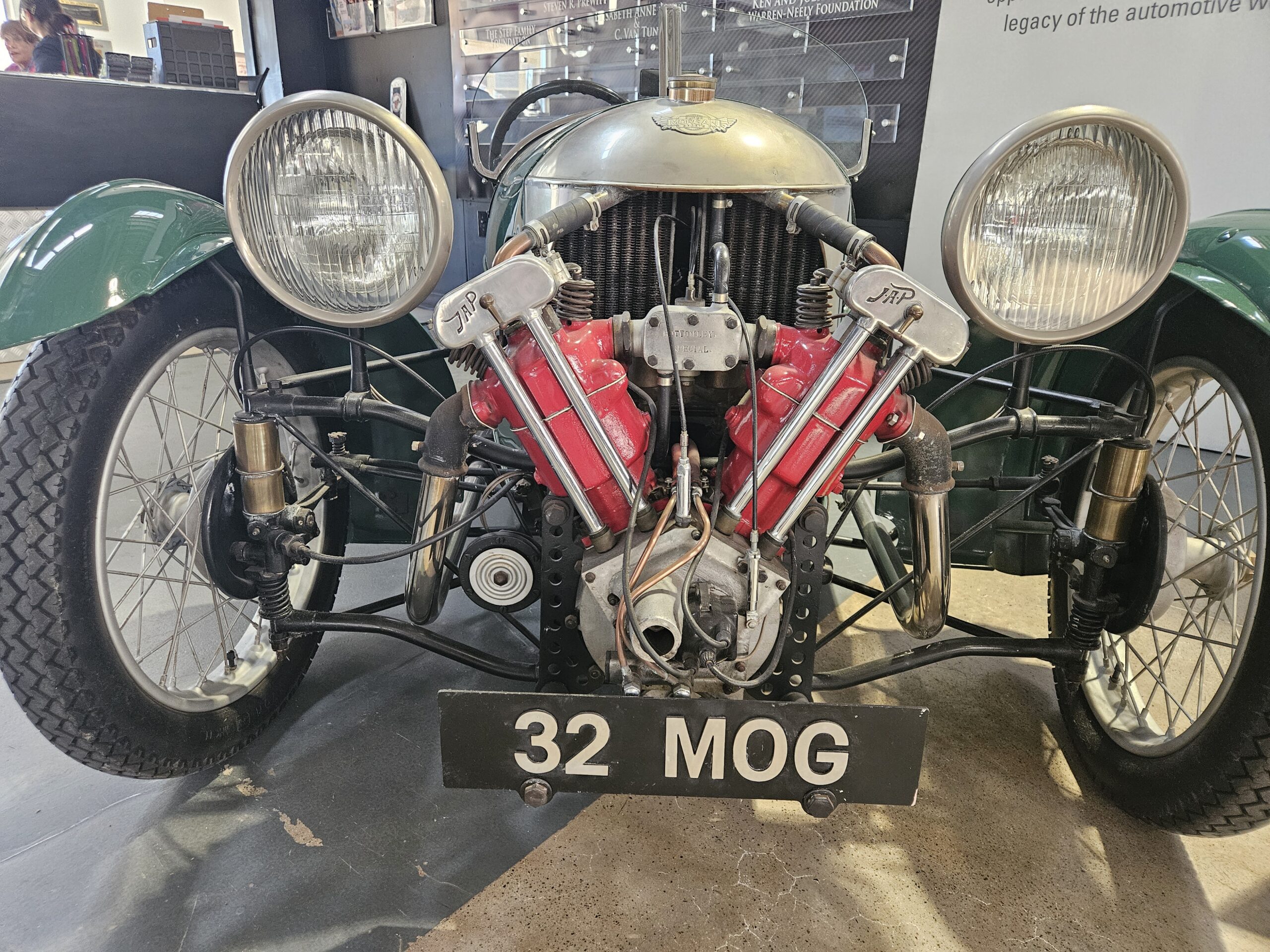
This Morgan is resplendent in its Art Deco bodywork, single rear wheel, innovative independent front suspension and V-Twin JAP (J. A. Prestwich and Company) engine mounted in front of the radiator. So far, I’m liking this museum.
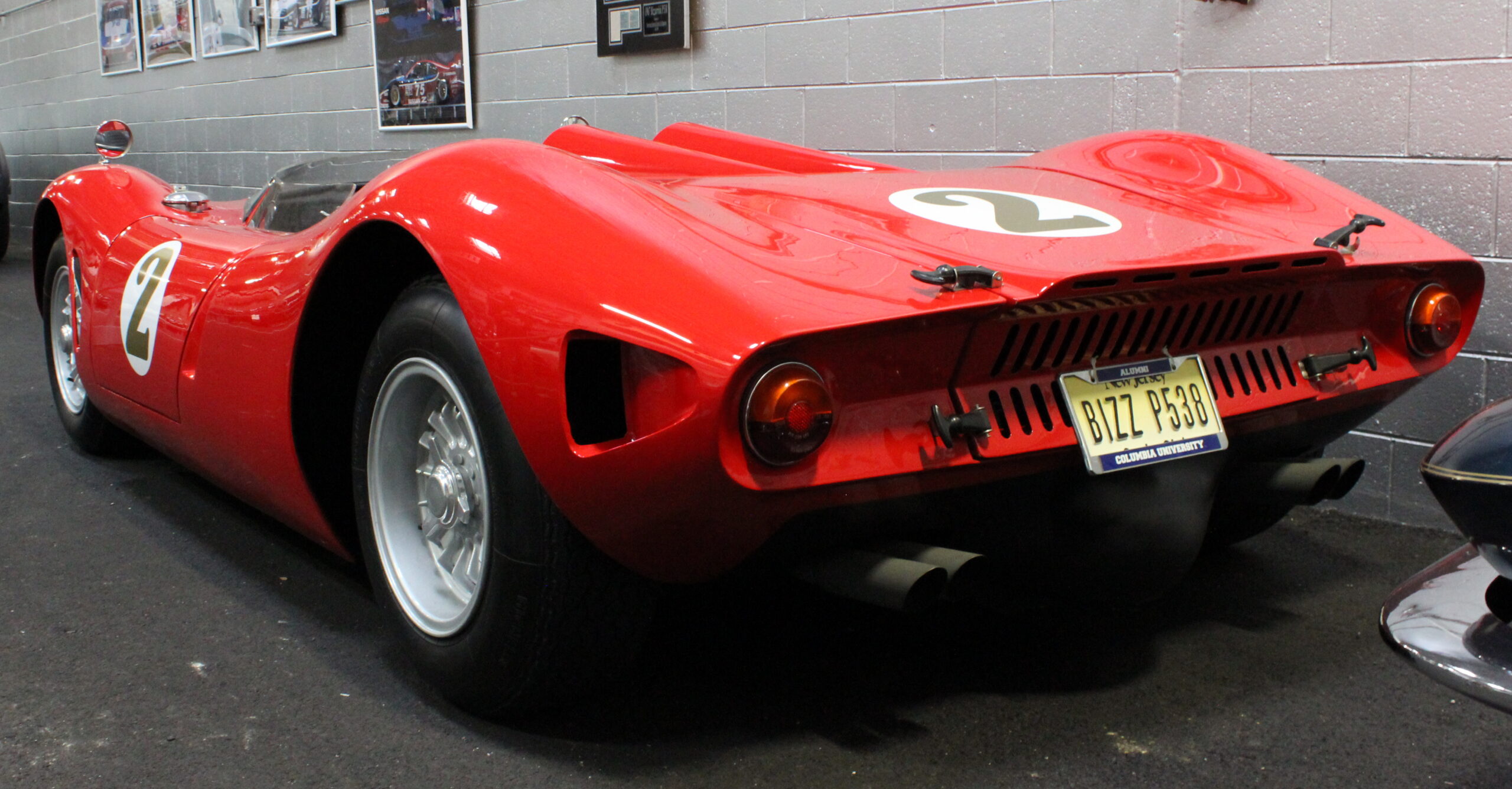
Nearby was one of only three Bizzarrini P538 Spyders ever produced. I stupidly forgot to take a picture of the car itself, but you can click on the picture and read all about it. Wikipedia says its last known location as of 2017 was this museum. I can confirm it’s still there.
The Bizzarrini P538 was a mid-engined sports racing car developed by Italian manufacturer Bizzarrini, founded in 1964 by former Alfa Romeo, Ferrari and Iso engineer Giotto Bizzarrini. Introduced in late 1965 or early 1966, the P538 was built in extremely limited numbers, with just three examples (possibly four) produced originally. A few continuation cars followed in the 1970s-1990s, bringing the total to around seven.
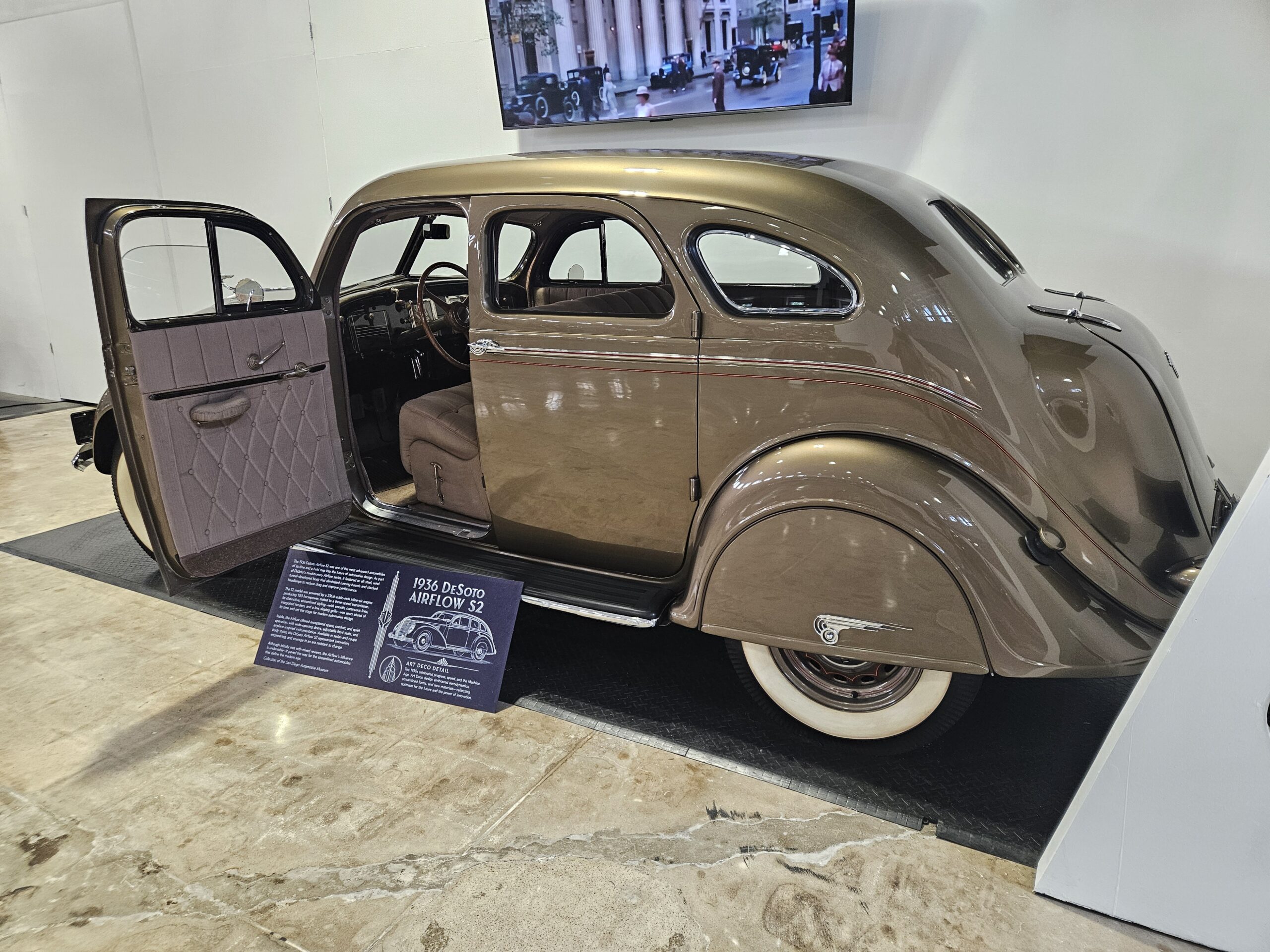
Being a small museum, it must continuously rotate the cars on the floor to keep people coming back. During my visit, the main exhibit was Art Deco: The Machine Age in Motion.
From sweeping curves and polished chrome to elegant details and advanced engineering,
these cars capture a time when automotive design became an expression
of modern luxury and progress.
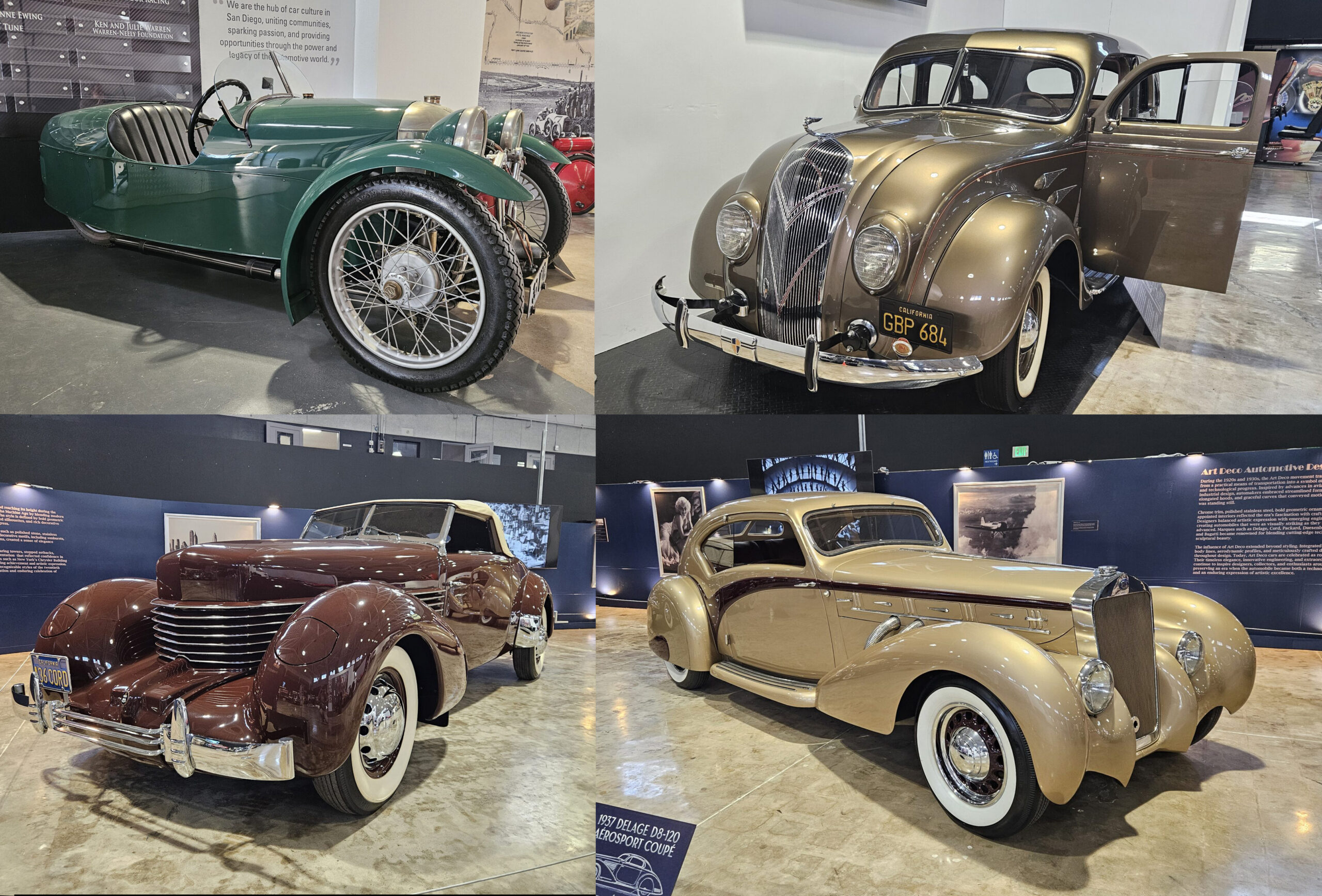
No car says Art Deco better than this final-year 1936 DeSoto Airflow S2.
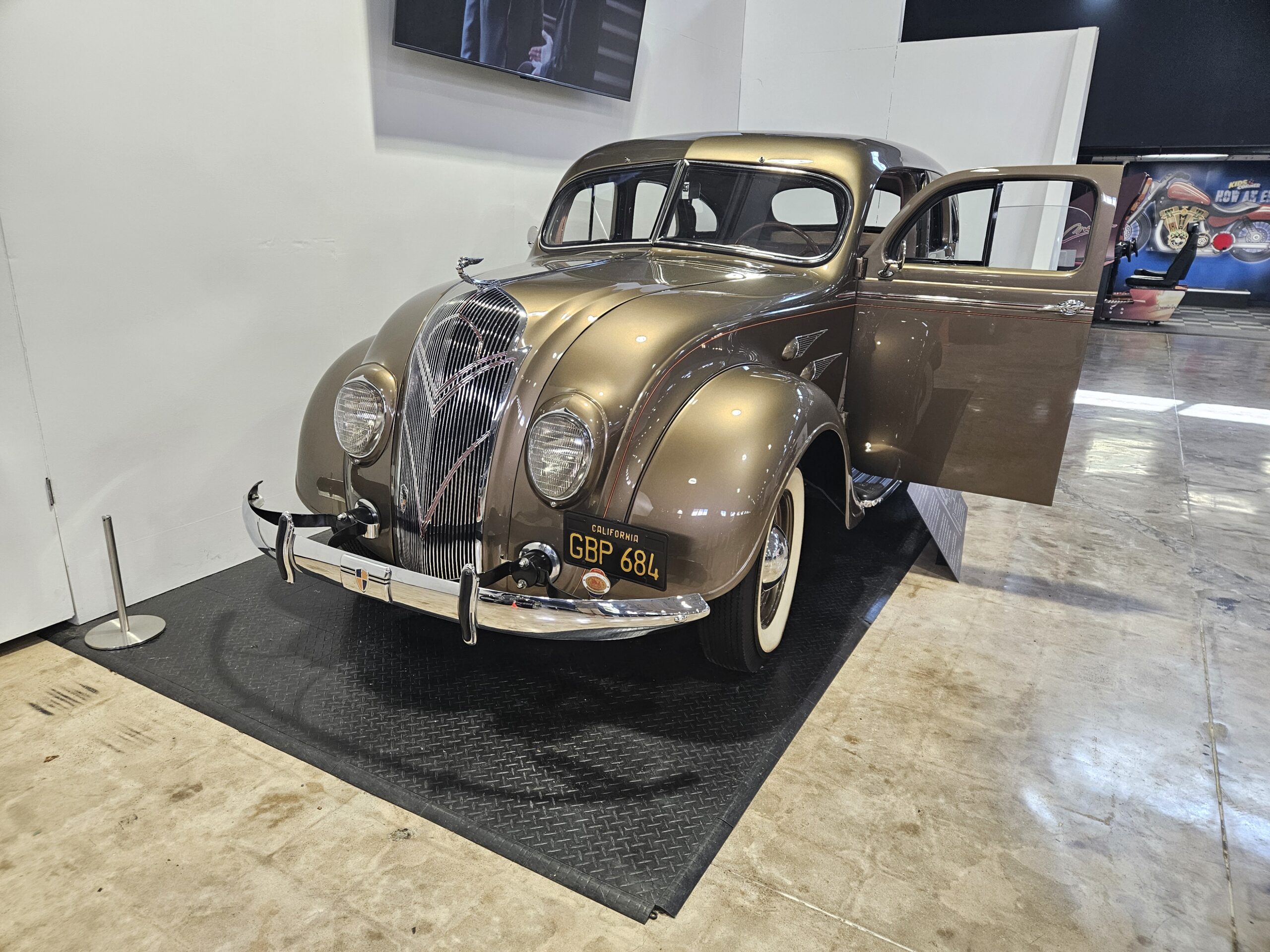
Introduced for the 1934 model year, these Airflows were like a glimpse into the future of automotive design and engineering, much like Chrysler’s LH cars.
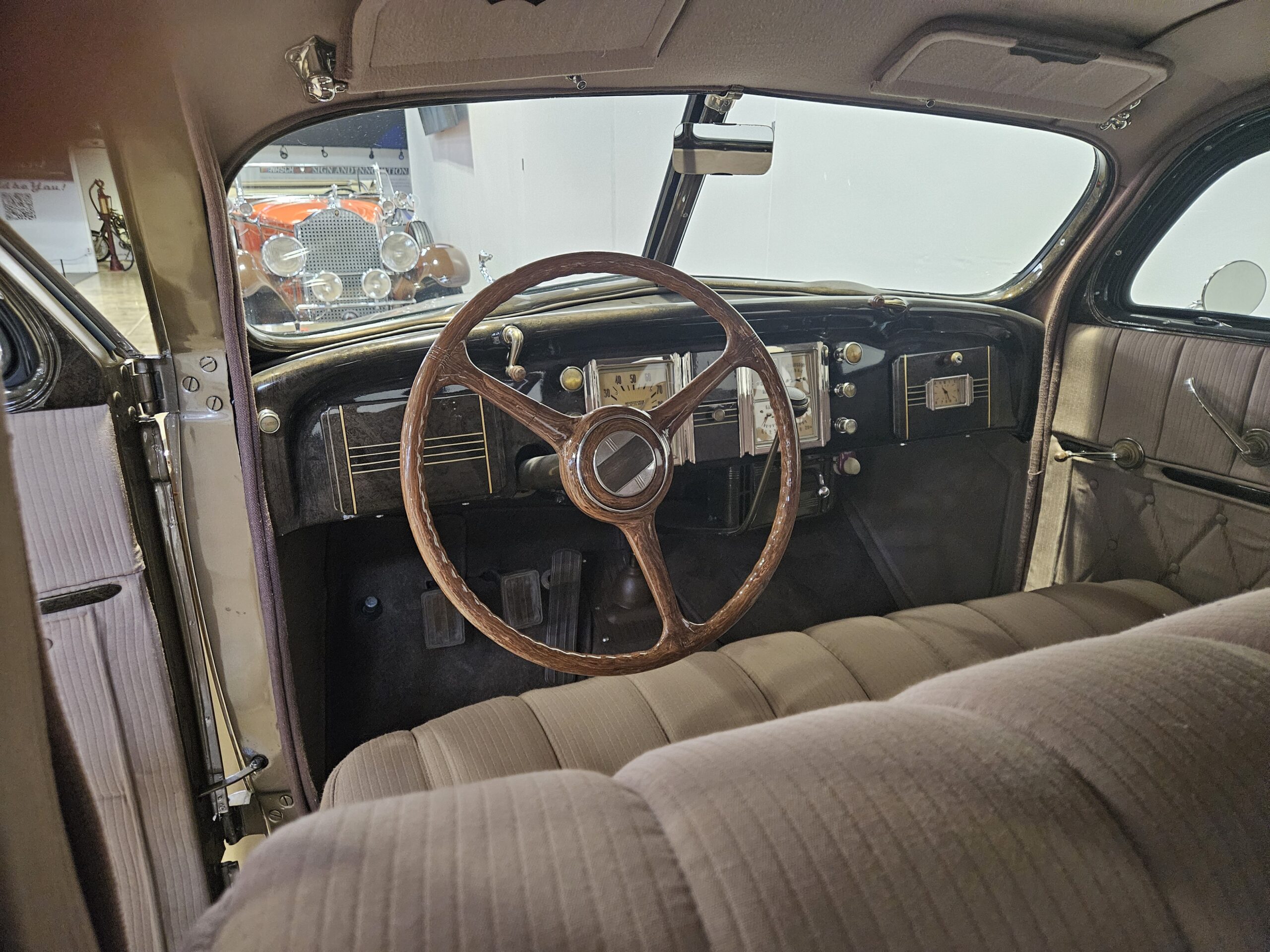
Unlike Chrysler’s LH cars, however, the public wasn’t quite ready for this one and sales of Chrysler and DeSoto vehicles plummeted.
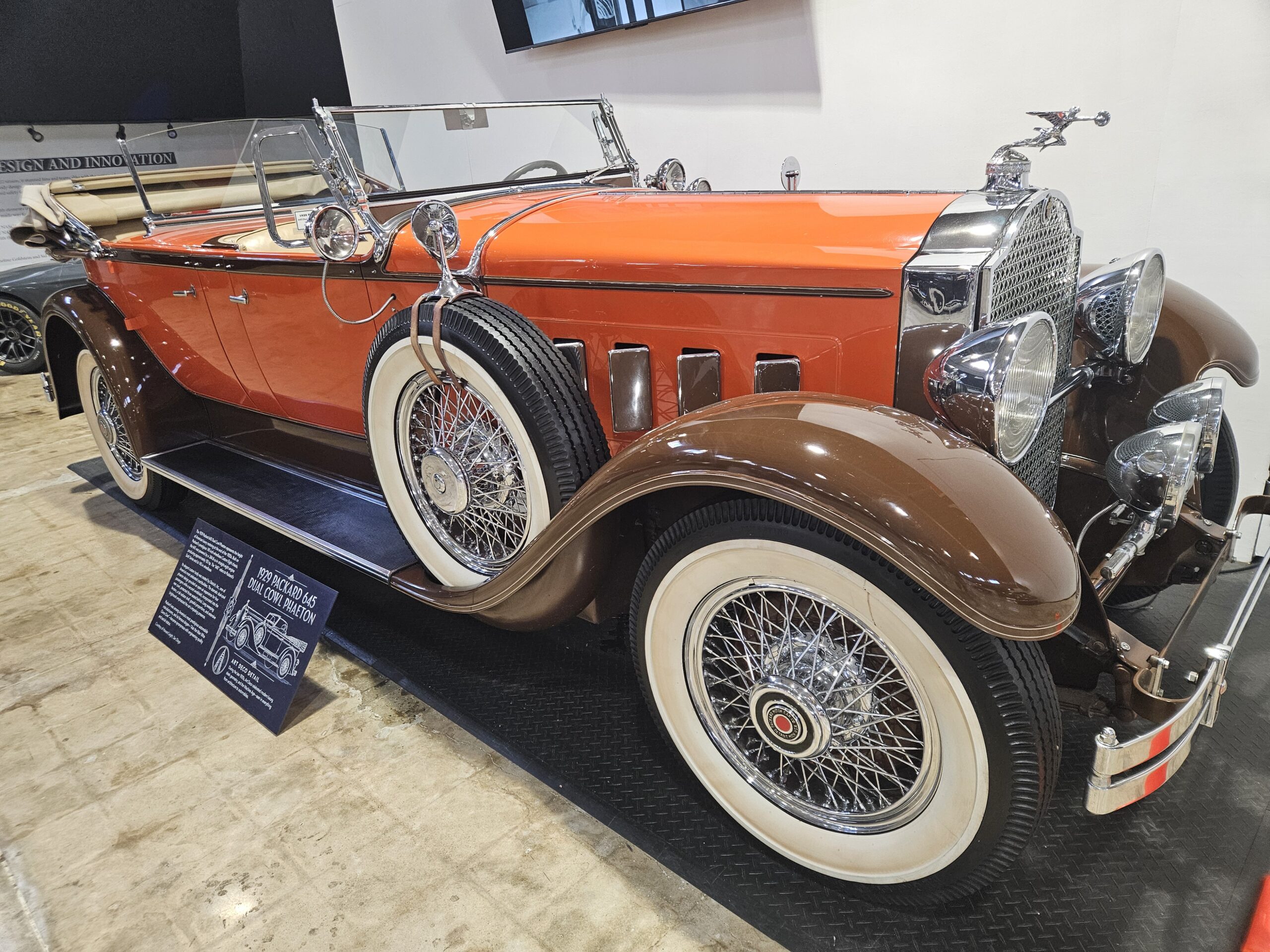
While I personally believe that a Packard from the mid ‘30s with the distinctive Art Deco grille would be a better representation of this period, you cannot deny the appeal of this 1929 645 Dual Cowl Phaeton with a body by Dietrich.
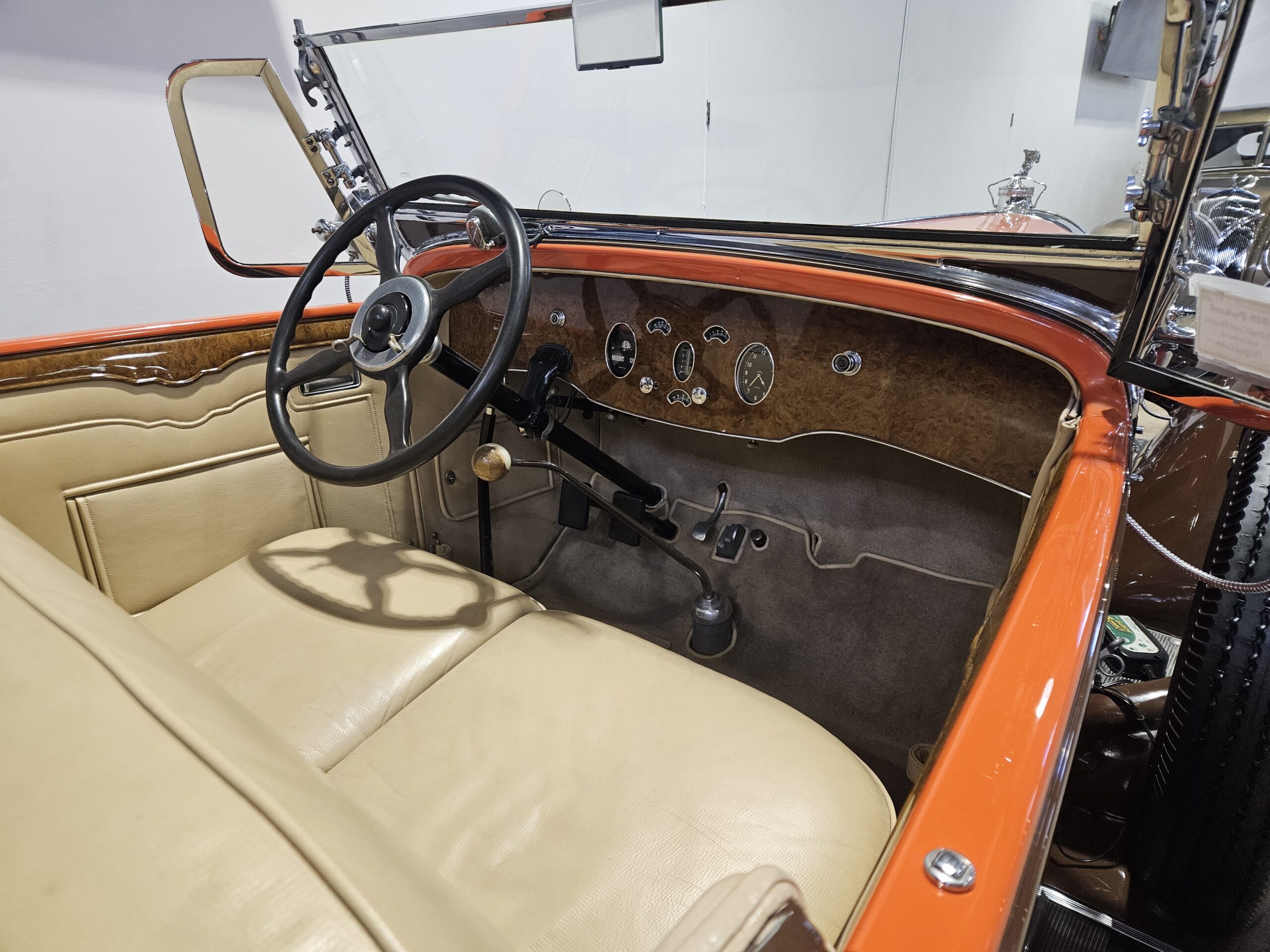
Riding a massive 145-inch wheelbase with an equally massive (for the times) 384.8 cubic-inch straight eight, few cars said I have a lot of money better than this one.
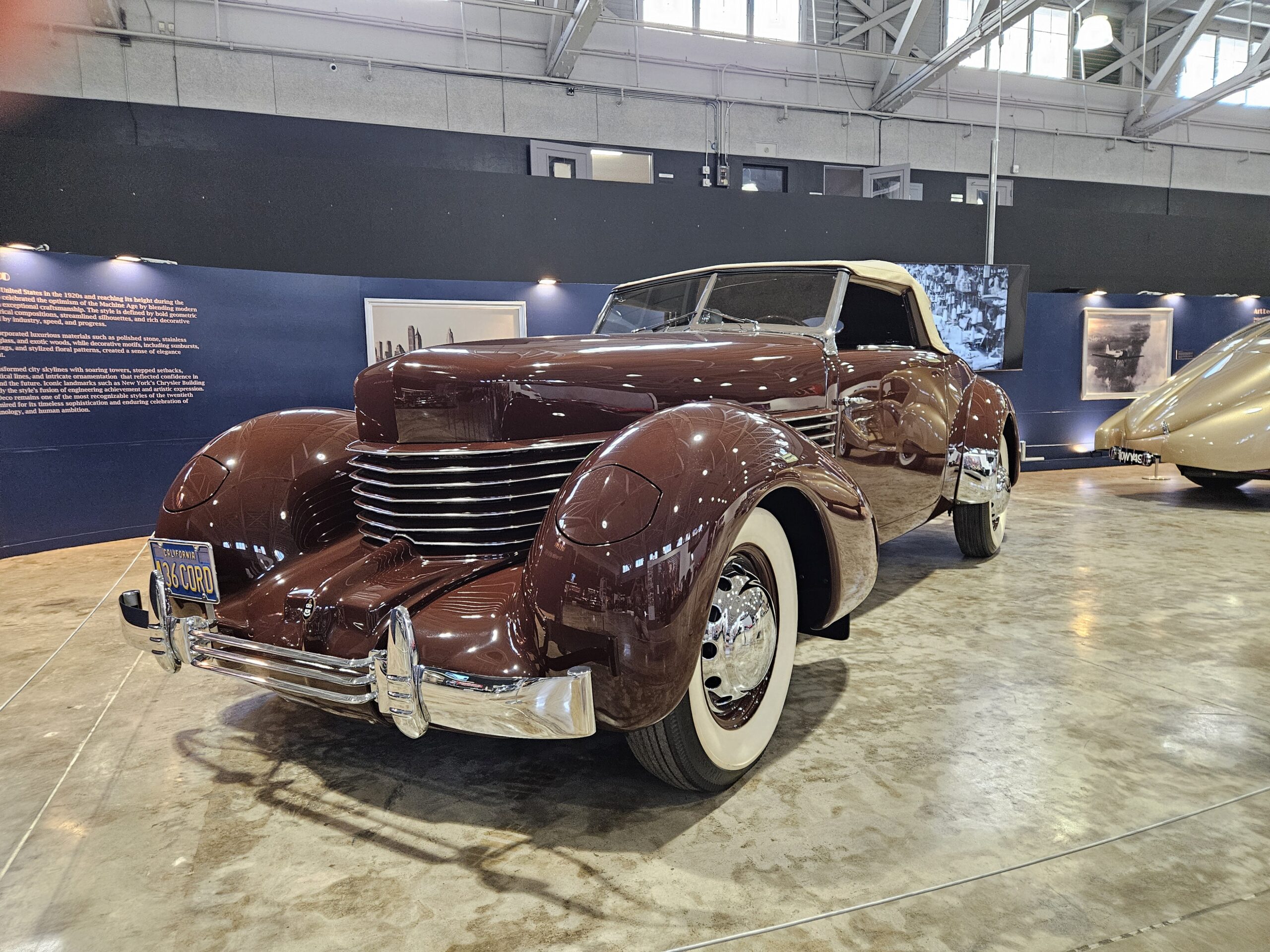
One also cannot talk about Art Deco design without talking about Cord, represented here by this 1936 810 Sportsman. With front-wheel drive, hidden headlamps, no running boards, and unique 289 cubic inch L-head V-8 by Lycoming, the Cord was one of the most innovative cars of this era.
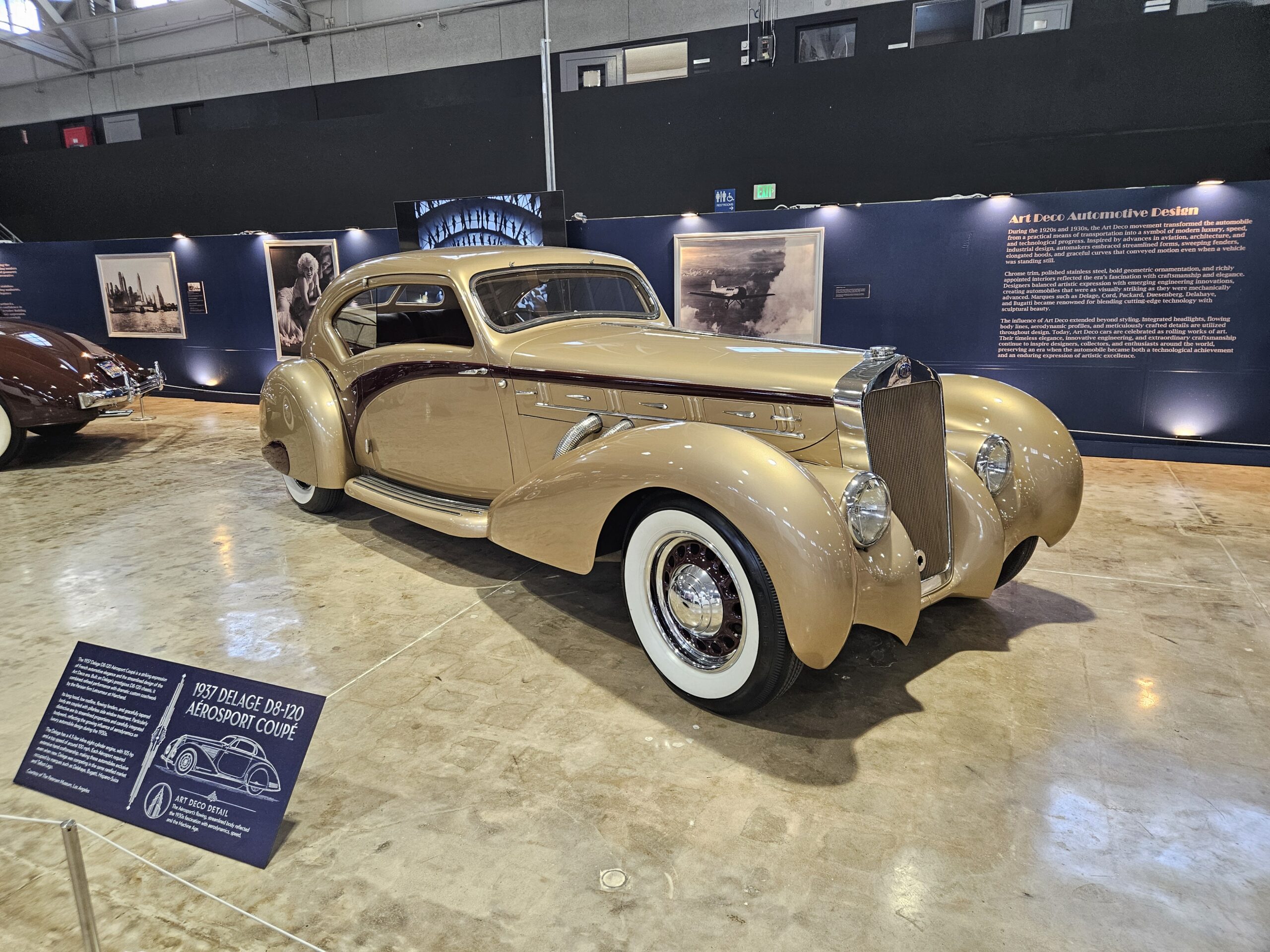
Even more striking than the Cord was this 1937 D8-120 Aerosport Coupe by French automaker Delage with coachwork by Letourneur et Marchand. The pioneering pillarless closed coupe body style predated the 1949 Buick Roadmaster Riviera hardtop by over a decade, and again, served as inspiration for the 1970 Riviera facelift. Speaking of the Petersen, that’s where this particular car was on loan from.
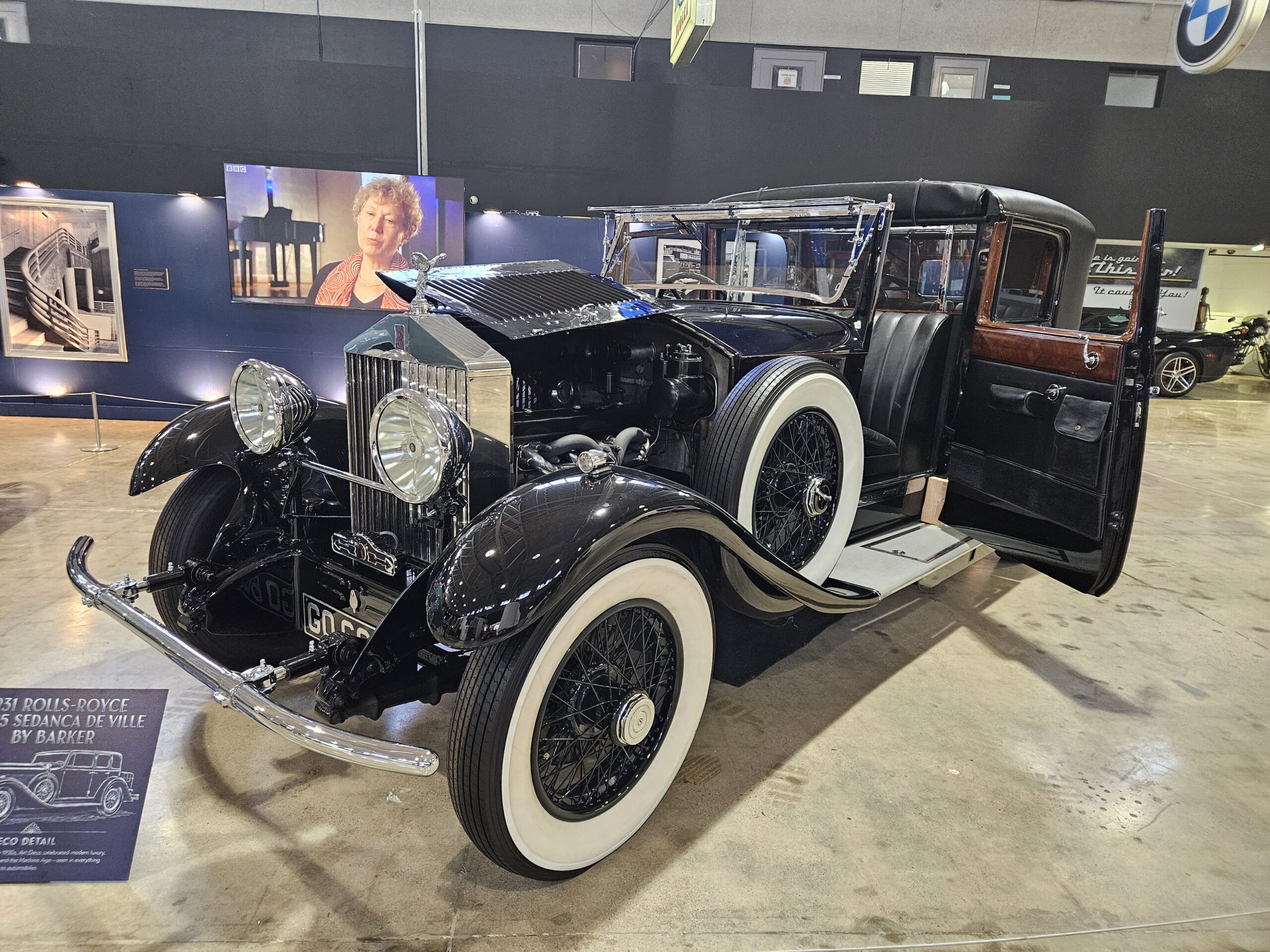
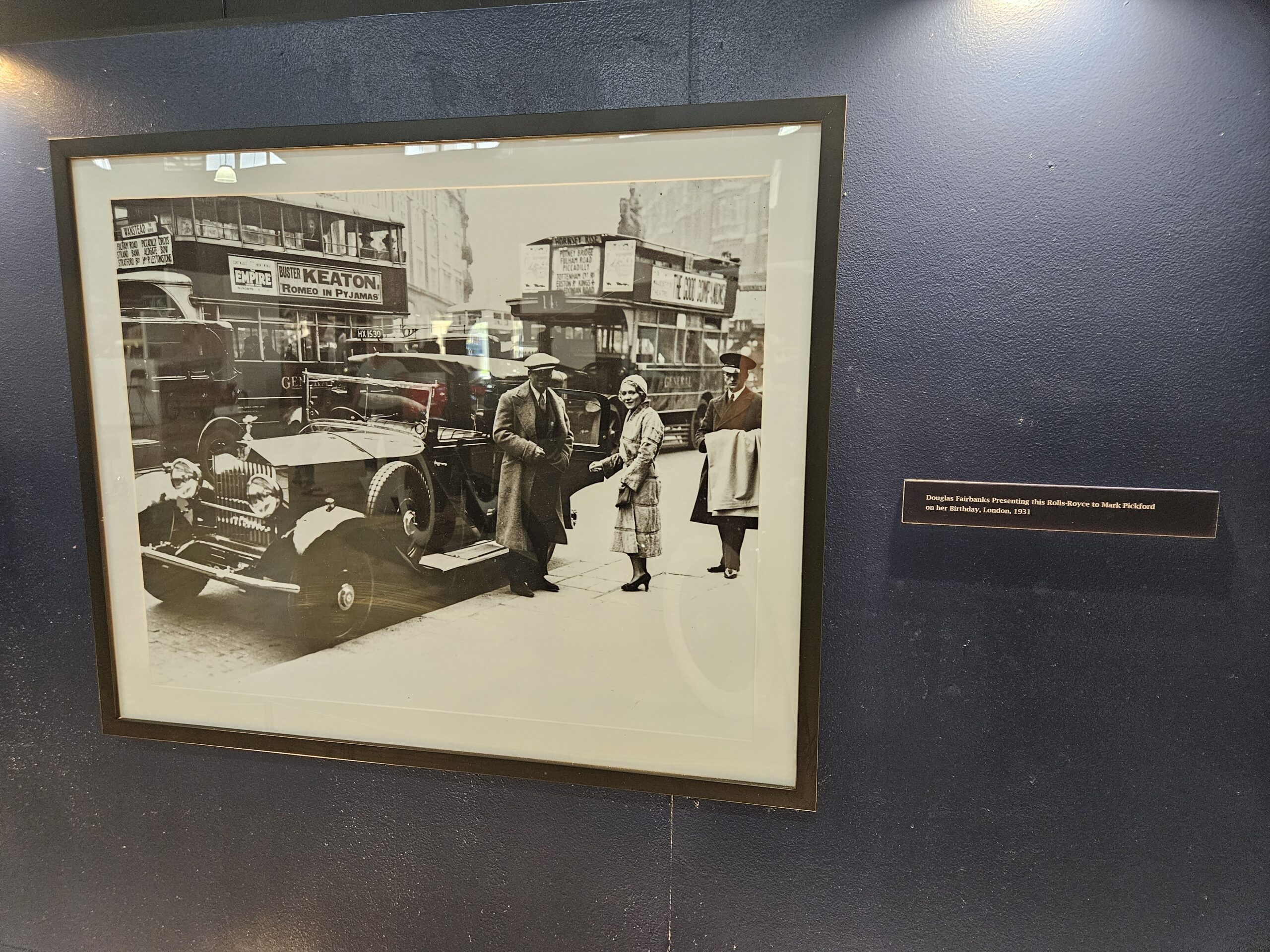
Like the Packard, I don’t find this 1931 Rolls Royce 20/25 Sedanca de Ville (sister of Cruella?) by Barker & Co. reflective of the Art Deco period.
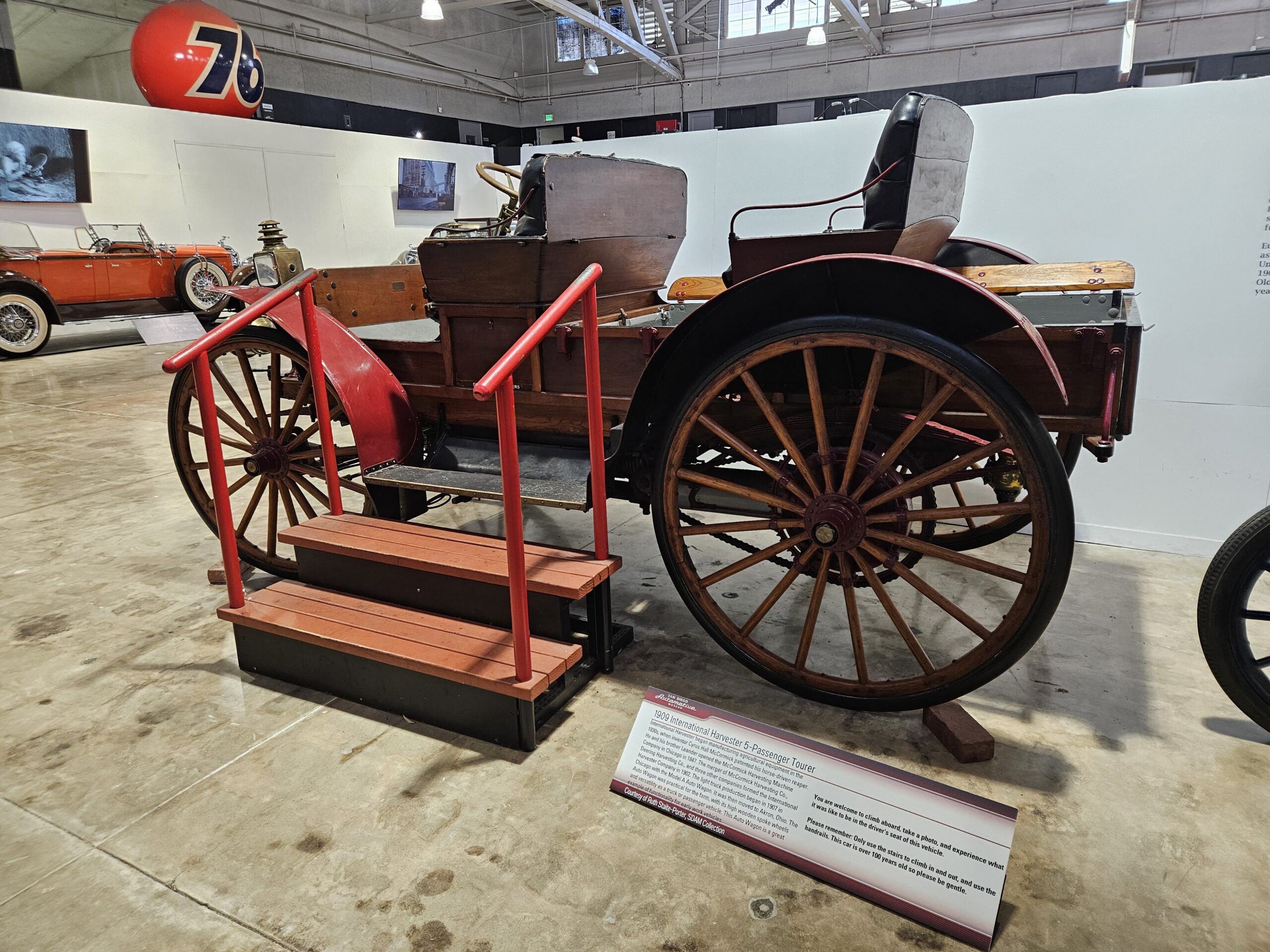
Outside of the Art Deco exhibit are cars that are part of the museum’s permanent collection. This 1909 International Harvester 5-Passenger Tourer is fun because you can sit in it if you like, though the sign does tell you to please be gentle because the car is over 100 years old. My first impression was that it makes the contemporary Model T look modern.
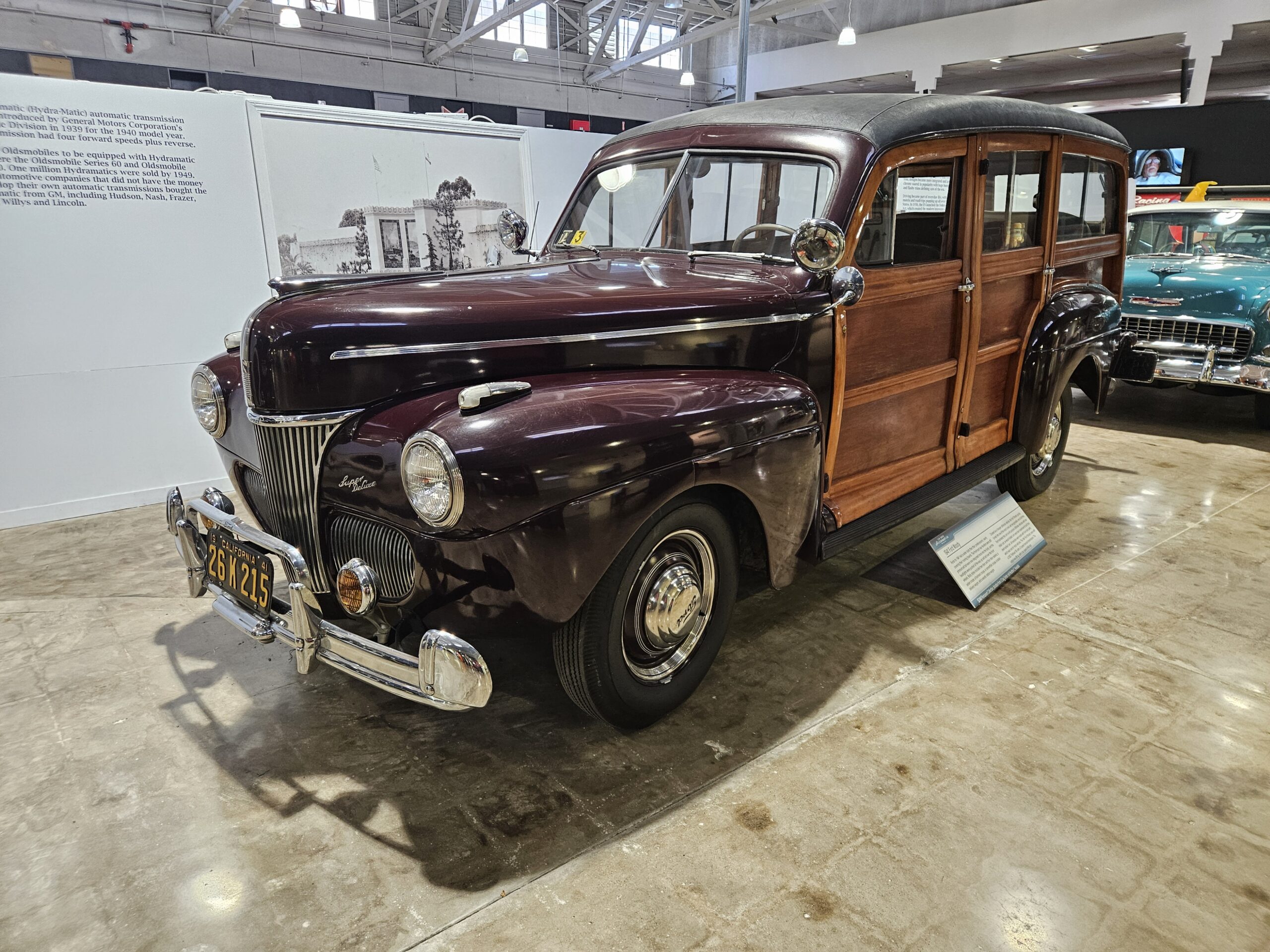
Next up is a particularly sharp 1941 Ford Super DeLuxe V-8 Wagon that the museum inexplicably just calls a 1941 Ford Woody. It also goes on to state that “Ford marketed the cars as all-purpose utilitarian vehicles with low initial cost, as wood-bodied cars were less expensive to build than steel-bodied cars.” The card is mostly wrong: The wood-bodied wagons had much lower tooling costs than a steel-bodied wagon, but they were extremely labor-intensive and materials-intensive to produce, so they were quite expensive to buy and costly to maintain, limiting them mostly to posh commercial users and the wealthy. At $1,013, the Super De Luxe was the most expensive model in the Ford passenger car line that year.
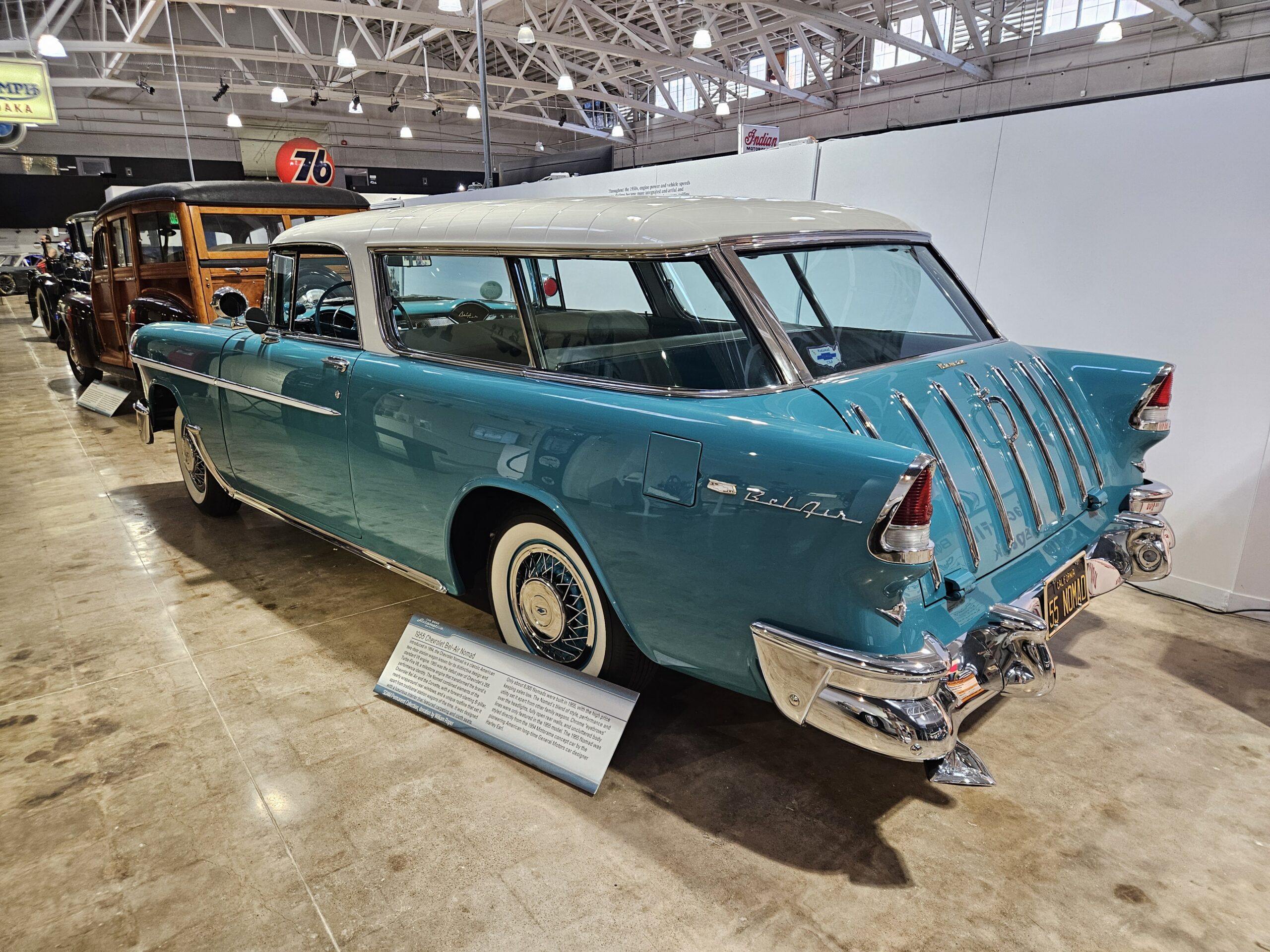
Behind the “Woody” is probably the nicest of the Tri-Five Chevy’s: a 1955 Bel-Air Nomad in Regal Turquoise with a white top. The sign for this one said, “The Nomad combined elements of the Chevrolet Bel-Air and Corvette, with a forward-slanting B-pillar, nearly wraparound rear windows, and a unique roofline that set it apart from the traditional station wagons of the time.” Since the convertible-only 1955 Corvette didn’t have a B-pillar or a wraparound rear window, I think that whoever authored that write up was thinking of the 1954 Corvette Nomad Motorama dream car.
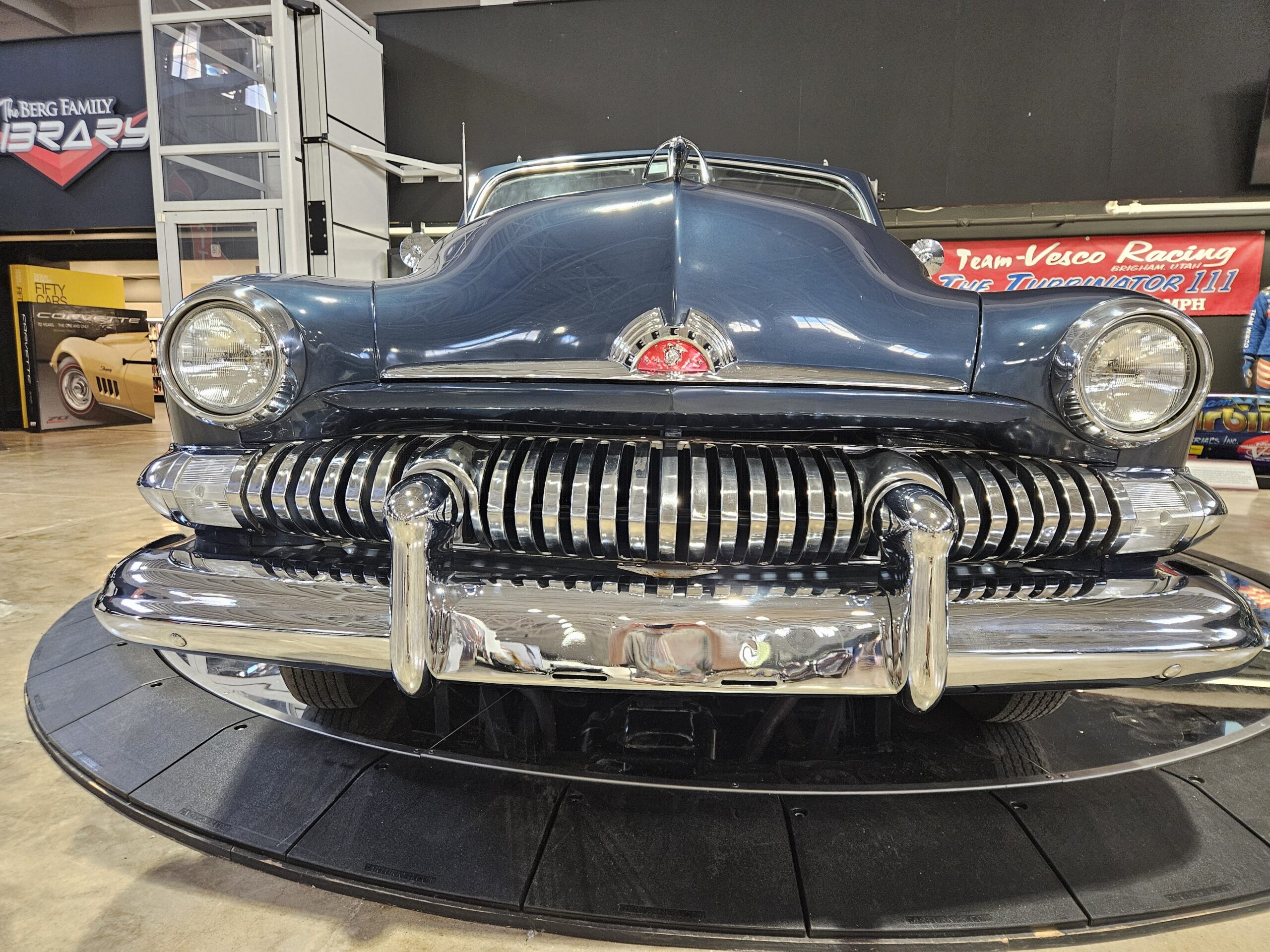
Who doesn’t love this big, toothy 1951 Mercury grille?
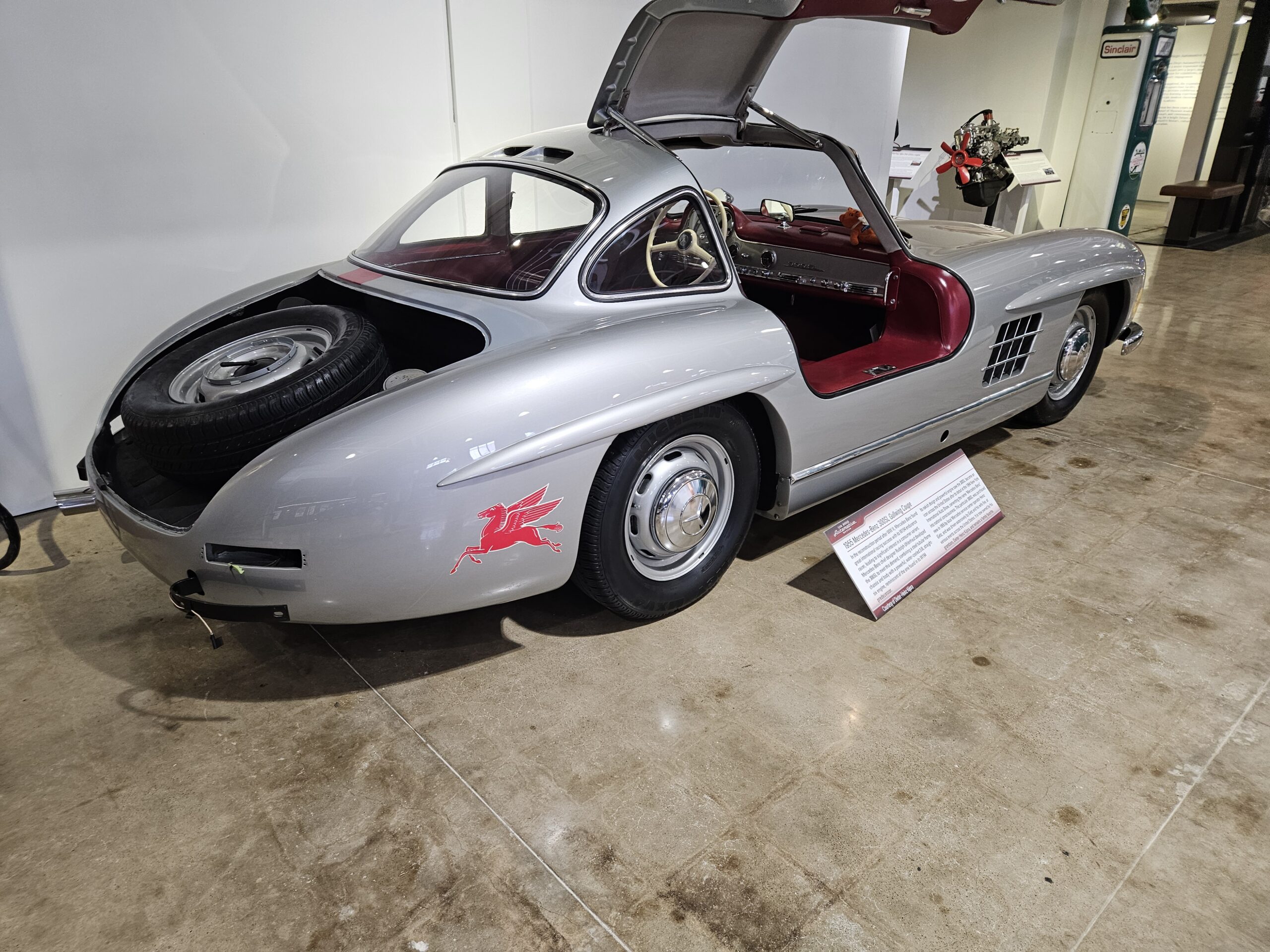
And then there is the car that sets every automotive enthusiast’s heart aflutter: a 1955 Mercedes 300SL Gullwing Coupe.
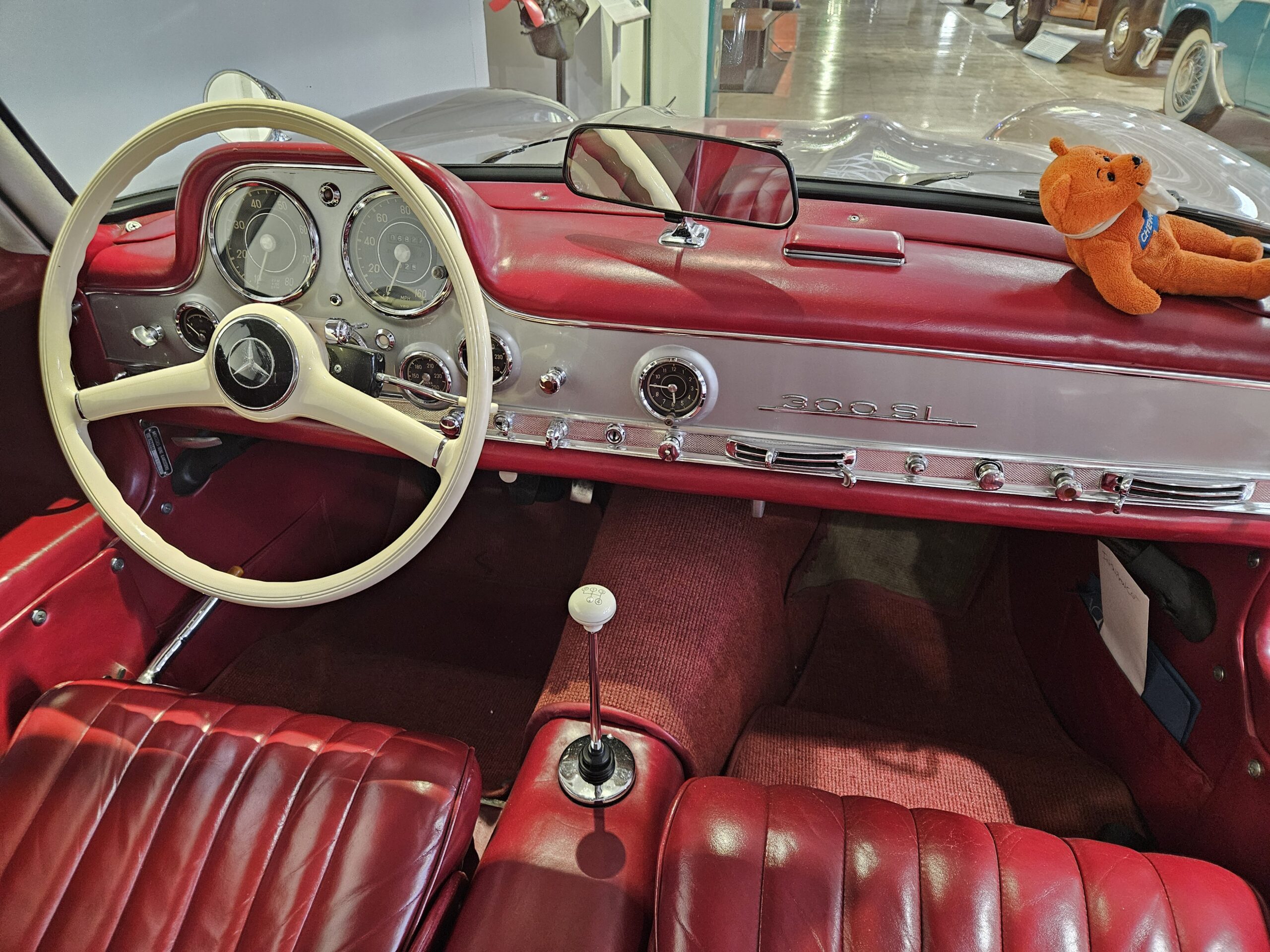
Chief designer Rudolph Uhlenhaut developed the 300SL Gullwing due to demand for a consumer variant of its very successful W194 endurance racer.
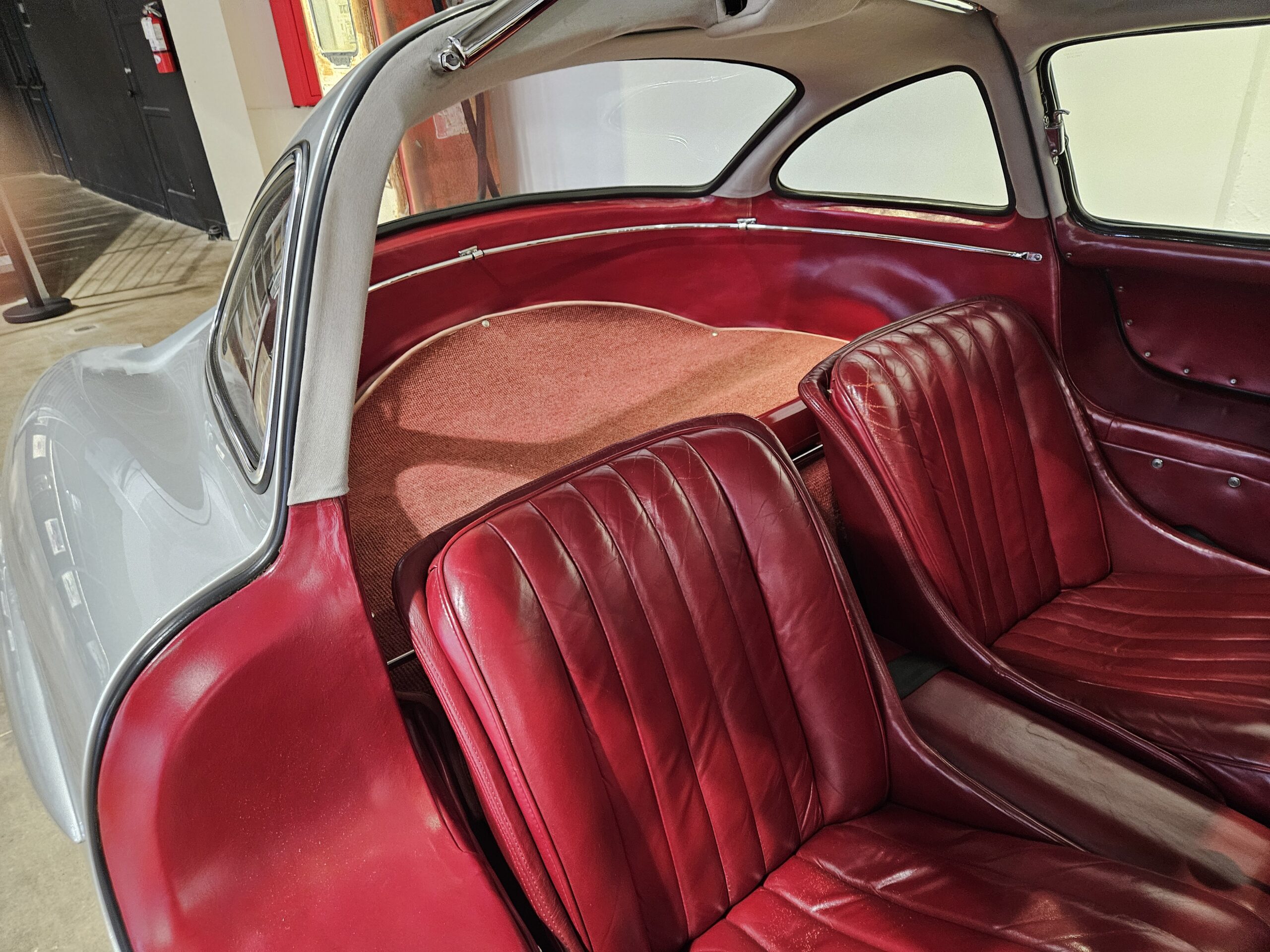
This particular example was purchased new by a local Mercedes-Benz service center operator and remains in the same family today.
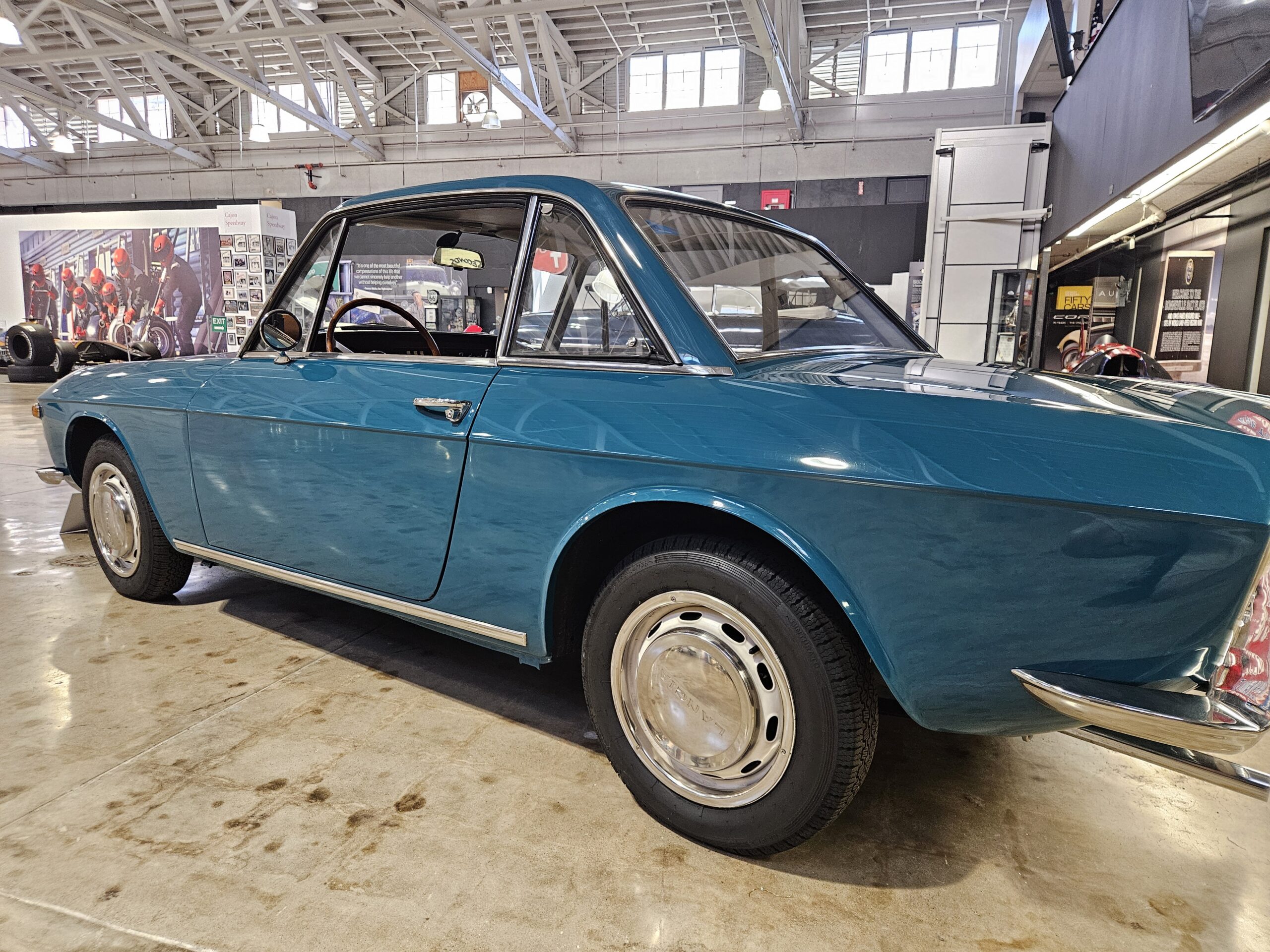
Also from “the Continent” was this 1966 Lancia Fulvia Coupe. Unfortunately, the hood was not open to view the unique narrow-angle V4.
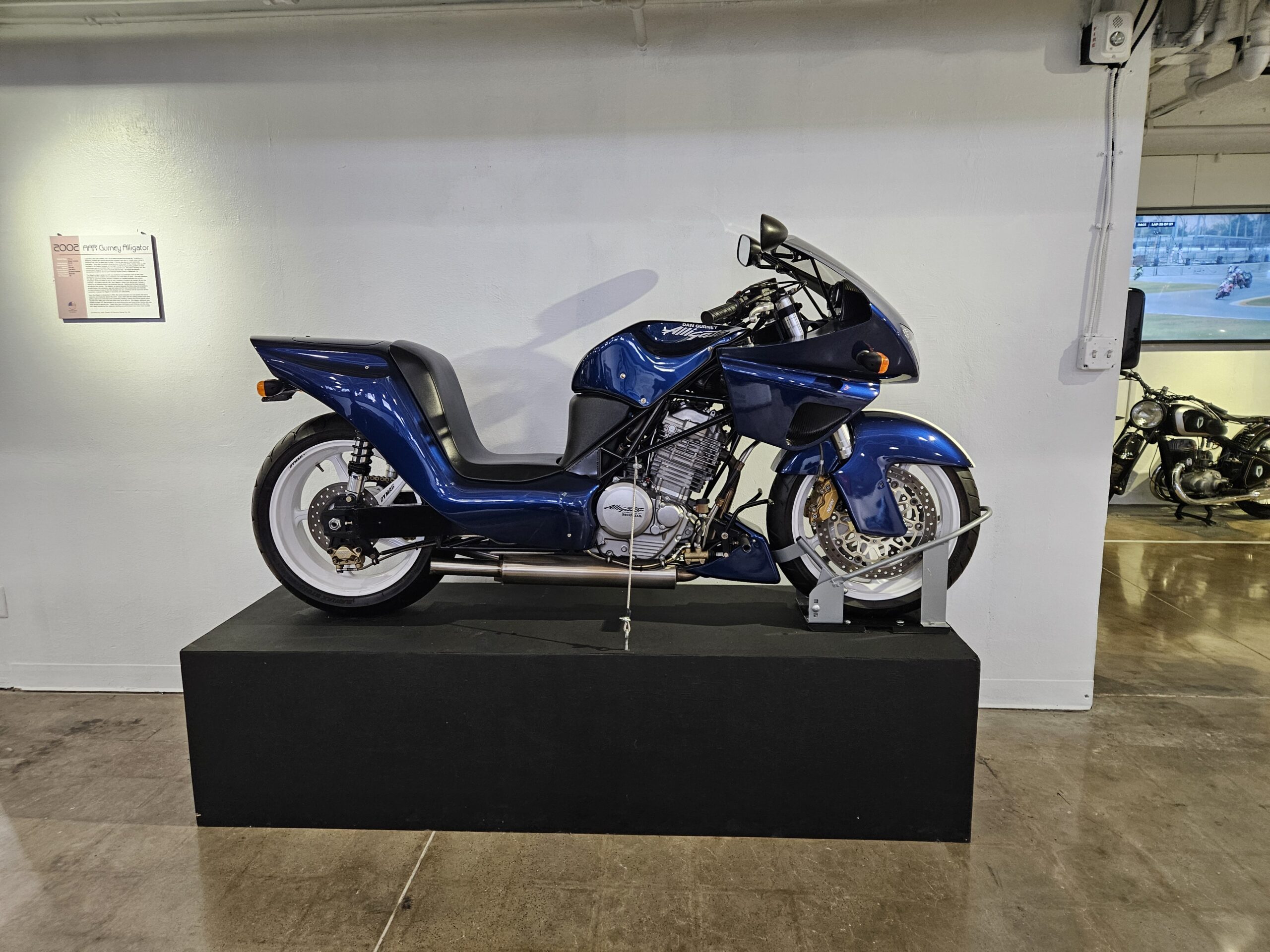
I’m not a big motorcycle fan, so I mostly breezed through that section. However, this 2002 AAR Gurney Alligator caught my attention. I wasn’t aware that legendary racer Dan Gurney was also an avid motorcycle enthusiast, nor that traditional motorcycles could be very uncomfortable for someone who was 6-foot-4 like he was. He also felt that the center of gravity on most bikes was too high and designed the Alligator to have a low one. Gurney’s All American Racers built 36 Alligators (#16 above was donated to the museum by a friend of Gurney’s) at the ludicrously high price of $35,000.
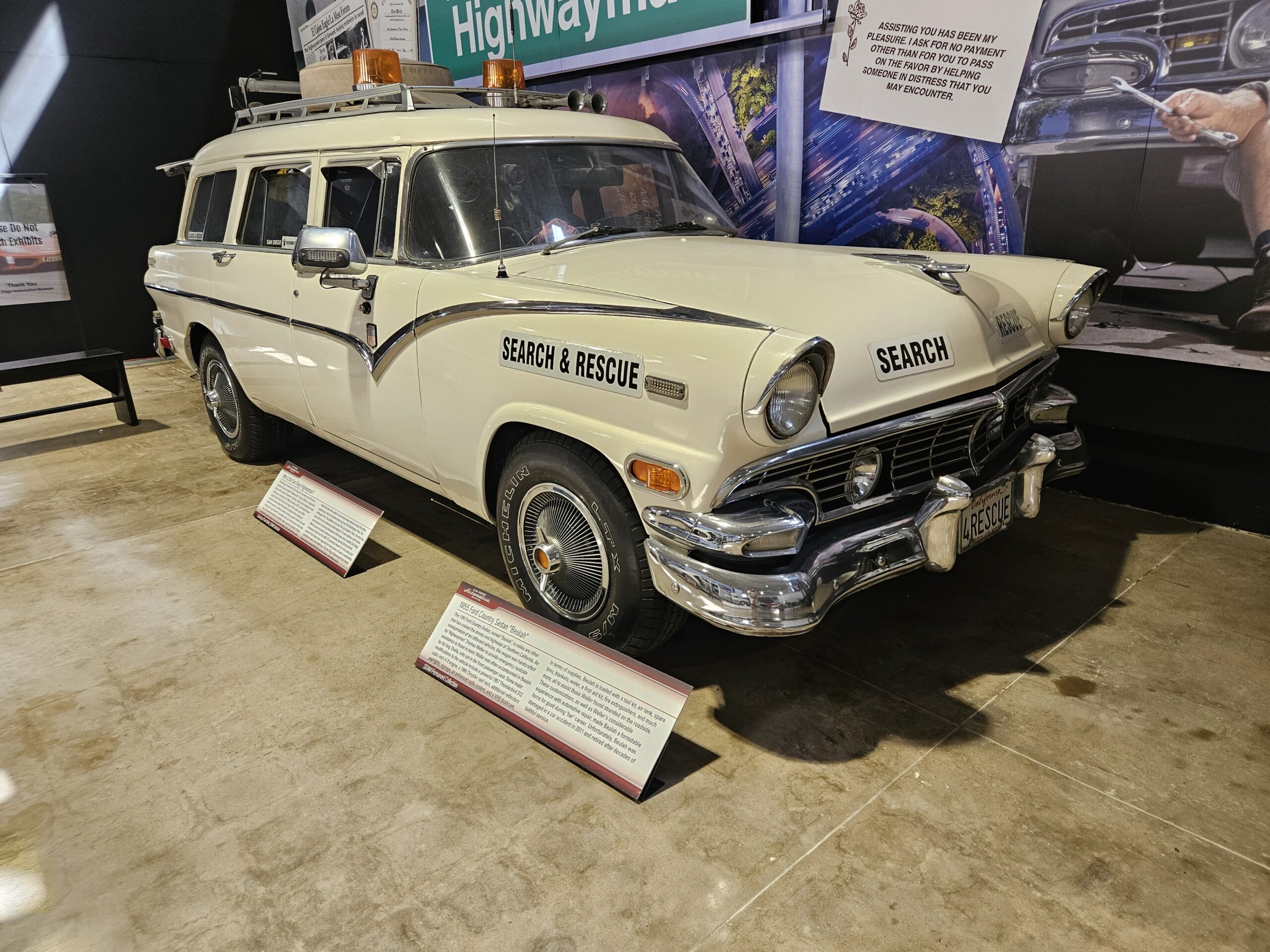
The final two cars were two Southern California local legends. The first is Beulah, the 1955 Ford Wagon, in Country Sedan trim, driven by Thomas “Highwayman” Weller.
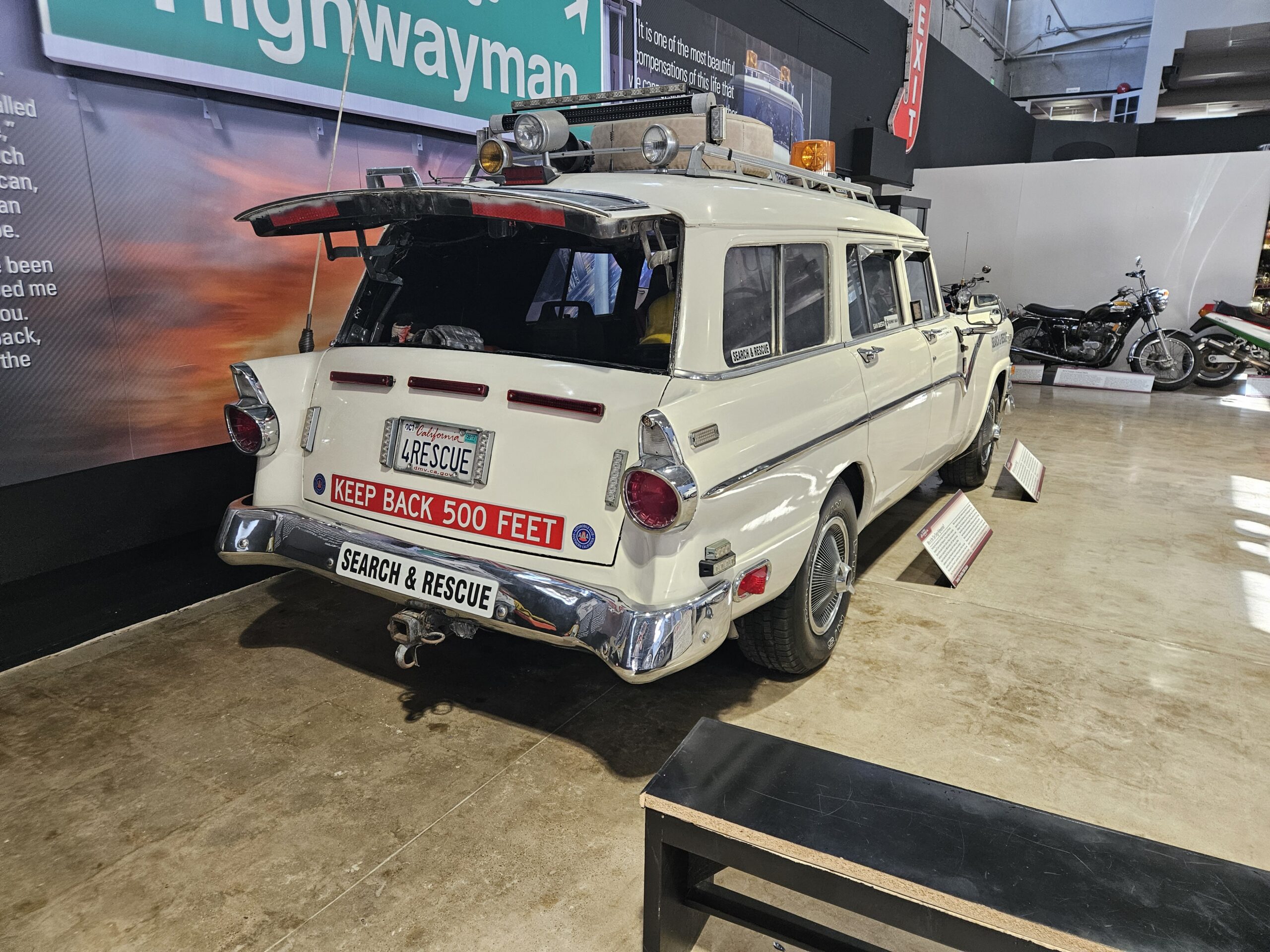
Weller patrolled the Interstate 8 in San Diego aiding stranded motorists from 1966 to 2017. Beulah is fitted with a 1957 “Thunderbird” 312, a roof rack from a 1960 Chrysler, additional reflectors and lights, enhanced radio system and a VHS dashcam.
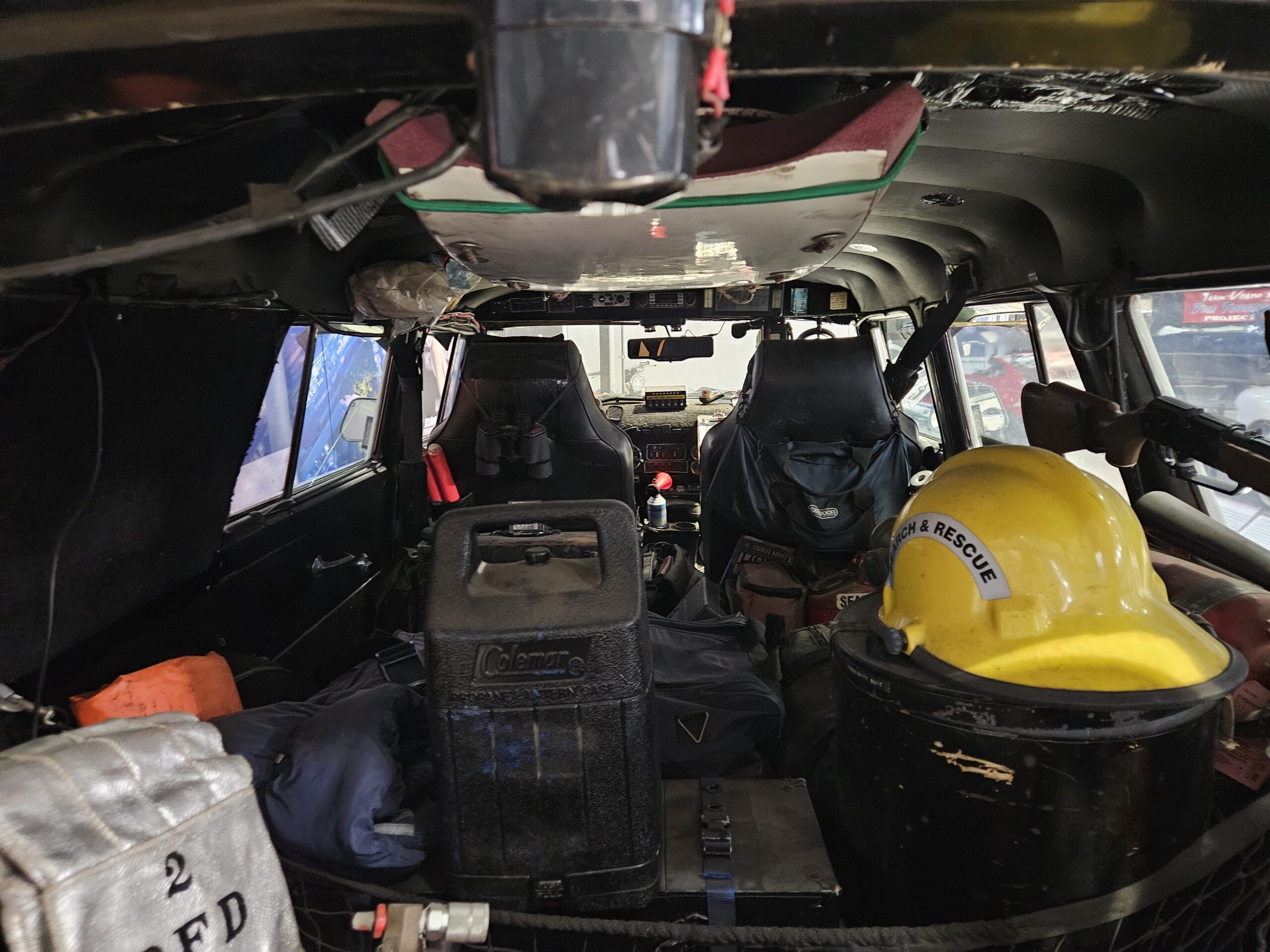
In the back were a tool kit, air tank, spare tires, a first-aid kit, blankets, water, fire extinguishers and anything else he could carry for people in need. He never accepted payment. He only asked those he helped to pay it forward.
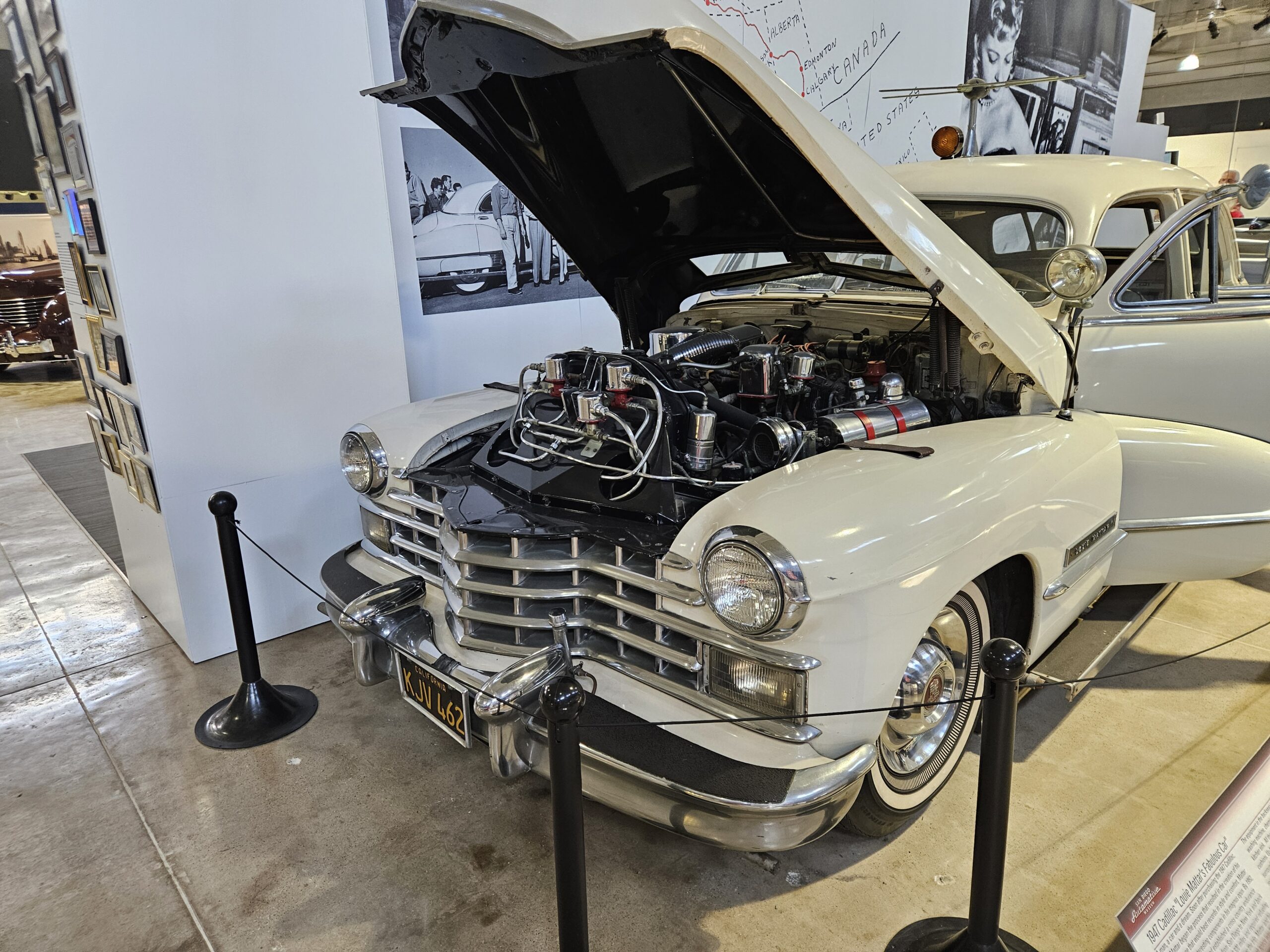
The second was Louie Mattar’s Fabulous 1947 Cadillac that he modified to drive the endurance world’s-record distance from San Diego to New York and back – 6,320 miles – without stopping for anything but traffic lights.
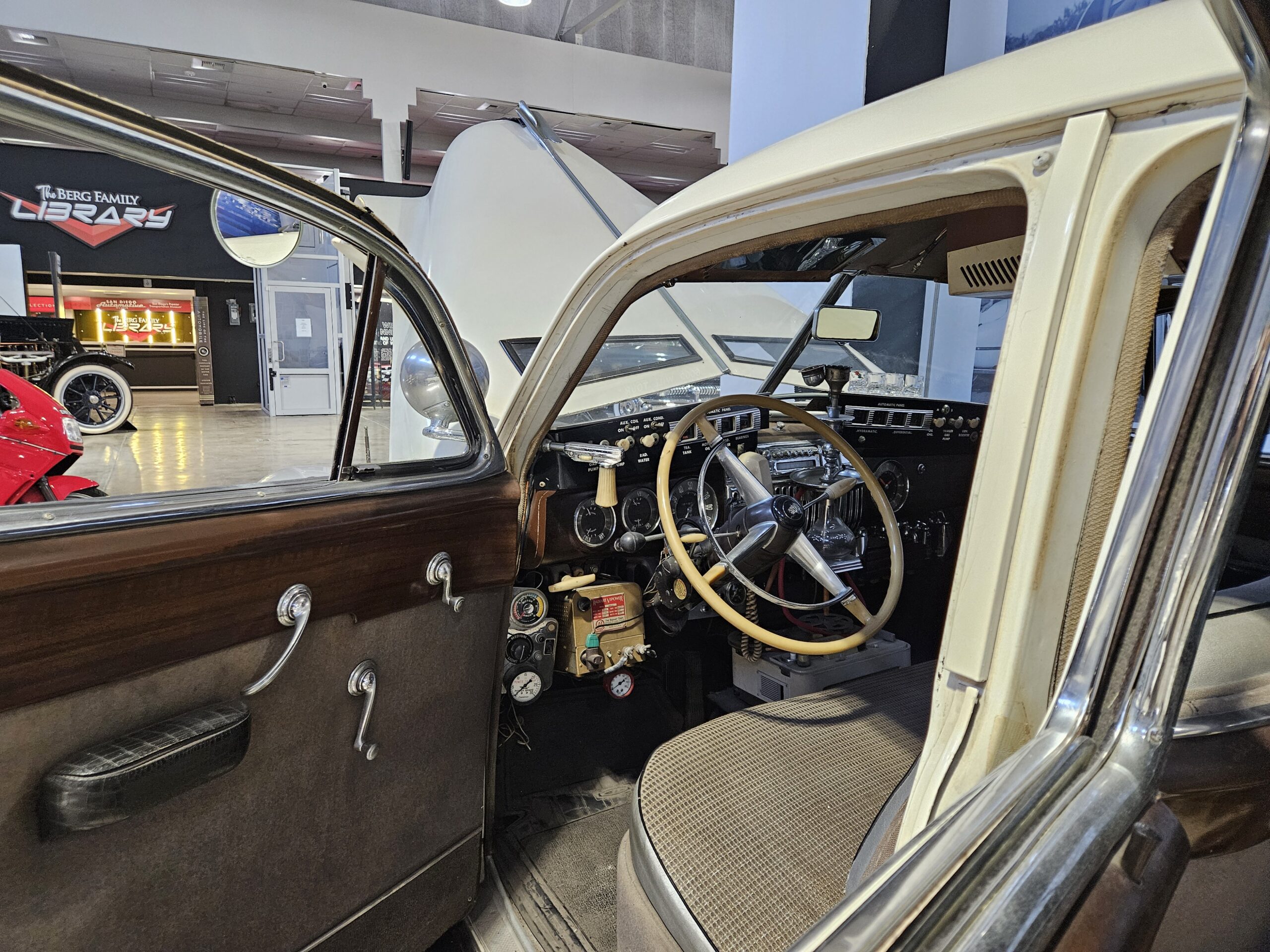
To accomplish this, he equipped the Caddy and accompanying trailer with a car phone, electric stove, refrigerator, washing machine, ironing board, medicine cabinet, a running-board-mounted shower, taillight-mounted water fountain, chemical toilet and even a kitchen sink hooked to a 50-gallon tank of water (a separate tank held an additional 30).
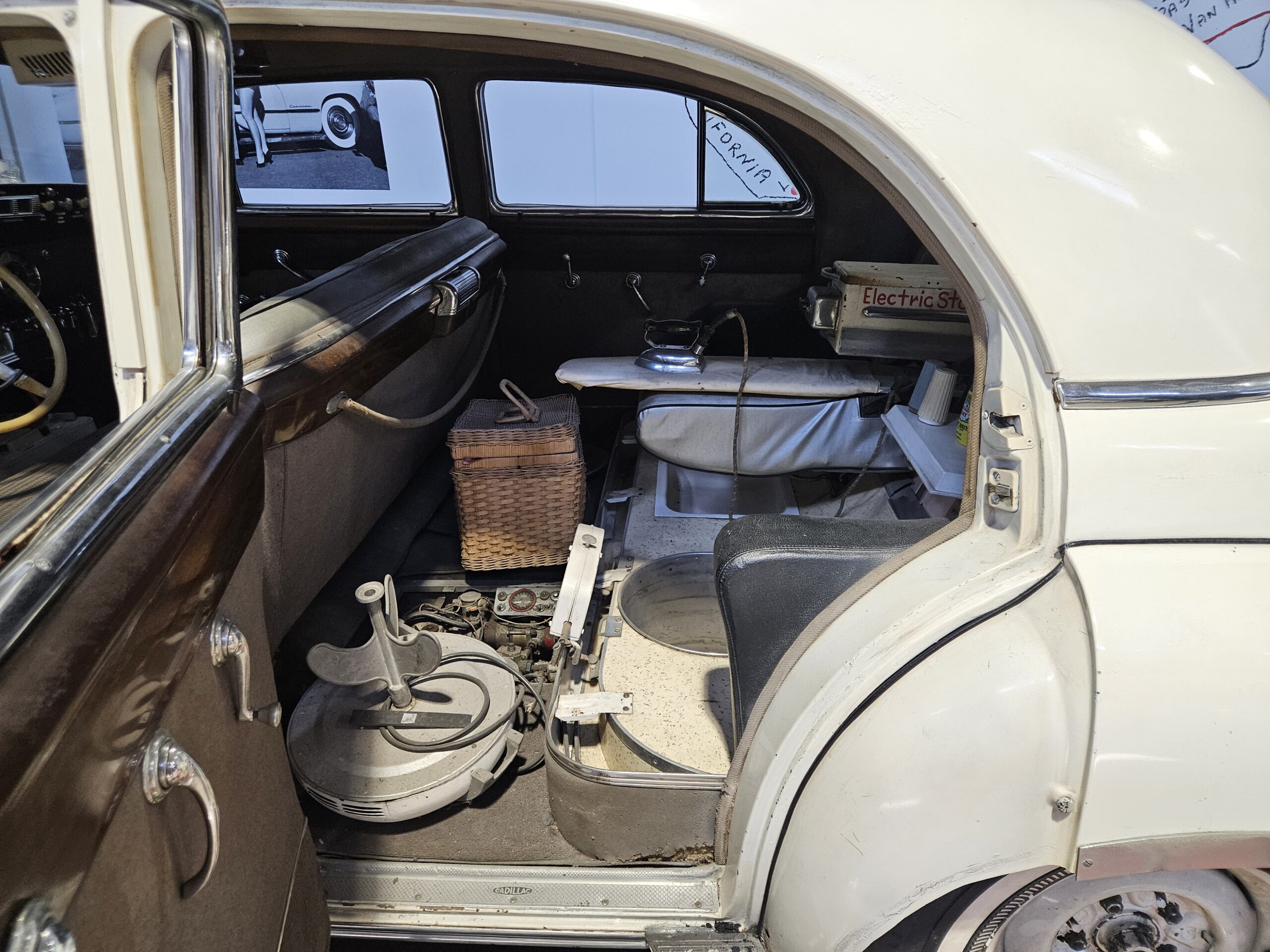
Another tank held 230 gallons of gas, and there was a catwalk along the side of the car to allow moving refills. A 15-gallon oil tank was hooked to a system that automatically kept the engine oil filled and fresh.
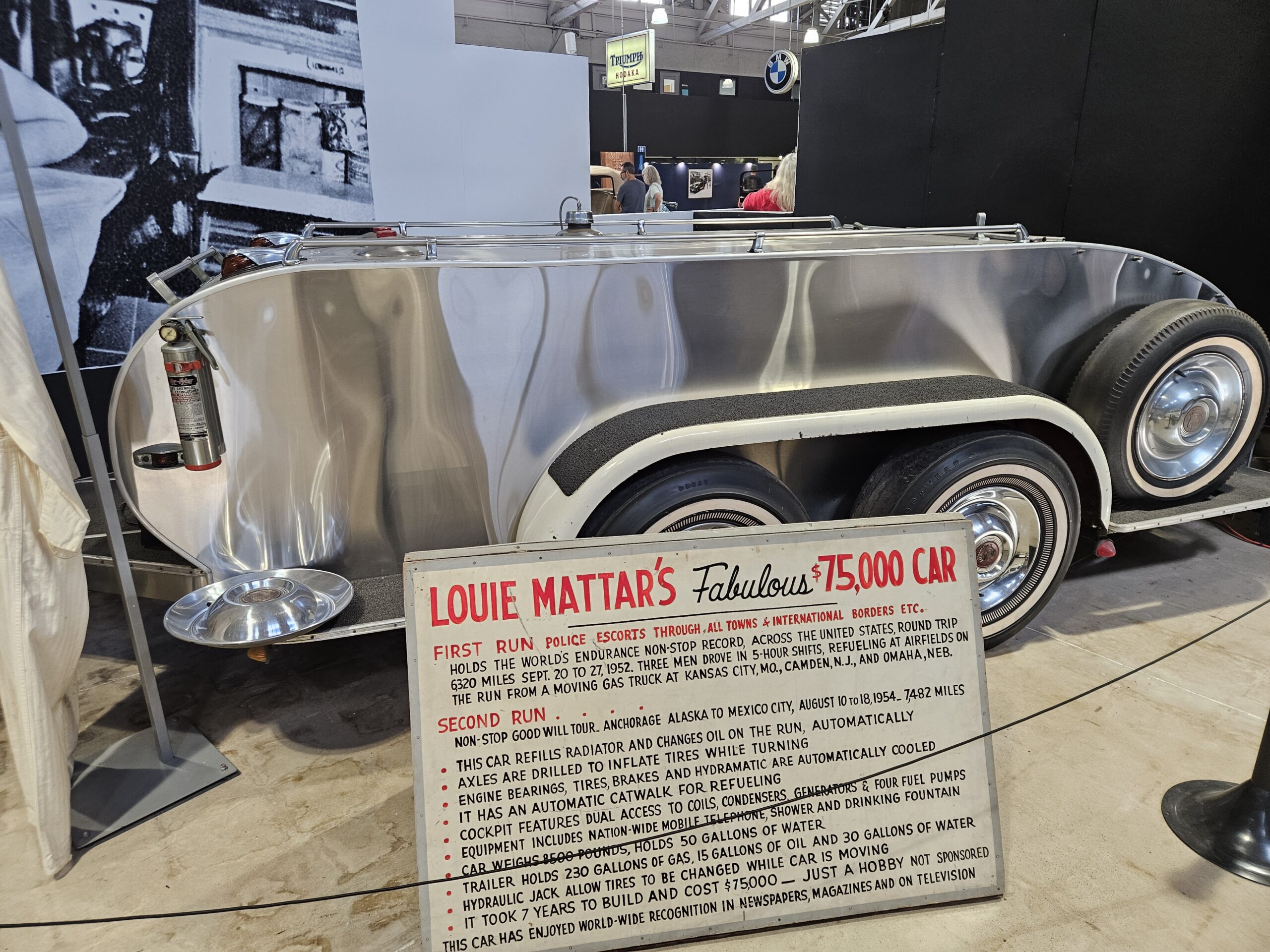
An air tank combined with drilled axles allowed the tires to be inflated while in motion, and a hydraulic moving jack enabled tires that were too far gone to by replaced without stopping. Think of it as the sedan equivalent of The Big Bus.
Was it worth $20? To me, any museum dedicated to my favorite subject is worth whatever they want to charge me. YMMV.
Related Reading
CC Museum Visit: A Quick Tour of the Henry Ford Museum
Museum Report: The Branson Auto & Farm Museum
Another Museum in Alabama – The Mustang Museum of America
Museum Classics: The Auburn Cord Duesenberg Museum, Part 1
CC Museum: The Toyota Motor Museum in Torrance, California























They changed the DeSoto Airflow grille in 1935 to make it more upright and “conventional” to help sales; hence the “S2” designation.
It’s still stunning.
Ah yes, who wouldn’t swoon to be able to catch a drive in a Mercedes Gullwing?
Gurney’s obsession with low seat motorcycles puzzles me, I’m about 6’2″ and have no problems with regular motorcycles. I find it advantageous to keep my feet below my center of gravity. The alligator looks to have a cramped riding position, and the rider can’t shift their butt around over long distances or take the weight off their spine when hitting bumps.
Many good things to see in San Diego, that’s another for the list.
A Mercedes Gullwing and a DeSoto Airflow in the same museum is a great thing. That DeSoto, so seldom seen, is lovely.
That long-distance Cadillac solves a bunch of problems I never knew needed to be solved!
Pretty neat museum, I’d never heard of it before .
In the very early 1970’s I was lucky enough to be able to borrow and drive a 1934 DeSoto Air Flow sedan, happy memories .
At that time the good condition ‘old car’ was only worth $500, I couldn’t swing it sadly .
-Nate
Loved this, Adam. Thank you for the virtual tour.
I’m glad you enjoyed it!
Sweet museum! Wasn’t there a Lars Anderson Museum of Transportation In MA at one time?
Not in New England but nearby Central NY has a wonderful auto museum in Norwich NY SE of Syracuse, NE of Binghamton, the Northeast Classic Car Museum with very high quality cars on display: Duesenberg, 16 Cyl Marmon and Cadillac, etc. As mentioned in the ’57 Olds post above a friend donated his ’57 98 convert to it. The founder also was into and donated vintage airplane engines and rare motorcycles on display, it’s very much worth a trip to see.
The Larz Anderson Auto Museum is still there in Brookline, MA, which is near Boston. Unfortunately, that’s a good 2 hours (without traffic) from me.
I’m familiar with the Air and Space Museum in SD, but I don’t think I’ve been to this one.
Yes, the signs in museums really annoy me all too-often. As do the cheap aftermarket wire wheel covers on the Nomad. Oh well; it’s always nice to spend some time with a 300SL, an Airflow and that splendid Bizzarrini.
That International with the big wagon wheels was of course specifically targeted to farmers; a true horseless wagon.
The SD Auto Museum is literally right next door to the Air & Space Museum, which is where I went next. A very nice museum, but not air conditioned and barely coping with the 100+ degree heat.
As for the signs, I didn’t even mention the worst offender: Under a Model T, the sign said that Henry Ford had invented mass production. They were only off by 115 years.
When I mentioned some of these things to the docent, he said he was aware but didn’t give any sign that the museum was going to correct anything.