
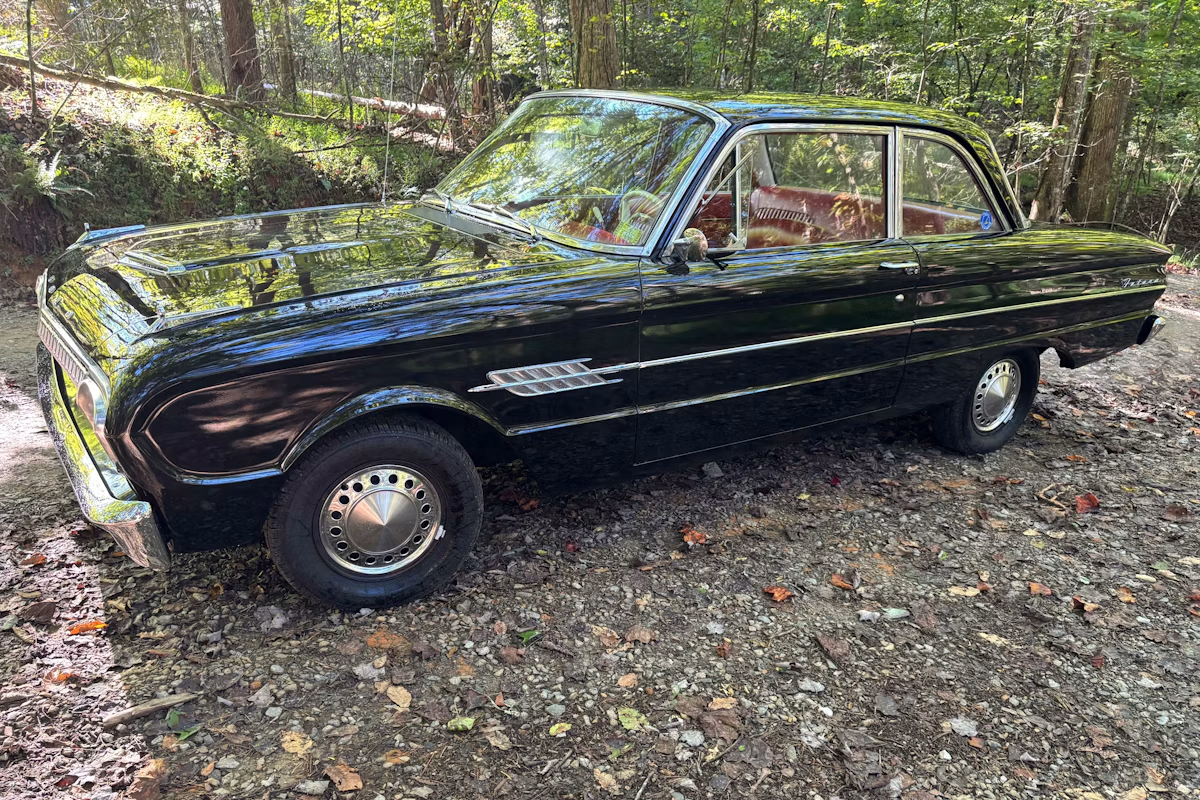
No Ford Falcon is rare; they were wildly popular when new and that popularity hung on for the entire first half of the 1960s. Some Falcons, however, are so bafflingly optioned (or not optioned) that you have to wonder what the original owner was up to, and this is one of those cars. It’s the “fancy” Futura 2-Door Sedan, which in itself isn’t uncommon at all, but it has exactly one option: the Fordomatic. Buying the bucket-seat Falcon with the base 144 and an automatic was an interesting choice, but here’s evidence that it happened, and it’s up for auction with no reserve on Hagerty Marketplace in Blue Ridge, Georgia.
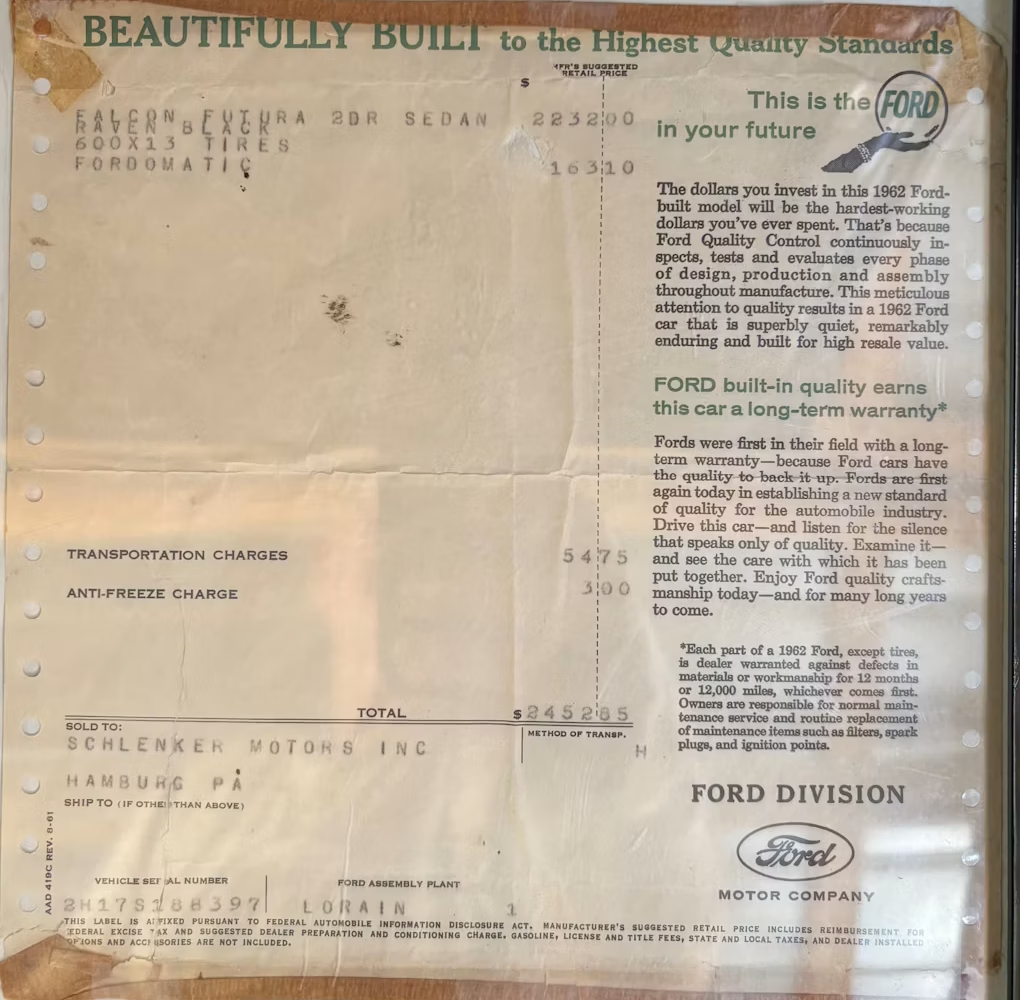
The seller has kindly posted the original window sticker, showing us that the Futura was indeed ordered with nothing but the sluggish two-speed Fordomatic. Why the original owner spent the extra money on a bucket seat Futura I don’t know, but I’d like to. The car was built in Lorain, Ohio, and delivered to Schlenker Motors, Inc., in Hamburg, Pennsylvania.
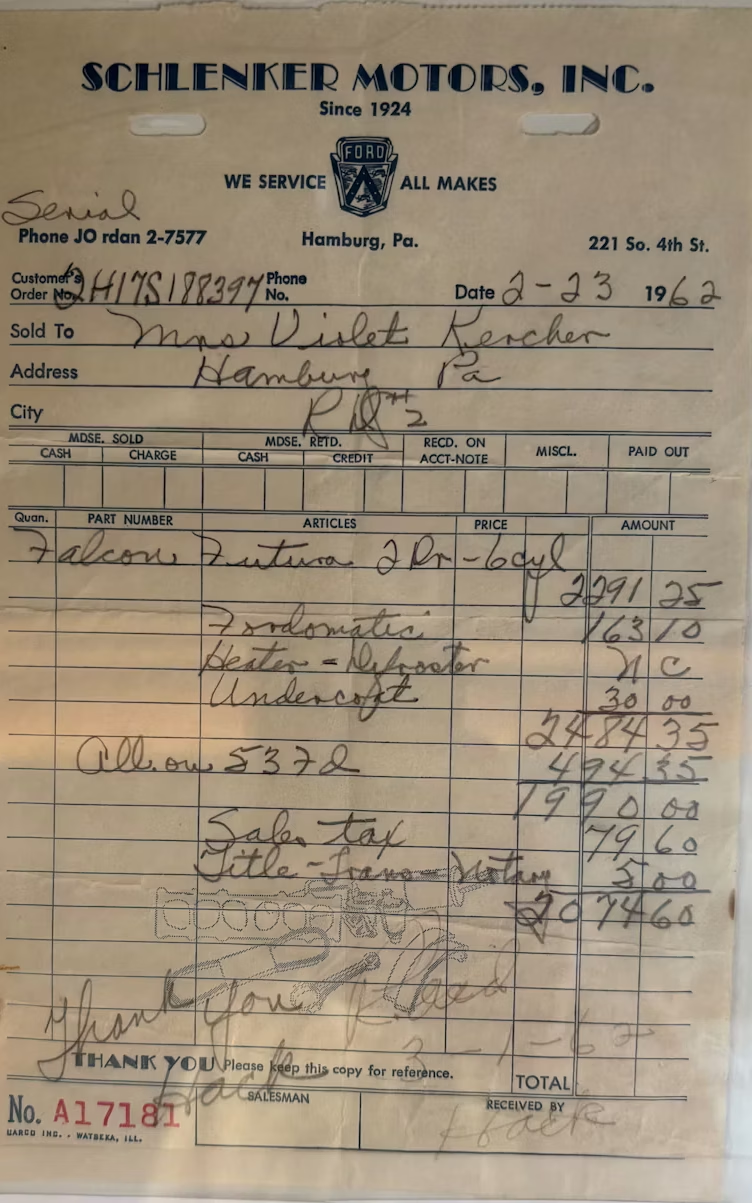
And it was delivered to Mrs. Violet Kercher, who also ordered undercoating that was certainly applied by the dealer. Notice that she was a Ford lady, trading in a 1953 Ford, which earned her a $494.35 trade-in allowance. That seems like a strange number until you see that it dropped the before-tax price of the car to $1,990, right under two grand. I’m guessing that Mrs. Kercher had a price in mind and stuck to it—good for her!
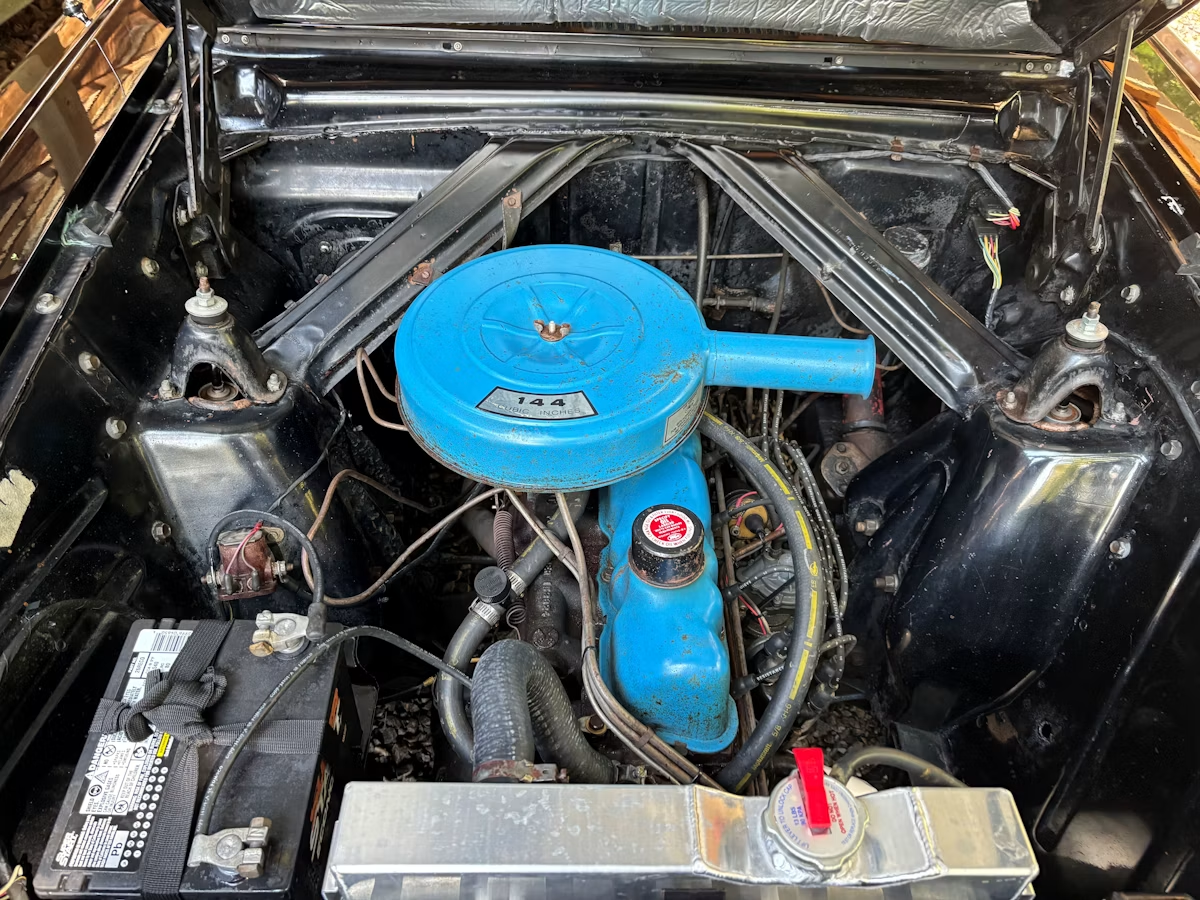
Unfortunately, she also stuck with the painfully slow 85 horsepower 144, which teamed with a Fordomatic was about as fast as a Clydesdale pulling a hay cart. Motor Trend timed one to 60 in a glacial 24.5 seconds; the quarter-mile actually passed more quickly in 22.7 seconds, but the top speed was a pitiful 76.4 miles per hour. With no other changes, the manual-transmission car got to 60 five seconds quicker and had a top speed of 82. The Fordomatic was truly a millstone.
One interesting fact: The Motor Trend test car had 3.10:1 gears, but this car has 3.50s, which was listed as standard in the 1962 Falcon brochure (both the August 1961 and the March 1962 printings). It would be interesting to see how that would have affected acceleration and top speed. The seller posted that the original radiator sprung a leak and was replaced with this aluminum unit, but the original will come with the car in case the new owner would prefer to get it recored.
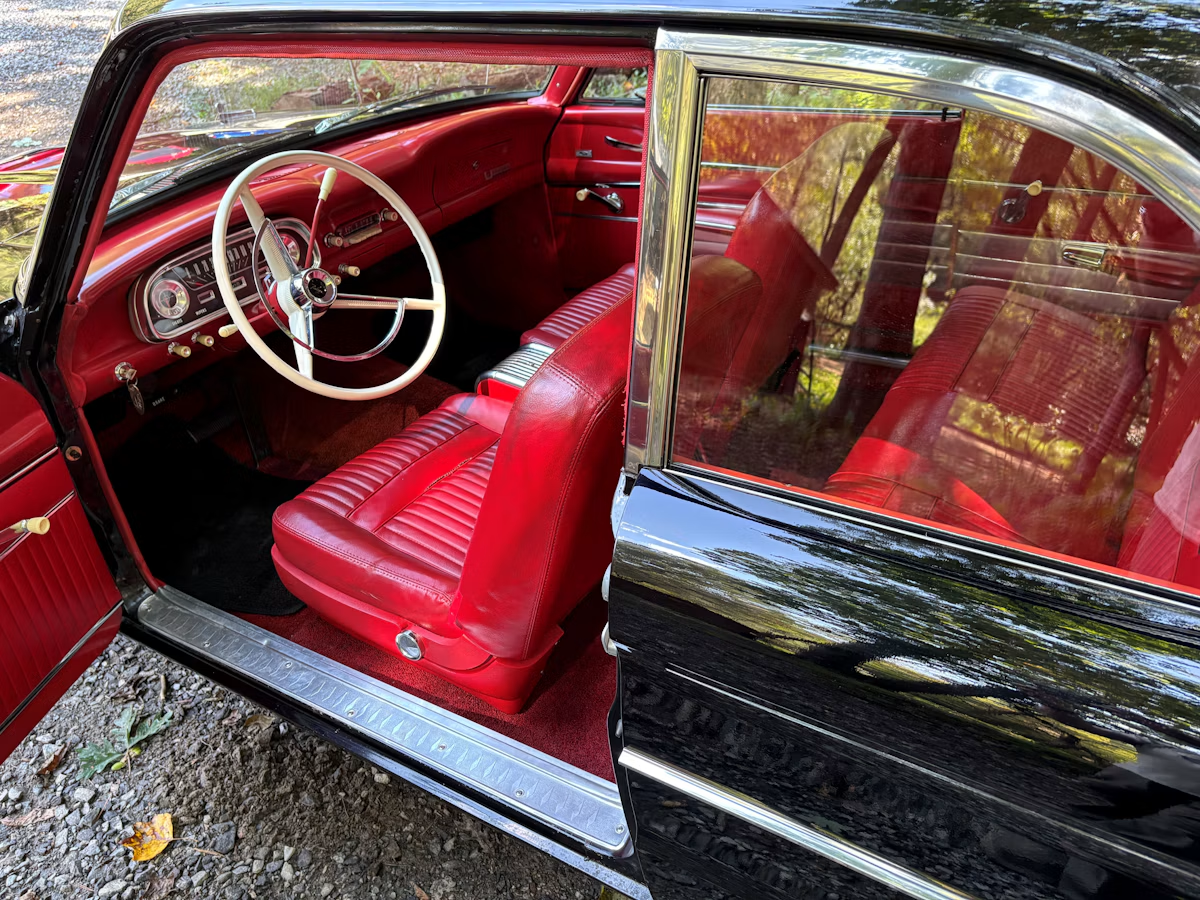
One reason why Mrs. Kercher may have decided to step up to the Futura is the interior, a lovely red bucket-seat upgrade from the standard Falcon. Combined with the Raven Black paint, it is about as nice-looking as a Falcon “Tudor” Sedan will get.
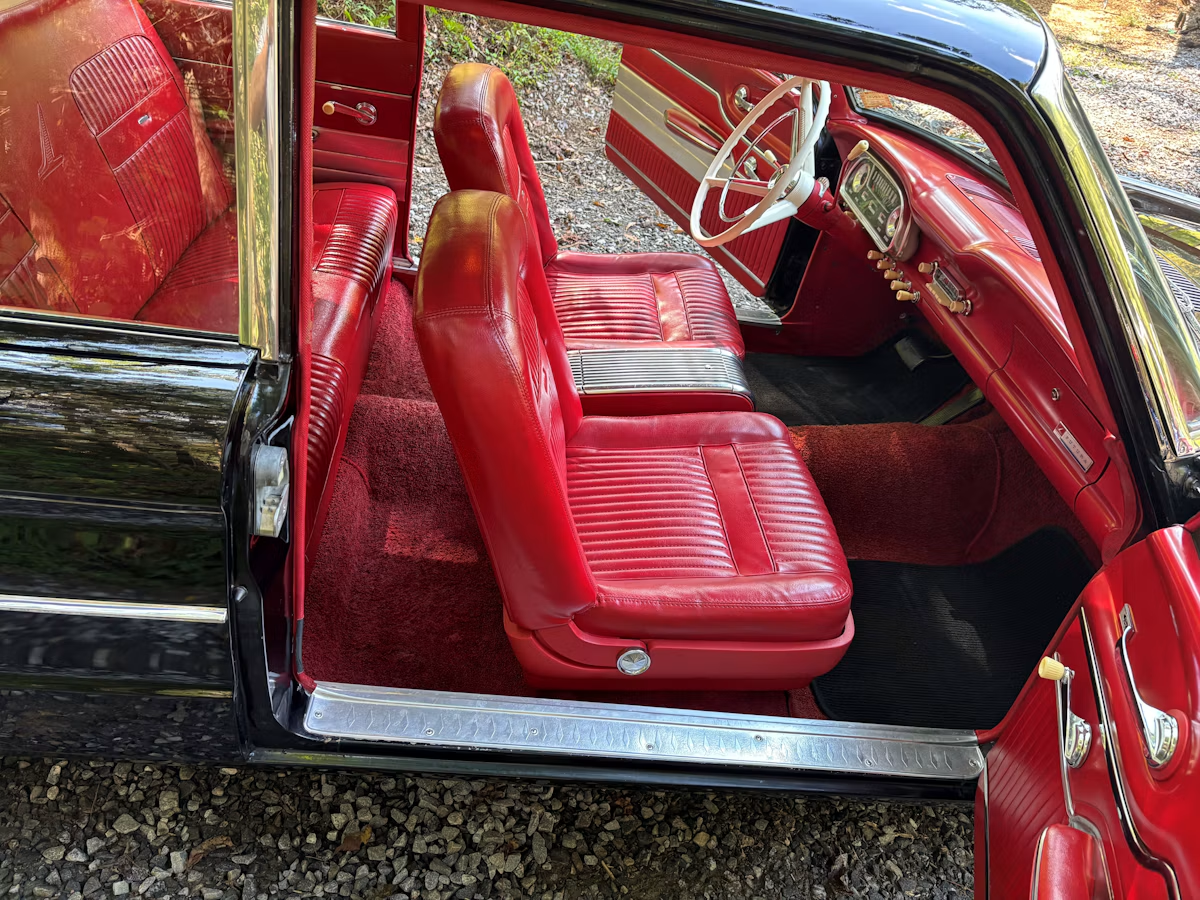
And Ford did consoles better than almost anyone in the early 1960s. This Thunderbird-like ribbed mini-console is perfect, and while the Corvair Monza came first in the sporty small-car field, it never had a nifty console like this one.
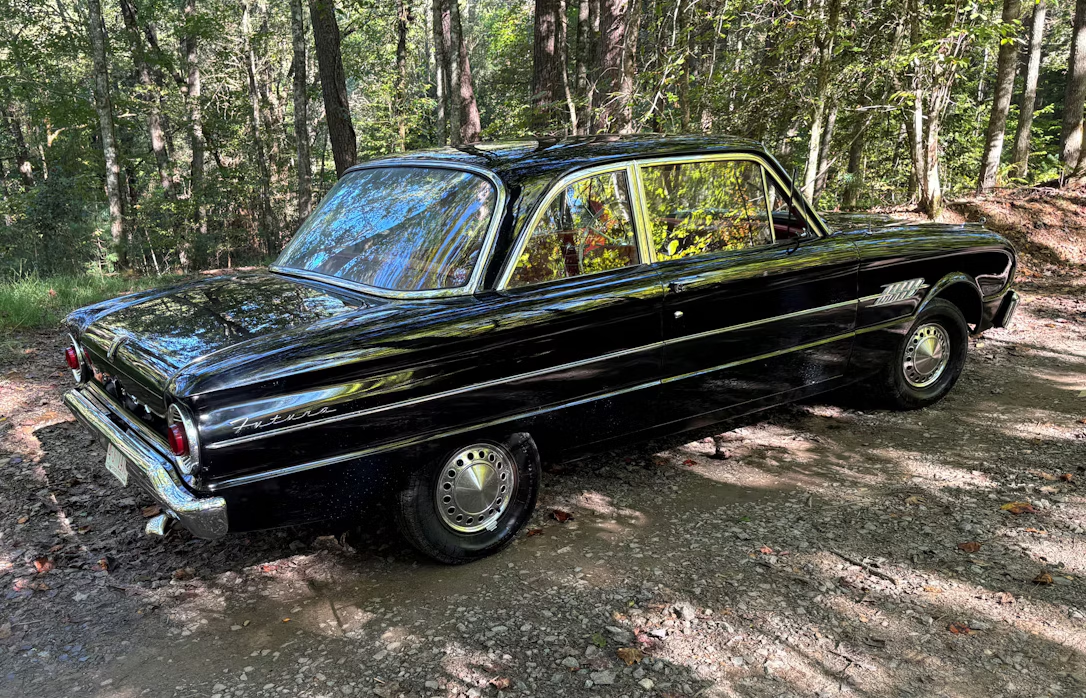
Obviously, almost nobody was cross-shopping a Corvair Monza and a Falcon, but I’ll bet this neat-but-dog-slow Falcon nonetheless gave its original owner great service. Who knows, maybe she traded it in on a 1970 Ford of some sort, but regardless of Mrs. Kercher’s next move, buying her Falcon might not be a bad move now.
Related Reading
Curbside Find: 1962 Ford Falcon – Birdie Num-Num (by Tatra87)
Curbside Classic: 1962 Ford Falcon Sports Futura – Ford Sees The Future; At Chevrolet (by Paul N)























Those seats look three times more comfortable than those in my $35k RAV4 which are made from recycled water bottles.
I was just talking about this with my sister. The seat in her 2010 Honda Fit gives her back pain after an hour. The seats in both my 2008 Honda Fit and my 2000 Acura TL were also not comfortable for more than an hour. In contrast, the seats in my 2018 VW Golf, although they don’t look so inviting, provide all day comfort. It seems that Japanese makers can’t design a supportive, comfortable seat.
I really want one of those consoles. It is what is holding me up from putting buckets in my Ranger!
The thing about the Futura is that it was reasonably complete in terms of standard trim and features, especially since the heater was standard for 1962. It came with most of the available dress-up stuff, including the wheel covers — the main omissions from a functional amenities standpoint were backup lights and windshield washers, which would have been an extra $24.40. Also, obviously Pennsylvania wasn’t yet one of the states requiring seat belts in 1962! (The Falcon did have provision for them, and adding some would seem like a good idea.)
One thing I’ve learned by reading the posts of both Aarons is that when a la carte ordering was common, people ordered some very odd combinations.
Not odd in the least for a woman who wanted a nice interior on a low price economical car and didn’t care about modest performance. I instantly assumed it was a woman buyer when I read how it was equipped. Women placed a high value on nice interiors for obvious reasons.
A 1962 Chevy Corvair Monza had a similar sized engine (145 ci) which produced 84 horsepower with Powerglide. Not much difference in performance but the Falcon has a better heater.
CC has covered a lot of old road tests that show that the Powerglide was a lot more efficient than the Fordomatic. I don’t have my Corvair road tests in front of me right now, but I believe 0-60 times were generally under 20 seconds for even the base-engined cars with automatic.
I will agree as a Corvair and 1965 Mustang owner that Ford heaters in the 1960s were amazingly powerful.
Road & Track tested a 1960 Corvair with the initial 2.4-liter six and Powerglide and got 0 to 60 mph in 17.5 seconds, the quarter mile in 21.5 seconds, and a two-way average top speed of 85.5 mph, which was decent enough for a contemporary economy car.
The Autocar tested two Falcons in 1960, one stick, one automatic. The stick got 0 to 60 mph in 18.6 seconds, the quarter in 21.3, and a two-way average of 88.3 mph. The automatic needed 22.9 seconds to hit 60 mph, requiring more than a quarter mile, and topped out at 82.3 mph with the 3.56 axle.
I have had a couple of Corvairs, including my very first-64 Monza sedan, with PG and they ran just fine. I loved the little shift lever on the dash.
Compared though to my 2.7 EB F150, what dogs they were! But, who would have thought back in the day that a base pickup would have 325 hp!
I have a genuine soft spot for these early Futuras, but it would have to be with the 170 six and…the optional (UK sourced) four speed with floor shift. That’s the way to go with these.
A slow car without a/c. I can understand how it has survived after 60+ years. You drive it on rare occasions.
I had a 63. When I had to drive it, I often had a ping of regret because it took forever to get up to speed. I drove it when I had to, not because it was fun. Sure, on a sunny comfortable day when traffic was nil and I could cruise at 50-60 mph, it was cool to have, but otherwise not so much. I bought it for very little when the teen whose father bought it for her as her first car, just didn’t love it.
It’s one thing to like a car that is appealing as this one – but another thing to own it and use it. I discovered that these cars are from another era.
so this Falcon gave US “peak malaise” performance years before it’s progeny, the Granada, officially delivered it during the actual malaise era – “peak malaise” = the nadir of perf
what Ford lacked in product, it always seemed to make up in marketing
I like it, and it could be a great “hobby car” for me. Can’t be too much slower than some of the ‘malaise’ cars I drove, I figure.
Popular Mechanics tells us that 1962 Chevy II axle ratio got tightened from 3.08 to 3.50 for “stick shift fours,” and here’s PM reporting on Falcon the same time (spring 1962):
That quarter mile time is on par with the Mack dump truck that did a 30 second quarter with a 55 mph trap speed. It’s also pretty close to the performance of a 1200 Beetle. It’s a nice looking car but I would be looking elsewhere in 1962, or at least checking different options like a big 6 and a 4 speed. But I’m not Mrs. Violet Kercher
How do we know she ordered it this way? She could have chosen it because it was the only Falcon on the lot with a red interior. The combination of a Futura with only a Fordomatic is odd but the dealer might have wanted it so that he had a loss leader that he could put in the newspaper in a bait & switch tactic.
In ’62 a Falcon Futura with 144 six was available only with FordOmatic and 3 Spd column shift and the latter would have been cheaper as a loss leader.
An older woman as Mrs Kercher undoubtedly was would have been unconcerned with performance, and clearly just wanted a nice looking car, which it was.
The optional 4-speed manual (with floor shift) was available with either engine.
I love that interior! My mom’s first car was a 62 1/12 Futura in Rangoon Red with the three-speed column shift. I was born in ’65 and we had the Falcon until my parents traded it in on (gasp!) a ’74 Vega GT hatchback in ’76. I’m fortunate to have some scans of pictures my folks took of the Falcon so I know how nice it looked on the outside.
It seems like a perfectly logical combination for perhaps someone of a certain age & gender, who wasn’t fussed about getting to 60 miles an hour in 10 (or even 20) seconds but liked the idea of a nice interior in a sensible, economical car with an automatic transmission. It’s a brilliant choice in its way. Mrs Kercher was an independent thinker.
Chevrolet learned a lesson from both the Falcon and the Corvair. When the Chevy II arrived, even the lowly 4-cylinder was larger than either. The 194 ci 6-cylinder was a lot larger and had 120 horsepower. By 1964 the 230ci 6-cycinder with 155 horsepower was available. Even little old ladies want SOME power.
I can see why the buyer bought the Futura, as the interior was much nicer than that in the base Falcon. As for the 144 six and Fordomatic, well, it seems this lady didn’t much care about speed. Even with glacial 0-60 times, it could still keep up with contemporary traffic, so not much of a handicap for her.