
What is an intermediate? On the surface it would appear to be easy to define: something in between a compact and a full-size car. But how did you engineer such a car? Ford’s answer (’62-on) was a stretched and widened compact. Chrysler’s answer (’65-on) was a rebadged downsized full-size car. GM tried a bit of both, and today we’ll be looking at Pontiac’s solution to that question.
The Senior Compact years
Their first ‘intermediates’ were the Y-body ‘senior compacts’ of 1961-3, so called because they were larger than the Corvair, Falcon and Valiant, but closer to them than to a full-size car – or about the size of a Rambler Classic, ironically! Maybe not the company for Pontiac, Olds and Buick to be lumped in with? Chevy was not yet invited to this party. They had their hands full anyway, with the Corvair and the ’62 Chevy II, for those who weren’t convinced Chevy’s technical outlier was the answer.
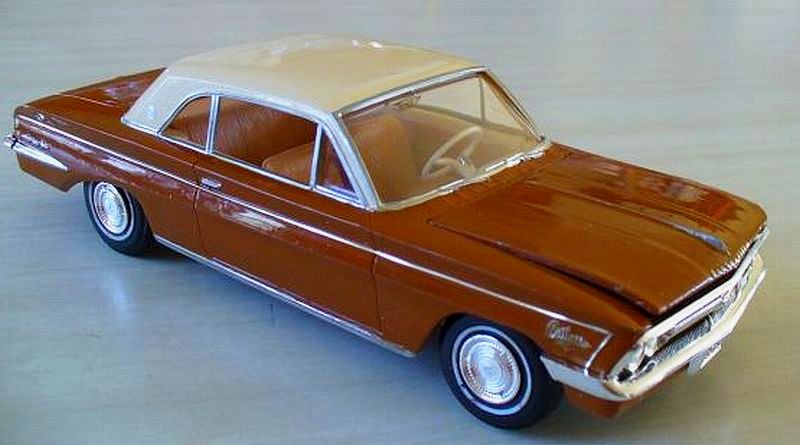
’62 Olds F-85; I don’t have the Pontiac Tempest.
The Olds and Buick senior compacts were thoroughly conventional GM cars, if you discount that lovely little alloy V8, and the unitary construction. By contrast, Pontiac almost seemed to be going crazy, with a 195-inch slant-four based off half a 389 V8. Expedient, but rough; possibly the biggest four since the early Thirties. Using the Z-body Corvair floorpan, they joined that huge four to a Corvair-like transaxle, with a curved driveshaft, and used a version of the Corvair’s rear suspension. Was Pontiac trying to eclipse Olds’ reputation as the innovation division? The Buick V8 was available, and later a downsized so-called ‘326’ (actually 336) Pontiac V8 – which proved to be an iffy combination with the swing-axle rear end.
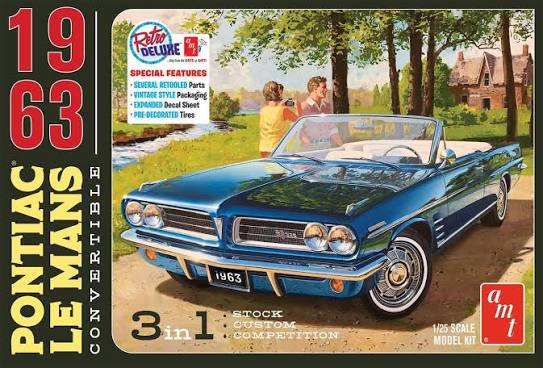
Models of senior compact Pontiacs begin at 1961, with AMT doing the first three years, which never seem to have been re-released. But having said that, a ’63 Le Mans convertible has been reverse-engineered and was due back in the lineup in late September
Retreat to convention
For 1964 the senior compacts grew up into conventional body on frame cars – no surprise for the Buick and Olds, but something of a surprise from Pontiac, which lost all its former innovative qualities and became thoroughly conventional – except for the little matter of the GTO. It was conventional in engineering, but bent the GM rules on engine size in intermediates by making the GTO technically an option, not a model. A technicality? Antics with semantics? Yes, but it got the job done.
Once the Tempests became intermediates, things changed as far as models were concerned. The GTO was kitted each year through 1972. No models of the Colonnade cars were made, either in the seventies or since. Were they felt not to have the appeal of the earlier cars, or had boys’ interests changed?
1964-5
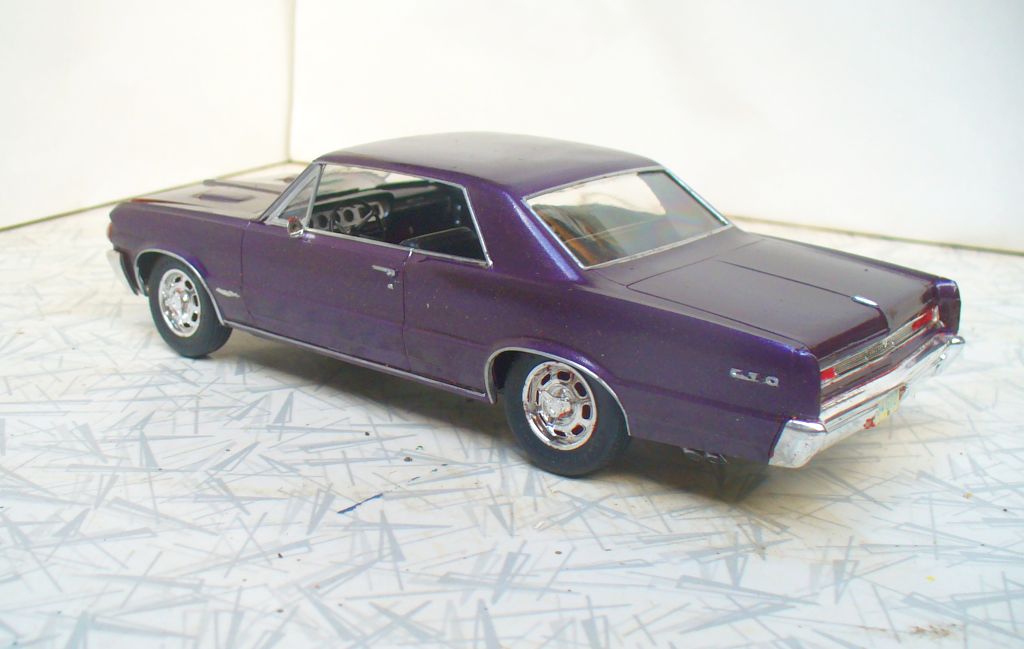
AMT released a ’64 Tempest before the GTO became hot; this tool was probably revised to the ’65 model below. Polar Lights, a company better known for pop culture models, does a ’64, though I have never had a look at one. They’re now under the same corporate umbrella as AMT. My purple ’64 above is a Monogram kit. Released in 1985, when Monogram was deep into their muscle car modelling phase, this kit periodically returns to the catalog. It comes as the two-door coupe shown here, with instructions to cut out the window frames and pillar if you want the hardtop version. I stayed with the more unusual coupe body.
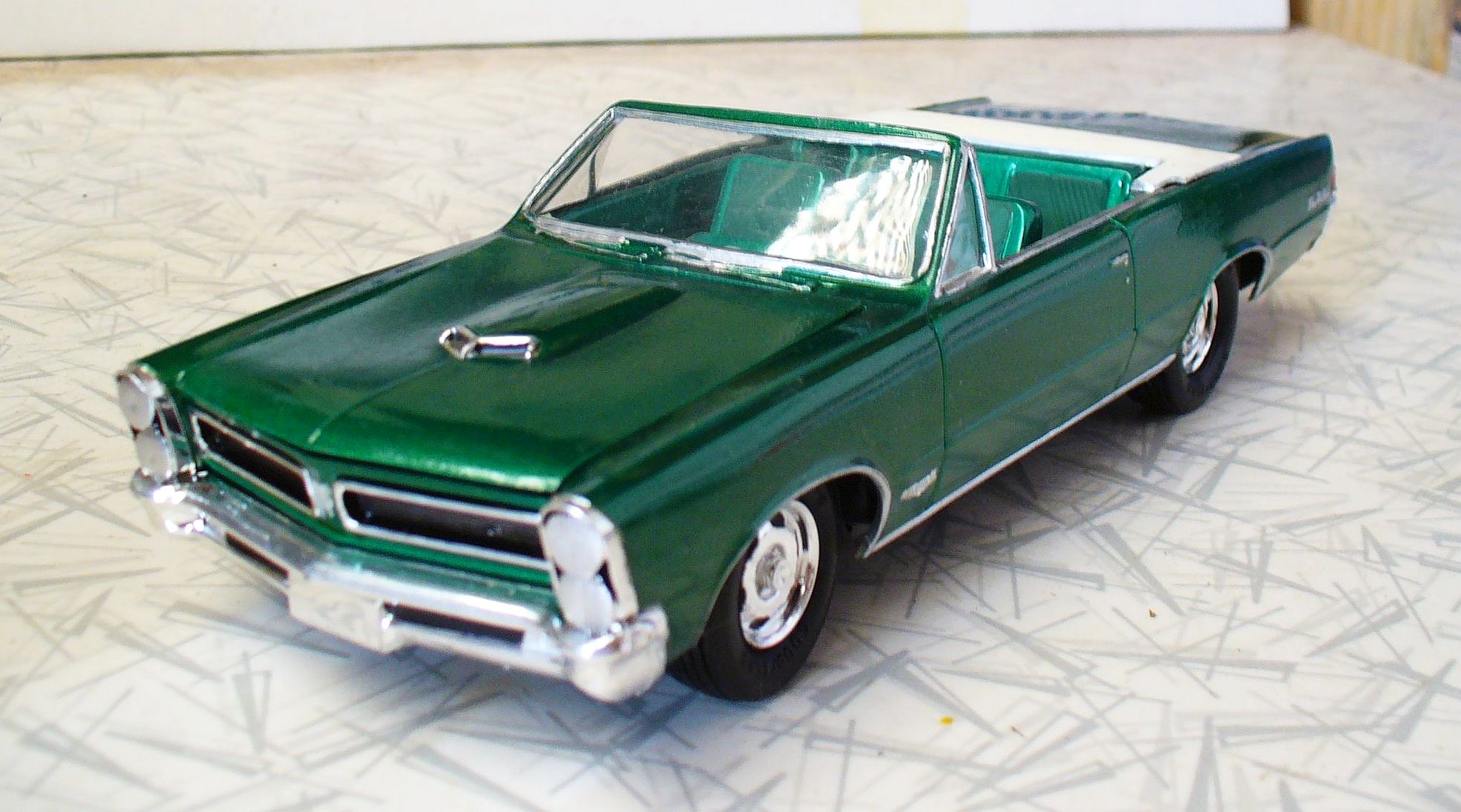
This was a revision of the original sixties tool which had been butchered to make a Modified Stocker speedway car/ dirt tracker – which happened to several older kits no longer thought to be wanted. Restored to stock in the eighties when interest in muscle cars returned, they did a rather slapdash job of it, and made improvements (notably headlights and badging) in later issues. It comes with a roof (which somehow isn’t quite right) so you can build the hardtop version.
They also now do a simplified GTO in their ‘Craftsman Plus’ range. I wouldn’t have thought there was much in the old kit to simplify, but this one’s an engine-less curbside kit; again I’ve not seen it, so will not comment.
1966-7
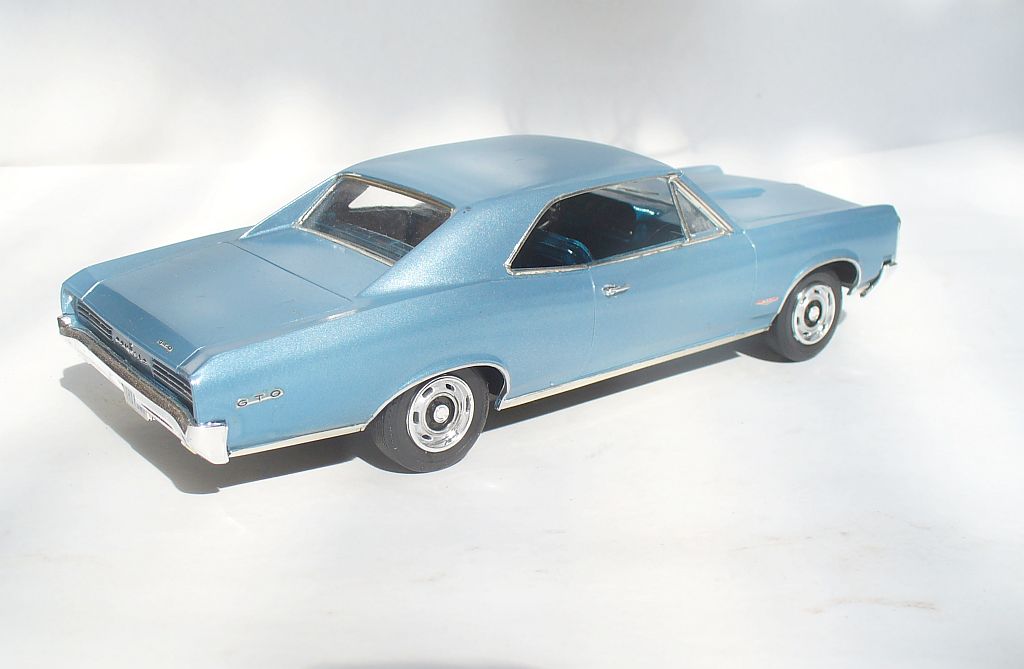
Dating from 1998, Revell carried on the Monogram muscle-car tradition with this lovely ’66. I remember being especially taken by the lovely upper-body pinstripes, and the fact that the decals worked (not always a given).
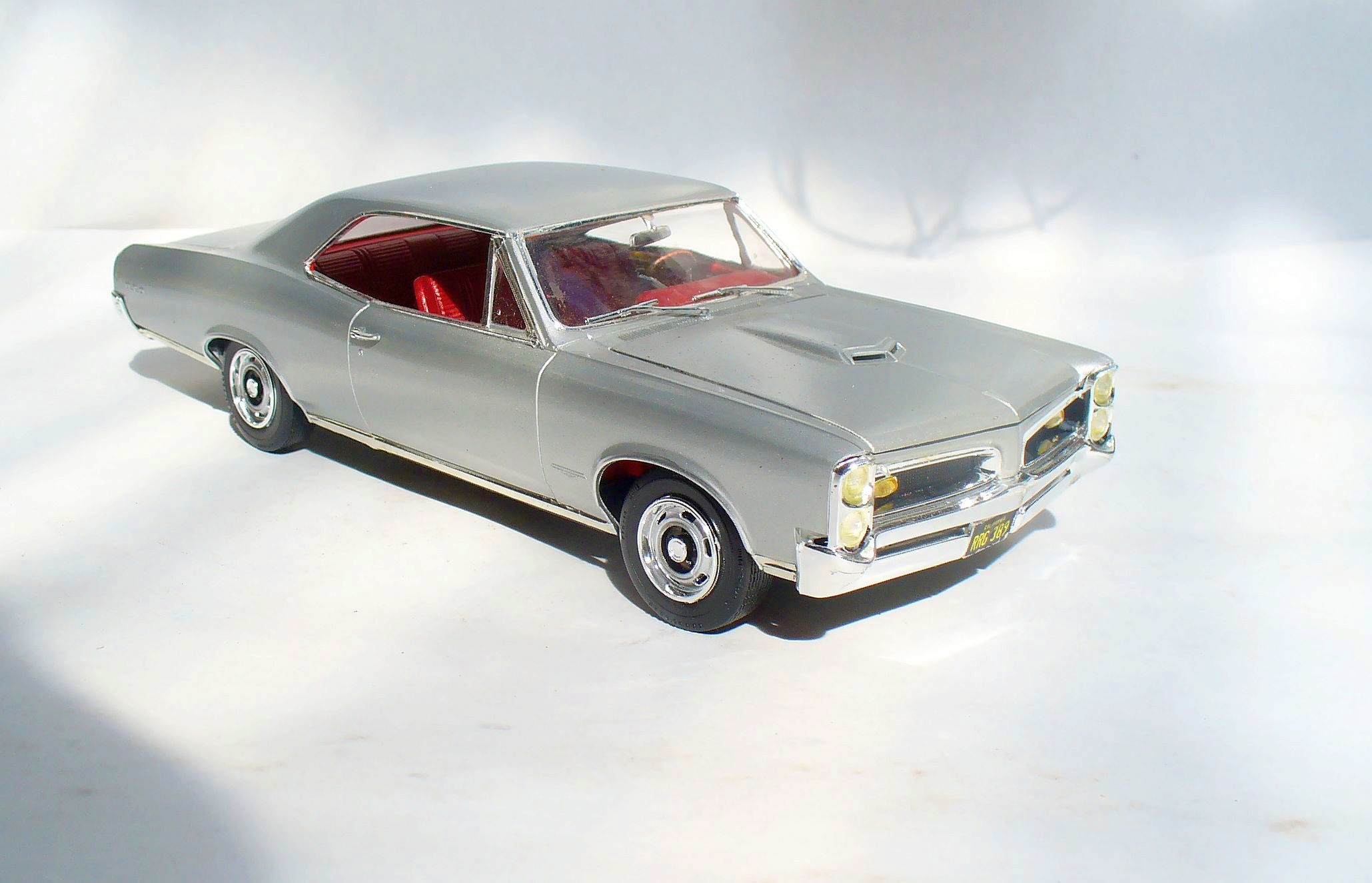
A truly excellent kit, in stark contrast to the next one….
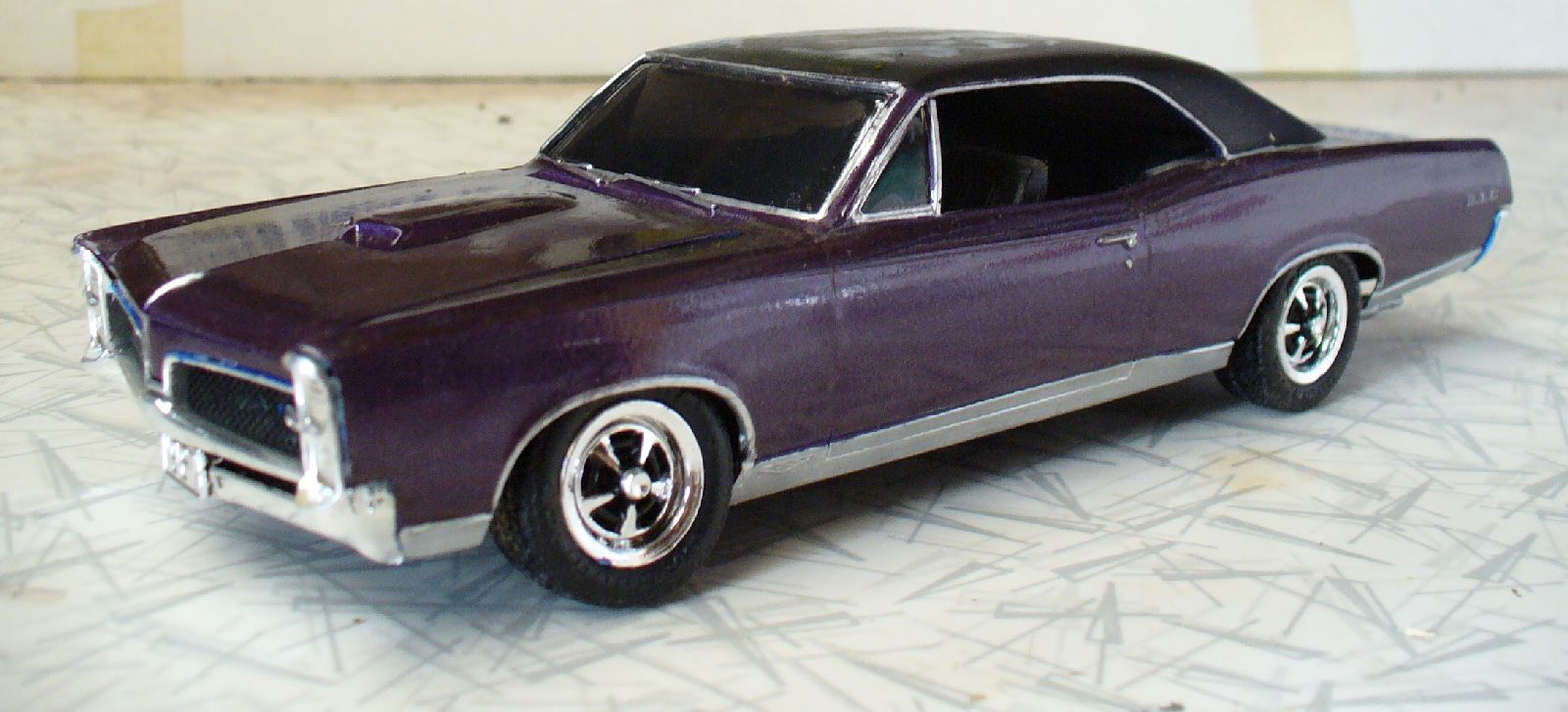
Superficially similar to the ’66, this MPC kit is based on their 1967 annual kit, and shows the signs of extreme wear in the tool – a general softness, weak engraving in panel lines, roof gutters and badges. It has been in and out of the product line quite often. The purple one is based on an eighties release when MPC was putting an unrealistically dark tint on their windows, unfortunately.
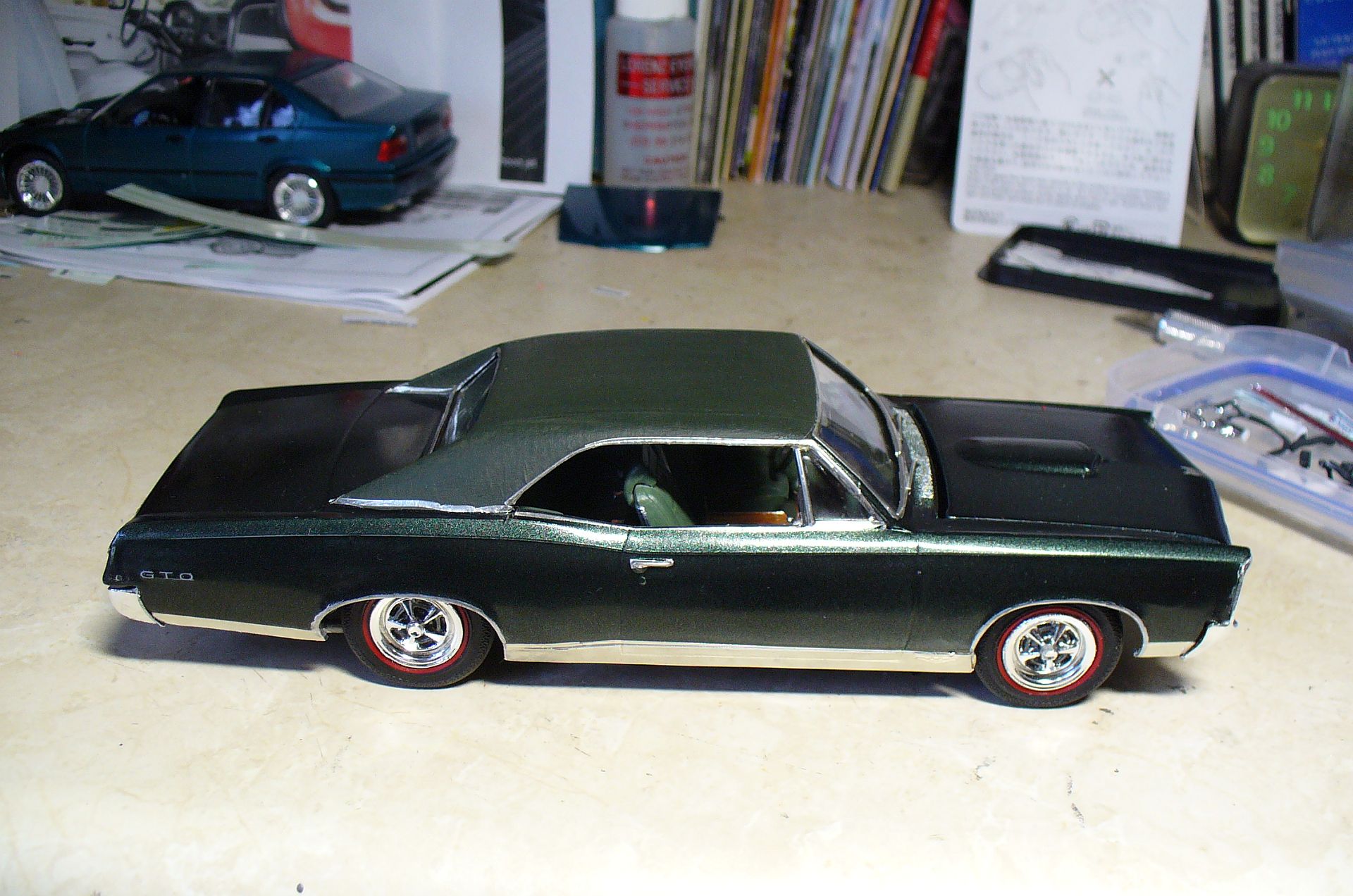
MPC came under the AMT umbrella in 1985; the dark tint was summarily axed. The kit still reappears, but I can only hope they’ve tidied up the tool to sharpen things up since I built the green one.
1968-69
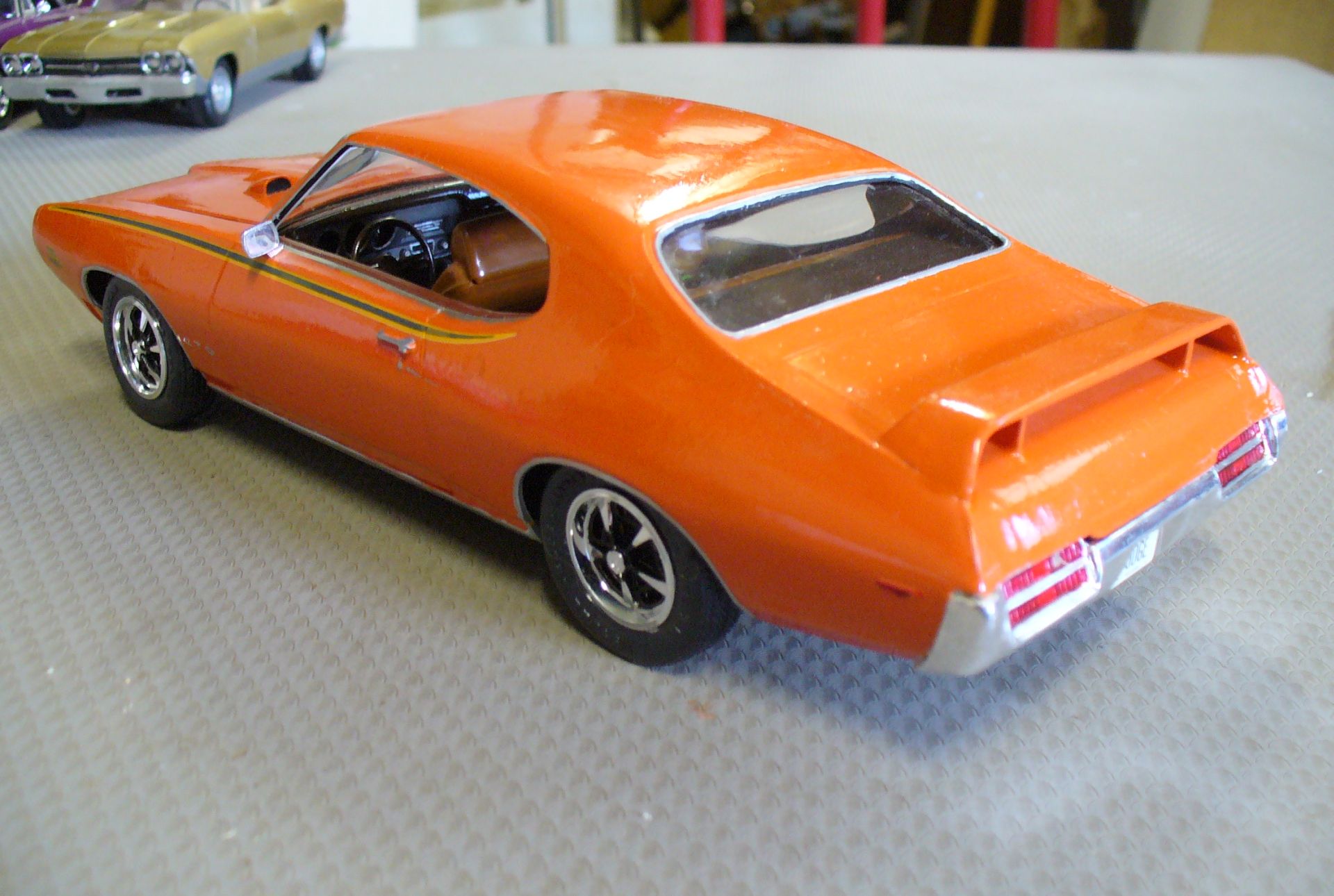
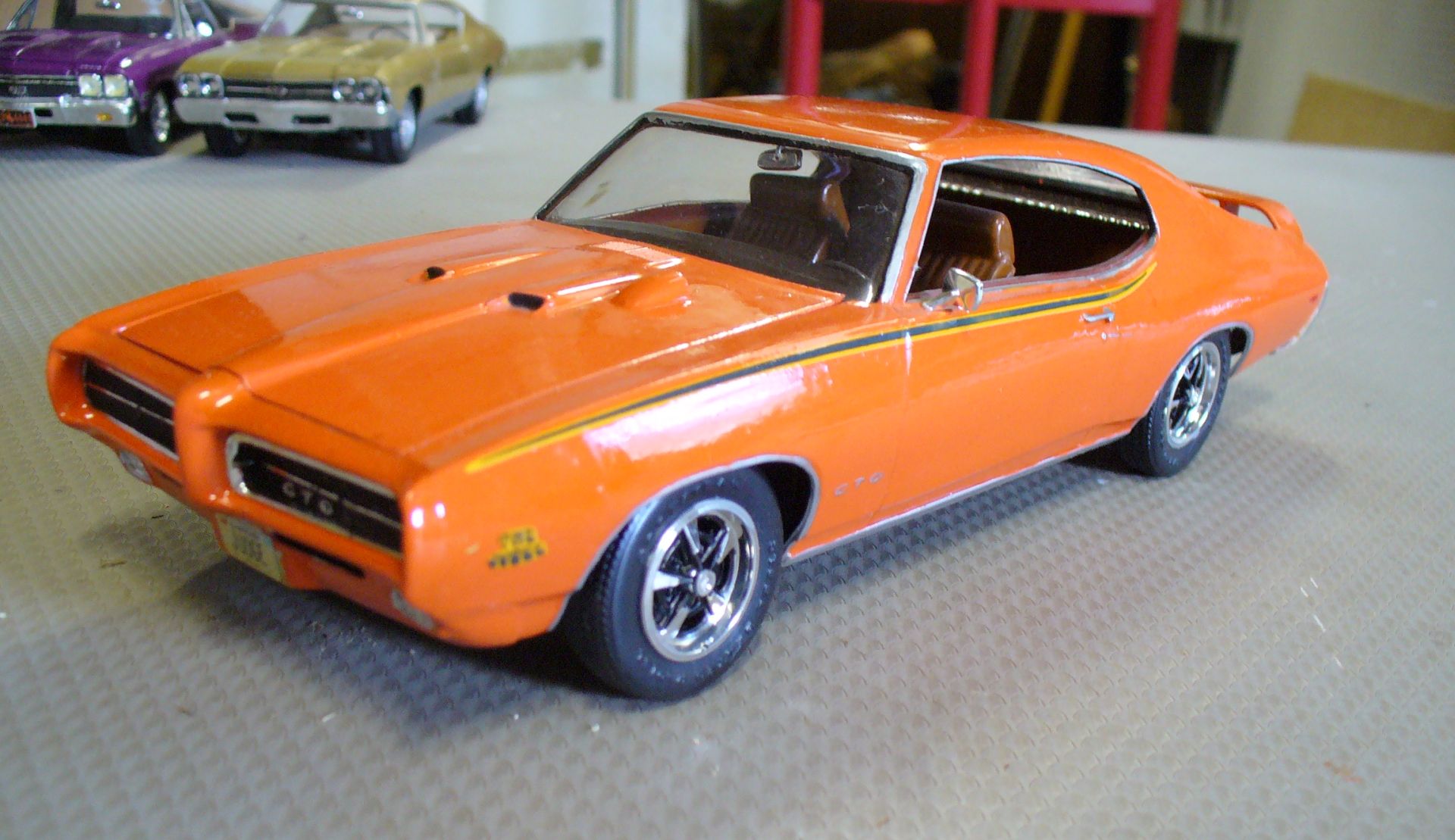
One of Monogram’s first muscle car kits was the 1969 GTO Judge. It came with several sets of decals for the Judge’s colourful stripes, as seen here. An early eighties build, this one is painted by hand with Humbrol enamel so it’s not the proper Orbit Orange. I do know better, now.
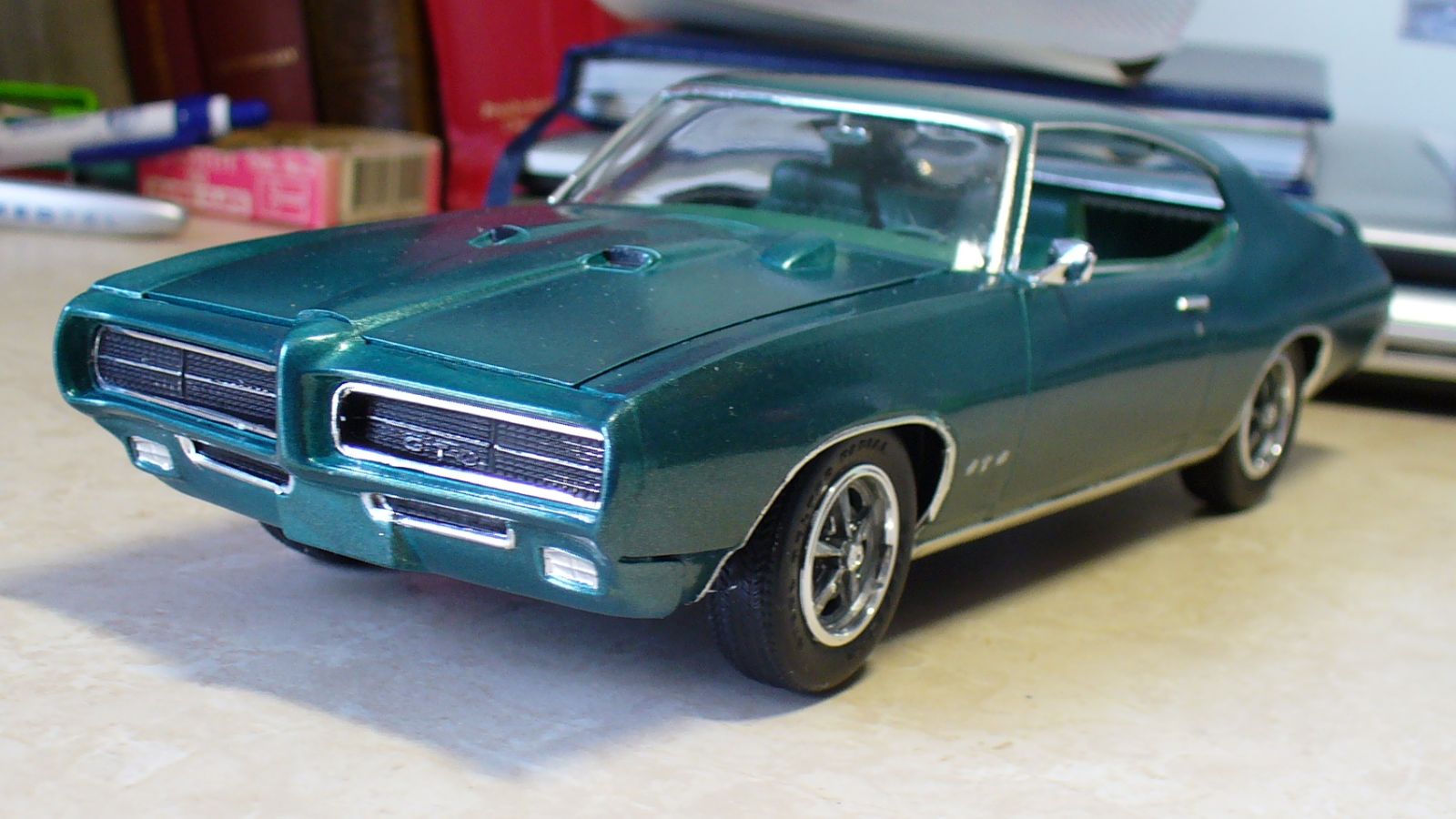
This one was a later build, without the stripes, as none of the choices provided suited the colour I’d chosen. Monogram also revised the kit into a ‘68 with the quarter-vents on the doors being added by a separate clear piece, and the grille and taillights altered. I have built one; it’s around here somewhere.
1970-72
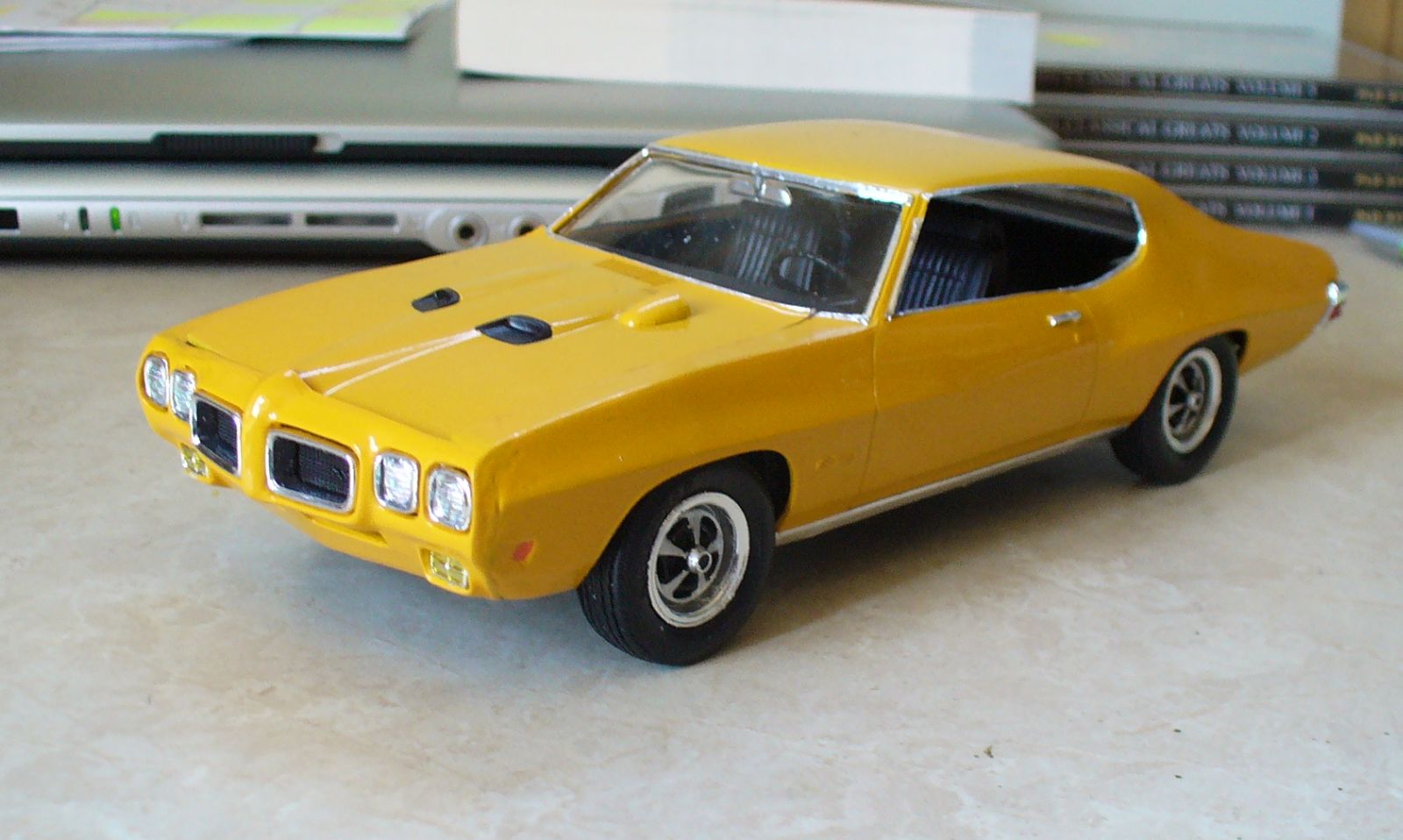
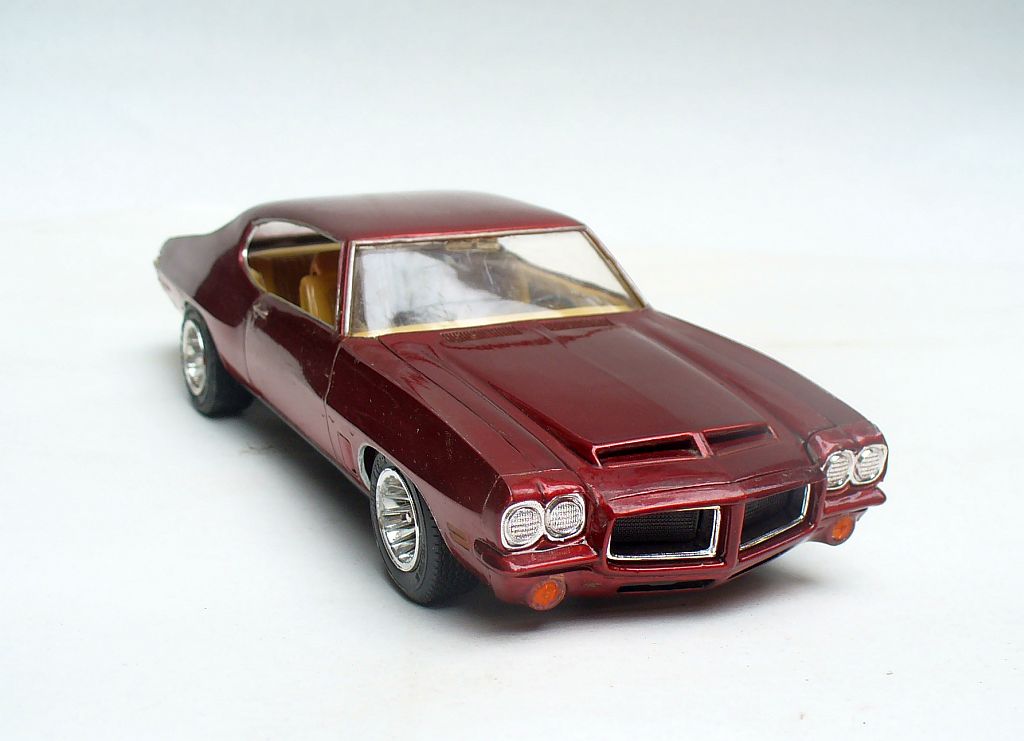
For these last years we’re back with MPC, and tools dating back to the seventies. They have held up better than the ’67, but are still showing their age. Being essentially reruns of the annual kits, they had a number of optional parts, but probably not the full range, as MPC kits I remember from this era had some crazy caricature parts (full-width hood scoops, huge padlock hood pins, tall cross-braced shackles…), mercifully absent nowadays.
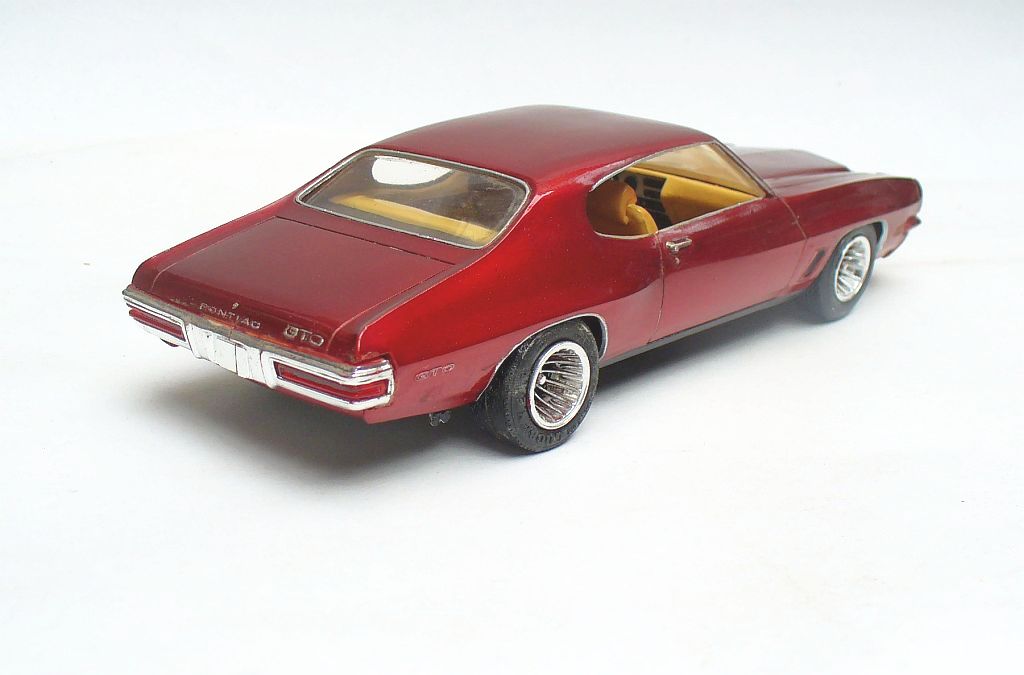
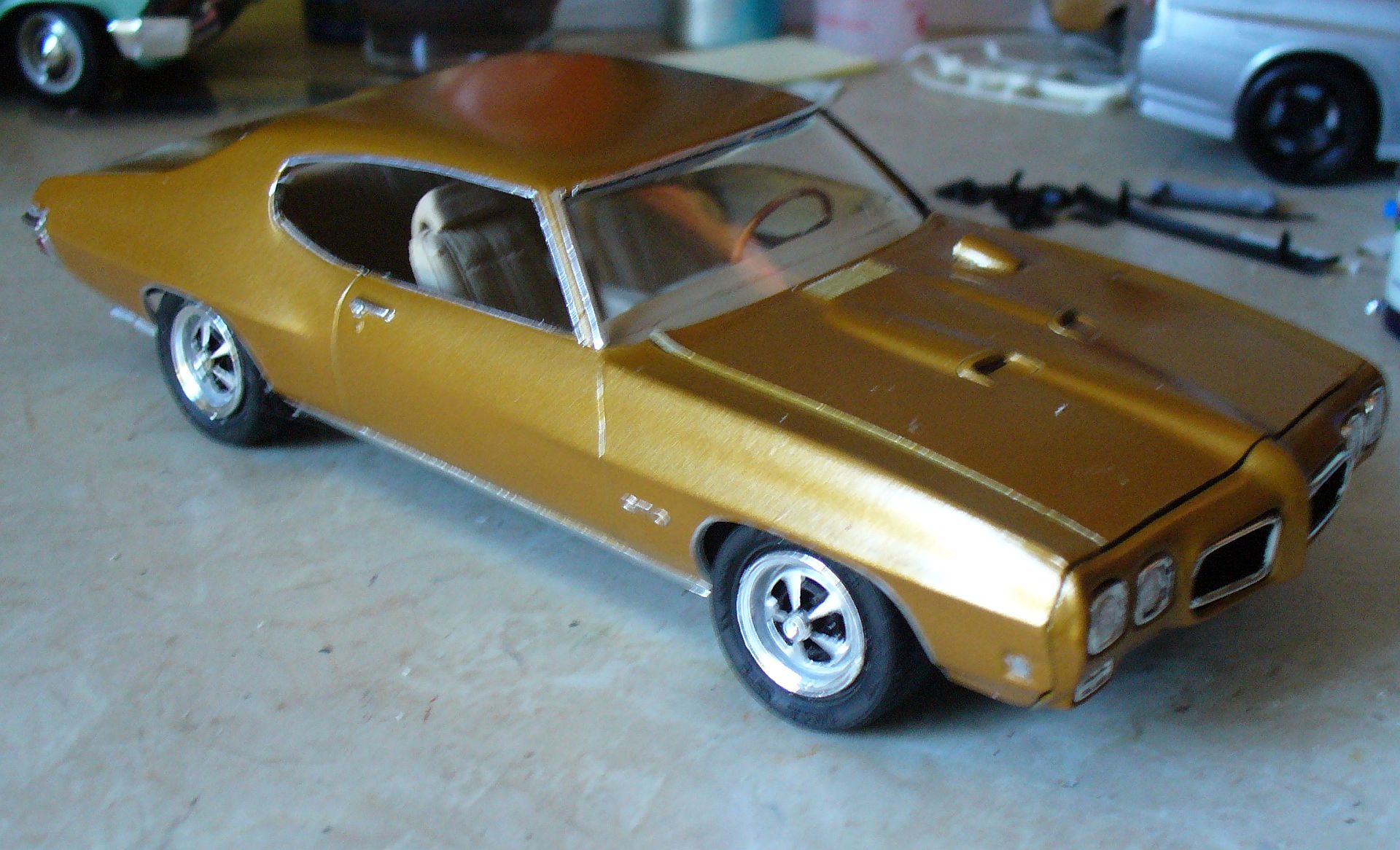
The 1972 kit, being the last revision of the annual tool, reappeared again and again. The red car above was built in the early eighties. Some of the 1970 parts remained, so the tool was restored to 1970 configuration. Personally I feel the ‘70 is a better-looking car, more integrated. The yellow car at the top of this section was an eighties build; the gold one below perhaps about twenty years later.
As I mentioned earlier, there are no Colonnade Pontiac models.
There was a rarely-seen kit of the compact Ventura-based GTO, but that’s a different animal.
That sums it up for GTO models. But wait! There’s an…
Honourable Mention
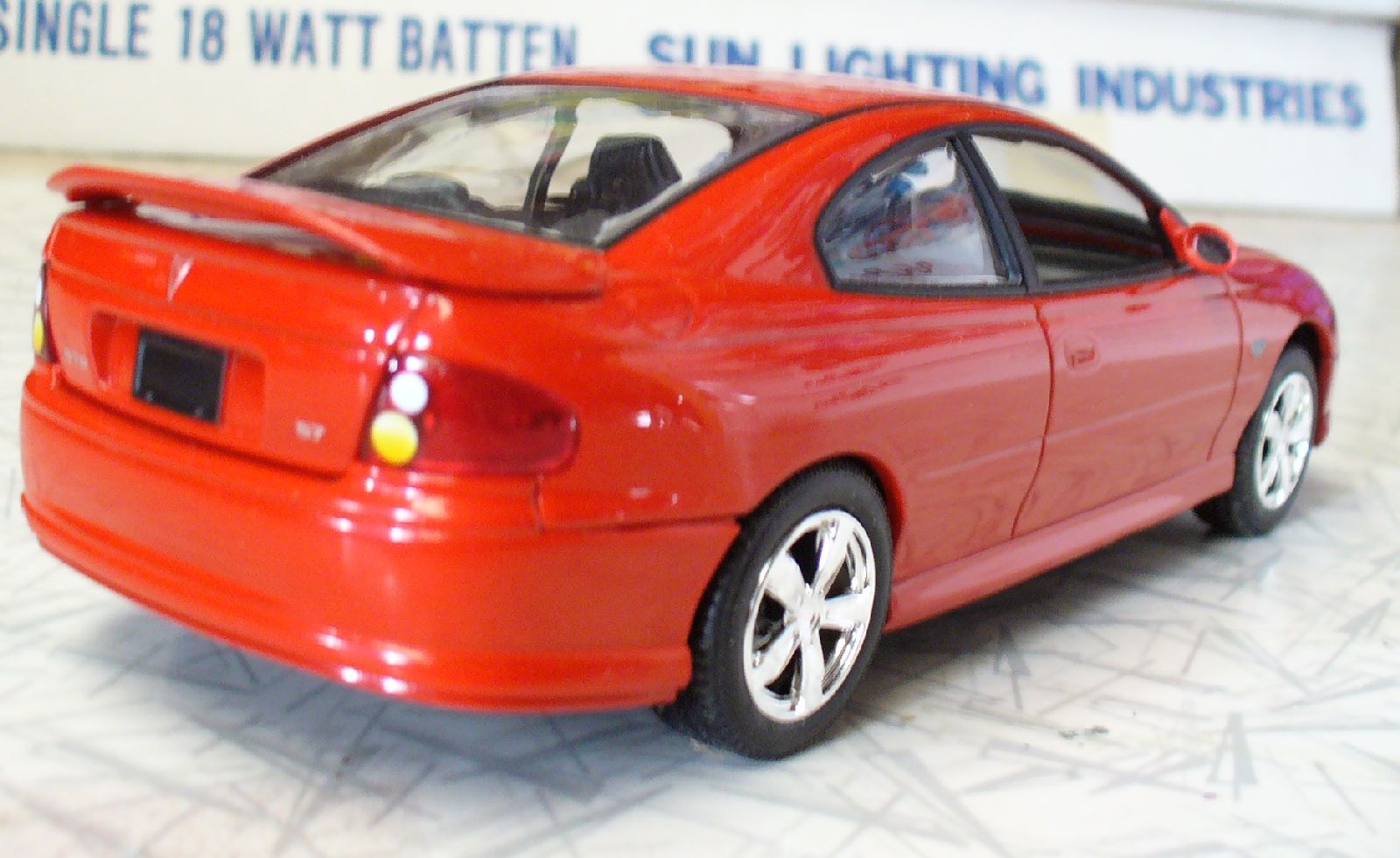
… which goes to this interloper.
Three decades after its last use, GM revived the honoured GTO name and slapped it on a Holden Monaro. Aussies were ecstatic: we were exporting one of our best cars to America! Americans seemed less so. In theory this was a good move; the car certainly qualified size-wise and performance-wise, it had a near-Corvette-spec V8 and a liveable back seat but from what I read at the time the styling was considered too bland – and some complained that it wasn’t American.
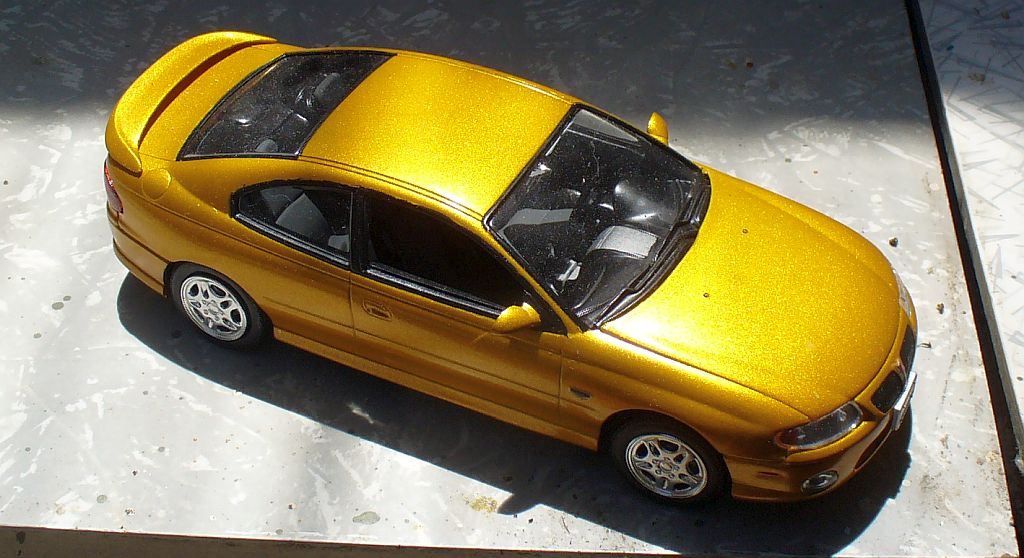
But here’s an undoubtedly-real GTO to finish with:
See you next week!























Very nice Peter, and as usual I am amazed at the quality of the painting. My efforts at doing that by hand make my models better suited for a junkyard scene, so hats off to you.
Any idea what that reversed engineered AMT Tempest will be like? Would you expect it to include decent detail on the unique aspects like the 4 cylinder engine, driveshaft, transaxle, and rear suspension? Or more generic? These are the types of car models that interest me if they actually cover the cool aspects of the prototype.
Thanks Trainman. Generally speaking, only models I built before the mid-80s were hand-painted; here that’s the orange ’69 Judge, and the yellow ’70 GTO. The others were spray cans.
Good question about the Tempest. Since they went to the trouble of producing new tooling I’d expect it to be good – but annual kits of this era generally had a flat all-molded-in-one platform chassis. I’d expect the transaxle and driveshaft to be molded into the floorpan, but to look visually correct.
The engine it might have is another issue. Since it’s a kit of a Le Mans convertible, I’d be more inclined to expect a 326 V8. While the Trophy 4 would be correct as a base engine, typically kits go for the high-power option. On the other hand, unusual engines sometimes get included – like that later OHC six. And if they’d tooled up for the big four in ’61 and ’62 it would make sense to carry it over to ’63. But that’s applying logic; companies aren’t always logical!
In short I haven’t heard, but I’ll be interested to see.
Very cool, thanks for sharing. 🙂 Interesting to note then some people created some “Phantom” GTO from die-cast/resin kits to imagine what if the GTO was made past 1974 like that guy who imagined a 1976 Pontiac Ventura GTO Judge.
http://www.svensworldofwheels.com/76ventura_page.html
The more well known “Phantom” Pontiac GTO is a 1975 resin kit from MPC showing a Ventura Sprint GTO.
Thanks Stéphane. I was aware of the ’75, but not Sven’s ’76 Judge – but I can imagine that’s the sort of thing he would do!
Every now and then the American model companies would attempt to spice up the model line by bringing out a model that didn’t exist, or taking one that did and going beyond what the factory offered. To my mind the Sprint GTO’s covered rear wheels show a certain lack of understanding of what was hot in ’75 – but what looks like a ‘whale tail’ spoiler on the hatch would be spot on.
You’re welcome Peter. 🙂 Also, there was someone who created an other “Phantom” GTO Judge, this time from the 1975 LeMans, a real one homever, not for a resin kit. 😉
https://web.archive.org/web/20090725074140/https://ultimategto.com/cgi-bin/showcar.cgi?type=lot&pic=/pasture/75judge2
Interesting – that link comes up with a 429 error “Too many requests” – I haven’t seen that one before!
I’ll check back again later.
I mirrored that link to other archives sites, I hope you’ll be more lucky to see that “Phantom” GTO Judge.
https://ghostarchive.org/archive/lx1Oj
https://archive.ph/HMzE5
And I played with the picture to imagine how it might look in black with orange stripes with the 1976 front end.
Also, I couldn’t resist to have the guilty pleasure to have fun with Google Flow AI to edit a picture of a 1975 LeMans GT from the 1975 mid-size Pontiac line-up brochure who mentioned the 1975 Pontiac LeMans GT
https://www.oldcarbrochures.org/Canada/GM-Canada/Pontiac/1975-Pontiac-LeMans-Brochure/slides/1975_Pontiac_LeMans_Cdn-09.html
and turned it into a “Phantom” Pontiac Le Mans GTO. 😉