
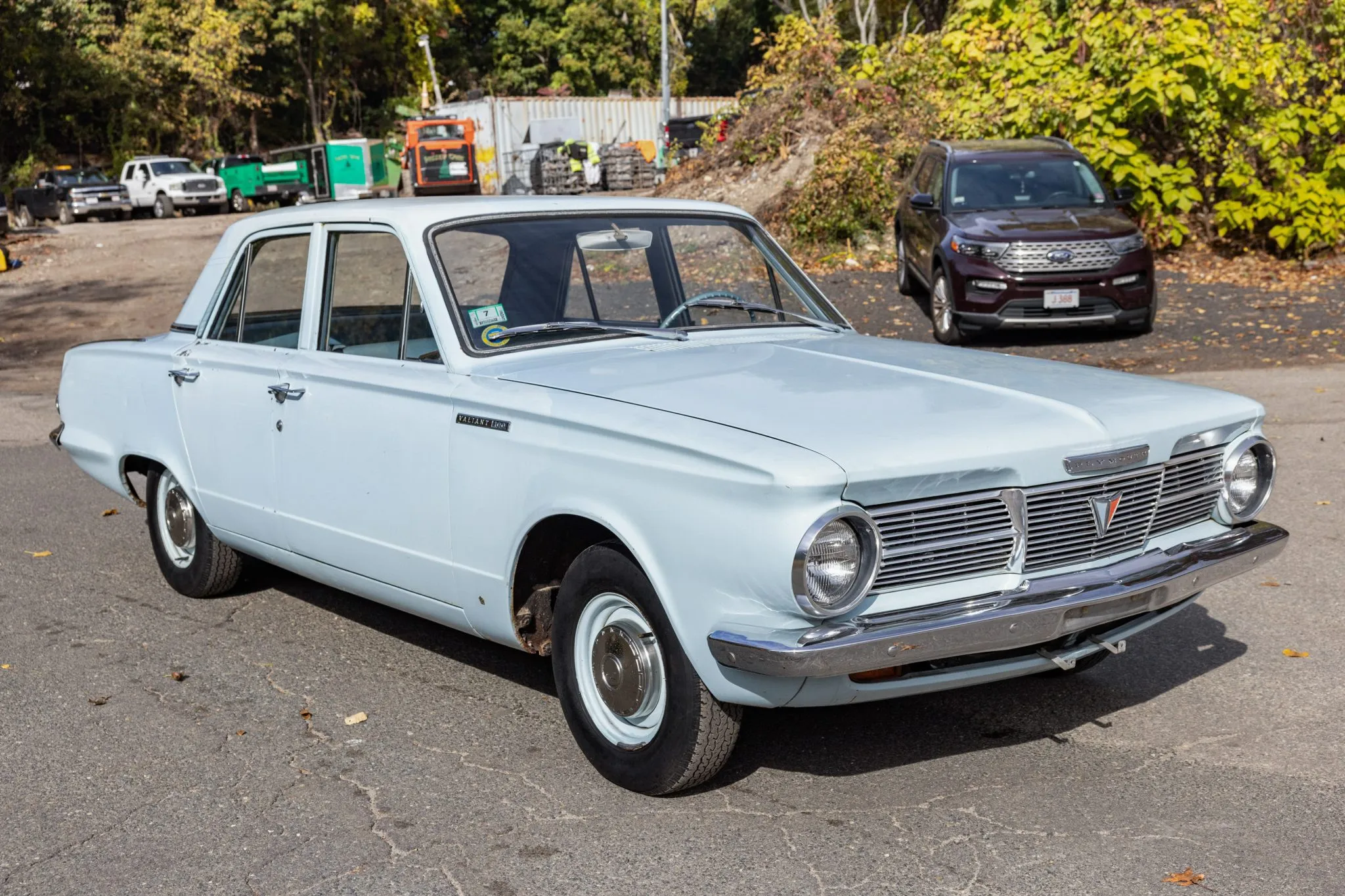
There’s a certain romance about the idea of going completely analog: Turn off the phones, read a book, take a hike, and set the points on your 1965 Plymouth Valiant. The 100 model. With a three-speed. And no radio. Yes, this Valiant’s original owner wanted virtually the cheapest new Mopar they could buy, and it has stayed pretty cheap; this one just sold on Bring a Trailer in Woburn, Massachusetts, for $3,800.
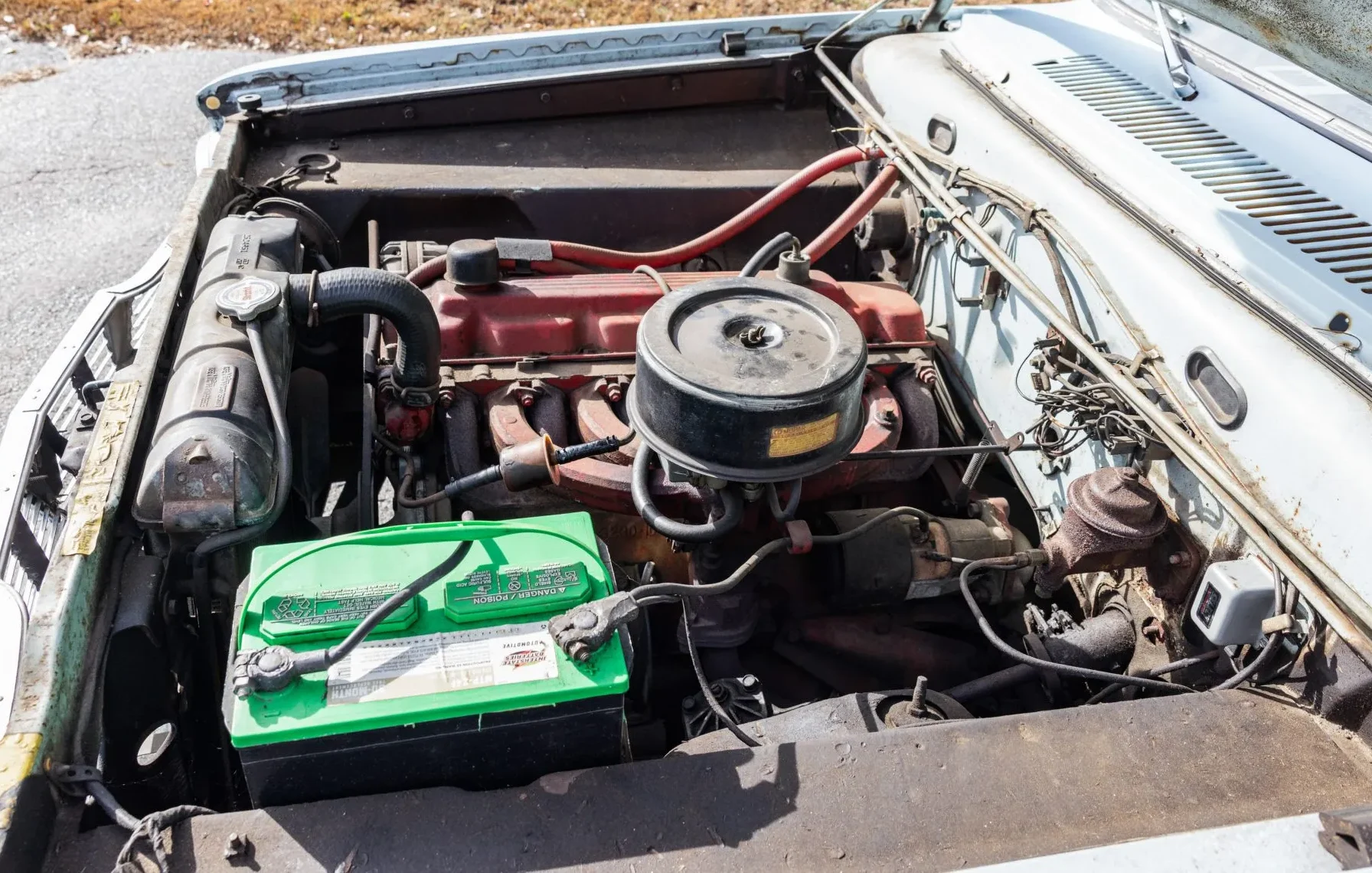
Part of the “thrift” mentality involves being satisfied with the base 101-horsepower, 170-cubic-inch slant six, which will leak oil from a dozen places while simultaneously running forever. Keep the valves lashed once a decade and it should last you a lifetime. This car has the same “green top” Interstate battery as my 1965 Dart and the same single-circuit master cylinder with the same never-not-leaking lid; few are the Mopars I’ve seen with clean master cylinders. This car has, as you might have guessed, no power options, nor does it need them. The steering is slow but light, and the little nine-inch drum brakes don’t take a lot of leg muscle. They do require an understanding about the fundamentals of brake fade when slowing from higher speeds—don’t tailgate.
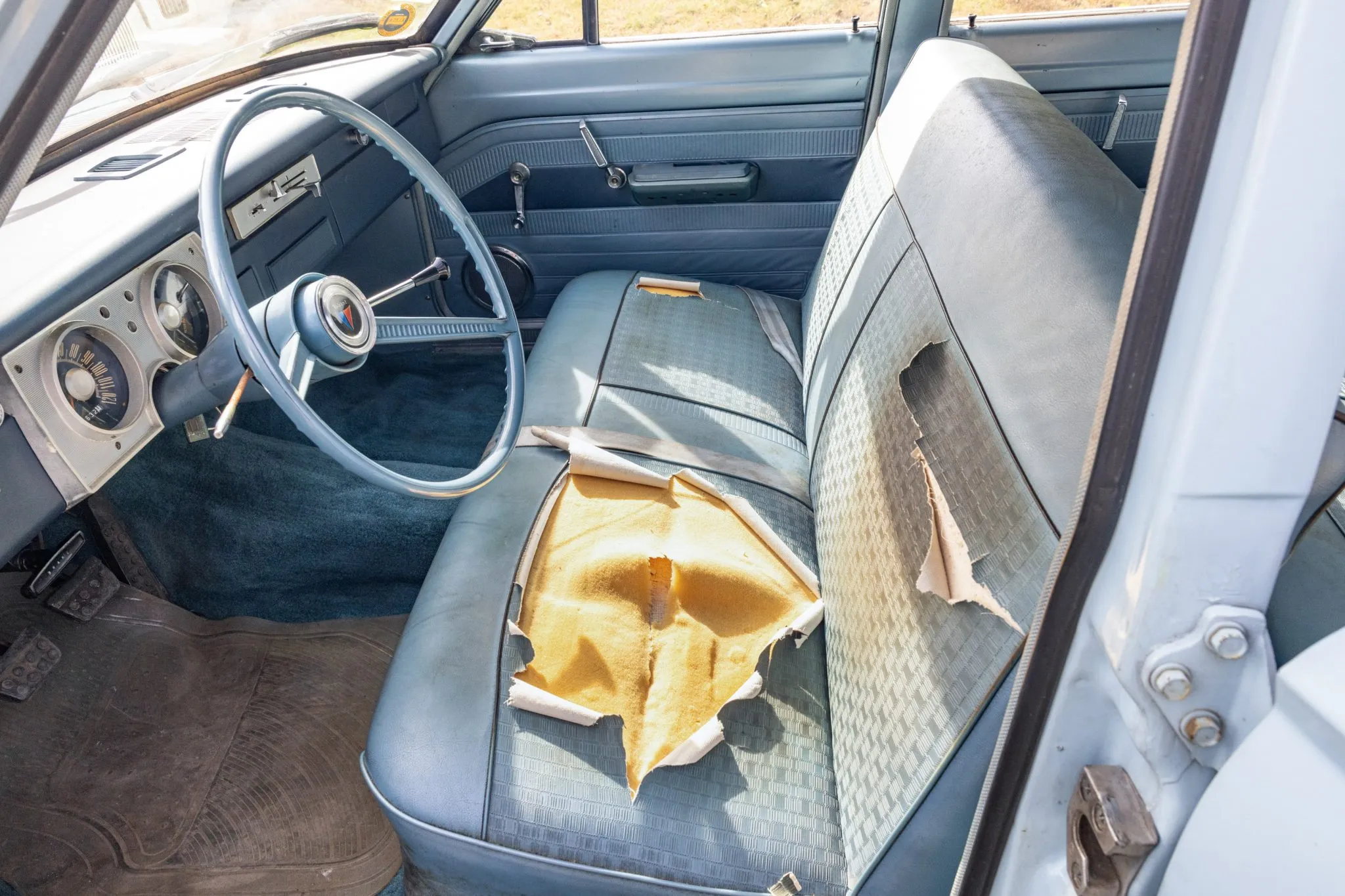
Before the new owner of this Valiant decides to go off the grid completely, they may want to consider using the internet to find suitable replacement upholstery, because the front bench has suffered from a catastrophic blowout. While we’re in here, notice the clutch pedal; this owner eschewed the much superior TorqueFlite for the standard A-903 three speed with no synchromesh on first. That in itself doesn’t take much getting used to, but the chasm between gears does. First gear is 3.22:1, second is a huge step down to 1.84:1, and third is the ubiquitous 1:1. First is almost useless because with the standard 3.23:1 rear axle ratio, the overall gear reduction is 10.4:1, almost a creeper gear. Second is 5.94:1, good for about 40 miles per hour before the noise gets to you, and third is a little tall for cruising surface streets.
With all that being said, it’s just a simple car and you get use to the inconveniences of the A-903; I know I have after almost 13 years of driving my Dart around.
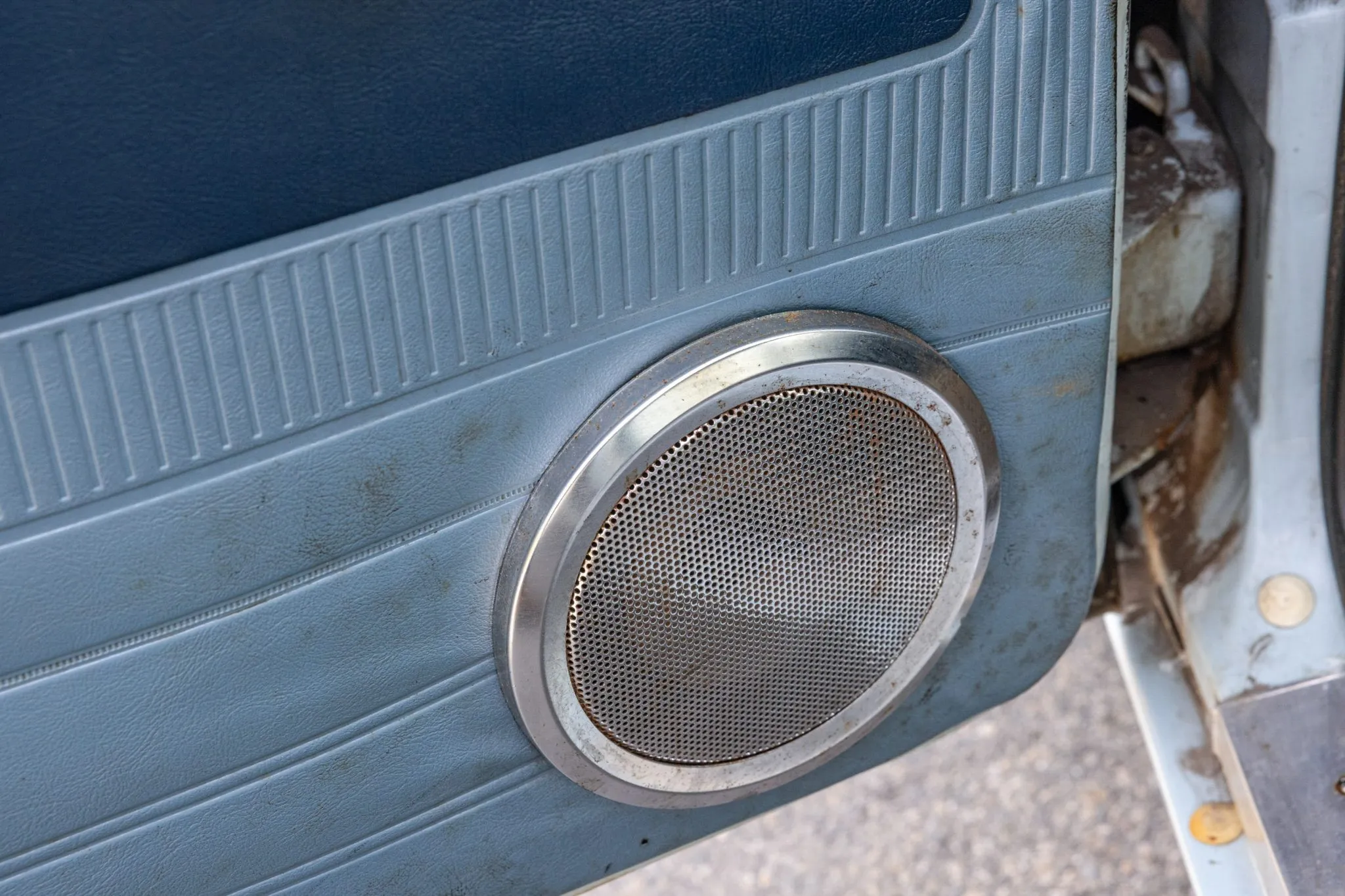
Unfortunately, someone’s cut up these quite decent door panels for a set of door speakers.
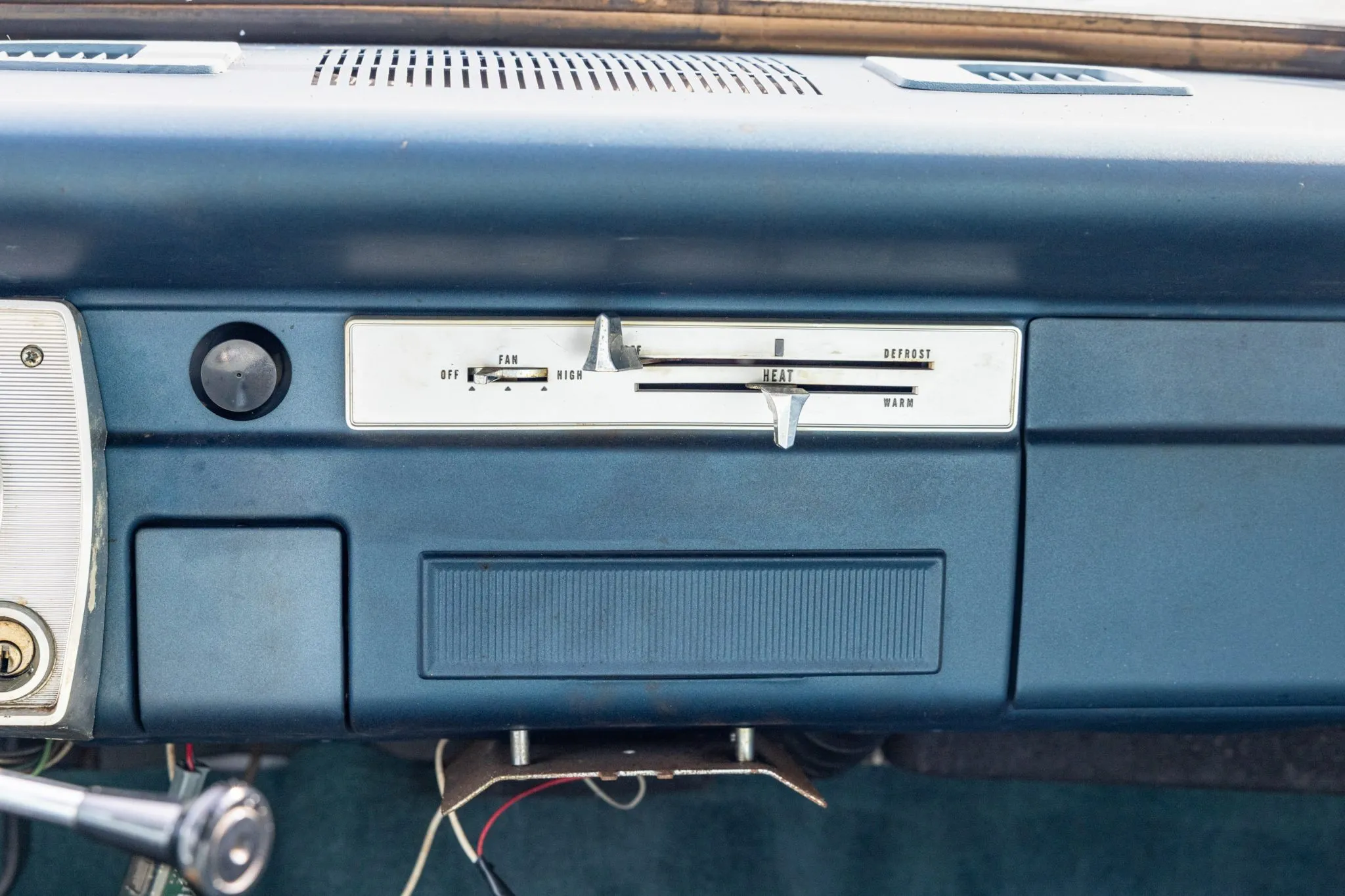
Those door speakers were powered by a radio that was mounted under the dashboard, because the car has a radio blanking plate, meaning that it was never ordered with a radio to begin with. At least it has a heater.
Judging by the number of wires hanging under the dashboard, the new owner will have some electrical cleaning up to do. I’ve found that the dashboard circuits of my Dart were not really meant for the long haul, so get out the wiring diagram, your multimeter, and your patience.
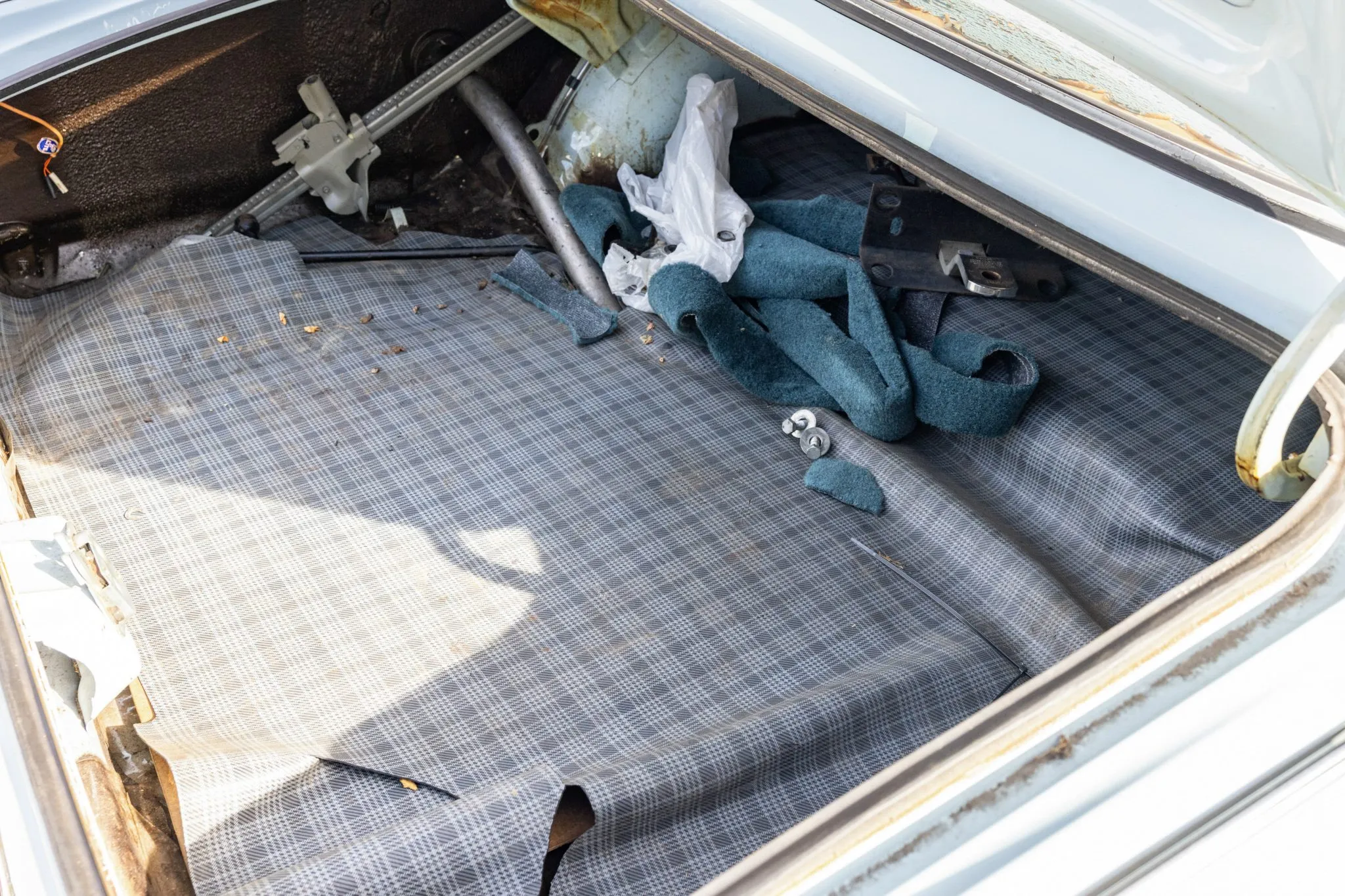
You may have noticed that the carpet in the Valiant looked nearly new (if not a little lumpy), and the remaindered pieces are still in the trunk, which could use a spare and a good tidying up. Notice that there are more dangling wires on the driver side. Also, did someone try to tow with this thing? Bad idea with 101 horsepower and a not-too-robust driveline.
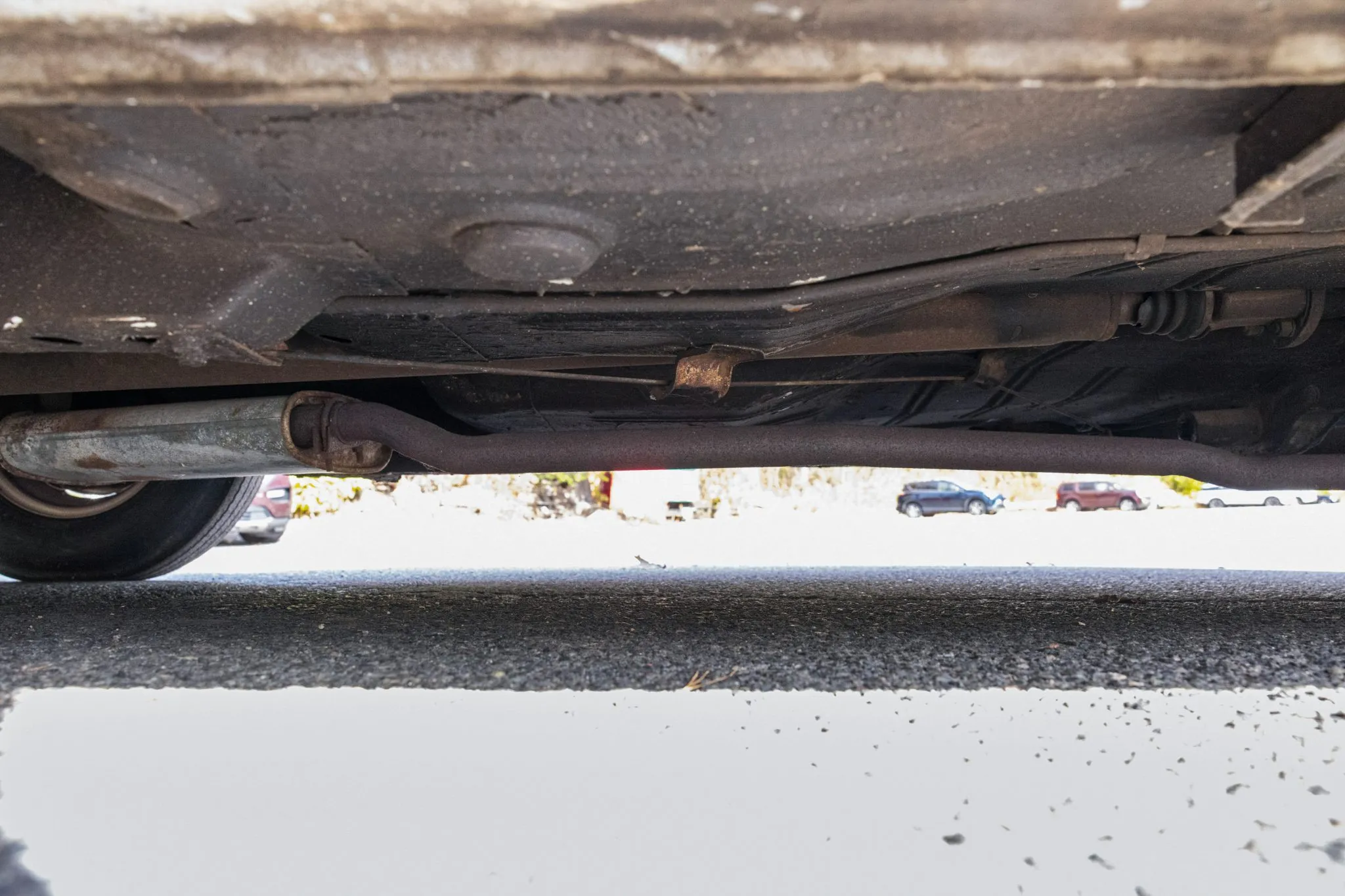
The undercarriage looks great for a northern car, which makes me wonder if the 67,632 miles on the odometer are accurate. The Mopar ball-and-trunnion universal joint is still taking up residence at the forward end of the driveshaft, although the boot looks as if it might be compromised. Installing a new boot is best left to a driveshaft shop in my opinion, but the quality of modern rubber components often leaves something to be desired; the one I installed on my Dart lasted five years before splitting into two pieces while I was driving 70 miles per hour. It sounded like the driveshaft had fallen out as the remains of the boot slapped the transmission tunnel, and I soon converted it to a slip yoke setup.
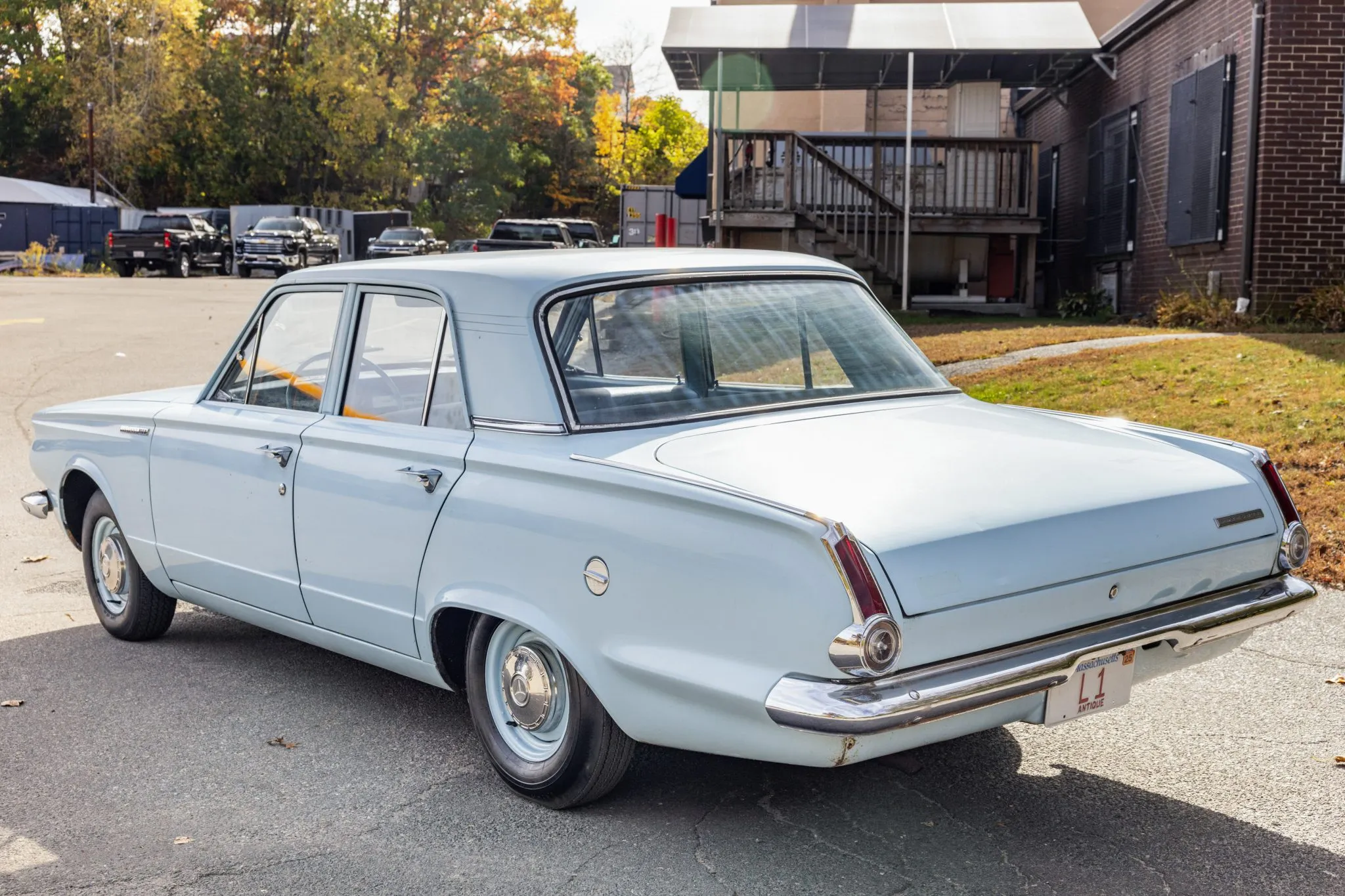
Once upon a time, I earnestly disliked the styling of the 1963-66 Valiant sedans, and I couldn’t believe that anyone in that era of fantastic American design would ever buy one. But I’ve come around, and the Valiant’s simplicity, inside and out, made it a pretty obvious choice for someone looking for a good, cheap car. The base price of this sedan was a mere $2,050, and I can’t imagine that the original owner drove this one off the lot for much more than that. Anyone looking for a car for the edge of the grid could do a lot worse, then and now.
Related Reading
Car Show Classic: 1965 Plymouth Valiant Signet Convertible – You Are Who You Are, Until You Aren’t (by me)
The Ultimate Daily Driver Curbside Classic #2: 1965 Plymouth Valiant With Well Over 400k (500k?) Miles (by Paul N)
My 1965 Dodge Dart 170 Wagon: I Replaced The Clutch (Twice), But That Wasn’t Even The Problem (by me)
Curbside Find: 1965 Plymouth Valiant V100 – The Car My Father Should Have Bought In 1965 (by Paul N)























I find the styling to be pleasantly inoffensive, well suited for someone who wants a basic transportation car. The interior is more disappointing, it really looks cheap and I much prefer the Falcon’s, to stay in the same price range.
I imagine that with torsion-bar suspension, the Valiant would have been a better drive than a Falcon or Chevy II?
Per Google AI the base price of this V100 four door was $2050 plus freight. Maybe the dealer advertised this car for $1999.
I mentioned the $2,050 figure in the last paragraph. The two-door was a little cheaper still, but yes, this could have been the newspaper “loss-leader.”
The seller was not present at all during the sale. That was a big turn off for me. I considered bidding on it, but I had too many questions.
Even though Im a pretty hard core Mopar fan, I dont worship at the alter of the /6. I killed 2 of them; blew a head gasket on one and sent a rod through the block on the other, both in Valiants, lol. 318s all day for me, they make a lot more power and get almost the same gas mileage. I swapped a 360 into the ’68 Valiant that I blew the head gasket in and had instant sellers remorse when I sold it, that was a fun car so I picked up another ’68 a couple of years ago and now I love banging around in it even with the original /6.
In high school in the ’80s, that was a $300 grandma car and I wouldnt be caught dead in a Dart or Valiant, at least a non-muscle version of one anyway, but I love them now. I’ll walk past a row of purple and orange Chargers and Cudas to check out a brown Valiant 4 door at a show.
Another great find Aaron. Keep on rocking the Dart
I would love to put a 318 in mine, but I’d have to basically change the whole driveline, and it’s probably not worth the effort as long as the 225 is plugging along.
For those looking for durable and economical transportation in 1963 one of these would be a much more practical and pragmatic choice than a VW for very little more money. A neighbor that Dad commuted with into the city when Mom needed the wagon had a beige ’63 Valiant just like this one. Great car for thrifty non-car people.