
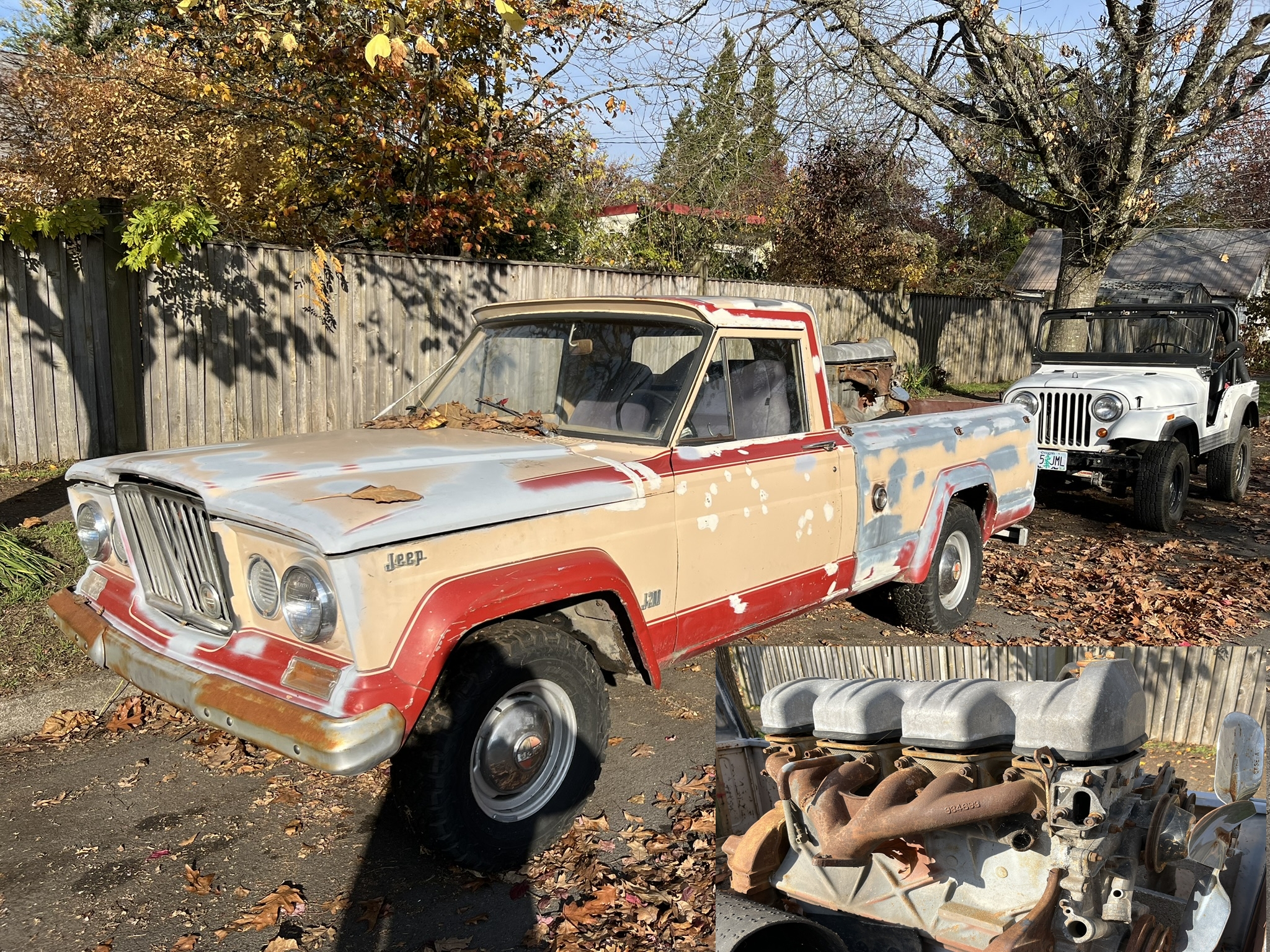
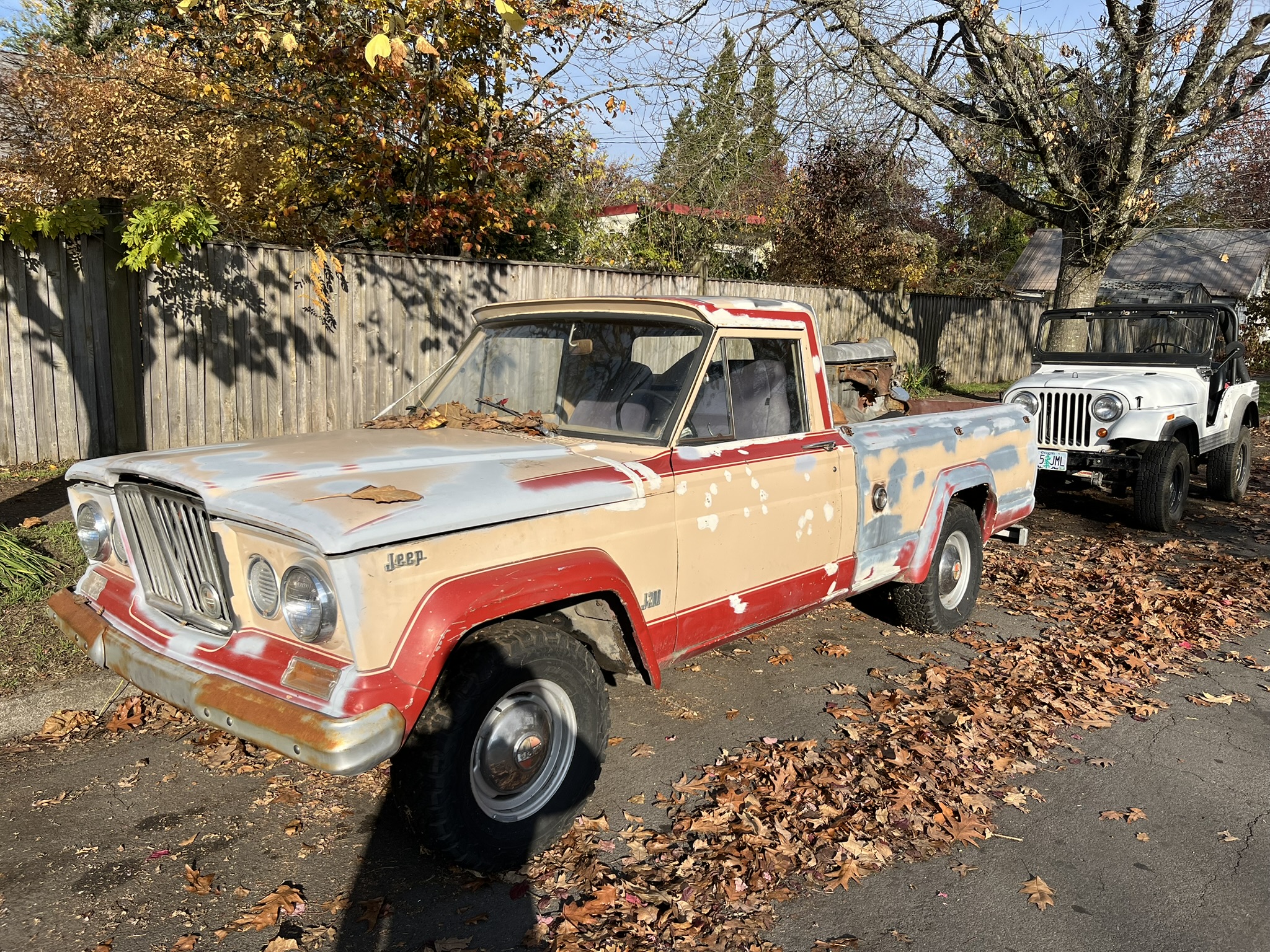
The Willys Tornado OHC six has to be the most unusual engine to find under the hood of a 1960s American pickup truck. I’ve been looking for one on streets here since…forever. Not only have I finally found one, but this Gladiator has two of them! Well no, they’re not both attached to the driving wheels; one is obviously a spare in the bed. Which is a good thing to have when your truck has one of these engines under the hood, as they are very unusual and parts are becoming rather scarce.
Thanks to my ’66 Jeep parked behind it, the two most unconventional American engine cylinder head types of the ’50s and ’60s are represented here: The Tornado 230 six with a race-car inspired OHC hemi head and the F-head Hurricane 134 Four. When it came to engines, Willys went its own way; a true independent.
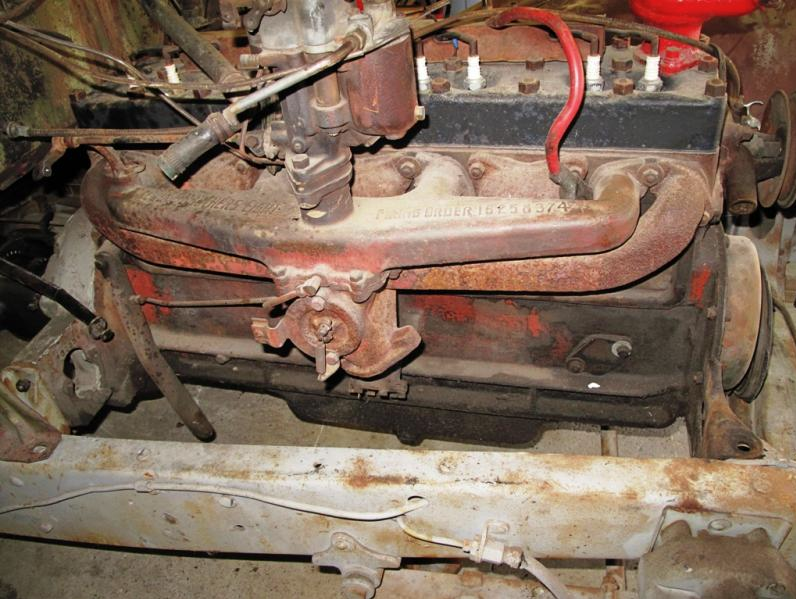
The Tornado OHC six may have had a relatively modern cylinder head, but below its head gasket it was rather ancient. The block architecture and its internal parts were heavily based on the venerable Continental/Kaiser/Willys 226 flathead “Super-Hurricane” six. That engine’s roots go way back, to the 1920s. Continental started building L-head sixes for numerous clients back in the late teens and soon became the dominant supplier of engines for most of the over 100 smaller car companies during the boom era of the 1920s. Continental had catalogs of numerous versions with differences in bore and stroke and other details but fundamentally the same basic blocks in several sizes. This is a 1931 Continental C600 out of a 1931 Dodge; the C600 is considered by some in the know to be a direct predecessor to the 226.
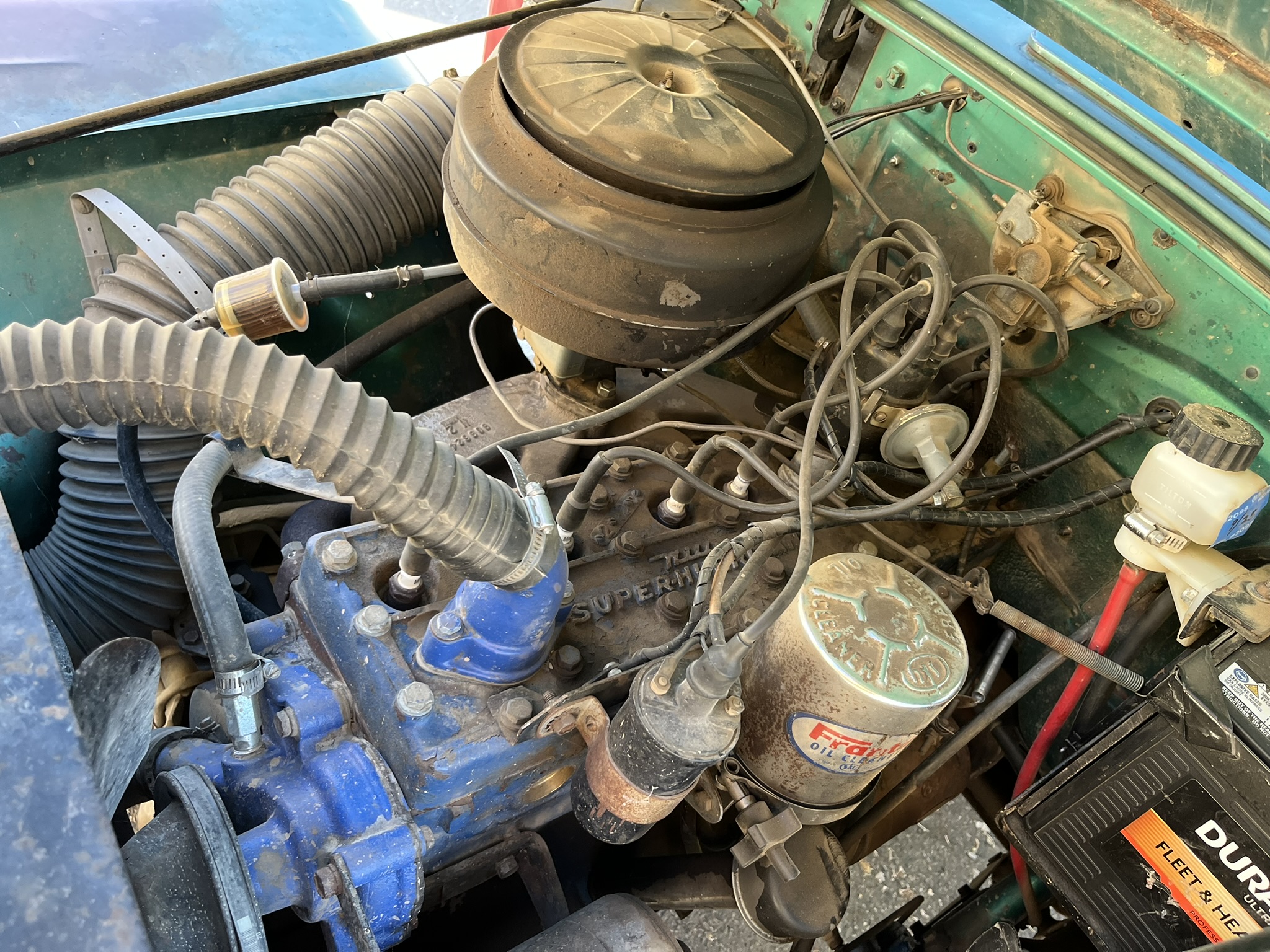
Here’s the final evolution of the Super Hurricane L226 as installed in a 1957 Willys Station Wagon.
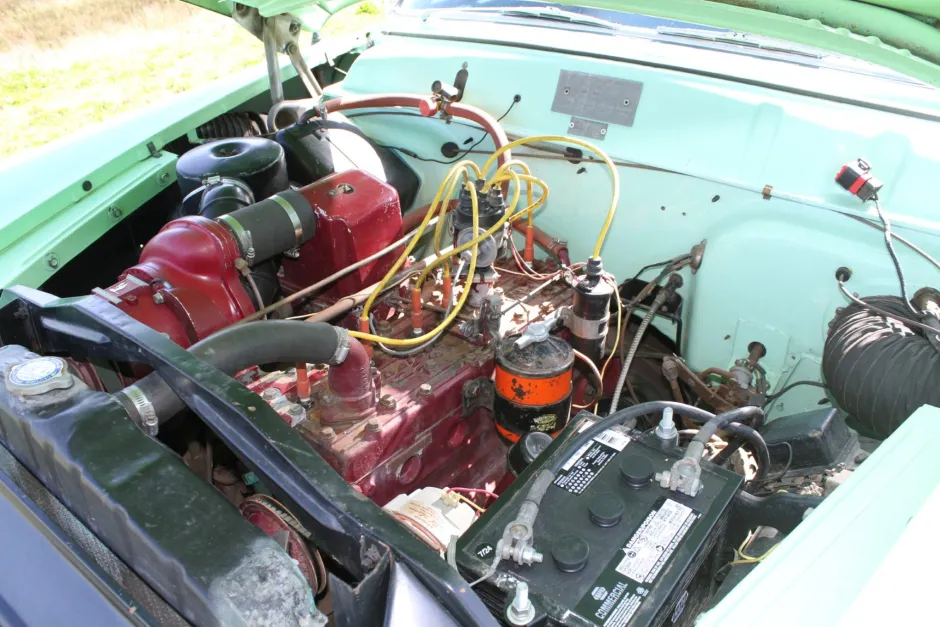
Kaiser-Frazier actually bought one of Continental’s engine factories to make the L226 (with some modifications) for their new postwar cars, but it was soon outclassed by the drastically more modern and powerful ohv V8s from the competition. In a bit of desperation, they even added a Paxton supercharger to it in 1954, elevating its output from 118 to 140. But its basic architecture was very much 1920s, with a 3.31″ bore and a very long 4.38″ bore. And a deep and heavy block.
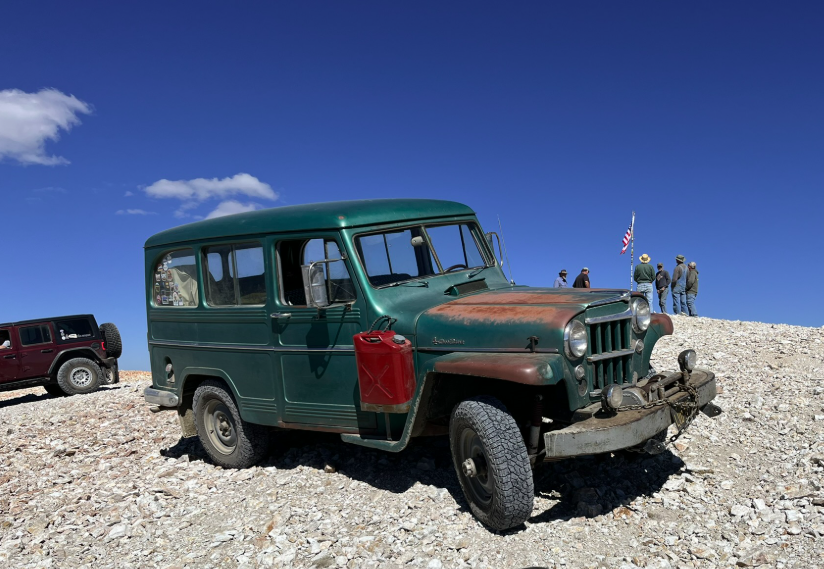
The legendary Willys Station Wagon (and panel truck and pickup) first appeared in 1946, powered by the 60hp Go-Devil L134 four. The heavier wagon and trucks were more than a bit underpowered by the little four, so starting in 1947 the Willys L148 six was available, which didn’t help all that much. It was increased to 161 cubic inches in 1950 and in 1952, an F-head version of it helped a bit more. But after Kaiser Industries bought Willys in 1954, the big L226 became available in the wagon and pickup, and its excellent low end grunt made it the engine of choice, especially the 4×4 wagons, like this totally original ’57 that led us on our splendid mountain trail rides a month ago in the Eastern Sierra.
Most of these 4×4 wagons still in use have had their engines swapped out for something more powerful, but its owner Kurt says that it’s still a very ideal engine for off-roading, if not so on the highway, where 55 is about its maximum semi-comfortable speed.
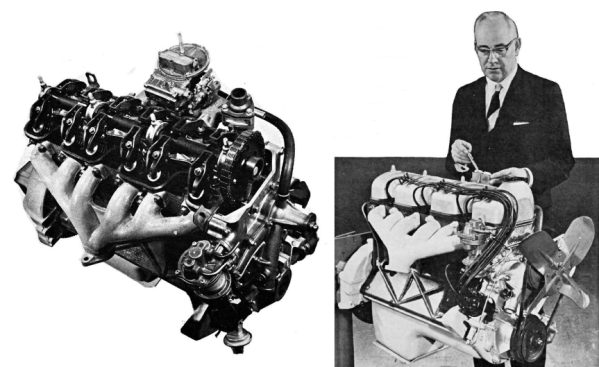
But the times they were a-changin’ thanks to more highways and freeways and higher incomes and cheaper gas. Willys hired Italian Achille “Sammy” Sampietro in 1952 and in 1961 promoted him as its Chief Engineer. Sampietro had spent several years at Healey in the UK, where he was involved in modifying the Nash six to improve its performance for the Austin-Healey 100/6 and 3000. He had also spent time at Alfa-Romeo, Railton, Rootes and others. Coming from Italy and with his wide experience with sports-type cars, he was of course deeply immersed in the widespread use and benefits of hemispherical combustion chambers.
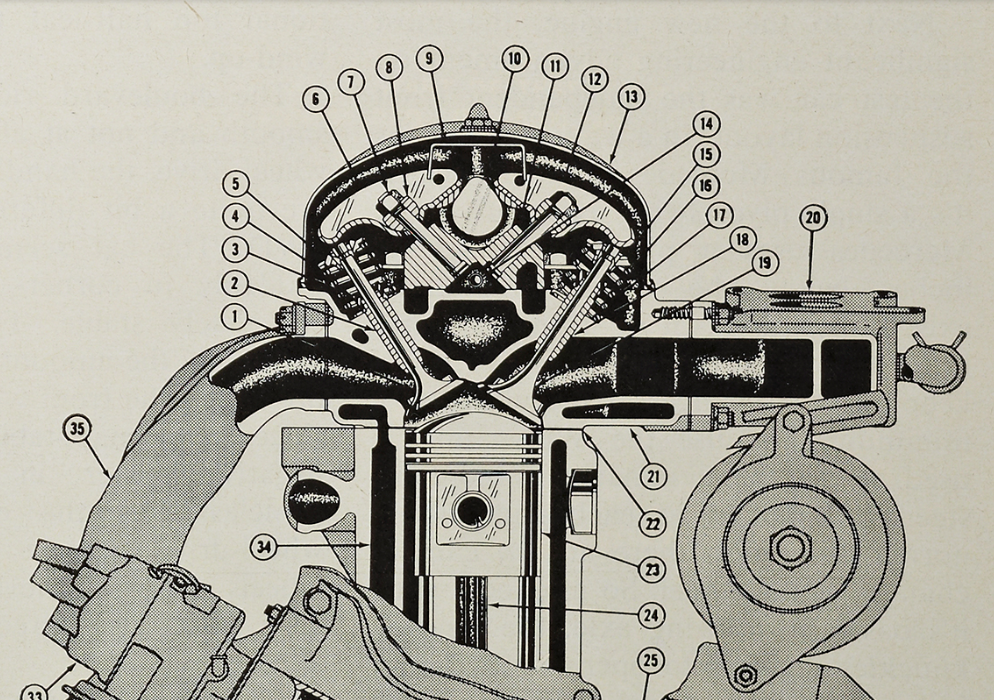
Willys was in no position to be able to develop a modern V8 engine, so the only solution was to improve the output of the venerable L226. Sampietro designed a classic hemi-head, with a single central overhead cam activating the rockers. A hemi head was the only real solution to use larger valves in the small-bore cylinder, and of course offered the ideal large and smooth ports. The cross section of the head could be straight from any number of European high performance and racing engines.
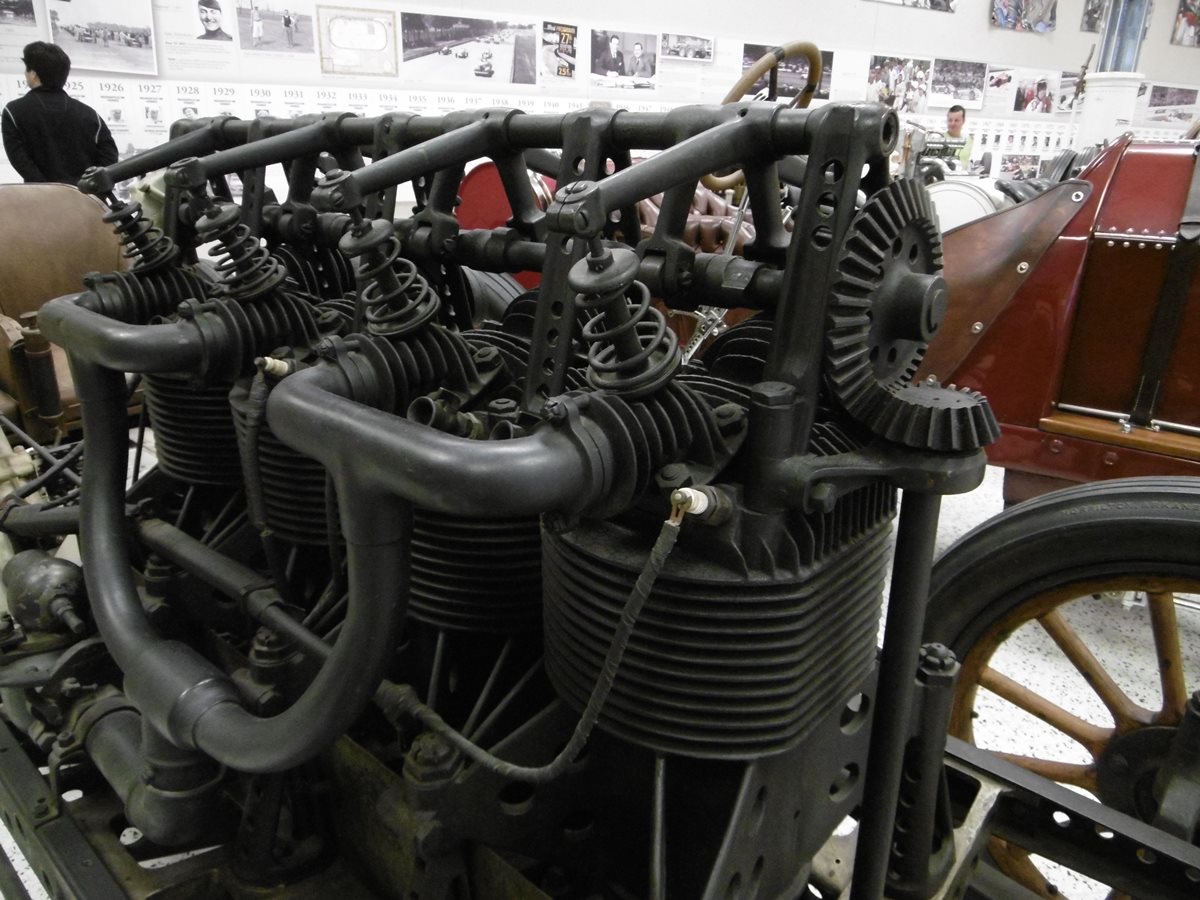
Well, it wasn’t just the Europeans, or sports and racing cars. The first documented hemi head engine was in Indiana, in the 1905 Premier, built for the Indy 500. It was quickly adopted by Ferdinand Porsche in Austria and then became widespread in use among racing and sports cars, high performance luxury cars and eventually adopted widely in Europe and more limited in the US, for racing and cars like the Duesenberg.
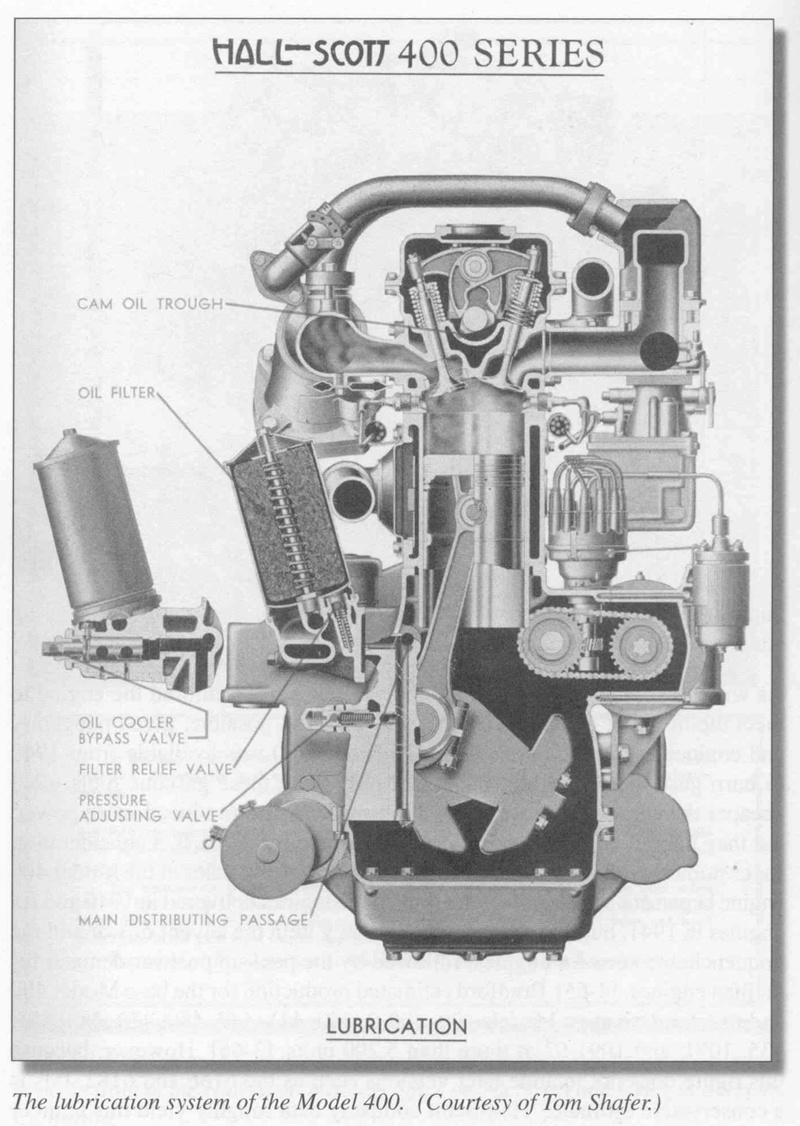
And it wasn’t just cars; the American engine builder Hall-Scott was a very early adopter of hemi heads, and its benefits was put to full use in its aero and marine engines as well as its legendary gasoline truck and bus engines, which generated massive amounts of torque thanks to the excellent breathing of their hemi heads.
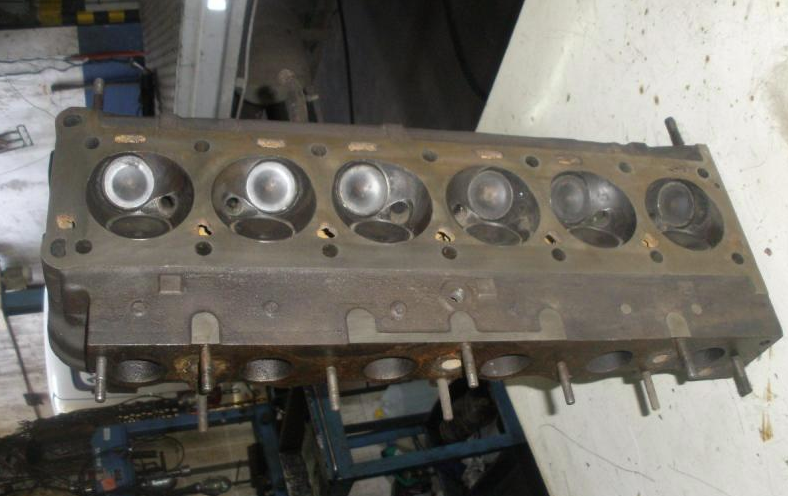
The valve sizes in the Tornado 230 six were a large 1.88-inch intakes and 1.62-inch exhausts. A number of parts were aluminum, including the front cover, water pump, valve cover and intake manifold. The engine weighed 575 pounds, some 40 pounds lighter than the 226 flathead, although that was still quite high.
That head had has serious potential to flow, the key to making power. One of the (shrinking) number of fans/users of these engines bench tested the flow of one of these heads, and here’s his comments at an oldwillysforum.com thread on the subject:
I got 207 cfm at .600 lift on the intake, and the mid lift curve was terrific as you see with hemi’s. And that’s with the wacky intake manifold arrangement where 1 intake port feeds 3 cylinders. No wonder they race these things in Argentina. This thing blows away your average 350 chevy.
Using that number in a power calculator indicates that the head has the potential to make some 350 hp if it could rev to 7,000 rpm and had more displacement and some 240 hp at 7,000 rpm with the current 230 cubic inches. That kind of engine speed is of course not realistic given its very long connecting rods, heavy long pistons, four bearing crankshaft and other limitations of its very elderly roots. Displacement was increased slightly to 230 cubic inches thanks to an increase in the bore to 3.435 ” (stroke still at 4.375″). Compression ratio was 8.5:1.
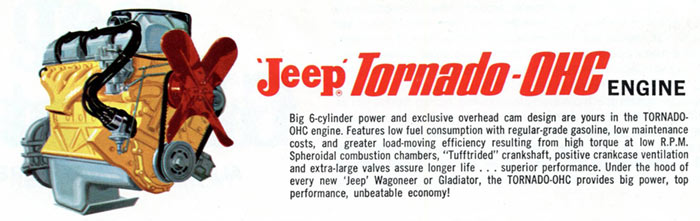
The most common version has a Holley two-barrel carb; in this configuration Jeep initially announced that it made 155 hp and 230 lb.ft. of torque on its tests, but “based on Willys conservative policy on published horsepower ratings, the engine as normally fitted for vehicle use” (from an SAE paper) is rated at 140 hp @4000 rpm and 210 lb.ft. @ 1750 rpm). Perhaps these were essentially net numbers? There was also a low compression version that was rated at 133 hp.
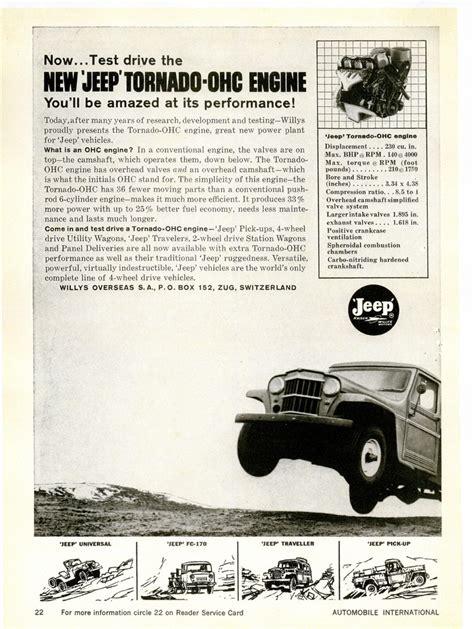
The Tornado OHC was first installed in 1962 Willys Wagons and Pickups, and performance was significantly improved.
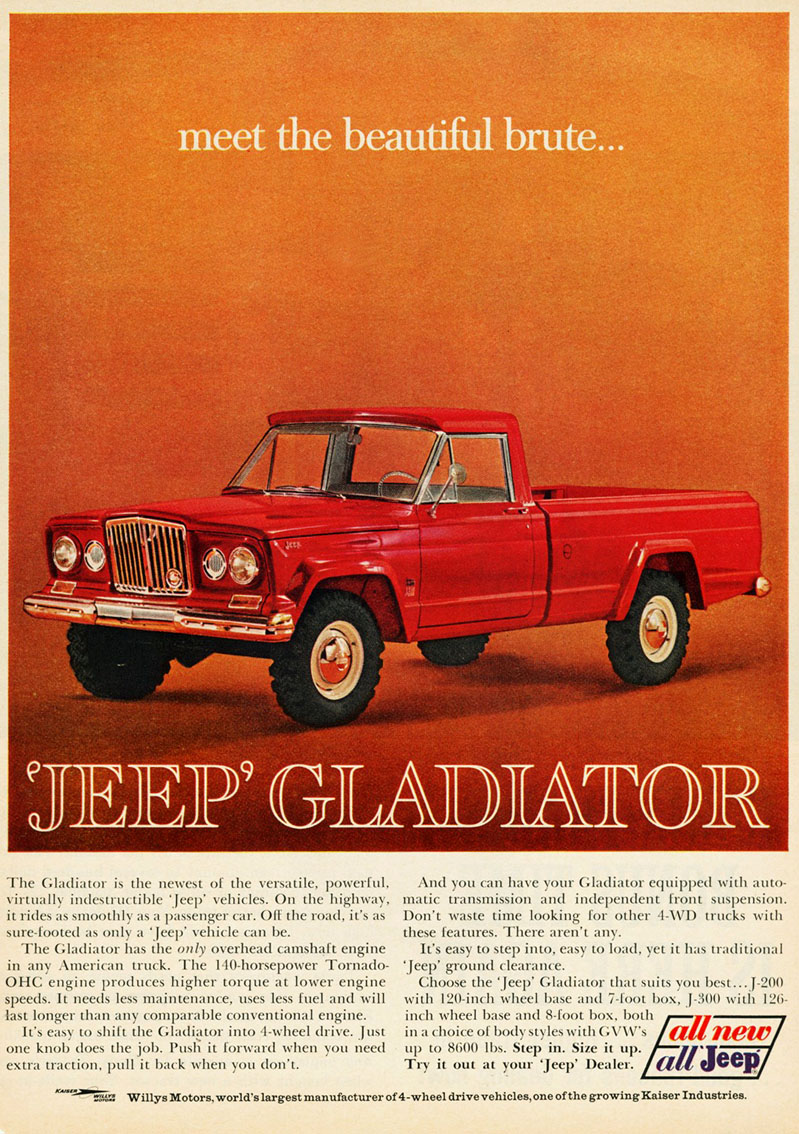
But clearly Willys had the all-new 1963 Jeep Wagoneer and Gladiator pickups in mind. Although it wasn’t going to fully match a V8, in the early sixties sixes were still the most popular choice in pickups, and the Tornado was up to the power demands for the times. Unfortunately, it wasn’t up to the reliability expectations of the buyers. Problems appeared almost instantly, primarily with issues of oil burning and lubrication in the cylinder head, due to a lack of drains to recirculate the oil as well as others.
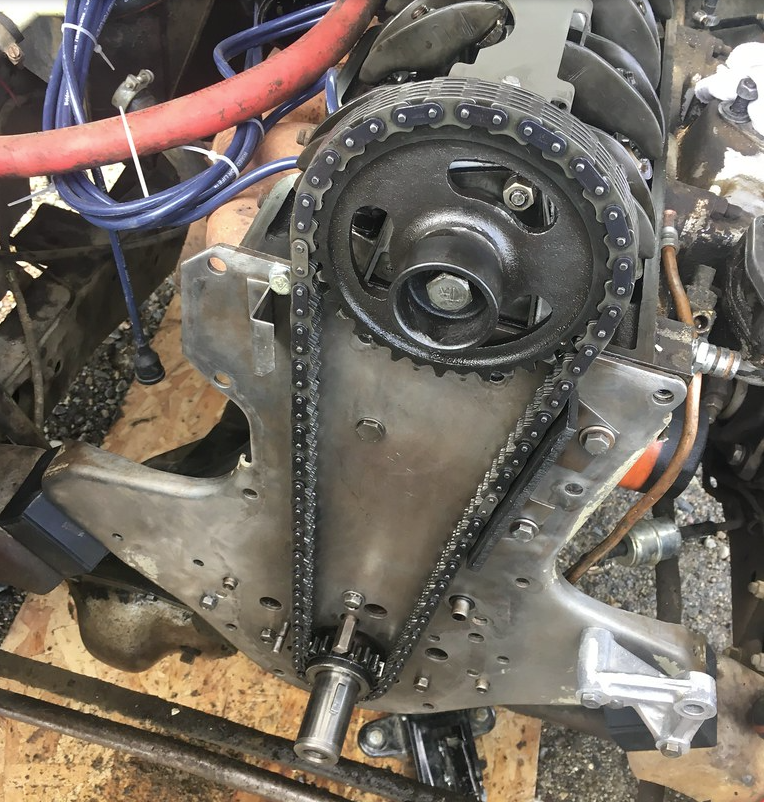
Another related issue was that the aluminum front engine plate was used to attach the front engine mount, which led to the plate deforming and leaking. Willys started making changes to the cylinder head very quickly, and later versions by 1964-1965 seem to have fixed the worst of the lubrication issues. But the front engine mount issue would (and still is) a negative factor.
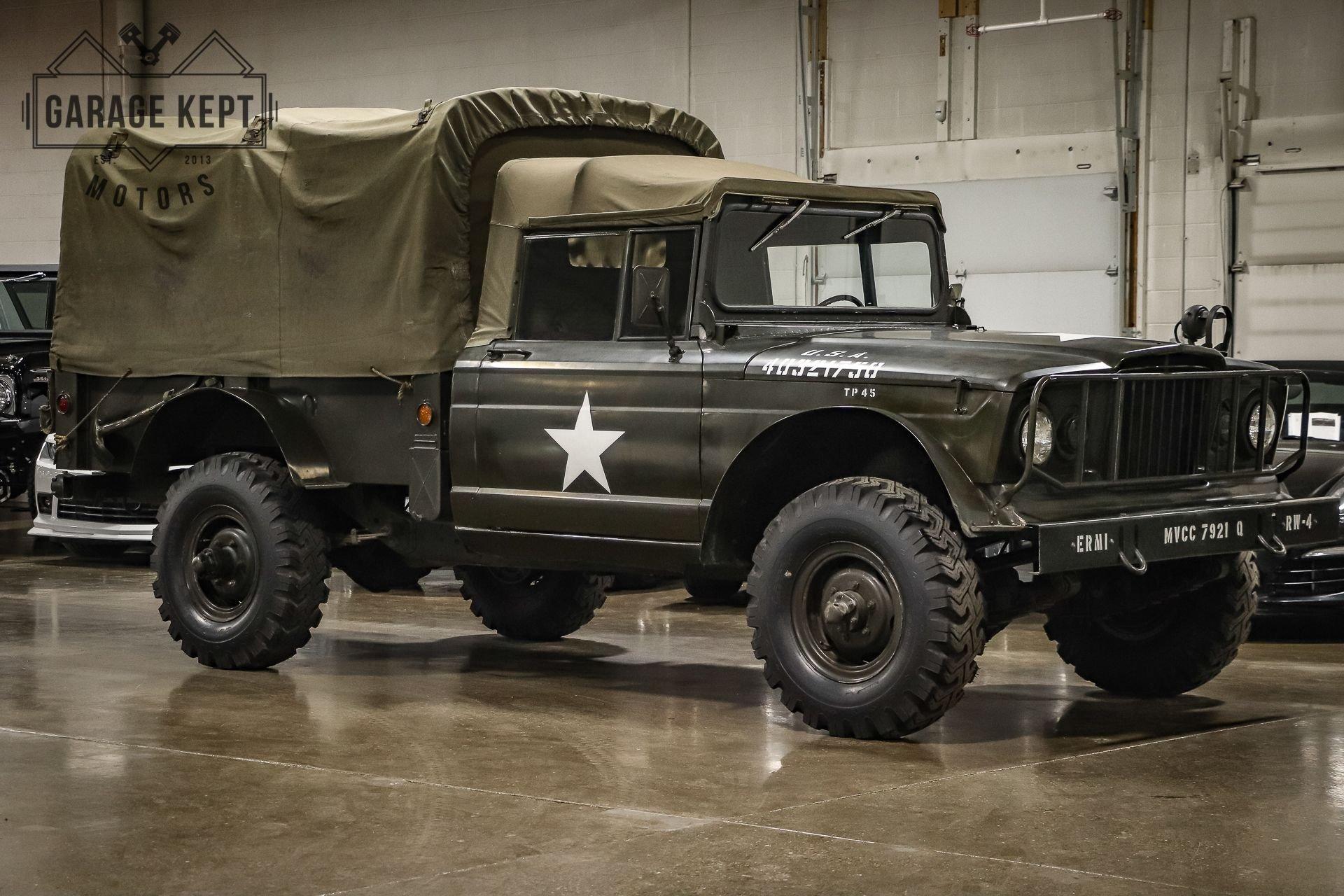
The Tornado OHC six found itself in the Gladiator-based Military M715, built between 1967 and 1969 at the height of the Vietnam war. In this application, a number of changes were made, especially moving the engine mounts to the side of the block. But that was not enough for the Tornado to get a rep for being fragile among its military users too. But ex-M715 Tornado engines with their side-mounted engine mounts have been adapted to civilian Jeeps, mainly Wagoneers and Gladiators.
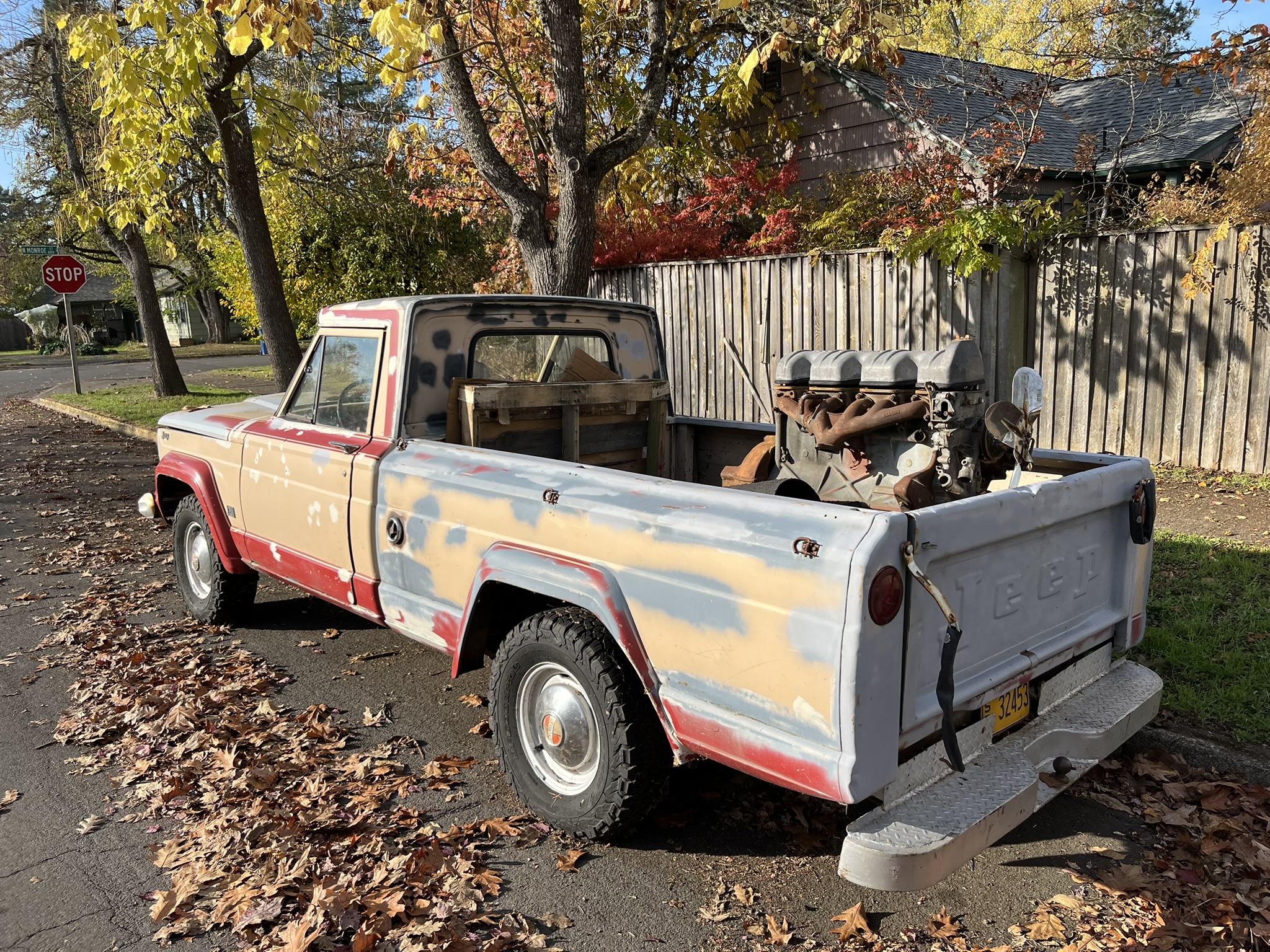
After only two years, the Tornado was replaced by the excellent AMC 232 six and the AMC 327 V8 was made optional. I’m not sure what exactly year this 2WD J2000 (1/4 ton) pickup is, but when I saw the spare Tornado six in its bed, I was of course quite certain as to what would be under the hood. Let’s take a look at the spare, as it’s on full display.
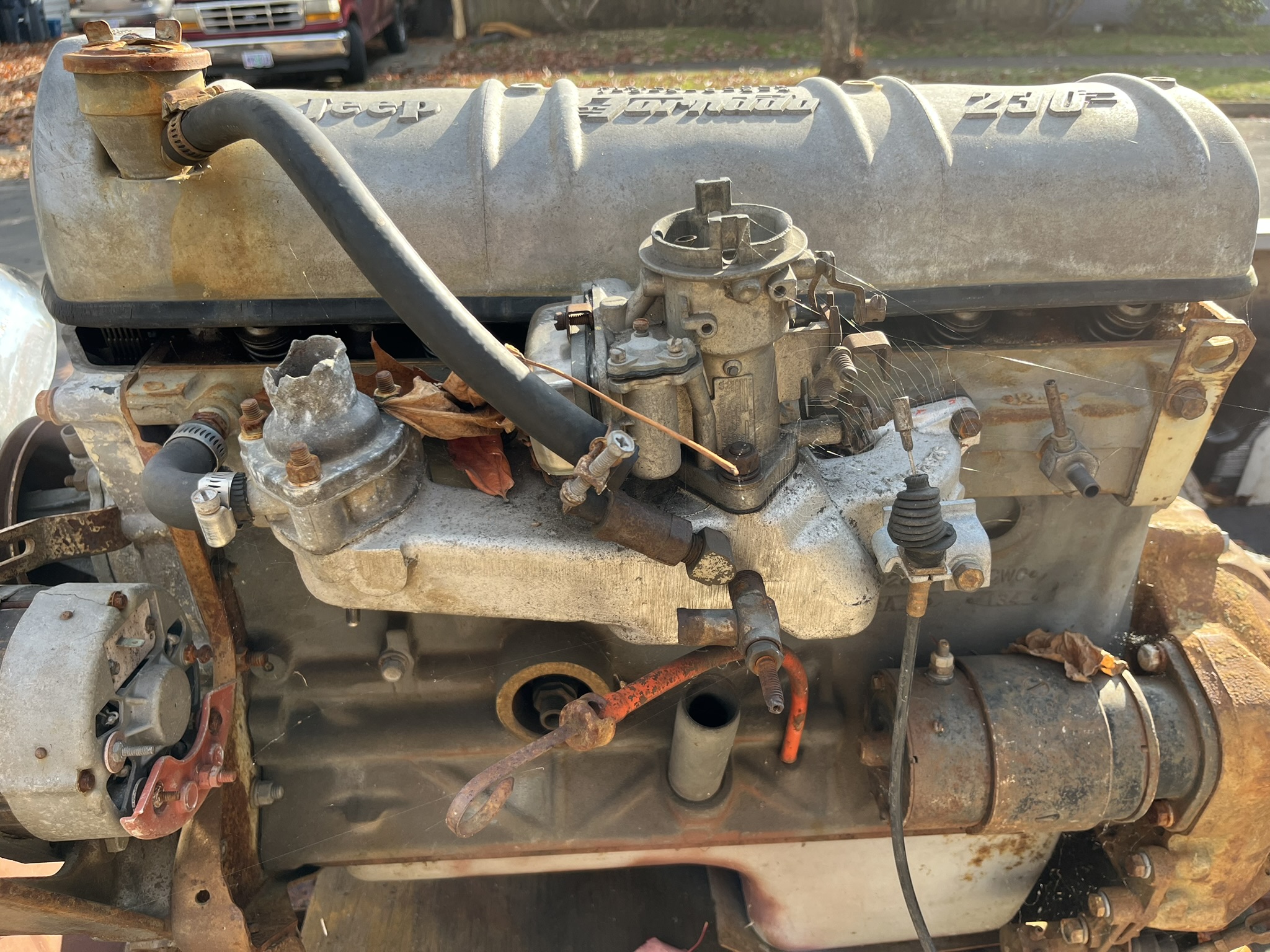
One of the more unusual details about the head is that the intake manifold is partially within the head, with only two branches of the actual intake manifold to feed the six ports.

It very much looks like the type of intake that Sampietro engineered for the Nash six in the Nash-Healey, with its two side draft Carter carburetors. This was a common arrangement in BMC engines in the 1950s too.
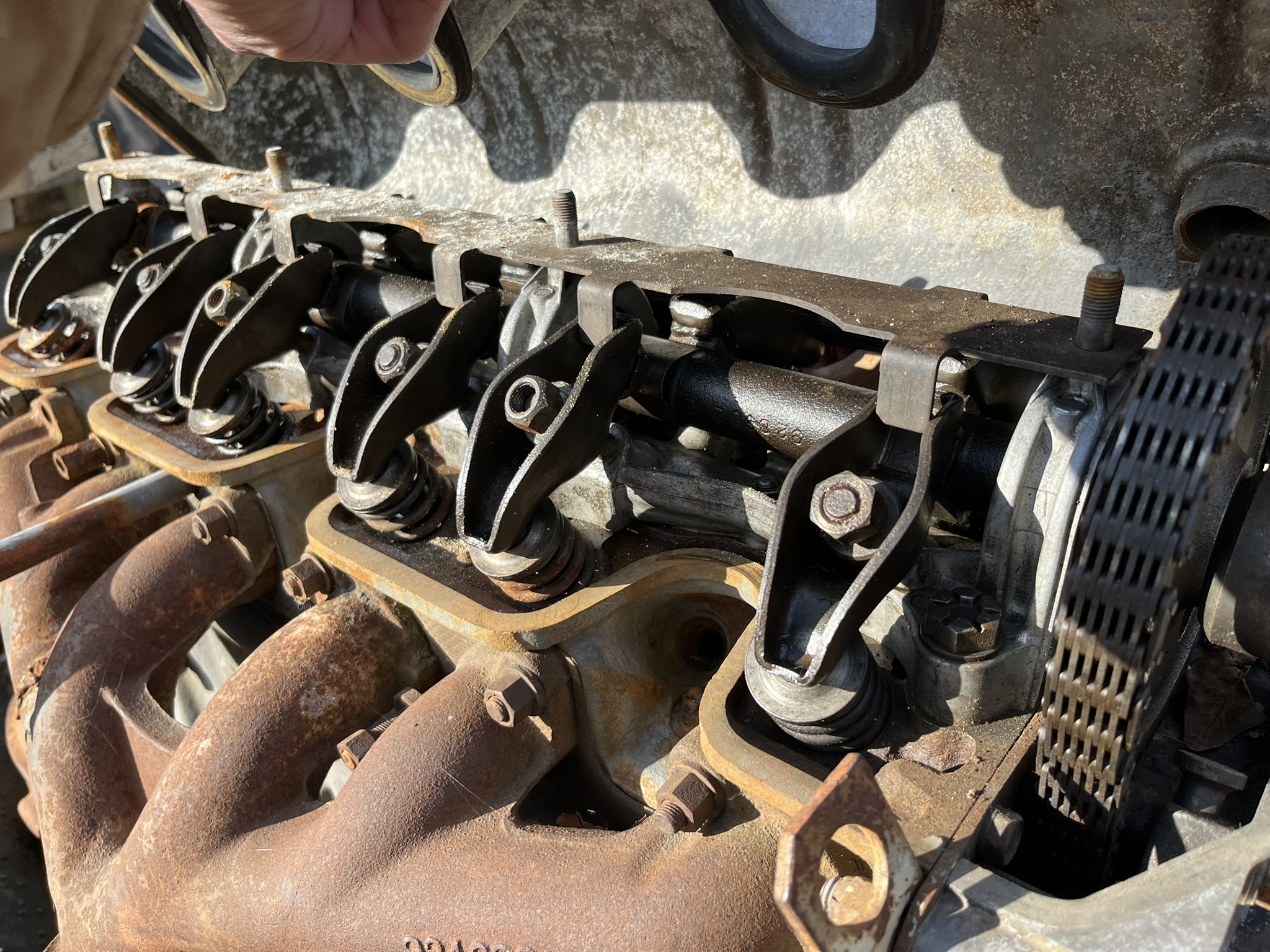
The other quite unusual thing he did was to have both intake and exhaust rockers (and valves) be activated by the same lobe on the cam. That simplified things somewhat and allowed the valves to be exactly opposite one another, but it did mean that valve timing had to be exactly the same for both, which is not typically the case.
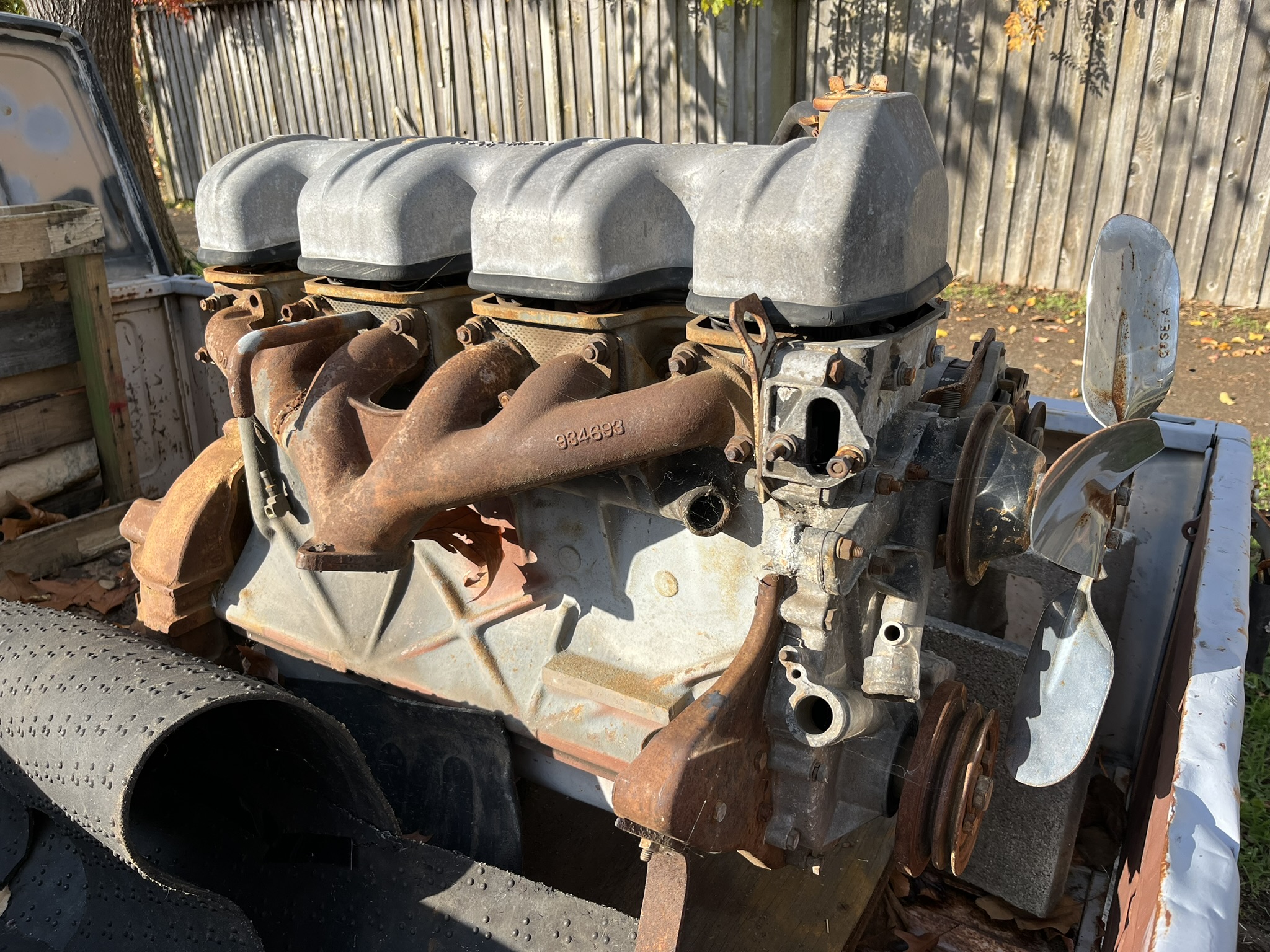
The cast exhaust header is a rather lovely piece of cast iron. The engine mount attached to the front engine plate is very visible here.
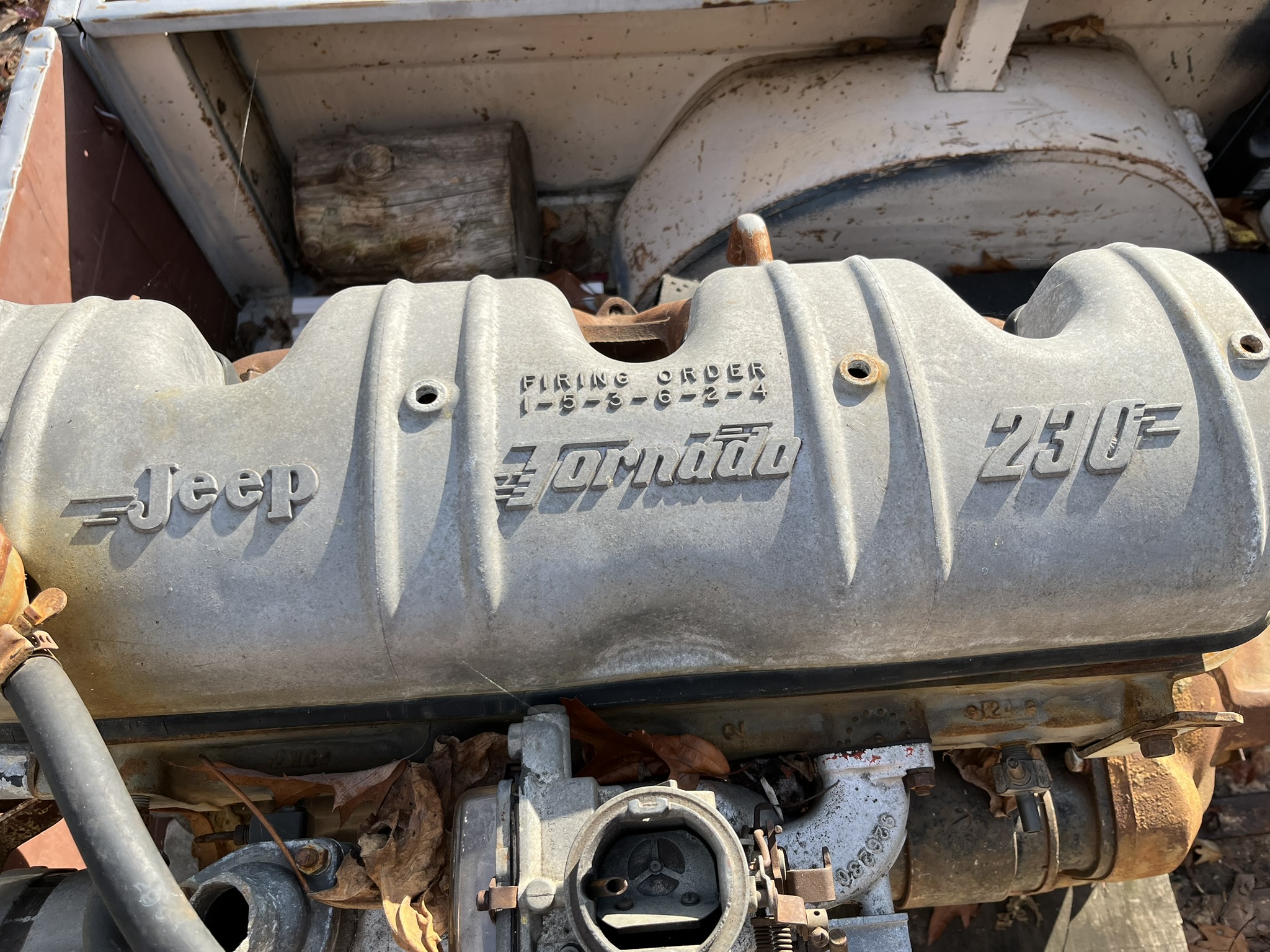
And of course the cast aluminum valve cover is very attractive, given how unusual such a thing was in the US at the time.
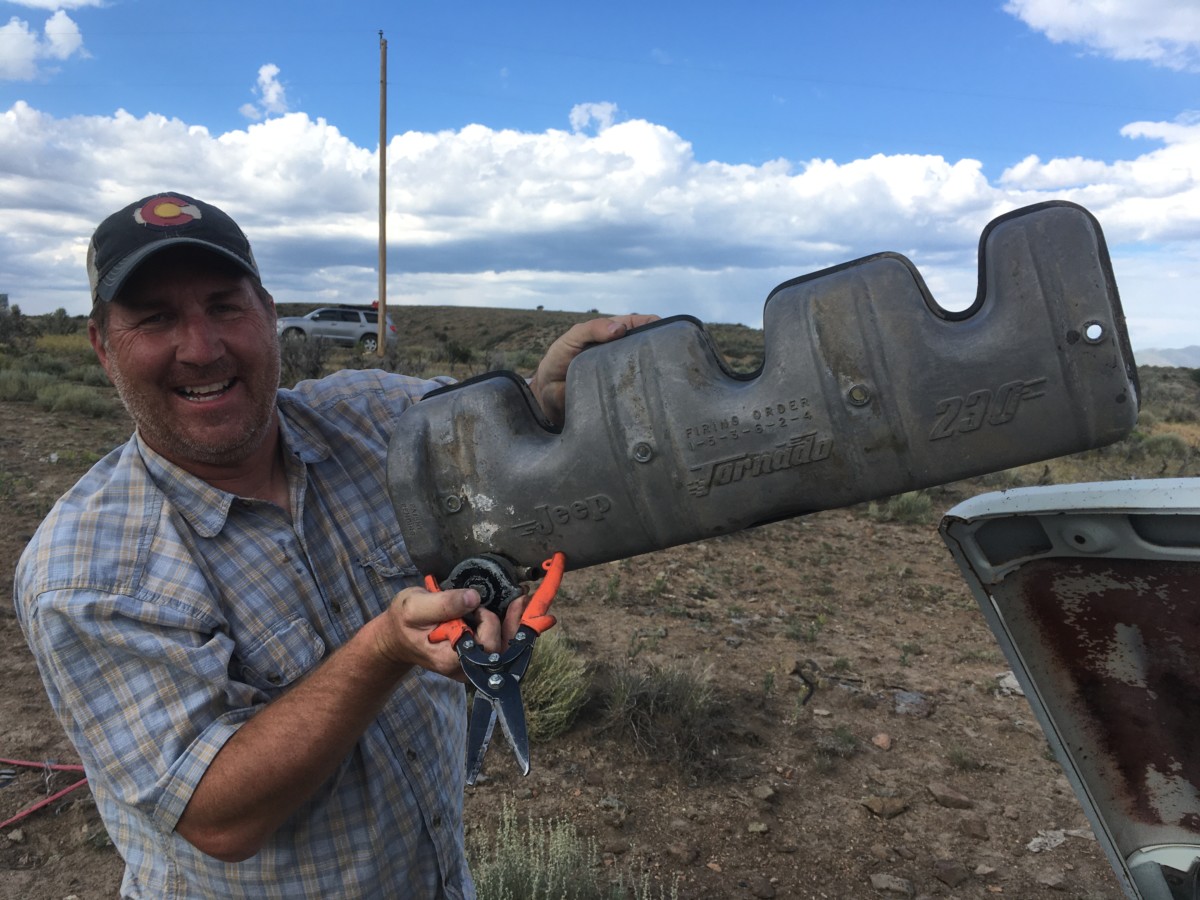
Attractive enough so that CC’s Jim Klein expended some energy getting this one off a Wagoneer in the public junkyard in Tuscarora, Nevada on our overland expedition a few years back. I assume it’s still gracing his garage collection. They look really great when polished.
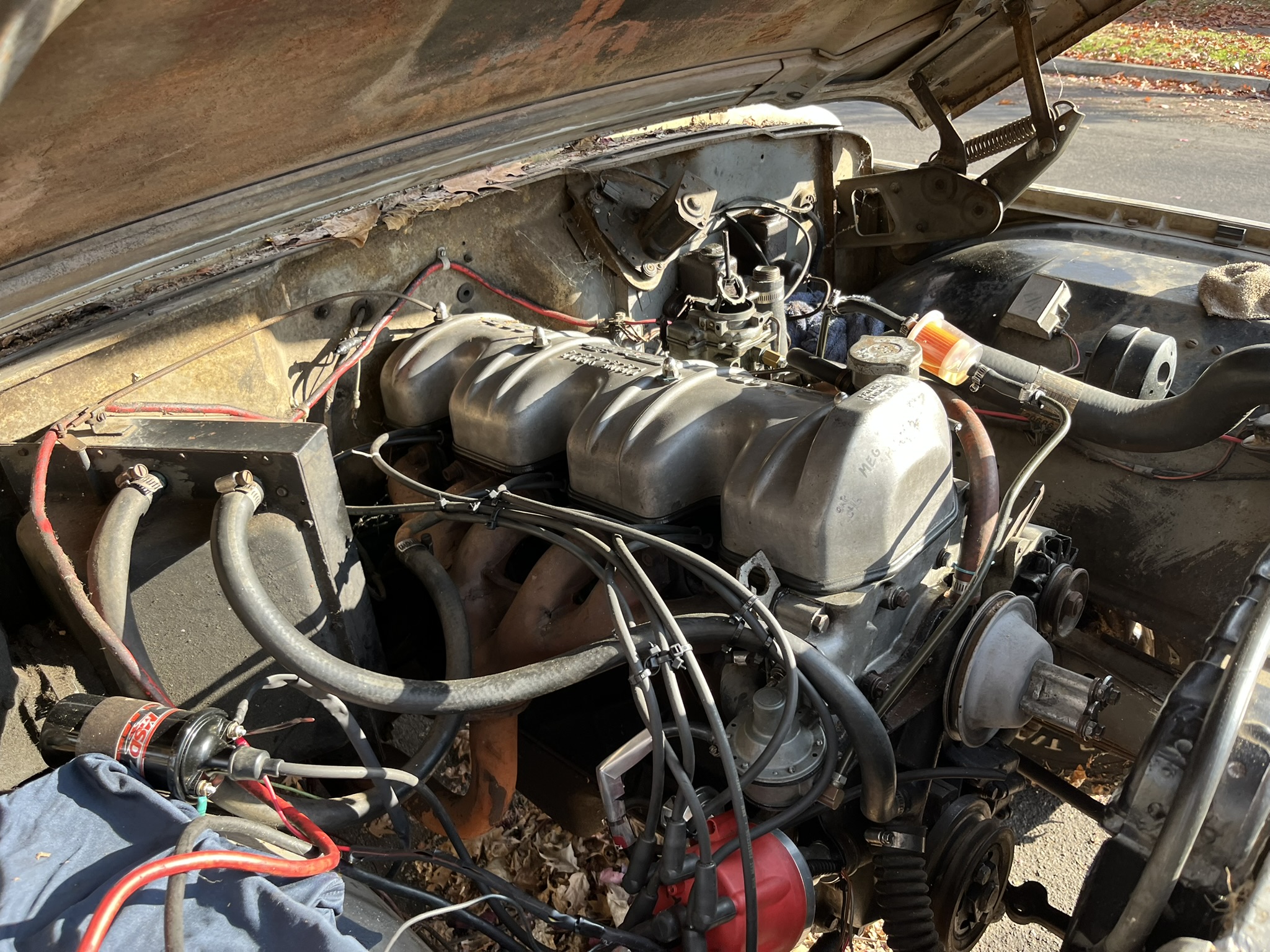
The hood on the Gladiator was partly open, so I helped myself to a peek to confirm the obvious. Looks like this is a work in progress, lacking a fan and belt as well as a few other small items. And there’s currently no battery.
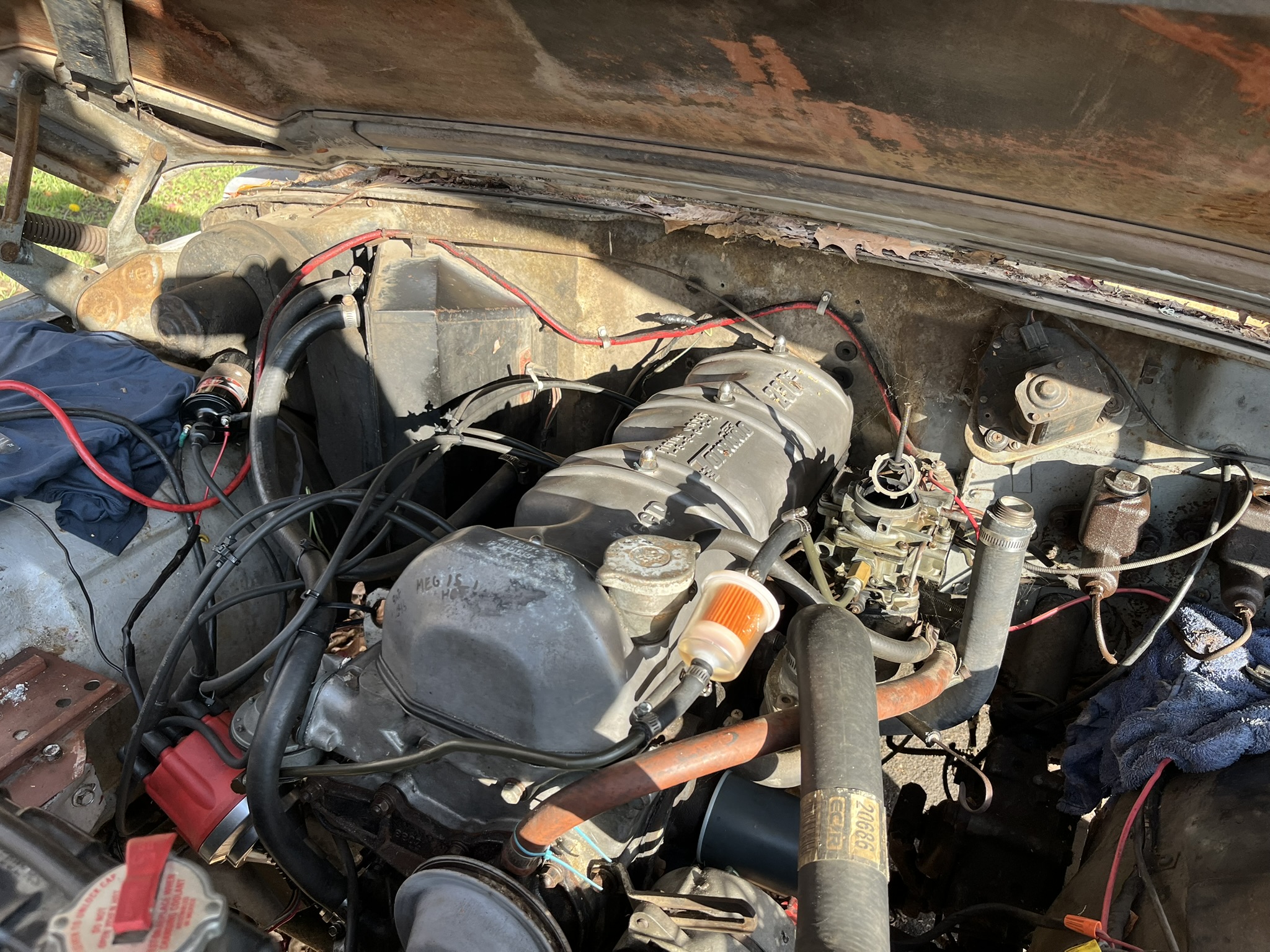
I see that both of these Tornados have one barrel carbs, which creates a bit of confusion as there’s no specific different power rating given for the two versions. But the 140 hp number is what shows up in ads and brochures.
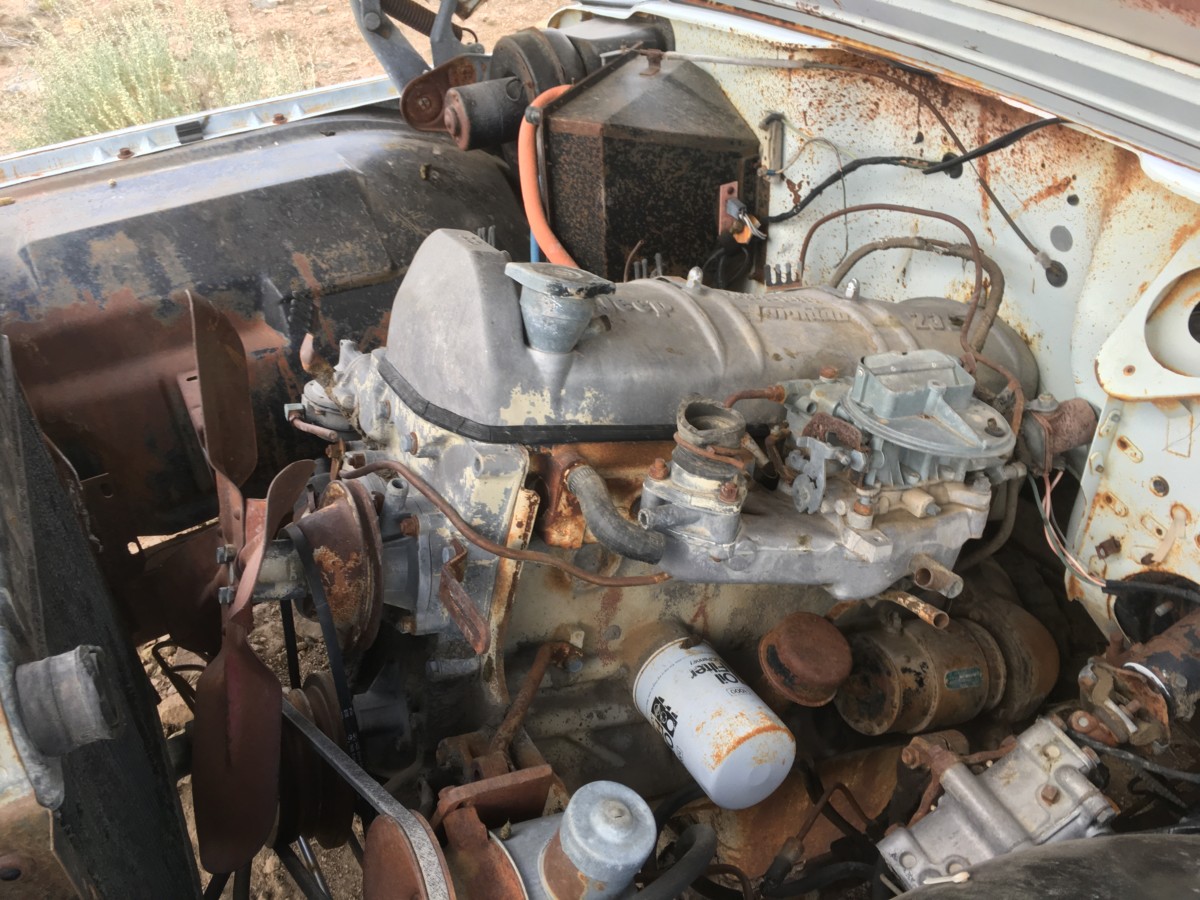
Just to confirm, here’s the two barrel Holley in the Wagoneer I shot in Nevada. I’ve also read (and seen pictures) that the camshaft was made milder in later years. So the 140 hp rating needs to be taken a bit lightly, as was common at the time. Possibly the one barrel version was used in the Gladiator and the two barrel in the Wagoneer?
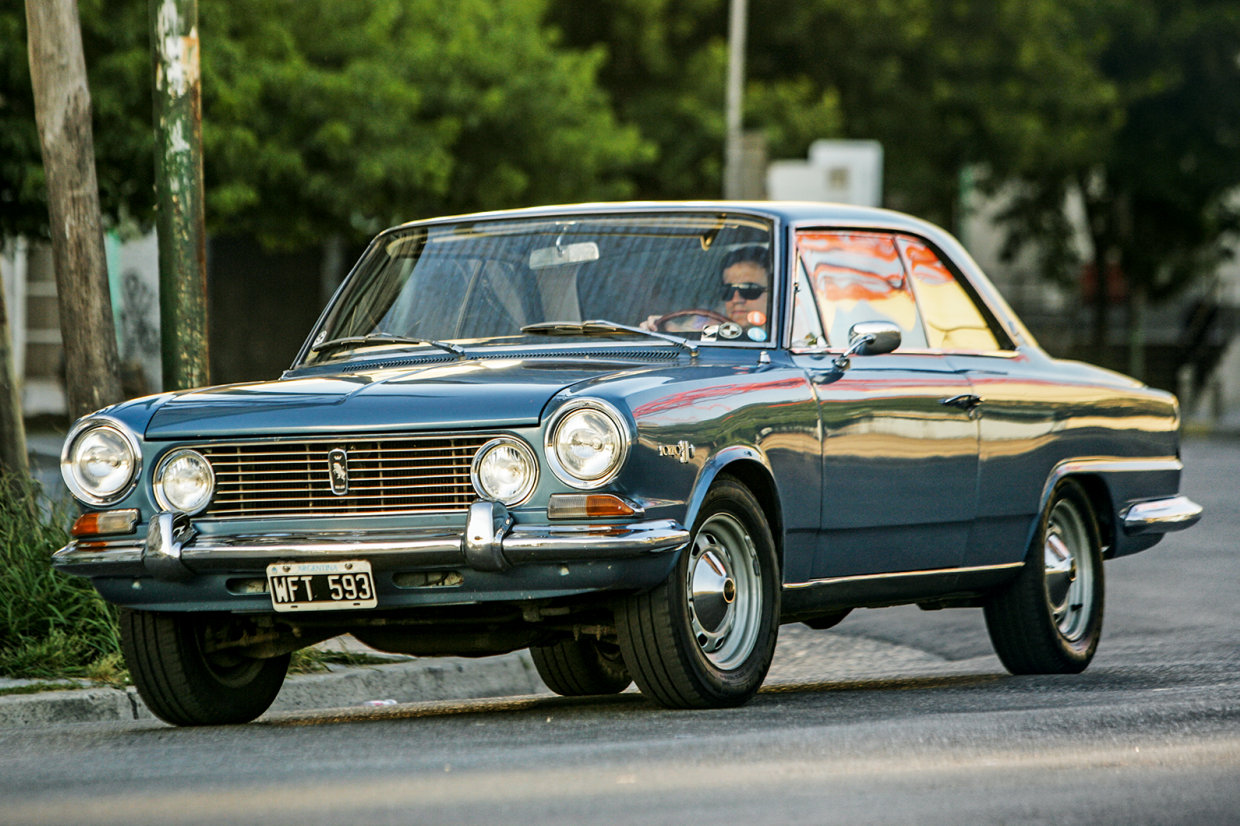
The Tornado engine got off on the wrong foot in the US, due to a lack of proper development time to catch its issues before production began. So in 1969, it was sent to Kaiser’s Argentinian operations (IKA) where it went on to have a very successful and fruitful second life, primarily in the IKA Torino, essentially a Rambler body with the now-called 3800 (3.8 L) engine. It soon got a new head with six intake ports.
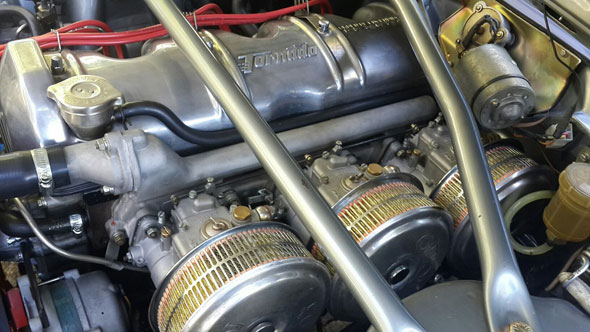
That allowed the installation of three side draft twin-choke Weber carburetors, yielding 176 HP in the 280W, and some 185 hp in the even hotter GS200 version. A destroked 3.0 L version was also built.
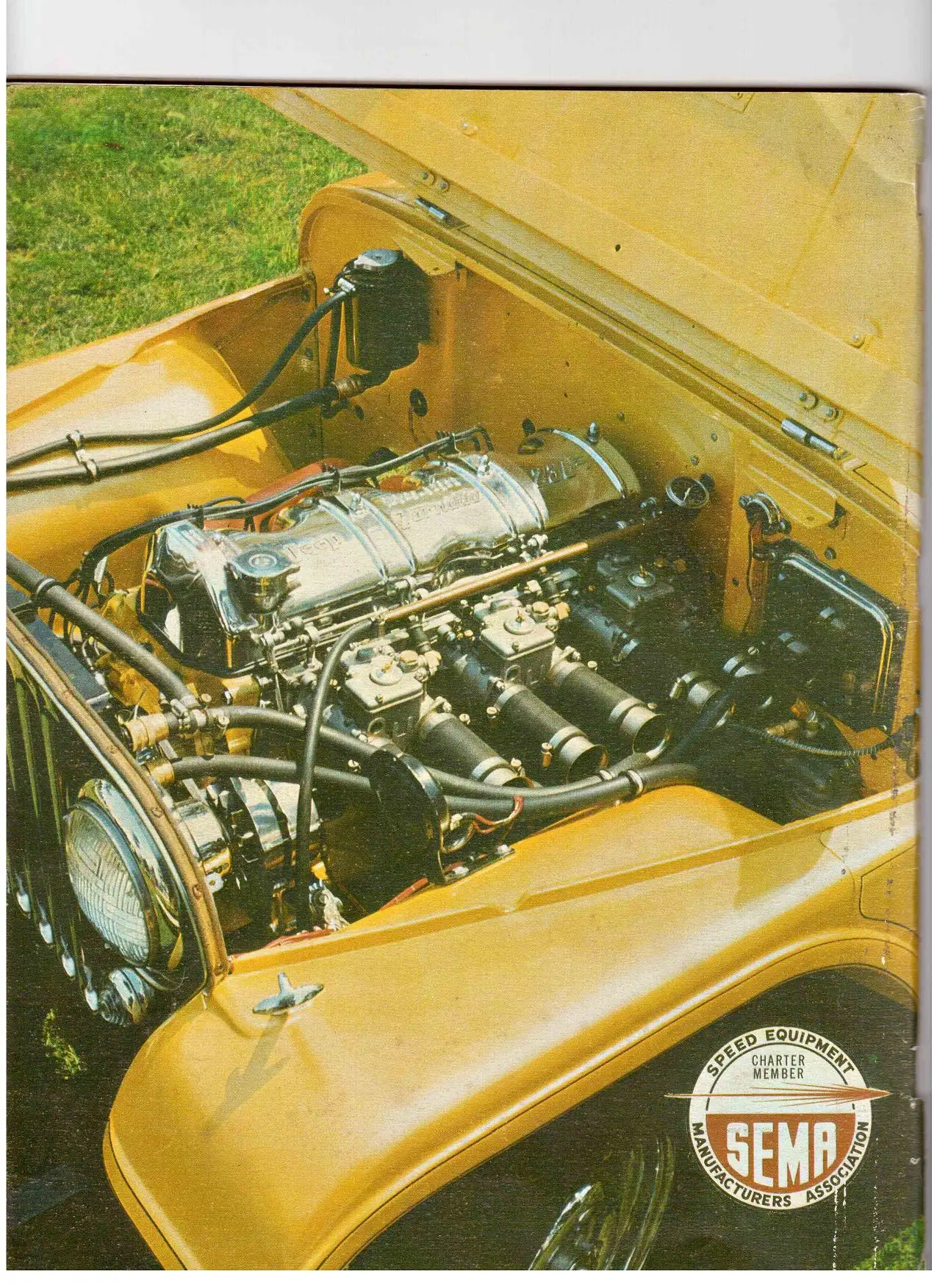
Legendary Jeep racer and dealer Brian Chuchua loved the Tornado and had one of the IKA versions with triple carbs installed in a Jeep CJ5. he wasn’t the only one.
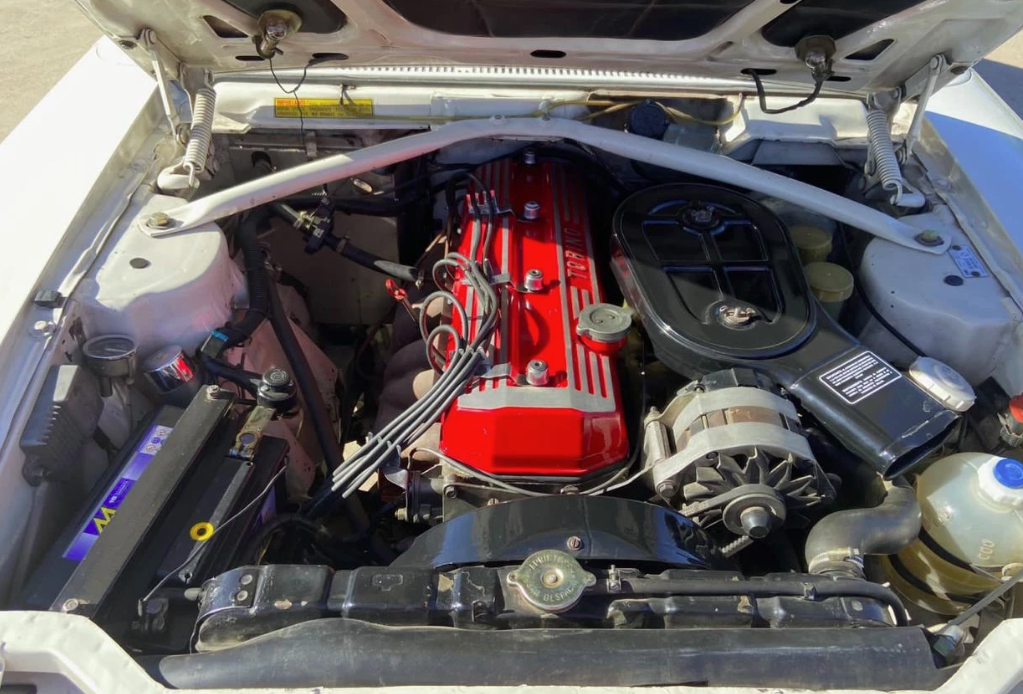
But the Tornado engine’s development didn’t stop there. A new block with seven main bearings and a substantially revised cylinder head with individual cam lobes for the intakes and exhausts resulted in the Torino 233 engine. Its various power levels ranged from 170 to 215 hp. And the ultimate development was the Tornado Interceptor 241, which had a larger 3.431″ bore to increase displacement to 241 cubic inches (3950 cc). It was rated at 248 hp at 5000 rpm.
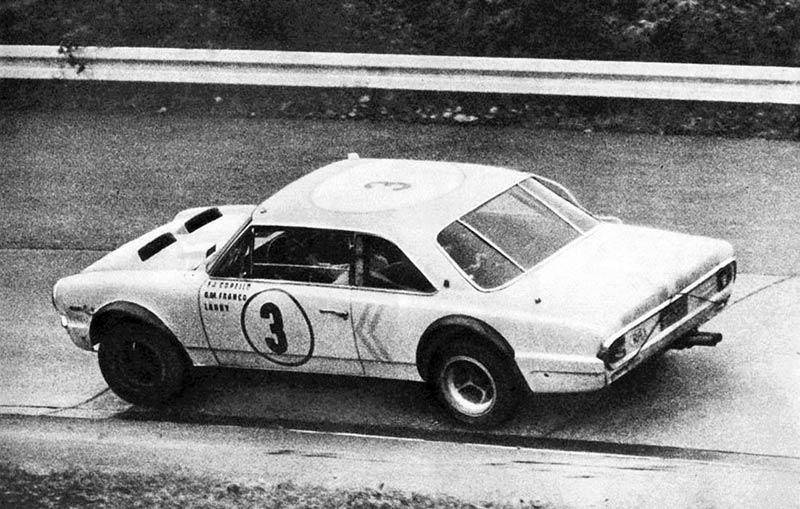
The Torino’s Tornado engines more than fulfilled the potential that Samprieto could ever have envisioned for his creation. It became a legend on Argentine race tracks and on the streets. Argentinians are still racing them in drags, where some turbocharged versions are claiming to have 700+ hp.
Renault had bought IKA in 1966, and continued production of the Torino and the Tornado engine until 1982.
Would I consider swapping in one of these Tornado engines in my CJ-5? I love the idea, but having spent way too many hours at oldwillysforum.com commiserating with some of those that bought one and struggled to get them rebuilt or running (or gave up) was more than enough to put me off. Of course there’s those that have mastered all of their issues and built up the knowledge (and spare parts) to enjoy the smooth power delivery that they offer. But no thanks. And I really don’t have room to carry a spare engine.
Related CC reading:
Vintage Review: 1963 Jeep Wagoneer – Jeep’s I.F.S. Road To Nowhere
Curbside Classic: 1971 IKA Torino TS – The Legendary Rambler European South American
Mexican Jeeps Catch Aire Thanks To The Tornado OHC Engine!
Curbside Classic: 1967 Jeep Gladiator J3000 – The Truck Of The Future












That was a deep dive, I didn’t realize that the same lobe did both intake and exhaust actuation. Very clever, yet compromised.
I will never forget in the mid 90’s seeing my first IKA Torino on the street in Puerto Madryn Argentina. What is this? It’s a Rambler, but it’s…. not.
Jim’s junkyard photo looks like a fishing picture, which I suppose it is. Hopefully he didn’t catch and release.
This is great, Paul. I love underdog engines that went on to second and even third lives, and it’s too bad that maintaining one of these is getting to be difficult.
“…the Tornado was still the base six through 1969.”
While, as noted, it did remain in use for military applications, I believe it was replaced by the AMC 232 in civilian vehicles after 1965.
Quite right; fixed now. A bit surprising, given that they made the M715 through 1969.