
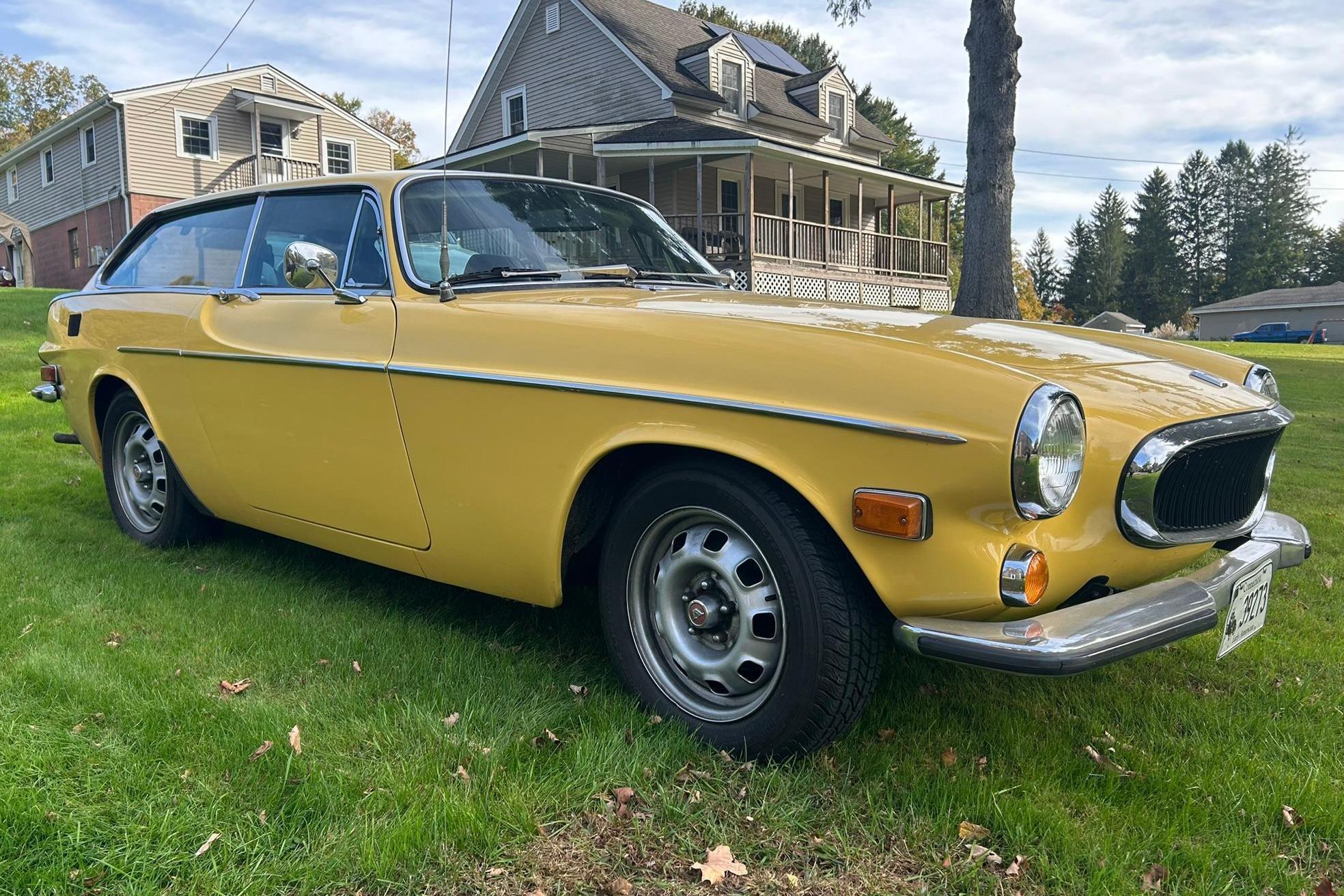
A decade is a long run for any production car, but given the changes in automotive design between 1960 and 1970, it’s amazing that the Volvo 1800, in its various guises, lasted as long as it did with few updates. For its final two model years, however, Volvo managed to send the 1800 out with ingenious flair by turning it into a wagon, instantly updating its Italianate late-1950s appearance for a whole new era, the early 1970s. Like the coupe, the 1800ES was never a big seller (8,077 total in 1972 and 1973), but it’s certainly a popular collectible among Volvo enthusiasts, and this yellow beauty is up for auction on Cars & Bids in East Haddam, Connecticut.
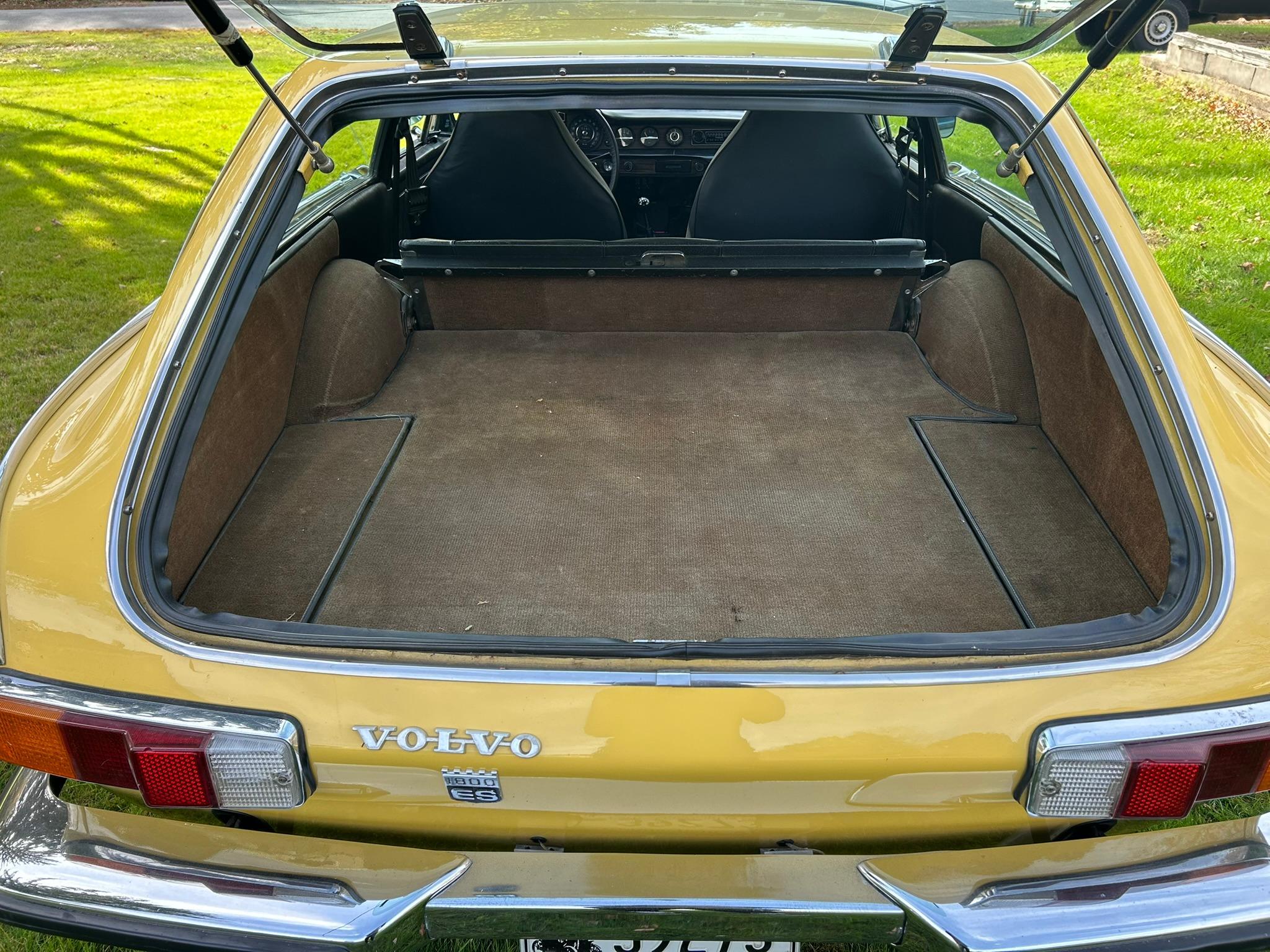
Little sporty wagons weren’t exactly popular in 1972 (only the British Reliant Scimitar could be directly compared), but the change made a lot of sense. It eliminated what was probably the most dated styling cue, the tiny roof and pinched glass areas, and replaced it with this breezy cabin with a chic unframed liftgate. Although the 1800S (and E) had a relatively roomy trunk for a small sports coupe, the ES was positively roomy, a truly practical sporty car.
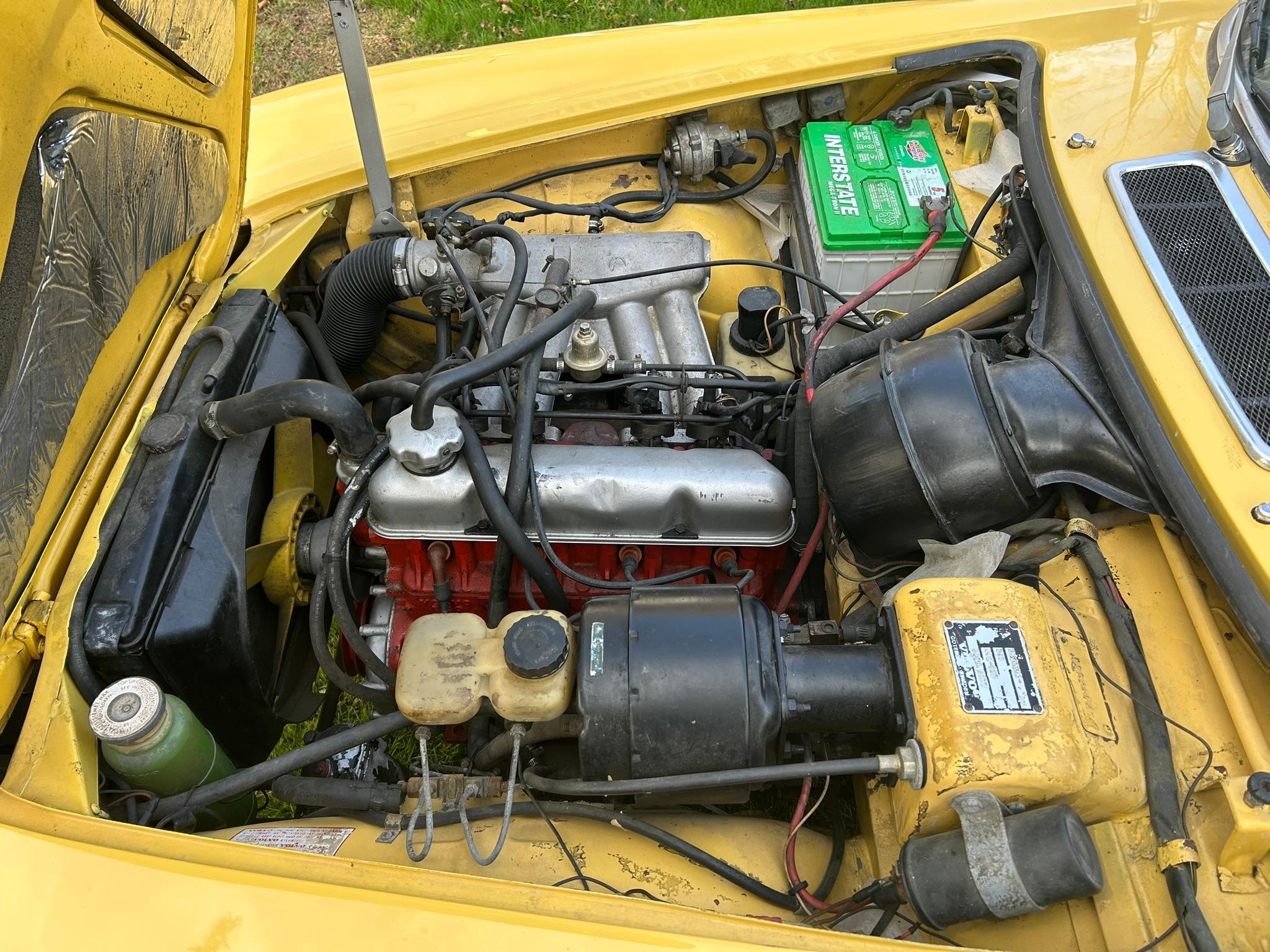
And the engine had received some upgrades along the way as well. It was the 2-liter B20F with a Bosch electronic fuel injection system, which produced 125 horsepower in US trim. Nonetheless, the 1800ES was not a fast car by early 1970s standards, with 0-to-60 times in the 11-second range and top speed shaking out somewhere between 110 and 115 miles per hour. While an automatic was optional, Volvo’s four-speed with tack-on overdrive was standard, and equipped as such (as this car is), the rear axle ratio was 4.30:1, a nice change from the 4.56 gear in the 1800S.
As an 1800S owner myself, I don’t like the location of the big brake booster in this car, as it would limit accessibility to the distributor, but at least the 1972 car has four-wheel disc brakes (my S has rear drums) and a dual-circuit master cylinder.
As for the engine, the seller says it was rebuilt 2,000 miles ago, and although the cold start video posted on the Cars & Bids link tells us that the 1800ES is a little cold-blooded at first, there are no strange noises emanating from the engine compartment.
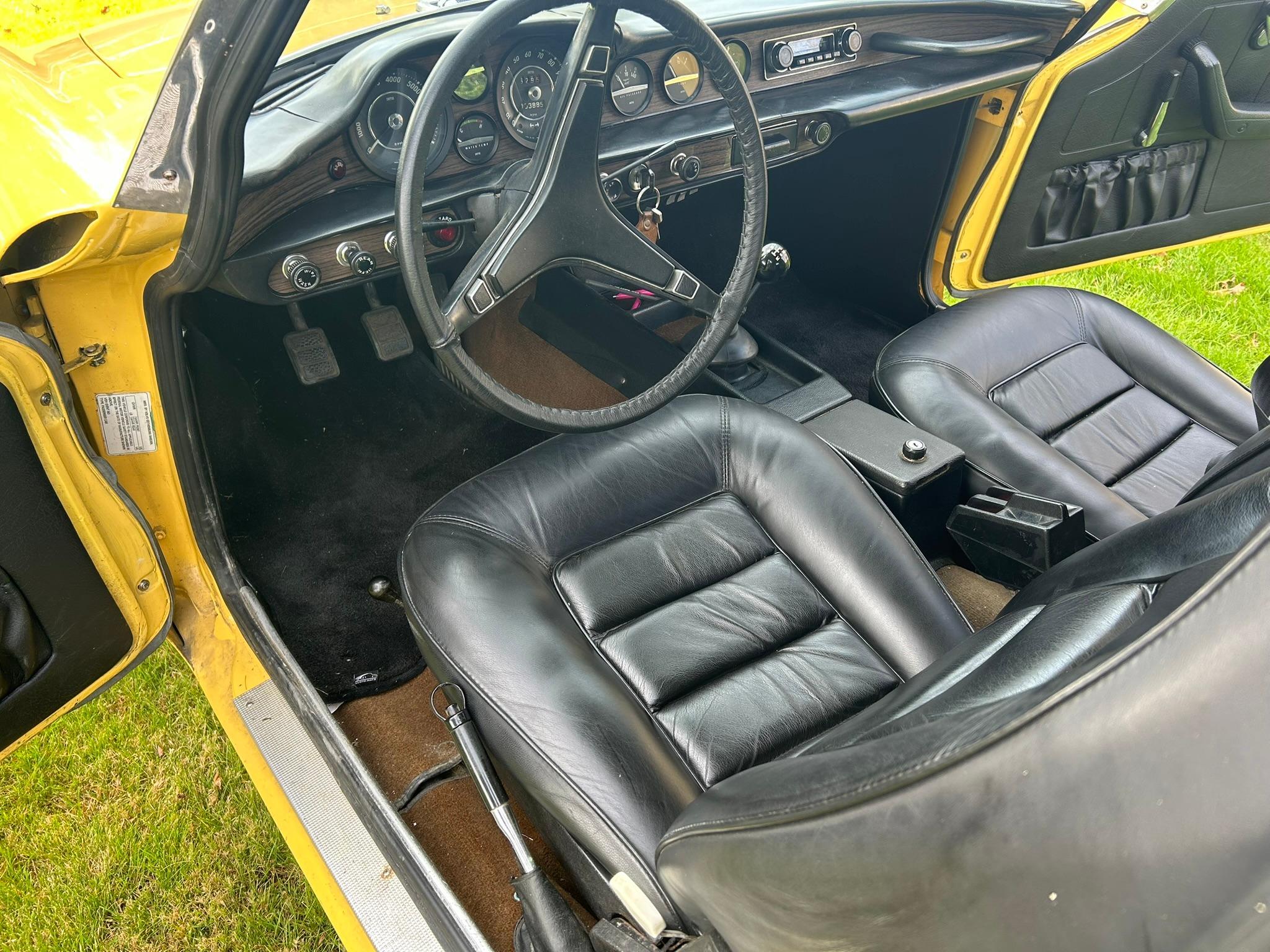
The dashboard will look familiar to anyone accustomed to driving an 1800 of any variety, but the seats look positively plush compared to those in the S. The dashboard and steering wheel both have cracks, which are common problems in all 1800s (especially the dash pad).
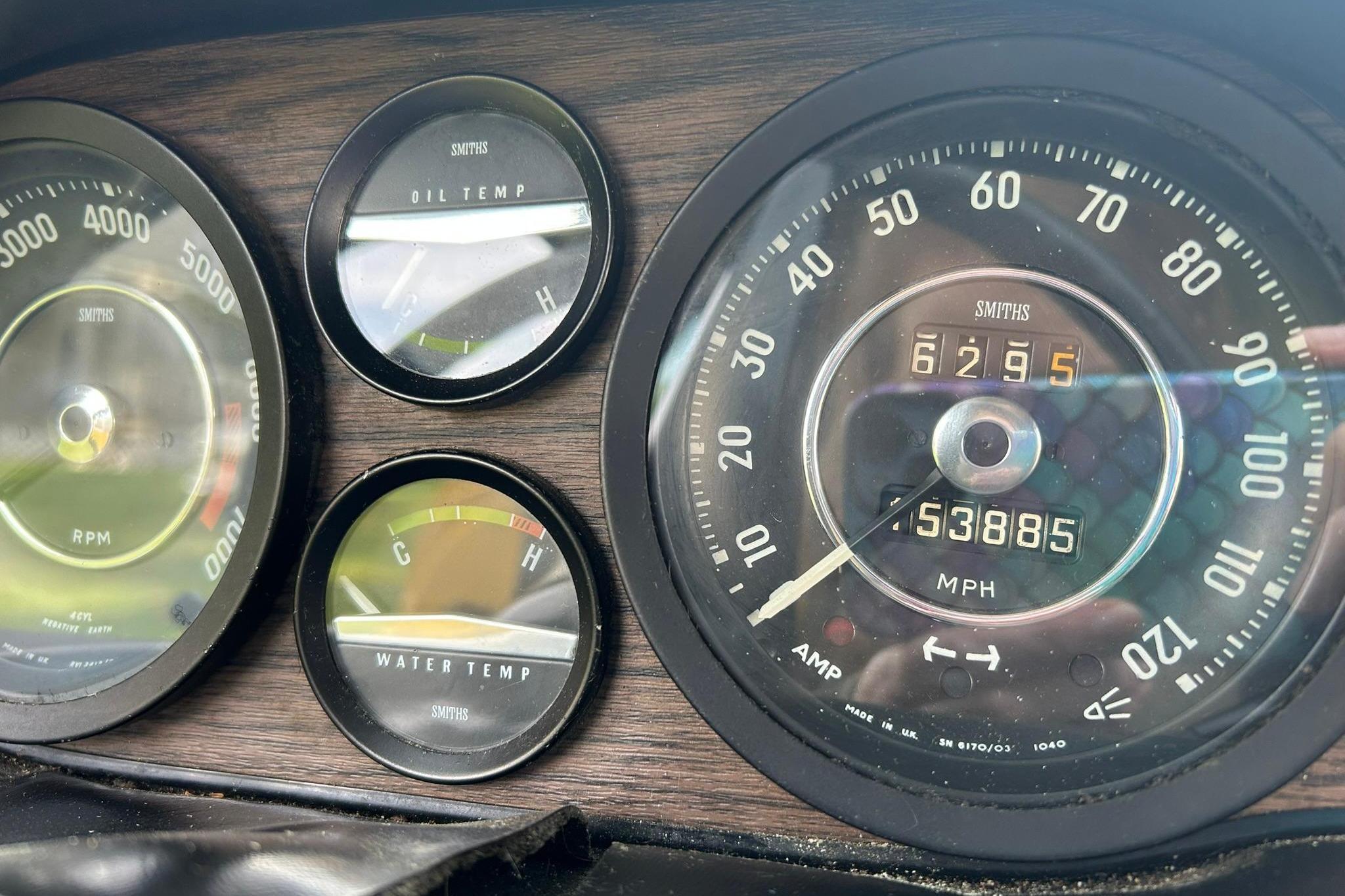
One upgrade in the 1800ES is a six-digit odometer, which in this case tells us that the car has covered 153,885 miles; as a Volvo, it’s just getting started. The seller has owned the car for about 30 years and has put just 10,000 miles on the car in that stretch.
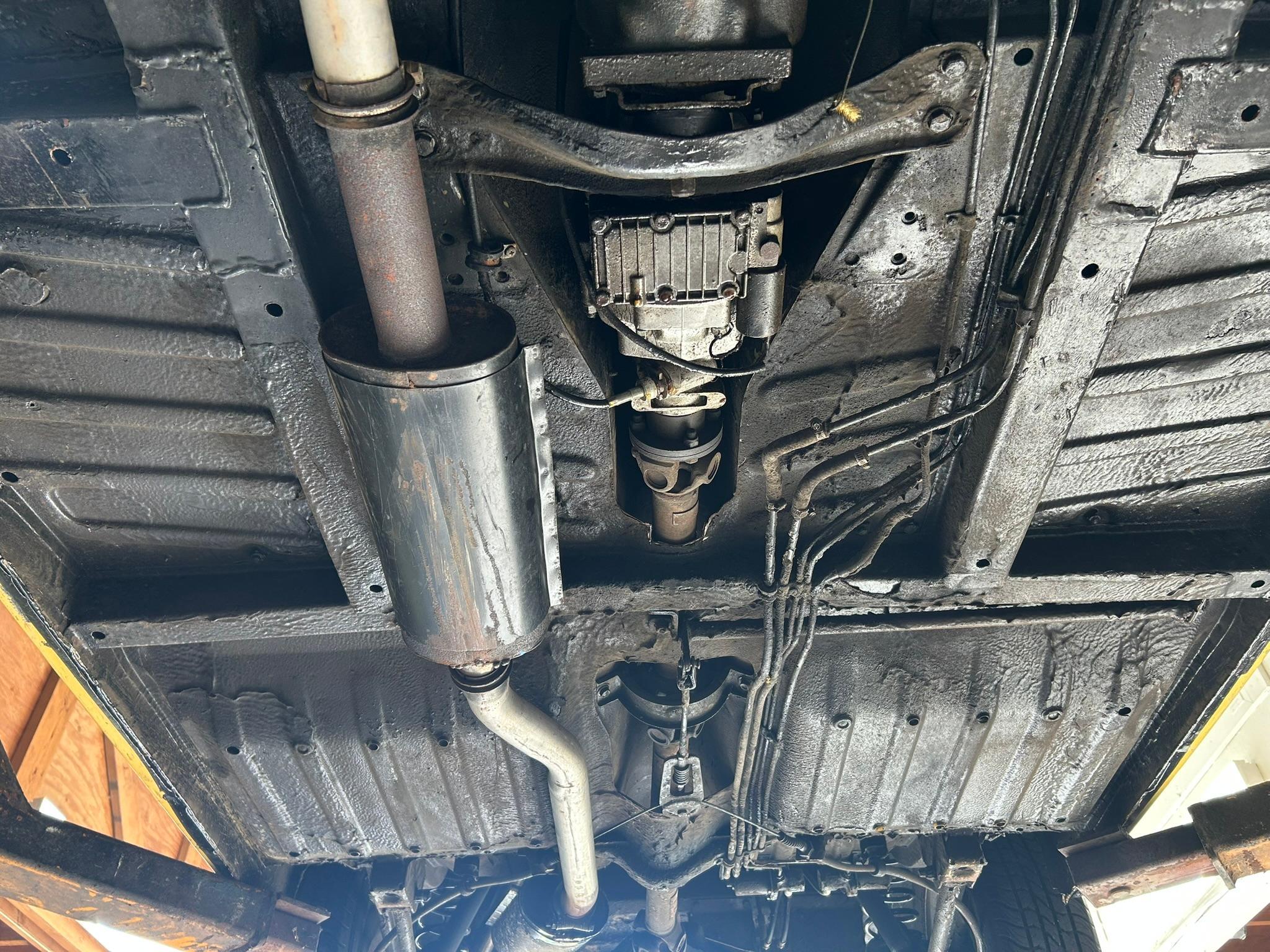
Something I’ve learned from poking around the bottom of my 1800 is that rust is a common 1800 issue, and it looks like some repairs have been made to this one, as you might expect from a car that is being sold in the northeast. I’d say that the front floorpans, front subframes, and crossmembers were patched, and honestly, the repairs look solid enough that I wouldn’t worry about it myself. These Volvos were undercoated from the factory, so don’t let that get you down, and the rest of the undercarriage looks good enough to be original (or repaired well).
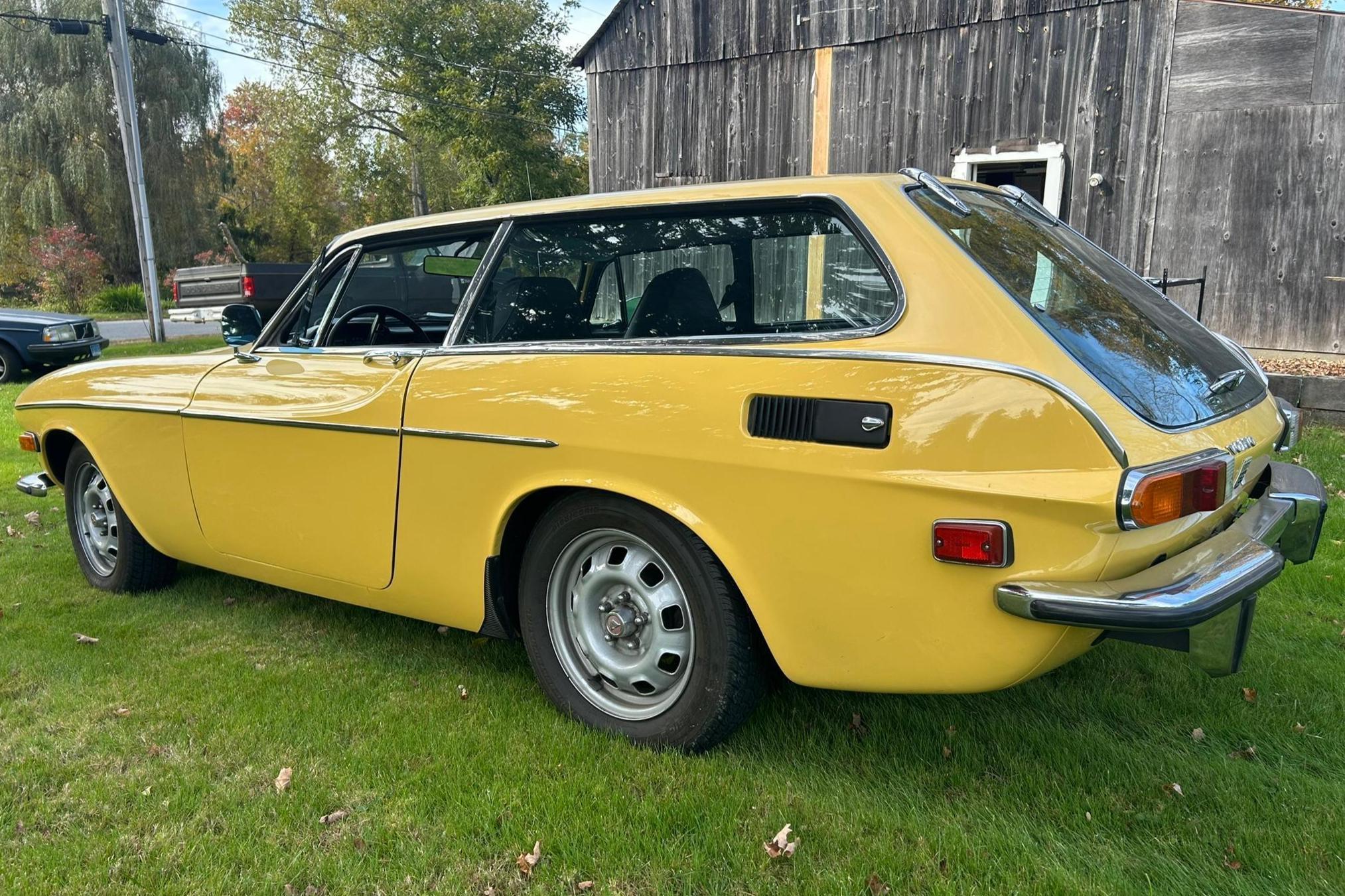
Although the 1800ES wasn’t around for very long, it did influence the styling of the cute little C30, which ran from 2008 to 2013 (in the United States). It also goes to show that a little difference can sometimes make a big difference, and the popularity of the ES today shows that Volvo did the exact right thing in changing up that greenhouse.
Related Reading
COAL: #10 1972 Volvo 1800ES – A Volvo Shooting Brake? (by Connor Kleck)
Vintage R&T Review: 1972 Volvo 1800ES – A Successful Butt Lift (by Paul N)
COAL: 1973 Volvo 1800ES – A Brief Fling with a Shooting Brake (by Evan Reisner)
My 1967 Volvo 1800S: A Year After Its Purchase, I No Longer Completely Regret It (by me)








The Ford C1-based Volvo C30 was exactly the first thing I thought of. It wasn’t a particularly bad reincarnation of the 1800ES, either (at least in spirit).
The ’86-95 Volvo 480 ES / 480 Turbo also showed some clear inspiration from the 1800ES, especially around the large all-glass rear hatch (albeit covering an actual frame on the 480) and long rear quarter windows.
Sadly, we never got those here, though they were apparently developed with the American market in mind; however, by the time they entered production, rising currency exchange rates would have made them uncompetitive here, so they wound up as a Euro-only model.
I have always loved the1800ES. Would be very tempted to buy a restored 1972 shooting brake.
I like the low angle shot of this. It gives it a real sporty look.
“It eliminated what was probably the most dated styling cue, the tiny roof and pinched glass areas, … ”
The tail fins of the 1800 S—which, by that point, seemed more than just antiquated—were also quite cleverly phased out in the 1800 ES, though traces of them can still be discerned.
What I find missing on the example shown here are the chrome trim rings (“snobbringar”) usually clipped onto the rims. Without them, the car’s stance has a somewhat rural look.
Thanks for referencing my COAL post. The 1800ES will always have a place in my heart.
You’re welcome!
It’s amusing that this comes up today, because just last week I saw a C30, and my daughter (who’s not much of a car enthusiast) remarked at how awkward it looked. I mentioned how the design harkened back to the 1800ES, but she was still unimpressed. Too bad – I’ve always liked these, and the C30 too.
I have a small wagon and I just love it. The car is small enough to maneuver through heavy traffic and big enough to carry a substantial load. The load area is 190 cm, and I have slept in it a few times with no ill effects.
Alas wagons don’t sell anymore and VW no longer sells any Golf model. Everything is CUV/SUV now and I am sad that small wagons are a thing of the past.
My ’65 Dart comes in very handy for all kinds of things. It’s not quite as good as having a truck, but it’s pretty close.
The design of the C30 is the work of a Québecois named Simon Lamarre . It would seem that he used a 1980 Tercel hatchback as inspiration. Je niaise… It’s clear that the style is inspired by the Volvo P1800 ES .
”Simon Lamarre 2003–2008 Studio Chief Designer Volvo”
You’re forgetting the FWD Volvo 480 that predated the C30.
Have loved these ever since sitting in a new turquoise colored one in the showroom of VolvoLand in Glen Burnie around 1972 while getting our ’67 122S serviced. Wife wanted one so badly but as we were right out of college, no way. We drove the 122 for 10 years and only parted with it when it was totaled on the Beltway.