
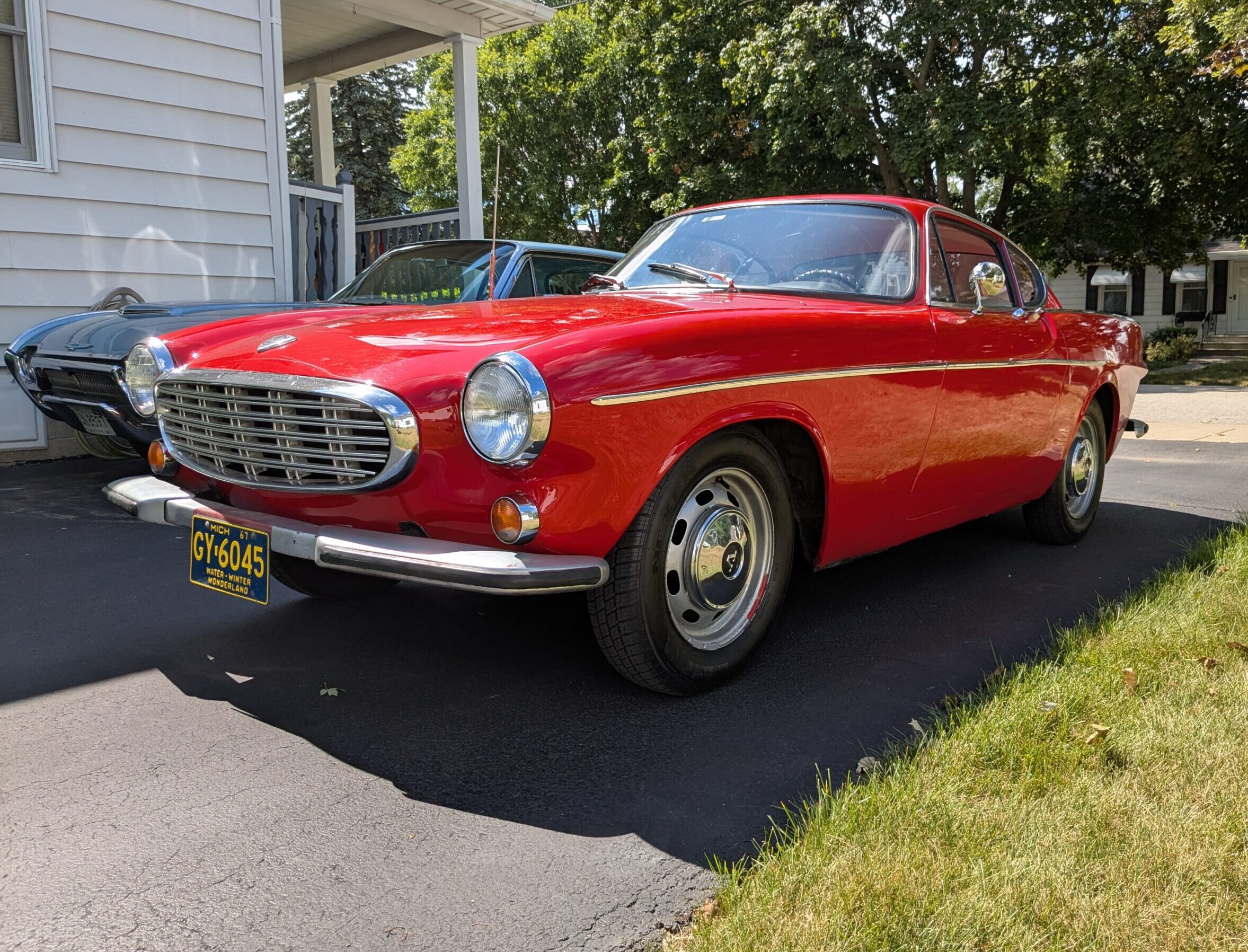
One drizzly day in late July or early August, I dropped my 1967 Volvo 1800S off at one of my storage garages, and as I closed the door, I realized that it was no longer a car I was parking in disgust and frustration. It was just another one of my fleet, a slightly worn out driver like the rest of them. That’s progress.
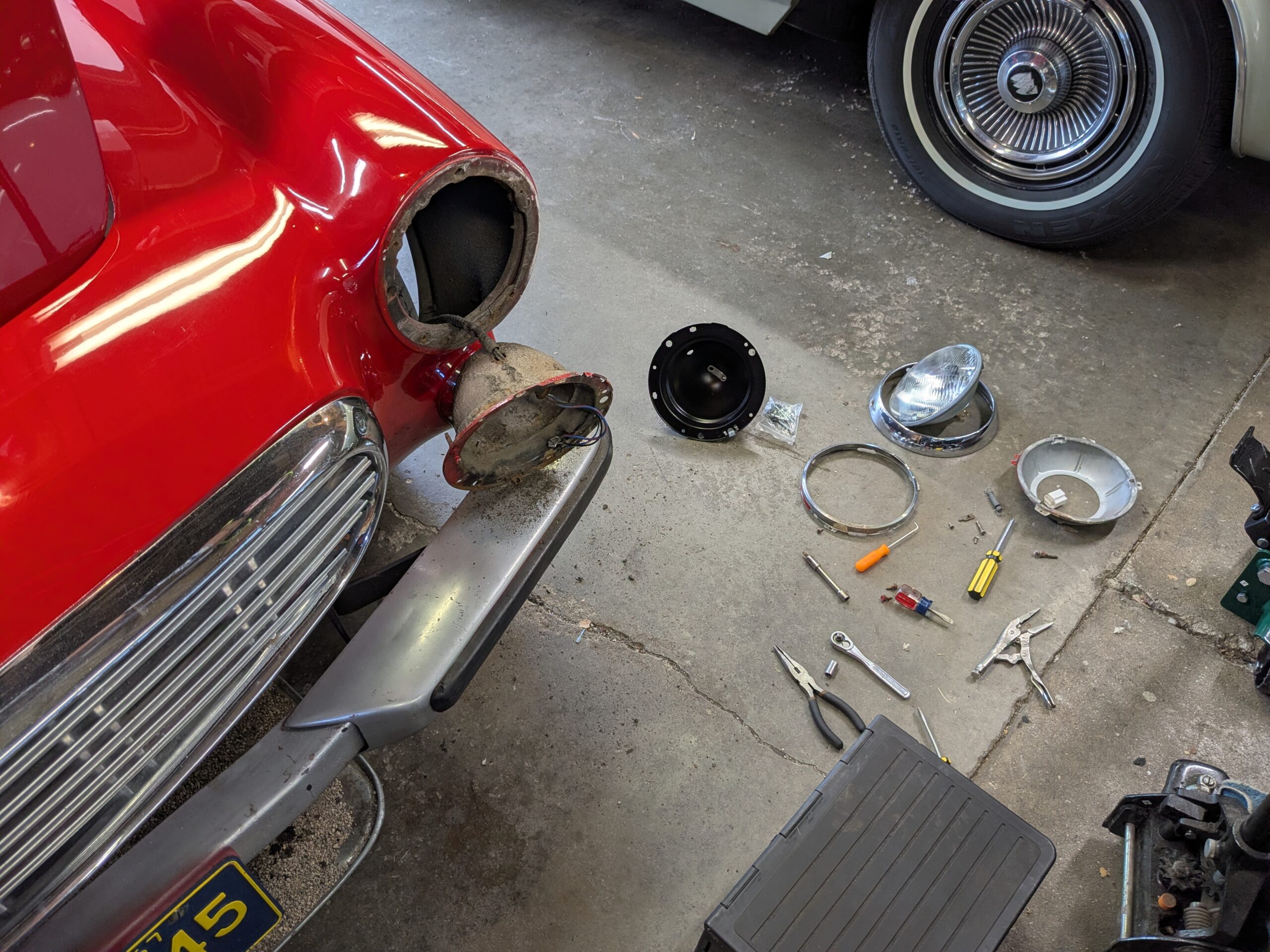
It’s been a driving season of steady smallish jobs to get the Volvo to the point where I generally treat it as just one among the fleet. One of my first jobs this year was to replace the driver side headlight bucket, which had rusted to the point that the adjusters had nothing to grab hold of. When I removed the headlight ring this spring to adjust the headlight, I found that someone had wedged a nut behind the headlight in an attempt to keep it pointing in roughly the right direction. It didn’t work.
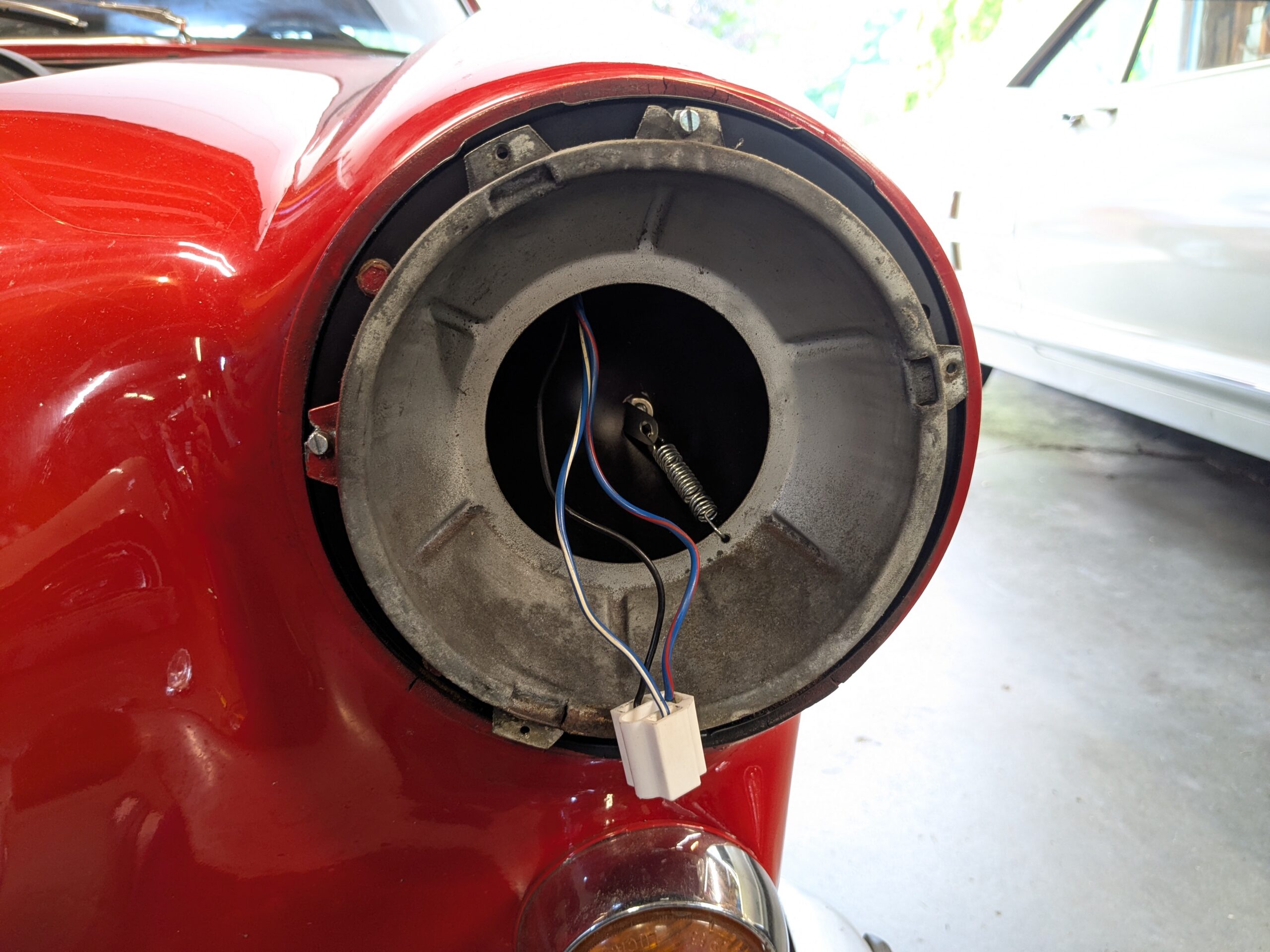
Fortunately, the major Volvo suppliers sell a new bucket that fits reasonably well. I also had to replace the headlight’s plastic connector, which crumbled in my hand as I removed it. I think I made something from the Dorman aisle of the parts store work.
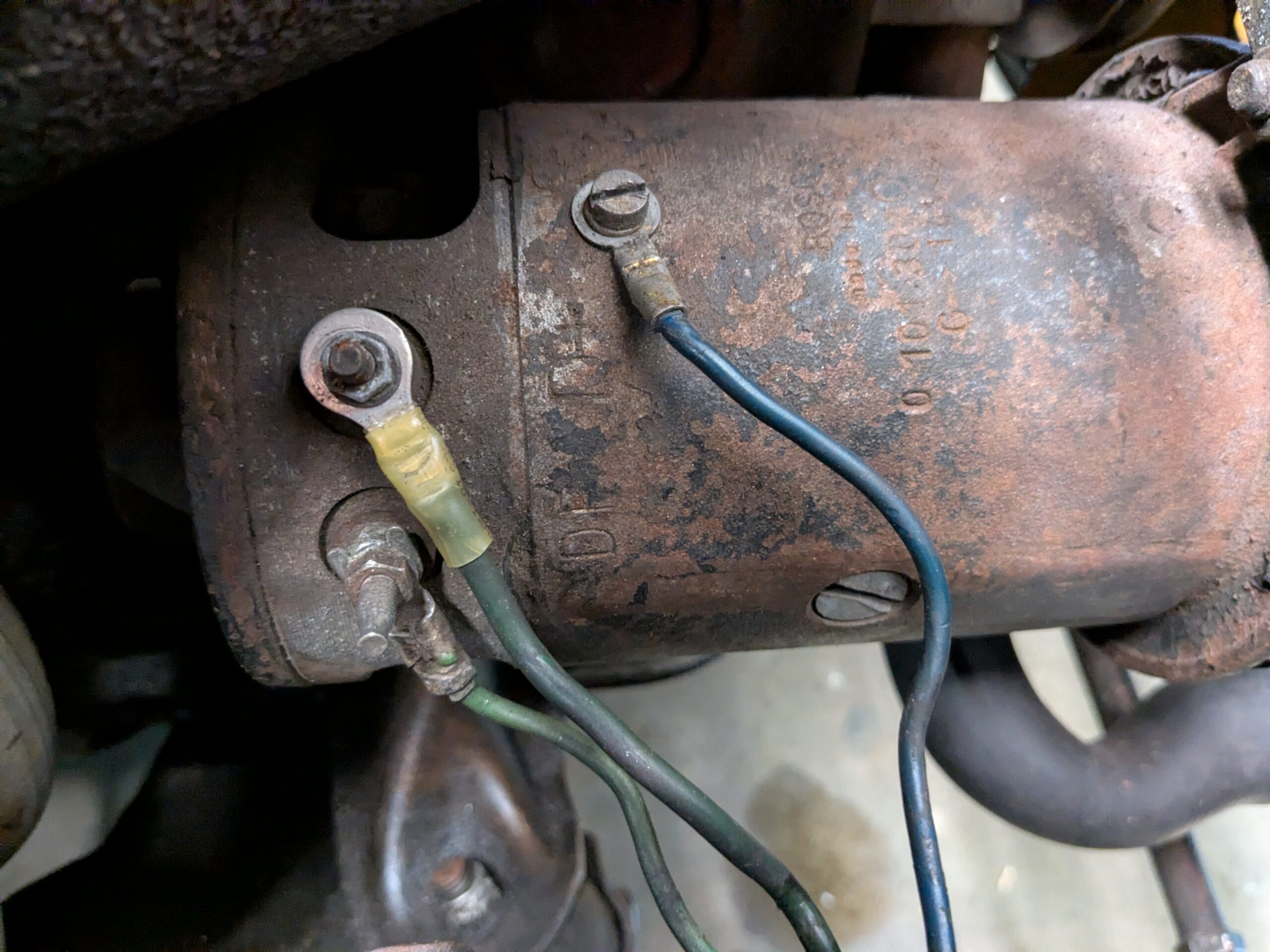
Next, after a drive that left me wondering how the engine was still running given all the racket under the hood, I used my stethoscope to determine that at least half the noise was coming from the wasted bearings in the generator. Apparently, parts are somewhat scarce for the Bosch component, so few bother repairing it. Instead, I bought an alternator conversion bracket from the Swedish Embassy, a small Volvo parts supplier from New England.
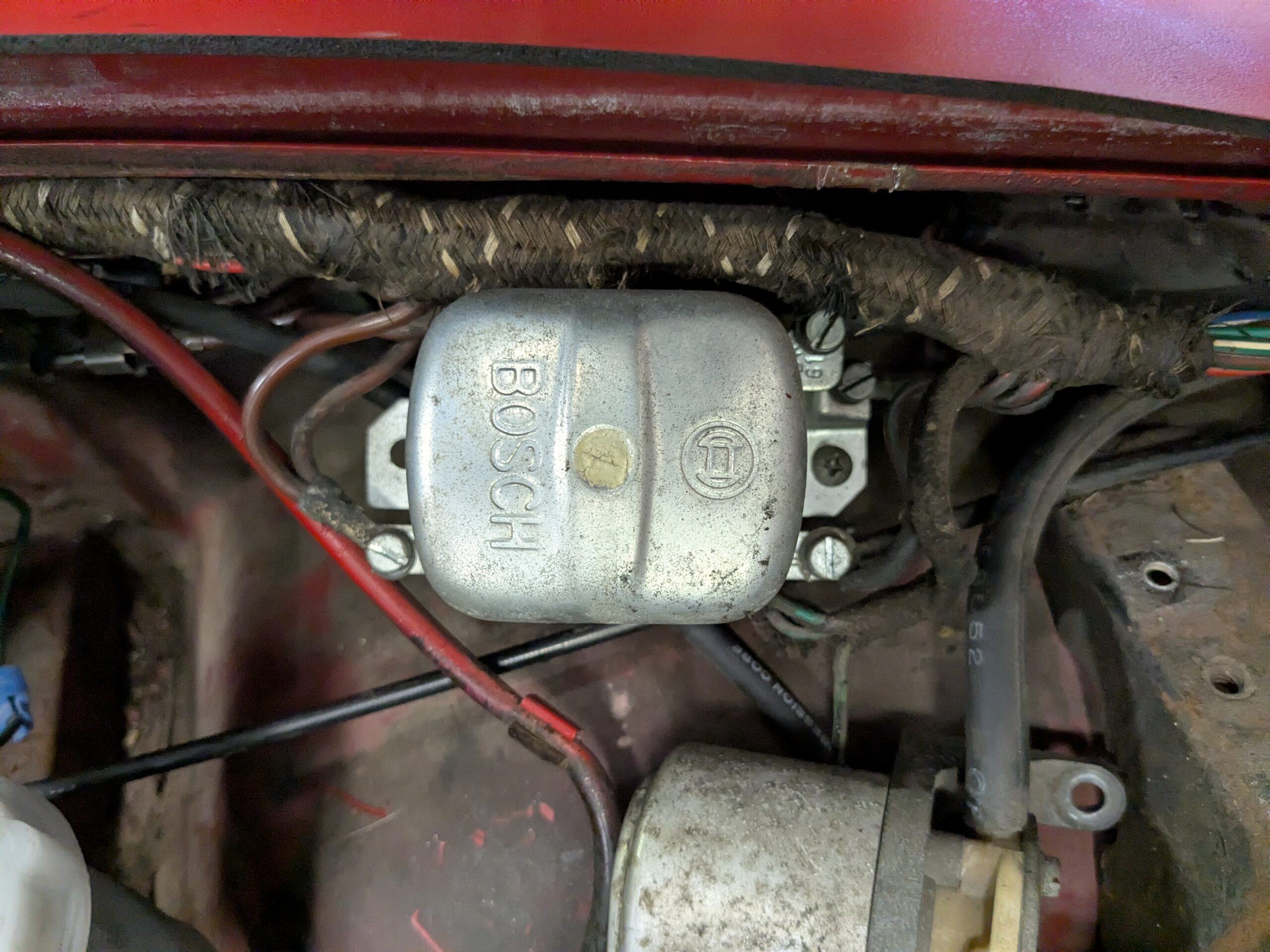
Replacing the generator means removing the Bosch voltage regulator and splicing a few wires together.
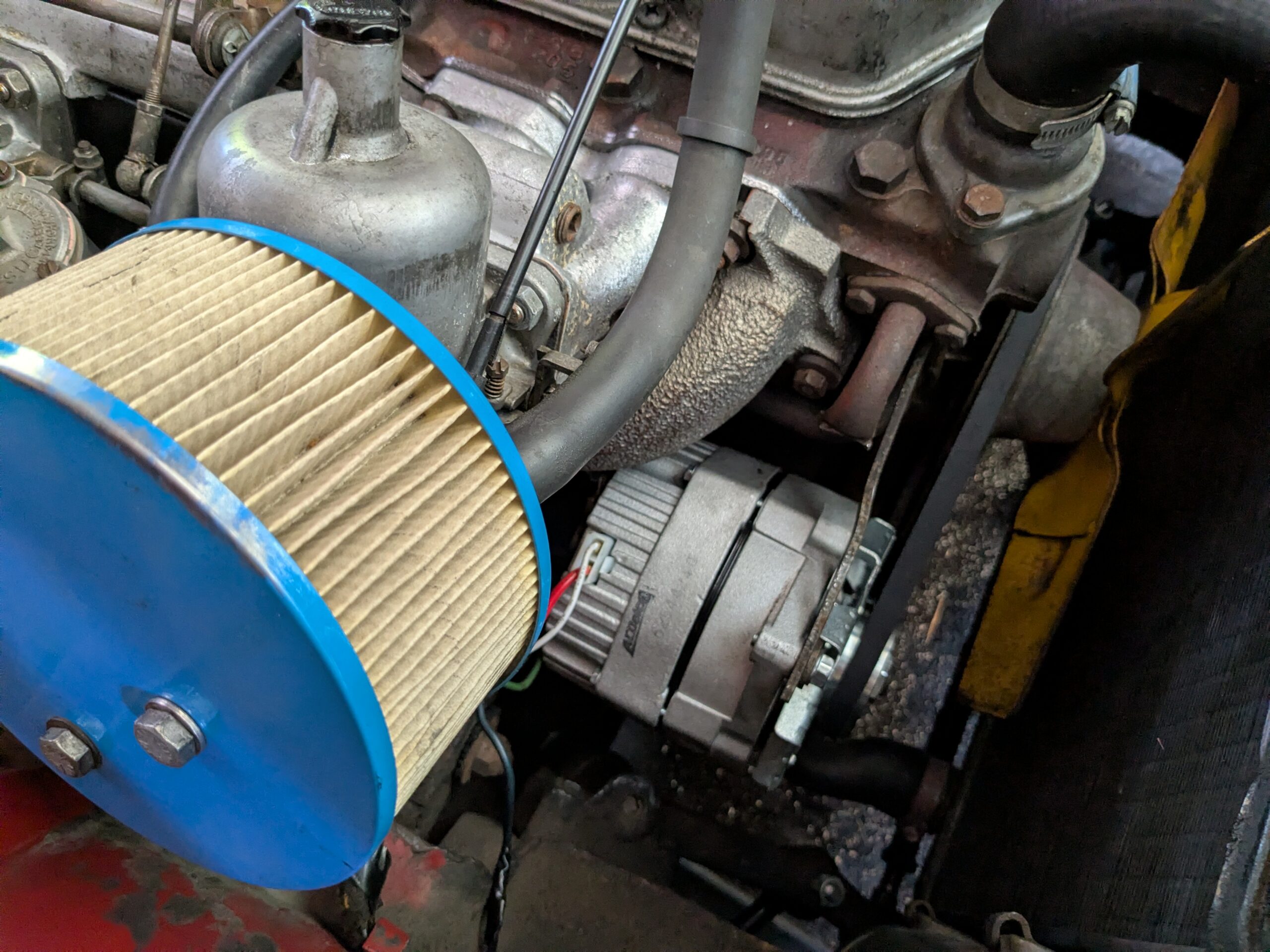
That’s because the alternator kit is designed for a common AC Delco alternator that is internally regulated; a quick bend of the upper bracket in addition to the new lower bracket allowed me to mount a remanufactured unit from Rock Auto. (I had to order two; the first one had loose and noisy bearings straight out of the box.)
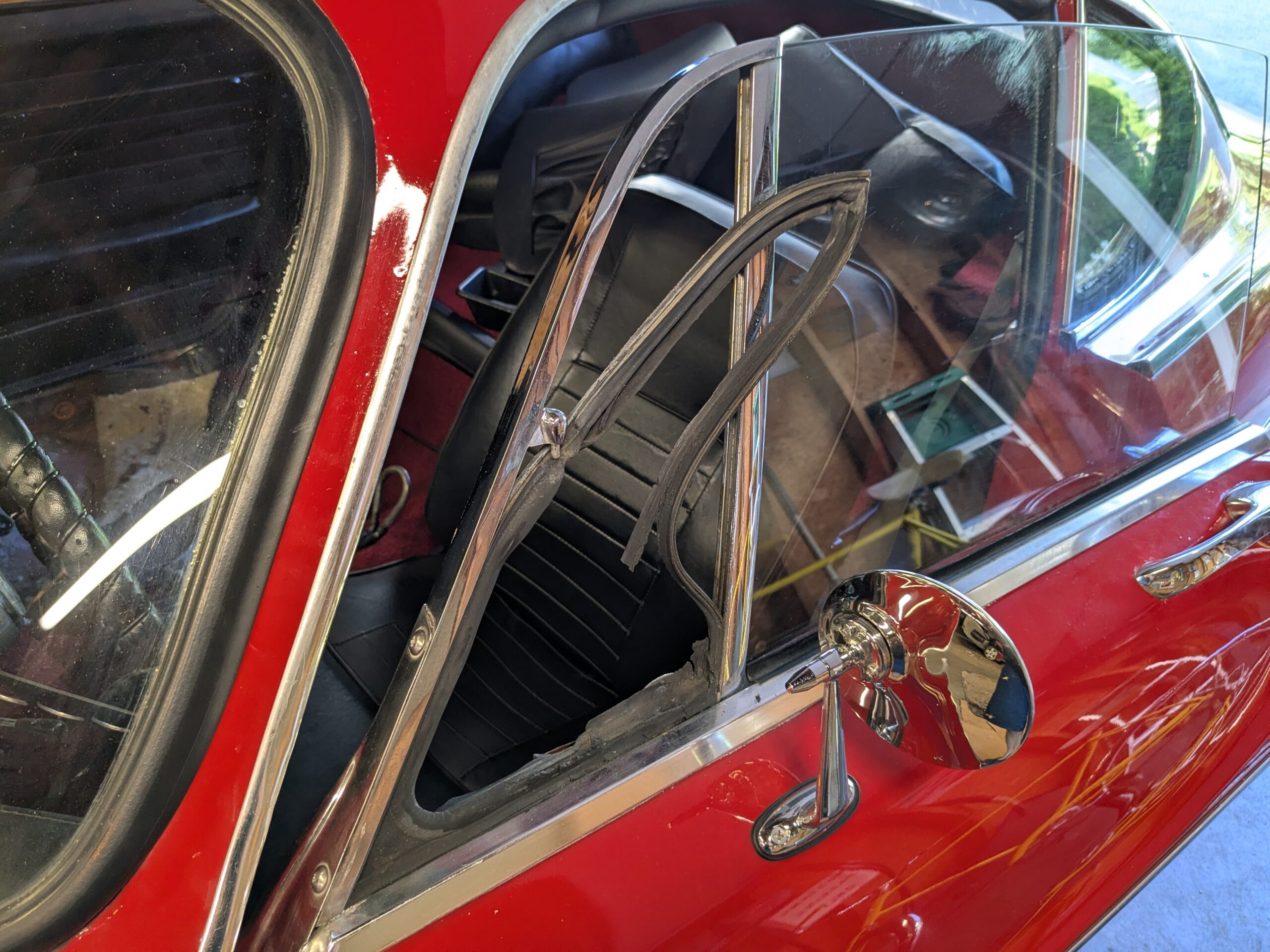
Next up was a job that is never something anyone looks forward to, replacing the vent window seal. The passenger side seal is still in usable condition, but the driver side seal was letting chilly outside air slap me right in the face on cool days.
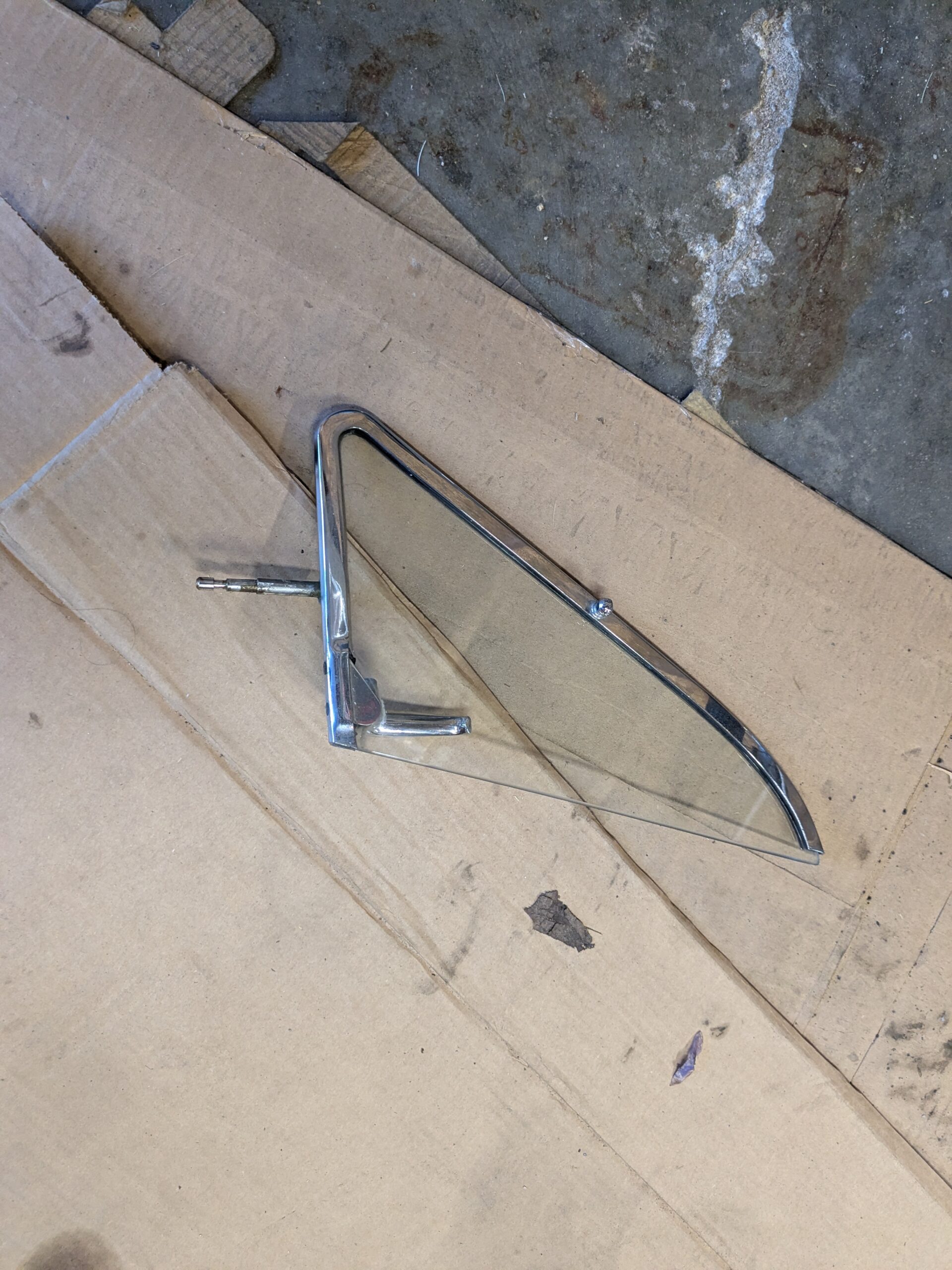
Luckily, seal replacement is possible without removing the vent window frame from the door, although the door panel has to be removed to loosen the pivot bolt which releases the pane of glass.
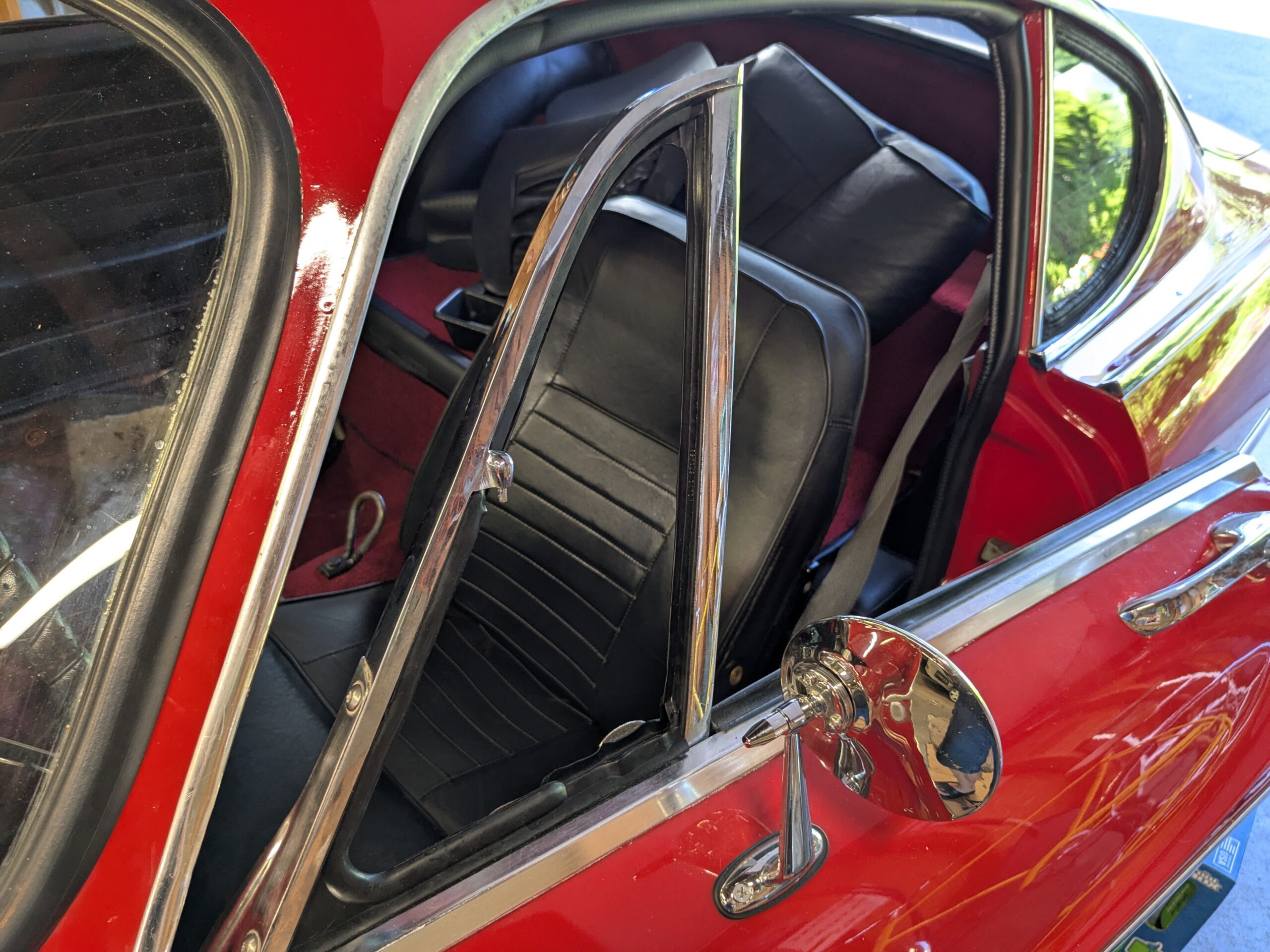
Installation of the new seal was a snap, literally; it snaps into a channel that holds it into position.
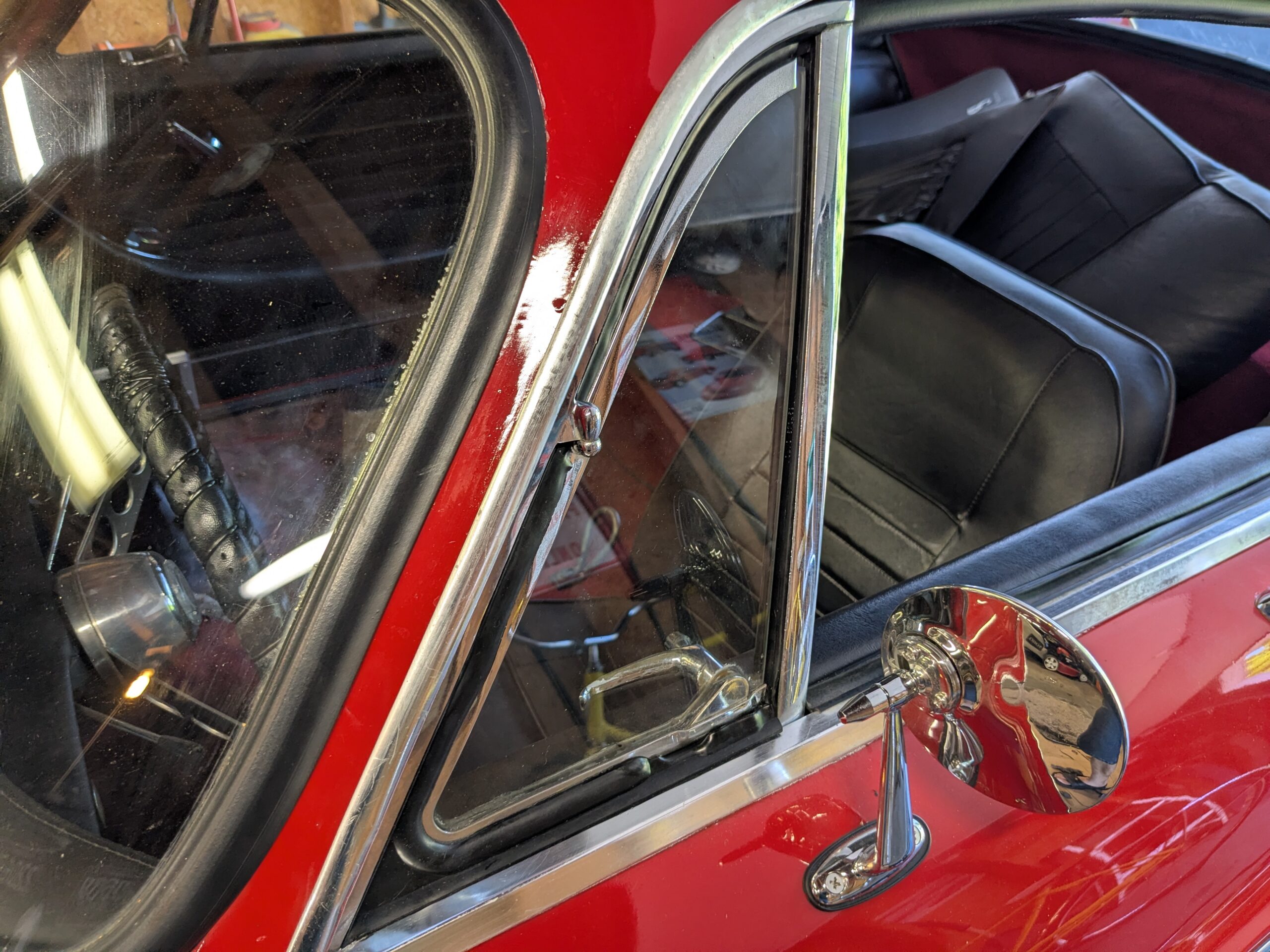
Now, there’s no breach in the seal to harass me on spring and fall days.
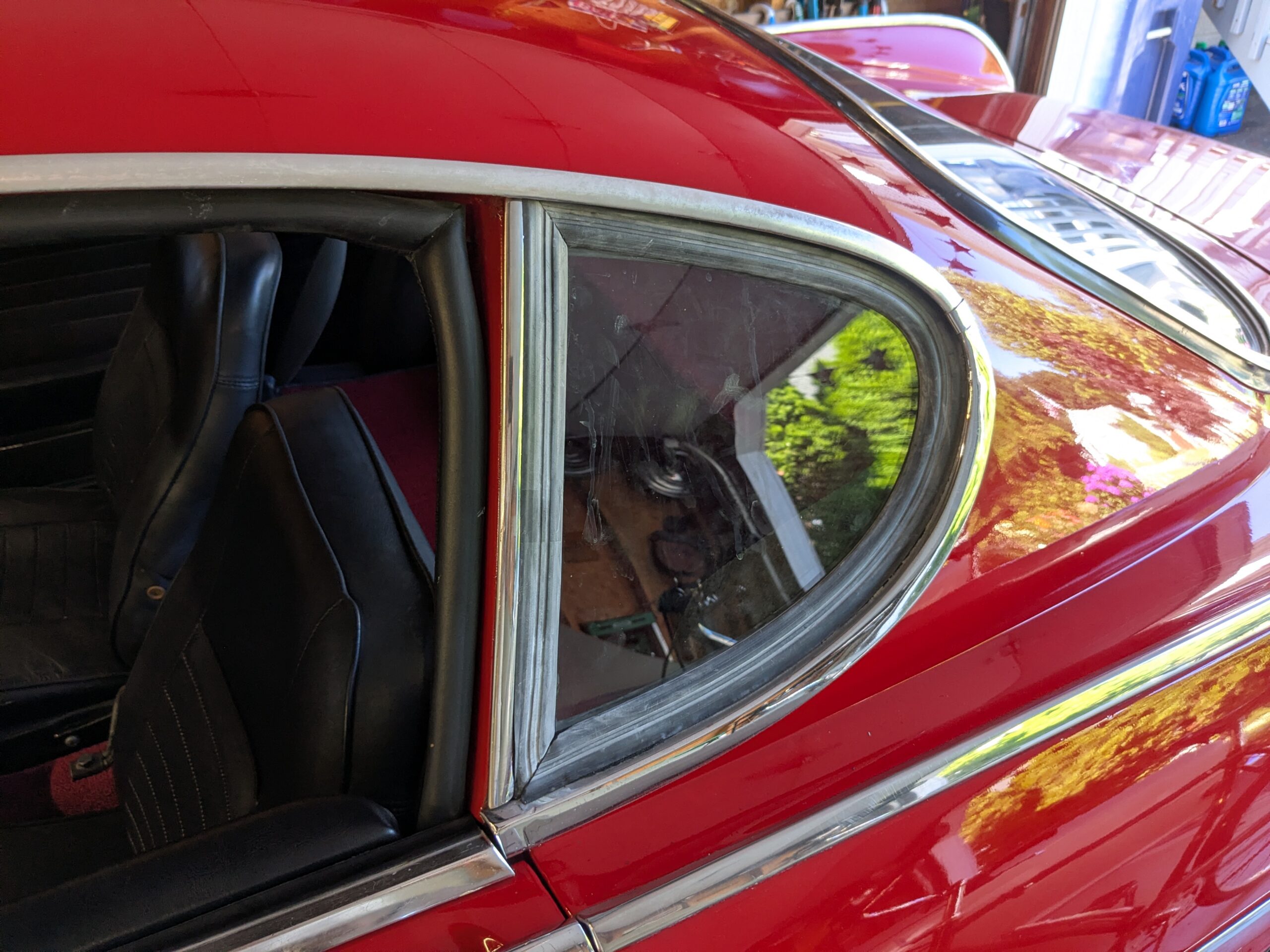
The driver side quarter window seal had also been rendered useless by 59 years of exposure to the world, so I also ordered a new seal for that; however, I did not install it myself. I drove the car over to the local glass shop who does all my glass work; after all, I went to high school with the guys who own the place and work there. They removed the window and replaced the seal while I waited (shh…they didn’t charge me either).
Other interior work involved removing a cluster of confused wiring and getting the dash lights working, but the underdash courtesy lights are still AWOL. I also had to weld in a floor patch because the fourth passenger seat bolt had nothing to attach to, and in doing so, I found that the passenger floor is not great as a whole, especially where it was once welded to the toeboard. Because I’m not proud of my occasional hackery, I will not include a picture of the steel sheet I bought at Tractor Supply and screwed to the floor. At least I used seam sealer.
I mentioned in the last installment that the car has had some poor rust “repair” done in the past, and fixing the floor would also call for fixing the rockers, front lower wheelwells and lower fenders. That’s a big job, and honestly, I may never get to it.
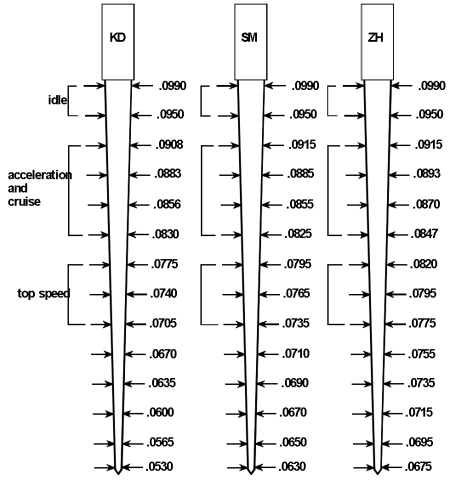
After all that, I was still working on the car’s tune. One day, I took the car for a ride up the expressway for a few miles, and it felt like it was struggling at 80 (Er, I mean 75, the speed limit). I hooked up my mobile wideband O2 sensor and gauge and found the car dangerously lean, like 17:1 air-fuel ratio at cruise or leaner when I tipped into the throttle. The carburetors had a pair of ZH needles, which are quite lean, and they weren’t standard on the 1967 1800S, according to my manuals. You can see the needle profiles pictured above; the thinner the needle, the richer the mixture.
I quickly ordered a pair of the correct KD needles that the car was supposed to come with, and now the AFRs are a bit too rich under most conditions, but just right at freeway speeds: 14.5:1 or so. Under full throttle, it keeps getting richer the faster it revs, into the 11:1-12:1 range, so I may try a pair of SM needles next year, although I’d rather be too rich than too lean. Under my normal driving conditions, it’s in the high 12s to mid 13s, and really, that’s kind of how 1960s cars are in my experience.
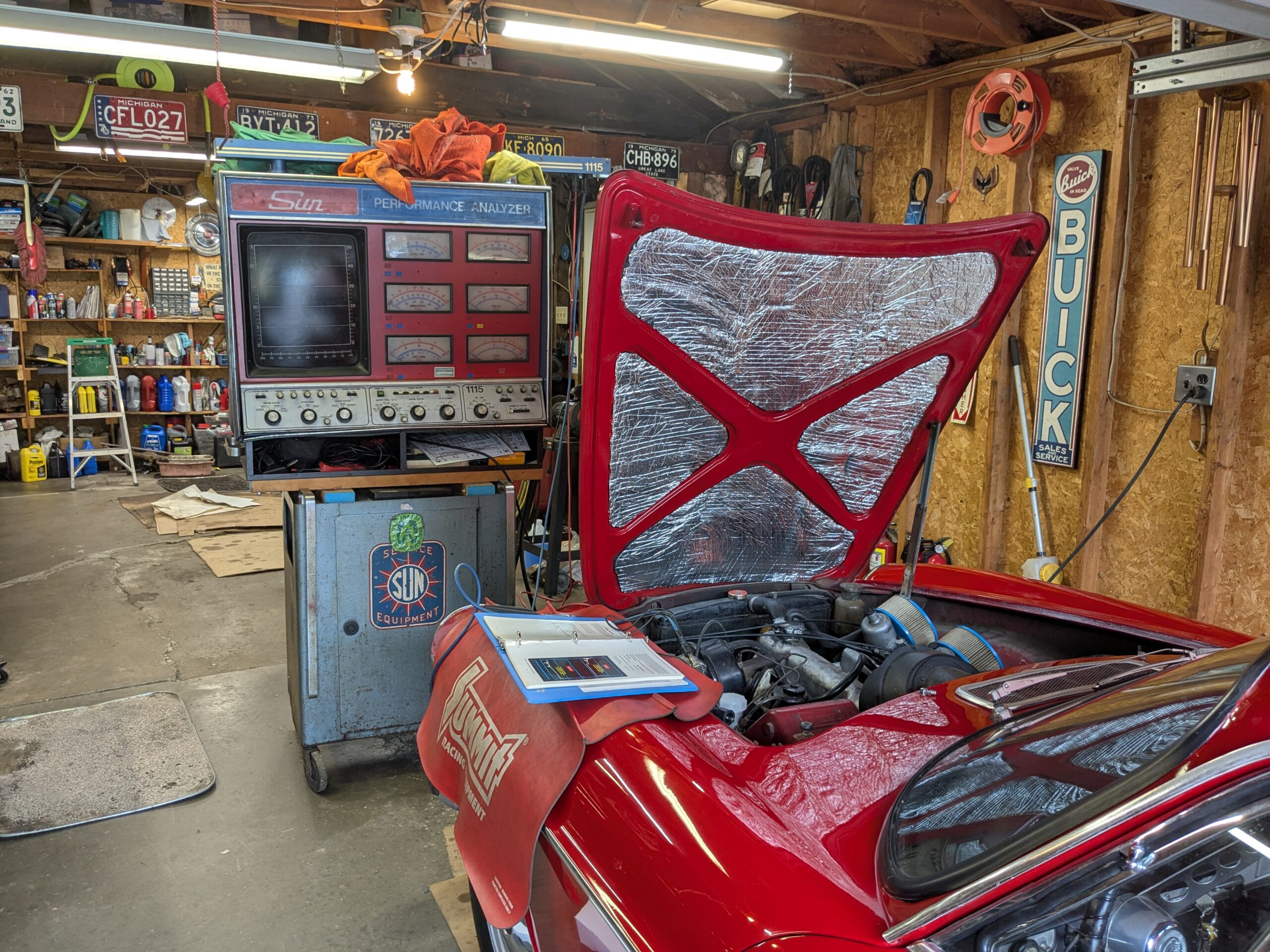
I am also fighting a slight variable miss at idle, which might be more noticeable than it otherwise would be due to the car’s cheap glass pack muffler. The 1800 looked great on my Sun oscilloscope, but before hooking it up, I had a minor adventure. I had swapped condensers as a test, a quick job, and while driving up a bridge approach, the new/used condenser stopped condensing. If you’ve never driven a car with a bad condenser, it feels a lot like a car that is out of gas and barely chugging along—jerky and a little disorienting at first. Luckily, the bridge wasn’t crowded and we managed to coast down the other side and into a parking lot, where I swapped condensers in about 10 minutes while my wife, sister, and brother-in-law waited (my sister and brother-in-law were in a separate car).

Aside from all that, I’ve managed to put about 600 miles on the 1800 so far this year, and although the gas mileage has not been very impressive at 19-20 miles per gallon, that’s included a lot of mixed driving and idling in the driveway while I listen to things and make adjustments. Most importantly, I am confident that the next time I put the key in the Volvo’s ignition, it’s likely to start and get me where I want to go. In other words, it’s just one of the gang.
Related Reading
My 1967 Volvo 1800S: The One Where It IS Running At The End (by me)
My 1967 Volvo 1800S: The One Where It’s Still Not Running Right At The End (by me)
My 1967 Volvo 1800S Maintenance Log—No Sleep ‘Til Göteborg (by me)
My Newly Acquired 1967 Volvo 1800S – “Is That One Of Those James Bond Cars?” (by me)























Good job Aaron! Your on-going 1800-S chronicle is still one of the best stories of how to get and keep an interesting car going in a reasonable way. Clearly work work has paid off, and frankly is all that much more interesting for the variety of solutions you’ve employed as you go along.
Randomly, I’ll note that the state of rebuilt alternators is (to me) shocking. I’ve probably replaced more alternators on various cars over the past 10 years specifically because it’s seldom the case that I can just buy one and have it work. Most of them are rebuilt (although someone in old Volvo land is probably selling NOS Bosch ones that will cost nearly as much as the car itself just because some folks want to have them) and about half of those go out the door broken still. It’s kind of nuts.
Secondly, I have that exact SUN cabinet that sits under your engine diagnosis system. I just have the cabinet (no analyzer) and it makes a dandy rolling tool cart. And that’s probably the only thing my garage has in common with yours.
Thanks for the update…already looking forward to Spring!
Thanks Jeff,
I was also amazed at how an alternator that’s covered in inspection tags could somehow have bearings that are so loose a child would notice. Luckily, Rock Auto has an easy return policy and the second one was better, but yikes.
Regarding the Sun cart, it’s a great place to store all my service manuals, timing light, vacuum gauges, dwell meters, etc.
That’s great, I’m happy to hear it’s a regular member of the fleet now. I’ve had some similar problems with my VW, my carburetor problems disappeared when I replaced the points and condensor, amazing! And my driver side vent window is misaligned and can’t fully close, but I haven’t been concerned enough to take the door apart and investigate. Next up is transmission mounts, which I have been delaying because it is an engine out procedure. 🙁
The Volvo sure looks good in photos, a temporary-ish floor repair sure sounds better than major floor/rocker/fender surgery at this point.
Thanks Doug,
It’s definitely a ten-footer, but it looks decent enough that it’s not worth dozens to hundreds of hours to repair. It’s basically rusted and fiberglassed in all the places 1800s normally are: the front toeboard seams (with a few random holes on the outer edge of the floor), the rockers, the lower fenders/wheelhouses, and the lower quarters in front of the rear wheelwells. It certainly wasn’t driven in an area with heavy salt use, but based on where the car’s been, I imagine it started life in the Pacific Northwest.
Irv Gordon would love it!
Alas, one of my many personality flaws is that I fondly recall chosen cars as they were when new or near new; not like what they are today.
This non-fatal flaw of mine invariably leads to bouts of disappointment when I finally get my hands on a well used cherished car of my youth or early adulthood.
To me, imperfections are what make cars (and people) interesting, so I tend to roll with it more than maybe I should, unless I’m spewing an invective stream. But that’s what makes a hobby!
I’m pleased to learn that Ron Kwas of Swedish Embassy is still alive and kicking! He’s been selling that alternator kit (along with a bunch of other useful upgrades) for over 30 years now, maybe closer to 40. Unless one is doing a 100-point restoration (and you’re not) there is really no good reason to run a generator in a car any more.
I agree. I thought about finding generator bearings and letting it ride, but the kit was not a bank-breaker and with little piddly taillights, it’s good to have all the idle current you can get.
Aah, vent window seals. Those things missed (skipped?) in 95% of “restorations”. That and severe pitting of the chrome frames.
I think this car gives your fleet more variety than anything else you own.
It’s certainly been a steeper learning curve than anything since the Corvair. All cars have their quirks, but imports are all new to me, aside from admiring many of them my whole life.
Good to see it’s not on the shit list anymore. 🙂 And it is looking good.
I just expanded my fleet. And I’m already making a to do list. Stay tuned.
Can’t wait to see it, Paul!
The only genuinely sensible sports car. And I do mean ‘sports’ in a loose sense of the word.
The Italians made wonderful cars, but they broke too often. Same with the British. The Swedes must have know their car would eventually prove itself in this area.
Thank you for your description of the symptoms of a failing condenser. My diagnostic skills are not strong, and I think this might help me with a recent problem with my Citroën.
You’re welcome! I think it’s the first time I’ve had a condenser go bad, although I had a bad coil (and a bad replacement coil from Amazon) running me in circles when I was undoing years of neglect on my Riviera. It felt like it was running out of gas under load with that problem, while the condenser in the Volvo was jerky, like it was cutting in and out, mostly out.
A failing condenser typically works until it gets hot then the spark gets erratic as you described .
When far from home and no spare parts, I have crushed the sides of a bad condenser with pliers to make it work well enough to get home instead of calling for a tow ($!!) .
This is a pretty car and it’s nice that you’re able to service and enjoy it like one should .
I think the problem with new or rebuilt spares being bad right out of the box is the endless chasing of every penny in profit ~ if you pay nothing for quality control inspectors, expect them to pass any and everything on down the line .
If the tail lights are dim try LED’s , I have changed amlost all of my fleet’s bulbs to LED and am very pleased with the results.
Rusty . corroded lamp reflectors can be cleaned using a good quality dedicated battery brush in the socket then wash what’s left of the reflector and using Foo-Foo cans paint it gloss white ~ silver won’t work well, white will bounce the lumens around and fully light up the lens .
-Nate