
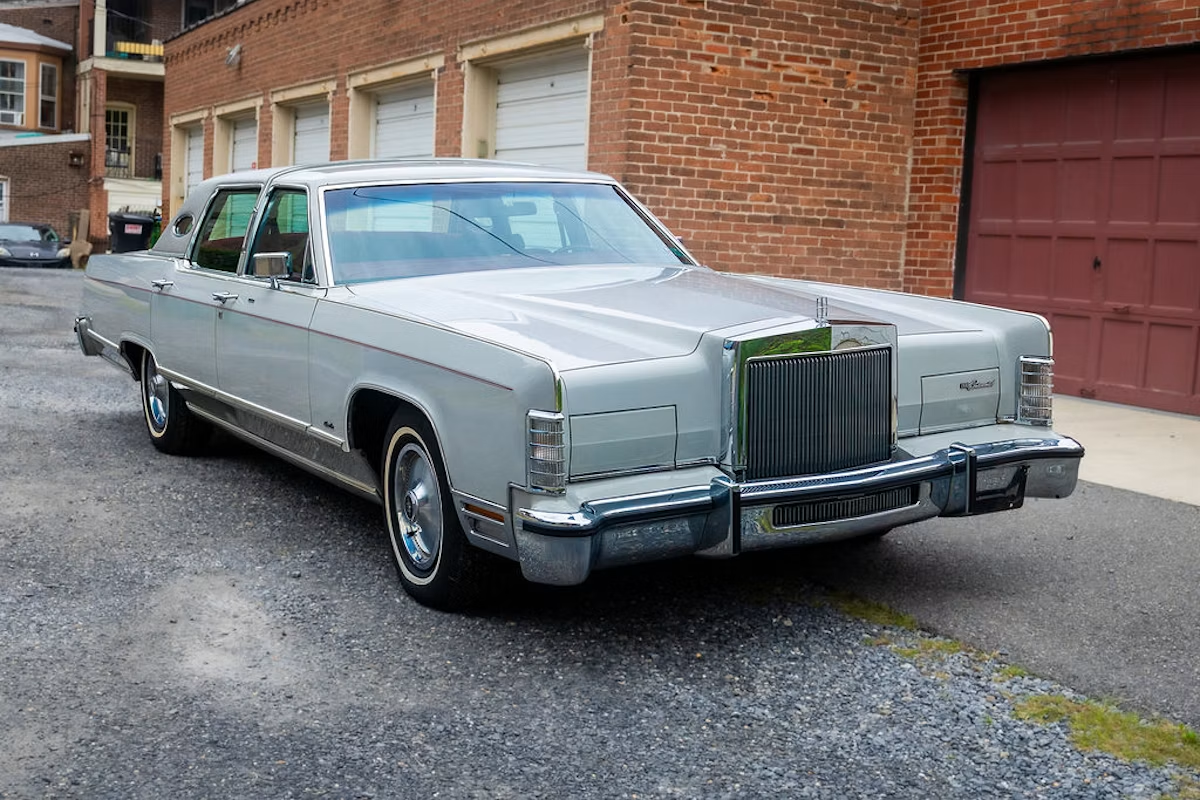
I recently was driving down I-96 near Detroit, and the Dearborn area is where you’ll start to see more Lincolns on the road than you might be accustomed to seeing. Sadly, I had a hard time identifying which model was which, something that never would have happened when this 14,500-mile 1979 Town Car was built. Fortunately, if you find new Lincolns to be a little too homogeneous for your liking, this car, which has been in the same family since 1981, is up for auction on Hagerty Marketplace in Easton, Pennsylvania
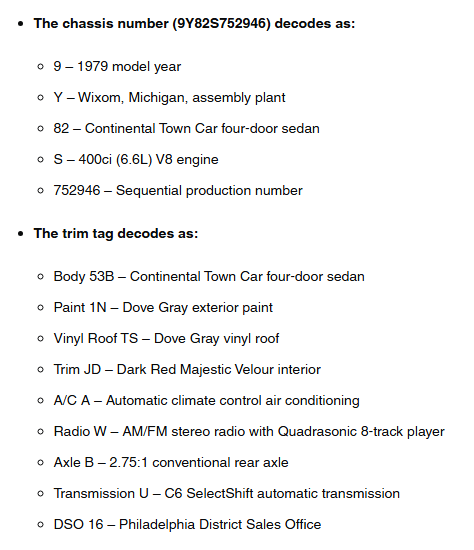
Hagerty does a nice job of decoding VIN and trim tags so I don’t have to, and you can see that this car was originally equipped as you see it, and was indeed delivered to the Philadelphia region when new, which coincides with the seller’s claim that his father bought the car “secondhand” in 1981 and cared for it meticulously, driving it “primarily on occasional Sunday outings.”
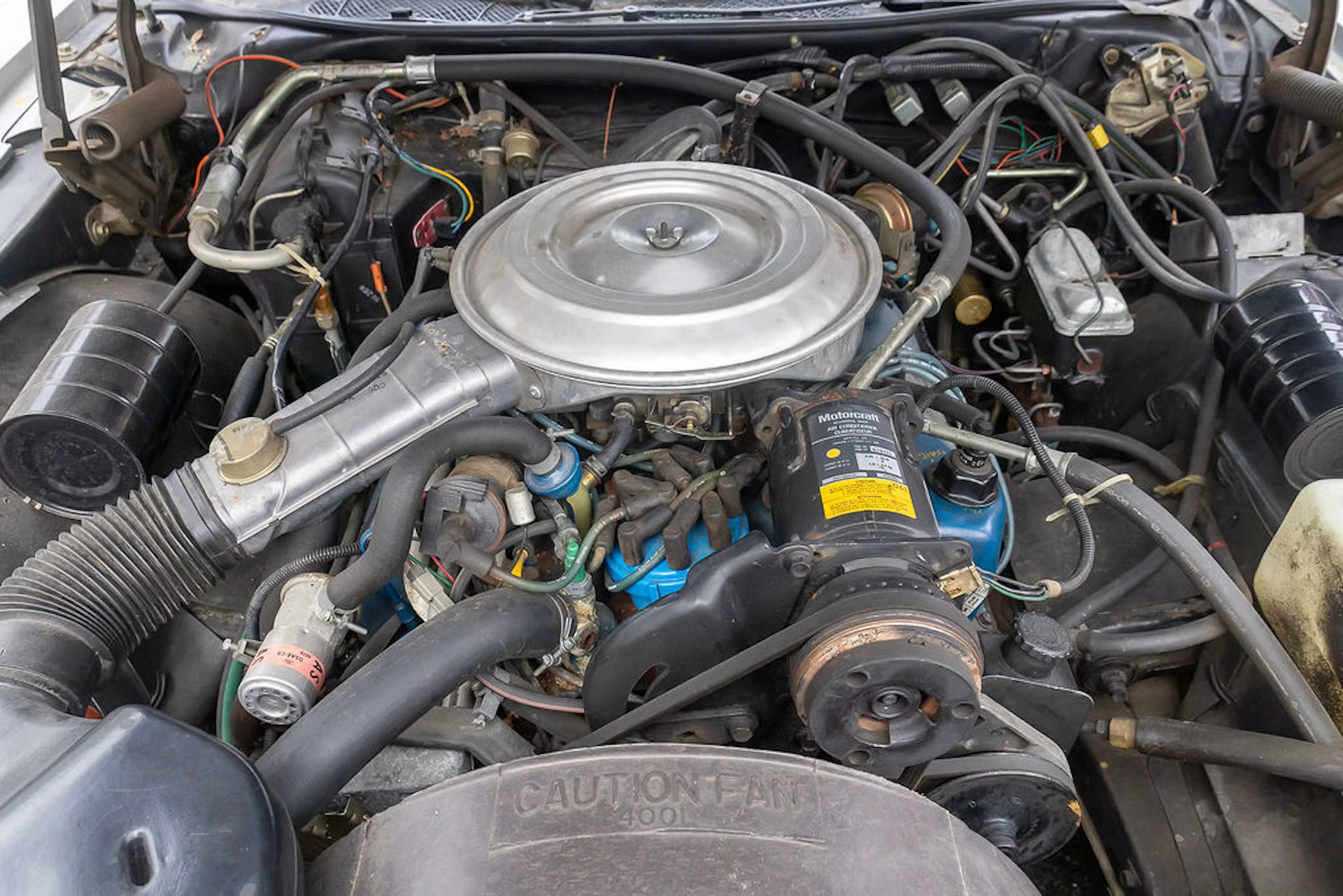
The 1979 Continental was the last of the leviathans before being downsized in 1980. Unfortunately, the optional 460 was no longer available, leaving the standard 335-Series 400 as the only powerplant the Town Car owner could get. Not helping matters is that the 400 had to wrestle with 4,843 pounds of curb weight, and it had only 159 horsepower with which to work. The 315 lb-ft of torque wasn’t bad, but there’s no denying that acceleration would be in the barge class.
On the bright side, this car has never been neglected, and the seller has mentioned in the comments that “the vehicle does not have a single mechanical or running issue,” so we can assume that all the power and torque bestowed on the Town Car by Ford engineers are still ready to work. The engine compartment looks nearly new, and not in the way that it often does when it’s been recently detailed; I’d guess that the car was in climate-controlled storage the whole time.
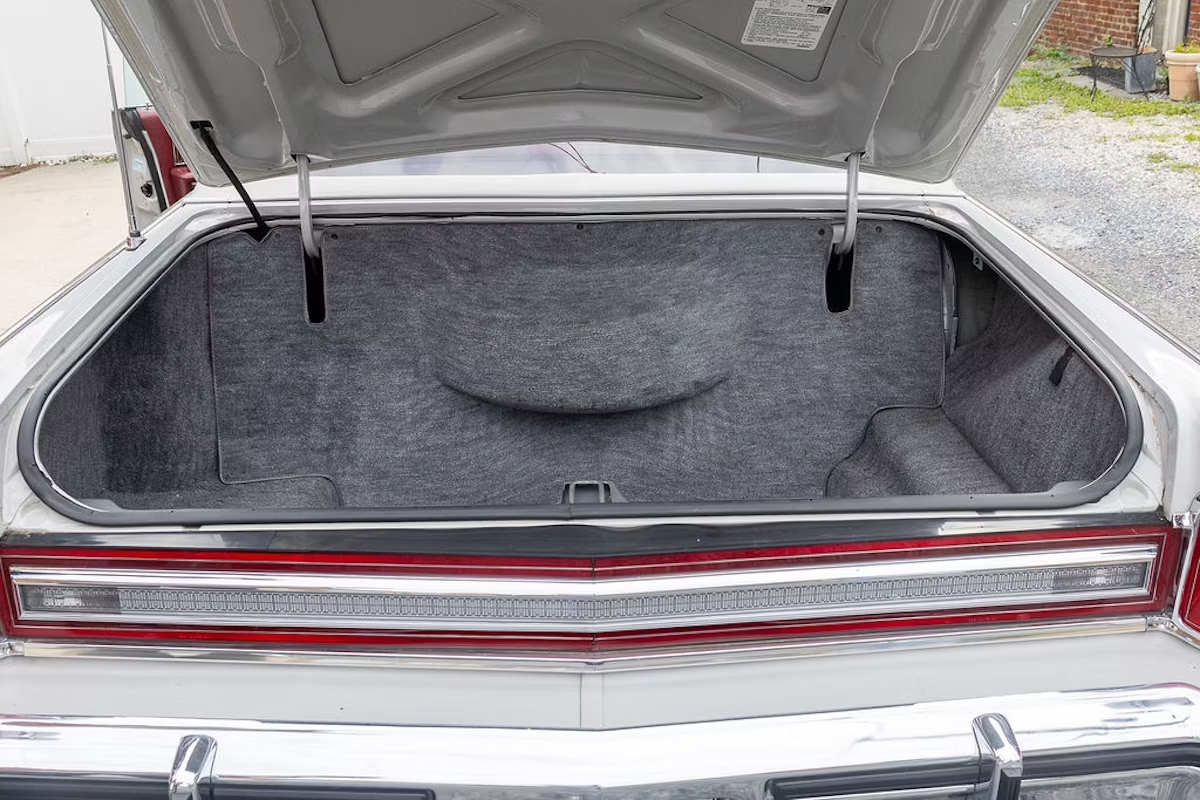
The luggage compartment also looks fantastic, although the spare tire emerging from its fabric cover is an image one would expect on a poster for a horror film.
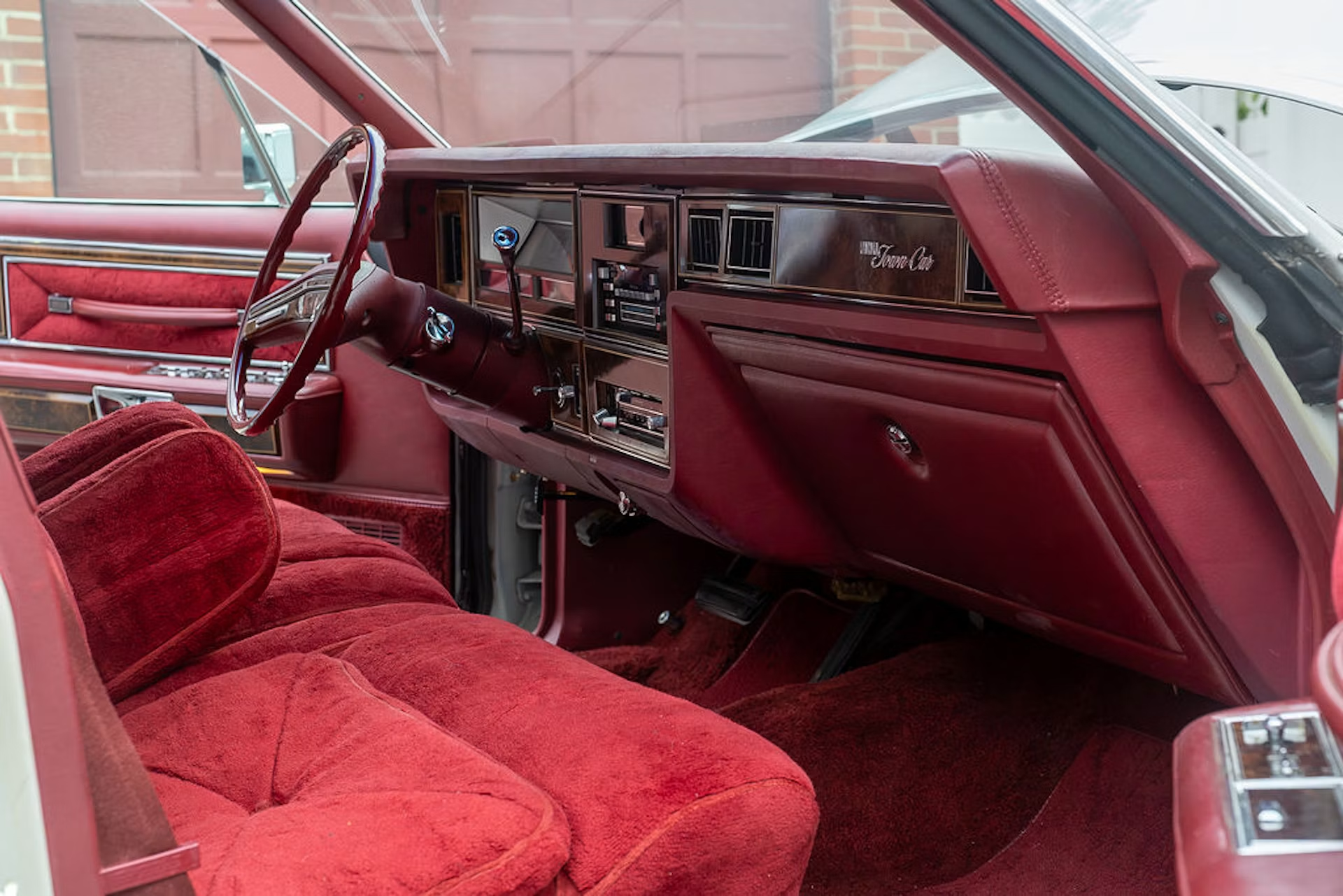
The interior is of course where the Town Car shines the most. Everything was standard on a Town Car, including air conditioning, power windows, power seats, and cruise control, but even if that weren’t true, the plush velour would be reason enough for the elite to choose Lincoln in the late 1970s. There was a reason that many of the well-moneyed bad guys drove Lincolns in 1970s TV shows.
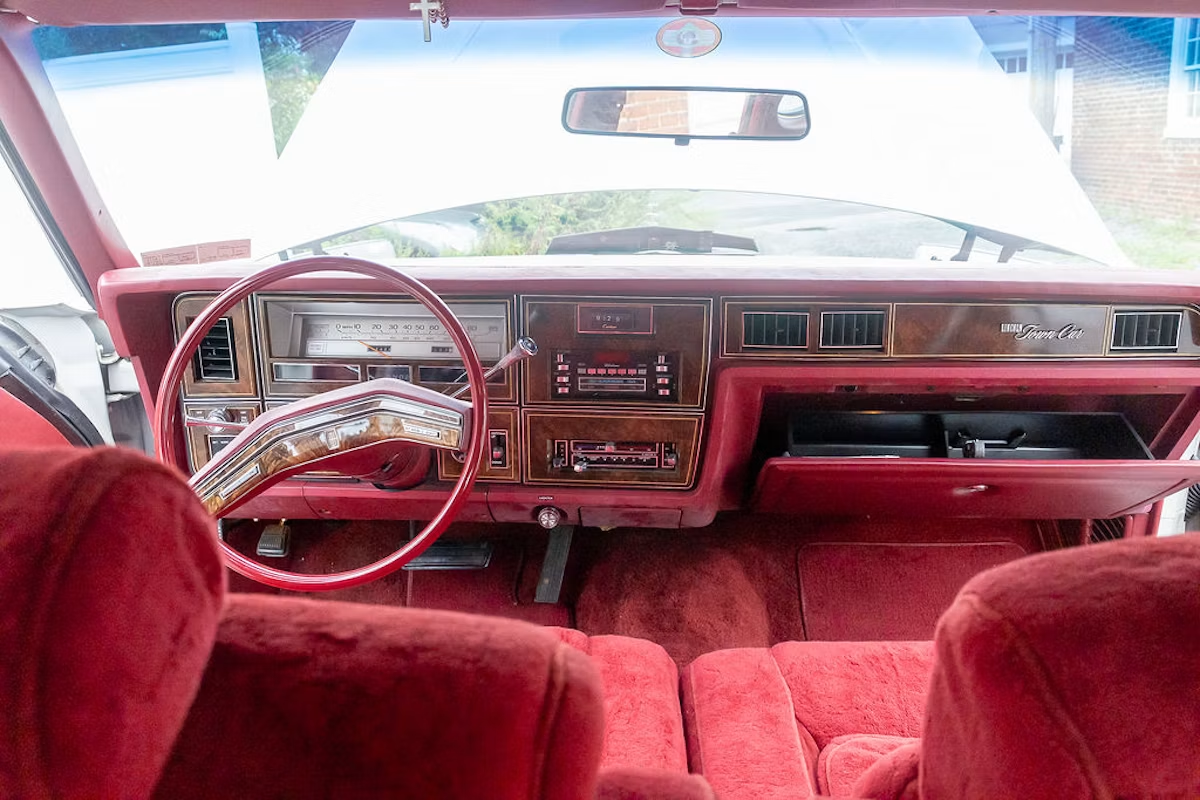
The dashboard was preparing itself for the 1980s, too, with a black-on-silver instrument theme that was mildly popular right around this time. Of course, the dashboard had woodgrain applique and could be easily recognizable as a Ford product, with its familiar steering wheel and controls.
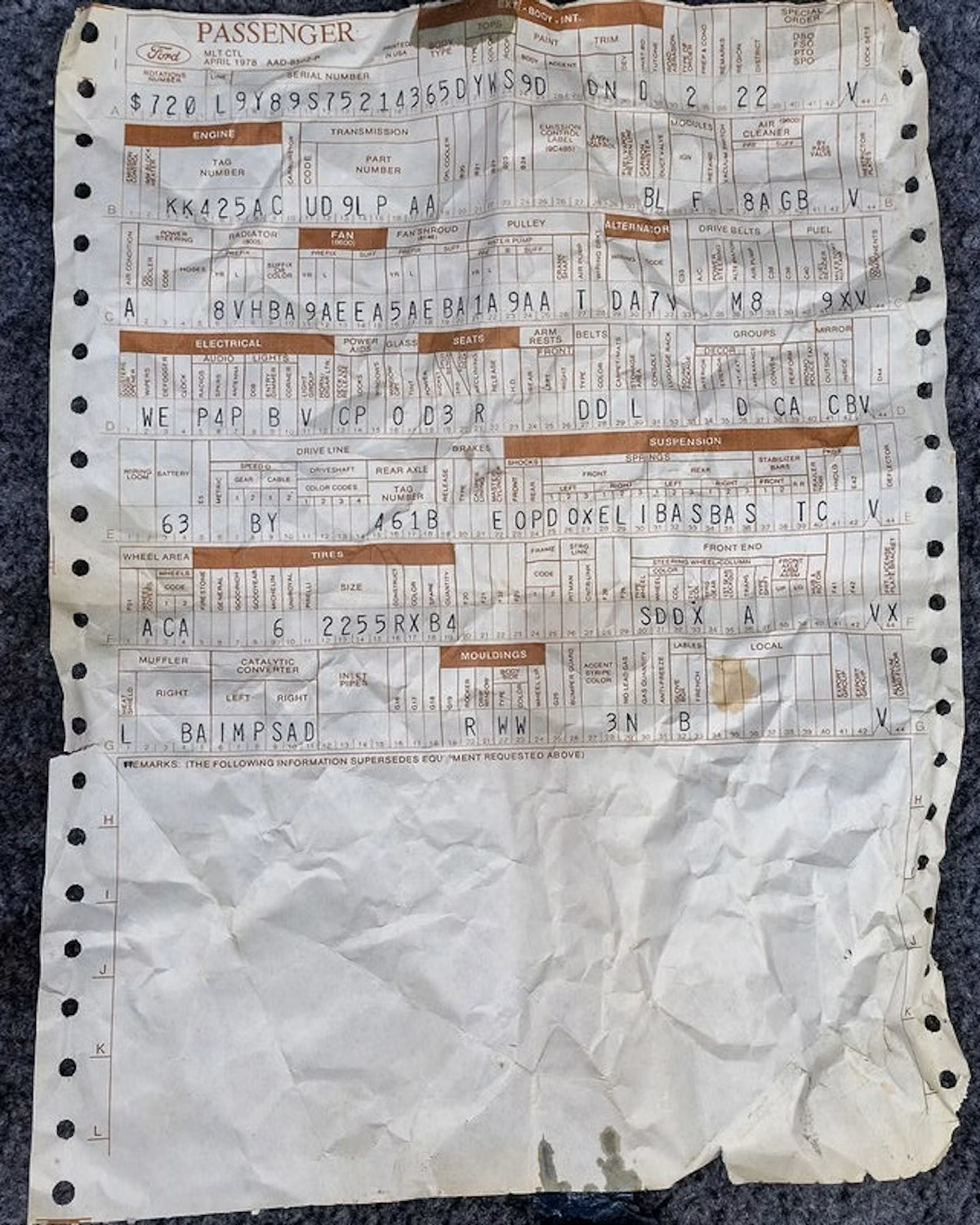
The car will come with copious documentation that suggest its mileage is original. The seller stops short of saying that the 14,473 miles on the odometer are unequivocally original, but the general condition of the engine compartment alone indicate that they probably are.
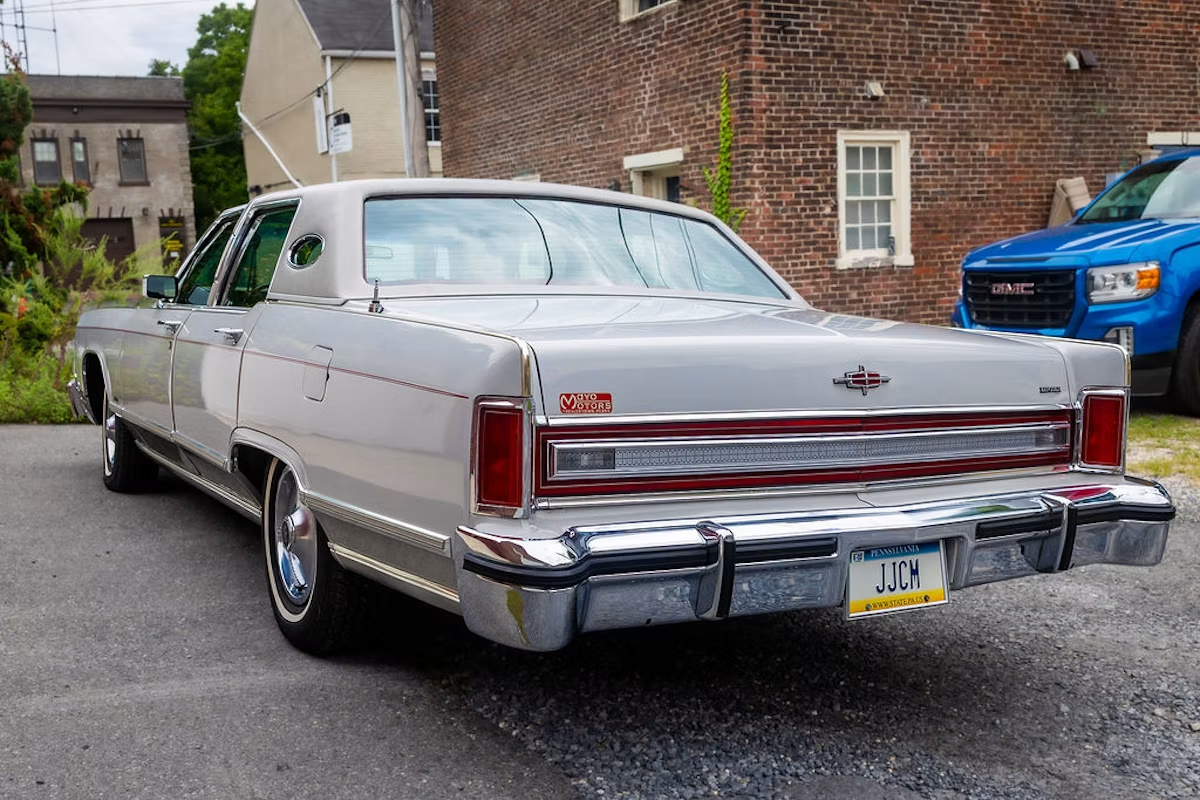
While this Town Car might not be the absolute line-topping “Collector’s Series” edition offered for 1979, it’s about as luxurious a car as one could buy at the time, and many did: Lincoln sold 76,458 Continental sedans during that final year of big, big-car production. This is a chance to own one of the nicest originals out there, 47 years on.
Related Reading
Curbside Classic: 1979 Lincoln Continental Town Car — Sometimes, More Is More (by Eric703)
1979 Lincoln Continental Town Car: A Car This Big Should Come With A Chauffeur (by Aaron Severson)
In-Motion Classic: 1979 Lincoln Continental Town Car – Sunday Best (by Joseph Dennis)























I find it interesting that buyers almost always chose the Town Car option (around $1,500 in 1979) over the base Continental. Also, leather was standard on the Town Car, and the velour was a credit option. At any rate, a magnificent specimen of an American legend to be sure.
Lovely automobile, the apotheosis of traditional American luxury in the ’70s, the Dove gray with maroon velour interior is gorgeous. The IP was looking cheaper and LTD like by ’79 though, we had a ’74 with 18k original miles around the late ’80s and it had a much nicer dash panel. It was too nice to use regularly as a driver so sold it to an appreciate driver.
Sorry, not intending to be pedantic, the actual term is homogeneous, not homogenous.
Ya caught me. Correction made.
I would take the cylinder heads off this for my 302. Already have the intake manifold and head bolts for that combo 🙂
Why would anyone want to take such a nice and original car and begin to patch job it together with other parts?
I’m sorry, but I just don’t get that. If you want a project car, don’t buy one like this.
+1
A beautiful car. We had two “Panther” Town Cars in the second half of the 80s and even though I was a child, I still recall them in almost every detail. I loved those cars and still do
Perhaps this has made me more of a Lincoln than a Cadillac guy, but I would take the Town car over Cadillac, and not just in 1979.
What a fantastic nice and original Town Car. I love that dove gray but if I could go back in time and be ordering one brand new, I’d order mine in this gray with the dark blue leather. It really goes well with that light dove gray exterior.
In your opening, you mention about not being able to tell a “Lincoln” of today from other vehicles. Boy, is that ever true. Lincoln is such a pathetic shell of what it once was and today they offer no EV’s, no sedans and no coupes. If you want a Lincoln today, you settle for an ugly box of an SUV that totally looks like any of the other hundreds of SUV’s around it.
Love the condition but if I was in the market for one, I’d have to pass and keep looking for a ’77, which had the 460 and the ‘real’ Lincoln dashboard with the wrap-around cowl, actual gauges and the drum speedometer. My parents had a ’75, a very early model which had all the typical accoutrements except no opera light at the B pillar. The gold velour interior was lavish, excessive, and wonderful for an all-day cross-country drive. We took two of them in that car as well as several smaller trips in the relatively short time my parents owned it. At the time I preferred the lower grille to the ‘Mark” grille used in ’77-’79, but it has grown on me over time.
So why a short time? Mom loved the Town Car but my Dad still in his heart of hearts wanted a Mark at some point, so in late 1976 they ordered a 1977 Mark V with the Cream/Gold (or did they spell it creme, don’t recall) package straight from the brochure, all cream exterior with gold velour and a crosshatch cream/gold velour inset. We ordered in in September, 1976 and due to the demand, we finally got it in May, 1977. I briefly drove the Town Car once or twice (not legally) but really learned to drive with the Mark.
The longest (standard) car Ford has ever produced, owing to the 5mph bumpers putting it just ahead of the original III, IV and V behemoths.
That’s what ruined the look of them, and nearly every other car sold in the USA from 1973 & up! Those disgusting 5-mph bumpers they had to have at the time.
I used to see a similar vintage Town Car by the bicycle shop and marveled at how huge and inefficiently packaged it was. My F150 XLT is around the same length, and while the Super Cab back seat is a bit cramped, I still have leather seats, power windows, power mirrors, power locks, and a console with a compass and outside temperature. I also have an 8′ bed so I can carry 4×8 in the bed, try fitting that in the back of your Lincoln. On the other hand in the F150 your golf clubs will get rained on.
For an additional invidious comparison, the SOHC V8 in my truck is rated at 260 HP out 330 CI handily beating the malise era 400M
Ah, ok?
Sorry slow_joe, but I have no idea what you are even trying to say. First, saying it’s inefficiently packaged is kind of wrong. Yes it has a longer hood and trunk than it probably needed, but there is nothing more efficient when it comes to packaging than a box. And this is a box but in a good way.
The rest comparing to this to a “TRUCK” is blasphemy. Don’t get me wrong. Trucks have their place in this world and it’s on the farm or ranch or pulling trailers or loaded with construction materials. What this world (the USA) needs is more real luxury cars like this in the modern form.
When I arrived at college, the President’s car was a new 1983 Town Car. But they also had a ’79. Both were creme-colored outside, but the ’79 was the only vinyl-delete one I’ve ever seen. Very East Coast old money.
Very cool front quarter-vents on the last of the “big” Lincolns; in the explanatory document for dealers they were called “mini-vents” and they raised and lowered separately from the main side-glass. Smoking was at the time socially acceptable (in some circles it seemed to verge on obligatory) and there was a lot of it about so that engineers devoted time to finding a better way for those wanting to “flick ash out the window” while running the AC wasn’t surprising. Those visualizing a “flick” in progress might be surprised such a thing existed because in a modern vehicle (the body honed in wind-tunnels and computer simulations), what likely would happen is “blowback”. That’s because aerodynamically the shape is efficient (with a “buffer zone” very close to the surface) and disrupting that by lowering a window shifts the inside pressure from positive to negative, ash thus prone to being “sucked-in”.
However, on something like a 1970s Continental (that conceptually can be imagined as one brick sitting atop two), the buffer zone can (depending on speed) extend as much as 3 feet (close to a meter) from the body. This meant ash was flicked into the “buffer zone” and it didn’t blowback into the cabin. The vents didn’t last (another casualty of the quest for lower drag) but as late as 1985 they appeared as a US$72 extra and were known in the industry as the “smoker’s option”. For those who wish to discover the way things (for a brief, shining moment) used to be done, there’s nothing quite like the land yachts of the 1970s and although a breed in which specific efficiencies were rare, the mini-vents were an inspired design.
Am I a horrible person for wanting to buy this and make it a daily driver? I won’t, of course. Mainly because of the 400 V8. If it was a 78 with the 460 and if the price was right, I would have to think about it. Yes, it would be a gas hog, but the 400 hardly made it an economy car.
I have long thought that these were some of the best vehicles to come out of FoMoCo in the 70’s, which is why we saw old ones on the road for a long, long time. It would not surprise me that C4C took some of them off the road, even at their advanced age.
Why not? I’m not sure the 400 would be all that much slower than the 460, but I’d hate filling that tank with either engine.