
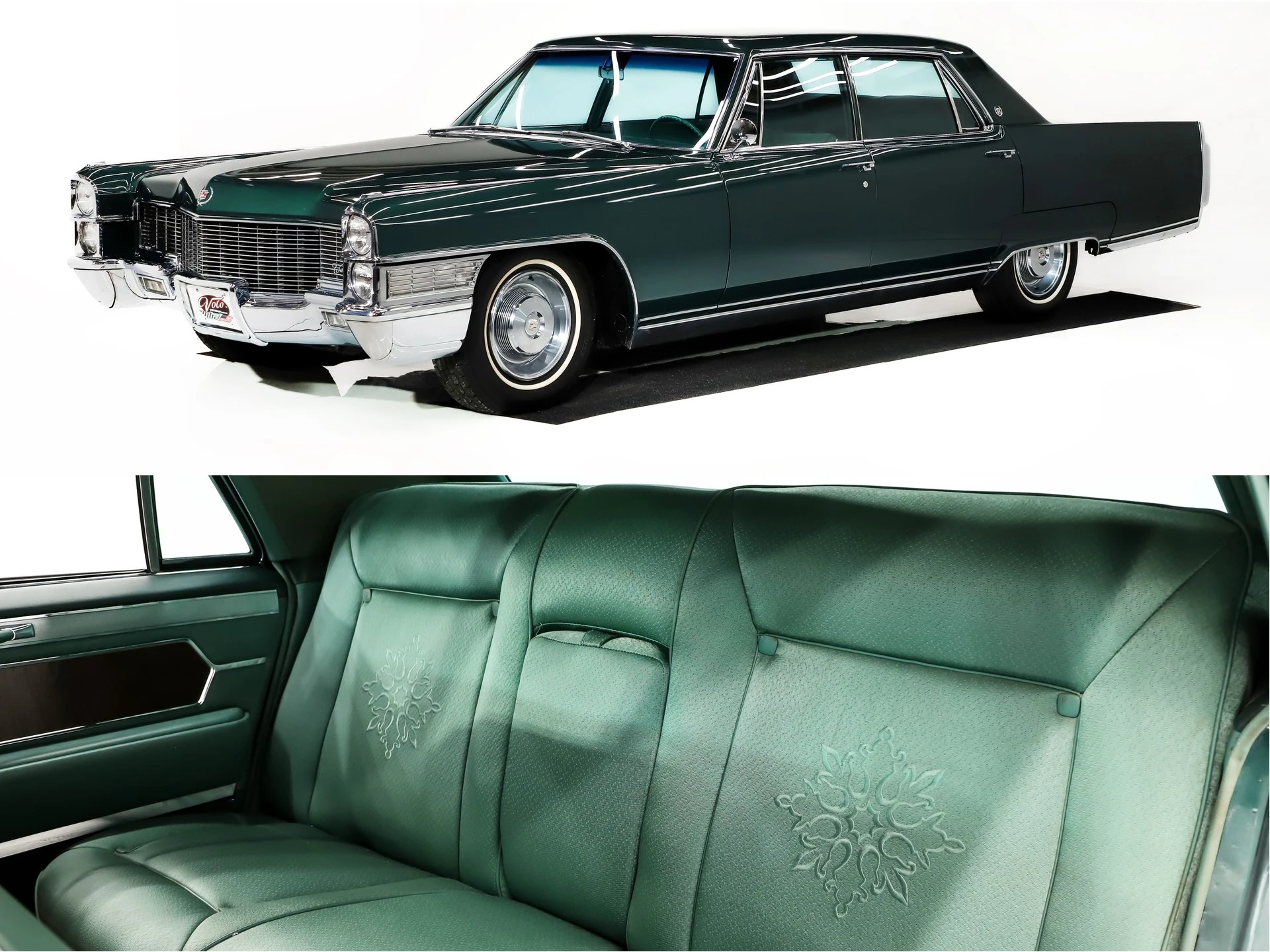
Although the 1970s were the height of the “Great Brougham Epoch,” an age of ornate, plush auto interiors, it really started in the ’60s, with cars like this Fleetwood Sixty Special sedan, whose satiny embroidered cloth upholstery marked a growing trend towards ever-plusher, fancier, and more outlandish luxury car decor.

By the mid-1970s, the height of what Curbside Classic has dubbed the “Great Brougham Epoch,” a lot of high-end American luxury car interiors looked something like the 1975 Cadillac Fleetwood Talisman pictured above: deep-pile carpet you could lose your keys in and squishy plush velour upholstery like an overstuffed armchair, often spilling over onto the door panels. Some people adored this kind of thing, and still do; some people still recoil in order, while others regard it as the height of Camp. The Talisman was a fairly extreme example, but there were a lot of ’70s luxury interiors like this, to one degree or another.
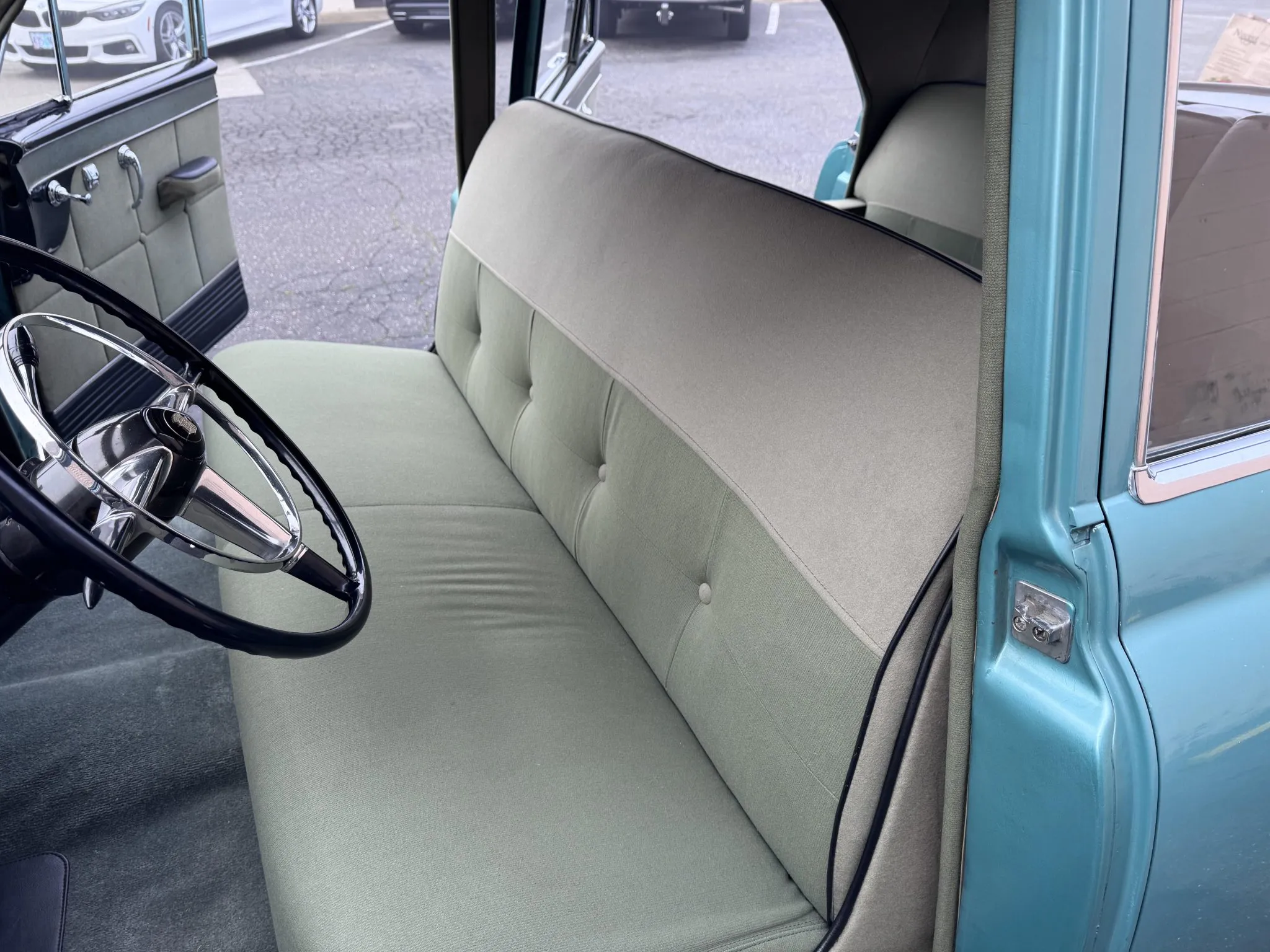
It wasn’t always so. Twenty-five years earlier, a high-end Cadillac interior looked more like this 1949 Sixty Special, with big, flat expanses of fabric in neutral colors, broken only by the occasional tufted button.
What happened in the interim? You can point to changing tastes, but I think the shift also reflected automakers’ struggle throughout the 1960s to decide what a luxury car ought to be in the age of mass production. Traditionally, American luxury cars had offered bigger exterior dimensions, more powerful engines, unique styling, higher-quality trim, and eventually an array of gadgets. However, it was clear by the late 1950s that there was little the luxury makes could offer that cheaper mid-price and low-price brands couldn’t offer too.
This challenge was complicated by the cost pressures of mass production. Luxury cars typically shared their body shells with cheaper models, and while stylists did their best to disguise the similarities, there were practical limits to that. Unique bodies, or even substantial “factory custom” styling modifications for specific models, were very expensive — tooling for mass production of steel bodies is, and remains, punishingly capital-intensive. Detroit also found with the Continental Mark II and late ’50s Cadillac Eldorado Brougham that trying to approximate the cost-no-object, best-of-everything approach of prewar prestige cars was now a sure money-loser.
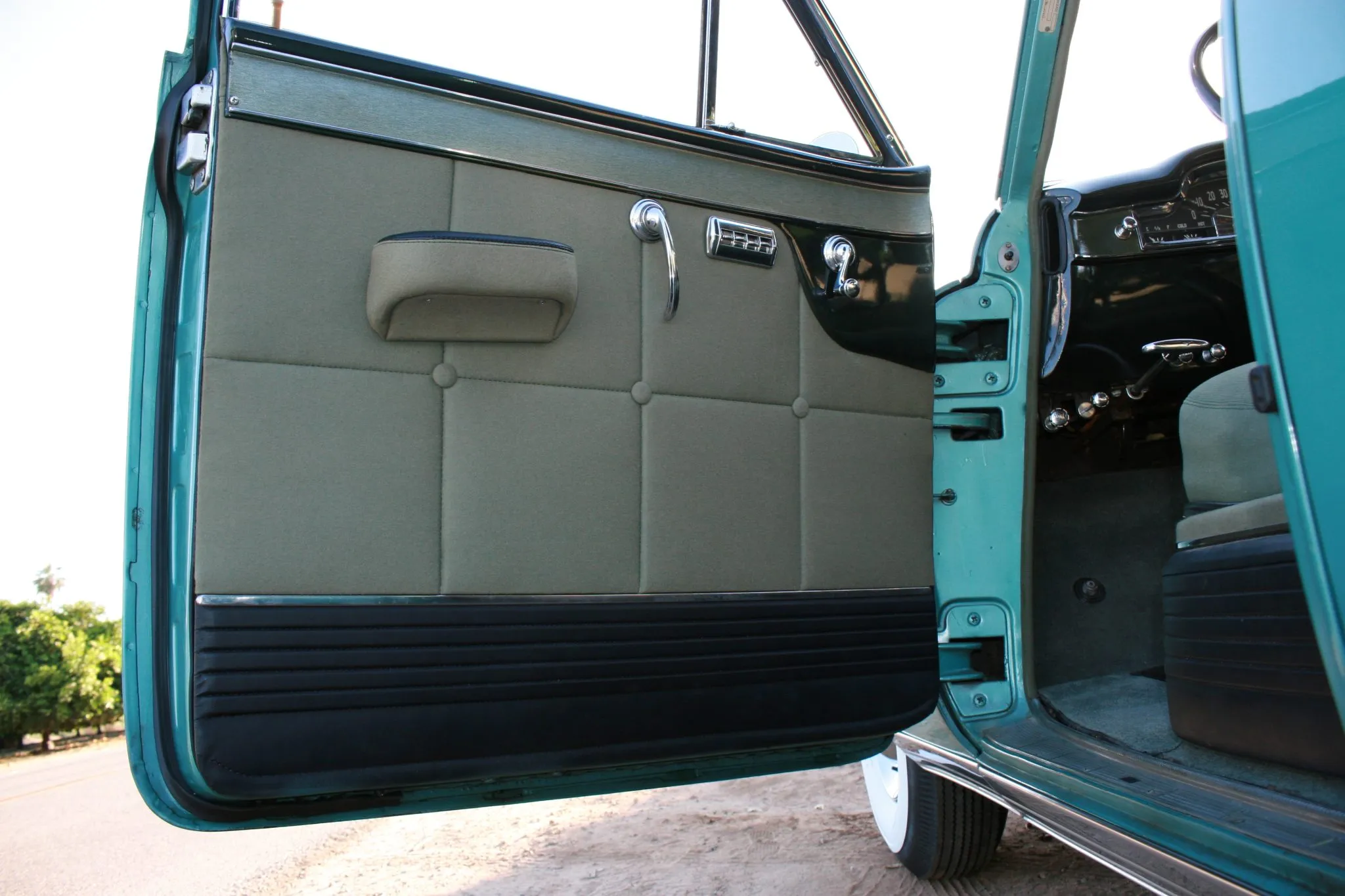
So, what could the luxury brands profitably offer to justify their high prices? One answer was upholstery and trim, which had always been key selling points of upscale brands. However, in a lot of prewar and early postwar cars, interiors of upmarket models were typical durable and high-quality, but, by later standards, remarkably bland. There was plain cord or broadcloth for sedans (typically in shades of brown or gray, with the occasional burgundy or muted blue or green); mohair for really pricey models; leather for convertibles and station wagons. Stitching patterns were conservative (even biscuits-and-buttons patterns were often limited to the door panels), and you didn’t generally get anything more stylistically adventuresome than maybe some muted stripes.
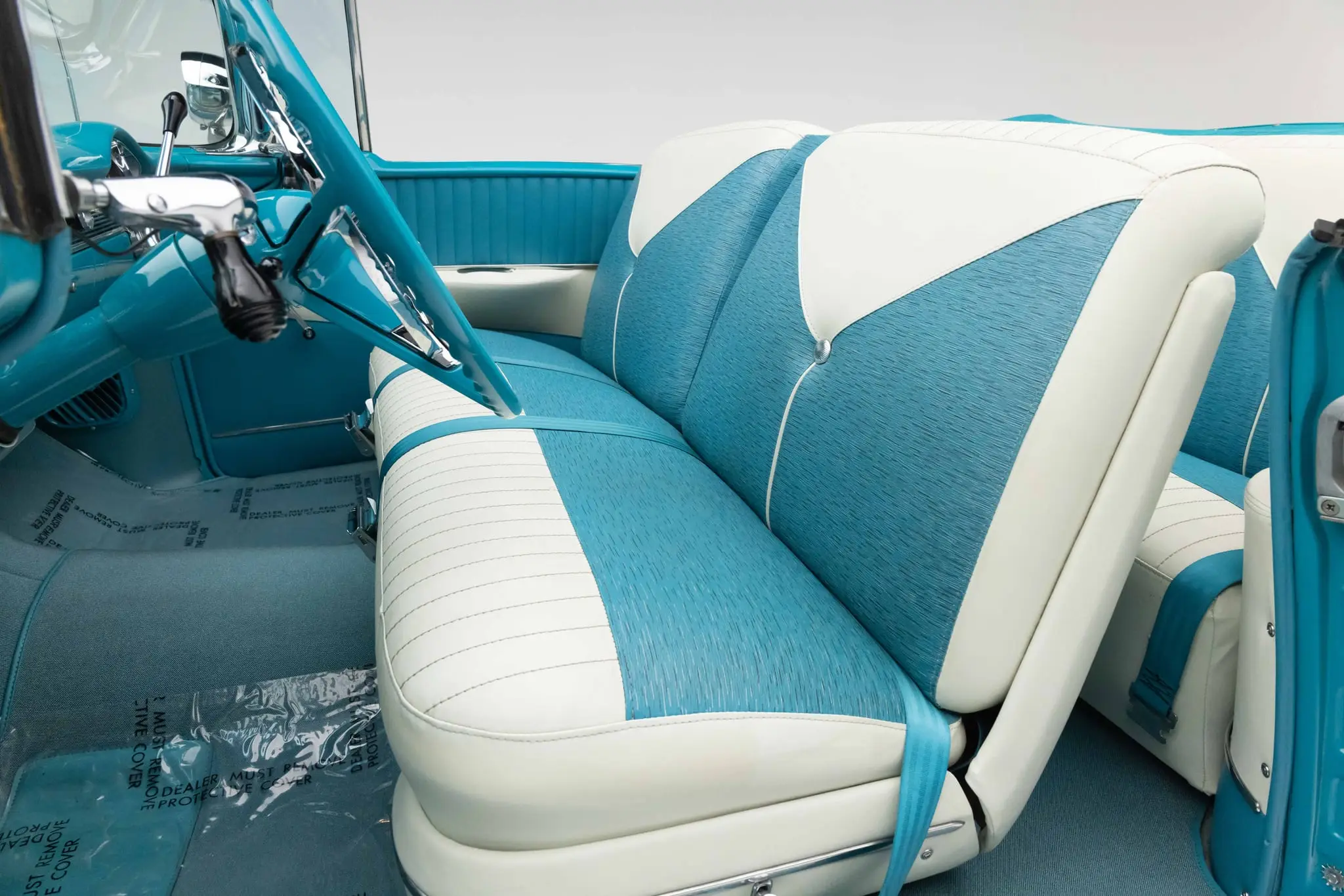
During World War 2, there had been big developments in the application of synthetic materials like nylon. These offered great promise for creating automotive upholstery with brighter colors and more interesting styles that would also be reasonably durable and relatively inexpensive. By the 1950s, even relatively inexpensive cars began to offer very flashy interior options, with multiple colors, print patterns, and sometimes metallic or Saran threads to make it all sparkle.
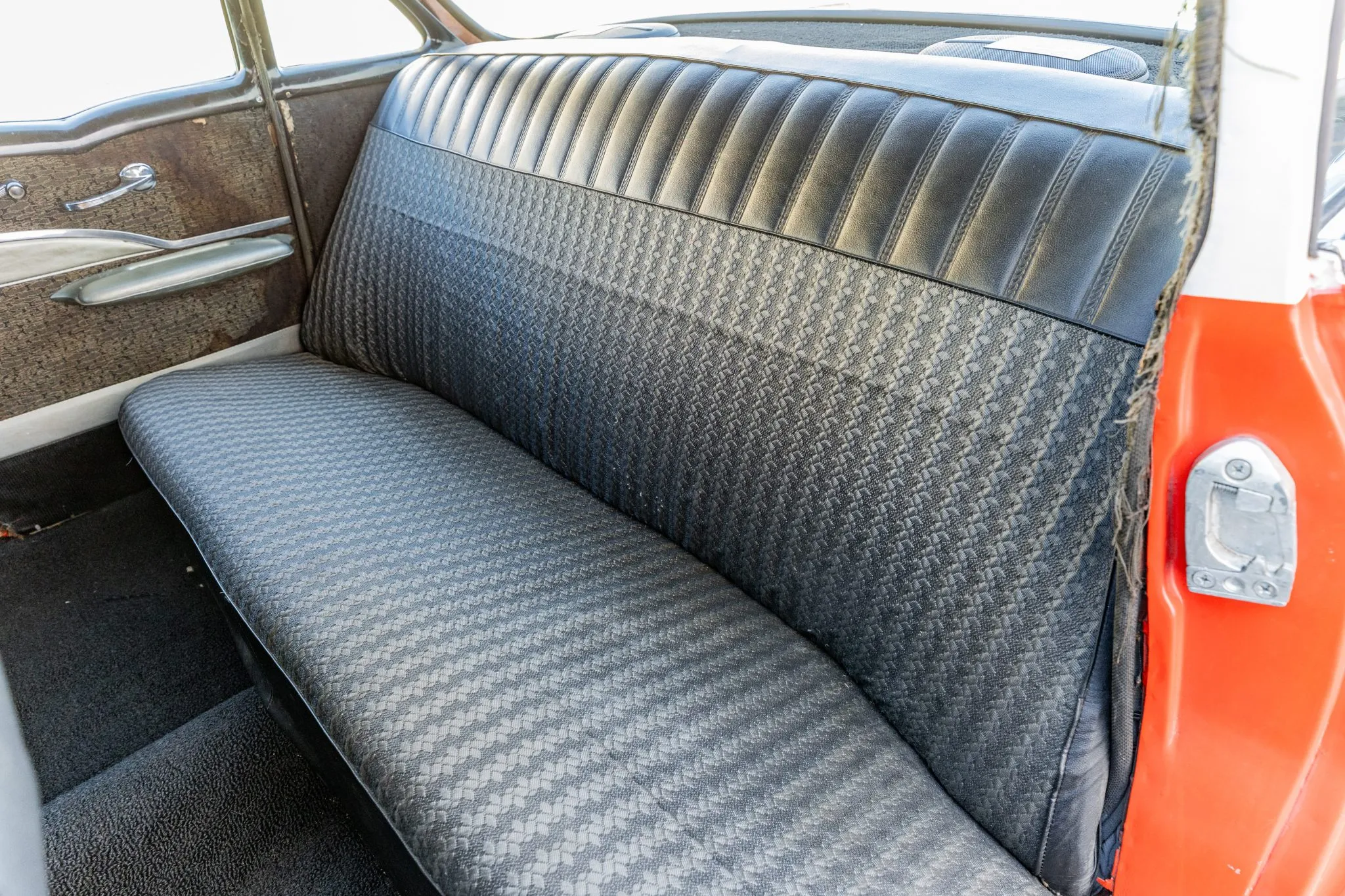
However, the limiting factor was still cost. Interior designers could come up with all manner of fanciful upholstery designs and decorative finishes, but at the end of the day, the central question for textile suppliers was, “What’s your budget per yard?” Richard T. Chatham Jr. of Chatham Manufacturing discussed some of the problems of the textile designer in a 1957 SAE presentation:
We are told by the automobile manufacturer that his fabric must be engineered to sell for approximately $2.20 per linear yard, 62 in. wide. … If we are to make this fabric with a nylon warp of so many ends per inch, we are limited by price in selecting the filling yarns. In this instance we must use [less-durable] cotton or viscose, or blends of same. We know that the pattern must have a certain number of ends and a certain number of picks in order to come up with a good serviceable weave, and in order to duplicate the selected pattern. … If this manufacturer is insistent upon a given number of ends with a nylon warp, we are limited in the use of fancy decorative yarns in our construction in order to achieve a high degree of eye appeal. If our designer were to use a [cheaper and usually more fragile] viscose filament warp, he would then have ample room price wise to incorporate filling yarns with nylon and metallic to achieve a higher degree of style.
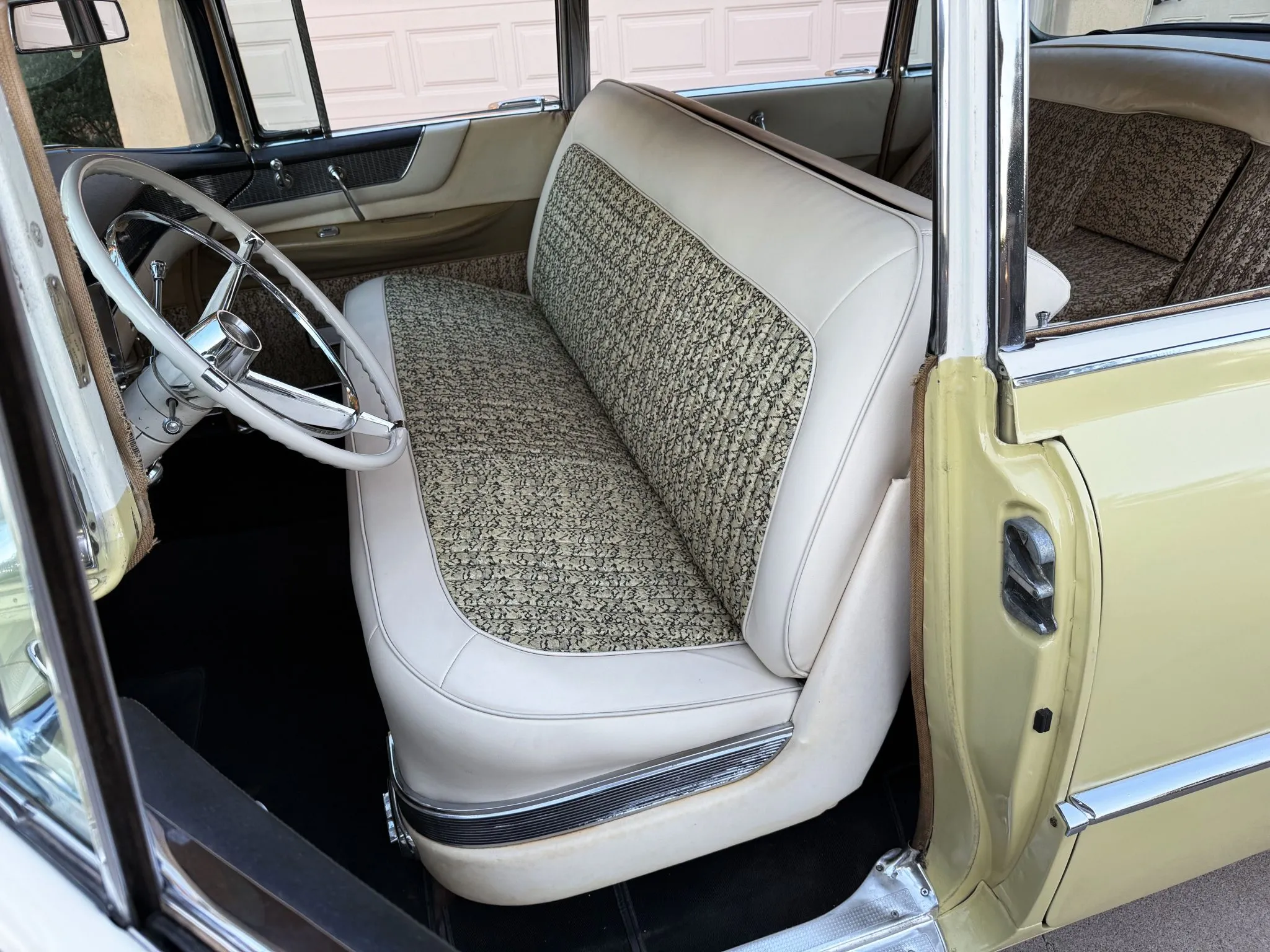
Cheaper brands could imitate the look of fancier upholstery, but something had to give in order to keep the price down. So, the upholstery of a low-price brand might look neat, but be more easily torn, more easily soiled, or more prone to shrink or fade than costlier, less-flashy materials. The more money an automaker was prepared to spend per yard of fabric and per car, the more visual effects they could achieve and the fewer compromises they had to accept. Setting higher budgets for interior fabric even let automakers be pickier about color-matching — for instance, Cadillac had a policy in the ’60s of cutting all the fabric parts for a given car’s interior from the same roll, “to prevent a mis-match of shades.”
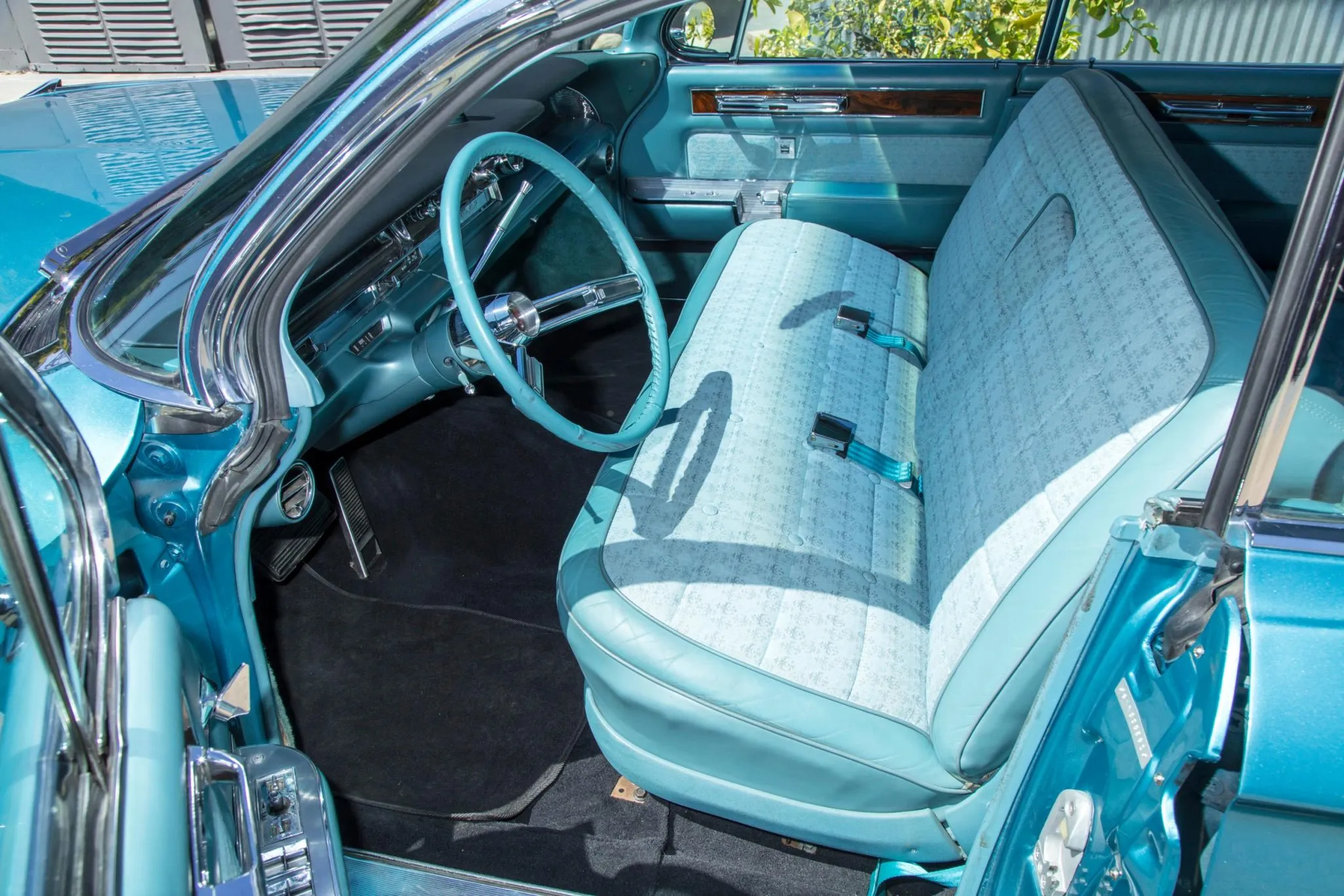
For high-end cars, upholstery and interior trim were that holy grail of mass-market luxury: high cost and low investment. Using better materials cost more per car, but the more important thing was that the tooling costs involved in areas like machine-formed seat cushions (to accommodate different stitching styles) were trivial compared to the brutal expense of tooling for steel body panels. Body tooling required a big upfront investment that had to be paid off over a large production volume, typically over several years. Seat design and upholstery could be changed every year or so, making it easier to offer a range of choices and stay abreast of fashion trends. Cadillac, Lincoln, and Imperial all took full advantage of that, offering a whole array of ever-changing fabric and color choices — often a dozen or more per model each year.
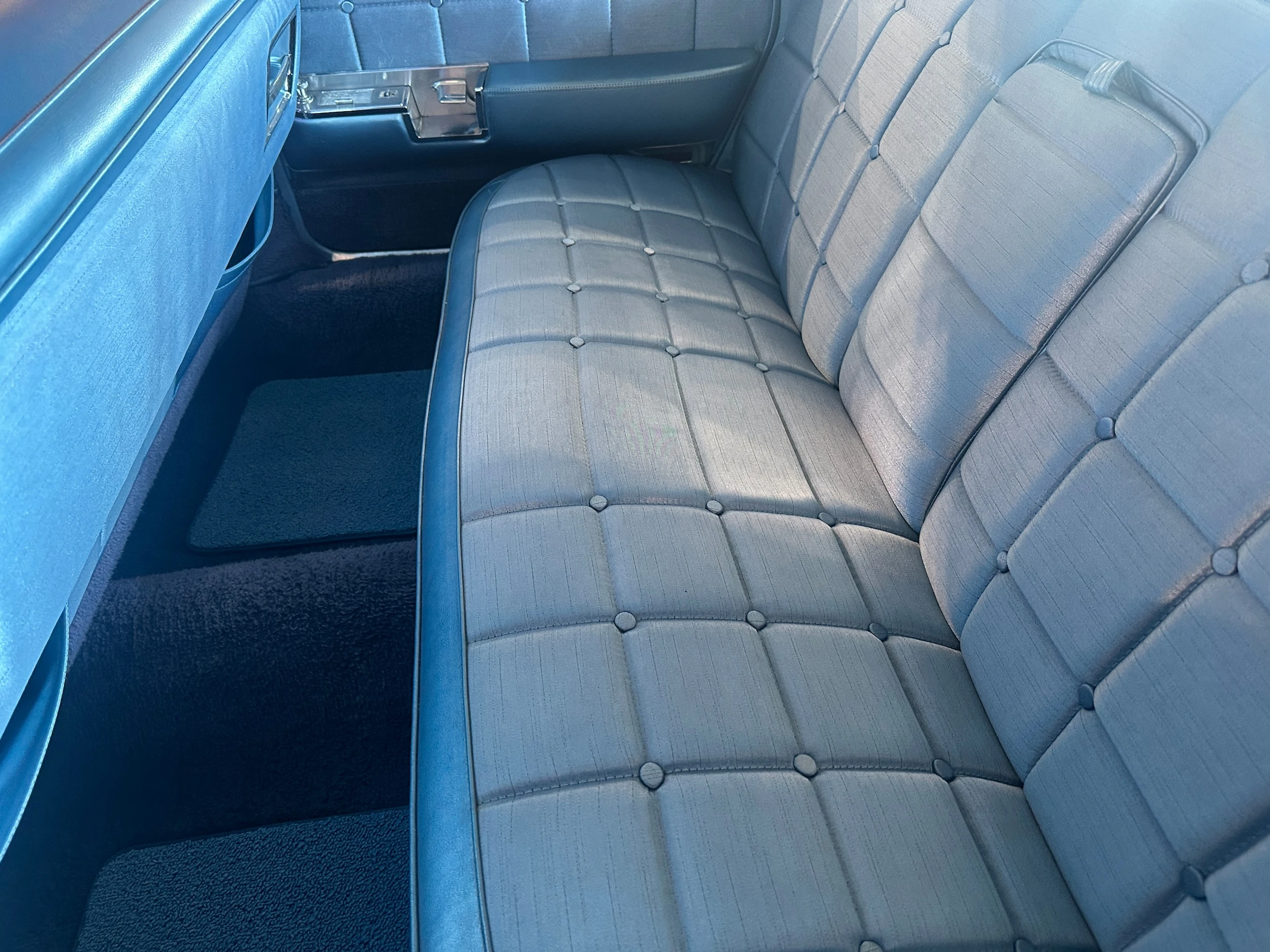
While this added to the appeal of the luxury marques, by 1963–1964, some of the mid-price brands were starting to get in on the act. Makes like Buick and Oldsmobile couldn’t stretch their interior trim budgets quite as far as Cadillac or Lincoln did, but they were getting closer.
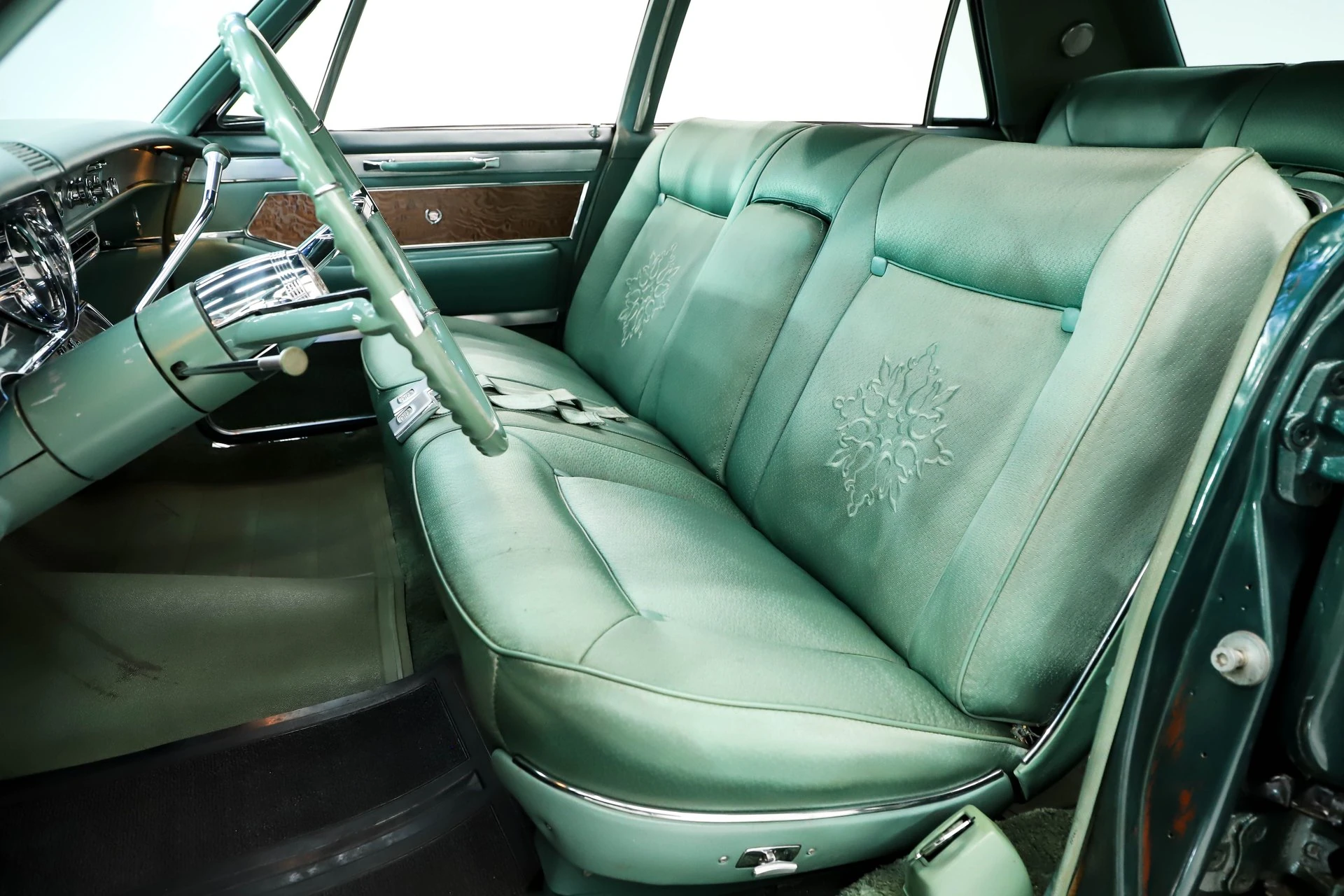
So, for 1965, Cadillac upped the ante a little further by offering the posh Fleetwood Sixty Special with “a finely woven Danforth cloth with embroidered medallion patterns on both front and rear back rests.” Along with its embroidery, the nylon-viscose fabric had a subtle Swiss Dot pattern, which Cadillac said “adds a pleasing softness to its appearance” — that’s why the upholstery looks like silk or satin.
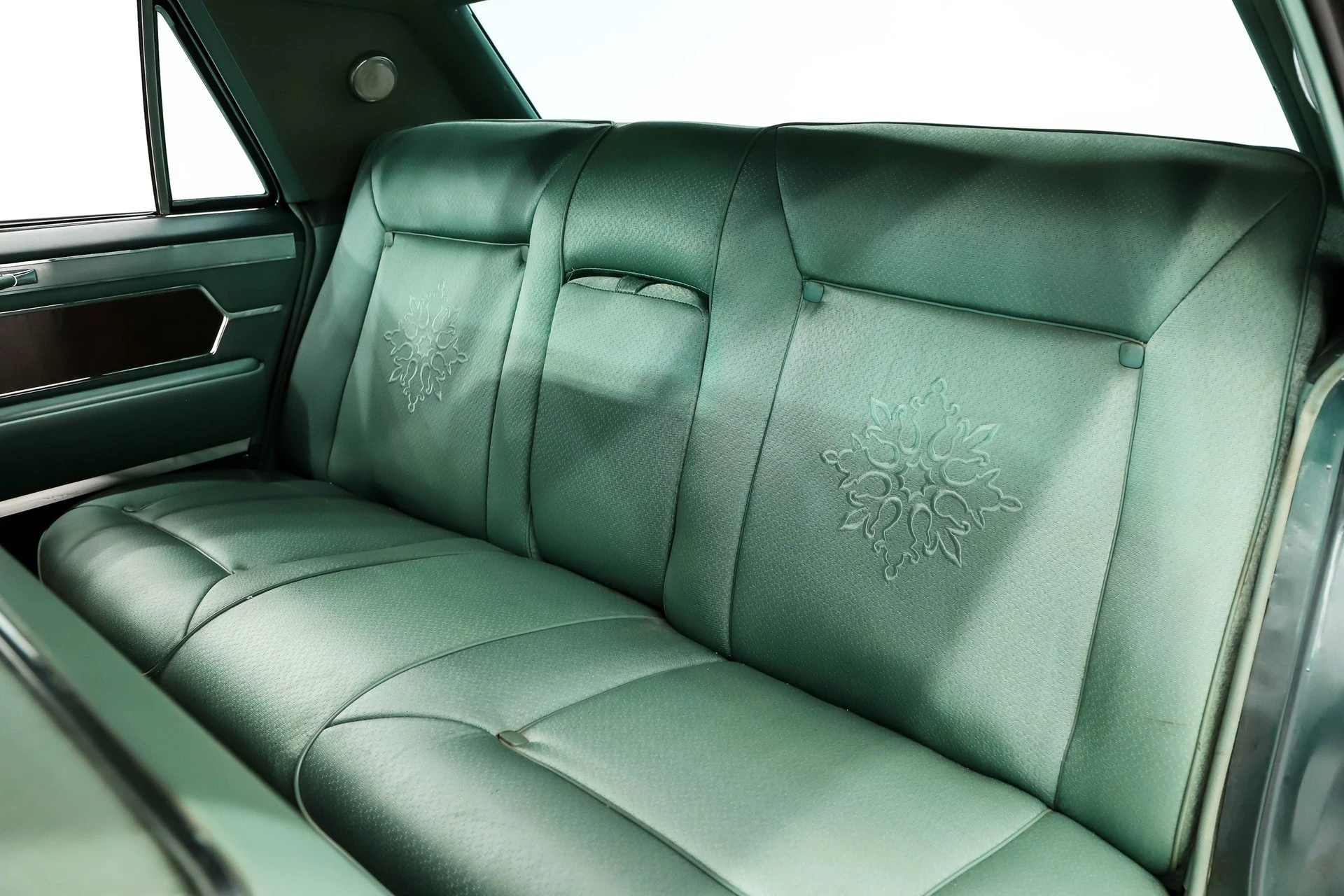
Depending on your tastes, you may or may not like this kind of embroidered upholstery, but the point was that the embroidery made it even more expensive (partly compensated by omitting the usual leather bolsters), and it looked and felt fancier. You could get plush upholstery in a lot of mid-price cars, or even the new Ford LTD (which featured a tricot nylon that Ford designers privately described as “panty cloth”), but it still wasn’t this fancy, reemphasizing the perceived supremacy of the Cadillac brand.
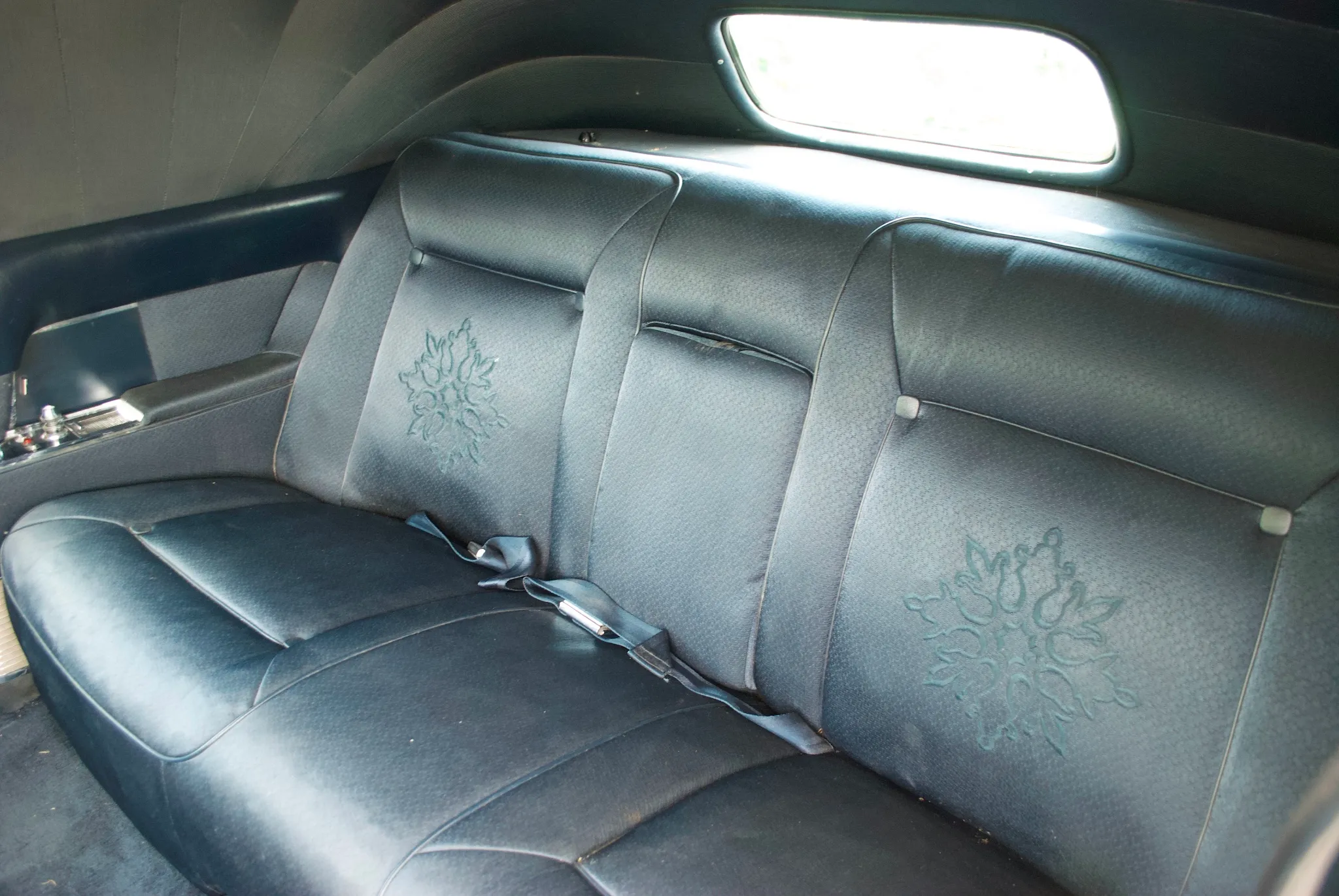
To emphasize that point, Cadillac also offered the embroidered Danforth cloth on the Fleetwood Seventy-Five formal cars.
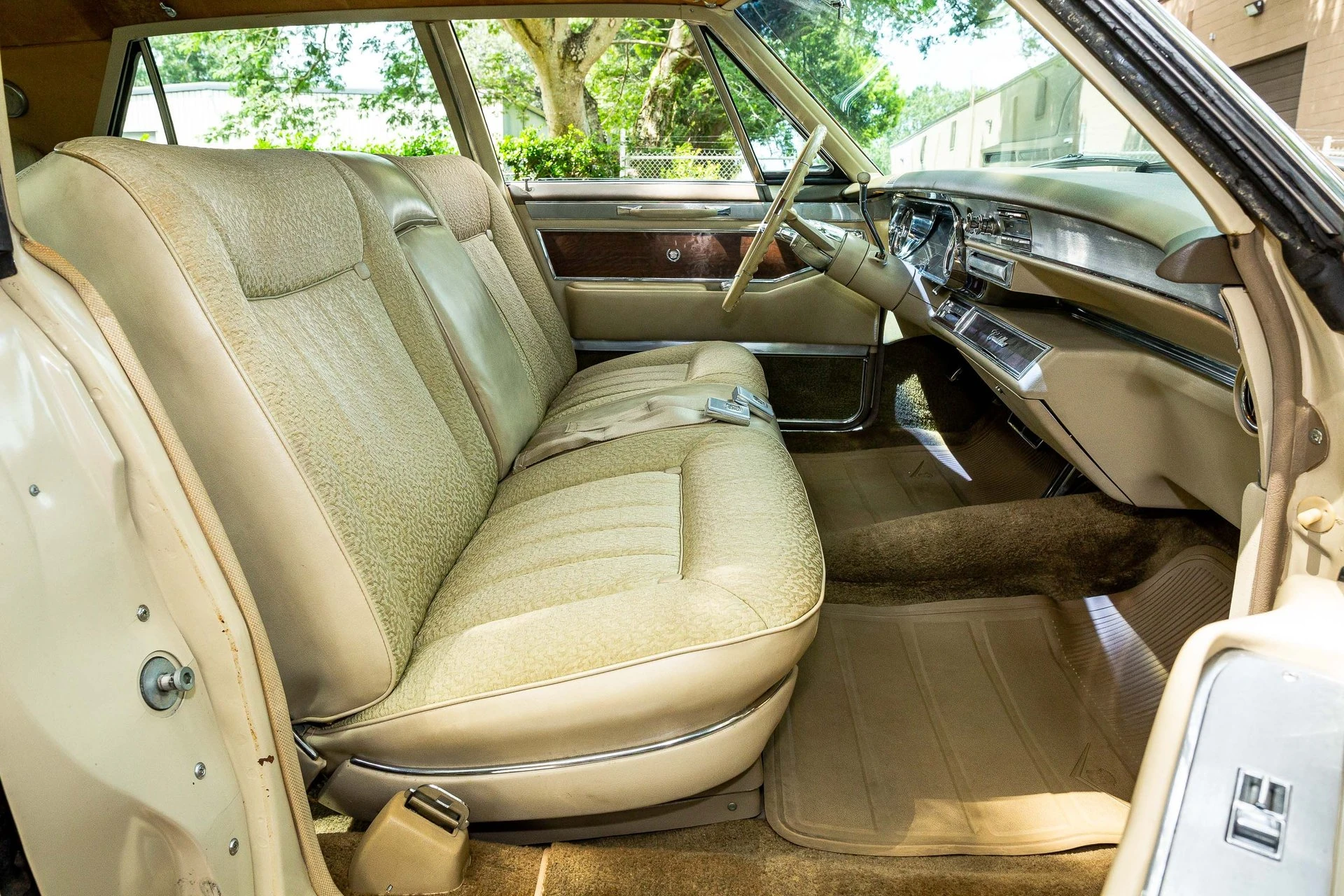
Embroidered upholstery wasn’t compulsory — you could also order a Sixty Special with “sculptured” Devon cloth upholstery with leather bolsters. However, if you wanted “plain” non-patterned seats, you now had to order leather upholstery, which cost extra.
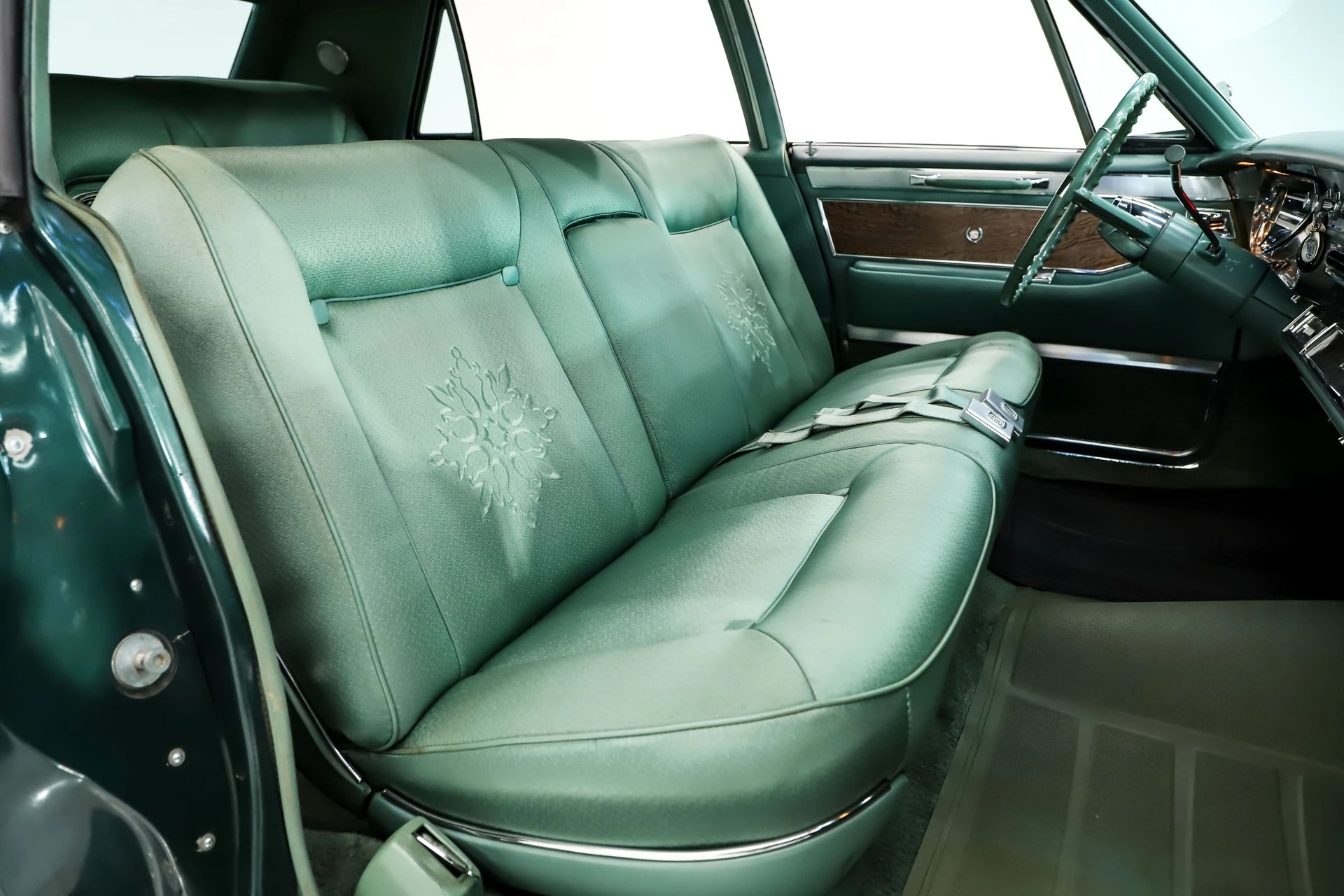
There is a contingent (of which I have been part) that rails against this kind of frippery, exclaiming, “Why couldn’t they just offer restrained, tasteful upholstery in muted tones rather than all these awful brightly colored ornate fabrics?” Through 1964, Cadillac had continued to offer wool broadcloth on closed-body Fleetwood models (and Lincoln still offered it on Continental sedans in 1965), but the truth was that not many people were buying it anymore.
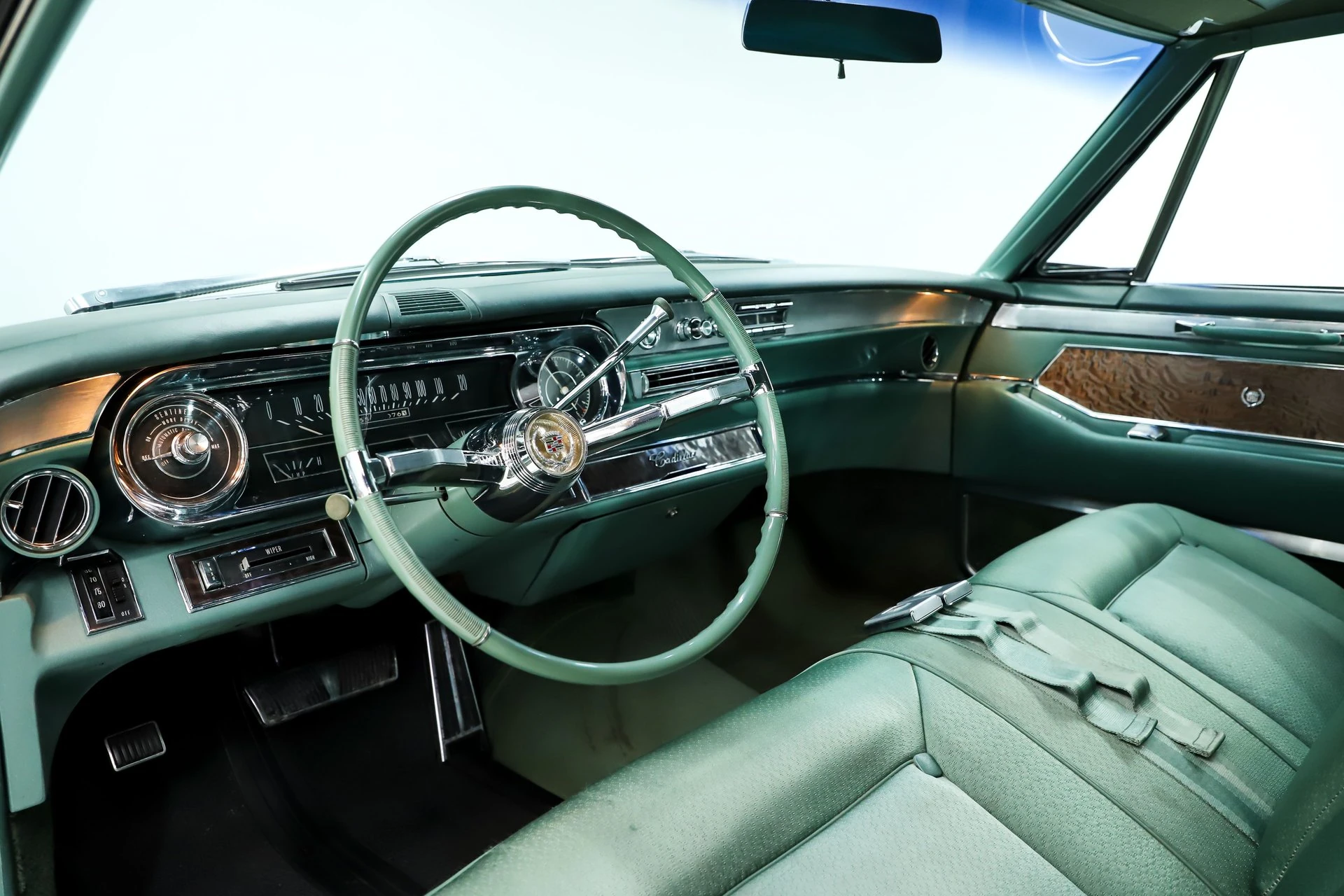
For a lot of people, buying a luxury car or truck is not solely a matter of private enjoyment: Buyers want acquaintances and passersby to recognize that they’re driving a nice (expensive) vehicle. The brand is part of that, but by the ’60s, there was a growing demand for expensive cars to look the part, inside as well as out. The fancier and more elaborate their interiors looked, the better, as far as a lot of customers were concerned.
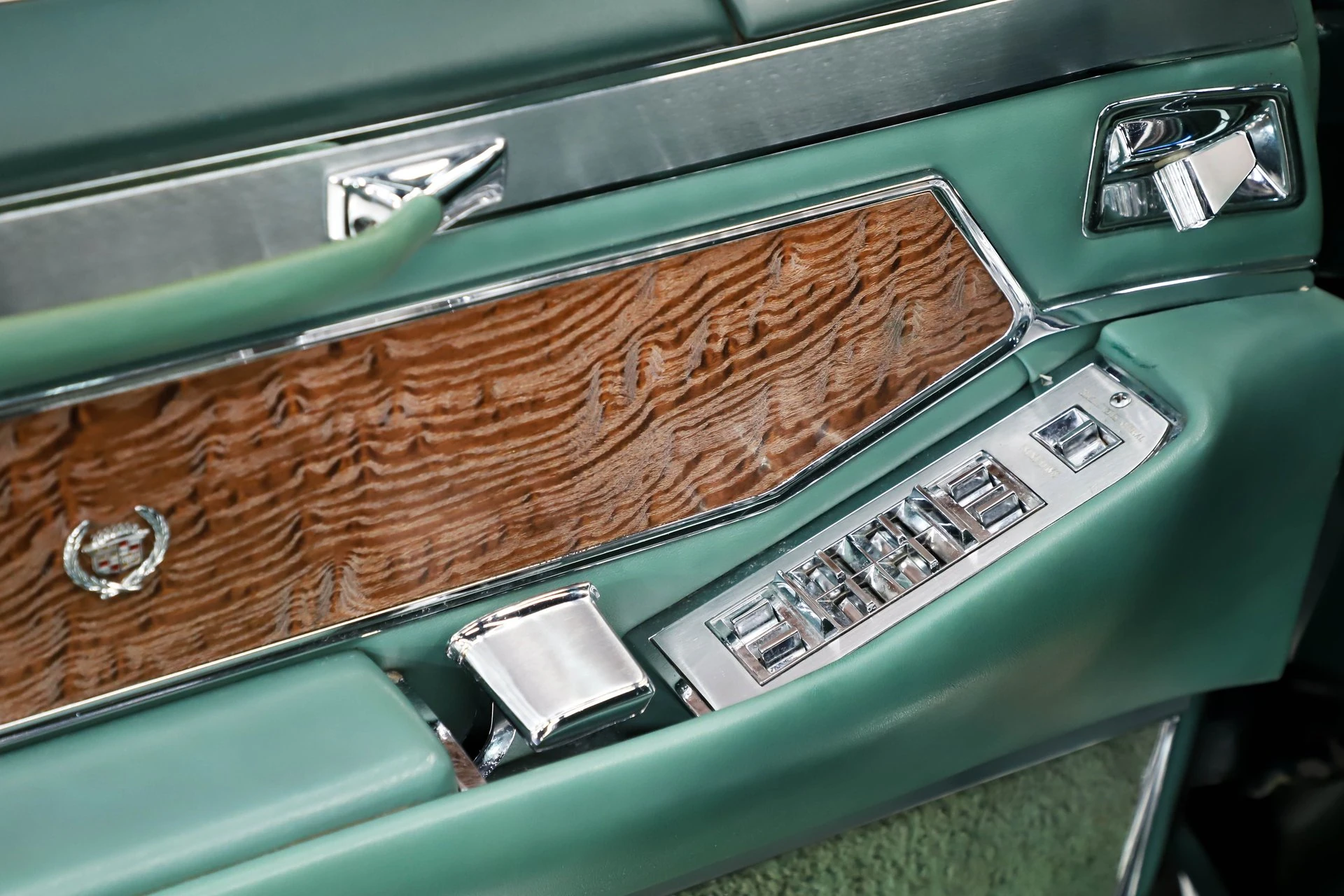
At this time, Cadillac still wasn’t wholly reliant on upholstery to convey that impression. For instance, Fleetwood cars featured interior panels of real Tamo wood, a Japanese ash with an unusual grain.
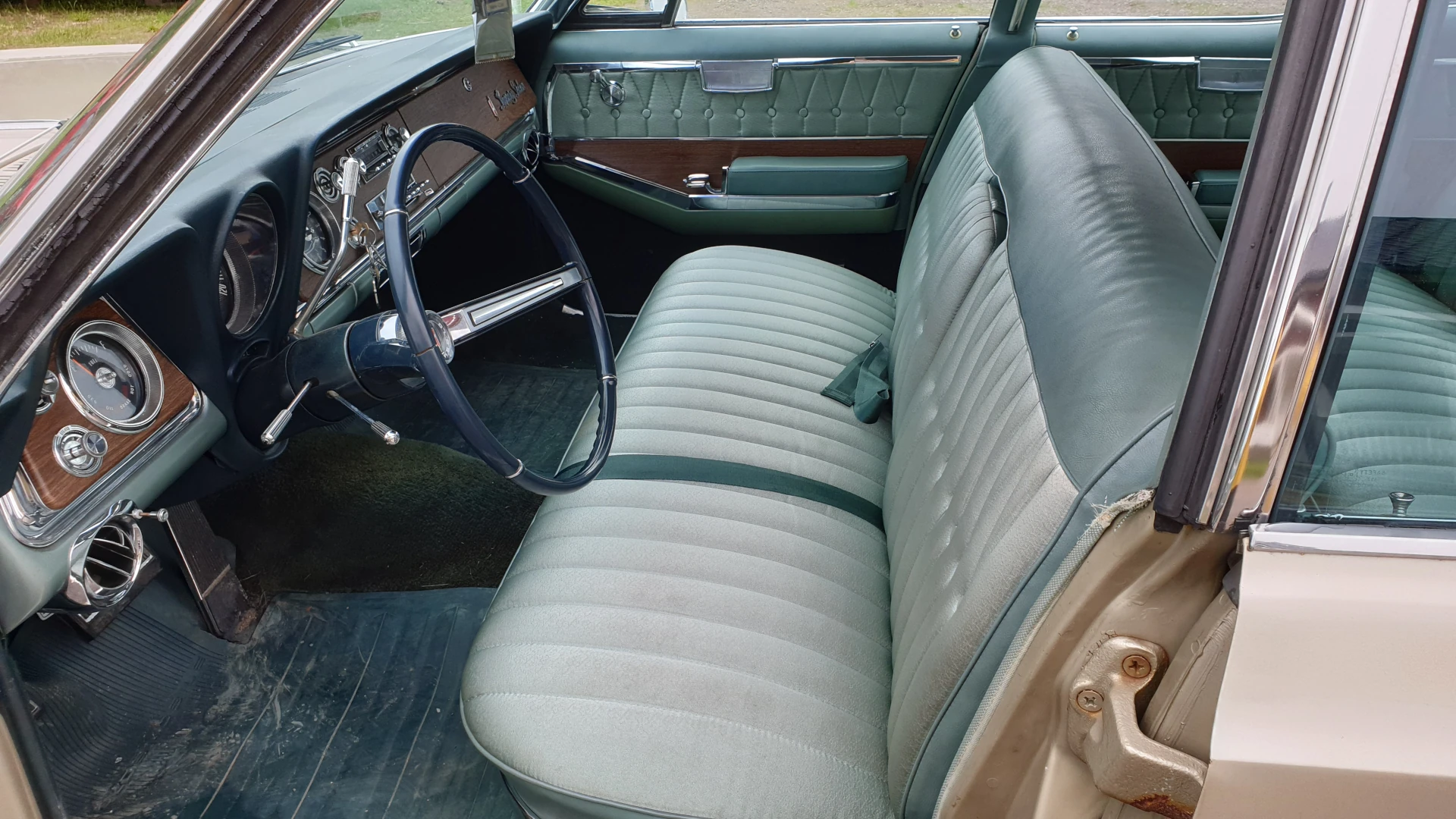
However, the differences between wood and woodgrain, or between leather and “leather-grain” vinyl, were not necessarily obvious at a glance, and Cadillac still had enormous price differential to justify. At the start of the 1965 model year, a Cadillac Sixty Special cost a whopping $2,128 more than an Oldsmobile Ninety-Eight Luxury Sedan — enough to buy an entire second car back then. Cadillac and its luxury rivals had to keep coming up with new tricks to maintain their narrow advantage in perceived luxury.
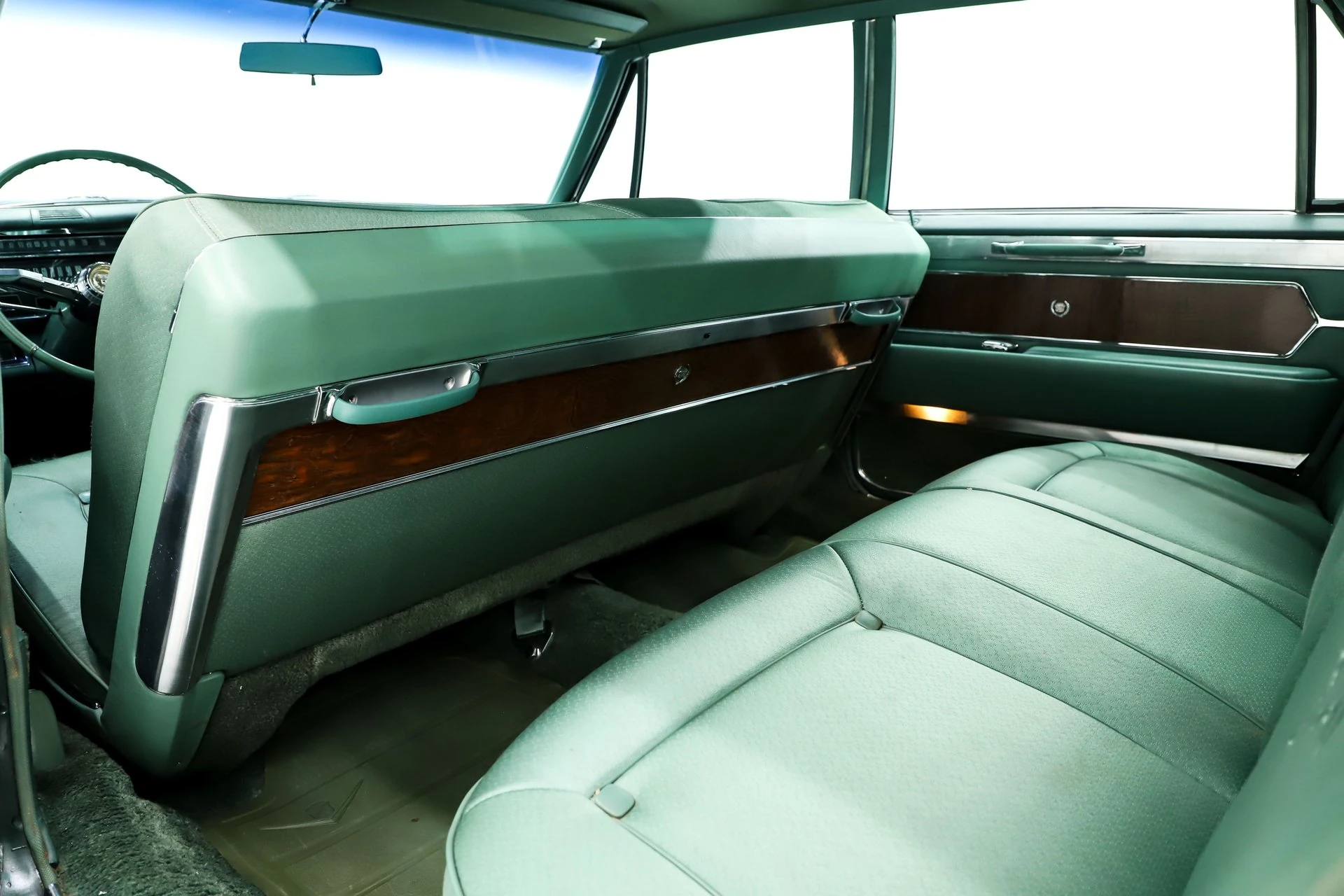
If your gearhead persuasions run more to horsepower, quarter-mile ETs, and lap times, all this focus on interior decor may seem silly and pointless. Having a little embroidered design on the seat back inserts didn’t change the Cadillac driving experience in any way, and was completely irrelevant in any enthusiast sense.
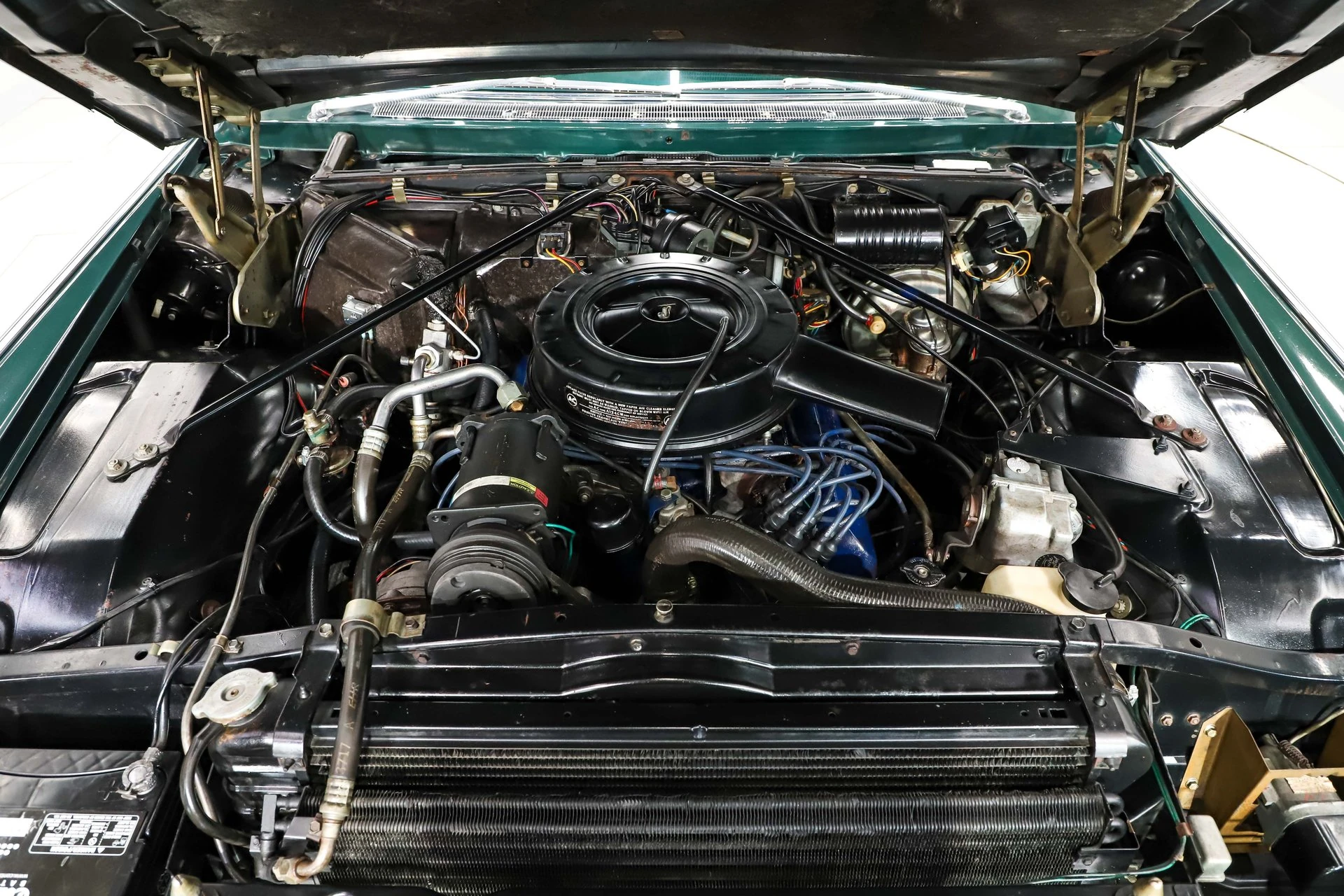
However, the interior trim wars were really the only race Cadillac was still running by this time. Cadillac engineering was contemporary (new perimeter frame structure, Turbo Hydra-Matic), but not particularly advanced (no disc brakes, fuel injection, or independent rear suspension even contemplated). The main development focus was on maintaining refinement in the face of ever-higher accessory loads and forthcoming emissions standards, not on performance or advancing the state of the art in any particular way. Even the development of convenience features had seemed to stagnate — you could get all sorts of power accessories, of course, but the selection was much the same in 1969 as it had been a decade earlier.
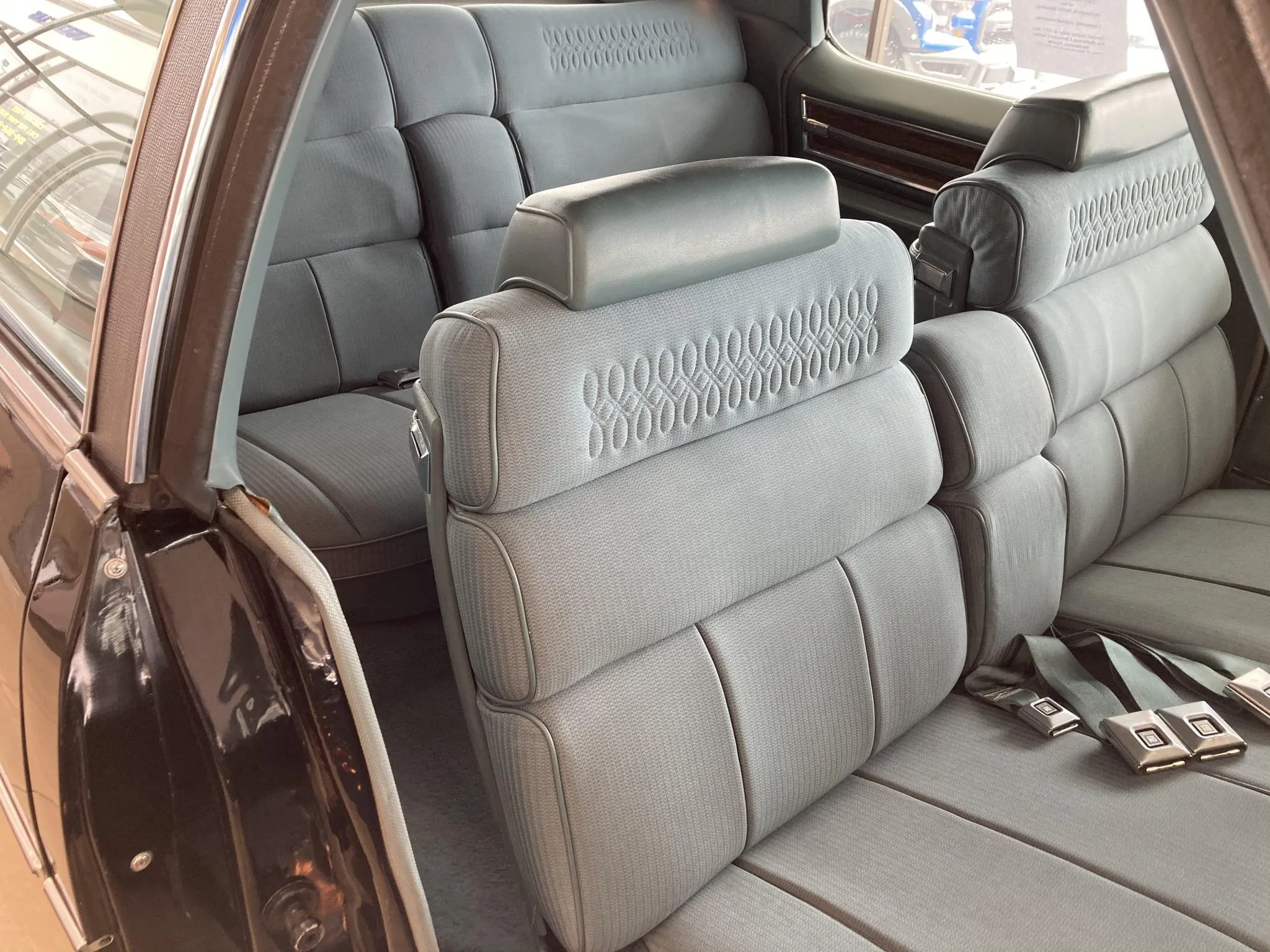
Cadillac continued offering embroidered upholstery in the Fleetwood Sixty Special and Fleetwood Brougham into the early ’70s — unusual longevity in an era when any given upholstery style seldom lasted more than a year or two. The embroidery was eventually displaced by matelassé (quilted) styles, and of course crushed velour. However, those newer styles were motivated by the same factors: one-upsmanship and the desire to add more visual and tactile interest to Cadillac interiors.
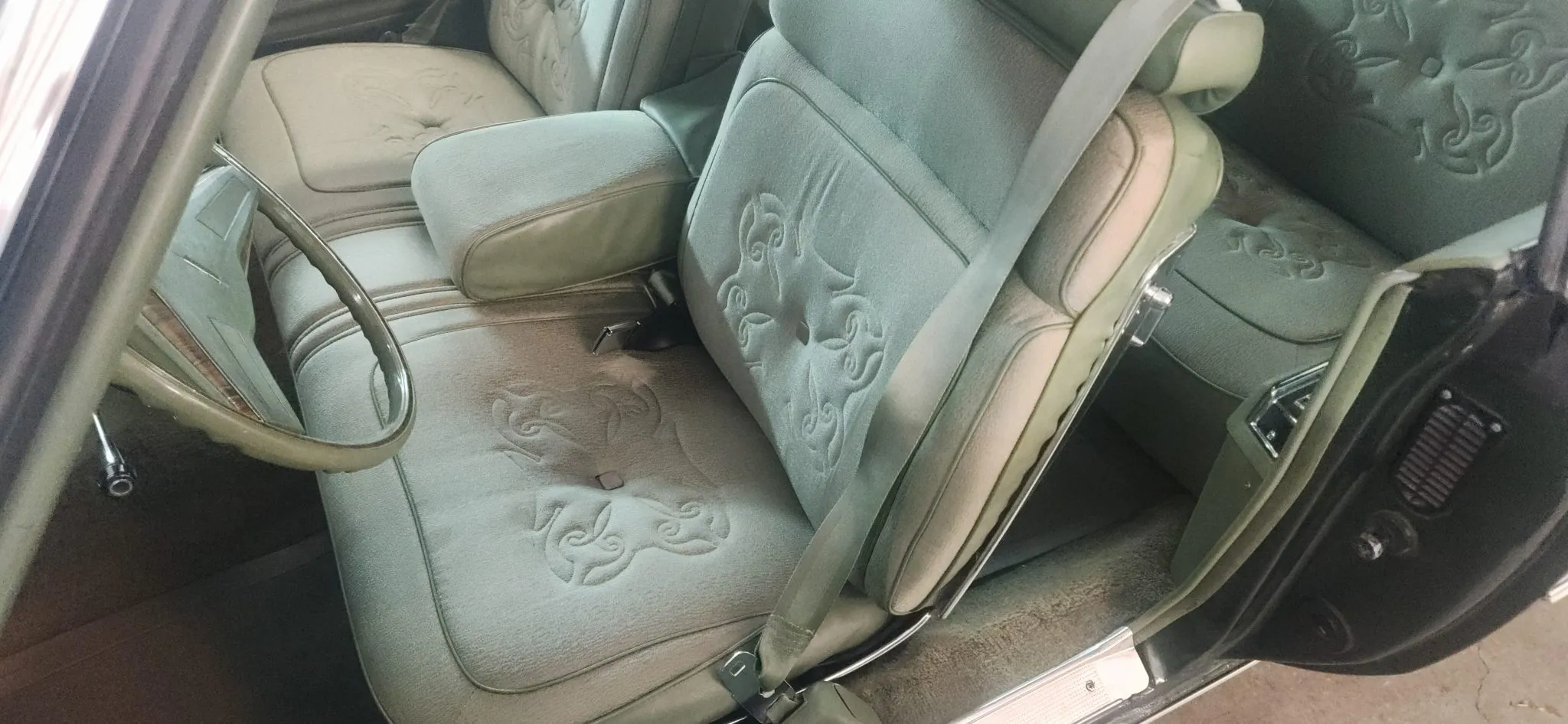
The embroidered upholstery designs spawned some direct imitators, in particular at Oldsmobile, which even aped Cadillac’s early “medallion” design. However, I think the embroidery was less significant for what it was than with what it represented.

By the 1970s, interior fabrics were one of the few areas where Cadillac was still spending more money than cheaper makes. The interior plastic quality had declined precipitously, the real wood paneling was long gone, and the fit and finish was often disappointing, but the upholstery was still colorful, fancy, and sometimes absurdly over the top.
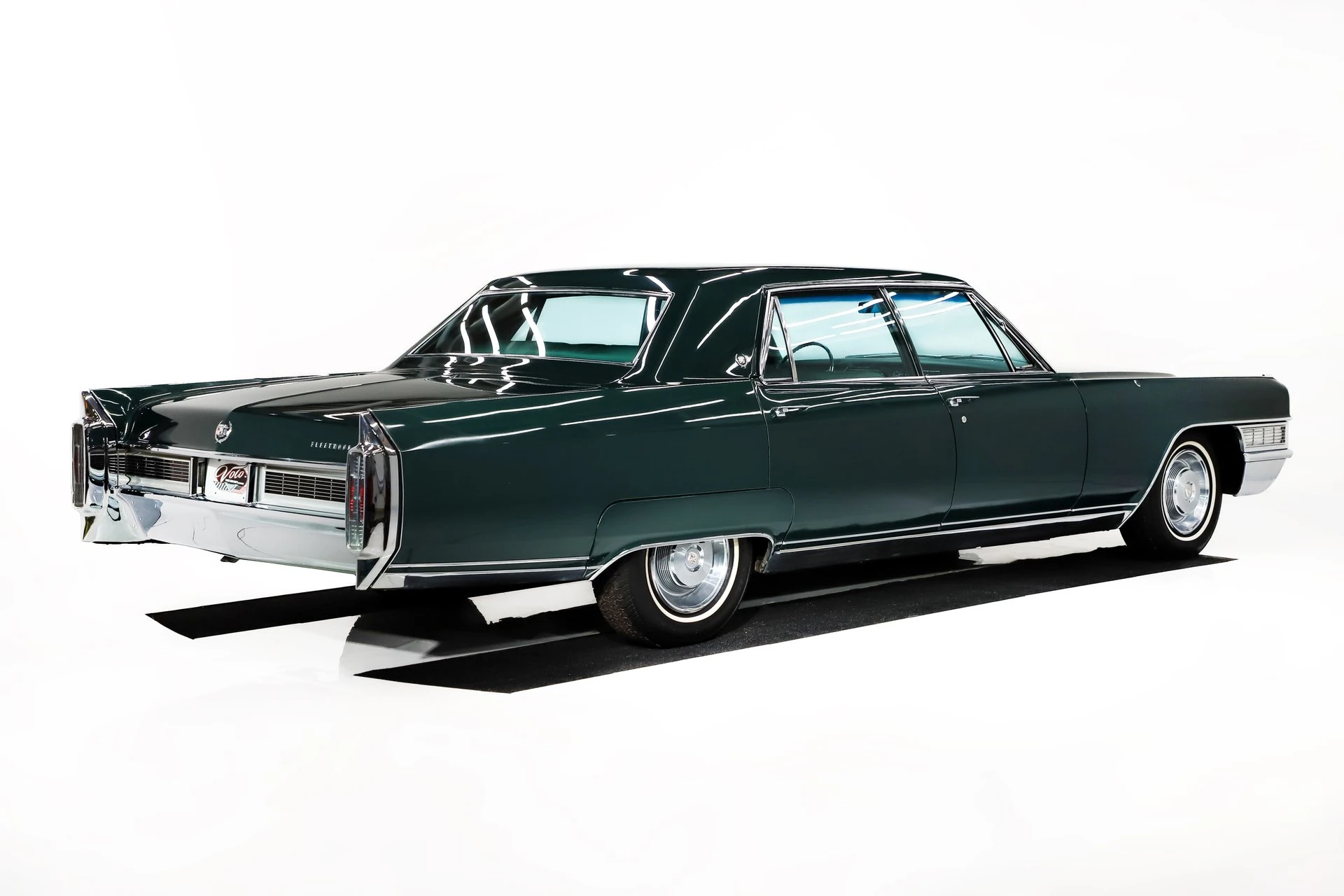
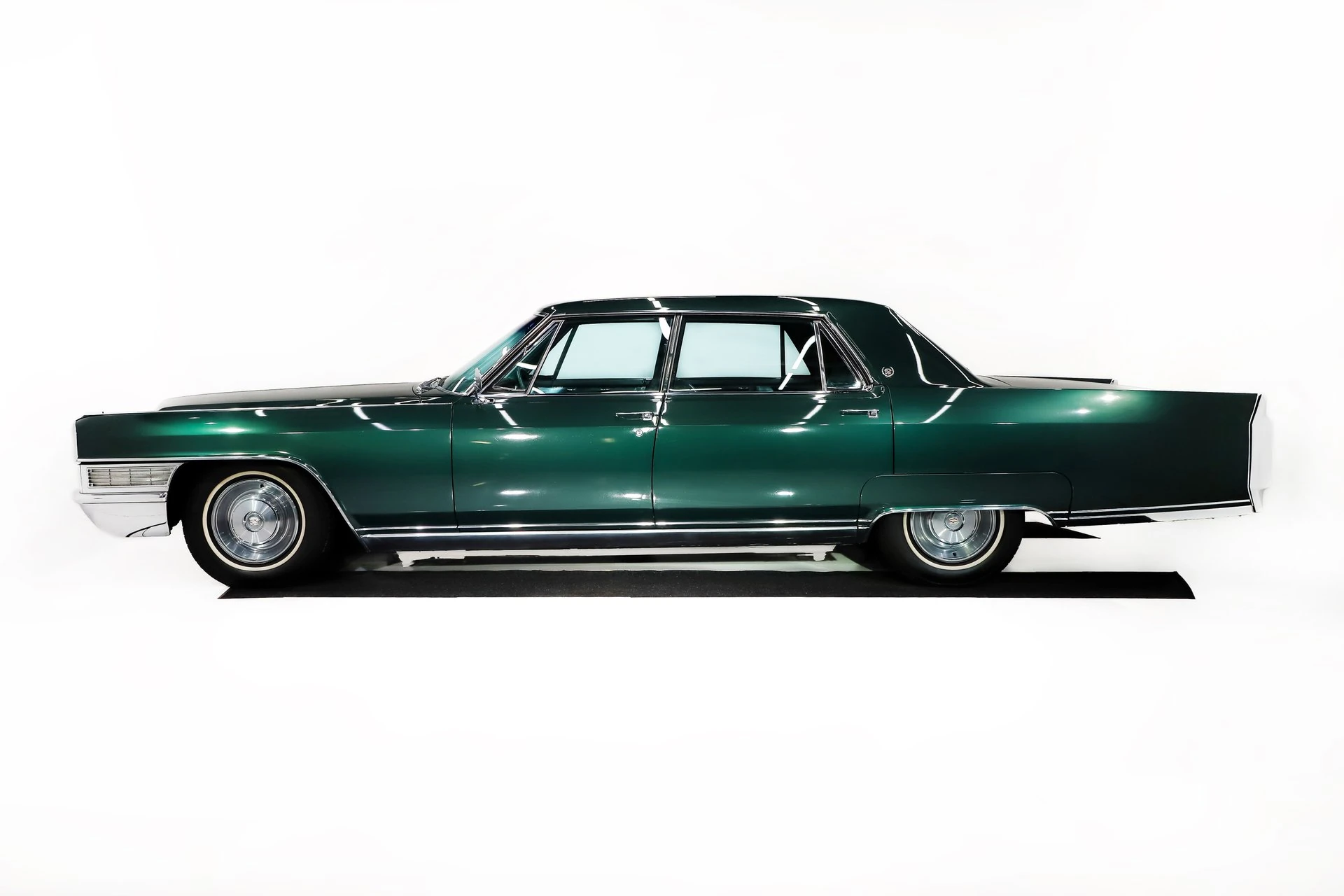
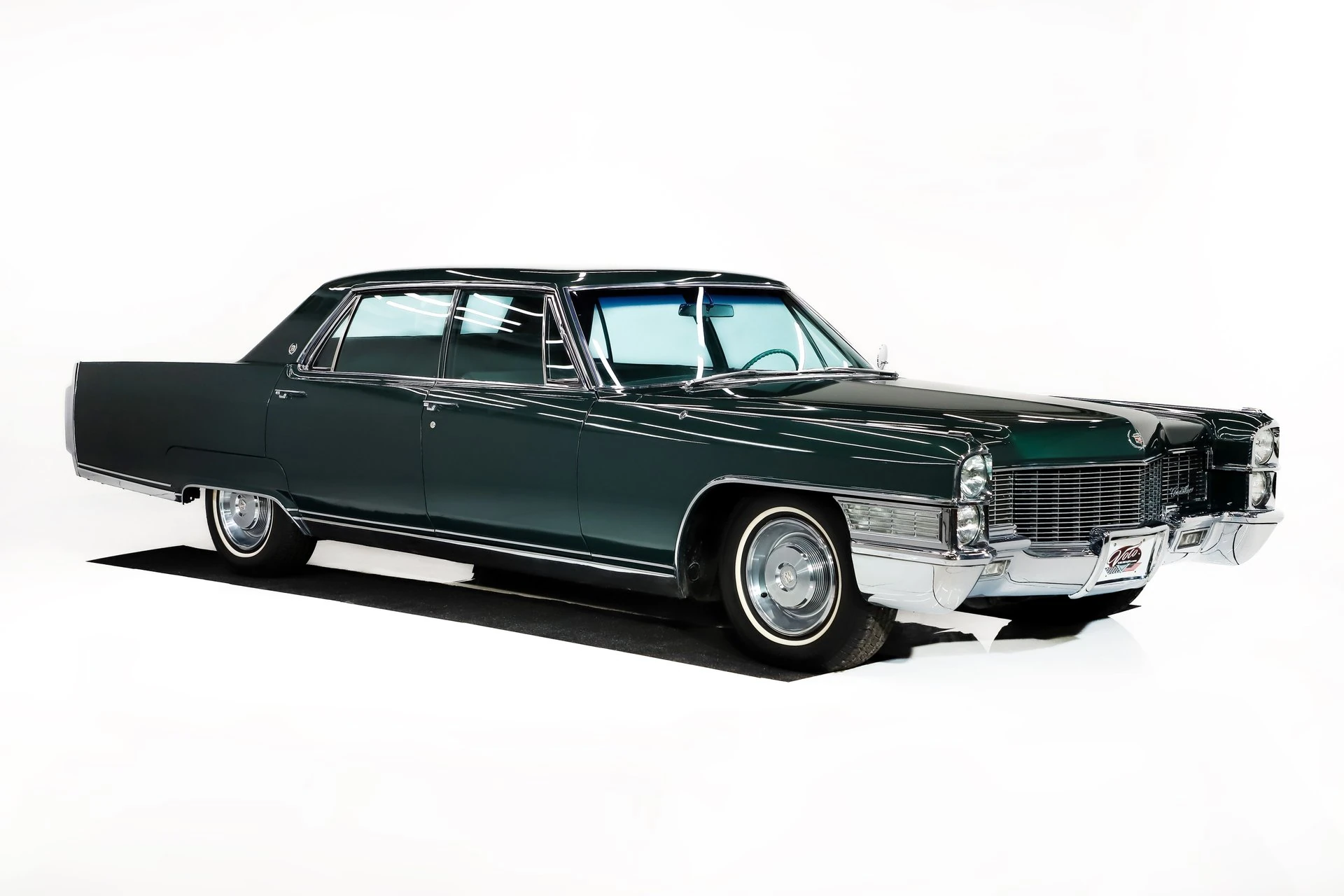
None of that is any aspersion on our featured 1965 Sixty Special. This was about as handsome a pillared four-door sedan as Detroit produced in the ’60s, enhanced by its lovely green metallic paint (which the lighting of these photos unfortunately doesn’t show to best advantage).
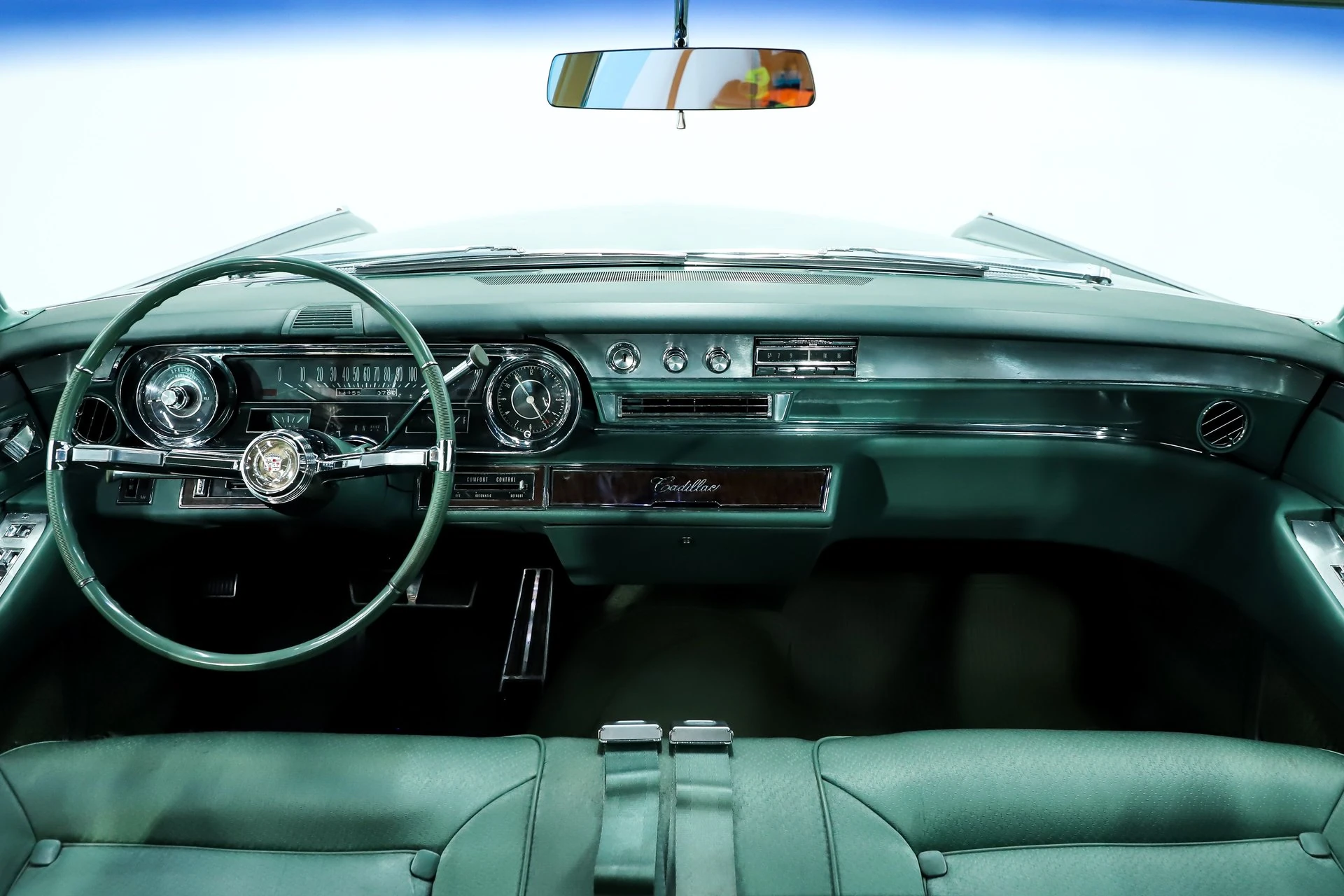
If some of the big Fleetwood sedan’s upholstery selections weren’t to every taste, its interior had class. It looked and felt like a luxury car, which was the name of the game in this price class, and it was a fine example of the era when Cadillac still spent a little more on its cars rather than only looking for more pennies to pinch.
Related Reading
1964 Cadillac Fleetwood Sixty Special: The Last Fleetwood Four-Door Hardtop (by me)
1965 Cadillac De Ville: Cadillac’s Most Stylish Interior Design Of The 1960s (by me)
1966 Oldsmobile Ninety-Eight Luxury Sedan: The Most Opulent Oldsmobile (by Aaron65)
1968 Buick Electra 225 Limited: “I Didn’t Know They’re Building A Car Like This Today” (by me)
1963 Lincoln Continental Sedan: When Interior Upholstery Choices Mattered More Than 0–60 Times (by me)
1963 Oldsmobile 98 Luxury Sedan – When Olds First Leapfrogged Buick On The Sloan Ladder (by Paul N)









The standard that the designers and engineers at Cadillac set apparently led to today’s mode of transportation still in the form of ‘The Beast’, a vehicle that for whatever reasons no one else uses anyway.
I am not well versed in the 65 Cadillacs, and don’t recall ever seeing (or at least noticing) this interior pattern before – quite interesting. There must have been a terrible pressure for Cadillac to stay ahead of the pack in interior designs with the lower-priced cars’ relentless adoption of patterns and styles that imitated high priced cars from a few years before. This Fleetwood’s interior reminds me of how the 1967 Ford LTD incorporated some embroidery into the seatbacks that year – not as large or ornate as this example, but embroidery in the seats was clearly a new thing to be copied.
Yup, I think exactly that.
Nice detail on the supplier end of the business, Aaron. Regarding the embroidery, am reminded of high end vehicle interiors of the Teens. The only thing missing are vase holders for fresh cut flowers.
The primary distinguishing element on these ’65s is of course, the 3.5 inch longer cabins, which was an expensive decision on Cadillac’s part. I’m curious to know how many years prior had the decision been in the making. The ’47 60 Special was the last year the division had offered it. Those cars were nicely proportioned; these ’65s weren’t, and it wasn’t until ’74 that they finally got the proportions and details fully optimized. The ’65s look more like an M-B SEL… x-long rear doors, loss of proportional balance.
“However, the interior trim wars were really the only race Cadillac was still running by this time. Cadillac engineering was contemporary (new perimeter frame structure, Turbo Hydra-Matic), but not particularly advanced (no disc brakes, fuel injection, or independent rear suspension even contemplated).”
It was around that time a select few luxury car buyers started to look for a little more than a fancy, colorful interior inside wrapped inside a prestigious nameplate. The breakthrough was the 1968 Mercedes Benz 300SEL 6.3 introduced in the middle of that year, and it was a true muscle car with its V8 borrowed from the 600, fuel injection, and independent rear suspension. It leather seats were designed to support the driver in high-speed turns, unliked the overstuffed sofas Cadillac offered at the time.
Great article, and it hits on a lot of thoughts that have been rolling around in my mind for years: The catalyst for the Talisman/Park Ave styling, the migration of embroidery to embossment (think 1973 Cutlass Supreme) and the tight tight detail race between Cadillac and Oldsmobile on interior appointments (with comparison photos) , with Oldsmobile often coming out on top in the L/S models. Also about how Buick mostly sat that competition out, yet still remained competative without some of the gimmicks. The transition from brocade to patterned velour. And even now as I did some research to put industry terms on these concepts for this comment, I see that CC has a whole library of articles on the concepts. I think I just fell into my Thanksgiving rabbit hole!