
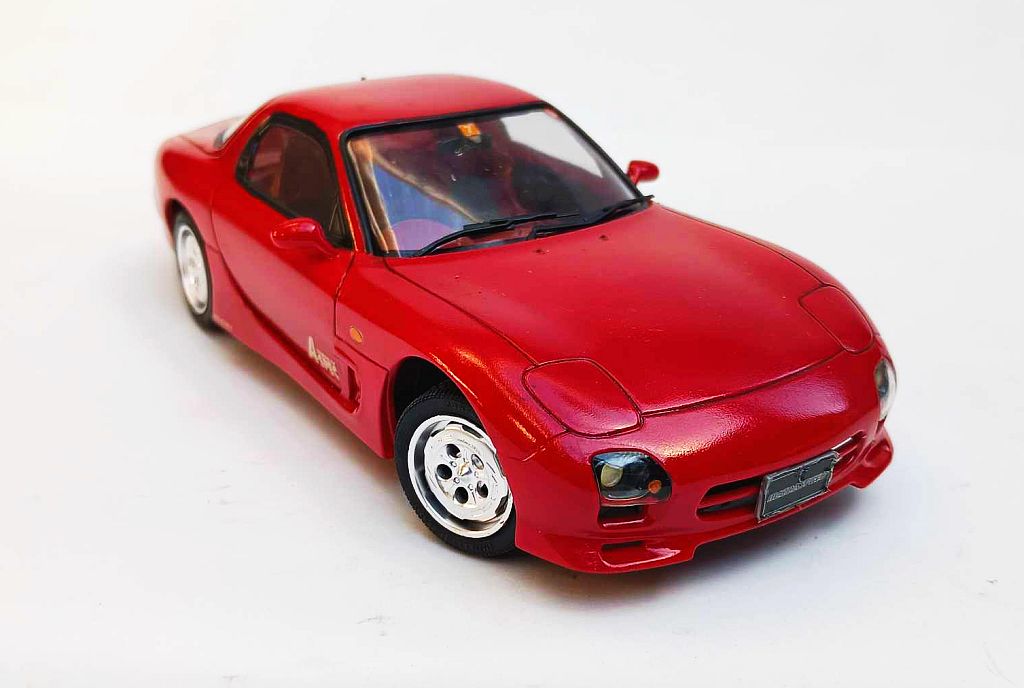
For a while there, it looked really exciting. The first new engine design to reach production for ages, decades! And it was so simple. It seemed everybody was taking up licences, producing prototype engines, test cars. But as often happens when something seems simple, there was a lot of careful thought and engineering involved – and testing, testing, testing.
And the result was a tiny engine that thrived on revs, put out a phenomenal amount of power for its size, and was unbelievably smooth… but also unbelievably thirsty. And when exhaust emissions became an issue – oops!
Time showed that rotor seals wore out, much more quickly than rings in a piston engine. You didn’t want to be near a rotary with a blown muffler. But while it was running, it looked like the way of the future – provided you could keep it fed.
It broke NSU. Of all the companies that experimented with it, Mazda alone persisted.
Cosmo
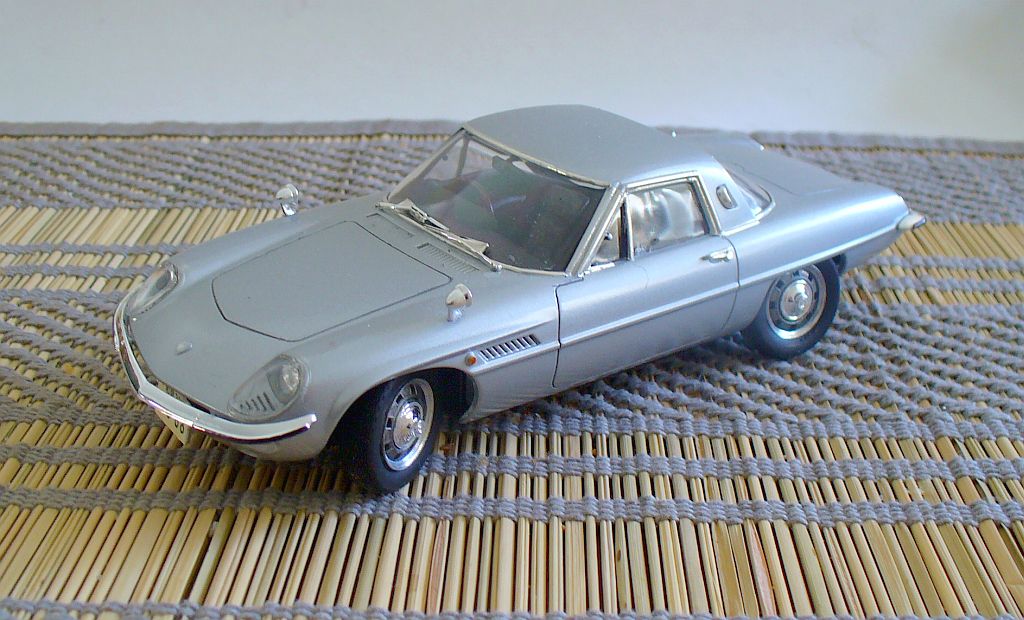
For Mazda, it began with the Cosmo 110S, unveiled at the 1963 Tokyo Motor Show. It reached production four years later. It seemed an unbelievably tiny sports coupe, just big enough to contain two small people, a very minimal amount of luggage, and that tiny powerplant. In 10A form, the twin-rotor engine produced 110hp, making the car capable of 185km/h.
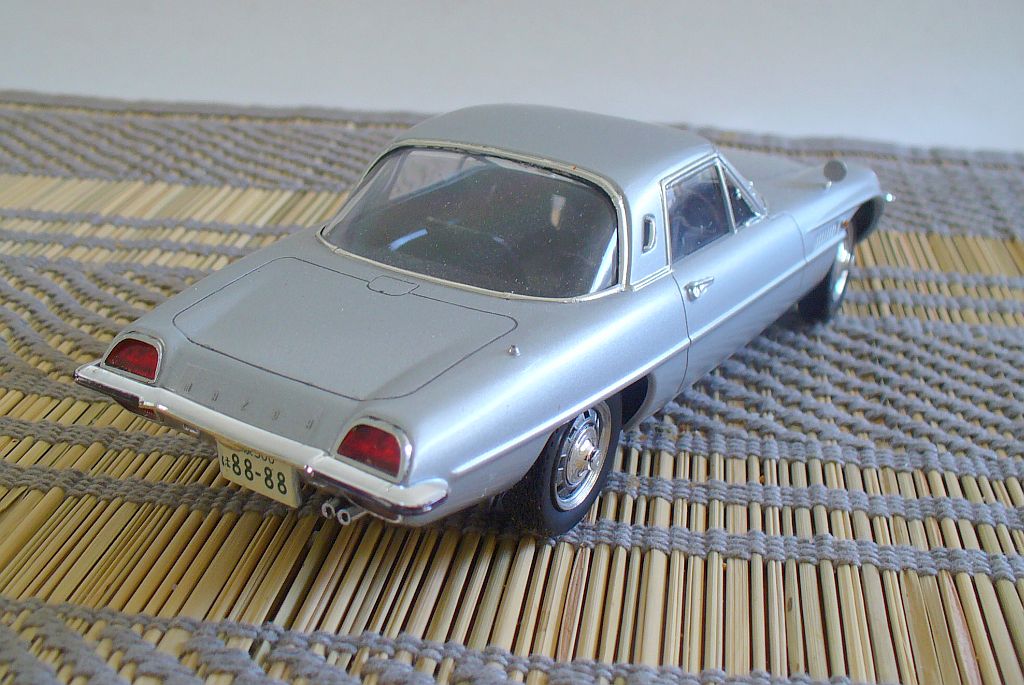
This car really put Mazda on the map. It made Mazda stand out from the crowd of Japanese companies. It showed a depth of engineering talent and commitment other companies may well have had, but had not shown yet, not in export markets, anyway. Released to great enthusiasm, it proceeded to sell… 1176 cars in five years. Oh well.
Rotaries for All!
Nevertheless, Mazda decreed there would be rotaries for all! Rotaries in everything! Fortunately, they didn’t decide to go rotary-only. The 1200 gained a rotary-powered companion coupe, the R100, with the same 10A as the Cosmo. 110hp from a rotor motor or 73 from pistons – your choice. The larger Capella, in some markets called 616, was accompanied into showrooms by the RX2, as a coupe and also a sedan. These used an enlarged 12A engine, good for 130hp. The new Savanna (808) likewise spawned the RX3. And then, even the B1800/2000 pickup.
Bandai did kits of the RX2, 3, 4, and 5, but in 1/20 scale. Beautifully detailed, but long out of production. I believe they were also available under the Entex name.
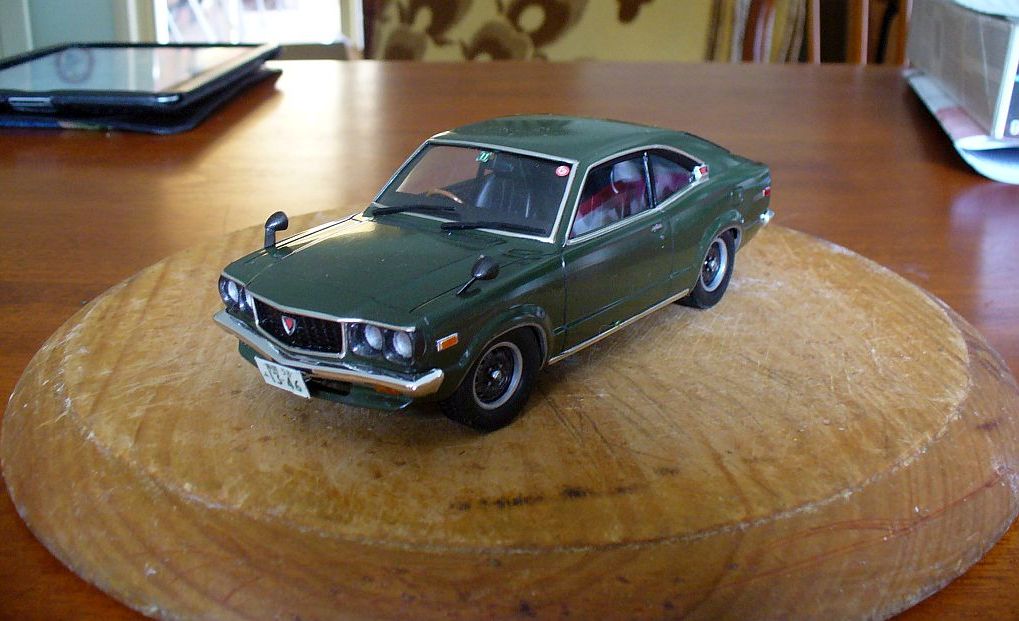
Fujimi does kits of both the early and late versions of the RX3.
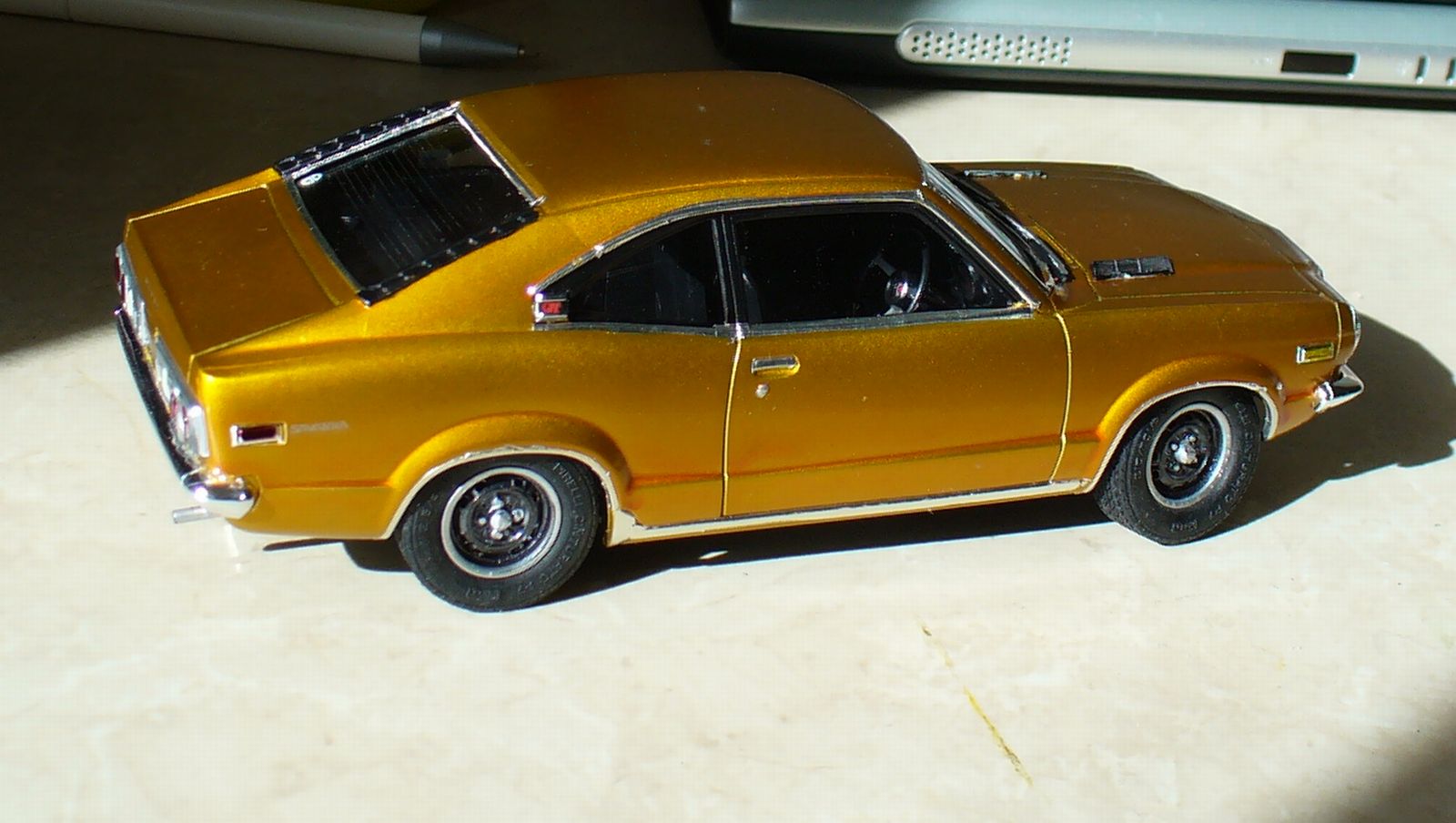
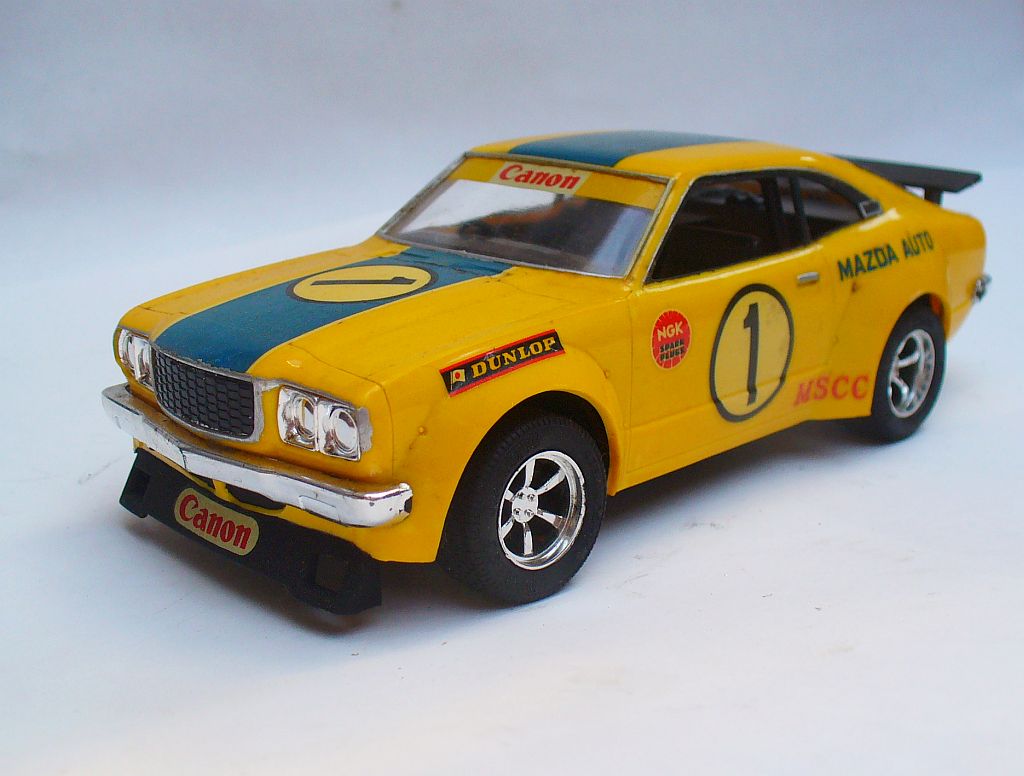
When these were new cars, every Japanese company seemed to make kits of RX3 race cars. I think this motorised kit might be an Otaki, but possibly a Nichimo or something else.
That thing called 13B
The 1800 Luce was replaced by the 929, and RX4. This introduced the larger 13B rotary. This formed the basis of all Mazda rotary engines though to 2012. A luxury coupe with rather distinctly American styling appeared, the RX5 – also with the 13B. In a reversal of usual practice, the piston version followed. Mazda negotiated with GMH for Holden Premiers, which it repowered as the Mazda Roadpacer – also with the 13B. Mazda’s small pickup got one. Even the Parkway bus gained a rotary.
But problems became apparent. The reality was, the rotary was more suited to sports car use than in family sedans or coupes. Although delightfully smooth, it lacked torque, and needed to be revved to give its best. When you revved it, it proved horrendously thirsty. Its emissions were terrible. And no matter how you drove it – it really wasn’t suited to a bus.
Some bright spark at Mazda decided to build a sports car, a replacement for the old Cosmo to once again showcase the rotary, maximising its strengths, and addressing the earlier car’s shortcomings. It would be roomier, for people and luggage. It would handle as well as Mazda knew how. From being used as a mainstream engine, the rotary would become a specialty product.
First gen RX7 – SA/FB, Series 1,2,3 1978-85
Designer Matasaburo Maeda came up with a shape which was both distinctive and attractive, even more so when later versions integrated the bumpers. Initially these came with the smaller 12A, but the 13B was available later. I have three models here.
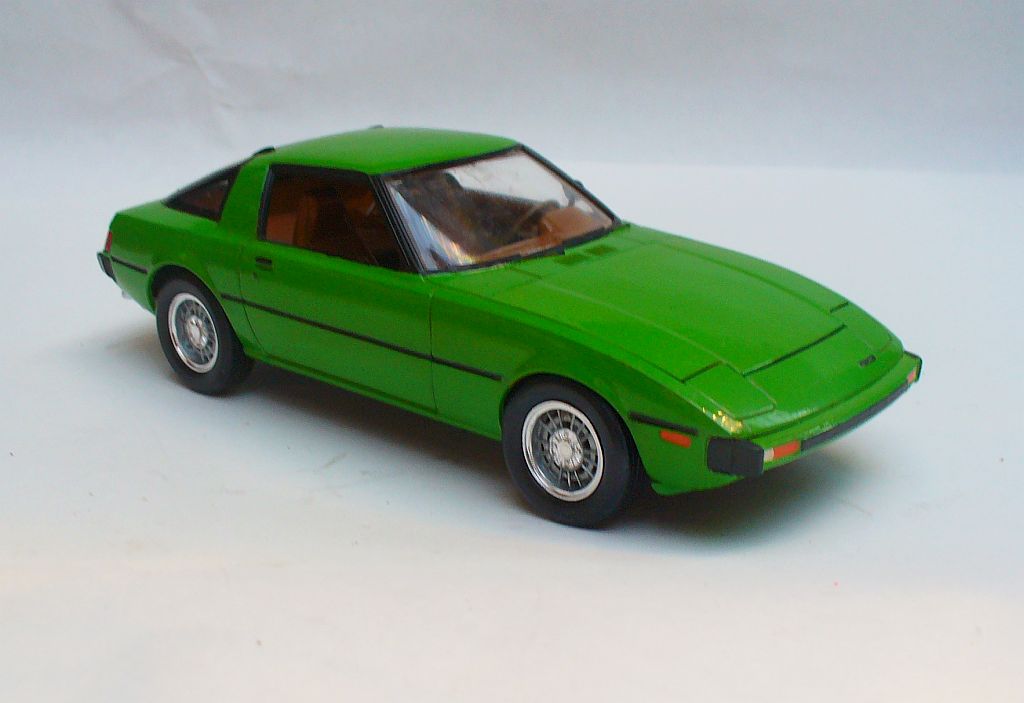
Monogram was quick off the bat with a full-detail RX7 kit.
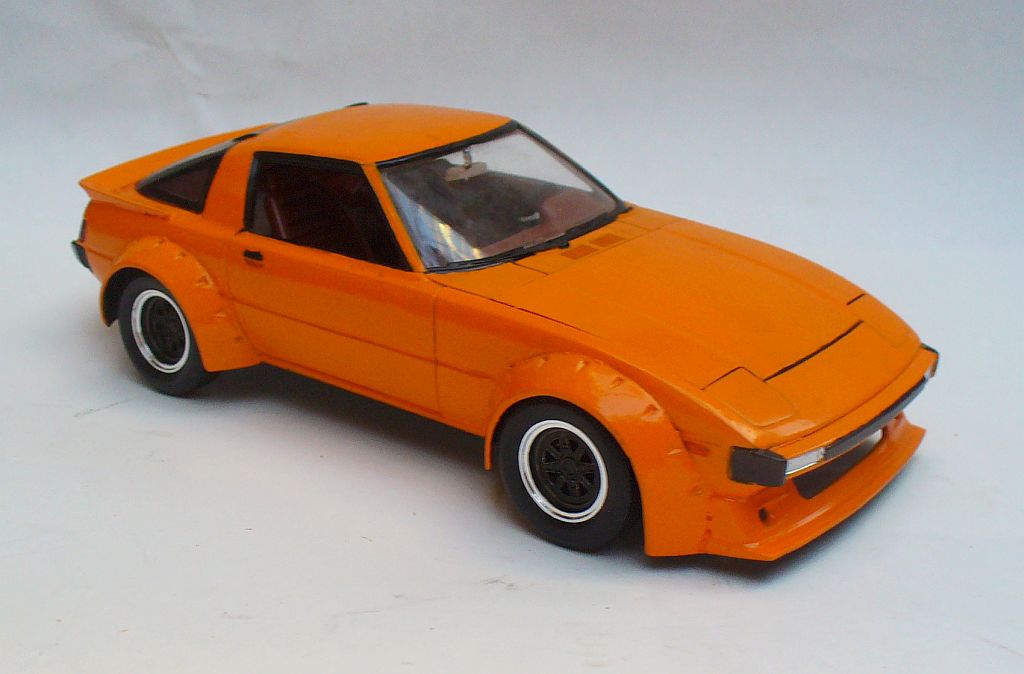
And followed it up with this street custom, perhaps the first of what we would now call a tuner RX7. So far as I know it is fictional, but it looks cool – or did when I was 20.
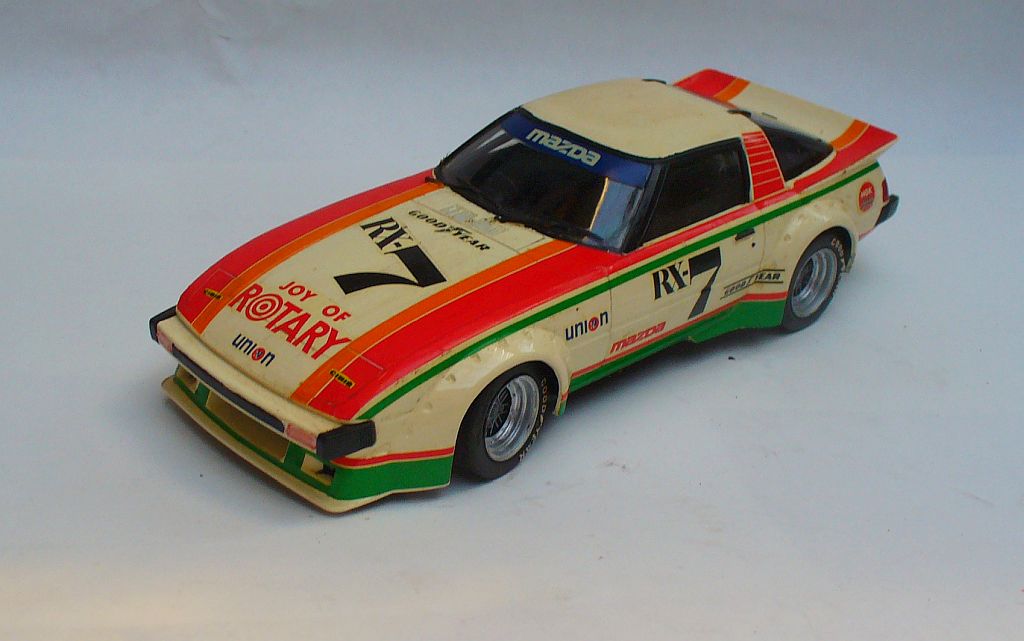
Then there was this race car from Gunze. A new tool in 1978, it appeared in four different team liveries.
Back in 2021, Hasegawa brought out a new tool of the first RX7. As is their custom with their kits of older Japanese vehicles, they made kits of early, middle and late versions, some with custom wheels. And the 1979 Daytona race car; several of them, in fact. They’re not all available at once – the trick with these kits is to pounce when you see the variation you want; it may not be available next year. Scalemates’ history lists ten versions, with another one coming this year…
Second gen RX7 – FC – Series 4,5 (1985-91)
The new RX7 seemed to have bulked up. It made me think of a Porsche 944. Tamiya released several kits of this when new, in coupe and cabriolet forms. I built this one in the late eighties.
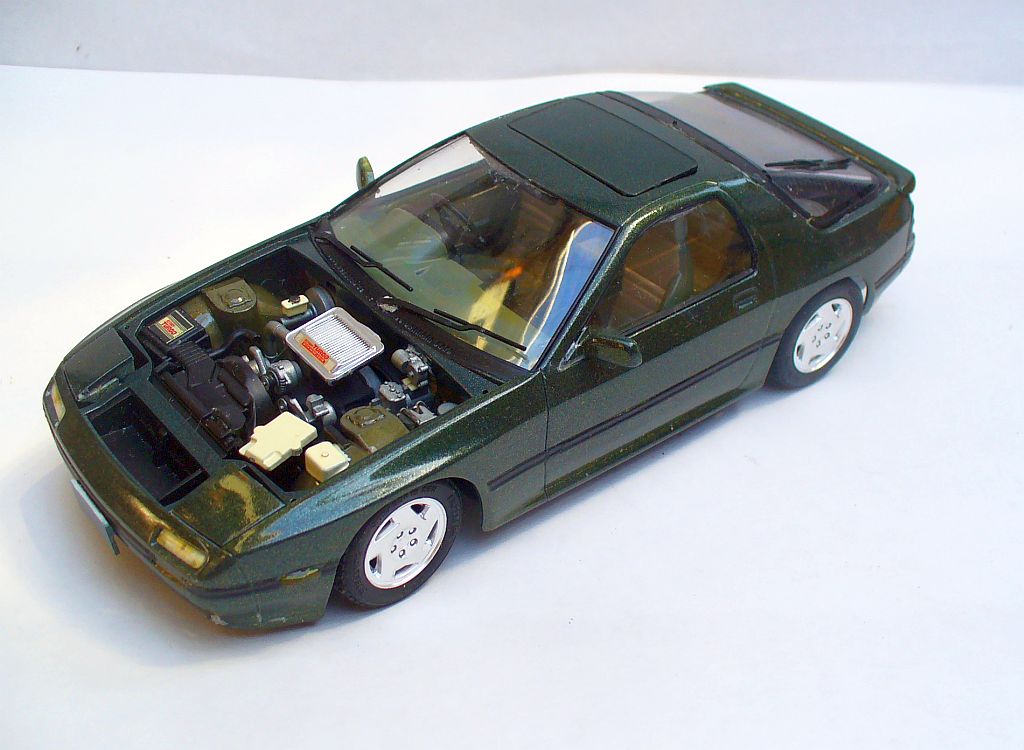
Aoshima and Fujimi also have several kits of this generation in both stock and tuner forms in their range now, as well as the Initial D anime car.
Third gen RX7 – FD – Series 6,7,8 (1992-2002)
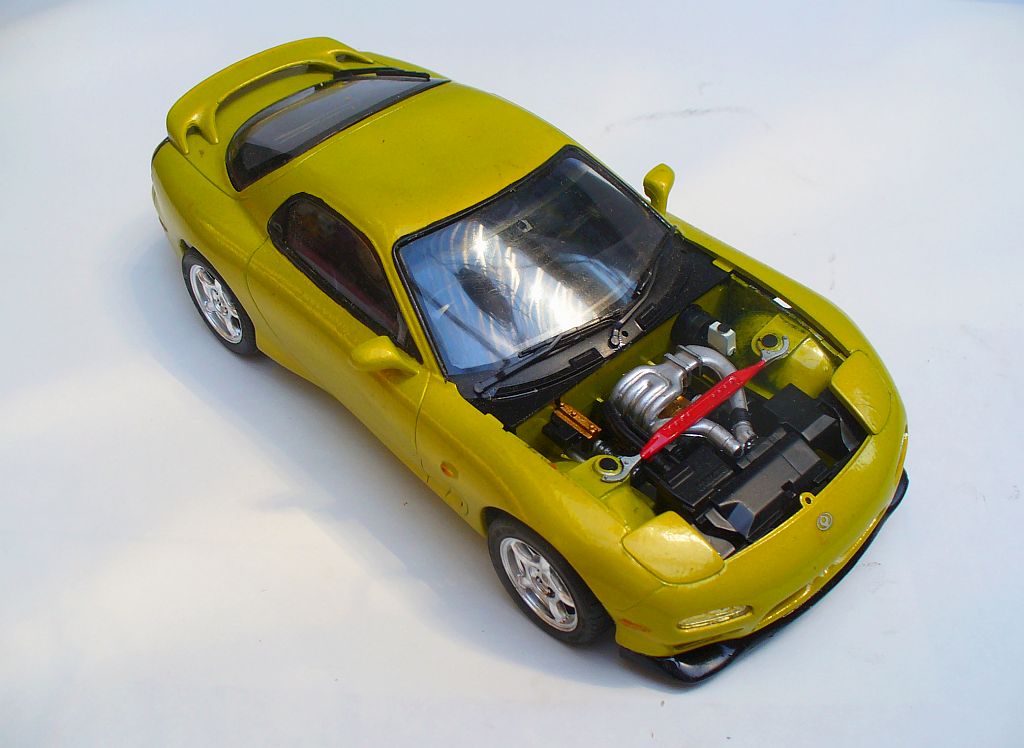
Here is where we really strike gold. Tamiya released the Efini RX7 in ‘Type R’ form (did Honda complain?), and also did a Mazda version of the R1 with full engine detail.
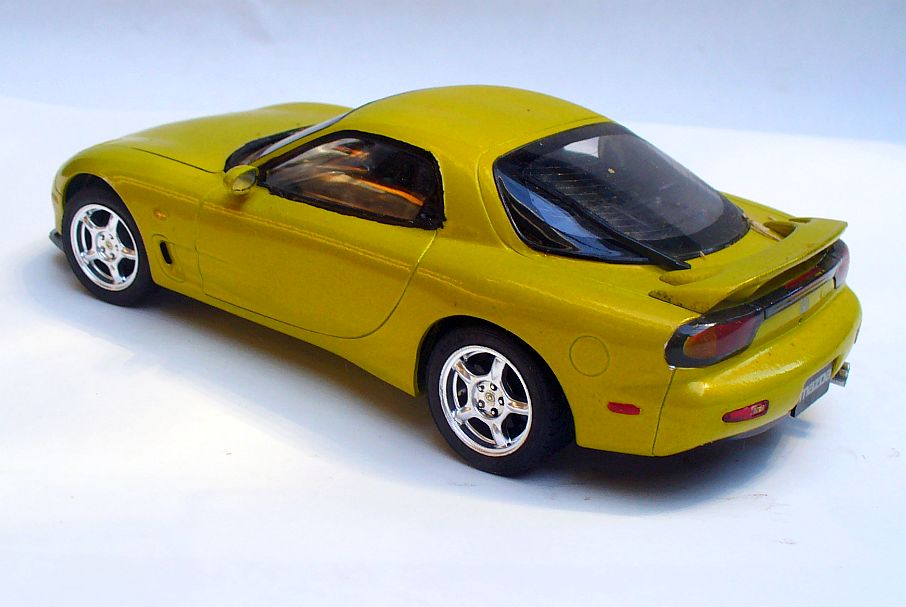
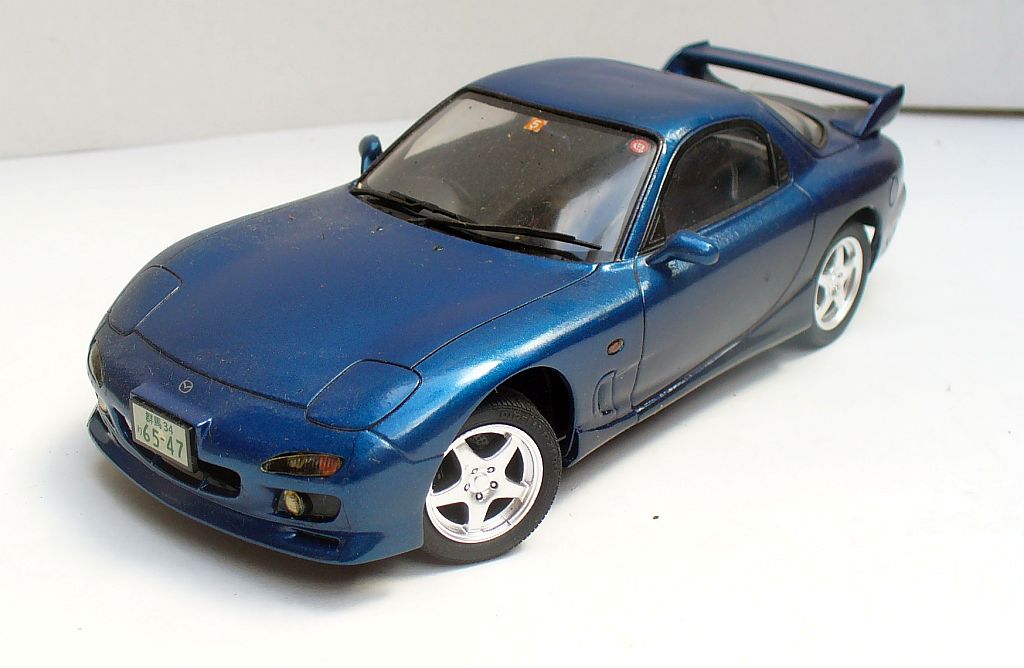
This blue FD3S is a Fujimi kit of the updated Series 8 car.
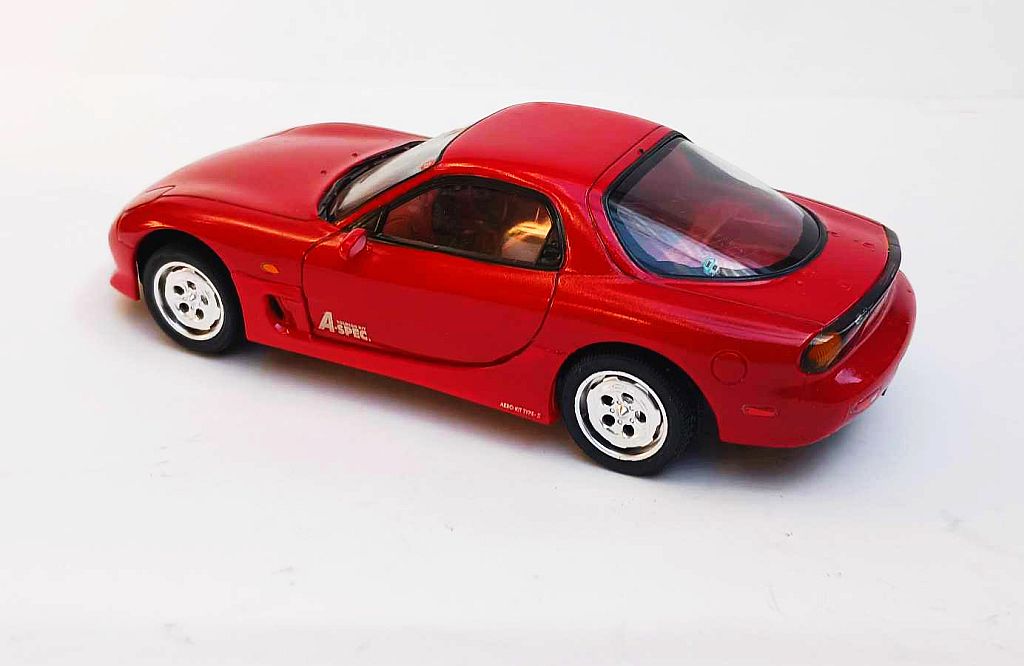
The A-Spec is another Fujimi kit of a late car. A-Spec got 260hp and a special aero package.
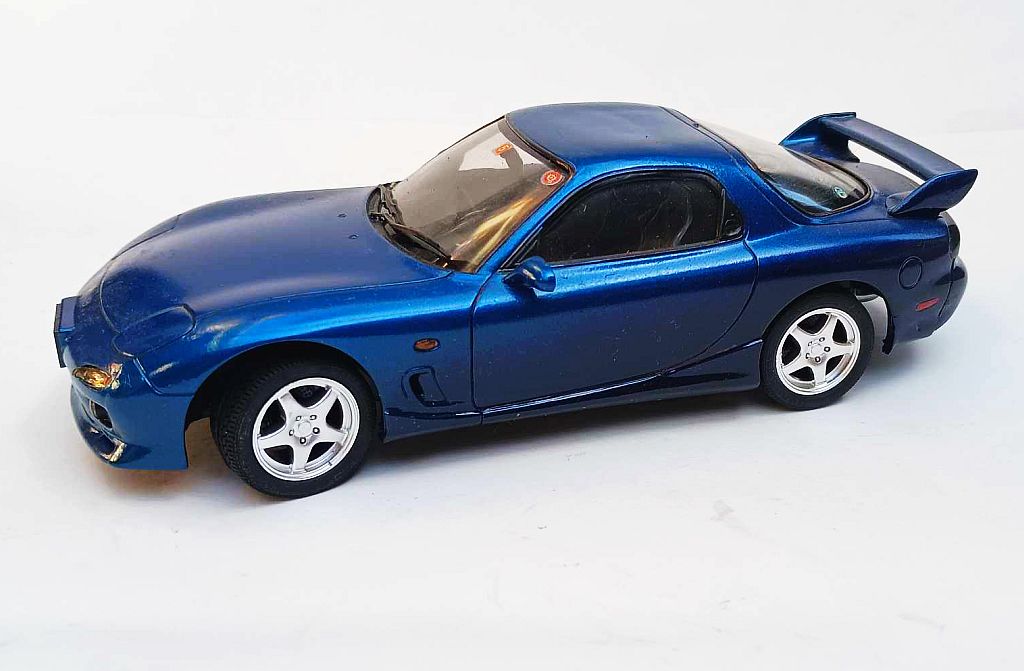
Another Fujimi kit of a late car, this is an unattributed custom version.
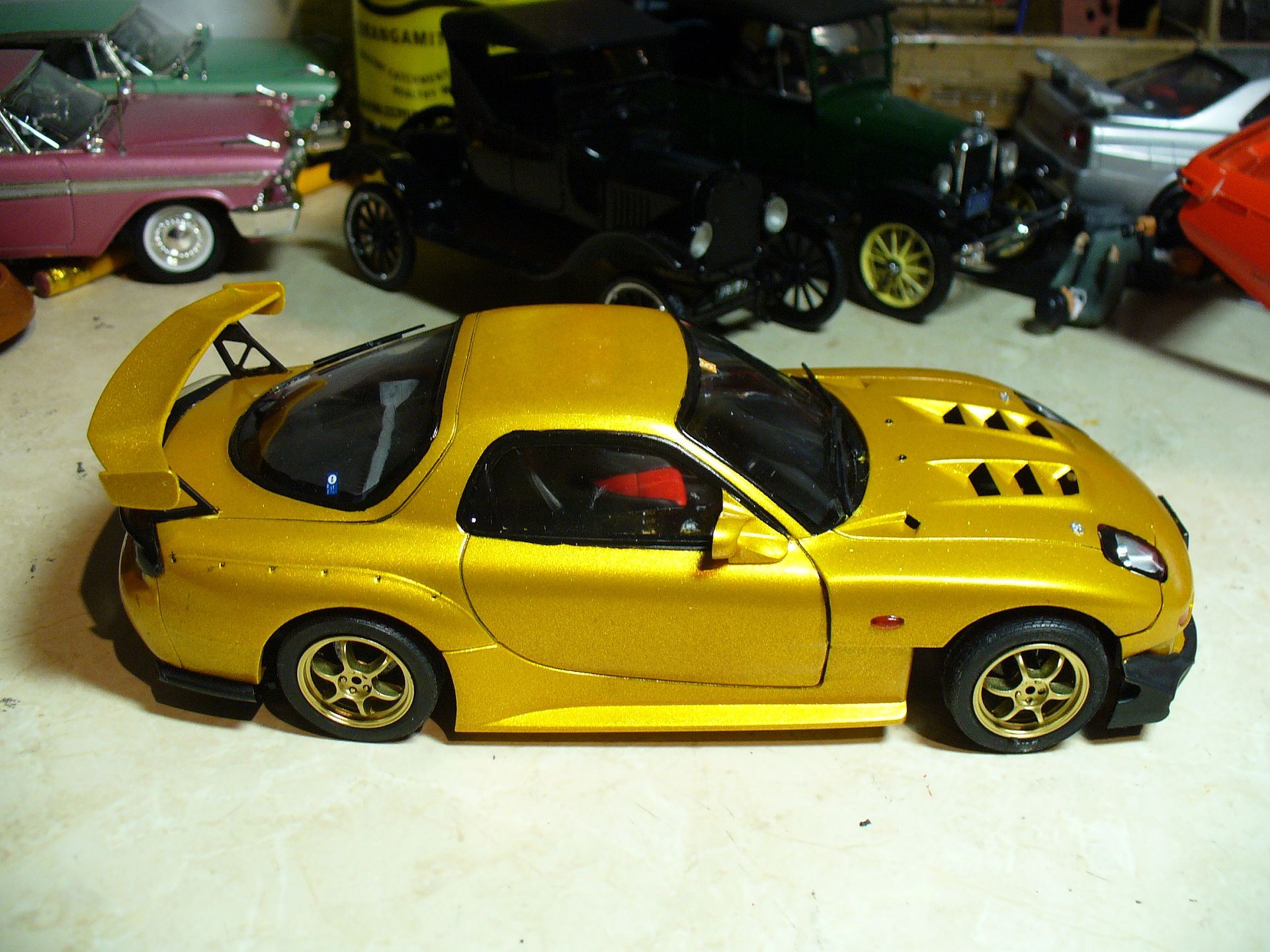
Then there’s this awful travesty of an RX7 from the Initial D series. Fujimi again, but Aoshima also does one (probably better).
You’d think we were finished…
But wait! There’s an RX-8 (2003-12)
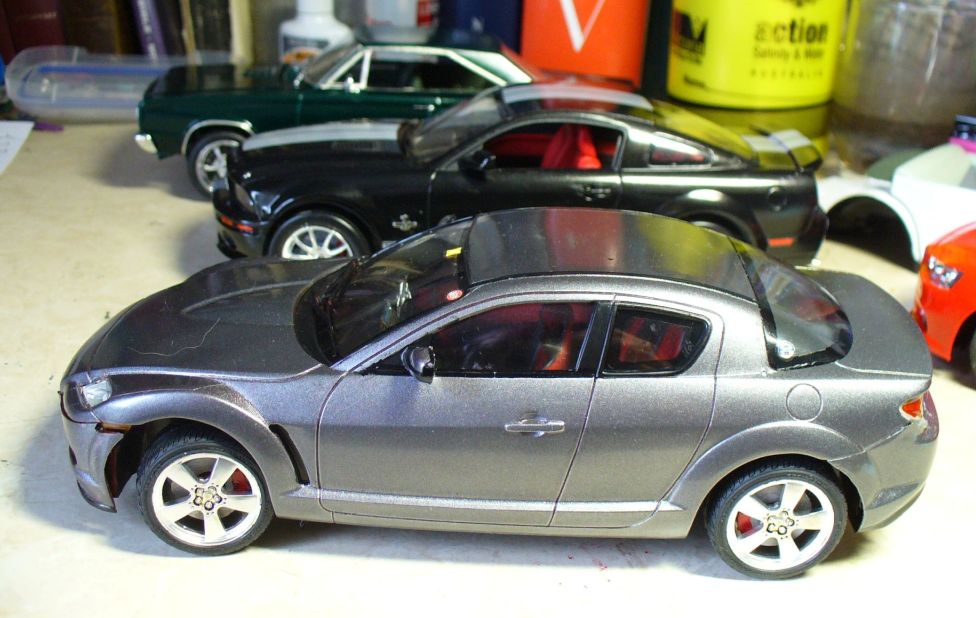
Somehow I always forget about this car. To my mind, the RX-8 was something of a strange beast. Was it a four-seat sports car? It surely wasn’t a Grand Tourer – too cramped – and then there were those back doors – well, half doors? Rear entry assist flaps? You couldn’t call it a sedan – but what was it? Thingypedia calls it a ‘quad coupe’. Something of a halfway house between the RX7 and the JDM-only Cosmo, it replaced both in the range – though not as much a sports car as the RX7 had been, nor as spacious and luxurious as the Cosmo. Still, in nine years they sold 192,000 of the things.
One more racing rotary
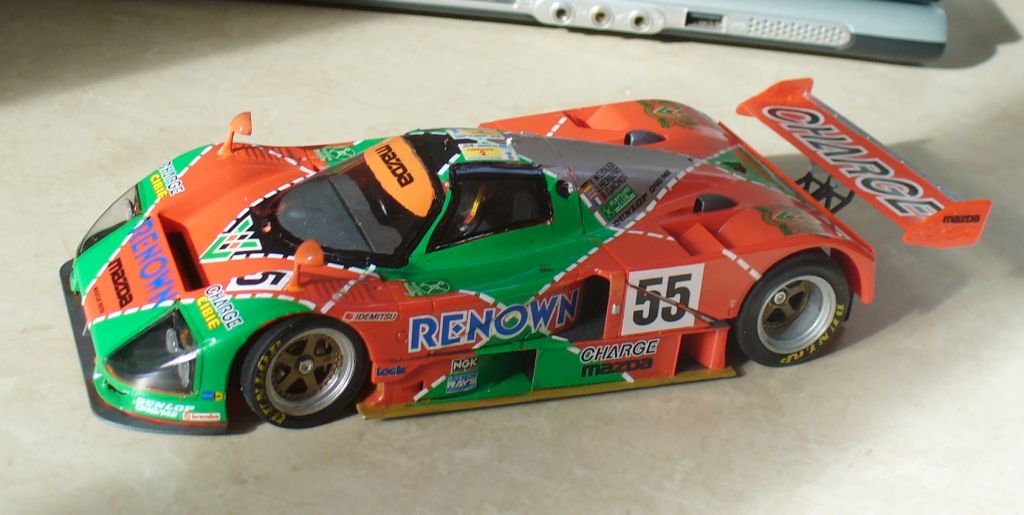
In amongst all this, Mazda went racing RX7s, but then they aimed higher. Way higher.
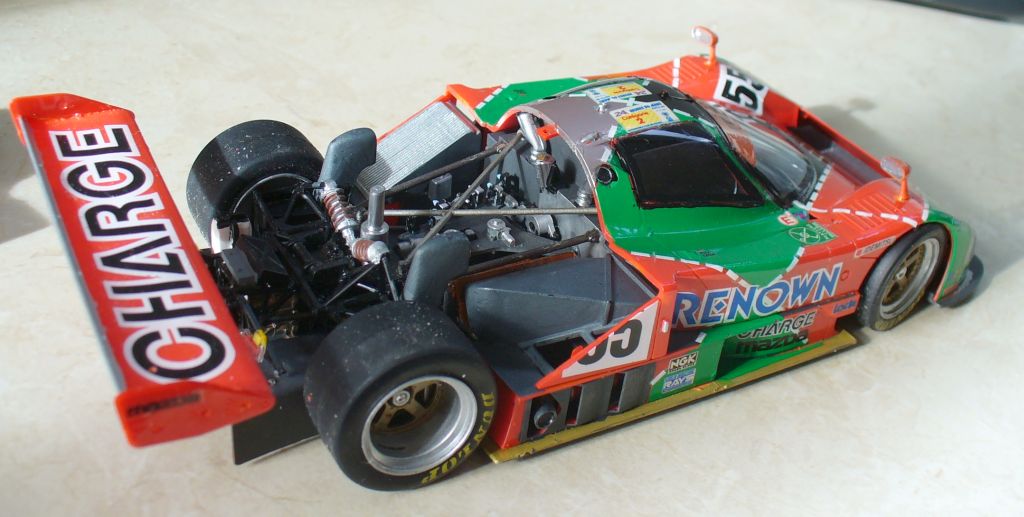
I’ve shown this one before, Mazda’s Le Mans winner for 1991, the 787B. Powered by an R26B quad-rotor putting out 691hp at 9000rpm, they didn’t quite have the pace of the Mercedes, Jaguar or Porsche opposition, but they had reliability on their side – which surprised me. This was ideal for a 24-hour endurance race. Herbert, Wiedler and Gachot, take it away……
Videos:
Mazda 787B Group C demo runs on Goodwood hillclimb:
The Secret Behind the RAPID Mazda 787B – Driver 61
(with French subtitles)























That little motor would flat out scat!
Yes, mileage was atrocious, emissions poor, but the thing that killed it was the weak seals.
Replacement was practically out of the question.
In 40 years of development they never got the apex seals up to industry standard durability (granted the bar was raised in that time but still).
For that book cover, I’m guessing he’d have preferred a V8 to that (Datsun or BMC?) four.
Great collection – love the little Cosmo!
I have an Efini FD in black – one of mine where the paint didn’t go too ‘reacty’, fortunately. Black is a hard taskmaster.
I seemed to get a lot of orange peel with metallic blues in particular.
I understand the Wankel got quite a following in Oz – people building four-rotors and perfecting oil-injection systems to make the tip seals last a decent time.