Let’s do the ‘Ten favourite kits’ theme again, but this time we’ll look at kits of fifties cars. We all like the fifties, don’t we?
Last time AMT missed out. This time they’re back big-time, with many classics tooled in the early to mid-sixties (and some from their second golden age in the nineties). I think the difference is that they had a few more years of tooling experience under their belt compared to the hot rod kits, and they seemed to be really in touch with what kids wanted to build. While customs fell from favour for a while, and some of these kits don’t have as many custom parts as they used to, now customs are acknowledged as part of hot rod history – and this is one of the strengths of these AMT kits.
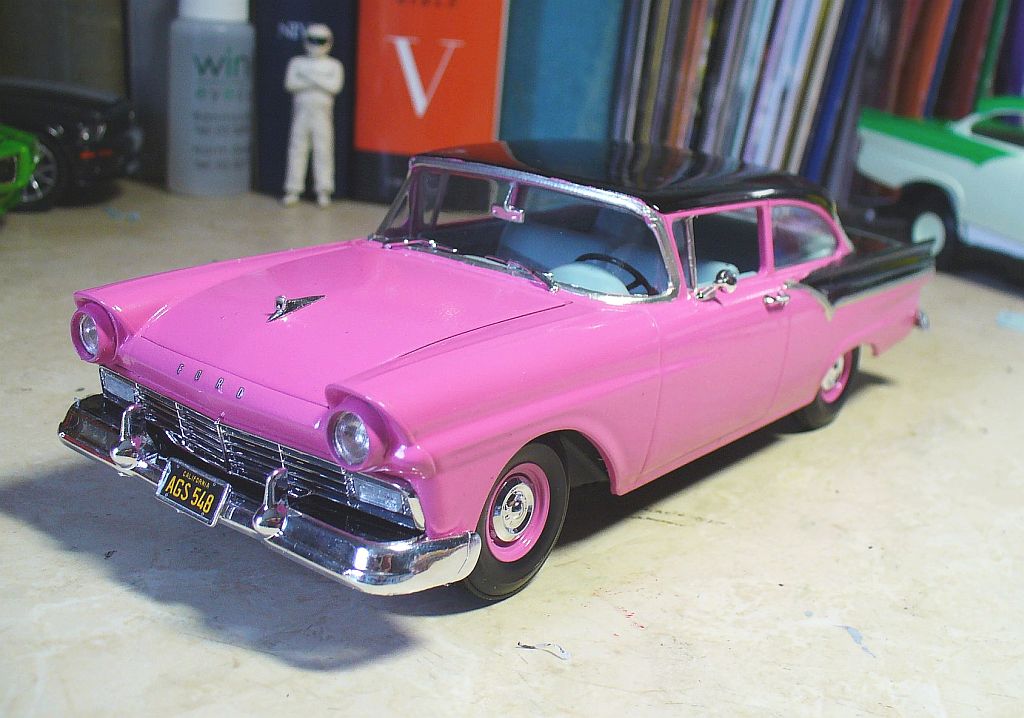
Revell’s ’57: Not quite right.
Revell has some newer tool kits, but most of them seem to have an annoying error somewhere or other. For example, their ’57 Fords are nice but they didn’t get the shape of the front end right above the grille (below); it’s too deep and flat (and the headlights are a bit small). The old AMT kit from 1962 gives a more realistic appearance.
My Top Ten:
As before, don’t take this as a definitive list of the best fifties kits. These are the kits I’ve enjoyed building most.
1949-50 Ford – AMT
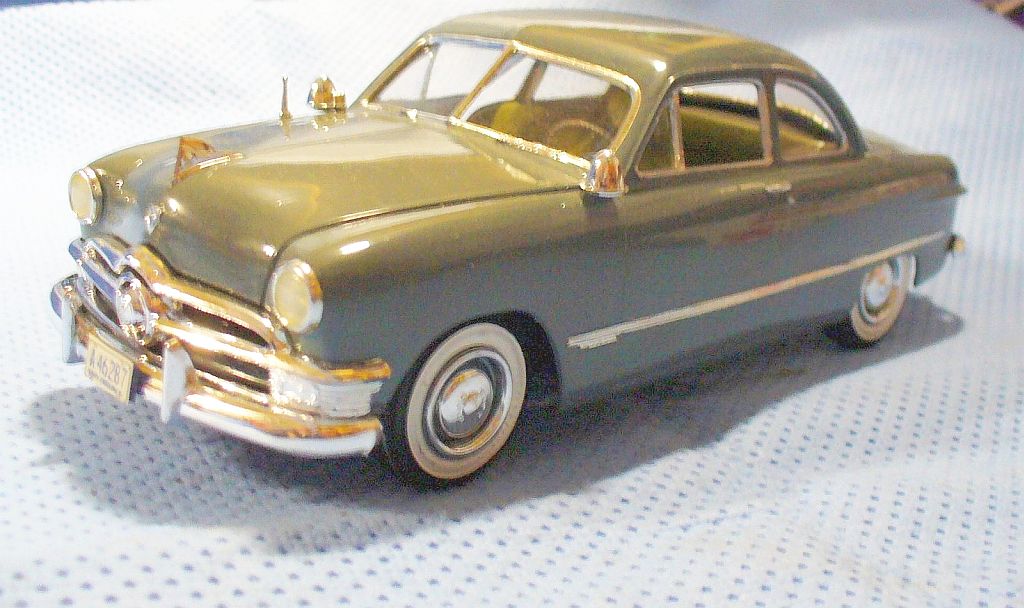
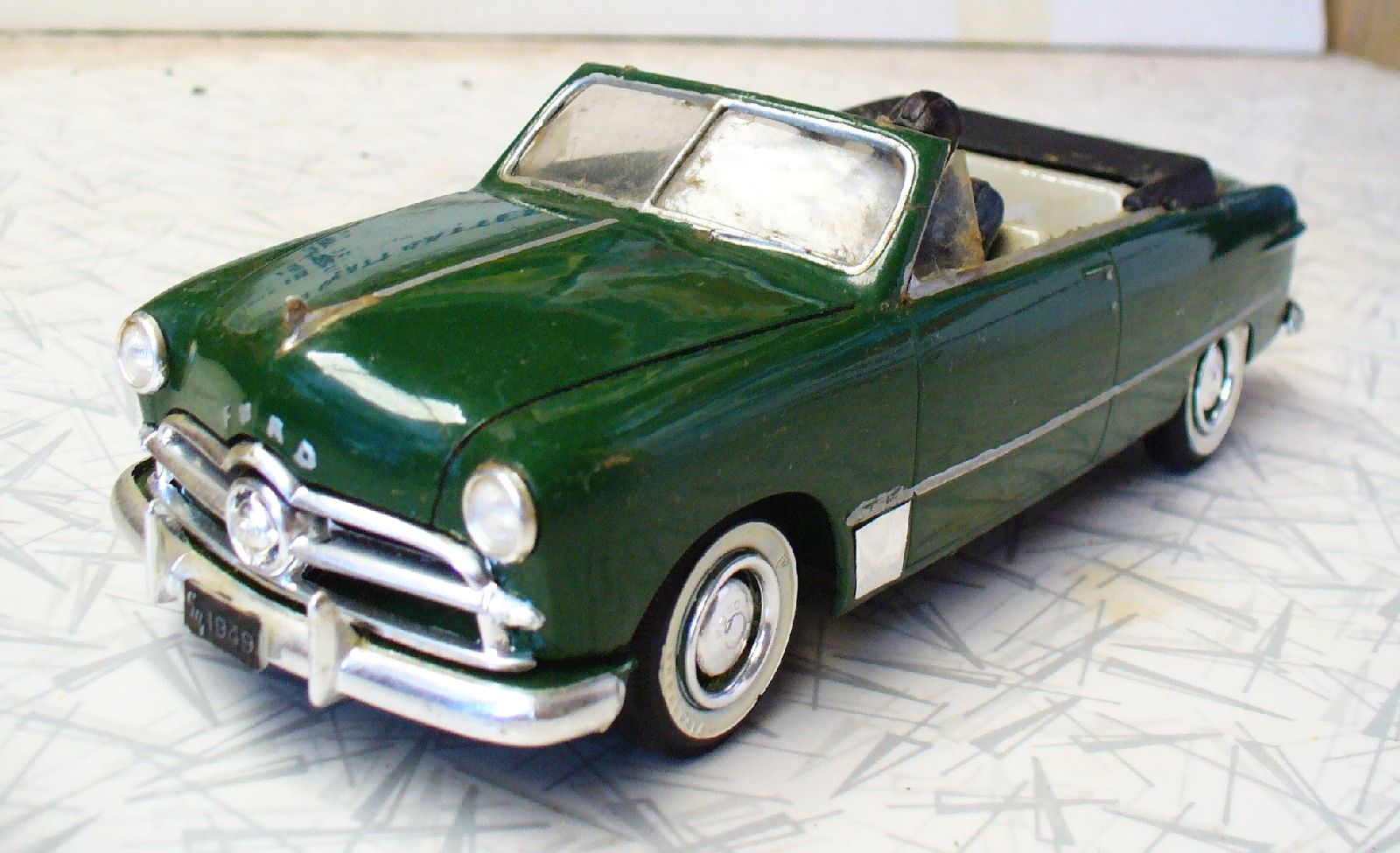
Dating from 1962, and in the range almost continually, whether you get the coupe (‘49) or the convertible (‘50) this one’s a great build. It looks accurate, chassis and engine detail are excellent, with an optional tri-carb/blown Caddy for the coupe; hot flathead for the convert. Two minor criticisms. The mag wheels are a bit chunky and generic, but the stock wheels have lovely hubcaps with separate plated trim rings. The custom seats are very dated in style, but the stock interior is beautifully engraved. Earlier releases had a wider assortment of custom body parts, last seen (I think) in the Customizing Series release of the convertible in 1987. Of course, you can mix and match to get a ’49 Convert or a ’50 coupe, as I did here.
1953 Ford – Lindberg/AMT
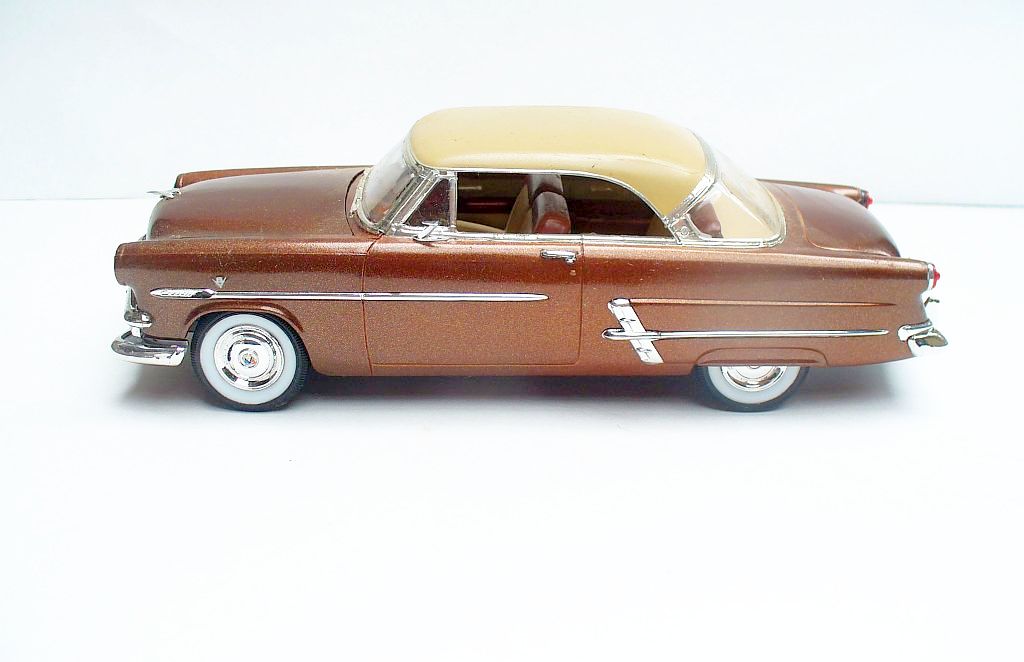
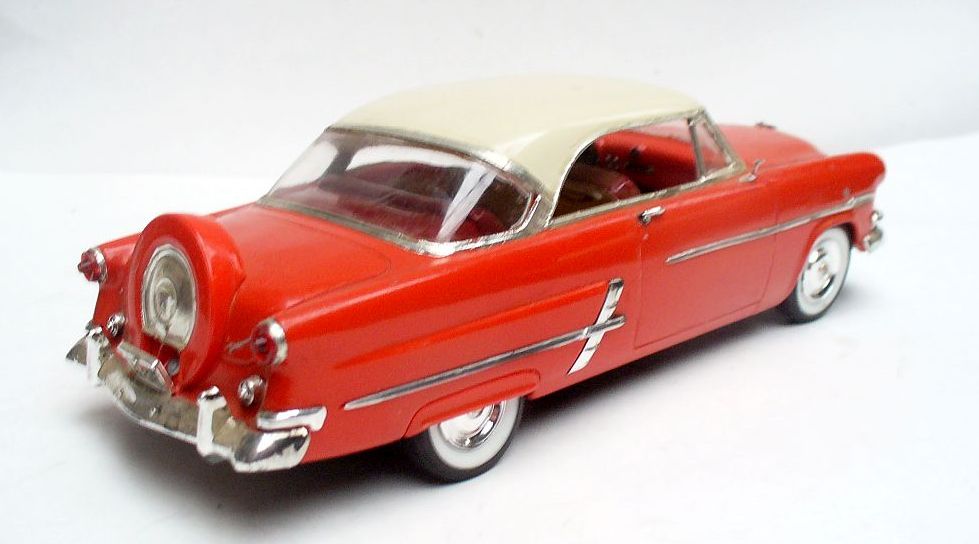
Originally a Lindberg kit tooled in 1998, during their ‘golden age’, there were both hardtop and convertible versions. These kits are stock only, but beautifully detailed, with the rare ‘Coronado deck’ faux-spare as an option. Currently the hardtop is sold under the AMT brand. Just watch the rear wheel attachment to the axle – it breaks easily.
1952-3-4 Hudson – Moebius
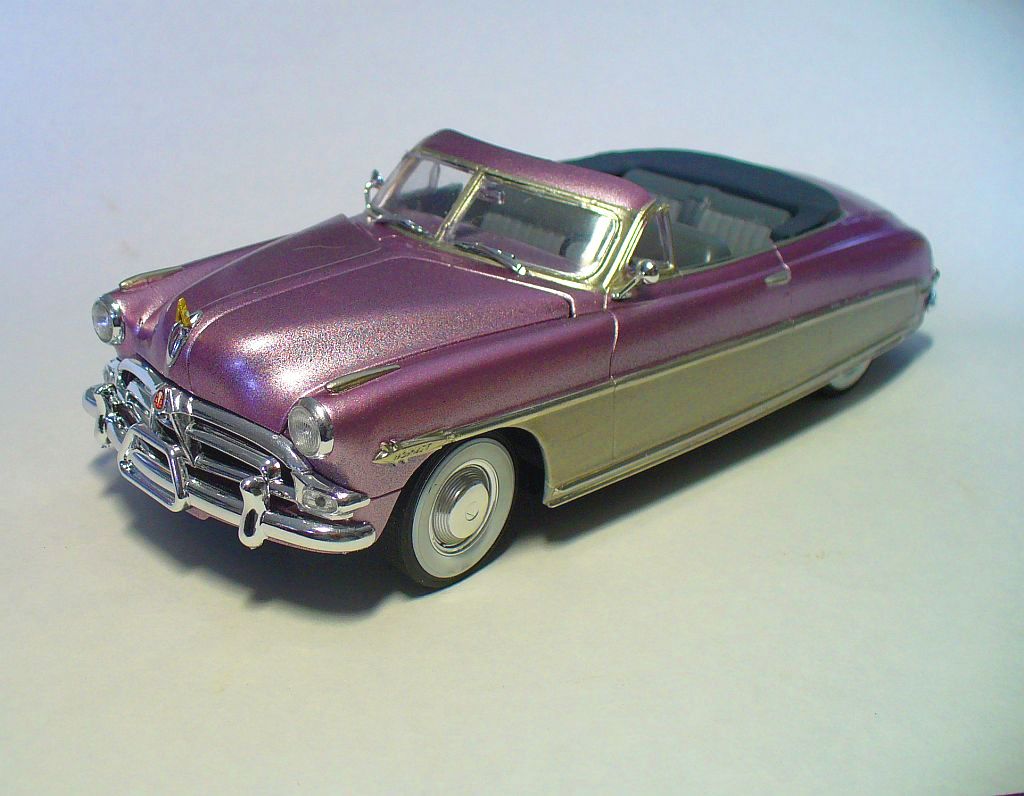
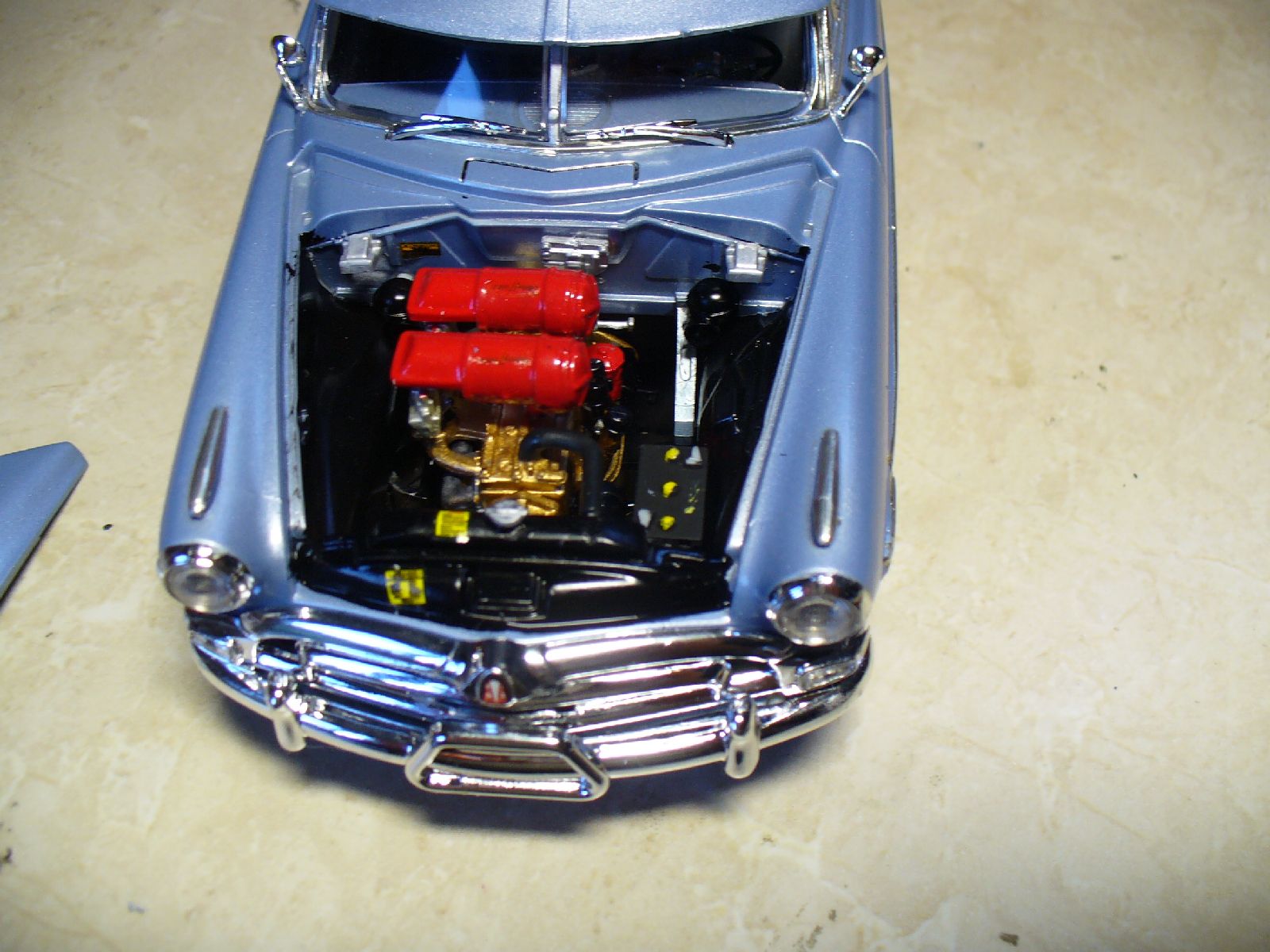
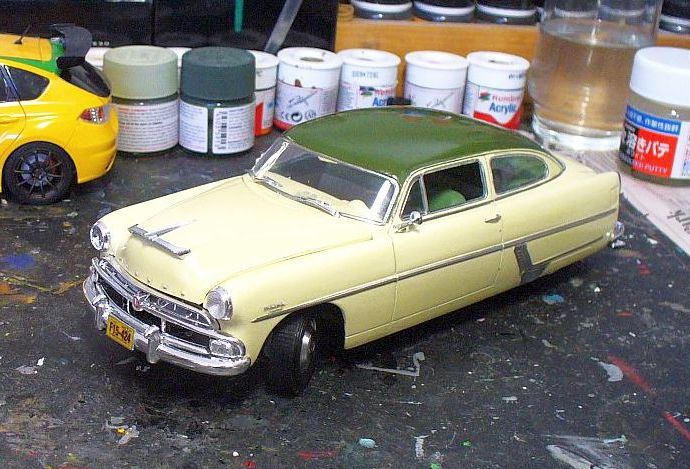
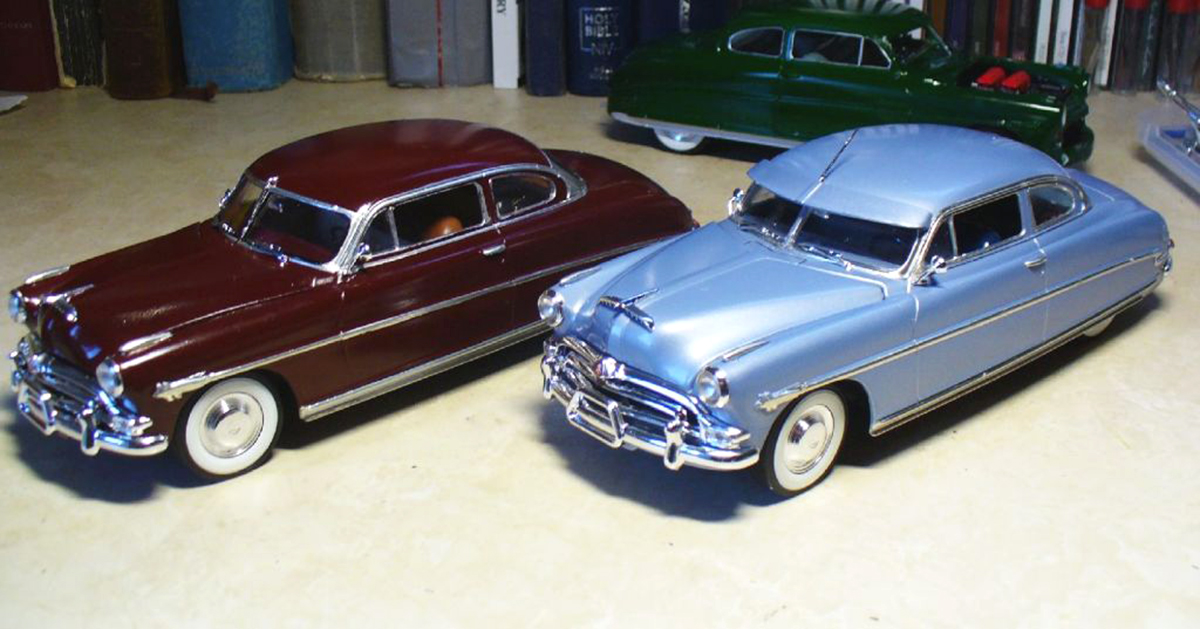
Maybe the best current US kit manufacturer (and I’m not saying that just because they do Hudsons!). Starting with a ’53 coupe in 2011 as their first-ever car kit, they added the Tim Flock and Marshall Teague ’52 stock cars, a Teague ’53, ’52 convertible, ’54 sedan and coupe, and Matty Winspur’s drag ’54 sedan. Top notch kits with incredibly well-detailed engine and chassis that quite frankly beat the rest of these. I’ve built all the stock ones; they all come with the Twin-H-Power 308.
1956 Ford – AMT
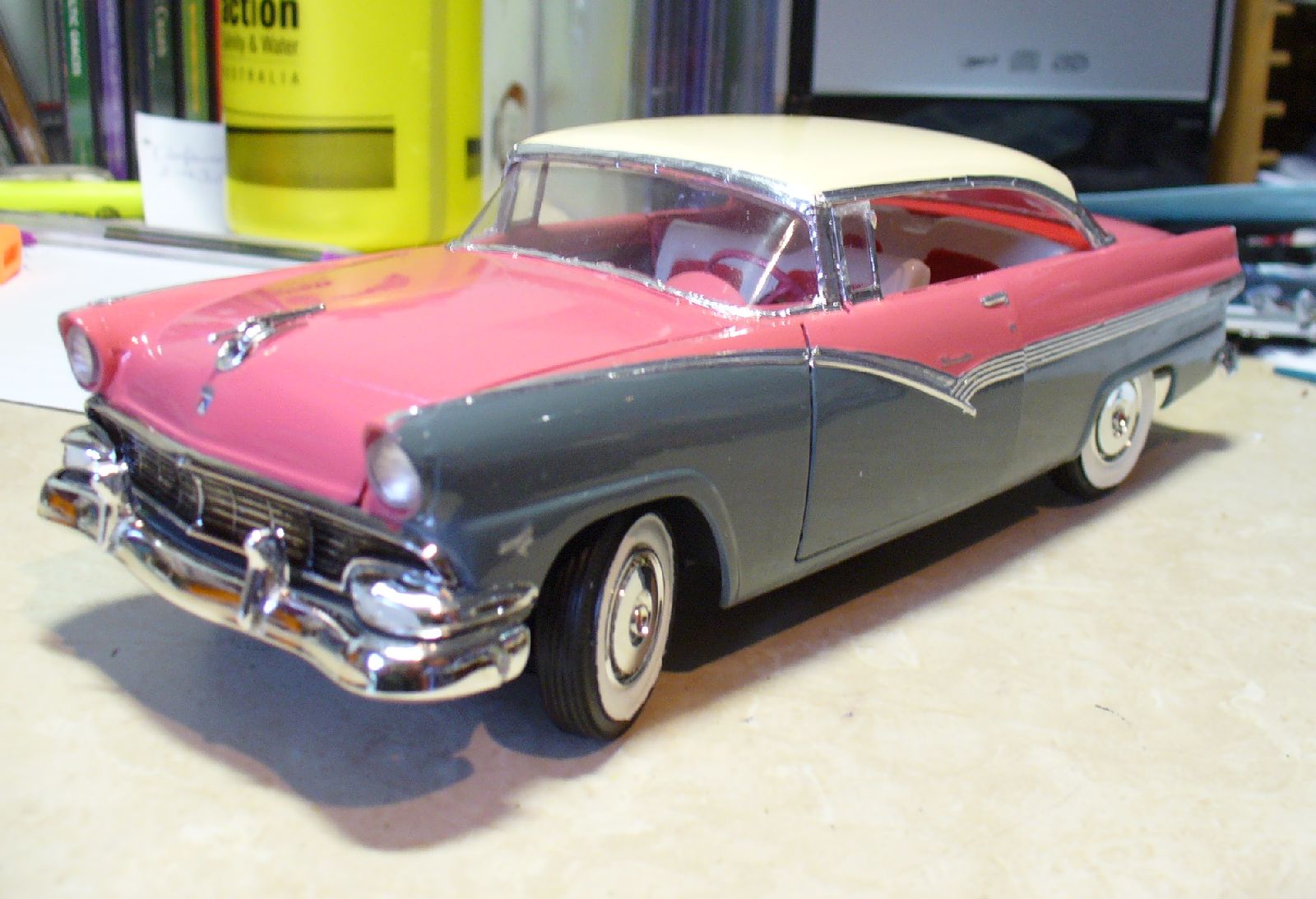
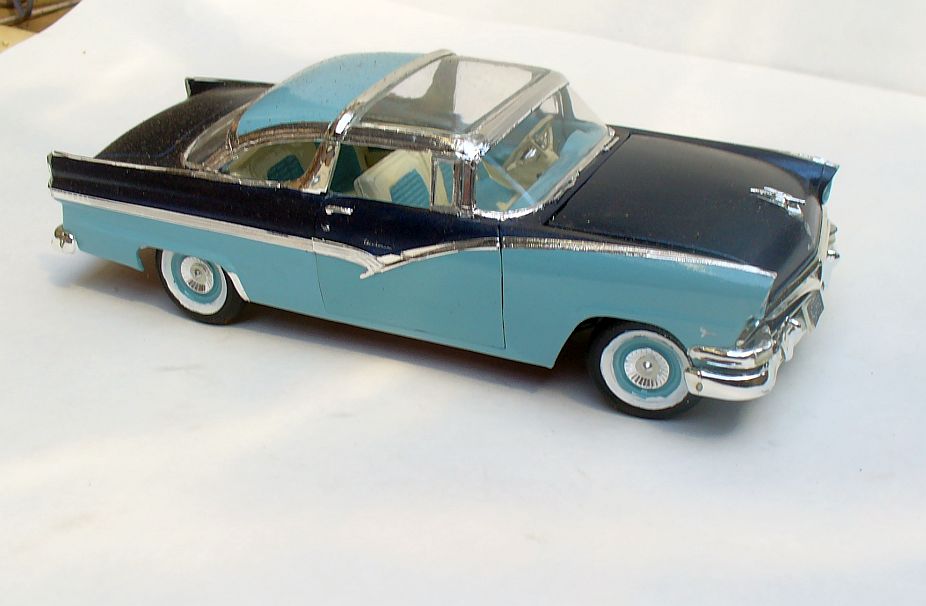
I’ve gone on at length about this kit already. It dates from 1965, and builds stock, custom or race versions, with or without the Skyliner glass roof. As a stock build it’s great, but the custom body parts need some finessing to fit, and the custom interior is very early-sixties in style. Engine is a 312 with single or twin carbs and headers: not very hot for the drag version.
56 Chev Delray and Nomad – Revell
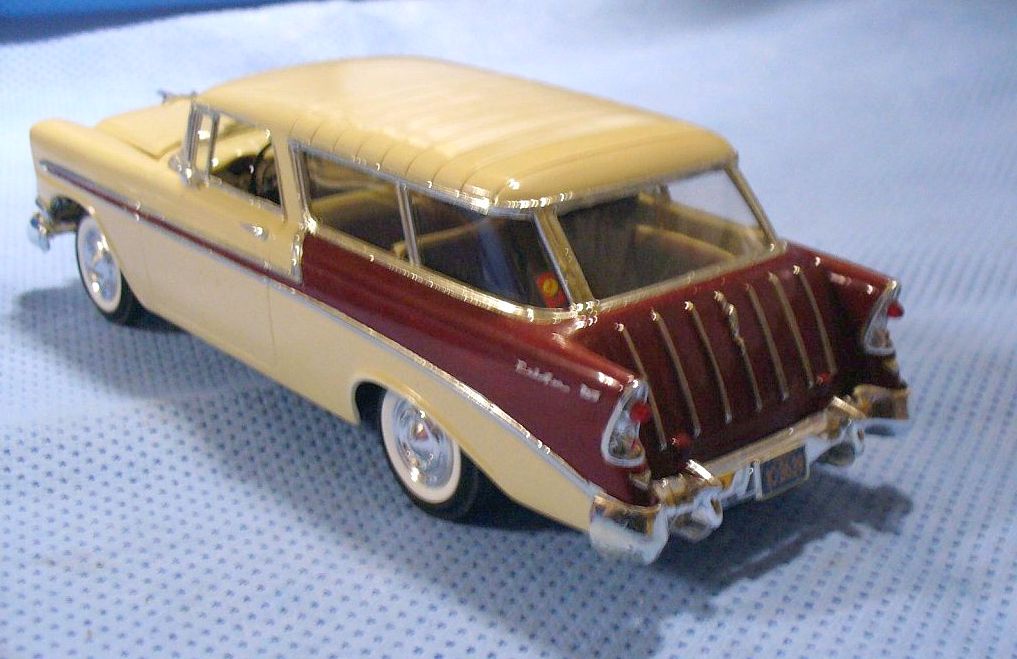
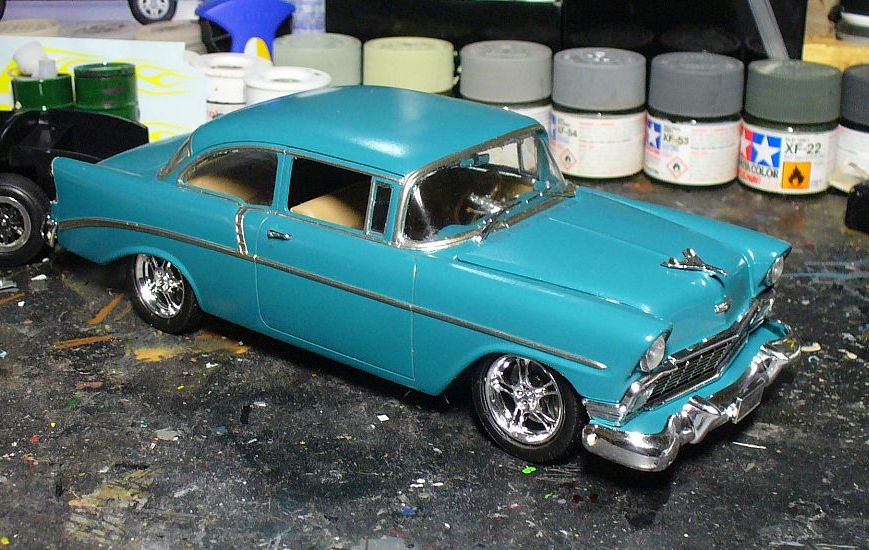
The Nomad came first in 1997 as a stock-only kit. Excellent modern rod parts were added with the California Wheels release of 2006; these came from the rod-only Del Ray sedan kit of 2005. Builds up well, just watch the front bumper; on the Nomad in particular it sticks out like it’s a 5mph bumper. Mine was one of the early kits. I hope they might have fixed that by now – they’ve had nearly thirty years….
57 Ford – AMT
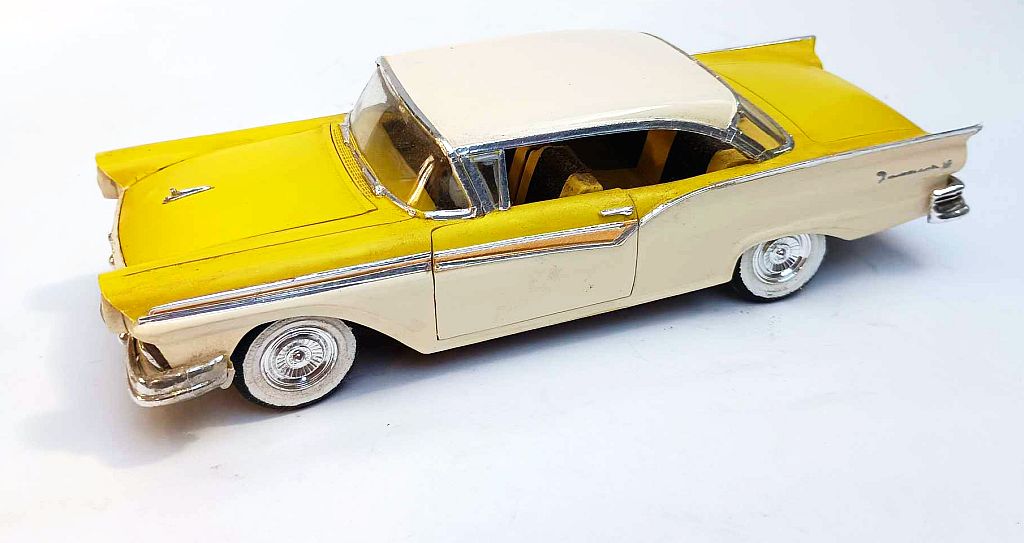
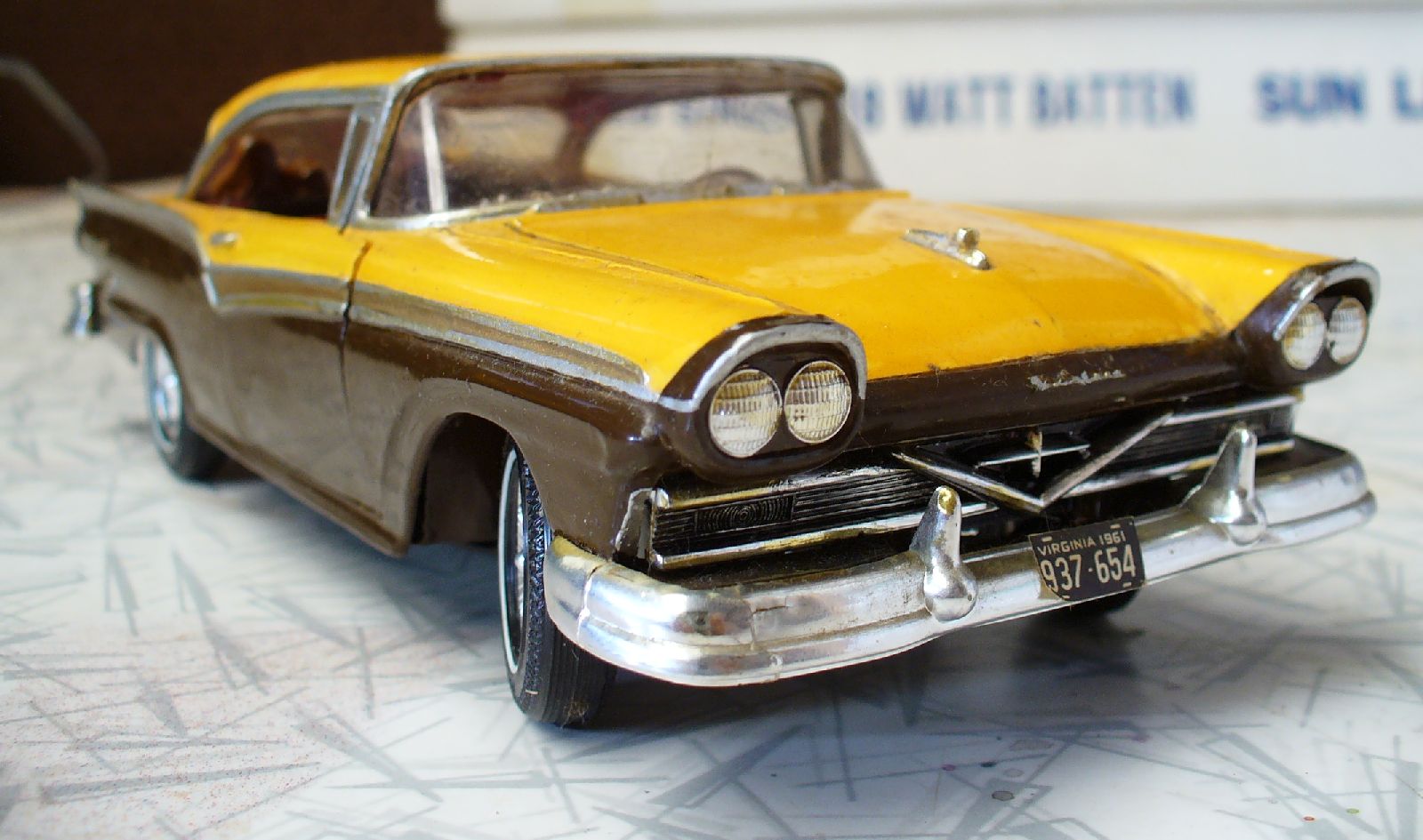
A typical 3-in-1 kit, this one dates from 1962, and (like the ’50 Ford) has lost some of the more extreme custom pieces along the way. It builds up to a beautiful Fairlane Victoria, with a factory-style blown 312 as the top engine, with poseable steering and opening doors like the ‘56. It was revised in the ‘90s which saw the fitment of optional billet parts to the Y-block. The body seems totally accurate, and comes with optional chrome headlight rims (Ford should have done it this way!) or quad lights among the custom bits.
58 Plymouth – AMT
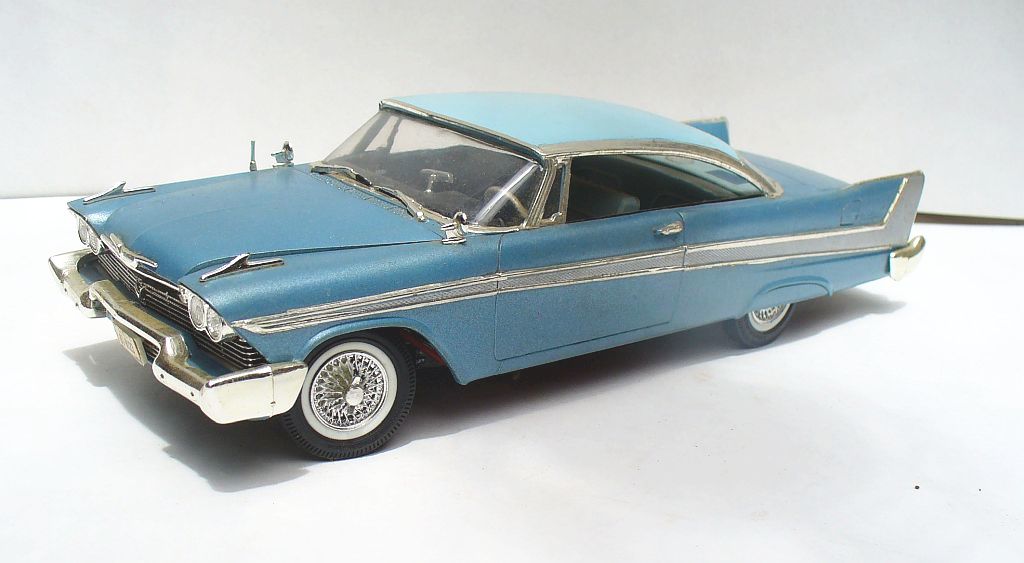
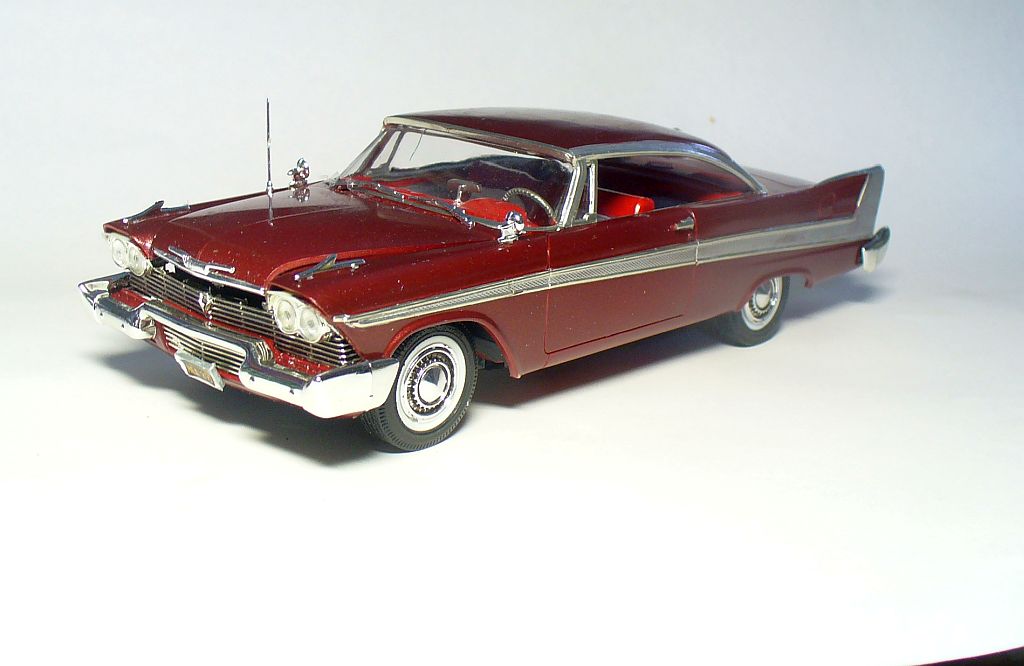
Newly tooled in 2002, this is a Belvedere rather than the Fury you might expect. A stock-only kit with great underhood detail; where it wins over the older AMT kits is the separate chrome wipers, door handles, and fender mirrors. Yes there’s a Christine version, which seems to be just a rebox of the original kit. Nicely detailed, just watch the fit of the radiator wall or the hood won’t close.
58 Edsel – AMT
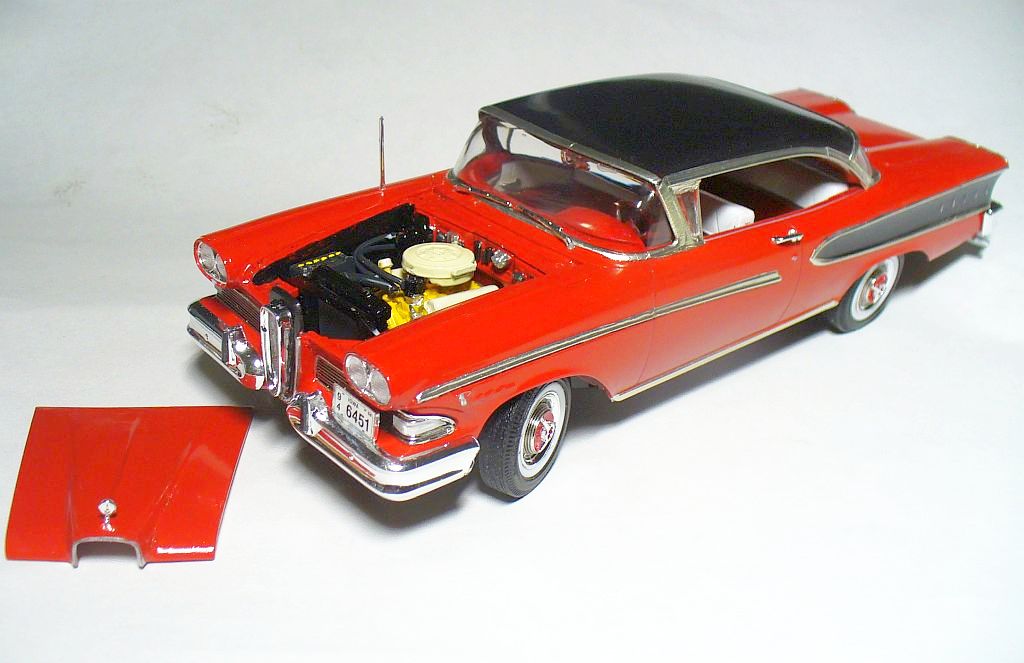
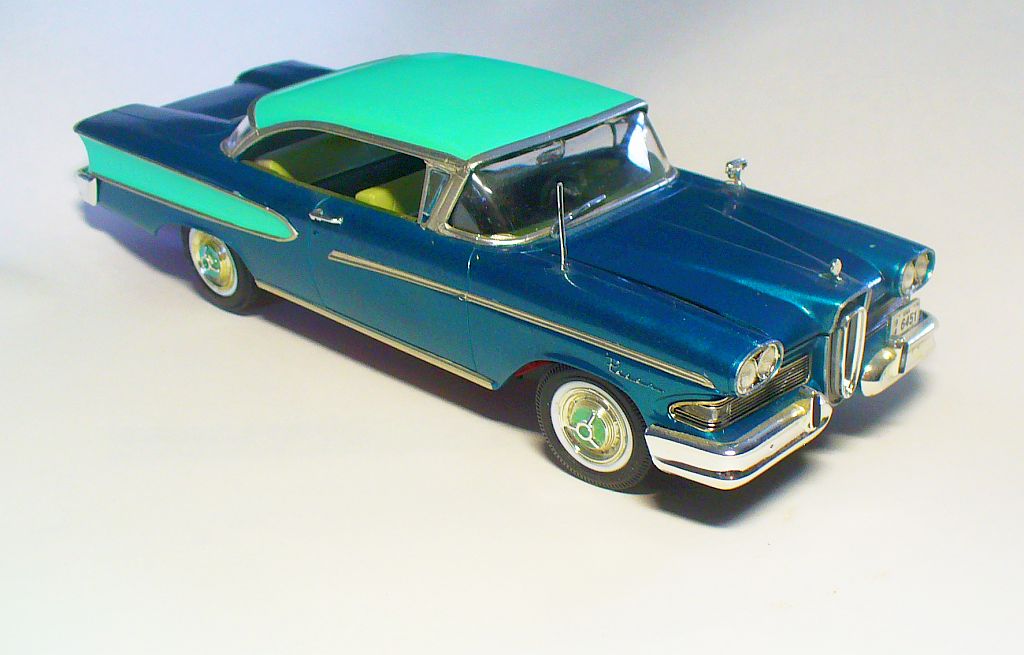
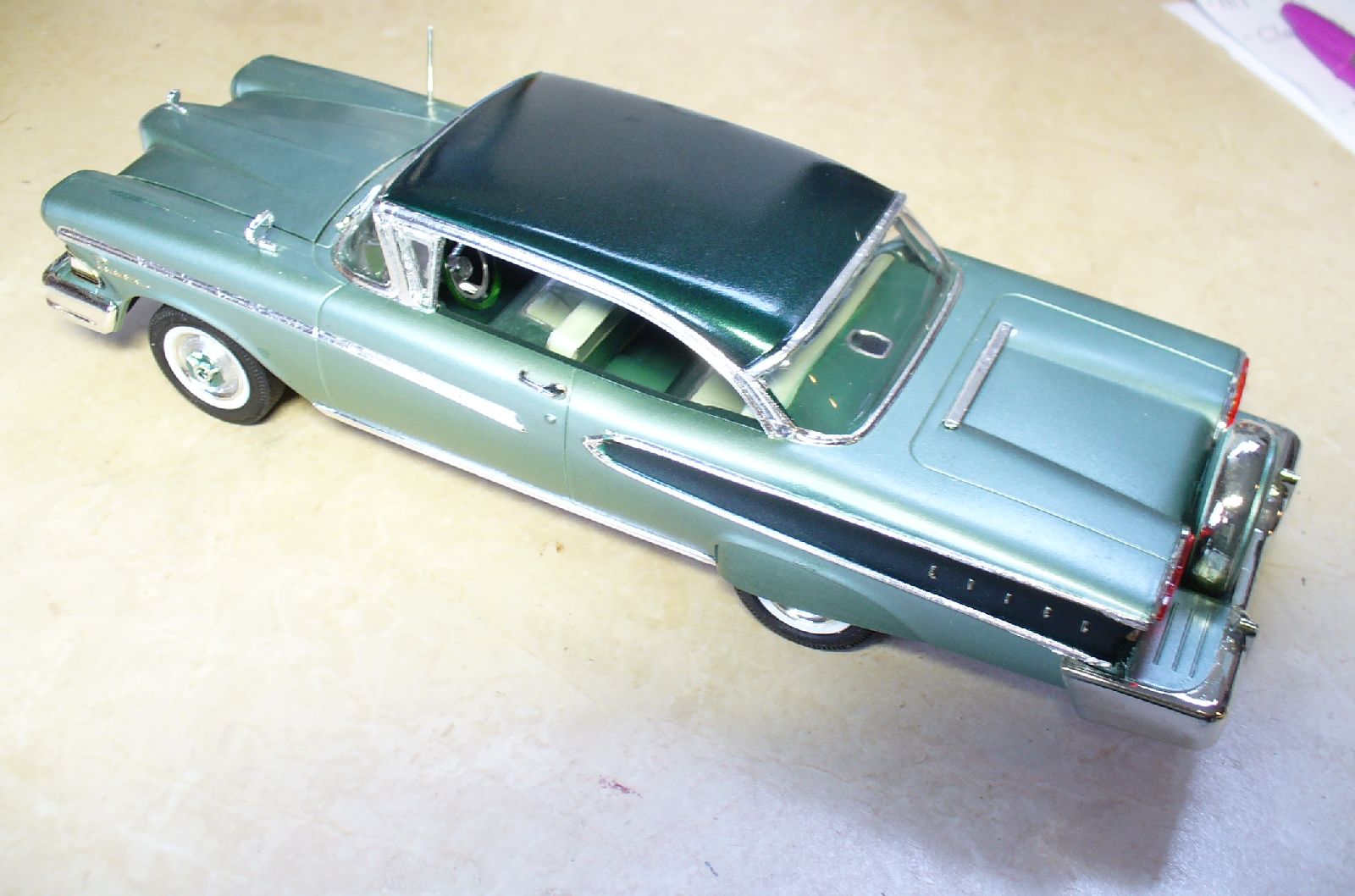
Another one I’ve written up before. Another stock-only kit, dating from 1999, a second version with a continental kit and cruiser skirts appears in the range sometimes. There was also a beautifully prepainted version briefly available – so smooth and glossy I don’t know how they did them for the price. The only problem with this kit is that the beautifully-detailed FE-block seems about the size of a Windsor – but how many folk will notice?
58 Chevy – Revell
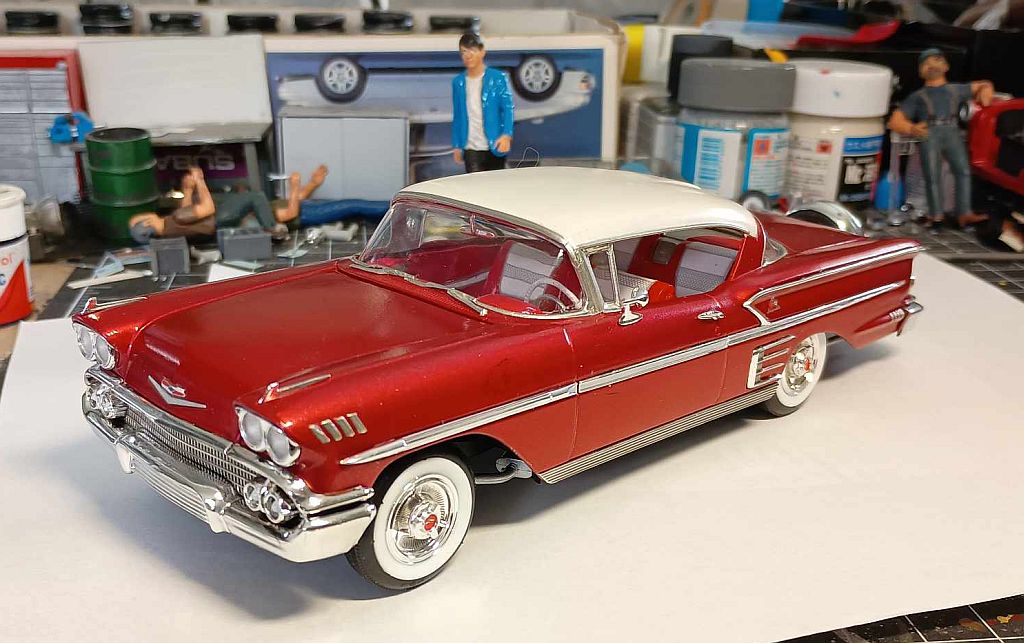
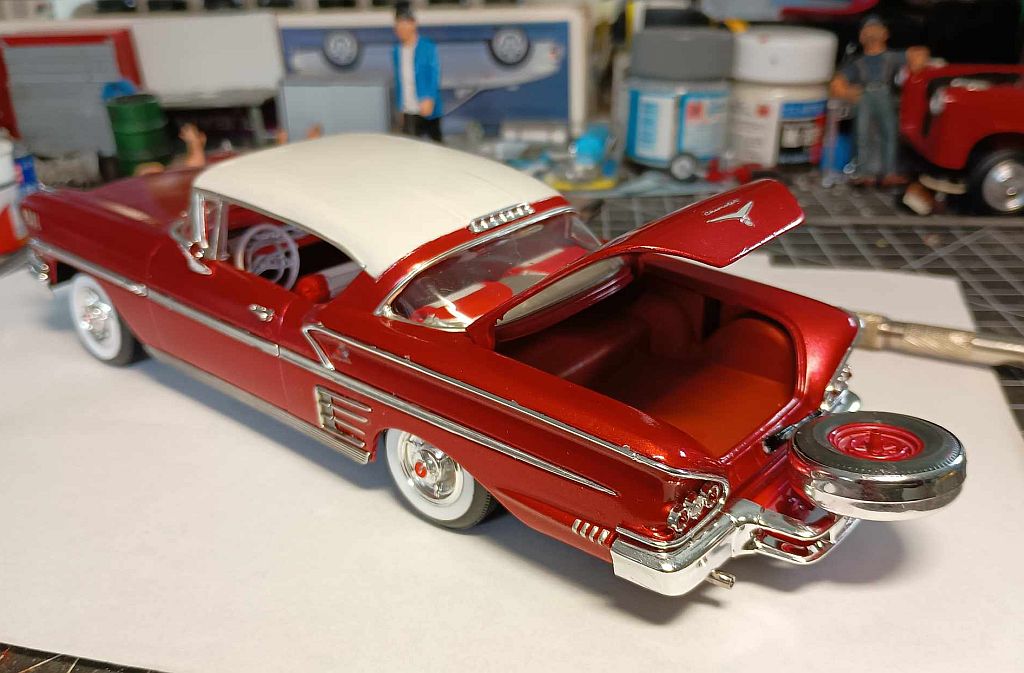
Here’s a different one. Originally released as a diecast lowrider kit, it has since had stock parts added as a build option, and is now made in the usual styrene. Construction shows the diecast origins, as screws are used at several stages. Much of the side chrome trim is separate pieces. This has an opening trunk with a movable continental kit. A real pleasure to build.
59 Chevy – Revell/Monogram
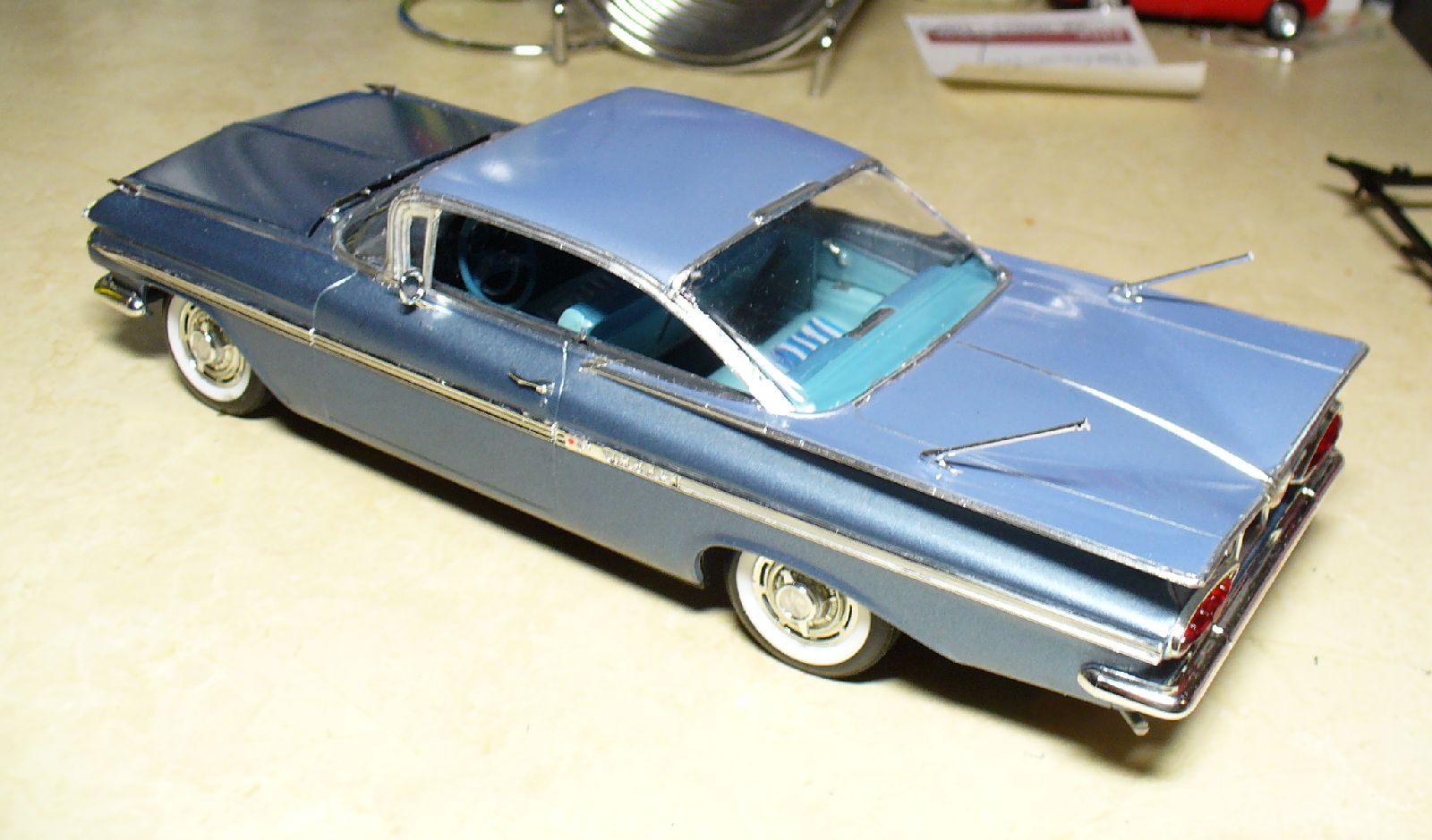
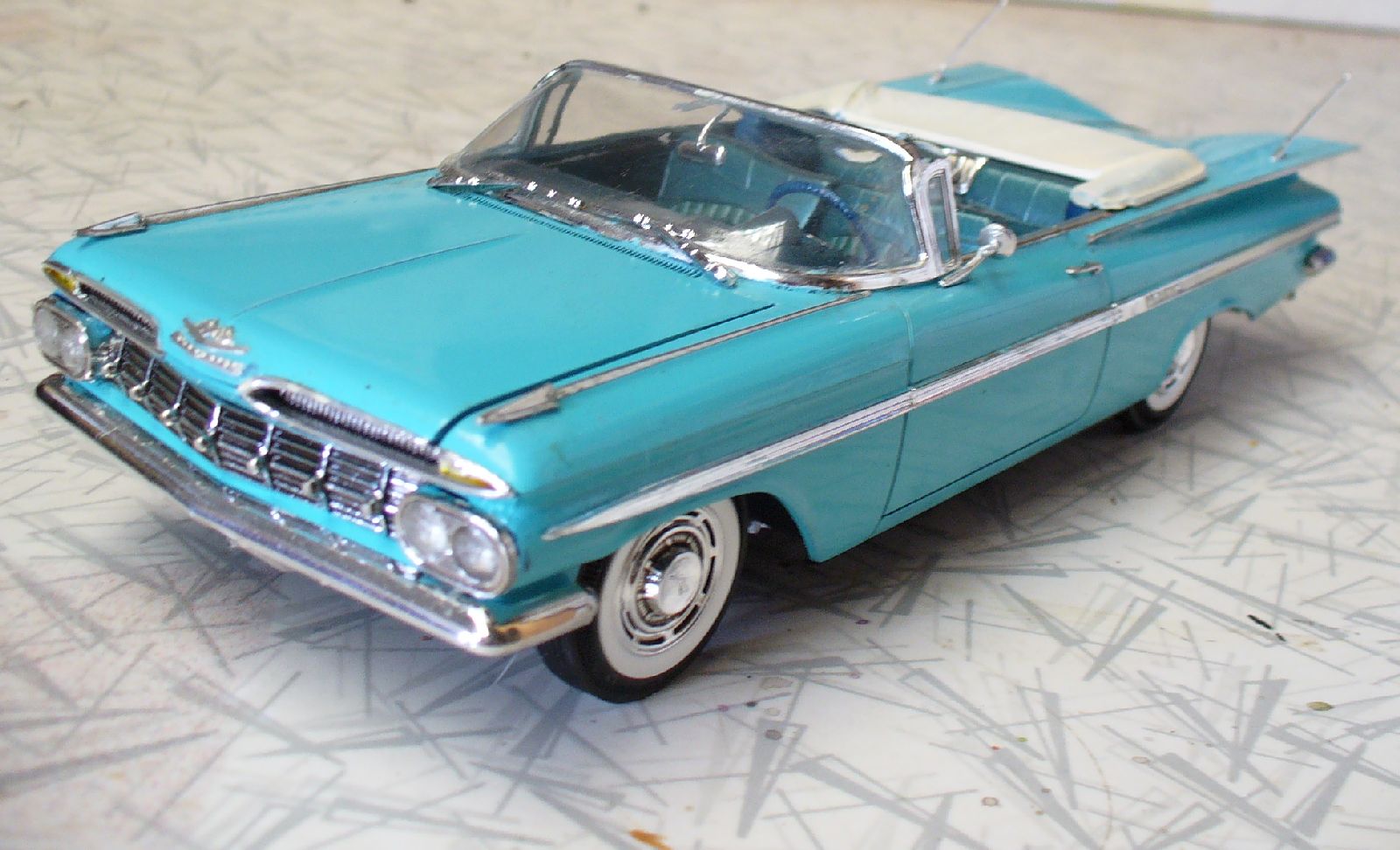
This began with a convertible kit of 1993, with the hardtop following in ’96, and giving rise to a couple of ’60 Chevys as well. Plenty of great detail everywhere, including patterned adhesive stickers (later decals) for the upholstery. Plenty of extra chrome pieces: wipers, door handles, fender ornaments; unusually, it has the side chrome trim as separate plated pieces. Lowrider versions of both years have been offered.
Honourable Mentions:
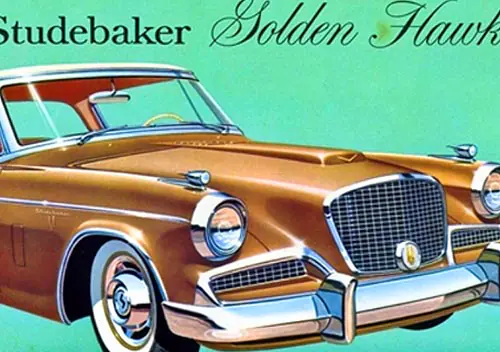
53 Studebaker – AMT
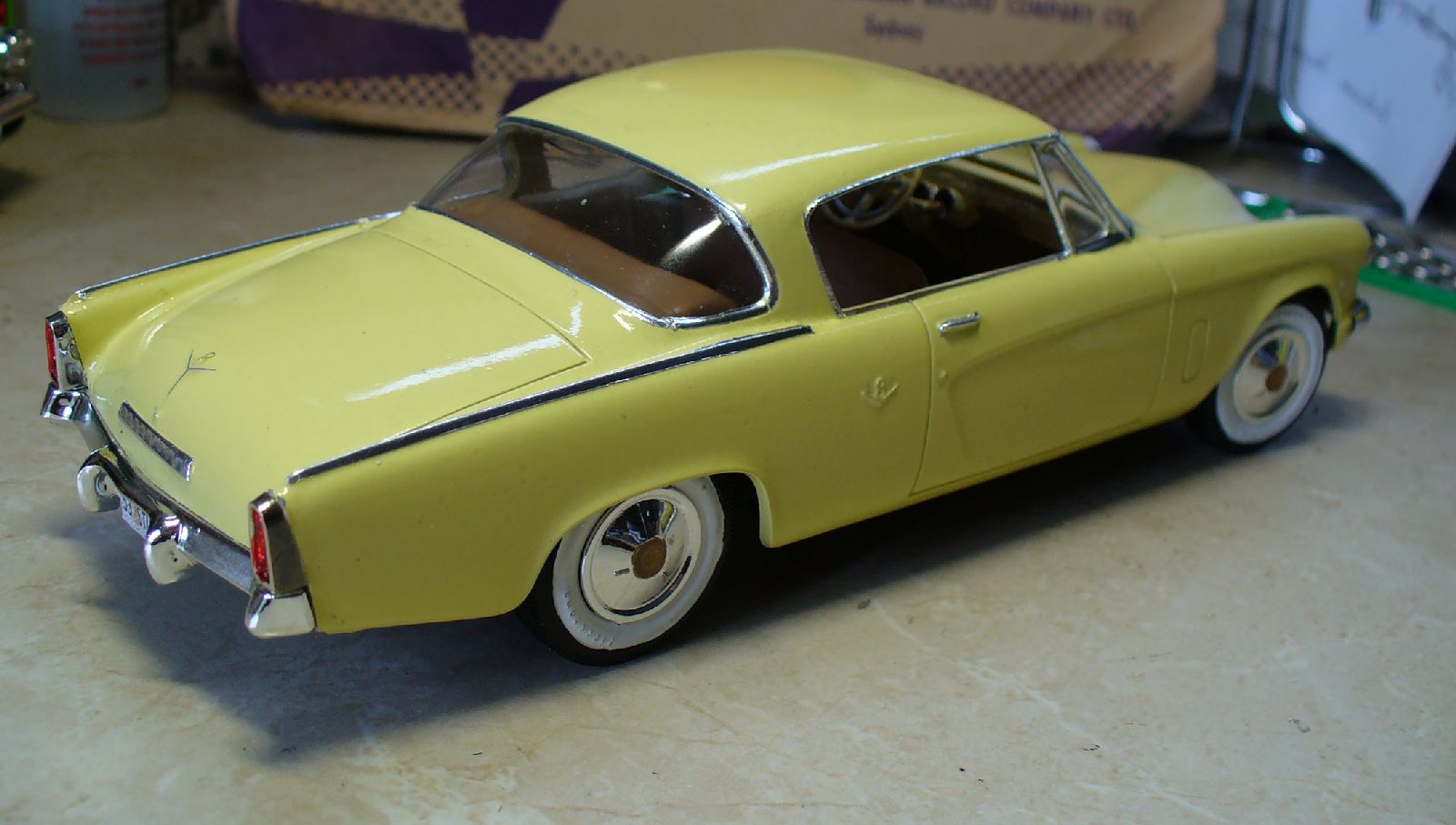
Another of my all-time favourite kits, this just misses out on the top ten. Although it’s a 3-in-1 kit dating back to 1965, build options for the custom seem a bit scanty (no engine upgrade), while the Bonneville version is just over-the-top wild – twin-blown early Hemi, chopped roof, etc. Of course you can swap in bits from AMT’s Avanti and have a twin-blown Studebaker ‘R5’ engine. I have been known to do this…
’57 Chevy (new tool) AMT.
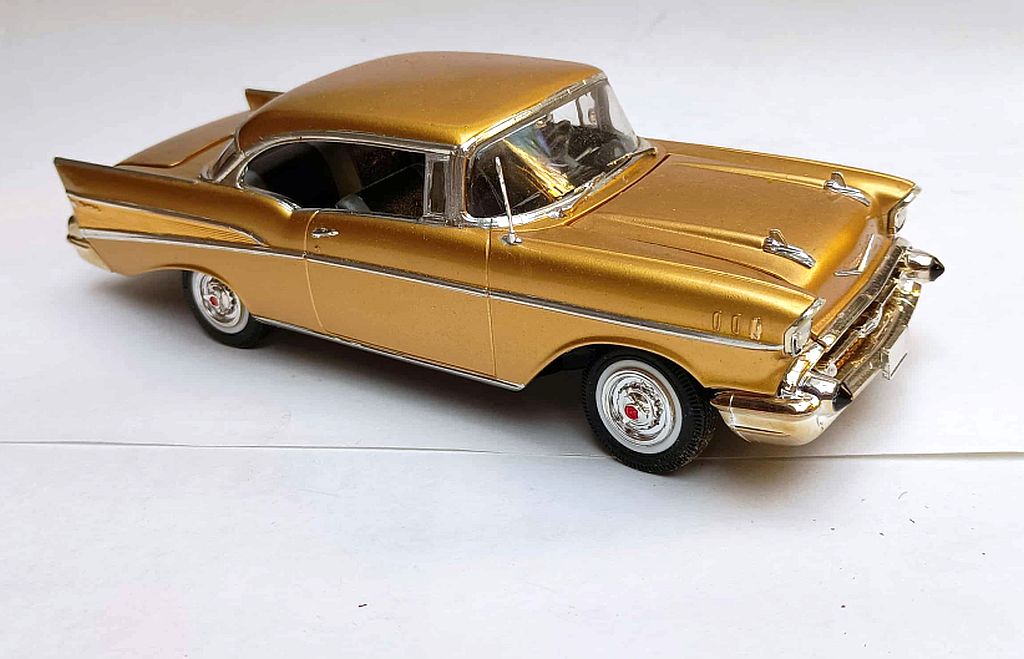
This is where it gets confusing. AMT has two different ’57 Chevy kits in their line. There’s the 1963-vintage 3-in-1 kit, and another stock-only kit tooled in 1997 – that’s the one to go for. As an offshoot, the new one gave rise to a street machine version with lovely big block and an entirely new chassis and suspension setup.
But in a peculiar approach to marketing, AMT doesn’t seem to distinguish between them. The old one is a nice build, even if the shape of the side trim is wrong (angles down too sharply), but the new one is really up to 21st century standards – much sharper engraving, more separate parts, better underhood detail. Fitting the body to the chassis is tricky though.
But you didn’t mention….?
49 Mercury – AMT or Revell
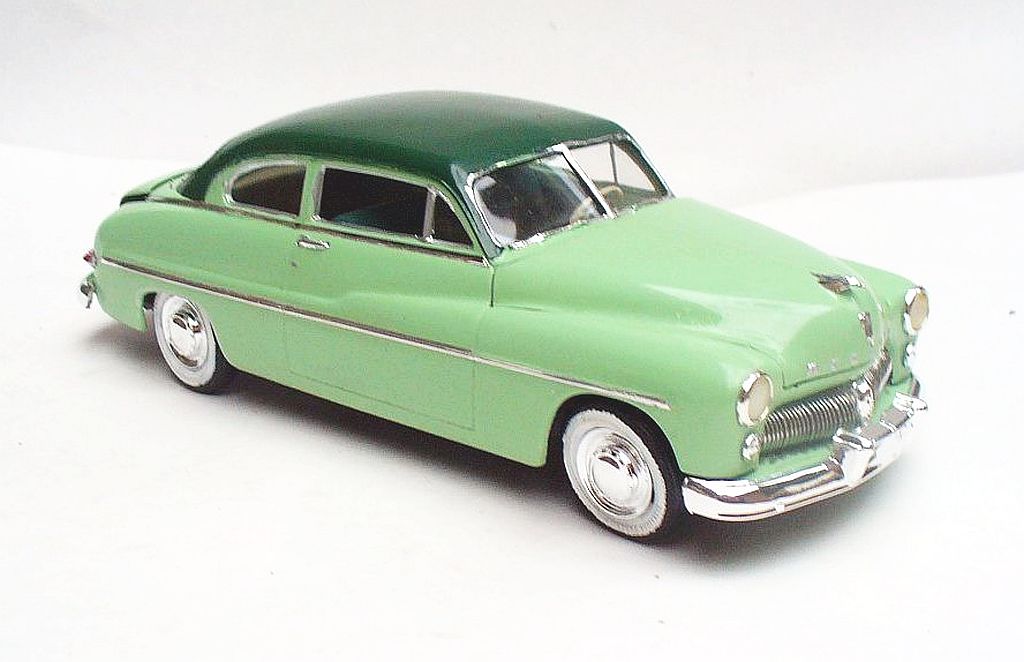
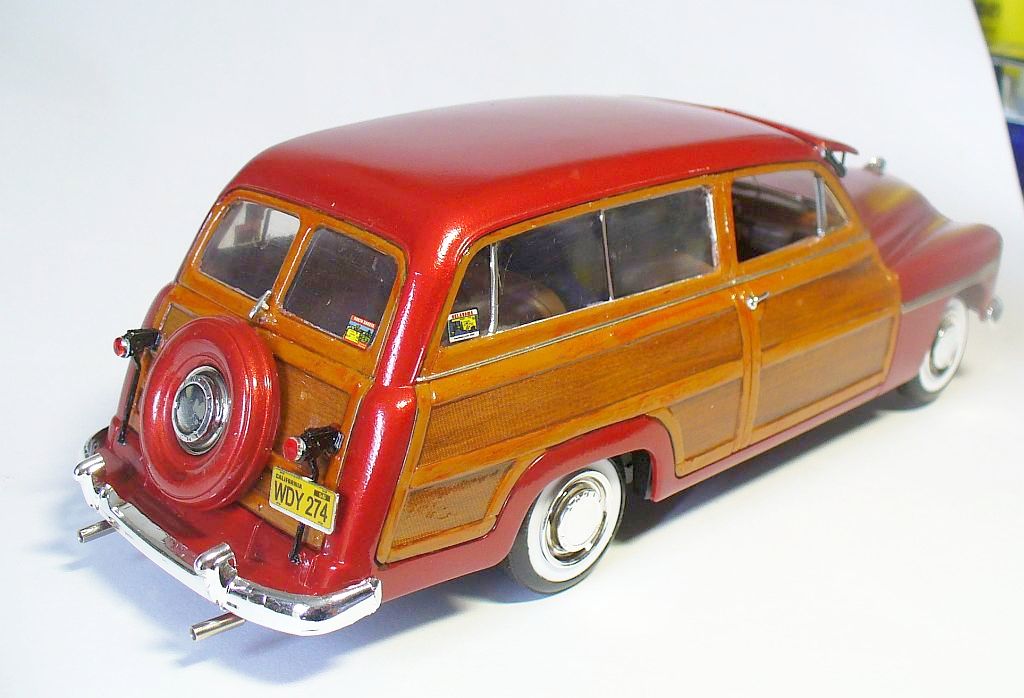
You’re right, I didn’t. Both these ’49 Merc kits are nice, but I’d have to say I enjoy building those others more. AMT’s 1963 kit offers more choices, but if you want to build a custom, you’re on your own for chopping the top (should you desire). Revell’s 2007 kit has the advantage of being much newer, but on the flip side is custom-only, having a chopped top, and the rear side window shapes are slightly different from left to right – oops! Revell also offers a stock-looking woody wagon – but it has the same Cadillac engine as the custom coupe. Great model, just keep the hood shut!





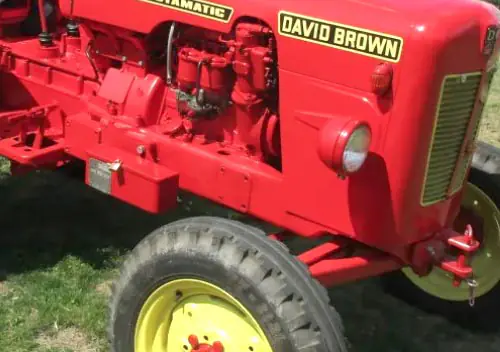

I built the 1949 Mercury AMT kit. I didn’t know it was from 1963 … but that’s the year I built it. As I recall it was molded in gray plastic, unlike the more usual white for AMT 3-1 kits. I was six years old and that summer was my first real immersion in plastic modeling.
Well done building that at six! There’s a fair bit of discussion online about the colours of the early AMT kits; it seems they weren’t all white. But that was before I started getting into them. All the early annual kits I have are white; I think at that stage they may have reserved the coloured plastic for the various other kits. A bit of googlework confirms your Merc was gray.
I think that same year I built a ‘32 Ford and maybe a ‘34 (?) Ford pickup and both were molded in black. A Chevy II wagon was white. I’m pretty sure that all were AMT. AMT was very available at toy stores and even variety stores, along with some Monogram and Lindberg. Revell, MPC and Johan were usually hobby shop only.
I’ve heard about the early ’32 being black. The ‘34 pickup could also have been red or a light blue, black was supposedly less common.
That’s an interesting memory, about the varying availability of certain kit brands at different types of stores! I wonder why that was?
I definitely have a ’32 Ford Victoria which was molded in black. I got it in the early ’80s from somebody but it was an old kit with the smaller size box and tons of custom parts. The black body was nice, but trying to get brush paint yellow to cover the molded black wheels didn’t go very well.
The detail on the Twin-H Power on the blue Hudson Hornet is excellent. Great work, Peter. I really like the purple Hudson above it as well.
The ’56 Chevy 210 with the seventies style 5-mph bumpers looks great… somehow it works here! *
The red ’58 Impala was going to be my pick of this lot, but as I’m sure many here feel this way, we could do without the Continental Kit on the back.
And that Golden ’57 Chevy looks like a trophy you may have won for being the best modeller ever! Wow, just wow. Such BLING!
* Edit: Those two “JPC’s Avatar” Plymouths look like they are sporting 5-mph bumpers too. LOL.
You can see why I rave about those Hudson kits, Rick! If I build another one I might leave the engine on a stand alongside the model. On the instruction sheet they thank the club and credit the guy whose Hudson they used for research. Other Moebius kits I’ve built are good but not up to the standard of these.
I think my perception of the ’56 Chevy’s bumper is affected by the colour of the bodywork – it looks a lot more prominent with an off-white pan behind it than the mid-blue. I’m not as familiar with the real ’58 Plymouths, but I suspect it’s the extra bumper guard pieces at the corners that make them look a bit 5-mph-ish.
I rarely use a Continental kit on my models, but seeing the ’58 Chevy’s one was hinged with the opening trunk, I made an exception.
As for the golden Chevy, thanks so much, but I’m not the greatest modeler ever, just a guy who loves cars and building models of them.
I built the 1949 Ford. I painted it red and put racing decals all over it. However the glue did not stay on the wheels and over the years they fell off. I don’t believe I kept that one.
Red paint with all the decals does sound pretty familiar! Some of the early glues produced for model kits are now renowned for losing their adhesion over time; bits falling off is a complaint I’ve often heard.
The thick snot in a toothpaste tube was rubbish.
One had the fun of remaking the same kit over and over.
The Tamiya stuff and cyano-acetate are a world apart.
Some of those have come out astoundingly well. Modern paint and separate chrome makes for realism once unachievable.
Nick, my early builds were held together with Selleys Instant Grip, a thick stringy tube glue we already had in the house, but I soon progressed to Humbrol Polystyrene Cement, then Revell Contacta Professional as my main go-to. CA-type superglues get a look-in for styrene to metal joins or styrene to resin, and a white glue for clear parts.
Interestingly, back in the sixties to eighties, Japanese kits often came with a little foil envelope of glue, or a small tube with just enough for that one model.
Thanks for your comment. The separate chrome side trim on the ’53 Ford and the ’58 and ’59 Chevy is a great help. The others are just careful use of foil. With all the chrome on cars of this era, taking a bit of extra time makes a lot of difference.
These are outstanding, hard to pick a favorite!
Thanks. I thought your pick would have to have been your namesake! 🙂
The fifties and sixties would have to be my favourite era for cars, as evidenced by how many I’ve built. Choosing a personal top ten was not easy for this group; the sixties will be even harder.
The AMT `53 Studebaker coupe is a fine kit. I built it three times, a stock version in yellow with a gray top, the Bo nneville speed version with a chopped roof and the double blown engine in dark blue, and a ‘one off’ convertible version in black with a red interior totally stock as a real version would be. It really is a beautiful build. It looks like a much newer model than a `53, if I were not a car guy, if somebody told me it was a `61 or a `62, I`d believe it. Also the Mopogram `59 Eldorado is another winner. I bought a pre built ‘glue bomb (in pink)stripped it down, sectioned the interior and body down and made a 2 seat roadster from it.I painted it glossy black and renamed it ‘Helldorado’. It lives up to its name!
Phil, for sure that’s a fine kit, and one which has a special meaning for me, a story I’ve told before. While I’ve built quite a few of them, most of mine have been closer to stock. I’ve done two customs, a modern-style street machine, several stock, but not a Bonneville car. Or a convertible – neat idea. I’m thinking about doing a phantom Land Cruiser sedan, since the coupe uses the long wheelbase chassis.
That Monogram Eldorado is another good kit, for sure. It would’ve been listed if I was doing a Top Fifteen (along with the ’50 Olds), but these others I wrote about have more personal appeal to me.
Think I last built a car model when I was 10 or 12 at the at the latest. I moved onto US Navy carriers and aircraft from then on. Getting a car at 16 pretty much eliminated the desire to build which I didn’t reacquire till maybe 15 years ago. My collection of unbuilt warbirds numbers around 50-60 today. The 1:48 and 1:32 scale aircraft and 1:350 ships are hard to place without protection from dust.
I can imagine your dust problem, tbm3fan. At least my cars are a generally smooth shape without too many fragile additions to be careful of – but I still manage to break the occasional antenna or wiper.