
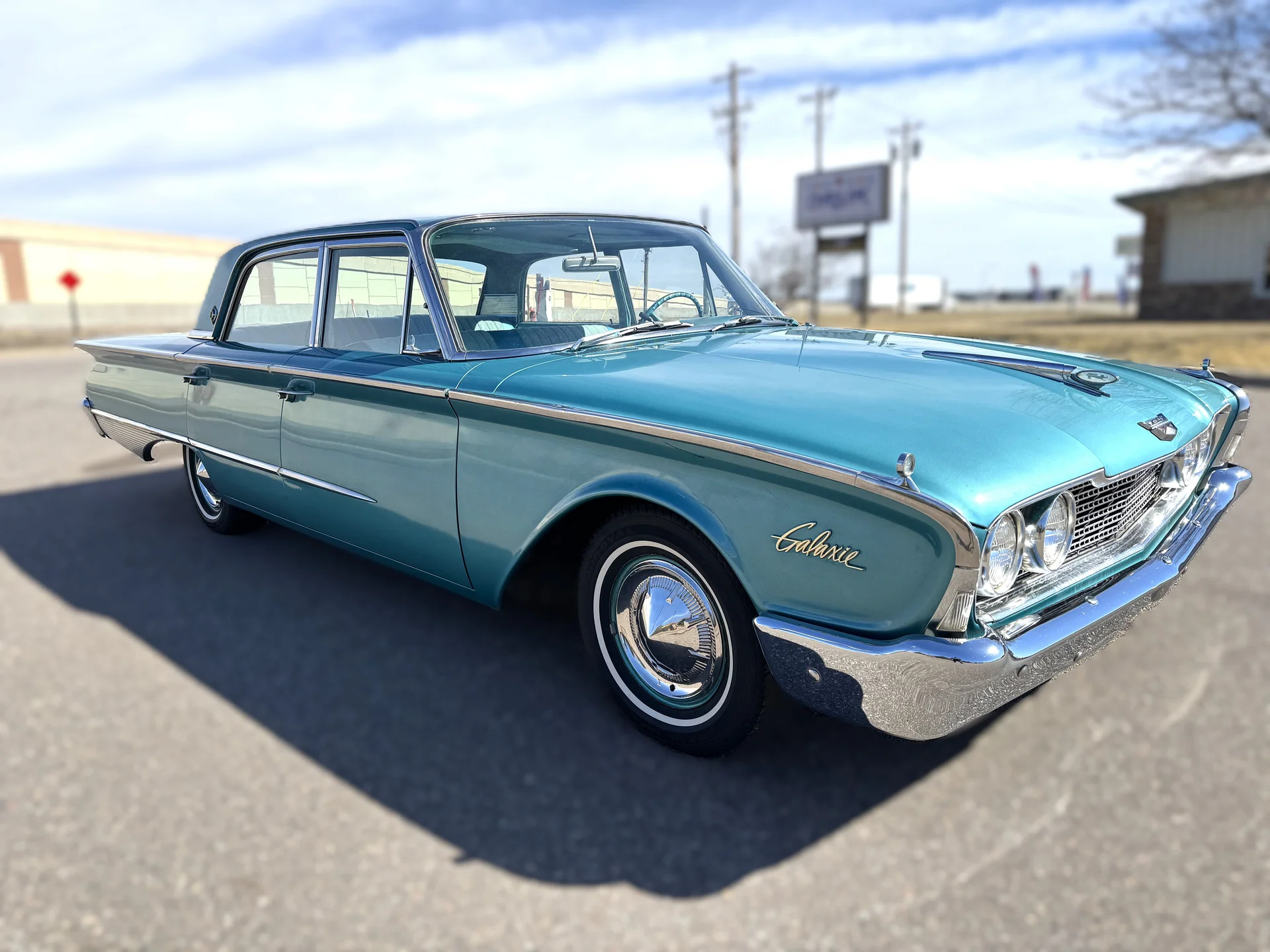
At Ford, 1960 was really the year of the Falcon — as the new compact soared, the bigger-than-ever full-size Fords languished, with unpopular styling, cumbersome handling, and indifferent quality control. This 1960 Sultana Turquoise survivor is a rare example of the top-of-line Galaxie with the base Mileage Maker Six and manual overdrive.
1959 had been a good year for Ford: They hadn’t quite matched Chevrolet in model-year production, but they’d come out ahead in new-car registrations and calendar-year output. 1960 was NOT a great Ford year, and if it weren’t for the enormous success of the new compact Falcon, Ford Motor Company would have suffered a worse rout than 1958. Buyers reacted coolly to the full-size Fords’ all-new styling, which had nothing in common with the popular 1959, and neither performance nor quality was anything to write home about. Consumers Union (CU), publisher of Consumer Reports, called the 1960 Ford “a very mediocre and disappointing vehicle.”
Model-year production of the 1960 full-size Ford line fell to 911,034, which still sounds like a lot until you consider that that was only about two-thirds of the 1959 total. Production of the top-of-the-line Galaxie series, which had been so popular in 1959, was down close to 40 percent, to 289,268 cars.
I said in the title that this Galaxie is a rare car. By most standards, 289,268 cars was still pretty numerous, so how could it be rare? Of that total, 103,784 were the four-door Town Sedan, the most popular body style; also not rare. But, of those, only 6,783 had the standard Mileage Maker Six. While close to one-third of full-size Ford cars had six-cylinder engines in 1960, most were found in the cheaper Fairlane and Fairlane 500 lines. Only 6.8 percent of all Galaxie buyers saved $113 by choosing the standard six, which was the only Ford passenger car engine without an automatic choke.
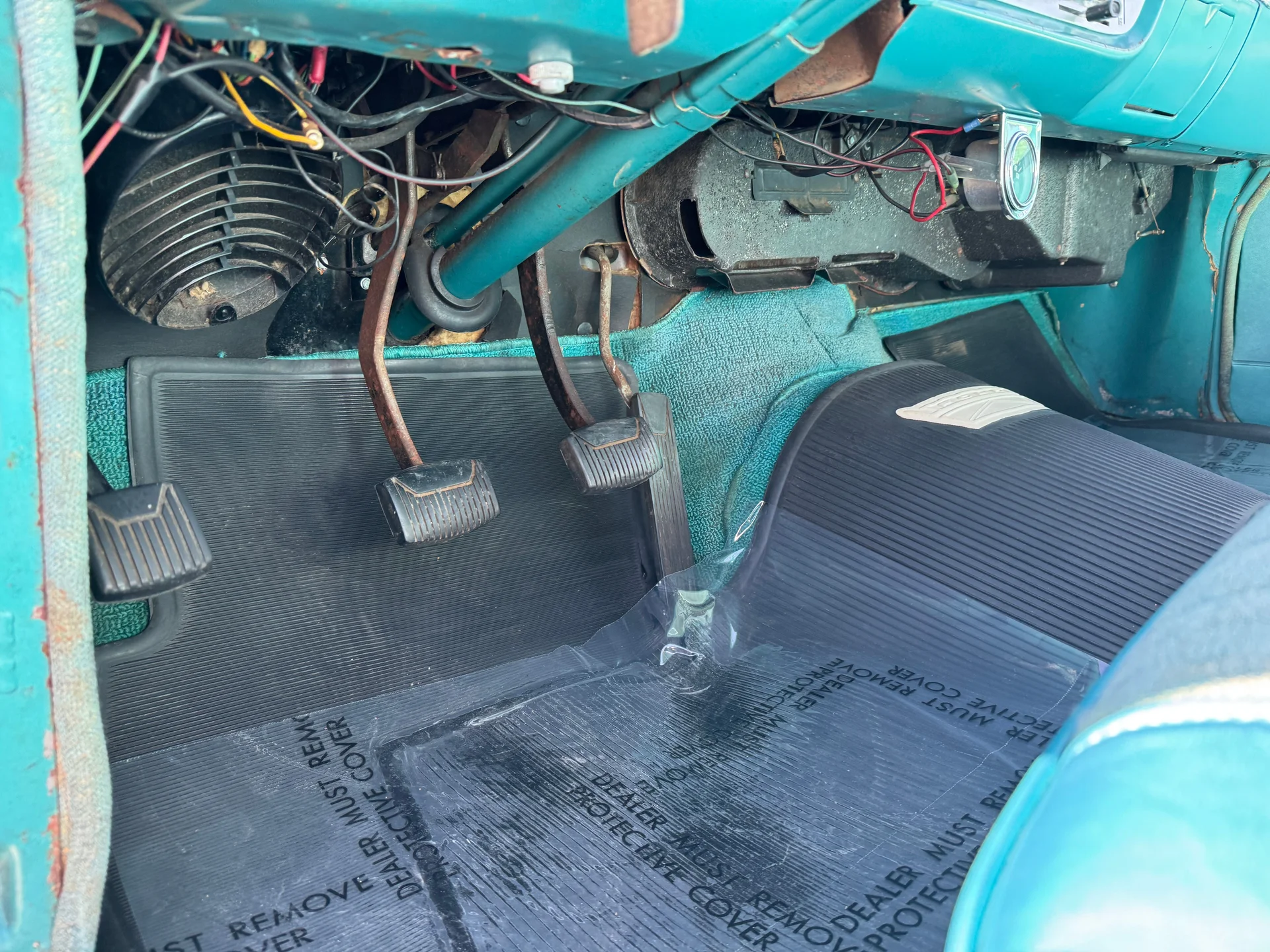
The turquoise car also has the 3-speed manual transmission, which wasn’t super-rare (close to one-third of all 1960 big Fords had stick shift), but it also has the $108.40 overdrive, which was installed on only about 4 percent of production. I don’t know how many of those went into the Galaxie, but I would be surprised if there were more than a few hundred 1960 Galaxies built with this powertrain.
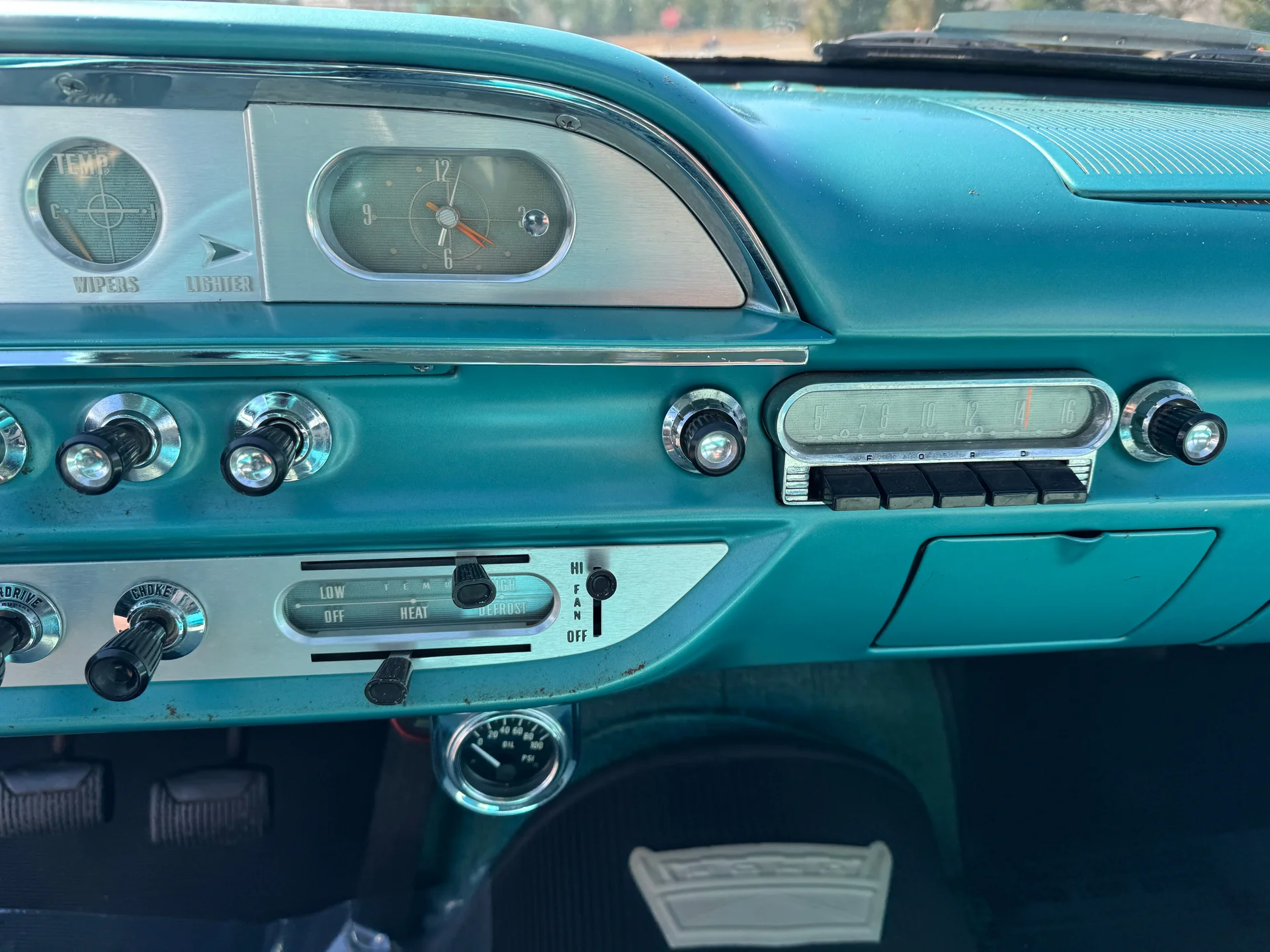
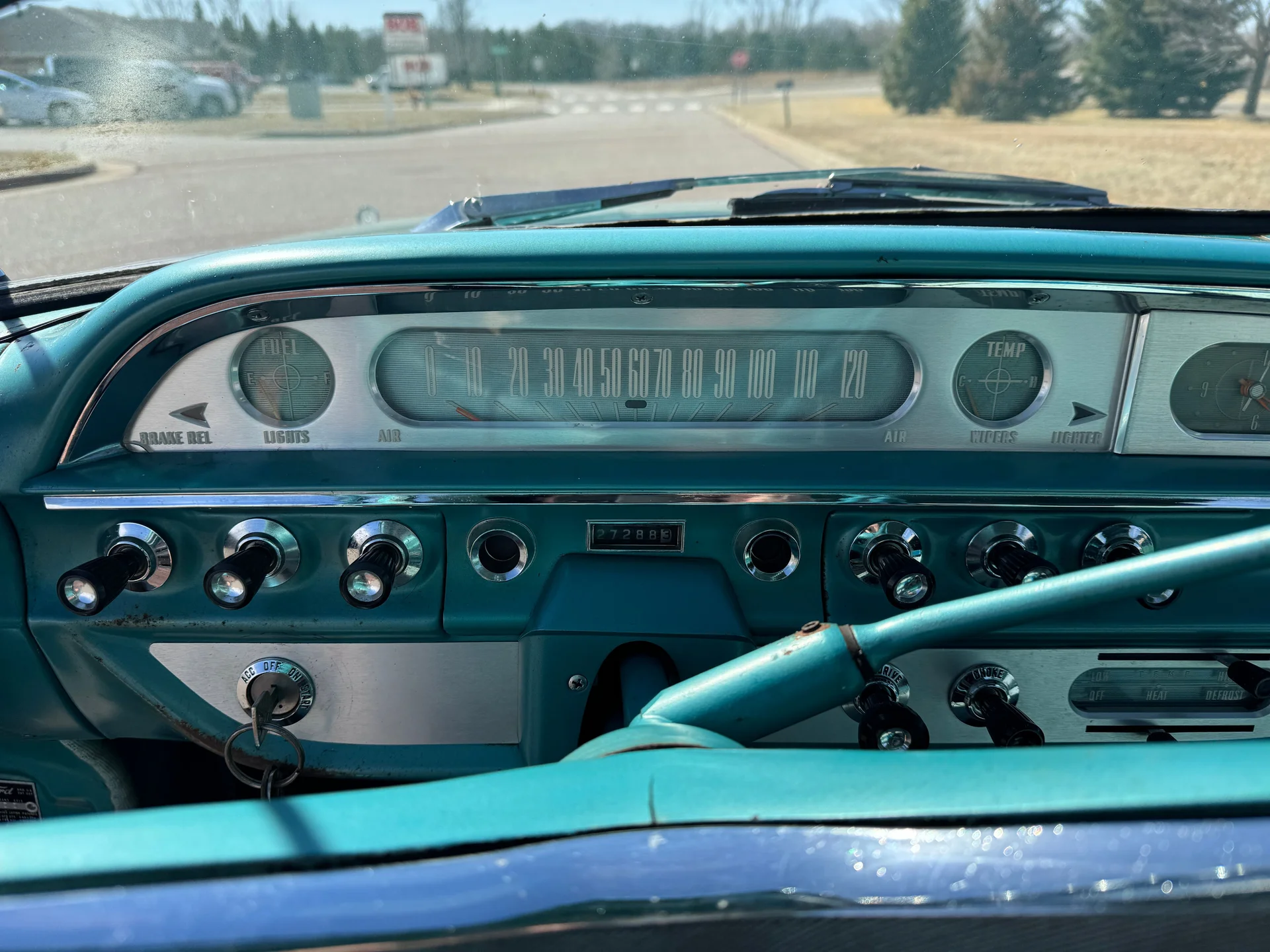
This car isn’t a stripper either. It was ordered with power steering, MagicAire fresh-air heater/defroster, pushbutton radio, electric clock, and wheel covers. I believe the “KM” paint code on the warranty plate indicates that while Sultana Turquoise was the original color, the roof was originally painted Corinthian White, which would have been an extra $19.40. That was a decent list of options, and would have put the sticker price on the high side of $3,000 — let’s call it $3,050 as equipped, a relative worth of about $42,530 in 2025. Since big Fords weren’t selling well, the original buyer may have gotten a healthy discount.
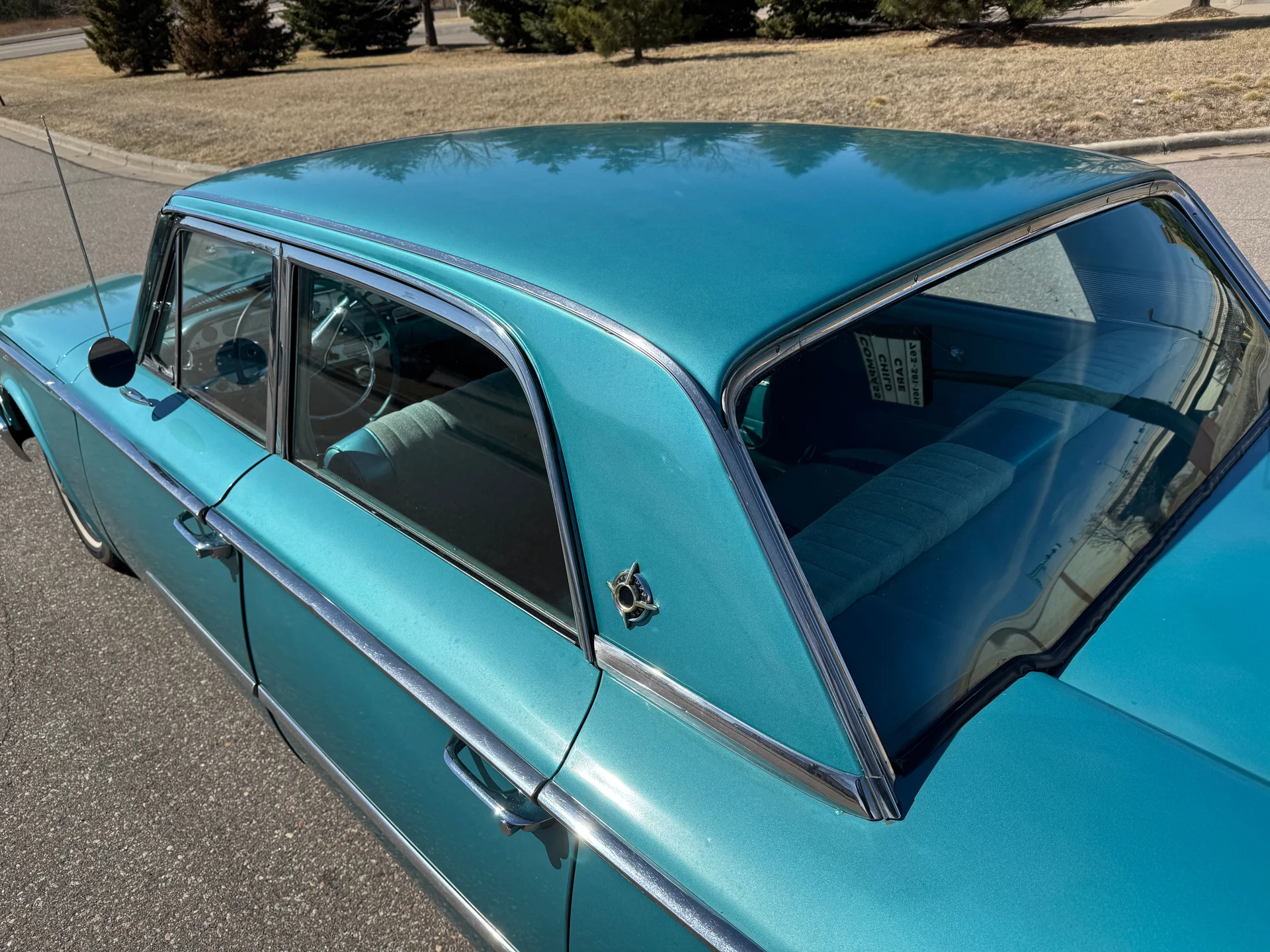
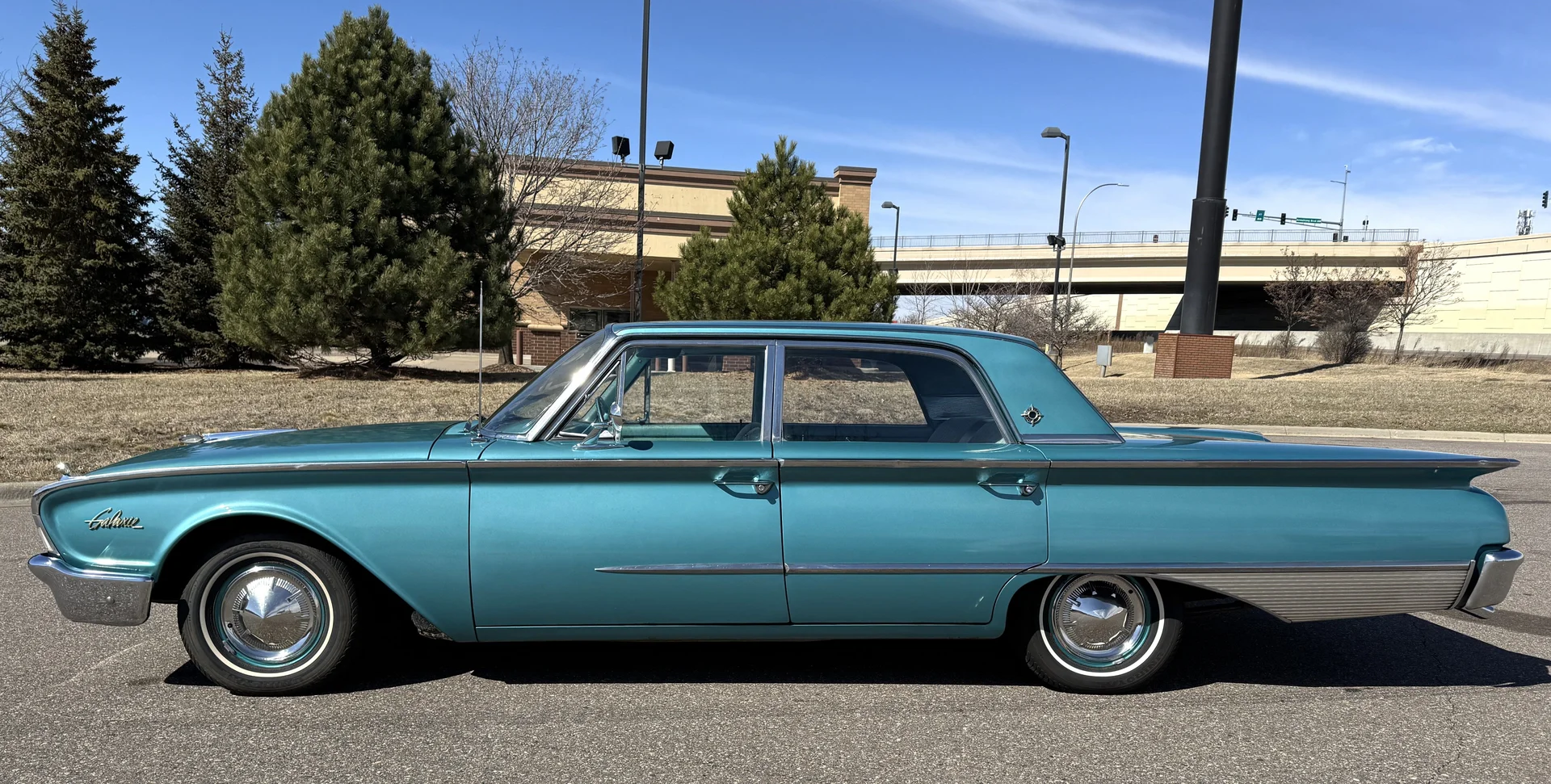
In 1960, there were two reasons for choosing a Galaxie over the cheaper Fairlane and Fairlane 500. (The base Custom 300 had been mostly dropped, although 874 Custom 300 sedans were built for fleet customers.) One was the Thunderbird-style formal roofline, which contemporary buyers liked better than the bubble-like backlight of the Fairlanes.
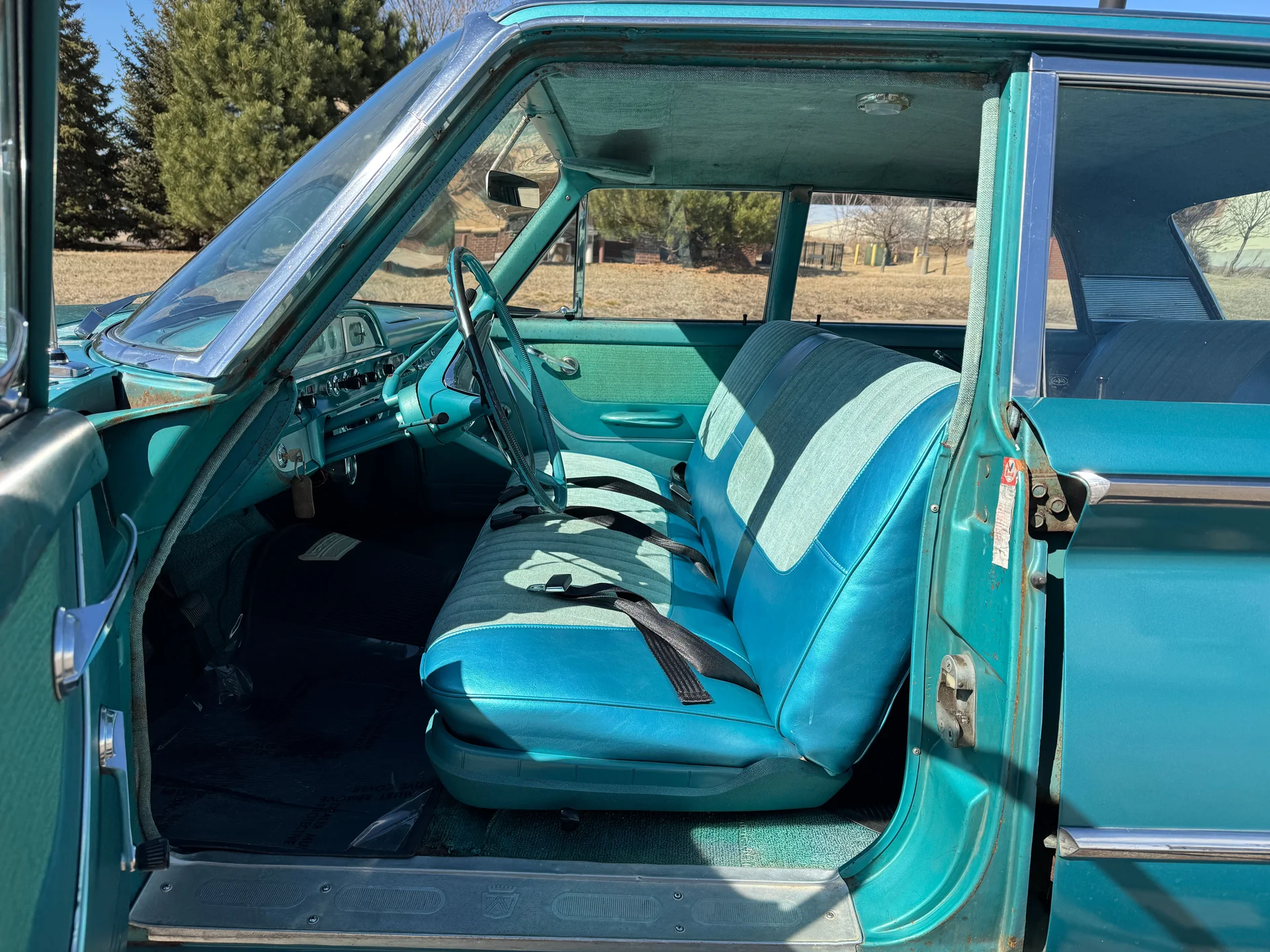
The other reason was that the Galaxie had a better-trimmed interior with full carpeting and attractive cloth-and-vinyl upholstery. Note that the wraparound windshield and prominent dogleg pillars of the 1959 Ford were gone for 1960 — one of the few aspects of the styling of these cars that most people approved of.
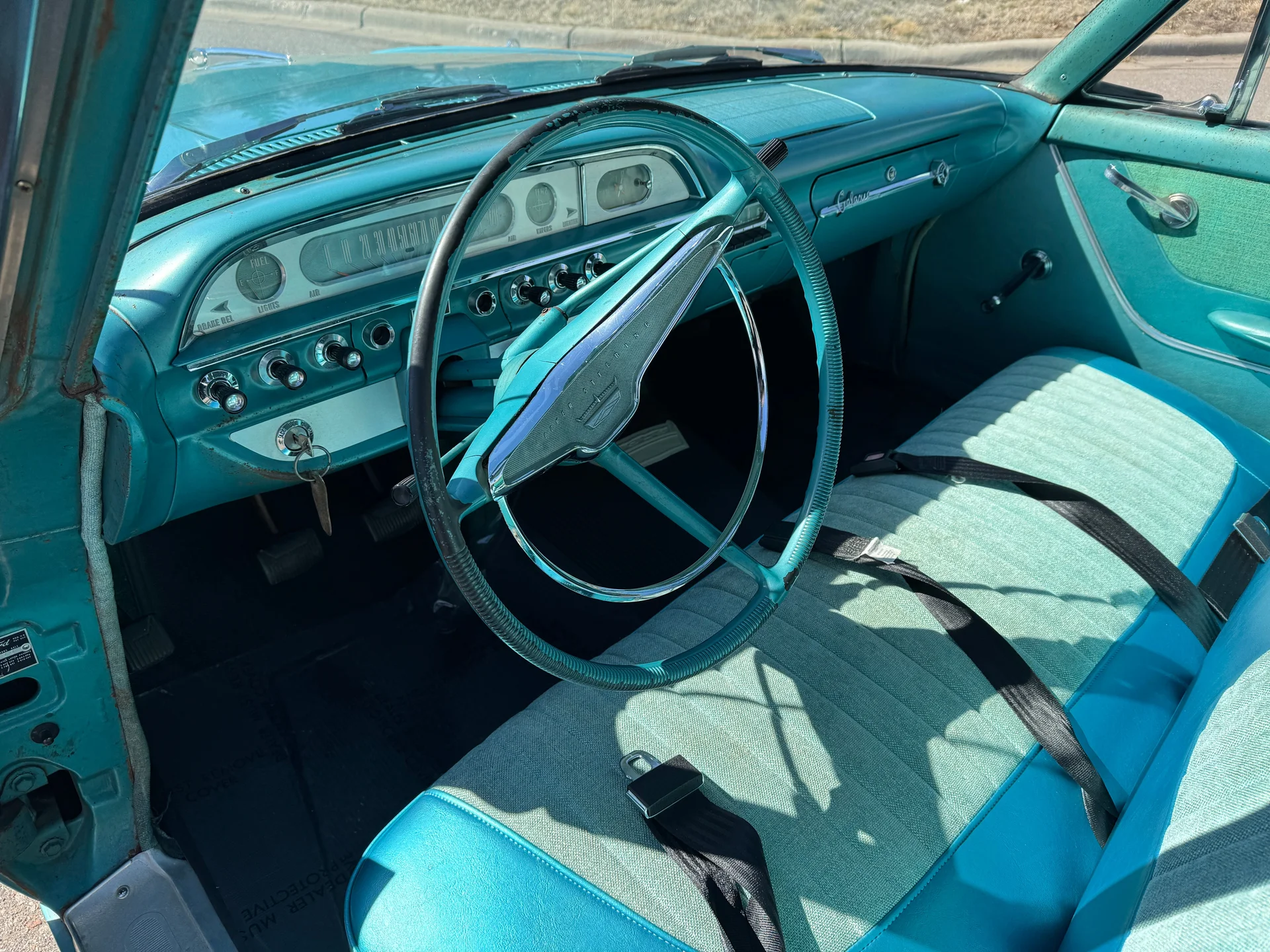
The upholstery on this car has either been completely replaced or turned out to be remarkably durable. Contemporary reviewers felt the 1960 Fords generally weren’t that well-made overall. “Ford’s quality-control program, outstanding in 1959, has not been evident in CU’s 1960 test cars,” groused Consumer Reports.
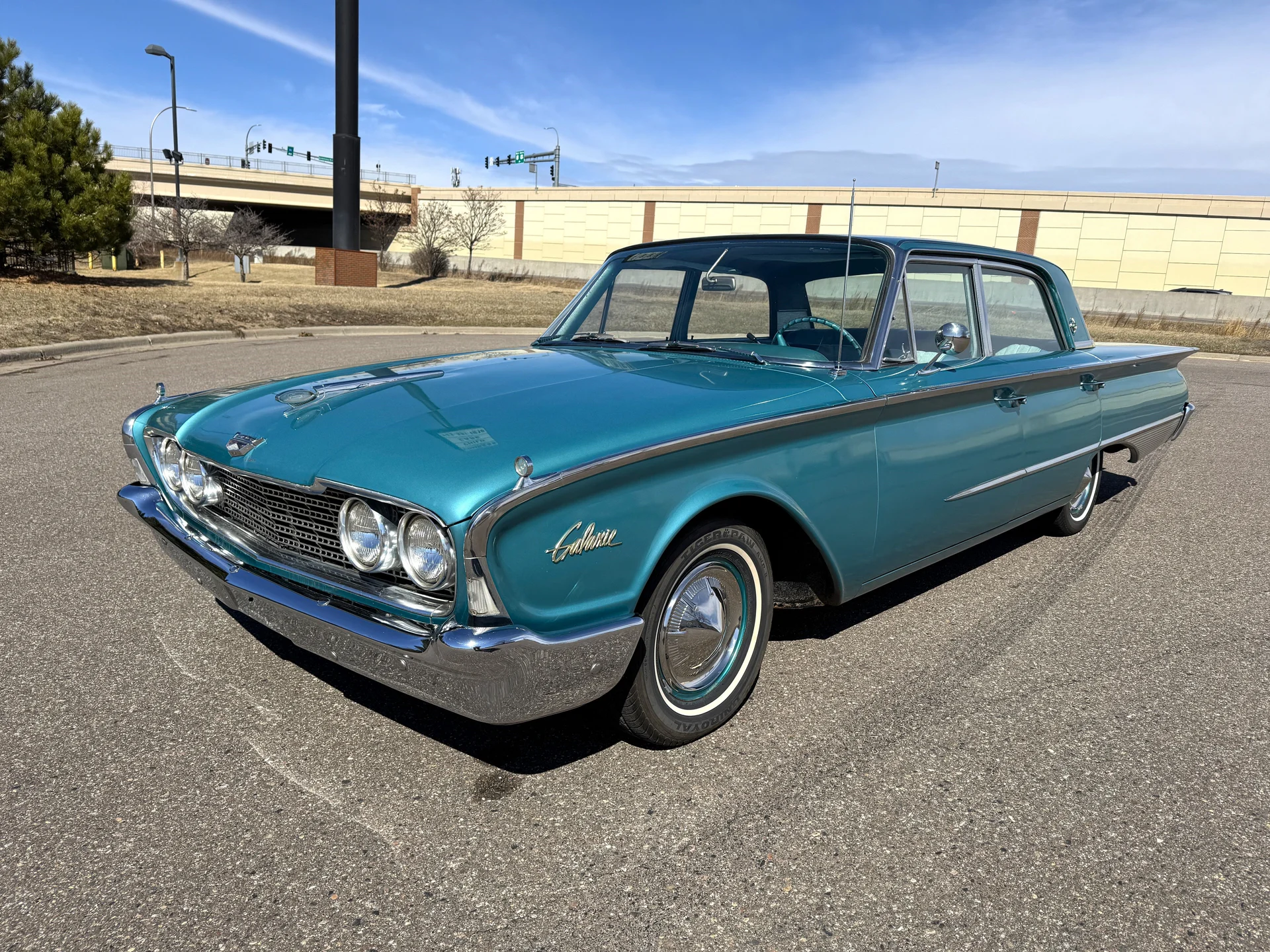
This was a very big car: not as big as it would become by the early ’70s, but much bigger than any previous factory-built Ford passenger sedan. The 1960 was about 6 inches longer and over 5 inches wider than in 1959, stretching 213.7 inches long and 81.5 inches wide on a 119-inch wheelbase. Now that Ford had the Falcon for people who wanted something more compact (with the midsize 1962 Fairlane already in the planning stages), they had apparently decided the full-size cars were free to get even bigger. Equipped as it is, this Galaxie had a curb weight of around 3,840 lb, which was modest given the size of the car; a well-equipped 1960 V-8 model was well over 2 tons.
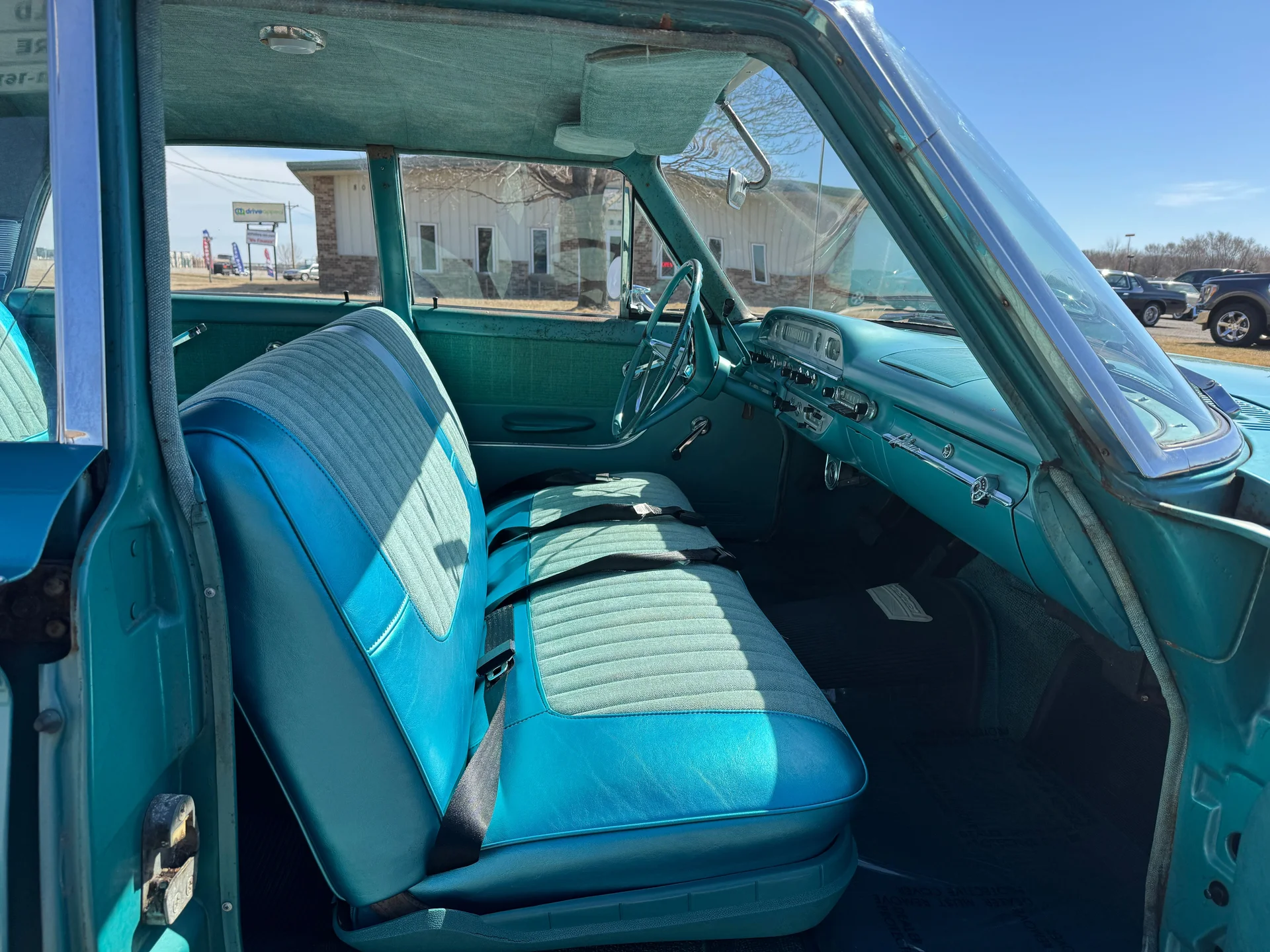
The 1960 four-door sedan was roomy for its class, although reviewers weren’t thrilled with its interior comfort. Consumer Reports didn’t like the lowness of the seats, especially in front, while Consumer Bulletin thought the front seat back was too upright for comfort. Both warned that the seats were uncomfortable for middle passengers.
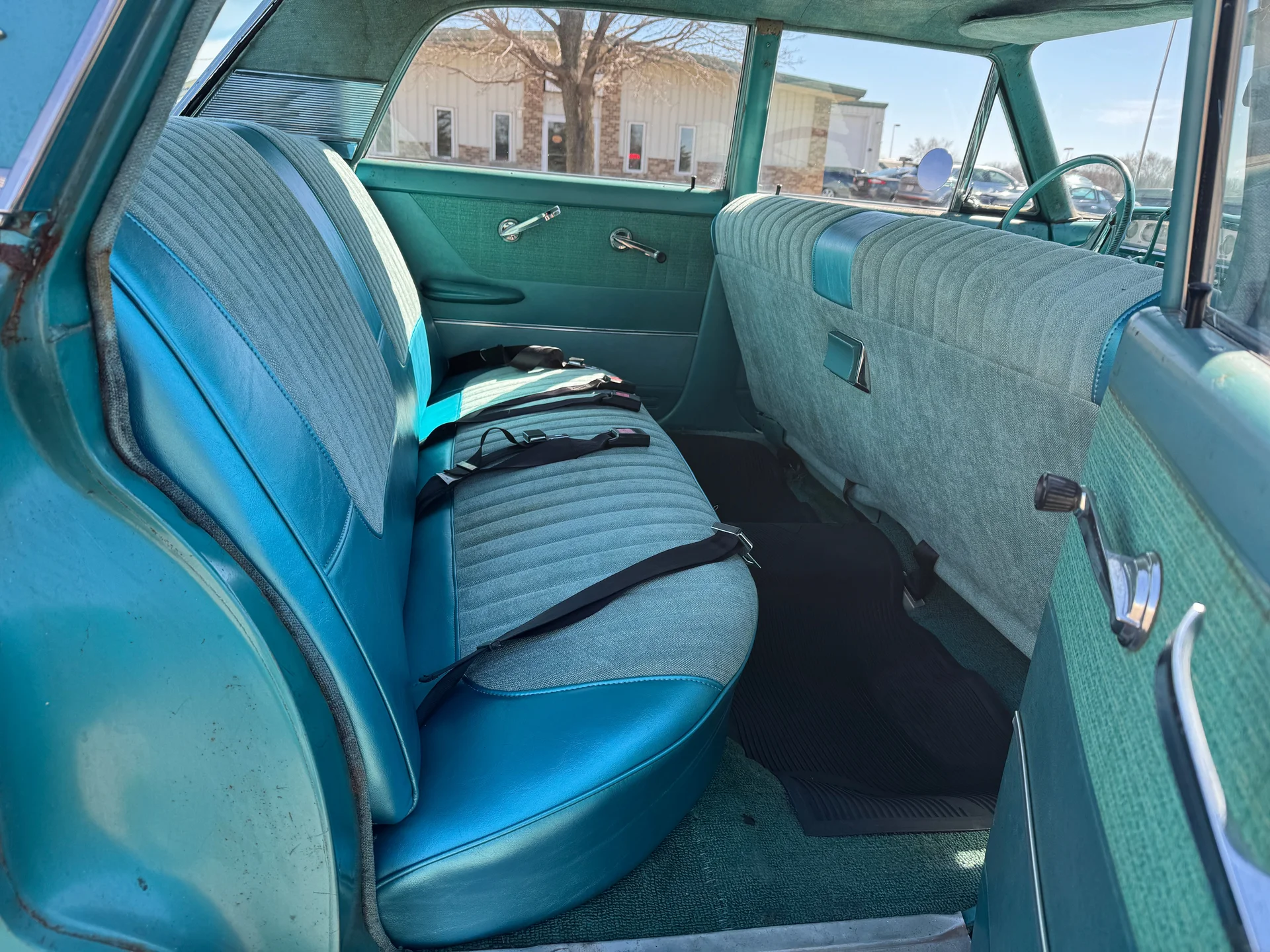
Still, legroom and headroom were generous front and back, and outward visibility was pretty good, although the over-the-shoulder view in the Galaxie was marred somewhat by the thick rear sail panels.
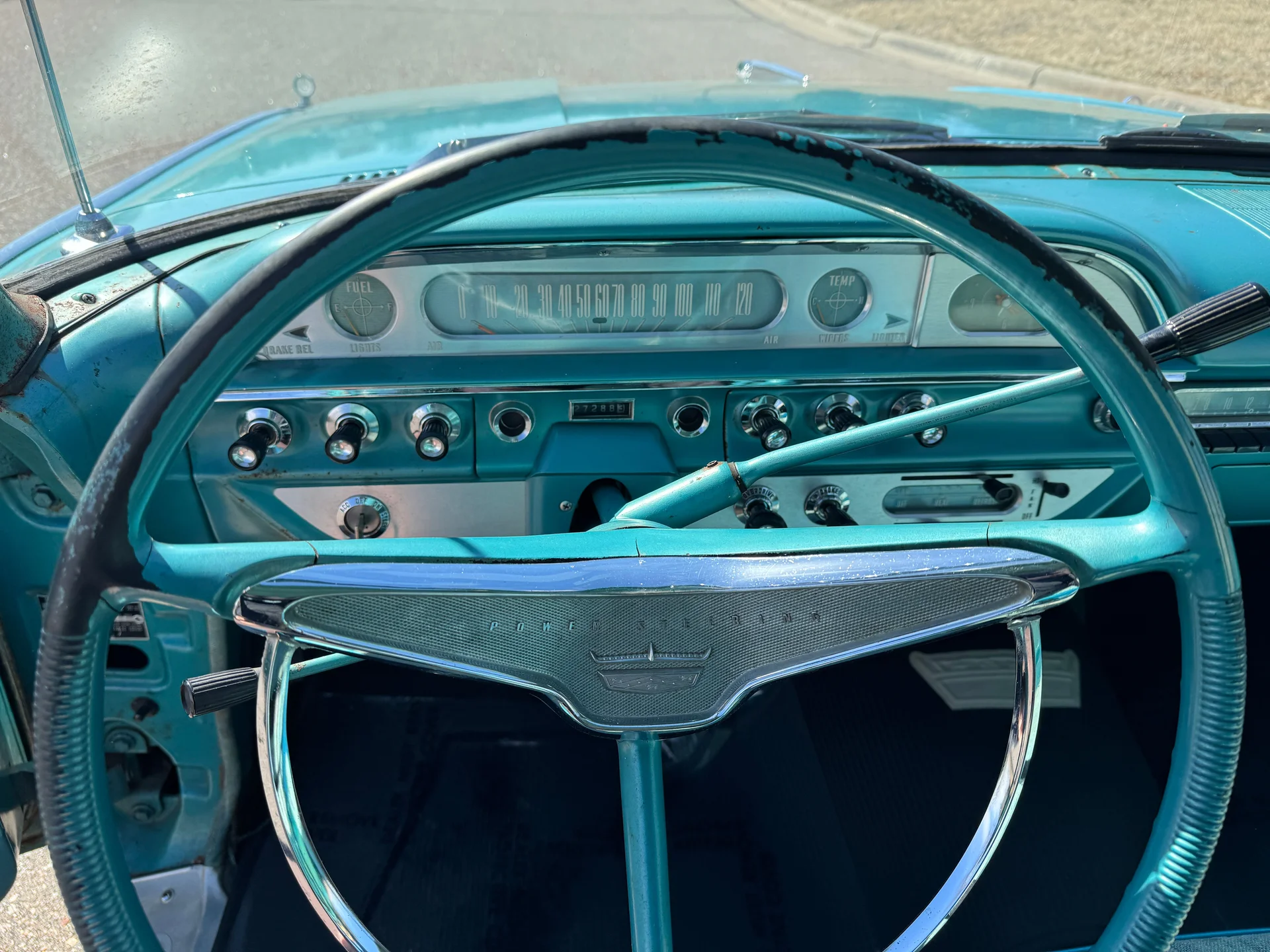
The critical consensus in 1960 was that the full-size Fords were cumbersome to drive. Their handling wasn’t treacherous, but these cars felt as big as they were, with slow steering and vague, ponderous responses. Power steering, which the six needed far less than V-8 cars did, cut steering effort, but wasn’t any quicker (it still needed 5 turns lock-to-lock) and had even less road feel.
On relatively smooth surfaces, the Galaxie rode quite well, with less float than a 1960 Chevrolet. However, Consumer Reports found it much harsher than the Chevrolet on small bumps or washboard surfaces, and the new, bigger Ford body was prone to shake and eventually rattle on rough surfaces.
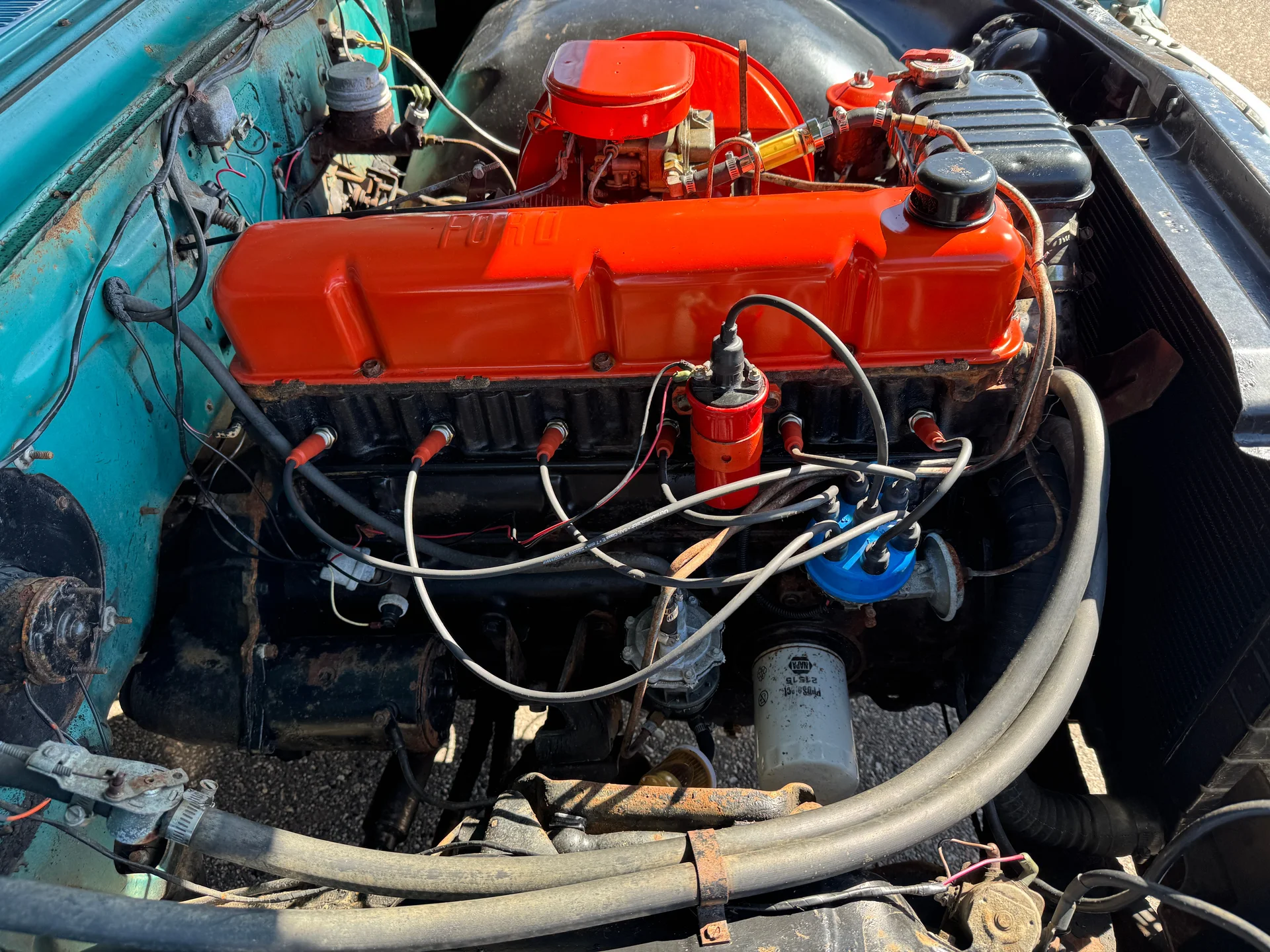
With automatic transmission, the Mileage Maker Six was really close to outmatched in the new Fords. Consumer Bulletin needed a yawning 23 seconds to hit 60 mph with a six and the two-speed Ford-O-Matic, and couldn’t manage much better than 18 mpg even at a steady 50 mph. Stick shift without overdrive wasn’t a great performance improvement because 2nd gear in the manual transmission was so high numerically (1.91) that it was nearly useless for passing or mountain driving.
If you were determined to have a six, overdrive was really the way to go. It included a higher numerical 3.89 axle ratio, which made for better acceleration, and the 0.70 overdrive gear helped to compensate for the too-short 2nd and 3rd. Even with overdrive, a six-cylinder Galaxie still wasn’t fast, but it could probably get to 60 mph on the right side of 20 seconds, and it might top 20 mpg in gentle highway cruising.
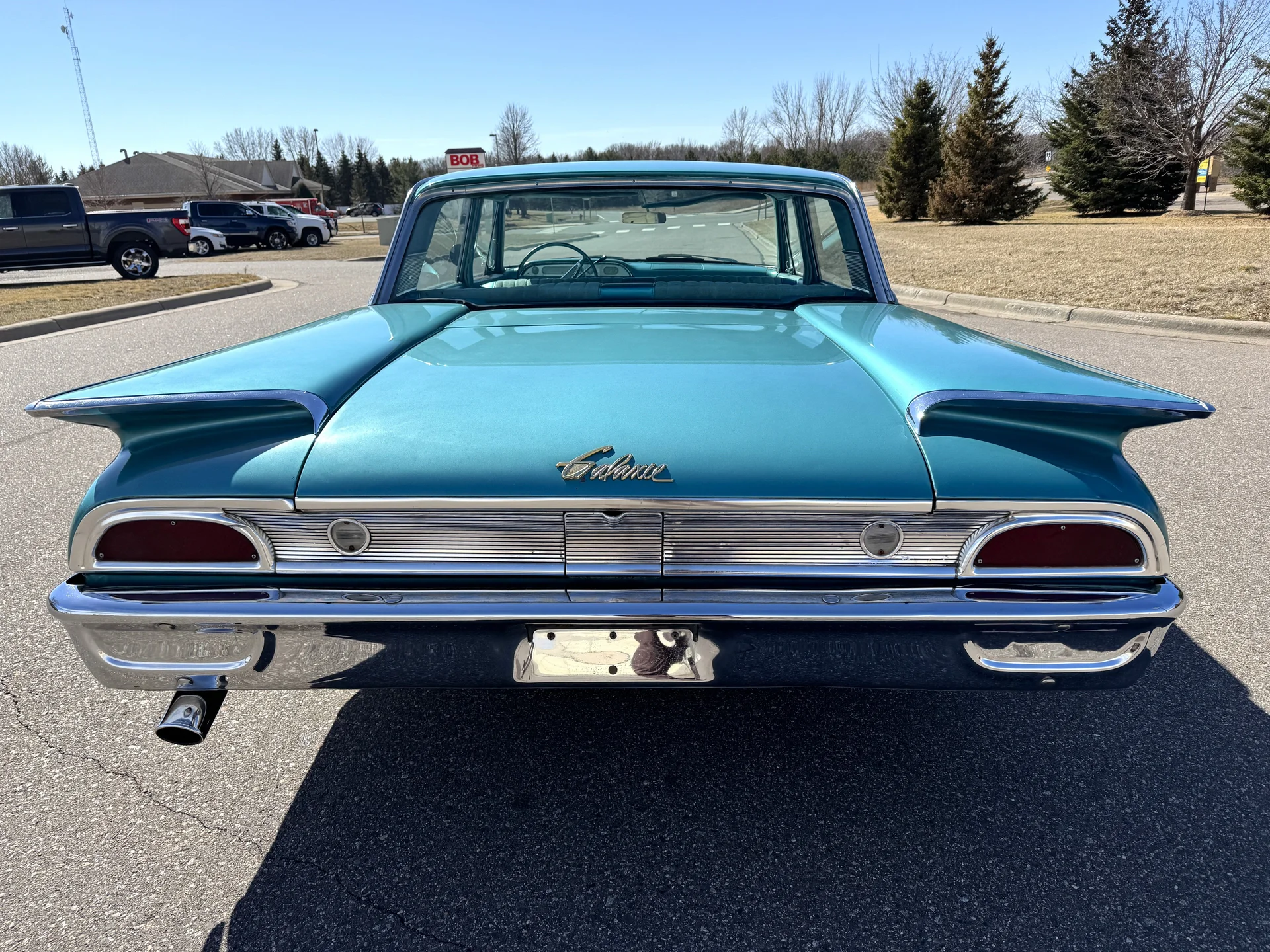
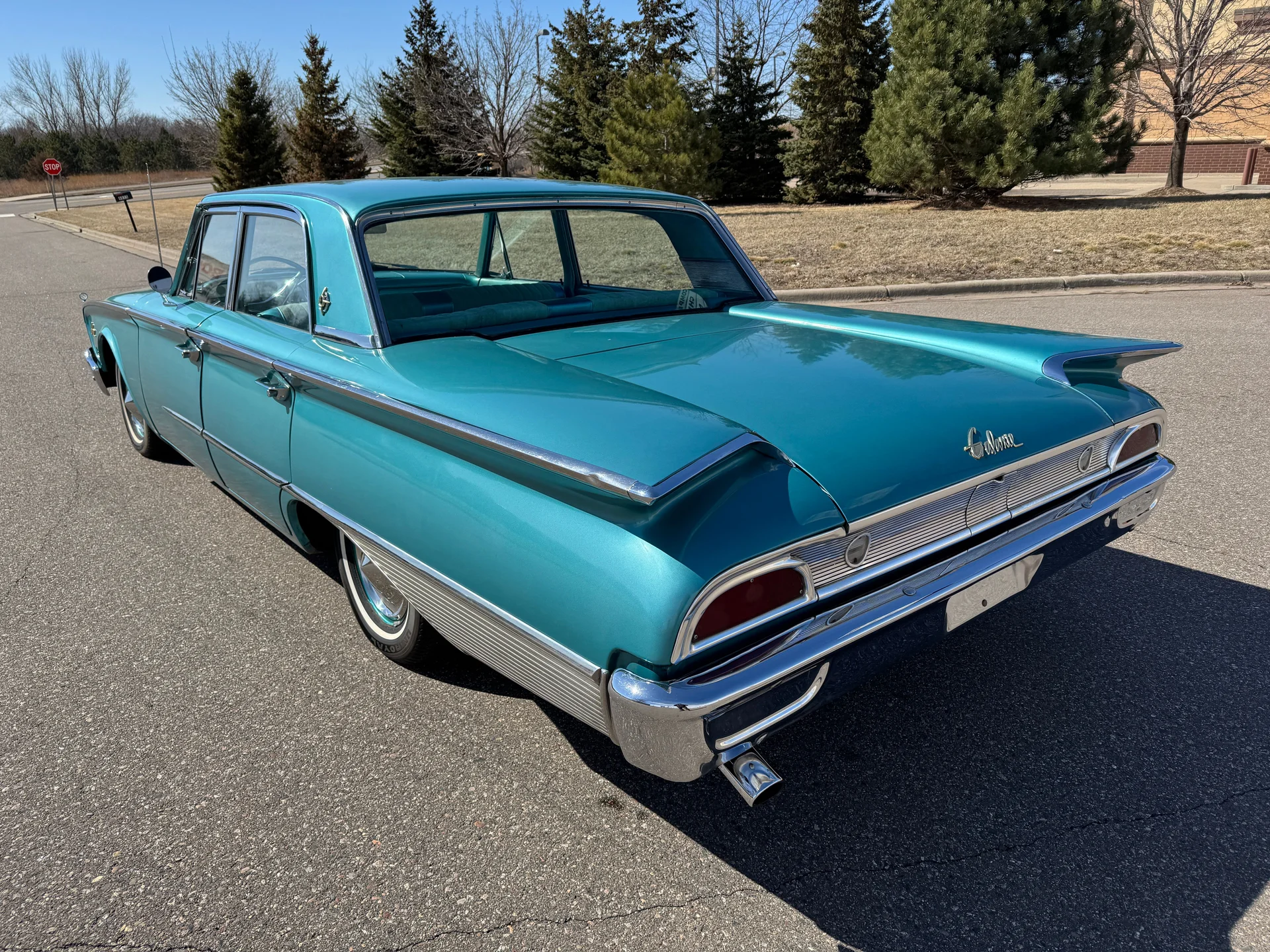
I kind of like the rear view of this car, which is one of the few angles that has a coherent styling theme.
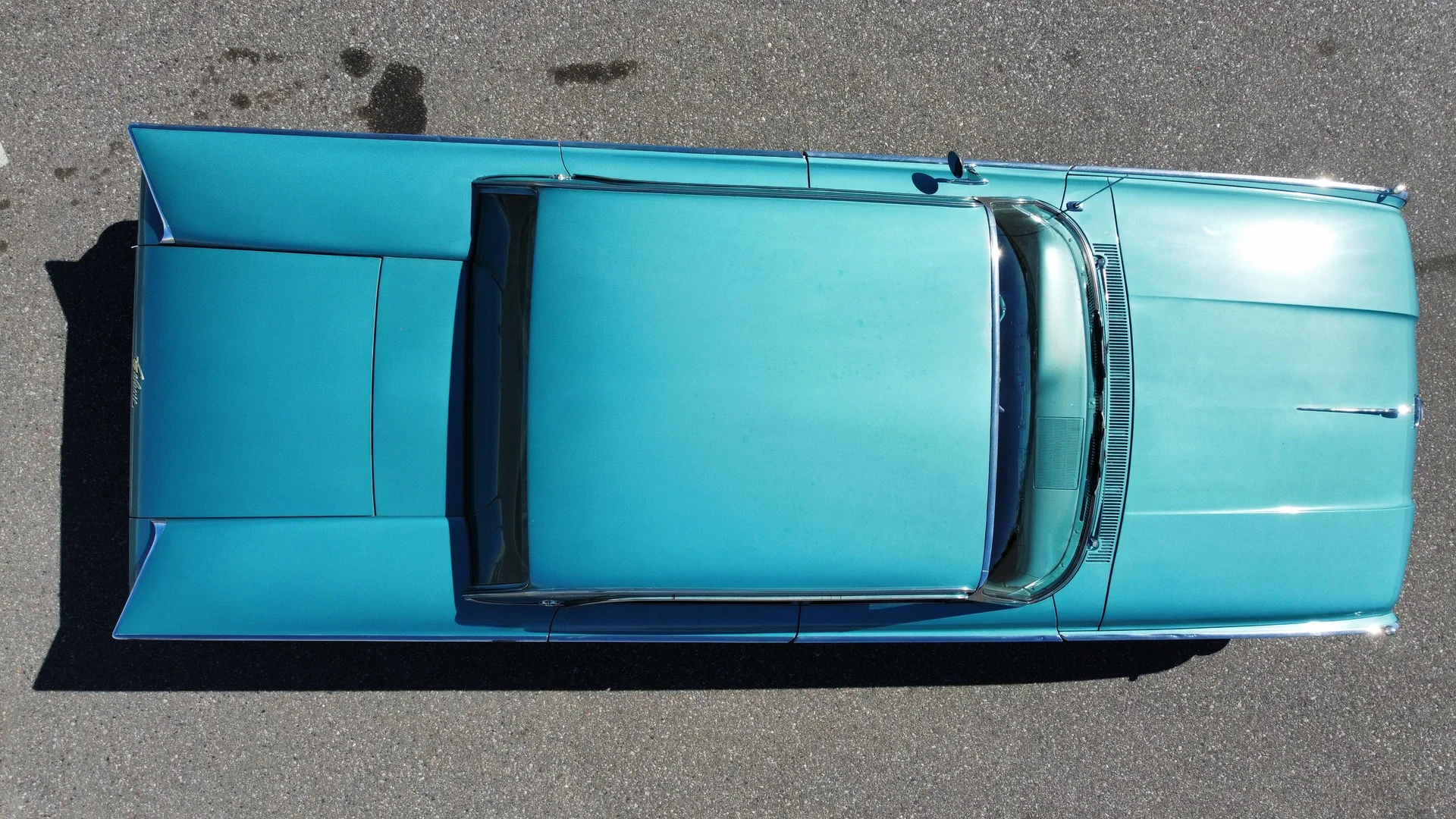
However, the horizontal rear fins and pronounced wedge shape pushed the overall width to 81.5 inches, technically wide enough to require special marker lights or reflectors in some states. (By decade’s end, widths over 80 inches would also trigger a similar federal requirement, although I don’t think many Ford drivers got cited for it.)
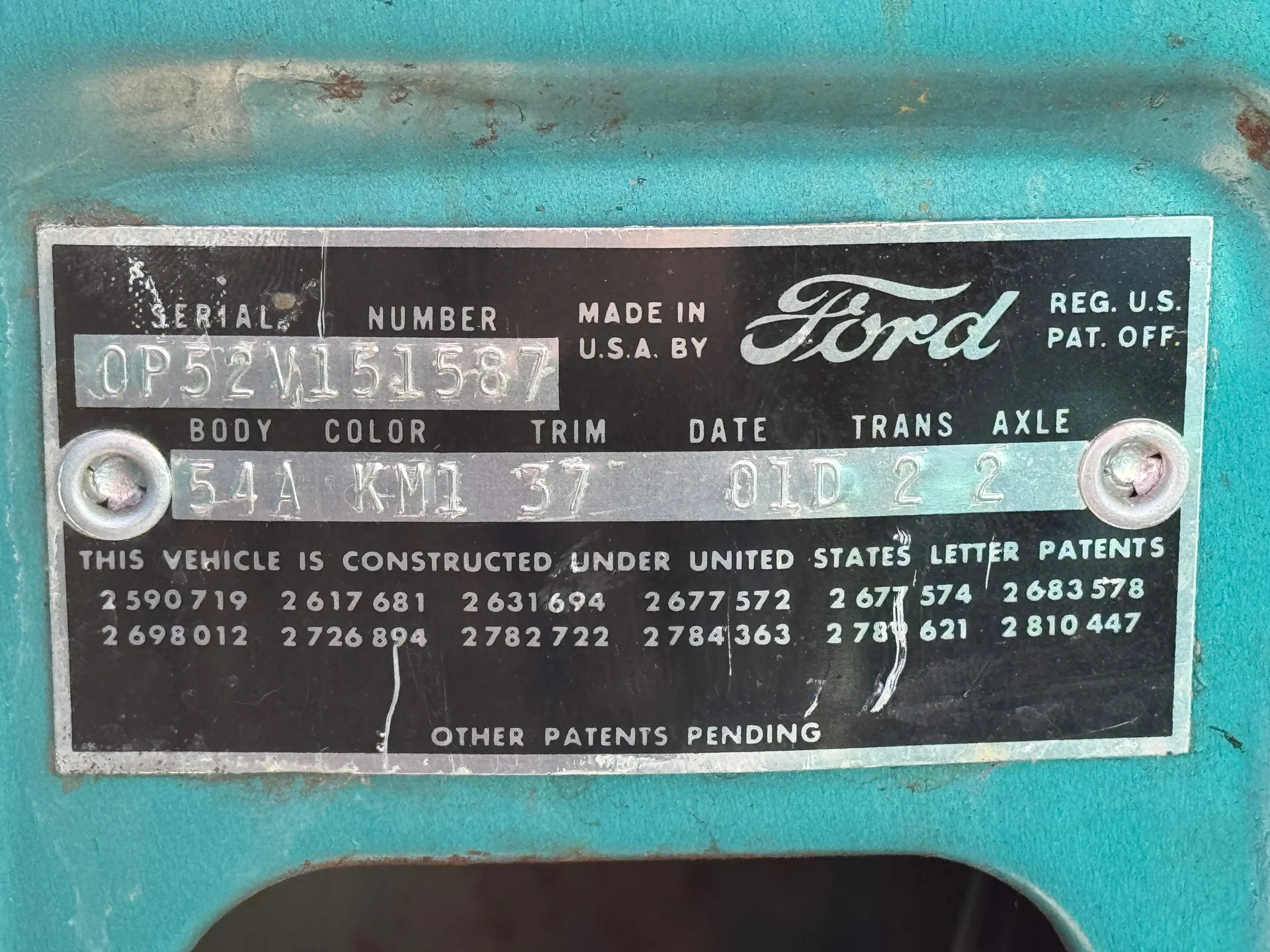
According to the VIN, this Galaxie was built at Ford’s Twin Cities plant in early April 1960. Since Druk Auto Sales is located in Ramsey, about 22 miles north of Minneapolis, this has likely been a Minnesota car all its life. It has a fair amount of rust, albeit nothing that looks structurally concerning. Unhappily, there’s a hole in the headliner where a mouse nested in the roof (not the first time I’ve seen that in a car Druk was offering for sale).
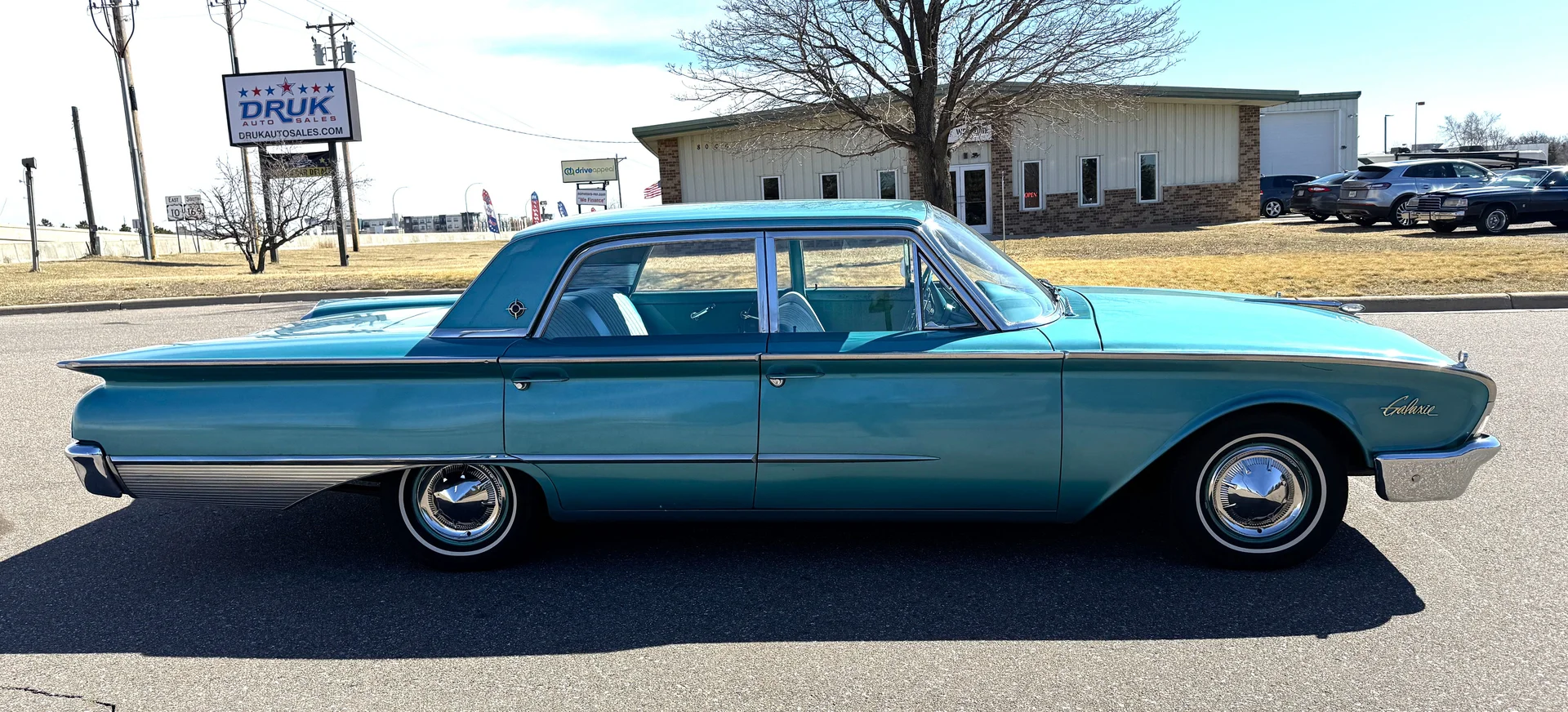
Probably the most remarkable thing about this Ford is that it still exists at all. Except for the overdrive, which was never very common on domestic cars, this Galaxie is a kind of vehicle that Americans bought by the hundreds of thousands every year and then mostly threw away. Although its powertrain makes it a curiosity, a lumbering six-cylinder 1960 Ford four-door sedan is unlikely to ever be a big collector’s item, but it’s sort of heartening to see a workaday model like this still rolling along under its own power, long after most of its more popular and accomplished rivals went to the crusher or rusted away.
Related Reading
The 1960 Ford Was A Big Styling (And Sales) Flop — Here’s How It Might Have Looked (by Paul N)
1960 Ford Galaxie 4-Door Hardtop: A Rare Survivor (by Stephen Pellegrino)
Curbside Classic: 1960 Ford Fairlane – Upstaged By The Rest Of The Cast (By Jason Shafer)
Curbside Classic: 1960 Ford Starliner – Haste Makes Waste (by Greg Beckenbauh)
1960 Ford Sunliner: Enjoy The Rest Of Your Summer In This Underappreciated Ford Convertible (by Aaron65)























My favourite gen Ford full-sizer in a superb colour. It needs only a bubble rear window and it is perfect.
The only dealers happier than Ford dealers who got to sell Falcons were Lincoln-Mercury dealers, whose bacon was saved by the Comet.
This may be the prettiest 60 Ford sedan I have ever seen. The color helps it a lot. Actually, I have always liked the 60, though it has to be a high trim car because the basic ones were really grim. I like the 6 because of its rarity in a high-trim car like this, but a 352 in front of that OD would make this one really pleasant. Although I suspect that even that one would have sent me scurrying back to the Plymouth dealer had I been in the market for a new car that year.
“the basic ones were really grim”
You are so right. I took this photo of a particularly hideous example – apparently still in use – several years ago in downtown Santa Monica.
The original styling concept car “Quicksilver” was less awkward but suffered in the translation to production. It was a rush job and I blame the smartest guy in the room Robert McNamara.
I’m not sure what issue people had with the ’60 Galaxie’s styling. To my eyes it looks more modern than the competition from Chevy and Plymouth, both which were still a bit stuck in the ’50s with their fishbowl windshields and huge horizontal or vertical fins. The Galaxie though had the all the defining characteristics of a 1960-65 American car, from the simple grill to the conventionally-sloped A pillar to the broad-shouldered fenders (better executed on the next year’s Lincolns) and the Thunderbird-inspired thick C pillar. Only the odd rear sculpturing looked rather off IMO.
I’m less enthralled with the interior. Too much exposed metal, knobs that look like they were from from Radio Shack, sloppy fits, and for better or worse the largest font I’ve ever seen used for speedometer readings.
What was the last car with “Power Steering” written across the steering wheel?
I remember well the 1980 Honda Accord Sedan, which was the first year they were imported to Uruguay, that their steering wheel had “Power steering” in so equipped cars. I also remember going into a dealer with my Dad and looking at a dar blue metallic with tan interior sedan with A/c (optional), Hondamatic (optional), roof console (optional)….and no power steering. I wonder how that would be sold when they were really expensive here (prices in USD, close to 18000 of the time).
I agree with la673 regarding the styling of the full-size ’60 Fords. I guess beauty is in the eye of the beholder. It certainly differed in a major way from the very Ford-like ’59s which likely caused a ‘wonder why?’ question mark in people’s minds. I suspect that Ford stylists scrambled to keep up with where they thought things were heading, given what was coming out of Chrysler and GM at the end of the 50’s. Could that help explain why 1960 Ford full-size station wagons were the last wagons with manual lift gates? Even the ’60 Falcon station wagons had a roll down tailgate window.
1960 was the last year for a power steering callout for Ford. I recall that 1963 Ramblers had them, but can’t think of any after 1964 except
for early Honda Accords.
The problem here is that Ford’s 223 six, which was fine in the lighter mid-’50s to 1958 Fords, was never designed to propel a car weighing as much as the full-size ’60. Checking competition, Chevy’s hydraulic lifter six and Plymouth’s new Slant Six were much quieter, more refined, and better suited to the job.
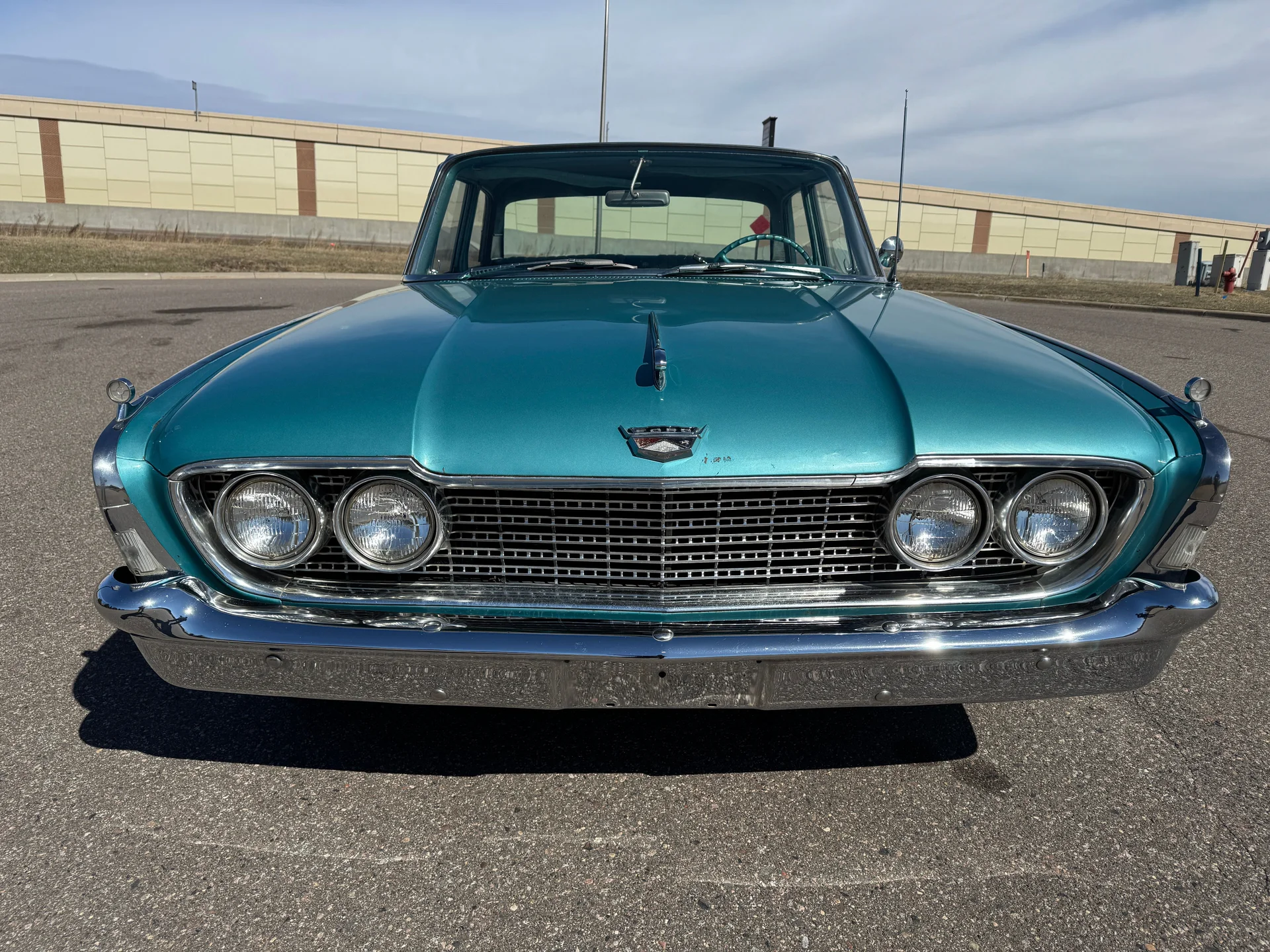
I like the looks of these big ’60 Fords (inside and out), except I’ve never really warmed to the front end.
I don’t think these ’60 Fords are as bad as CU makes them out to be. CU was biased against the whole longer/lower/wider thing, which this Galaxie is the epitome of. I used to be more of a Falcon/Comet fan, until I found out how crappy they drove (especially the early 1960 versions). This Galaxie is like a limousine by comparison. Falcon buyers got more manageable size and somewhat better economy, but they gave up a lot in order to get that.
Possibly the best new car to buy at your dealer was the 1960 Thunderbird, which saw a whopping sales increase to over 90,000 units, even though the body was in its third year. However, you’ll have to pay a very un-Ford-like price for it, and if you have to carry more than one passenger, you will wish you bought one of these full-size Fords instead!
I’m not in agreement about your asessment of the Ford 223 six. It was actually a more modern engine than the Chevy six, having been all-new in 1952, and its power was fully competitive with the Chevy 235 and slant six. The slant six was never a paragon of refinement and silence with its mechanical lifters.
These sixes were quite capable of powering these full-size cars, as long as expectations were realistic. They were just fine for most of the conditions at the time, when folks drove slower and there were still a lot of 1950s cars on the road, most of them sixes too. Obviously the 2-speed Fordomatic was an anchor regardless of what engine it was attached to, but with the three speed and O/D, this would have been perfectly adequate except in the mountains.
When these big American cars were imported to Europe, most often it was with the six because of their high fuel (and taxation), yet in relation to the overwhelming majority of European cars at he time they were considered quite decently powered. Everything is relative.
I’m basing my assessments on how the actual cars feel on the road and what they are like in real life.
Adding 400 lbs. of Ford car weight between 1958 and 1960 without increasing six cylinder HP seems like a major minus for buyers of 1960 full-size Fords. The 6 cyl. automatics went from being mildly peppy to being real dogs, as the article points out. Ford cheaped-out on this.
I recently adjusted the valves on my ’60 Dart with the slant six, and it really made a difference! I got rid of the “clack-clack”, and the rough idle when cold disappeared. This engine drives creamy smooth and quiet. When idling, it’s just like a solid block of metal that stays steady while the fan and pulleys rotate. I can see why this engine is respected and liked by so many people. So if a slant six is rough and clatter-y, it’s probably because it’s not being properly maintained.
The Chevy six is much smoother and quieter than the Ford six, because of its hydraulic lifters and other refinements. The Ford six is quite a bit noisier. I believe you wrote about how Powerglide (compared to other automatic transmissions) helps these Chevy engines deliver more power.
“These sixes were quite capable of powering these full-size cars, as long as expectations were realistic. They were just fine for most of the conditions at the time…” I agree. But in 1960, the full-size sixes from Chevrolet and Plymouth/Dart were more satisfying and delivered better acceleration. Compared to Chevy and Mopar, Ford was lagging.
A base Ford 2-door sedan increased by 330 lbs from 1958 to 1960. But your point is largely valid. I was disagreeing with your line that the Ford 223 six “was never designed to propel a car weighing as much as the full-size ’60.” Engines weren’t designed for a specific year or weight of car. The 223 six was designed to be used in a wide variety of Ford vehicles including some quite large trucks, including the F600, C600 and P600 medium duty trucks weighing up to 20,000 lbs (loaded).
Yes, adding some 330 or so lbs made the ’60 a bit slower to accelerate than the ’58. And yes, the Fordomatic was bad news. My point is that a stick shift ’60 Ford with the 223 was not likely significantly slower than the competition. Maybe a bit, but the reality is that folks who bought a big car with a six weren’t likely to be pushing them flat out. They were adequate for the drivers and situations they found themselves in. That’s my point.
” So if a slant six is rough and clatter-y, it’s probably because it’s not being properly maintained. ”
This has been my experience with the 223 Ford six as well. With properly adjusted valves, it is smooth and quiet. Valvetrain noise is barely audible at idle and not heard at higher rpms.
I owned a 1960 Fairlane 500 with a 223 and an unusual factory combination of air-cooled 3-speed Cruiseomatic and 3.10 axle ratio. It felt reasonably lively under most circumstances and had no difficulty being driven in modern traffic.
Many years ago as a teenager, I came across that very Consumers Reports issue that detested the 1960 full sized Ford so much. They considered the car big and ponderous, being big for the sake of being big. Even then, a 0-60 time of 20 seconds would be considered glacial, especially when a Chevy or Dodge could do it in around 14-16 seconds.
These were the cars Alberta farmers drove back in the day. They had been through the Great Depression, which caused them to be very thrifty.
“P/S”, cloth/vinyl, seating; car was a quite “uptown”. ((even a radio and a heater!!))
This A. Severson guy…creates a literal tsunami of fascinating work, often about cars that I couldn’t have possibly cared less about. I tend to check this site around midnight to see if more has arrived.
Never been keen on early 60s Fords for some reason, and the full size ones just seem too big, and I’m not put off by big US cars generally, in fact the opposite.
Somebody above said the basic ones were grim, I can see grimness in the high trim cars like these as well, and the exposed shifter rod is really crude.
Love reading about them though.
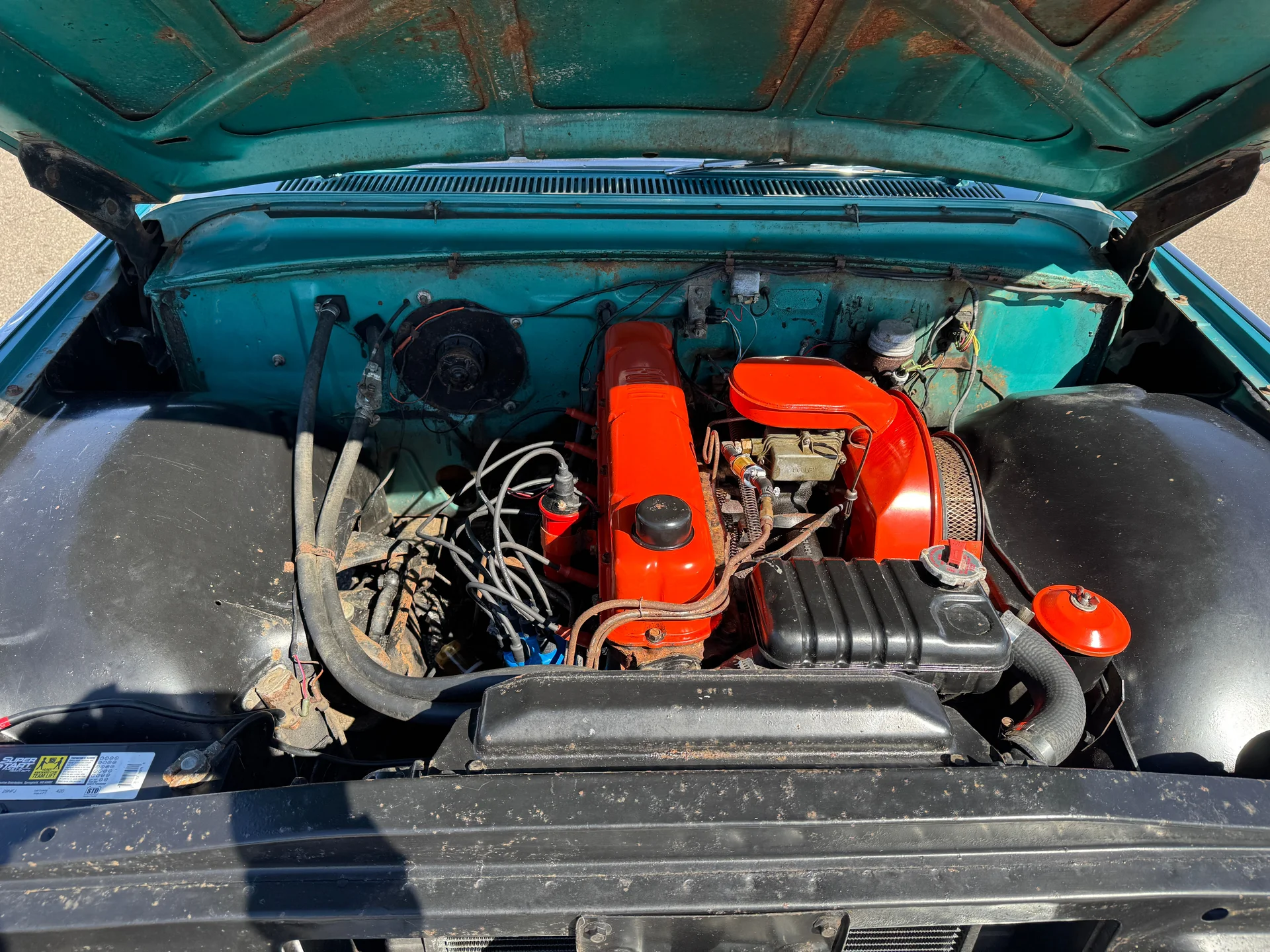
I presume somebody has modified the air filter housing ?
That is actually the factory air cleaner, Ford did it that way on their 6’s for a couple of years. I would guess it was for hood clearance.
I was wondering about the cut away section, it seemed to be a lot of exposed filter for a factory setup. Wikipedia has a picture of a 59 model that has a much more enclosed housing. there are other pictures on line showing the large cut outs.
For 1960 the filter element was completely exposed with just a deflector around part of its circumference. With the silencer chamber beneath it and the bends in the air path, there wasn’t really any audible intake noise even with the filter “out there” like that.
A very interesting survivor .
I never liked the ’60 / ’61 Fords, I -do- like the ’62’s that look better but have the same awful driving characteristics, you’d be shocked to learn it’s only 5 turns lock to lock, calling these ponderous insults the word .
I’ll never understand why the big three locked overdrive out of second gear because it allows hill climbing at a reasonable pace without lugging nor overspeeding the engine .
Bummer too about the mouse damage .
I hate rodents .
-Nate