
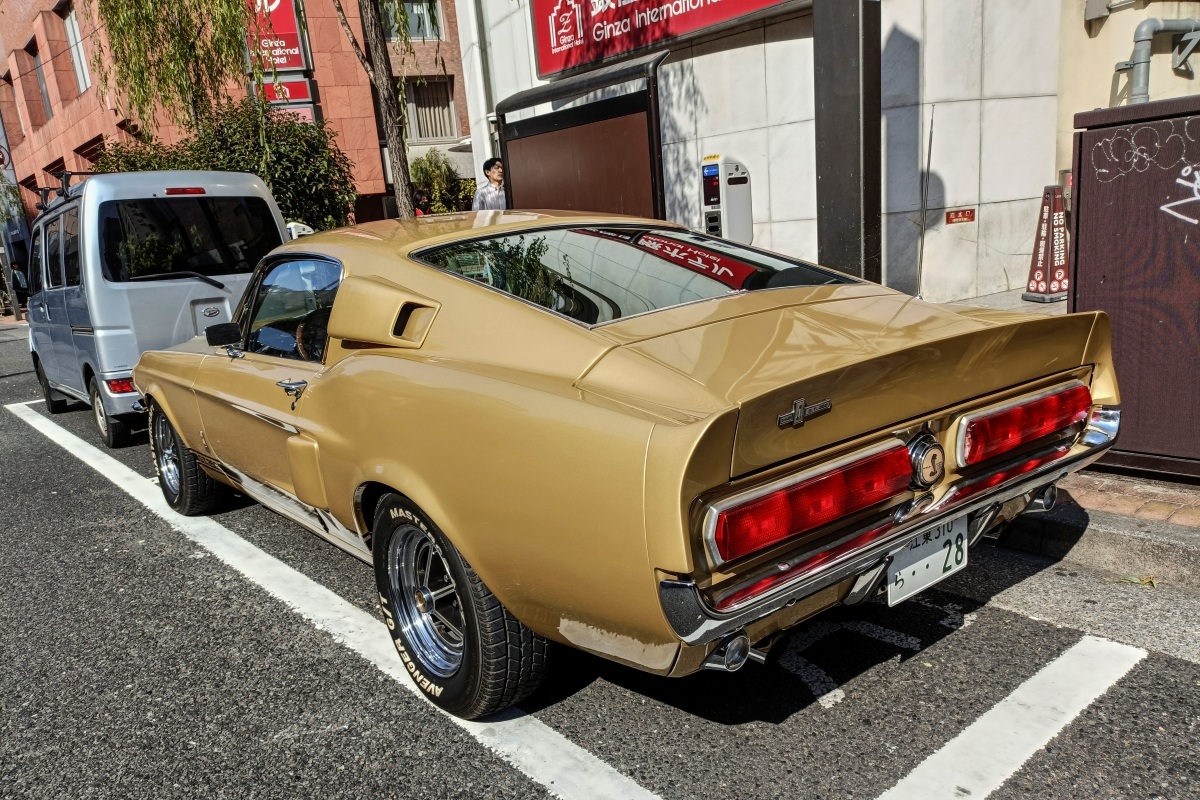
It doesn’t take a whole lot to give a car a little character. The way Carroll Shelby did it with the 1967-68 Mustangs involved a little fiberglass, different taillights, a few air scoops and a whole bunch of extra hp under the hood. Slap a cobra on it and Bob’s your uncle, you have yourself a thoroughbred pony car with venomous fangs.
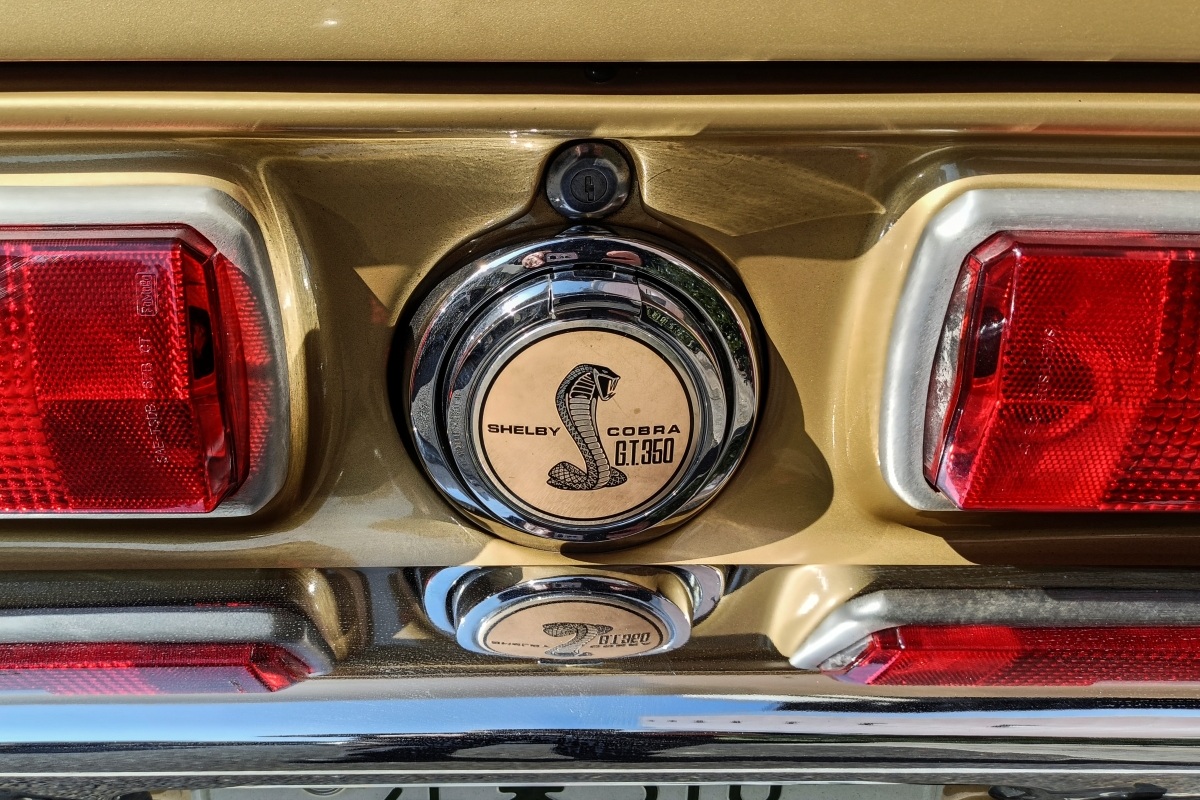
Well, they did cost a few dollars more than your regular Ford Mustang 2+2, after all. Those would set you back about $2600 in base trim, whereas the G.T. 350 (Shelby took the trouble of putting those punctuation marks in the name, so we must do likewise) was at least $4250, and that’s with only the “mandatory options” (love that nonsensical term)… For that price, you kind of want it to stick out of the herd.
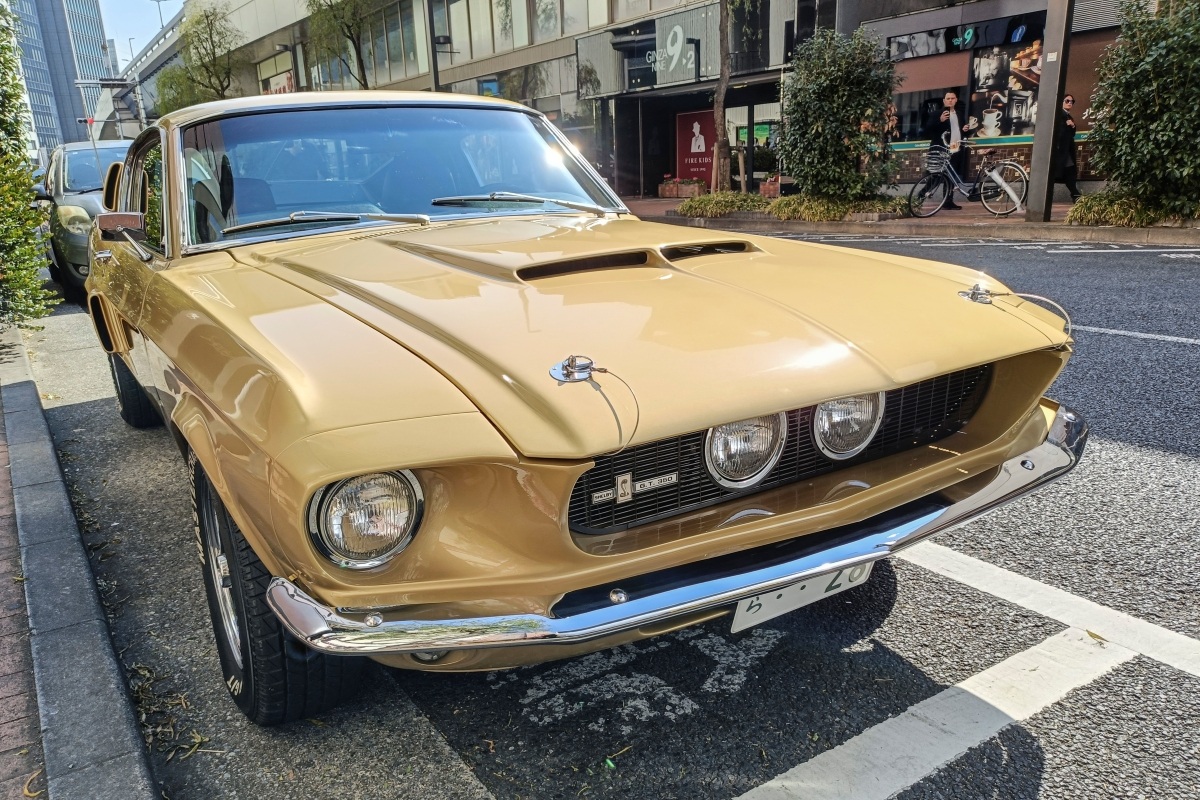
For the front end, Shelby added some top lip to the Mustang’s grille, giving the car a much more aggressive look. The rest of the grille, i.e. the bottom bit, was also given a fiberglass surround, making it less angular than the standard model. A big functional scoop on the hood and a peculiar additional pair of high-beam headlights put right in the middle of the nose. Those ended up disagreeing with certain State-level regulations, so they had to be relocated to the out edges of the grille in some locations and disappeared altogether in 1968. This is why we can’t have weird things.
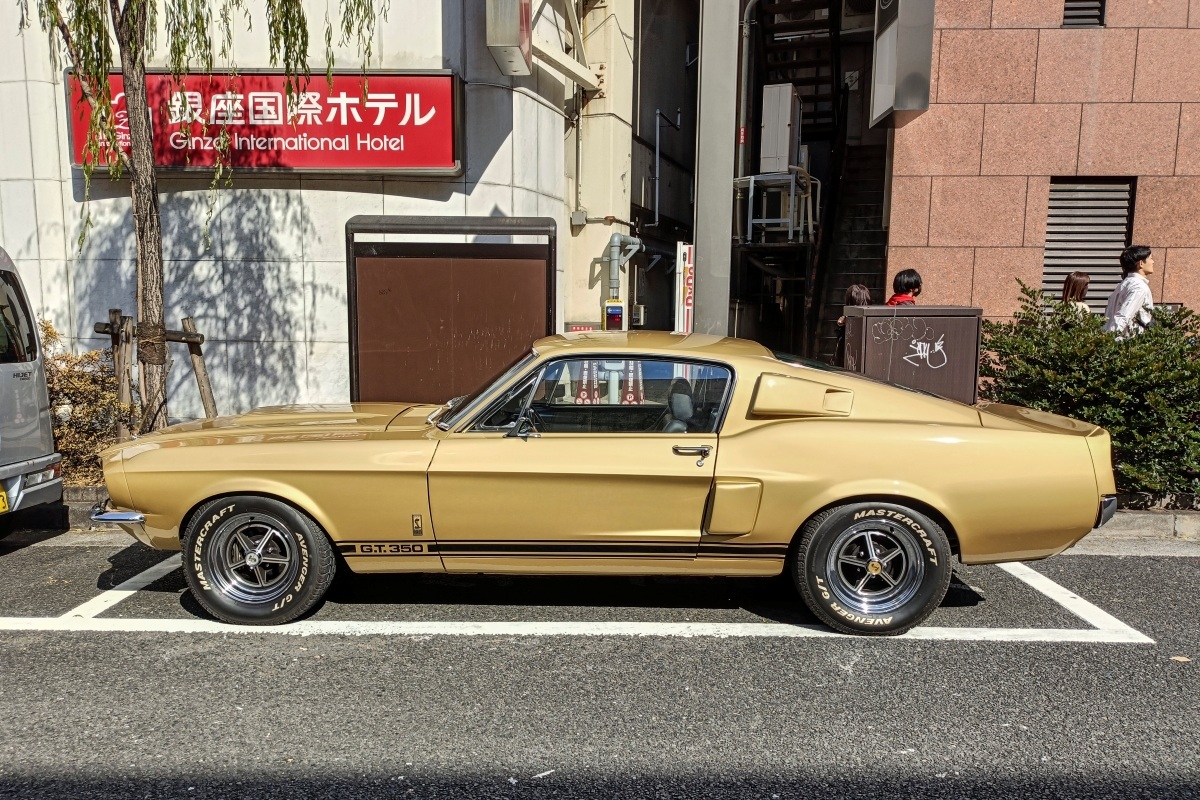
For 1967, the G.T. 350 came with a Shelby-modified 289ci (4.7 litre) V8 good for 306hp, though a few cars were ordered with a Paxton supercharger, which would bring that up to a frankly scary 390hp. Front disc brakes were standard; Shelby added some air scoops to help cool the rear drums down.
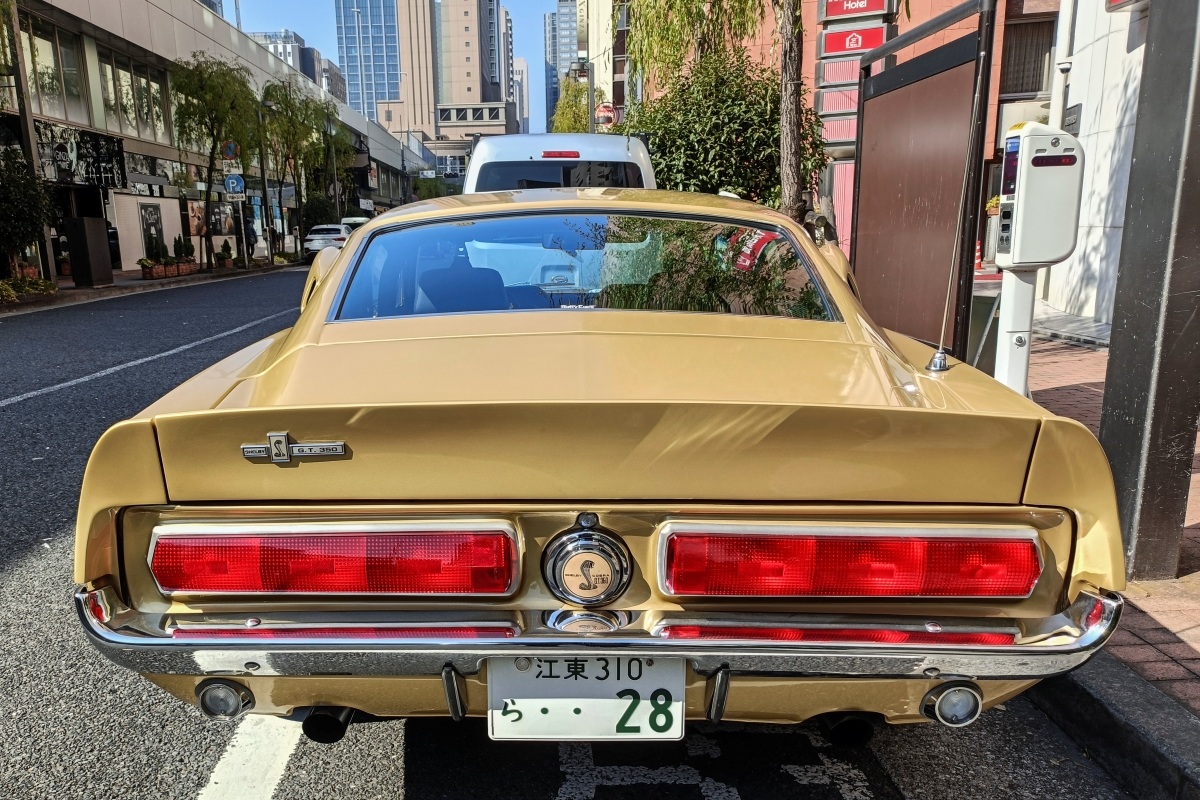
The Mustang’s trademark rear lights were perhaps deemed too Mustangy for Uncle Carroll, so he put the Mercury Cougar’s clusters instead. And for some reason, it looks really good. Because this was 1967, Shelby added a little fiberglass on the trunklid to give the rear a Kamm tail. Had it been a few years later, that would have been a stupid spoiler on stilts.
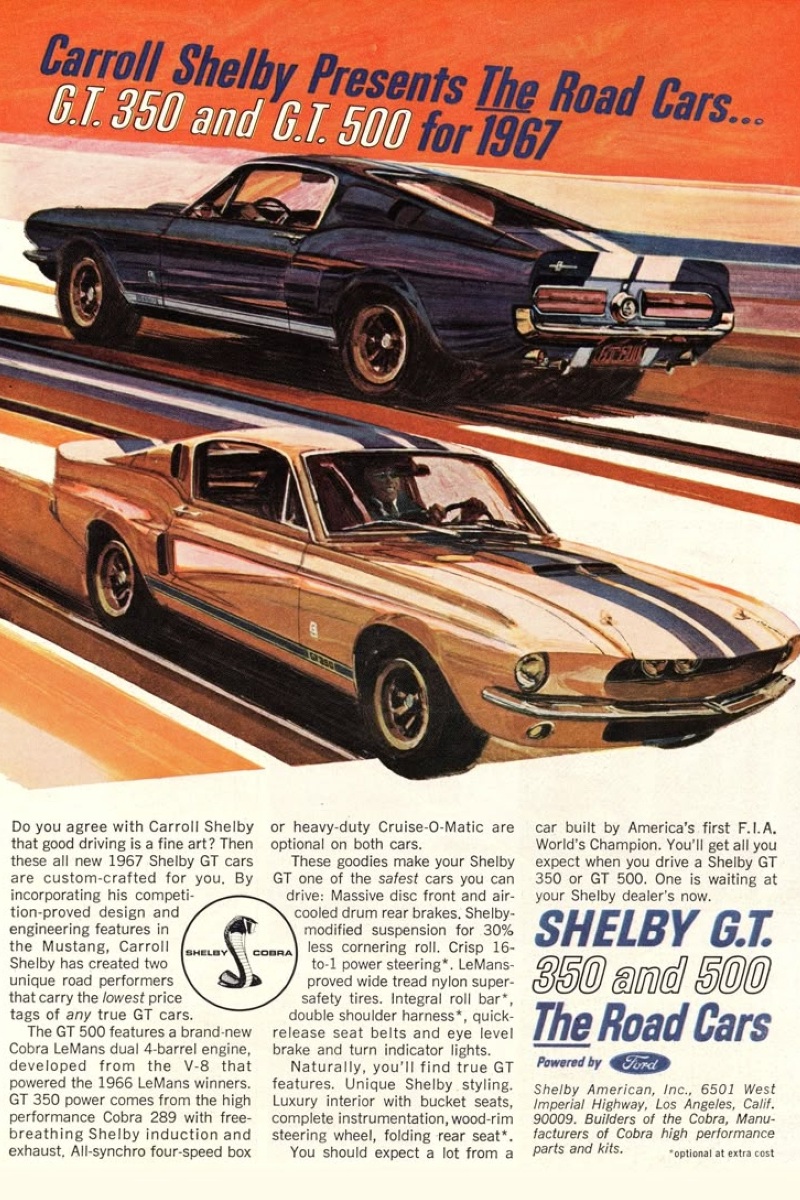
Looks aside, the big news for Shelby in 1967 was the G.T. 500, featuring a massive Ford 428 (7-litre) that barely fit in the Mustang’s engine bay. With its bigger and more powerful V8, the G.T. 500 handily outsold the 350, the one that actually had racing pedigree.
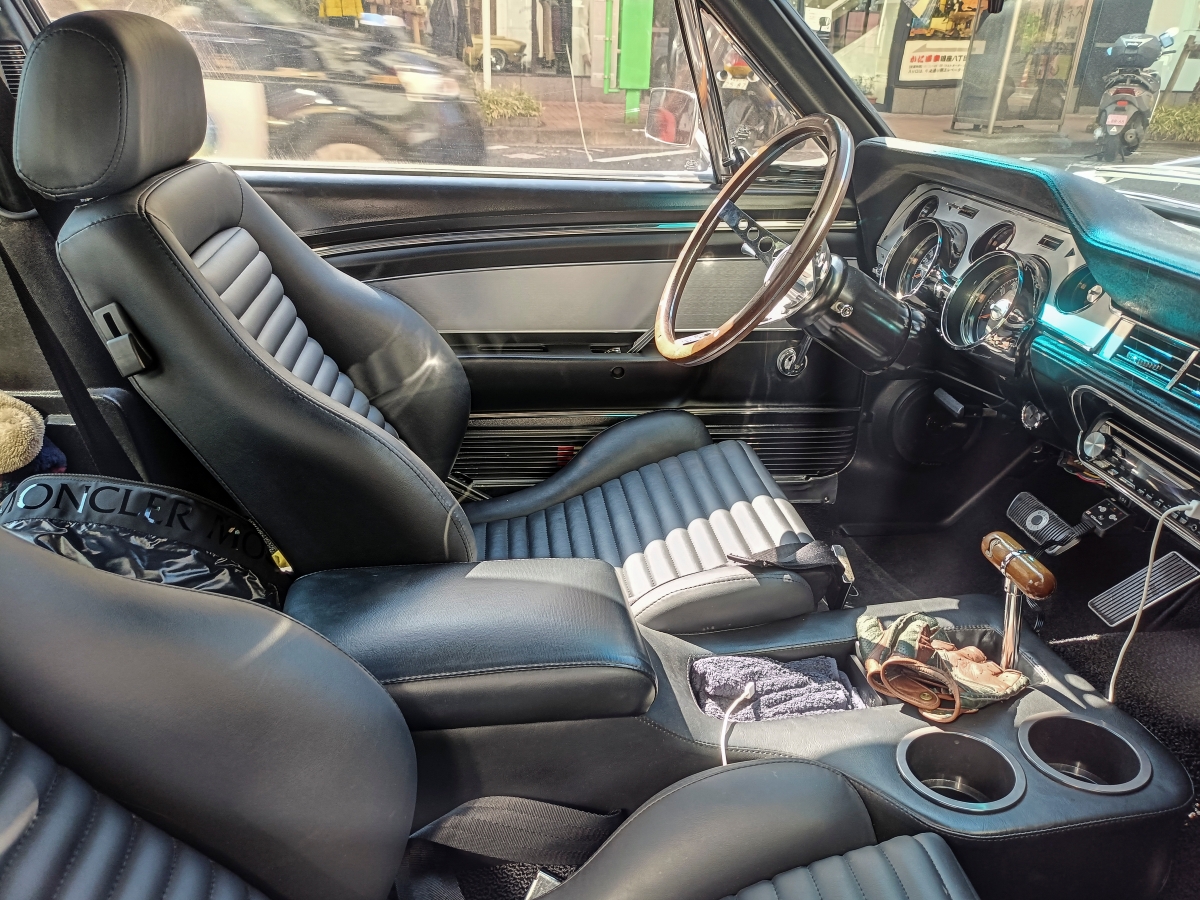
But said pedigree was a matter of ticking the right boxes on the options list, really. Some folks wanted performance and handling, but if you wished for something more like a fast boulevard cruiser, the automatic was yours for the taking.
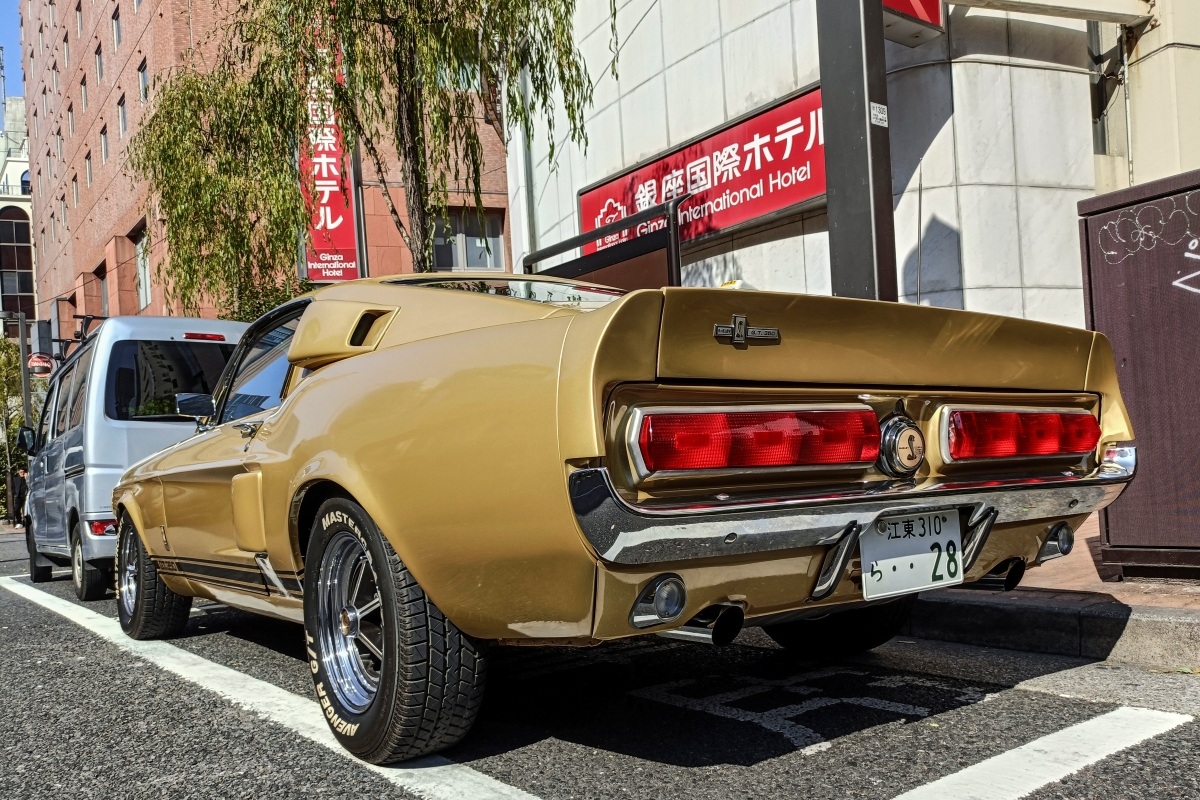
Most of the 1175 units made in 1967 were manuals – only 354 received a slushbox like our golden dream here. I’m not 100% sure if this one was made earlier in the year of not, but if it was, it would have been born in California, right by LAX airport. That’s where Shelby American’s production facilities were since January 1965, but in April 1967 Ford took full control of the Shelby operation and transferred production back to Michigan.
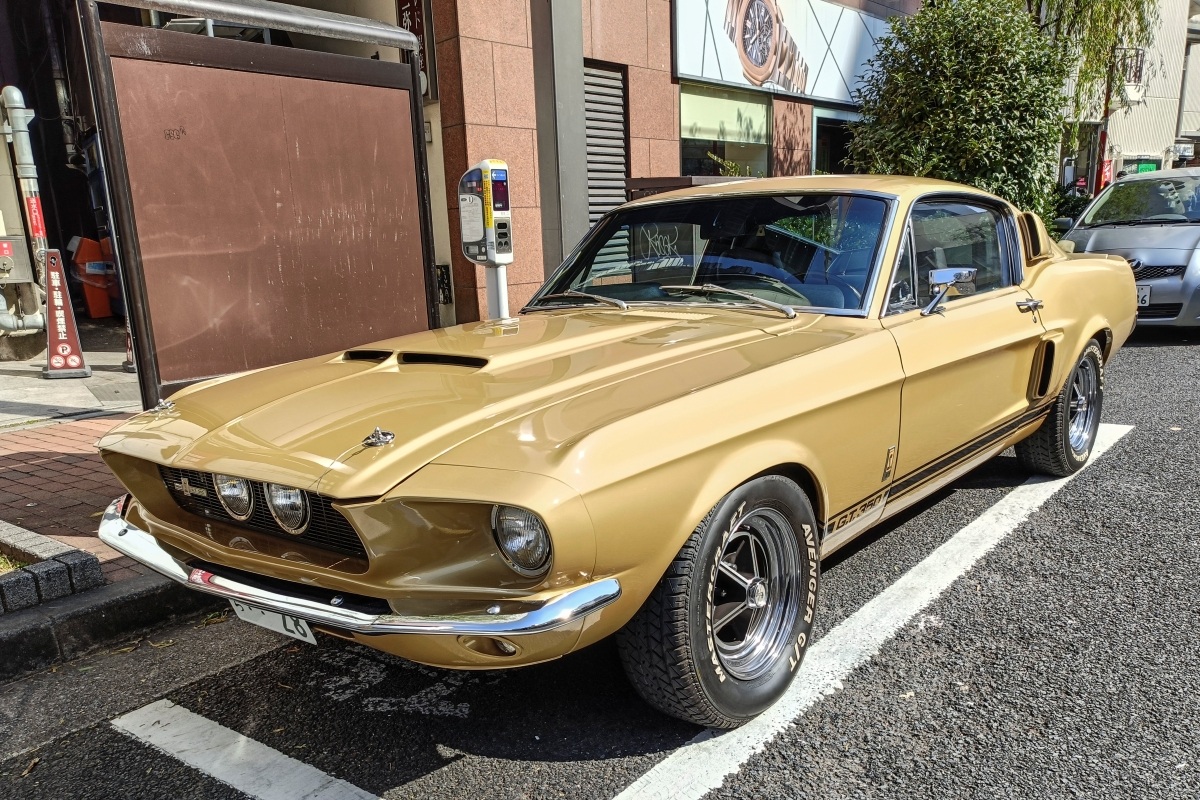
Brilliant though Carroll Shelby was as a driver and race team leader, his business was mired in red ink for most of the time – a common enough occurrence in the treacherous field of car racing. Shelby was also pretty good at PR though: his cobra-branded specials left a deep impression in the automotive landscape in a very short time, ensuring that his name would never be forgotten. The Shelby Mustangs, alongside the AC roadsters and the legendary GT40 Le Mans victories, made the marque immortal.
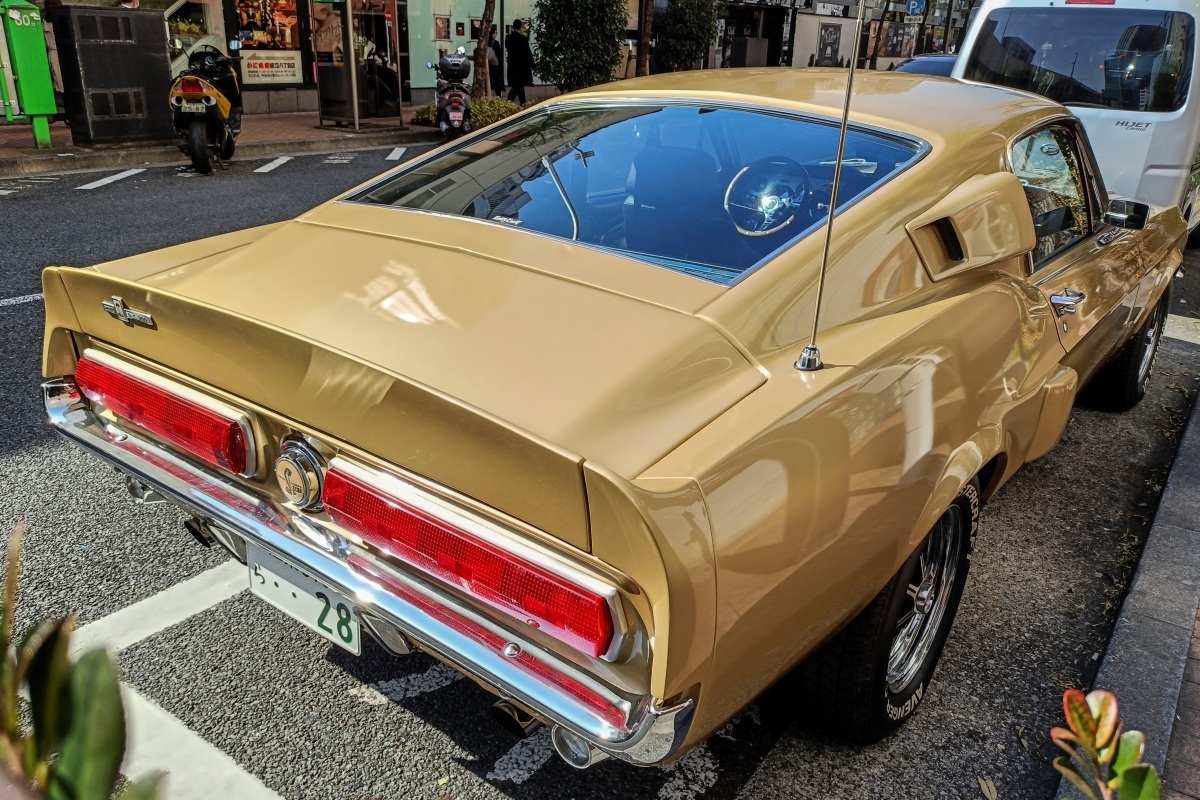
Many cars bore the Shelby name, but the actually very few were built by the company itself. Nowadays, these command serious money; they always commanded respect. Half horse, half snake, with a touch of Cougar for the rear end. Now, that’s a hybrid I can get behind.
Related posts:
Car Show Classic: 1965 Shelby Mustang GT350 – The Shame Of Appreciation, by Aaron65
1968 Shelby Cobra GT-350 Convertible: A Rare Original Survivor That Won’t Bite, by TBM3Fan
Vintage R&T Road Test: Two 1968 Shelby GT 350s – Cool And Hot, But Not As Hot As The Z-28, by PN
Vintage R&T Review: 1967 Shelby GT 500 – The Shelby Thunderbird, by PN























Very nice, and I like the colour.
Not knowing a lot about these, I’m thinking the seats and centre consol are more recent changes, or were these so far ahead they had cup holders in ’67?
They’re both very much not original.
No, passengers were far too busy holding on for cup holders.
Thx for asking.
I think I’m correct in asserting pre-1967 G.T. 350s were always equipped with a manual transmission.
No, the 1966 models were also available with an automatic; in fact, most of the Hertz cars had one.
These would make a huge impression on young males going through puberty as the second best thing in Playboy magazines (you know, after the…articles…). Don’t ask me how I know. Ford really knew their market for these cars and I still love seeing these ads today.
One quite interesting point about the more aggressive front end of the 1967-68 Shelby Mustangs was how much it affected front end lift at high speed. The regular Mustang wasn’t exactly great in that department, either (just watch how much air Bullitt’s Mustang got in certain scenes) but the Shelbys were worse, especially with the much higher horsepower of the big-block versions. I’d go so far as to suggest they were downright dangerous.
Thanks, TATRA87, you’ve made my day.
Saw two of them this morning. One 68 in lime green and one 70 in white. The older gentleman than me had one of those old Union 76 balls on the antenna. Nice touch as they were all around back in those days.
To call the C4s in the 350s and C6s in the 500 slushboxes is really silly. The C4s shifted lightning quick, the C6 felt like running into a wall at WOT.
Assume it was 289 not 298?
Hi-Po small block V8s were the optimal engines for all the pony-cars not the heavy big blocks, imo, the Boss 302 was most excellent, as were ‘Cuda AARs, Z-28 etc.
Yes, 289. A typo. It’s updated.
Beautiful example. 67 G.T. 350s were softer than the 66 which theirselves were softer than the 1965s but the appearance package the 67s had in my mind were the pinnacle of first gen Mustang styling, a perfect massaging of the already pretty excellent standard fastback styling into something that somehow looks dinctly like a Mustang… yet something entirely different. Apparently Ford designers themselves agreed as the 1969 sport roofs seemed to adopt the 67 Shelby’s key elements(minus the taillights). Speaking of those, the wide taillights I always loved on Shelby’s, be it the Cougar sourced ones in 67 or the Tbird sourced ones from 68-70. I genuinely think modern Shelby 07-22 Mustangs missed the mark not changing the taillight design from standard Mustangs. Even the concept version of what would become the 05 S197 had wide taillights and we never got them in production, ugh!!!
A few things cool about this one; it doesn’t have hood/roof/trunk stripes which when new was the norm, now it’s restoration liberties, not so much. Same deal with the wheels. Most you see have the 10 spoke wheels added but this one has the (still optional!) Magstars! Now it would be even cooler if it had the truly standard 15” steel wheels with the Thunderbird magnum 500 style wheel covers but beggars can’t be choosers!
I was always under the impression that ALL 67s were LAX built, and that the 68 model years were all moved to A.O. Smith which also had a different local source for the fiberglass components that changed that year.
This does look good in gold and makes a refreshing change from the stereotypical white with blue stripes. I don’t like the big seats and console, even with an automatic these were never soft cruisers. It does look good and restorers should make more of an effort to paint and equip cars as the actually were
Always preferred the styling of the’65’/’66 mustangs and Shelbys.