
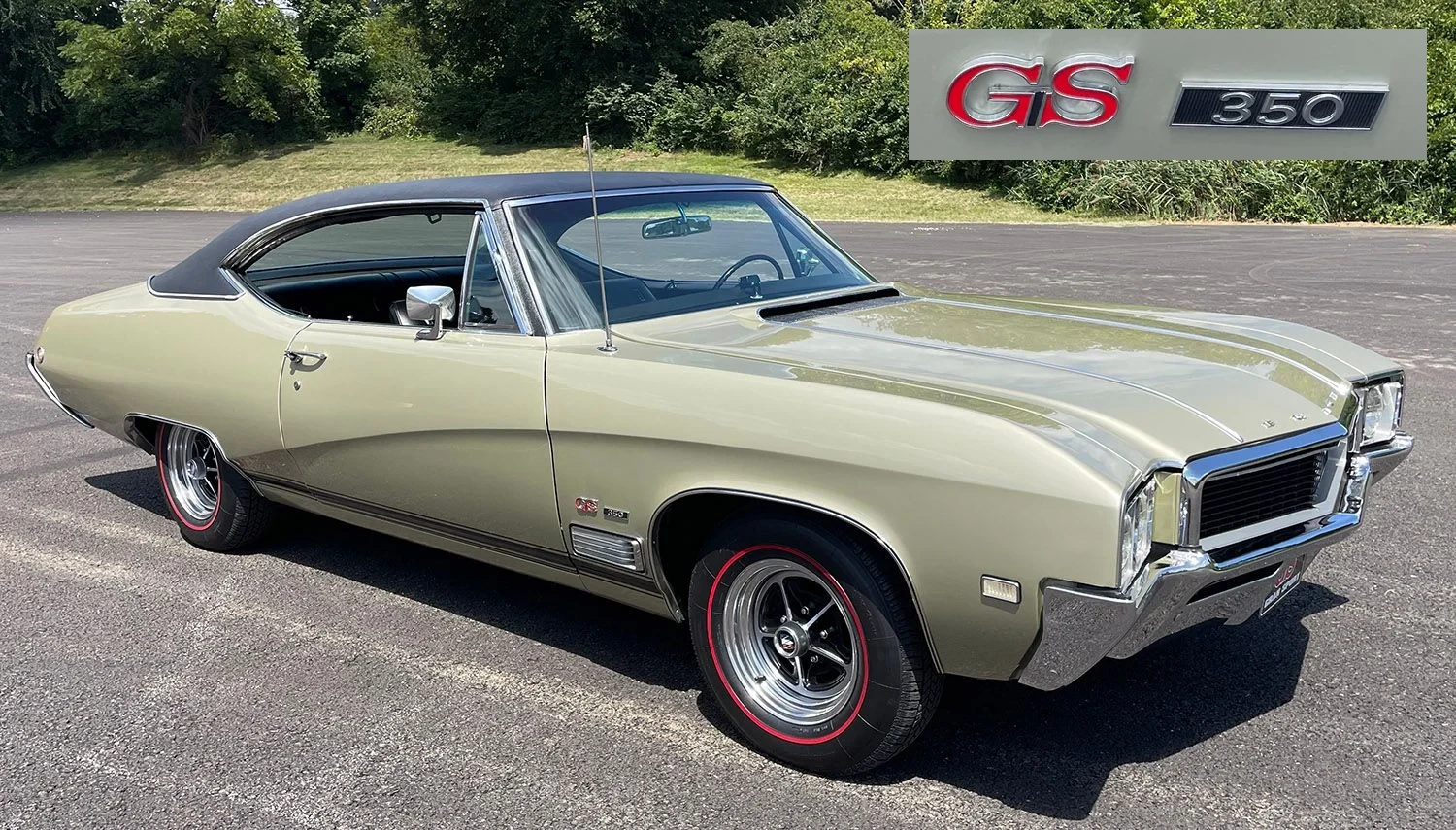
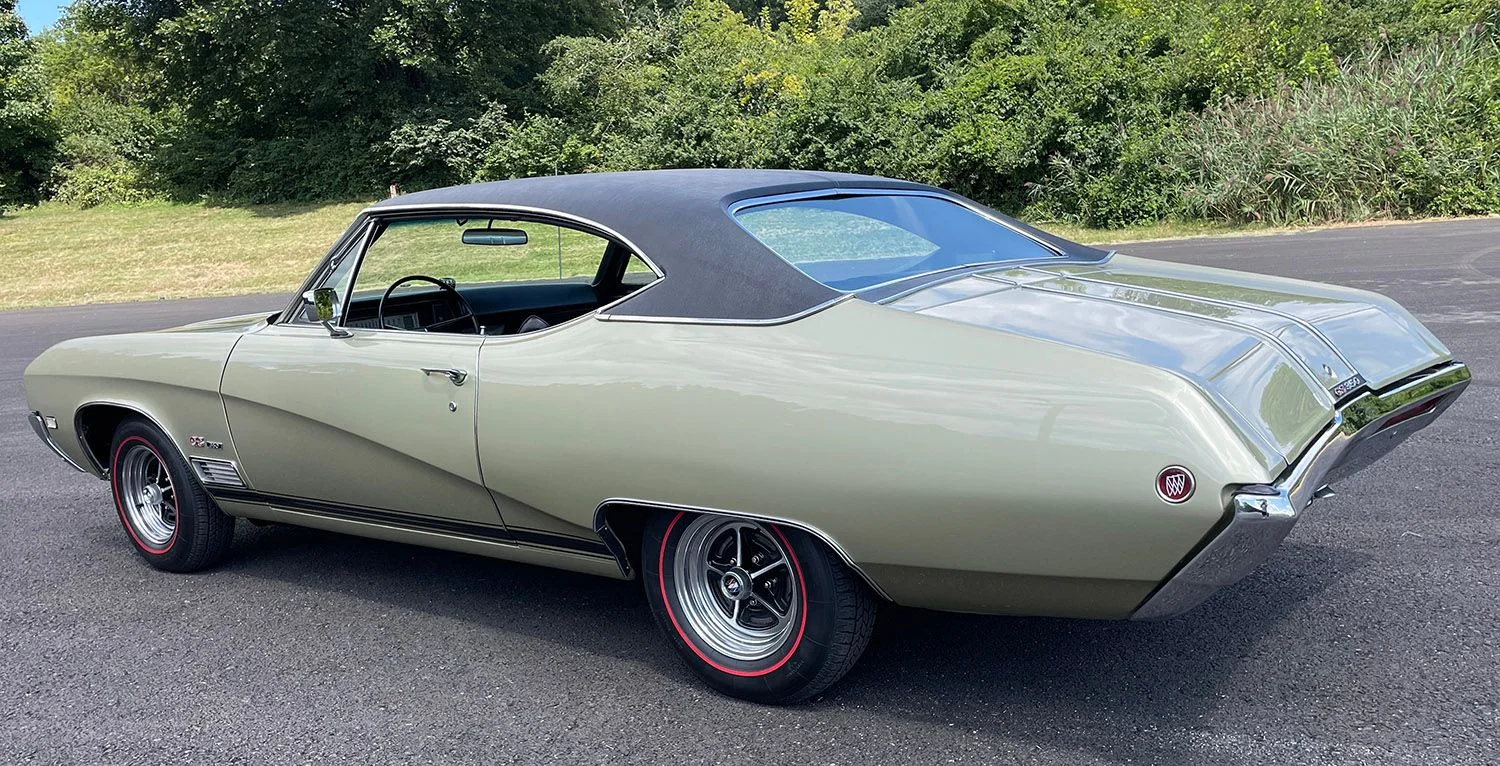
With only 280 gross horsepower and a 2-speed automatic, this 1968 Buick GS 350 hardtop wasn’t going to run with GM’s big-engine A-body muscle cars, but when equipped with the optional “GS Rallye Road Control” option, it offered the best handling of any 1968 Buick production model.
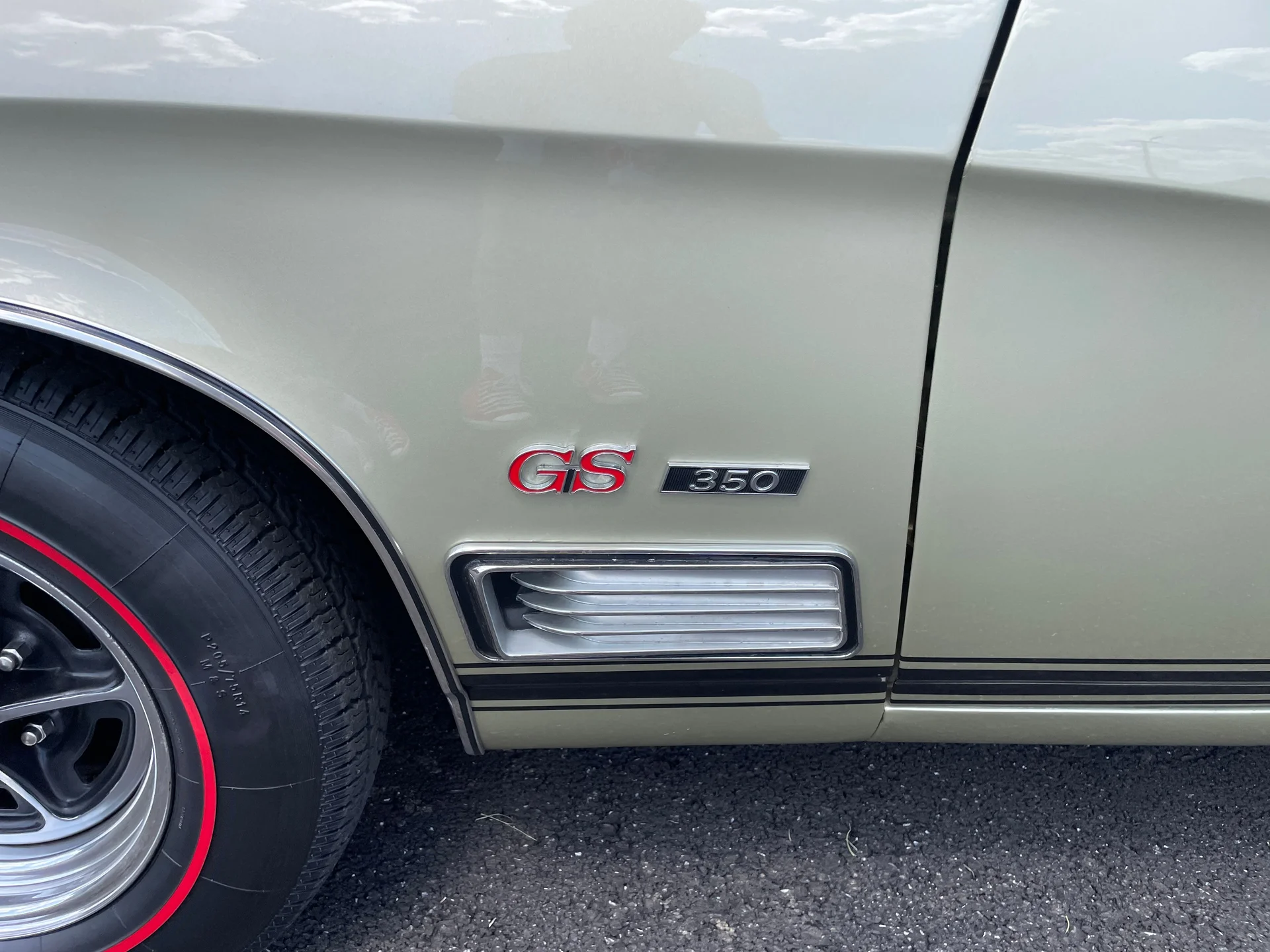
The first question you might ask is “What’s a GS 350?” Succeeding the Skylark GS 340 for 1968, it was one of Buick’s sporty midsize models, the little brother of the GS 400, Buick’s entry in the big-engine intermediate muscle car segment. As the designation implied, the GS 350 used the latest 350 cid version of Buick’s smaller V-8 rather than the 400 cid engine in the GS 400, giving less power, but a little less weight and (theoretically) better gas mileage for a lower price. At the time this car was built in March 1968, the GS 350 started at $2,926, $201 less than a GS 400, and was likely to be cheaper to insure.
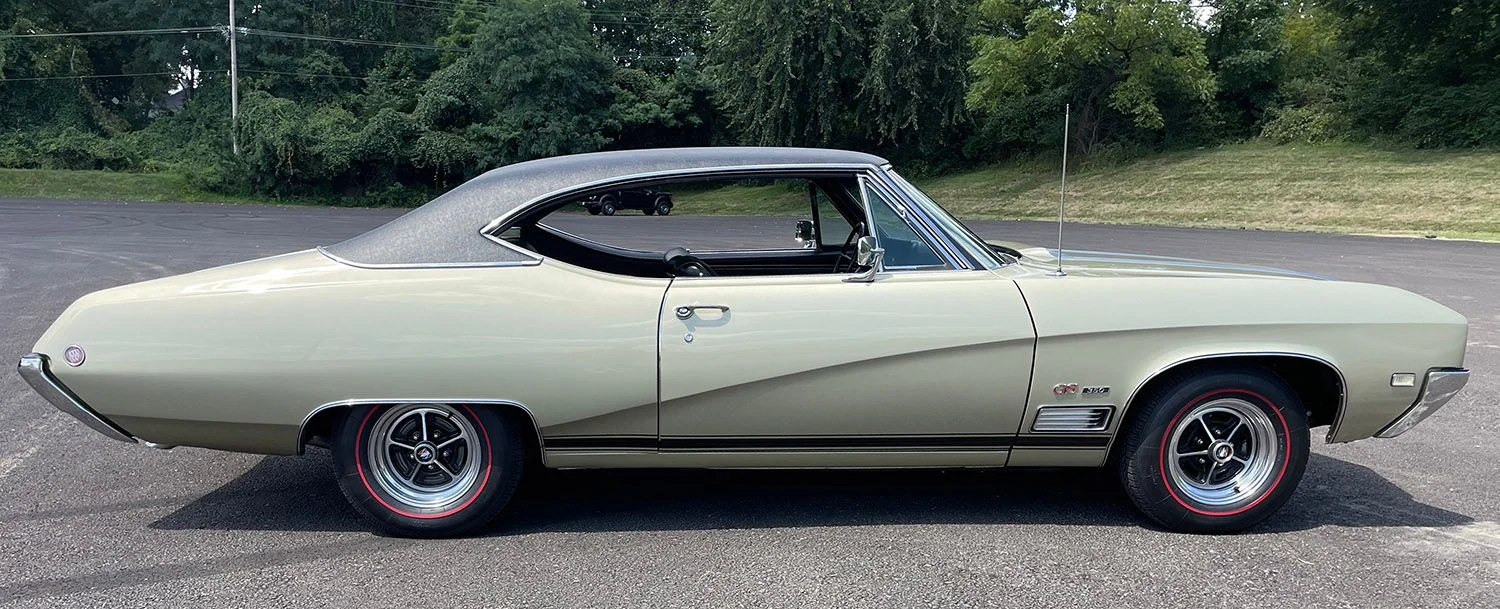
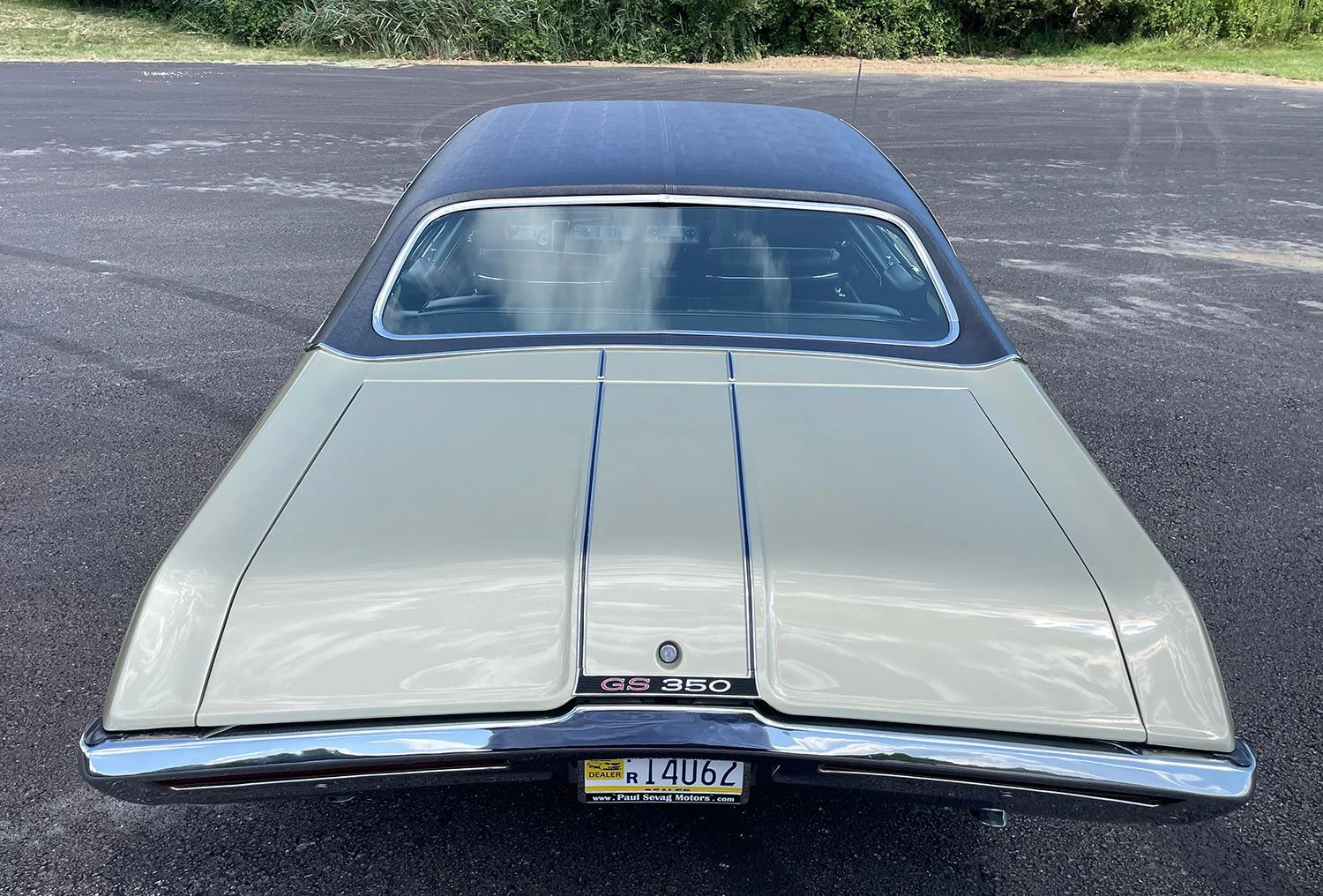
While the GS 400 offered a convertible, the GS 350 was available only as a sport coupe (GM-speak for a two-door hardtop). Like all 1968 Buick A-body models, it featured all-new semi-fastback styling, with a shorter 112-inch wheelbase rather than the 116-inch span of the four-door models. The styling of the Buick Special/Skylark/GS remains controversial — you can make up your own mind, but I think it looks fine from the front or front three-quarter, odd from the side, and bulbous and bloated from the rear aspect. GS models dressed up the basic shape with simulated scoops on the front fenders and hood, as well as the obligatory GS emblems.
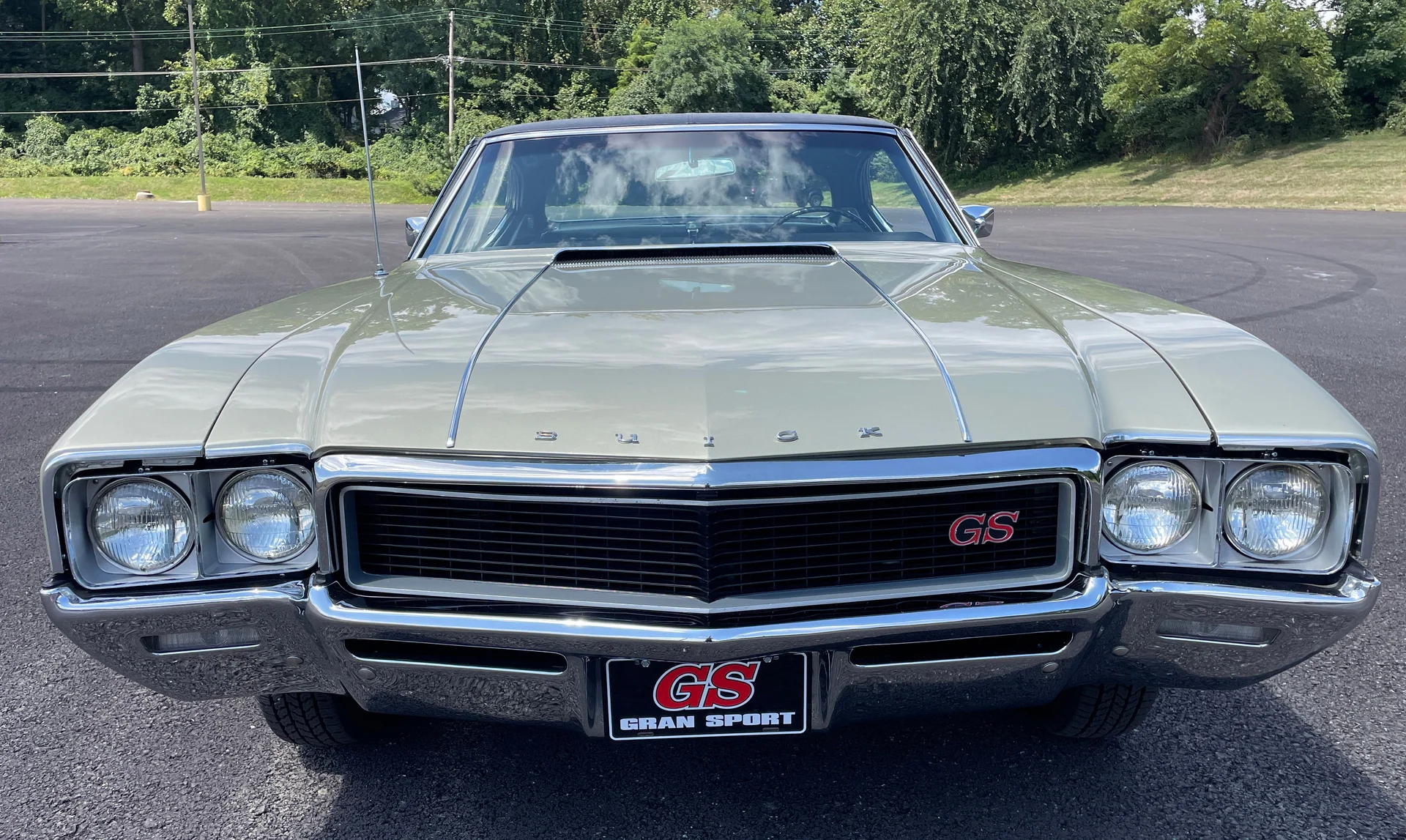
Buick regarded the GS 350 as a separate model, mostly. The VIN and body plate codes identified it as part of the Special Deluxe series, but Buick advertising, brochures, and dealer literature described the GS 350 as a distinct entity, and Buick tracked its production separately. It was $30 less expensive than the popular Skylark Custom two-door hardtop, which had a plusher interior, but a less-powerful standard engine.
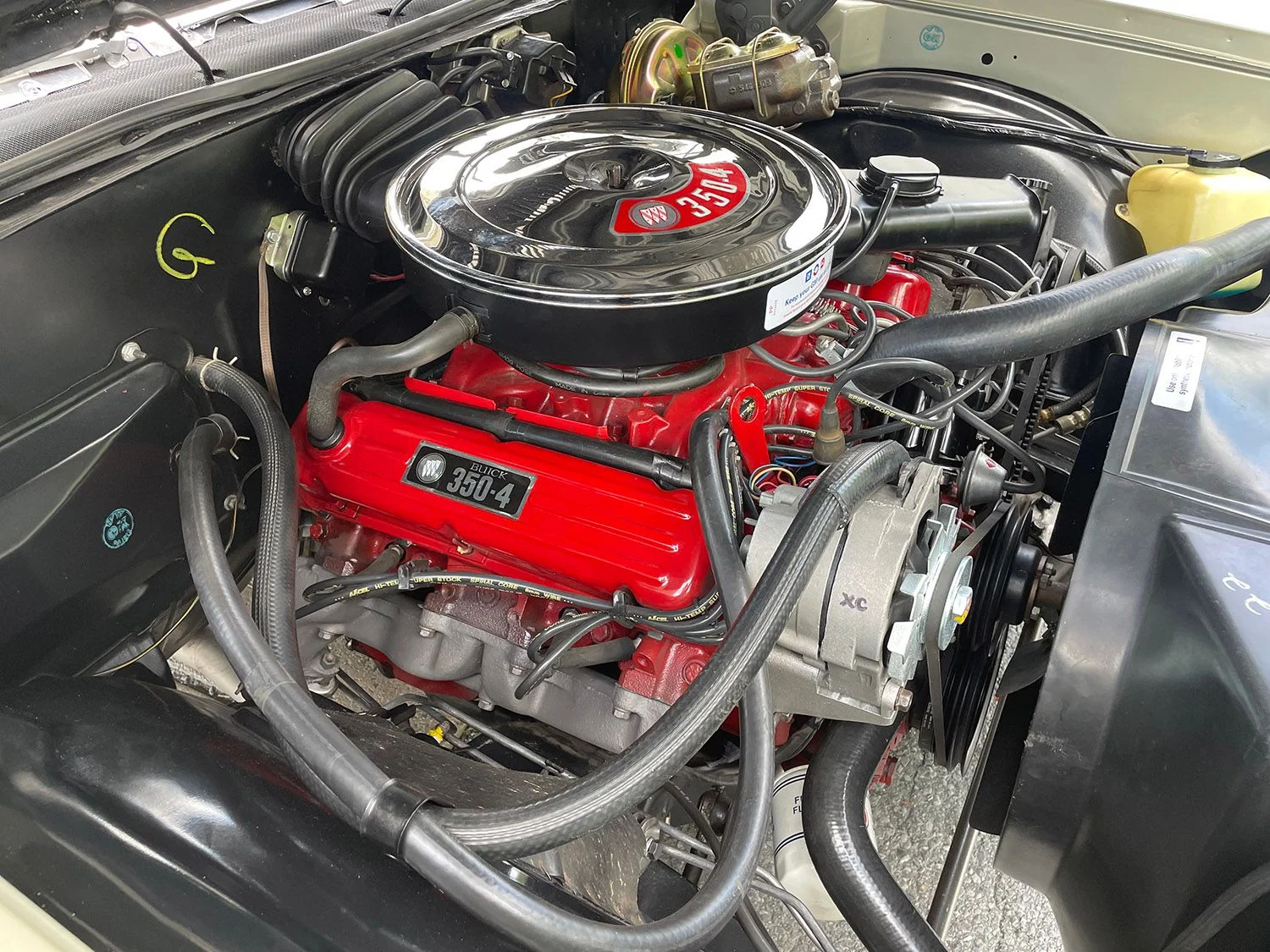
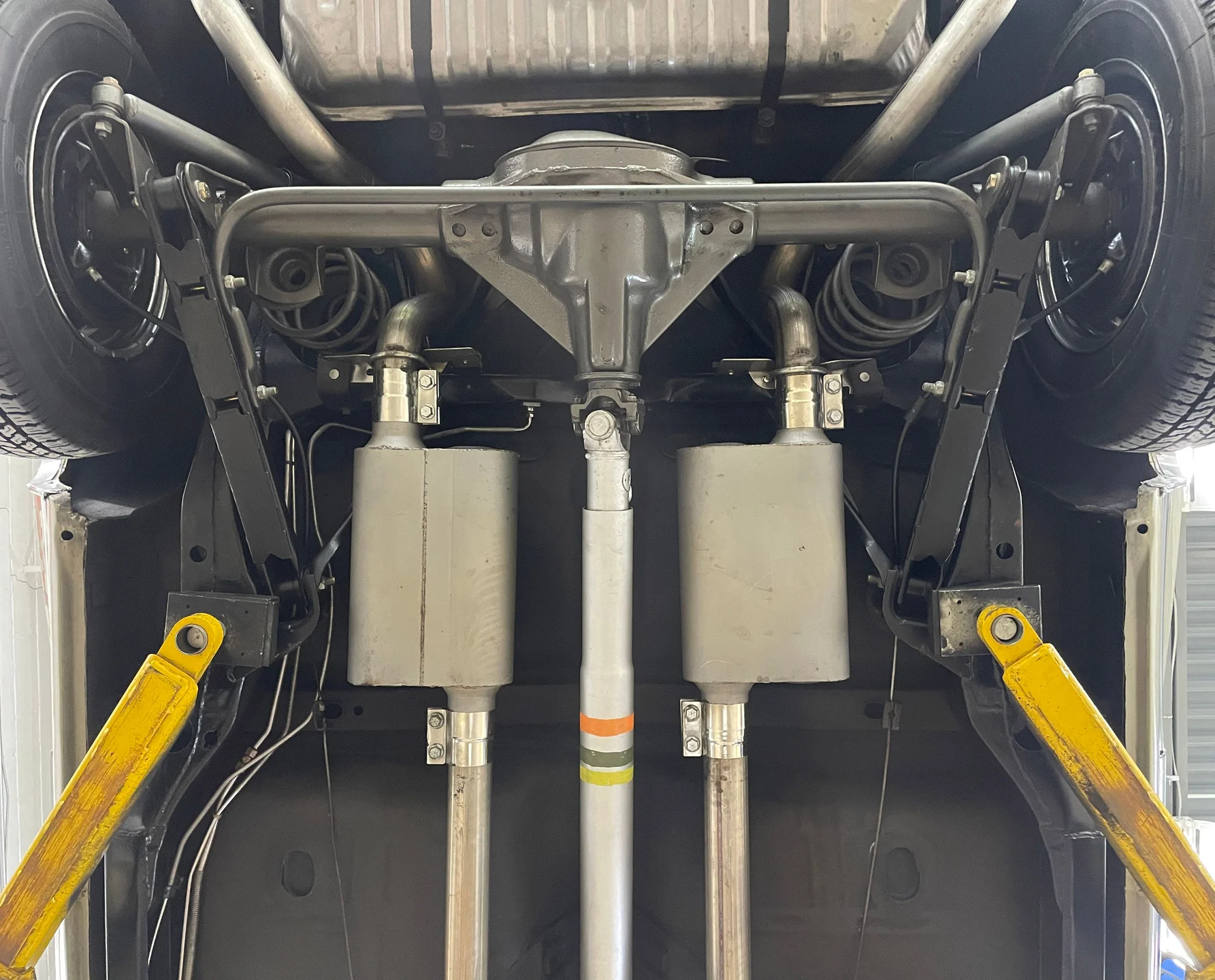
The standard engine in the GS 350 was the four-barrel high-compression 350, which was rated at 280 gross hp and 375 lb-ft of torque. This was optional on other models (it was only $31.60 extra on a Skylark Custom), but the GS 350 gave the engine a shot in the arm with standard dual exhausts, which were good for about 25 additional net horsepower. (Because gross output was measured without the stock exhaust system or mufflers, this wasn’t reflected in the advertised gross rating.) As far as I can see, dual exhausts were a GS exclusive in the 1968 Buick A-body line.
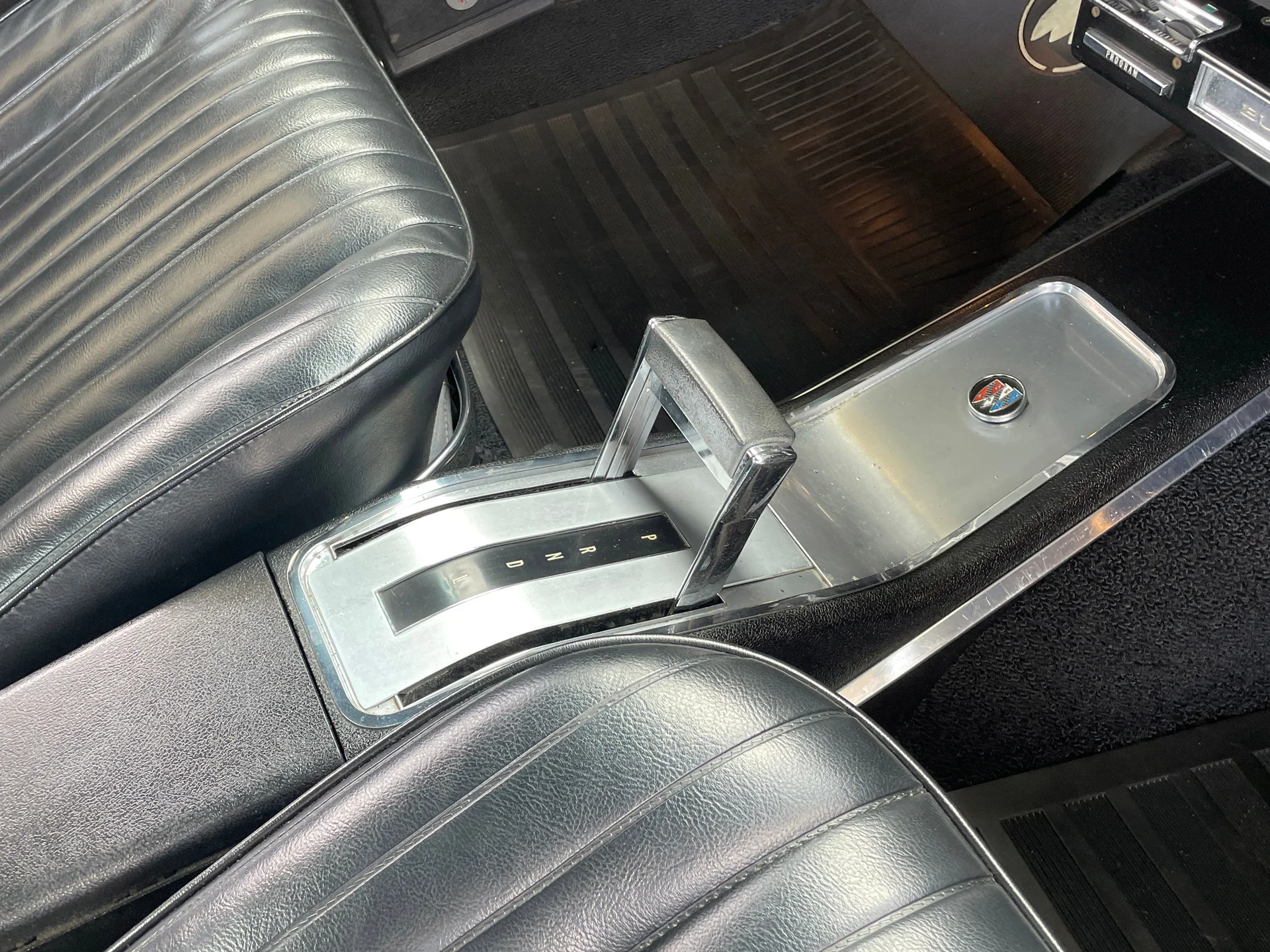
Regrettably, the Buick-Chevrolet TH350 3-speed Turbo Hydra-Matic wasn’t yet offered on the GS 350 in 1968, so most of these cars got the 2-speed Super Turbine 300, which had also lost its previous variable-pitch stator. It’s too bad, because the smaller engine really benefited from an extra gear and higher numerical starting ratio. (Maximum breakaway ratio with the 1968 ST-300 — low gear times converter stall — was 3.97 to 1, compared to 5.17 to 1 for the 1969 TH350.) A 4-speed manual was optional for $184.31, but it was installed on only 1.2 percent of Buick A-body production this year, even less than the standard all-synchro 3-speed.
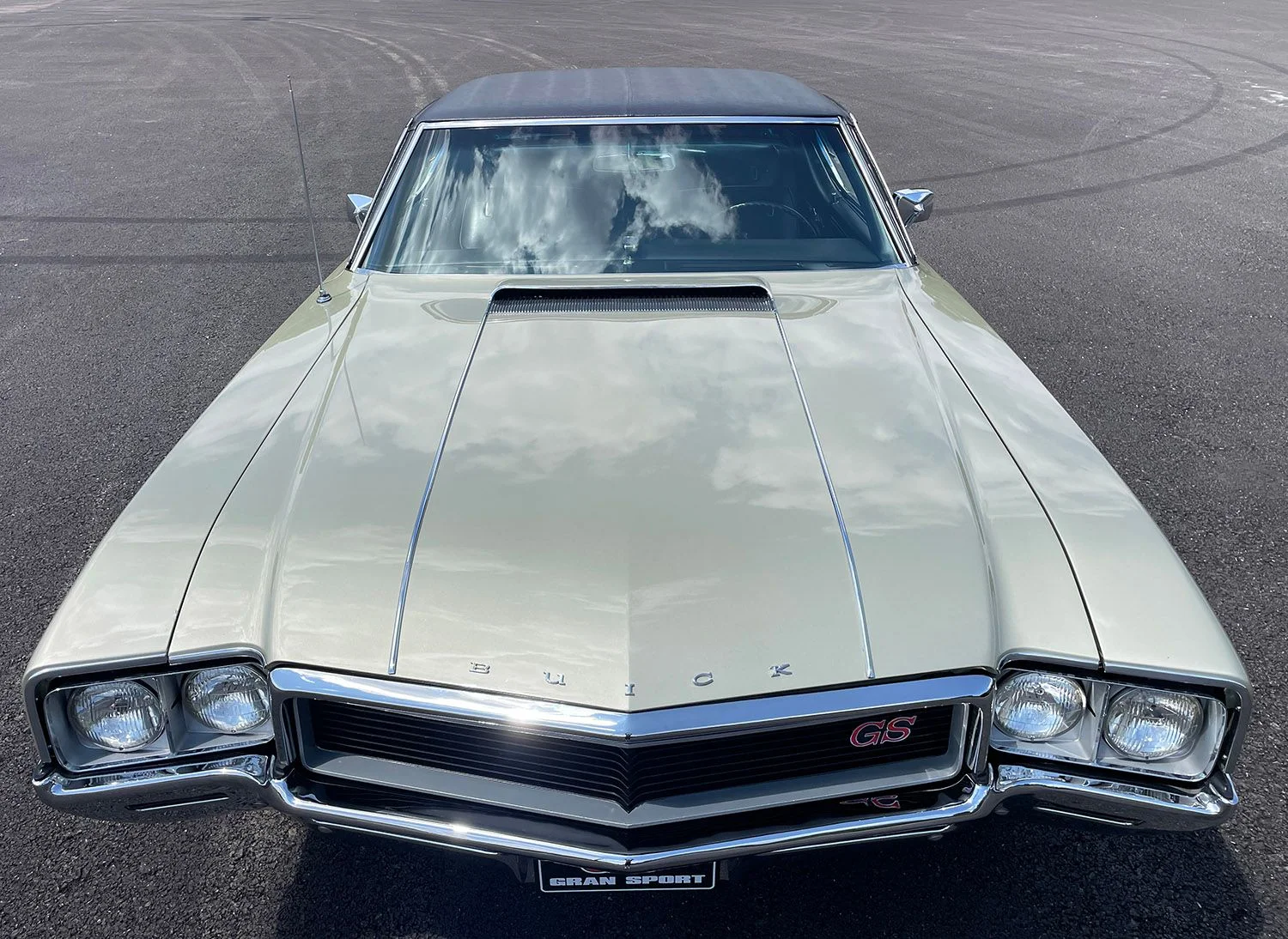
Still, it wasn’t all bad. Car Life, testing a 1967 California GS with the earlier 340 cid single-exhaust engine and switch-pitch Super Turbine 300, had managed 0 to 60 mph in a very decent 9.3 seconds, even with a lazy 2.78 axle ratio. The car pictured here is heavier than that ’67, but with its dual-exhaust 350, it probably has about 30 more net horsepower, and it’s fitted with the 3.42 performance axle. I’d guess 0 to 60 mph in something between 8.5 and 9.0 seconds — not torrid, but certainly brisk for 1968.
However, I said at the beginning that I was going to talk about handling. This was an area where the 1968 A-body, and the Buick A-body in particular, needed a lot of help. At the beginning of the year, Consumers Union (CU), publisher of Consumer Reports, had compared a batch of 1968 intermediates and found the Buick Skylark (a V-8 four-door) had the worst handling of the group. CU called the Skylark’s handling “rubbery and unpredictable,” prone to hopping and wallowing on mid-corner bumps. “[C]oming out of a high-speed turn, the front end hunted around for the new direction as the driver unwound the wheel,” they added.
All of the GM A-bodies CU tested bottomed easily and lost their composure if heavily loaded, but CU noted that in the Skylark, “[t]he passenger compartment and the chassis often seemed to be trying hard to go separate ways.” They didn’t try to diagnose this in engineering terms, but it sounds like what’s called “compliance steer” in the soft rubber suspension and frame bushings, combined with very soft springs and Detroit’s customary aversion to effective shock damping.
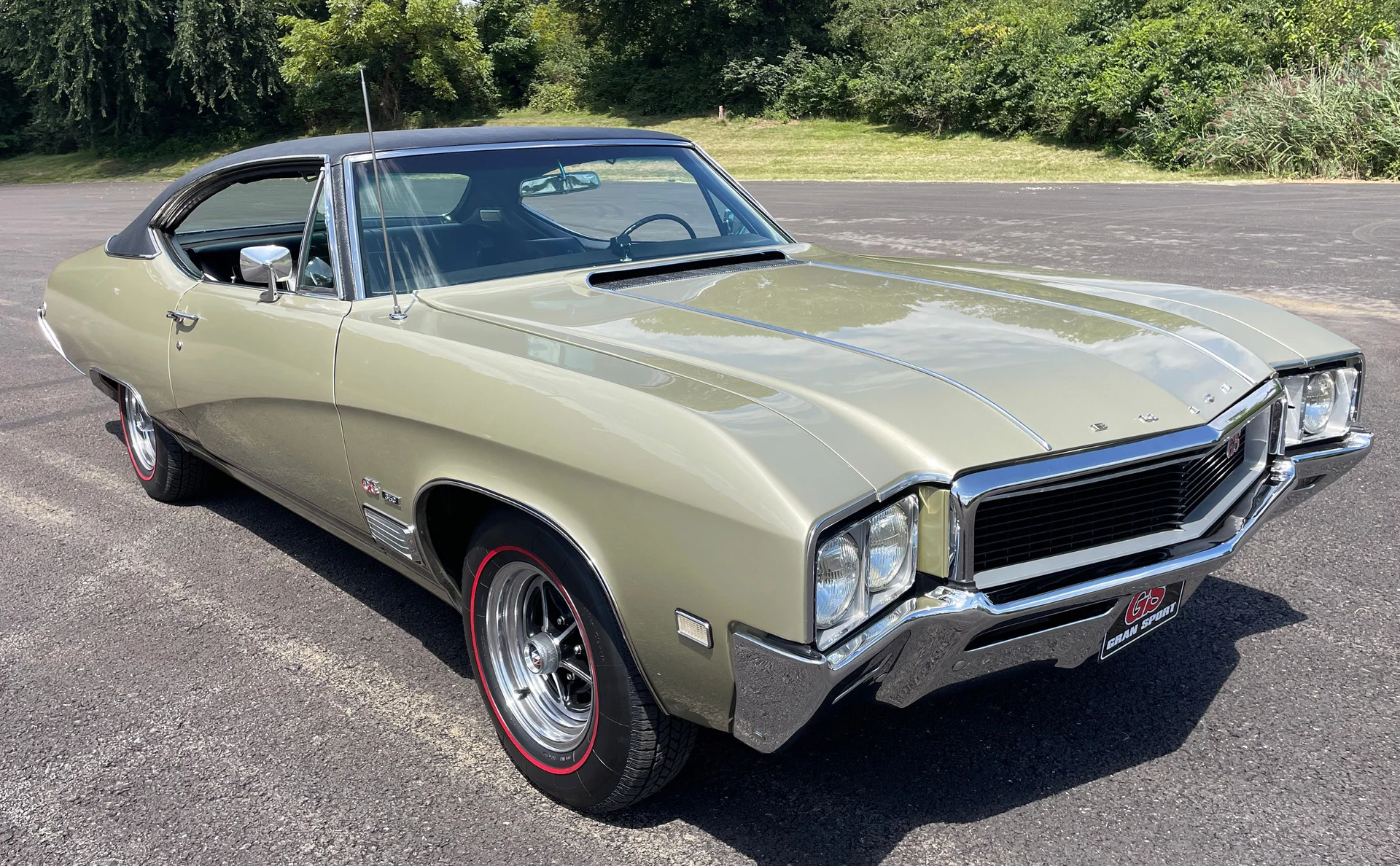
In standard form, the GS-350 wasn’t much better than the Skylark, but the Ivory Gold Mist car pictured here has a vitally important option: the $126.38 GS Rallye Road Control Package. This was pricey for a handling package because in addition to the usual stiffer springs and shock absorbers, it included a rear anti-roll bar and fast-ratio power steering. (You could have the suspension without power steering for $18.50, and the Skylark was available with a ride and handling suspension with no rear anti-roll bar for a mere $5.27.)
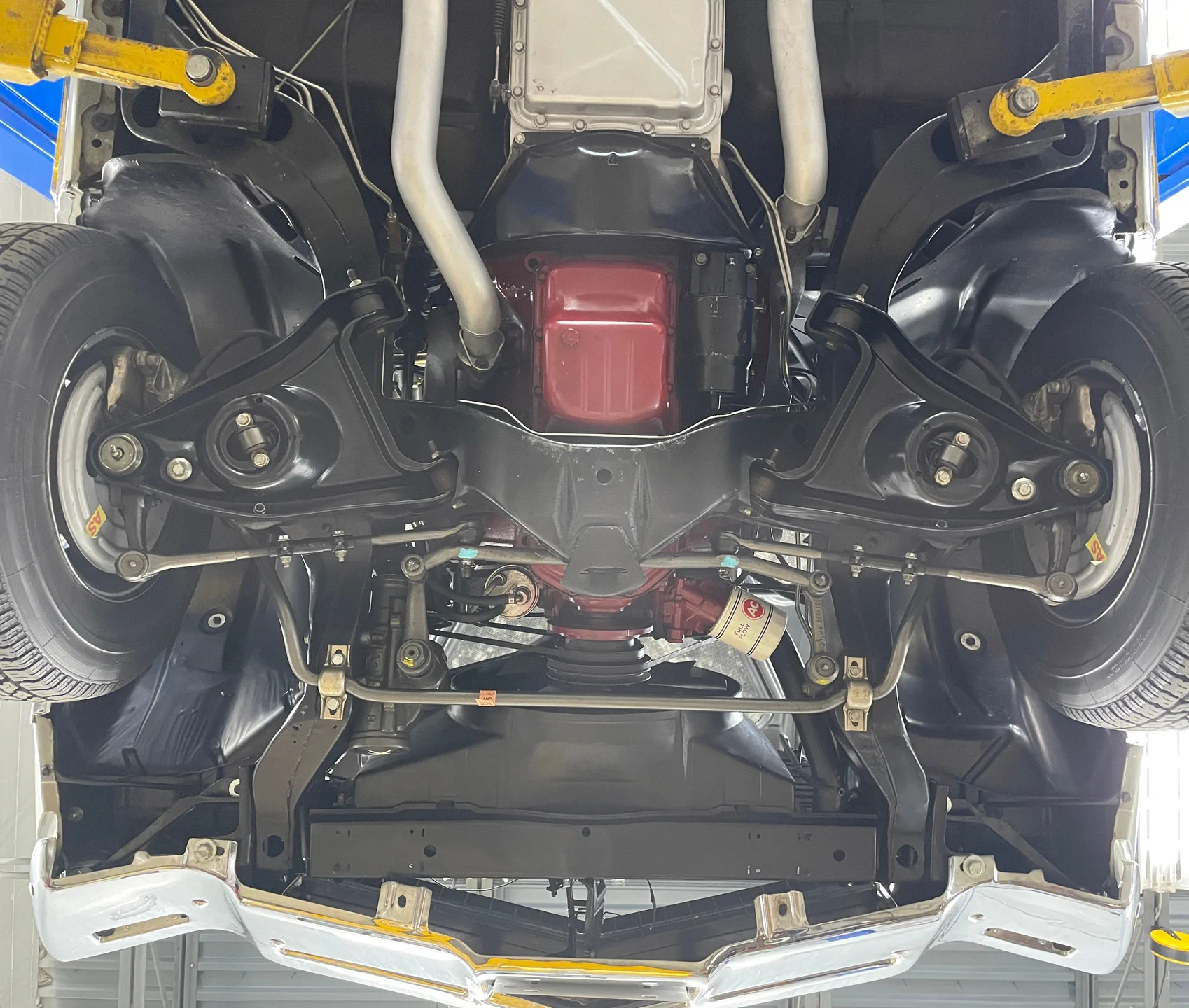
Based on the AMA specifications, it looks like Buick originally planned to make the Rallye suspension standard on both 1968 GS models and changed their minds at the last minute. On the GS 350, the Rallye suspension springs were 27 percent stiffer in front and about 35 percent in back than the V-8 Special or Skylark. The Rallye package used the thicker front anti-roll bar from the Buick Sportwagon, but offset it with the rear anti-roll bar, which the standard Special/Skylark line didn’t have at all. I suspect that a good set of aftermarket shock absorbers would still have done better than the factory H-D shocks, but given the limited life of OEM shock absorbers back then, you could always have added better shocks later.
The GS Rallye Road Control option was also available on the GS 400, but, interestingly, the GS 400 version was actually softer than the GS 350, particularly in back, giving more understeer. The GS 400 also suffered from its heavier V-8 engine. A GS 400 hardtop was 139 lb heavier than a GS 350, with 102 lb of that extra mass on the front wheels. The GS 350 was still nose-heavy (in this car, I estimate the weight distribution as 54.2/45.8 at curb weight), but less so than its more powerful brother.
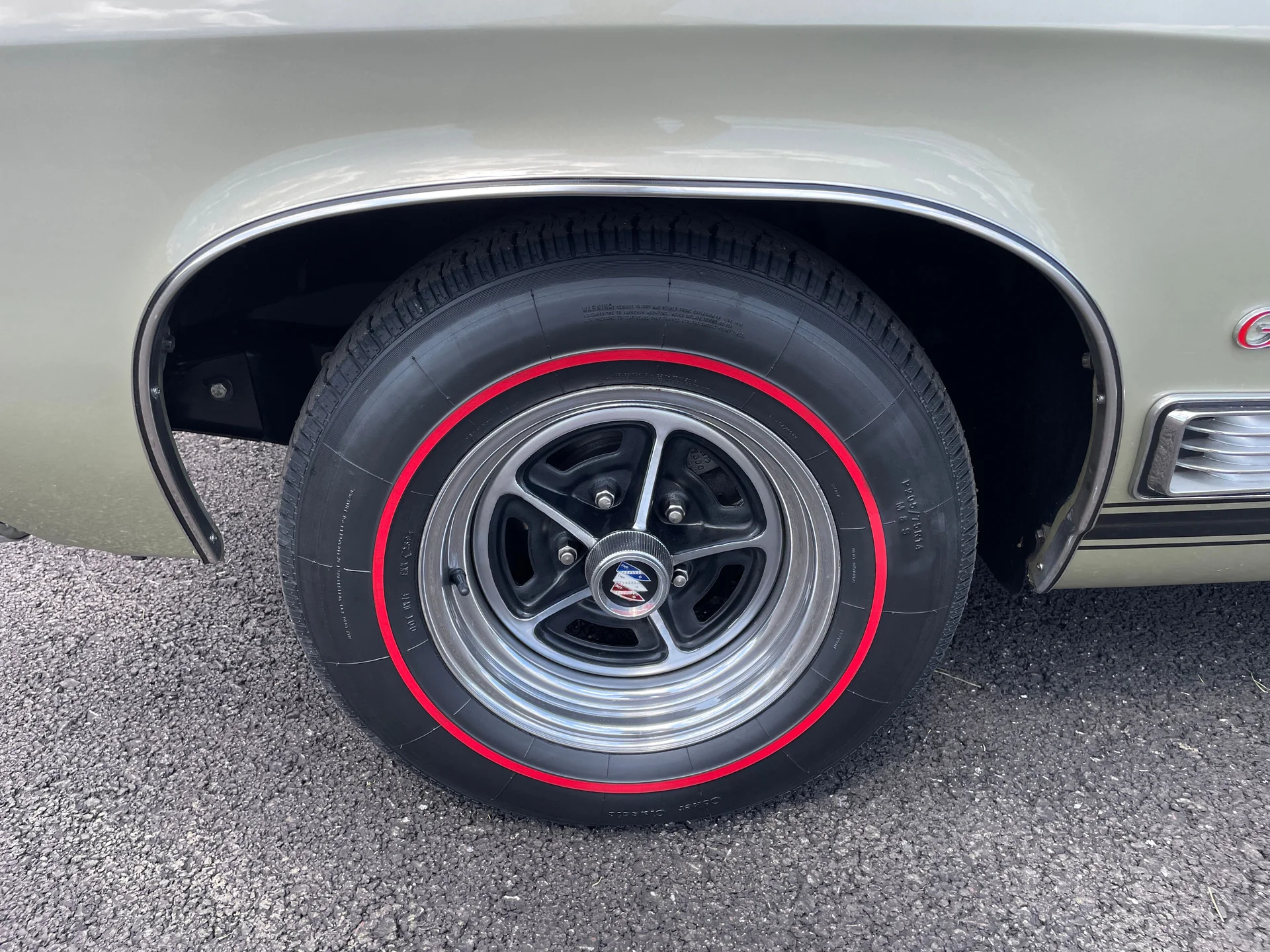
You could order 205R14 radial tires on the GS 350 in 1968 (this car currently wears 205/75R14 radials), but the GS 350 was denied the optional F70-14 Wide Oval tires used on the GS 400. This seems to have been another last-minute decision: The AMA specifications listed the Wide Ovals as standard on the GS 400 and optional on the GS 350, but the dealer price lists show the Wide Ovals as a $31.60 option available on the GS 400 only. (The GS 350 wasn’t available with red-stripe tires either, but since they were available for the GS 400, a Buick dealer would probably have been happy to add them for a GS 350 buyer.) The radials would have done better in the wet, but the low-profile Wide Ovals put more rubber on the road and generally had an edge in dry-pavement grip.
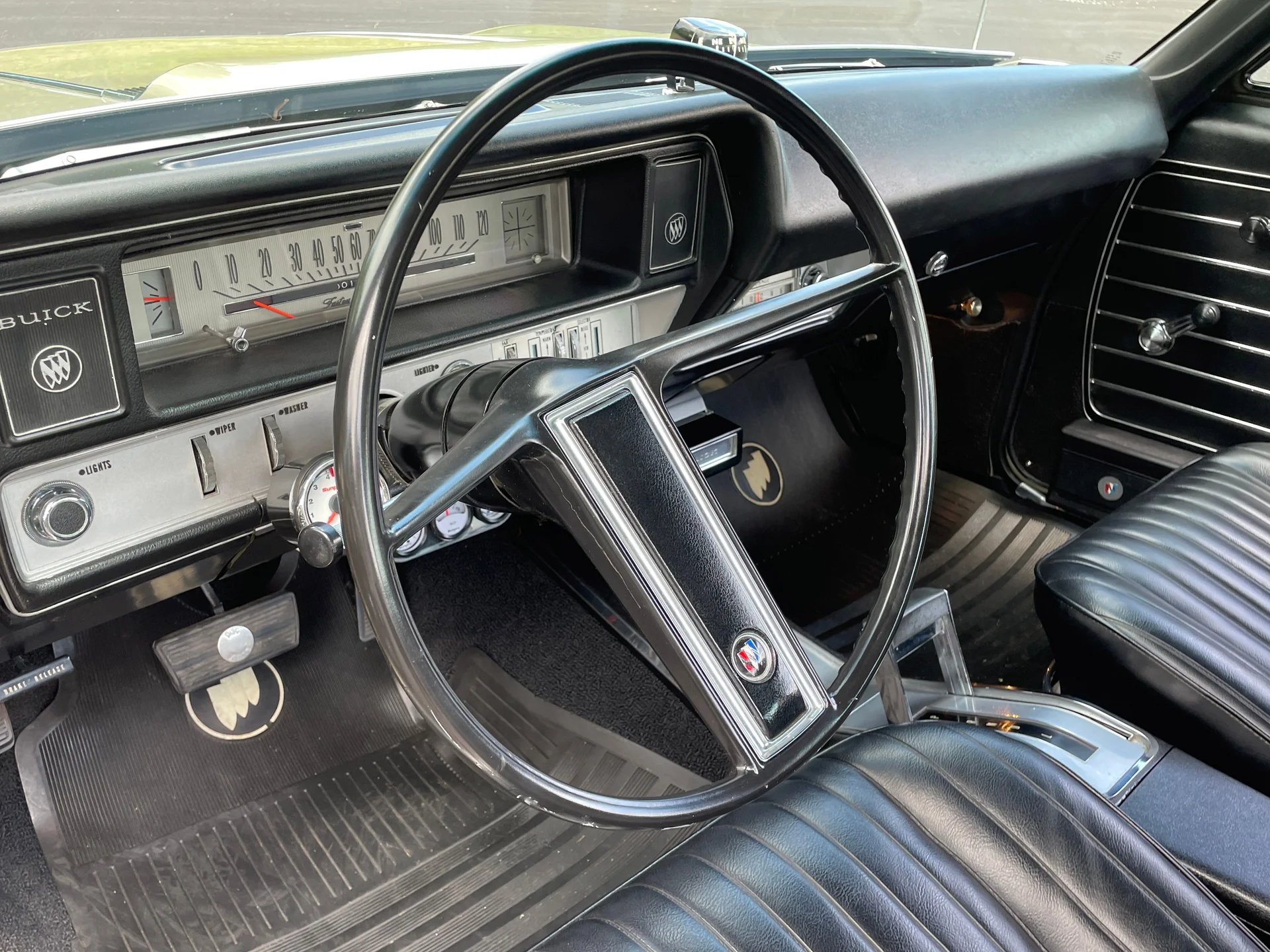
Power steering was installed on 91.4 percent of 1968 Buick A-body production, but the normal power steering setup didn’t have much feel and still required 4.1 turns lock-to-lock. The fast-ratio steering cut that to about 3.5 turns, providing quicker response if not any more feel.
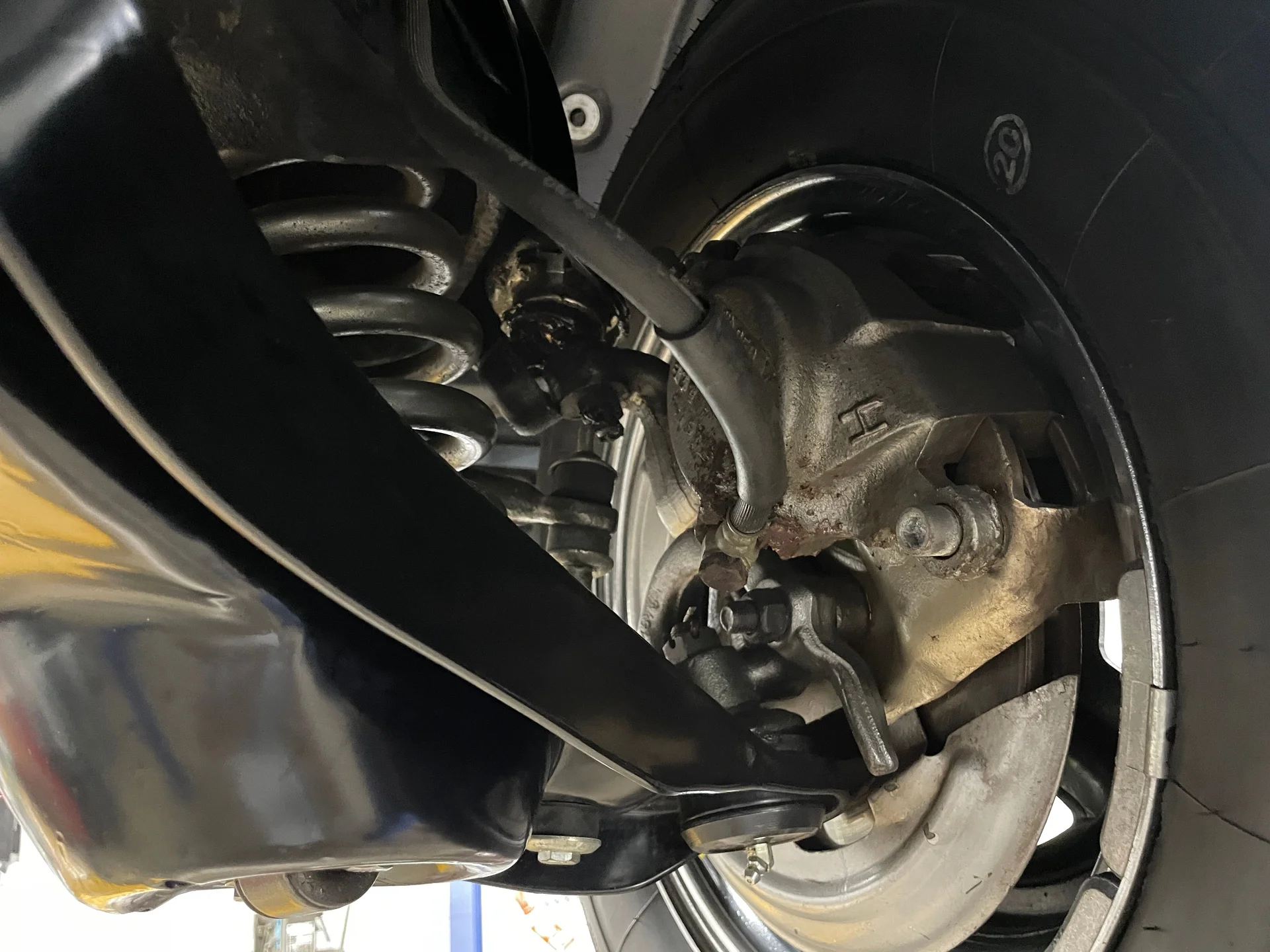
This car also has power front disc brakes, which were still very rare on the Special/Skylark/GS line. Front discs cost an extra $104.79: $63.19 for the brakes, $41.60 for the mandatory power assist. Only about half of A-body buyers ordered power brakes in 1968, and just 1.1 percent ordered discs.
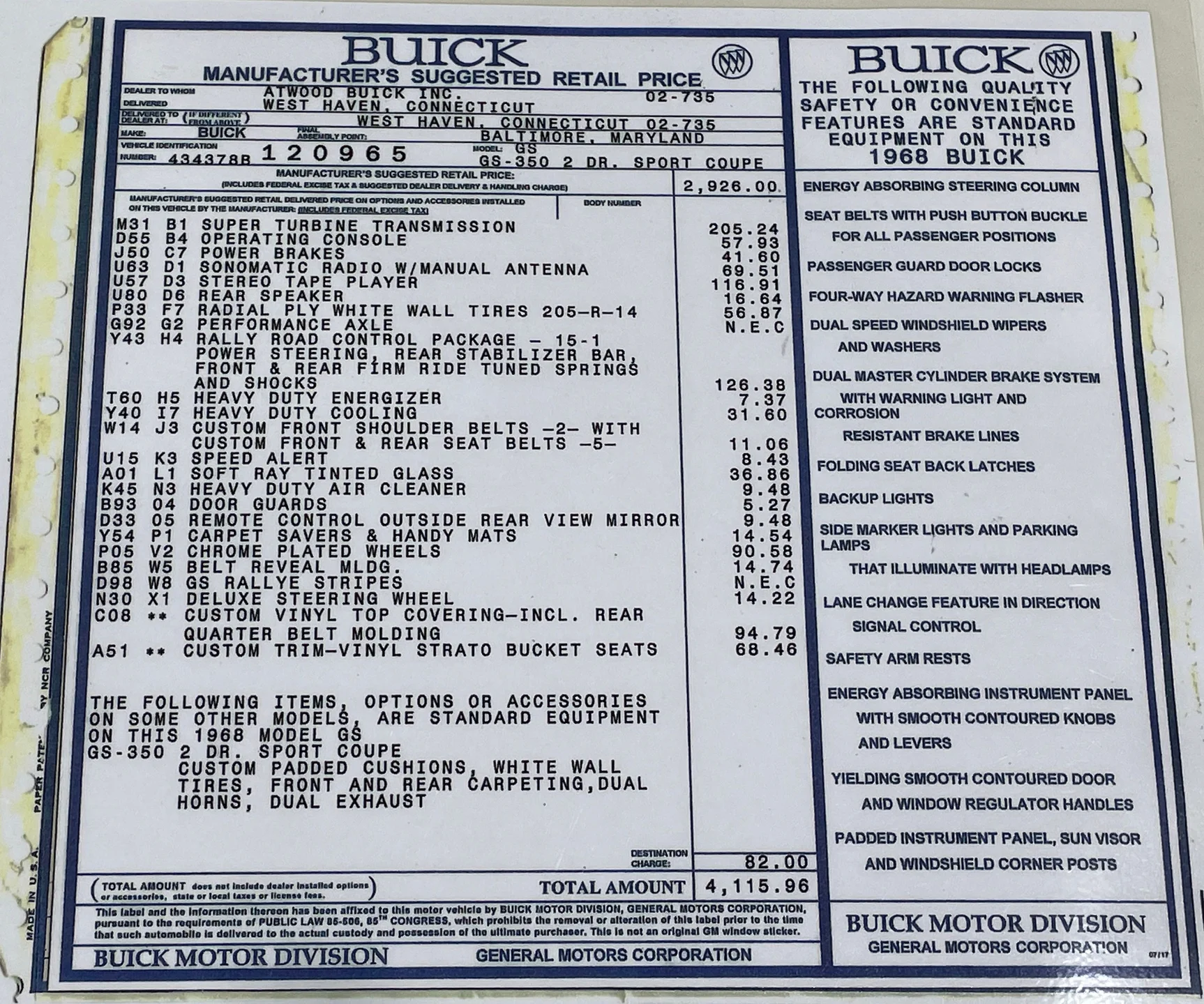
Since the listing for the Ivory Gold Mist GS 350 says the car was completely restored, and its window sticker is a modern recreation, how many of these features the car had when it left the factory is anybody’s guess. However, all this stuff was available in 1968, and it gave the GS 350 a chassis setup comparable to a well-equipped Oldsmobile 4-4-2. It undoubtedly came at a cost in ride harshness, but given how badly a standard Skylark could lose its cool on anything other than smooth pavement, it might have brought a net improvement in real-world ride quality.
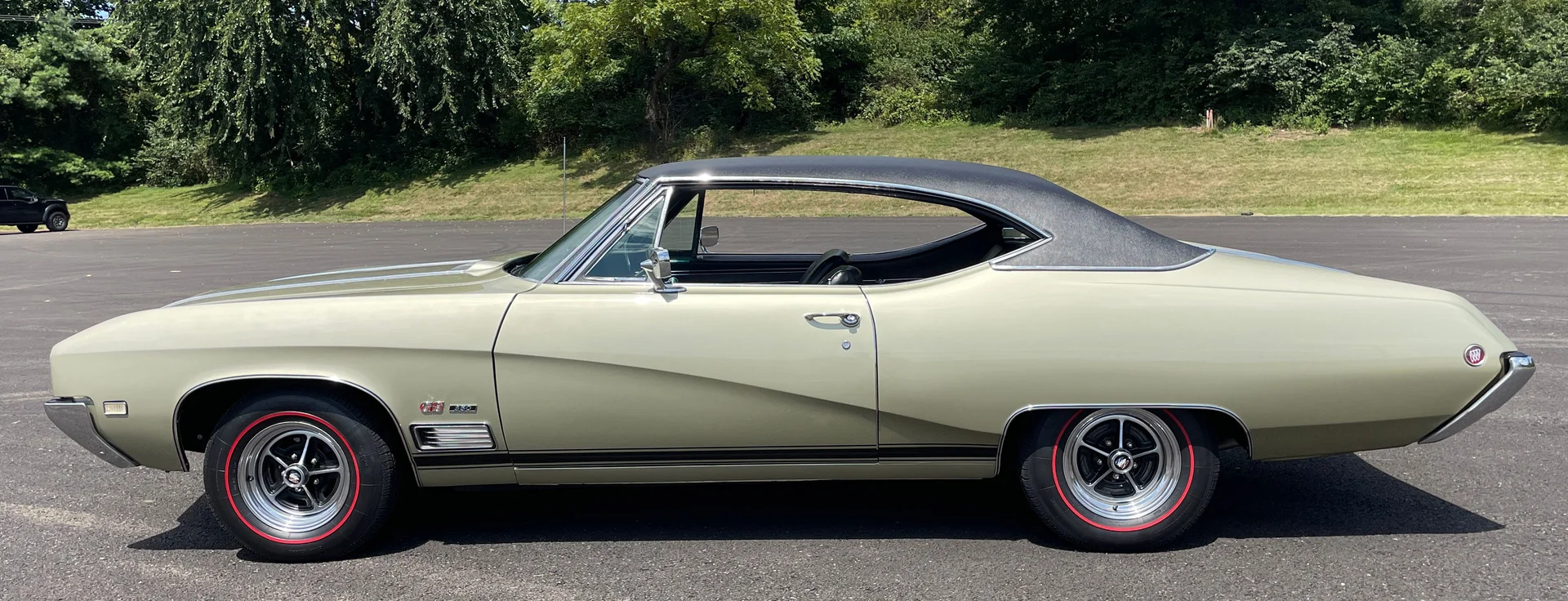
Did a GS 350 set up this way handle as well as a 4-4-2? Hard to say without a back-to-back test, but I feel confident in saying this car would handle much better than a Skylark or any other 1968 Buick, with at least a marginal edge over a GS 400 thanks to its better balance. Neither sporty car buyers nor typical Buick customers back then seemed terribly interest in handling, as a rule, but for anyone who was interested in a bit of aggressive cornering, this was the way to go.
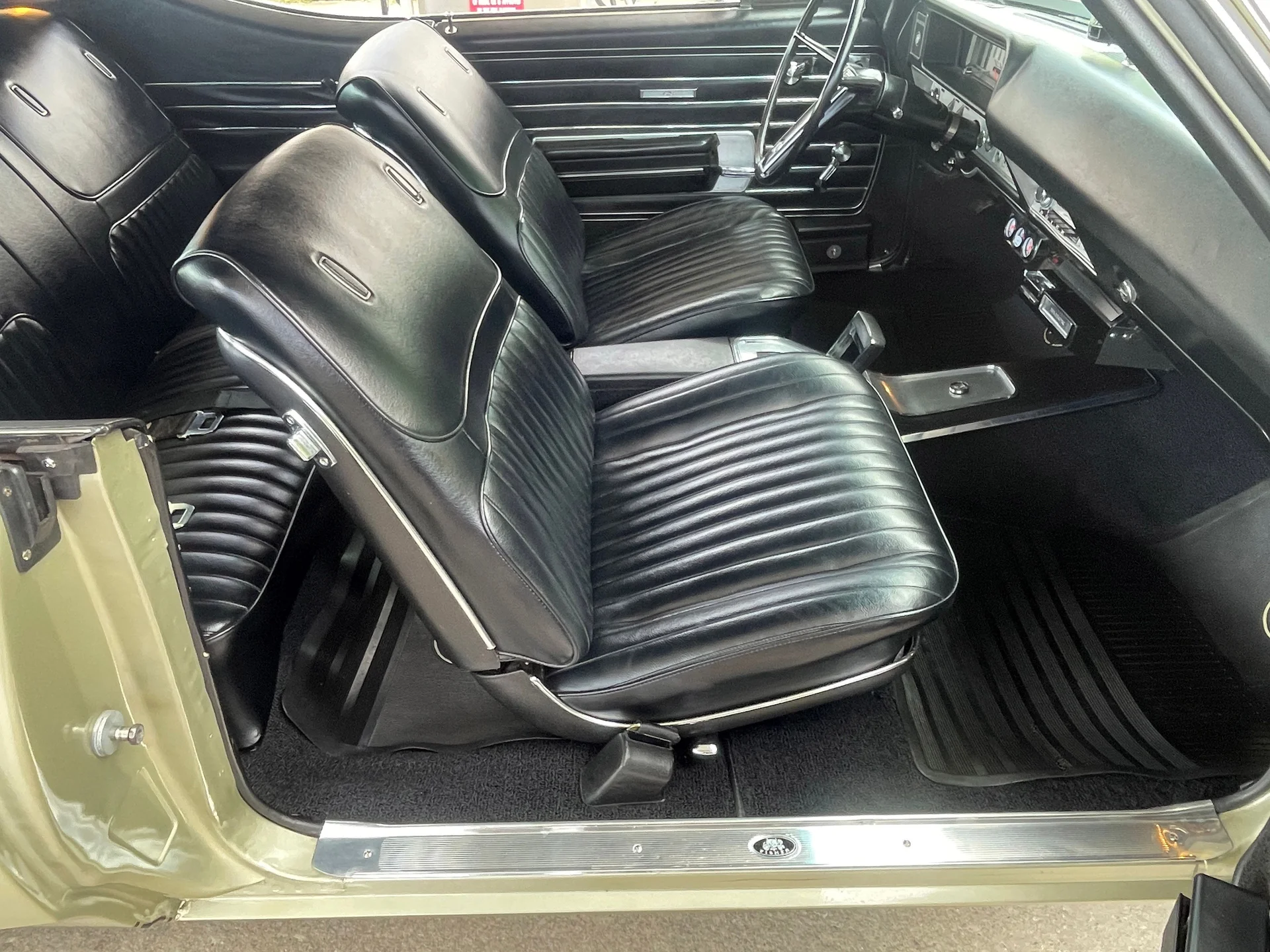
Because the GS 350 was cheaper than a Skylark Custom, you paid extra for Custom trim, which was mandatory if you wanted bucket seats. Together, they cost $139.02, with the full-length “operating console” adding $57.93. As usual, the Strato Buckets were not adjustable for rake, and none of the seats offered in the Buick A-body line this year offered much in the way of lower back support.
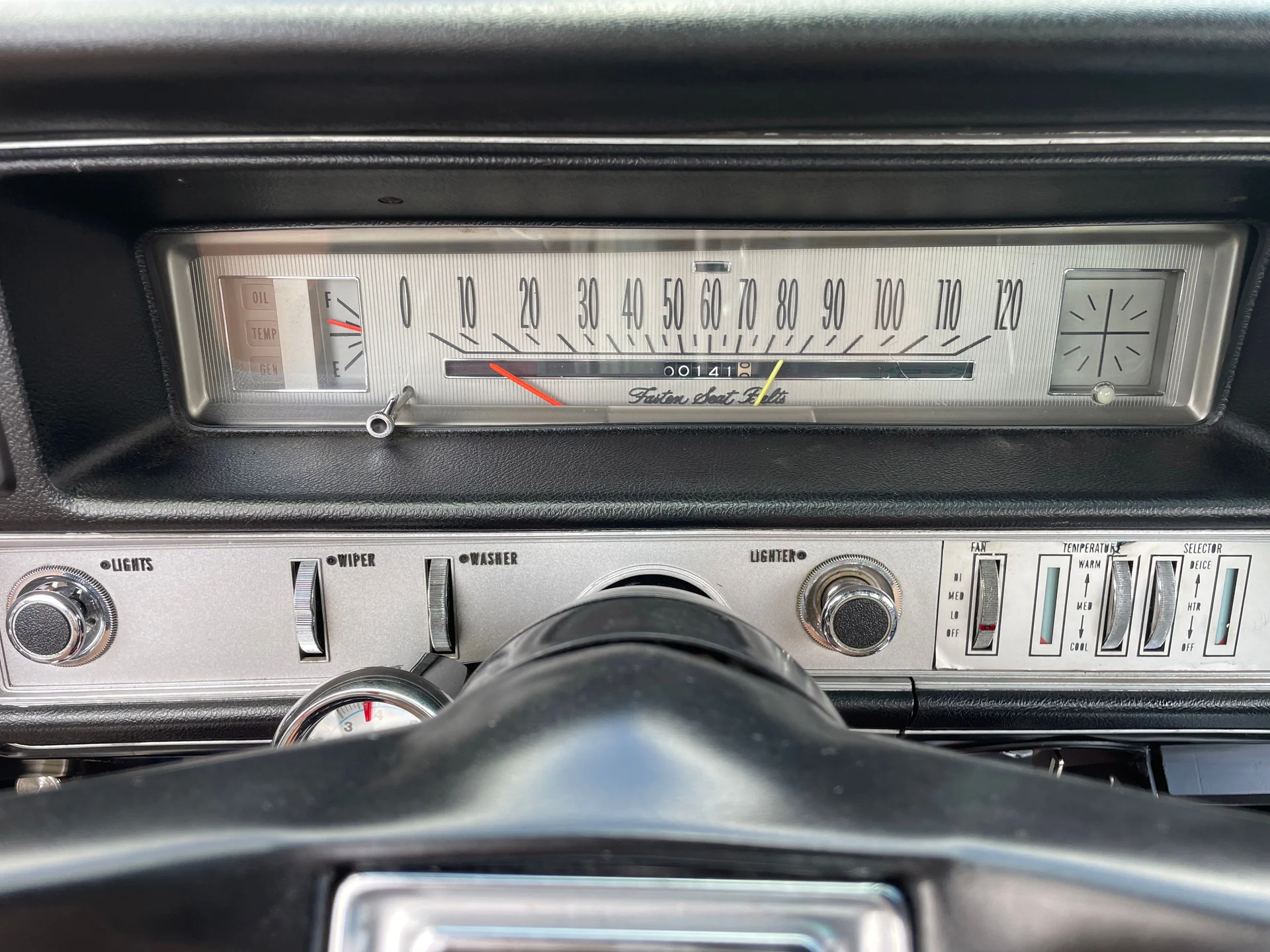
Thumbwheel controls were new for 1968, Buick’s way of tackling the initial set of federal interior crash protection standards. Consumers Union wasn’t too pleased with them, particularly the control for heater temperature (second dial from the right), which they found required a LOT of thumbing to go from cold to hot. Typically for domestic cars, there wasn’t much in the way of instrumentation, and this car even lacks the optional clock. It does have the $8.43 Speed Alert warning buzzer, indicated by the yellow needle on the speedometer, and there’s an accessory compass atop the dashboard.
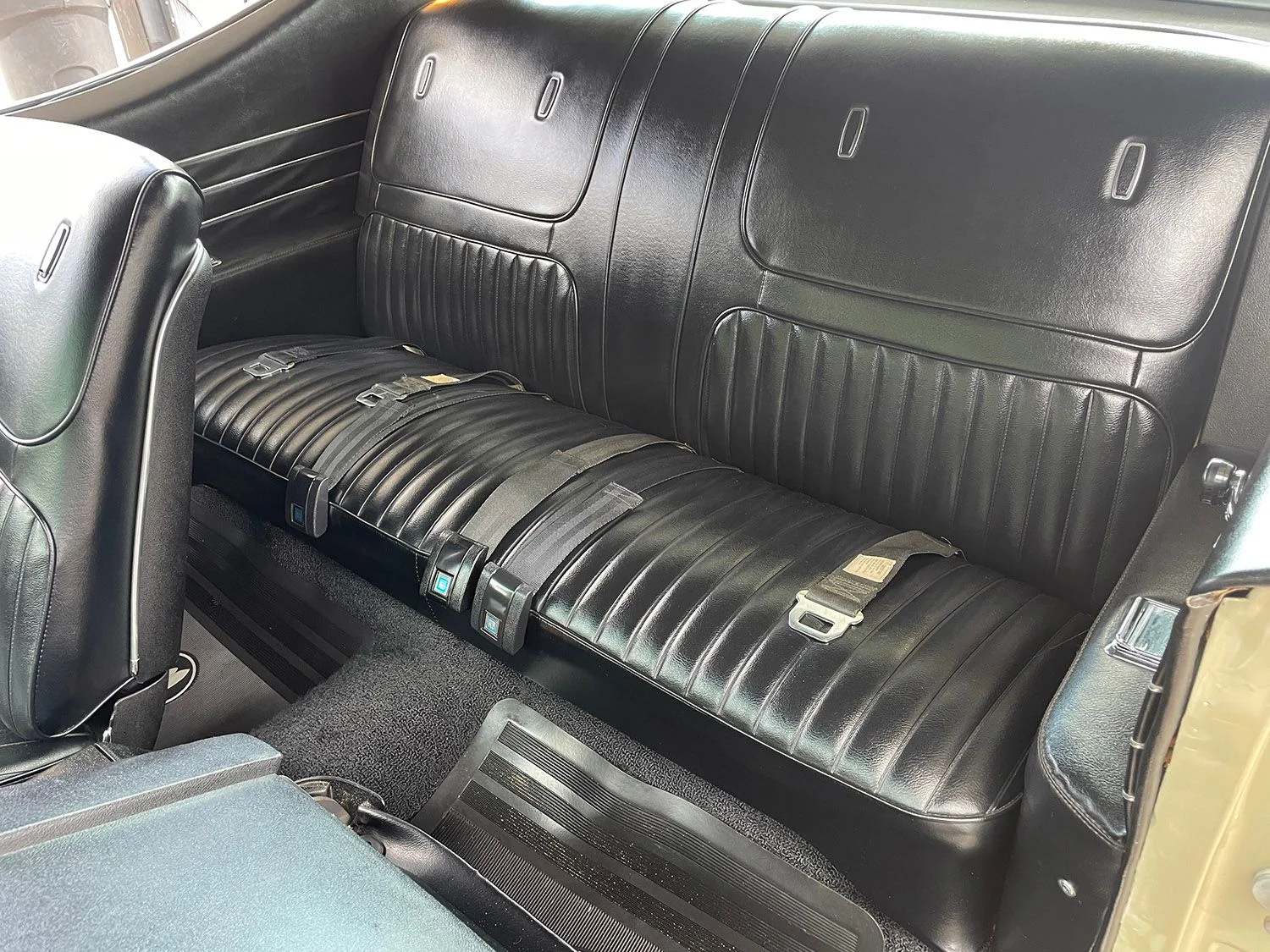
The rear seats in these short-wheelbase A-body two-door models screamed, “If you’re so worried about legroom, buy a sedan!” With the front seats all the way back, rear passengers were left with 33.1 inches of legroom and just 1.1 inches (not a typo) for their knees. Many buyers treated these cars as 2+2s anyway, so no one seemed to care.
Personally, I would find this GS 350 about 30 percent more appealing with TH350 — it’s frustrating that Buick and Chevrolet waited so long to offer a modern 3-speed auto with their smaller engines — but as a well-rounded fun car that wouldn’t overly antagonize the insurance company, this GS had a lot going for it. Unfortunately, “sporty” and “Buick” weren’t words that naturally went together back then. Buick built only 8,317 GS 350 hardtops for 1968, plus 10,743 GS 400 hardtops and just 2,454 of the GS 400 convertible.
Related Reading
Cohort Classic: 1968 Buick GS California – Far From Home (by Paul N)
Car Show Classics: 1968 Buick Skylark/GS400 – For The Appreciation Of Stepchildren (by Aaron65)
1969 Buick Skylark Custom With TH350 Transmission: GM Finally Shifts Into Third Gear (by me)
Curbside Classic: 1969 Buick Skylark Custom – No, It’s Not A Chevelle… (by Tom Klockau)























I have no idea why Buick saddled these small-block/two-speed cars with 2.78:1 gears. My ’65 Skylark with a 300-4V/Super Turbine 300 is such a pooch from a standing start, and I have to think a set of 3.23:1 gears or something similar would have made a big difference without affecting fuel mileage too much. My ’63 Riviera has 3.23s and it cruises effortlessly at expressway speeds (but it also has quite a bit more power than the 300).
It seems that Buick never really got a handle on younger buyers, at least until the GS Stage 1 came along, and even then, it was probably too expensive for most.
It is a shame that one of the magazines didn’t get a hold of a GS350 with this package anyway, if only to give us some insights into how it compared to a 442.
And I know that this example has the performance axle, but most of them did not.
I think they were looking for gas mileage. The ’69s actually generally had a 2.56 axle, which was probably manageable with TH350, but undoubtedly miserable with Super Turbine 300. Because these cars were pretty heavy, the real-world gas mileage was probably less than a lot of buyers expected buying a “small car.”
General musings:
In modern times, most buyers buy what’s on the lot. I’m not sure what percentage of buyers in 1968 were willing to order (and wait for) their cars. Generally speaking, it seems like any particular car brochure may have had more or less information about what options and packages were available for that specific model.
It’s hard for me to understand how a buyer would even buy a car like this. Either you would have to have obtained information about what choices you had, which may not have been readily available to the general public, OR you had to be lucky enough to get a really good salesman who was willing to go through the order book line-by-line and explain to you what each option meant in terms of the final product you would receive.
I wasn’t old enough to buy a car in 1968, and I would be interested in learning just how someone could/would cherry-pick a car like this.
My parents last custom ordered car was a ’68 Pontiac Catalina. The car was nothing special as far as options go and my parents were lower middle class, my hunch is the only thing special was the April Gold paint (might have been the same as Buick Ivory Gold). I would be interested myself in seeing data on custom ordered vs. dealer stock purchases in that timeframe.
I’m with you Aaron on the styling. You had to be a Buick loyalist to choose this over any of the other GM stable mates.
I don’t think any of the options on this car were quite that obscure. There WERE cases where there were options that were not catalogued and that would have been a battle to get — homologation stuff, police package stuff, etc. — but the GS Rallye suspension options were in the Buick salesman’s pocket facts (the little booklet that had list prices for things), and they were listed in most contemporary price guides. Then as now, you could go to most newsstands and spend about a dollar for a booklet with retail and wholesale prices for most options on most new cars.
I also doubt that many cars on dealer lots had heavy-duty suspension options, but people did order cars equipped as they wanted. I’m sure if a dealer thought they could get you to take a car out of inventory, they would, floorplan financing being what it is, but ordering a car wasn’t that uncommon.
One of my favorite features (sarcasm) of the 1968 Buick mid-sized cars is the relatively flat upper portion of the rear bumper. What a delight for the motorist behind this car with the sun to our rear! The glint is awful. Other than that, the car is a pretty vehicle.
My dad had a 68 Pontiac Le Mans coupe (in gold with gold interior) ; one of my college roommates had her mom’s old Cutlass Supreme (in burnt orange with the color matched rims). Those two door GM cars are more attractive to me now than they were then, especially with the pillarless greenhouse.
IMHO I would take a 442 over the Buick; it’s a little too fussy to be a sporty car. Buick kept with the sweepspear as a distinguishing characteristic for too long.
The 139lb difference in weight from GS 350 and GS 400 was not just the engine, likely bigger radiator, also the superturbine 300 was quite ait lighter then the 400 turbo.
I’m aware of that, but changes that went with the larger engine, like a larger radiator, also put more weight to the nose.
The AMA specifications have curb weights divided front and rear, and the additional equipment they list is divided the same way.
A guy I worked with had a Skylark from this generation with a dented rear bumper. I could hardly tell the difference 😉
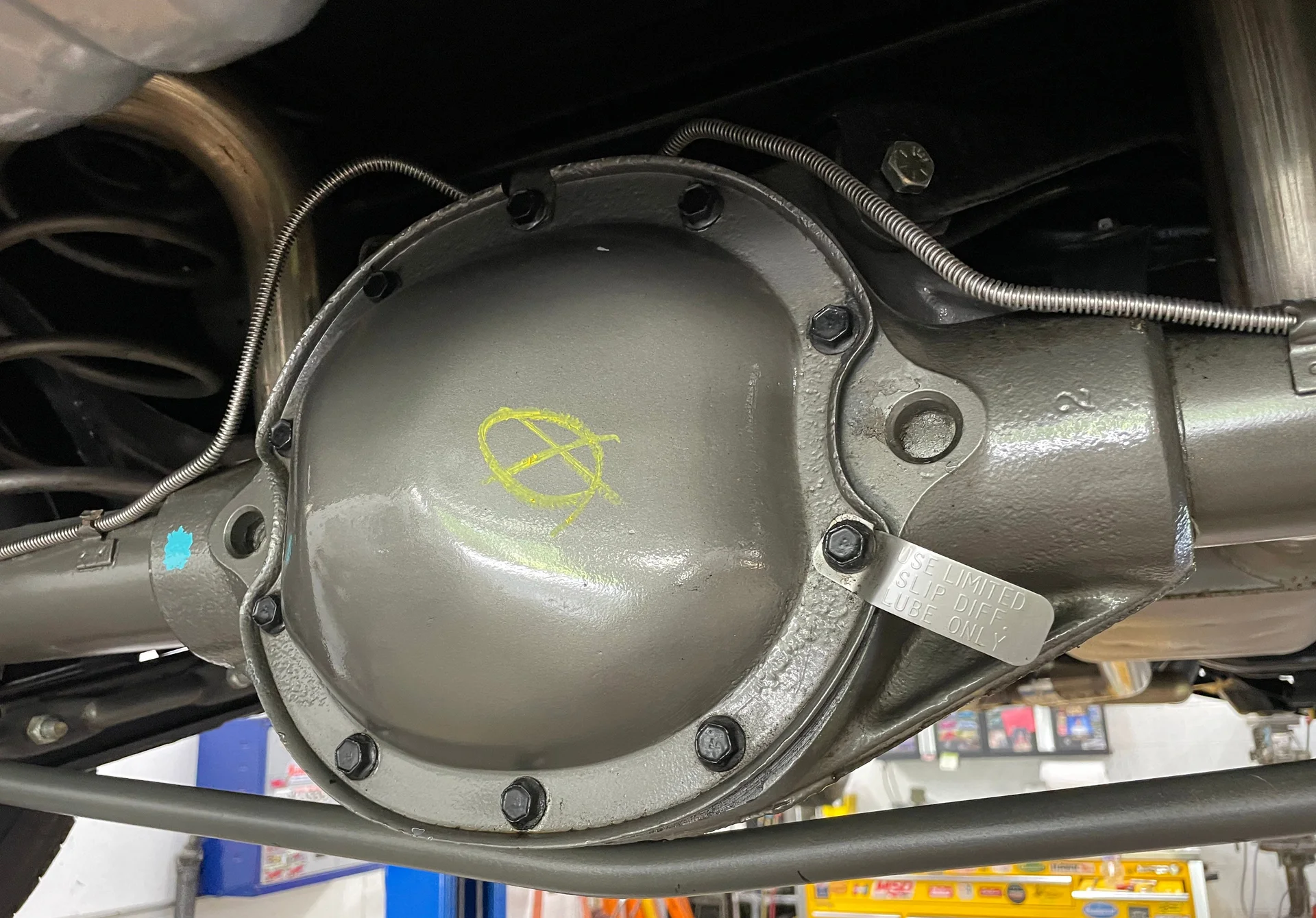
One interesting thing I noticed on the rear differential cover is the circle X marking. There’s also a splotch of blue paint.
I’ve only seen such markings on Chrysler products of the era. I did not realize the markings were used by other companies.
I assume circle X indicates a limited slip unit. I’m unsure what the paint markings indicate. In addition to blue Chrysler also used yellow and white paint markings.
Trivial, but interesting.
These were common when I was a kid in Quebec. A family friend had one and it was not treated as a 2+2. It was a family hauler. Like Aaron states, the rear seat was an afterthought. Even at the tender age of 12, I understood which cars had the best space efficiency. It certainly wasn’t found in a GM A body two door hardtop.
I just saw a 1968 GS 350 race at the Pure Stock Muscle Car Drags this afternoon. According to the announcer, it’s apparently an original car with an engine that hasn’t been apart, and it ran low 15s at just over 90. Not bad.
It took me a while but I do like this, a bit awkward but handsome at the same time, even the vinyl roof doesn’t put me off, and it should, the unbroken C pillar to quarter panel with vinyl rarely looks good.
The great color, wheels and redlines help it a lot.
Beautiful underneath as well.
Why on Earth would somebody need a heavy-duty air cleaner in Connecticut?
I don’t see “disc brakes” on that option sheet; it was probably built with power-assisted drums. In ’68 I’d expect that factory-original disc brakes would be the Delco four-piston, fixed-caliper design.
This car actually has the ’69-newer Delco single-piston, floating caliper disc brakes.
Scrapping the original drum brakes that this car was probably built with is a great idea; and when I did that on my ’68 A-body, I used the Delco floating caliper system, too. This is a “good” modification, but it’s certainly not “authentic”.
The four-piston calipers essentially started the aftermarket brake-upgrade industry, since those calipers were infamous for both leaks and piston-seizing. Putting sleeves into those calipers was big business especially for the Corvette guys.
Like I said in both the caption and the text, the options sheet is a modern facsimile: They bought a reproduction blank window sticker and filled in options, some of which are wrong. So, I don’t think it’s any indication one way or another what features the car had originally, and the rarity of front discs as a factory option makes it statistically unlikely that it was ordered that way in the first place. I can’t readily tell the single-piston from the four-piston brakes from that angle, but I’ll take your word for it. In any event, the AMA specs indicate that the 1968 front discs were still the four-piston variety, so single-pot discs would be a later retrofit whether the car originally had discs or not.
Weren’t all Buick/Pontiac/Olds engines the same size (respective divisions aside), just different bore/strokes? My cousin had a 68 GS 400 and boy was it fast? 120mph felt like 60!!
The engines were often — not always — of similar nominal displacement, mainly because of GM corporate policy on allowable engine sizes in specific classes. They were not the same design, and there were some versions that didn’t have equivalents elsewhere. (For instance, Buick had a smaller 300 cid version that didn’t have any Olds or Pontiac equivalent.)
As an owner of a ’69 Skylark Custom you’re spot on re the handling comments. I’ve done pretty much all the upgrades mentioned. Disc front brakes, rear anti roll bar, upgraded the front bar ( a Holden HQ one fits with some minor fabrication work) Koni shocks and some other mods.
While it’s a cruiser, I like my cars to have some handling ability.
Thanks Aaron, I meant to say that BOP had different engines but they were all the same block size within their respective divisions, no big vs small block, just bore/stroke differences for CID.Or in Pontiac’s case different size main journals for engine displacement.
Oh, I see. No, not necessarily. Pontiac really only had one block size, while 1964 and later big Oldsmobile V-8s had a higher deck height than the small ones, but were architecturally similar. However, the small and large Buick engines were different. The Buick small V-8 was really a descendant of the 1961 aluminum V-8, like the 90-degree Fireball V-6. If you like, the later 300/340/350 engines were like the V-6 with two extra cylinders (although the earliest 300 shared the aluminum heads of the departed aluminum V-8). The 1967 and later Buick 400/430/455 was a different engine family.
Ok, thanks again Aaron. I thought the Buick 350/400 were the same block size. Learn something new every day! I’m more of a Mopar guru but am a “closet” Buick/Pontiac fan also due to my cousin’s 68 GS400.