
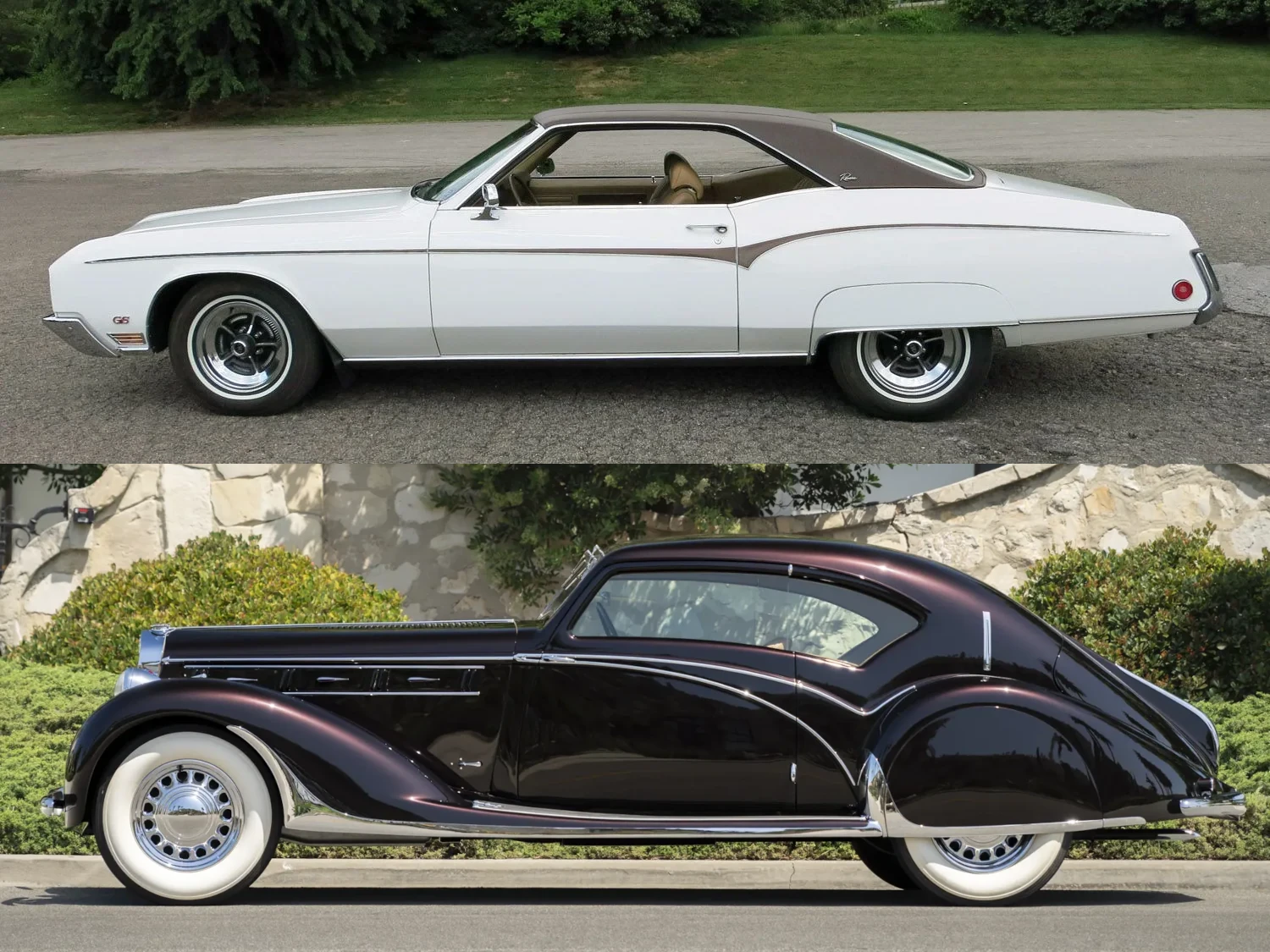
The 1970 Buick Riviera is often dismissed as a dud, a who-asked-for-this facelift that made the Riviera look bigger and less graceful than ever. Yet, the 1970 Riviera took its inspiration from a dramatic-looking coachbuilt 1930s French classic that still turns heads today.
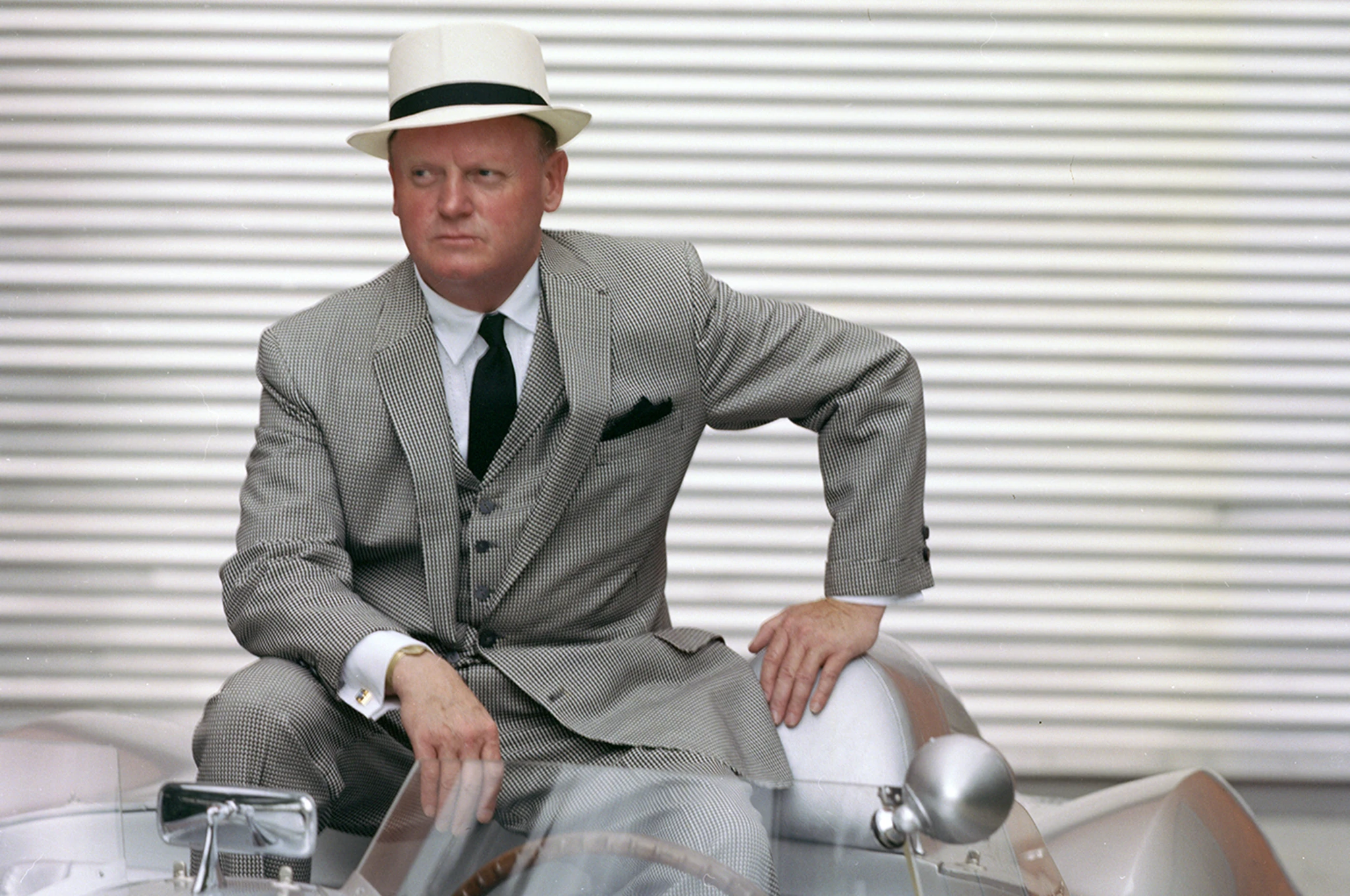
Like many auto enthusiasts, former GM Styling VP William L. (Bill) Mitchell (1912–1988) spent much of his life fascinated with cars that had caught his eye in his youth. Mitchell joined GM’s Art & Color department in late 1935, when he was 23 years old, beginning his career in a period that happened to coincide with the prewar apogee of the automotive coachbuilder’s art.
The world’s great carrozzieri had discovered streamlining, and whether or not they had any interest in aerodynamics, they were clearly excited about the possibilities for unification of form — fenders, running boards, and headlights were melting together into fanciful confections worthy of the science fiction pulps. The applicability of such exotic flourishes to regular mass production cars was limited, and the number of people who could afford high-end coachbuilt cars was not high, but even a brief encounter with the likes of a Bugatti Type 57 or a Delahaye bodied by Figoni et Falaschi tended to stick in the mind. (It still does.)
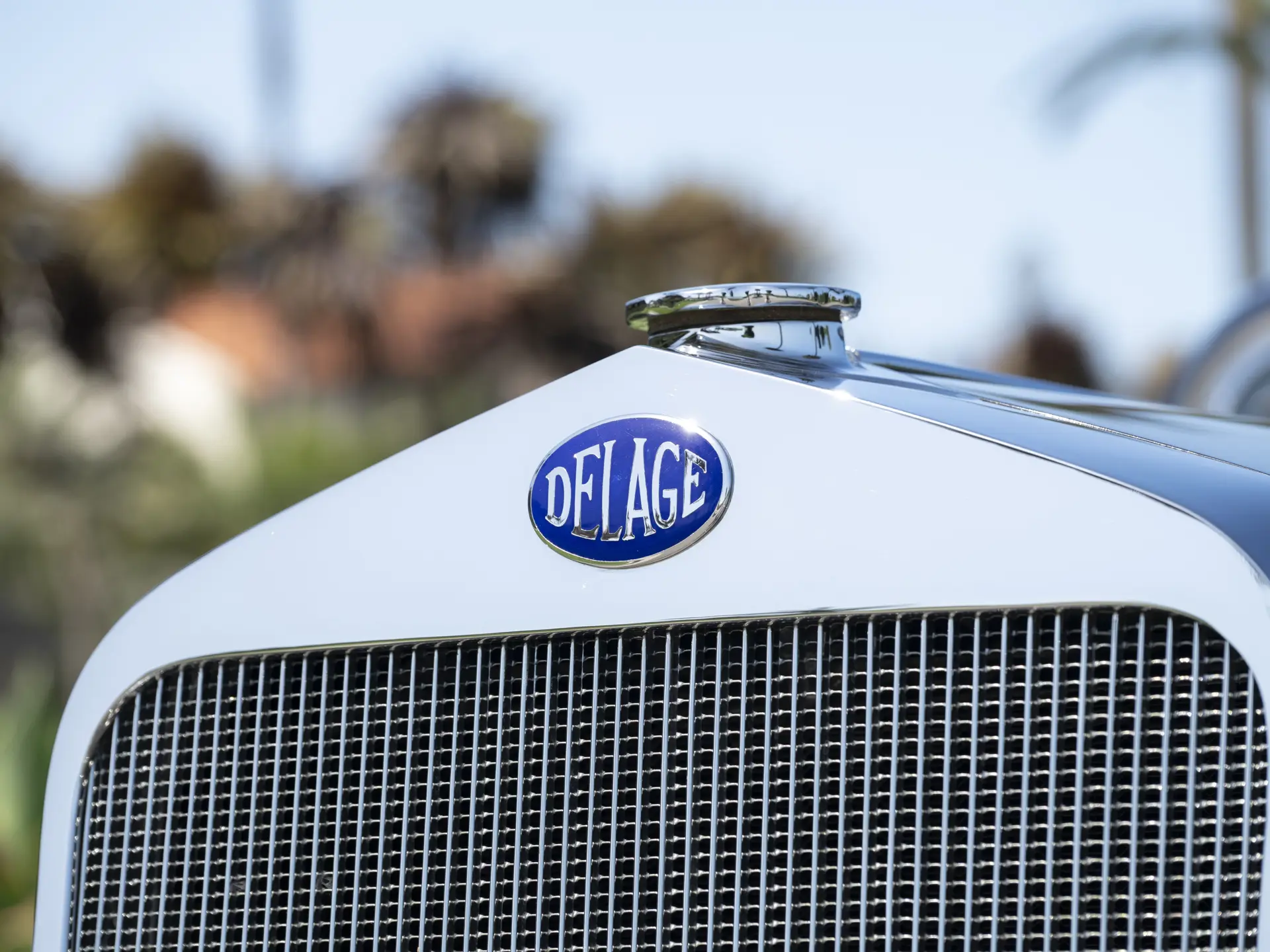
Among the great names of that era was the French automaker Delage. Founded in 1905, Delage could be seen as a kind of French prototype of Jaguar, offering sophisticated running gear and genuine racing pedigree at high but not necessarily stratospheric prices.
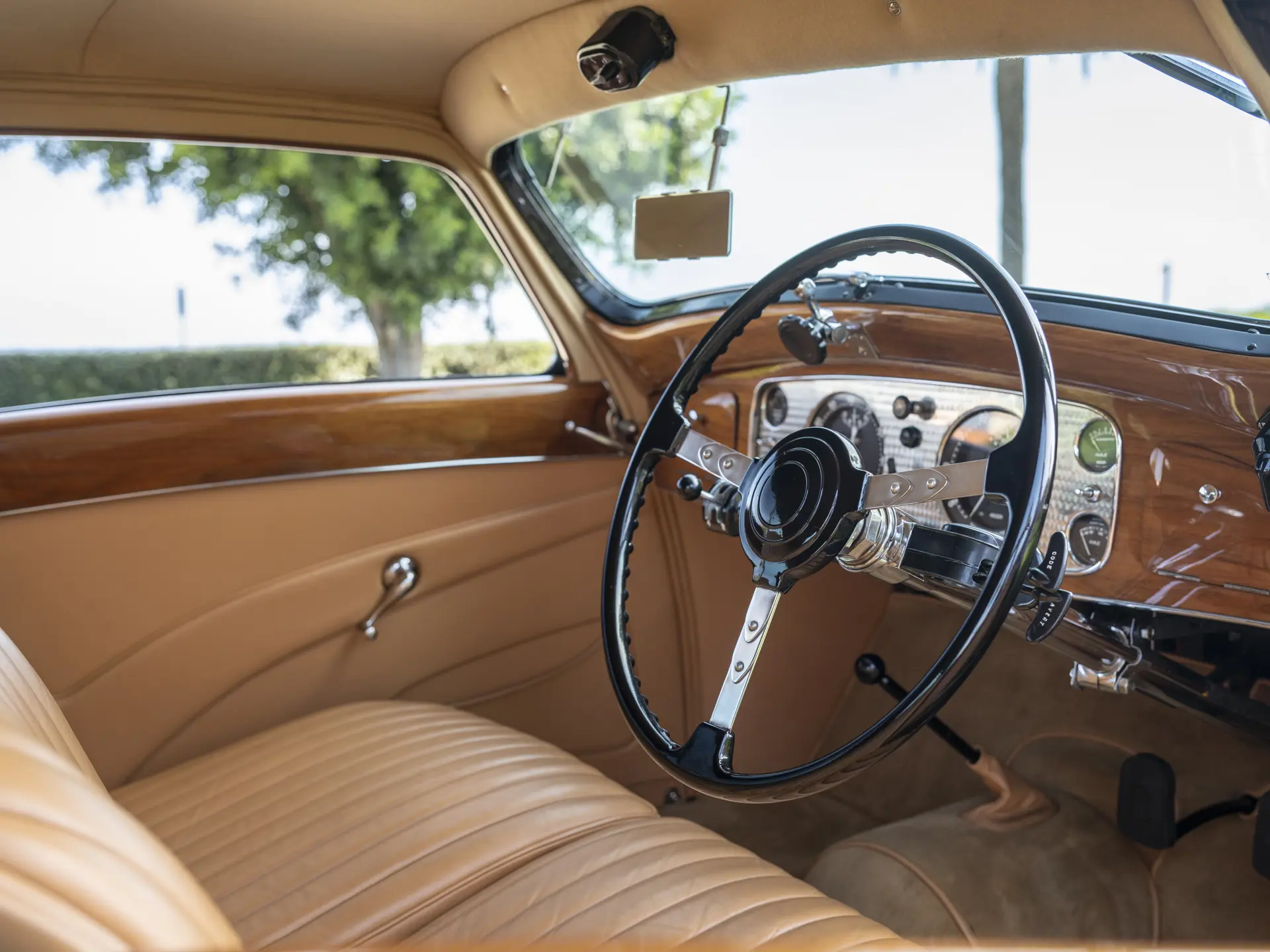
A Delage of the late ’30s was not a sports car in the contemporary idiom, but rather a grande routière, a luxury touring car offering grace as well as pace. The saying at the time was, “One drives an Alfa Romeo, one is driven in a Rolls-Royce, but one gives only a Delage to one’s mistress.”
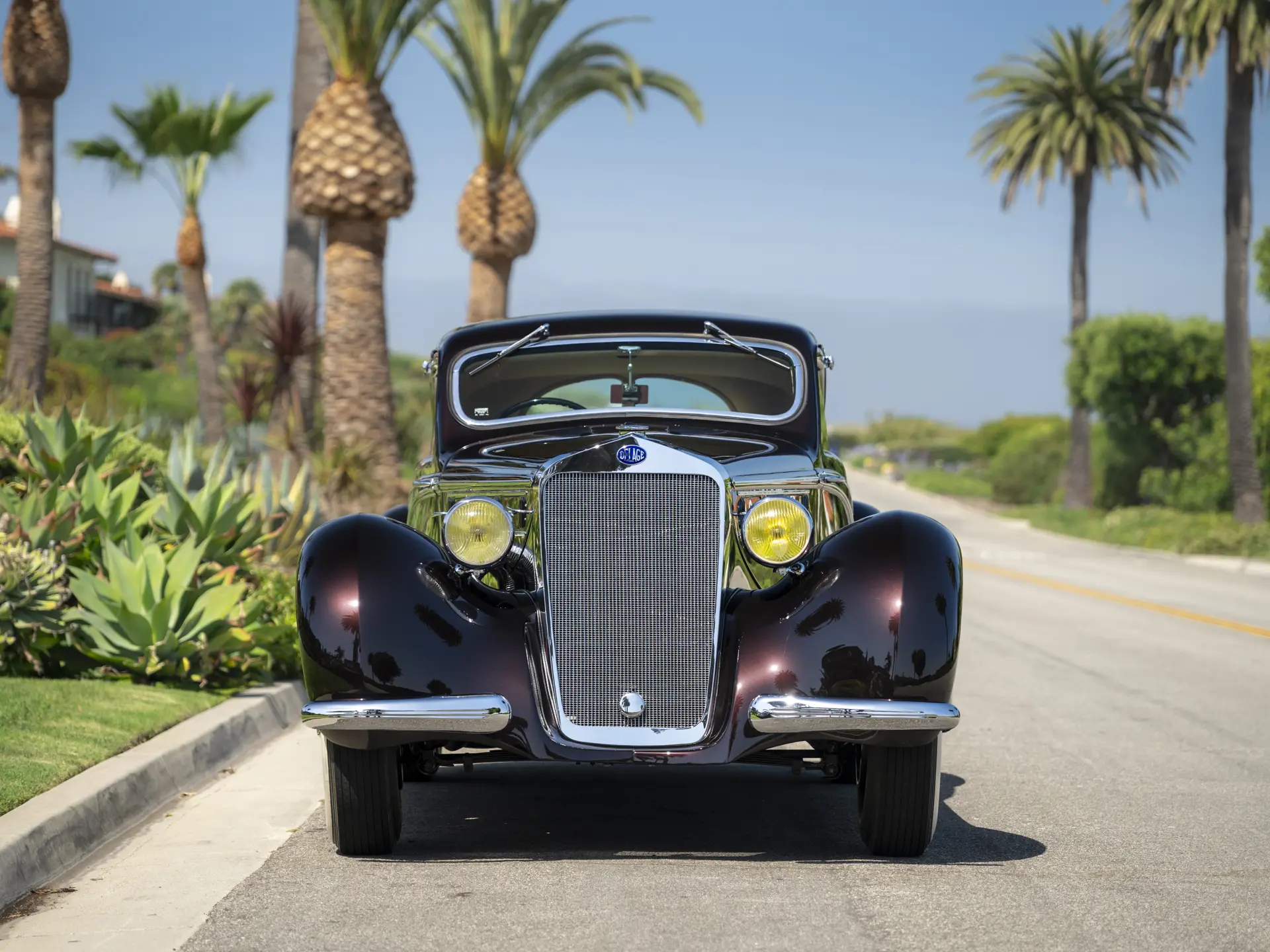
When Harley Earl hired Bill Mitchell in December 1935, the original Delage company was gone: It had ended up in receivership earlier that year and its assets had been liquidated. In August, their old rivals Delahaye had licensed the rights to the Delage name and established a new Société Anonyme pour la Fabrication des Automobiles Delage, building new Delage cars from Delahaye components. The new Delage six-cylinder D6 and eight-cylinder D8 chassis still often wore spectacular bodies, from French carrossiers like Pourtout, Figoni et Falaschi, Saoutchik, or Letourner et Marchand.
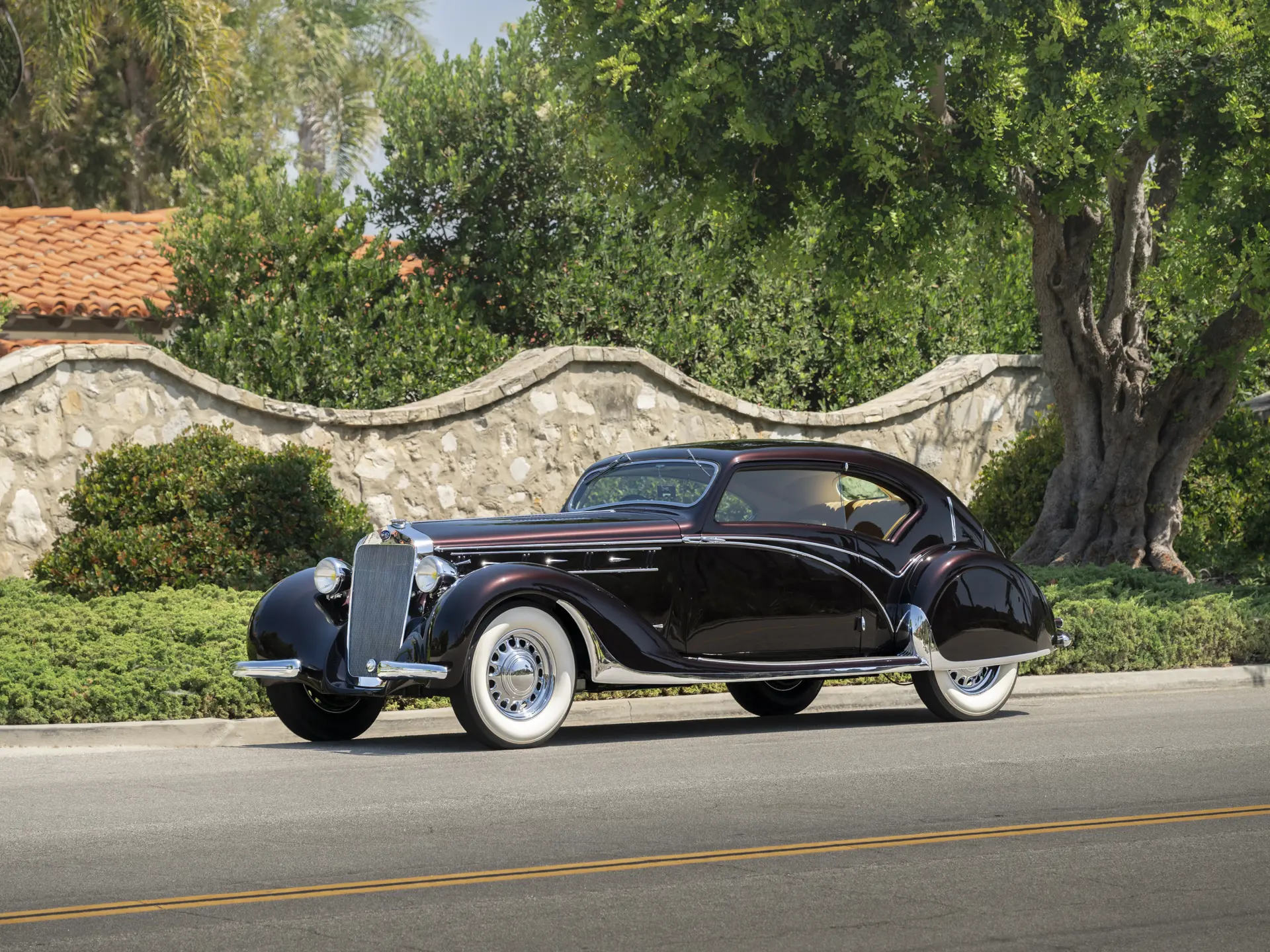
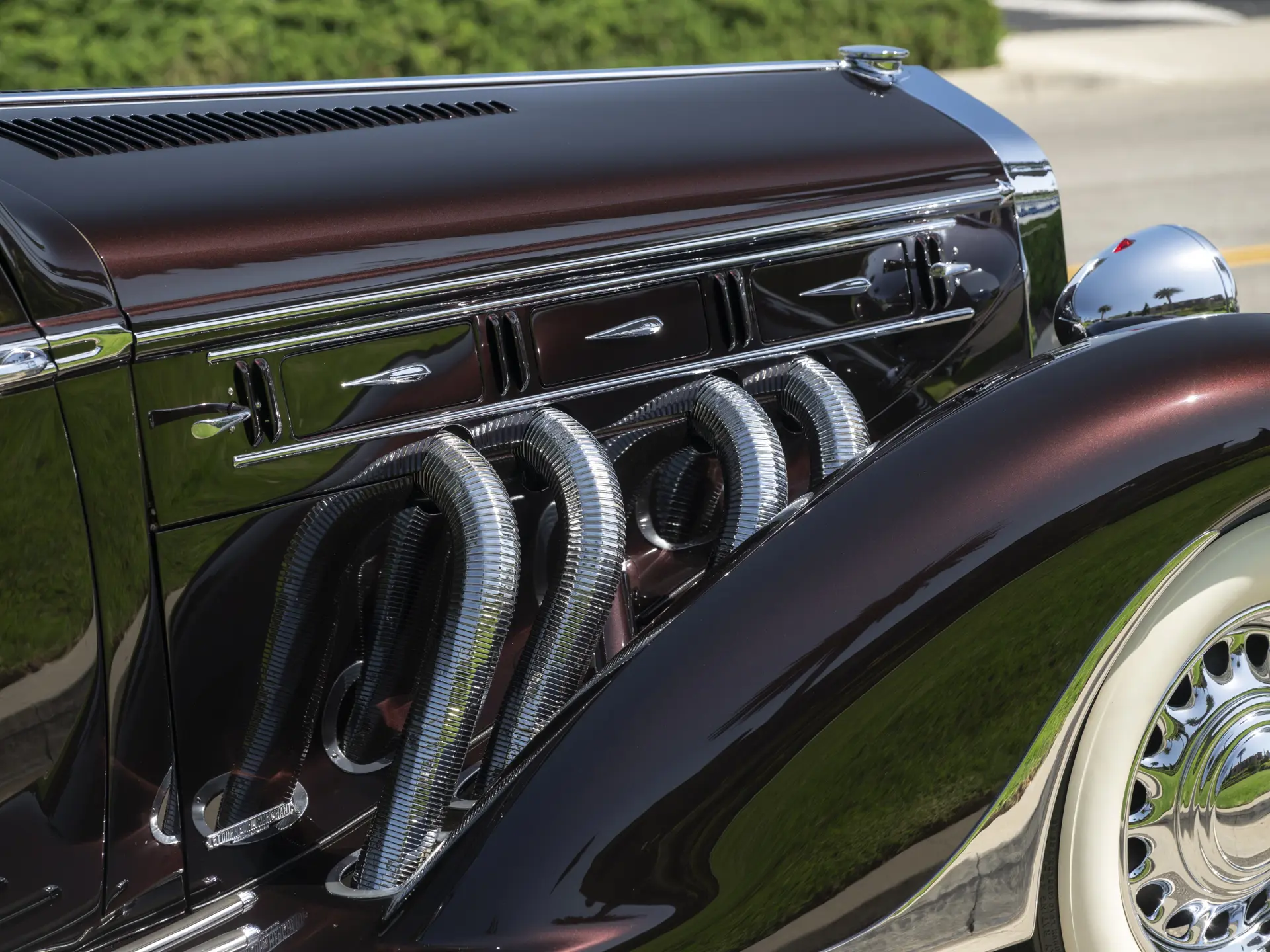
This Delage D8-120 is a Coach Aérosport, one of either 13 or 14 Delage coupes with streamlined bodies designed by Marcel Letourner. The first debuted at the 1936 Paris Salon, featuring independent front suspension (licensed, if you can believe it, from Studebaker), a 4,743 cc straight-eight engine with 115 hp, and a 4-speed Cotal preselector gearbox.
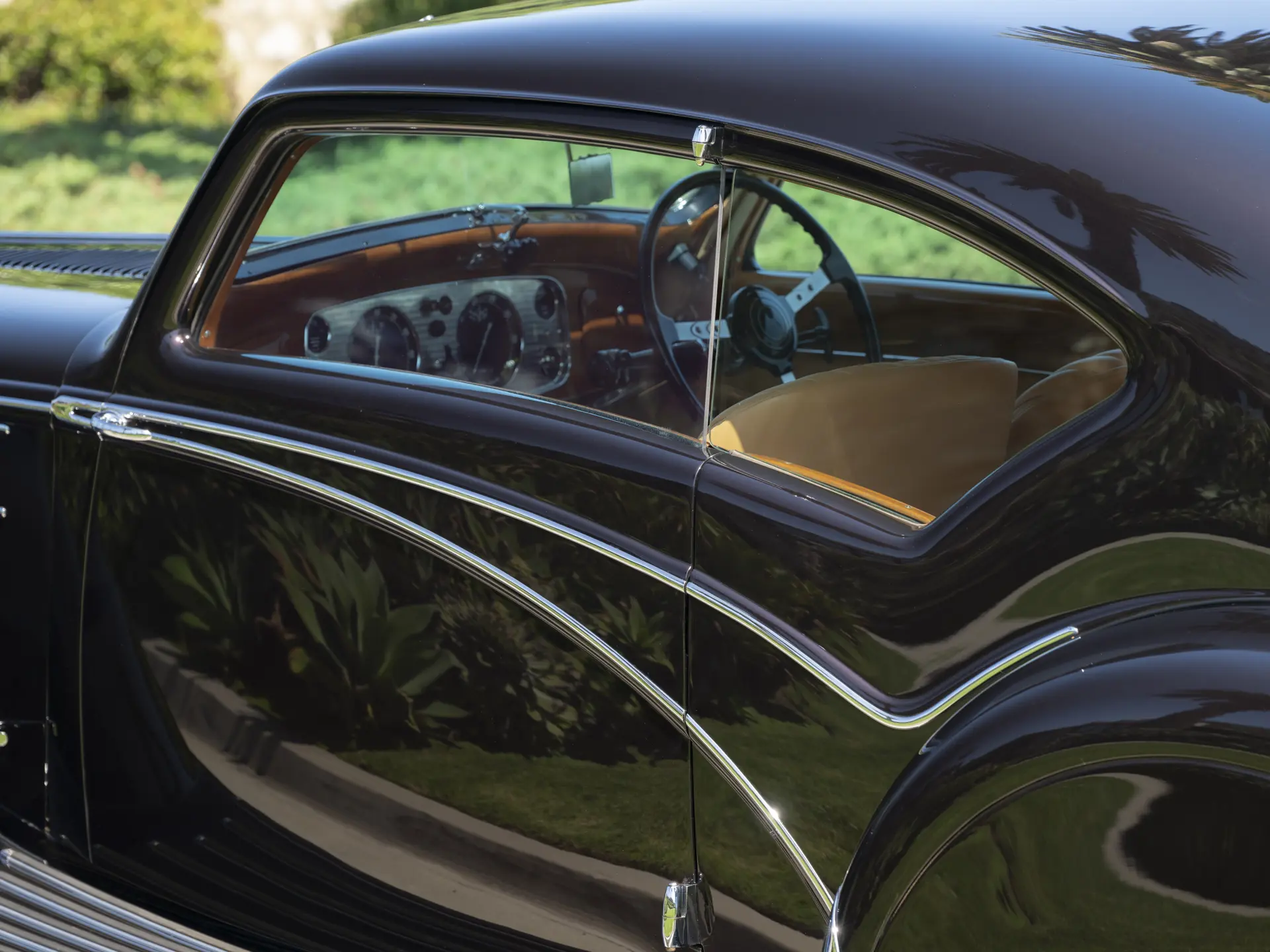
As you’ll notice, it was what was later dubbed a pillarless hardtop, giving it a particularly racy look.
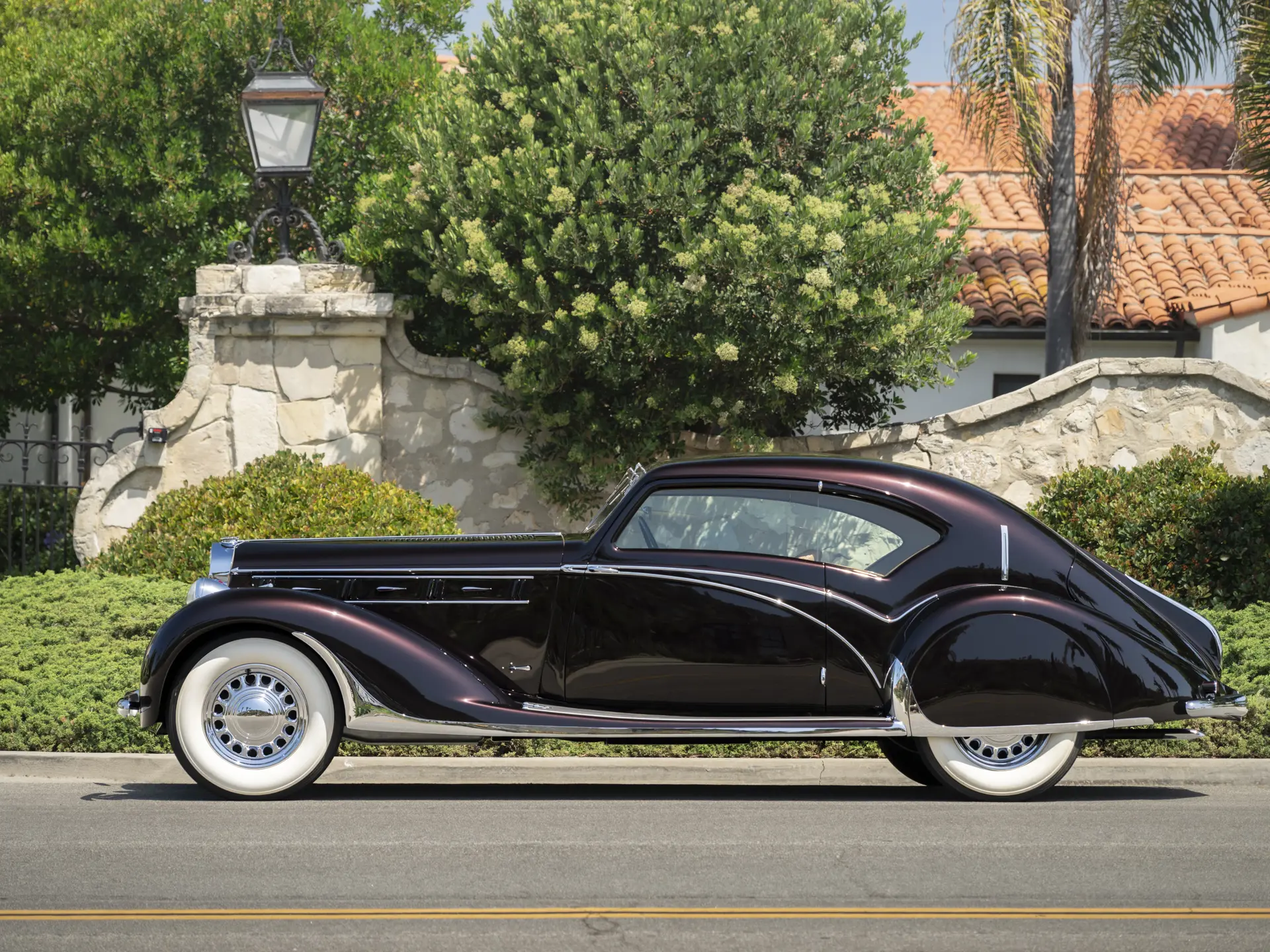
Even if prewar cars don’t do much for you, I think you’ll agree this Delage is a dazzling piece of rolling sculpture. Mitchell’s affection for prewar coachwork didn’t stop him from periodically looting more recent postwar British and Italian design, but he often sought to return to these ’30s aesthetics, whether they made sense in the context of later eras or not.
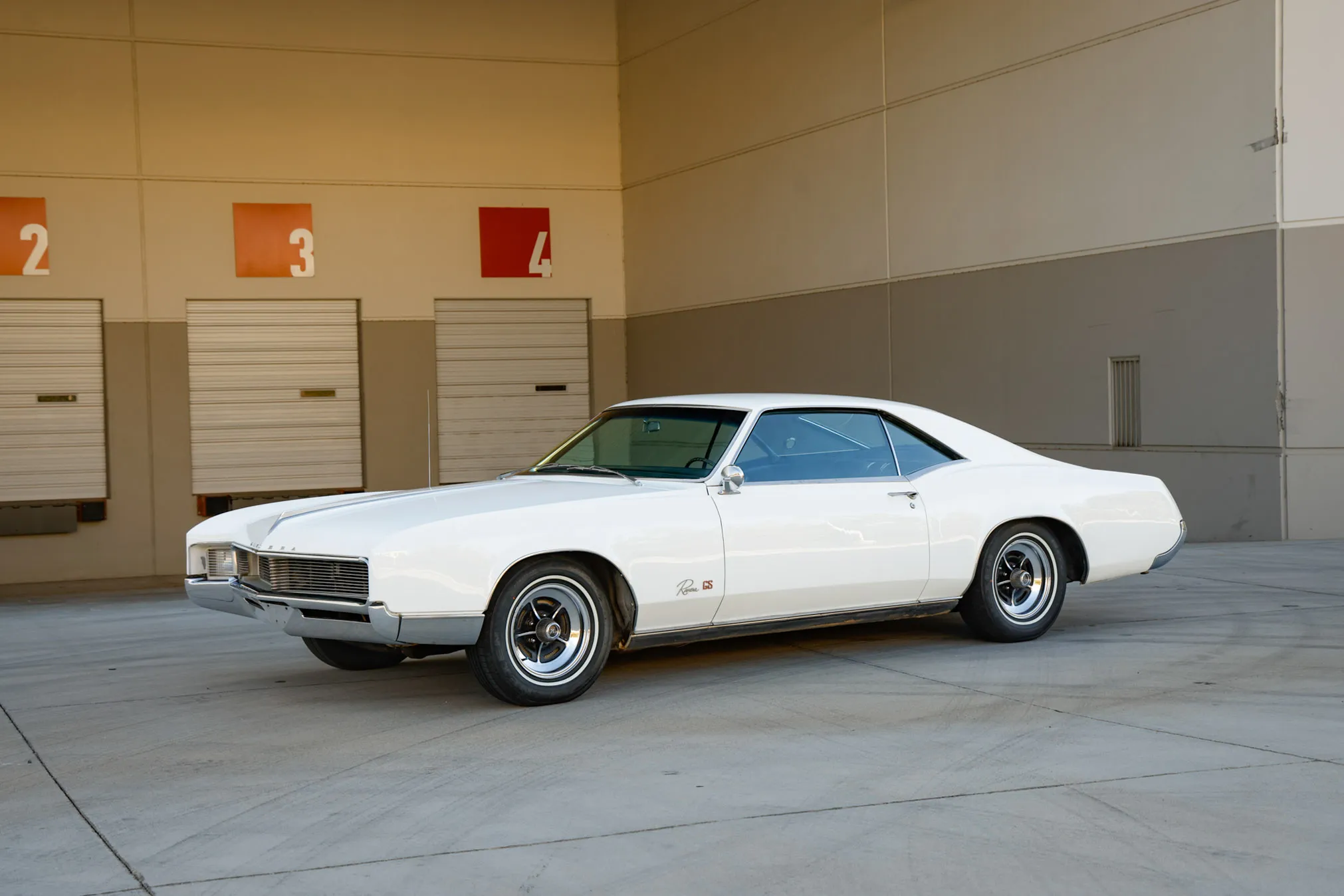
Fast-forward to the late 1960s. The second-generation Buick Riviera, designed by Dave Holls, had bowed for 1966 to excellent sales and favorable reviews. If it lacked the exquisite craftsmanship and high-end materials of the prewar Classics, it was nonetheless a reasonable modern approximation of the ’30s grandes routières, offering style, performance, and luxury.
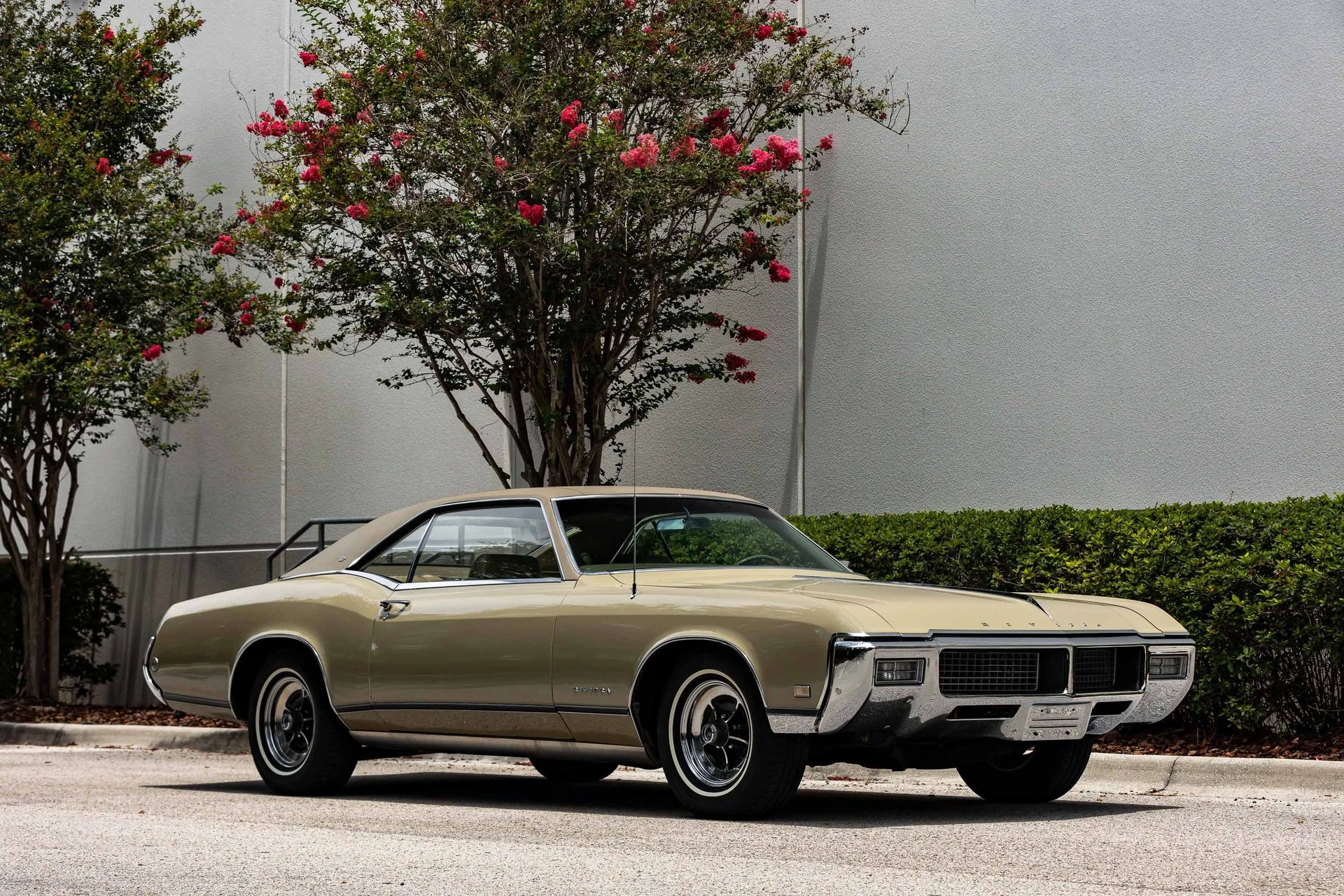
The dilemma for Buick designers was that the second-generation Riviera body shell would have to endure for five years — an eternity for domestic cars of that era, particularly in a fashion-driven segment. The reasons for the prolonged life are now somewhat obscure, but I strongly suspect that they had to do with amortizing the tooling costs of the GM E-body shell the Riviera shared with its Oldsmobile Toronado and FWD Cadillac Eldorado cousins. The E-body was a low-volume product by GM standards, and the amortization schedule was complicated by the fact that the Eldorado — which sold the fewest units — debuted a year later than the others. So, for the Eldorado to get four years out of the body shell, the Riviera and Toronado had to stick around for five years.
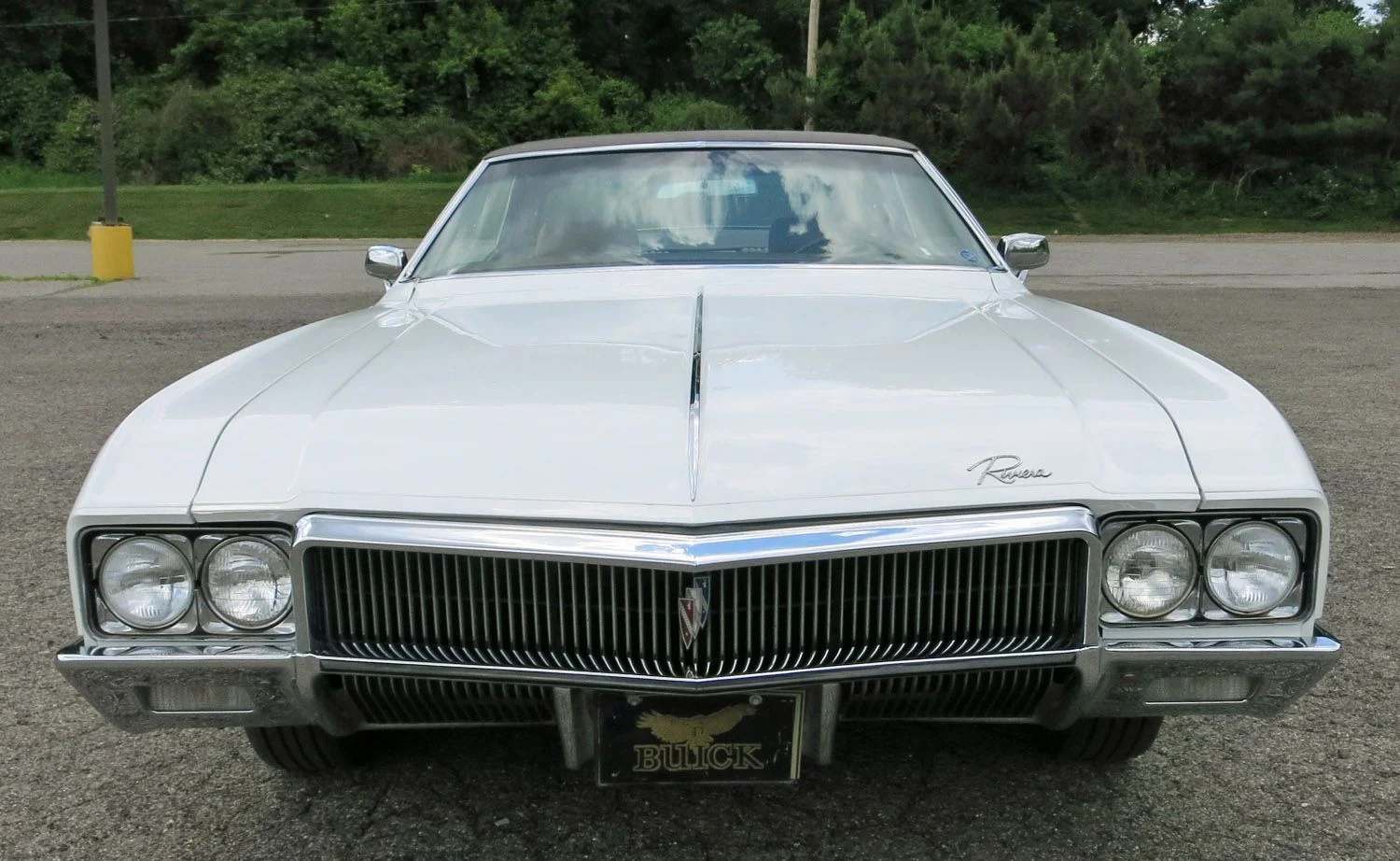
For the Riviera and Toronado, this meant substantial facelifts for 1968 and again for 1970, with the latter a one-year-only refresh to tide these models over until the all-new 1971 models. Multiple facelifts are always tricky from an aesthetic standpoint: A good design can typically withstand one (which might even be an improvement), but beyond that, things can start looking sad or desperate in a hurry. Few fans regard the 1968–1969 Riviera or Toronado as highly as the 1966–1967 versions, and the 1970 designs have never been very well thought of.
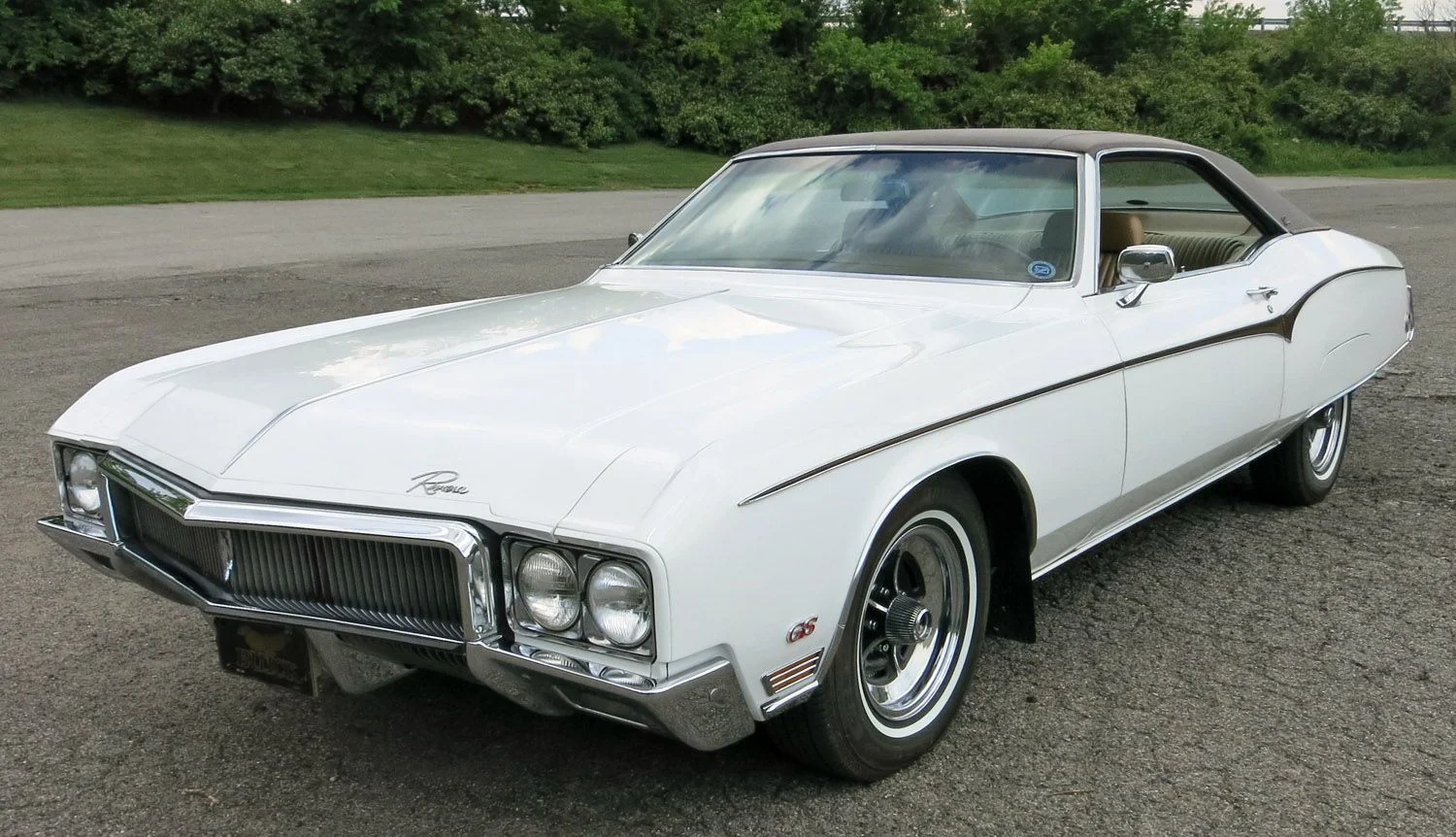
When the 1970 Riviera was designed, Mitchell told Buick studio chief Donald C. Lasky he wanted to see some French flavor in it, a little Delage. Trying to do that with an all-new design would have been challenge enough — as Buick would shortly discover with the controversial 1971 “boattail” Riviera, another of Mitchell’s prewar fancies — but to do it with a four-year-old body shell that had already been facelifted once was a tall order indeed. Still, Mitchell was the boss, and his mercurial whims sometimes paid off handsomely.
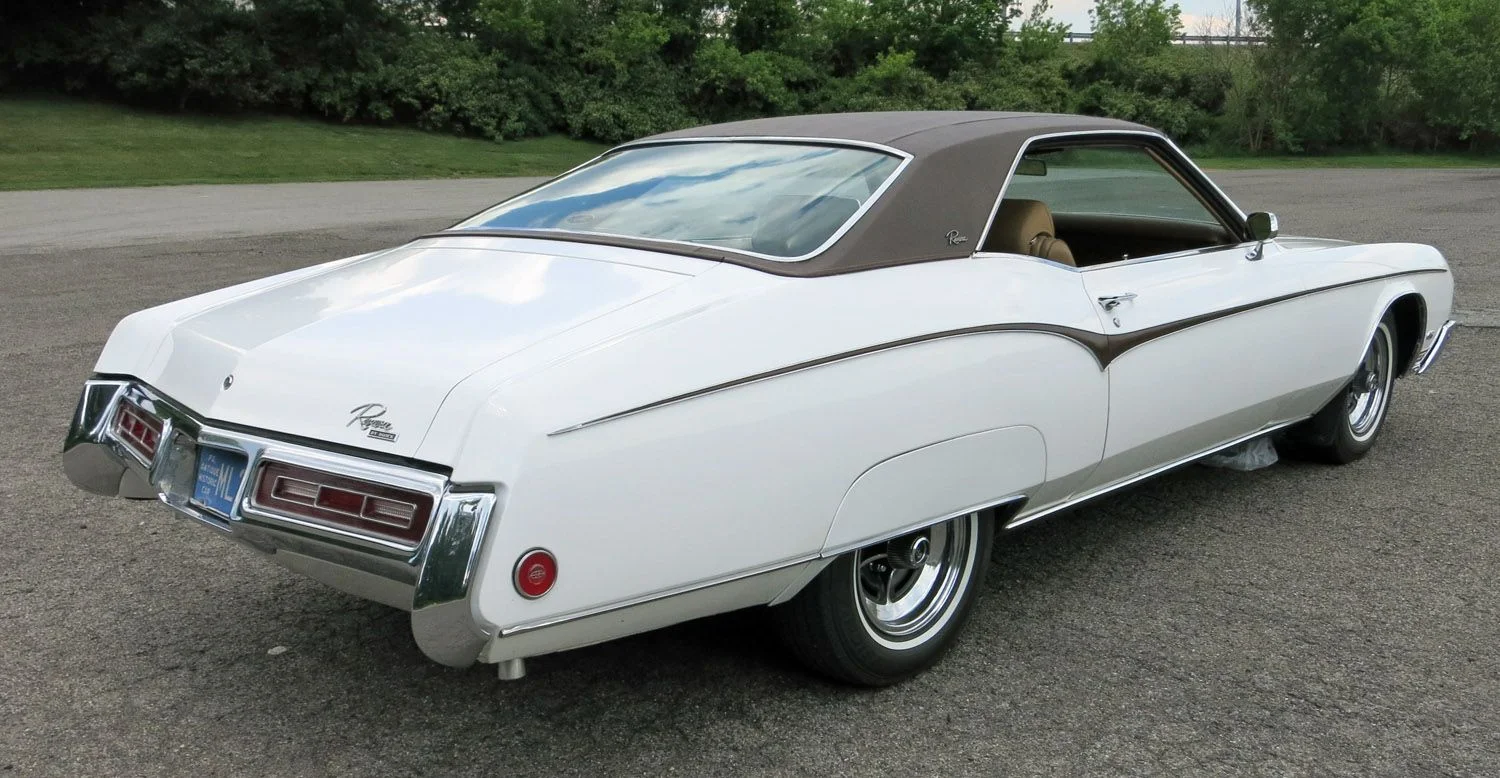
The Letourner Delage Club Aérosport did have some elements that wouldn’t look too out of place on a Buick, in particular its dramatic check-mark chrome side spear, which was close enough to the “sweepspear” that was still a Buick styling hallmark. Adding rear fender skirts, a feature the Riviera had never used before, offered enough of a visual relationship with the Delage to make it look like Lasky was following orders.
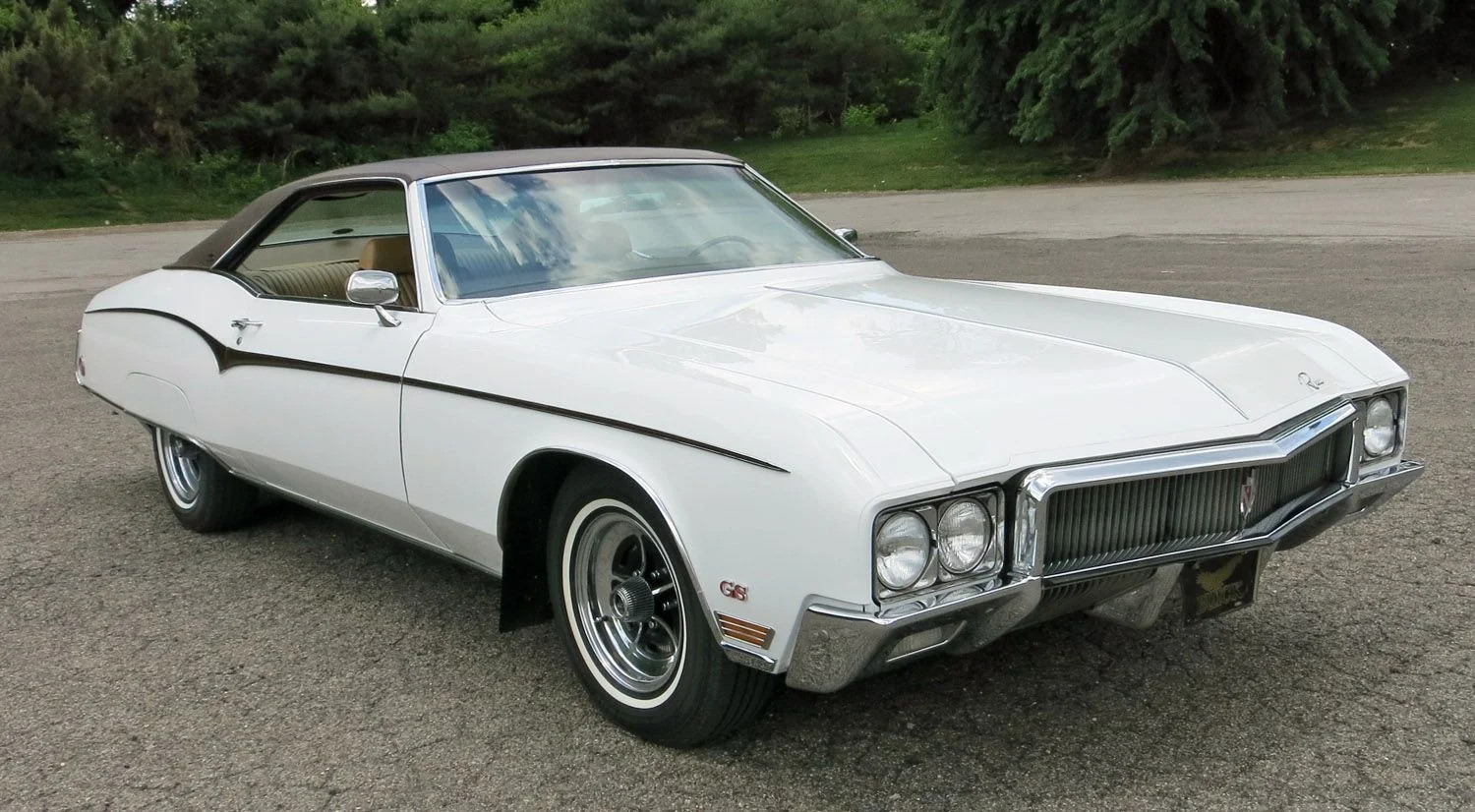
Combined with the toothy new grille, a buyer who didn’t know a Delage or Delahaye from a DeSoto might assume the homage was to the Buicks of the early 1950s, which wasn’t the most preposterous association. (Indeed, the next-generation Cadillac Eldorado would unapologetically borrow design themes from early ’50s Cadillacs, so that kind of thing was in the air.) Dave Holls hated the results, calling the 1970 Riviera “not a happy car,” but it gave Mitchell what he wanted, and it made the Riviera look different for 1970 without breaking the bank for Buick.
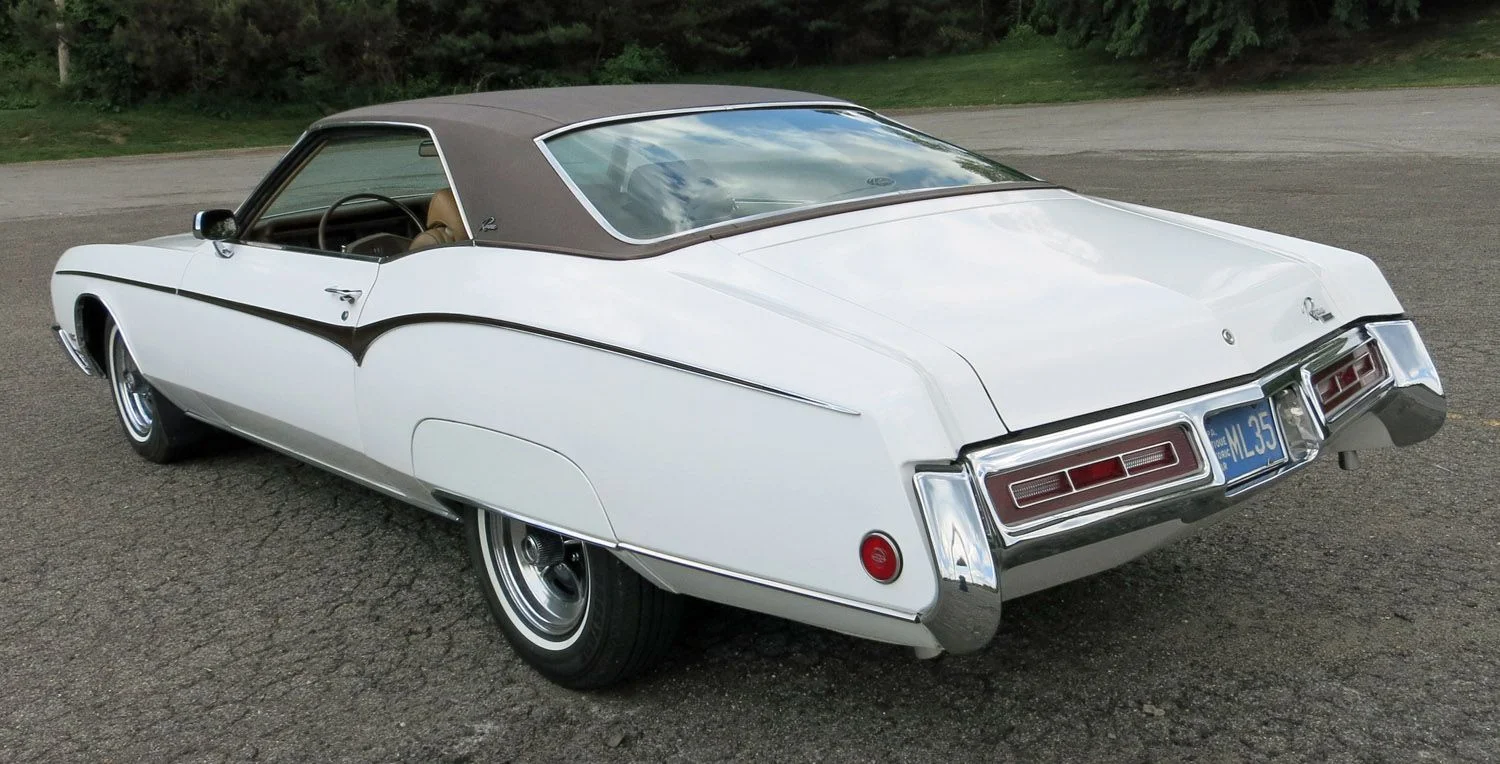
Something I hadn’t realized until I looked at the 1970 Riviera brochure was that the car’s two most divisive features, the rear fender skirts and the side moldings, were both optional. I don’t have a complete 1970 Buick price list, so I don’t know exactly Buick priced these features, but you could order a Riviera without the side spears, and with “High Profile wheel opening covers” rather than the “full, flush fender skirts” pictured here.
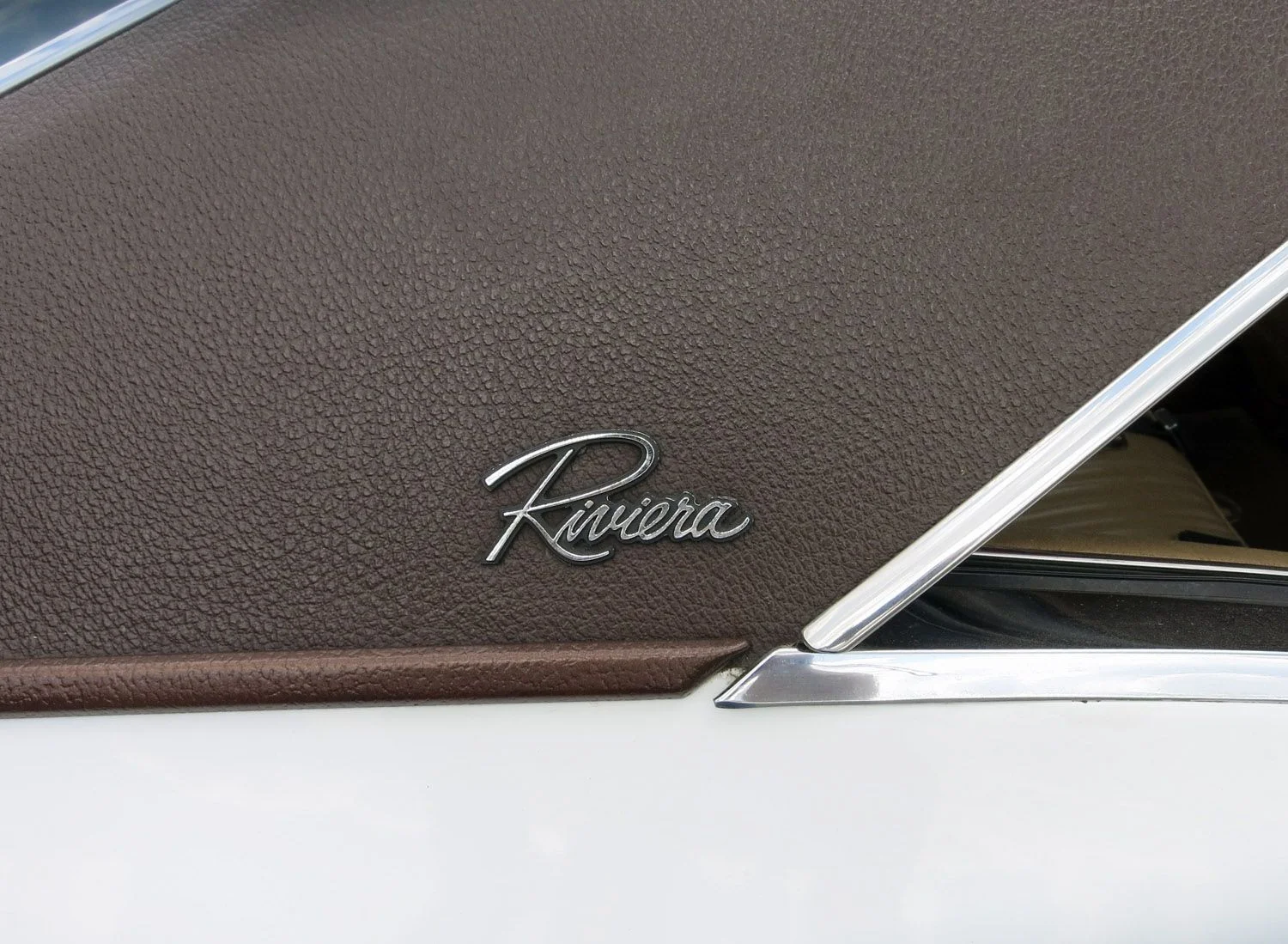
Similarly, the Custom vinyl top was a $128.41 option, although seven out of every eight 1970 Rivieras had one.
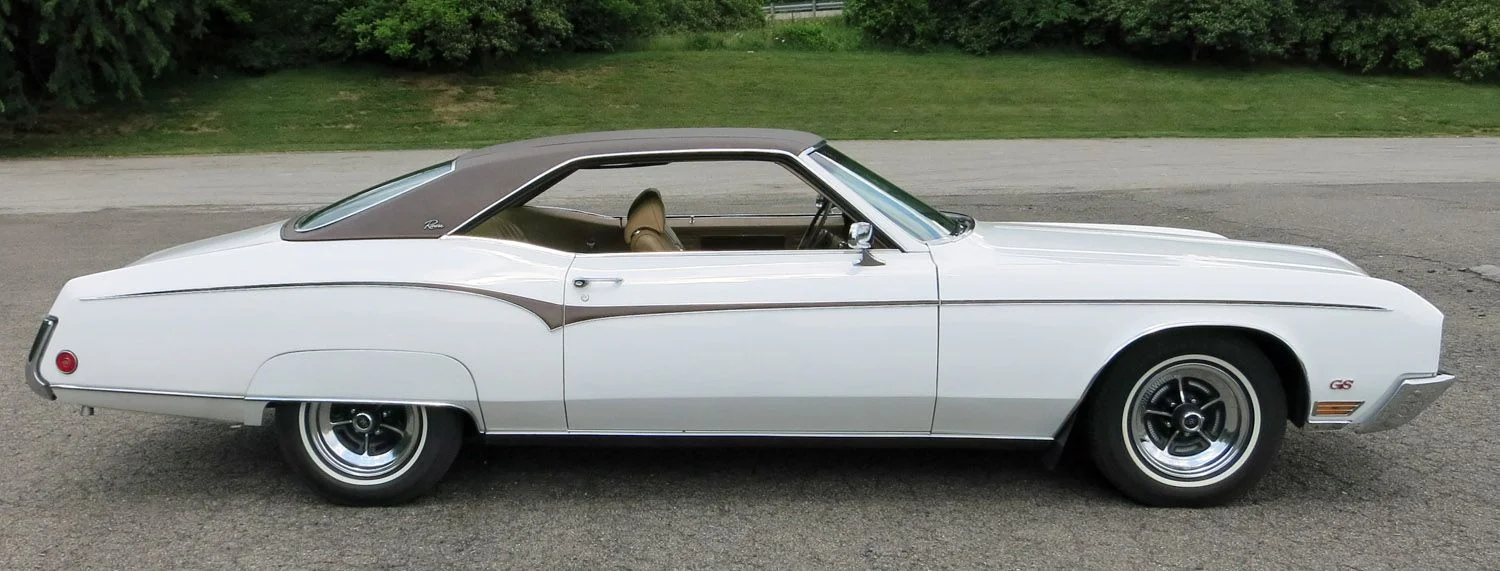
Whatever you think of the rest of its ensemble, this particular Riviera clawed back a certain amount of credibility with the $131.57 Gran Sport option, which included heavy-duty suspension, a Positive Traction limited-slip differential, a 3.42 performance axle, and whitewall or redline tires. About 10 percent of Riviera buyers selected the GS option, which provided a significant boost in handling composure compared to the standard suspension. (The 1970 Riviera still had AccuDrive suspension geometry, as in 1969.)
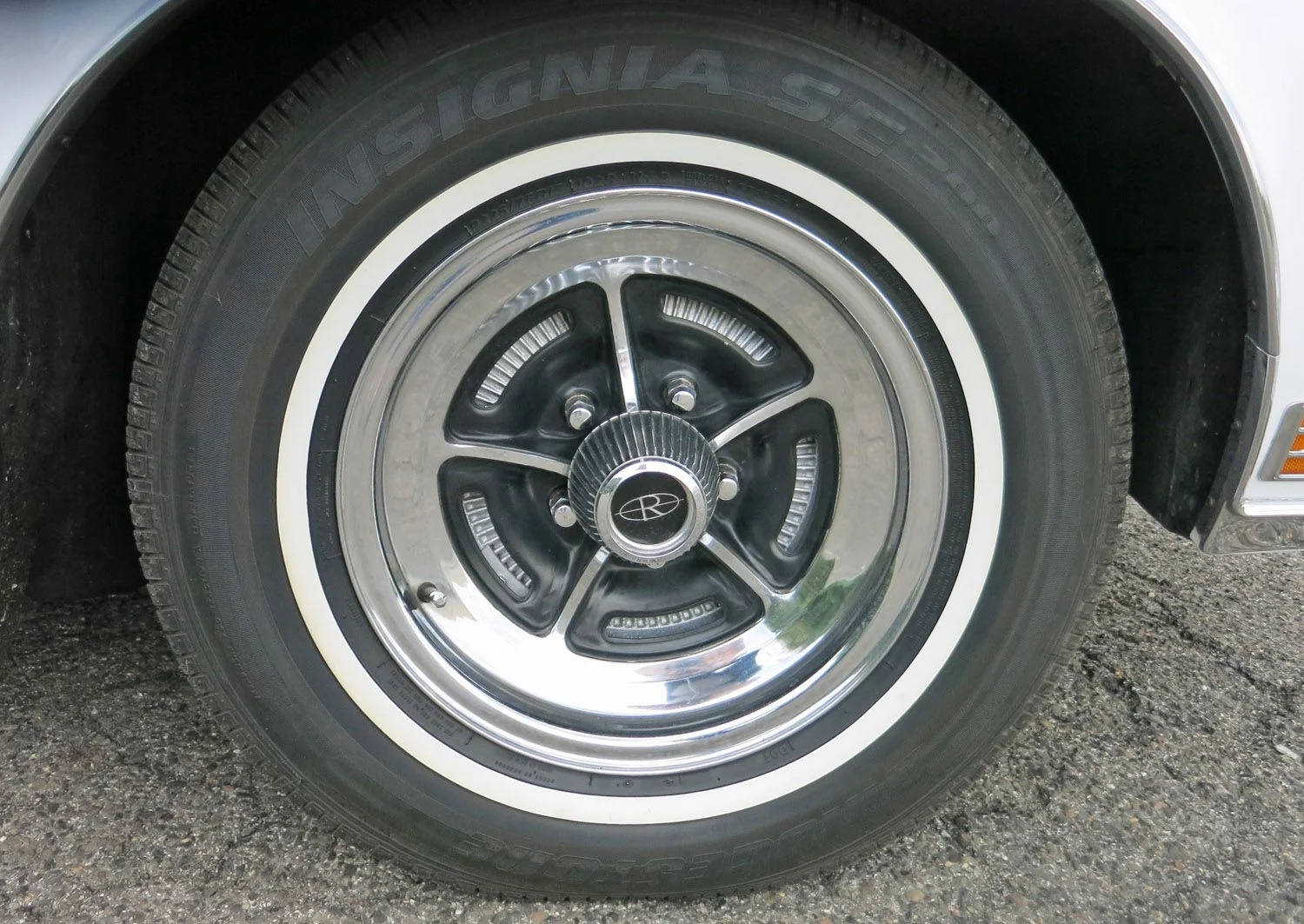
Buick’s ever-popular chrome-plated wheels didn’t hurt, for about $95 extra, although looking closely at the front wheels makes clear that this Riviera still has finned drum brakes in front. Front discs were optional for a modest $52.63, but only about 10.6 percent of 1970 Riviera production had them. Why Buick waited another year to make them standard is a mystery, since power brakes were already standard on the Riviera, and the extra $50 was trivial on a car that started at $4,854 and typically had $1,000 or more of options. Front discs finally became standard for 1971.
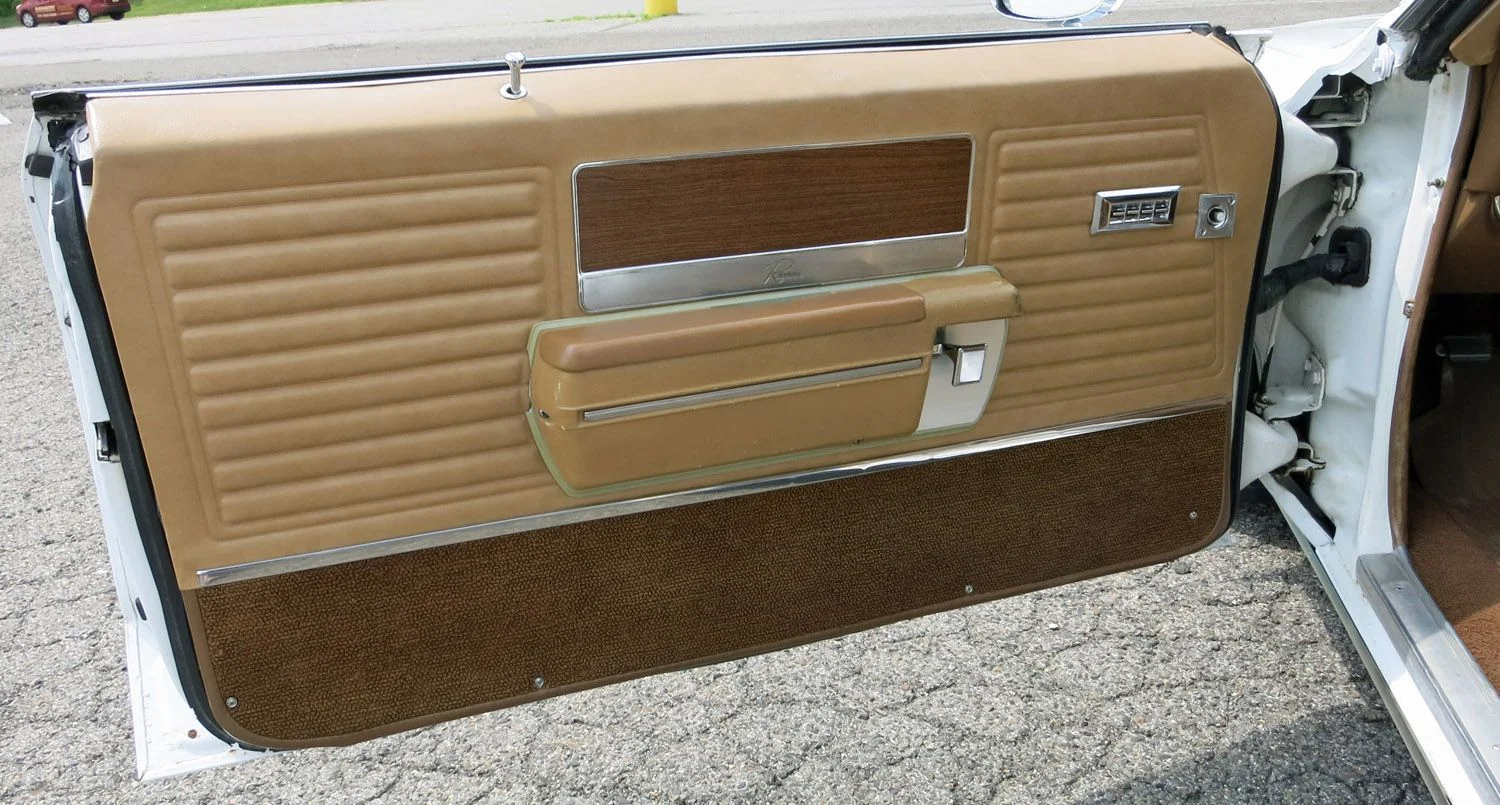
Riviera buyers also paid $110.52 extra for power windows, although 89.5 percent of production had them.
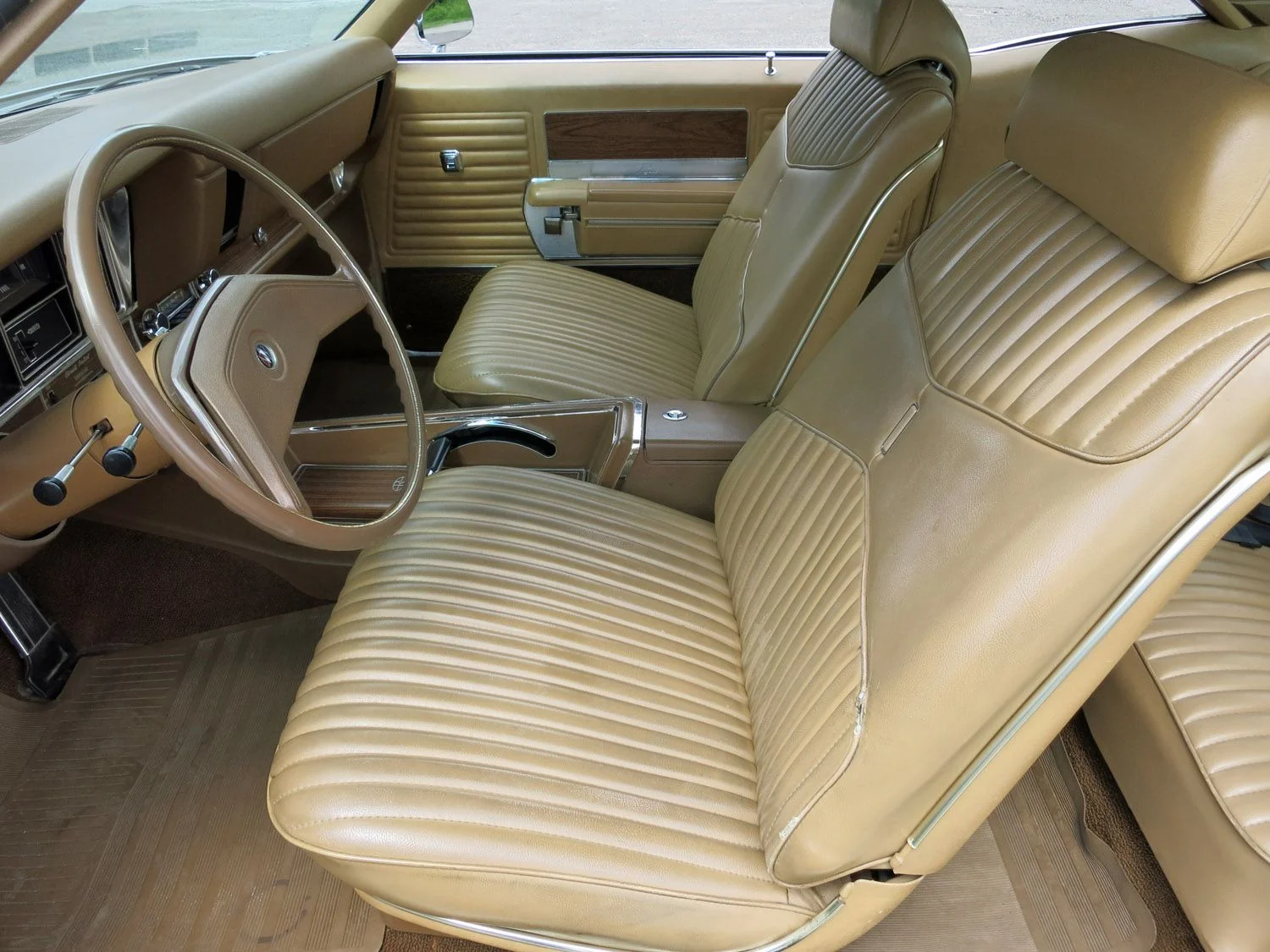
Bucket seats, which had been such an important part of the 1963 Riviera interior concept, were now increasingly rare, fitted to only 27.7 percent of 1970 Rivieras. This is the base-trim interior, which I think was more commonly seen with a bench seat. (The fancier Custom interior was available with either a bench or buckets.)
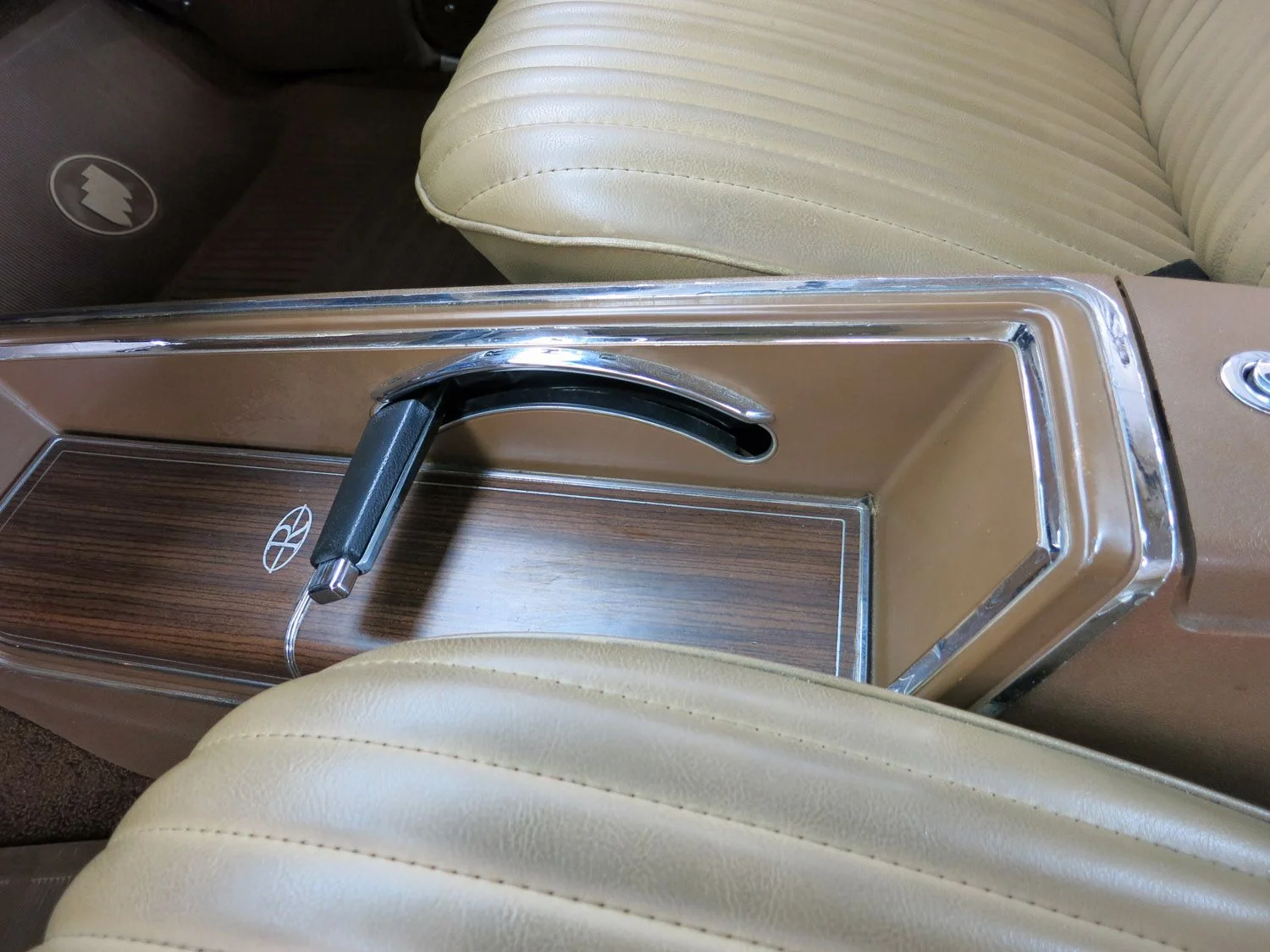
A console cost an extra $61.05 with buckets, and included this peculiar boomerang shifter for the standard Turbo Hydra-Matic. (The shift quadrant was inscribed on the top of the metal shifter track, which isn’t easy to see at this angle.)
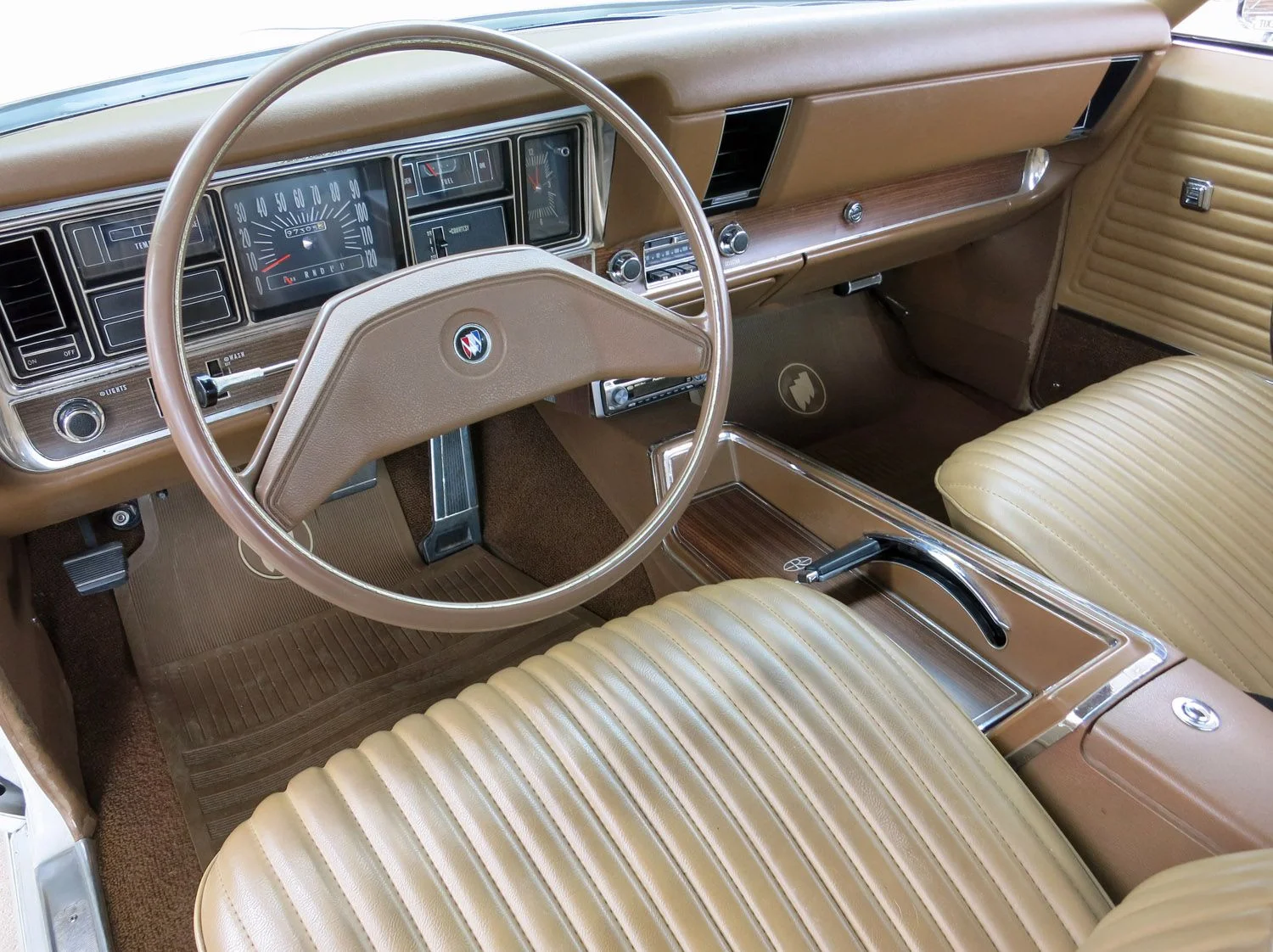
An area where these later second-generation Rivieras felt like a letdown was the dashboard design. The 1966–1967 Riviera had featured an unusual rolling-drum speedometer and a complete set of secondary gauges, giving them a unique character. The 1969–1970 cars had substantially the same instrument panel as a Wildcat or an Electra 225, except that the HVAC controls were to the right rather than the left of the steering column.
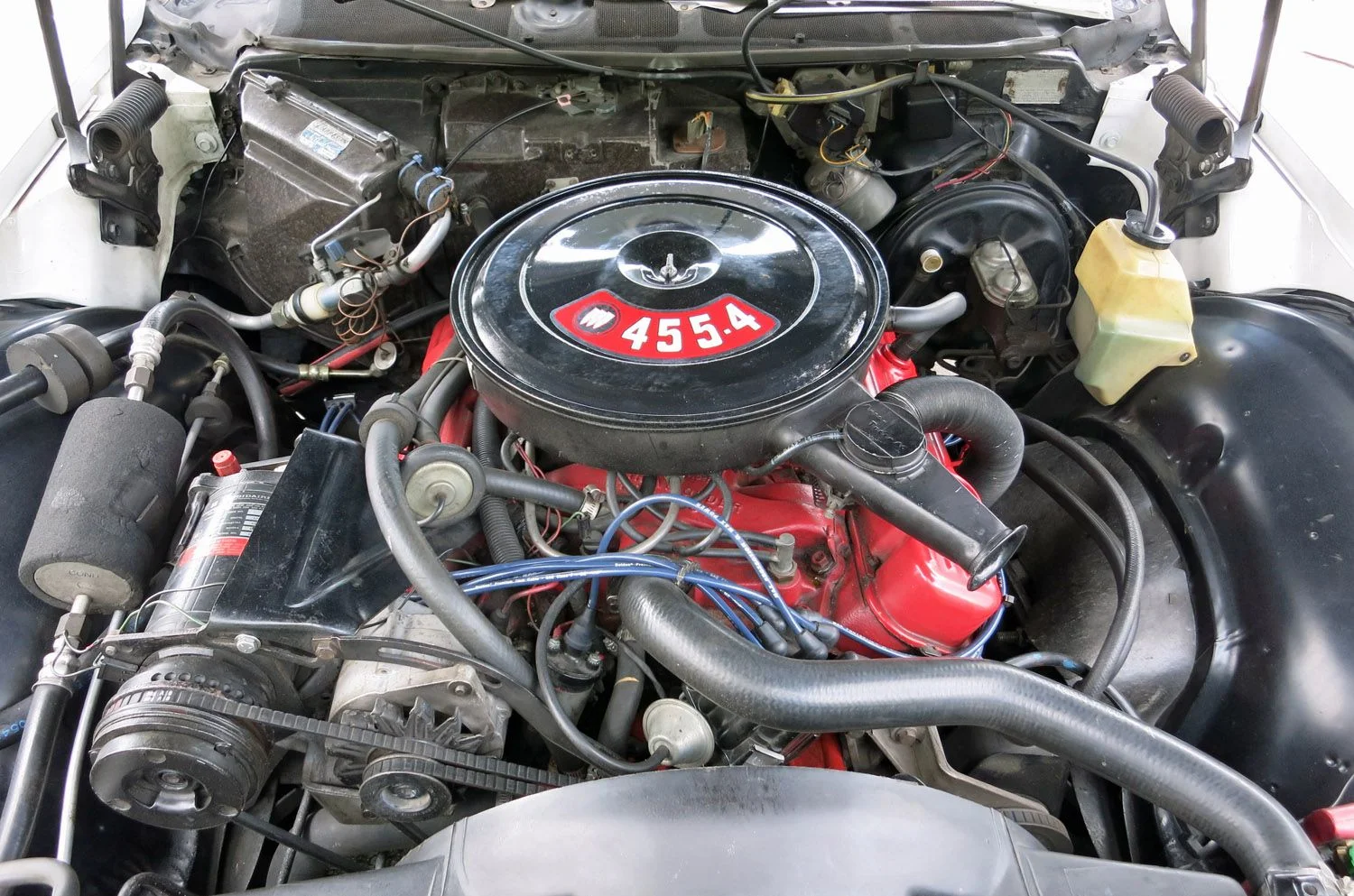
Car Life‘s 1969 Riviera test car, with the 430 cid engine and standard 2.78 axle, had needed 10 seconds to reach 60 mph, which about par for a big luxury car. The 1970 car had the new Buick 455 cid V-8, still with dual exhausts, but with more power and torque than the 430. With the 3.42 performance axle included with the GS option, I’d expect this car to have more spring in its step than the 1969, with 0 to 60 mph times of 9 seconds or under. The GS didn’t include any engine performance modifications, but this car is missing the chrome air cleaner cover it should have with the Gran Sport package.
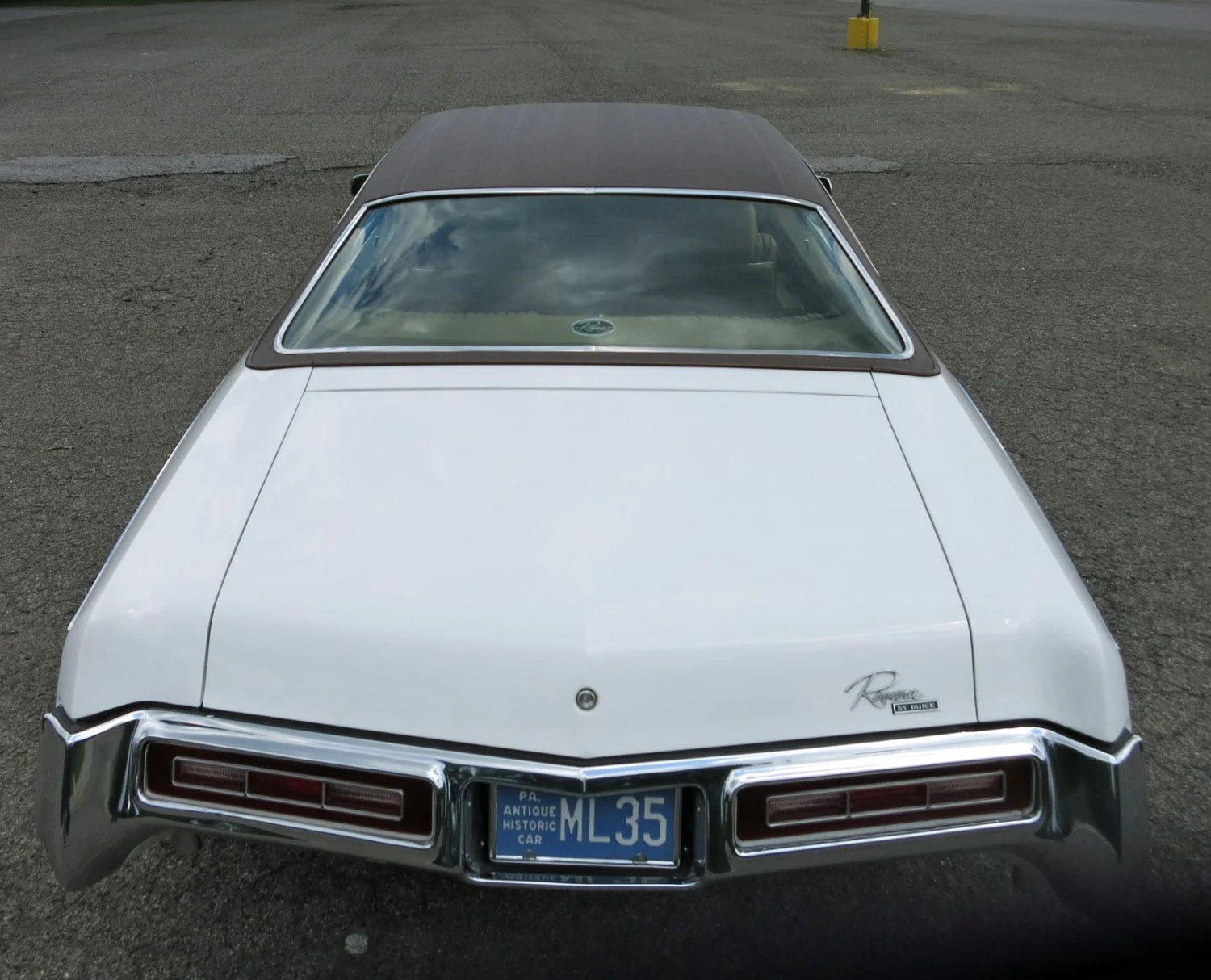
While the 1970 Riviera looked bulkier than before, it really wasn’t — its shipping weight was only 17 lb greater than the 1969 model — and with the GS option, the handling limitations of AccuDrive could be largely erased. If you ordered bucket seats and a console, this car was still mostly in the Riviera tradition, even if it wasn’t quite what it had been a few years earlier. (A reasonable approximation of a reasonable approximation?)
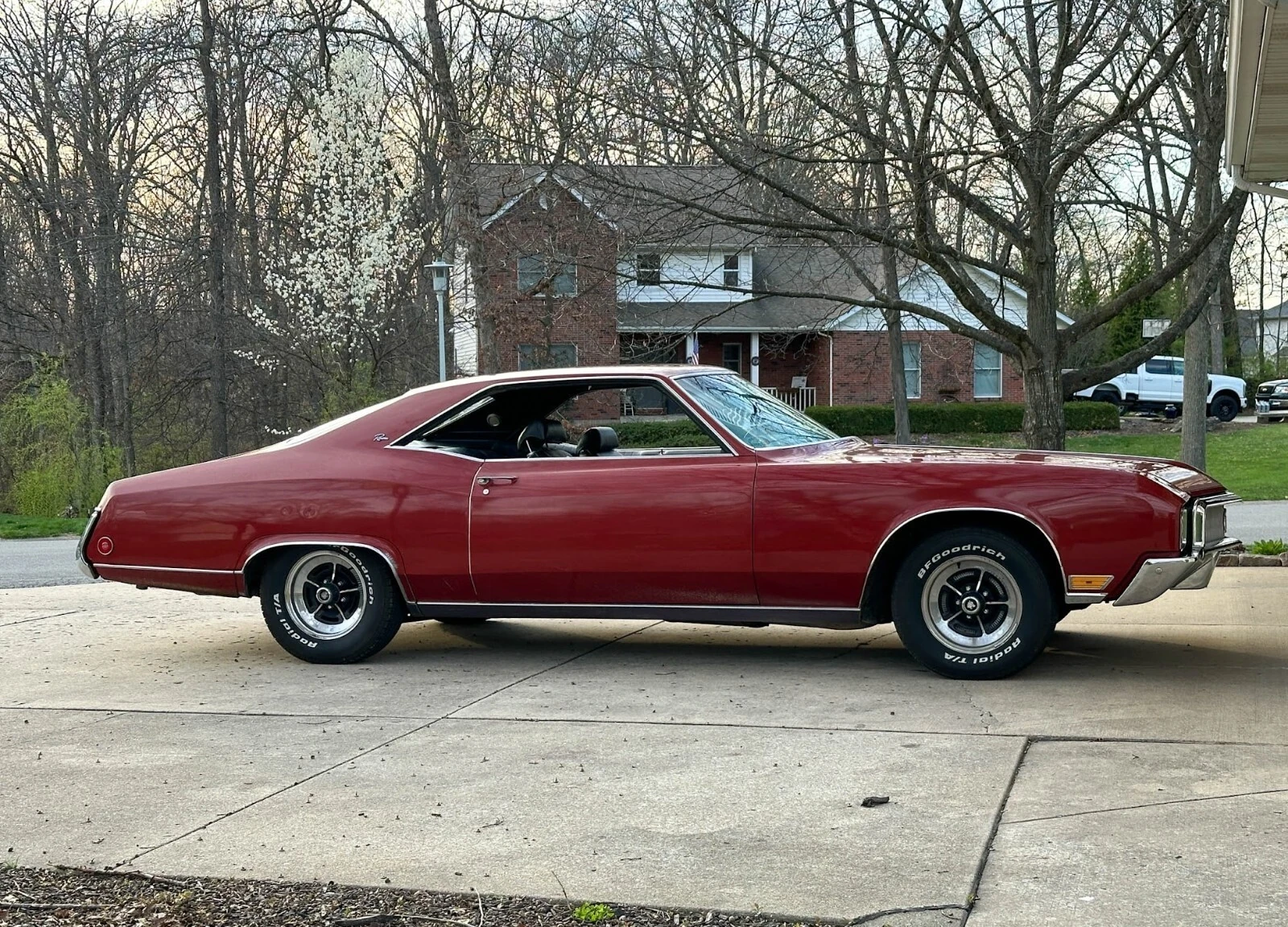
As for its looks, you could mitigate most of its worst faults through careful selection on the order form. With no side spears, “high profile” skirts rather than full ones, and a painted rather than vinyl roof, the 1970 still wasn’t the prettiest Riviera of all time, but it was also far from the ugliest.
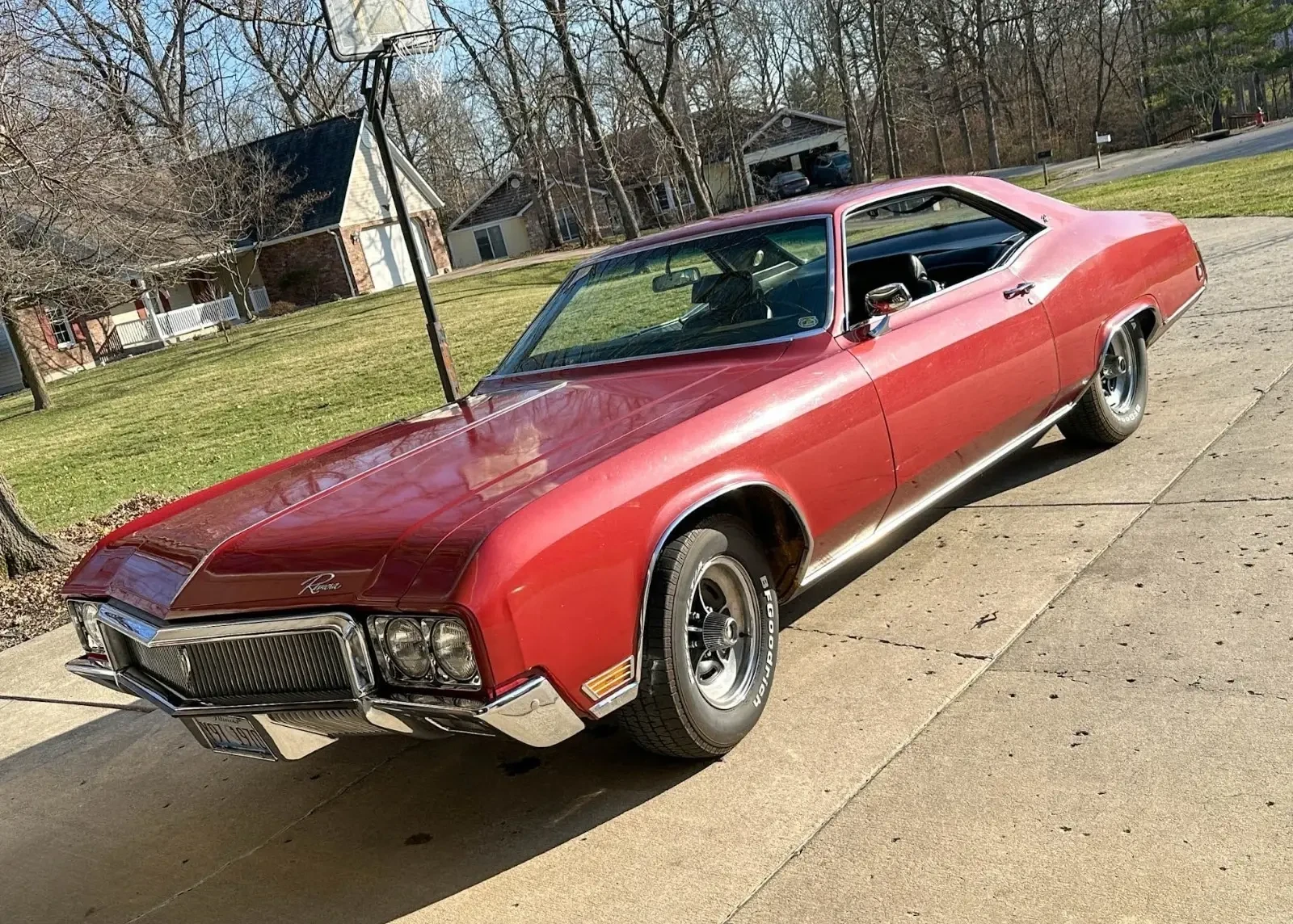
Without the bric-a-brac, I think the main aesthetic issue was the clumsy-looking grille, whose relationship to the adjacent hood seemed very approximate on these cars. The front end also looks awfully generic without the previous concealed headlights. The latter had been an annoyance from a practical standpoint, but without them, the Riviera looked too much like a Skylark with a gland condition.
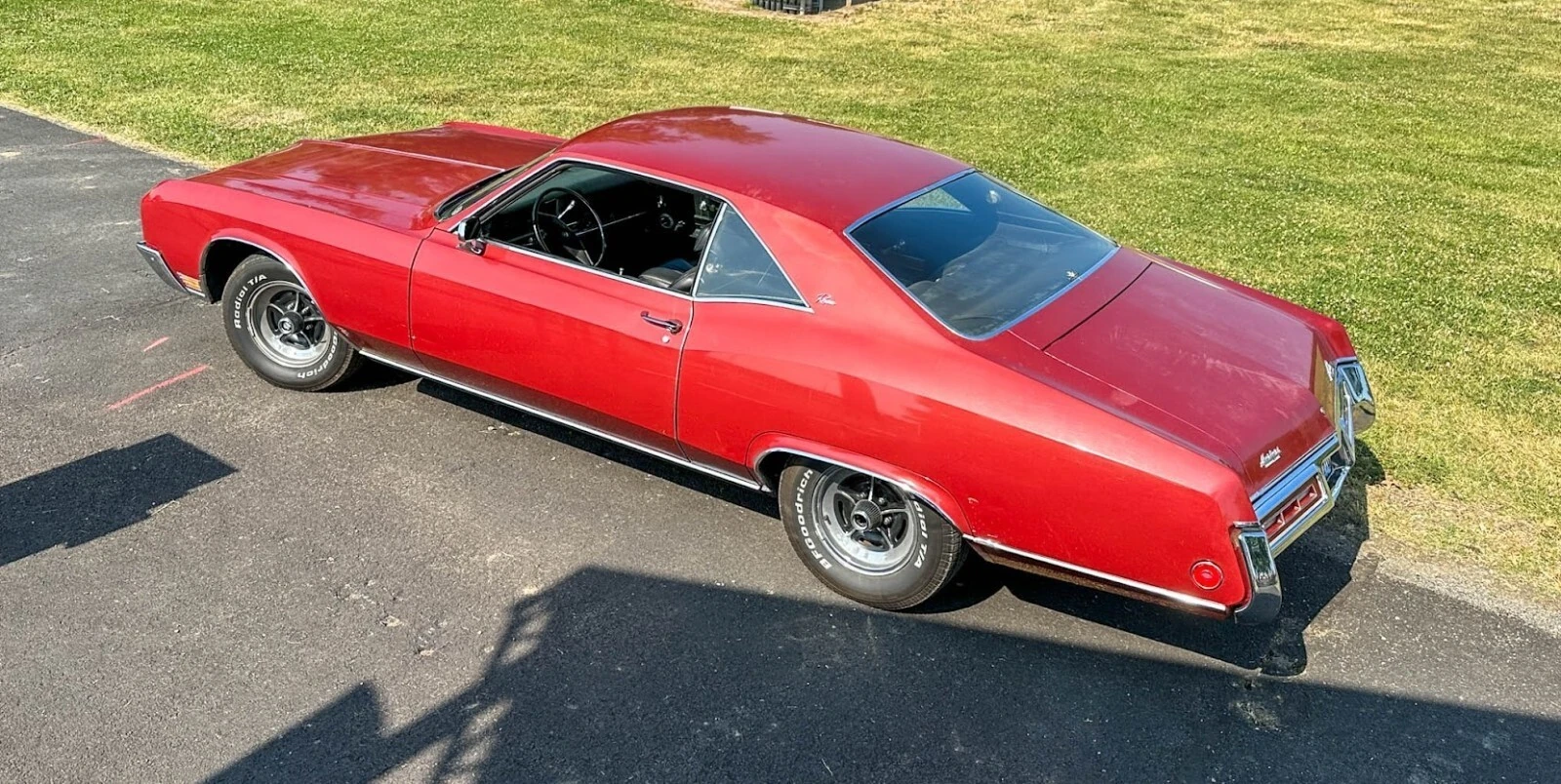
From some angles, you could still see faint echoes of the crisp 1963 Riviera, which was no bad thing. In this form, there wasn’t much Delage in it anymore, but that was probably for the best.
Related Reading
Curbside Classic: 1966 Buick Riviera – The Ultimate Bill Mitchell-Mobile? (by Paul N)
1966 Buick Riviera Versus 1966 Oldsmobile Toronado – Closely Related, Yet So Different (Part 1) (by me)
1966 Buick Riviera Versus 1966 Oldsmobile Toronado – Closely Related, Yet So Different (Part 2) (by me)
Vintage Car Life Review: 1968 Buick Riviera – “Lots Of Sound, Well-Styled Automobile” (by me)
Curbside Classic: 1968 Buick Riviera – Riding The Curve (by Perry Shoar)
COAL: 1970 Buick Riviera — Part 1: Different From Everything Else (by Chris Clark)
My 1970 Buick Riviera (Part 2): A Challenging “Student Driver” Car And An Unexpected Crash Test (by Chris Clark)























To me it looks obese from every angle, skirts or no skirts.
I saw this 1938 Delage at the Gilmore Car Museum a couple years ago, and I think it speaks for itself.
Never knew of the Delage connection. These were a major disappointment when they came out, at least they were for me. In retrospect they have sort of a toned down Stutz look to them. Maybe keep going and add a padded roof with landau bars.
Yeah, doesn’t work. More dilettante than Delage, I’m afraid.
Mind you, I’ve long thought those particular D8’s by L & M to be amongst the most beautiful cars ever made. Incidentally, the auction blurb says it was originally black with the side sweep and rear wings in orange. Wow! You’d notice that!
Gee, between the Renault R8 and the Delage, we have – to misquote Basil Fawlty – both ends of the evolutionary spectrum on CC today.
0-60 in 10 seconds seems very slow. That tiny snorkel on the air cleaner doesn’t help either. As I discovered on my ’68 Wildcat, the exhaust manifold outlets were only 2″ and I’d assume something similar here. I picked up 5 MPH in the quarter with headers only, so that tells you how restrictive those manifolds are.
The world’ s great “carrozzerie” should be great “carrozzieri” in Italian. But French constructors like Letourneur et Marchand would be called “carrossiers”, not “carrosseries”. Nit–picking aside, this Buick is a real beauty, with clean, flowing lines and restrained ornamentation.
Thanks for the corrections, I meant to look that up further, but didn’t have the chance.
One word is a sufficient but accurate visual descriptor of the 1970 Riviera: “Bloated”.
It certainly looks much better without the side spear and vinyl roof, but agreed about the front end which always reminded me of the Skylark too.
Does this mean that we’ll soon see cars inspired by 1993 GM dustbuster minivans? I would welcome more demure grillework.
I was definitely one of the mind that these were a throwback to earlier Buicks, but the Delage imitation is really clear now that you point it out.
I don’t hate it, but I’m right there with you on the front end being clumsy and kind of generic. Not just resembling the Skylark but I actually see some resemblance to the 1970 Bunkie beak Tbirds(if you ignore the beak part). I frankly prefer the 70 Riviara as a cohesive restyle to the 68-69s, for which the narrow ant eater grille and massive slab of chrome bumper simply looks too brutalist for the otherwise unchanged body.
I’d discovered the Delage connection with this Riviera doing some research several years ago. When these debuted I thought that it was quite a let down. While Rivs were large cars, the ’66 gave an impression of lithe athleticism and restrained beauty. In my opinion the ’66 is more beautiful than the original ’63-65’s. I’ve come to appreciate the ’70’s over the years. The neo classical touches make the car distinctive and the car carries a lot of visual weight on the rear quarters. No, it doesn’t really look like a Delage, but the extended and weightier rear quarter panels add a bit of interest, similar to a skeg fin. The delicate fine lined electric razor grille is more noticeable when the car is viewed in person. I think that this was a kind of nod towards the buck tooth grilles of the early 1950’s. The neo classical ’71 ElDorado would debut a year later, and I wonder if Mitchell thought that the public might accept that better, once they were “conditioned” by the arrival of the ’70 Riviera.
Annual facelifts were a fact of life back then, as with human beings the results were not always the improvements that the subjects had hoped for.
After the 1966-’67 Riviera’s stellar design, any facelift-restyle was going to be a disappointment. Bill Mitchell wasn’t going to worry whether evoking pre-war coach-built hallmarks would be an aesthetic triumph, only if it looked fresh and generated sales. The weakest, more generic part of the 1970 Riviera is the front which looks like a cast-off from the Skylark design choices.